I. INTRODUCTION
The introduction of the tabletop domestic microwave oven into homes and restaurants has enabled food to be defrosted and cooked more rapidly compared with conventional techniques. The convenience and low cost of ownership of the oven has lead to many other uses that include dielectric heating and plasma processing of inorganic and organic materials including biomaterials. The most common feature in the oven is the multimode resonant cavity (MRC) that is illuminated through one side wall of the cavity using a rectangular transverse electric waveguide with an interior waveguide aspect ratio of 2:1. This houses a packaged cavity-magnetron operating at a frequency of GHz ( cm). Using this configuration limited auto-impedance matching between the magnetron and the loaded MRC is achieved with no other impedance matching apparatus required. A refinement (or sub-category) of this design is the mono-mode fixed geometry waveguide applicator.
The aim of this paper is to review the use of multi-mode microwave ovens and mono-mode cavity applicators in the processing of organic compounds and biomaterials. The review includes the microwave oven production of plasmoids (fireballs) from fruit. It is important to note that microwave processing of food on an industry scale is outside the scope of this review. A recent comprehensive review of this area (including some of the equations used here) can be found in .
This work reports on a number of different microwave system designs, therefore in order to facilitate and ease the comparison between devices and processes the original device and power levels are given. In the case where plasma is used the gas pressure is stated and converted to the equivalent SI unit of pressure (Pascal). As both the biological component of blood (plasma) and electrical discharge (plasma) are discussed, the word plasma referring to biological material is written in italics' and in plain text (plasma) when referring electrical gas discharge.
In the case of organic compounds it is well known that the reaction rates are generally proportional to the polarity of molecules containing bonds between atoms with very different electronegativities, such as oxygen and hydrogen . Non polar compounds such as carbon tetrachloride and hydrocarbon solvents do not absorb significant amounts of microwave energy. Whereas the polarity of biomaterials is more complex in that the induced electromagnetic field varies with their constituents parts. To quantify molecule polarity it therefore becomes necessary to use the materials dielectric properties. In this work four properties are considered and are listed as follows.
First, the materials dielectric constant ( ) which is a dimensionless number and is a measure of a materials ability to couple with microwave energy. The relationship of to the effective wavelength within a material at a given frequency is given in equation 1.
In this equation, c is the speed of light and is the magnetron frequency . From this relationship it becomes apparent that non-uniform heating of materials due to their size and geometry is an issue and one that is highlighted numerous times in this work.
The dielectric loss factor ( ) is the second dimensionless number that is used as a measure of the materials ability to be heated by absorb microwave energy (via direct current or ohmic heating) and turned into heat. The ratio of is called the loss tangent or dissipation factor and describes how easily the material is penetrated by the microwaves.
Thirdly, the penetration depth is a measure of how deep microwaves can penetrate into the material that is being irradiated. It is defined as the depth where the dissipated power is reduced to (approximately 37%) of the initial power entering the surface. One formulation of this definition is given in equation 2.
From an electric engineering point of view the penetration depth equates to one skin depth ( ) in a metal layer, or electrical plasma, where three skin depths (three fold of ) would be used to describe the full microwave radiation penetration [3]. However since the focus of this paper is organic compounds and biomaterials one skin depth [penetration depth] is sufficient. This is because when biological materials undergo ohmic heating its electrical conductivity increases due to ionic mobility as structural changes occurs in the tissue like cell wall protopectin breakdown, expulsion of non conductive gas bubbles and lowering in aqueous phase viscosity: all of which lead to an enhanced concentration of electrolytes, especially at high voltage gradients.
The thermal power (P) measured in units of Watts dissipated in the material may be estimated using the calorimetric equation 3 [4].
Where m is the density of the material , is the specific heat capacity of the material , is the change in material temperature (final temperature - initial temperature, t is the heating time (s).
To obtain the electric field strength (E, measured in units of ), in which the process has taken place the power measurement is divided by the materials volume (V) thereby accessing E via the ohmic heating equation (4).
In this equation the term represents the dielectric conductivity ( ) of the material, where ( ) is the permittivity of free space ( ).
The remaining part of this review paper is structured as follows: Section 2 looks at microwave irradiation of organic compounds and biomaterials (thawing of frozen blood plasma components and disinfection and sterilisation of surfaces). Section 3 looks at microwave plasma processing of organic compounds in the presence of a passive catalyst (aerial-antenna igniter). Section 4 looks at microwave experiments in school and at home in particular the production of arc-like plasmoids from cherry tomatoes and grapes. The dielectric heating mechanisms that underpin these processes are developed here. Finally Section 5 provides the conclusion to this review paper.
II. MICROWAVE IRRADIATION OF ORGANIC COMPOUNDS AND BIOMATERIALS
a) Early processing of organic compounds
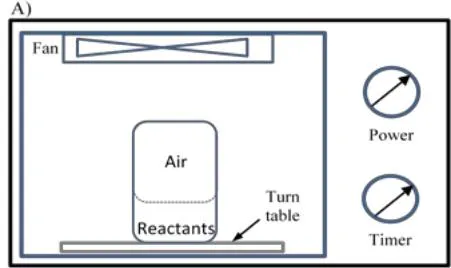
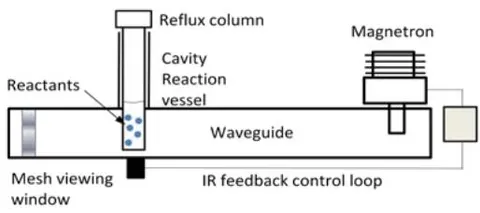
The origins of dielectric heating of food can be traced back to demonstrations of food cooking at 1933 Chicago World's Fair [5] and the first microwave cooking of foodstuff patent application filed in 1945 [6]. This was followed by the first commercial microwave cooker built and sold by Raytheon in 1947 and Amana in 1967 [5, 7]. These ovens where of limited commercial success due to their bulk and cost, but success came later when the cost effective packaged cavity-magnetron became available [8, 9]. Although combination of microwave heating and chemical reactions were reported in early 1980s, it was not until large scale microwave oven production became available, that rapid synthesis of organic compounds became available. The work by Gedye et al [10, 11] provides an early standard for proof-of-principle synthesis of organic compounds within a microwave oven. In their work they used a domestic Toshiba ER-800 BTC set to a power level of 180 to 560 W with a process time between 1 and 5 minutes. The organic reactions were carried out in replaceable 120 and 300 ml Teflon reactions vessels, where the reactants comprised 10% by volume of the vessel. Using this microwave method they showed that many polar compounds that require up to 2.5 hours to prepare using the thermal heating method can be synthesized effectively in a few minutes without significantly altering the reaction pathway. A schematic of the microwave oven used for these organic reactions is shown 1A. The safety procedures relating to the 'microwave superheating effect' in the absence of any stirring [2] of organic liquid products (solvents) [10, 11] are restated here:
For processes that used more than 560 W and longer than 5 minutes: PFA reactions vessels fitted with pressure a pressure relief value designed to vent at approximately 100 psi (690 kappa) should be used.
After the heating is completed, the vessel is left to stand in the oven for 2 min to reduce the pressure in the vessel. Then the hot vessel is removed from the oven and cooled in ice-water for a further 5 min before the top being unscrewed.
When processing flammable organic solvents the microwave oven should be placed in a fume hood or within a fume cupboard.
b) Microwave thawing of fresh frozen plasma
Since the microwave (1.7 to 24 GHz) measurements on human blood by Cook in the early 1950s [12, 13] it is well known that the blood dielectric constant exhibits an inverse frequency dependence. Within this dependence there are at least two flat (relaxation) regions: -dispersion arising from the polarization of the cell membranes in the 10 KHz-to-200MHz region and the -dispersion region (near 18 GHz) due to the reorientation of water molecules [14]. A challenge to the thawing of blood products is the starting temperature as it takes much longer to melt ice, than to heat in the liquid phase by : this is because the molecules are held in a crystal lattice that prevent the dipoles from following the microwave fields as they can in the liquid water phase.
In 1984 Luff et al, reported on the operation of 2.45 GHz microwave oven for the rapid thawing of fresh frozen plasma (FFP) with conventional water bath thawing at 37°C [15]. In their work they highlight the need for short duty cycle irradiation times (typically a 225 ml FFP bag required a duty cycle of 10 seconds on, 5 seconds off for a process of time of 8-10 minutes) and to understand the effect of dielectric heating on the various blood components and the appearance of flocculent regions within the blood bags that are associated with the ovens multi-mode field hot-spots.
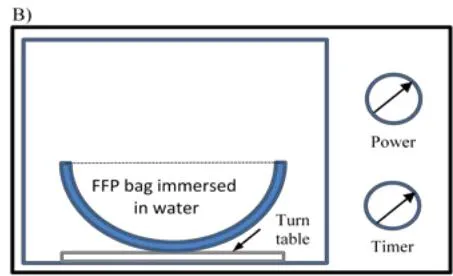
The water environment microwave thawing technique was reported by Mead et al 1996 [16]. In this work a Sharp Carousel II Model R5850 oven is used, in which the FFP is totally immersed in an uncovered bowl containing 1.5 l of tepid tap water. A schematic of this is shown in figure 1B. Their studies revealed a considerably reduction in flocculent regions in both size and amount which they attributed to a more even heat distribution within the frozen plasma.
By 1992, Churchill et al [17] was using a specifically designed microwave oven (We slabs Plasma Defroster) for thawing up to 4 x 200 ml FFP bags at a time. To test the new oven design they used coagulation screen tests and levels of coagulation proteins in both microwave and water bath thawed samples. Their results revealed little clinical difference between the two techniques, although the microwave irradiation procedure gave shorter turnaround times (of the order of 7 minutes per bag) compared to the water bath discrepancies increases when multiple bags of plasma are needed which is a major factor of consideration when thawing in emergency treatment of trauma victims.
c) Microwave desolvation systems
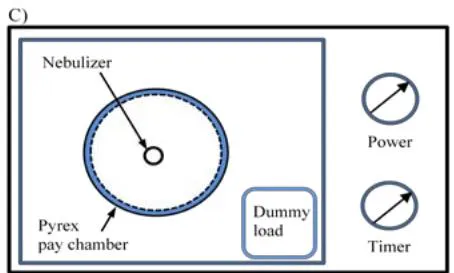
In the mid 1990s the microwave oven desolvation system based on microwave aerosol heating was developed for inductively couple plasma mass spectrometry [18]. The system used the Balay Model W-2235, domestic microwave oven with a normal pulsed 900 W power. With the turntable removed a single-pass spray chamber (80 cm ) made of Pyrex glass is centrally positioned in the MRC with the end plate of the chamber fixed to the internal rear wall so allowing the outside mounted nebulizer to be connected to the spray chamber. A water dummy-load was also placed within the MRC to prevent damage to the magnetron. See figure 1C.
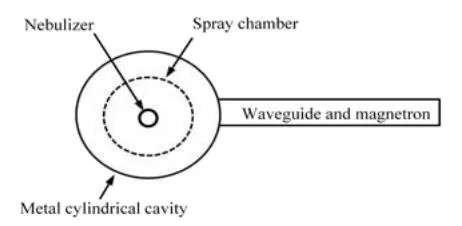
The desolvation system was developed into a microwave -mode cavity by Grind lay et al in 2005 [19] and further developed in 2009 [20]. In these systems a cylindrical metal cavity forming a single coherent mono-mode microwave field is used and within which the spray chamber is positioned. The microwave cavity is then illuminated through an iris in the longitudinal side of the cavity. In this configuration a greatly reduced power level of 300 W was found to produce similar aerosol effects as compared to [18]. A schematic of the -mode cavity and waveguide is shown in figure 1D.
d) Microwave-assisted extraction of bioactive material
The first US Patent for microwave-assisted extraction (MAE) of natural products from biological material was filed in 1990 and published in 1991 [21]. The patent was followed by a series of publications by Lagha et al [22] and Clemat et al [23]. Their work provides studies of digestion and the extraction of terpenes from caraway seeds with n-hexane as the solvent in a mode waveguide applicator, rather than using a microwave oven. This applicator involved the use of magnetron power levels in the range 10 to , with a processing times up to 60 minutes, see figure 1E.
In contrast to , Li et al gives little information on the microwave-assisted extraction device they used for the extraction of natural antioxidants from the exotic gordonia axillaris. It is worth noting that Ledesma-Escobar et al and Medina-Torres et al have performed comparative studies of ultrasonic-assisted extraction (UAE) for bioactive products with other extraction methods including MAE. In their work they highlight that UAE provides a less aggressive environment to that of MAE and note that the important factor of bioactivity of the targeted products should be considered rather than the extraction rate.
e) Microwave disinfection of dentures
In 2012 Brondani, et al published a critical review on the subject of microwave denture cleaning [27]. In their work they highlighted that power levels above 850 W and irradiation times longer than 15 minutes produced denture distortion: in addition based on the known phenomena that DNA molecules still present in dead bacteria can be transferred to live bacteria [28] and that microwave irradiation kills microorganisms, but does not remove them from the surface. Thus 'microwave' irradiation has only a momentary disinfection effect. The review was shortly followed by Sesma et al looked at the effectiveness of
A)
denture cleaning associated with and without microwave disinfection, with and without dentures brushing . They found that microwave irradiation in combination with soaking in denture cleanser and brushing is more effective in removing the bio film when compared to the use of microwave irradiation only: thus revealing the absence of mass transportation mechanisms at the denture surface when using only microwave irradiation. They also noted that some authors have suggested the use of denture microwave steam cleaning to improve disinfection efficiency: this is because bubbles released by the boiling water help in removing microorganisms from the surface.
f) Microwave sterilisation of glass and plastic
Microwave sterilisation of glassware preserving jars and plastic food containers has become commonplace in homes . In general the process comprises the use of pre-washed containers filled with tap water and placed in a microwave oven and irradiated for 2 to 3 minutes. Indeed there are many commercial steam cleaning products sold for use in microwave ovens. In the case of microwave induced steam cleaning of suitable microwave plastic dishware leaching, or migration, of aromatic and chlorinated hydrocarbons is a health concern. Torrison has reported on a brief gas chromatograph/mass spectrometer study on three different types of plastic dishware containing water that were irradiated within a microwave oven for 10 minutes [31]. The result of this study however was inconclusive and no information on the microwave oven power settings were given.
More recently (2014) Dhawan et el used Fourier transform infrared spectrometry to investigate microwave induced silicon migration through high-barrier coated multilayer polymeric films after microwave processing . The study was carried out using selected food simulating liquids (FSLs, which represent aqueous and low-acid foods) . In their study the microwave system (Discover SP-D CEM MW system (CEM Corporation, Matthews, NC, USA) contained a single-mode cavity with a 35 ml quartz test cell with a maximum working volume of 25 ml. Three time-temperature combinations (pre-heating, processing and cooling) stages were selected to match closely with the commercial sterilization and pasteurization schedules for single meal-sized pouches containing low-acid foods . In the microwave process range of 70 to 123 °C) and 18 to 34 minutes, their study indicated that silicon may migrate from high gas barrier commercial multilayer coated films into the FSLs. No significant difference was found however in the level of silicon migration after microwave irradiation when compared with conventional heated water bath (121°C) processes.
III. MICROWAVE PLASMA PROCESSING OF ORGANIC COMPOUNDS
When sufficient electromagnetic energy (i.e. provided by the microwaves) is applied to neutral gas, the plasma can be formed in a converted microwave oven . A review of the oven conversion process, calibration and reactions obtained was published in 2018 . Five of the heterogeneous organic reactions reported in are given here.
In 2003 Ginn and Steinbock presented their plasma cleaning of poly (dimethylsiloxane) (PDMS) surfaces using modified microwave oven (Amana, ACM2160AB) [35]. In their oven the turntable was replaced with an evacuated ( 10 Torr (0.133 Pascal)) desiccator in which the samples was removed and the desiccator chamber in which the samples were placed along with an aerial antenna. Using the maximum power (1100W,) the plasma was generated using the residual gas. Finally pre and post evaluation of the cleaning process was performed using the surface water contact angles method. Their results revealed that a dramatic change in PDMS surface contact angle from 112 2 C to less than 15 for plasma exposure times of more than 25 seconds. This hydrophobic to hydrophilic prosperity change has been widely reported to be associated with enhanced levels of oxygen functionality of the polymer surface after plasma treatment [36]. This work was followed by a number of YouTube postings showing microwave oven plasma cleaning of glass slides, see for example [37].
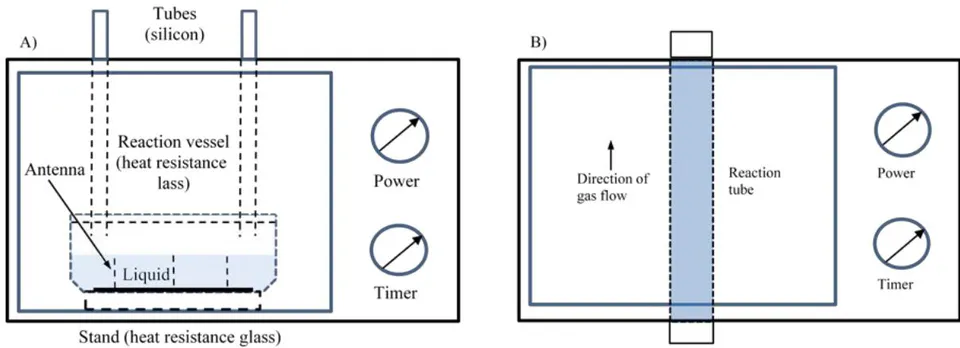
Khongkrapan et al reported on the pyrolysis of paper to produce gaseous waste by-products. This was carried out using a converted commercial microwave oven with a continuous power of 800 W for 3 to 4 minutes [38, 39]. In their oven the process occurs inside a cylindrical quartz tube (internal/external diameters of 27/30 mm and length of 250 mm) that coaxially passes vertical through the MRC. After a pre-vacuum stage, air or argon is used as the precursor gas at a nominal atmospheric pressure (101 k Pascal) with the gas flowing from the bottom to the top of the MRC. The shredded paper (5 g) is suspended in the centre of the tube. A front view schematic of their converted oven is shown in figure 3A. They also used a aerial-antenna igniter to start the plasma, for further details of the igniter see [4].
Nomura et al [40, 41] and Toyota et al [42] have described the use of a converted microwave oven for plasma in-liquid decomposition of n-dodecane (molecular formula: (I)) to simultaneously produce hydrogen gas and carbide in the hydrocarbon liquid using a microwave output power of 500 to 750 W. A typical representation of these reactors is shown in figure 2A. The reaction is performed in a closed volume Pyrex reaction vessel containing 500 ml of n-dodecane liquid with one or more igniters]. Also, two silicon/PTFE tubes are inserted from the top of the cavity, one tube used for the carrying gas (argon) as the precursor gas and the second tube used to collect both the spent argon and by-product gas at a working pressure close to atmospheric pressure.
In 2010 Singh and Jarvis reported the generation of carbon-nanostructures within a continuously pumped 3-port reaction flask (made from borosilicate glass and 1000 ml volume) that was held within the 1000 W rated microwave oven [43]. To support the vessel and facilitate access to it the oven door was replaced with an aluminium plate of the same size that has three apertures; one for each flask port. With the flask supported, the flask was evacuated from the outside of the oven: using one port while the other two ports provide carrier gas (hydrogen) and the selected hydrocarbon precursor based on their hydrogen-to-carbon ratio (ethanol , xylene or toluene ). To enhance the reaction a 2 mm diameter aerial-antenna igniter was mounted on a stainless-steel base within the reaction flask. As no vacuum pressure or microwave power was reported it is assumed that the flask was sub atmospheric and the microwave power was at maximum (1000 W). Their converted microwave oven results revealed that selectively between onion-like nanostructures and carbon nanotubes can be achieved. For the production of carbon nanotubes an ethanol solution with the heterocyclic compound thiophene as an additive plus a number of aerial-antenna igniters. For growth of onion-like nanostructures, either toluene or xylene is used without an aerial-antenna igniter. It is worth noting that in the latter case the prior plasma art used a high cost unbalanced magnetron sputtering system [44].
In the same publication year (2018) of reference plasma induced synthesis of carbon nano-materials from waste rice husk powered using a Samsung microwave oven (M539 MAN200405W) operating at 600 W for 38 minutes was reported by Anaswi et al . Their experiments revealed that the vacuum pressure 1 mbar (100 Pascal) played a critical role in the deposition process. The incorporation of the organ metallic compound ferrocene was also found to have a catalytic role in the plasma induced reaction. They also concluded that the use of waste biomass (rice husks) could be used as a source for high-value carbon nanostructures. They speculated that this may help to solve the environmental issue caused by the world's huge production of waste biomass. The converted oven has a similar coaxial narrow tube configuration as used by Khongkrapan et al . A generic front view schematic of these converted microwave ovens is shown in figure 2B.
IV. MICROWAVE OVEN EXPERIMENTS IN SCHOOL AND AT HOME
Stanley et al [46] have reviewed the use of microwave oven experiments as a teaching resource within schools. The experiments ranged from: the: generation of plasma balls, exploding eggs and the creation of soap sculptures.
The production of plasmoids at home in a microwave oven is also a common topic for YouTube postings. Perhaps the simplest way of producing a plasmoid without modification to the microwave oven is to place a partially sliced grape (that has its two halves connected via a thin piece of skin) on the centre of the microwave oven glass turntable and then turn-on the microwave power for a maximum time of 8 to 10 seconds. YouTube reference [47] shows that arc-like plasmoids are generated at the skin bridge that connects the two grape halves; with the discharge emission continuing until the skin bridge has burnt through and the two halves are separated. This type of reaction is not limited to slices grapes as it also happens when two whole grapes are placed together in the microwave oven and when the microwave power is turned-on the generation of arc-like plasma repeatedly forces the two grapes apart leading to a recoil reaction that finishes when the volumetric heating deforms the grape shape so they do not fall onto each other [48].
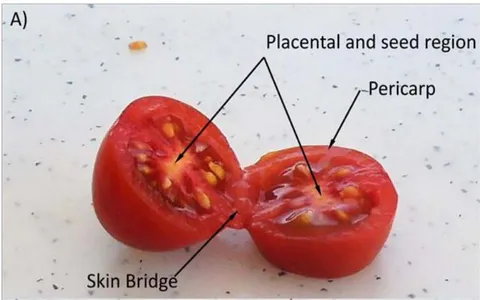
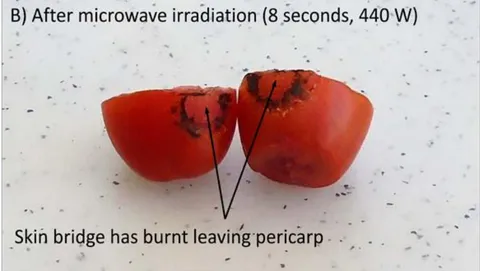
The authors have repeated the YouTube postings using fresh raw sliced 2 cm diameter (spherical volume of the order of m ) red and yellow cherry tomatoes within a microwave oven (Blue sky BMG20-8, rated output power of 800 W) for 8 seconds at a applied power setting of 55% (440 W) which equates to 3.52 KJ of energy delivered to the MRC. Figure 3A shows a freshly sliced red cherry tomato along with its constituent parts (placental, seeds and paricarp). In this case the partially sliced cherry tomatoes form a arc-like plasma until the skin bridge is burnt through (typically at 80 to 90°C, some 60 to 70°C above room temperature). See figure 3B. Once this point is reached the arc-like plasma stops leaving two separated tomato halves, both of which will continue to undergo volumetric heating until the microwave power is turned-off.
To understand the mechanisms behind the cherry tomato reactions their dielectric properties ( , and ) are evoked. Table 1 lists For the red cherry tomato, these properties have been determined using an open-ended coaxial probe [49]. the mean bulk properties of cherry tomatoes at 2.45 GHz over a given specific temperature range.
First consider the effect of cherry tomatoes mean dielectric constant ( at 2.45 GHz) in the temperature range of 20 and 120°C. Using this value in equation 1, an effective wavelength of value of mm is obtained which fits well into the cross-sectional dimension of each tomato half. The close match between physical dimensions (20 mm diameter) of the tomato and it effective wavelength at 2.45 GHz indicates that cherry tomatoes have strong ability to absorb the microwave energy.
| Fruit (temperature range) | (mm) | (mm)* | Reference | ||
| Cherry tomato (20 to 120°C) | 67 ±10 | 12.5 ± 3.5 | 14.9 ±1 | 13 ±3.5 | 49 |
| Material | (J/ (g.K)) | Reference |
| Water | 4.184 | 4 |
| Tomato paste | 3.981 | 50 |
| Tomato juice | 3.719 | 51 |
| Mean | 3.961 ±0.223 | |
| Grape juice | 3.395 | 52 |
Now considered the tomato's dielectric lost factor ( ) and the narrow skin bridge which turns the two halves of the tomato in to a dipole where free electrons are pushed back and forth through the narrow bridge. Under these conditions electric current (I) flowing through the resistance (R) of the skin bridge can produce arc-like plasmoid that rapidly burns through to leave two separated tomato halves leaving the paricarp visually undamaged, see figure 3B. During this process volumetric dielectric heating rapidly increases temperature of the fruit leading to material vaporization that generates a cloud of electrons and ions which in turn feeds the arc-like plasmoid.
The microwave computed bulk penetration depth (derived from the constituent dielectric properties of tomatoes Peng et al [49]) is calculated using equation 2 and the results listed in Table 1; column 5. Here it can be seen that the computed bulk value of mm is lists the computed fits well within the radii of the tomato, and allowing for another two-fold in depth it is reasonable to assume that full dielectric heating of the cherry tomato is achieved.
Given that fresh raw red cherry tomatoes have a minimum water content of 90% [50] the thermal power transferred from the microwave irradiation to the tomatoes can be estimated using calorimetric equation 3: where the value is computed from the mean value of water ( J/g.K [4]), tomato paste ( J/g.K [50]) and tomato juice ( J/g.K [51]) which equate to . See table 2. Given this approach the power transferred to the tomato equates to W, or 47% of the applied power (440 W) from the microwave oven magnetron.
With the knowledge of the transferred power being W, the electric field strength (V.cm ) in which these process occurs may now be estimated using the ohmic heating equation 4; which yields a value of V.cm . It is worth noting that the computed value is in the range (40-70V.m ) studied by Srivastav and Roy [51] for fresh tomato juice. In their study they found the juice electrical conductivity is strongly dependent on temperature as well as the influence of the ohmic heating process within the fruit.
It is also noted that similar microwave irradiation experiments on sliced yellow tomatoes produced similar arc-like plasmoids indicating that the reduced levels of chlorophyll and enhanced levels of yellow carotenoids has little effect on the production of the arc-like plasmoid.
It is now worth comparing the microwave irradiated grapes experiments posted on YouTube with Thomson seedless grape dielectric properties published by Tulasidas et al . This is performed by computing the mean bulk dielectric properties as for the cherry tomato within a temperature of 20 to 90°C. The results of these computations are shown in table 3.
| Fruit (temperature range) | (mm) | (mm)* | ||
| Grapes (20 to 90°C) | 66 ±10 | 13 ±5 | 14.9 ±1 | 13.7 ±4 |
A comparison of the data within Table 1 and 3 reveals there is little difference in dielectric properties between tomatoes products and grape. When taking into account Bingol et al calculations of the specific heat capacity of grapes (table 2) [52] it may be concluded that the grape and cherry tomato have similar dimensional and dielectric properties and therefore similar ohmic heating and arc-like behaviour when irradiated in a microwave oven. These results also support the observation that both fruits exhibit an inherent active plasma catalytic property [4, 54] within them role in the production of arc-like plasmoids.
V. CONCLUSIONS
This work has reviewed the domestic microwave oven and the microwave fixed geometry waveguide applicator for proof-of-principle and small scale batch processing of organic compounds, biomaterials and carbon nano-materials. Where possible the microwave device has been stated along with the microwave power conditions. In all cases the power source is the package cavity-magnetron. In some cases the delivered power to the MRC is not available. For surface sterilisation process the estimated surface temperature is reported. Given this, it is reasonable to assume most of the microwave power conditions are below 800 W, which is lower than the general rule for inorganic material processing within a microwave oven.
The papers reviewed in this work highlight that the extraction of bioactive compounds and disinfection/sterilisation of thermal sensitive polymers require low temperatures and therefore the requirement for low deliverable power (less than 120 W). In addition a means of mass transport from the irradiated surface is required for effective disinfection/sterilisation.
Sub-atmospheric to nominal atmospheric pressure (101 k Pascal) microwave plasma processing of carbon nanostructures has been described. In these processes a passive plasma catalyst is used which comprise a single, or multiple, aerial-antenna igniter that have a physical length approximating to or of the microwave length in which they are immersed in. By selecting the hydrogen-to-carbon ratio within the organic precursor compound product selectivity between carbon nanotubes and onion-like nanostructures that have the potential to be used as encapsulated drug delivery systems can be achieved; where the external layer provides protection to the drug within.
In the home kitchen, arc-like plasmoid production from a sliced grape along with (to the author's knowledge the first report) sliced cherry tomato has been discussed. The mechanism of arc-like plasmoid production from both fruits has been discussed in terms of dielectric constant, dielectric loss and penetration depth. The process occurs at absorbed power of W within an electric field of V.cm . The analysis supports the suggestion that slice grape and cherry tomatoes exhibits a dipole like behaviour and that the fruit can act as an active plasma catalyst as the fruit electrolyte can supply free electrons to the reaction.
ACKNOWLEDGMENTS
The authors would like to acknowledge the support of SFI through the I-Form Advanced Manufacturing Research Center 16/RC/3872. The Authors declare that there is no conflict of interest regarding the publication of this paper.