Dravidar Iyakkam Advocated by Thanthai Periyar Contains Nuances of Karl Marx's Communist Manifesto; - Peraringer Anna Embraced it as Legislature and Bharat Ratna Marudhur Gopalamenon Ramachandran Propagated it in his Films and Formalized it as Annaism; thereafter Dr. Jayaraman Jayalalita carried it forward to uphold the Concept of Equity and Social Justice in Tamil Nadu Governance - A Retrospective Reflection
## I. INTRODUCTION
Internet encyclopedia states that music provides entertainment and distraction from problems and serves as a way to relieve tension and boredom.
Some studies have reported that adolescents use popular music to deal with loneliness and to take control of their emotional status or mood (a).
Entertainment is a form of activity that holds the attention and interest of audience and also gives pleasure and delight. It can be an idea or a task, but is more likely to be one of the activities or events that have developed over thousands of years specifically for the purpose of keeping an audience's attention or enthrall them (b). Although people's attention is held by different things, as individuals have different preferences in entertainment, such as storytelling, music, drama, dance. It is an accepted fact that different kinds of performance exist in all cultures. Indeed in ancient times these were supported in royal courts, developed into sophisticated forms and over the period of time spread to the common man as well. The technological advancement made by the media industry is phenomenal and now a day's media has become an indispensable companion in everyone's life and people depends on it one way or the other.
The experience of being entertained has come to be strongly associated with amusement, so that one common understanding of the idea is fun and laughter, although many entertainments have a serious purpose. This may be the case in the various forms of ceremony, celebration, religious festival. Hence, there is the possibility that what appears to be entertainment sometimes may also be a means of achieving insight which may lead to knowledge explosion. It is not a mere exaggeration to state that cinema or technically known as entertainment has become a powerful tool not only for gratification of sense but also to disseminate message through which the masses can be attracted. It is now necessary to note how Cinema emerged in the world arena.
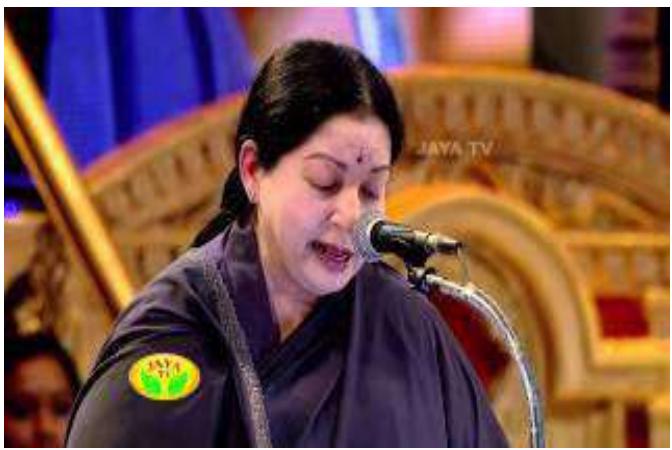
The former Chief Minister of Tamil Nadu Dr. Jayaraman Jayalalitha (Puratchi Thalaivi Amma) in her thought provoking speech on the eve of $100^{\text{th}}$ Anniversary of Indian Cinema went on to indicate that "it is not an over statement to emphasize that films are the foremost among all the innovative developments that took place in the civilization of mankind. Before cinema was invented it was music, literature, arts, and dance, drama that were used to entertain and educate the masses. The scientific advancement made in technology from time to time was also used in cinema and that is the reason why cinema is attracting the attention of majority of the masses unlike any other art or entertainment. In short, it can be said that cinema had become an inevitable part of human life. The pride of propagating the stories of puranas, history of India's freedom fighters and the socialistic ideology among the people belong to the media or cinema. It is the cinema that makes one to see at one place the scenic beauty and wonders of far away of the world. The movie industry had created many employment opportunities. To the students and educators, it creates opportunities to learn in multivarious ways. Films greatly help to propagate the political functions, the public works that took place and the welfare schemes offered to the masses" (1).
## II. OBJECTIVE OF THE STUDY
Before we deeply go in to the details of the study, it is important to understand the concept of inequality and how equity and social justice would address the issue of mitigating inequality.
Amartya Sen and Jean Dreze in their Book "An Uncertain Glory- India and Its Contradictions" explain the grip of inequality that prevails in India. They say that all countries in the world have inequalities of various kinds. India however, has a unique cocktail of lethal divisions and disparities. Class has a peculiar role in India that separates it out from the rest of the world. They also say that despite a great many pieces of legislation outlawing any practice of caste discrimination India seems to be quite unique both in terms of the centrality of caste hierarchies and in terms of their continuing hold in modern society. They also say that gender inequality, too is exceptionally high in India, particularly in large parts of the northern and western regions, where the subjugation of women is fairly comprehensive. It is the mutual reinforcement of severe inequalities of different kinds that creates an extremely oppressive social system, where those at the bottom of these multiple layers of disadvantage live in conditions of extreme disempowerment. They further say that large proportion of Indian children learn very little at school, and if one were to look at more advanced educational achievements than mere literacy, sharp disparities of class, caste and gender would re-emerge quite forcefully. Percapita expenditure data suggest an increase in rural-urban disparities as well as growing inequality in urban areas. The comparatively affluent in urban areas have been the main beneficiaries of rapid economic growth in India in recent years. Similarly, percapita income data indicate a growing concentration of incomes at the top, and wealth data, patchy as they are, also point to growing disparities in the post-reform period (2).
This book was published in 2013 and the eminent authors paint a very sorry picture of disparities including gender based. One should imagine what was the position of disparity some 70 to 80 years ago in Tamil Nadu when the great saint among the socialists Thanthai Periyar launched his movement which was known as dravidhar iyakkam.
In the scholarly article Robert L Hardgrave states that socially appealing films were launched in Tamil Nadu right from 1936 which was an infusion to politics. As a young lieutenant of DMK, Annadurai had written a number of dramas as vehicles for social reform and non-brahmin self-respect ideology.
Robert L Hardgrave also states "when the talkie was first introduced in 1931, in the South India around 1500 films were produced in Tamil. Virtually no village in Tamil Nadu was isolated to be beyond the reach of film, and even the poorest laborer can afford the few paisa to see the latest film (3). It means that cinema in Tamil society has become so popular and reached every nook and corner of Tamil Nadu and became a great entertainer. It was stated that both Congress and DMK used films and actors for campaigning. Gemini Studios produced a political film for the Congress – Vazhga Nam Thayagam starring Shivaji Ganesan and Nagesh. Sivaji and Padmini worked for the Congress party. Despite its efforts, Congress could not counter the DMK's propaganda, which had a long history of using films for political campaigns since its founding. DMK's long-term association with the Tamil Film industry was put to good use in the campaign. MGR's films were used to attack Congress policies and to popularise DMK's positions. Similar to the tactics employed in the elections of 1957 and 1962, film songs and dialogues from Kaanji Thalaivan (1963), "Deivathai" (1964), "Padakotti (1964)", Aayirathil Oruvan", Enga Veettu Pillai (1965), Anbe Vaa (1966), Naan Aanaiyittal (1966), "Mugarasi (1966)," "Petralthan Pillaya (1966) ", Vivasayee (1967) and Arasakattalai (1967) were used for political messaging. Lesser known film stars like Ravichandran and Jaishankar used their films for praising DMK and Annadurai. The DMK put up posters of MGR recuperating in a hospital bed with a neck cast (from his gunshot wounds) all over Tamil Nadu to garner public sympathy and support (4).
It can be seen that films like Ayirathil Oruvan, Mugarasi and Arasakattalai were pared by Puratchi Thalaivi along with Barat Ratna MGR and in this research paper an attempt has been made to extend the research work that certain selected films acted by both Bharat Ratna MGR and Puratchi Thalaivi and explore whether they contain social welfare ideas that can be brought under the doctrine of Dravidar lyakkam Equity and Social Justice to find out whether:
- To find out and describe the emergence of Dravidian ideologies from Thanthai Periyar who took on his shoulders to alleviate social inequality faced by the Tamil Society and the struggles he had to undergo.
- To find out and describe how Aringer Anna advanced the ideas of Thanthai Periyar and translated them in to legislation when he became the Chief Minister of Tamil Nadu.
- To find out and describe how Puratchi Thalaivar took on his shoulders to project the political ideas of Anna and reflect them in his films combinedly acted along with Puratchi Thalaivi Selvi Jayaraman Jayalalitha and later converted them in to plans for implementation when he ruled the State of Tamil Nadu.
- To find out and describe how Puratchi Thalaiveet took upon herself to make the flag fly high in the annals of history of political affairs of Tamil Nadu in continuing the welfare measures and proved worthy
of eminent successor of the torch bearer of dravidar political ideologies in line with her predecessor Puratchi Thalaivar.
### a) Hypothesis
It is well-known to the academic fraternity Hypotheses are tentative statements that will add directions to realize the objective of the study. In this study the following null-hypotheses were formulated:
1. There is a significant difference between the ideologies propagated by Thanthai Periyar and the hard way he advocated them in his struggle for establishment of equity and social justice in the Tamil Society.
2. There is a significant difference between the ideologies propagated by Thatthai Periyar and Peringer Anna in shaping these ideologies as laws when he ruled the state of Tamil Nadu.
3. There is a significant difference between Puratchi Thalaivar enunciating the concept of Annaism and how he turned them in to law when he ruled Tamil Nadu.
4. There is a significant difference between Puratchi Thalaive making the AIADMK Flag fly high after the demise of her leader and continuing the welfare measures and proved worthy of eminent successor of her predecessor.
b) Literature Review; Research Gap and the New Area of Research
It is a fact the researchers had already published the following papers owing to the outcome of the Ph.D. research work entitled "Equity and Social Justice - Economic And Social Welfare Ideas Emphasized In Bharat Ratna Dr. M. G. Ramachandran's Film Songs - In Comparison With Contemporary Theories" - Ph.D degree awarded by the Tamil Nadu Open University, Chennai (2022)
The paper entitled A Study on Bharat Ratna Dr. M. G. Ramachandran's Philosophical Film Songs with special reference to the Socialistic and Communistic Ideas it Contain - An Academic Comparative Analysis with the Theory of Socialism as Propounded by Karl Marx published in the World Journal of Social USA., Science, Vol. 5, No. 1;
2018\.http://wjss.sciiedupress.comthe authors contemplate a well-conceived methodology wherein they compared the ideas contained in the selected Tamil Film songs with that of socialistic and communistic ideas more specifically with the theory of socialism as propounded by Karl Marx (5). In another published work entitled "A Study on the Bharat Ratna Dr. Maruthur Gopala Menon Ramachandran Film Songs that Contain the Ideas of Equity and Social Justice - A Comparative Analysis with the Contemporary Theories More Specifically with the Theory of Socialism as Propounded by Karl Marx" published in the Global Journal of Human Social Science USA - Year 2018 the
researchers extended such a comparison with certain additional film songs that reflect the same ideas (6). Whereas in another paper entitled "A Study on Bharat Ratna Dr. Maruthur Gopalamenon Ramachandran's Film Songs that Denounce the Practice of Corruption - A Novel Comparative Analysis with the Theories of Corruptive Behaviour, published in the Journal of humanities and cultural studies R & D, USA, the authors using the same methodology compared the ideas of denouncing the practice of corruption as contained in certain MGR film songs with the theories of corruptive behavior (7). In another paper entitled "A Study on Bharat Ratna Dr. M. G. Ramachandran's philosophical film songs with special reference to the educational ideas it contain An academic comparative analysis with the theories of education (both India and abroad) a retrospective reflection" Journal of humanities and cultural studies & D, USA compared the educational ideas as contained in the selected MGR film songs with that of educational ideas of the world (8). In another paper entitled "A Study on Ethical Values as Contained in Bharat Ratna Dr. M. G. Ramachandran's Selected Film Songs - An Academic Comparative Analysis with Contemporary Theories of Ethics" published in the International Journal of Research In Commerce, Economics & Management (India), the ethical ideas as contained in the selected MGR Tamil film songs were compared with the theories of ethics (9). In the paper entitled "A Retrospective Reflection on the Life History and the Philanthropic Attitude of Bharat Ratna Dr. Marudhur Gopala Menon Ramachandran - A Bird's Eye View" the authors not only traced the history of Dr. MGR but also the ordeals he made and the charitable mind of the Hero of the research topic (10) was dealt with.
All the above papers leading to the research work of the identified topic were based on the film songs of Bharat Ratna Dr. Marudhur Goplamenon Ramachandran (Dr. MGR) that contain socially relevant ideas. It is a fact that there are no research work found to indicate whether the films acted by Dr. MGR contain socially relevant ideas.
Prof. R. Thandavan, conducted a research on All India Anna Dravida Munnetra Kazhagam: A study; Madras University, (1983), Unpublished Ph.D thesis wherein the author had dealt with the origin and growth of the party founded by Dr. MGR and this goes to explain the democracy advocated by Dr. MGR and the progress the party made and mitigate the suffering of poor's in Tamil society (11). Harriss, Barbara (1984), Meals and noon meals in South India: Food and Nutrition Policy in the rural food economy of Tamil Nadu State, Occasional Paper 31, East Anglia: School of Development Studies, P.16 deals in length about the famous Noon Meal Scheme implemented by Dr. MGR in 1983 (12).
### c) The Scope of the Research Work
As per the above objectives, this research work should necessarily portray: -the life and struggles of Thanthai Periyar, Peraringer Anna, Puratchi Thalaivar and Puratchi Thalaivi to understand their strugglesin realizing the ideologies of dravidar iyakkam that witnessed the social transformation and how Bharat Ratna MGR took pains to reflect the ideas of dravidar iyakkam in the selected movies. Finally, how certain ideologies were converted in to popular plans to emancipate the common people in terms of economic well-being by Peraringar Anna, Bharat Ratna MGR and Jayaraman Jayalalitha.
Before an attempt has been made to narrate and describe the nuances of the research work on the above line it is necessary to understand how the great work of Karl Marx's especially his Communist Manifesto came handy when compared with the ideologies of dravidar iyakkam. The following table compares these social reform concepts:
<table><tr><td>The Communist Manifesto</td><td>The Main principles of the Self-Respect Movement are</td><td>Annaism can be Brought under the Following Pointers</td></tr><tr><td>Abolition of Private Property.</td><td>No one is great or inferior by their birth.</td><td>A casteless and classless society</td></tr><tr><td>Heavy Progressive Income Tax.</td><td>Women should be given equal rights on par with men.</td><td>sale of all essential commodities should be taken over by the government,</td></tr><tr><td>Abolition of Rights of Inheritance.</td><td rowspan="4">Till such time the eradication of differences that arise due to cast and religion, people should be given representation through a cast based reservation system; both in education and employment opportunity, consistence with the percentage of population of each community in the society.</td><td>Right to recall</td></tr><tr><td>Confiscation of Property Rights.</td><td>Confiscation of properties of corrupt people,</td></tr><tr><td>Central Bank.</td><td>ceiling of income like land holdings</td></tr><tr><td>Government Ownership of Communication and Transportation.</td><td>withdrawal of currencies below 100</td></tr><tr><td>Government Ownership of Factories and Agriculture.</td><td rowspan="2">The various rituals that were blindly followed by the people, including the belief without reasoning, should be routed out from the society.</td><td rowspan="2">inclusion of English in the eighth schedule of the Constitution to safeguard the interests of the</td></tr><tr><td>Government Control of Labor.</td></tr><tr><td>Corporate Farms and Regional Planning.Government Control of Education.</td><td></td><td>Anglo-Indian communitydecentralization of powersbetween center and statesGovernment takeover of heavyindustries and millsCoffee, tea and rubber plantationsshould be nationalized.</td></tr></table>
Interpretation of the above table is dealt separately in the later part of this research work and it is imperative to understand how Karl Marx the greatest social reformer formulated the idea of communism otherwise the present research work would pale in to insignificance. A detailed introduction about Karl Marx is given in the latter part of the paper just before the methodology."Slavery does not merely mean a legalized form of subjection. It means a state of society in which some men are forced to accept from others the purposes which control their conduct" - "Equality may be a fiction but nonetheless one must accept it as a governing principle"- Dr. Bhimrao Ramji Ambedkar (13). Origin of Dravidar lyakkam.
Before we go in to the details of a conspectus study to unearth whether films combinedly acted by MGR and Jayalalitha contain socialistic ideas with special reference to dravidhar iyakkam and the endeavor made by the three stalwarts to rule Tamil Nadu and implement welfare schemes to uplift the poor with a view to establish welfare measure of equity and social justice, it is imperative to understand from where such an important social reform organization emerged and it is equally important to understand the life history of Thanthai Periyar, Peraringer Anna, Puratchi Thalaivar MGR and Puratchi Thalaivi from whom such a great social reform handed down and sustained.
### d) Periyar's Early Life Influenced Self-Respect Movement
The thought on the great concept the "self-respect" evolved by Thanthai Periyar is not born merely after he became popular. Perhaps it was inborn in Thanthai Periyar's inner-consciousness and one has to understand the life he led from his childhood and the various troubles he had to marvel that had shaped his attitude to boldly question the fundamental problems faced by the common man in the name of caste which had differentiated and certainly alienated the disadvantaged men and women.
Erode Venkata Ramaswamy most respectfully regarded as Thanthai Periyar by his followers for whom he was the only savior; whose philosophy looked so inviting to them to keep their heads held high in the society and brought dignity to their lives as well. Periyarwas born on $17^{\text{th}}$ Sep. 1879 to Venkatan and Chinnathayammal. Periyar's father Venkatan was known for his hard work and honesty. He was poor and started his career as a laborer and rose to the stature of a richest merchant far superior to his fellow merchants in Erode which was a big market place at that time.
It was indicated by Thanthai Periyar in the book written by himself entitled "Auto-Biography written by Thanthai Periyar (14). That Thayammal was a very close relative to his father who had already lost her husband and living without children. It was she who made a plea to obtain one of the children so that the properties belong to her will be enjoyed by the child. Since Periyar's elder brother was so sick, his parents decided to send Peiyar to Chinna Thayammal. Therefore, Periyar was brought up by his relative Chinna Thayammal. She gave all the freedom and liberty to him and never imposed any restrictions; that had enabled Periyar to grow as a ferocious fellow. Periyar opposed anything and even confronted with the elders belong to his neighborhood. Though Chinna Thayammal received complaints from several people around her house, she never opposed Periyar nor did she try to tell him what he was doing wrong? This exaggerated character of Venkadan was also brought to the attention of his father who often visited Chinna Thayammal but he too did not venture to caution Periyar.
Periyar further states that he was sent to school: "it was a thatched hut admeasuring 16 feet long and 9 feet bredth wherein about 50 students between the age group of 5 to 13 would study. There too he had indulged in the same manner and he confirms that "treachery at house, creating unnecessary disputes in the street, infighting at school exaggerated speech without caring for the opinions of people around were the endless behavior of himself.
Periyar further states that after his elder brother's health had improved and with the insistence of his mother the heir-ship with his aunt was broken and he was brought to his parent's house. There also he was sent to a municipal school and studied up to IV standard and he wrote IV form primary examination after being vaccinated to prevent small pox and paying rupee one as examination fee. Those who passed this examination will become clerk in the government organization. His name was published in the government gazette being successful in the examination. As the teachers could not bear his incriminating behavior they had decided to dispel him from the school and requested his parents to take him back home. Periyar further states " (in his own words) after withdrawing his admission his father gave him few jobs in the whole sale house run by him. He had to write address on the packages, conduct auction of the raw materials and liaise with the merchants who visit the wholesale house. As he was the son of the owner these merchants were friendly with him and he used to indulge in friendly arguments and confrontations with them too. In the words of Periyar "If one has such wild argumentative power coupled with basic knowledge of law he is considered as clever lawyer. No matter whether such a person is good or honest but he will become an intelligent speaker. As I desired to become such a frantic speaker, I practiced deliberate confrontations to understand the will of the people to opposing it. In course of time this had become my nature. In 1890's our house had become rich and my parents had become ardent followers of vaishnavism many learned persist and pandits who are well versed in vedas and puranas used to come and stay for three to five days at our house. I used to indulge in confrontation with them and opposed their philosophy right, left and center. They used to be kind with me tolerating my nuisance and this routine had resulted in confrontation against sabras, puranas and against the concept of God finally opposing Brahminism and I formed an incessive jealous about Brahmin's luxurious life. This had not in any way affected my relationship with the Brahmins whom I had friendship nor did they considered me as their enemy. Ordinarily I formed a notion of Brahmins and Tamils in 1900 itself. When I used to indulge in speech or while in arguments and decision making this would become predominant in my mind". Rest of the narrative about the great Periyar can be found in the recent publication of the author's i.e. "Equity and Social Justice - Economic And Social Welfare Ideas Emphasized In Bharat Ratna Dr. M. G. Ramachandran's Film Songs - In Comparison With Contemporary Theories" published in GJHSS Volume 22 Issue 5 Version 2022
But the authors were humbled by what was written by Hard Grave about the noble history of Thanthai Periyar and also how he revolted against the congress with his reformation thoughts that had led to the foundation of Dravidian movement. A synopsis of his original writing is reproduced below:
Hard Grave states that the roots of the Dravidian movement may be traced back to the anti-Brahmin conflicts of the early part of the century (19<sup>th</sup> Century):
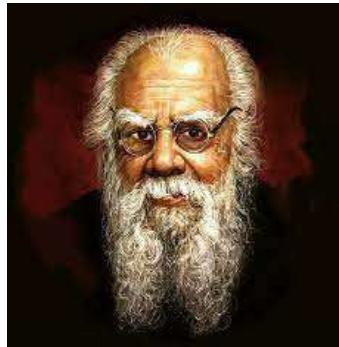
E.
V. Ramaswamy Naicker Respectfully known as Thanthai Periyar
Hard Grave says that following World War there emerged one of the most dynamic and colorful political leaders South India had ever produced, E.
V. Ramaswamy Naicker, known as Periyar, the Great Sage. Although an ardent opponent of Brahmin power, Naicker was drawn politically toward the Congress, joining the non-cooperation movement in 1920 and campaigned vigorously for prohibition and for the use of homespun (khadi), and served two terms of imprisonment. Elected Secretary of the Tamilnad Congress Committee, he soon antagonized the Brahmin leadership of the Congress in Madras through his satyagraha at Vaikom for the opening of the temples to Harijans. Naicker's protest against caste discriminations in an orphanage operated under Congress auspices and his advocacy of reserved seats for non-Brahmins in the Council won little favor with the leadership of the provincial Congress Committee.
Hard Grave further states that Naicker bolted the Congress and attacked it as a tool of Brahmin domination. In 1925, he organized the "Self-Respect Movement," designed as a Dravidian uplift movement, seeking to expose the Brahmin tyranny and the deceptive methods by which they controlled all spheres of Hindu life. He attacked Hinduism as the tool of Brahminical control and carried on active propaganda in an attempt to rid the people of Puranic Hinduism and wean them away from the religious ceremonies requiring the priestly services of the Brahmin.
Hard Grave also states that Periyar denounced caste observances, child marriage, and enforced widowhood, and attacked the Laws of Manu, which was the basis of the entire social fabric of caste and is "totally inhuman". Naicker returned from a trip to the Soviet Union in 1931, more firmly convinced than ever that materialism was the answer to India's problems, and openly advocated mass revolution and the overthrow of the Government. Tempered somewhat by imprisonment for sedition, Naicker joined the declining Justice Party. It is very clear that Periyar was not convinced about his ideology of self-respect and have more force to materialism as he could see that his social reform thoughts largely coincide with what Karl Marx's
Communist Manifesto as it advocates equity and social justice.
Hard Grave also says that under the Congress Ministry of C. Rajagopalachari in 1937, the Hindi language was introduced to the South as a compulsory subject in schools. Taking this as an affront to Tamil culture and its rich literary tradition, Tamil patriots reacted with violent protest, and Naicker, ready to exploit the opportunity, waved the black flags of rebellion in his first anti-Hindi campaign. The agitation against the imposition of Hindi inflamed the non-Brahmins against the Ministry and brought Naicker to the forefront. The campaign, which brought the death of two agitators in police firings, forced the Government to change Hindi from a required to an optional subject in schools. The following year, 1938, while in jail for his anti-Hindi campaign, Naicker was elected President of the Justice Party.
Hard Grave further says, that under Naicker's leadership, the party resolved that Tamilnad should be made a separate state, loyal to the British Raj and "directly under the Secretary of State for India". This demand for a Dravidian State soon became the fundamental issue of the Justice movement, giving a new lease of life to what had been a dying party. The Justice Party was reorganized under Naicker's guidance in 1944 as a highly militant mass organization and was renamed the Dravida Kazagham, or Dravidian Federation. Naicker, who in the 1930's had visited the Axis countries as well as the Soviet Union, declared that "members of the Kazagham should wear black shirts whenever possible, as a symbol of the present downtrodden condition of the Dravidians". The organization of the party was to be based upon units in each village, taluk, and district. The objective of the DK was proclaimed to be the achievement of a sovereign independent Dravidian Republic, which would be federal in nature, with four units corresponding to the linguistic divisions (Madras, Kerala, Mysore, and Andhra), each having residuary powers and autonomy of internal administration. The party proclaimed its opposition to the British, and Naicker called upon DK members to renounce all titles conferred by the British and to resign all offices connected with the National War Front. This action greatly enhanced the prestige of the movement, on both state and national levels.
Hard Grave also says that as in the Self-Respect Movement, one of Naicker's basic objectives was to remove all "superstitious belief" based upon religion and tradition. No member was allowed to wear the sectarian marks of faith across his forehead. Members were urged to boycott the use of Brahmin priests in ceremonies. He campaigned vigorously for widow remarriage and inter-caste marriage, and the "reform" marriage rites of the DK gained wide acceptance among the non-Brahmins of Tamilnad. The ceremonies and rites of passage at which Brahmins officiated came to be despised by the Dravida Kazagham, and the Hindu religion was denounced as an opiate by which the Brahmins had dulled the masses so that they might be exploited and controlled. Atheism became virtually a cult among the Kazagham members. They took pains to destroy and desecrate the images of sacred Hindu deities, such as Rama and Ganesa, and the Ramayana and other Sanskrit epics were distorted to the political ends of the party.
The above are what were written by Hard Grave in his scholarly publication. However, the concept of "Self-Respect" as enunciated by Periyar (i.e. tanmaanam or suya-mariyadai in Tamil Language) is traceable in ancient Tamil literature. Indeed, self-respect was acclaimed as the virtue of high valor in Tamil society. The ancient classical Tamil literatures speak volumes about the rule of the kings who upheld the concept of self-respect. These Kings had a leading principle (i.e. to protect every citizen of his country) and they regarded the people as their own-self. Indeed, they treated the sufferings or injustice caused to the people as their own, and maintained close relationship with the common people of their country. Though the nation was ruled by a dynasty, the rights of every citizen were given utmost importance and thereby equity and social justice prevailed in the society. For example, Manuneedhi Cholan was a righteous King of this lineage, who ruled his country with justice and honesty. One day his son Veedhividangan, on his way from the temple runs over a calf by his chariot. The mother of the calf, "the cow" pulled the bell that was kept at a common place to alert any injustice meted out by the citizens. Hearing it, the King immediately ordered that his son be punished, the way the calf was killed. Despite the advice of his counsels, the King was firm and punished his son. This depicts the fact how dispassionate, virtuous and unprejudiced king Manuneedhi Cholan was (15).
Periyar discovered that if and when the belief in rituals (i.e. "Vaideegam or Prohitam") is routed out the slavery position of the countrymen could not be changed. The self-respect movement was extremely influential not just in Tamil Nadu, but also overseas. The main principles of the Self-Respect Movement are (Prof. Anbalagan):
- No one is great or inferior by their birth.
- Women should be given equal rights on par with men.
- Till such time the eradication of differences that arise due to cast and religion, people should be given representation through a cast-based reservation system; both in education and employment opportunity, consistence with the percentage of population of each community in the society.
- The various rituals that were blindly followed by the people, including the belief without reasoning, should be routed out from the society.
Tamil Nadu was the only state, under the Dravidian rule, that gave 100 per cent reservation to all communities including brahmins since 1928. When the Indian Constitution was introduced in 1950, citing fundamental rights, certain brahmins, filed a writ in Madras High Court challenging the reservation policy pursued in Tamil Nadu. High Court of Madras invalidated the reservation policy. State Government appealed to Supreme Court. But Supreme Court confirmed the invalidation of the reservation policy. Social Revolutionary Periyar started agitation against the judgment of Supreme Court and mobilized the people for the agitation. Except Brahmins, all non-brahmins joined the struggle. Periyar announced that on $14^{\text{th}}$ August (1950), there will be total agitation in Tamil Nadu in all sectors and all sections of people including students, teachers, doctors, govt. servants joined the struggle.
The Central government was forced to react on this agitation and the then Prime Minister Jawaharlal Nehru and Law Minister Dr. B. R. Ambedkar brought through the first amendment of the Indian Constitution by inserting Article 15 (4) that enabled the Governments to provide reservation in education for BC, SC and Minorities. Article 15 (4) was inserted and the term "socially and educationally" found a place in the Constitution. It must be noted that the Indian Constitution as introduced in 1950, did not have provision for reservation in education. There was only Article 16 (4) providing reservation in jobs. It was Periyar's struggle that paved way for reservation in education not only for the people of Tamil Nadu but to the entire BC, SC, ST and Minorities throughout the country. Aringer Anna (C. N. Annadurai) and Perum Thalaivar (Great leader) Kamaraj were in support of this struggle of Periyar (16).
The above are about Thanthai Periyar's life history and how single handedly he advocated the self-respect movement. It should be noted here that Periyar had renounced to occupy the post of Chief Minister though opportunities knocked his door and remained as a stalwart of a great force of self-respect movement dictating terms to the rulers how should they govern, and this had a lasting effect on successive parties sprung from this social movement and attain political power. The first one being Peraringer Anna to from the party called DMK and become famous that captured power in the state of Tamil Nadu. It is now imperative to narrate about Anna – how an ardent disciple of Periyar floated the political party and ruled the state with proven probity in public life.
Peraringer Anna - The Torch Bearer of Periyar's Ideology
Many of the narrations under this heading were from the wonderful book written by Alakiya Pandian entitled "Peringer Anna Atchil Amarntha Kathai" Kumaran Pathippagam (
[email protected]) Tamil book (17).
## III. BIRTH AND EARLY LIFE OF ANNA
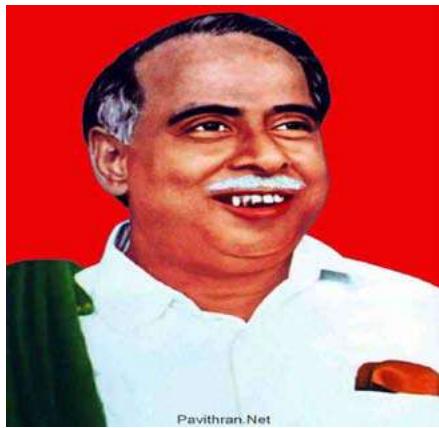
Anna was born to Bangaru Ammal and Natarajan on $15^{\text {th }}$ Sep.
1909\.His parents (a middle class family) named him Annadurai. It was Ramsamani Ammal (Anna's aunty whom Anna called as totta) who sent Anna to school run by missionaries. A shrewd but obedient student at the same time possessed admirable brilliance and talent. Anna used to be number one not only in his studies but also in punctually attending the classes and he never took leave. These ensured him to secure first prize every time. Anna was master of all subjects excepting Mathematics. In Maths alone Anna failed twice in the SSLC examination. This had made his parents to worry and Anna made serious attempt and completed it.
### a) Anna's Hobbies
Anna used to watch dramas enacted in the streets in his child hood days. These street dramas mainly on the puranas were organized during the nights in the open place of the streets. Anna used to accompany his totta (anty) and carefully watched them while others asleep. Anna formed interest to remember every character of the dramas and later tried to enact the same at his house along with his friends. Attracted mostly by the drama of Harichandra, Anna tried to enact the same under a tree along with his friends. Anna remembered every conversation of the drama and tutored his friends wherein he himself donned the role of the hero. His voice reverberated the surroundings.
# b) A Clerk but Continued Studies
Anna's family wanted him to take up a job as they needed financial support. Anna got a clerical post in the office of corporation, Kanchipuram. The Educational Trust of Pachaiyappan came forward to extend assistance for higher education to Anna thereby he joined intermediate at Pachaiyappan college, Chennai. Anna hired a small house near his college and lived along with his aunt (Totha) there. Because of constant disturbance at the surrounding Anna decided to study during the late nights. Day times he went to Connemara Library where he was immersed in studies forgetting himself. Anna passed intermediate i.e. PUC with first class and decided to join a two years B.A. degree and take up a job due to the condition prevailed at home. But it was the Principal of the College respected Chinnathambi Pillai's financial support that hadenabled Anna to join B. A. (Hons.). Anna took economics as the major, history and political science as minor. Anna got married to Rani at the age of 21, i.e. in 1930 under the insistence of his parents while he was at study and completed his studies by 1933.
Anna used to spend his time either in the classroom or in the library that made his friends to comment him as an insect of books. Anna jovially replied "insect of books is better than an ordinary insect on the mud and I desire to be an insect of books". Anna could be found either in the class room or in the library. He read books of current interest including religious books like Thevaram, Thiruvasagam, Bagavat Gita, Kuran as well as Sangam literary books like Tholkapium, Silapathigaram, Manimekalai etc. His scholarship had grown abundantly and he used to participate in the oratorical competition representing Pachayappas' College and won every competition. Anna became popular and attracted the crowd's attention by his admirable talk on topic of political importance mostly the concept of social justice. Anna was growing with glory of self-discipline, scholarship above all speaking eloquently and writing par excellence. Sometimes his own professors thought that Anna was copying from the writings of others but they later understood the brilliance, originality and intellectual acclimatization of Anna. With the help of his Professor Varadarasan, Anna was able to meet eminent persons like Mu. Varadarasanar, Marimalaiadigalar, Jeevanandam and regularly attended their public meetings that had enabled him to understand the current political scenario. After his post-graduation Anna was searching for jobs, however, was attracted by Thanthai Periyar's self-respect movement. Anna used to attend the meetings organized by this movement and became its active office bearer and also delivered several public speeches. He also attended public meetings of other parties like congress and Justice Party. Finally, Anna could get a job of a translator of the forum of trade unions. His job was to translate the speeches delivered by Trade Union leaders of other states from English to Tamil. The new found job was interesting but his family members never liked it. They insisted him to search for jobs as per his qualification. Because of their constant persistence Anna decided to take up an English teacher's job at Govinda Nayakkar School near China
Bazzar. This new found job did not lost long as Anna could not tolerate the attitude of the management and often succumbed to confrontation that led to quit the job.
When Anna was desperately searching for a job his friend gave a recommendation letter to a Magistrate for a clerk post. Next morning Anna went to the district magistrate and gave a chit by writing his name, reading the name the magistrate rushed out of the house and wanted Anna's recommendation so that he can become a judge as Anna was a noted and famous speaker of justice party which was ruling Madras Providence at that time. Anna promised the magistrate for the help sought and went away.
Finally he decided to meet Sir Raja Muthaiah Chettiar for a job as a teacher in the school run by him. Chettiar wanted Anna to become his assistant and also deliver public speech on behalf of the justice party and promised to give double the salary of a teacher. Anna never liked the idea to become an assistant to a rich man and walked away. Thereafter Anna never tried for a job.
Anna witnessed a great menace that had happened before his eyes i.e. the local congress men were collecting huge sums of money in the name of "Thilagar Suyaraj Nidhi" and using it for their personal needs. Anna become furious and met Jawaharlal Nehru and gave a petition narrating how the local congress leaders were misusing the funds for their personal needs. Thereafter Anna decided to take up politics and joined the self-respect movement of Thanthai Periyar since both congress and justice party was the only two other parties existed during those days and they were not serving the benefit of the common man and the poor's. Congress walked away from contesting election by citing various reasons and this had turned advantageous to Justice Party which came to power and ruled Tamil Nadu.
Justice party wanted Thanthai Periyar to join their movement but Periyar refused to accept the offer as he found this party a hand full of rich men. Chittur Diwan Bagadhur Munuswamy was ruling Tamil Nadu under whom PT Rajan and Kumaraswamy were serving as Ministers. When leaders of Justice Party were showing their authority over English language Anna showed his eloquence in Tamil language that was greatly admired by the general public. Simultaneously, Anna used to deliver lectures in the Colleges on chosen topic of the organizers and amazed the gatherings. Anna was fielded as the candidate of justice party and opposed the congress candidate in the Bethanayagan Pettai in the corporation election against Balasubramaniya Mudaliyar. Anna took advantage of the above corruptive practice and exposed the scam all over Tamil Nadu. This startled not only the people around the area but the congress men grew angry against Anna and great speakers like Thiru Vi Ka retorted "if there is a stray dog dead in a garden that should be removed from the place, similarly the practice of corruption in the so called nidhi collection should be weeded out that does not mean the entire congress party is corrupt. Next day Anna spoke, if the garden was affected by the bad smell due to death of the stray dog indeed the garden needs to be removed. This was a fitting reply by Anna. The people in that area wanted Anna to bring electricity for the temples of the area but Anna said that there are houses where electricity is not there. If I am elected, I will try to electrify the poor houses and then try to fulfil your demands. However, Balasubramaniya Mudaliyar was elected.
In the same year i.e. in 1935 Anna happened to deliver a scintillating lecture at Thirupur at the Sengundhar Youth Conference under the Presidentship of Thanthai Periyar. Periyar was greatly inspired by the speech of Anna which was centred on social justice as propagated by him. Thathai Periyar was a most popular leader of India at that time. However, Anna was a mere speaker, belong to Justice Party. Periyar asked Anna's education and his future plan. Anna told Periyar about his education and his future plan would be active politics. This answer impressed Periyar and Anna was elated on meeting his political icon Periyar.
Anna used to think about this important meeting with Periyar again and again. Thoughts chased in the mind of Anna about what was he doing; what are his political ideologies and who was his political leader? He found himself an odd man out in the Justice Party as a mere speaker. That party was only giving its voice for the people of Tamil Nadu, after it is being defeated by the Congress and Congress was ruling the Madras presidency. The Justice Party was forging hands with Social Leaders like Thanthai Periyar to defeat the Congress party. There were no prominent leaders in the Justice party to command respect of the general public. Anna felt that Thantai Periyar alone would be a suitable leader to Justice Party.
As usual Anna used to participate in the political meetings and deliver lectures in his own style in Chaste Tamil. In the colleges Anna spoke about literature among the students and earned name and fame among them. One day after delivering an inspiring talk before the students of Annamalai University a participant posed a very important question to Anna in the following manner:
Sir, you talk about the sufferings of the poor's of the state very emphatically but you are there in a party consisting of rich men. Anna answered; it is to attract young man like you to join the party and make it stronger to oppose the oppression and sufferings of the poors I remain in the party. The young man Narayanaswamy was none other than Navalar Nedunzheiyar.
### c) Anna was Arrested
Introduction of Hindi as a compulsory second language in the studies in 1938 brought trigger of intolerance among the Tamil loving fraternity more so in the midst of prominent Tamil leaders like Thanthai Periyar. Periyar took this opportunity to unite the people against Congress to weed it out from Tamil Nadu. The protest spread as forest fire among the common men. Anna went from place to place in the State to inspire people by his thought provoking speeches on the nuances and danger that a wait on implementation of the Hindi language among the Tamil Speaking society. What is the danger Anna envisioned is the question.
Inspired by the speeches of Anna, people joined the protest in large numbers that had resulted in the Congress government to arrest Anna and sent him to prison for four months where Anna met his leader Thanthai Periyar. Anna's long dream to associate directly with Thanthai Periyar became a reality. These two great exchanged ideas. It was during this period the leaders of Justice Party took an important decision of making Periyar as the leader of Justice Party. When Periyar was released, he took over as the leader of the Justice party. Periyar made Anna as the Associate Editor of a prominent daily the Viduthalai. His salary was Rs. 50/- per month. This paved the way for Anna to write against the ruling party and vehemently criticize the British rule. Once Anna wrote against the poor administration of Lord Reggin, who was the Governor General of Madras Presidency. The enraged Governor General wanted regretting corrigendum to be given by Anna. But Anna refused to do so; the matter went up to Periyar, he said that there is nothing wrong in Anna writing against the Governor General.
In 1940 during the conference held at Thiruvaroor Periyar came to an emphatic conclusion about Dravida Nadu and it should belong to Dravidars. Neither the Britishers nor the North Indians should govern the Madras Presidency consisting of Dravidars. Ki. Aa. Po. Viswanathan the Secretary of the Justice party demanded accounts from Periyar. Periyar made Anna as the Secretary of Justice Party. This move of Anna becoming the Secretary of the Justice party surprised the other leaders in the party who were aiming to stripe off the powers of Periyar and Anna. Anna became popular deservingly as he has both talent and prominence to the helm of affairs of a strong political party and also Anna vindicated the idea of the leader of the party in every sense of sincerity. In 1942 Anna started a newspaper called "Dravida Nadu" and published it from Kanchipuram. This newspaper disseminated the idea of the claim of separate Dravida Nadu. Again Anna worked tirelessly to write essays about separate Dravida Nadu and was actively supported by Thantai Periyar. This impregnable combination did not lost long as Anna supported the movement of Mahatma Gandhi more specifically
Gandhi's idea of "moving Britishers out of India". This was not liked by Periyar. However, their relationship continued. The domination of other leaders who disliked the combination of Periyar-Anna was so severe and it brought considerable qualm in the mind of Periyar. It was at this juncture Anna proposed the following four resolutions which got the assent of Periyar:
1. The situation of hate is prevailing among the general public when they hear the name of Justice Party and thereby it should be named as Dravidar Iyakkam.
2. As the general public thinks that the leaders of the Justice Party are doing subservient service to the Britishers in order to weed-out the feeling of the leaders of Justice Party it should renounce the
awards bestowed on them by the Britishers like Diwans, Bagadurs and Sirs.
3. If this political party is aimed to serve all the people - the leaders should not use their community name as suffix to their names like Mudaliars, Chittiyars and Pillais etc.,
4. They should also renounce the honorary positions given by the Britishers such as Honorary Consultant etc.
Periyar liked this idea and thereby named it as Anna's Ideas and floated it as an agenda before the General Body meeting and it was approved after 36 hours of debate.
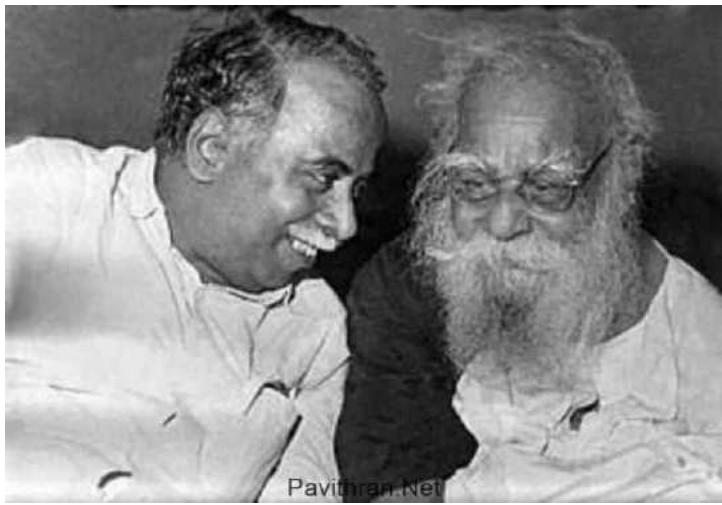
The old lions of justice party announced that their group alone reflect the true nature of the party and functioned separately as they had money power. As majority of the general public stood by the side of Periyar the Dravidar Kazham became popular and it gave new lease of life to Anna as its prominent lieutenant to Periyar and it became a powerful movement indeed. The functioning of a separate entity as Dravidar Khalagam gave new lease of life both to Periyar and Anna. Added to this Periyar announced a separate Dravidar Nadu and he went to the northern part of India to meet the congress leaders to convince them to agree to the idea of separate Dravidar Nadu. He took Anna with him. Their sojourn came to a virtual failure as none of the congress leader supported the idea of Periyar for a separate Dravida Nadu excepting the fact that they met Mohamed Ali Jinnah who was most successfully pioneering the idea of separate Pakistan from India. Their meeting was fruitful and Jinnah told Periyar that Anna was a born leader. Periyar agreed to the view of Jinnah and casually said that Anna is intelligent. Finally they met Ambedkar and returned.
### d) The Tirade of Wearing Black Shirt
In the year 1946 Periyar wanted his followers (i.e. thondar padai) should wear black upper cloth i.e. black shirt to mark the sufferings of the poor Tamils in its own Presidency. Anna opposed this idea and vehemently argued with Periyar about the ramifications of adopting such a move; as it is the discretion of the person to wear different colour of shirts and if someone creates a social crime wearing the black colour shirt the blame will fall on us. However, Periyar did not heed to this and stood firm on his idea. A small difference of opinion took a dangerous form and people belong to the same organization took sides and talked ill of others. Anna realized the division and consequences and requested his supporters not to organize public meeting to wage war of words thereby a great commotion of fighting among the same party men came to an end to the dismay of congressmen who were enjoying such a tirade. The congress then made a law prohibiting wearing of black shirt by the party men of Dravidar Khagam. Periyar organized a meeting in protest of the ban and waiting for Anna to come. Anna though came late but attended the meeting by wearing a black shirt this had put an end to the difference of opinion. In the same year Periyar organized a conference inviting his party men. About 50000 party men attended the conference. Suddenly goondas and rowdies entered the arena and disrupted the meeting but they were all thrown out of the meeting place. Anna announced "let the government arrests me for violating the law".
However, the government revoked the law thereby the back shirt became uniform of dravidar khazham.
### e) Anna the Bernadsaw of South India
Anna used to write essays and dramas. Anna wrote a drama by name Ore-iravu (one-night). And this drama was successfully run at Madras. One day Kalki saw this drama and said that Anna is the Bernadsaw of south India. In one of the public meeting Thiru Vi Ka exclaimed that so far in Tamil Nadu only Thiruvika writing and Thiruvika form of Tamil has been in existence - in future, I will not be surprised if Anna way of writing will come in to being. Anna raised funds for Pavender Bharathidasan through the members of the party and organized a function to hand over Rs. 25000/- to Pavender. In a function Anna handed over the money to Pavender. However, Pavender insisted Anna to start a political party with the money meant to be given to him. Anna convinced Pavender and requested him to go all over the country and compose wonderful poems and do service to Tamil Literature. Periyar did not attend this function as he never gave importance to the development of Literature and his aim was to uplift the people in the society. Thereafter Anna did not attend few meetings organized by Thanthai Periyar this had resulted in spreading news across the party cadre that these two leaders have misunderstanding among them. In few meetings where Anna attended slogans were shouted against him by the loyalists of Periyar and Anna's loyalists had also raised slogans in support of Anna. This had happened few times and Anna stopped attending the meetings of his party. Incidentally Periyar organized a conference in Tuticorin wherein Anna was expected to give his talk. Anna did not attend the conference; with the result the rift between these two had worsen. Periyar told the gathering that he does not require intelligent people to his party and fools are enough. Few press persons to know the reaction of Anna sought his opinion about Periyar's statement. Anna replied it is true that our party needs fools because they will become intelligent. Such is the greatness of Anna who never had negative attitude and gave respect to his opponents.
The Britishers announced the grant of independence two months before and leaders of congress party were busy in preparing the list of ministers. Ki Aa Po Vishwanathan prepared a list including Anna as one of the Minister and published it in the daily. The inclusion of the name of Anna brought a pleasant surprise to Anna himself as congress men considered Anna as a common leader. However, Anna replied that since he could not work in the Congress party he is tendering his resignation.
### f) Independence the Day of Darkness
While the country was celebrating the grant of independence on $27^{\text{th}}$ July 1947 Periyar announced the day of Independence should not be considered as a happy day infact it should be treated as a dark day as Tamils had not achieved the separate Dravida Nadu so far. This announcement not only surprised the party men but also Anna. Anna gave a statement that "it is not appropriate to measure a wonderful happening that was witnessed by the world merely by the objective of our party and regarding the day of independence as a dark day. One should not denounce the grant of Independence, if we do so, it will make the perception of the general public that the Justice Party has been working in alignment with the Britishers comes true. Therefore, I raise on this occasion to vehemently state that the day of Independence is going to dispel the two centuries of foreign rule of atrocities indeed is the happy day not a dark day. Even if the party is going to dispel me, I will fight for social justice and separate dravida nadu on my own. This statement surprised many in the party and Periyar did not expel Anna from the party.
### g) Hindi Protest United Periyar and Anna
Just after independence, the state government announced that Hindi should be taught in the schools. This had enraged not only the Tamil loving leaders but also the general people. Both Periyar and Anna issued joint statements in protest of the notification of the government and great many protests were taken place. The party workers stopped taking sides and happily indulged in the general protest and strike. On top of it, Anna wrote against the announcement of the government in teaching of Hindi language. The government demanded a penalty of Rs. 3000/- till such time the publication of the Dravida Nadu is suspended forth with. Anna sought the help of the party workers who came forward to rescue Anna and sent money. Anna paid the penalty and started publishing Dravida Nadu. When the case that was pending before the court came up for hearing the court decided against the plea of the government and Anna got back the money and he promptly returned the money to the persons from whom he received the amount.
In 1948 Periyar organized a conference in protest of Hindi propagation and made Anna as a special guest of honor. In the conference Periyar announced that he had served the society for 50 years and become tired and wished to pass on the mettle to Anna who is young and fit to lead the party this has got the onerous support of the party workers and they were overwhelmed by the announcement. But things went on the other way. Anna was neglected and slowly losing his respect in the party. Periyar had other plans. He gave a statement that he had no faith on anyone in the party and in view of this he is going to identify his attendant as his life partner so that the party and its wealth will be in tact as his close aides have swindled thousands of rupees. This enraged the party men more so Anna. On top of it Periyar gave a statement that someone in the party wants to kill him. This statement was unimaginable and Anna had to approach the court to file a defamation case against Periyar. Periyar's lawyer informed the court that the statement of Periyar never points the name of Anna thereby Anna withdrew the case.
Finally Periyar arranged for his marriage with Maniammai on 9.7.1949 and thereby Anna had to come out from Periyar and started his own party the Dravida Munetra Kazhagam on 17.8.1949 at Robinson Park, Chennai with the primary objective of
1. Social reform
2. Equity in public wealth
3. Political freedom
The congress government again imposed the law of making Hindi as the compulsory subject in the school curriculum. This announcement had provided necessary impetus to the newly formed party by Anna who organized state wide protest and the congress government had to withdraw its legislation. Thereafter the congress government banned the book written by Anna entitled "Arya-Maya". It imposed a penalty of Rs.700/- failing which rigorous imprisonment will have to be undergone. Anna refused to pay the penalty and was sent to jail. Again, the congress government banned the book published by Thanthai Periyar entitled "Pon-mozhigal" and imposed the same punishment with that of Anna. Incidentally Periyar and Anna were put in the same jail in adjacent rooms. They never met nor did they spoke. Prolonged protest all over the state made the congress government to release both the leaders.
Thereafter the general elections were announced Anna made it a point as his party was newly formed it will not contest the election; however, it will support individuals who has faith in the ideology of his party. Apart from congress and Communist party there are two other parties by name Workers Party and Common-wheels Party. Prominent persons belonging to these two parties approached Anna to support their candidature. Anna supported them. In the election no one won majority surprisingly the persons who sought the support of Anna won the election in plenty. This gave Anna the confidence that his party too gained ground in the public arena. In reality after independence congress could not gain majority in Tamilnadu to form the government and it was a great insult to congress party. Prime Minister Nehru called Rajaji in person and requested him to find ways and means to form the government with the support of the independents who are nearly 40 in numbers. It was the cleverness of Rajaji that had attracted many from the independent candidates to join congress party to form the government. This move of independents who had won the election with the support of Anna surprised many including Anna. Anna was furious and protested in front of the houses of the independents. Anna planned for an agitation keeping the following three agendas in mind:
1. Against the policy of the state government which announced that the students have to practice the work being done by their fathers
2. Rename the name of the railway station from Dalmiya to Kulithalai and
3. Denounce the insulting word of the Prime Minister Jawaharlal Nehru who had criticized the DMK party as nonsense.
Anna made an appeal to his party men that they should indulge in agitation with the three profound ideologies i.e. Kadamai, Kanniam and Kattupadu (Duty, Dignity and Discipline). Anna also insisted his party men not to indulge in violence in any manner and should abide by the cannons indicated by him.
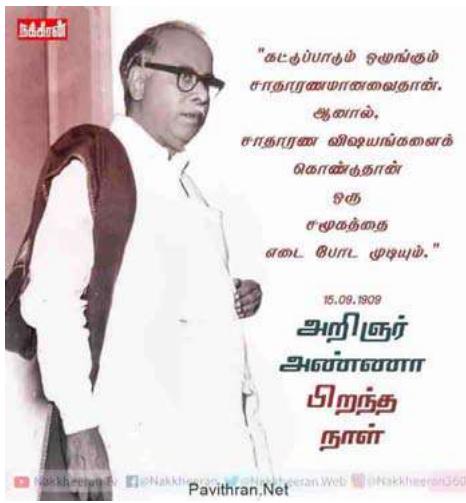
Anna and Nedunzhelian were arrested before hand and sent to jail. Many of the party workers were also arrested and put in the same jail where Anna and Nedunzhelian were kept. In the jail Anna was ready to do service to his party men but they refused the idea of Anna and co-operated with the police. Meanwhile the congress government imposed a penalty of Rs. 500/- or three month's rigorous imprisonment. Anna refused to pay the penalty and thereby arrested and sent to jail. There was wide range of agitation owing to the arrest of Anna. The party men decided to show black flags to the congress leaders, Ministers including the Prime Minister of India. Time elapsed Anna came out of the prison. But the agitation did not stop as majority of the party men believed that there was truth in Anna's conviction and ideology especially "Kulakalvi". The legislative assembly also enraged with heated exchange on the concept of kulakalvi and there was a voting for Kulakalvi. 137 supported the bill and 139 were against the concept of Kulakalvi and thereby the legislation failed in the assembly and the same was withdrawn. But the opposition demanded resignation of the Chief Minister as he lost the confidence of the House. Rajaji faced moral ignominy and planned to step down. This move paved the way for Karmaveerar Kamarajar to become the Chief Minister succeeding Rajaji. The words uttered by the great Rajaji that he will crush the DMK just like the mosquito has paled in to insignificance. Kamaraj who never supported the bill of Kulakalvi and was apposing Rajaji has become the Chief Minister after Rajaji stepped down. Once again the Dravidian concept of equity and social justice has been regained.
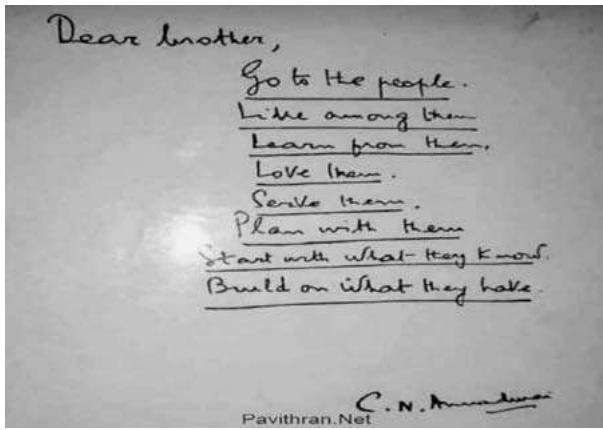
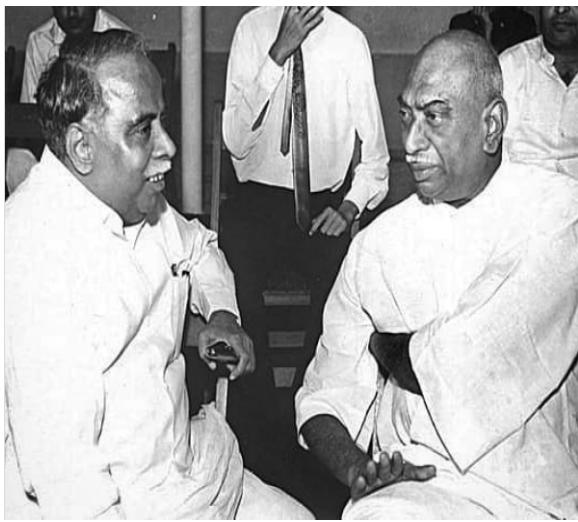
Kamaraj too under-estimated the DMK and openly exclaimed Anna to contest the election and face the legislative body. Anna said that he is waiting for the day to step in to the Assembly. On $21^{\text{st}}$ Aug. 1956 Anna established the women's wing of the party anointing Smt. Satyavani Muthu as its leader and Anna's wife Smt. Rani Annadurai had become the deputy leader. In the same year Anna organized a conference at Trichy just to know the opinion of the party workers whether to contest in the fourth coming elections. Efforts were made to go for voting by the party workers. As many as 56,942 have voted for contesting the elections and only 4203 were against contesting elections. While announcing the results Anna sought the support of his party workers to contest the election.
Efforts were made to defeat Anna in Kanchipuram even by Thanthai Periyar. Even Prime Minister Jawaharlal Nehru went to the extent of exclaiming that "Even if the sky has to fall down, we will not part with a small piece of land. We have already parted with Pakistan, such partisan should not happen and let us not allow another Pakistan to part with. Nehru spoke keeping in mind the claim of Dravidar Nadu of DMK. Anna announced the following national policy to face the election:
1. States should have autonomous power to have self-governance
2. Works should be nationalized.
3. Native language should be the language to impart knowledge
4. The Centre should avoid prohibition of Tamil Nadu in the five year plans
5. Defense expenditure of the central government should be reduced.
Anna's national policy was widely invited and acknowledged by the people of Tamil Nadu.
Anna defeated his congress opponent Dr. Srinivasan by more than 10,000 votes. Congress got 151 seats and formed the Assembly. DMK headed by Anna won 15 seats and entered the assembly. The DMK party were subjected to criticism as it got only 15 seats with the meagre members it cannot impact the progress of the congress government inspite of the fact that DMK was the second highest votes apart from Congress. Congress secured 49,13,374 as against 16,53,435.
Anna never bothered the criticisms levelled against his party by the congress as well as by Thanthai Periyar and went ahead in voicing for the down trodden people's equal rights and welfare and gained their supports including the youths as they were mesmerized by the thought provoking speeches of Anna. This can be witnessed in the results of local body elections wherein DMK won 45 seats against 36 seats won by the congress party. This development was seen the deterioration of Congress party in Tamil Nadu. But there existed growth of misunderstanding between EVK Sampath and Anna with the result Sampath has to part with DMK and started a new party by name Tamil National Party along with Kaviyarasu Kannadasan. In the 1962 general election for the assembly though DMK bagged 50 seats its leader Anna was defeated in Kanchipuram similarly the Tamil National Party did not win a single seat and his leader EVK Sampath was also defeated. Thereafter the Tamil National Party was merged with congress. But Anna was elected in the Rajya Saba election and become MP. Political leaders in the north regarded Anna as the leader of nonsense party in accordance with Jawaharlal Nehru's views. But Anna's thought-provoking speeches in the Parliament not only silenced these men but made them to admire him. To quote Anna's maiden speech in the Parliament he said "I came from a part of India belong to an unique community called dravidar. I am proud to call myself as dravidan. That does not mean that I am averse to people belonging to other states of India. As the English poet Robert Burns exclaimed "Every man should be respected because, "A man is man for all that". When I say that I belong to Dravidar community, it has got a very ancient heredity and culture. Once Anna was giving a long talk in the Parliament opposing the implementation of Hindi one member belong to the northern part of India not only opposed the speech of Anna but also giving example that Hindi is being implemented all over India because it was spoken by majority of the population in India. Anna patiently asked a question to this member. You adopt peacock as national bird inspite of the fact we have crows available in plenty. The member sat silent. Thus Anna became popular in the north too by his shear intelligence and accommodative nature.
Anna went on to stage a dharna due to soaring price rise at the collectorate of Vellore on 19.7.1962 along with his party men and was arrested and sent to jail for six weeks. Meanwhile the then Prime Minister Jawaharlal Nehru sent a telegram to Anna to join the meeting convened by him due to the war with China. Anna immediately replied stating that his party will stand by the side of the Prime Minister and the decisions taken by him to safeguard the sovereign and security of the country. Anna went to the extent of informing Nehru that his party will collect money for this purpose. Anna collected huge sums of money which includes the liberal donation given by Puratchi Thalaivar M. G. Ramachandran to the tune of Rs. 75000/-. Thus Anna always deeply rooted in terms of national integrity. Like Anna there are other leaders in the northern part of India who had also claiming separate nation that made the Prime Minister to enact a law that whoever claims separate nation that party cannot contest in general election. This had made Anna to retreat from the claim of Dravida Nadu. Incidentally after the Chinese war Jawaharlal Nehru became sick and ultimately passed away. Before Pandit Jawaharlal Nehru passed away he wanted Kamarajar to take active part in the Central politics and thereby Kamaraj quit the post of Chief Minister on $1^{\text{st}}$ Oct 1963 thereby Baktavasalam became the Chief Minister of Tamil Nadu on 2.10.1963.
When Kamarajar anointed Lal Bagadur Shastri as the Prime Minister he passed a legislation on 26.1.1965 that Hindi Language is made as the national language. Anna announced that $26^{\text{th}}$ Jan. as black day and requested that black flags should be hoisted at every house in Tamil Nadu. But congress government arrested Anna on $25^{\text{th}}$ Jan. 1965 fearing state wide opposition by the DMK. This time the students of Annamalai University went on to a strike and agitation wherein police opened fire and one student by name Rajendran died on the spot. This had infuriated the entire student community of the state and they went on to wage dharna in front of Railway Station and they also stopped the trains and set some of the train ablaze. They then went on a similar rampage of post offices.
These agitations became so intense and police had to resort to firing and thereby 24 people have lost their lives on 10.2.1965, subsequently 31 people were shot dead. For three days post offices and railway stations were not functioning with the result the central minister came and requested Anna to speak to the student agitators and stop the agitation. Anna made an appeal to the students thereby the agitation came to an end. The 1967 general elections were announced. Anna had become so popular among the people especially among the youths. Anna approached MGR and asked him about his plans. MGR said that he will give the amount that he is going to get for a movie. In turn Anna requested MGR to give the days of call-sheet of a movie and show his face before the public and he will surely win the elections. Anna also wanted MGR to contest the election in the Alandur constituency. MGR agreed to do so but fate had other designs that MGR was shot and severely injured and was admitted in the hospital. Entire Tamil Nadu witnessed sadness but Anna pasted the wall poster of MGR with a huge bandage around his neck throughout Tamil Nadu that had garnered the victory votes for the DMK. Indeed, DMK bagged 151 seats which made congress to get only 49 seats. From then onwards it was a struggle for congress to come to power in Tamil Nadu. Surprisingly, Anna did not contest in the assembly election but own the south Madras constitution as an MP. Anna had to resign the MP post to become the Chief Minister and then became an MLC to retain his Chief Ministership. Anna went to his political mentor Thanthai Periyar and took his blessings. Periyar was surprised and praised Anna for his modesty. Anna further said that I will place this victory at the feet of Periyar. The following are the great efforts made by Anna when he ruled the state of Tamil Nadu:
On July 18 1967 Anna placed a bill to name the Madras Presidency as Tamilnadu.
On 6.3.1967 Anna made two language formula i.e. Tamil and English as the language of Tamil Nadu assembly.
He made self-respect marriage as a law.
He made the buses as state owned beyond 170 kms; Reduced the ministers salary from 1000 to Rs. 500/-; Abolition of liquor sale by the Government; Second Tamil World Conference; One measure rice for one rupee; Abolished hand rickshaw
Introduced Tamil words in place of the following popular words:
Chennai Maganam = Tamil Nadu; Secretariat = Thalamai Seyalagam; Satvamejayathe = Vaimeye Vellum; Akasavani = vanoli; Driver - ottunar; Conductor = nadathunar; Sri = thiru; Srimathi = thirumathi; Kumari = selvi; Namaskaram = vanakkam; Akrasanar = avaithalaivar; Kariyadarasi = seyalalar; Bokishadhar - porulalar; Abedshakar = vetpalar; Abedsha parthiram = vetpumanu; Vivaga subamukurtha patrika = thirumana alaipu; Karnapooshana patrika = kathani vizha alaipu; Ruthu santhi patrika = manjal neerattuvizha; Kiruhapravesa patrika = puthumanai puguvizha alaipu; Atcharaabiyasam = yeshutharium vizha; Makara sankaranthi = pongal pandikai
When Anna introduced his first budget speech on $17^{\text{th}}$ July 1967 it contained the following:
- No tax for the cultivable lands
- Gold medal to those who conduct intercast marriage
- Buses are made national
- There are no new taxes levied on the poors.
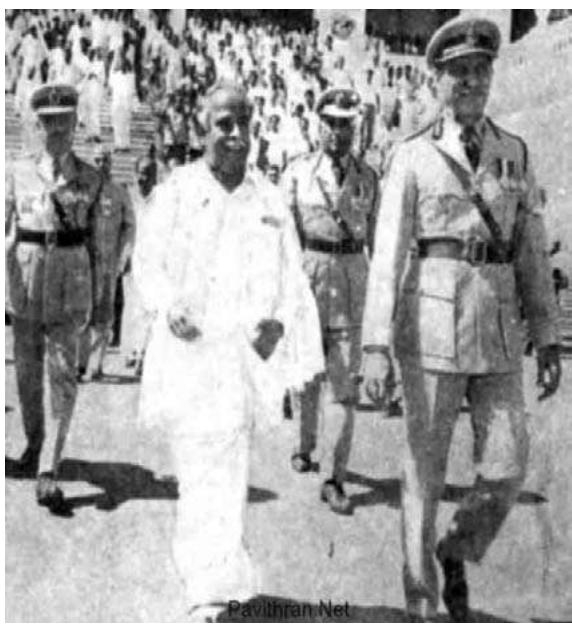
In 1965 Arignar Anna walking from Assembly as CM of Tamilnadu
An eminent economist Sri. Ramaswami Mudaliar said: "those who draw the central budget should come down and take lessons from Anna's budgetary projection".
Anna was a great writer then only he became a political leader. His stories, poems, essays, pudinam (short stories), Novels, drama and film story writing made him an all round personality of acclaimed writer and made the Tamil fraternity to turn towards his side by his revolutionary movie Velaikari in 1949. When the movies were centred on their stories with puranas and ithihasas and yester year kings Anna's movie the Velaikari made the producers to think of producing socially relevant movies. The phrases like "sharpen your mind rather than sharpening your knife; "law is a dark room and the arguments of the lawyers are lamp but the light of the lamp never goes to the poors". Thereby all the following movies can be subjected to research whether they contain the concept of equity and social justice:
Or Iravu; Sorgavasal; Nallathambi; Nallavan Valvan; Ethayum thangum ithayam; Rangoon Radha; Thaimagalukkukattiya thali; Kathal jothi; Vandikaran Magan.
Anna wrote dramas before writing film stories. His first drama was entitled Chandrodayam. He enacted this drama in 1943 at North Arcot he was the director and screen play writer and actor in this drama. Anna wrote his first short story in 1933 when he was studying in the college; it was published in the Tamil Magazine "Ananda Vikadan" wherein his name was indicated as "sowmian" the Tamil year of his birth. Like wise Anna had the following twenty-two nick names:
Sowmian, Barathan, Kalan, Began, Veeran, Otran, Nakeeran, Tamil Thondan, Vardhan, Kuruppon, Samadharman, Vazhipokkan, Tamil Anban, Koshu, Barathi, Kuil, Bharat, Venus and Manimozhi.
### h) Anna's Dramas were
Chandrodayam, Shivaji Kanda Hindu Samrajyam, Nallathambi, Sorgavasal, Kadhal Jothi, Oryiravu, Velaikari, Kannayirathin vulagam Pavayin Payanam, enbaoli, Rotti thundu, Neethi Devan mayakkam.
#### Anna's other writings
Thabikku modal – 316; Essays – 560; Dramas – 114; Short dramas – 18; Pudinangal – 6; Short stories – 118; Kavithaigal – 77; Writings in the newspapers – more than 1000. Anna's Rangoon Radha has been translated in French Language.
Anna was afflicted by a dreadful disease cancer in his liver and he suffered unbearable stomach pain. He was taken to America for a better treatment in September 1968 even Smt. Indra Gandhi who was visiting US on official trip went and saw the medical treatment given to Anna in the New York Memorial Hospital. Anna wrote a letter to Thanthai Periyar on 10.10.1968:
Salutations unto Periyar who possess great love and affection towards me!
My health and body condition is steadily improving. I do not experience pain. However, I could not feel hungry and I am becoming lean day by day. As advised by Dr. Millar I will take rest for a month and return to India on the first week of November.
I could visualize your sadness in the Chennai Hospital and at the Airport therefore I am writing this letter to indicate more clearly that the situation of sadness had completely receded and I profusely thank you for the affection towards me.
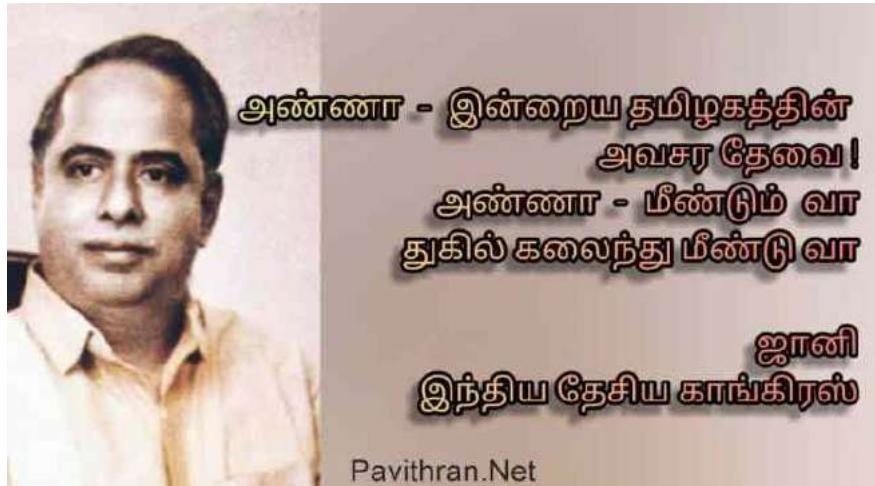
Anna addressed his last meeting on 1.12.1968 after the Act of naming Tamil Nadu was enacted on 22.11.1968. Thereafter Anna unveiled the statue of NS Krishnan on 14.1.1969 at T. Nagar. It was said that N. S. Krishnan's last public address was when he unveiled Anna's Statue.
It so happened that a person in Kumbakonam was suffering from certain brain disease and medicines were not available in India at that time. Doctors advised the family to get that medicines from US so that the patient can be saved. The family rushed to the Secretariat and approached the Chief Minister's office for help. The message was sent to Anna. Anna got that medicine and sent them to the family thereby the person at Kumbakonam was saved but not the sender of the medicine. Fate approached Anna with his dreadful hands and laid its Icey hand on Anna on 02.02.1969. Though Anna was no more however one can witness his ideology in the political philosophy announced by Bharat Ratna Marudhur Goplamenon Ramachandran (Dr. MGT).
### i) Life and Character of Bharat Ratna Marudhur Gopalamenon Ramachandran (Dr. MGR)
Bharat Ratna Marudhur Gopalamenon Ramachandran (MGR) is well known by the three letters MGR and also popularly known as Puratchi Thalaivar (Revolutionary leader), Ponmana Chemmal (Golden hearted) and Makkal Thilagam (foremost among the people). Unable to continue his education early in life i.e. while he was studying in $3^{\mathrm{rd}}$ standard at the Government school of Kumbakonam (Anaiyadi School) MGR approached his uncle Narayanan who was working with Madurai Original Boys Company to help him to join the troop. MGR's salary was four and half rupees per week. More over the company provided food and shelter within its premises. The company also had amenities to practice conventional Indian martial arts like silambum, stic fighting, wrestling, body building etc. MGR and his elder brother M. G. Chakrapani met stalwarts like PU Chinnappa, Nadippu Chemmal M. K. Radha and the great intellectual comedian revered Kalaivanar NS
Krishnan. It is this man i.e. Kalaivaner helped MGR when MGR was in dire-state without chances in Cinema. Others who helped MGR in terms of need was M. K. Radha and director Raja Chandra Sekhar. From a stage actor MGR got a chance to act in a movie called Sathie Leelavathi in 1936 thereafter MGR acted in movies like Erusakothirargal, Thatchayagnam, Mayamachindra, Prahaladhan, Veera Jagadeesh and Rajamukthi simultaneously acting on the stage in dramas. It was the great NSK and Raja Chandrasekar advised MGR to learn Silambam. Silambam is a weapon-based Indian martial art that originated in the Indian subcontinent i.e. South India. Tamil Sangam literature mentions this technique. Silambam's official international body is the World Silambam Association (18). This style is mentioned in Tamil Sangam literature 400 BCE (5). It was quoted in the Wikipedia that in quite a number of his movies in 1950s and 1960s, M. G. Ramachandran (MGR) incorporated silambam fighting scenes, to popularize this ancient martial art; the movies include Thaikkupin Tharam, Periya Idathu Penn, Mugaraasi and Thanipiravi (19).
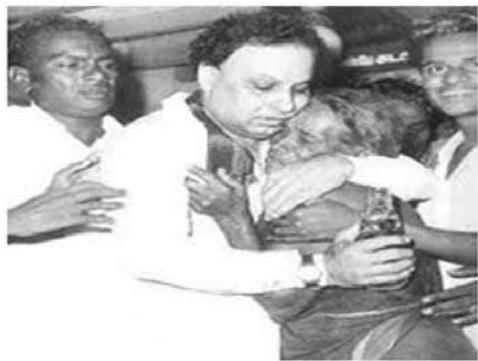
Though MGR learnt the art with great determination that had enhanced his acting skills but fate was not graceful enough to show mercy to crown him as a hero in the Tamil film industry. MGR never gave up his confidence to the chosen path of cinema and the time had come to announce to the fans of Tamil Nadu to identify MGR as the savior of poor's; a hero to establish truth more particularly with a charisma to save the pride of women hood of the Tamil society through his movies like Malaikallan later Nadodimannan. The various impeccable dialogues, the songs containing meaningful lyrics points one thing i.e. among his efforts of emancipation of the Tamil Society, is a great representative of the poor's; a person who could be depended at the time of distress by both friends and foes alike.
Peraringer Anna wanted MGR to go for election campaign. Though MGR agreed to go for election campaign cancelling the call-sheet given to movies like Arasa Kattalai, Adimaipen and Kaval Karan - he was gunned by M. R. Radha on 12.1.1967 however, could escape with the grace of God. He could not go for election campaign. But as indicated above DMK headed by Anna used MGR's photo effectively at all the constituencies of Tamil Nadu which had served as a passport to gain votes and DMK had won in 137 seats out of 174 seats it had contested. Anna wanted MGR to be in the Ministry but MGR had different ideas and could not accept (20).
After Anna was anointed as the Chief Minister of Tamil Nadu, MGR acted in the three movies promised by him. The only set back MGR had was that the bullet that went inside his ear had reduced his voice and he could not pronounce the words properly. However, MGR determined to spoke in his own voice that made the general public to admire him. So long as Anna was at the helm of affairs of Tamil Nadu, MGR's influence in the political arena was predominant. Who thought that Anna would die two years after he was anointed as Chief Minister? The dreams that Anna had towards making Tamil Nadu a state of equity and social justice; moreover, translating the ideology of Thanthai Periyar paled in to insignificance. The DMK had to find a leader from among the front-line; it may be Nedunzhelian or Mu.Karunanidhi. Since MGR was a great friend of Karunanidhi - Kalaiger and Mutamil Aringer outlived the others and become the Chief Minister of Tamil nadu.
The freaks of fate indeed are inscrutable that MGR was removed from the party post of Treasurer including the primary membership on 14.10.1972. There was chaos in Tamil Nadu and party workers came to the streets to openly support MGR. Several seniors and four sitting MLAs' such as S.M.Durai Raj, Ku.Chelliah, Sounderapandian, G.R.Edmond, later stalwarts like K.Kalimuthu, G.Viewananthan, Kovai Chezian, CP Velappan joined MGR. All these overwhelming supports made MGR to start his political party i.e. AIADMK in 1972. Those who are interested to know more about MGR's personal life can read the article published by the same authors in the paper entitled "A Retrospective Reflection on the Life History and the Philanthropic Attitude of Bharat Ratna Dr. Marudhur Gopala Menon Ramachandran - A Bird's Eye View" the authors not only traced the history of Dr. MGR but also the ordeals he made and the charitable mind of the Hero of the research topic (21).
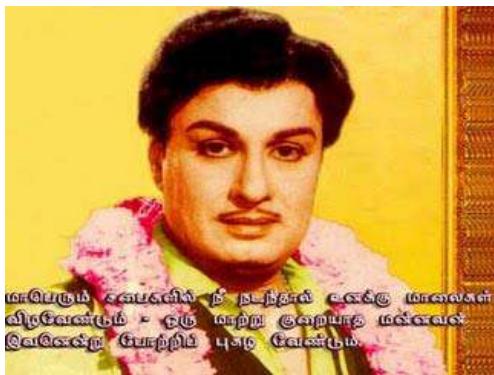
### j) MGR's Political Philosophy
Dr. MGR political ideology can be found in various speeches; especially the speech made by him while launching AIADMK party in 1972. One can witness the firm conviction of MGR who relied on what his political mentor Peraringer Anna had enunciated. Dr. MGR introduced these ideas in the form of Annaism as his political philosophy and made determined efforts to translate them in to action. A careful reading of the following excerpts from the speech made by Dr.MGR while launching his party AIADMK in 1972, would prove the point that MGR carried forward the wisdom made known by his political mentor the great Peraringer Anna and the social welfare ideas reflected in his film songs, as his political ideology and tried to translate them to a constructive plan called the people's plan and did justice to uplift the poor's, the destitute and the women folk of Tamil Nadu. Let us see the translation of the famous speech made by Dr. MGR in Tamil (translated version in English is given below) indeed this speech is being listened by millions of his party comrades event today that gives them the solace they look for). I could not control my emotion when MGR, Kannadasan and my mother passed away was the words of the legendary music director M. S. Viswanathan such is the impact MGR had with him (22).
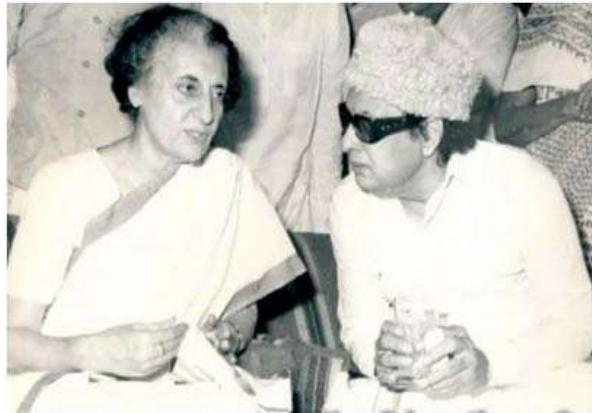
Beloved Elders and Esteemed Ladies (the Embodiment of Eternal love), Proudful Tamilians and my Blood's Blood Brothers.
Amarar (ever-living) Anna use to say that, "the justice pronounced by the common man, is the justice to be advocated by the legislators". This is what was pronounced as the philosophy of people's rules by the social pundits. People's governance is that which is established by the people, for the people by the people themselves. The foundation for this governance is the right to vote. The wonderful palace that is to be built on this everlasting foundation is good government. Such a government that governs the people is the people's government. Those who take responsibility to rule the people under such governance not only be efficient but should be an embodiment of goodness. Not only be eloquent in their speech but be eloquent in honesty. Not only be iron-hearted but possess the heart of benevolence. Not only to show their pride's sway but possess the heart to exhibit mercy.
Such representatives of the people should be purity personified and possess the attitude of service to the people and treat themselves one among the common man (i.e. the poors) and should not try to overpower them. They should consider that the political power is an opportunity given to them to serve the people and not to misconstrue and display their supremacy over the people. This is the political wisdom given by Peraringer Anna.
Those who commit injustice to the poors will certainly be punished one day or the other by the people themselves. When Peraringer Anna assumed the charge as the Chief Minister, he announced 1 Kg rice per rupee. But the officials around him told Anna that there will be deficit in the budget to the tune of Rs. 8.00 crores and wanted to scrap the scheme. But Anna asked the officers to find out how best they can mitigate this revenue burden rather than stopping the welfare scheme. When it comes to collection of revenue, it is not how the revenue is to be collected, rather it is important from whom the revenue is to be collected. When it amounts to evolving appropriate plans to spend the revenue so collected, it is imperative to think, which part of the people it is intended to benefit. Indeed such an equitable political thought has been accepted as equitable economic plan. I therefore owe to give importance to such a political ideology that is called the "Annaism" and give a clean government which is free of corruption that treats the poor of the state as its comrade and should be praised and appreciated by the learned, and I determine to face any amount of sacrifice to make the AIADMK as a party which has the lineage of leaders who are embodiment to marvel such sacrifices.
The government to be formed by AIADMK will try to remove ups and downs in the society. It will follow the unique philosophy of a sole community that would follow the principle of a unique God. It will strive to uplift the socially and economically backward people and alleviate them to the higher strata of life – "economically, educationally and politically". It will also strive to uplift the workers of the unorganized sector like the koolys, the agricultural labs the weavers who struggle day in and out. Plans will be enacted to establish equitable economic development, which will result in creating job opportunities according to one's ability and gain wages according to the work performed by them.
My government will also find employment to the agriculturists who suffer without employment during the rest of the year i.e. after his cultivation activity. Importance will be given in the planning to less developed areas and appropriate plans to develop these areas will be taken up and completed. It will also try to replace the villages into big cities and small cities and create adequate facilities in the villages and create a feeling in the minds of the rural people not to migrate to cities.
It will also create avenues for the educated to engage in different kinds of employment and plans in this direction will be evolved to achieve planned economic growth. Steps will be taken to glorify the Tamil Language all over the world as was exclaimed by the national poet Magakavi Subramanya Bharathiyar who praised the Tamil Language as "I could not find as sweet and as enjoyable Tamil anywhere. I will strive to safeguard the integrity of India. The country could not achieve development as half of the population who are ladies and who did not have equal share on par with men. We talk about women's education, women's emancipation, women's employment. However, it is imperative to understand that we and the country will progress only when women in the society attains equal rights. Noble hearted Gandhi, Thanthai Periyar, the Saintly Rajaji and Amarar Anna used to reiterate the concept of women's emancipation in the society. To turn their dreams into reality AIADMK will strive for. In order to establish such a government and to call such a government as the people's government I seek your blessings and support... Vanakkam... Long lived Anna's Fame. Annaism can be brought under the following pointers (23).
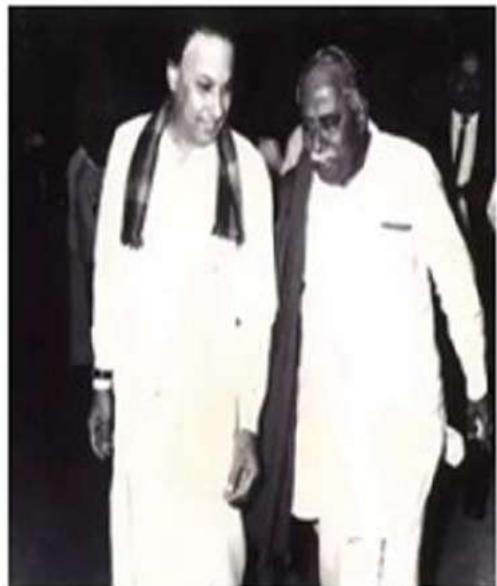
# k) A Bird's Eye
Born on 24 February, 1948 at Melukote, Pandavapura Taluk, Mandya district, Mysore State, Jayaraman Jayalalitha had her earlier education at Bishop Cotton School at Bangalore and thereafter at the Presentation Convent, Chennai. She had to stay away from her mother in Mysore and longed for her mother's love; that became more predominant in her when she was shifted to Chennai. She chose to be alone always because of her straight forwardness. Though her classmates in the Presentation Convent decried her by quoting her mother's smaller role in the films (not the role of a heroine) she silenced them by her noble character of obeying the commands of her teachers and topping in all the subjects. This approach made her critiques to think twice before they try to decry her.
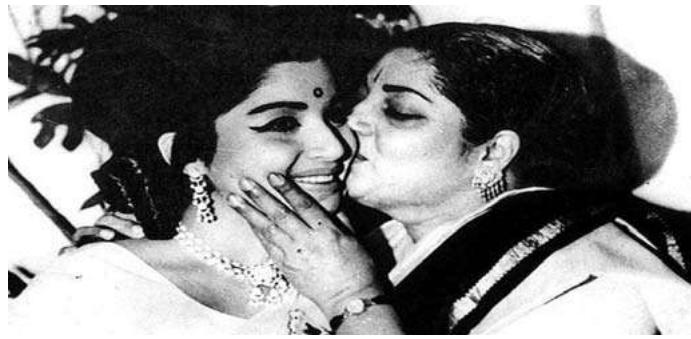
(ThiruKural verse 69). English (explanation of the above verse): The mother becomes extremely happy after hearing her son praised by the nobles as a virtuous person. This happiness is greater than when she begot him. - This becomes equally true to daughters as well.
Acting in the films was not a cup of tea for Amma - nor did she like it; neither that of her mother's wish. Her mother Smt. Sandya Jayaraman was a greatacrifier who had taken upon herself to cinema just to support her children's study after the demise of her husband Sri. Jayaraman. Jayaraman otherwise was a
- A casteless and classless society
- Sale of all essential commodities should be taken over by the government,
- Right to recall
- Confiscation of properties of corrupt people,
- Ceiling of income like land holdings
- withdrawal of currencies below 100
- inclusion of English in the eighth schedule of the Constitution to safeguard the interests of the Anglo-Indian community
- Ddecentralization of powers between center and states
- Government takeover of heavy industries and mills
- Coffee, tea and rubber plantations should be nationalized.
very rich man whose father was a doctor at the Palace of Mysore Maharaja. It seems he had spent the wealth lavishly and it had evaporated in course time and he passed away all of a sudden.
Sandhya however refused many times to send her daughter to act in movies when several chances knocked their door. It was indeed fate that came in the form of opportunities that never seemed to leave Amma who otherwise had great dreams either to become a doctor or an IAS officer or even a lawyer. In the interview with Simi Garwale, Amma told had she not ventured into either cinema or politics she would have done research like Amirthya Sen. Always fate wins, because it knew that Amma is destined to become a famous heroine who is going to carve a niche in setting great standards as an actress by her flawless acting (putting her heart and soul) in every role she played in more than 140 films including Telegu, Malayalam, Hindi and English. Indeed Amma was a versatile singer and a classical dancer too. Later, she also became a writer with several published short stories and novels at her credit. Politics was not an accident to Amma as she herself exclaimed which can be found in the message sent by her to Divya Films G Chokkalingam, who took pains for the re- release the movie Ayirathil Oruvan in digital form after a gap of half a century (her own words):
the theatre this has proved that Aayirathil Oruvan has achieved what the new films have failed to".
Amma has imbibed with great intellect, agile, alert above all graceful that attracted attention of both intellectuals and the ordinary too. For example, there was a situation in the movie called Pattikada Pattanamma wherein a folk dance had to take place. The music director the great MSV sung the tune to one of the greatest lyricist. Kaviyarasu could not conceive the "Pallavi" of the song for three days. The hero Chevalio Shivaji called MSV on the third day and asked him whether the song is ready - He replied in the negative - then Sivaji murmured the following and wanted MSV to sing it before Kaviyarasu:
Kettukodi urumi melam - Pottukodi Kobathalam: Pathukkodi Unmamakitta - Pattikattu Ragathalam.
With great hesitation MSV recited the above before Kaviyarasu and he was startled and accepted the same as Pallavi and wrote the Charanam for the rest of the song in his own classical manner. When it came to the release of audio Shivaji revealed to the public that it was Ammu (Jayalaliha) who wrote the Pallavi. Such is the cleverness and agility of Ammu who comes up with suggestions at the time of need. This was reported by none-other than MSV himself in Mega TV "endrum MSV" telecasted on Sunday the $30^{\text{th}}$ Aug. 2020 (24).
### i) Did not Like Acting and nor Interested in Politics
It was reported in the weekly magazine Kungumam dated 16.12.2016 that the late Chief Minister of Tamil Nadu J. Jayalalitha, is a different administrator. Starting from Tamil Nadu up to New Delhi she foreshook the power centers to everyone's surprise. Cinema, Politics then ruling the state marking the stamp of authority in every of her chosen pathis indeed bewildering. There are in-depth meaning in the interview given by her to the former actress Simi and Karanthapper. Born out of her inner-self, whenever we listen to these interviews it touches our heart. There are places wherein, it shows a peculiar Jayalalitha which were not witnessed at any other place. She said that "whenever and wherever I was seen as calm and composed because I keep my feelings inside me. I never allow them to prevail so that others can witness it". I never loose temper at public place, nor cried, I am firm that my feelings are not for public display. How it is possible because I have great determination and self-discipline. Politics had certainly changed me as a mentally powerful person. Whatever you see Jayalalitha is not like those days. I was not like this always. I was a shy type never wished to see strangers nor watched by them. I hate being watched by strangers during the period of my youth. I have been mis-understood sooner I ventured in to politics. I have faced criticisms a lot. All the worlds is a stage and all are acting in different characters at different times. But I remain differently. I am not like any other politician. The play of politics expects great acting's. I have acted before the camera a lot but not in real life.
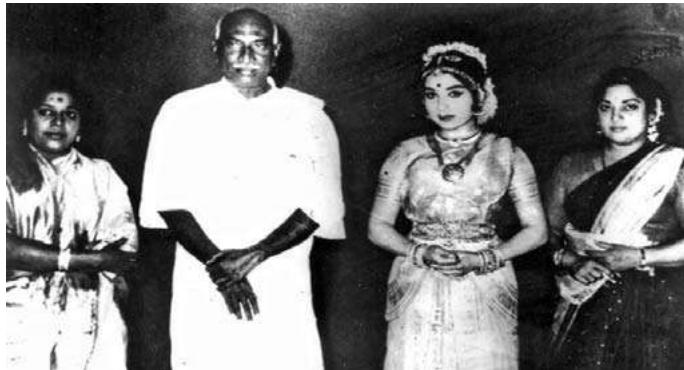
Congress Leader and Tamil Nadu CM K. Kamaraj
Greets Jayalalithaa at a Dance Recital.
Every political leader's life consists of ups and downs and everyone's life is like this too. People cannot win for ever nor loose too. My political life is a very bold one. Unlike, any cinema story it had got lots of twists, turns, trials and tribulations too. I have become infuriated when I faced unprecedented happenings. I am also an ordinary person had I not displayed such feelings then I would not have been considered as an ordinary person. But you will learn to control and hide your feelings when you become a political leader. I used to love to be alone- my first desire is to read books - When I was young, I desired to receive books instead of any other gifts on the eve of my birth day.
I grew in my grandma's house when I was in Bangalore. It was difficult to stay away from my mother. I used to cry wanting the presence of her when I was in Bangalore. When I look back my life, I have spent very less time with my mother. I could not experience the full amount of affection of mother as I had expected. I lost my mother at the age of 23. My mother was my world. She alone protected me but taught nothing. I could not manage my family, either to maintain my bank account or how to sign a cheque; or to pay tax, why I do not know how many servants existed in my house. Why I did not know how much salary I was receiving. I realized myself to be an innocent child left in the forest after tying its eyes. People around used to capitalize me as I was so innocent. People from the elite society used to down play me as my mother was an actress. To silence them I used to obtain first mark in all the subjects. When I left the school all the teachers gave me the title "Best outgoing student of the year". I considered it as a great honor in my life and proud of myself even today. Those days, I used to cry because of the criticisms now I learnt to give back. I give more than the criticisms levelled against me. I used to be No.1 in south India as an actress. I used to work hard to excel in the field. In dance and in acting though I disliked them. Acting came to me naturally. It can be said that I am a born actress. I never copied anyone's style, I adopted my own style. Similarly, though I disliked politics, people used to tell me that I am a successful political leader. If you consider any thing as a challenge, you can face it with interest. I have astonished upon seeing my own self. I too had the same dreams as a school goer. I admired Nari Contractor and used to go to Chepauk just to see him play. I also used to admire Shami Kapoor the Hindi Actor. I used to watch his movie Junglee (1961 film) even today. During his playing days, Contractor was considered a glamour boy of Indian cricket. I could not witness unconditional love. I could not think whether there exists such an unconditional love. It exists in books, novels, poems and films. Even if it exists in reality, I did not face it. I did not meet anyone whom I could marry. However, I had the urge to get married. Like other teen agers I also dreamt about the Prince Charm. Had I got married at the age of 18 even if it is an arranged marriage, I could have accepted it happily and started my family life and lived along with my Childrens? Never would have moved out of the house at all. But whatever we expect did not happen. I never had a feeling that I did not have a whole family. I enjoy the
freedom of my own. Witnessing failure of marriages and deserting parents by the children I am not worried about not getting married. I feel happy indeed. I like this life, I have the freedom of taking decisions on my own and need not live just to make some-one happy, I like this freedom (25).
### j) Innocent Jayalitha
Beginning of her film career, Ammu used to read books when she was alone in the sets. She never stood up to pay respect to MGR or Nambiar when they later arrived to the sets. Such behavior born out of innocence was noticed by her critiques and pointed negatively to MGR. MGR understood that careless comments were passed about Ammu and ignored it. Ammu understood these lacunae very soon and begun to respect the elders as was the custom. I (K. P. Ramakrishnan) also acted as a slave in the first movie Ayirathil Oruvan and could easily watch the various important scenes that took place. The first scene was a song Nanamoo – Jayalalitha was little hesitant to act in closeup shots with MGR and it was MGR who taught her how to act in close scenes forgetting the fear complex.
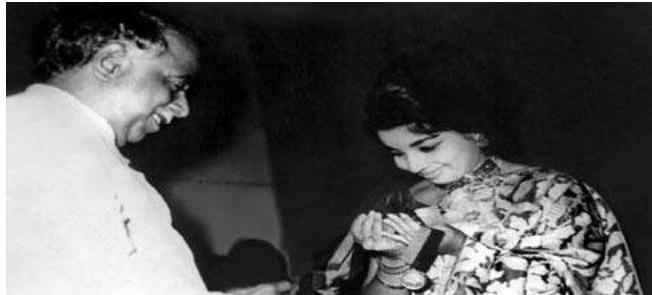
As an Aartist, Jayalalithaa Receives an Award from Tamil Nadu Chief Minister C. N. Annadurai.
Before entering to politics Jayalalitha helped MGR to raise funds by arranging various dance concerts. In 1970, it was in Nagercoil Jayalalitha performed a dance concert under the presence of MGR that had helped the builders to build Kalaivanar Arangam. In the same year at Madurai for the Sourastra College funds, Jayalalitha performed a dance concert in the presence of MGR and the collections were given to the college authorities. Similarly, to construct a stadium at Trichy Jayalalitha performed a dance concert in the presence of MGR, a huge amount of Rs.10.00 lakhs were raised in the single concert by Jayalalitha that was used to construct the stadium. Jayalalitha enacted a dance concert "Kaveri thantha Kalai Selvi" at Salem in the presence of MGR and the collection of Rs.5.00 lakhs were used for the cause of the party. All these made Jayalalitha as a versatile personality to enter in to the portals of politics that too with the blessings of MGR.
# n) In Politics as Puratchi Thalaivi
It was MGR whose farsightedness to lead the party after his demise brought Ammu in to the political arena, though numerous other heroines acted with
MGR. MGR wanted Ammu to scale great heights in the party cadre. MGR used to obtain feed back from the then Head of the Intelligence Sri. Mohandas about the speeches made by Jayalalitha in the party meetings and expressed his happiness and I as his personal bodyguard used to admire the keen interest of MGR on the progress of Jayalitha in the party. Noting the great talent and instantaneous speeches of Jayalalitha during the bye-election of Thiruchendur, MGR decided that he need not go from place to place to answer the questions raised by the opposition leader Sri. M. Karunanidhi and sent Jayalalitha for this important task. MGR asked us to accompany Jayalalitha in her tours and also requested the Senior Journalist Solai also to accompany.
Finally MGR decided to send Jayalalitha to the Indian Parliament as the Raja Sabha MP because of her scholarship in multi-language and leadership qualities. MGR was extremely happy to note the progress made by Jayalalitha in the Parliament – these developments are witnessed by persons like me who were his personal body guards. It was MGR who ordered the party cadre to replace the prefix Selvi to Puratchi Selvi Jayalalitha and thus after the demise of MGR the respected terminology Puratchi Thalaivi came in to existence and it was not superimposed by any one including Jayalalitha.
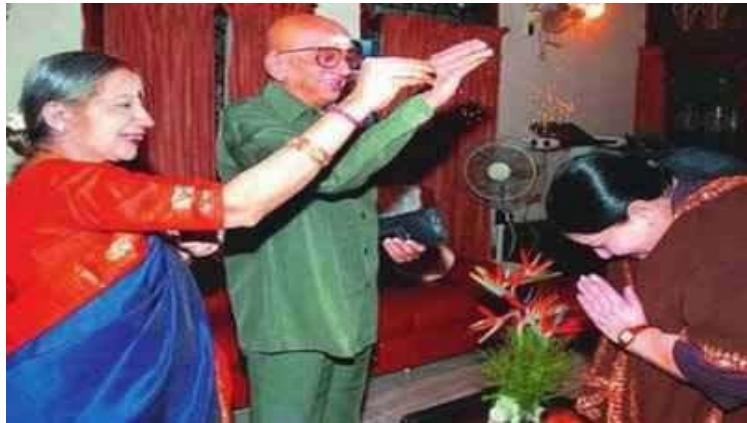
Only a true well-wisher knows the intricate talent, patience and perseverance above all dedication to serve the countrymen without any reservation - Padmasree Cho Ramaswamy lyer being a great friend for life time of Amma boldly predicted Amma to be the future Prime Minister of India in 2015. Perhaps she deserves so.
In the 1984 assembly election it was Jayalalitha single handedly travelled every nook and corner of Tamil Nadu and grabbed victory for AIADMK when MGR was actually hospitalized in Brookelyin. Party cadres and senior leaders surrounding MGR wanted Jayalalitha to be removed from party post and not allowed to go for election campaign. MGR dismissed such demands with a stout look or with a faint smile. Such persons after Jayalalitha became the Chief Minister fell at her feet and Jayalalitha shown motherly affection to them and made them ministers in her cabinet, such quality in a woman indeed rare.
Though Ammu was brought to the political scenario and protected by MGR till his existence, after the demise of MGR it was Jayalalitha who faced the challenges by her shear braveness and took bold decisions till she was anointed the Chief Minister – such a political experience and handling extra-ordinary political turmoil rests only with Jayalalitha in the annals of political history of Tamil Nadu. K. P. Ramakrishnan records that even while MGR was alive it was Jayalalitha who withstood the arrows of hate by the DMK and within the AIADMK cadre leaders who wanted to remove her from the political scenario.
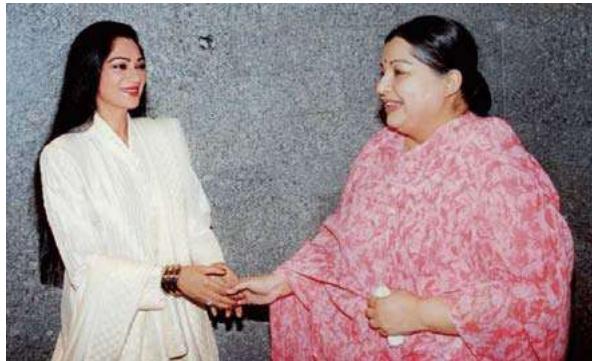
Simi Garewal: 'I realised I was talking to a highly intelligent woman. I knew from my research that Jayalalithaa was a brilliant student - but her articulation and clarity of thought amazed me. No fumbling or searching for words to express herself. She never evaded any question. She was very frank and honest. There was sincerity; there was humour; there was pathos and pain'.
### k) MSV Interview about Amma
It seems the great lyric writer Kaviyarasu Kannadasan, appeared in the dream of MSV and asked him to install an idol of himself. He advised MSV to organize a music consort to collect money. The consort was held and money was collected that was sufficient to order for the idol of Kaviyarasu to be made. He was searching for a proper place to install the idol but the space identified was in a famous area and could not afford with the money at hand. At this circumstances MSV decided to approach the then Chief Minister, Puratchi Thalaivi Amma. Who had immediately agreed to pass orders for the possession of the said land for installation of the idol. Amma graciously agreed for every one of the cinema fraternity to attend the function
including that of late Kalaigner Karunanidhi. This shows the magnanimity of Amma (26).
K. P. Ramakrishnan States the Following in his Book that: (27)
Amma did not write her biography, there are few books available to portray the noble history of Amma. Amma also gave only few interviews the following is one such interview given on 7.1.1973 to Vikadan: the English translation is given below:
1. Are you interested in taking part in active politics? What will you notice importantly before entering into an agreement for a movie?
I look in to the story and my part involved in it. I also notice the director of the movie.
2. It is said that you do not have as many movies now a days? What do you think is the reason for this?
Who said this - I have movies to act every day without taking rest.
3. What will you think about the movies acted by you that failed?
There was very less movies that failed among the movies acted by me. I never think of the failed movies; however, I will introspect the reason for the failure of the movie. If you taste victory alone in life, it will bore you. We need failures at times in life so that we can take more risks, the victory that is obtained after marveling difficulties alone will taste good.
4. Can you criticize the Tamil cinema fraternity?
Will it not be disgraceful if I criticize the Tamil cinema fraternity as it alone granted me life and comforts.
The above are only a brief of about Puratchi Thalaivi Amma those who would like to read more about Amma may refer our article entitled "An Heuristic Study on Puratchi Thalaivi Dr. Jayaraman Jayalalitha Who had acted as Heroine with Bharat Ratna Dr. Marudur Gopala Menon Ramachandran in the 28 Classical Tamil Movies, Many of Which are Reflecting Dravidian Ideology. Global Journal of Human-Social Science, 21(A5), 67-173". https://doi.org/10.34257/GJHSSAVOL21IS5PG67
Thus as per the objectives the life and struggles of Thanthai Periyar, Peraringer Anna, Puratchi Thalaivar and Puratchi Thalaivi were discussed in a nutshell and how dravidar iyakkam had emerged and its objective has also been narrated along with Annaism as enunciated by Pratchi Thalaivar. It is now imperative to find out how Puratchi Thalaivar took upon himself the task of propagating the ideas of dravidar iyakkam in his films. To understand this we should understand MGR's success formula and thereafter the movies undertaken for this study for the intersection proposed. Let us now move on to the success formula first.
### l) MGR's Success Formula
In the words of MGR: One day a producer of a movie asked my opinion, on how to take a love scene in a particular movie, as I was the hero. The scene was that "myself and the heroine should share the moment of love and romance". I told him, that the story of the movie is yet to be finalized then how can we now come to a conclusion about the love scene to be taken. The love scene should match with that of the story, the song to be sung and the tune as well. The producer told me, that he will send the recorded version of the song so that I can come up with suggestion. Such peculiar situation never occurred in the film "Nadodi Mannan". The title song was written by Na. Muthukoothan. He is a member of the political party I belong, and thereby the political ideology coincided. He also wrote another song "Sammathama (is it ok)". This song is a reflection of equity between husband and wife. It also contained eternal truth i.e., if poverty occurs, the family should share the food among themselves as the birds do. Similarly, for the other songs written by Sri. Baskaran and Kavinger Suradha, I clearly shared my views that made them to compose the songs. The song like "Thadukkathe Ennai Thadukkathe (do not stop me)" was written by Sri.Athmanadhan is a reflection of people who blindly follow certain sophistry. For example, a man who never tries to secure a job, but blames the fate for his unemployment! The super hit song - Thoongathe Thambi Thoongathe (do not sleep oh brother), written by Pattukottaiar - is not written for the children alone. It was intended for those who do not care to realize the sufferings of the common man but pretends to do so. Another song written by Pattukottaiar - Kaduvelanthenna machan (what is the use of cultivation) is the reflection of the ideology of the political party DMK. I spent good amount of time with lyric writer Sri.Lakshmanadoss to write the song "Vulaipathila Vulaippai Peruvathilla" (it is indulging in work or extracting work happiness arise). As he was new to this field, he struggled hard to complete the lyrics in accordance with my thinking. Especially, I wanted him to introduce certain new thoughts such as - happiness will never arise to the giver or to the receiver of alms; but it lies when everyone works on the basis of their skill and live in harmony with the wealth equally divided among themselves. So far, the Philosophers claim that the giver attains happiness when he gives and sees the receiver enjoys what is given. But I wanted to propagate an idea in the song that no one should be there in the country neither to give nor to take and everyone should have their basic necessity fulfilled without seeking it from someone else. The lyrics such as "pattathile pathavivuyavathile" (i.e. attaining degrees and getting greater elevation in jobs) one may not attain happiness - such message is a warning message to the Ministers and the officials who are occupying higher positions in the society but do nothing to improve the conditions of the people. Mr. S. M. Subbiah Naidu wonderfully composed these songs. Thus, in this movie - the story,
the lyrics and the tunes of the songs together reflect the message that gave impetus for the success (28).
The above narration proves the point, that Dr. MGR had his own vision about a movie and followed such an uncompromised formula to every one of his movies. Indeed, that had resulted in attainment of the status of Matinee idol the secret of his success in the annals of history of Tamil Cinema. What is this Matinee idol and how MGR had gone beyond this concept is narrated here under.
### m) MGR beyond Matinée idol
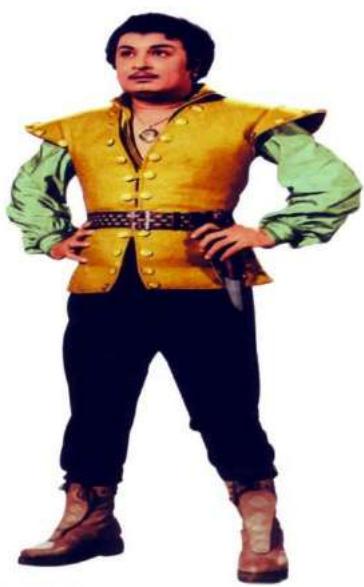
Matinee idol is a term that was generally used to describe about the male artists who are adored to the point of adulation by their fans. Matinee idols often become the subject of parody during the height of their popularity, an example being Stan Laurel Spoofing Rudolph Valentino in his film Mud and Sand. This phenomenon reached its height from the 1920s to around the 1960s in Hollywood (29). Cult films are defined by audience reaction in the form of elaborate and ritualized audience participation, film festivals, or cosplay. Cinephiles argue that over time, the definition had become more vague and inclusive, as it drifted away from its earlier stricter views (30).
Unlike the above concept of Matinee idol or Cult films Dr. MGR followed a different kind of methodology based on his own perception, that made him to attain, the state of charismatic personality of professional probity, and stands tall in the annals of history of Tamil cinema with no parallel.
To substantiate the above fact, one must consider, the following press conference given by Dr. MGR:
Question: Sir, it seems that you had refused to act in movies as you were supposed to utter the names of Gods? As an actor, are you not supposed to accept whatever role is given to you in a movie?
Answer: There is no truth to substantiate the contention made out by you. First of all, it is true that I had declined to act in two movies. However, the newspaper published only a borrowed part, which is not true. God exists in everyone. You pray a particular God; I am praying another God. Is there greater God than mother herself! I pray my mother's photo. I also pray God that was worshipped by my mother. Praying or worshipping is personal to an individual. When comes to profession, is it not your duty to reflect the correct perspective to the people? Is it not your duty to guide the general public on the right path? Similarly, I am an actor; I have a duty attached towards the general public. Only literates can read the newspapers. However, educated, illiterate, men and women, including children are watching the movies. The people who watch movies outnumber those who read newspapers. Therefore, I do not want to spread false message among the people. You should not misunderstand me. I am an actor, and you should allow me to do my duty as an actor. I did not refrain from the agreement by merely refusing to pronounce the name of God. For example, the story i.e Kathavarayan, I have no faith in the tantric scenes in the movies. My own uncle was a tantric, and I know the nuances of tantric. You cannot produce mango out of tantric tactics, and that was the reason why I did not wish to propagate such a sophistry to the masses in the movie. I rank as the big actor with huge fan followers, many of whom are children, and they follow me as their hero, I do not wish to instill wrong notions in their minds. Since they are the future wealth of the nation, I refrain from acting in such movies though I recorded my protest in a very polite manner.
Take another movie by name Lalithangi, it was designed in such a way that the hero hates the entire women-hood in the society as prostitutes. Finally, he falls in love with a dancer and changes his views. I never liked the idea of criticizing the women hood in such a degrading manner; moreover, I did not like the climax scene therefore I refused to act in that movie.
Question: if you change the story of the movie as you like, what will happen to the producer who are supposed to invest huge sums of money?
Answer: Nothing will happen; the movies that were released after my suggestions run well. For example, the various scenes that were changed in accordance with my suggestions in the movie Madurai Veeran, attained success (this movie ran in 40 theatres in Tamil Nadu for 100 days). In the movie, Malaikkallan also the producer accepted my suggestions. The movie, Alibaba also my suggestions were well taken. It is my request, that people should not come to a conclusion that I convey my political ideologies in the movies. I am an artist, and I am duty bound to express my views and the producers are availing my expertise. The irrelevant scenes that were taken with a view to make profit by cheating the public should be curtailed (31).
Such a determined efforts put in by Dr. MGR made his films ever green for example, the Hindu Tamil daily dated $9^{\text{th}}$ July 2019, reported the following:
54 years after the release of the movie "Ayirathil Oruvan". It might have been 39 years since his last film released and 30 years since he died. But the legacy of the legend, M. G. Ramachandran, more so identified with the famous three letters 'MGR', lives on and doesn't seem to be coming to an end anytime soon. She further goes to emphatically say that "MGR's spectacular rise in movies should be attributed to his wisdom for carefully ascertaining the right script for himself. The lead protagonist was always portrayed as an epitome of virtue who raises his voice for the downtrodden and ensures that justice prevails in the end. The scripts were message oriented for the society, at the same time; they had a mother-son relationship, brother-sister bonding, philosophical songs apart from sensuous heroines, who would romance MGR in colourful costumes during scintillating duets".
This researcher goes one step further to add that MGR scans through the lyrics of the songs and sits with the lyric writers and brings the best out from them and that is the reason why his film songs contain full of socially acclaimed content. He also sits with the composer of music to finalize the tunes for his film songs. The realistic fight scenes wherein MGR shows his prowess by means of sward, silambam and stic - rolling, fist by means of hitting the opponent with full force to make them roll on the floor etc. (32).
The weekly Tamil Magazine, "KUMUDAM" had published several articles under the title of "Ayirathil Oruvan (one in thousand)" in memory of Bharat Ratna Dr. Maruthur Gopala Menon Ramachandran's (Dr. MGR) centenary celebrations, wherein, celebrities who had associated with Dr. MGR, shared their experiences. It becomes important to refer Kavinger (Poet) Na Muthulingam who recorded his perception about Dr. MGR. Na Muthulingam, a popular lyricist of Tamil Cinema, had written, more than 1500 film songs including number of songs for MGR films. Muthulingam states "like Purachithalaivar (i.e. Revolutionary Leader "Dr. MGR") his songs are also immortal". It is Dr. MGR, who gave importance to aesthetics to tunes, and construction of new and meaningful words in the songs, and that is the reason why Dr. MGR film songs stands tall; generation after generation (Muthulingam. Na.). He further states, that it was very difficult to get MGR's concurrence and finalize songs in his movies. Some songs were accepted by him on a single day. At the same time, it took moths to get the songs accepted by
Dr. MGR. Muthulingam, further states that he wrote three songs for MGR's movie "Madhuraiyai Meeta Sundara Pandian" and it took months for him to get consent from Dr. MGR. Again, in his essay chapter, in the book Editedby Sabitha Joseph (2014), Muthulingam reiterates that -as MGR wanted to introduce good ideas in his filmsongs that will serve useful purpose to his fans he paid enormous attention, to the lyrics of his film songs. Muthulingam quotes "after MGR became the Chief Minister of Tamil Nadu, the daily Washington Postexclaimed that it was because of popularity gained through his philosophical songs MGR was able to win such a victory (Muthulingam. Na 2007). Muthulingam further states, that MGR used to advise him in the following manner (in the words of MGR):
"Even when you write songs relating to sad news for the movies, you should not use incomplete words (sentences)". When Pattukottaiar writes, sometimes, incomplete sentences would occur however, it will not happen to Kannadasan. Therefore, mix Pattukottai and Kannadasan in your writings'. In the movie "Indrupol Endrum Valka (live liketoday for ever)" the original first song was different and what had taken place was different. The first song was "pathai mari ponavare payanam yenge sollunga" (i.e. deviated from your chosen path where is your journey). Director Sridhar told that the meaning of this song will coincide with the situation of the story. But MGR advised not to write incomplete concepts. After this advice only, I wrote the super-hit song Anbukku Nan Adimai, Tamil Panbukku Nan Adimai - (I am slave to eternal love and lam slave to the ethical values of Tamil Language).
One should also consider the following version contained in the book written by Sabbatha Joseph entitled Puratchithalaiver MGR's success formula.
Dr. MGR used to pay utmost attention to his film songs. His film songs become so popular, because he had translated the experiences he gained in life, as ideas to his songs. He used to sit with the lyric writers and music composers and made them to toil till such time he is convinced of a particular lyric and tune. It seems, the great composer M. S. Viswanathan enacted 25 tunes to a particular song. Director K. Shankar (who was a famous director for several of MGR films) reiterates the same in his essay entitled "Why MGR songs become hits"? One of the reasons why MGR songs become popular is that MGR wanted to translate what was practiced and experienced by him, as songs for his films (33). For a film "Ninaithathai Mudippavan" the lyric writer Maruthakasi wrote the following stanza: On earning money and gold people will forget where they come from – let them go in their way. Dr. MGR did not like the last line and asked the writer; what do you mean to say by writing this last line, do you indeed point out the mistakes committed by them. Then the writer changed the line into: - "if they wish to go shutting their eyes, let them go". Appreciating the suggestion, MGR approved the corrected version of the lyrics, and it was included in the song. It is therefore, not a mere exaggeration to state that Dr. MGR knows the lyrics of the song including its meaning and the purpose for which it was written for his movies though of course he never composed the songs nor did he give voice over.
The above narration prove the point, that Dr. MGR had associated with eminent and peers like Kaviyarasu Kannadasan, Kavinger Valli, Marutha Kasi, Pottukottiar and Na. Muthulingam and others and it is because of such interaction he was able to cull, the best out from these legendary and thereby many of his film songs were centered on the concepts, of rights and upliftment of poor, social inequalities and the need for decentralization of wealth; weeding out corruptive practice, and inculcating moral values in the society (34). Even the romantics songs never severed from the virtue attributed to chaste love by Tamil Literature i.e. acham, madam, nanam, payirpu which forms essential ingredient for chastity of womenhood in accordance with the most sacred grammar book the Tolkapium. It is a fact that MGR film songs always glorify women-hood. It is held that women of Tamil culture should imbibe the four basic nature i.e. acham, madam, nanam and payirpu. Acham means fear while Nanam means shyness; madam means though a woman knows the truth but keeps silent as if she does not know; Payirpu means when she happens to be touched by person other than her husband, she develops an attitude of aversion (35).
The facts indicated above in the matter of elimination of certain unwanted scenes in movies, certainly, differ with the concept of either with the Matinée Idol or with the Cult films and establishes the fact that Dr. MGR followed his own conviction to pursue goodness that had resulted in production of outstanding movies, to mention a few Nadooodi Mannan, Ayirathil Oruvan, Adimaipen and Ulagam Sutrum Valiban etc. Among them there are movies that were produced and directed by himself. These and many other movies not only bear testimony of excellent story and meaningful dialogue but also for the outstanding songs with meaningful lyrics.
### n) Karl Marx the Greatest Social Reformer
Karl Marx (1818-1883) was a German philosopher, political economist, historian, political theorist, sociologist, communist, and revolutionary, whose ideas played a significant role in the development of modern communism. Marx in the Communist Manifesto that was published in 1848 exclaimed that "The history of all hitherto existing society is the history of class struggles." Marx argued that capitalism, like previous socio-economic systems, would inevitably produce internal tensions which would lead to its destruction. Just as capitalism replaced feudalism, Marx believed socialism would, in its turn, replace capitalism, and lead to a stateless, classless society called Pure Communism (36).
In this pure communism Marx expects men would live a life of equality. Marx denotes that the condition precedent for the foremost historical act is the production of material life itself and when the needs relating to food clothing and shelter are fulfilled by means of gratification man tries to create new needs and there is no end to such needs and gratification as he denotes men as a "perpetually dissatisfied animal" (37).
History of the world reveals that the members of the aristocracy and the church had owned the means of production, and the peasants worked for the aristocracy. With the onset of the Industrial Revolution, Marx thought that the working poor will rise financially and socially. However, this did not happen and to his dismay aristocracy was replaced by the capitalists and Marx calls them Bourgeoisie.
The working class who was once peasants were replaced as wage earners under the capitalist and Marx calls them as Proletariat. Marx believed that capitalism which is inherently unfair, since workers under this system were becoming poorer and poorer and were alienated. And in this vicious circle of Alienation the workers are becoming distanced or isolated or both from their work, resulting not only a feeling of despondency but they have certainly become powerless and thereby could not feel free to develop their skills and go beyond the pale of the shackles of bondage as industrial workers.
### o) Marx's greatest finding "the Alienation"
Imagine a capitalist society that consist of majority of laborer's who are powerless and suffer from despondency and they are artificially made to depend on the business men who assumed feudal power in the society. To alleviate this alienation Marx propounded an unequivocal theory and wanted capitalism to be replaced by a socialist system that will make people equal and thereby their needs met.
### p) The Meaning of Alienation
Lewis A. Coser hails that according to Marx Alienation may be described as a condition in which men are dominated by forces of their own creation, which confront them as alien powers. The notion is central to all of Marx's earlier philosophical writings and still informs his later work, although no longer as a philosophical issue but as a social phenomenon (38).
Max Asked: In what circumstances do men project their own powers, their own values, upon objects that escape their control?
What are the social causes of this phenomenon?
Marx is of the view that all major institutional spheres in capitalist society, such as religion, the state, and political economy, were marked by a condition of alienation and that the various aspects of alienation were interdependent and came to a conclusion that Objectification is the practice of alienation. Just as man, so long as he is engrossed in religion, can only objectify his essence by an alien and fantastic being; so under the sway of egoistic need, he can only affirm himself and produce objects in practice by subordinating his products and his own activity to the domination of an alien entity, and by attributing to them the significance of an alien entity, namely money. Therefore, it is the state's responsibility to guarantee its citizens the fundamental freedom and regard each individual as equal whether he is rich or poor. Such a state that assures such a liberty is truly democratic.
### q) Materialism
Delinking morality or moral and spiritual upliftment of a person (perhaps Marx leaves to the consciousness of the individual) Marx studied the relationship and importance of money in man's material life. Here Marx's opines that money is the alienated essence of man's work and existence; the essence dominates him and he worships it and it is not an exaggeration to say that money has enslaved men due to the intrinsic and imperative physical needs. It is difficult to imagine the monotonous material life of human being without money and that is the reason why Marx called man's material life as the economic life. Marx's says that in this economic life majority of the manpower are made to work as industrial workforce to earn for their livelihood. Marx emphatically says that the workforce is oppressed by a handful of capitalists who are few in percentage when compared to industrial workers. They try to dominate them in all spears of life i.e. economic, political and social. Marx therefore concludes that the alienated industrial worker's freedom of choice has been freezing by the Industrialists. He therefore feels it necessary that "the state which is the intermediary between men and human liberty" just as Christ is the intermediary to whom man attributes all his own divinity and all his religious bonds, so the state is the intermediary to which man confides all his nondivinity and all his human freedom and therefore the state is duty bond to create an atmosphere wherein everyone is equal and he says that "as the contradictions of capitalism become greater, more intense, and less amenable to disguise, neither the state nor ideology can restrain the mass of the workers, white and blue collar, from recognizing their interests (becoming "class conscious") and acting upon them.
The overthrow of capitalism, when it comes, Marx believed, would proceed as quickly and democratically as the nature of capitalist opposition allowed. Out of the revolution would emerge a socialist society which would fully utilize and develop much further the productive potential inherited from capitalism. Through democratic planning, production would be directed to serving social needs instead of maximizing private profit. It should be understood that maximum social benefit would be attained only by serving the social needs of the majority and maximizing private profit would create a huge gap between haves and have nots. The final goal, toward which socialist society would constantly build, is the human one of abolishing alienation. Marx called the attainment of this goal "communism".
### r) Man is Perpetually Dissatisfied Animal
Lewis Coser, opines that Karl Marx was a socialist theoretician and organizer, a major figure in the history of economic and philosophical thought, and a great social prophet. Karl Marx hailed that the quest for a sufficiency in eating, and drinking for habitation and for clothing were man's primary goals at the dawn of the race, and these needs are still central when attempts are made to the complex anatomy of modern society. But man's struggle against nature does not cease when these needs are gratified. Man is a perpetually dissatisfied animal. Delinking morality and moral and spiritual upliftment of a person, Marx studied the relationship and importance of money in man's material life, and came to the conclusion, that money is the alienated essence of man's work and existence; the essence dominates him and he worships it.
It is not an exaggeration, when we say, that money has enslaved mankind due to the intrinsic and imperative physical needs. It is rather difficult, to imagine the monotonous material life of human being, without the concept of money and that is the reason why Marx called man's material life as the economic life and in this economic life Marx opines that majority of them are made to work as industrial labour to earn for their livelihood. They are oppressed by the capitalists (industrialist) who are few in percentage when compared to industrial workers and try to dominate them in all aspects of their life i.e., economic, political and social. Marx concludes that the alienated industrial worker's freedom of choice has been freezing and dominated by the Industrialists. He categorically emphasizes that "the state is the intermediary between men and human liberty" just as Christ is the intermediary to whom man attributes all his own divinity and all his religious bonds, so the state is the intermediary to which man confides all his non-divinity and all his human freedom and therefore the state is duty bond to create an atmosphere wherein everyone is equal (39).
The above are core and essential ingredient of Karl Marx's philosophy of socialism that establishes the fact of equity and social justice. A society that does not provide avenues for its entire people to prosper would naturally become a breeding house of inequality and social deprivation would occur. If majority of its people are made to deprive by a handful of men's intelligent domination as was explained by Marx above indeed is a case for consideration of principle of social inequality and the solution enunciated by him to mitigate though known as socialism or communism there is no reason why it cannot be brought under the doctrine of equity and social justice in accordance with what Thanthai Periyar's evolution of Dravidar Iyakkam.
## IV. METHODOLOGY OF THE STUDY
It is proposed to bring the sum and substance of each movie under a Context. Thereby each context will contain the synopsis of the story (synopsis of the story has been written after viewing the full content of the movie which is available on the U-Tube. The U-Tube address is also given under each context so that it can be verified). A Table indicating the details of the movie; cross verifying whether the movie contains the following pointers arrived at and the conclusion of the movie (i.e. how the hero establishes truth after marveling all the troubles).
## V. GROUNDSP FOR COMPARISON
Communism is also described as "Revolutionary Proletarian Socialism" or "Marxism," is both a political and economic philosophy (Lewis A. Coser. (1977). At the request of the Communist League, an activist group they were members of, Marx and Engels together authored The Communist Manifesto. The main goal of The Communist Manifesto was to focus on class struggle and motivate the common people to riot. Even more so, it was designed to envision a model government, whose economics would destroy the upper class - freeing the lower class from tyranny. According to The Communist Manifesto, Communism has ten essential planks as indicated in the table below which compares the ideology of Dravidar lyakkam and Annaim:
<table><tr><td>The Communist Manifesto</td><td>The main principles of the Self-Respect Movement are</td><td>Annaism can be brought under the Following Pointers</td></tr><tr><td>Abolition of Private Property.</td><td></td><td>A casteless and classless society</td></tr><tr><td>Heavy Progressive Income Tax.</td><td>No one is great or inferior by their birth.</td><td>sale of all essential commodities should be taken over by the government,</td></tr><tr><td>Abolition of Rights of Inheritance.</td><td>Women should be given equal rights on par with men.</td><td>Right to recall</td></tr><tr><td>Confiscation of Property Rights.</td><td rowspan="4">Till such time the eradication of differences that arise due to cast and religion, people should be given representation through a cast based reservation system; both in education and employment opportunity, consistence with the percentage of population of each community in the society.</td><td>Confiscation of properties of corrupt people,</td></tr><tr><td>Central Bank.</td><td>ceiling of income like land holdings</td></tr><tr><td>Government Ownership of Communication and Transportation.</td><td>withdrawal of currencies below 100</td></tr><tr><td>Government Ownership of Factories and Agriculture.</td><td>inclusion of English in the eighth schedule of the Constitution to safeguard the interests of the Anglo-Indian community</td></tr><tr><td>Government Control of Labor.</td><td rowspan="3">The various rituals that were blindly followed by the people, including the belief without reasoning, should be routed out from the society.</td><td>decentralization of powers between center and states</td></tr><tr><td>Corporate Farms and Regional Planning.</td><td>Government takeover of heavy industries and mills</td></tr><tr><td>Government Control of Education.</td><td>Coffee, tea and rubber plantations should be nationalized.</td></tr></table>
### a) Intrepretation of the Above Table
As can be seen above that Dravidar lyakkam's ideology which is original and orginated from Thanthai Periyar is based on the regional requirement of Tamil Nadu. Periyar thought that through these ideologies the down trodden people of Tamil Nadu can be emancipated and made to enjoy equal rights on par with others in the society which is nothing but equity and social justice as advocated by the great Karl Marx. Annaism is just an extension or elaboration or fine tune of the concept of dravidar ideology to give a political outlook and to implement the same wherever possible.
Apart from the dravidhar ideology above, it is also incumbent to find out the goodness and virtue propagated in the movies. The following pointers are added in order to simplify the concept of cross verifying whether the selected movies contain them:
- Voicing against the social atrocity in the society (towards the poors).
- Symbols of dravidar iyakkam.
- References on dravidar political ideology
- Philosophical Songs containing social emancipation, the practice of virtue in the society
- Heroine's helping hand to the hero in establishing the truth.
Context-1: Aayirathil Oruvan
### b) Synopsis of the Story
$$
(written after viewing the movie in U-tube i.e. https://www.youtube.com/watch?v=MI9O2XqhRIA)
$$
Manimaran (M. G. Ramachandran), is a traditional i.e. Ayurvedic/Siddha doctor living in the country called Neidhal Naadu with his Attendant Azhagan (Nagesh). He discovers a medicine which can cure any kind of poisonous serpent bite. A crew enters Manimaran's house pleading him to cure the injury sustained by a rebel against the dictator (Manohar) of Neidhal Naadu. Manimaran after arguments agreed to treat the patient but was stopped by the ruler's policemen. They threw a charge on Manimaran i.e. helping the rebel is an offence and summoned before the dictator. After a great war of words that marks meaningful dialogues such as: "En Athikarathin alathai ne arivayo (do you know the scepters sway of my authority) ungaludaya athikaram enna silapathikarama (your power indeed is silapathikaram" the king sells them as slaves to the island called Kanni Theevu ruled by Sengappan.
An ayurvedic doctor Manimaran becomes a salve in Kannitheevu. Here the hero Manimaran changes his ideology of a doctor to cure dreadful diseases to that of obtaining freedom for his country men from the tyranny rule of the dictator of Neidhal Naadu (Manohar). Manimaran becomes the leader of the slaves and fights for their rights.
Incidentally the Princessof Kanni Theevu the nice of Sengappan falls in love with Manimaran after an incident of saving and rescuing her from being trapped under a falling tree. Later, the island was attacked by pirates headed by its leader villain M. N. Nambiar. As Sengappan's troops were not present at that point of time, he pleads Manimaran to help him to route the Pirates from their invasion. Manimaran demands freedom from slavery in return to the proposed help of fighting with the pirates and to save Kanni-theevu. Though Manimaran with the help of his friends rescues Kannitheevu from the Pirates by driving them away after a dreadful fight, Sengodan refuses to free them from their bondage.
Manimaran hatches a plan and escapes along with his friends and manages to board the ship of the Pirates. After a fierce fight Manimaran tells the leader of the Pirate that his intention was not to kill him but to escape to his native place to save his country i.e. Neidhal Nadu from the tyranny of the dictator. Though the villain Namibar, agrees to drop them at neithal nadu – but after taking them to his island he tries to captivate them and threatens Manimaran that he will kill all his friends who are now in his jail and tries to nail them from the top of the roof. Manimaran agrees to be part of the Pirate's business just to save his friends. His duty was to swindle from the ships that passes on the sea and bring wealth to the Pirate's Captain (Nambiar). But Manimaran asks his friends to wage war with such pirate ships not to assault the merchantry ships that was intended for trade.
The disappointed princes Poongodi wanted to go for a sea voyage to overcome the distress caused by the absence of Manimaran in the Kannetheevu. His uncle instructs the voyagers to place the flag meant for Pirate's. Manimaran goes for the business of swindling and finds Poongodi in the ship that was invaded by his troop. It was a great surprise to Poongodi who finds his beloved Manimarana thief heading the Pirates. Manimaran saves her and brings to the pirate's island. But Nanjappa the close aid of the captain reveals the truth to the captain. The captain (Nambiar) a womanizer wants to marry Poongodi and asks the officials to sell her in the open market. He offers 1 lakh gold coins but Manimaran rescues her with the maximum bid price of 2 lakh gold coins which was a surprise and Poongodi goes to the house of Manimaran.
As mistook by Poongodi that Manimaran was changed to a thief, Poongodi could not find the peace that she was enjoying at Kanni Theevu and was depressed by a sense of feeling of cheated by Manimaran and behaves roughly with him. The Pirates Captain Nambiar's desire on Poongodi did not wane away. With the cruel idea vituperated by his attendant Nambiar attempts to make Poongodi as his but with the intervention of the Captains wife Poongodi agreed to act as the wife of Manimaran and thus made the attempt of the captain futile. Manimaran decides to send Poongodi to Kannetheevu and asks his close attendant to carry Poongodi to Kannetheevu to be handed over to Sengoden. In the conversation of the plan to be executed Poongodi learns the nobleness of Manimaran who was merely acting as a Priate (thief). She never wanted to leave Manimaran thereafter and tries to behave properly.
Manimaran plans to escape from the Pirates bondage and wage a war with the dictator to save his country. In the meantime the Captain hatches a plan to kill Manimaran thereby he can marry Poongodi. Manimaran comes to know about the plan and there ensues a great solo fight between Manimaran and
Captain (Nambiar). In the sword fight of high order between MGR and Nambiar Manimaran becomes victorious. The leader offers the entire land to Manimaran as was the custom i.e. it becomes the possession of one who wins the leader in a fight. But Manimaran refuses to accept the offer and informs that his only aim is to free his countrymen from the dictator (Manohar) of Neidhal Naadu. Nambiar promises to help MGR in his fight against the dictator. After a planned attack Manimaran saves the life of the dictator and even went to the extent of refusing to accept the country. MGR leaves Neithal land to practice his medical explodes for the services to mankind - after appointing the Captain (Nambiar) as Neithal Lands commander in Chief.
The first movie of the successful pair continued in politics as well. If the movie is screened in any theatre it yields collection because MGR himself is ayirathil oruvan (40).
The comedy of Nagesh adds feather to cap of this movie. He not only makes the audience to smile but rendered meaningful dialogues emulating the character of the Hero and portrays how wise and honest the hero Manimaran was that helps the heroine Poongodi to change her opinion on the hero. Nagesh also enlightens the slaves the sacrifice made by the hero to save their lives and wipes off the bad illusion created in their mind about the hero. With his versatile acting skill Nagesh makes the audience to watch each of the scenes with wonder. The next wonder in the film Ayirathil Oruvan is the last movie paring the two music legends MSV-TKR (i) Paruvam Enathu Padal (ii) En Endra Kelvi (iii) Odum Megangale (iv) Unnainan Santhethen (v) Nanamoo (v) Atho antha paravaipola vala vendum are wonderful lyrics written by Kavinger Vali and Kannadasan which was aesthetically composed and made the songs ever green.
<table><tr><td>Sl. No.</td><td>Name of the Movie and its historical details</td><td>Voicing against the social atrocity towards the poors in the society.</td><td>Symbols of dravidar iyakkam</td><td>References on dravidar political ideology as advocated by Thanthai Periyar</td><td>Philosophical Songs containing social emancipation and the practice of virtue in the society</td><td>Heroine's helping hand to the hero in establishing the truth.</td></tr><tr><td></td><td>Aayirathil Oruvan *</td><td>1</td><td>2</td><td>3</td><td>4</td><td>5</td></tr><tr><td>1</td><td>Directed by P.R.Pandulu Produced by Padmini Pictures Written by K.J.Mahadevan R.K.Shanmugam (dialogues) Starring M.G.Ramachandran and Jayalalithaa - Main roles. M.N.Nambiar, Manohar, Nagesh and Madhavi Krishnan in supporting roles. Music by Viswanathan & Ramamorthy Cinematography V.Ramamoorthy Edited by R.Devarajan Release date 9 July 1965</td><td>Yes</td><td>No</td><td>No</td><td>Yes</td><td>Yes - she helps the hero when Sengappan wanted to drive MGR out of the island the heroine Thenmozhi asks him to remain in the island to use him as a doctor. Also helps the hero in nursing the injury caused to the King at the end of the movie and goes along with the Hero to do medical service to the society when the hero surpasses the chance of ruling his mother nation.</td></tr><tr><td colspan="7">Positive Outcome of the Movie Manimaran (MGR) saves his country from the tyranny and frees his countrymen to live without fear. This story has become immortal as it stands the test of time. In the Hindu Tamil daily dated 9th July 2019 it was reported that 54 years after the release of the movie "Ayirathil Oruvan", how a film should be taken to make successful will vary from hero to hero, story to story, time after time. But a formula that was in existence is called MGR formula and it never failed is also the pride of MGR. Such is the intricate mixture the movie Ayirathil Oruvan".</td></tr></table>
### c) Interesting Facts Relevant to this Movie
## i. Amma about MGR
I am greatly indebted to MGR in the cine field. Our first meeting itself was a thriller. I have been acting in few pictures in Kannada before I actually acted in Vennira Adai. Pandulu had planned to produce the film "Ayirathil Oruvan" making MGR as its hero. It was Pandulu Sir's desire that I should act in the movie Ayirathil Oruvan and he passed on this news to MGR. It was said that MGR wanted to watch the Kanada movies where I acted and finalize the heroine only after that. I also watched the Kannada movies along with MGR. After the screening of the movies MGR turned towards Pandulu and shook his head. I was elated with joy first time in my life. Perhaps this assent marked the historic moment of this great pair coming together to act in outstanding socially relevant movies and prevailed in politics as well.
The movie is known for its great screen play and dialogue written by R. K. Shanmugam which was his first assignment with MGR. This is not only the first movie for Amma but also for the Producer P. R. Pandulu and the script writer R.K.Shunmugam. Let us see how it happened (41).
The weekly Tamil Magazine, "KUMUDAM" had published several articles under the title of "Ayirathil Oruvan (one person in thousand)" in memory of Bharat Ratna Dr. Maruthur Gopala Menon Ramachandran's (Dr. MGR) centenary celebrations wherein celebrities who had associated with Dr. MGR, were requested to share their memories and experiences by way of articles in the magazine. It becomes important to refer two articles appeared in the above famous weekly magazine dated 12.4.2017; 19.4.2017 and 26.4.2017 which is an interview given by R. K.Shanmugam who is no more now – he was 80 years when he gave this interview. The excerpts are reproduced below:
There is a special place for Puratchi Thalaivar's mass movies i.e. Ayirathil Oruvan. Historical dialogue that took place in the movie was written by R. K. Shunmugam. Crossing the age of 80 years lives along with his wife in Royapettai we met him:
I served in only one company i.e. PR Pandulus's Padmini Pictures. I never went to any other company in my life time. If I like one thing in life I never switch over to other company and I tried to live there with all honesty - that was my attitude. Pandulu took 15-16 movies with Sivaji. Big movies like Veerapandia Kattabomman, Kappalotiya Tamilan, Karnan, Krishnadevarayar. Muradan Muthu was the last movie wherein Shivaji was engaged. Due to pre-commitments Shivaji could not come for the dubbing. Pandulu went to the shooting spot of Sivaji and brought him to the recording theatre straight - that was the affection and relationship these two had. After this movie these two could not come together to take new movies. It was during this time someone told that K. J. Mahadevan has a good story and wanted Pandulu to look in to this for a possible movie creation. We asked him to come and tell us the story - we liked the story and when this story was narrated to Venus Krishnamoorthy, he said Pandulu this story will certainly suit MGR. Please handover the story to me, I will make this movie with MGR, I will finance to you for any other movie. Pandulu reacted -come may what - oh brother, I will make this movie with MGR! We were shocked and asked Pandulu Sir - you were producing movie with Sivaji so far why do you want to change. In business such things will happen. But Venus Krishnamoorthy told Pandulu: it is very difficult to produce movie with MGR; it is something like keeping an elephant at house and feed it. It will be impossible. Pandulu replied:- I have really fed Elephants, horses and camels in the movie Karnan. I do not have experience with MGR let me see.
The above messagesomehow went to the ears of MGR and he himself called us. Myself Pandulu along with two other assistants visited MGR at his Lloyds Road bungalow. MGR welcomed us ceremoniously. When Pandulu wanted to tell the story MGR said Anne (big brother), I know you have produced big movies. The thought that you wish to produce a movie with me as a hero itself is enough. I agree to act in the movie without listening to the story. I am prepared to receive advance for the movie and make my commitment today itself. Realizing the fact that Pandulu is not prepared to pay advance on the spot MGR said you need not give it in lakhs but sum of Rs.10000/- is enough. Pandulu looked at our face - we know that he did not have a single penny in his pocket - realizing this MGR instantaneously said why are you hesitating: you may give a thousand rupees. We felt embarrassed and hesitated again MGR said OK you give me Rs.10 or Re. 1/-. To be very frank our owner Pandulu never keeps money in his pocket and we also did not have money at that time. Then Pandulu asked me to find out whether our driver has any money. Luckily he had Rs. 10/- all one rupee notes. I took that notes and gave it to Pandulu- Pandulu Sir told - why are you giving it to me - give it to MGR because your hands are considered to be lucky. I gave one rupee to MGR, MGR took it after placing it in his eyes. He said I will act in this movie you can tell me the schedule of suiting and I will come to the suitsing spot.
We have started our activities after paying the one rupee advance to MGR. Our director Pandulu promised me at the time of the previous movie Muradan Muthu that I will be writing the script for the next movie. It so happened that I have to write script for MGR in Ayirathil Oruvan. I went and told Pandulu Sir - I never expected this to happen and I am really afraid to write script for MGR as I believe that he has his own persons to write script according to his taste and preference. But Pandulu said you will have to write; there is no other choice. Then I said that I will write script for six or seven scenes that too the confrontation between MGR and Nambiar in the movie. We will send it to MGR and if he is satisfied then I will write the script; otherwise MGR can have his own choice of script writer. Pandulu agreed and the scripts were sent to MGR. To quote one of the war of words:
Nambiar: Matham Konda Yanai Yenna Seiyum Theriyuma? (What will the mad elephant do you know?)
MGR: Sinam Konda Singathidam ThotruVodum (it will run defeated by the angry lion).
We were waiting for the assent of MGR. But till the day of the suitsing there was no answer from MGR about the scripts written by me. On the day of the suiting MGR has to come to Vahini Studio. Afraid as I was, went to the nearby Murugan Temple and prostrated before the deity to save me from MGR and went to the suiting point and was sitting at one corner. MGR entered the suiting arena with his costumes to the consternation of everyone. Afraid as I was just could not understand what will be the reactions from him about my scripts. I thought it will be a great relief if MGR finds my script not suitable but to the contrary MGR asked Pandulu - where is the script writer he simply showed me to MGR. MGR said where were you all these years. I read all the seven scripts seven times they were very nicely written. I was relieved and there begun our association. After completing Ayirathil Oruvan Pandulu produced films with MGR Nadodi, Thedivantha Mappillai, Ragasiya Police 115 - Pandulu asked me to write script for these movies and MGR wanted me to write scripts for movies like Mugarasi, Kannithai, Thalaivan, Neethikku Thalaivanangu, Nalla Neram, Pallandu Valga, Rikshakaran. When MGR became the Chief Minister, he made me the Chairman for the Agricultural Marketing Board. MGR never let anyone who had associated depending on him. The house where I live also allotted by MGR only. After allotting the house a phone call came to my house from the driver of MGR asking whether I was sleeping. I said I will go to bed only by 11.00 p.m. Just a while after someone was
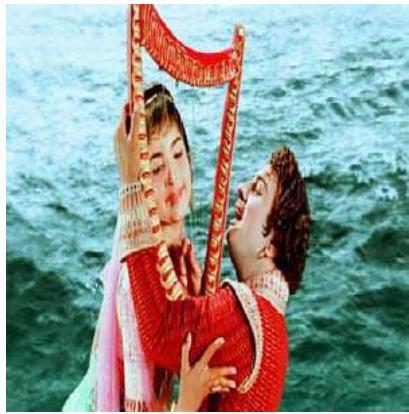
The ever green Dr. MGR and Dr. J. Jayalalitha's combination tapping the door of my house. When I opened the door, it was MGR the Chief Minister of Tamil Nadu standing in front of my house in disguised attire no one could identify him. I was unable to offer a cup of milk to him and even to offer him a proper seat- MGR sat on the floor and he offered me ice-cream bought for me and that was MGR (42).
## ii. The Stamp of Impeccable Quality
The stamp of impeccable quality, that was maintained in the story, lyrics and tunes of songs, makes Puratchi Thalaivar Dr.MGR fans to watch his movies even after 29 years of his demise. For example, super-hit movie like the Ayirathil Oruvan, which commanded respect in 1965 had been restored and released throughout Tamil Nadu in 120 theatres in the year 2014-15. Despite several new films seeing the light of the same day, the freshly minted 49-year-old blockbuster opened in over 120 screens all over the state. In a near packed standalone downscale cinema hall in Chennai, many who turned up for the noon show seemed to have already seen and savored the film when it was released first in 1965. In the 14-seater box, where the ticket rate is as high as Rs. 50, almost everyone should be over 50 years. It started during the title scene and then went onduring the mellifluous song sequences and somemoments of 'meaningful' dialogue delivery. As a film, that should have been ahead of its time, in terms of technical-excellence and also in creating a do-gooder image for MGR, Aayirathil Oruvan portrays its swash buckling hero as a committed leader of the people, ready to make any sacrifice for his followers. The movie also saw its leading woman, J Jayalalithaa, giving a sterling performance with impeccable dialogue delivery. The crowd savored every moment, fully engrossed in the action and drama and enjoying the melodious music, tapping their foot, and swaying their heads. No catcalls, no hooting's, no loud comments and no jokes. The crowd was there to watch the movie (The New Indian Express).
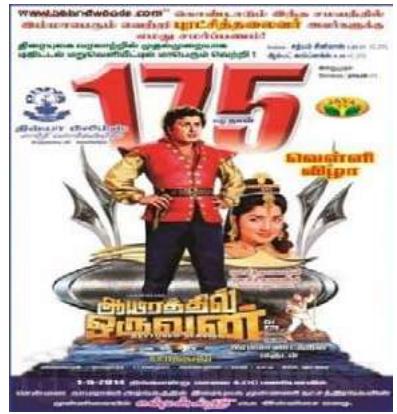
After 49 years this movie ran for 175 days - a record in Tamil Cinema
The then Hon'ble Chief Minister of Tamil Nadu Puratchi Thalaivi J.Jayalalitha, in her message sent to Divya Films G Chokkalingam, who took pains for the rerelease of this movie in digital form after a gap of half a century says:
"It will not be an exaggeration to say that Aayirathil Oruvan has laid foundation for my entry into politics...it was my first film with MGR... the film gave me an opportunity to meet and interact with MGR...and this film has left with me an unerasable life-time experience,"
Madam further stated that "September 1 marked the 175th day celebrations of the screening of the digital version of the movie. This film enjoyed the successful screening of over 100 days in 1965. Now it has crossed 175 days... it shows that the movie has withstood the test of time...even now, it attracts present generation too to the theatre....this has proved that Aayirathil Oruvan has achieved what thenew films have failed to,"- (The New Indian Express) (43). It is a fact that there are several MGR film songs that glorifies women-hood. It is held that women of Tamil culture should imbibe the four basic nature i.e. acham, madam, nanam and payirpu. Acham means fear while nanam means shyness; madammeans though awoman knows the truth but keeps silent as if she doesnot know; Payirpu means when she happens to betouched by person other than her husband, shdevelops an attitude of aversion (44).
Context -2: Chandhrodhayam
### d) Synopsis of the Story
(written after viewing the movie in U-tube i.e. https://youtu.be/ROu-uUyg4gM)
The hero Chandran (MGR) works as a reporter for a newspaper known as Dinakkavarchi (daily attraction) which was owned and run by Duryodhana (MR Radha) wherein Alwar (Nagesh) was also working as a still photographer whose wife was Ahalya (Manorama). Ponnambalam (Asokan) a Zamindar and a widower whose only daughter was Devi (Jayalalitha). Devi who is supposed to lead a luxurious life cannot choose her own food in the house nor have a dip in the small pond of her garden house. The servant maid belovedly called as Lakshmi Aaya (Pandari Bai) by Devi was cheated by Duryodhana and deserted her. Lakshmi Aaya bore a female child by name Kamala (Bharati Visnuvardhan) and leaves her in the hands of a married couple who was bereft of a child.
The story goes like this "the hero saves Kamala from her death noose and assures his help as an elder brother". Prodded by fate Kamala was molested by a Zamindar Parandaman (Nambiar).
Ponnambalam wanted his daughter Devi to get married and finds a match – the match was none other than Parandaman the land lord whose family was equal in status with that of Parandaman. Devi hates to get married and runs away from the bungalow in the midst of a night and some how manage to reach the city wherein Parandaman founds her standing on the streets and tries to carry her away in the car. But the press reporter Chandran who was investigating an accident happens to see the rude behavior of Parandaman with Devi and intervenes and saves Devi from the hands of Parandaman. Chandran wanted to accompany Devi to her house but she says that she was an orphan and has no place to go. Chandran takes her to his house for the day and decided to leave Devi in a ladies home the very next day. But Devi refuses and continues to live in Chandran's house she says that she would commit suicide if she is pestered further. It was the hero who fights for the rights of Kamala as well as Devi to join her father. In course of time Devi and Chandran falls in love. Finally the hero achieves what he wanted to have i.e. makes the father of Devi to realize the truth that Devi was faultless and fights with the villain Paranthaman to get Kamala married to him. Finally, Ponnambalam wants the hero to marry his only daughter by which time the hero MGR makes Duryodhanan to realize his mistake and agrees to take the hands of Lakshmi and also requests Chandran to run the newspaper. Thus, the name of the newspaper changes from Thina-kavarchi to Chandrodayam the name of the movie. The movie ends in a happy note. The heroine acts like an innocent girl but makes a huge impact on the unassailable role given to her. It is the opinion of the researcher this particular role is most suited to Dr. Jayaraman Jayalalitha.
<table><tr><td>Sl.
No.</td><td>Name of the Movie and its historical details</td><td>Voicing against the social atrocity towards the poors in the society.</td><td>Symbols of dravidar iyakkam</td><td>References on dravidar political ideology as advocated by Thanhai Penyar</td><td>Philosophical Songs containing social emancipation and the practice of virtue in the society</td><td>Heroine's helping hand to the hero in establishing the truth.</td></tr><tr><td></td><td>Chandhrodhayam*</td><td>1</td><td>2</td><td>3</td><td>4</td><td>5</td></tr><tr><td></td><td>Directed by
K.Shankar
Produced by
G. N. Velumani
Starring
M. G. Ramachandran
J. Jayalithaa,
M.R.Radha, Nagesh,
Manorama, M.N.Nambiar and
S.A.Asokan.
Music By
M.S.Viswanathan
Cinematography
Thambu
Edited By
K.Narayanan
Production Company
Saravana Films
Release Date
27 May 1966</td><td>Yes – the hero gives shelter to the poors in the car shed of the company which was not liked by the owner resulting in heated exchange of equity and social justice concept.</td><td>Yes</td><td>yes</td><td>Two philosophical songs (i) Budhan yesu Gandhi piranthathu boomil etharkaga (ii) Kasikkupogum sanyasi un kudumbam ennagum neyosi.</td><td>No</td></tr><tr><td colspan="7">Positive Outcome of the Movie
MGR the hero brings the age old news paper which was publishing unwanted information to the public becomes a daily that would publish news for the general improvement of the society and also makes Namibar to marry the girl whom he had molested and also makes the Pannaiyar to change his attitude towards her daughter. Finally he also changes the attitude of Duryodhana (MR Radha) and makes him to accept his wife. These are the good things brought in by the hero.</td></tr></table>
### e) Interesting facts
It was reported in The Hindu dated $9^{\text{th}}$ Jan 2016 Blast from the past: Chandhrodhayam (1966) that this film was a re-make -The 1934 Hollywood classic, "It Happened One Night", directed by Frank Capra, won several Oscars and was one of the biggest hits of the time. After World War II, this film was remade by his friend William Wyler as Roman Holiday, with Gregory Peck and Audrey Hepburn in lead roles. It Happened One Night was naturally remade across the world, and in Hindi, it was produced by AVM under the title, Chori Chori, starring Raj Kapoor and Nargis. Interestingly, Roman Holiday was also remade under the title, Nau Do Gyarah (Dev Anand and Kalpana). AVM made the film in Tamil too- Chandhrodhayam- with MGR and Jayalalithaa in the lead roles. The film was directed by editor-turned-filmmaker and producer K. Shankar, who also made Hindi movies. It was produced by the successful G. N. Velumani, under his banner Saravana Films, and music was by M. S. Viswanathan. Chandhrodhayam had impressive cinematography by Thambu (C.
V. Ramakrishnan)- the climax fight between M. N. Nambiar and MGR, especially, was appreciated, for being shot with the use of just one light source: a rolling, broken small table lamp. The film was edited by Shankar and K. Narayanan, with lyrics by Bharathidasan and Vaali. One song, titled 'Kaasikku pogum sanyasi', rendered by MGR and Nagesh, was a hit. Remembered for: Excellent acting by MGR and Jayalalithaa, and cinematography by Thambu (45).
The hero teaches a lesson to the heroine about the character to be imbbed by the women of Tamil
Nadu i.e. acham, madam, nanam and payirpu in this movie. The heroine obtained a national award as the best actress award for her most praise worthy acting in this movie.
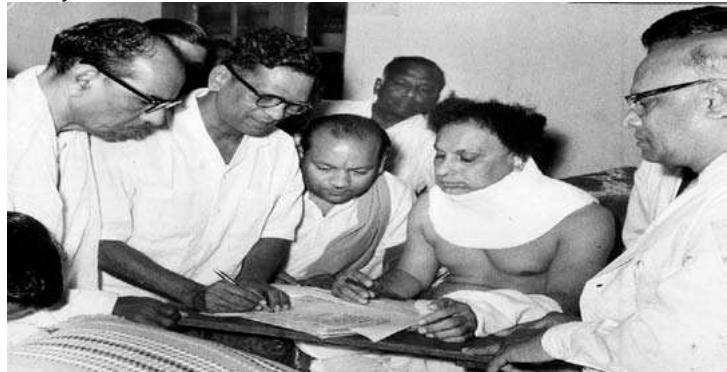
Chennai: An injured man with a plaster cast around his neck sitting shirtless on a hospital bed with his hands in obeisance. This photograph of MGR being treated for a bullet wound was the most extensively printed poster for the 1967 Madras state elections. The DMK ensured that the iconic snapshot of him was splashed across the state. And political analysts still argue if it turned the tide in favour of the 20-year-old party struggling to find its bearings. On January 12, 1967, MGR fans were awaiting the release of Thalaivar's new film Thaikku Thalaimagan. MGR had released nine films the previous year including major hits like Anbe Vaa. The city was in a festive mood with Pongal and more importantly, the state assembly elections were in a month's time. Many would not believe their ears as the news floated by word of mouth - superstar MGR had been shot by fellow actor MR Radha in Ramavaram at 5 pm. Within hours, 50,000 people made it impossible for any vehicle to navigate and the police had to forcefully clear the crowd away. People were seen crying in the streets. Shops were closed. Livid fans on a rampage pelted stones on vehicles and a group of MGR fans vandalized Radha's house. The bullet had entered near MGR's left ear and lodged behind the first vertebra. Doctors were apprehensive that displacing it would cause further impairment. (A few months later, when MGR coughed, that piece came out and he went on record and said it was God's grace. His atheist party had no comment to offer). MGR gained consciousness the following day. And in his first electoral feat, he won by a margin of 27,000 votes without even campaigning. But his voice was seriously affected by the shooting. With two movies - Arasa Kattalai and Kavalkaran - waiting for release, the cinema world was watching with bated breath whether his celebrated career would come to an end. Arasa Kattalai already had MGR's dialogues recorded and it went smoothly. There was a thoughtful submission by others for using a dubbing artist for Kavalkaran but MGR was adamant. He said, "For this movie and in future also, I will use my own voice. If not, I'll stop acting in movies." MGR made efforts to regain his voice. He practiced speech while standing in neck-deep sea water. But still, in Kavalkaran there was noticeable slurring of words and mispronunciations. But his legion of fans encouraged him by making it a bigger hit. Though stand-up comedians imitated his speech for decades, MGR went on to speak in his voice for 42 movies and make political speeches in elections and legislature.
#### Context -3: Nam Naadu
(Written after viewing the movie in U-tube i.e. Synopsis of the story: https://youtu.be/qztLG-1eB_U)
Dharmalingham (S.
V. Ranga Rao) portrays himself as dharma-prabhu (philonthropher) but cheats the people in the town of his area. The hero's elder brother Muthaiya (T.K.Bhagavathi) works under Dharmalingham and lives in the house given by the owner i.e. Dharmalingam. The hero MGR (Durai) works in the Revenue Department of the State Government as a clerk and Nagesh was a co-worker working under the hero. The honest hero never tolerated with any of the atrocities caused in the society. The heroine is introduced as a tender coconut selling girl. It is a fact that normally heros appear with the title song but in this movie the heroine is introduced with a song – she drives a hand pulled cart carrying tender coconut with an unblemished song about the tender coconut's taste and how every part of the tender coconut after consumption of its water is being utilized by people in the society is meticulously covered in the song and the heroine effortlessly pulling the cart with agile speed and intermittent dance are praise-worthy especially she displays patents while pulling the cart is something to admire. As a leading actress with extraordinary dancing skill we witness amazing dancing styles displayed by Amma one can see in the movie Kudiyirunda Kovil the solo dance performed by the heroine to the song Paduvor Padinal Ada thondrum was considered extraordinary by the pundits and critics. But displaying pattern while pulling the cart can only be done by an experienced is very lucidly displayed by the heroine should be considered extra-ordinary indeed.
The hero intervenes in a confrontation wherein a person after consuming tender coconut fails to give money and promises to bear the expenses of that person and asks the person to go away immediately. After consuming two tender coconuts the hero asks – how much I need to pay – One rupee eighty paisa replies the heroine – the hero finds his purse too was stolen and expresses this in a very disparaging manner – heroine catches his collar and asks him to remove his shirt in lieu of the money to be given by him. The hero gives his wrist watch and goes away. She keeps the wrist watch in a box along with the day's collection and goes to sleep. Her brother an alcoholic takes all the cash including the wristwatch. He loses all the money and the wrist watch too in the gamble and returns home the next morning in a drunken state. To her consternation the heroine finds the wrist watch missing along with the money too and ascertained from her brother that he had stolen them and lost it in the gamble.
The heroine makes a promise to her God "Lord Muruga" that unless she gives back the watch by earning day in and out she will not eat full to her stomach and works here and there to save money. But next day the hero meets her and demands his watch by paying the money and finds that she does not possess the same and leaves the place after scolding her. The heroine meets MGR at his office entrance with the money she had saved; tries to explain and gives the money but the hero is in a fit of rage scolds and calls her a thief. But the heroine explains the circumstances and pleads that she is not a thief as she does not know how to steel and tells the fact as to how she had managed to save the money by performing part time sundry jobs without even taking proper food. The hero understands the honesty of the heroine and praises her for the honesty practiced by her and refuses to accept the money as the money was hard earned by her. But the heroine bends on giving the money back to him. The money was received by the hero with great hesitation, the hero however asks the heroine to meet him the next day at the same place (Park). The hero comes with a silk saree and gives the pack to her. She was surprised and asks why he had bought a wall clock – the hero says it is not wall clock but saree. The heroine asks whether it is for his wife – the hero says that he is not married and it was for her only he bought the saree. She asks why should he buy the saree for her. The hero says it is because of the honesty that she was carefully guarding and practicing it effortlessly which is inborns a rare quality indeed. The heroine accepts after great hesitation.
Thus begun a bondage with these two wonderful personalities without knowing the fact both will become Chief Minister of Tamil Nadu in the future.
Very rare indeed to find such personalities who vindicates his policies in the movies and practices the same in the real life – these two are no exception.
Dharmalingam runs a school wherein he did not pay salary to a teacher for more than six months. The teacher rushes to the house of Dhamalingam pleading for his salary as everyone in his house was starving without food but he was driven out. He falls down in faint on the way side. The hero rescues the teacher and takes him to the government hospital, where he could not be saved as the doctor refuses to treat him stating that he do not have medicines to treat him. The hero finds even in the government hospital the doctor takes bribe to treat the patients. He rushes to Dharmalingam's bungalow and found all the four so called social workers (i.e. Dharmalingam, Aalavandar, Punniyakodi, the doctor S.
V. Ramdas) were engaged in a party consuming alcohol and the hero confronts. Alavandar and Punniyakodi wants to murder the hero with the use of their goudas but Dharmalingam stops it saying that the hero will be afraid of his brother through whom he can surrender him. The hero rushes home finds the photo of Dharmalingam on the wall and breaks it - by that time his brother arrives and asks Durai to tender apology to Dharmalingam. Durai refuses and he drives him out of his house.
Durai then goes to the local park where Alamelu the heroine takes him to her place and provides shelter. The locals wanted Durai to contest in the election and become the council. Durai not only becomes the Councillor but also elected as Chairman of the township. An honest person like Durai works day and night for the welfare of the people. But the Councillors approaches Durai to allow them to accept bribe but Durai refuses to entertain their plea. By that time Durai sends notices to Dharmalingam, Alavandar, Punniyakoti and the doctor for their suspicious business practice cheating the general public. Dharmalingam approaches the hero and pleads him not to take action on them and offers Rs. 10000/- as bribe – the hero refuses and asks Dharmalingam to get away from his residence. Dharmalingam hatches a plan and buys the Councillors; with the result the hero loses his Chairman post. The hero goes to the house of Dharmalingam and he was beaten badly there. Dharmalingam orders that the hero should be placed at a public spot so that the people should know how powerful Dharmalingam was. Here also the heroine saves the hero.
The hero takes a pledge that he will take revenge against the four traitors. He approaches the CBI and disguises himself as a gold merchant and some how makes the four villains to fall his track. Tender coconut seller the poor woman now becomes companion of gold merchant and plays a completely different role standing by the side of the hero and unearths the place where the hero's brother was jailed by the Pannaiyar. Finally, the hero identifies the four cheaters to the police and thereby teaches a lesson to the four cheaters of public and brings back normalcy in the area.
<table><tr><td>S. N.</td><td>Name of the Movie and its historical details</td><td>Voicing against the social atrocity towards the poors in the society.</td><td>Symbols of dravidar yakkam</td><td>References on dravidar political ideology as advocated by Thanthai Periyar</td><td>Philosophical Songs containing social emancipation and the practice of virtue in the society</td><td>Heroine's helping hand to the hero in establishing the truth.</td></tr><tr><td></td><td>Nam Naadu *</td><td>1</td><td>2</td><td>3</td><td>4</td><td>5</td></tr><tr><td></td><td>Directed by
C. P. Jambulingam
Produced by
B. Nagi Reddy
M. G. Chakrapani
Written by
Swornam (dialogues)
Story by
Mullapudi Venkata Ramana Starring
M. G. Ramachandran
Jayalalithaa
Music by
M. S. Viswanathan
Cinematography
Konda Reddy
Sundar Babu
Edited by
C. P. Jambulingam
G. Kalyanasundaram
D. G. Jayaraman
Production company
Vijaya International
Distributed by
Vijaya International
Release date
7 November 1969</td><td>Yes the hero has been driven out of his house by his own brother. The heroine offers shelter in a slum area – the hero voices against the atrocity caused to the poors.</td><td>Even the hero's purse red and black colour which is the symbol of DMK flag.</td><td>Yes in the song Vangaiya Vathiyar Ayya the concept of thanmanam of Thanthai periyar contains.</td><td>Yes</td><td>Yes the heroine makes the hero to stand in the local body election and assists him throughout the movie to fight against all odds.</td></tr><tr><td colspan="7">Positive Outcome of the Movie
The hero takes pledge that he will take revenge against the four traitors. He approaches the CBI and disguises himself as a gold merchant and some how makes the four villains to fall in his track. The heroin becomes companion of gold merchant and plays a completely different role marviling great difficulties for the success of the hero. Finally the hero establishes truth and makes the public happy.</td></tr></table>
#### Context -4: En Annan
### f) Synopsis of the story
(Written after viewing the movie in U-tube i.e.https://youtu.be/lad2TgkZmFk)
Ranga (MGR), the Elder Brother, Vijaya Nirmala as Thangam, Ranga's sister. Ranga owns a rickshaw and leads a life from the earnings of the rickshaw. He educates's his sister and also sends her to higher education. She fell's in love with R. Muthuraman (Murali) who is a doctor and gets him married with the consent of his beloved brother Ranga. Ranga's father Velappan (T.K.Bagavathy), who was employed as Manager at a mill, and was sent to jail on a murder case of killing Karunagaran by poison. Actually it was treachery hatched by Nayagam (M.N.Nambiar) and Dharmaraj (Asokan) and they put the blame on the manager Velappan. Rangan and his uncle's daughter Valli (J.
Jayalalitha) were in love with each other. There was a general feeling in the mind of Valli's elder brother Thengai Srinivasan to get married to Thangam but it did not happen and he wants to spoil the life of Thangam. He goes to Dr. Murali's house and breaks the age old hear-say that it was Thangam's father who killed Karunagaran (S.M.Thirupadhisamy) this creates ripples in the family and guilty of marrying the daughter whose father was a killer of his father and thus results in breaking of the matrimonial life of these two. Thangam returns home. Having known the reason for the return of his sister Rangan goes to Valli's house and beats his brother like anything. Due to this he is sent to jail where he meets his father and comes to know the truth behind the killing of Karunagaran. The heroine takes care of the sister of the hero when he was in jail. The heroine even goes to the bride's house and asks for the rights of a woman as a wife but fails to unite them. The hero comes out of the jail and plans the course of action with heroine and with the help of heroine's brother he joins the house of Dharmaraj as a servant along with the heroine. He unearths the truth from the son of Dharmaraj - Cho Ramswamy whose role is both innocent comedian and also plays heroic deeds at times. In the
year 1970, it was one of the super hit movies of MGR and ran 100 days in Chennai, Madurai and Trichy. The film is a remake of the Telugu film *Poola Rangadu* (1967), which itself was loosely based on A. J. Cronin's novel, *Beyond This Place* (46).
<table><tr><td>SI.
No.</td><td>Name of the Movie and its historical details</td><td>Voicing against the social atrocity towards the poors in the society.</td><td>Symbols of dravid
iyakkam</td><td>References on dravid political ideology as advocated by Thanthai Periyar</td><td>Philosophical Songs containing social emancipation and the practice of virtue in the society</td><td>Heroine's helping hand to the hero in establishing the truth.</td></tr><tr><td></td><td>En Annan*</td><td>1</td><td>2</td><td>3</td><td>4</td><td>5</td></tr><tr><td></td><td>Directed by
Pa. Neelakandhan
Produced by
T. Govindarajan
Screen play by
Sornam
Starring
M. G. Ramachandran
Jayalathaa
M. N. Nambiar
S. A. Ashokan
R. Muthuraman
Music by
K.
V. Mahadevan
Cinematography
V. Ramamoorthy
Edited by
C. P. Jambulingam
Production company
Venus Pictures
Distributed by
Venus Pictures
Release date
21 May 1970</td><td>The title song of great philosophic al import the hero vindicates his tendency uplift the poors.</td><td>Yes The statue of Anna is shown in the title song</td><td>Yes they show the statue of Anna at the title song.</td><td>Yes
There is a great song
Kadavul Yen Kalanan -
manam kallaipona
manithargalale which will be interpreted.</td><td>Yes
She helps the hero in his endeavour to bring out the truth. When the hero was in jail for a brief period the heroine even tries to bring in amicable relationship with the hero's sister and her husband.</td></tr><tr><td colspan="7">Positive Outcome of the Movie:
The hero finally unearth's the truth that made Dharmaraj as the criminal and the father of the hero released. The way in which the heroine stood by the hero and assists him to discover the truth and the display of great acting and dancing skill of the heroine are praiseworthy.</td></tr></table>
#### Context -5: Engal Thangam
### g) Synopsis of the Story
(Written after viewing the movie in U-tube i.e.https://youtu.be/RDeKRsl72OU)
The hero MGR (Thangam) is a truck driver whose assistant was Cho Ramaswamy Iyer. His friend Moorthy (AVM Rajan) a drunkard meets Thangam after several years. He was in a drunken state at that time. Thangam asks him to sleep outside his house that night and he will meet him the next day. Moorthy escapes from Thangams house after molesting the blind sister Sumathi (Pushpalatha). As usual goes to his night duty carrying heavy loads in the truck along with his assistant. On the way during the midnight robbers stopped a car driven by a maiden lady i.e. the heroine Kaladevi (Jayalalita). The hero saves her from the hero becomes a criminal wanted in a murder case. The hero lives in hiding and tries to find out the truth i.e. the gang which threatens Moorthy. In the meanwhile, the gang never left Moorthy to live with his wife. It captivates him and takes them to their custody. Thangam struggles hard to find out the truth with the help of the heroine. It was a very long battle sometimes results in failure as well. But the determination of the hero and the commitment of the heroine they were able to overcome
the evil force of identifying the gang consisting of Selvaraj (S. A. Ashokan) and Marthandhan (R. S. Manohar). These criminals and anti-social elements portray themselves as nobles in the society. Selvaraj is a Bank owner and Marthandum is a business man in the eye of the public but they do all sorts of illegal activities and do underground work which the hero cleverly unearths and finally captures them too.
<table><tr><td>SI.
No.</td><td>Name of the Movie and its historical details</td><td>Voicing against the social atrocity towards the poors in the society.</td><td>Symbols of dravid
iyakkam</td><td>References on dravid
political ideology as
advocated by Thanthai
Periyar</td><td>Philosophical Songs
containing social
emanipation and the
practice of virtue in the
society</td><td>Heroine's helping
hand to the hero in
estabili-shing the truth.</td></tr><tr><td></td><td>Engal Thangam *</td><td>1</td><td>2</td><td>3</td><td>4</td><td>5</td></tr><tr><td></td><td>Directed by
Krishnan-Panju
Produced by
Murasoli Maran M.A.-M.P.
Written by
Murasoli Maran M.A.-M.P.
Starring
M. G. Ramachandran
Jayalalitha
Music by
M. S. Viswanathan
Cinematography
S. Maruthi Rav & Amirtham
Edited by
S. Pandjasamy & S.Muthu
Production company
A.V.M.
Distributed by
La Megala Pictures
Release date
9 October 1970</td><td>yes</td><td>There is a
speech by
Anna himself
on small
savings.
Anna gives
away prize to
MGR in the
movie.</td><td>Yes</td><td>Yes</td><td>Yes
She helps the hero
in his endeavour to
establish truth.</td></tr><tr><td colspan="7">Positive Outcome of the Movie
Thus the hero makes his sister happy by releasing her husband from the clutches of the tryrants. Like other movies; in this
movie also the Hero brings in dialogues that portray the ideology of Dravidhar iyakkam such as: There is a speech by Anna
himself on small savings. Anna gives away prize to MGR in the movie.</td></tr></table>
### h) Synopsis of the Story
(Written after viewing the movie in U-tube i.e. https://youtu.be/QKxriNpwPYI)
The movie begins with the hero Durairaj (MGR) offering obligations to his departed mother. He is waiting for the servant maid to visit him so that he can take lunch along with him. But news comes that the expected person has gone out of station on an emergency. Durairaj forces his servant to take the food first because it was the day of his mother's anniversary. A man enters the house of Durai and goes to the kitchen to fetch food as he was so hungry. He was caught and brought before the hero. Realizing that he needs food MGR offers sumptuous food to him. After this they started speaking various things and the man sees an advertisement wherein it was mentioned that Sadasiva Bhoopathi met with an accident long ago and his son Durairaj the only heir apart of the wealth left by Sadasiva Bhoopathi is requested to come and administer the estate and other belongings. The news of death of Sadasiva Bhoopathi has enraged the anxiety of the new comer and he was ecstatic with joy to pronounce the death of Sadhasivan. But MGR was not happy he asks why should you be happy on someone else's death
because Sadasivan is my father. This information unites the two as the new comer introduces himself as the son of Sadasivan and his name is Selvaraj (M. N. Nambiar). He is born to Sivagami Ammal (Pandari Bai) who was brutally treated by the estate owner Mr. Sadhasivan that made Selvaraj to experience untold sufferings in life. It was the turn of the hero Duraraj also to state the difficulties his mother undergone and ultimately died and he left the estate and it was his grand-father who educated him and he got a good job and lives comfortably. However his mother Lakshimi (S. N. Lakshmi) at the time of her demise took a promise from him that he has to find out Selvaraj and his mother and give them their share and take care of them. Durairaj further says that the time has come to fulfill the promise made to his mother and asks Selvaraj to act as Durairaj and be the owner of the estate that alone will make him happy. It was agreed - both goes to the estate and Selvaraj was introduced as Durairaj and he was anointed as the lone owner of the vast luxurious estate.
The heir apparent, the hero Durairaj has become a koolie and lives along with the labourers and try to improve the standard of living condition of the laborer's. Initially the labour group wherein the heroine lives mistook the hero to be spy to the owner but later realizes the genuine-ness of the hero who works for the betterment of the poors and they fall in love with each other.
The comedy scenes enacted by Nagesh, Manorama and VK Ramaswamy are praise worthy which goes well along with the story. The story takes a turn when the hero finds the house owner wherein he resides happen to be the mother of Selvaraj. The hero invites Selvaraj to come and accept his mother but he refuses however the hero tells he alone is her son. In another incident he saves an old man being beaten by the envoys sent by the Manager of the estate. It was the Manager (Kannaga Rathnam (R. S. Manohar), Kalpana's father) who was the main culprit, who hatches plans after plans to aggrandize the entire property of the estate belong to Sathasivam through mischievous manner. It was the hero who discovers every plans of the Manager right from deceiving Sathasivam that he had shot dead the Union leader and driving him out of the estate; agreeing to give his daughter to Selvaraj so that the properties would come to him; trying to kill Sathasivam who is now roaming around the estate and also trying to kill the mother of Selvaraj who is now in the custody of Durairaj. In the midst of all these tribulations the Hero gets the benefits to the laborers of the estate by forcing Selvaraj that their father is alive and in his custody and his mother will receive her eye-sight any moment. In the midst of all the trials and tribulations the love affairs of hero and heroine also continues-in one single song it was revealed to Dr. Kalpana (Bharati) that both Durai Raj and Seetha are in love not as assumed by her. Besides marveling to save the life of Selvaraj from Ladha, girl from Burma who was the girl friend of Selvaraj who had deserted her and now trying to get Dr. Kalpana married. It was a trying circumstance to face and the hero comes out of the web of crisis as the sun emerges out of the dark clouds fighting the odds fighting with the enemies too. An all round family movie with great story, screen play, scintillating songs above all the fight scenes were very thrilling and live. The hero achieves the promise made to his mother that he will unite the family. The movie ends with few lines of the great song Anna mitta Kai. Nammai akki vitta kai; Unnai ennai vuyaravaikkum ulagamellam vala vaikum anna mitta kai.
<table><tr><td>SI.
No.</td><td>Name of the Movie and its historical details</td><td>Voiding against the social atrocity towards the poors in the society.</td><td>Symbols of dravidar yakkam</td><td>References on dravidar political ideology as advocated by Thanthai Periyar</td><td>Philosophical Songs containing social emancipation and the practice of virtue in the society</td><td>Heroine's helping hand to the hero in establish truth.</td></tr><tr><td></td><td>Annamitta Kai*</td><td>1</td><td>2</td><td>3</td><td>4</td><td>5</td></tr><tr><td></td><td>Directed by
M. Krishnan Nair
Produced by
M. S. Sivaswamy
Written by
A. L. Narayanan
Screenplay by
G. Balasubramaniam
Story by
G. Balasubramaniam
Starring
M. G. Ramachandran</td><td>Yes</td><td>No</td><td>No</td><td>Yes</td><td>Yes
She helps the hero in his endeavour to establish truth.</td></tr><tr><td></td><td>Jayalalitha
Bharathi
M. N. Nambiar
Nagesh
Pandari Bai
Manorama
Music by
K.
V. Mahadevan
Cinematography
K. S. Prasath
Edited by
K. Narayanan
Production company
Ramachandra Productions
Distributed by
Em. Gee. Yaar. Productions
Release date
15 September 1972</td><td></td><td></td><td></td><td></td><td></td></tr><tr><td colspan="7">Positive Outcome of the Movie
It was a trying circumstances to face and the hero comes out of the web of crisis as the sun emerges out of the dark clouds fighting the odds fighting with the enemies too. An all round family movie with great story, screen play, scintillating songs above all the fight scenes were very thrilling and live. The hero achieves the promise made to his mother that he will unite the family. The movie ends with few lines of the great song Anna mitta Kai. Nammai akki vitta kai; Unnai ennai vuyaravaikkum ulagamellam vala vaikum anna mitta kai.</td></tr></table>
Table of Confluence
<table><tr><td>SI.
No.</td><td>Name of the Movie</td><td>Voicing against the social atrocity towards the poors in the society.</td><td>Symbols of dravidar yakkam</td><td>References on dravidar political ideology</td><td>Philosophical Songss containing social emancipation, the practice of virtue in the society</td><td>Heroine's helping hand to the hero in establi-shing the truth.</td></tr><tr><td>1</td><td>Aayirathil Oruvan</td><td>√</td><td>X</td><td>X</td><td>√</td><td>√</td></tr><tr><td>2</td><td>Chandhrahayam</td><td>√</td><td>√</td><td>√</td><td>√</td><td>√</td></tr><tr><td>3</td><td>Puthiya Bhoomi</td><td>√</td><td>X</td><td>√</td><td>√</td><td>√</td></tr><tr><td>4</td><td>Nam Naadu</td><td>√</td><td>√</td><td>√</td><td>√</td><td>√</td></tr><tr><td>5</td><td>En Annan</td><td>√</td><td>√</td><td>√</td><td>√</td><td>√</td></tr><tr><td>6</td><td>Engal Thangam</td><td>√</td><td>√</td><td>√</td><td>√</td><td>√</td></tr><tr><td>7</td><td>Annamitta Kai</td><td>√</td><td>X</td><td>√</td><td>√</td><td>√</td></tr></table>
#### Intrepretation of the Table of Confluence
The above table is a cross verification of the 7 movies under each context and they reflect that:
- Table 2, 4, 5 and 6 indicates that all the pointers are covered in the movie
- Table 1 indicates that it coincides only with three pointers
- Table 7 indicates that it coincides with four pointers
Therefore it is proved in the study that the hero MGR an epitome of virtue who raises his voice for the downtrodden also ensures that justice prevails in the end. The scripts were message oriented, reflecting the cultural value of Tamil society. It is also proved in the study that the heroine gives a helping hand to the hero to establish truth and justice in the society in almost all the movies under research.
MGR chose the profession of acting in drama at the age of five – went on to cinema the powerful media and established name and fame and become a bacon in the annals of history of world cinema and recognized by the pioneer none less than GEOFFREY NOWELL-SMITH The Oxford History of World Cinema who hailed that "The choice of individuals to feature has been inspired by a number of overlapping criteria. Some have been chosen because they are obviously important and well known, and no history of the cinema would be complete without some extended treatment of their careers. Examples in this category-- taken more or less at random- include D. W. Griffith, Ingmar Bergman, Marilyn Monroe, and Alain Delon. But there are other people--the Indian 'megastars' Nargis or M. G. Ramachandran, for instance -- who are less well known to western readers but whose careers have an equal claim to be featured in a history of world cinema".
This research work has proceeded from whom the great and wonderful dravidar iyakkam had emerged and how Peraringer Anna took pains to give legislative powers to many of its ideologies and Puratchi Thalaiver took it in his political sojourn as his political philosophy and Puratchi Thalaivi carried it forward the torch that was carefully guarded by her and it is now essential to narrate the various Welfare Schemes introduced by Dr. MGR followed by his follower Dr. Jayaraman Jayalalithaas the Chief Minister of Tamil Nadu. The accolades made by noble laruate Amerthya Sen and others to establish the fact that the three toiled to lay strong foundation for attainment of the great concept of equity and social justice in the economic endeavor of Tamil Nadu.
It is not out of place to state that after becoming the Chief Minister of Tamil Nadu Bharat Ratna Dr. Maruthur Gopalamenon Ramachandran continued the above ideologies to a great extent and implemented various welfare schemes for the integrated growth of Tamil Nadu, especially towards the upliftment of poor's including the women. A snap-shot of the schemes implemented by him are given below:
- He ordered $20\mathrm{kg}$ of rice to be given through Public Distribution System through TUcs and reduced the rate of rice to Rs.1.75/- per KG. MGR is the reason for the development of PDS system in Tamilnadu.
- He introduced scheme for assistance to the destitute women for their marriage expenses.
- MGR developed Hosur as an industrial estate that had resulted in the development of Bangalore city.
- MGR focussed on women welfare and he introduced women-centric buses.
- In 1980s MGR took strict action against Naxalites. He gave a free hand to the police to go against the naxals and till today there is no nasalism in Tamil Nadu. Now Tamil Nadu is free from Terrorism!
- M. G. R implemented lot of freebies but to whom it was really needed. Freebies including Sewing machine for ladies etc.
M. G. R opened Vandalur Zoo, the largest zoological garden in India.
M. G. R created Tamil University in Thanjavur.
- M. G. R conducted 5th Tamil World Conference in Madurai.
M. G. R established six new Universities such as Mother Theresa Women's University, Bharathiar, Bharathidasan, Tamil University, Alagappa University and Anna University of Technology
- MGR even concentrated on the preservation of heritage buildings and monuments, such as temples, historical sites and so on. This in turn led to a boost in tourism.
Schemes for Children
- Mid-Day meals scheme – about 1,98,990 staffs are working throughout Tamil Nadu most of them are widows. About 62,43,662 children are availing this benefit from 60,000 Nutritious Noon Meal Scheme Shelters (Sathunavu Koodam).
- Free Uniform, Free Text books, Free tooth powder, Free chappals for school going children's.
Employment Schemes
- One employment per family
- Incentive to the educated unemployed
- Equipment to the self employed
- Self-employment.
Schemes for the Women
- Marriage assistance to the widows and the destitute
- Gold for the mangalyam
- Service Centres for the women
- Hostels for the working women
- Welfare houses for the children and mother
Schemes for the Poor's
- Constructed 30.00 lakh houses for the down trodden
- Free electricity for the poor's
Self-Sustaining Schemes
- Provided drinking water facilities
- Created water resources
- Provided Link Roads
- Constructed small bridges
- Medical shops in Rural areas
- Burial Grounds for the Adi-Dravidas.
#### Schemes for the Peasants
- Free electricity for the small farmers
- Concessional rate of interest for the rest of the farmers those farmers who are unable to repay the loan
- Crop Insurance
- Pesticides and seeds at concessional rates
#### Schemes for the Workers
- Accidental insurance
- Pension coupled with gratuity
- Interim relief after accident
- Housing schemes for the fishermen and weavers
- Life insurance to Building labourers, rickshaw pullers, koolies and pension scheme for them
Schemes for the Elderly
- Monthly financial assistance
- Every day Mid-day meals
- Free dresses twice a year
### i) Revolution made in Education Sector by MGR when he was the Chief Minister of Tamil Nadu
Just before MGR's rule, the Pre University Course (PUC) was in existence. The students have to study upto $11^{\text{th}}$ standard in schools and then move to PUC in Colleges under the Universities. MGR accepted the recommendation of Lakshmana Swami Mudaliar's Committee and abolished PUC system. Instead MGR introduced a new scheme of $+1$ and $+2$. The classes for this section are required to be undertaken in the schools itself. This had created a revolution in the education system of Tamil Nadu. When the number of universities were less, the aspirant who went to PUC education was less, in fact the opportunity in getting admission towards PUC was difficult at that time. This made the students who hail from the Villages had to stop their education at the SSLC level itself. Before introduction of $+1$ and $+2$ the enrolment in the colleges and Universities in Tamil Nadu was only nine thousand the admission to $+1$ was increased to leap and bound; presently about 9.00 lakh students wrote $+2$ examinations. If one looks at this angle the abolishment of PUC opened up avenues for greater enrolment in the $+2$ system and thereby aspirants towards higher education or number of pupil who can enter into the portals of University system increased many fold and thereby the literacy towards higher education has also increased.
When the demand for collegiate education came in to existence, MGR established more arts and science colleges including polytechnic Institutions. Towards the Engineering Education MGR evolved a formula which was popularly known as MGR-Formula wherein it was required to deposit Rs. 25.00 lakhs with the government to start a Private Engineering College. $50\%$ of the seats should be given to Government. The remaining $50\%$ of the seats can be filled by the college authorities. Since not many investors came forward, may be out of fear (i.e. what will happen if adequate candidate did not enrol). It was Pollachi Na Mahalingam and Ramco Cement Proprietor Ramasubramania Raja came forward to establish engineering colleges. The Vellore Institute of Technology (VIT) and Kalasalingam Engineering Colleges came later. To encourage greater penetration of private institution a policy decision was taken from the Government side to sell government lands at lesser price. The Private Engineering Institutions were emerged only on such facilities created by MGR Government and made an explosion towards higher education. Bharat Ratna Maruthur Gopalamenon Ramachandran made all these possible within a span of his tenure as Chief Minister of Tamil Nadu during the span of 10 years and left an un-erasable and impeccable mark in the minds of common man of Tamil Nadu even braving his health problems (47).
Finally, it is the firm belief of Dr. Maruthur Gopala Menon Ramachandran that nationalization of wealth of the country can eradicate corruptive practice in the society. Perhaps this concept might have made him to write a WILL of testament of his property. Through the WILL, which was registered on January 18, 1987, MGR had appointed senior advocate N. C. Ragavachari as its executor. He had named a relative M. Rajendran to succeed Ragavachari after the latter's lifetime. It is worth noting the intention of Dr. MGR which is important to the subject matter of this research endeavor: Broadly dividing his properties into two Dr. MGR, in his WILL, made it very clear that he did not have any other legal representative except his wife Smt.
V. N. Janaki. Even Smt.
V. N. Janaki was given only a life estate, apart from certain articles. MGR divided his vast properties - including the 6.47 acre Ramavaram estate, which was the nerve center of Tamil politics during his three tenures as Chief Minister - into two parts, granting his heirs and wife a life estate, but also stipulating that the majority of them be used for philanthropic purposes. This had resulted in the creation of a home and school for the deaf and dumb at Ramvaram in 1990, as well as the MGR Janaki College of Arts and Sciences for Women in 1996, with the former funded by the income derived from his property in Chennai's salubrious Saligramam area, Sathya Gardens. The WILL states that the shares of Sathya Studio Private Ltd would go to the AIADMK. In the event the party gets divided or dissolved, the shares would go to the 'MGR Oomai Illam Trust'. There is no right of sale or alienation or encumbrance of Sathya Studio Private Ltd, which was named after his beloved mother. Justice Sundresh exclaimed, "The testator is none other than the former Chief Minister of the State, who is known to be a philanthropist par excellence (48).
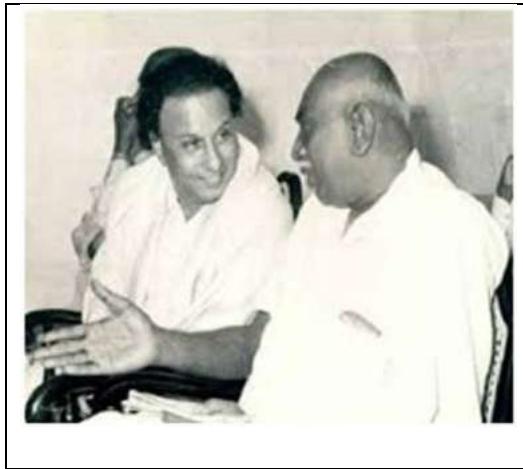
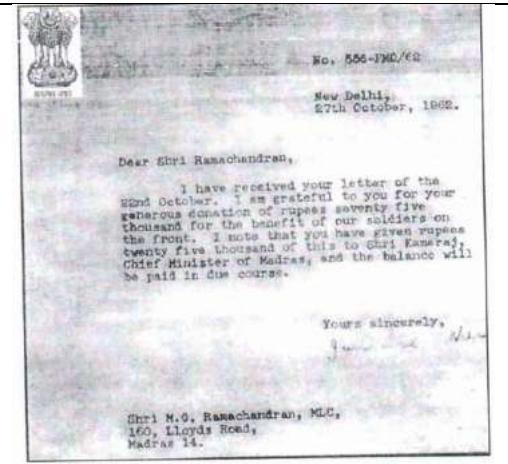
### j) As Chief Minister Dr. Jayaraman Jayalitha implemented the following schemes
Bharat Ratna Dr. Maruthur Gopalamenon Ramachandran (MGR) the then Chief Minister of Tamil Nadu wanted Jayaraman Jayalalitha as his successor to lead the party, and strongly believed, that Amma had the fire power, to lead the party from the front. To a question a senior Minister; MGR said, every creation, will have a future dissolution, and when there is a development, there should be recession. After me, to take our objectives further, and sustain its development and fame, Ammu alone can do it. If I hand over the reign of this party to others, I will be doing a great discredit to Anna quotes in his book Balu Manivannan, "MGR Nadippum Arasiyalum" Summadu Publications, 2015, (pp 75). This prediction, had become a reality, when MGR was admitted in Broklyn Hospital, USA, Amma single handedly campaigned Tamil Nadu Elections and made AIADMK victorious.
### k) Amma's Political March
1987- 24<sup>th</sup> Dec. Ammu stood by the side of the body of MGR for two days without taking food nor did she sleep crying all the times and said I lost whatever I possess today, I too wish to leave my body- but because MGR took a promise from me on his mother's photo that I should remain in the party to take the workers and the party together after his demise. It is due to the fact I am living. To fulfill his ideology and desire, I determined to do. With the same determination Ammu lead the party as its general secretary for nearly 28 years and alighted AIADMK to power four times i.e. in 1991; 2001; 2011 and 2016. 2014:-during the Lok Sabha Election Madam made her party to stand alone and won 37 seats and grabbed as many as Rajya Sabha seats totaling to 50 MP seats to the Parliament which is considered to be a greatest achievement ever made in Tamil Nadu.
I) The Following are the Top Welcomed Schemes of AMMA's Rule
Firmly rooted for the implementation of Mandal Commission report, which was later adopted by the V. P. Singh led government in 1990, the iron hearted Revolutionary Leader SelviJ. Jayalalitha during her tenure as the Chief Minister of TamilNaduadopted the $69\%$ reservation for the other back ward classes that earned her the title of "Woman Saviour of SocialJustice".
Amma Unavagam (Canteen); Amma Kudineer (Water); Chennai Small Bus; Amma Pannai Pasumai Shops (Nugarvor Kootturavu Kadai) In Chennai (Farm Fresh Consumer Outlets); Health Insurance For Srilankan Tamil Refugees; Free Mixie, Grinder & Fan; Monthly Pension For Transgenders; Amma Tnfdc Fish Stall Chennai; Free Rice (20kg) For The Poor; Free Laptop For Students are the schemes announced by Amma for the welfare of the poors and she was known as mother of welfare schemes. The following are the brief synopsis of the schemes.
## i. Mother of Welfare Schemes
Tamil Nadu Chief Minister Jayalalithaa has to her credit a whopping 18 populist schemes. Every 'Amma' product or service is either free or heavily subsidized. They might have cost the state exchequer but have benefitted crores of people, especially women, in the State (49).
## ii. The Cradle Baby Scheme
The 'Cradle Baby' scheme and the 'Girl Child Protection' scheme were shrewd political moves on the part of ex-Chief Minister Ms Jayalalitha. Recognising the popularity importance of these schemes, Jayalalitha periodically enhanced the incentives. Her government also introduced other programmes for the improvement of women's status, such as exclusively recruiting women as primary school teachers in the state, and making primary education compulsory for all children (50).
## iii. Laptop for the Students
Another very important scheme which acclaimed wider popularity was giving free laptops to all the students studying in the state-run higher secondary schools or colleges. This had created greater impact on the education and information revolution among the student community. From 2011-12 to 2016-17, 38,53,572 numbers of laptop computers were procured
and supplied to the students and it was aimed to supply a further 15,66,022 number of laptops by October 2019 (51)
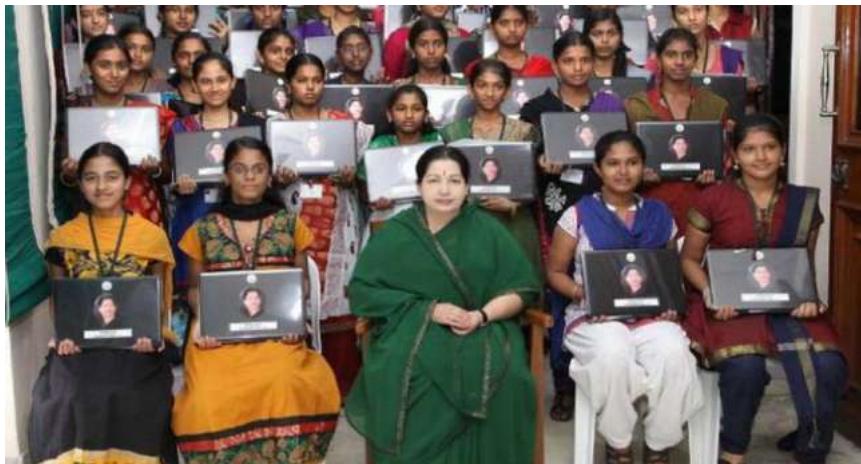
In the research article entitled "Thalikku Thangam Thittam" the author indicates that "4 grams of 22 carat gold coin" is given to each beneficiary for making 'Thirumaangalyam' (sacred symbol made out of gold). Since 2011, 6,67,125 girls were benefited and 2191.94 kg of gold at a cost of Rs. 622.31 crore has been distributed. All the beneficiaries were from the Below Poverty Line (BPL) i.e. only economically poor's were benefitted from this scheme. It could be further noted that those girls of the Tamil Nadu who have completed their 10th standard will get Rs. 25,000/- for the marriage and those girls who have completed their graduation or Diploma will get Rs. 50,000/- financial support for marriage. Totally 1.70 lakh women were benefitted by this scheme (52). Likewise the Tamil Nadu Chief Minister J Jayalalitha's Canteens in the city are so popular. They are being utilized from IT executives to rickshaw drivers.
## iv. Medical Insurance Scheme for the Poors
This Scheme was launched by the Government of Tamil Nadu in 2014 with a noble ambition to provide free medical and surgical treatment to the members of any family whose cumulative annual family income is less than Rs. 72,000/- with a only condition of producing an income certificate issued by the revenue department. The scheme intended to provide medical coverage up to Rs.1,00,000/- per family per year on a floater basis for the following ailments:
Cardiology and cardiothoracic surgery; oncology; nephrology/urology; neurology and neuro surgery; ophthalmology; gastroenterology; plastic surgery; E.N.T; gynaecology; haematology.
Later the Government extended the financial limit from Rs.1.00 lakh to Rs.1.50 lakhs. There are two other covers apart from the hospitalization which are meant for Follow-up Treatment and Additional Diagnostic procedures.
This holistic health insurance scheme aimed towards welfare measure for the poorest of the poors not only show benevolence and extraordinary care taken on the poors of the economy that reflects the ideology of Dravidar lyakkam which aims for equity and social justice to prevail in the society but also enabled the people who live below poverty line can enter into the portals of corporate medical centres otherwise they could not imagine to do so.
Besides the above, steps were taken by the Government to arrange for free health camps by network hospitals through an user-friendly system which assures that all the eligible patients can avail this facility without any hurdle. The relevant website of the Government gives all the information besides a 24 hour Call Centre has been set up with sufficient manpower with toll free help line. The Toll-Free Line (1800 4253993) is competent to answer the query in the vernacular language. Importantly, the official website of the Health Department of the Government that gives statistical details bewilders, wherein the number of beneficiaries crossed the target level of 1.5 crores population belonging to below poverty line covering the entire districts of Tamil Nadu. The above are the salientfeatures of the Amma Medical insurance scheme whichwas in operation from 2014 onwards floated with a viewto cover the economically poor of the society (53).
The 2014 victory of Mullaiperiyar dam case in Supreme Court in May 2014 that allowed Tamil Nadu to raise its water level to 142 feet that had greatly helped the agricultural community. Canteens with subsidized food called Amma Unnavagam for the homeless. Apart from the mid-day meal scheme, Amma introduced breakfast meals across government schools and the agile care taken to mitigate power shedding through solar energy including providing 200-750 units of free electricity to handloom and power loom weavers rose the eyebrows of the opposite parties. Amma was lauded for ensuring huge investments, in the two-day Global Investors Meet in Sep. 2015 as she achieved a towering task of investment to the tune of Rs. 2.42 lakh crores. According to the government website, 4 grams of gold with Rs 25,000 towards marriage assistance have been given to 86,676 educated poor women, and her return to power (successfully for the consecutivesecond time) she increased the quantity of giving goldfrom 4 to 8 gms. Rain water harvesting, the cradle babyscheme and total ban on all lotteries including online and killing of dreaded poacher and sandalwoodsmuggler Veerappan are hall mark of excellentadministration displayed by this eminent Chief Ministerwho worked on the three syllables "Peace" - "Wealth"and "Welfare".
Like Wise Amma water, Amma baby care kit, Amma Grinding, Mixie, Table Fan, Amma Pharmacy had created social awareness among the down trodden people who live in below poverty line that had mitigated their financial burden to a great extent and could lead a life of minimum comfort otherwise they will be staring at heaven to fulfill their basic needs.
## VI. ACCOLADES OF AMARTYA SEN
It is an accepted fact that the explosion made by the Dravida lyakkam had resulted in social changes that had benefitted the common man that made noble laurate Amartya Sen to record his accolades in the 2013 book, An Uncertain Glory: India and its Contradictions. Amartya Sen and Jean Dreze devote a number of pages to Tamil Nadu's progress over the past 30 to 40 years in terms of social development. The authors place much emphasis on how Tamil Nadu, along with Kerala and Himachal Pradesh, had achieved some of the best public services among most of India's states as a result of constructive state policies. While Sen and Dreze do not specifically name or credit any politician or leader for this, Bharat Ratna Dr.Maruthur Gopala Menon Ramachandran and Puratci Thalaivi Dr.Jayaraman Jayalalithaa - as $12^{th},13^{th}$, $14^{th}$ and $18^{th}$, $20^{th}$, $22^{nd}$, $24^{th}$ and $26^{th}$ Chief Ministers of the state respectively (54).
a) The Following Excerpts from the Book on Tamil Nadu's Development Trajectory are Reproduced (Verbatim) here under for more Clarity and Understanding
Tamil Nadu is another interesting case of a state achieving rapid progress over a relatively short period, though it started from appalling levels of poverty, deprivation and inequality. Throughout the 1970s and 1980s official poverty estimates for Tamil Nadu were higher than the corresponding all-India figures, for both rural and urban areas (about half of the population was below the Planning Commission's measly poverty line). Much as in Kerala earlier, social relations were also extremely oppressive, with Dalits (scheduled castes) parked in separate hamlets (known as 'colonies'), generally deprived of social amenities, and often prevented from asserting themselves even in simple ways like wearing a shirt or riding a bicycle. It is during that period that Tamil Nadu, much to the consternation of many economists, initiated bold social programs such as universal midday meals in primary schools and started putting in place an extensive social infrastructure – schools, health centers, roads, public transport, water supply, electricity connections, and much more. These experiences of rapid social progress are not just a reflection of constructive state policies but also of people's active involvement in democratic politics. The social movements that fought traditional inequalities (particularly caste inequalities) are part of this larger pattern. These social advances, the spread of education, and the operation of democratic institutions (with all their imperfections) enabled people – men and women – to have a say in public policy and social arrangements, in a way that has yet to happen in many other states. Sen and et al wonders there is no evidence that the cultivation of human capability has been at the cost of conventional economic success, such as fast economic growth. On the contrary, these states have all achieved fast rates of expansion, as indeed one would expect, both on grounds of causal economic relations and on the basis of international experience (including the 'east Asian' success story). While many of their big social initiatives and achievements go back to earlier times, when these states were not particularly well-off, today Kerala, Himachal Pradesh and (to a lesser extent) Tamil Nadu have some of the highest per capita incomes and lowest poverty rates among all Indian states. Economic growth, in turn, has enabled these states to sustain and consolidate active social policies. Indeed Sen and etal had commended upon the PDS system and health care schemes implemented by the Government of Tamil Nadu headed by Puratchi Thalaivi Manbumigu Amma that can be verified in the above wonderful book by the two great authors. The above are what were opined by Jean and Amertya Sen. It is quite appropriate here to quote what was said by Puratchi Thalaivi Dr. Jayaraman Jayalalitha, the former Chief Minister of Tamil Nadu (55).
We hear stories about the war between Devas and Asuras, in the heaven in the Puranas. Thereby the winners and losers will also differ. The Asuras (demons) were complaining everywhere, that Lord Brahma was favouring the devas by offering elixir to them; thereby they attained the state of deathlessness. Hearing this complaint, Brahma called the demons and offered cup of elixir to each demon, with a stipulation that they should consume the elixir without bending their elbow. The demons tried their level best; but, could not succeed. Finally, Brahma called the Devas, and gave the elixir to each of them and stipulated the same condition. The devas thought for a while, and each one sat in front of the other, and feed the elixir to the other deva who was sitting exactly opposite, thus all the devas could consume the elixir. This may be a story but there is an undisputed fact behind it (i.e. "if you wish to give it to others, you will certainly get it") this is real socialism. Bharat Ratna Dr.MGR followed the policy of giving it to others and stands tall in the annals of history of philanthropy in Tamil Nadu.
### b) Puratchi Thalaivi Dr. J. Jayalitha Further states (in her own Words about MGR)
People enjoy happiness by praising MGR as Ponmana Chemmal, Puratchi Thalaivar; Makkal Thilagam, Idayakkani. The three syllables MGR itself is a mantra. These three syllables give us mental strength when we think about it; and when we chant, it gives courage. In the film industry and in politics, it is our leader Puratchi Thalaivar who planted the victory flag. We can see great people in the history of every country, who work for the upliftment of the poor and oppressed day in and out. MGR is not only equivalent to such leaders of the world, but has qualities beyond these great leaders. When we think of such historical leader, who has been gifted to us by God himself, we are elated with tears of joy in our eyes. He stood as the heart's fruit (Idayakkani) of Peraringer Anna, who was responsible for the growth of DMK and stood as its root and nourishment. The pride goes to Puratchi Thalaivar MGR, who worked day in and out to alight DMK Party to the throne to rule Tamil Nadu.
To establish equity and justice in the society, to provide education to all; to provide mid-day meal to every school going children; to provide justice to the down trodden and deprived people; to weed out corruptive practice in the society; to drive out bad elements from the society; and to establish peoples rule thereby enabling the benefits of the development activities to reach the unreached and to attain these through peaceful means devoid of violence MGR entered politics.
In politics and in administration the changes MGR made have entered in the annals of history and stands as a silent revolution. It is because of the popular schemes that were implemented by Dr. MGR during his rule in Tamil Nadu he lives in the hearts of people even this day.
Planting, propagating, imbibing the path propounded by Peraringer Anna MGR excelled as a revolutionary leader due to his political philosophy, charitable mind especially the upliftment of the poors carefully guarding the portals of Dravida ideology lived a life of dispassion even writing down his properties bought when he was an actor for the welfare of the nation and shined as a rising moon in the horizon of heaven and obtained the highest civilian award of India the covetous Bharat Ratna and live in the hearts of his fans as a demi-God of chastity ewwn today.
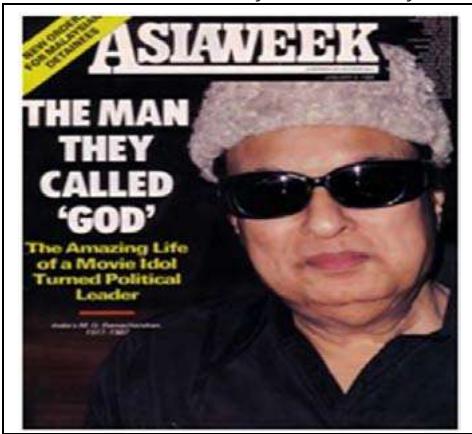
### c) Testing of Hypothesis
In this study the following hypotheses were formulated and as per practice the hypotheses needs to be accepted or rejected which have been carried out as follows:
<table><tr><td>Hypothesis</td><td>Acceptance/Rejection</td></tr><tr><td>1. There is a significant difference between the ideologies propagated by Thanthai Periyar and the hard way he advocated them in his struggle for establishment of equity and social justice in the Tamil Society.</td><td>The initial stage of the above research work broadly establishes the fact the struggle of Thanthai Periyar right from his childhood days towards emancipation of the down-trodden that made him to pronounce the great concept of "Than Manam" – Self Respect that had led to a great explosion of a waking call of the oppressed in the society and therefore this Hypothesis is treated as not accepted.</td></tr><tr><td>2. There is a significant difference between the ideologies propagated by Thanthai Periyar and Peringer Anna in shaping these ideologies as laws after when he ruled the state of Tamil Nadu.</td><td>The second part of the research work above establishes the fact how Peraringer Anna was attracted by the movement of Thanthai Periyar and how he had become famous by joining the social reform movement of Drivida Kazhagam and how he carried forward the ideology even though he had disassociated from the movement and forming his own party the Dravidar Munetra Khazhagam, how he gave fillip to the ideology as legislature when he was anointed to power as Chief Minister of Tamil Nadu and thereby this Hypothesis is to be treated as not accepted.</td></tr><tr><td>3. There is a significant difference between Puratchi Thalaivar enunciating the concept of Annaism and how he turned them in to law when he ruled Tamil Nadu.</td><td>The third part of the research work describes about the struggle of Puratchi Thalaivar and how he had vindicated the ideas of his leader Peraringer Anna as Annaism and how he had given direction to the plans when he ruled the state of Tamil Nadu as its</td></tr><tr><td></td><td>Chief Minister so that the ideology as carried by Anna from Thanthai Periyar are given shape as legislature and thereby this Hypothesis should be treated as not accepted.</td></tr><tr><td>4. There is a significant difference between Puratchi Thalaive making the AIADMK Flag fly high after the demise of her leader and continuing the welfare measures and proved worthy of eminent successor of her predecessor.</td><td>The final part of the research work describes how Puratchi Thalaive struggled hard to be at the helm of affairs of the AIADMK party and continued the welfare schemes advocated by MGR and also given new directions towards social emancipation of the downtrodden, the poor students and the peasants and thereby this Hypothesis should be treated as not accepted.</td></tr></table>
### d) Concluding Arguments
This research work not only establishes the fact i.e. what was found by Robert L Hardgrave in his scholarly article that socially appealing films were launched in Tamil Nadu right from 1936 which was an infusion to politics but also gone beyond the fact that movies five decades ago were not merely produced for entertainment, fun and frolic but uphold moral fabric of the society that gives the avowed scope of cultural heritage wherein the people of the society would maintain standards of life that was enunciated by the ancients nuances of which could be found in the great works like Tholkapium, Purannooru, Agananooru to the consternation of societies in the world.
It is also established in this research work that the propagation of self-respect ideology in the cinemas indeed attained success and paved the way for social emancipation towards attainment of equity and social justice in Tamil Nadu. In this important social movement and the undisputed work of Thanthai Periyar whose ideology on dravidar iyakkam followed by Pararinger Anna, Bharat Ratna Marudhur Gopalamenon Ramachandran and Jayaraman Jayalalitha rewrites the history of Tamil Society and become a beacon that stands stall in the annals of the history of Tamil Nadu. In this respect the research paper assumes importance which carefully describes the sequence of historical and political movement that laid the foundation for a state of equity and social justice and thus become a northern star in the horizon of political philosophy.
Finally, one should acknowledge why Amma ventured into politics brushing aside her life time ambition she undertook to help her leader. The following speech of Amma would smoothen the bruished hearts of millions of her followers (56):
I never came to politics on my own. It was puratchi thalaivar MGR who brought me to politics. I was not interested to join the political party. It was Puratchi Thalaivar MGR who brought me to this party and made me its member. Before the demise of Puratchi Thalaivar – he told me one thing that you should make a promise to me - I asked him what is it about? After my demise you should not leave my partymen whatever problems that comes to you and however difficulties you need to marvel – you should not leave my party men. You should be guarding my partymen – in turn they will guard you too. I am in this party as Gen. Secretary just because of the promise I made to Puratchi Thalaivar and I have nothing personal to be achieved and I have nothing to do at all. That is the reason whenever our party came to power, I enacted plans as a mother would do to its child.
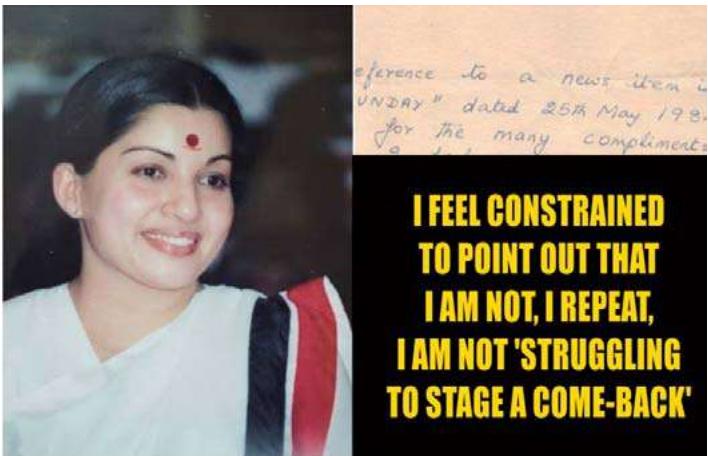
Jayalithaa, who was appointed a member of the noon-meal scheme committee by MGR in 1984, serves food to a child.
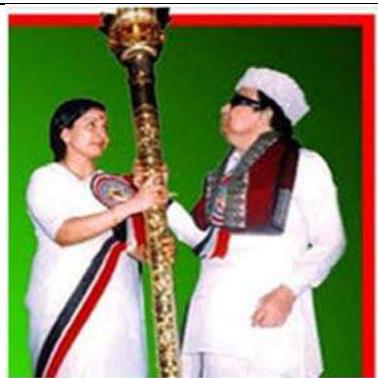

1986 - in the month of July in the all India MGR mandram convention held at Madurai to commemorate the $10^{\text{th}}$ year completion of AIADMK in power in Tamil Nadu Ammu handed over 6 feet Sceptere made out of Silver to MGR and took the blessings of MGR, the picture above depicts the same.
Thus, the picture pasted above only emphasizes that both the leaders are eminent, powerful, lived their life for social transformation with an ultimate aim of establishing equity and social justice of Tamil Nadu and become the savior of social justice.
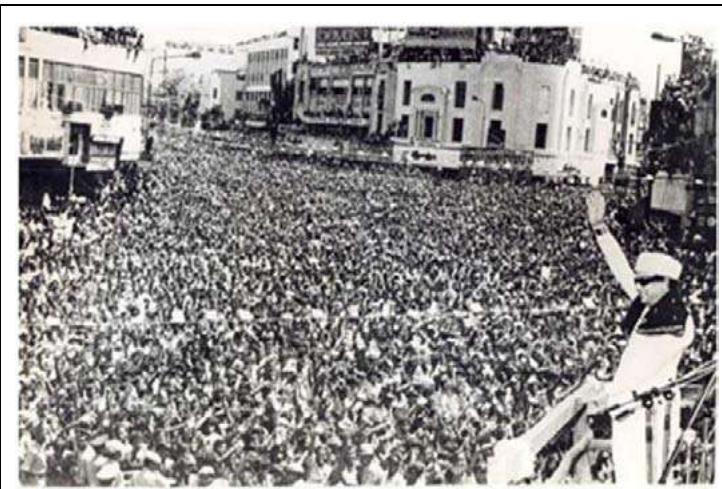
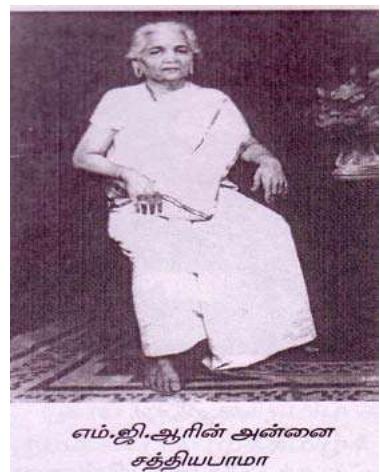
This Paper is Dedicated in Memory of Late Smt. Sathyabama – the Beloved Mother of Bharat Ratna Marudur Gopalamenon Ramachandran