The present work attempts to determine soil sustainability by recognizing the impact of untreated chicken manure on soil health status by applying the fertility content method in various site usages in a few poultry farms in the Osun State, Nigeria. Nearly all of the chicken manure generated in advanced countries is treated before application, while in growing countries chicken manure treatment is insignificant. Untreated chicken manure soil samples were collected from poultry, arable land, and bush fallow, while forestland sites were served as control. The chemical, primary, and secondary variables were determined utilizing standard procedures, while minor nutrients contents were performed with Flame Atomic Absorption Spectrophotometer after wet acid digestion.
## I. INTRODUCTION
Naturally, manure from domesticated animals has been cautiously preserved for its utilization as plant manure (Kanwar, 2001). Then, as sources of low-cost chemical fertilizers became prolific, interest in the utilization of animal manure reduced to the level that manure was regarded as an unwanted garbage to be getting rid of. It became more challenging to persuade cultivators to purchase and apply manure as a fertilizer on their arable lands due to the inexpensive provision of chemical fertilizers. With rising costs, limited supplies of synthetic fertilizers, and fast growing costs of power, livestock manure is once more observed as a preference nutrient provenance and valuable asset (Kanwar, 2001). Arable land growers have been eager once more to give money for livestock manure (litter) and also to compensate vast hauling costs to have these manures dispersed on their fields. The association between livestock waste disposal and ecological quality has been of concern to agronomist engineers and soil classifiers for a while. Kanwar, (2001) stated that till the year 1966, the attention had been on describing a range of issues comprising waste minimization, but not many environmental concerns were given focus. In 1971, when the American Society of Agricultural Engineers (ASAE) funded the first international symposium on animal wastes, more focus was committed to the effect on runoff water quality from fields treated with livestock manure (Kanwar, 2001).
With the current increase in the chicken sector countrywide and its possible ecological effects, chicken production has been kept under careful observation as before. Above 180 million broilers are reared in the Nigeria per year and generate greater than 932.5 metric tonnes of manure. In July 2017, Osun State ranked 2nd regionally in layer production after Ogun and Oyo. Rapid and intensive growth in the chicken enterprise has caused the problem regarding diffuse source contamination. Many times, the local arable lands, situated adjoining the chicken pens, turn out to be dumping ground for massive amounts of poultry droppings. From diffuse source contamination perspective, soil health status properties of highest interest are nitrogen (N), phosphorus (P), potassium (K), calcium (Ca), magnesium (Mg), sulphur (S), and minor nutrients (Cu, Fe, and Zn). Each of these variables occurred in the chicken litter and can contaminate soil.
Chicken industry negatively affects the ecosystem in several fronts –via harmful disposal of manure and dropping, wastewater out of manufacturing facilities (blood, bone tissues, feathers, among other), birds' cadavers, dust, insects, vermin, odour, among others. Also, concentrated chicken farming is charged with producing heat-trapping gases, acid deposition, and nutrient over-enrichment. The ecological effect of poultry farming counts on several factors, among which are farm capacity, kind, and type of poultry, ecological factors in the manufacturing system, diet constituent supplied to the animals, form and amount of bedding material utilized, age of animals, condition of animals, method of storage/management of manure, and the like. It is acclaimed that, if suitably controlled, waste produced in the poultry factory, particularly manure and dropping, may be an invaluable asset, e.g., it may be utilized as fertilizer, soil improver, livestock feed, or power source (Rodić et al., 2011). Other than nutrientsgiven, they amend soil texture, prevent soil erosion, and increase water-retaining volume. Nevertheless, on account of the enormous quantity of litter produced (which transcends crop fertilizer stipulations), the concentration of harmful elements (like heavy elements, pesticide deposits, infectious agents, antibiotics, and others), given off explosive and volatile organic substances into the atmosphere, and, or injudiciously disposal, chicken waste is frequently contaminator as opposed to the invaluable asset. As a result, raisers have to look for ecofriendly healthy means of waste disposal, which unavoidably disrupts their profits(Rodić et al., 2011).
The enormous bulk of the poultry litter manufactured in urban areas is treated in processto farming, while in growing countries as Nigeria poultry litter treatment is not essential. The mixture of treated, incompletely treated, and untreated poultry litter is generally utilized for food production purposes (FAO, 2011). The Food and Agricultural Organization evaluates that approximately 40 million hectares all over the globe are cultivated employing untreated poultry litter (FAO, 2011).
In poultry litter, the presence of organic, inorganic, and microbiological pollutants is a first phase of disinfection is essential before recycle in farming. To prevent the pollution of soil, crops, and adjoining aquatic resources and respectively the spreading of water transmitted diseasesor soil deterioration, poultry litter must be treated. The degree to which poultry litter has to be treated before crop growing counts on the criteria set in regional or global soil quality standards for crop production (Manisha et al., 2020). Soil, the basis of life, is the most indispensable and invaluable natural asset that is irreplaceable speedily. Soil health is an index of the sort of soil features with the requirements of, at a minimum, one biological species in addition to humankind requirement or utilization (Manisha et al., 2020). Land fertility is a vital natural asset that can change via geogenic and anthropogenic processes (Ogunwale et al., 2023). Alterations in soil qualities in various site usages are perhaps due to biotic relationships among environmental factors such as climate, underlying geological material, topography, land utilization, and earth cover (Ogunwale et al., 2021). Soil fertility is measured by the occurrence or lack of nutrients that have agricultural significance (Lone et al., 2016). Soil nutrient component serves a crucial role in defining the soil quality. Healthy agricultural soil will comprise all the indispensable elements in adequate amounts to sustain healthy plant growth throughout its lifespan (Ogunwale et al., 2021). Deterioration of soil health has caused a risk to farming efficiency, economic development, and a sound ecosystem worldwide (Manisha et al., 2020).
Sustaining soil quality and viable food production, renewal of macro and micronutrients, and inclusion of soil conditioners is an essential in the soil to get best crop produces. If their level in the soil is recognized before the crop is planted, it offers a sound ground for defining the nutrient preconditions for the wanted production (Amara et al., 2016). The degree of the positive impacts relies on the regional factors of the given project. The primary adverse effects of recycling treated and untreated poultry dropping in cropland fields are the pollution of soil ecosystems, the probable ruining harvests and aquatic resources, and the inherent threat of adverse effects that contamination outlooks to the exposed living organisms (Manisha et al., 2020). Presently, under organic manure scarce situations, it becomes nearly mandatory for agriculturalists to weigh and utilize any provenances of organic manure, particularly in several zones (Kumar et al., 2020).
Thus, fostering suitable land utilization management methods and land utilization design would assist in reducing the deterioration in soil physical and chemical attributes and would guarantee sustainable crop growing and efficiency (Ogunwale et al., 2023). Thus, this work was meant to investigate the impact of untreated poultry litter on the soil health and fertility levels inside selected chicken farms divers land use in Osun State, Nigeria. The fertility level was estimated to depict the pollution status in soils at poultry farm various site usages fields. It is, hence, significant to find out the correct quantities of chicken manure that can be employed to arable land to accomplish the perquisitesof crop nutrients in the manure (for food production) and concurrentsustain a healthy ecosystem. In Osun State, data on the most likely impacts of untreated chicken manure application on soil health and different land usage within poultry land is scarce. Longitudinal analysis is, thus, required to fathom the implications of untreated chicken manure on soil health for Nigerian poultry farm soils.
## II. MATERIALS AND METHODS
### a) Description and Suitability of the Sampling Area
The sampling area included Ejigbo, Isundunrin, and Osogbo poultry farms in Osun State, Nigeria (Figure 1). There are two seasons per annum in Osun State and Nigeria at large: wet season and dry season. The wet season usually begins in April and continues till October. The dry season last from November to March and the climates are hot at this period. Rainfall patterns differ indirectly with the latitudinal area but directly with the area of the ITD and rainy season-constituted winds. The average annual rainfall ranges from 206 cm in the northern part to 231.75 cm in the southern part of the Osun State, and maximum rainfall is generally reported in July and August (Ogunwale et al., 2022). Average highest standard temperature contents vary from $33.84^{\circ}\mathrm{C}$ in February to $28.8^{\circ}\mathrm{C}$ in August, while average lowest temperatures vary from $25.18^{\circ}\mathrm{C}$ in March to $23.0^{\circ}\mathrm{C}$ in August. The average annual wind speed ranges from a narrow range of 4.0 to $6.2\mathrm{m / s}$. Speeds are more incredible from July to August, the period of August break. In line with the data available for the past ten years the standard wind directions is south-westerly. Relative humidity is normally exceeds $70\%$, particularly during the summit of the wet season. Atmospheric pressure is maximum in November with 58.36 hpa and minimum around August with 51.83hpa (FMARD, 2012). The soil falls under the heavily ferruginous tropical red soils intrinsic in igneous and sedimentary rocks. Due to the dense humid tree cover in the area, the soils are usually deep and of two types, specifically deep clayey soils formed on low smooth hillcrests and upper slopes; and the sandier hill wash soils on the lower slopes. The state Osun is encompassed, by second growth forest and in the northern part, the derived savannah mosaic predominates. An anthropogenic activity, under cocoa plantation, has also substituted the forest. Therefore, the natural tree species have been replaced by oil palm (Elaeis guineensis), Gmelina arborea, Tectona grandis, and thick thickets. Mature forests still found in the Owu forest reserve at the southern part of the state. Nigerian poultry farmer utilize their land in four primary ways which are as poultry farm, arable land, bush fallow, and forestland. Poultry land made up of poultry house. It is located within the compound and intensively cultivated. Heavily manured with poultry dropping and household refuse with crops including plantain, pawpaw, pineapple, banana, plantain, vegetables, fruits, pepper, okra, and tomato. Arable land is extensively cultivated and located some distance off the poultry pen crop grown including yam, cocoyam, potatoes, cassava, maize, rice, soyabean, groundnuts, among others. Bush fallow is a piece of land in the outfield previously farmed but now left to fallow overgrown by weeds to regain more fertility. Forestland/agricultural unproductive area: land area overgrown with tree crops like teak (Tectona grandis), Gmelina (Gmelina arborea), oil palm (Elaeis guineensis), coconut tree (Cocos nucifera), cashew (Anacardium occidentale), mango (Mangifera indica), rubber, coffee, kola nut tree, and so on. The present work was conducted in four various site usages categories, namely: bush fallow (15%), cropland (35%), poultry bird (40%), and forestland/agriculturally unproductive area (water bodies, mountain, hilly) (10%), in Agboola, O Dunola, and Worgor poultry factory in Osun State. The choice of the sampling area was based on their land-utilization patterns and sort of human activity in the land. The sampling areas chosen for this study were regarded as suited because all of them have been in business for more than thirty-five years. Besides, the impact of untreated poultry waste on land quality was being studied for the first time.
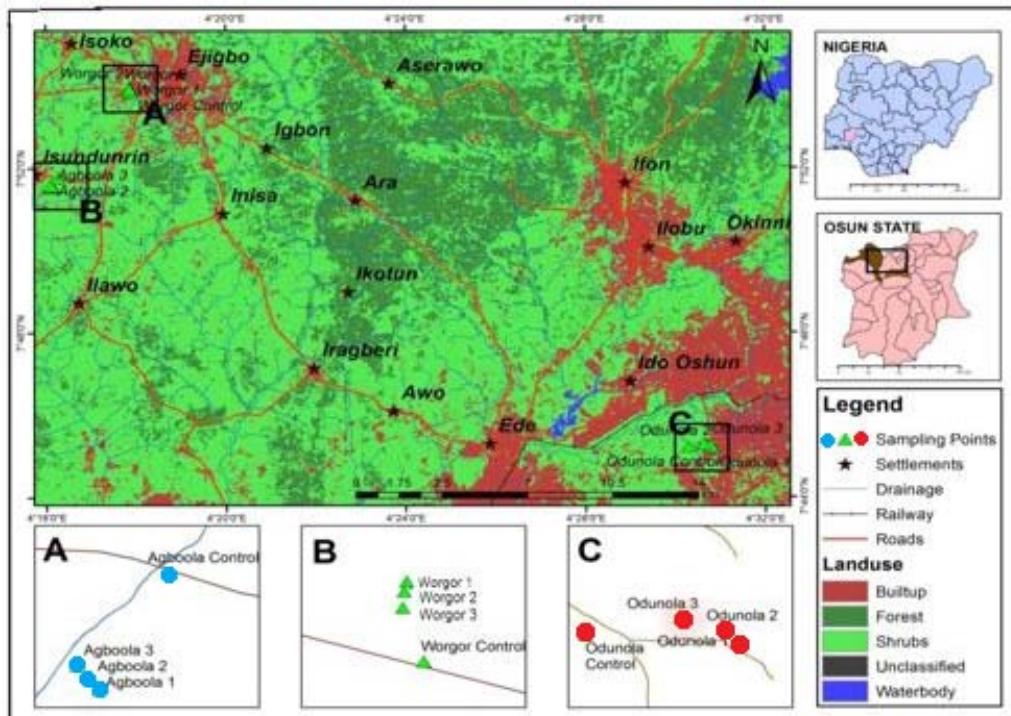 Figure1: Map of the Collection Site Depicting Collection Points
### b) Sample Taken, Extraction, and Conservation
The soil samples were taken from 0-15 cmhorizon with the aid of a soil auger from December 2016 to July 2017, utilizing the GPS locations in 12 different sites. Composite soil sampling was performed inside each site usage and bulked together, followed by a standard procedure for sample extraction(Ogunwale et al., 2021). All the collected soil samples were naturally-dried after determined pH and EC and then soil samples were dried in shade, pulverized with mortarand pestle, and then sieved via a $2.0 \mathrm{~mm}$ sieve. The dried soil samples were kept for further assay of the physical, chemical, and fertility content of soil samples.
### c) Determination of Some Physico-chemical properties and fertility assay of Soil Samples
A sum of 13 physicochemical and fertility content, pH, electrical conductivity, organic carbon, organic matter, available nitrogen, available phosphorus, available calcium, available magnesium, available potassium, available sulfur, available copper, available iron, and available zinc were assayed in the laboratory, subsequent the standard treatments which are further explained below:
The pH was conducted in a soil: distilled water suspension 1: 2.5 w/v (Ogunwale et al., 2021) as under: $10\mathrm{~g}$ of soil sample was precisely measured into a 50 mL Sarstedt collection tube. Twenty-five (25) mL of high purity distilled water was put into the soil. The sample was placed on a laboratory shaker and shaken at 30 rpm for 10 minutes. Next, the sample was allowed to rest for 10 minutes and the pH measured. The pH was determined with the aid of Orion Research Digital pH meter/model 301 following being standardized with pH buffer 4 and 7. Soil EC was determined in a 5:1 w/v water/soil suspension using dual range water proof mobile EC meter (Ogunwale et al., 2021).
Organic carbon was conducted by a process of wet oxidation method with a procedure that is obtained from the Walkley-Black method (Ogunwale et al., 2021). Soil organic matter concentration was performed utilizing the procedure of LOI as expressed by Ikechukwu (2010). Five (5) g of soil sample was correctly measured into a pre-weighed crucible. The mass of soil (M) and the mass of soil and crucible $(\mathsf{M}_1)$ were calculated. The sample was put in a reheated high-temperature furnace $(400^{\circ}\mathrm{C})$ for 4 hours and then left to cool in a desiccator. The sample was re-estimated, and the mass was reported $(\mathsf{M}_2)$. The% LOI was computed employing equation (i).
$$
\% LOI = \frac{M_{1} - M_{2}\times 100}{M}\dots \dots \dots \dots \dots eqn. (i)
$$
The CEC was conducted by preparing the cations with $1 \mathrm{M}$ ammonium acetate buffered at $\mathrm{pH} 7$. Thirty (30) mL of $1 \mathrm{M} \mathrm{CH}_{3} \mathrm{COONH}_{4}$ was put into $5 \mathrm{~g}$ of the soil. The suspension was shaken for 2 hours and then centrifuged for 15 minutes at $6000 \mathrm{rpm}$. After centrifugation and filtration, the filtrate was transferred into a $120 \mathrm{~mL}$ vial and two other volumes of $30 \mathrm{~mL} \mathrm{CH}_{3} \mathrm{COONH}_{4}$ were put in succession after $30 \mathrm{~min}$ of shaken and centrifugation. The final filtrates were made up to $120 \mathrm{~mL}$ with $\mathrm{CH}_{3} \mathrm{COONH}_{4}$ solution (Ogunwale et al., 2021). Available calcium and magnesium were carried out with the aid of Flame Atomic Absorption Spectrophotometer while potassium (K) was done by
Jenway PFP 7 Flame Photometer. Available phosphorus was determined with the colorimetric micro-vanadatemolybdate procedure reported by Ogunwale et al. (2021). Available nitrogen (AN) was conducted by a revised account of the Kjeldahl technique (Ogunwale et al., 2021). A micro-Kjeldahl digestion rack was utilized to minimize the time dictated for the digestion. Available sulfur was performed by turbidimetric procedure (Ogunwale et al., 2021).
### d) Minor Nutrients Determination
One gram (1.0 g) of the naturally-dried fine soil sample collected by coning and quartering procedure, was measured and conveyed into an acid rinsed, PTFE beaker containing $10~\mathrm{cm}^3$ concentrated nitric acid. The combination was gradually heated for 1 hour on a thermostated heating plate at a temperature of $120^{\circ}\mathrm{C}$. Each of the solid residues obtained was heated more for 10 minutes with $5\mathrm{mL}3:1$ concentrated $\mathrm{HNO}_3$ and $\mathrm{HCIO}_4$ combined at $120^{\circ}\mathrm{C}$ before digestion on a heating plate and digested intermittently to ensure a stable temperature of $150^{\circ}\mathrm{C}$ above 5 hours till the acid-dense white vapors were eventually vaporized (Ogunwale et al., 2021). The combination was left to cool to ambient temperature and next put into a $25~\mathrm{mL}$ measuring flask and made up to the calibrated level with high purity deionized water afterward washing the reacting flasks, to recover any left-over micro nutrient. The filtrate was then conserved in pre-cleaned polyethylene storage bottles in preparation for assay. To confirm the efficiency of the $\mathrm{HNO}_3$ - $\mathrm{HCIO}_4$ procedure of sample digestion a recovery test was carried out through spiking $1\mathrm{g}$ of thirty-six (36) and twelve (12) different soil samples each with $1000~\mathrm{cm}^3$ of stock solutions of minor nutrients (Cu, Fe, and Zn). Minor nutrients, secondary nutrients (Ca and Mg), and primary nutrient (K) contents were conducted applying a FAAS and FP (Chem Tech Analytical Alpha Star Model 4) at the Centre for Energy
Research and Development (CERD) of the Obafemi Awolowo University, Ile-Ife, Nigeria. The equipment settings and operational conditions conformed to the manufacturer's recommendations. The equipment was calibrated with analytical quality stock element solutions $(1\mathrm{mg} / \mathrm{dm}^3)$ in replications. Each test was carried out in triplicates.
### e) Soil Fertility Content Estimation
To assess the fertility content of soils in the collection site, various soil physicochemical parameters that govern nutrient availableness such as pH, EC, available N, P, K, and S, exchangeable Ca and Mg, and available minor nutrient (Cu, Fe, and Zn) were evaluated on the ground of the given ranking sketch (Table 1) revised from Manisha et al. (2020). Soil fertility content (SFC) was determined to describe the available content of each primary, secondary, and minor nutrients at a sequence value by utilizing the formula propounded by Parkeret al. (1951):
$$
S F C = \frac {\left(F _ {u n e} \times 1\right) + \left(F _ {m} \times 2\right) + \left. F _ {e} \times 3\right)}{2 F _ {s}} \dots e q n. (i i)
$$
Where
$$
SFC = Soil fertility content
$$
$F_{s} = \text{Sum amount of samples studied for fertility in any defined site}$
$\mathrm{F}_{\text {une }} =$ Number of samples that fall under the unelevated class of fertility content
$F_{m} =$ Number of samples that fall under the moderate class of fertility content
$F_{e} =$ Number of samples that fall under the elevated class of fertility content
An SFC value below 1.67, from 1.67 to 2.33, and above 2.33 signifiesunelevated, moderate, and elevatednutrientcontent of soil, accordingly (Table 2).
Table 1: Ranking Sketch for Soil Analysis Contents and their Fertility Levels
<table><tr><td>Soil parameter</td><td>Unit</td><td>Unelevated</td><td>Range Moderate</td><td>Elevated</td></tr><tr><td>pH</td><td></td><td><6.0 (Acidic)</td><td>6.1-8.0 (Neutral)</td><td>>8.0</td></tr><tr><td>EC</td><td>μSm-1</td><td><1 (normal)</td><td>1-2.0 (Critical)</td><td>>2 (Injurious)</td></tr><tr><td>TOC</td><td>%</td><td><0.5</td><td>0.5-0.75</td><td>>0.75</td></tr><tr><td>TOM</td><td>%</td><td><1</td><td>1-2</td><td>>2</td></tr><tr><td>Av.N</td><td>mgkg-1/ha</td><td><280</td><td>280-560</td><td>>560</td></tr><tr><td>Av.PO43-</td><td>mgkg-1/ha</td><td><10</td><td>10-23</td><td>>23</td></tr><tr><td>Av.SO42-</td><td>ppm</td><td><10</td><td>10-30</td><td>>30</td></tr><tr><td>Exchangeable Ca2+</td><td>Cmol/kg</td><td><1.5</td><td>1.5-4.5</td><td>>4.5</td></tr><tr><td>Exchangeable Mg2+</td><td>Cmol/kg</td><td><1.5</td><td>1.5-4.5</td><td>>4.5</td></tr><tr><td>Exchangeable K+</td><td>mgkg-1/ha</td><td><110</td><td>110-280</td><td>>280</td></tr><tr><td>Av. Zn2+</td><td>ppm</td><td><0.6</td><td>0.6-1.0</td><td>>1.0</td></tr><tr><td>Av. Fe2+</td><td>ppm</td><td><4.5</td><td>4.5-5.5</td><td>>5.5</td></tr><tr><td>Av. Cu2+</td><td>ppm</td><td><0.07</td><td>0.07-0.20</td><td>>0.20</td></tr><tr><td>Fertility content</td><td>Content</td><td>I</td><td>II</td><td>III</td></tr></table>
Table 2: Fertility Content with Level and Comment
<table><tr><td>Fertility Content</td><td>Level</td><td>Comments</td></tr><tr><td>I</td><td>Under 1.67</td><td>Unelevated</td></tr><tr><td>II</td><td>1.67-2.33</td><td>Moderate</td></tr><tr><td>III</td><td>More than 2.33</td><td>Elevated</td></tr></table>
### f) Quality Monitoring
Appropriate quality monitoring procedures and safety measures were performed to ascertain the validity of the results. High purity distilled water was used throughout the assessment. The glassware was washed correctly, and the chemical reagents were of analytical quality. Reagents blank experiments were applied to check the instrument readings. To confirm the experimental results, a spike recovery test was done by spiking and homogenizing various already investigated samples with diverse amounts of stock solutions of the primary, secondary, and minor nutrients. Even though FP and FAAS proffer potential merits such as analytical sensitivity, good analytical detection level, excellent accuracy, and relatively lowpriced, their calibration was crucial to measure the reaction of the experimental procedure in terms of known amounts to the standards of the primary, secondary, and minor nutrients of interestin order that the response to unknown quantities in the samples may be reliably determined. For the FAAS and FP 15, 12.5, 7.5, 5, 2.5, and $1.0~\mu \mathrm{g / mL}$ values of each element solution were freshly extracted by doubling dilution to estimate elements in soil samples. These solutions were performed on the FP and FAAS to obtain the working calibration curve, which was used to estimate the values of primary, secondary, and minor nutrients in the samples by automatic interpolation with the calibration curve. The coefficient of variation of repeated measurements was performed for the quantifications to calculate analytical accuracy.
### g) Chemical Reagents Employed
Nitric acid was bought from Riedel-deHaen (Germany). Acetic acid, perchloric acid, sulphuric acid, and hydrochloric acid were obtained from Sigma-Aldrich (Germany). Ammonium acetate, ammonium sulfate, ammonium chloride, ammonium metavanadate, potassium chloride, ammonium molybdate, and hydrofluoric acid were purchased from British Drug House (Poole, England). List as mentioned earlier, chemical reagent I (25% of HOAc, $(\mathrm{NH4})_6\mathrm{MO}_7$ $\mathrm{O}_{24}\cdot 4\mathrm{H}_2\mathrm{O}$ and $\mathrm{NH_4VO_3}$ made up the volume to $1000~\mathrm{mL}$ ) and chemical reagent II (3.2 M $\mathrm{CH}_3\mathrm{COONH}_4$ and 1.0 M $\mathrm{NH_4Cl}$ ) were formulated. These were utilized to develop stock solutions (Ogunwale et al., 2022).
### h) Data Analysis
The standard deviation for the primary, secondary, and minor nutrients from three replicate measurements was obtained. Computation of the data was done using the mean contents. Analysis of variance (ANOVA) was employed to describe the statistical significant between the means of the primary, secondary, and minor nutrients contents obtained applying SPSS 21.0. Coefficient of variation was utilized to estimate the inner and between site temporal variability of the analytes.
Soil fertility content of four various land utilization fields was calculated regarding pH, EC, organic carbon, organic matter, primary, secondary, and minor nutrients. The results obtained are indicated in Tables 5-8, and discussed with the following subheadings.
## III. RESULTS AND DISCUSSION
a) Soil Properties (pH,EC,%OC,%OM,CEC, and Minor Nutrients)
The properties of soil health differ for diverse forms of soil and thus typifying the soil sample is significant. Tables 4-8 indicate the characteristics of the soil taken from poultry farm in Osun State. The soil properties like pH, EC, OC, OM, primary, secondary, and minor nutrients have a direct impact on the mobility and availability of soil nutrients(Ogunwale et al., 2021).
Table 3: Mean Raw Data for Soil Samples from December 2016 to July 2017
<table><tr><td>Site</td><td>Parameter pH</td><td>EC</td><td>%OC</td><td>%OM</td><td>AN</td><td>AP</td><td>\(ASO_4^{2-}\)</td><td>\(ACa^{2+}\)</td><td>\(AMg^{2+}\)</td><td>AK +</td><td>\(ACu^{2+}\)</td><td>\(AFe^{2+}\)</td><td>\(AZn^{2+}\)</td></tr><tr><td>\(A_1\)</td><td>7.42</td><td>0.88</td><td>1.20</td><td>2.07</td><td>104</td><td>24.50</td><td>8.80</td><td>1.80</td><td>1.02</td><td>280</td><td>0.31</td><td>2.50</td><td>1.10</td></tr><tr><td>\(A_2\)</td><td>6.70</td><td>1.23</td><td>0.91</td><td>1.57</td><td>78</td><td>20.80</td><td>6.20</td><td>1,10</td><td>0.80</td><td>160</td><td>0.18</td><td>1.80</td><td>1.04</td></tr><tr><td>\(A_3\)</td><td>7.20</td><td>1.45</td><td>1.60</td><td>2.76</td><td>138</td><td>30.60</td><td>7.50</td><td>1.60</td><td>0.96</td><td>240</td><td>0.47</td><td>5.05</td><td>1.52</td></tr><tr><td>\(A_c\)</td><td>6.10</td><td>0.46</td><td>1.75</td><td>3.02</td><td>151</td><td>32.90</td><td>9.10</td><td>1.86</td><td>1.06</td><td>320</td><td>0.16</td><td>1.01</td><td>0.83</td></tr><tr><td>\(O_1\)</td><td>7.70</td><td>0.90</td><td>1.38</td><td>2.38</td><td>119</td><td>28.20</td><td>36.50</td><td>1.54</td><td>0.86</td><td>240</td><td>0.30</td><td>4.70</td><td>1.31</td></tr><tr><td>\(O_2\)</td><td>7.80</td><td>1.62</td><td>1.33</td><td>2.29</td><td>115</td><td>21.90</td><td>17.00</td><td>1.26</td><td>0.68</td><td>190</td><td>0.20</td><td>4.10</td><td>0.97</td></tr><tr><td>\(O_3\)</td><td>8.20</td><td>1.71</td><td>1.40</td><td>2.41</td><td>121</td><td>25.80</td><td>27.00</td><td>1.62</td><td>0.84</td><td>230</td><td>0.26</td><td>5.91</td><td>1.47</td></tr><tr><td>\(O_c\)</td><td>6.18</td><td>0.62</td><td>1.83</td><td>3.16</td><td>158</td><td>31.30</td><td>38.00</td><td>1.70</td><td>0.90</td><td>260</td><td>0.12</td><td>1.11</td><td>0.68</td></tr><tr><td>\(W_1\)</td><td>7.50</td><td>0.73</td><td>1.30</td><td>2.24</td><td>112</td><td>48.70</td><td>20.60</td><td>1.64</td><td>0.78</td><td>300</td><td>0.24</td><td>4.26</td><td>1.56</td></tr><tr><td>W2</td><td>7.40</td><td>1.54</td><td>1,10</td><td>1.90</td><td>95</td><td>40.40</td><td>21.50</td><td>1.04</td><td>0.64</td><td>220</td><td>0.19</td><td>3.48</td><td>1.23</td></tr><tr><td>W3</td><td>7.60</td><td>1.83</td><td>1.58</td><td>2.72</td><td>136</td><td>36.10</td><td>24.50</td><td>1.30</td><td>0.84</td><td>270</td><td>0.31</td><td>6.21</td><td>1.69</td></tr><tr><td>Wc</td><td>6.15</td><td>0.58</td><td>1.62</td><td>2.79</td><td>140</td><td>50.50</td><td>27.00</td><td>1.76</td><td>0.92</td><td>340</td><td>0.14</td><td>1.30</td><td>0.90</td></tr></table>
Legend: $A_{1} =$ Agboola Poultry Site; $A_{2} =$ Agboola Arable land; $A_{3} =$ Agboola Bush fallow; $A_{c} =$ Agboola Forestland; $O_{1} =$ Odnola Poultry Site; $O_{2} =$ Odnola Arable land; $O_{3} =$ Odnola Bush fallow; $O_{c} =$ Odnola Forestland; $W_{1} =$ Worgor Poultry Site; $W_{2} =$ Worgor Arable land; $W_{3} =$ Worgor Bush fallow; $W_{c} =$ Worgor Forestland
## i. Impact of Untreated Chicken Manureon Soil Reaction (pH)
The soil reaction is determined by the pH scale. The pH unit varies between 0 and 14, a pH of 7 indicates neutral, pH above 7 denotes alkalinity, and those less than 7 signifies acidity. Soil pH is the most vital factor controlling organic matter decay, microbial processes, types, and degree of nutrient availability or even nutrient absorption by crop plants. The level of nutrients mobilized in the soil ecosystem is a function of pH, attributes of nutrients, redox states, soil reaction, organic matter content, clay content, cation exchange capacity, and the like soil characteristics(Ogunwale et al., 2022a).
The pH of the soil examined varied from 7.42-7.70 for poultry sites, 6.70-7.80 for arable land, 7.20-8.20 for bush fallow, and 6.10-6.18 for forestland, respectively (Table 4). Untreated chicken manure is a provenance of neutral constituents. It moderates the soil pH as a result of the decomposition of organic material and presence of organic compounds based nutrients in the soil ecosystem. The forestland indicated a slightly acidic pH owing to the decay of vegetation litter deposits. This denotes a moderate pH content in all the site usage studied (Table 4). The nutrient ranking of all the pH monitored was mild and slightly high as a result of the endless utilization of various kinds of both organic and inorganic manures.
Impact of Untreated Chicken Manure on Soil Electrical Conductivity
The EC is an invaluable variable of soil property for denoting salinity hazard. Electrical conductivity $(\mu S / cm)$ of soil varied from 0.73-0.90 at poultry sites, 1.23-1.62 at arable land, 1.45-1.83 at bush fallow, and 0.46-0.62 at forestland, respectively (Table 4). The soil fertility content of ECdenotes the unelevated and moderate content in all site usages.
Impact of Untreated Chicken Manure on Soil Organic Carbon
Soil organic carbon $(\%)$ of soil varied from 1.20-1.38 at poultry sites, 0.91-1.33 at arable land, 1.40-1.60 at bush fallow, and 1.62-1.83 at forestland (Table 4). This signifies the elevated content of soil OC in all site usages. Owing to waste streamfrom poultry pen, open dumping of untreated chicken manure and open air burning of dried untreated poultry wastes, and presence of ground animals in the bush fallow and forestland causes greater organic contentwhich might havenegative impacts on soil permeability and cause anaerobic conditions in the plant rhizosphere.
Impact of Untreated Chicken Manure on Soil Organic Matter
Soil organic matter $(\%)$ of soil varied from 2.07-2.38 at poultry sites, 1.57-2.29 at arable land, 2.41-2.76 at bush fallow, and 2.79-3.16 at forestland, respectively (Table 4). This signifies the moderate and high contents of SOM in all site usages. Because of animal waste, waste stream from poultry house, recharge from precipitation, baseline pollution values from last decade's manure, elevated organic value may have harmful effects on soil permeability and cause anaerobic conditions in the plant root region. There is just narrow variability in the $\%$ SOM except for that of bush fallow in which the $\%$ SOM a little moderate. The mean $\%$ SOM is 2.23, 1.92, 2.63, and $2.99\%$ for all the site usages. The $\%$ SOM adds to the soil CEC and a high content of $\%$ SOM leads to a high content of CEC, which will have primaryimpact on the availability of nutrients.
Table 4: Comparative Analysis of Monitored Soil Chemical Variables in Chicken Farm Land Utilization
<table><tr><td colspan="2">Soil variables</td><td colspan="4">Percentage of samples falling under limit</td></tr><tr><td>pH</td><td><6.0 (acidic)</td><td>6-8 (neutral)</td><td>>8.0</td><td>Vary</td><td>Mean ±SD</td></tr><tr><td>Site usage</td><td></td><td></td><td></td><td></td><td></td></tr><tr><td>Poultry site</td><td>0</td><td>100</td><td>0</td><td>7.42-7.70</td><td>7.54±0.38</td></tr><tr><td>Arable land</td><td>0</td><td>100</td><td>0</td><td>6.70-7.80</td><td>7.30±0.33</td></tr><tr><td>Bush fallow</td><td>0</td><td>75</td><td>25</td><td>7.20-8.20</td><td>7.67±0.39</td></tr><tr><td>Forestland</td><td>0</td><td>100</td><td>0</td><td>6.10-6.18</td><td>6.14±0.30</td></tr><tr><td>EC</td><td><1.0 (good)</td><td>1-2 (moderate)</td><td>>2 (elevated)</td><td></td><td></td></tr><tr><td>Poultry site</td><td>100</td><td>0</td><td>0</td><td>0.73-0.90</td><td>0.84±0.03</td></tr><tr><td>Arable land</td><td>0</td><td>100</td><td>0</td><td>1.23-1.62</td><td>1.46±0.05</td></tr><tr><td>Bush fallow</td><td>0</td><td>100</td><td>0</td><td>1.45-1.83</td><td>1.66±0.08</td></tr><tr><td>Forestland</td><td>100</td><td>0</td><td>0</td><td>0.46-0.62</td><td>0.55±0.02</td></tr><tr><td>Organic carbon</td><td><0.5 (unelevated)</td><td>0.5-0.75 (moderate)</td><td>>0.75 (elevated)</td><td></td><td></td></tr><tr><td>Poultry site</td><td>0</td><td>0</td><td>100</td><td>1.20-1.38</td><td>1.29±0.04</td></tr><tr><td>Arable land</td><td>0</td><td>0</td><td>100</td><td>0.91-1.33</td><td>1.11±0.02</td></tr><tr><td>Bush fallow</td><td>0</td><td>0</td><td>100</td><td>1.40-1.60</td><td>1.53±0.06</td></tr><tr><td>Forestland</td><td>0</td><td>0</td><td>100</td><td>1.62-1.83</td><td>1.73±0.07</td></tr><tr><td>Organic matter</td><td><1(unelevated)</td><td>1-2 (moderate)</td><td>>2 (elevated)</td><td></td><td></td></tr><tr><td>Poultry site</td><td>0</td><td>0</td><td>100</td><td>2.07-2.38</td><td>2.23±0.08</td></tr><tr><td>Arable land</td><td>0</td><td>75</td><td>25</td><td>1.57-2.29</td><td>1.92±0.06</td></tr><tr><td>Bush fallow</td><td>0</td><td>0</td><td>100</td><td>2.41-2.76</td><td>2.63±0.09</td></tr><tr><td>Forestland</td><td>0</td><td>0</td><td>100</td><td>2.79-3.16</td><td>2.99±0.10</td></tr></table>
## ii. Impact of Untreated Chicken Manure on Soil Primary Nutrients (NPK)
Available N, P, and K, are primary nutrients for plant growth and development. The levels of these nutrients were assayed and were presented in Table 5. The value of N in the soil varied from 104-119 at poultry sites, 78-115 at arable land, 121-138 at bush fallow, and 140-158 at forestland, respectively (Table 5). The mean kg/Ha N is 111.67, 96.00, 131.67, and 149.67 for all the site usages. The level of N in the soil of all site usages shows unelevated content in all the sites studied (Table 5). In poultry sites, arable land, and bush fallow soils, organic nitrogen has been converted into nitrates by soil microbes to a more significant amount than that obtained in forested areas (Manisha et al., 2020). The unelevated N obtained for all the study sites is also owing to the absence of crops and nearly zero $\mathrm{NO}_3$ -N leaching or runoff losses during the collection periods. The value of P in the soil ranged from 24.50-48.70 at poultry sites, 20.80-40.40 at arable land, 25.80-36.10 at bush fallow, and 31.30-50.50 at forestland, respectively (Table 5). The mean kg/Ha P is 33.80, 27.70, 30.83, and 38.23 for all the land utilization sites. This signifies the elevated level of P in forestland and poultry sites compared to arable land and bush fallow sites. The presence of rodents, rabbits, giant rats, squirrels, and the like ground and aerial animals in the sites might have contributed to the high levels of P in soil from non-manured fields (Kanwar, 2001) or as a result of the accumulation of stable phosphorus nutrients in the soil sampled (Kanwar, 2001). The content of K in the soil ranged from 240-400 at poultry sites, 160-220 at arable land, 230-270 at bush fallow, and 260-340 at forestland, respectively (Table 5). The mean kg/Ha K is 273.35, 190, 246.67, and 306.67 for all the site usages. Available K was higher in forestry and poultry sites than in the cropland and bush fallow plots. Recharge from rainwater, waste stream from poultry house, irrigation may be source of primary nutrients from the soil examined and often resulting in elevated $\mathsf{PO}_4^{3 - }$ contents in the soil. Poultry waste and household wastes of the chicken farm plot (Agboola, Odunola, and Worgor) are deposited into the soil year round that results in the transformation in fertility content of soil in the neighboring sites (Ogunwale et al., 2021). This signifies that untreated chicken manure will be helpful to soils in increasing a few of the primary nutrients. Tree growing, particularly the utilization of untreated poultry manure, can efficiently increase soil fertility values, enhancing land fertility (Manisha et al., 2020).
Table 5: Comparative Analysis of Studied Soil Primary Nutrients in Poultry Farm Site Usages
<table><tr><td colspan="2">Soil primary nutrient</td><td colspan="4">Percentage of samples falling under limit</td></tr><tr><td>Av.N</td><td><280 kg/Ha (unelevated)</td><td>280-560 kg/Ha (moderate)</td><td>>560 kg/Ha (elevated)</td><td>Vary</td><td>Mean ±SD</td></tr><tr><td>Site usage</td><td></td><td></td><td></td><td></td><td></td></tr><tr><td>Poultry site</td><td>100</td><td>0</td><td>0</td><td>104-119</td><td>116.67±6.10</td></tr><tr><td>Arable land</td><td>100</td><td>0</td><td>0</td><td>78-115</td><td>96.00±5.50</td></tr><tr><td>Bush fallow</td><td>100</td><td>0</td><td>0</td><td>121-138</td><td>131.67±7.86</td></tr><tr><td>Forestland</td><td>100</td><td>0</td><td>0</td><td>140-158</td><td>149.67±8.20</td></tr><tr><td>Av.P</td><td><10 kg/Ha (unelevated)</td><td>10-25 kg/Ha (moderate)</td><td>>25 kg/Ha (elevated)</td><td></td><td></td></tr><tr><td>Poultry site</td><td>0</td><td>25</td><td>75</td><td>24.50-48.70</td><td>33.80±4.64</td></tr><tr><td>Arable land</td><td>0</td><td>75</td><td>25</td><td>20.80-40.40</td><td>27.70±3.40</td></tr><tr><td>Bush fallow</td><td>0</td><td>0</td><td>100</td><td>25.80-36.10</td><td>30.83±3.80</td></tr><tr><td>Forestland</td><td>0</td><td>0</td><td>100</td><td>31.30-50.50</td><td>38.23±4.70</td></tr><tr><td>Av.K</td><td><110 kg/Ha
(unelevated)</td><td>110-280
kg/Ha
(moderate)</td><td>>280 kg/Ha (elevated)</td><td></td><td></td></tr><tr><td>Poultry site</td><td>0</td><td>75</td><td>25</td><td>240-300</td><td>273.35±10.
95</td></tr><tr><td>Arable land</td><td>0</td><td>100</td><td>0</td><td>160-220</td><td>190±9.80</td></tr><tr><td>Bush fallow</td><td>0</td><td>100</td><td>0</td><td>230-270</td><td>246.67±10.
70</td></tr><tr><td>Forestland</td><td>0</td><td>25</td><td>75</td><td>260-340</td><td>306.67±12.
30</td></tr></table>
iii. Impact of Untreated Chicken Manure on Soil Secondary Nutrients (Ca, Mg, and S)
Cation exchange capacity (CEC) expresses the amount of cation exchange sites and the estimate offers a concept of the amount of cation adsorption sites in the soil (Ogunwale et al., 2022a). Exchangeable calcium (Cmol/kg) of soil varied from 1.54-1.80 at poultry sites, 1.04-1.26 at arable land, 1.30-1.62 at bush fallow, and 1.70-1.86 at forestland, respectively (Table 6). The mean Cmol/kg Ca is 1.66, 1.13, 1.51, and 1.77 for all the land usage (Table 6). This signifies the moderate content of soil exchangeable Ca in all the land utilization sites and because of the buildup of Ca residues via untreated poultry manure. Soil exchangeable magnesium (Cmol/kg) of soil varied from 0.78-1.02 at poultry sites, 0.64-0.80 at arable land, 0.84-0.96 at bush fallow, and 0.90-1.06 at forestland, respectively (Table 6). The mean Cmol/kg Mg is 0.89, 0.71, 0.88, and 0.96 for all the land utilization sites (Table 6). This denotes the unelevated content of soil exchangeable Mg in all the studied soils. The content of S in the soil ranged from 8.8-36.60 ppm at poultry sites, 6.20-21.50 ppm at arable land, 7.50-
27.00 ppm at bush fallow, and 9.10-24.70 ppm at forestland, respectively (Table 6). The mean ppm is 22.00, 14.90, 19.67, and 24.70 for all the site usages. Available S suggests the moderate value in all land-use sites owing to the moderate buildup of $\mathrm{SO}_2^{4-}$ residues by different poultry facilities. Remarkably, untreated chicken manure discharge changes the secondary nutrient content in the soil, which affects the nutrient and element equilibrium among solid and liquid stages of the soil ecosystem (Manisha et al., 2020). Nevertheless, the impact counts on the uptake of these secondary nutrients in the utilized poultry manure (Table 6). Soil lows in secondary nutrients are more prone to leaching. Table 2 indicates the typical secondary nutrient contents for various soils. From Table 2, it may be observed that the secondary nutrients contents at all the sites (Table 2) falls under the moderate rating, aside for, which has an unelevated content for all the sites. The cation adsorption potential of untreated manures in this case will be moderate due to the moderate CEC. Following Manisha et al. (2020), CEC contents are regarded as unelevated if less than $1.50\mathrm{Cmol/kg}$.
Table 6: Comparative Analysis of Examined Soil Secondary Nutrients in Poultry Farm Site Usages
<table><tr><td colspan="3">Soil secondary nutrient</td><td colspan="3">Percentage of samples falling under limit</td></tr><tr><td>Av.Ca</td><td><1.5 Cmol/kg (unelevated)</td><td>1.5-4.5 Cmol/kg (moderate)</td><td>>4.5 Cmol/kg (elevated)</td><td>Vary</td><td>Mean ±SD</td></tr><tr><td>Land utilization</td><td></td><td></td><td></td><td></td><td></td></tr><tr><td>Poultry site</td><td>0</td><td>100</td><td>0</td><td>1.54-1.80</td><td>1.66±0.07</td></tr><tr><td>Arable land</td><td>0</td><td>100</td><td>0</td><td>1.04-1.26</td><td>1.13±0.04</td></tr><tr><td>Bush fallow</td><td>0</td><td>100</td><td>0</td><td>1.30-1.62</td><td>1.51±0.08</td></tr><tr><td>Forestland</td><td>0</td><td>100</td><td>0</td><td>1.70-1.86</td><td>1.77±0.05</td></tr><tr><td>Av.Mg</td><td><1.5 Cmol/kg (unelevated)</td><td>1.5-4.5 Cmol/kg (moderate)</td><td>>4.5 Cmol/kg (elevated)</td><td></td><td></td></tr><tr><td>Poultry site</td><td>100</td><td>0</td><td>0</td><td>0.78-1.02</td><td>0.89±0.03</td></tr><tr><td>Arable land</td><td>100</td><td>0</td><td>0</td><td>0.64-0.80</td><td>0.71±0.02</td></tr><tr><td>Bush fallow</td><td>100</td><td>0</td><td>0</td><td>0.84-0.96</td><td>0.88±0.03</td></tr><tr><td>Forestland</td><td>100</td><td>0</td><td>0</td><td>0.90-1.06</td><td>0.96±0.06</td></tr><tr><td>Av.S</td><td><10 ppm (unelevated)</td><td>10-30 ppm (moderate)</td><td>>30 ppm (unelevated)</td><td></td><td></td></tr><tr><td>Poultry site</td><td>25</td><td>75</td><td>0</td><td>8.8-36.60</td><td>22.00±3.4 5</td></tr><tr><td>Arable land</td><td>25</td><td>75</td><td>0</td><td>6.2-21.50</td><td>14.90±2.1 0</td></tr><tr><td>Bush fallow</td><td>25</td><td>75</td><td>0</td><td>9.50-27.0</td><td>19.67±1.9 0</td></tr><tr><td>Forestland</td><td>25</td><td>75</td><td>0</td><td>9.10-38.00</td><td>24.70±3.65</td></tr></table>
Source:Field Survey,(2017)
## iv. Impact of Untreated Chicken Manure on Soil Minor Nutrients (Cu, Fe, and Zn)
Poultry operations are made up of very significant diffuse sources of minor nutrients. The primary sources of this sort of contamination are impurities from manures, insecticides, waste-based compost, timber preservatives, and rusting of metal items like poultry metallic cages, poultry feeding and rearing implements, roofs, and concrete and barb wire fences (Ogunwale et al., 2021). Poultry manure, sewage sludge, and the like wastes employed in poultry land, arable land, and forestland signify that soil gets polluted with trace elements and the like pollutants. These wastes comprise high content of trace elements (Cu, Fe, and Zn), organic, and inorganic materials that assist in either the movement or bond the trace elements. Given enough time and raindrops, many trace elements could seep out of the soil. This issue has become more severe as utilization of untreated poultry wastes to forest, rangelands, farmland, and land recovery areas has been more commonly used. The purpose for such broad utilization of this practice is that it is cheap (Ogunwale et al., 2021).
Elevated content of trace elements in irrigated soils and ground water cause a risk to crop production and the welfare of human beings and faunas. This may take place in four several means: 1) metals may build in plants to values that result in plant injury; 2) metals in plants have detrimental effects on man and animals that feed on these plants; 3) metals might get into open water from agricultural watershed; and 4) metals may move into aquifer and can re-surface with tile drain water in runoff water, thus disturbing undomesticated species and human welfare. A few elements such as Cu, Fe, and Zn might result in injurious effects to aquatic habitat even at content a bit more than typical benchmark values (Ogunwale et al., 2021).
As previously reported the content of Cu probably found in unpolluted soil varies from 0.07-0.2 ppm (Manisha et al. 2020) (Table 1). When these values were compared with the total Cu content found in this study, all the plots indicated moderate and elevated contents. The ppm of Cu extracted from poultry site runs from 0.21-0.30, 0.18-0.20 for arable land; 0.26-0.47 for bush fallow while that of forestland runs from 0.12-0.16 of the total Cu (Table 7). The mean of Cu determined for poultry sites, arable land, bush fallow, and forestland are 0.25, 0.19, 0.35 and 0.14 ppm, respectively (Table 7). The obtainable Cu value was elevated in the poultry site and bush fallow, i.e., 0.25 and 0.35 ppm. The fertility content signifies the elevated content of Cu in the poultry site due to being required in the chicken diet, and it causes many adverse effects in the human system such as ischemia, impaired hemogenesis, and cardiac lesions; skin discolorations, cornification, ossification, reproduction, myelinogenesis of the spinal column, and nervous tissue synthesis; and inhibit growth. Chronic exposure Cu ingestion causes rapid discharge of Cu from the liver storage locations into the blood vessels leading to hematolysis, jaundice, and chlorosis with attending liver necrosis" (Ogunwale et al., 2021). Inadequacy in plants increases proneness to diseases such as ergot, which can pose substantial harvest loss in small grains.
Iron is an essential micronutrient for nearly all living organisms. It performs a crucial role in metabolic activities such as DNA production, respiration activity, photosynthesis activities, upkeep of chloroplast components, and activations (Ogunwale et al., 2021). All soils investigated have mean Fe content less than that of the FAO for cropland (4.5-55 ppm), aside from bush fallow, whose values was 5.72 ppm. The obtainable Fe value was elevated in the bush fallow plot, e.g., 5.72 ppm. These values are well more than the contents of Fe in all the field plots. The power of Fe to form soluble affinities with soil influences its mobility. In surface soils, Fe associates with organic matter and can produce soluble chelates which are more moveable in the face of fulvic and humic substances (Ogunwale et al., 2022a). Soil pH is the most vital factor influencing Fe solubility, sorption, and mobility (Ogunwale et al., 2022a). The solubility and mobility of Fe increase with increasing pH (Ogunwale et al., 2022a). From the findings at the site, a maximum pH of 8.20 was found in bush fallow (Table 4). Of all the elements, Fe exhibits the highest mobility in the soils at the site.
Zinc is necessary in plants for numerous biochemical activities like cytochrome and nucleotide manufacture, auxin metabolism, chlorophyll synthesis, enzyme function, ion transport, and the upkeep of membrane structure (Ogunwale et al., 2021). All of the soils studied are well above the Zn FAO value for arable land and plant uptake (0.6-1.0 ppm) except for forestland, whose mean values was 0.80 ppm. The obtainable Zn value was elevated in the bush fallow plot, e.g., 1.56 ppm. The mobility of Zn is higher in bush fallow than in poultry site, arable land, and forestland for the entire sample analyzed from the area (Table 8). Ikechukwu, (2010) has categorized many trace elements in line with their mobility attributes. He detected that mobility of Zn is the maximum and is the simple to be transported from one matrix to another for it is found as soluble substances at neutral and slightly acidic pH contents.
The elevated content of Cu and Zn was found in the poultry site, and Fe indicates moderate. In the arable land, Cu signifies moderate, Zn exhibits elevated while Fe was unelevated. In the instance of bush fallow, elevated Cu, Fe, and Zn was found while in the case of forestland, moderate Cu and Zn was found and unelevated level of Fe was available. Continuous deposition of untreated liquid manure, undigested antibiotics, and resistant bacteria may contain trace elements and causes buildup of elevated content of trace elements in soil and so in crop plants (especially edible vegetables), which can be detrimental to crop plants and health threat to faunas and human beings.
In a nutshell, slight variations in fertility content occurred from site to site, a mass of the difference in total nutrient from sites might as well be due to surface soil with various land use practices. Variable parent materials, climate, biota, plant communities, land cover, and human activities would affect the level of soil parameters interrupted by the open raw poultry manures disposal and burning could likewise give rise to the poultry and cropland plots being different from that bush fallow and forested lands. The unelevated nutrients observed from field plots were owing to the high infiltration rate of the soil and the flat topography of the site.
Table 7: Comparative Analysis of Monitored Soil Minor Nutrients in Poultry farm Plot Usages
<table><tr><td colspan="3">Soil minor nutrient</td><td colspan="3">Percentage of samples falling under limit</td></tr><tr><td>Av.Cu</td><td><0.07 ppm (unelevated)</td><td>0.07-0.2 ppm (moderate)</td><td>>0.2 ppm (elevated)</td><td>Vary</td><td>Mean ±SD</td></tr><tr><td>Land utilization</td><td></td><td></td><td></td><td></td><td></td></tr><tr><td>Poultry site</td><td>0</td><td>0</td><td>100</td><td>0.21-0.30</td><td>0.25±0.02</td></tr><tr><td>Arable land</td><td>0</td><td>100</td><td>0</td><td>0.18-0.20</td><td>0.19±0.05</td></tr><tr><td>Bush fallow</td><td>0</td><td>0</td><td>100</td><td>0.26-0.47</td><td>0.35±0.04</td></tr><tr><td>Forestland</td><td>0</td><td>100</td><td>0</td><td>0.12-0.16</td><td>0.14±0.02</td></tr><tr><td>Av.Fe</td><td><4.5 ppm (unelevated)</td><td>4.5-5.5 ppm (moderate)</td><td>>5.5 ppm (elevated)</td><td></td><td></td></tr><tr><td>Poultry site</td><td>50</td><td>50</td><td>0</td><td>2.50-4.70</td><td>3.82±0.12</td></tr><tr><td>Arable land</td><td>100</td><td>0</td><td>0</td><td>1.80-4.10</td><td>3.13±0.09</td></tr><tr><td>Bush fallow</td><td>0</td><td>25</td><td>75</td><td>5.05-6.21</td><td>5.72±0.18</td></tr><tr><td>Forestland</td><td>100</td><td>0</td><td>0</td><td>1.01-1.30</td><td>1.14±0.03</td></tr><tr><td>Av.Zn</td><td><0.6 ppm (unelevated)</td><td>0.6-1.0 ppm (moderate)</td><td>>1.0 ppm (elevated)</td><td></td><td></td></tr><tr><td>Poultry site</td><td>0</td><td>0</td><td>100</td><td>1.10-1.56</td><td>1.32±0.07</td></tr><tr><td>Arable land</td><td>0</td><td>25</td><td>75</td><td>0.97-1.23</td><td>1.08±0.05</td></tr><tr><td>Bush fallow</td><td>0</td><td>0</td><td>100</td><td>1.47-1.69</td><td>1.56±0.09</td></tr><tr><td>Forestland</td><td>0</td><td>100</td><td>0</td><td>0.68-0.90</td><td>0.80±0.04</td></tr></table>
Table 8: Fertility Content of Chemical, Primary, Secondary, and Minor Nutrients in Soils of Chicken Farm
<table><tr><td rowspan="2">Variable</td><td rowspan="2">units</td><td rowspan="2">Poultry FC</td><td colspan="3">Site Usages Arable land</td><td rowspan="2">Bush fallow FC</td><td rowspan="2">Forestland FR</td><td rowspan="2">FC</td><td rowspan="2">FR</td></tr><tr><td>FR</td><td>FC</td><td>FR</td></tr><tr><td>pH</td><td></td><td>1.71</td><td>moderate</td><td>1.70</td><td>moderate</td><td>1.75</td><td>moderate</td><td>1.69</td><td>moderate</td></tr><tr><td>EC</td><td>μS/cm</td><td>1.36</td><td>Good</td><td>1.68</td><td>moderate</td><td>1.69</td><td>moderate</td><td>1.40</td><td>Good</td></tr><tr><td>OC</td><td>%</td><td>2.36</td><td>elevated</td><td>2.35</td><td>elevated</td><td>2.37</td><td>elevated</td><td>2.35</td><td>elevated</td></tr><tr><td>OM</td><td>%</td><td>2.35</td><td>elevated</td><td>1.90</td><td>Moderate</td><td>2.34</td><td>elevated</td><td>2.36</td><td>elevated</td></tr><tr><td>AN</td><td>mg/Ha</td><td>1.42</td><td>unelevated</td><td>1.44</td><td>unelevated</td><td>1.43</td><td>unelevated</td><td>1.42</td><td>unelevated</td></tr><tr><td>AP</td><td>mg/Ha</td><td>2.34</td><td>elevated</td><td>1.68</td><td>Moderate</td><td>2.36</td><td>elevated</td><td>2.37</td><td>elevated</td></tr><tr><td>AK</td><td>mg/Ha</td><td>2.02</td><td>Moderate</td><td>2.30</td><td>Moderate</td><td>2.31</td><td>Moderate</td><td>2.38</td><td>elevated</td></tr><tr><td>ACa</td><td></td><td>2.02</td><td>Moderate</td><td>2.00</td><td>Moderate</td><td>2.10</td><td>Moderate</td><td>2.22</td><td>Moderate</td></tr><tr><td>AMg</td><td>Cmol/kg</td><td>1.30</td><td>unelevated</td><td>1.31</td><td>unelevated</td><td>1.30</td><td>unelevated</td><td>1.32</td><td>unelevated</td></tr><tr><td>AS</td><td>Cmol/kg</td><td>1.73</td><td>Moderate</td><td>1.70</td><td>Moderate</td><td>1.71</td><td>Moderate</td><td>2.34</td><td>elevated</td></tr><tr><td>Cu</td><td>ppm</td><td>2.37</td><td>Elevated</td><td>1.81</td><td>Moderate</td><td>2.39</td><td>Elevated</td><td>1.90</td><td>moderate</td></tr><tr><td>Fe</td><td>ppm</td><td>1.69</td><td>Moderate</td><td>1.22</td><td>Unelevated</td><td>2.35</td><td>Elevated</td><td>1.32</td><td>unelevated</td></tr><tr><td>Zn</td><td>ppm</td><td>2.38</td><td>Elevated</td><td>2.36</td><td>Elevated</td><td>2.41</td><td>Elevated</td><td>1.90</td><td>moderate</td></tr></table>
## IV. CONCLUSION
The findings of the present work inferred that prolonged utilization of untreated poultry manure in four site usage areas of poultry farmland, nutrients, total organic carbon, and organic matter on the rise in the soils, but there is concern associated with soil available P accumulation and the moderate buildup of likely minor nutrients, such as Cu, Fe, and Zn. Also, the plot varies from neutral to slightly alkaline soil pH with moderate EC while primary, secondary, and minor nutrients were within the natural limit apart from P and Zn which are more than analytical limit. To reduce needless damage effects from the untreated chicken manure employed to the soil, continuous monitoring of soil health in such zones is necessary. Untreated liquid manure needs to be sprayed before spreading and applying onto arable land, forestland, pastures, or food crops. Furthermore, remediation procedures together with good agronomical practices (GAPs) as: devising and adhering to a nutrient management strategy, employing just needed manure to be uptake by the crop, manure fertility index, soil and manure analysis, standardization of manure spreader, estimating application proportions, period of application, inspecting manure waste disposal facilities for seepages, following the setback requirements, pH adjustment, organic matter management, fertilizer management, choice of the most suitable plants for a defined soil, and liming materials are essential in the collection site which is regarded as a central factor for soil health amelioration. Finally, permitting process forbids IAFOs application of "manure, litter, and process waste stream" to land below 150ft from any water surface channel to open waters, water drinking, farming wells or sink holes, arable land save the IAFOs offers a 35ft vegetated filter strips or similar option control procedure.
### ACKNOWLEDGEMENTS
The authors are grateful to the anonymous reviewers for their enlightening, constructive, and helpful comments on the paper.
Conflict of Interests
The authors have not declared any conflict of interests.
Funding
The author(s) received no financial support for the research, authorship, and/or publication of this paper.
Abbreviations: $\%$: Percentage; GPS: Global Positioning System, pH: Potential of Hydrogen ion; EC: Electrical Conductivity, cm: Centimeter, mm: Millimeter, AN: Available Nitrogen, $\mathrm{AvPO_4}^{3-}$: Available Phosphate, $\mathrm{AvK}^{+}$: Available Potassium ion, $\mathrm{AvSO_4}^{3-}$: Available Sulphate, $\mathrm{Ca^{2+}}$: Calcium, $\mathrm{Mg^{2+}}$: Magnesium, $\mathrm{Zn^{2+}}$: Zinc, $\mathrm{Cu^{2+}}$: Copper, $\mathrm{Fe^{2+}}$: Iron, SFC: Soil Fertility Content, $\mu \mathrm{S/m}$:
Microsiemens per meter; cmol.Kg $^{-1}$: centimole/kilogram; SD: Standard Deviation, and kg/mg: kilogram per milligram, ITD: Inter-tropical Discontinuity; PTFE beakers; LOI: Loss on Ignition; FP: Flame photometer; FAAS: Flame Atomic Absorption Spectrophotometer; IAFOs: Intensive Animal Feeding Operations, FAO: Food and Agriculture Organisation, FC: Fertility content, FR: Fertility rating.
Generating HTML Viewer...
References
15 Cites in Article
(2011). Standard maxima for metals in Agricultural soils.
(2012). Nigeria Environmental and Social Impact Assessment.
A Ikechukwu (2010). Determination of potentially toxic elements (PTEs) and an assessment of environmental health risk from environmental matrices.
V Raul,L Leifsson,A Kaleita (2000). System Modeling and Sensitivity Analysis of the Iowa Food-Water-Energy Nexus.
V Kumar,P Kumar,J Singh,P Kumar (2020). Current status of water pollution by integrated industrial hubs (IIHs) in India.
P Lone,A Bhardwaj,K Shah,F Bahar (2016). Assessment of Soil Macronutrient Status of Some Threatened Medicinal Plants of Kashmir, India.
B Manisha,K Nitin,K Vishal (2020). Effect of untreated wastewater on soil quality: A case study in Ranipur Rao watershed in Haridwar region (Uttarakhand), India.
T O. Ogunwale,J A. O. Oyekunle,A O. Ogunfowokan,A I. Oluwalana,P A. Ogar,K D. Salami (2021). Seasonal Speciation Study of Heavy Metals Content in Well Water of Some Chicken Farms in Osun State, Southwestern Nigeria.
Amara (2016). Unknown Title.
T Oogunwale,J A. O. Oyekunle,A O. Ogunfowokan,A I. Oluwalana (2021). Seasonal Appraisal of Heavy Metal Bioaccumulation in Amaranthus, Gruty-stalked Jatropha, Scent Leaf, Bitter Leaf and Water Leaf in Some Poultry Farms within the State of Osun, Southwest Nigeria.
T O. Ogunwale,J A. O. Oyekunle,A O. Ogunfowokan,A I. Oluwalana,P A. Ogar,K D. Salami (2021). Seasonal Speciation Study of Heavy Metals Content in Well Water of Some Chicken Farms in Osun State, Southwestern Nigeria.
T Ogunwale,J Oyekunle,A Ogunfowokan,S Oyetola,O Ogunrinola (2023). Cropland Bioaccumulation Risks of Potentially Toxic Elements in Soil of Some Designated Foodstuffs Cultivated in Odu'a Farm Establishment, Aawe, Oyo State, Nigeria.
T Ogunwale,J Oyekunle,A Ogunfowokan,S Oyetola (2022). Evaluation of Bioavailable Contents of As, Cu, and Zn in Some Poultry Farms Soils in Osun State, Nigeria.
F Parker,W Nelson,Eric Winters,I Miles (1951). The Broad Interpretation and Application of Soil Test Information.
V Rodić,L Perić,M Đukić-Stojčić,N Vukelić (2011). The Environmental Impact of Poultry.
No ethics committee approval was required for this article type.
Data Availability
Not applicable for this article.
How to Cite This Article
Taiwo O. Ogunwale. 2026. \u201cEcological Impacts of Untreated Chicken Manure on Soil Health of a Few Poultry Farms in Osun State, Nigeria\u201d. Global Journal of Science Frontier Research - H: Environment & Environmental geology GJSFR-H Volume 25 (GJSFR Volume 25 Issue H1): .
Explore published articles in an immersive Augmented Reality environment. Our platform converts research papers into interactive 3D books, allowing readers to view and interact with content using AR and VR compatible devices.
Your published article is automatically converted into a realistic 3D book. Flip through pages and read research papers in a more engaging and interactive format.
The present work attempts to determine soil sustainability by recognizing the impact of untreated chicken manure on soil health status by applying the fertility content method in various site usages in a few poultry farms in the Osun State, Nigeria. Nearly all of the chicken manure generated in advanced countries is treated before application, while in growing countries chicken manure treatment is insignificant. Untreated chicken manure soil samples were collected from poultry, arable land, and bush fallow, while forestland sites were served as control. The chemical, primary, and secondary variables were determined utilizing standard procedures, while minor nutrients contents were performed with Flame Atomic Absorption Spectrophotometer after wet acid digestion.
Our website is actively being updated, and changes may occur frequently. Please clear your browser cache if needed. For feedback or error reporting, please email [email protected]
Thank you for connecting with us. We will respond to you shortly.