Introduction: Nowadays, ozone plays an important role in wound healing and tissue repair as a therapy and as antimicrobial, bactericidal and fungicidal agent. It attains recognition in hair transplantation as a treatment for necrosis due to hypoxic-ischemic local syndrome. Objective: to demonstrate the therapeutic evolution of ischemia in a hair transplant after ozone therapy sessions. Methods: The patient was evaluation and gave consent to photographic records. He went through 30 topic applications of ozonated oil, with a 10 drop dosage daily; 12 bag ozone sessions for 10 minutes; besides subcutaneous applications, with 30% ozone concentration and a very small gas volume (1-2 ml) with 30G needle. Results: Evolution of the case was registered with images and tissue coloring and changes evidenced. Conclusion: It is clear that ozone therapy made wound healing and tissue repair faster, since there was an increase of epithelial cells and neoangiogenesis due to therapy, resulting in almost complete repair of the patient’s hair transplant at the end of the sessions.
## I. INTRODUCTION
Hair transplant has been changing many individuals' reality that face alopecia, a disease consisting of head or body hair loss. Unlike several other transplants, hair transplant is in the spotlight because of its peculiarity in using follicles of the same donor who is supposed to receive them in a less invasive way. In spite of the many techniques available, all of them require patient evaluation including: patient history, age, previous medical evaluations. Diagnosing the type of alopecia is mandatory. Whenever the patient has the conditions for the procedure, it is unusual the occurrence of resulting complications. However, as highlighted by Zito and Raggio in Statpears, "Potential complications include: edema (5%), bleeding (0.5%),folliculitis, infection (less than 1% of patients)". Being the necrosis of the receiving area due to excess density in the area or another possible cause present.
Hypoxic-ischemic local syndrome, which can evolve to tissue necrosis, develops from low blood perfusion in tissues and decrease in oxygen because of several etiologies, such as abuse of anesthetics and vasoconstrictors and excess of FUs in an area. The appropriate level of oxygen in tissues is fundamental so that cells keep their aerobic metabolism and vital functions. When the perfusion pressure is not enough to keep the minimal oxygen level, aerobic metabolism shifts to anaerobic with resulting organic dysfunctions. Therefore, treatment is an issue of diagnosing the primary cause and should be initiated at the ischemic lesion spot so as to start revascularization.
Necrosis takes place whenever a cell is exposed to extreme environmental conditions, adverse and excessive stimuli, or in face of deleterious mutations codified in its genetic material. Cell necrotic death occurs as a response to severe physiological conditions, including hypoxia, ischemia, toxin exposition, anesthetics, reactive metabolites of oxygen and nutrient deprivation. In cases of ischemic necrosis, nuclear alterations of cytoplasmas portray a clotted blood appearance: acidophilus, granular and hardened. There is loss of tissue structure and the area becomes whitish, bulged and hyperemic. Among microscopic aspects there is increase in acidophilus, a granular appearance and formation of amorphous masses as a result of membrane rupture and mixture of autolyzed material.
Ozone therapy, considered an alternative therapy, with excellent results and ease of application, is in evidence in many countries. It was first acknowledged in 1839, by german chemist Christina Friedrich, and in 1896, by Nikola Tesla, who patented the first ozone generator, in the US, used during the First World War to treat gas gangrene, which treatment is still in use.
Ozone therapy is a bio-oxidative therapy based on a gasified mixture of oxygen and medical ozone, whose therapeutic effects include mainly the improvement of metabolism and the oxygenation of peripheral tissues, as a consequence of increased erythrocyte flexibility, allowing for a better flow inside capillaries and assuring a larger supply of oxygen in the tissues. This process facilitates epithelial repair and growth and inhibits bacterial and fungicidal development.
In hair transplantation, despite technological advancements, ozone therapy application to treat ischemic necrosis is unknown or barely known, as shown by the reduced number of research papers and therapeutic approaches which might be a guidance for professionals in the field. Thus, the current study aimed at making the causes and effects of ozone therapy more clear whenever it is aptly applied to treat and prevent ischemia and necrosis in hair transplantation procedures.
## II. MATERIALS AND METHODS
This is a longitudinal descriptive and interventionist study with convenience, consecutive, non-probabilistic sampling. The patient underwent a hair transplant procedure in May, 2022, in an unknown doctor's office and was referred to Dr. Anayene Craveiro, at Belcorp Institute, after first signs of ischemic necrosis.
The recommendations of the Madrid Declaration on Ozone Therapy were considered to evaluate the appropriate doses for the corresponding mechanism of action. First, there are three basic principles: (1) not to do harm; (2) stagger the dose; (3) apply the necessary concentration.
Treatment was started with initial evaluation and recognition of the ischemic necrotic area, with mediated intervention. Lesion characteristics were evaluated on the grounds of photographic records facilitating the patient's therapeutic evolution follow-up.
The Oxy device, manufactured by Tonederm®, licensed by the Brazilian Health Regulatory Agency (ANVISA), was employed in the treatment. This device turns medical oxygen into ozone gas through corona discharge. Topical treatment with gas, and a plastic transparent bag manufactured with ozone resistant material, consists of applying an elastic band with sealed edges to the skin.
## III. CASE OUTLINE
A 40-year-old white male patient, with no pre-existing diseases, underwent the hair transplantation procedure in May, 3rd 2022, with 4,600 follicle units.
The patient - himself a doctor - was referred to Dr. Craveiro Mendes in the same week following his noticing of an ischemic area. His exams showed no other symptoms, nor were there any complaints of allergic reactions. On inspection, the lesion showed well defined edges adherent to wound bed with small fibrin clots, wound bed with granular tissue, adjacent skin edema, peeling skin around the tissue lesion and absence of exudate and odor.
The patient was submitted to 30 ozonized oil topical applications, 10 drops a day, and twelve $30\%$ ozone sessions with a bag, once a week, for 10 minutes, besides subcutaneous $30\%$ concentration ozone applications with a small gas volume (1- 2 ml) through 30G needle. Ozone therapy was conducted after local hygienization with no dressing following the application.
The patient, who unexpectedly faced complications after pursuing hair transplant for high self-esteem, was also provided with psychological care for better acceptance of ozone therapy results.
## IV. RESULTS AND DISCUSSION
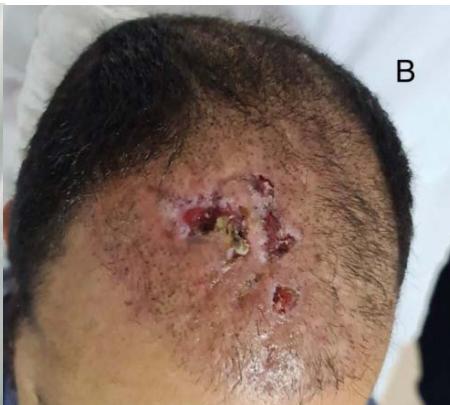
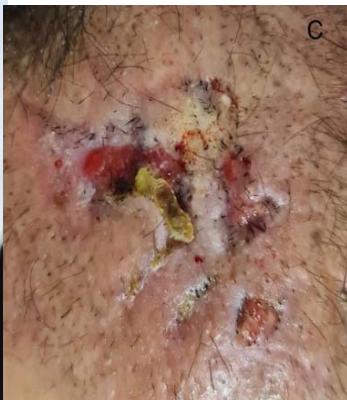
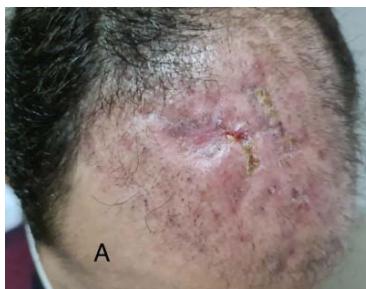
Photographic images demonstrate the progress between the first and last ozone therapy applications. There was local neovascularization and wound healing with progressive reduction of the necrotic area. It is possible to observe at first hand the increased blood supply, vessel permeability and vasodilation, which showed a better coloring appearance since the first session. Granular tissue was found in the first session with endothelial and fibroblast proliferation, which are mesenchymal differentiated cells spreading on the lesion surface. On the first days, angiogenesis first stages were observed with a bulged and whitish region surrounded by a red halo. On the last day it was possible to see a better wound bed and epithelial tissue growth, that is, new skin growing out of the lesion edges in face of a concentration process of the marginal wound walls, under the action of activated fibroblasts, making epithelization possible. It exhibits a shiny rose coloring related to mature collagen.
According to the photographic records before and after the three sessions (Picture 1), there was improvement of tissue healing, decreasing bulging, better local blood supply, and recovery of the whitish appearance. In addition, there was growth of granular tissue due to collagen activity, elastin and reticular fibers in an attempt to tissue repair. This phase produces the increase of inflammatory cells, growth factors, vasodilation and presence of permeability.
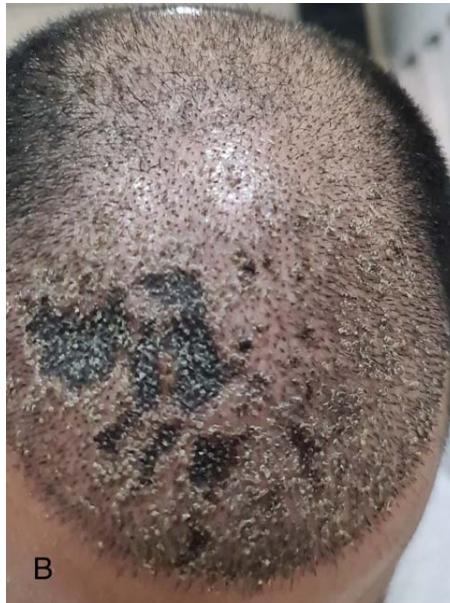
 Picture 1: Before (B) and after (A) of Ozone Therapy Application Source:Author
Along the application sessions, there was significant improvement (Picture 2). Necrotic tissue started debridering and granular tissue formation took place, with faster neovascularization and local epithelialization. Studies have demonstrated that ozone oil can promote wound healing through PI3K/Akt/mTOR signaling. Mechanically, it is possible to verify that ozone oil can activate fibroblasts and promote their migration. Besides that it can extend the mesenchymal epithelial transition (MET) process.
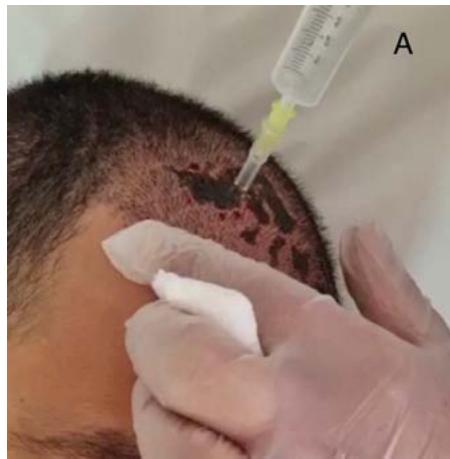
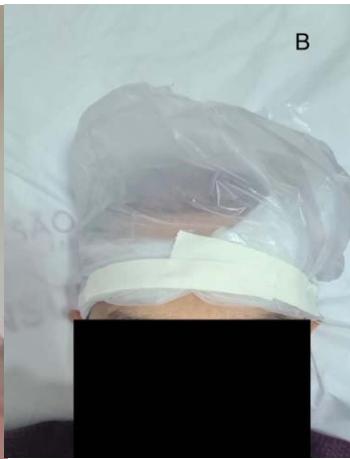 Picture 2: Application of Subcutaneous Ozone (A) and Bag Therapy (B) Source: Author
The analysis of therapeutic evolution after 5 sessions of ozone therapy (Picture 3) makes clear the expansion of mesenchymal cells, fibroblasts, on the wound surface, which is related to internal vessel growth and formation of conjunctive tissue. From this moment, concentration of lesion edges takes place, facilitating epithelization.
 Source:Author Picture 3: Evidence of mesenchymal cell growth surrounding de lesion (A); Concentration of edges for epithelization in (B) and (C)
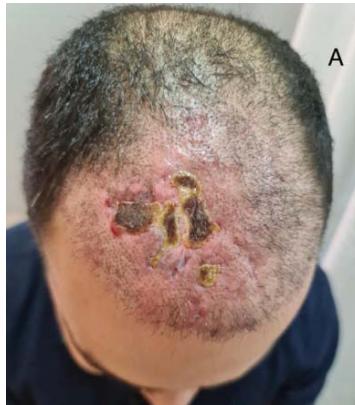
Gradually after concluding ozone therapy sessions, remodeling phase starts (Picture 4) leading to reduction of cell activity and blood vessels. Then, maturation and increased local resistance ensues.
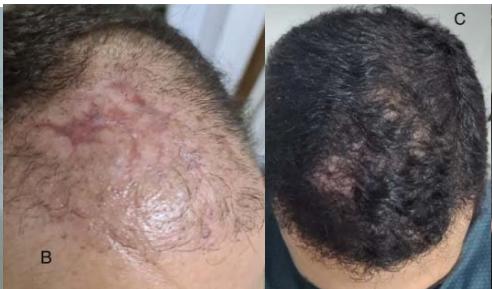
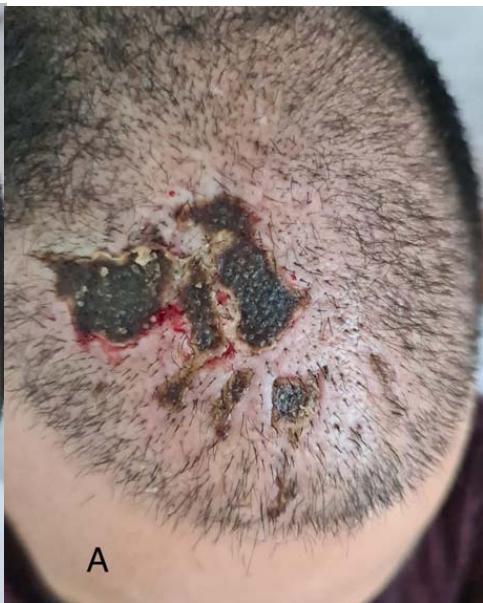
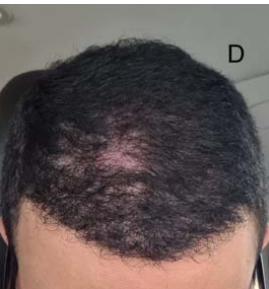 Source: Author Picture 4: Tissue with reddish coloring indicating blood flow and mature collagen (A) and (B). There was hair growth of some follicles implanted in the area, which demonstrates recovery from the hair transplant through ozone therapy (C) and (D) For data collection, pictures after hair transplantation procedure (Picture 5). High density and dark coloring areas due to possible ischemia are visible.
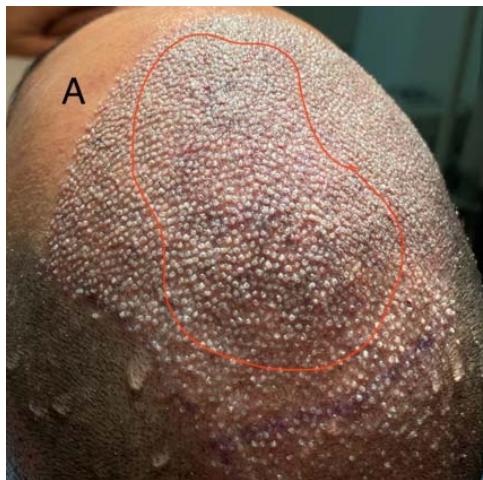
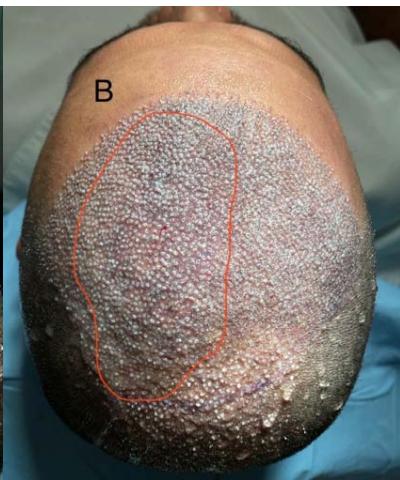 Source: Author Picture 5: Hair transplant with high approximation of FUs in (A) and (B) showing spots with immediate reduction of blood flow
There is limited evidence on the direct use of ozone therapy in hair transplantation, but it is successful in several other treatments and it presents a therapeutic challenge. There are several therapies for dermal treatment but their adverse effects hamper their application. However, as previously observed, ozone therapy, despite being a simple molecule, holds an
efficient approach to fight microorganisms and promote healing capacity.
## V. CONCLUSION
The current study demonstrated the use of ozone for ischemic tissue treatment. Eventual therapeutic outcomes were positive as healing evolution was attested as a result of improved blood flow and reepithelialization of damaged tissue.
Despite being an innovative procedure, hair transplantation does not exclude the possibility of necrosis, which highlights the importance of the availability of tools to cope with unexpected situations. Healing is a complex process and demands immediate intervention in face of its occurrence.
This case report is free of any conflict of interest and aims at supporting study and learning initiatives by professionals addressing similar cases in their professional settings.
Generating HTML Viewer...
References
11 Cites in Article
Gabriel Cintra,Alex Cristovão,Marcus Silva,Adalberto Corazza (2022). Técnicas de Transplante Capilar e suas Principais Complicações: uma Revisão Integrativa.
A Cristina,C Barreira (2016). http://ljournal.ru/wp-content/uploads/2016/08/d-2016-154.pdf.
M Lemes (2023). In vitro evaluation of the effects of ozone on cells affected by induced ischemia.
Madrid Declaration On Ozone Therapy (2023). Unknown Title.
Bruna Marchesini,Silene Ribeiro (2020). Efeito da ozonioterapia na cicatrização de feridas.
M Pereira (2005). Effect of different gases on bacterial growth: experimental study "in vitro.
Juliana Pires,Alexandre Karam,Valdir Garcia,Fernando Ribeiro,Ana Pontes,Cleverton Andrade,Elizangela Zuza (2021). Effect of systemic ozone therapy as a biomodulator of tissue regeneration and inflammatory response in rats.
Nelson Rosário,Loraine Landgraf (2023). Prevalência de doença celíaca em crianças e adolescentes com diabetes tipo 1.
Popi Syntichaki,Nektarios Tavernarakis (2002). Death by necrosis.
X Wang,Nan Zhong,Xue Xue,Bao (2018). Emerging roles of ozone in skin diseases.
Jinrong Zeng,Jianyun Lu (2018). Mechanisms of action involved in ozone-therapy in skin diseases.
No ethics committee approval was required for this article type.
Data Availability
Not applicable for this article.
How to Cite This Article
Luisa Melo Lucas. 2026. \u201cEffect of Ozoniotherapy in the Treatment of Necrosis after Hair Transplantation: Case Report\u201d. Global Journal of Medical Research - B: Pharma, Drug Discovery, Toxicology & Medicine GJMR-B Volume 24 (GJMR Volume 24 Issue B1): .
Explore published articles in an immersive Augmented Reality environment. Our platform converts research papers into interactive 3D books, allowing readers to view and interact with content using AR and VR compatible devices.
Your published article is automatically converted into a realistic 3D book. Flip through pages and read research papers in a more engaging and interactive format.
Introduction: Nowadays, ozone plays an important role in wound healing and tissue repair as a therapy and as antimicrobial, bactericidal and fungicidal agent. It attains recognition in hair transplantation as a treatment for necrosis due to hypoxic-ischemic local syndrome. Objective: to demonstrate the therapeutic evolution of ischemia in a hair transplant after ozone therapy sessions. Methods: The patient was evaluation and gave consent to photographic records. He went through 30 topic applications of ozonated oil, with a 10 drop dosage daily; 12 bag ozone sessions for 10 minutes; besides subcutaneous applications, with 30% ozone concentration and a very small gas volume (1-2 ml) with 30G needle. Results: Evolution of the case was registered with images and tissue coloring and changes evidenced. Conclusion: It is clear that ozone therapy made wound healing and tissue repair faster, since there was an increase of epithelial cells and neoangiogenesis due to therapy, resulting in almost complete repair of the patient’s hair transplant at the end of the sessions.
Our website is actively being updated, and changes may occur frequently. Please clear your browser cache if needed. For feedback or error reporting, please email [email protected]
Thank you for connecting with us. We will respond to you shortly.