## I. INTRODUCTION
The context, rationale, goals, research questions, and objectives of this study are provided in this chapter, along with an introduction to the subject's fundamental ideas.
### a) FDI and Background
As the world is going towards a significant globalisation process leading to the advancement of technology and information, there is an increasing rise of interest shown by nations in capturing foreign investment in the form of FDI (Borowicz, 2020). In the global battle for investment resources, MNCs' interest in procuring financial incentives from governments is seen as a common phenomenon to take up substantial investment projects (Mudambi, 1999). Through globalisation, a high degree of economic integration is achieved as there is a continuous flow of money from one nation to another in the form of FDI.
Businesses find it more suitable to establish their subsidiaries in a foreign country to achieve a comparative advantage not achieved by just importing and exporting certain products (Boghean and State, 2015). Some governments induce protectionist policies to safeguard local businesses and the economy and, therefore, impose FDI limitations such as local content requirements; if the limitations imposed by the government can show positive externalities in other nations, then the government might remove these protections and adopt similar policies to boost their economic growth (Varamini and Kalash, 2010). Modifications were made regarding attracting FDI by lowering import taxes, financial incentives, tax legislation, and training subsidies (UNCTAD, 2000). The simple rationale for the increased efforts to attract FDI stems from believing that FDI promotes growth (Herzer and Klasen, 2008).
For example, FDI may spur capital accumulation in developing nations, thereby accelerating further industrialization, whereas in industrialized nations, FDI is an effective channel for introducing new technology and production and labour practices (Cipollina et al., 2012). In other words, the consequences of FDI can be both good and harmful (Mencinger, 2003). FDI may bring gains for some parties and their supporters while causing losses for others. For instance, skilled workers may benefit from FDI because it boosts wages and labour demand, while local business owners may lose out because it boosts competition, which reduces their profits (Pinto and Pinto, 2008; Owen, 2019) cited in (Jiang et al., 2022)
### b) Research Topic
By purchasing existing companies abroad or starting new ones, foreign direct investment entails the purchase of control shares, according to (Boghean and State, 2015) other examples of foreign direct investment include an equity increase of a subsidiary located abroad or a loan given to the division by the parent company. The research thoroughly examines the impact of host government policies on FDI inflows in the target market. The research is focused on India, a rising economy, and its self-reliant strategy, which intends to expand the Indian capital market in several industries.
The study will draw on various theoretical frameworks and literature to examine FDI and its impact on the host nation. The Hofstede cultural dimensions assist the multinational in adapting to the cultural environment (see appendix 9), which is essential for an MNC entering a target market to make a profit. Additionally, the OLI framework and internationalization theory assist in determining a market's potential strength while considering FDI location variables. The research will concentrate on the institutional theory of FDI, which explains how the host country's institutions affect the growth of foreign investments. The study will be conducted using qualitative analysis, and a deductive method of data analysis will be used to locate and conclude the report. Because the theory will be used as a foundation, interpretation and in-depth examination will follow.
Given that India is an emerging and rapidly expanding economy in the east, it is essential to comprehend FDI patterns and international companies' investment decisions here. Multinational corporations, particularly those in the automobile industry, can therefore detect essential patterns and flows in the Indian economy. The Indian government also plays a significant role in crafting policies that are more nationalist and less dependent on imports. In practically every industry, India's economy is currently the one that is expanding the fastest in the globe, surpassing most wealthy nations. India is overtaking China to become a more essential and significant partner for other nations, whether in the fields of defence, fast-moving consumer products, manufacturing, or services. MNCs in the automotive sector must invest in the nation since it directly influences top-level management's decisions on investments into the Indian economy as it impacts the businesses' supply chains and production, leading to a review of the corporate and business strategy.
### c) Research Objective and Questions
Understanding the relationship between MNCs operating in the automotive industry and host government legislation is the goal of the study project. Second, the study would aid in analysing the variables impacting FDI in India and the contribution of FDI to economic expansion. Finally, it strives to increase awareness of the sectors that are expanding because of policies and investments in the Indian economy, assisting potential MNCs to make adequate investments in the future, leading to understanding the question:
Research Question: How does the "self-reliant India" policy affect the decision of automobile multinationals on FDI in India?
There are questions which are not explicitly asked but will be answered during the research project:
Question 1: what are various government initiatives to attract FDI in the automobile industry?
Question 2: why MNC'S are looking forward to shifting production plants from China to the neighbouring country India?
There has been thorough documentation on the influence of FDI on the host country, with advantages and disadvantages, in previous literature. Surprisingly, few prior empirical studies using strict econometric methodology have examined the connection between FDI and the host country's national economic development. While numerous and growing micro-based studies examine the productivity-enhancing impact of FDI on specific enterprises, such as (Aitken et al., 1996), these studies do not address whether to invest in a nation where the political landscape is changing. Because of this, the earlier studies failed to demonstrate the potential of FDI regarding the government's active involvement in fostering economic independence, the establishment of manufacturing facilities inside the nation, and the geographical issues considering shifting global economic conditions. The changing landscape has raised the question of how a policy change may affect MNCs and their strategy.
## II. THE EMPIRICAL LITERATURE: REVIEW AND CRITIQUE
### a) Introduction
The effect of host government policies on FDI in host nations is the subject of substantial empirical research. The critical contributions are reviewed in this part, and the empirical techniques used there are criticised. Numerous arguments have been made on how foreign direct investment affects the growth of the host economy. With the global surge in FDI, officials in developing nations began to focus more on luring in more foreign investment. Many nations have actively given tax incentives and subsidies, and most have lowered their barriers to FDI. The belief that FDI fosters growth is the primary justification for the increased attempts to attract FDI (Forte and Moura, 2013).
An all-encompassing framework for figuring out the scope and pattern of operations with foreign ownership is provided by Dunning's eclectic paradigm. It asserts that three sets of advantages-ownership, location, and internalisation (OLI) advantages-motivate multinational operations. The arrangement of these benefits motivates or deters a company from engaging in international business and becoming an MNC. By observing, for instance, that a firm's internalisation benefits are driven mainly by transaction cost concerns, the paradigm's all-encompassing character may be recognised (Ram, M., 2004). North has contributed to our knowledge of institutions at the macro level more than any other academic (North, 2005). Norms of behaviour, conventions, and self-imposed standards of behaviour are examples of informal limitations that North (2005) characterises as institutions. Formal rules include constitutions, laws, and regulations. The "rules of the game" are established by institutions (and their enforcement mechanisms), which organisations must abide by to achieve their learning and resource allocation objectives. (Dunning and Lundan, 2008)
"New institutional theory" Scott (1987); North (2005) has an impact on the overarching approach. According to this view, host nation institutions considerably impact how enterprises are governed. From an economic perspective, the core of modern institutional theory is that countries with institutions that permit markets to operate freely have more significant economic growth. The argument continues by saying that, as a result, it should be employed cautiously in countries like Japan and India, where a more interventionist (or nationalistic) approach to forming economic policy has traditionally been adopted (Buckley et al., 2014). The study of endogenous growth has also shown the importance of other variables, such as institutional framework, infrastructure, and macroeconomics, in fostering growth. In addition to their positive effects on economic performance, many factors may influence a country's ability to benefit from incoming FDI flows and attract FDI. Some academics even claim that the interaction between FDI and these specific local characteristics ultimately decides the growth outcomes (Alguacil et al., 2011). A stable institutional framework may increase FDI spillovers because of its direct influence on business operating circumstances (Alguacil et al., 2011).
Foreign direct investment inflow has significantly increased due to trade liberalisation, which also benefits the development of emerging nations (Khan et al., 2022). Numerous studies have been conducted to determine whether attracting FDI could be a critical strategy to foster growth in developing countries due to the rapid pace of FDI inflows worldwide. To assess the effectiveness of policies that implement incentives for foreign investors, a response to this issue is essential (Alguacil et al., 2011).
### b) Human Resources
The increase in the labour force or human resources is one way that FDI might influence the economic development of the host nation. This pathway could make both good and adverse outcomes more likely (Forte and Moura, 2013). De Mello Jr (1997) asserts that it is anticipated that FDI will increase labour force knowledge by offering training by introducing new techniques and production and management practices. MNC investments in the host market will aid in developing human capital through training offered to boost productive capacity by effectively and efficiently completing a job that, in turn, promotes economic growth (Ozturk, 2007).
Learning that employees gain from seeing new operations being established by multinationals is one method of enhancing the human capital of the host country (Loungani and Assaf, 2001; Alfaro et al., 2004). The labour force must be proficient in using new technologies since FDI serves as a vehicle for their acceptance in the host nation. It frequently happens that the host country's capability is lacking, which prompts international corporations to give the necessary training (Borensztein et al., 1998). Multinational corporations offer more training opportunities than regional businesses, claims the OECD (2002). This training is given by utilising new technology, techniques, and methodologies that local employees cannot govern and may restrict its application (Borensztein et al., 1998). Multinational corporations' training programmes have an impact on the national economy. According to Hanson et al. (2001), local businesses will hire these employees once they have completed training sessions supplied by global businesses. According to Lim (2001), many employees utilise their newly acquired knowledge to find their businesses, after which they impart their expertise to their employees. According to the OECD (2002), multinational corporations are also accountable for enhancing host country training since they convince local authorities that a skilled work force is essential.
Additionally, FDI inflows have a detrimental impact on the labour force. High-tech use by multinationals predicts that fewer people will be required than those employed by local businesses, and these businesses may be replaced by others that employ fewer workers, which would increase unemployment as a result (OECD, 2002). The scenario described by Ford et al. (2008) is another one in which local businesses will experience a decrease in local government assistance. These authors highlight instances in which local governments have reduced public spending in this area, which harms the training of the labour force provided by FDI, after confirming that multinational corporations are a source of training, thereby raising education levels in the nation (Forte and Moura, 2013). Due to the lack of R&D opportunities in the host nation, employees with advanced degrees may choose to leave the country, according to another observed effect (Vissak and Roolaht, 2005).
### c) Technology
A good or negative effect on the economy's expansion may result from transferring technology and know-how through FDI. Multinational corporations are substantial business buildings specially developed and outfitted with the most recent technology. (Forte and Moura, 2013). Because multinationals have such a large global footprint, they are seen as a significant source of technology dispersal. (Ford et al., 2008). Due to their fierce competition, multinational corporations are accountable for spending more on research and development than any other company. (Borensztein et al., 1998)
An essential role is played by technology in the development of an economy; a specific economy growth is measured by the advanced technology used by institutions, governments and businesses which will lead to innovations in the country. Economic growth in developing economies, according to Borensztein et al. (1998), depends mainly on the technology employed by the nation. According to Lim (2001), Investors frequently invest in rising economies, which results in a flow of capital and, consequently, a steady flow of knowledge and technology. Dutt (1997) claims there have been trends of decreasing employment as the advanced economies invest in the southern countries having lower wages and higher productivity. According to (Loungani and Assaf, 2001), this transfer may result in benefits that cannot be obtained through financial expenditures or the acquisition of goods and services. Varamini and Vu (2007) claim that the host Economy's GDP increases when businesses adopt more advanced technologies to boost their output. A decrease in R&D expenses is brought about by the availability of new technology that multinational corporations have launched. As a result, these businesses will be able to lower expenses and increase their competitiveness (Berthélemy and Demurger, 2000).
Technology transfer, however, can sometimes have unfavourable consequences. According to Vissak and Roolaht (2005), innovations by multinational corporations and other wealthy nations will increase dependence on the host nations. According to this report, local businesses are becoming less interested in creating innovative technology. In order to maintain their technological edge over local businesses, Sen (1998) argues that MNCs may respond negatively to host country research. Furthermore, the author points out that multinational corporations spread incorrect technology with the same intent. In these conditions, reliance on international companies' technologies will continue in the host country (Forte and Moura, 2013). Indeed, according to scholars, technical innovations are increased in the host nations, which require training to effectively use human resources (Alfaro et al., 2004). The increase in technology will pressure local businesses that are not capital-intensive (Mastromarco and Simar, 2015) and spread frontier management approaches (Bloom et al., 2012).
### d) Firms Development and Organisation
Hansen and Rand (2006) assert that the flow of capital into the host country unquestionably improves the business climate and spurs economic growth. Companies in the host country alter because of FDI. It is found that Local businesses are notably affected by such changes in two circumstances. Multinational corporations can join markets when entry barriers for local businesses are high, thanks to their superior skills. According to Blomström and Kokko (1998), The entry of multinational companies may cause the business climate in the host country to shift structurally by destroying industry monopolies and boosting competition.
According to OECD (2002), FDI is done through a takeover or a privatisation process that modifies the host nation's structure. If the multinational's procedures are more effective than those in use, efficiency benefits will result, making the adjustments even more crucial. Local businesses' organisational structures are altered by mimicking international corporations' more effective organisational designs (Hansen and Rand, 2006). According to Zhang (2001), FDI has caused several changes in Chinese business. Before becoming publicly traded, businesses became private or entered public-private partnerships, sometimes due to joint ventures with foreign investors. Zhang (2001) noted another phenomenon: policy changes were accelerated by modifications to the laws and market operating procedures for an economy that approximates an open market.
### e) Implementation of Social Policies
Making policies and initiatives to put them into effect is challenging since the host economy may face many difficulties. In reality, the complexity, if not impossibility, of anticipating FDI inflows makes them causes of instability (Vissak and Roolaht, 2005). This complexity might hinder the implementation of the local authorities' desired economic strategies and undermine the nation's economic growth (Sen, 1998; Vissak and Roolaht, 2005).
A sudden, large capital influx that would likely boost inflation in proportion to that inflow is another negative development for the host country's economy (Sen, 1998). Another negative impact of FDI in the host country is a reduction in the power of local authorities (Duttaray et al., 2008). Businesses that conduct international trade have enough control over resources. As a result, they frequently show interest in geopolitics, which might allow businesses to impact political and economic decisions. (Zhang, 2001). Additionally, multinational corporations pressure local officials to fulfil business goals, which may lead to the adoption of laws unfavourable to the host nation's economic progress (Zhang, 2001).
Due to the capital-intensive nature of MNC investments, they significantly influence local governments and enterprises. If their strategic decisions contradict a nation's interests, the host government may be forced to adjust its policies significantly. (OECD, 2002). It is also argued that developed nations often use FDI as a source to exert influence on emerging economies by way of constant capital flows, according to Zhang (2001). Multinational corporations support the sustainability of the current economic system, according to (Loungani and Assaf, 2001).
### f) Integration into Global Economy
Capital flows from countries help integrate host nations and the global economy with the help of FDI (OECD, 2002). Mencinger (2003) provides evidence by establishing a direct connection between the rise in FDI and quick integration into the world market. Economic growth is generated due to the country's opening up and integration into the global market (Barry, 2000). Local businesses are integrated into the global market by imitating and acquiring the information that multinational corporations have, according to Blomström and Kokko (1998). Since they have previously through this process, it is evident that multinationals have a greater understanding of internationalisation. The ability to sell effectively, the construction of networks, and the growth of worldwide lobbies are only a few of the significant competitive advantages multinational corporations enjoy.
According to Ford et al. (2008), MNCs frequently collaborate with local firms in the host country to connect with organisations and suppliers in a global network. Local firms thus can expand their presence globally and create strong connections. Additionally, it states that local governments could build infrastructures (particularly those related to transportation) in response to requests from multinational corporations. These infrastructures will help promote international trade and help local businesses to expand internationally. Gunaydin and Tatoglu (2005) support this claim, stating that these FDI effects make it easier for raw materials to be distributed across the host nation. When investment is limited to assembly lines, both the rise in component imports and the rise in exports of finished goods are evident (Zhang, 2001). According to Makki and Somwaru (2004), the rise in exports by FDI encourages local businesses to boost productivity by using their capacity and access to economies of scale.
However, the host nation may suffer from the FDI's increased integration into the world economy. According to Vissak and Roolaht (2005), FDI is the most straightforward way for economic issues to spread globally, particularly in the nations where multinational corporations are based. The integration into the world market is the cause of this issue. The economies of the hosts open and become more susceptible to changes in the global economy. According to Mencinger (2003), Due to increased imports from foreign economies, FDI influx might result in a trade imbalance for the host country. As a result of emerging countries' lack of self-sufficiency, businesses typically import raw materials from other countries to use in their production. This import of raw materials raises the nation's imports
(OECD, 2002), and occasionally exports may not increase in tandem with an increase in investments because businesses' primary motivation for investing is to meet local market demand. (Ram, R. and Zhang, 2002).
### g) Increased Competition
According to Lee and Tcha (2004), FDI dramatically aids in developing factors of production due to the rivalry it promotes, allowing firms to more efficiently complete their tasks and raise their part of the wealth. Local businesses are forced to compete to keep their market shares due to multinationals' increased supply of the host country's market (Pessoa, 2007). There may be drawbacks to the heightened competitiveness as local businesses spend more on R&D, and in some instances, they exploit the advancements gained to expand their market share and turn suppliers for global corporations (Blomström, 1986). Existing businesses are pressured by multinationals' rivalry to advance their technologies and business practices (Driffield, 2001; Varamini and Vu, 2007). Consequently, local businesses frequently invest in their staff and equipment (De Mello Jr, 1997). FDI is typically viewed as a strategy to increase domestic competitiveness in a nation. As a result, output increases, and the market stabilises efficiently using the production's resources. (Pessoa, 2007).
However, the host nation does not benefit only from the enhanced competitiveness brought forth by FDI. Multinational corporations currently here will utilise their clout with the authorities to ensure that the highly protected market position does not alter. Multinational corporations maintain their market position by avoiding host country capacity and supply increases. There by it helps preserve the use of the resources that are already accessible while preventing development through increased competition (Loungani and Assaf, 2001). Zhang (2001) and Ram, R. and Zhang (2002) argue that greater competition brought on by FDI necessarily results in Local companies with limited resources and investments closing their businesses, which might result in a more centralised industry with less competition.
According to Hanson et al. (2001) and Zhang (2001), not all participants in the national economy have seen an increase in income. Although government incentives enhance national income with the influx of FDI from the world, it also creates a challenging environment for domestic businesses to operate in, which results in the disappearance of businesses. According to Sahoo and Mathiyazhagan (2003), a condition of global oligopoly can develop. Sylwester (2005) asserts that international corporations are better able to recruit highly trained individuals than local businesses, either by displacing them or making it more difficult for them to hire these workers. Due to its less complex structure than that of international corporations, local enterprises may also be negatively impacted by the growth in FDI. According to Vissak and Roolaht (2005), local governments incur additional expenses to encourage FDI. As a result, it is vital to cut back on government spending.
Financial markets-particularly those in host nations-often provide some funding for international corporations. It is anticipated that the market would be impacted by the country's increased financial demands, resulting in changes to credit availability and pricing (Lim, 2001; Carkovic and Levine, 2005; Sylwester, 2005). Local businesses will find it more challenging to secure loans because multinationals financed in the destination nations reduce their capacity to do so. Due to the financing rivalry, some local businesses could decide not to make the essential expenditures for their growth or their upkeep, which might finally result in its oblivion.
When reading the empirical literature on FDI and growth, it is essential to process carefully as the issues persist. However, the data tends to indicate that the inflow of FDI in emerging markets shows an upward trendline for growth in major economic sectors, except Carkovic and Levine (2005). Discrepancies in the factors examined may explain this. FDI impacts the host country either favourably or unfavourably, depending on the circumstances surrounding the investment and the host nation. As we can see, outcomes are influenced by the surroundings of the host nation. Local government agencies play a crucial role in achieving the intended results in this way.
### h) Research Gap
Many emerging Asian governments have been implementing different economic changes, notably on the supply side, as a countercyclical response to decreased FDI. For public infrastructures to compete in attracting FDI in essential industries, their number and quality must be improved. Financing public capital projects is a problem for many developing nations in the Asian area, particularly for those with current account deficits. These deficits are made worse by the requirement of high-tech imports for many infrastructure projects, which results in a negative trade balance and a decline in GDP.
Many of the works have discussed the impact of government policies on economic development and the ownership-location-internationalisation framework of Dunning. However, none of them has emphasised the significance of the relationship between multinational corporations' investment decisions and changes in governmental policies. Expansion of the economy through FDI is discussed in past literature on various levels, but it has forgotten how government policies impact the choice of multinationals to invest in each country.
## III. RESEARCH METHODOLOGY
### a) Research Design: The Basics
This study fills a knowledge gap regarding the variables that affect top-level management's decision to make FDI investments concerning the government of India's "self-reliant India" policy, which will allow India to become a hub for global manufacturing and serve as a supplier to the rest of the world in several sectors. The research on the cause-and-effect relationship between "self-reliant" policy and FDI in India is lacking, which is why this study was undertaken. Furthermore, a thorough policy analysis is necessary for a real-world environment to conclude.
The study topic context is interpreted and catered to using a multidisciplinary approach and a qualitative research method. Multiple case studies support this study's empirical evidence. According to (Heale and Twycross, 2018), case studies help generalise the units and gain a deeper understanding of a person, event, or organisation, considering them as a single unit. According to Stake (2013), the multiple case study approach works best for research goals that advance theory creation and extension. According to Yin, R.K. (2009), the multiple case study technique enables the researcher to move between instances and analyse the variations within and between each case.
It is advised for researchers using case studies to look for both the standard and unique aspects of the case. These aspects entail giving extensive and in-depth thought to the case's circumstances, including its nature, historical context, physical environment, and other institutional and political contexts (Stake, 1995). Since the study was conducted using secondary sources, CEOs were the primary target group for developing the cases (organisation members who actively participate in decision-making and strategy development for the company). The MNC's home and host governments and the vital ministries were also involved in the data-gathering process. The study aimed to gather data and explore viewpoints on FDI and how government policies affect MNCs (see Appendix 3).
The case for the study was chosen based on international companies' investments in India, notably between 2014 and 2022, while significant laws regarding the private sector were being introduced. Clarifying the research issue and formulation of the study design is aided by classifying the case and case selection techniques. (Hyett et al., 2014). Additionally, because of the study's international restrictions, it was challenging to negotiate access with the relevant informants with first-hand experience with the studied phenomena. This challenge resulted in a case selection that was both constrained and compatible with the research challenge.
### b) Data Collection
Secondary data in the form of published sources, including top-level management of international MNCs, were used because the primary focus of this paper is qualitative research. The research, therefore, went beyond individual organisations and management with the goal of decision-making, making it impossible to gather enough data to analyse through variables and perform a regression analysis properly. The Centre for Monitoring Indian Economy (CMIE), official publications from the Government of India, Reserve Bank of India, Ministry of Industry and Commerce, IMF, and UNCTAD, media interviews, and publications other than books, journals, and periodicals were among the additional reliable secondary data sources. The reference period for this study is from 2000 to 2021. The secondary data was chosen after thoroughly investigating the appropriate governmental bodies, supranational organisations, for-profit companies, and news sources that may offer trustworthy information on the subject.
Data from institutions like the World Bank and the OECD were added to the information provided by the relevant public bodies, notably the India Brand Equity Foundation. As a result, the risk of researcher bias in the sampling and selection of data was reduced by thorough research and using triangulation of data from a variety of sources in both the public and private spheres, which also increased the confidence that could be placed in the validity of the findings (Nielsen et al., 2020; Hurmerinta-Peltomäki and Nummela, 2006)
### c) Data Analysis and Interpretation
According to Robert Stake (2005), the analysis looks at a subject to determine its individual or relative elements. According to (Stake, 1995), the case study method is intended to describe patterns in limited systems. In order to guarantee that all aspects of the case are assessed and accurately documented, a straightforward case study procedure is designed to ensure validity and potential bias by having a single truth to be confirmed by the researcher (Yin, R.K., 2009). As there is a presumptive idea or proposition that institutions are a factor in host nations for which to analyse facts or specifics, this case study research will utilise a deductive approach. Findings and discussions based on the critical characteristics of FDI attractiveness in the nation and various industries were thematised, and comparisons were made. These comparisons were made by generating a latent pattern, which was an integral approach to performing analysis.
As previously stated, it was not possible to obtain enough statistical information to guarantee quantifiable independent or dependent variables for conducting regression analysis and determining whether there was a correlation or a causal relationship between the new government policies implemented in business environments and FDI attractiveness. Therefore, how the data was presented and interpreted was crucial to ensuring an analytical approach to give fresh perspectives and potential connections between the data and current theory (Birkinshaw et al., 2011). The different types and sources of data were compiled and synthesised using a variety of presentation techniques, including tables to compile qualitative data from various sources and the application of the quadruple model of collaboration to evaluate the role of networks between academia, government, the public, and industry (Afonso et al., 2012).
### d) Ethical Consideration
Names and organisations were classified for secrecy, and care was made to alter any identifying wording that would reveal identification. Since no sensitive information was collected during the research's fieldwork or using sensitive data sources, only data that had already been published was used, and all ethical requirements were followed. Additionally, a university-affiliated independent internal review board examined each component of this research (See Appendix 9). This procedure was crucial to ensuring that the researcher adhered to ethical standards and boosting the reliability of the study.
### e) Limitations
As the study topic asks, analyse how multinational corporations invest overseas in cross-border situations. In these circumstances, performing experiments or surveys raises severe concerns regarding the comparability and equivalence of data gathered from other nations, which results in a lack of comprehension and interpretation of the questions and, as a result, leads to the research reaching false conclusions. The possibility of biased reporting was present, particularly by state bodies aiming to highlight the country's advantages. The reporting was exceedingly probable in the case of investment promotion organisations, which promote investment in the regions but also have political and economic agendas.
Finally, the case study technique had drawbacks in that it concentrated on a single nation and raised questions about the generalizability of any conclusions. It is neither realistic nor viable for a single researcher to perform a more significant size study in many national contexts, even though doing so may result in more generalisable conclusions. Additionally, the case of India is supported by increases in FDI in recent years due to the country's status as a developing market, which raises the possibility that there are location-related benefits luring investors to these places. However, using a methodological approach that synthesised the secondary data available to provide new insights and suggested potential links between various factors and statements in dependable news sources from representatives of firms involved in FDI in the nation, these limitations have been minimised as much as possible. It was gathered from various sources whenever available to evaluate the authenticity and dependability of the data.
### f) Expected Findings
This study aims to understand how senior management choices about investments in a nation with dynamic market conditions are impacted. The objectives of the inquiries were to advance a deeper comprehension of the worldwide firm's decision-making process. The goal was to identify the fundamental tenets of the host government's policy and categorise them into themes and descriptions that an MNC operating in a new market could use as a guide and develop a strategy to lessen the impact of government policy on their business. It was anticipated that the themes would be varied and descriptive, depending on the type of private sector strategy used.
The study's findings reflect on host government institutions' potential to provide a safe environment for businesses to strive and have a competitive market in which all the stakeholders benefit themselves. Moreover, these government-provided initiatives should be in the nation's interest at its core.
## IV. THE EMPIRICAL ANALYSIS: RESULTS
### a) Introduction: The Study
I will research the "AATMNIRBHAR BHARAT" (i.e., self-reliant policy) programme, which the Indian prime minister announced as a 20-lakh crore bailout from the covid epidemic in 2020. This package's primary goal was to support different areas of the Indian economy and help the industry become self-sufficient. The argument, which covers the seven years from 2014 to 2022, is about creating India's economy self-sufficient and includes topics like "local for global: make in India, make for the world" and "vocal for local." having a stable economy, a sizable young population, and increasing foreign direct investment. India has developed into a small-car manufacturing and assembly powerhouse capable of end-to-end production. Companies are now producing, assembling, and exporting to other countries. Indian manufacturers participate in global innovation networks and obtain technologies from around the world to boost their R&D efforts. (Bhatti, 2023)
### b) Description of Samples: Process and Participants
Many organisations' CEOs and senior management make up the more significant population. This study focuses on the demographic of automobile manufacturers active in the Indian market and potential investors. Six distinct organisations comprised the sample size and were established using saturation criteria. The selection made the sample more diverse (see Appendix 2). Intense research was done to find those in authority positions involved in organisational decision-making and strategy analysis. All the participants had owner positions in the companies they ran and were qualified to offer adequate answers to the study questions. Other countries' governments were also involved and contacted because the study subject is international.
### c) Research Methodology Applied to the Data Analysis
According to (Stake, 1995), analysis is the process of looking at something to identify its pieces or how they relate to the whole. The researcher transcribed the media and pre-recorded interviews to look for trends. He then further analysed the replies to derive generalisable conclusions. The codes connected topics from various approaches, such as interviews, field notes, historical literature, archive data, and connecting data sources (Stake, 2013). Choosing the right tools to create comprehensive, accurate, and trustworthy themes to support the insights became paramount.
I reviewed the press releases, media stories, and information from DPIIT, ACMA, SIAM, and the Union Budget 2022-23. I referenced data from entries and examined archive data, including reports from the United Nations, the World Bank, and the Indian government, for triangulation techniques during the data analysis. This triangulation of data sources improved the study's quality and encouraged a more comprehensive data analysis (Yin, R., 2017). I examined and interpreted the study's findings in the context of the conceptual framework and provided examples of how the results contributed to the knowledge of institutional policies for FDI in the car industry and automakers' choices to invest in India.
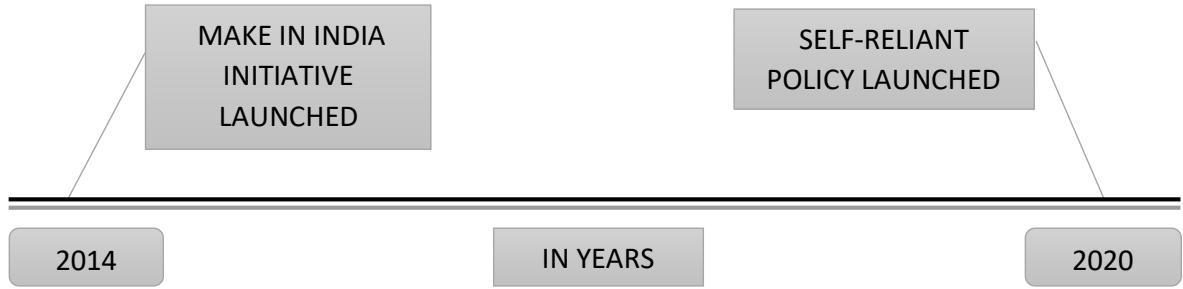 Figure 1: Timeline for Self-Reliance India Policy
### d) Description of Analysis
Thematic synthesis was used to examine the data gathered from the media interviews that were made accessible online, including the researcher's notes and the audio transcripts of the media interviews (Durst and Henschel, 2021). The recordings' audio was converted into written text using a specialised transcription service. The researcher concentrated on linking the trends they had discovered when identifying the four critical investing decisions made by the automobile sector in India. The researcher then created a codebook with categories, essential topics, supporting themes, definitions, and verbal excerpts from the interview transcripts. In addition, the researchers identified patterns and trends from the many interview transcripts by coding. The researcher then verified the authenticity of the coding material using the triangulation procedure before completing the codebook.
### e) Results of the Study
To give answers within the framework of the empirical setting, the main research question for this theory-generating multiple case study was created following a thorough examination of the literature. Dense knowledge of the prospects presented by the execution of the policy and its consequences for the Automobile MNCs was provided by evaluating stakeholders' viewpoints regarding their ideas on the Indian government policy regarding the establishment of manufacturing plants in the nation. All the cases selected were constantly compared with each other throughout the research to contrast and analyse the thematic patterns among cases, and an analysis was conducted of the data collected from various sources (Yin, R., 2017). A detailed, dense commentary from each organisation was produced during this research phase to highlight each organisation's experiences and perspectives on the issue under investigation (Stake, 2005). The recurrent motifs were categorised, and the results were cross-referenced for visual representation.
### f) Thematic Analysis of Textual Data
The literature offers step-by-step procedures that describe how to perform a pertinent and accurate theme analysis (Norris et al., 2017). I did a thematic analysis for this study following the (King, 2004) recommendation that the final report starts with direct participant quotes. Regarding the main study topic, this part examines and discusses the four themes that developed (see Appendix 1)
### g) Economy
This subject focuses on creating the infrastructure necessary for the Indian economy to grow into a significant global supplier, including solid R&D facilities, affordable steel manufacturing, and the availability of a trained workforce. Due to beneficial government policies, India has recently become a desirable location for FDI. The Indian government has taken proactive steps in various initiatives to provide a favourable business environment which will boost India's FDI (IBEF, 2022a) but Organisation 5 believes that a revision of policies would be a viable solution to increase FDI in the country, saying:
"If there is some rationalisation of taxes, there will be more growth because the size of the market today does not reflect the kind of wealth and aspirations we have in this country." (Organisation 5, 2022)
Organisation 1 thinks that policies are favourable and said:
"We are happy to share with you that we are going to make an additional investment of $54 million in the upcoming project despite the COVID-19 global pandemic." (Organisation 1, 2020).
The organisation's four perspectives on the subject matter were the following:
"Our product is being manufactured at the state-of-the-art factory in Chennai. The vehicle is made in India for the entire world, and we will continue to explore new markets to expand our international presence." (Organisation 4, 2023).
Table 1.1: Sectors Receiving Highest FDI (from April 2021-March 2022) Table 1.1 demonstrates that the Indian automotive sector, the second-highest industry regarding FDI receipts, is crucial to macroeconomic growth and technical innovation.
<table><tr><td>Industries</td><td>Software And Hardware</td><td>Automobile</td><td>Trading</td><td>Construction</td></tr><tr><td>Value (In US Dollars)</td><td>14.46 billion</td><td>6.99 billion</td><td>4.53 billion</td><td>3.37 billion</td></tr></table>
Table 1.2: FDI Inflows from Countries
<table><tr><td>Countries</td><td>Singapore</td><td>USA</td><td>Mauritius</td><td>Netherlands</td></tr><tr><td>Value (In US Dollars)</td><td>15.87 billion</td><td>10.54 billion</td><td>9.39 billion</td><td>4.62 billion</td></tr></table>
Table 1.3: Indian States that Received the Highest FDI
<table><tr><td>Indian States</td><td>Karnataka</td><td>Maharashtra</td><td>Delhi</td><td>Gujarat</td><td>Haryana</td></tr><tr><td>Value (In US Dollars)</td><td>22.07 billion</td><td>15.43 billion</td><td>8.18 billion</td><td>2.70 billion</td><td>2.79 billion</td></tr></table>
### h) Infrastructure
This issue relates to establishing suitable electric vehicle supply equipment (EVSE) infrastructure for EVs, and to achieve this, several public sector businesses, ministries, and railways have joined forces to build the necessary infrastructure and produce the necessary components. Infrastructure also includes linking towns, cities, and the final mile of connection, including becoming digital and improving the transportation system, which will help businesses save money by lowering additional expenses. Organisation 5 suggests by saying:
"We are aiming, in the next 8-10 years, to fully electrify the portfolio and be an electric manufacturer here. The intention is to build the capability now and, depending on how demand develops... increase the numbers." (Organisation 5, 2022).
Organisation 2 thinks that policies will promote sustainable business by mentioning the following:
"These measures will help create a vibrant and competitive local manufacturing ecosystem for advanced and green technologies at global scales, thus making India a strong manufacturing hub. The benefits will also trickle down the entire supply chain, thereby also providing a boost to the MSMEs." (Organisation 2, 2022).
Organisation 1, for example, mentioned that:
"That EVs are catching up and the prediction of $5\%$ by 2025 and $30\%$ by 2030 looks reasonable because there are many launches which are going to happen,
the infrastructure is improving, customer acceptance is there." (Organisation 1, 2022).
The government has started a US$ 10 billion incentive programme to develop an ecosystem for semiconductors, display, and design in India because of the significance of semiconductors to the world economy (Desk, 2022). This will support the Indian EV market, which is anticipated to reach Rs. 50,000 crores ($7.09 billion) by 2025 (IBEF, 2022c).
### i) Demand and Supply Chain
This subject is about how demand for electric cars is increasing and how supply chains are being improved to meet that need locally and globally. Several automakers have recently begun making significant investments in various sectors of the business, but Organisation 6 holds the following views that are unfavourable to them:
"The company would like to test the demand for their product in the Indian market before committing to a facility as the government is unwilling to agree to those terms and has been trying to push to consider committing to a new production facility in India." (Organisation 6, 2022).
Organisation 4 believes that there has been a good demand for their product in the market by mentioning:
"Crossing the 2-lakh milestone in exports for the second consecutive year signifies the trust, quality, reliability, performance, and affordability of our products." (Organisation 4, 2023).
 Figure 2: Value of the Indian Passenger Car Market
Figure 2 shows that by 2027, the passenger car market will be worth US$54.84 billion and grow at a CAGR of more than 9%. New trends fuel the automobile sector to reach the target by 2027, including electrification and hydrogen cars for a sustainable economy and lowering carbon emissions (IBEF, 2022d). India now has a larger population than China. However, compared to India, where 200,000 automobiles are sold monthly, roughly two million cars are sold there monthly. Indian subcompact automobiles, rather than the bigger, more expensive versions offered by global automakers, are often the most popular vehicles sold there (IBEF, 2022b).
### j) Technology Driven Arrangements
This subject is about India improving its technological advancements to suit the demands of the twenty-first century. India's EV industry is tiny, accounting for only around $1\%$ of all auto sales there in 2022. It is quickly growing thanks to new models being planned by domestic and foreign companies. Organisation 2 gave the following information on this aspect:
"We, pioneers of electrified technologies, will continue to focus on mass electrification through the localisation of electrified vehicle parts."(Organisation 2, 2022)
The participant also adds the following comments:
"Taxation, being linked to transparent, easily measurable outcomes aligned to national objectives such as carbon reduction." (Organisation 2, 2022).
Organisation 3 believes that advancement in technology will allow the company to produce electric vehicles by saying:
"The company has always reinforced its commitment to national policies such as the 'Make in India initiative' and it is pushing for battery electric vehicles (BEVs)." (Organisation, 2023).
In the same line of rationality, organisation 4 explains the following:
"The Indian government's initiatives on EVs are powerful, and customers want to buy EVs. This will make the country's conversion to EVs faster than other markets, and I hope even faster than the US. We want to become the No. 1 EV player in India." (Organisation 4, 2023).
Table 2.1: Developments in the EV Market in India
<table><tr><td>Industry</td><td>Target Goal</td><td>Reference</td></tr><tr><td>EV finance industry</td><td>Rs. 3.7 lakh crore (US$ 50 billion) by 2030 (IBEF, 2022a)</td><td>NITI Aayog and the Rocky Mountain Institute (RMI) (IBEF,2022a)</td></tr><tr><td>The EV market in India</td><td>CAGR of 36% until 2026</td><td>India Energy Storage Alliance</td></tr><tr><td>EV battery market</td><td>CAGR of 30% until 2026</td><td>India Energy Storage Alliance</td></tr></table>
The most recent developments in the EV sector related to start-ups, finance, and battery production are shown in Table 2.1. Numerous local and foreign organisations and businesses have made significant investments in each of the EV production areas. According to this table, the industries eager to engage in the Indian vehicle industry will continue to see growth in technology, infrastructure, employment, and demand. The data and conclusions presented illustrate the four primary focuses on which the Indian government is trying to create an open and transparent system that will enable a significant increase in foreign investment in the nation. To reduce costs, increase sales profits, and enable MNCs to develop their operations further and manage their value chains, the automotive industry needs to get its raw materials from nations with established manufacturing facilities.
## V. DISCUSSION: THE FINDINGS
### a) Development of Human Resources
According to De Mello Jr (1997) definition of human capital development, it is envisaged that FDI will boost labour force knowledge through training by introducing new techniques and production and management practises. My results confirm that the companies entering the Indian market have been involved in guiding and increasing human capital by developing training programs for the workforce as the economy and the global market shift towards electric vehicles.
Data from instances and reports I obtained supported (Borensztein et al., 1998) findings indicating that the host country's economic development increases if its human capital rises over a certain threshold. India's economy has grown slowly compared to other global economies since its human capital is inefficient. The findings of my investigation supported the notion that human capital is crucial for both businesses and the country. Positive trends indicate a demand for qualified human resources in the automotive sector as technical improvements rise.
### b) Advancement of Technology
My findings support (Borensztein et al., 1998) claim that MNCs tend to invest mainly in their research centres to gain in a competitive market abroad, which will help the company increase its production capabilities and market share. This claim applies specifically to the evolution of technology in developing nations. My research's conclusions supported the many instances in which multinational corporations must establish their R&D facilities to serve local consumers and compete with domestic businesses. The study's results also align with assertions made by Varamini and Vu (2007) that the inflow of FDI brings in advance technology which improves host businesses' performance and, thereby, increases economies. Technology's rapid transformation can be seen in the nation's rapidly growing electric car market. The car sector is seeing a significant capital inflow, and as a result, local businesses are updating their technologies
to increase manufacturing, releasing their goods for sale, and even expanding their supply networks into global value chains.
According to the quadruple helix, innovation occurs when government, universities, citizens, and corporations coexist (see Appendix 5). It may also be viewed as a value chain activity in the car sector, where an economy like India must have robust coexistence and co-relation between these four helices for the industry to expand and which would draw new investors in the form of FDI to the nation. In addition, users (Civil Society) are co-producers of the invention in user-oriented innovation, according to (Etzkowitz and Klofsten, 2005), who also note the significance of research institutions, government support agencies, and businesses.
### c) Policies- Mobility, Infrastructure and Growth
As the host government incentivises businesses, there is a surge in market competitiveness; therefore, businesses compete to gain market share (Pessoa, 2007). My findings supported the idea that local firms have a beneficial influence because they can compete with more giant corporations by using resources in their manufacturing processes effectively and efficiently. Aside from that, the host government's policies aid Indian markets' local industries. In India, local enterprises are transforming the country into a hub for global design and manufacture, attracting foreign companies to invest in the Indian market, and this trend is increasingly visible in the electric vehicle category. Because of this, there is an increase in productivity, a decrease in price, and better resource allocation (Pessoa, 2007).
Furthermore, multinational firms exert pressure on local government officials to achieve their corporate objectives, which may result in making or changing laws according to the needs of MNCs, which can harm economic development (Zhang, 2001). No evidence of MNCs influencing local authorities to change regulations to accommodate business requirements was found in my research; instead, it was discovered that the Indian government and authorities had established a solid framework for FDI policies and conducting business in the nation. The Indian government's initiatives in the car sector assist companies in growing their market share and locating their production facilities there.
According to some academics, local governments might develop infrastructure (especially in the transportation sector) in response to demands from multinational firms. These infrastructures will aid local companies looking to go global and encourage international trade. The findings of my study are consistent with other investigations into how a country's growing infrastructure benefits firms, particularly in the automotive industry, by lowering costs and enhancing operational effectiveness. The study partially agrees
with Blomström and Kokko (1998) research, which examined the likelihood that the entry of multinational corporations may weaken or end the existing monopolies in the car industry. These viewpoints frequently predicted that the industry would grow in the host country, and the results show that there has been an increase in brands competing for electric vehicles. However, some businesses ignored the Indian market, even though the initiatives were developed to grow the ease of doing business.
### d) Export-Oriented Nature
The opening up of the nation and the ensuing integration of that nation into the global market, according to scholars, is what causes economic progress (Barry, 2000). India's decision to open its borders and liberalise its economy proves that it has grown steadily since international companies began investing there. Even though the car industry has not improved since at least 2014, government initiatives like "Make in India" and promoting a self-sufficient economy have encouraged the establishment of manufacturing facilities in the nation. Across cases in my study, there is still a need for action in several areas to increase the production of electric vehicles as the country is still reliant on acquiring raw materials, increasing its imports from nations like China because these are frequently unavailable (OECD, 2002) which in result affects the balance of payments Mencinger (2003).
The report also showed that businesses seek greater localisation strategies to seize raw materials and human resources as the global market shifts towards shared and autonomous vehicles. It may be argued that this does not mean conducting business in India is becoming more straightforward because of the investment. Instead, there is evidence that doing business in China is becoming more challenging because of the government's unfriendly policies, which makes India a fallback choice for establishing industrial facilities.
India scored more than 80 out of 100 on the ease of doing business index (see Appendix 7), indicating that the country's business climate is improving. Recent government changes in permitting private enterprises to participate in crucial industries serve as solid foundations to support the growth of India's economy and provide the nation with great potential to achieve economic independence. Additionally, Market Potential India (see Appendix 8) analyses the Indian economy's score between 2016 and 2022, showing a favourable growth potential for businesses looking to invest there, but it showed slow growth in some dimensions.
After conducting a critical analysis, I conclude that government initiatives in the host country positively impact giving businesses access to a competitive and developed market. Free trade agreements between
states are also beneficial since they encourage multinational corporations to invest more in particular regions, giving the company a geographical advantage. Businesses also frequently reduce the expenses of their manufacturing facilities, which leads them to request a tax break on their foreign investments. According to the study report, India will participate in the EV market with a long-term strategy focused on developing the necessary infrastructure for shared and autonomous cars with technology and people resources. Since the Indian economy is working diligently enough on the future of mobility and consumer perspectives on vehicles, the market for automobiles and auto componentry will experience a sharp increase.
My Study Led me to the Following Conclusion: Given that the Chinese government is making it more difficult for businesses to operate there due to geopolitical concerns and consumer hostility towards China, investing in India may be a fallback option for many global corporations. Therefore, it can be concluded that geopolitics and consumer aversion play a significant role in the country's ability to draw in significant amounts of foreign investment. Even though India is taking steps to become a developed country, businesses still view India as unstable and lacking the raw materials necessary to establish large-scale factories.
## VI. CONCLUSION
### a) Research Objectives
How does the "self-reliant India" strategy impact automobile multinationals' decisions on FDI in India? This is the research issue that this study seeks to address. The use of multiple qualitative case studies was put into practice. This approach was appropriate because the study's main objective was to analyse the decision-making procedures employed by multinational corporations when making investments in various nations. According to the survey, while the government has opened the country's economy and investment prospects to foreign investors through brownfield and greenfield projects, some corporations have favourable attitudes towards institutional policies. In contrast, others are restricted from making more investments.
In line with other studies, we discovered that the host government is crucial to a nation's ability to draw FDI. Numerous instances showed that the Make in India programme did influence their choices to invest in the nation, and they regularly highlighted examples like businesses setting up manufacturing operations in the nation. India, a rising economy, suffers significant setbacks compared to its neighbour "China" regarding innovation, people resources, etc. For India to sustain its low-cost advantage or at least attain competitive dominance in the future, innovation in new product creation is behind. Continuous technological advancement is required in manufacturing. With significant
investments in creating new indigenous technologies that are environmentally beneficial and conform to high-efficiency standards known worldwide, India may move up the value chain (Bhatti, 2023).
### b) Managerial Implications
The following is a list of potential policy consequences. The results of this research, both at the organisational and institutional levels, suggest that organisations and institutions must cooperate; governments must offer safe and competitive investment environments, and businesses must invest in domestic projects to boost human resources, technology, and innovation as the nation's economy.
The host government's FDI policy and its effectiveness were shown to be significantly correlated. Local authorities must take the lead to achieve the desired results in the car industry since decision-making is much more dependent on the circumstances of the host nation and investments. Managers may be able to make decisions based on changes in local governments if they are made aware of this, creating the ideal environment for firms to maximise good benefits and lessen negative ones.
### c) Limitations
I adopted a multiple case study technique to fill this gap, adhere to the qualitative paradigm, and lay a strong foundation for theory extension. To address the study's central research question, I gathered information from various sources, including archived data from government publications, media interviews, and corporate websites. The study's setting's limitations were identified and addressed. Although multiple case studies were employed, this prohibited a comprehensive analysis of the phenomenon being studied. Instead, it gave a general review of government policy related to the automotive industry. A detailed understanding of a single case would be beneficial to address the question thoroughly and might offer novel viewpoints.
According to Yin, R. (2017), the study's main flaw was the tiny sample size required for a qualitative multiple-case study. The sample size selected might not have represented the total population, which raises generalizability concerns, but from these investigations, hypotheses might be made for subsequent quantitative studies (Yin, R., 2017). Limited qualitative research can enrich pre-existing ideas and conceptual frameworks (Yin, R., 2017). This limitation was reduced by carefully analysing the data and drawing firm conclusions from the findings. I transparently and in-depth discussed each approach utilised for participant recruitment, participant interactions, data collection, recording, and analysis.
To some extent, using transcripts, digital recordings, and investigator triangulation served to lessen researcher bias. The Hofstede cultural index is also used in the study. The fact that Hofstede's
dimensions were based on a single corporation, which may limit their application to an entire nation, is only one of the criticisms that have been levelled at them despite their widespread usage in academia (Shaiq et al., 2011). Since Hofstede's breakthrough, several new methods for assessing culture have been created (Minkov, 2012). Therefore, to assess the external validity of this result, future research might repeat it using different cultural measures.
### d) Agenda for Future Research
The study's findings thoroughly grasp the potential and difficulties global companies in the automotive industry would face while expanding into India. There are still certain restrictions even though every attempt has been made to make the most of the resources available to carry out an effective and efficient investigation. These restrictions were somewhat addressed through data triangulation, but future research on attracting FDI should consider whether primary data collecting is feasible, for instance, via contacting businesses participating in FDI initiatives. Future studies can also examine a nation's balance of payments, currency strength, and FDI flow through time in various industries. The data may then be compared
with different years of the host government's policy introduction. This comparison will provide a greater comprehension of the decision-making processes used by multinational corporations and their FDI investments.
Further investigation was needed when it was discovered that some of the most prominent players in the car industry left the nation, where government incentives to draw in foreign investment appear to have had a favourable impact on the choices of most multinational corporations. The logical inquiry is: why? Despite industry reforms, why do the big international corporations leave India? Although it is doubtful that more studies will refute the conclusions about the significance of solid government institutions and policies for luring FDI to the nation, it may be advantageous. A study on the overall influence on the economy for FDI attractiveness may bring fresh insights and variances or solidify the findings if future studies could identify the study issue outside the industry-specific context. This work is essential because it might contribute to a deeper comprehension of the phenomena under investigation and offer insightful advice for future research and policy initiatives (Yin, R., 2017).
### APPENDICES
Appendix 1: Thematic Analysis
<table><tr><td>Primary Themes</td><td>Secondary Themes</td><td>Concepts/Definition</td></tr><tr><td>India was among the top three global FDI destinations.80% of the global respondents had plans to invest in India. FDI restrictions have reduced from 0.42 to 0.21 in the last 16 years.</td><td>ECONOMY</td><td>This themeconcerns the economic circumstances that make India attractive to most foreign businesses and investors.</td></tr><tr><td>Necessary to overhaul the country's transportation system.</td><td></td><td></td></tr><tr><td>Create an integrated electric vehicle (EV) mobility ecosystem.</td><td rowspan="3">INFRASTRUCTURE</td><td rowspan="3">This themerefers to constructing infrastructure around the country and expanding road networks for EV transportation. Increased infrastructure project expenditures will increase foreign direct investment (FDI) since ports, trains, and airports will be more conveniently accessible.</td></tr><tr><td>Reform on Low carbon footprint and high passenger density urban transportation</td></tr><tr><td>Investment of us$ 180 billion in vehicle production and charging infrastructure</td></tr><tr><td>There is a substantial market in terms of domestic demand and exports. In fy22, total passenger vehicle sales reached 3.07 million.</td><td rowspan="3">DEMAND AND THE SUPPLY CHAIN</td><td rowspan="3">The development of a successful supply chain for the domestic and international demand for vehicle products is meant by this. The use of supply chains will enable firms to reduce their transportation expenses and shorten the time it takes to reach customers.</td></tr><tr><td>The Indian automotive industry is targeting to increase the export of vehicles by five times during 2016-26.</td></tr><tr><td>Foreign companies have adapted to cater to the large Indian middle-class population by dropping their traditional structure and designs.</td></tr><tr><td>India is currently shifting focus to electric cars to reduce emissions.</td><td rowspan="2">TECHNOLOGY-DRIVEN ARRANGEMENTS</td><td rowspan="2">Creating a technology geared towards the 21st century to meet the expanding demand and effectively increase output. Technology will also contribute to a sustainable environment and low carbon emissions.</td></tr><tr><td>India could be a leader in shared mobility by 2030, providing opportunities for electric and autonomous vehicles.</td></tr></table>
Appendix 2: Participants/Organisation Profile
<table><tr><td>Firms</td><td>No. of Employees</td><td>Age of the Firm (In Years)</td><td>Years Abroad</td><td>Foreign Country Presence</td><td>International Market: Servicing Mode(S)</td></tr><tr><td>1</td><td>3000</td><td>75</td><td>50</td><td>Almost All Countries</td><td>Joint Venture</td></tr><tr><td>2</td><td>6000</td><td>26</td><td>10</td><td>70 Countries</td><td>Joint Venture and Export Oriented</td></tr><tr><td>3</td><td>5000</td><td>18</td><td>6</td><td>8 Countries</td><td>Alliance</td></tr><tr><td>4</td><td>150000</td><td>56</td><td>45</td><td>Almost All Countries</td><td>Export Oriented</td></tr><tr><td>5</td><td>2000</td><td>60</td><td>40</td><td>50 Markets</td><td>Alliance</td></tr><tr><td>6</td><td>129000</td><td>20</td><td>14</td><td>20 Markets</td><td>Alliance</td></tr></table>
Appendix 3: Government Initiative in Automobile (Ibef, 2022)
<table><tr><td>Initiative</td><td>Meaning</td><td>Resultant</td></tr><tr><td>FAME INDIA SCHEME</td><td>Rs 871 crore (us$ 117 million)Oil companies have installed 532 EV charging stations.</td><td>87,659 electric vehicles have been supported through incentives
(STANDARD, 2022)</td></tr><tr><td>RELIEF IN FOREIGN DIRECT INVESTMENT</td><td>100% FDI allowed under automatic route with full delicensing</td><td>Automobile sector to attract us& 8-10 billion foreign investments by 2023. (STANDARD, 2022)They are making it easier for investors to set up manufacturing plants in India. Making India a leader in shared mobility by 2030</td></tr><tr><td>BHARAT NCAP</td><td>India's vehicle safety assessment program
(STANDARD, 2022)</td><td>It will provide consumers with added security and safety. (STANDARD, 2022)</td></tr><tr><td>PRODUCTION-LINKED INCENTIVES</td><td>Increase local vehicle manufacturing and attract new investors. Added more than 100 advanced technologies, including alternative fuel systems such as compressed natural gas (CNG), Bharat stage vi compliant flex-fuel engines, electric control units for safety, advanced driver assist systems and e-quadri cycles investments. (STANDARD, 2022)</td><td>The 20 automobile companies have proposed a total investment of around RS. 45000 crore (us$ 5.95 billion) and will create 7.5 lakh jobs in India (STANDARD, 2022)</td></tr><tr><td>BATTERY SWAPPING POLICY</td><td>Will allow drained batteries to be swapped with charged ones at designated charging stations. (STANDARD, 2022)</td><td>Making EVs more viable for potential customers</td></tr><tr><td>PRIME MINISTER'S GATI SHAKTI PLAN</td><td>India's national highways would be expanded by 25,000 km. (STANDARD, 2022)</td><td>It will provide seamless movement between places. Moreover, fuel costs will be saved, allowing vehicles to run for more extended periods.</td></tr><tr><td>VEHICLE SCRAPPAGE POLICY</td><td>It aims to phase out old polluting vehicles in an environmentally safe manner. (STANDARD, 2022)</td><td>It will allow companies to give a better deal to their consumers. This policy will make India more sustainable and carbon emission free.</td></tr></table>

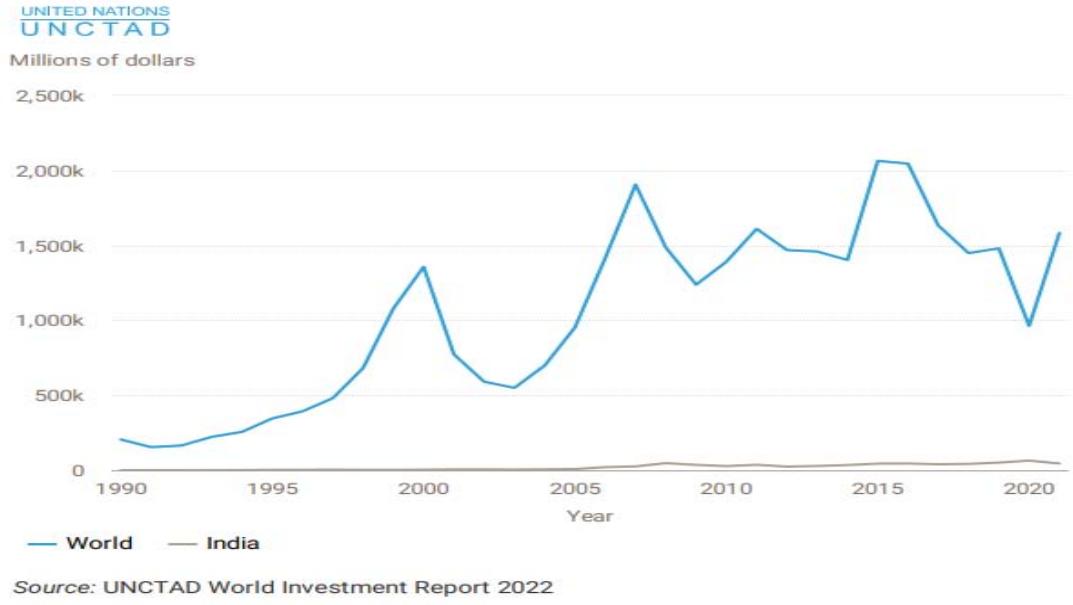
Appendix 4: World Investment Report (Unctad)
<table><tr><td>A REVAMPED SCHEME</td><td>It Encourages the production and export of clean technology vehicles.</td><td>Us$ 3.5 billion in incentives over five years until 2026 (STANDARD, 2022)</td></tr><tr><td>NATIONAL AUTOMOTIVE TESTING AND R&D INFRASTRUCTURE PROJECT (IBEF, 2022b)</td><td>Five testing and research centre have been established in the country since 2015 (IBEF,2022b)</td><td>Aims to develop India as a global manufacturing and research and development hub. (IBEF, 2022b)</td></tr></table>
Foreign direct investment (FDI) overview, selected years (Millions of dollars and per cent)
<table><tr><td rowspan="2">FDI flows</td><td rowspan="2">2017</td><td rowspan="2">2018</td><td rowspan="2">2019</td><td rowspan="2">2020</td><td rowspan="2">2021</td><td rowspan="2">2020-2021Growth rate%</td><td colspan="5">As a percentage of gross fixed capital formation</td></tr><tr><td>2017</td><td>2018</td><td>2019</td><td>2020</td><td>2021</td></tr><tr><td>India</td><td></td><td></td><td></td><td></td><td></td><td rowspan="2">-30.2</td><td rowspan="2">5.3</td><td rowspan="2">5.3</td><td rowspan="2">6.2</td><td rowspan="2">9.0</td><td rowspan="2">5.0</td></tr><tr><td>Inward</td><td>39 904</td><td>42 156</td><td>50 558</td><td>64 072</td><td>44 735</td></tr><tr><td>Outward</td><td>11 141</td><td>11 447</td><td>13 144</td><td>11 109</td><td>15 522</td><td>39.7</td><td>1.5</td><td>1.4</td><td>1.6</td><td>1.6</td><td>1.7</td></tr><tr><td>Memorandum</td><td></td><td></td><td></td><td></td><td></td><td></td><td></td><td></td><td></td><td></td><td></td></tr><tr><td>China</td><td></td><td></td><td></td><td></td><td></td><td></td><td></td><td></td><td></td><td></td><td></td></tr><tr><td>Inward</td><td>136 315</td><td>138 305</td><td>141 225</td><td>149 342</td><td>180 957</td><td>21.2</td><td>2.6</td><td>2.3</td><td>2.3</td><td>2.4</td><td>2.5</td></tr><tr><td>Outward</td><td>158 288</td><td>143 037</td><td>136 905</td><td>153 710</td><td>145 190</td><td>-5.5</td><td>3.1</td><td>2.4</td><td>2.2</td><td>2.5</td><td>2.0</td></tr><tr><td>Pakistan</td><td></td><td></td><td></td><td></td><td></td><td></td><td></td><td></td><td></td><td></td><td></td></tr><tr><td>Inward</td><td>2 496</td><td>1 737</td><td>2 234</td><td>2 057</td><td>2 102</td><td>2.2</td><td>5.0</td><td>3.2</td><td>5.1</td><td>5.2</td><td>4.7</td></tr><tr><td>Outward</td><td>52</td><td>-21</td><td>-85</td><td>-45</td><td>242</td><td>..</td><td>0.1</td><td>-</td><td>-0.2</td><td>-0.1</td><td>0.5</td></tr><tr><td>South Asia</td><td></td><td></td><td></td><td></td><td></td><td></td><td></td><td></td><td></td><td></td><td></td></tr><tr><td>Inward</td><td>51 640</td><td>52 262</td><td>59 086</td><td>70 957</td><td>52 417</td><td>-26.1</td><td>5.1</td><td>4.8</td><td>5.2</td><td>6.2</td><td>3.5</td></tr><tr><td>Outward</td><td>11 493</td><td>11 630</td><td>13 275</td><td>11 206</td><td>15 986</td><td>42.7</td><td>1.1</td><td>1.1</td><td>1.2</td><td>1.0</td><td>1.1</td></tr><tr><td>Developing Asia</td><td></td><td></td><td></td><td></td><td></td><td></td><td></td><td></td><td></td><td></td><td></td></tr><tr><td>Inward</td><td>501 382</td><td>496 898</td><td>511 632</td><td>518 893</td><td>618 983</td><td>19.3</td><td>6.3</td><td>5.6</td><td>5.7</td><td>5.7</td><td>5.9</td></tr><tr><td>Outward</td><td>400 135</td><td>360 653</td><td>336 213</td><td>378 382</td><td>394 118</td><td>4.2</td><td>5.1</td><td>4.1</td><td>3.7</td><td>4.2</td><td>3.8</td></tr><tr><td>Developing economies*</td><td></td><td></td><td></td><td></td><td></td><td></td><td></td><td></td><td></td><td></td><td></td></tr><tr><td>Inward</td><td>694 955</td><td>694 956</td><td>716 170</td><td>643 949</td><td>836 571</td><td>29.9</td><td>7.4</td><td>6.7</td><td>6.8</td><td>6.2</td><td>6.9</td></tr><tr><td>Outward</td><td>447 866</td><td>376 093</td><td>387 054</td><td>372 284</td><td>438 382</td><td>17.8</td><td>4.8</td><td>3.6</td><td>3.7</td><td>3.6</td><td>3.7</td></tr><tr><td>World*</td><td></td><td></td><td></td><td></td><td></td><td></td><td></td><td></td><td></td><td></td><td></td></tr><tr><td>Inward</td><td>1 632 639</td><td>1 448 276</td><td>1 480 626</td><td>963 139</td><td>1 582 310</td><td>64.3</td><td>8.1</td><td>6.6</td><td>6.6</td><td>4.4</td><td>6.4</td></tr><tr><td>Outward</td><td>1 610 113</td><td>941 293</td><td>1 123 894</td><td>780 480</td><td>1 707 594</td><td>118.8</td><td>8.0</td><td>4.3</td><td>5.0</td><td>3.6</td><td>6.9</td></tr></table>

Foreign direct investment flows By selected region or economy in selected time period
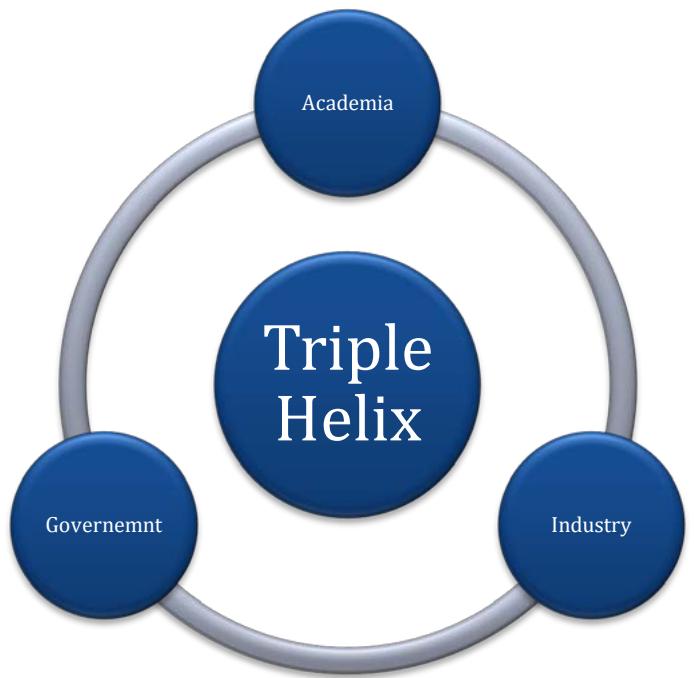 Appendix 5: Triple and Quadruple Helix Model (Carayannis and Campbell, 2009)
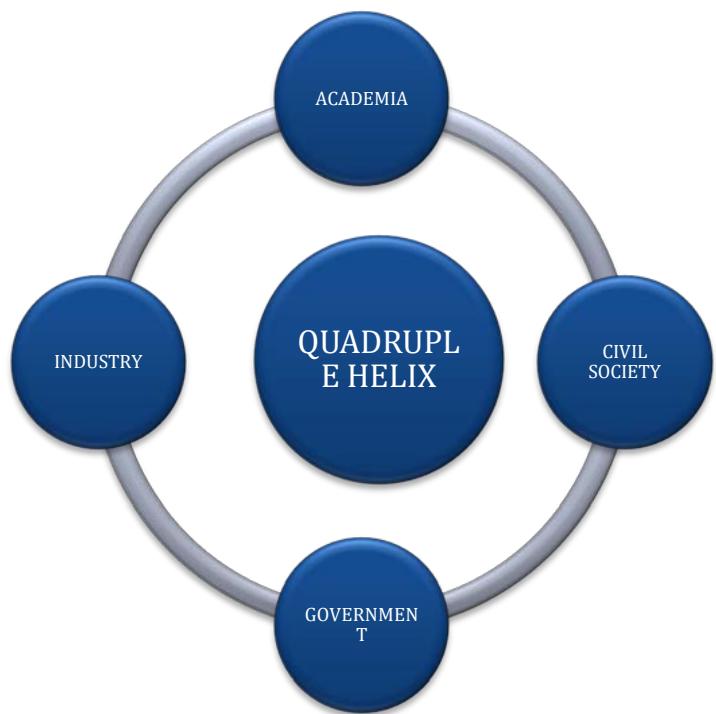
As civic society was included in the innovation hypothesis, the triple helix was expanded into the quadruple helix. It claims that the four helices are connected to innovation in an economy. Civil Society is involved in innovation and production, and it also plays a demanding role in our economy's consumption sector, where citizens (Civil Society) want to buy cutting-edge goods and services combined into a single, overall good. (Afonso et al., 2012).
Appendix 7: Ease of Doing Business Index (World Bank, 2020)
An economy's ease of doing business score ranges from 0 to 100, where 0 represents the lowest and 100 represents the best performance. A score of 80 in Doing Business 2020 would indicate that the economy is improving.
<table><tr><td>Economy</td><td>DB 2019</td><td>DB 2020</td></tr><tr><td>India</td><td>81</td><td>81.6</td></tr><tr><td>India - Delhi</td><td>81.3</td><td>82</td></tr><tr><td>India - Mumbai</td><td>80.5</td><td>81.2</td></tr></table>
Appendix 8: Market Potential Index (Global Edge, 2022) (2016)
<table><tr><td>Rank▲</td><td>Country=</td><td>Market Size=</td><td>Market Growth Rate=</td><td>Market Intensity=</td><td>Market Consumption Capacity=</td><td>Commercial Infrastructure=</td><td>Market Receptivity=</td><td>Economic Freedom=</td><td>Country Risk=</td><td>Overall Score=</td></tr><tr><td>1</td><td>China</td><td>100</td><td>95</td><td>1</td><td>93</td><td>63</td><td>7</td><td>23</td><td>79</td><td>100</td></tr><tr><td>2</td><td>Hong Kong</td><td>2</td><td>59</td><td>100</td><td>44</td><td>100</td><td>100</td><td>100</td><td>100</td><td>57</td></tr><tr><td>3</td><td>Singapore</td><td>2</td><td>76</td><td>76</td><td>44</td><td>84</td><td>89</td><td>71</td><td>93</td><td>50</td></tr><tr><td>4</td><td>India</td><td>37</td><td>79</td><td>32</td><td>67</td><td>28</td><td>8</td><td>45</td><td>67</td><td>49</td></tr><tr><td>5</td><td>Japan</td><td>19</td><td>39</td><td>71</td><td>100</td><td>71</td><td>10</td><td>71</td><td>93</td><td>48</td></tr><tr><td>6</td><td>Canada</td><td>9</td><td>50</td><td>67</td><td>74</td><td>56</td><td>68</td><td>76</td><td>93</td><td>48</td></tr><tr><td>7</td><td>Germany</td><td>11</td><td>44</td><td>69</td><td>92</td><td>77</td><td>17</td><td>71</td><td>93</td><td>44</td></tr><tr><td>8</td><td>United Kingdom</td><td>8</td><td>42</td><td>78</td><td>87</td><td>79</td><td>16</td><td>73</td><td>85</td><td>41</td></tr><tr><td>9</td><td>Qatar</td><td>1</td><td>100</td><td>95</td><td>54</td><td>54</td><td>27</td><td>45</td><td>84</td><td>40</td></tr><tr><td>10</td><td>Switzerland</td><td>2</td><td>45</td><td>80</td><td>72</td><td>68</td><td>38</td><td>78</td><td>93</td><td>39</td></tr></table>
(2022)
<table><tr><td>Rank▲</td><td>Country=</td><td>Market Size=</td><td>Market Growth Rate=</td><td>Market Intensity=</td><td>Market Consumption Capacity=</td><td>Commercial Infrastructure=</td><td>Market Receptivity=</td><td>Economic Freedom=</td><td>Country Risk=</td><td>Overall Score=</td></tr><tr><td>1</td><td>China</td><td>100</td><td>87</td><td>1</td><td>100</td><td>100</td><td>10</td><td>27</td><td>66</td><td>100</td></tr><tr><td>2</td><td>Singapore</td><td>2</td><td>52</td><td>60</td><td>59</td><td>79</td><td>100</td><td>82</td><td>94</td><td>51</td></tr><tr><td>3</td><td>Hong Kong</td><td>2</td><td>40</td><td>89</td><td>58</td><td>85</td><td>86</td><td>42</td><td>78</td><td>46</td></tr><tr><td>4</td><td>India</td><td>37</td><td>67</td><td>22</td><td>39</td><td>46</td><td>10</td><td>54</td><td>51</td><td>45</td></tr><tr><td>5</td><td>Canada</td><td>6</td><td>40</td><td>57</td><td>63</td><td>52</td><td>54</td><td>92</td><td>94</td><td>42</td></tr><tr><td>6</td><td>Ireland</td><td>1</td><td>88</td><td>37</td><td>52</td><td>47</td><td>42</td><td>98</td><td>82</td><td>40</td></tr><tr><td>7</td><td>Japan</td><td>13</td><td>29</td><td>49</td><td>77</td><td>72</td><td>14</td><td>84</td><td>94</td><td>40</td></tr><tr><td>8</td><td>Switzerland</td><td>2</td><td>42</td><td>66</td><td>68</td><td>61</td><td>40</td><td>100</td><td>77</td><td>39</td></tr><tr><td>9</td><td>Netherlands</td><td>3</td><td>42</td><td>44</td><td>56</td><td>69</td><td>44</td><td>95</td><td>94</td><td>38</td></tr><tr><td>10</td><td>Germany</td><td>8</td><td>32</td><td>55</td><td>69</td><td>60</td><td>23</td><td>91</td><td>88</td><td>37</td></tr></table>
According to an examination of the market potential index, India is ranked fourth with a significant prospective market for launching a firm. India scored 49 overall in 2016, but when compared to 2022, the score dropped to 45, indicating a sluggish increase in market potential. Additionally, it demonstrates the potential for the car industry to boost consumer spending. However, due to the pandemic in 2020, the Indian economy's market growth rate dropped.
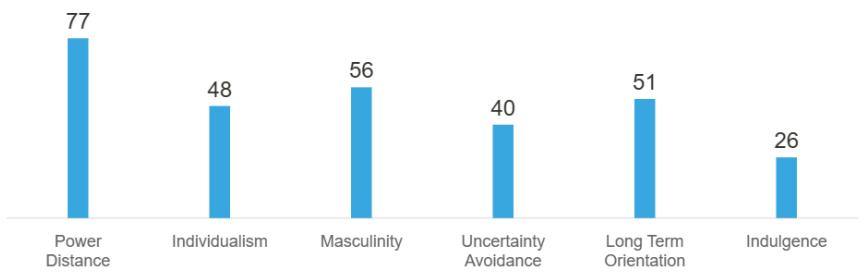 Appendix 9: Assessing Cultural Fit (Hofstede, 1993)
- estimated


Generating HTML Viewer...
References
60 Cites in Article
Oscar Afonso,Sara Monteiro,Maria Thompson (2012). A GROWTH MODEL FOR THE QUADRUPLE HELIX.
Brian Aitken,Ann Harrison,Robert Lipsey (1996). Wages and foreign ownership A comparative study of Mexico, Venezuela, and the United States.
Laura Alfaro,Areendam Chanda,Sebnem Kalemli-Ozcan,Selin Sayek (2004). FDI and economic growth: the role of local financial markets.
M Alguacil,A Cuadros,V Orts (2011). Inward FDI and growth: The role of macroeconomic and institutional environment.
F Barry (2000). Foreign direct investment, cost competitiveness and the transformation of the Irish economy.
J Berthélemy,S Demurger (2000). Foreign direct investment and economic growth: theory and application to China.
J Birkinshaw,M Brannen,R Tung (2011). From a distance and generalisable to up close and grounded: Reclaiming a place for qualitative methods in international business research.
M Blomström (1986). Foreign investment and productive efficiency: the case of Mexico.
Magnus Blomström,Ari Kokko (1998). Multinational Corporations and Spillovers.
N Bloom,C Genakos,R Sadun,J Van Reenen (2012). Management practices across firms and countries.
Carmen Boghean,Mihaela State (2015). The Relation between Foreign Direct Investments (FDI) and Labour Productivity in the European Union Countries.
E Borensztein,J De Gregorio,J.-W Lee (1998). How does foreign direct investment affect economic growth.
A Borowicz (2020). The shift of the policy towards FDI in European Union: determinants and challenges.
Peter Buckley,Adam Cross,Sierk Horn (2014). Japanese Foreign Direct Investment in India: An Institutional Theory Approach.
Elias Carayannis,David Campbell (2009). 'Mode 3' and 'Quadruple Helix': toward a 21st century fractal innovation ecosystem.
Maria Carkovic,Ross Levine (2005). Does Foreign Direct Investment Accelerate Economic Growth?.
M Cipollina,G Giovannetti,F Pietrovito,A Pozzolo (2012). FDI and growth: What cross-country industry data say.
De Mello,L (1997). Foreign direct investment in developing countries and growth: A selective survey.
Nigel Driffield (2001). The Impact on Domestic Productivity of Inward Investment in the UK.
John Dunning,Sarianna Lundan (2008). Institutions and the OLI paradigm of the multinational enterprise.
Susanne Durst,Thomas Henschel (2021). COVID-19 as an accelerator for developing strong(er) businesses? Insights from Estonian small firms.
A Dutt (1997). The pattern of direct foreign investment and economic growth.
Mousumi Duttaray†,Amitava Dutt†,Kajal Mukhopadhyay† (2008). Foreign direct investment and economic growth in less developed countries: an empirical study of causality and mechanisms.
Henry Etzkowitz,Magnus Klofsten (2005). The innovating region: toward a theory of knowledge‐based regional development.
T Ford,J Rork,B Elmslie (2008). Foreign direct investment, economic growth, and the human capital threshold: evidence from US states.
R Forte,R Moura (2013). The effects of foreign direct investment on the host country's economic growth: theory and empirical evidence.
Ihsan Gunaydin,Ekrem Tatoglu (2005). Does Foreign Direct Investment Promote Economic Growth? Evidence from Turkey.
H Hansen,J Rand (2006). On the causal links between FDI and growth in developing countries.
G Hanson,C S.L.C.E.L,C (2001). Should countries promote foreign direct investment? UN.
R Heale,A Twycross (2018). What is a case study?.
Dierk Herzer,Stephan Klasen,Felicitas Nowak-Lehmann D. (2008). In search of FDI-led growth in developing countries: The way forward.
Geert Hofstede (1993). Cultural constraints in management theories.
Leila Hurmerinta-Peltomäki,Niina Nummela (2006). Mixed methods in international business research: A value-added perspective.
Nerida Hyett,Amanda Kenny,Virginia Dickson-Swift (2014). Methodology or method? A critical review of qualitative case study reports.
J Jiang,J Zhang,H Cao (2022). Party determinants of FDI: Evidence from governing party fractionalisation in government.
Irfan Khan,Jian Xue,Shah Zaman,Zunair Mehmood (2022). Nexus Between FDI, Economic Growth, Industrialization, and Employment Opportunities: Empirical Evidence from Pakistan.
N King (2004). 21-using templates in the thematic analysis oftext-. Essential guide to qualitative methods in organisational research.
Minsoo Lee,Moonjoong Tcha (2004). The color of money: The effects of foreign direct investment on economic growth in transition economies.
E.-G Lim (2001). Determinants of, and the Relation Between, Foreign Direct Investment and Growth.
P Loungani,R Assaf (2001). How beneficial is foreign direct investment for developing countries?.
S Makki,A Somwaru (2004). Impact of foreign direct investment and trade on economic growth: Evidence from developing countries.
C Mastromarco,L Simar (2015). Effect of FDI and time on catching up: New insights from a conditional nonparametric frontier analysis.
Jože Mencinger (2003). Does Foreign Direct Investment Always Enhance Economic Growth?.
Michael Minkov (2012). Cross-Cultural Analysis: The Science and Art of Comparing the World's Modern Societies and Their Cultures.
R Mudambi (1999). Multinational investment attraction: principal-agent considerations.
Bo Nielsen,Catherine Welch,Agnieszka Chidlow,Stewart Miller,Roberta Aguzzoli,Emma Gardner,Maria Karafyllia,Diletta Pegoraro (2020). Fifty years of methodological trends in JIBS: Why future IB research needs more triangulation.
Jill Norris,Deborah White,Lorelli Nowell,Kelly Mrklas,Henry Stelfox (2017). How do stakeholders from multiple hierarchical levels of a large provincial health system define engagement? A qualitative study.
D North (2005). Understanding the process of economic change.
(2002). OECD Annual Report.
Erica Owen (2019). Foreign Direct Investment and Elections: The Impact of Greenfield FDI on Incumbent Party Reelection in Brazil.
I Ozturk (2007). Foreign direct investment-growth nexus: a review of the recent literature.
A Pessoa (2007). FDI and host country productivity: a review.
Pablo Pinto,Santiago Pinto (2008). THE POLITICS OF INVESTMENT PARTISANSHIP: AND THE SECTORAL ALLOCATION OF FOREIGN DIRECT INVESTMENT.
M Ram (2004). Unknown Title.
Rati Ram,Kevin Zhang (2002). Foreign Direct Investment and Economic Growth: Evidence from Cross‐Country Data for the 1990s.
D Sahoo,M Mathiyazhagan (2003). Economic growth in India:" Does foreign direct investment inflow matter?.
W Scott (1987). The Adolescence of Institutional Theory.
H Şen (1998). Different Arguments for and Against the Role and Impact of Foreign Investment on The Development Potentials of Developing Countries: An Overview.
H Shaiq,H Khalid,A Akram,B Ali (2011). Why not everybody loves Hofstede? What are the alternative approaches to study of culture.
Diya Mittal (2024). Effect of Self-Reliant Policy on FDI in India: Case Study of Automobile Multinationals.
No ethics committee approval was required for this article type.
Data Availability
Not applicable for this article.
How to Cite This Article
Diya Mittal. 2026. \u201cEffect of Self-Reliant Policy on FDI in India: Case Study of Automobile Multinationals\u201d. Global Journal of Computer Science and Technology - G: Interdisciplinary GJMBR-G Volume 24 (GJMBR Volume 24 Issue G1): .
Explore published articles in an immersive Augmented Reality environment. Our platform converts research papers into interactive 3D books, allowing readers to view and interact with content using AR and VR compatible devices.
Your published article is automatically converted into a realistic 3D book. Flip through pages and read research papers in a more engaging and interactive format.
Our website is actively being updated, and changes may occur frequently. Please clear your browser cache if needed. For feedback or error reporting, please email [email protected]
Thank you for connecting with us. We will respond to you shortly.