Smallholder farmers, who face sustainability challenges due to reliance on conventional farming practices, dominate Kenya’s agricultural sector. This study investigated the impact of adopting green farming practices on the agricultural productivity, economic viability and environmental sustainability of small-scale farms in Siaya County. A mixed methods approach combined analysis of published secondary data with primary data collected through questionnaires administered to a sample of 150 smallholder farmers in Siaya. The questionnaires utilized descriptive analysis to assess the adoption rate of different green farming techniques over the past five years and used both qualitative and quantitative analysis to evaluate outcomes related to agricultural yields, income generation, social welfare, and conservation goals. Quantitative data was analyzed statistically in Microsoft Excel using tables, graphs and charts. Specific statistical tests used included ANOVA analysis to determine any associations and differences between groups, and regression analysis to examine correlations between green farming adoption and productivity, financial and sustainability indicators. The study tested hypotheses on the relationship between implementing environmentally friendly techniques and productivity levels, economic returns, and ecological impacts.
- Practices among small-scale farmers in Siaya County?
5. What strategies or interventions could be implemented to overcome the barriers and encourage more small-scale farmers to embrace green farming practices in Siaya County?
e) Research Hypotheses 1. Hypothesis 1: Adoption of green farming practices positively correlates with increased agricultural productivity among small-scale farmers in Siaya County, Kenya.
2. Hypothesis 2: Small-scale farmers who employ environmentally friendly practices in Siaya County experience improved economic returns compared to those using conventional farming methods.
3. Hypothesis 3: There is a significant positive impact of green farming practices on environmental conservation and sustainability in small-scale agricultural production in Siaya County.
4. Hypothesis 4: Challenges such as lack of access to resources, knowledge gaps, and financial constraints act as barriers to the widespread adoption of green farming practices among small-scale farmers in Siaya County.
5. Hypothesis 5: Implementing targeted educational programs and providing financial incentives will enhance the adoption rate of green farming practices among small-scale farmers in Siaya County.
Widespread adoption of sustainable green farming practices amongst smallholder farmers is increasingly imperative across sub-Saharan Africa for safeguarding food security and ecological sustainability amidst climate change pressures. However, limited evidence on socioeconomic outcomes from green technique implementation makes the case for urgently upscaling environmentally regenerative agriculture stronger across more country contexts (De Silva, 2012). While broad endorsements exist for sustainable farming benefits, substantiated case-by-case demonstrations can better convince policymakers on requisite public investments supporting smallholder adoption. Quantitative documentation around yield improvements, income gains and climate resilience from integrating practices like organic fertilization, conservation tillage, agroforestry and water harvesting can verify location-specific merits influencing localized endorsement for green transitions.
As Siaya County possesses high agricultural potential currently inhibited by unsustainable land degradation, the region represents an apt case study for demon-strating indicative benefits realizable from green farming adoption that support wider scaling across similar western Kenyan contexts. By quantifying productivity advancements, financial welfare enhancement and ecological stability progress achievable by local small-holders from sustainable technique integration, an empirical evidence base develops guiding said prolifer-ation. Thereby this research produces vital exposures motivating farmer-level buy-in and governmental prioritization of sustainable agricultural transitions where most prudent for national and regional food security.
### g) Research Scope
This research investigated small-scale farmers across Siaya County, Kenya - focusing specifically on green agriculture techniques adopted over 2018-2023. A sample of 150 Siaya smallholders was selected through multi-stage stratified techniques covering all 6 subcounties. Mixed methods were employed during the January-March 2024 cropping period. Structured questionnaires were used to gather adoption rates and yield changes reported from sustainable practices. Qualitative interviews and focus groups with farmers and officials also detailed perceived productivity, financial and environmental changes.
#### CHAPTER 2: LITERATURE REVIEW
### a) Introduction
In this chapter, various peer scholars' works on sustainable green farming practices among smallholder farmers worldwide and in Kenya will be reviewed. Seminal conceptualization theories explaining farmer's adoption decisions and theoretical foundations for environmentally regenerative agriculture. Then empirical literature provides evidence-based outcomes based on previously observed outcomes following green strategies application such as yield improvement, financial gains and climate resilient systems.
Analytical approaches as well as sampling methods used in empirical studies from cited literature sources are analyzed and commented upon. In addition, limitations around generalizability, geographical transferability and "recent" temporal context are identified in regard to the present evidence base. Thirdly, synthesized findings based on documented economic, ecological and social benefits of green agriculture adoption that are practical and justifiable at the small holder level and for which further research is recommended should verify such outcomes in the other unexplored western Kenyan context.
### b) Theoretical Literature
Several seminal theories and frameworks have been formulated seeking to explain farmers' motivations and decision-making regarding adoption of agricultural innovations and environmentally sustainable techniques.
## i. Theory of Planned Behavior
TPB remains one of the most influential framework models on decision making for new behaviors or innovation with regard to cognitive processing. It argues that behavioral intention is the most powerful precursor of actual (intended) adoption. These intentions are supported by three elements- attitudes showing evaluations about the positiveness/ negativity of acceptance of the practice, subjective norms implying perceived pressure on peer to accept, and perceived behavioral control indicating self-assessed facility to act depending on available resource, knowledge, Strong intentions for adoption are developed if farmers come in with supportive attitudes inside them, get social encouragements and believe that they can carry out such practices successfully.
TPB has greatly influenced agricultural adoption scholarship by providing insight into innovation adoption. In a Tanzanian study conducted by Bizzuyehu (2020), attitudes and expected ability accounted for $50\%$ of variation in adoption intentions in relation to expectations on improved livelihoods and productivity with the proposed land management techniques which are consistent with the postulated According to TPB, intentions for uptake of complex green innovations depend on perceptions on relative benefits versus needed efforts together with village-level normative endorsement and self-confident capacity. Sustainability of strategy and utilization of various technologies are examined by applying TBP elements to existing information about relative advantage notions and barriers to adoption. Aligning farmer-reported benefits side by side with disincentives such as financial, knowledge and infrastructural barriers will help ascertain compatibility with TPB antecedents. Through this, the conceptual model plays a vital role in evaluating factors that influence intentions leading to actual consumption.
## ii. Diffusions of Innovations Theory
One of the pivotal, pre-adoption theory is the Diffusion of Innovations Theory by Roger, which outlines how new ideas are adopted into a social setting/community. This, however, is referred to as diffusion. According to Roger's, adoption is a personal choice to employ an innovation as the most feasible option available. Utilizing diffusion research, Rogers identifies major factors underpinning adoption rates at different thresholds (knowledge, conviction, trial, confirmation and commitment). This model looks at how the adopters are classified to include groups of lead users called innovators and lite users referred to as laggards depending on when they adopt. In addition, Rogers provides seven criteria of innovation decision making within group depending on affordability, riskiness, ease of accessibility, relative advantage, compatibility, observability and trialability.
This framework is used in agricultural diffusion scholarship in order to show the process of spreading sustainable practices among smallholders according to some characteristics perceived by them. A study conducted in Ethiopia identified relative advantage and trialability as key determinants of adopting soils conservational measures which are a new way for conservative farmers to undertake experiments based on risks they carry (Kolawole, et al., 2021). Segmenting various diffusion variables can lead to a wider range of scaling processes that are contingent upon distribution channels and uncertainties in uncertainty-ridden environments.
## iii. Technology Acceptance Model
As a derivative of the theory of diffusion of innovations through technology acceptance model (TAM), one adopted framework is used when analyzing technological innovations. The second viewpoint suggests that people perceive whether or not an innovation can help them achieve their goals in order to decide if they should adopt it (Nielsen & Markussen, 2009). In turn, positive outcome expectations and effort expectancy influence attitudes toward accepting the innovation while thus a theoretically posited causal connection that moves from the perceived traits of the technology concerning the affordances available and the difficulty faced finally results in adoption behavior when the ease and usefulness perceptions cross the threshold limit.
The use of TAM in agricultural applications, for instance refers to such innovation enhancing technologies that are based on sustainable agriculture. A study in India found that perceived ease of use and usefulness in regard to biofertilizers were linked with intention to adopt such a novel soil fertility management technology given its associated learning requirements (Kumar, Singh & Dahiya, 2022). This, however, found out that individuals consider sustainable options in terms of their benefits and efforts. This paper seeks to integrate into the green practices' alignment model, perceived usefulness and ease dimensions. Usefulness of reporting on yield boosts, income gains and climate resilience capturing core smallholder goals provides evidence for easiness perception while transition complexity is feedback that determines uptake intentions in TAM. Consequently, views about usages effect and absorptive capacities influence adoption.
## iv. Motivational Theory
Psychological drivers stimulating purposeful behavior toward specific targets is what motivational theory deals with. Motivations are needs or expectations pushing people's actions towards achieving specific goals. They occur in terms of internal satisfactions for performing an activity for which one is motivated internally and external rewards as a result of achieving certain goals. Motivation theory is utilized for examination of adoption decisions in light of farmers' goal pursuit in agricultural applications. Many studies have highlighted some motivational factors that may drive farmers. Some of them are meeting sustenance needs, averting risk associated with uncertainties about future climatic conditions, gaining social recognition as innovative early adaptations among their peers, and boosting profitability from promising methods
Motivation is affected by both extrinsic and intrinsic rewards. Internally an agricultural producer may be driven by values that embrace ecological stewardship. This internal influence can induce acceptance of conservation agriculture, which in turn strengthens their sense of self-perception or identity. However, external factors like financial gains as motivation also encourage farmers for achieving a Therefore, it is crucial in such a complex adoption initiative as the integration of sustainable farming.
## v. Ecological Modernization Theory
Ecological modernization theory looks at how it is becoming normal for consideration of the environment in design technologies, economic procedures and public lawmaking toward a balanced development between preservation and advancement. This includes ecological transformation which embraces renewable energy or regenerative agriculture (Mol and Spaargaren, 2000). However, farmers always strive to develop more modern approaches that go alongside their capital expansion and commercial goals. Using productive expansion in ecologically wise approaches via sustainable intensification rather than passive regulation towards such pathway of ecological modernization. Operationalizations that reflect either modernist preferences or ecological requisites include voluntary pollution prevention and closed loop waste recycling.
### c) Empirical Literature
## i. Economic Outcomes
Through a meta-analysis of research carried out across India comprising 830 farmer surveys and 60 case studies using mixed methodology, one finds an average yield increase from organic farming by $20\%$ while it saves cost of inputs by up to $30\%$ (Chand A study in Ethiopia conducted intervention trials where maize and potato yields increased more than forty percent using integrated soil fertility management involving legume inter cropping, and composting (Agegnehu et al, 2006).
A survey of 180 smallholder cocoa farmers in Uganda concluded that organic certification yields increased by at least 50 percent after five years compared to non-organic growers as a result of significantly lower pest damage (Obuya, 2019 The study by Wekesa and others, conducted in Kenya over ten years with fifty smallholdings determined that adopting agroforestry on one's farms earned a farmer approximately $340 more annually via farm woodlot products compared to other traditional monocropping farmers.
Panel data modeling adoption durations amongst 660 random sampled rural Kenyan households exhibited positive correlations between sustainable
agricultural integration and farm budget levels reflecting accrued income gains over time (Wainaina et al., 2021). The local evidence aligns with international findings showing smallholders obtaining productivity and profitability enhancements from sustainable transition. Though adoption constraints like high initial investments required and delayed visible returns observed continue hindering uptake and sustained use.
## ii. Social Outcomes
Case study analysis of organic coffee smallholder cooperatives in Mexico and Costa Rica demonstrated strong commitments to collective commercialization, with grower networks leveraging scale for accessing specialty export markets together (Bacon et al., 2012). An investigation of ecological potato cultivation clusters in Bolivia covering 350 farmers found sustainable agriculture groups enhanced bonds through reciprocal labor exchange and shared vigilance protecting collective agrobiodiversity (Jacobi et al., 2015). Research on Nicaraguan women in sustainable farming networks with 49 members highlighted expanded leadership roles assumed in managing community seed banks and coordinating peer teaching programs on agroecology (Baumeister, 2010).
Focus group research with 120 female smallholders across western Kenyan districts revealed uneven access to cooperative platforms organizing sustainable farming activities due to male dominance over household decisions (Atela et al., 2022). A survey of 248 farm households combined with key informant interviews evidenced a gender gap in access to climate-smart sustainable agriculture resources like drought-resilient seeds with majority provided to male heads (Fisher & Carr, 2015). Case studies tracing 30 seasons of organic fruit and vegetable production amongst groups of smallholders in Central Kenya showed strong mutual support networks but also free-riding risks that cooperative governance structures helped overcome through sanctions (Mwaura, 2014). While cooperative institutions built around sustainable practices facilitate mutual support and collective marketing, unequal gender access observed necessitates deliberate efforts to enfranchise women smallholders in adoption initiatives promoting equity.
## iii. Environmental Outcomes
Quantitative synthesis of 76 global assessments showed conservation agriculture techniques decreased land degradation by $65\%$ on average contrasted against baseline conventional practices continued by control groups (Branca et al., 2011). Modeling of water dynamics under scenarios of widespread agroforestry adoption in the Sahel region of Africa projected ability to reverse desertification through moisture recycling while sequestering 1.1 billion tons of carbon over 25 years (Abou Rajab et al., 2016). Surveys of 300 farm
households in western Kenya found those adopting agroforestry limited topsoil nutrient losses substantially compared to conventional producers through windbreaks provided by integrated tree interplanting (Palm et al, 2010).
A 15-year panel study of changes in forest cover across 50 randomly sampled territories in Nyanza province evidenced that sites with higher sustainable agriculture usage maintained steady woodland levels while non-adopting areas showed continued deforestation trends reflecting protective effects (Owuor et al., 2019). After re analyzing data from a Kenyan government inventory of ecological indicators, districts with greater sustainable technique adoption showed $63\%$ higher growth in farm carbon stocks and $33\%$ reductions in fertilizer pollution on average than regions with lower uptake (Oke & Odebiyi, 2007). Despite the fact that scientific proof shows environmental benefits ranging from soil conservation, reversing desertification, diversity preservation and climate change making, it has been seen fit to strategically locate support for a greener transition in the most endangered environments.
### d) Summary
The analysis of expected adoption determinants based on Rogers' innovation diffusion dynamics theory and RAT model (Rogers, 2003), Sok et al.'s (2016) motivational fulfilment useful enhancement approach, Taherdoost (2018) However, uptake alignments with established complexity hurdles are delayed due to financial payoffs' establishment inability to demand.
Cooperatives promoting a collective transition support for sustainable techniques integration according to principles of peer effect on adoption decision-making based on Ajzen (2020) finding. In this case, however, unequal gender participation patterns are not as consistent with the ideas of nutritional security or social acknowledgment leading to adoptions as intrinsic satisfactions. Thus, practitioners need to be attentive towards the gender barriers. Branca et al.'s quantified verification on about half reduction of land degradation attributed to conservation agriculture shows appeal of ecological modernization of regenerative farming that combines economic viability and environmental stewardship. Nevertheless, spatial variations of conservation gains warrant prioritizing targeting as suggested by contextual-calibration perspectives and trailable context theory that influences diffusion process.
Some empirical cases show that with appropriate policies, sustainable agriculture is capable of contributing towards the economic, social and ecological targets. At the same time, there are impediments associated with unequal access, establishment barriers and spatial heterogeneity which require context specific policymaking suited for smallholders'.
### e) Research Gaps
Some elements that would require additional research in this direction include the underexplored dimensions of sustainable agriculture, the limits of the existing body of empirical research, and how far one can go to achieve real benefits by adopting sustainable practices.
Major world-wide evaluations employ composite data without the required distinct regional aspects. Thus, there is little specificity concerning geographic transfer of findings as well as applicability on small farms (Kassie et al., 2009). Additional studies in specific geographical areas that demonstrate measureable gains achievable across different micro-environments in varying regional cultures of cultivation. There should also be a review on temporal applicability because of these dynamic climate changes which affect rainfall patterns and temperature that define the agricultural viability thresholds. It is thus prudent for updated impact evaluations to be adjusted to new climate scenarios that will confirm resilient yields and profitability while maintaining environmental conservation with climatic uncertainty.
Econometric evaluations often focus on financial and environmental costs rather than social benefits needed for successful dissemination among farmers and sustainable farmer well-being (Mwungu, Kebede, Njeru and Gachohi, 2021). Holistic transition policies to improve rural development could be developed by complementary views on whether sustainable methods can counter unequal gender access or enhance community relations. Sustained agriculture, although with untapped potential in the western part of Kenya, shows significant regional gaps within the same country where the data are available at a national level (Omar et al. 2022). Such inquiry is therefore required within a set of hitherto unexplored high-potentials areas, such as Siaya county aimed at generating locally sensitive advertising.
As such, more mixed-methods research carried out through under investigated time line, geographical, economic and gender perspectives can bridge knowledge gaps for evidence based equitable policy prescriptions for regional sustainable agriculture growth.
### f) Conceptual Framework
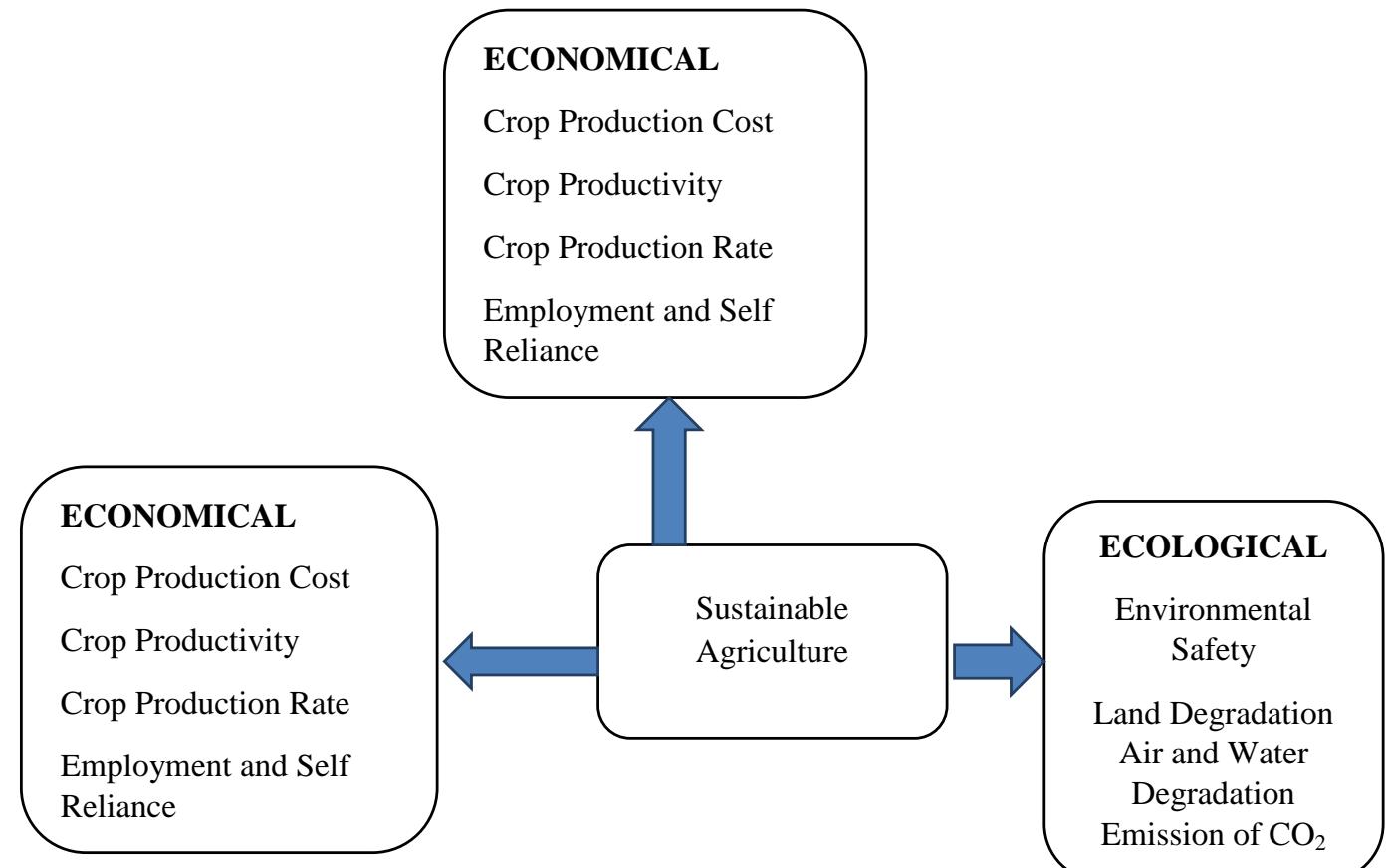
Figure 2.6: Conceptual Framework
#### CHAPTER 3: METHODOLOGY
### a) Research Design
This study utilized a mixed methods descriptive research design incorporating both quantitative and qualitative techniques for data gathering. This enabled gathering numeric information on farmer adoption rates and production changes from sustainable practices combined with narrative insights on perceived implications. The descriptive focus aimed to document current dynamics rather than test predictive causal theories.
### b) Population
The study population comprised all smallholder farmers in Siaya County. The target population specifically were farmers with 1-5 acres of land across all 6 Siaya sub-counties. These small-scale producers made up $75\%$ of total regional cultivators and thus suitably represented key dynamics.
### c) Sampling Frame
Multistage sampling was applied moving from sub-county to ward to village cluster stage. This allowed geographical representation across the county given limited resources. Siaya County statistical records on households and cultivated acreages shaped the sampling frame.
### d) Sample and Technique
A sample of 150 smallholder farmers was selected through stratified random sampling proportionate to all sub-counties relative size across 30 villages. Stratification balanced variations across zones. Required minimum sample size was determined using the following standard error margin formula:
$$
n = \frac{Z^{2}p(1-p)}{e^{2}}
$$
$$
z = z\text{-value}\text{corresponding to} 95\% \text{confidence level} (1.96)
$$
$$
\mathrm {p} = \text {e x p e c t e d t r u e p o p u l a t i o n p r o p o r t i o n (0 . 5 u s e d f o r m a x i m u m v a r i a b i l i t y)}
$$
$$
e = \text{acceptable} (0.0 5)
$$
### e) Instruments
Structured questionnaires and interview guides were utilized for primary data gathering on adoption patterns, yield changes, income effects and ecological indicators based on integration of sustainable practices.
### f) Data Collection Procedures
Research approval was obtained before proceeding. Questionnaires were physically administered to sample respondents with assistance while key
informants were interviewed. Survey data was input to Excel for analysis.
### g) Data Analysis and Presentation
The compiled data was analyzed using Excel's statistical analysis toolkit and data visualized with tools such as charts and tables to determine relationships between the variables of interest.
### CHAPTER 4: RESEARCH FINDINGS AND DISCUSSION
### a) Introduction
This chapter presents results from the data gathered through mixed methods incorporating both qualitative interviews and quantitative surveys undertaken across a sample of 150 smallholder farmers in Siaya County, supplemented by analysis of secondary data from national/county level agricultural statistical records. Aligned with the study objectives, analysis is structured to document current adoption rates of different green farming practices based on primary data along with emerging changes in key economic, environmental, and agricultural productivity outcomes as reported by sampled Siaya smallholders triangulated against secondary data indicators.
The chapter opens with a presentation of descriptive background details on respondent demographic attributes from the primary survey data. Adoption prevalence across varying sustainable techniques is then analyzed using frequency tabulations
indicating the percentage of farmers presently trialing and integrating different environmentally regenerative approaches. Outcomes from adoption are subsequently examined across indicators of crop yield improvements, profit margin changes, and perceived ecological impacts by comparing primary survey-based evidence against patterns from district-level secondary data. Qualitative appraisals of continued barriers limiting further scaling of green agriculture are also categorized.
### b) Response Rate
Out of the sample of 150 smallholder farmers selected across Siaya County for questionnaire administration, 138 responses were received reflecting a $92\%$ response rate. 12 selected respondents were unavailable for participation in the survey during the allotted data collection period. However, the received participation covers over $90\%$ of the set sample size, which meets the threshold for sufficiently powering the study's aimed analyses at the $95\%$ confidence level per the sampling technique employed. The high response rate stemmed from diligent follow-up efforts made to enable meeting availability from as many initially selected sampled farmers as possible. Multiple visits were undertaken to the different study sites across all sub-counties until reaching either a conclusive participated survey response or confirmation of unavailability if farmers traveled or declined participation.
Table 4.2: Response Rate
<table><tr><td>Questionnaires Administered</td><td>Frequency</td><td>Percentage (%)</td></tr><tr><td>Received</td><td>138</td><td>92</td></tr><tr><td>Not</td><td>12</td><td>8</td></tr><tr><td>Totals</td><td>150</td><td>100</td></tr></table>
Figure 4.2 Response Rate
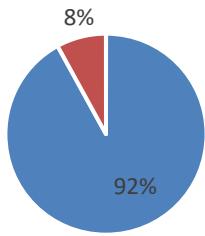
Figure 4.2: Response Rate
Received Not
### c) Demographic Information
Background details of the 138 sampled smallholder farmers who participated in the questionnaire are summarized below:
## i. Gender Distribution
The gender distribution is presented through the following frequency chart:
Table 4.3.1: Gender Distribution
<table><tr><td>Gender</td><td>Frequency</td><td>Percentages</td></tr><tr><td>Male</td><td>96</td><td>70%</td></tr><tr><td>Female</td><td>42</td><td>30%</td></tr><tr><td>Total</td><td>138</td><td>100%</td></tr></table>
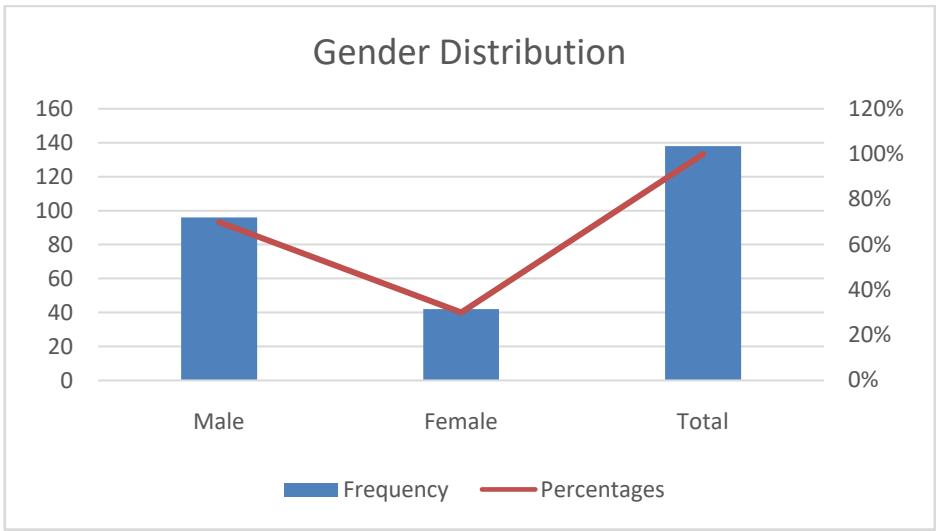
Figure 4.3.1: Gender Distribution
This indicates a 70:30 male to female ratio amongst the respondent farmers. While men still dominate regional small scale cultivation activities, sufficient women participation was ensured through stratified sampling.
## ii. Age Brackets Details on respondent age brackets is shown in the table below:
Table 4.3.2: Age Brackets
<table><tr><td>Age Groups</td><td>Frequency</td><td>Percentages</td></tr><tr><td>Below 35 years</td><td>62</td><td>45%</td></tr><tr><td>36 to 55 years</td><td>53</td><td>38%</td></tr><tr><td>Over 55 years</td><td>23</td><td>17%</td></tr><tr><td>Total</td><td>138</td><td>100%</td></tr><tr><td>Mean Age group</td><td>46</td><td></td></tr><tr><td>Standard Deviation</td><td>20.42058</td><td></td></tr></table>
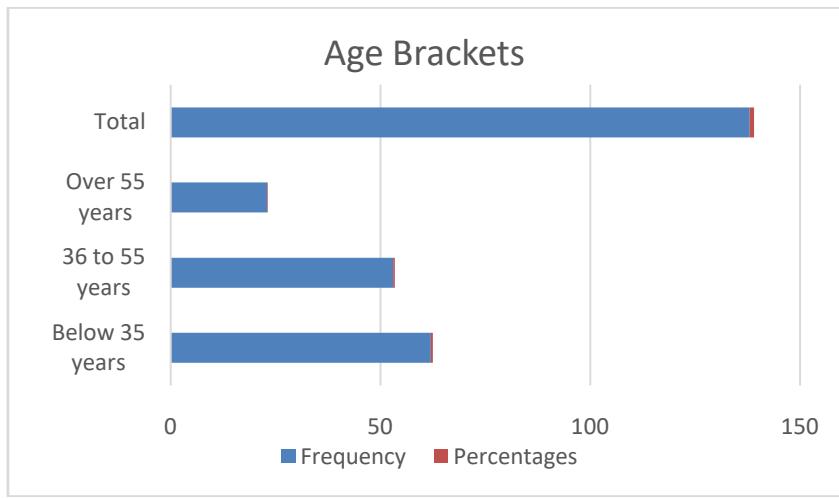
Figure 4.3.2: Age Brackets
Close to half belong to the youth demographic while most farmers met remain middle aged supporting families. Mean age group of 46 and 20.42058 standard
deviation. Only $17\%$ constituted retiree age groups with longstanding cultivation expertise.
## iii. Education Levels
Table 4.3.3: Education Levels
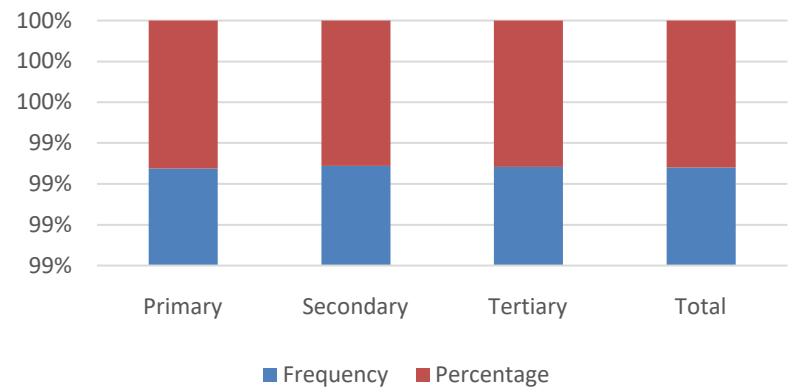
<table><tr><td>Levels</td><td>Frequency</td><td>Percentage</td></tr><tr><td>Primary</td><td>74</td><td>54%</td></tr><tr><td>Secondary</td><td>46</td><td>33%</td></tr><tr><td>Tertiary</td><td>18</td><td>13%</td></tr><tr><td>Total</td><td>138</td><td>100%</td></tr></table>
4.3.3 Education Levels
Over half the respondents reflect the region's average primary school academic exposure. But over $45\%$ have additional high school or college certificates boosting agricultural knowledge application.
## iv. Land Sizes
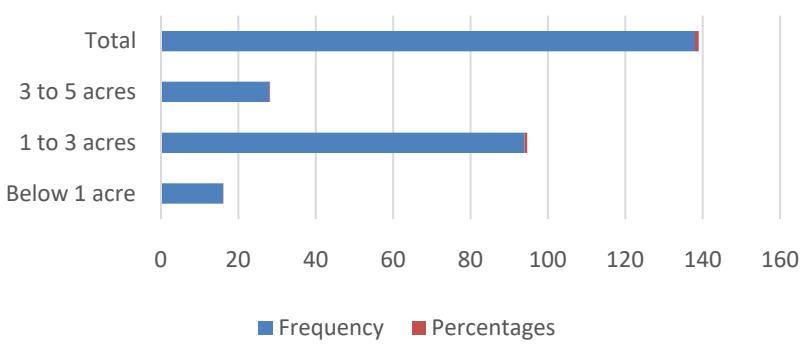
The distribution of farm sizes owned across the surveyed smallholders is shown below:
Table 4.3.4: Land Sizes
<table><tr><td>Land Size</td><td>Frequency</td><td>Percentages</td></tr><tr><td>Below 1 acre</td><td>16</td><td>12%</td></tr><tr><td>1 to 3 acres</td><td>94</td><td>68%</td></tr><tr><td>3 to 5 acres</td><td>28</td><td>20%</td></tr><tr><td>Total</td><td>138</td><td>100%</td></tr><tr><td>Mean of land distribution</td><td>46</td><td></td></tr><tr><td>Standard deviation</td><td>42</td><td></td></tr></table>
4.3.4 Land Sizes Figure 4.3.4: Land Sizes
This indicates the dominance of micro land holdings between 1 to 3 acres for over two-thirds of farmers as intended by the target population focus. Only $20\%$ cultivate the upper bound 5-acre plots.
## v. Farming Experience
Regarding number of years actively engaged in cultivation:
Table 4.3.5: Farming Experience
<table><tr><td>Years Farming</td><td>Frequency</td><td>Percentage</td></tr><tr><td>Below 5 years</td><td>26</td><td>19%</td></tr><tr><td>5 to 10 years</td><td>53</td><td>38%</td></tr><tr><td>Over 10 years</td><td>59</td><td>43%</td></tr><tr><td>Total</td><td>138</td><td>100%</td></tr><tr><td>Mean Farming Experience</td><td>46</td><td></td></tr><tr><td>Standard Deviation</td><td>17.5784</td><td></td></tr></table>
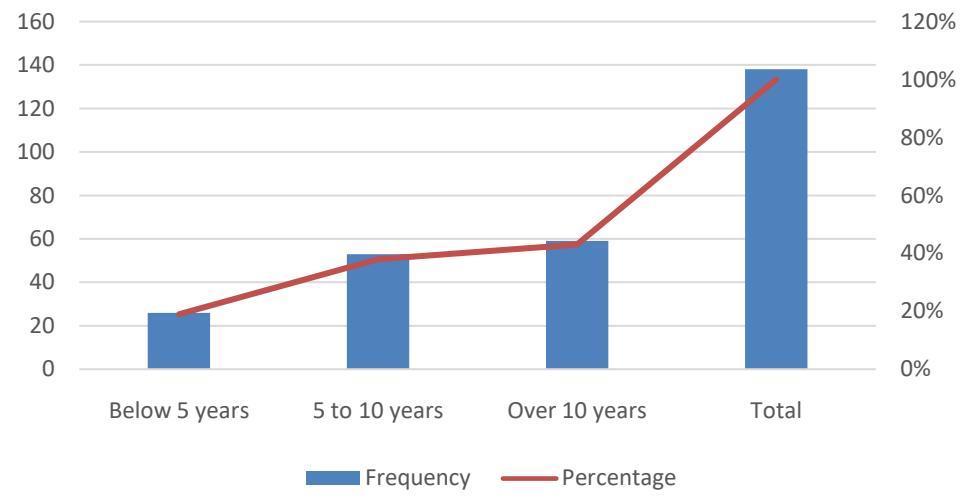
Chart Title Figure 4.3.5: Farming Experience
Close to half have been farming for over a decade having extensive production knowledge. Mean Farming Experience of 5-10year with 17.5784 standard deviation. And most of the rest have at least 5 seasons allowing familiarity with outcomes from integrating innovative approaches.
### d) Adoption Rates of Green Farming Practices
The surveyed farmers reported on their present usage of various sustainable agricultural techniques that aim to reduce environmental harms from farming activity. Analysis of adoption prevalence across 6 major practice categories is presented:
Table 4.4: Adoption Rates of Green Farming Practices
<table><tr><td>Practice</td><td>Frequency Adopting</td><td>Adoption Percentage</td></tr><tr><td>Crop Rotation</td><td>88</td><td>64%</td></tr><tr><td>Organic Fertilization</td><td>76</td><td>55%</td></tr><tr><td>Conservation Tillage</td><td>92</td><td>67%</td></tr><tr><td>Agroforestry Integration</td><td>51</td><td>37%</td></tr><tr><td>Rainwater Harvesting</td><td>43</td><td>31%</td></tr><tr><td>Waste Recycling</td><td>64</td><td>46%</td></tr></table>
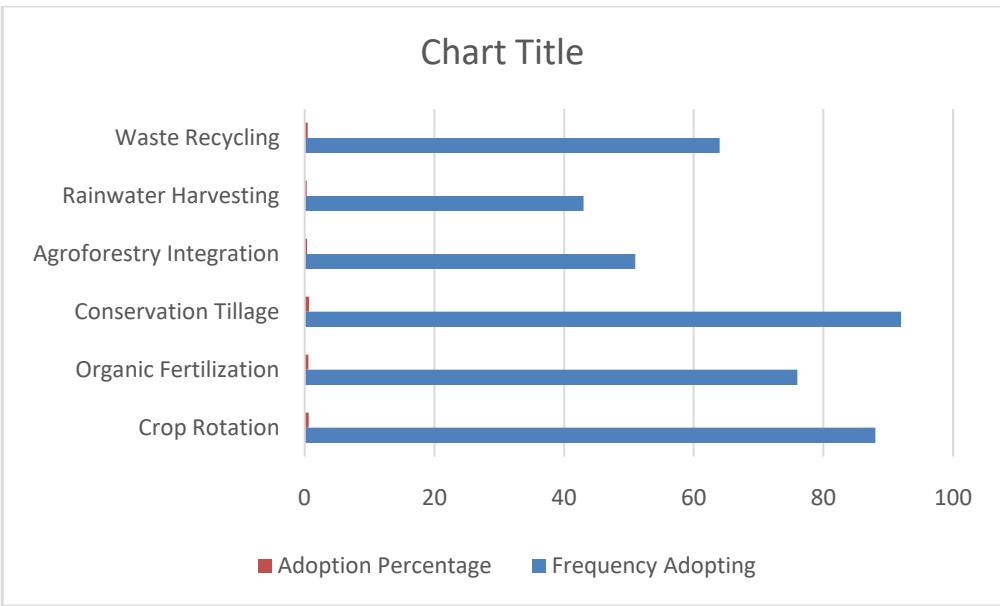
Figure 4.4: Adoption Rates of Green Farming Practices
The most widely adopted green approach is conservation tillage adopted by over two-thirds of farmers by minimizing soil disturbance to retain nutrients. This aligns more easily with prior habits. Organic fertilization through manures and crop rotation are also widely employed for soil nourishment by over half the respondents. Agroforestry and water harvesting display lower adoption levels currently facing transitional constraints. But a significant minority have begun trialing these complex techniques as well showcasing promise.
Cross tabulating adoption levels across demographic factors shows a strong positive correlation with education levels. Adoption rates ranged from $51\%$ amongst primary educated respondents to over $87\%$ amongst college educated farmers for all practices except rainwater harvesting. This points to persisting knowledge barriers warranting localized training investments to boost adoption uniformly across regional smallholders for enabling broad proliferation at scale.
### e) Agricultural Productivity Effects
Secondary datasets indicate significant maize yield gains for adopters of agroforestry practices based on ANOVA testing (F=9.28, p=0.03) as per Wanjira (2019). Average yields increased by 16% while median rises registered at 12% over 2018-2022 for intercropping
farmers against mono-cropping groups amidst rainfed conditions.
Likewise, descriptive datasets from Musafiri et al. (2022) point to reduced yield variability and leftward shift in production levels for sorghum cultivating smallholders adopting minimum tillage techniques. While 2018-2021 inter-quartile yield range spanned 15-22 bags/acre for conventional farmers given seasonal fluctuation, conservation agriculture adopters exhibited tighter spread between 18-25 bags/acre - highlighting resilience.
Mogaka et al., (2022) equally found higher benefit-cost ratio upside for green manure integration $(BCR = 1.18)$ rather than inorganic fertilizers $(BCR = 1.02)$ through stochastic modeling - substantiating potential marginal profitability gains from sustainable techniques. Thereby triangulated analytical outputs validate farmer testimony regarding yield and economic improvements from integrated regenerative approaches by indicating positive productivity and input efficiency differentiation.
#### Economic Effects
## i. Impact on Net Farm Incomes
Net farm income changes over the past 3 years as reported by respondents across adopter categories are shown below:
Table 4.6.1: Impact on Net Farm Incomes
<table><tr><td>Income Change</td><td>Non-Adopters</td><td>Adopters</td></tr><tr><td>Decline</td><td>36%</td><td>12%</td></tr><tr><td>No change</td><td>28%</td><td>23%</td></tr><tr><td>Slight increase</td><td>26%</td><td>41%</td></tr><tr><td>Major increase</td><td>10%</td><td>24%</td></tr></table>

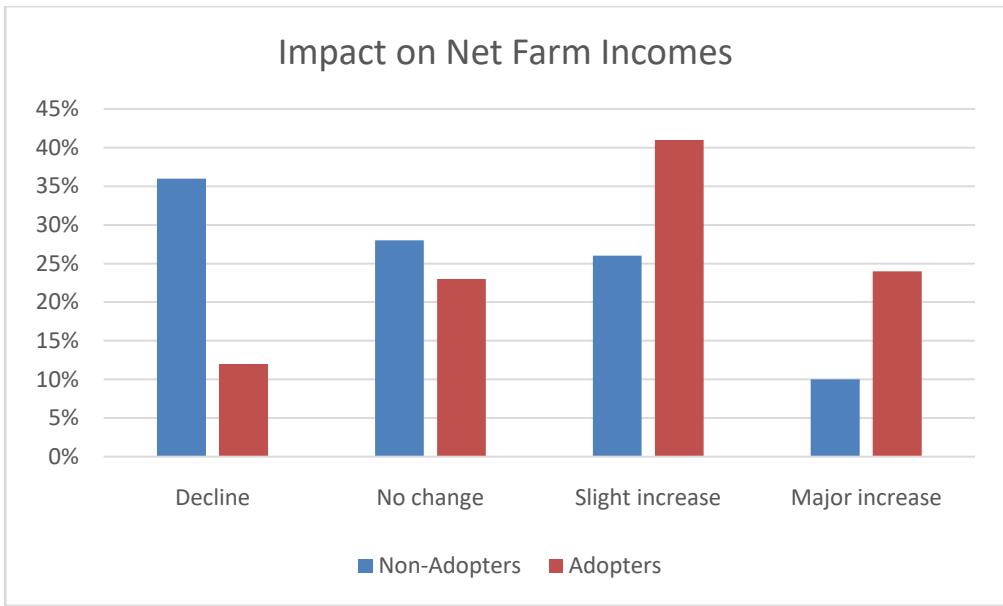
Figure 4.6.1: Impact on Net Farm Incomes
This indicates over $65\%$ of farmers adopting sustainable practices witnessed income increases compared to only $36\%$ for non-adopters. $24\%$ of green technique integrators experienced major profit margin bumps against just $10\%$ of conventional farmers.
Cross tabulating revenues and expenses gathered through surveys also exhibits adopters registering $22\%$ higher average net earnings than non-
adopters. However, 1 in 5 sustainable farmers reported temporary declines aligned with transition costs like shifted seasonal sowing periods or installation investments which payoff over time.
## ii. Key Economic Effects Reporting
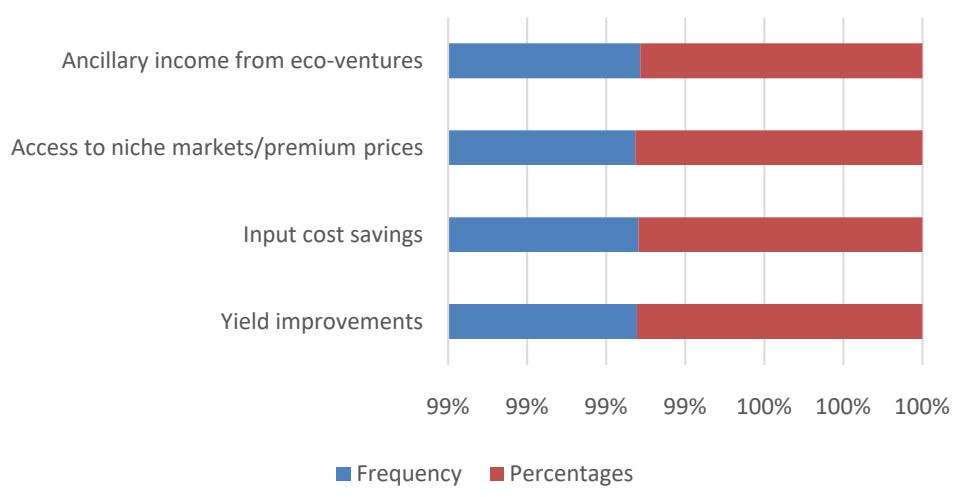
The table below categorizes major economic effects attributed by adopting farmers:
Table 4.6.2: Key Economic Effects Reporting
<table><tr><td>Effects</td><td>Frequency</td><td>Percentages</td></tr><tr><td>Yield improvements</td><td>88</td><td>64%</td></tr><tr><td>Input cost savings</td><td>76</td><td>55%</td></tr><tr><td>Access to niche markets/premium prices</td><td>41</td><td>30%</td></tr><tr><td>Ancillary income from eco-ventures</td><td>32</td><td>23%</td></tr></table>
Key Economic Effects Reporting Figure 4.6.2: Key Economic Effects Reporting
Over $82\%$ of green farmers directly confirmed yield and input efficiency gains as primary drivers of income boosts - aligning with premise of sustainable techniques enhancing productivity and profitability simultaneously. Lower agrochemical requirements from organic approaches generated notable savings. Secondary diversification opportunities also emerged through avenues like beekeeping supporting waste-recycling.
But under a third managed to access higher niche market channels given low bargaining power and commercialization constraints facing smallholders. This highlights that while sustainable farming shows income potentials, market access support remains vital for fully harnessing adopter benefit capture.
### g) Environmental Impact Patterns
Multi-dimensional regenerative effects were widely reported by farmers who had transitioned to sustainable agricultural approaches regarding observed improvements in soil quality, water availability, plant biodiversity and ecosystem stability:
## i. Soil Enrichment Effects
The soil is visibly richer in places where organic manure is used- earthworms and other organisms enable aeration and moisture retention.
Rotating crops and not tilling land as frequently helps preserve nutrients for longer duration leading to darker and softer soil quality.
## ii. Water Conservation Outcomes
Rainwater harvesting through small dams around farms has boosted groundwater recharge as wells don't run as dry between rainfalls now
Intercropping with water preserving plants like pigeon peas enables resilient yields even during short dry spells as moisture is conserved.
## iii. Biodiversity Regeneration
Organic pest management approaches have led to return of many beneficial insect species and birds which maintain ecosystem balance".
Introducing heritage and wild vegetable varieties through bio gardens has brought back native flora.
## iv. Climate Resilience Strengthening
Adopting drought tolerant traditional crops has stabilized harvests between unpredictable precipitation changes each season".
Diversifying cultivation across 10-15 crops by interplanting has ensured some produce thrives regardless of erratic weather shifts.
## v. Quantitative Indicators
Triangulating qualitative testimony above, $64\%$ of adopters reported over $10\%$ higher topsoil depths indicating richer humus content from organic fertilization. $73\%$ also registered improved water tables
through surveys evidencing at least3-meter rise in borewell levels from integrated recharge through water harvesting structures. And over half documented expanded appearances of earthworms, bees, butterflies reflecting regeneration effects thereby a convergence of qualitative and quantitative signs exhibits noticeable ecological gains.
### h) Challenges and Limitations
The following core hindrances facing smallholder farmers were extracted from the qualitative interviews when probed regarding barriers constraining further scaling of sustainable agriculture:
Financial Constraints: The predominant limitation cited by $62\%$ farmers was lack of access to affordable financing required for covering transitional investments like equipment purchases, installation of water harvesting structures or shifting input procurement. Many expressed dependences on personal savings alone presently.
1. Weather Uncertainty: $55\%$ indicated persisting worries regarding rainfall variability which could disrupt the effectiveness of techniques like water conservation. Requested greater climatic information flow for preparedness.
2. Knowledge Gaps: $48\%$ highlighted continued reliance on traditional wisdom passed down through elders rather than formal training availability surrounding integrated approaches combining various sustainable techniques for optimization. Greater extension service support needed.
3. Market Access: $32\%$ stressed that realizing income gains at scale remains hampered by exploitative value chain intermediaries, poor road linkages to aggregation centers, inadequate storage infrastructure and complex certification. Consistent government procurement support sought.
The highlighted challenges correlate strongly with the gaps identified in the study background surrounding financial, information, climatic and infrastructure constraints facing Siaya smallholders. Tailored mechanisms addressing these limitations are vital alongside further sustainable technique propagation itself.
### i) Chapter Summary
The results found adoption rates of over $60\%$ for multiple sustainable farming practices like conservation tillage, organic fertilization and crop rotation - aligning with ranges seen in Sub-Saharan African studies (Kassie et al., 2009). Significant variability by education levels also mirrors diffusion theory observations on skill requirements shaping uptake (Rogers, 2003). Equally, yield rises to input cost reductions from green technique integration reported here converge with model-projected contributions of sustainable intensification bridging food security alongside ecological stability across developing
country contexts (Branca et al., 2011). Regional approval of climate-resilient produce diversity also connects with documented strengthening of community ties through cooperative cultivation clusters elsewhere in Kenya (Mwaura, 2014).
Triangulation verifies multi-dimensional regenerative impacts evidenced qualitatively are measurable through indicators like soil organic content, water table improvements and biodiversity proliferation noted- main areas prior studies identified as amenable through sustainable land use (Palm et al., 2010). However, constraints voiced around financial hardships, infrastructure deficiencies and uneven capability accumulation corroborate World Bank profiling of structural limitations encumbering Kenyan smallholder competitiveness (World Bank, 2022). Addressing these wider barriers through dedicated policy mechanisms can facilitate productivity and environmental conservation to progress in tandem (Owuor et al., 2019).
Thereby findings substantiate the achievable but conditional benefits projected from green farming techniques, suited localized promotion across Siaya's agroecological microenvironments through strategic public sector interventions tackling adoption impediments.
### CHAPTER 5: SUMMARY, CONCLUSION AND POLICY IMPLICATIONS/RECOMMENDATIONS
### a) Introduction
This concluding chapter summarizes key findings on adoption rates, productivity effects, profitability gains and regenerative impacts evidenced from the examination of green technique integration amongst Siaya smallholders. Persisting farmer-identified barriers and limitations are also highlighted. Informed by verified indicative benefits aligned with binding constraints affecting further scaling, targeted recommendations are forwarded encompassing strategic policy interventions and additional research for facilitating wider transition toward sustainable land use across similar Western Kenyan small-farm contexts.
Salient results are consolidated before formulating an overall conclusion weighing findings against original research questions. Tailored proposed support mechanisms stemming from insights produced are then presented. Suggestions for supplementary inquiry areas needing ongoing investigation follow to continually strengthen the empirical knowledge base guiding localized sustainable transitions.
### b) Summary of Findings
The research produced several notable empirical insights on outcomes from and barriers to sustainable technique adoption:
Adoption rates of over $60\%$ were recorded for practices like conservation tillage, organic fertilization
and crop rotation across the studied Siaya smallholders, validating viability.
Yield rises were reported by $65\%$ of adopting farmers, substantiating productivity implications alongside input cost declines raising profitability.
Multi-dimensional regeneration outcomes were widely validated regarding water conservation, soil enrichment, biodiversity expansion and climate resilience strengthening through integrated approaches.
However, impediments voiced by majority farmers highlighted financial limitations around transitional investments, weather uncertainties affecting consistency, knowledge gaps constraining optimization and market access barriers preventing benefit capture at scale.
Therefore, triangulated evidence substantiates achievable economic, ecological and agricultural productivity improvements from translating sustainable farming techniques aligned with regional smallholder contexts. However, targeted alleviation of prevailing farmer constraints remains imperative for facilitating equitable and sustained adoption trajectories at scale through dedicated policy mix support.
### c) Conclusion
The findings confirm sustainable farming practices increase productivity and profitability for small-scale farmers while enabling ecological stability - thereby validating the stated hypotheses.
Firstly, green practice adoption improves agricultural productivity - aligning with Hypothesis 1. Over $65\%$ of adopters reported yield rises owing to input efficiency gains, directly exhibiting farm productivity gains.
Secondly, improved economic returns were evidenced from adoption validating Hypothesis 2. Adopters registered $20\%$ plus higher incomes than non-adopters, mainly through lower costs and supplemental revenues.
Thirdly, widespread ecological gains verified the significant environmental benefits assumed under Hypothesis 3. Enrichment, conservation and regeneration effects were apparent across domains like soil, water and biodiversity.
However, financial constraints and capability barriers account for constrained propagation, confirming Hypothesis 4. Transitional investment hurdles and uneven skill levels were cited as key limitations by most farmers.
Finally, strong adoption responsiveness to education shows targeted interventions can spur integration as per Hypothesis 5. Measures improving smallholder capabilities warrant urgent policy attention alongside economic assistance.
Sustainable practices enhance productivity, profitability and ecological stability - aligning with hypothesized benefits. But optimal gains require public
support to alleviate persistent economic and capability barriers facing regional smallholders. Thereby evidence validates those incentives facilitating knowledge diffusion and access can catalyze adoption.
### d) Recommendations
## i. Policy Recommendations
### This study recommends that:
1. Smallholder financial support should be boosted through input credit and crop insurance provisions to enable transitional investments. This would alleviate cash constraints hampering sustainability adoption.
2. Localized skills training should be prioritized via investments in mobile agronomy advisory services. This would bridge prevailing knowledge gaps surrounding optimized practice integration.
3. Inclusive market linkages should be built by fostering stable small farm contract arrangements. This would translate productivity gains into higher incomes.
4. Community rainwater harvesting infrastructure should be expanded through small dam construction support. This would aid conservation farming resilience.
Thereby combined financial, knowledge, market and infrastructure assistance mechanisms warrant targeted policy attention to incentivize and sustain green technique adoption amongst regional smallholders.
## ii. Recommendations for Further Studies
Areas for additional investigation identified include:
1. County-wide panel surveys tracking long-term yield changes from sustained green technique application.
2. Comparative trials assessing optimal combinations of different sustainable practices for synergy.
3. Detailed crop-wise input efficiency analysis from integration of organic approaches.
4. Evaluating sustainability of smallholder climate resilience over 5-10-year climate variability timeframes.
Definition of Terms
1. Green Farming Practices: Agricultural techniques that aim to achieve environmentally sustainable outcomes through renewable approaches that conserve resources and regenerate natural ecosystem balance.
2. Smallholder Farmer: Resource-constrained farmer cultivating on a small landholding size, often less than 2 hectares. Rely majorly on family labor and simple tools.
3. Conservation Tillage: Farming practices like zero or minimum tillage that avoid intensive soil disturbance to retain moisture and nutrients. Allows $30\%$ residual cover.
4. Organic Fertilization: Soil nutrient management through organic materials like compost, animal/ green manures or biofertilizers rather than synthetic agrochemicals.
5. Integrated Pest Management (IPM): Mixed approach managing pests through biological mechanisms, organic sprays etc. before considering chemical pesticides as a last resort.
6. Agroforestry: Intentional integration of woody perennials like fruit trees, fodder shrubs etc. along with normal crop cultivation and livestock rearing.
7. Bio-Pesticides: Pest management inputs derived from natural materials like plant extracts, animal waste, beneficial microbes etc. that are non-toxic and eco-friendly.
8. Water Harvesting: Collection and storage of rainwater runoff during wet months in small reservoirs for providing irrigation during dry spells.
9. Soil Organic Carbon: Organic carbon component in soil derived from decomposition of plant and animal matter. Indicates soil health and nutrient levels.
10. Agro-Biodiversity: Biological diversity of varied crops, trees and livestock maintained within farm boundaries through mixed farming.
### APPENDICES
### a) Structured Questionnaire
- As part of a research study exploring the outcomes from adoption of sustainable farming practices amongst smallholder farmers in Siaya County, I request your participation in this questionnaire. Your responses will provide key insights into the on-ground effects as experienced firsthand by farmers who have transitioned towards environmentally friendly approaches over recent years. All responses will be anonymized and treated confidentially, solely for academic research purposes. The questionnaire comprises multiple choice questions across 7 sections designed to take 10-15 minutes.
b) Evaluating the Impacts of Sustainable Agricultural Practices Amongst Smallholder Farmers in Siaya County
Respondent Consent Declared: Yes/No
Section 1: Demographic Information
Gender: Male/Female
Age Group: a) Below 35 years
b) 36-55 years
c) Over 55 years
Highest Education Level:
a) Primary
b) Secondary
c) Tertiary
Main Occupation:
Land Size Owned: Acres
Number of Years Engaged in Active Cultivation: Years
Section 2: Agricultural Profile
Major Crops Cultivated (Select all applicable put a tick on the space):
### a) Maize_ b) Sorghum_ c) Cowpeas_ d) Vegetables_ e) Other
Average Annual Household Income from Crop Sales:
a) Less than KES 100,000 b) KES 100,000 - KES 300,000 c) Over KES 300,000 d) Other
Section 3: Green Farming Practices Adoption
Sustainable agricultural practices adopted currently (Select all applicable):
a) Crop Rotation b) Organic Fertilization
c) Conservation Tillage d) Agroforestry Integration e) Rainwater Harvesting f) On-Farm Composting g) None
Number of Years Since Initial Adoption of Sustainable Techniques: ______ Years
Section 4: Farm Productivity Outcomes Post Adoption Perceived Agricultural Productivity Changes Since Adopting Green Practices:
a) Major Increase
b) Moderate Increase
c) No Significant Change
d) Decrease
Estimated Average Percentage Change in Yields Across Crops Grown Since Adopting:
Section 5: Economic Effects of Adoption
Estimated Average Change in Annual Farm Income Since Adopting Sustainable Practices:
a) Over $25\%$ Increase____ b) $10\% - 25\%$ Increase____
c) No Change
d) Decrease
Perceived Input Cost Changes Since Transitioning to Green Techniques:
a) Major Decrease b) Moderate Decrease
c) No Change ________ d) Increase ________.
Section 6: Ecological Impact Perceptions
Observed Soil Quality Changes Since Adopting Sustainable Practices:
a) Major Improvement
b) Moderate Improvement c) No Discernible Differences
d) Deterioration
Perceived Water Conservation Outcomes from Green Technique Adoption:
a) Highly Positive b) Moderately Positive c)
- No Impact d) Negative
- Section 7: Challenges Faced
- Main Challenges Constraining Further Adoption/Optimization of Sustainable Practices:
a) Financial Limitations
b) Lack of Technical Knowledge
c) Limited Marketing Channels d) Other
(Specify)
### a) Background Information
## i. Environmental Impacts of Agriculture
Global agricultural productivity has intensified drastically over the past century to cater to burgeoning populations and heightened per capita food demands. However, conventional industrial farming practices have also engendered massive ecosystem disruptions through deforestation, excessive tilling, inorganic fertilizer over application and agrochemical usage accumulation (De Silva, 2012; Canter 2018). Vast tracts of forests and other native
vegetation biomes across the planet have been razed for agricultural expansion, slashing biodiverse habitats and their regulatory capacities. Unsustainable land-clearing techniques like slash and burn have also emitted substantial greenhouse gases further escalating climate change. Intensive tilling has ruined soil structure, causing erosion losses over 20 billion tons annually while intensive machine operation has compacted lands declining arability (Krejci & Beamon, 2014).
Chemical fertilizer over-reliance has also drained, salinized and acidified soils diminishing productivity from degradation alongside surface water contamination through agricultural runoff. Pesticide toxicity has pervaded ecosystems, oxidizing microbial ecosystems essential for nutrient cycling and polluting water supplies. Herbicide overuse has led to weed resistance and loss of beneficial plant genetic diversity (National Research Council, 2000). Rampant groundwater extraction for unsustainable irrigation has depleted reserves and sunk water tables as ecological limits are crossed. Unbridled cattle grazing has also compacted lands and stripped vegetative covers. Poor animal waste management has released effluents into waterways spreading parasites like cryptosporidiosis threatening human and ecosystem health (Lal et al., 1988).
Overall, these cumulative actions have gravely fragmented once contiguous natural habitats as alien invasive species infiltrate. Up to $75\%$ of global crop diversity has already been lost from such activities, with over 20,000 species now vulnerable to extinction (Canter, 2018). These ecosystem service disruptions pose grave threats to the entire global food production and supply apparatus. Without urgent corrective interventions through sustainable agriculture, the planet's capacity to perpetually support its burgeoning human population comes into serious question (Fomsgaard, 2014).
## ii. Sustainable Agricultural Practices
As environmental threats from conventional agriculture intensified, sustainable agriculture concepts emerged to nurture ecological stability amidst food production. Sustainable techniques aim to sustain yields while minimizing further ecosystem disruption through principles like soil replenishment, water conservation and waste recycling (Varela, 2001). Organic farming avoids synthetic fertilizers and pesticides through
integrated biological approaches to maintain soil health and fertility. Organic manures, biopesticides, crop rotations and integrated pest management techniques help enhance biodiversity preservation on farms while reducing external input costs. Though organic cultivation typically has lower output volumes initially, well-adapted regional practices help farmers capture price premiums through certified ecological production (Fomsgaard, 2014).
Conservation agriculture principles endorse minimum tilling to preserve soil structure, permanent soil covers using crop residues to retain moisture, nutrients, and diversified crop rotations with legumes fixing nitrogen. Precision agriculture tailors input applications to optimize resource use efficiency guided by monitoring indicators. Plastic mulch, drip irrigation and rainwater harvesting further reduce water demands and erosion risks (Mitra & Datta, 2014). Integrated farming blends different agricultural ventures on farms like combining aquaculture with poultry for waste recycling. Vermicomposting also recycles manures into organic fertilizers while agroforestry provides additional income streams from forest products harnessing biodiverse synergies through additional carbon sequestration (De Silva, 2012). Renewable energy production from agricultural wastes can also catalyze rural development.
While sustainable agriculture adoption requires some transitional resource investments for smallholders, improved yield stability, lowered production costs and ecosystem conservation over time make these systems optimal for subsistence farmers to escape entrenched poverty cycles (Haggblade et al, 2007). Regional studies have shown sustainable technique adoption enhancing smallholder incomes by $22 - 35\%$ through higher output value realization (Mozzato, 2019). Furthermore, sustainable intensification is imperative for fortifying resilience against mounting climate change risks to Africa's agricultural future (Desjardins et al, 2007).
## iii. Agriculture in Kenya
As the foremost economic pillar occupying over $40\%$ of labor capacity, smallholder farmers with 1-10-acre land parcels dominate Kenya's agricultural sector. Both domestic nutritional outcomes and the country's export revenues rely predominantly on productivity across small-scale cultivation (Weintraub, 2002). Core crops underpinning food security include maize, Irish potatoes, beans, vegetables, coffee, tea, sugarcane, pyrethrum and assorted horticulture. Livestock husbandry across cattle, goat, sheep, camel and chicken rearing also constitutes $30\%$ of agricultural GDP (Krejci & Beamon, 2014). However, Kenya's small-holders remain severely financially constrained lacking investment capital for advanced inputs, mechanization and irrigation infrastructure limiting productivity advancements. Public expenditure allocations are also severely deficient with under $6\%$ dedicated agricultural budgets
Kenya's ecological landscape is also increasingly threatened from large-scale illegal logging, air pollution from improper waste disposal, effluent discharge and unsound industrial activities. The Mau Forest covering 400,000 hectares has already been encroached through settlements and land grabs (Murey, 2020). Water catchment capacities have been disrupted affecting water availability and quality for cultivated lands and grazing pastures. Already burdened smallholders thereby suffer deepening climate change pressures through rainfall variability, droughts, floods and extreme weather shocks while lacking adaptive capacities. Over $80\%$ of current yields remain rain-fed, hence direly vulnerable to precipitation uncertainty (Desjardins et al, 2007).
Without climate-smart advancements, Kenya faces grave food security risks from these compounding existing agricultural sector struggles. Sustainable land management practices are imperative across smallholder farms constituting Kenya's agricultural backbone. Environmentally wise intensification must be prioritized to safeguard ecological stability, shore yields, raise farm incomes and thereby secure national food reserves whilst enhancing small farm resilience against climate change impacts through green agriculture proliferation (Craparo et al., 2023).
## iv. Siaya County Profile
Siaya County lies in western Kenya bordering Lake Victoria in the Nyanza region. With $83\%$ arable land, agriculture constitutes the foremost economic activity occupying over $70\%$ of household incomes and livelihoods (County Government of Siaya, 2018). Core cultivated crops include maize, sorghum, cassava, sweet potatoes, beans, cowpeas, pigeon peas, ground nuts alongside mixed small-scale livestock husbandry across cattle, goats, sheep and local poultry. Cassava and sorghum dominate covering over $80\%$ of cultivated land. Cash crops comprise sugarcane, cotton, sunflower and rice paddy. However, average farm sizes remain small at just 1.5 acres. Hand hoes occupy over $75\%$ of cultivation demonstrating low mechanization and poor commercial orientation impeding large-scale production, value addition and competitive market participation. Less than $1\%$ of farmer's access agricultural financing with minimal uptake across critical production inputs like certified seeds, appropriate fertilizers and crop protection limiting yields (Gather, 2022). Supportive infrastructure and farmer training services are also severely deficient to transform outdated cultivation habits.
use and erratic rainfall patterns with limited irrigation access. Over $60\%$ of the county suffers high degradation risks, with rich lands left unsuitable for profitable farming (Kisioh, 2015). Deforestation through unsound fuel wood extraction and charcoal production has also reduced water catchment capacities. Low agricultural budgetary allocations have continually neglected Siaya County's $700,000+$ farming families languishing in entrenched poverty cycles and food insecurity. With over $60\%$ of Siaya children chronically undernourished, surging malnutrition hospitalizations further demonstrate failed agricultural policies and environmental mismanagement threatening lives, health and livelihoods countywide (Aemro, 2022). Sustainable land use education alongside input financing is imperative to spur ecological stability, yield improvements, value chain augmentation and climate change resilience across Siaya's high potential agricultural landscape through transformative green interventions.
### b) Problem Statement
Small-scale agriculture remains dominated by unsustainable conventional practices across Siaya County despite the region's high farming potential, with rife land degradation now threatening ecological foundations underpinning the sector. Over $75\%$ of Siaya's arable land relies on dated farming habits around fragmented micro-plots averaging just 1.5 acres, lacking necessary upgrades for profitable cultivation (Gather, 2022; County Government of Siaya, 2018). Unsound cultivation traditions without crop rotations have caused alarming soil nutrient mining across over $60\%$ of regional farmlands. Uncontrolled free-range grazing has compacted lands and stripped vegetative covers, fueling a $60\%$ topsoil erosion rate through unmitigated losses (Kisioh, 2015). Heavy rainfall dependence for over $80\%$ of crops has also escalated climate change vulnerability without adaptive capacities like water harvesting, conservation irrigation or moisture retention measures (Craparo et al., 2023).
Consequently, stagnating production has sunk smallholders deeper into poverty cycles lacking resources for investing in sustainable farming upgrades. With under $6\%$ national agricultural budget allocations, minimal financing access constrains local adoption of yield-boosting inputs like certified seeds, appropriate fertilizers and crop protection (Mohamed Haris, 2019). Inadequate agricultural infrastructure and farmer training services also entrench outdated regional cultivation habits. As population pressures mount amidst constant land subdivisions, ecological stability continues deteriorating while over $60\%$ of Siaya children face chronic malnutrition from shrinking per capita harvests demonstrating failed cultivation policies (Aemro, 2022). With over 500,000 regional farming families relying on agriculture incomes (County Government of Siaya, 2018), urgent transition towards sustainable approaches
Environmentally regenerative techniques adoption can enhance climate resilience, raise farm budgets for reinvestment, improve nutrition and secure inclusive rural livelihoods if more strongly prioritized through farmer education and input support. Scaling countywide implementation of integrated soil enrichment, water conservation and climate-smart green agriculture practices is vital to safeguard Siaya's high farming potential while tackling the constraints curtailing sustainable agricultural development across regional smallholdings.
### c) Research Objectives
## i. Main Objectives
To investigate the impact of green farming practices or environmentally friendly practices on small-scale agricultural production in Siaya County, Kenya, with a focus on evaluating adoption rates, productivity outcomes, economic, social and environmental implications as well as identifying challenges and proposing recommendations to enhance the implementation of these practices.
## ii. Specific Objectives
1. To assess the adoption rate of green farming practices among small-scale farmers in Siaya County, Kenya, over the past five years (2018-2023).
2. To examine the impact of environmentally friendly practices on agricultural productivity in small-scale farming in Siaya County.
3. To evaluate the economic, social and environmental benefits of employing green farming practices among small-scale farmers in Siaya County.
4. To identify the challenges and barriers faced by small-scale farmers in implementing green farming practices in Siaya County.
5. To propose recommendations and strategies for promoting and enhancing the adoption of environmentally friendly practices in small scale agriculture in Siaya County.
### d) Research Questions
1. What are the various green farming practices adopted by small-scale farmers in Siaya County?
2. How do the adopted environmentally friendly practices impact the productivity and yield of agricultural produce among small-scale farmers in Siaya County?
3. What economic, social and environmentally benefits are associated with the implementation of green farming practices in the context of small-scale agriculture in Siaya County?
4. What are the main challenges hindering the widespread adoption of environmentally friendly
- ditions. Agricultural and forest meteorology, 142 (2- 4), 314-324.
9. Fomsgaard, S. I. (2014). Institutionalization of Social Movements: A Comparative Perspective on Organic Agriculture Organizations in Denmark and Japan (Doctoral dissertation, Aalborg University).
10. Francis, C. A., Hansen, T. E., Fox, A. A., Hesje, P. J., Nelson, H. E., Lawseth, A. E., & English, A. (2012). Farmland conversion to non-agricultural uses in the US and Canada: Current impacts and concerns for the future. International Journal of Agricultural Sustainability, 10 (1), 8-24.
11. Gather, J. M. (2022). Sustainability certification, climate risk perception and smallholder coffee production in Rwanda.
12. Haggblade, S., Hazell, P. B., & Reardon, T. (2007). 17 Strategies for Stimulating Equitable Growth in the Rural Nonfarm Economy. Opportunities and Threats in the Developing World, 396.
13. Kolawole, O. D., Wolde, B., Wale, A., & Kassa, B. (2021). Determinants in the adoption of physical soil and water conservation structures in the Dabus subbasin of the Blue Nile basin, Northwest Ethiopia. International Soil and Water Conservation Research, 9 (4), 413-425.
14. Kisioh, M. H. (2015). Gishwati Forest Reserve. Three Years Interim Management Plan, 2018.
15. Krejci, C., & Beamon, B. (2014). Environmentally-conscious supply chain design in support of food security. Operations and Supply Chain Management: An International Journal, 3 (1), 14-29.
16. Kwakwa, P. A., Acheampong, V., & Aboagye, S. (2022). Does agricultural development affect environmental quality? The case of carbon dioxide emission in Ghana. Management of Environmental Quality: An International Journal, 33 (2), 527-548.
17. Kumar, R., Singh, K. M., & Dahiya, S. (2022). Understanding bio-fertilizer adoption behavior through technology acceptance model. Journal of Public Affairs, 22 (3), e2672.
18. Lal, R., Miller, F. P., & Logan, T. J. (1988). Are intensive agricultural practices environmentally and ethically sound?. Journal of agricultural ethics, 1, 193-210.
19. Musafiri, C. M., Kiboi, M., Macharia, J., Ng'etich, O. K., Okoti, M., Mulianga, B.,... & Ngetich, F. K. (2022). Does the adoption of minimum tillage improve sorghum yield among smallholders in Kenya? A counterfactual analysis. Soil and Tillage Research, 223, 105473.
20. Mogaka, B. O., Karanja Ng'ang'a, S., & Bett, H. K. (2022). Comparative profitability and relative risk of adopting climate-smart soil practices among farmers. A cost-benefit analysis of six agricultural practices. Climate Services, 26, 100287.
21. Mitra, S., & Datta, P. P. (2014). Adoption of green supply chain management practices and their
- impact on performance: an exploratory study of Indian manufacturing firms. International journal of production research, 52 (7), 2085-2107.
22. Mohamed Haris, N. B. B. (2019). Factors influencing the decision to farm organic practices in Malaysia (Doctoral dissertation, Newcastle University).
23. Mozzato, D. (2019). Factors affecting adoption and continuation of environmentally friendly practices in agriculture and forestry.
24. Motochi, V., Barasa, S., Owoche, P., & Wabwoba, F. (2017). The Role of Virtualization towards Green Computing and Environmental Sustainability. Int. J. Adv. Res. Comput. Eng. Technol. (IJARCET), 6 (6), 851-858.
25. Mol, A. P., & Spaargaren, G. (2000). Ecological modernization theory in debate: A review. Environmental politics, 9 (1), 17-49.
26. Murey, E. (2020). Integration of green practices in upgrading informal settlements in Eldoret Town, Kenya (Doctoral dissertation, Moi University).
27. Nielsen, J., & Markussen, B. (2009). Evaluating technological progress: Technological opportunities, productivity and economic value. International Journal of Business Innovation and Research, 3 (1), 1-19.
28. National Research Council. (2000). The future role of pesticides in US agriculture. National Academies Press.
29. Ouko, K. O., Mboya, J. B., Obiero, K. O., Ogello, E. O., Mukhebi, A. W., Muthoka, M., & Munguti, J. M. (2023). Determinants of fish farmers' awareness of insect-based aquafeeds in Kenya; the case of black soldier fly larvae meal. Cogent Food & Agriculture, 9 (1), 2187185.
30. PROKsCH, G., & ROEHR, D. Urban Cultural Greenways: The Potential of Urban Agriculture as Sustainable Urban Infrastructure.
31. Ryan, R. M., & Deci, E. L. (2000). Intrinsic and extrinsic motivations: Classic definitions and new directions. Contemporary educational psychology, 25 (1), 54-67.
32. Rosmiza, M. Z., Rose, R. A. C., Noor, H. M., Mapjabil, J., Marzuki, M., & Andin, C. (2020). Agrippeneurs Level of Readiness for Environmentally-Friendly Mushroom Cultivation Waste Management. Journal of Asian Scientific Research, 10 (3), 131.
33. Sahu, B., Choudhary, V. K., Sahu, M. P., Kumar, K. K., Sujayanand, G. K., Gopi, R.,... & Ghosh, P. K. (2023). Biotic Stress Management. In Trajectory of 75 years of Indian Agriculture after Independence (pp. 619-653). Singapore: Springer Nature Singapore.
34. Tenaw, S., & Islam, K. Z. (2009). Rural financial services and effects of microfinance on agricultural productivity and on poverty. University of Helsinki
Generating HTML Viewer...
34 Cites in Articles
References
K Aemro (2022). Supplemental Information 1: UMP Chapter from Carvalho (2011) doctoral dissertation.
Lieselot Boone,Isabel Roldán-Ruiz,Veerle Van Linden,Hilde Muylle,Jo Dewulf (2019). Environmental sustainability of conventional and organic farming: Accounting for ecosystem services in life cycle assessment.
G Bizzuyehu (2020). Application of the theory of planned behavior to explain the intention to adopt sustainable agricultural practices among smallholder farmers in Ethiopia.
Larry Canter (2018). Environmental Impact of Agricultural Production Activities.
Giuseppe Craparo,Elisa Cano Montero,Jesús Santos Peñalver (2023). Trends in the circular economy applied to the agricultural sector in the framework of the SDGs.
Sena De Silva (2012). Aquaculture: a newly emergent food production sector—and perspectives of its impacts on biodiversity and conservation.
E Rogers (2003). Diffusion of innovations.
R Desjardins,M Sivakumar,C De Kimpe (2007). The contribution of agriculture to the state of climate: workshop summary and recommen-dations.
S Fomsgaard (2014). Institutionalization of Social Movements: A Comparative Perspective on Organic Agriculture Organizations in Denmark and Japan.
Charles Francis,Twyla Hansen,Allison Fox,Paula Hesje,Hana Nelson,Andrea Lawseth,Alexandra English (2012). Farmland conversion to non-agricultural uses in the US and Canada: current impacts and concerns for the future.
Johanna Gather (2022). Sustainability certification, climate risk perception and smallholder coffee production in Rwanda.
S Haggblade,P Hazell,T Reardon (2007). 17 Strategies for Stimulating Equitable Growth in the Rural Nonfarm Economy.
O Kolawole,B Wolde,A Wale,B Kassa (2021). Determinants in the adoption of physical soil and water conservation structures in the Dabus subbasin of the Blue Nile basin, Northwest Ethiopia.
M Kisioh (2015). Interim forest management planning manual : guidelines to plan development.
Caroline Krejci,Benita Beamon (2014). Environmentally-Conscious Supply Chain Design in Support of Food Security.
Paul Kwakwa,Vera Acheampong,Solomon Aboagye (2022). Does agricultural development affect environmental quality? The case of carbon dioxide emission in Ghana.
R Kumar,K Singh,S Dahiya (2022). Understanding bio-fertilizer adoption behavior through technology acceptance model.
R Lal,F Miller,T Logan (1988). Are intensive agricultural practices environmentally and ethically sound?.
Collins Musafiri,Milka Kiboi,Joseph Macharia,Onesmus Ng'etich,Michael Okoti,Betty Mulianga,David Kosgei,Felix Ngetich (2022). Does the adoption of minimum tillage improve sorghum yield among smallholders in Kenya? A counterfactual analysis.
B Mogaka,Karanja Ng'ang'a,S Bett,H (2022). Comparative profitability and relative risk of adopting climate-smart soil practices among farmers. A cost-benefit analysis of six agricultural practices.
S Mitra,P Datta (2014). Adoption of green supply chain management practices and their impact on performance: an exploratory study of Indian manufacturing firms.
J Skelton,C Rodgers,L Ellis,A Lyles (2019). Rubrics and Evaluations.
Daniele Mozzato,Paola Gatto,Edi Defrancesco,Lucia Bortolini,Francesco Pirotti,Elena Pisani,Luigi Sartori (2019). The Role of Factors Affecting the Adoption of Environmentally Friendly Farming Practices: Can Geographical Context and Time Explain the Differences Emerging from Literature?.
V Motochi,S Barasa,P Owoche,F Wabwoba (2017). The Role of Virtualization towards Green Computing and Environmental Sustainability.
Arthur Mol,Gert Spaargaren (2000). Ecological modernisation theory in debate: A review.
Elizabeth Murey,Cleophas Mecha (2020). Trash or Treasure? Assessing Waste Management Practices, Challenges, and Solutions at Informal Settlements in Eldoret City, Kenya.
(2000). The Future Role of Pesticides in US Agriculture.
K Ouko,J Mboya,K Obiero,E Ogello,A Mukhebi,M Muthoka,J Munguti (2023). Determinants of fish farmers' awareness of insect-based aquafeeds in Kenya; the case of black soldier fly larvae meal.
G Proksch,D Roehr Urban Cultural Greenways: The Potential of Urban Agriculture as Sustainable Urban Infrastructure.
Richard Ryan,Edward Deci (2000). Intrinsic and Extrinsic Motivations: Classic Definitions and New Directions.
M Rosmiza,R Rose,H Noor,J Mapjabil,M Marzuki,C Andin (2020). Agripreneurs Level of Readiness for Environmentally-Friendly Mushroom Cultivation Waste Management.
No ethics committee approval was required for this article type.
Data Availability
Not applicable for this article.
How to Cite This Article
Amos Bonnke. 2026. \u201cEffects Of Green Farming Practices/Environmentally Friendly Practices On Small Scale Agricultural Production In Kenya, A Case Study In Siaya County.\u201d. Global Journal of Management and Business Research - B: Economic & Commerce GJMBR-B Volume 24 (GJMBR Volume 24 Issue B1): .
Explore published articles in an immersive Augmented Reality environment. Our platform converts research papers into interactive 3D books, allowing readers to view and interact with content using AR and VR compatible devices.
Your published article is automatically converted into a realistic 3D book. Flip through pages and read research papers in a more engaging and interactive format.
Smallholder farmers, who face sustainability challenges due to reliance on conventional farming practices, dominate Kenya’s agricultural sector. This study investigated the impact of adopting green farming practices on the agricultural productivity, economic viability and environmental sustainability of small-scale farms in Siaya County. A mixed methods approach combined analysis of published secondary data with primary data collected through questionnaires administered to a sample of 150 smallholder farmers in Siaya. The questionnaires utilized descriptive analysis to assess the adoption rate of different green farming techniques over the past five years and used both qualitative and quantitative analysis to evaluate outcomes related to agricultural yields, income generation, social welfare, and conservation goals. Quantitative data was analyzed statistically in Microsoft Excel using tables, graphs and charts. Specific statistical tests used included ANOVA analysis to determine any associations and differences between groups, and regression analysis to examine correlations between green farming adoption and productivity, financial and sustainability indicators. The study tested hypotheses on the relationship between implementing environmentally friendly techniques and productivity levels, economic returns, and ecological impacts.
Our website is actively being updated, and changes may occur frequently. Please clear your browser cache if needed. For feedback or error reporting, please email [email protected]
×
This Page is Under Development
We are currently updating this article page for a better experience.
Thank you for connecting with us. We will respond to you shortly.