Engaging employees effectively is vital for organizations that want to outperform their competitors. Extensive research and studies have been conducted on this topic, emphasizing the importance of employees’ physical and mental well-being for their engagement and contributions to company advancement. Therefore, fostering employee engagement becomes a powerful tool for organizations to solidify their market position. This study will address the concept of employee engagement and its drivers through a literature review. Additionally, a case study will be presented, focusing on one of Saudi Aramco’s leading organizations that achieved commendable scores in a corporate employee engagement survey. The findings of this review establish a direct correlation between engaged employees and desired performance and outcomes for companies.
## I. INTRODUCTION
Employee engagement is widely acknowledged as a crucial element in achieving organizational success. The Materials Services Department (MSD), one of the organizations under Saudi Aramco, has successfully implemented employee engagement initiatives, yielding significant positive outcomes. Employee engagement has fluctuated over the years, including substantial challenges globally in 2022. Globally, the overall employee engagement index currently stands at $62\%$, a decrease from its peak of $69\%$ in previous years (Statista, 2023). Despite the prevailing challenges in global employee engagement, MSD has achieved a remarkable $15\%$ increase from its last assessment, demonstrating its exceptional dedication to employee engagement and interactions.
Organizations should consider implementing motivational initiatives to foster optimal levels of engagement, as it directly correlates with organizational performance and outcomes. Failing to nurture employee motivation will undoubtedly hinder their performance, negatively impacting organizational outcomes. In contrast, motivated employees generate positive outcomes, as highlighted by Manzoor (2011). Therefore, prioritizing employee engagement through addressing their needs becomes paramount, as it leads to improved performance and the achievement of organizational targets (Achim, Dragolea, & Balan, 2013). Furthermore, nurturing talented employees manifests higher levels of motivation, which positively influence other employee' performance and behavior, ultimately drive optimal productivity. Therefore, the challenge lies in retaining motivated and talented employees, which grants organizations a competitive advantage (Chen et al., 2012).
The motivation levels within the workplace significantly impact employee productivity levels. Employees who possess enthusiasm and motivation for their roles carry out their duties flawlessly, thereby advancing the organization's objectives (Scott, 2019). Consequently, organizations must ensure that their motivation and engagement programs effectively address the diverse needs of their employees. Failure to account for these differences may result in a lack of motivation and performance that falls short of expectations, ultimately impeding attaining desired outcomes. For instance, implementing a recognition and reward system that offers certificates for achievements may not serve as the desired motivator for some employees. Instead, they may value financial rewards or reduced working hours (Scott, 2019). In light of this, this paper emphasizes the significance of implementing various engagement programs to enhance individual performance and ultimately achieve company goals. The case study will examine the implemented engagement program and compare it with existing literature, providing a comprehensive analysis of effective strategies in this domain.
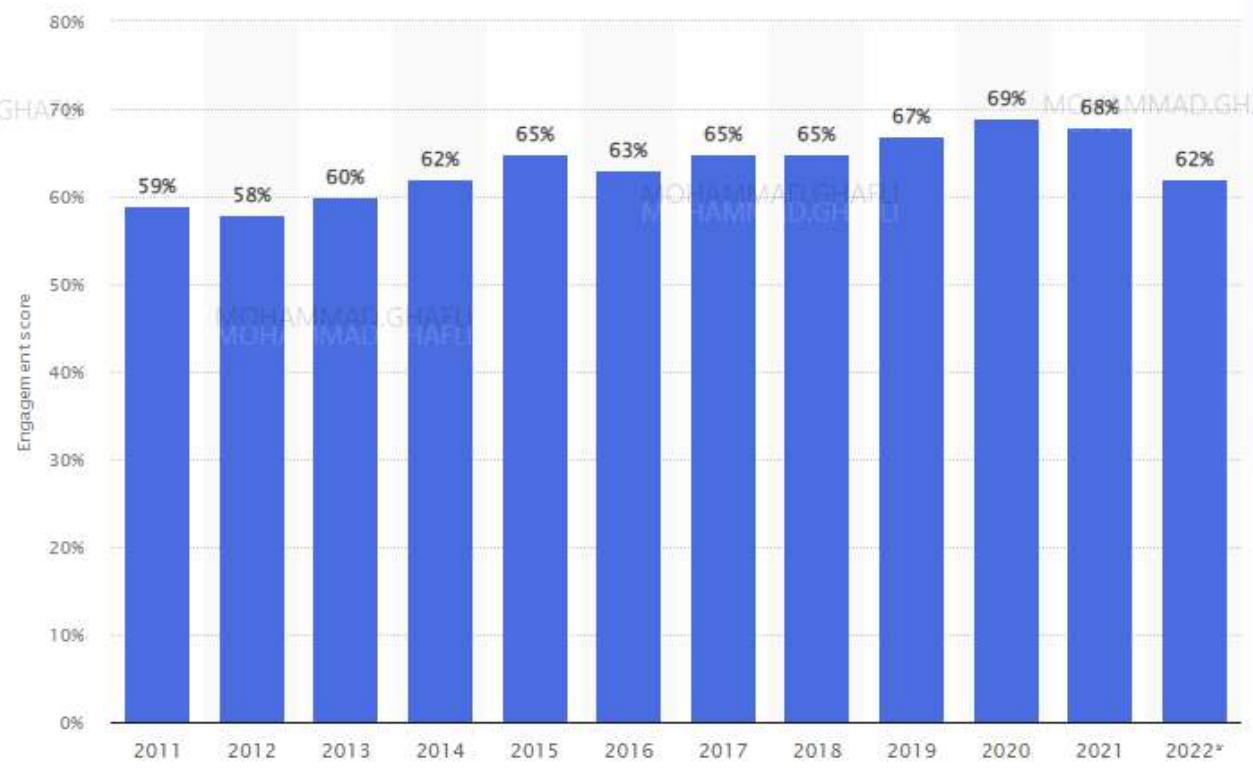 Figure 1: Engagement Score of Employees Worldwide from 2011 to 2022 (Statista, 2023)
## II. LITERATURE REVIEW
Employee engagement, as defined by Cook (2012), refers to the positive perceptions, feelings, and proactive behaviors exhibited by employees concerning achieving organizational goals for various stakeholders, including customers and colleagues. It encapsulates a positive attitude and value system that employees hold towards their organizations (Robinson et al., 2004). Engaged employees demonstrate a deep understanding of the business context, actively contributing towards improving performance, and working collaboratively with others to achieve the company's strategic objectives. According to Development Dimensions International (DDI, 2005), there are five essential actions that employers must take to foster an engaged workforce. These actions include aligning efforts with the organizational strategy, empowering employees, promoting teamwork and collaboration, supporting employee growth and development, and providing appropriate support and recognition.
Numerous studies have revealed a positive association between engagement, commitment, and organizational outcomes such as employee retention, profitability, productivity, and safety (Cesario & Chambel, 2017). Gbadamosi (2003) emphasized the significance of engagement as a crucial element for individuals to work with a deep understanding and awareness of the organization, thereby fostering their commitment. He further highlighted that employees' desire to remain with a company is nurtured through their commitment. The study conducted by Schaufeli and Salanova (2007) demonstrated the impact of engagement on organizational commitment, revealing a positive relationship between engagement and organizational commitment. The same study also identified that higher levels of engagement lead to improved performance, job satisfaction, attendance, innovation, and motivation. Moreover, highly engaged employees positively influence learning and motivation within the organization (Rameshkumar, 2020). Based on these findings, it is crucial for leaders and managers to invest in programs that promote employee engagement heavily. Doing so will ultimately contribute to organizational effectiveness, foster innovation, and provide a competitive advantage.
Employee engagement is a multidimensional concept encompassing the emotional, cognitive, and behavioral aspects of employee involvement and commitment. The literature review examines various definitions, theories, and models proposed in existing research. Employee engagement has been linked to several positive outcomes, including increased job satisfaction, organizational commitment, and productivity, as well as decreased absenteeism and turnover. Key factors influencing employee engagement include effective communication, recognition, professional development, and ongoing assessment. Several studies have explored the relationship between employee engagement and organizational outcomes. For example, a study by Shuck and Reio (2014) found that employee engagement and well-being are positively related and that well-being moderates the relationship between engagement and job performance. Another study by Kular (2008) found that employee engagement positively relates to job satisfaction, organizational commitment, and job performance. However, there are still gaps in the literature, and more research is needed to fully understand the complex nature of employee engagement and its impact on organizational outcomes.
There are many drivers for employee engagement that are dependent on the employees' preference. Mani (2011) identified four drivers which are employee welfare, empowerment, employee growth and interpersonal relationships. Also, ten (10) Cs of Employee Engagement were identified by Seijit (2006) which are Connect, Career, Clarity, Convey, Congratulate, Contribute, Control, Collaborate, Credibility and Confidence. Rational, emotional and motivational are three predictors of engagement that were identified by (Towers Watson, 2009). Understanding the response-bilities and roles is considered under the rational engagement. On the other hand, emotional related to how much passion employee can bring to job. Finally, motivational is how the staff are willing to invest to do their tasks. Researches have proven the relationship between the employee engagement and organizational performance outcomes such as profitability, productivity, customer satisfaction and employee retention (Coffman, 2000; Ellis and Sorensen, 2007 and Heintzman and Marson, 2005).
## III. METHODOLOGY
In order to fulfill the objectives of this paper, a single case study approach was adopted to investigate the implementation of Employee Engagement within one of the organizations which belongs to Saudi Aramco. The utilization of a single case study allows for the development and exploration of various concepts (Voss et al., 2002), offering a comprehensive and in-depth understanding of the phenomenon under investigation (Saunders et al., 2019). However, it is important to acknowledge the limitations associated with generalizing the outcomes of a single case study (Gay and Bamford, 2007; Yin, 2013).
The primary data for this study were primarily collected through face-to-face semi-structured interviews. Additionally, archival data, such as reports, internal documents, and records of implemented projects and initiatives, were utilized to augment the practical evidence (Ciano et al., 2020). To ensure the validity and reliability of the collected data, interviews were conducted with both the managers and section heads in each division. Following the guidance of Voss et al. (2002), a comprehensive database was created for each case, comprising the interview transcripts, field observations, and relevant reports, which were then subjected to thorough analysis. Finally, in order to enhance and validate the reliability of the study's outcomes, the suggested strategies by Eisenhardt (1989) were followed.
This paper aims to contribute to the field by examining the impact of employee engagement initiatives implemented by the Materials Services Department (MSD) on employee satisfaction, retention, productivity, and customer satisfaction. Through a mixed-methods approach combining quantitative surveys and qualitative interviews, this study explores the effects of these initiatives on employee engagement and provides valuable insights and recommendations for organizations seeking to enhance employee engagement and achieve positive organizational outcomes. By employing this rigorous research methodology, the paper aims to provide valuable insights into the implementation of Employee Engagement within the selected organization, while acknowledging the boundaries and emphasizing the credibility of the findings.
## IV. RESULTS
This paper focuses on comprehensively exploring the impact of employee engagement initiatives implemented by the Materials Services Department (MSD). By analyzing both quantitative and qualitative data, this study provides a robust examination of the effects of these initiatives on critical organizational dimensions, including employee satisfaction, retention, productivity, and customer satisfaction.
Quantitative data analysis involved the use of employee surveys designed to capture diverse experiences and perspectives within the workforce. These surveys effectively measured the extent to which engagement initiatives influenced key metrics within the organization. Meticulous interpretation of the data provided significant insights into the benefits achieved by MSD through the implementation of these initiatives. In addition to quantitative data, qualitative data collection involved feedback sessions and individual interviews with employees. These direct interactions offered valuable evidence, personal accounts, and narratives, contributing to a comprehensive understanding of the impact of the engagement initiatives. The combination of quantitative and qualitative data allowed for a holistic view, incorporating both numerical indicators and personal experiences.
The implementation of engagement initiatives resulted in a significant improvement in employee satisfaction, as evidenced by the significant increase of approximately $37\%$ in Operational Excellence score between 2017 and 2021. This improvement reflected enhanced fulfillment, motivation, and contentment among employees within their roles. Effective communication strategies emerged as one of the most influential factors driving this surge in employee satisfaction. By providing regular updates on organizational goals, values, and expectations, MSD established an open dialogue with employees. Additionally, the organization created avenues for employee feedback and concerns, enhancing transparency in the workplace. This well-structured communication framework fostered a stronger sense of connection and purpose among employees, contributing to overall satisfaction.
Another notable result of the engagement initiatives was the exceptional employee retention rate of $98\%$ within MSD. This high rate is directly correlated with initiatives focusing on employee recognition and professional development. By acknowledging employee contributions and promoting growth, the organization instilled a sense of ownership and accountability in its work, nurturing a culture of continuity and advancement. The engagement initiatives also transformed productivity metrics within the organization. Engaged employees, motivated by comprehensive training programs and professional development opportunities, improved their skill sets and gained a better understanding of their roles. This investment in employee growth led to increased productivity levels and overall organizational performance. Additionally, the initiatives positively impacted customer satisfaction. Engaged employees, aligned with the organization's goals, provided superior service, going above and beyond customer expectations.
Qualitative feedback from employees supported the quantitative findings, aligning personal experiences with overall trends. Employees appreciated the opportunities for growth and career advancement provided by the organization. They acknowledged the inclusive and collaborative work culture fostered through the engagement initiatives, which instilled a sense of belonging and ownership. These enriching insights provided a deeper understanding of how employees perceived and experienced the effects of these strategies on their work. A recurring theme in the qualitative data was the significance of effective communication. Employees felt more connected to the organization due to regular updates on organizational objectives and the opportunity to voice their feedback. Transparency and dialogue played an essential role in employee satisfaction. Recognition was instrumental in creating a positive work environment. Employees felt valued and appreciated when their contributions were recognized, leading to higher job satisfaction and motivation to contribute and grow within the organization.
In terms of productivity, engaged employees maintain greater focus, commitment, and purpose in their roles. The effective implementation of comprehensive training programs and professional development initiatives resulted in a more competent and motivated workforce. The qualitative data further highlighted the impact of engagement initiatives on customer satisfaction. Engaged employees provided exceptional service to meet customer needs. This strong correlation between employee engagement and customer satisfaction underscores the importance of employee engagement in improving customer interactions.
In conclusion, the comprehensive employee engagement initiatives implemented, by MSD have demonstrated significant positive impacts on employee satisfaction, retention, productivity, and customer satisfaction. These outcomes were achieved through the meticulous implementation of effective communication strategies, employee recognition programs, professional development opportunities, and ongoing assessments. The findings emphasize the importance of an engaged workforce, with employees who are satisfied, productive, and committed to the organization's goals, leading to improved organizational outcomes
## V. DISCUSSION
The analysis of the results provides valuable insights that reaffirmed the transformative power of robust employee engagement initiatives. The significant outcome achieved by MSD, including enhanced employee satisfaction, retention, productivity, and customer satisfaction, underscore the vital role of open dialogue, acknowledgment, career advancement, and ongoing assessment in driving employee engagement and organizational success. Open and transparent information exchange fosters a strong connection between employees and the organization, making employees feel valued and heard, fostering a shared sense of purpose and job satisfaction. Improved dialogue not only lifts employee morale but also cultivates a collective commitment toward organizational goals.
Acknowledgment and appreciation through initiatives such as peer-to-peer appreciation initiatives and quarterly awards ceremonies instill a culture of motivation. This culture positively impacts employee morale, instilling ownership in their work and strengthen commitment. Investment in comprehensive learning opportunities and internal leadership development showcases MSD's commitment to nurturing talent and promoting career growth. Equipping employees with the necessary skills and providing clear paths for progression results in increased satisfaction, improved capabilities, and enhanced performance.
Sustainability and ongoing assessment are essential for maintaining long-term employee engagement. MSD's strategy to regularly evaluate engagement initiatives and makes necessary adjustments based on employee feedback ensuring their relevance and impact. Incorporating feedback mechanisms, such as surveys and focus groups, allows MSD to actively seek input from employees, identify challenges, address concerns, and fine-tune engagement strategies.
The impact of MSD's employee engagement initiatives extends beyond internal dimensions. Improved productivity and customer satisfaction substantiate the direct correlation between an engaged workforce and overall business performance. Engaged employees, motivated by effective communication, recognition, and professional development, deliver exceptional results and superior service to customers. The substantial improvement in innovation participation indicators highlights the organization's ability to foster a culture of innovation and creativity through its engagement strategies.
In summary, the findings reaffirm the pivotal role of effective communication, employee recognition, professional development, and ongoing assessment in driving employee engagement and enhancing business success. MSD's comprehensive engagement initiatives have yielded significant positive outcomes, including increased employee satisfaction, retention, productivity, and customer satisfaction. Emphasizing these factors enables organizations to foster a positive work culture, promote employee growth and development, and ultimately drive organizational success. These insights and strategies provide a valuable roadmap for organizations seeking to enhance employee engagement and establish a thriving, productive workforce.
## VI. LESSONS LEARNED AND RECOMMENDATIONS
### a) Key Lessons Learned
The analysis of the results and discussions has yielded several key lessons learned regarding employee engagement within MSD. These lessons can provide valuable insights for organizations seeking to enhance their own employee engagement initiatives.
#### Lesson 1: Open Dialogue is Crucial
MSD's commitment to open, transparent dialogue created a strong connection between employees and the organization. Regular updates, feedback opportunities, and transparent conversations played significant roles in employee satisfaction and engagement. Organizations should prioritize establishing solid information exchange channels to keep employees informed, engaged, and connected.
### Lesson 2: Acknowledgment and Appreciation Drive Engagement
Appreciation initiatives created a positive work environment within MSD. The acknowledgment and celebration of employee contributions fostered a culture of motivation. Organizations should implement robust appreciation programs that highlight and reward outstanding performance, fostering a sense of value and ownership among employees.
#### Lesson 3: Invest in Learning Opportunities and Career Advancement
MSD's focus on career advancement initiatives had a profound impact on employee engagement. By providing comprehensive learning opportunities and clear paths for career growth, employees felt supported, motivated, and empowered. Organizations should invest in the growth and development of their employees, offering opportunities for acquiring new skills, expanding knowledge, and advancing within the organization.
Lesson 4: Continuous Assessment and Adaptation are Essential
Sustaining high levels of employee engagement requires continuous assessment and adaptation. MSD's commitment to ongoing evaluation and feedback allowed for the fine-tuning of engagement strategies. Organizations should establish feedback mechanisms, such as surveys and focus groups, to regularly assess the effectiveness of their engagement initiatives. By actively seeking employee input, organizations can address emerging challenges, improve strategies, and ensure engagement initiatives remain relevant and impactful.
### b) Recommendations for Enhancing Employee Engagement
Building on the key lessons learned, the following recommendations are proposed for organizations seeking to enhance employee engagement:
#### Recommendation 1: Foster a Culture of Open Dialogue
Establish a strong information exchange framework that emphasizes transparency, regular updates, and two-way dialogue. Regular communication fosters a sense of belonging and alignment with organizational objectives.
#### Recommendation 2: Implement Robust Appreciation Programs
Design and implement comprehensive appreciation programs that acknowledge and celebrate employee contributions. Incorporate both formal and informal recognition initiatives, such as peer-to-peer acknowledgment, employee spotlights, and awards ceremonies.
#### Recommendation 3: Invest in Learning Opportunities and Career Growth
Create a culture that values employee growth and career advancement. Provide opportunities for learning, skill enhancement, and career progression. Establish mentorship programs, leadership development initiatives, and training programs that align with employees' career goals and organizational objectives.
Recommendation 4: Continuously Assess and Adapt Engagement Strategies
Regularly evaluate the effectiveness of employee engagement initiatives through surveys, feedback sessions, and performance evaluations. Actively seek employee input and use the feedback to identify areas of improvement and adapt strategies accordingly. Embrace a culture of continuous improvement and respond to changing employee needs and organizational dynamics.
## VII. CONCLUSION
The study recommends that organizations should implement and enhance their employee engagement programs. Additionally, regular feedback is crucial for employees to receive and helps encourage open lines of communication. Moreover, training and development programs can enhance the knowledge and skills of employees. Furthermore, organizations should consider implementing recognition programs to reward high-performing staff and motivate others to improve their skills and knowledge. Finally, as evidenced by the literature and the case study, it is crucial for employees to have a clear line of sight that connects their daily activities to the organization's objectives and strategies. By implementing these recommendations, organizations can foster a culture of employee engagement and drive better performance and outcomes.
### ACKNOWLEDGEMENT
The authors wish to express appreciations to MSD team for their commitment, support and cooperation during the conduct of this study.
Generating HTML Viewer...
References
23 Cites in Article
M Achim,L Dragolea,G Balan (2013). The Importance of Employee Motivation to Increase Organizational Performance.
M Ciano (2020). One-to-one relationships between industry 4.0 technologies and lean production techniques: A multiple case study.
C Coffman (2000). Homeowners' demand for home insulation.
C Ellis,A Sorensen (2007). Assessing Employee Engagement: The Key to Improving Productivity.
Kathleen Eisenhardt (1989). Building Theories from Case Study Research.
S Kular,M Gatenby,C Rees,E Soane,K Truss (2008). Employee Engagement: A Literature Review.
Q Manzoor (2011). Impact of Employees Motivation on Organizational Effectiveness.
Wendy Gay,David Bamford (2007). A case study into the management of racial diversity within an NHS teaching hospital.
Francisco Cesário,Maria Chambel (2017). Linking Organizational Commitment and Work Engagement to Employee Performance.
Gbolahan Gbadamosi (2003). HRM and the commitment rhetoric: challenges for Africa.
R Heintzman,B Marson (2005). People, service and trust: Links in a public sector service value chain.
Vijaya Mani (2011). Analysis of Employee Engagement and its Predictors.
Kaitlyn Fujii (2019). Workplace Motivation: Addressing Telework as a Mechanism for Maintaining Employee Productivity.
M Saunders,P Lewis,A Thornhill (2019). Research Methods for Business Students.
G Seijit,D Crim (2006). What engages the employees the most or, the ten C's of employee engagement.
Brad Shuck,Thomas Reio (2014). Employee Engagement and Well-Being.
(2023). Employee Engagement in Indonesian Universities.
W Salanova,M Shaufeli,R Gonzalez,A (2002). Bakker the measurement of engagement and burnout: A two sample confirmatory factor analytic approach.
Towers Watson (2009). Turbo-Charging Employee Engagement: The power of recognition from managers-Part I.
Tung-Liang Chen,Ming,Yi Huang,Tchiu-Hui Su (2012). Work Motivation, Work Stress, and Job Satisfaction in between Taiwan and China -An Empirical Study.
C Voss,N Tsi Kriktsis,M Frohlich (2002). Case research in operations management.
M Rameshkumar (2020). Employee engagement as an antecedent of organizational commitment – A study on Indian seafaring officers.
Robert Yin (2013). Validity and generalization in future case study evaluations.
No ethics committee approval was required for this article type.
Data Availability
Not applicable for this article.
How to Cite This Article
Mohammad Salman Alghafli. 2026. \u201cEmployee Engagement and its Impact on Organization’s Performance: Case Study\u201d. Global Journal of Computer Science and Technology - G: Interdisciplinary GJMBR-G Volume 23 (GJMBR Volume 23 Issue G2): .
Explore published articles in an immersive Augmented Reality environment. Our platform converts research papers into interactive 3D books, allowing readers to view and interact with content using AR and VR compatible devices.
Your published article is automatically converted into a realistic 3D book. Flip through pages and read research papers in a more engaging and interactive format.
Engaging employees effectively is vital for organizations that want to outperform their competitors. Extensive research and studies have been conducted on this topic, emphasizing the importance of employees’ physical and mental well-being for their engagement and contributions to company advancement. Therefore, fostering employee engagement becomes a powerful tool for organizations to solidify their market position. This study will address the concept of employee engagement and its drivers through a literature review. Additionally, a case study will be presented, focusing on one of Saudi Aramco’s leading organizations that achieved commendable scores in a corporate employee engagement survey. The findings of this review establish a direct correlation between engaged employees and desired performance and outcomes for companies.
Our website is actively being updated, and changes may occur frequently. Please clear your browser cache if needed. For feedback or error reporting, please email [email protected]
Thank you for connecting with us. We will respond to you shortly.