This study delves into the responses of women amidst the dynamic shifts within the ecumenical movement from 1910 to 1948. Two pivotal developments marked the burgeoning presence of women in missions during the early 20th century. The Edinburgh World Missionary Conference of 1910 emerged as a cornerstone event within the ecumenical movement, attracting numerous women missionaries representing diverse missionary societies and church mission boards. Concurrently, the Woman’s Missionary Jubilee underscored the fostering of camaraderie among women across First World and Third World churches. These events catalyzed the integration of women into the fabric of Protestant missions, leading to the formation of women’s communities and their significant contributions to church establishment, development, and expansion.
## I. INTRODUCTION
This paper aims to explore and reassess the contributions of hidden ecumenical pioneers to the development of ecclesiology in the early 20th-century ecumenical movement. This movement aimed to unite and align global churches to overcome the problem of the existing fragmented reality of the church.
Gyo-sung Ahn defined the dynamic shifts in ecclesiology and missiology during the 20th century in his book titled Contemporary Theological Challenges Facing the Korean Church. (Kyo-Sung, 2017) The changes in Ecclesiology as: 1 Rediscovery of the Importance of Laity. 2 A Fresh Perspective on the Relationship between Church and World. 3 Restoration of the Missional Essence of the Church. And the changes in Missiology as: 1 Shifting from Missionary-Centric to Indigenous-Centric Approaches,
(2) Transitioning from Western Christianity-Centric to Global Christianity-Centric Perspectives. (Kyo-Sung, 2017, pp. 250-255)
The shifts discussed herein bear significant correlation with the early 20th-century ecumenical movement, chiefly revolving around the World Council of Churches. The involvement of women in this movement during that period is noteworthy due to its profound interconnection with the movement itself. This symbiotic relationship emerges from the movement's extensive dissemination as a force for faith and evangelism across the globe well before the establishment of the World Council of Churches. Crucially, the movement owes a considerable debt to the contributions of numerous female ecumenical pioneers, who served in various capacities such as missionaries, students, women's advocates, or lay leaders.
Key early leaders of the ecumenical movement include John R. Mott, Joseph Oldham, Nathan Soderblom, and Charles Brent, while later leaders who led the formation of the World Council of Churches include male leaders such as William Temple, Vissert Hooft, and Samuel McCrea Cavert, and female leaders such as Sarah Chakko, Kathleen Bliss, Madeleine Barot, and Suzanne de Dietrich. Though they were a minority, these women ecumenical pioneers contributed to the formation of the World Council of Churches as formal leaders, not just auxiliary figures within the organization. They had close relationships with each other, engaged in church social participation, and shaped the direction of the ecumenical movement while expanding its scope through the development of lay theology. However, their names and contributions are rarely known in Korean church history and are undervalued even in global church history.
The reasons behind the underrepresentation of female leaders in historical research, as perceived by the author, can be outlined as follows:
Firstly, in terms of temporal context, research pertaining to the ecumenical movement, which was widely pursued by various groups in the early 20th century, was often overlooked due to the predominant focus on themes and issues of assemblies post the establishment of the World Council of Churches in 1948.
Secondly, concerning the subjects of study, the analysis of the ecumenical movement was predominantly approached from a church-centered perspective by researchers, leading to a deficiency in historical or biographical studies from the missionary or mission-oriented perspectives of missionaries or missionary organizations.
Thirdly, in terms of the representation of individuals, male leaders were often referred to by name, while female leaders were either omitted or indirectly referred to by their roles as missionaries, students, or laypeople. This practice may have led readers accustomed to patriarchal norms to misconstrue that all leaders mentioned were exclusively male.
Fourthly, regarding research evaluation, the achievements or contributions of female leaders were often not objectively assessed, with emphasis placed more on their "gendered" aspects. Consequently, their contributions were either omitted or unfairly undervalued due to biases.
Fifthly, statistical data reveals instances where despite women being actively involved alongside men at pivotal moments in history, their names and contributions were omitted from records. While researchers acknowledged diversity in terms of regional and denominational diversity within the ecumenical movement, they often failed to address the gender imbalance between men and women.
In light of these observations, how did women respond to the changing landscape of the ecumenical movement, where their position gradually diminished within organizational structures in the early 20th century? Furthermore, who were the female ecumenical pioneers included in leadership groups during the formative stages of the World Council of Churches, and what were their contributions and limitations to the advancement of ecclesiology? Despite their contributions, why have female ecumenical pioneers been undervalued? Is it a problem inherent to women themselves, or are there structural issues within the church? To address these questions, this study aims to unearth and reassess the lives and hidden contributions of female ecumenical pioneers who advanced ecumenical theology and lay theology, thus contributing to the development of ecclesiology in the early 20th century.
The significance of this study lies in the parallel between the current situation of the newly established Women's Committee in the Unified Presbyterian Church of Korea, to which the author belongs, and the circumstances surrounding the founding of the Women's Committee at the World Council of Churches in 1948. Therefore, it is hoped that this study may serve as a small guide in exploring avenues for how a minority of women leaders, amidst the prevailing reality of male dominance in the Korean church, can contribute to preparing the future of the Korean church by envisioning ways in which men and women can work together.
## II. WOMEN'S ENGAGEMENT AFTER THE EDINBURGH MOSSIONARY CONFERENCE (1910~1930S)
# a) Shifting Dynamics of Women's Status
During the 19th century, female missionaries demonstrated a strategic approach to ecumenism, often incorporating gender considerations into their missionary endeavors. Their efforts, marked by a peak around 1910, saw the emergence of new missionary practices, often undertaken with considerable personal risk. In the United States, denominational cooperation gave rise to initiatives like the "Women's Work for Women" program, laying the groundwork for collaborative missionary work. (Robert, 2006, pp. 126-127). These pioneering women, stationed in missionary outposts, played instrumental roles in establishing organizations such as the Young Women's Christian Association (YWCA) and providing training to both male and female student leaders through the World Student Christian Federation (WSCF), thereby fostering ecumenical solidarity. The Woman's Missionary Jubilee of 1910-1911 emphasized the bonds of "friendship" among women from churches in different parts of the world, highlighting a significant aspect of Protestant missionary efforts. (Robert, 2006, p. 260).
Female missionaries also exerted influence at the Edinburgh World Missionary Conference in 1910, where they advocated for women's voices within the missionary discourse. The conference, drawing representatives from various missionary societies and denominational mission boards, implemented a delegate allocation system based on financial contributions to foreign missions. A substantial number of female leaders participated as delegates, challenging the predominantly male-dominated organizational structures of the church and pioneering missions overseas, thereby carving out unique spheres of ministry for female missionary leaders. (Gibson, 2012, pp. 56-122) Notably, the conference extended invitations to pastors representing churches to form committees, laying the groundwork for an ecclesiology that emphasized the missional nature of the church. In reflecting on the Conference twenty-five years later, Oldham identified Edinburgh's most notable ecumenical accomplishment as the formation of the Continuation Committee. He underscored the importance of this development. Furthermore, the subsequent efforts of the Continuation Committee's sub-committees in India and China in 1912 and 1913, which engaged John Mott and a significant portion of the indigenous leaders present at Edinburgh, catalyzed diverse modes of collaborative action among the Churches. (David M, 2010, p. 399)
Gyo-sung Ahn argues that this era witnessed a convergence between mission-centric missiology and church-centric ecclesiology, resulting in the emergence of a missionary-centric ecclesiology or ecclesio-centric missiology. This shift marginalized female leaders, who comprised the majority among missionaries. (Kyo-Sung, 2011, p. 25)
As the International Missionary Council (IMC), the Life and Work Movement, and the Faith and Order Movement merged to establish the World Council of Churches in the 1920s, the landscape for female leaders grew increasingly challenging. This transition is palpably evident in the comprehensive ecumenical research conducted on women's missionary work within the International Missionary Council. For instance, in 1921, discussions on the ministry of women in missionary contexts took precedence, followed by a study on 'the Place of Women in Church on Mission Field' initiated in 1923. The following table serves as a valuable tool in elucidating the evolving status of women within ecumenical movements during the early 20th century. (Herzel, 1981, p.5) Here are the numbers of each conference delegates;
<table><tr><td rowspan="2">Year</td><td rowspan="2">Vanue</td><td colspan="2">Life & Order</td><td colspan="2">Faith & Order</td></tr><tr><td>Total</td><td>Women</td><td>Total</td><td>Women</td></tr><tr><td>1925</td><td>Stockholm</td><td>500</td><td>40</td><td></td><td></td></tr><tr><td>1927</td><td>Lauzanne</td><td></td><td></td><td>400</td><td>6</td></tr><tr><td>1937</td><td>Oxford</td><td>300</td><td>20</td><td></td><td></td></tr><tr><td>1937</td><td>Edinburgh</td><td></td><td></td><td>450</td><td>10</td></tr></table>
Fig. 1: Delegates of Life and Work Movement and Faith and Order Movement before the Uniting under World council of Churches. (Crawford, 1995, pp. 61-62)
According to the table, this consolidation visibly weakened the representation and formal positions of women within the ecumenical sphere. Despite the formation of the World Council of Churches in 1937, women's representation remained a persisting issue. For instance, at the first World Life and Work gathering in Stockholm in 1925, only 40 out of 500 church representatives were women. Similarly, at the second Congress in Oxford in 1937, a mere 23 out of 300 participants were women. Moreover, at the Faith and Order gathering in Lausanne in 1927, only 7 out of 400 delegates were women. (Crawford, 1995, pp. 61-62)
# b) Women's Response
Women who participated in the Lausanne meeting vocalized their concerns regarding the exclusion of women within the ecumenical movement. The Isolated women delegates officially articulated their discomfort with discriminatory practices within the church, asserting the fundamental equality of women and men as creations of God, deserving equal treatment in both church and society. They emphasized that the gifts bestowed upon women by God should be fully utilized in the collective task ahead.
"We believe that the proper position of women in the church and church councils is of utmost importance. This should be borne in mind by all and prayed for with concern. We believe that God has endowed women as well as men with gifts, and that women are already fulfilling great tasks. Women's concerns were particularly pronounced at the local church level. For example, in the United States, the roles and positions of women missionaries within the church were diminished as active women's committees or women's foreign mission boards were absorbed or merged under denominational oversight. Many missionary-related journals at the time raised concerns about the church losing capable and conscious women leaders, advocating for the need to secure spaces for women's activities." (Crawford, 1995, p. 33).
Pioneering women leaders also took to writing articles addressing the roles of women in both the church and society. They highlighted the unfortunate loss of talented women within churches, attributing it to the church's conservatism and lack of vision.
One notable incident revolves around the discourse on the relationship between men and women, exemplified by an exchange between Henrietta Visser't Hooft and Karl Barth. In her letter to Barth, Visser't Hooft challenged the traditional interpretation of biblical passages regarding gender roles, invoking Christ's liberation of all individuals. She questioned the validity of certain biblical laws that seemed to impede women's responsibility to God and advocated for a reinterpretation in light of Christ's message of grace. Here is an excerpt from Henrieta Visser't Hooft's letter to Barth:
"I have to ask you a question. It is really a question addressed to Paul, but you perhaps understand him better than anyone in the world. What does Paul mean when he says, "man was not created for women's sake, but woman for the sake of man"? Then he continues "yet, in Christ's fellowship, woman is as essential to man as man to woman" (I Cor. 11:5, 11). The answer to this question is very important for me. As one of the very few people who lead a meaningful existence today, you must realize what it means to struggle in vain for the significance of one's own existence. It looks indeed as if Paul was right, as if the first statement (I Cor. 11:9) were a law which is still valid. Look around and you will see everywhere how woman's responsibility to God is impeded and defamed by men. But has not Christ set us free? Is not everyone now directly responsible to God, whether man or woman? So why should we accept this law? Why should we not conform to the second statement, which certainly has more to do with the grace of God? If woman were not created for God, then Christ would have nothing to say to her. I think it is too simple here simply to say that Paul was expressing the prejudices of this time -the usual arguments. Even then it would be outrageous for a person like Paul to condemn half the human race so irresponsibly." (Herzel, 1981, p.162)
Therefore, the shift towards a mission-centric ecclesiology replaced female-centric missionary leadership with male-dominated church representatives, posing a threat to the position of female leaders within missionary endeavors. This exchange underscores the ongoing discourse among women leaders challenging traditional gender norms within the church, advocating for a more inclusive interpretation of scripture and emphasizing the inherent equality of men and women in the eyes of God.
## III. THE ERA OF THE PROVISIONAL
### COMMITTEE OF THE WORLD COUNCIL OF CHURCHES (1938-1945)
### a) Evolving Perspectives on Women's Status
In the late 1930s, it is essential to examine the socio-religious landscape in Europe during that period, deeply influenced by the looming threat of war and recurrent national and social divisions. However, between 1937 and 1939, a multitude of global Christian gatherings convened by various organizations came to fruition. These included the 21st World Conference of the World's Alliance of YMCA's in India in January 1937, the World Conference of the Churches in the UK in July 1937, the Second Congress on Faith and Order in Edinburgh in August 1937, the World Student Christian Federation Conference in Japan in the summer of 1938, the World Conference on Christian Cooperation in Australia in the summer of 1938, the International Missionary Council's World Conference in Hangzhou in the fall of 1938, the World YWCA Conference in the fall of 1938 in Tampa, and the World Christian Youth Conference in Amsterdam in the summer of 1939. (Conference Planning Committee, 1939, p.3)
These gatherings, representing missionaries, students, women, laypeople, and church unions, spearheaded the movement for church unity and cooperation, along with fostering a shared understanding of the church's social responsibility amidst national divisions. Consequently, there emerged a shift in ecclesiology from the traditional church-centric perspective to a novel understanding that "the church is a presence in the world and part of the world." (Kyo-Sung, 2017, pp. 252-253)
This transformation facilitated collaboration between active women leaders in schools and society and male-centric church leaders through solidarity with the Interim Committee of the World Council of Churches (WCC). Established in July 1937 at Westfield College in Hampstead, England, the Interim Committee amalgamated the Life and Work Movement and the Faith and Order Movement. Archbishop William Temple chaired the committee, with Marc Boegner serving as executive chairman, and seven representatives each from the Life and Work and Faith and Order movements forming the core organization of 14 members. Subsequently, the committee expanded its composition by inviting representatives from other ecumenical movement organizations and denominations, resulting in approximately 75 members. The Central Committee drafted a constitution and resolved to establish the World Council of Churches transcending denominational and regional boundaries, tentatively scheduled for August 1941. (Hooft, 1946, 5-8)
Shortly after the establishment of the Interim Committee, the First World Conference of Christian Youth held in Amsterdam in 1939 emerged as the most successful joint event among various ecumenical organizations. This conference aimed to promote church unity through youth leadership training. Participants, asserting the intensifying divisions among peoples and the concerted efforts of churches towards unity, emphasized the imperative for all Christians to stand united in faith. The conference gathered approximately 1,500 young men and women, including representatives from various churches, the World YMCA, the World YWCA, and the WSCF, making it the largest assembly in history. (Hooft, 1986, p. 719).
The table below provides valuable insights into the trajectory of ecumenical movements during the early 20th century.
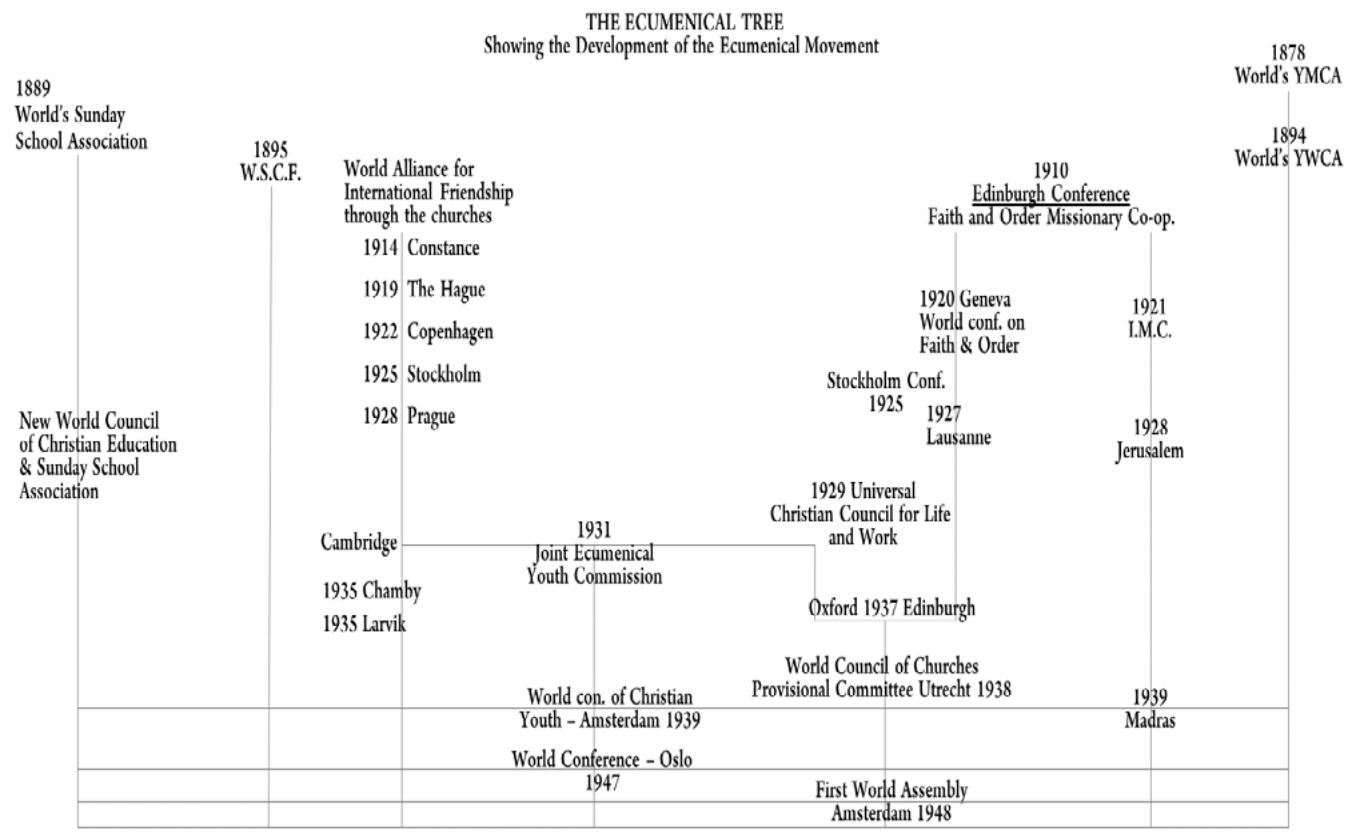 Fig. 2: Ecumenical Tree (WCC Archives, 1952, Unpublished document)
According to the table, major ecumenical organizations during this period included the World Alliance for International Friendship through the Churches, Life and Work Movement, Faith and Order Movement, International Missionary Council, World YMCA, World YWCA, and World Student Christian Federation (WSCF). Notably, women emerged as leaders in the global church, particularly through their leadership roles in student movements, with the World YWCA becoming a notable institution for nurturing female leaders.
Notably, Susan De Dietrich, an ecumenical pioneer discussed in this paper, led the Bible study sessions during the conference. Her profound message inspired students worldwide to sensitively respond to the contemporary context and live prophetically, thereby rejuvenating ecumenical consciousness. Here is an excerpt from her lecture:
"Some call the 20th century 'the century of the church.' [...] The demand of this age is for the church to exist as a church. [...] The ethics taught in the Bible are not static but dynamic. They demand concrete obedience to the Lord of the church in any new situation. [...] The vision presented by the Bible is the vision of God's purpose of salvation for humanity and society." (Dietrich, 2013, pp.62~68)
The success of this conference instilled in participants a yearning for and hope in the unity of the church amidst the global historical context of division. However, the outbreak of the Second World War tested these aspirations. For instance, the Executive Committee of the World Council of Churches convened in Amsterdam in January 1940 to establish an ecumenical committee to support relief efforts for war victims. However, disagreements among member churches regarding the authority of the interim committee hindered the drafting of a unified response. Consequently, with the outbreak of the Second World War, the committee was unable to convene any formal meetings from 1940 to 1946, resorting to regional gatherings and informal refugee relief efforts instead (WCC Provisional Committee, 1946. pp. 10-11).
# b) Women's Response
During the war, European church women found temporary opportunities to exert leadership not only in society but also within the church. The war shattered stereotypes surrounding gender roles more than any other event. Alongside conscripted men, women embraced societal responsibilities and spearheaded various movements beyond denominational boundaries to support relief efforts. One prominent organization was CIMADE (Comité Inter-Mouvements Aupres Des Évacués: French Committee to Coordinate Activities for the Displaced), which handled diverse relief operations for prisoners of war along the German-French border between 1940 and 1942. (La Cimade, See 17 Apr. 2024) CIMADE, founded by Suzanne de Dietrich, a leader of the World Student Christian Federation in 1938, operated as an ecumenical entity under the French Vichy government. This organization provided worship, counseling, educational programs, and emergency supplies for Jewish prisoners with temporary housing facilities hosted by Girl Scouts, Boy Scouts, and students from the World YWCA and YMCA. Additionally, an ad hoc committee, comprising leaders from Swiss and Spanish churches, along with various ecumenical organizations including the World Student Christian Federation, collaborated closely to establish the Coordination Committee for Assistance in the Camps in Nimes, France. (Jacques, 1991, pp.23-24, 29-31)
The collaborative efforts of churches in rescuing prisoners of war during the war demonstrated the significance of church unity. Notably, during the peak of the Holocaust in 1942, Madeleine Barot led the Assembly du Desert, an operation aimed at rescuing Jewish children under the Final Solution campaign by the German government. This operation actively engaged in rescuing Jewish individuals without acknowledging racial or ethnic discrimination. Both church organizations and numerous individuals participated in this mission, embodying Christ's love. Particularly, 67 pastors in the region collaborated to provide refuge for Jewish individuals in vicarages, dioceses, and farms, enabling them to evade capture by French or German police and find freedom. (Jacques, 1991, pp.23-24, 29-31) This experience of unity later became a model for social engagement ministries within the World Council of Churches.
In summary, the transformation of ecclesiology, emphasizing a new perspective on the relationship between the church and the world, is exemplified by the successful collaboration between women, who served as student or social leaders outside the church, and men in developing a successful model of church unity movements. This collaboration was possible because the ad hoc committee still had a flexible organizational structure amidst rapidly changing ecumenical movement circumstances.
## IV. THE ERA OF THE PLANNING COMMITTEE OF THE WORLD COUNCIL OF CHURCHES (1946-1948)
### a) Transformation of the Women's Status
Following the conclusion of the Second World War, women sought to engage in a new wave of church reform movements. However, the preparatory committee for the Amsterdam founding assembly was already established as a male-dominated entity, excluding women from active participation.
The WCC General Assembly Preparatory Committee was launched in Geneva in February 1946. The committee of the Provisional Office consisted of 14 members from the Faith and Order Movement, 14 from the Life and Work Movement, and the General Assembly Preparatory Committee, including Mark Bogner and Bishop Chichester, invited experts, representatives of the IMC, and staffs of the WCC. Dr. Kathleen Bliss was the only official female representative invited to attend on behalf of Dr. Oldham. (WCC Provisional Committee, 1946, pp.17-18)
Despite the challenges, women remained resolute in their determination, demonstrating unwavering passion for ministry and solidarity. During the WCC preparatory meeting in February 1946, women leaders meticulously examined the agenda to ensure the comprehensive incorporation of women's issues and perspectives, recognizing the imperative of gender inclusivity within the planning process. Women leaders observed the WCC preparatory meeting to see whether women's issues and perspectives are included in the planning.
### b) Women's Response: Analyzing Agendas and Conducting Global Surveys
Concerns regarding the status of women within the WCC were voiced by Mrs. Twila Cavert, the wife of a representative, along with World YWCA officers, reflecting a collective call for greater recognition and empowerment of women within the ecumenical movement.
Firstly, Mrs. Cavert corresponded with William Visser't Hooft, requesting support from the WCC Planning Committee for a women's project aimed at addressing these longstanding disparities and promoting gender equality within the organization. (Herzel, 1981, pp.5-6). Here is an excerpt from Julia Cavert's letter to Visser't Hooft:
I had observed so much in both America and Asia of women working with such vigour and dedication but paying a little attention to them. It wasn't so much matter of status as it was of making the most of the experience and abilities of human beings, whatever their sex. [...] I think the World Council of church ought to get busy about women in the church. (Herzel, 1981, pp.5-6).
Secondly, Mrs. Twila Cavert orchestrated a tea party gathering, attended by YWCA officers and leaders of the WCC Provisional Office, garnering support from WCC officials for initiatives aimed at advancing women's interests within the church. (Herzel, 1981, pp.7-9) In response to this request, the WCC decided to undertake a study on the Life and Work of Women in the Churches. The enquiry was carried out under the direction of Mrs. Twila Cavert and her contributions to establish the women's desk in the WCC were big.
Thirdly, There had been considerable evidence that this question was becoming the crucial importance in the life of many churches, and it was thought that a short survey of the main tendencies and achievements in this field would help the churches in facing this important question. The questionnaire was prepared and circulated in French, English and German. The general plan was to find outstanding churchwomen in each country, who would represent at least those churches affiliated with the WCC. The study on the Life and Work of Women in the Churches, spearheaded by Mrs. Cavert, served as a catalyst for this endeavor. This comprehensive questionnaire, translated into multiple languages, has been widely utilized by thousands of women worldwide and endorsed by numerous church leaders (WCC, 1948, pp. 61-66).
Fourthly, surveying women's experiences and perspectives in churches worldwide, the initiative garnered responses from 58 countries, culminating in detailed memoranda and supporting documents. The World YWCA's invaluable contributions further enriched the study process. The wealth of insights gleaned from this endeavor prompted the decision to compile the findings into a book authored by Kathleen Bliss, marking a significant milestone in the World Council's commitment to amplifying women's voices within the ecclesiastical sphere. (Commission on the Life and Work of Women in the Church, 1954, Unpublished Documents, p.1).
As such, Leveraging the international networks of both WCC and World YWCA groups, Mrs. Cavert's strategic approach facilitated widespread participation in the survey. Her accompanying letter encouraged women to provide descriptive responses, collaborate with others, and recognize the potency of communal efforts in fostering creativity and solidarity among women (Herzel, 1981, 7-9).
Amidst a backdrop of societal turmoil and fragmentation, the church emerges as a beacon of hope. However, the years of war have underscored the need for enhanced communication and collaboration among women across global church communities.
### c) Women's Response: Convening at the Pre-Assembly
Women leaders convened at Baarn near Amsterdam from August 13th to 17th, 1948, for the Pre-Assembly meeting, during which they meticulously reviewed survey materials and drafted a comprehensive report to guide the agenda of the upcoming World Council of Churches (WCC) Amsterdam Assembly. This gathering, attended by women leaders from 17 countries, served as a pivotal platform for deliberation and strategizing. (Herzel, 1981, p.9).
The group directed the Enquiry in each country and prepared a memorandum to be used as a basic document for a final report.
The Revised Interim Report of a Study on the Life and Work of Women in the Churches delineated five distinct sections within its questionnaire, addressing various aspects related to women's roles and contributions within the church:
(1) Basic considerations indicating what interest there is in the Churches in the question of the <Life and Work of Churches> in terms of the theological, biblical, psychological, practical, and/or traditional aspects of the question. (2) The professional work of women in the churches, their achievements and problems.
- $③$ Women's voluntary activities. (4) The extent to which women's gifts and experience are integrated in the governing boards and policy-making groups of the churches, and the trends to be discerned. (5) Women's work in the Church compared with the stage of emancipation which they have achieved in different countries.(WCC, 1948, p. 10)
d) Women's Response: Advocacy, Representation, and Collaboration in 1948 Amsterdam Assembly.
Subsequently, the study committee on Women, meeting at the same venue, further refined the report, which was then submitted to Assembly Committee No. Four on the "Concerns of the Churches." After undergoing revisions by the Assembly, the report was commendably endorsed to the churches for their earnest consideration and appropriate action. The recommendations set forth by the women leaders encompassed several key directives:
(1) That the Interim Report on <The Life and Work of Women in the Church>.be republished with necessary corrections and additions. (2) That a Longer Report on the Life and Work of Women in the Church be prepared. (3) That an adequate supply of information about women's activities be provided through the Ecumenical Press Services and other channels. (4) The a greater number of women be chosen to serve on the Commissions, the major Committees and the Secretarial of the World Council of Churches. (5) That a Commission composed of men and women be appoint ted with adequate budget and executive leadership, to give further consideration to the Life and Work of Women in the Church and to give guidance on important Issues. (WCC, 1948, pp. 75-76)
This concerted effort underscored the formation of a global solidarity among women leaders and facilitated strategic collaboration with male counterparts to institute the first women's committee at the inaugural general meeting of the WCC. Sarah Chakko, representing women, championed this proposal, which ultimately led to the establishment of the Women's Life and Service Committee in the Church at the 1948 Amsterdam General Assembly.
Moreover, Sarah Chakko's pivotal role exemplified the proactive engagement of women in expanding their roles within both the church and society. An advisory committee was instituted to steer the office in producing theological papers, organizing consultations, fostering a global network of women, and perpetuating the discourse within the churches. Embracing a lay theology approach, they sought to elevate the status of women within ecclesiastical circles. In a significant development, Sarah Chakko was elected as the president of the WCC in Asia by the WCC Central Committee in 1951, underscoring the growing prominence of women within the organization. Emphasizing cooperation between men and women in both church and societal realms, the women's committee was renamed the Department on the Cooperation of Men and Women in Church and Society in 1954, with its office established in Geneva.
## V. CONCLUSION
This study delved into the pivotal role of women leaders during the formative years of the World Council of Churches (WCC) in expanding the status of women in both church and society. These women employed various strategies, including advocating for themselves, documenting historic momentum, investing in research, convening gatherings, and speaking up in solidarity. They demonstrated a responsiveness to the evolving societal landscape, challenging prevailing myths and prejudices, and effecting leadership transformation through practical faith-based actions rather than mere theoretical discourse. Notably, they forged a global solidarity among women and strategically collaborated with male leaders to establish the first women's committee at the WCC's founding assembly, contributing significantly to a shift in ecclesiology that emphasized the active participation of laypeople.
This study underscores how the evolution of ecclesiastical theory in the early 20th century was intricately linked to the contributions of Women Ecumenical Pioneers during the formation of the WCC. Their collaboration with both the women's movement and the broader Ecumenical Movement within the organization played a pivotal role in reshaping ecclesiology to prioritize the involvement of laypeople. Despite their monumental efforts, historical records often offer only traces of their contributions. Thus, it is imperative to ensure the inclusive leadership of women in both church and society, employing various strategies:
(4) Analyzing Agendas: Women leaders scrutinized agendas to ensure inclusion of women's issues and perspectives in the planning of WCC meetings. (5) Conducting Global Survey: Women leaders conducted a global survey on women's situations in the church, garnering responses from 58 countries. (6) Convening and Solidarity: Women leaders organized pre-assembly meetings to propose the establishment of a women's desk within the WCC, supporting representatives like Sarah Chakko to advocate for women's concerns. (7) Representation: Sarah Chakko presented on women's status at the Amsterdam Assembly, leading to its acceptance. (8) Collaboration: Women leaders collaborated within the early WCC organization to advance women's positions and develop lay theology to elevate women's status in the church.
The changing ecclesiological landscape, characterized by a male-oriented structure within the Ecumenical Movement, posed challenges to women's leadership positions. Despite efforts by the Women's Overseas Mission to foster ministries, achievements were often integrated into unified communities, resulting in a decline in women's positions. Nonetheless, women remained responsive to evolving societal dynamics, advocating for inclusive leadership structures characterized by communication and accountability. Therefore, it is imperative for the church to ensure inclusive women's leadership in both ecclesiastical and societal realms to prepare for future generations.
However, despite their monumental contributions, historical records often offer only fleeting glimpses of women's involvement. Thus, there is a pressing need to develop and disseminate women's history widely to ensure the recognition and preservation of their invaluable contributions to inclusive leadership in both church and society.
Generating HTML Viewer...
References
14 Cites in Article
Kyo-Seong Ahn (2017). The Korean Church and the Challenges of Contemporary.
Kyo-Seong Ahn (2011). The Identity and Witness of the Presbyterian Church of Korea(Tonghap) as an Ecumenical Church.
Jacques Beaumont (1996). Madeleine Barot: A Pioneer in Practical Ecumenism.
Janet Crawford (1995). Rocking the boat : women's participation in the World Council of Churches, 1948-1991.
Suzanne Dietrich,De (1961). The witnessing Community the Biblical record of God's Purpose.
Susannah Herzel (1981). A Voice for Women: The Women's Department of the World Council of Churches.
Hooft,' Visser (1946). The World Council of Churches: Its process of formation.
Dana Robert,Lee (2005). American Women in Mission: A Social History of Their Thought and Practice.
George Robson The History and Records of the Edinburgh Conference.
David Tompson (2010). Edinburgh 1910: Myths, Mission and Unity.
(1939). Great Britain and Germany : german-british christian fellowship, 1939 -1947.
(1948). General reports, 1946 -1953 : report on the life of the church in Eastern Prussia, 1945 -1948.
A Falconer (1952). Book Review: Intercession, Faith and Order Paper no. 95. By Lukas Vischer. Geneva, World Council of Churches 1978. Pp. 66. World Council of Churches For all God's People: Ecumenical Prayer Cycle, Geneva, World Council of Churches 1978; pp. 238. Price 3.50. British Council of Churches For All God's People: Supplement for the British User, London, British Council of Churches 1978; pp. 26.
Tramor Quemeneur (2024). La Cimade et l’objection de conscience.
No ethics committee approval was required for this article type.
Data Availability
Not applicable for this article.
How to Cite This Article
Eunha Kim. 2026. \u201cEmpowering Women in Ecclesiastical Spaces: Insights from the World Council of Churches.\u201d. Unknown Journal GJHSS-C Volume 24 (GJHSS Volume 24 Issue C4): .
Explore published articles in an immersive Augmented Reality environment. Our platform converts research papers into interactive 3D books, allowing readers to view and interact with content using AR and VR compatible devices.
Your published article is automatically converted into a realistic 3D book. Flip through pages and read research papers in a more engaging and interactive format.
This study delves into the responses of women amidst the dynamic shifts within the ecumenical movement from 1910 to 1948. Two pivotal developments marked the burgeoning presence of women in missions during the early 20th century. The Edinburgh World Missionary Conference of 1910 emerged as a cornerstone event within the ecumenical movement, attracting numerous women missionaries representing diverse missionary societies and church mission boards. Concurrently, the Woman’s Missionary Jubilee underscored the fostering of camaraderie among women across First World and Third World churches. These events catalyzed the integration of women into the fabric of Protestant missions, leading to the formation of women’s communities and their significant contributions to church establishment, development, and expansion.
Our website is actively being updated, and changes may occur frequently. Please clear your browser cache if needed. For feedback or error reporting, please email [email protected]
Thank you for connecting with us. We will respond to you shortly.