How to improve the psychological resilience of higher vocational students in china has become a theoretical and practical issue that higher vocational colleges urgently need to answer. This article reiterates the “student-centered” concept, integrates the “empowerment” construct research framework, and tentatively interprets the practical situation of improving the psychological resilience of higher vocational students. On the one hand, we create a positive environment through six levels: individual, dormitory, class, family, department, and school. We implement a student-oriented approach and emphasize the importance of fostering external protective factors for psychological resilience. On the other hand, out of the three levels of empowerment, which are empowerment, self-efficacy improvement, and consolidation of the individual’s inner self, we practice the concept of empowerment and focus on stimulating the internal protective factors of psychological resilience.
I. EMPOWERMENT AND STUDENT-CENTERED: A NEW PERSPECTIVE ON IMPROVING THE PSYCHOLOGICAL RESILIENCE OF HIGHER VOCATIONAL COLLEGE STUDENTS
### a) Empowerment
The concept of empowerment comes from "Black Empowerment: Social Work in Oppressed Communities" published in 1976 by the famous scholar Barbara Bryant Solomon. She described how black minorities in American society have long been subjected to negative evaluations from peer groups, advantaged groups and the macro-environment, so that they feel a deep and comprehensive lack of power. Xu Lijuan et al. (2020) believe that the concept of empowerment includes three elements, namely, the increase of abilities, the acquisition of rights and opportunities, and the improvement of self-efficacy. Xu Lijuan et al. (2020) believe that the concept of empowerment has three elements: the increase of abilities, the acquisition of rights and opportunities, and the improvement of self-efficacy.
### b) Student-Oriented
### c) Psychological Resilience
Psychological resilience refers to an individual's ability to adapt well in the face of adversity, trauma, tragedy, threats or other major pressures, that is, the ability to rebound from difficult experiences (Gao Yidan, 2022). Research shows that psychological resilience includes two main factors: intrinsic protective factors and external protective factors (Yang Mei, 2022). Intrinsic protective factors refer to the personality factors possessed by an individual, such as optimism about life, trust in others and other characteristics, which can regulate or mitigate the impact of crisis. External protective factors refer to factors in the individual's environment that can promote the individual's successful adjustment and improve the impact of the crisis. Family, school and society are the three main external protective factors for students' psychological resilience, which plays an extremely important role in enabling them to maintain a positive attitude when encountering adversity (Huang Wenjuan et al., 2023).
d) The Analytical Framework for Improving Psychological Resilience
The "student-oriented" concept builds a student service system that is people-oriented, quality-oriented (Bai Shuxin, Li Maofu, 2015), it involves truly thinking and acting from the perspective of students, and guiding them to achieve comprehensive development in moral, intellectual, physical, artistic and labor. This concept has a leading and guiding role in shaping Qualified builders and reliable successors of socialism. Although there are some relevant literatures discussing methods, the specific work lacks real practicality (Qian Cheng, 2020; Sheng Qing, 2015). Empowerment emphasizes starting from the client (student), improving his ability, giving them rights and opportunities, and improving their self-efficacy to achieve their goals. From the perspective of higher vocational students, the two concepts have the same starting point. Both should start from the students' own needs and rights, emphasize student participation and self-help, and encourage students to define their own blueprints; And the goals to be achieved are also the same, which is to reduce the sense of powerlessness caused by negative devaluation of individuals or groups in labeled or marginalized groups, and improve the individual's ability to rebound in the face of difficult experiences, thereby enhancing personal psychological resilience.
In view of this, this article attempts to integrate the two and construct a research framework for improving the psychological resilience of higher vocational students. On the one hand, it starts with the students' daily contact system, which includes six levels: individual, dormitory, class, department, family, and school; On the other hand, based on empowerment, the process of improving psychological resilience is specifically divided into three levels: ability improvement, opportunities acquisition, and self-efficacy improvement. Furthermore, these two interact to form a practical and theoretical framework for improving the psychological resilience of higher vocational students, as shown in Figure 1 below.
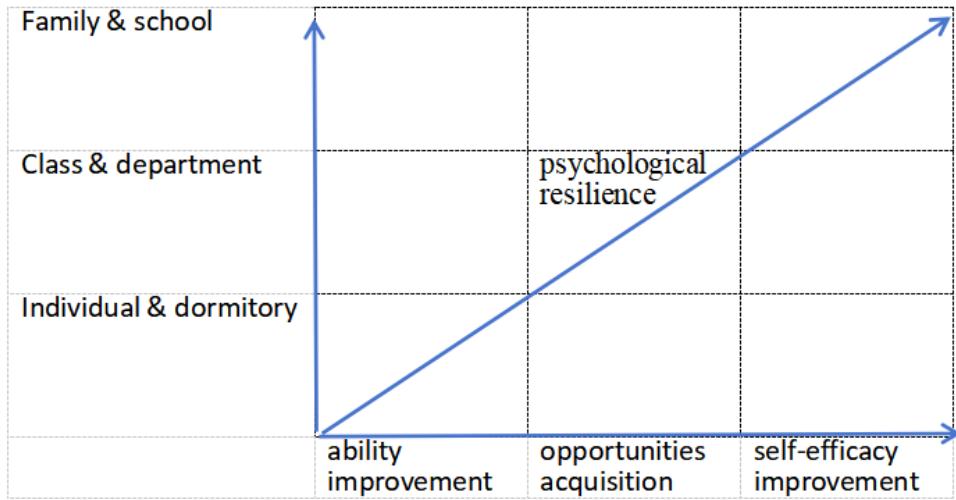 Figure 1: The Analytical Framework for Improving Psychological Resilience
## II. THE PRACTICAL PROCESS OF IMPROVING THE PSYCHOLOGICAL RESILIENCE OF HIGHER VOCATIONAL STUDENTS
### a) Case Background
Student Mr. Wang, 19 years old, majored in digital media and technology application at a higher vocational college. He is the eldest in the family and has a younger brother who is in college. He and his younger brother were raised by his grandparents since childhood. This year, his grandmother suddenly suffered from Alzheimer's disease. His parents are separated from each other all year round and work part-time jobs to earn money to support the family. The family's annual income is about RMB 40,000 to 60,000. Student Wang's living expenses are RMB800 per month. Wang was injured during a long-distance running practice in elementary school (the hospital diagnosed him with a concussion). Wang believed that the injury caused him to think normally when his mental state was good, but when his mental state was bad, his thinking of brain was not normal. In October last year, his father injured his arm at a construction site and was hospitalized for more than a month. However, it was not until his father was discharged from hospital Wang learned that his father was injured. He blamed himself. He usually communicate with mother once a week, and with his father almost once a month. When he was in elementary school, he went to school with his younger brother. This experience has left a deep impression on Mr. Wang. He
described how he had taken his younger brother with him since he was a child, first sending him to the classroom, then going to the classroom himself, and giving him extra classes. Mr. Wang repeatedly said that he is proud of his younger brother; but when talking about his younger brother's current situation in college, he said that he communicates with his younger brother much less than before. There is a good friend A in junior high school who teaches Wang how to draw and runs a class blackboard newspaper together. However, A no longer goes to school due to family reasons, but he has always kept in touch with Wang. In high school, classmate Wang had a friend B who was a top student. B often explained academic problems to him, but since he went to college, they have almost lost contact. One month after entering X University, Wang transferred to the computer application technology major. It has been three months since He entered the new class. He is not familiar with classmates and classmates, and not made any close friends. At the same time, One of his teachers contacted me, She said that Wang came to talk to her and said that she felt empty in her heart and that she wanted to express herself but lacked self-confidence. Wang said that maybe as a science student in high school, mathematics courses in college are relatively easy. However, professional courses such as computer science are very difficult to learn. He feels that other students can learn it easily, but he looks like stupid in these courses. During a certain class cadre election, Mr. Wang submitted a competition application. However, on the day of the competition, he came on stage and said that he would not participate in the election and asked his classmates to choose someone else. This confused some students in the class. After getting to know his classmates, I found that Mr. Wang usually lives alone and seldom participates in group activities or interacts with other students.
### b) Problem Identification
## i. Basic Necessities of Life
Judging from the actual situation of the family, Mr. Wang's parents have to support two elderly people and two college students, and the family's per capita annual income is about RMB 10,000. MR. Wang and his younger brother had just entered college. Suddenly, their grandmother fell ill and their father was injured. The family's finances suddenly became difficult.
## ii. Necessary for Interpersonal Communication
Judging from the experience described by Mr. Wang, he was accompanied by his younger brother in elementary school, by his good friend A in junior high school, and by classmate B who was the top student in high school. But after entering college, He suffered from having no close friends, feeling very lonely, mentally empty, and had a strong desire for interpersonal communication. But in actual situations, he wants to be proactive in socializing and then retreat at the same time.
## iii. Improvement of self-efficacy
Judging from Wang's learning situation, mathematics is relatively easy for him, while professional courses such as computer science are more difficult. In view of this, Mr. Wang has the need to learn more difficult content in mathematics; in computer and other professional courses, he has the desire to learn quickly like other students. Due to unreasonableness (self-attribution and labeling, for example, if he is not like other students, he is stupid, which is further related to the concussion and injury when he was in primary school), Wang expressed a sense of powerlessness during the interview.
## iv. Construction of a Harmonious Environment
Judging from the communication with his roommates, Mr. Wang was used to living alone and did not participate in team building in the dormitory, so that he was no longer invited to the activities which was proposed by the other three people in the dormitory. From the exchanges with class cadres, Mr. Wang almost did not follow the rules to handle the assignments in certain courses. And she withdrew from participating in the class committee election, which confused everyone. At the same time, Mr. Wang almost never participated in class group activities, nor did he join any clubs. As a college student, dormitories and classes are critical micro-meso systems in students' campus life, but Mr. Wang is lacking in this aspect.
### c) Intervention Strategies
Based on the above four levels of issues, starting from the analytical framework of improving psychological resilience, the counselor worked hard with Mr. Wang to create a six-level linkage platform of individual, dormitory, class, department, family, school to enhance his self-confidence and reduce his feeling of powerlessness, empower him, make him believe that he is capable and valuable, and work with them in the direction of solving problems to enhance their psychological resilience. The intervention strategy is described below:
## i. The Micro-System of Psychological Resilience: Individual-Dormitory Level
This level focuses on the positive experience in which individuals feel they have the ability to influence or solve problems, they initially try to cooperate with others to solve problems, enhance their self-confidence, and stimulate internal protective factors of psychological resilience.
Regarding the diagnosis of a concussion caused by a long-distance running injury suffered by Mr. Wang when he was a child, Mr. Wang believed that when his mental state was good, his thinking in brain was normal, but when his mental state was bad, his thinking in brain was abnormal. The counselor discussed this issue in depth with Wang, and finally discovered that because the incident happened in elementary school, he could not remember it clearly, but he always kept repeating this cognition. First, parents are invited to recall together whether there has been a diagnosis of concussion; second, counselors consult doctors, Baidu, etc. to inquire about medical knowledge about concussions; third, Inviting professional doctors to discuss with Wang to confirm concussion medical knowledge. Then we reached consensus with Wang: He did have a concussion when He was a child, but the human body has the function of self-healing and has already recovered. But it is true that people's mental states will show different states such as good or not so good due to encountering certain things or not sleeping well. Finally, discussing ways with Mr. Wang to improve his mental state, such as regularizing work and rest, maintaining exercise, and actively interacting with classmates and teachers.
Regarding labeling himself as "stupid". After several in-depth conversations, it was discovered that after failing the college entrance examination, the frequency of contact had decreased between Mr. Wang and his brother and his good friend in high school. At the same time, Wang would "complain" that the knowledge taught in the advanced mathematics course is not as difficult as that in high school, and there is almost no new knowledge point. Such contradictions tore apart Mr. Wang, making him unable to objectively understand his abilities, resulting in a deep sense of powerlessness. First of all, I would like to acknowledge Mr. Wang's good performance in advanced mathematics. After the teacher's class, if you are still interested, you can buy exercises to do by yourself. At the same time, you can also pay attention to competitions such as mathematical modeling competitions, etc. Secondly, practical courses such as "Computer Application Fundamentals" are of the type that make perfect. As long as you practice more and operate it several times, you will definitely become proficient.
The first is to leverage peer groups and encourage collective activities. Learn about dormitory life about Mr. Wang, such as daily schedule, spare time life, dormitory entertainment, everyone's getting along, life consumption, etc., and encourage Head of his dormitory to lead the dormitory students Participate in group activities such as the department's "Bedroom Culture Festival" to increase interaction with classmates. The second is to build personal initiative and set up tasks to understand classmates. Tell him that the teacher is happy for him and that he has special and sincere friends at every stage of his life. Continue to keep in touch with his close friends and share daily study, life, etc.; Then assign him a task to understand a person who are not in the same dormitory as him, and discuss with him what types of classmates he can get to know, such as his classmates in class, members of the course study group, and classmates who are as good as you in high mathematics. It is recommended that Mr. Wang start from a familiar field and gradually a less familiar place like a library to know about other person; The third is to clarify and understand Mr. Wang's psychological expectations of the task. Discuss with him what would happen if he communicated with others. One would be a particularly great communication experience, and the other would be a just so-so or bad conversation. If you encounter poor communication, you need to realize that this is one of the normal results, because the communication process is interactive and affected by many factors.
## ii. The Meso-System of Psychological Resilience: Class-Department Level
This level focuses on the reconstruction of the medium and micro system environment (classes, departments) that has a key influence on individual empowerment, so that individuals can obtain more resources and power, and through interpersonal interaction and mutual assistance, they can have more experience in cooperation and communication with others. We also hope to create a sense of consciousness and capability in each other's life community, reduce their sense of powerlessness, and stimulate external protective factors for psychological resilience.
In order to enhance mutual understanding among students, a series of themed class meetings such as "Speak Well Workshop", "Heart Healthy Heart Sunshine", and "Basketball Game" were held in the class. During this process, the class committee is encouraged to mobilize the entire class to actively participate in activities such as event planning, material purchase, venue layout, event hosting, game sessions, and venue cleaning after the event. Through encouraging students who are willing but inactive to participate, and even "imposes" some relatively simple tasks to them to a certain extent to make them feel more involved in the activities.
In order to make full use of the department's learning resources and enhance student-teacher interaction, two non-class time student learning systems were established after communication between the counselor and the department head. Firstly, establish a Q&A system during non-class hours. Secondly, open an train & practice room during non-class hours to facilitate students to practice. At the same time, provide on-duty instructors for the train & practice room. And then, the relevant changes were announced to students through class meetings and informed to Mr. Wang. At the same time, he was invited to serve as an assistant in the train & practice room room to assist teachers with matters such as sanitation of the train & practice room during non-class hours, and received a small amount of work-study subsidies. After that, during non-class time every week in the future, Mr. Wang came to the train & practice room on time. A month later, in an interview with classmate Wang, he said, "I feel much better recently, and I feel like I am getting better at computers."
## iii. The External-System of Psychological Resilience: Family-School Level
This level focuses on promoting individuals to understand the mobilization and utilization of opportunities and resources in their environmental context, while ensuring the provision of resources and the accessibility of the system needed by individuals. The focus is on changing or mediating immediate environmental stress situations, continuing to improve the individual's understanding of the environmental system, learning from teachers, friends, etc. how to communicate effectively with the system environment, improving individual self-efficacy, thereby stimulating the internal and external aspects of psychological resilience protective factor.
(1) Based on Objective Reality, Guide them to Apply for National Scholarships
- Introduce the national financial aid policy for students from families with financial difficulties to the whole class, and guide students to apply. Finally Mr. Wang submitted his application, and awarded the second-class national financial aid, which solved Mr. Wang's difficulties in life to a certain extent and effectively alleviated the financial strain at home caused by his father's arm injury. He was also encouraged to study actively and strive to be eligible to apply for scholarships in the next academic year. (2) Consolidate the Home-School Alliance Around Students' School Conditions
First of all, establish a list of key students and communicate with their parents on a regular basis. Parents are expected to encourage and praise good behavior and remind of poor behavior. Secondly, in order to enhance parents' understanding of the school's learning, life, entertainment, etc., each class publishes a "Class Events" manuscript every month. Third, establish a parent We Chat group to build a platform of trust between home and school. Through regular activities, awards-winning notifications, class memorabilia and answers to parents' relevant questions, the communication channel between parents and the school is effectively opened and positive interaction is achieved.
## III. INTERVENTION EFFECTIVENESS
A few months later, Mr. Wang came to me and said: Now my father's arm has basically recovered. Let me tell you quietly that I have also found a good friend in college. He joined one competitions Studio and tried to focus on learning the content of competitions. Occasionally he come to my office to help with some things and share some recent study and life situations. At the same time, he also actively participates in volunteer activities. Asked how he felt, he said he was more positive. In this case, The changes in students' behavior are visible. However, due to the short period of practice, many subsequent effects have not been reflected and cannot be predicted. This research takes efforts to theoretically explain and implement the intervention Strategies in higher vocational students from the perspective of empowerment and student-centered, and in the future more profound and systematic practical exploration requires more attention and advancement from more researchers.
## IV. SUMMARY AND REFLECTION: STRATEGIES TO IMPROVE THE PSYCHOLOGICAL RESILIENCE OF HIGHER VOCATIONAL STUDENTS
a) Build a Good Environment from the Six Levels of Individual, Dormitory, Class, Family, Department, School, and Focus on Stimulating External Protective Factors for Psychological Resilience
- The individual is only a subsystem in the "student-centered" system. The micro- and meso-environments (social and physical environment) also have an important impact on individual growth, and each subsystem interacts and influences each other. Therefore, practicing the student-centered concept lies in coordinating the relationship between various subsystems to make them more coordinated and harmonious, and jointly promote the improvement of students' psychological resilience.
b) Consolidate the Individual's Inner Self from Three Levels: Ability Improvement, Opportunities Acquisition, Self-Efficacy Improvement, Focus on Stimulating the Internal Protective Factors of Psychological Resilience
Empowerment is a work theory and method that pays more attention to an individual's self-esteem, self-confidence, sense of ability, etc., so that they can perceive their own value and self-efficacy. By effectively coordinating events at various levels such as individuals, dormitories, classes, departments, families, schools, etc., we can maximize the individual's dominance and participation in various events, overcome the individual's addiction to inherent cognition and behavior, and focus on the social behavior level. The individual's internal cognition, emotion and behavior build a positive self-awareness, which ultimately enables the individual to move from empowerment to an improvement in self-efficacy, thereby stimulating internal protective factors for psychological resilience.
[^1]: "Regulations on the Construction of Counselor Teams in General Colleges and Universities" (Order No. _(p.1)_
[^2]: Article 5 of the "General Provisions" of the "Regulations on the Management of Students in Ordinary Colleges and Universities" (Order No. _(p.1)_
[^3]: "Opinions of the Central Committee of the Communist Party of China and the State Council on Strengthening and Improving Ideological and Political Work in Colleges and Universities under the New Situation" (Zhongfa [2016] No. 31) _(p.1)_
[^41]: of the Ministry of Education of the People's Republic of China) _(p.1)_
[^43]: of the Ministry of Education of the People's Republic of China), "Opinions on Further Strengthening and Improving the Propaganda and Ideological Work of Colleges and Universities under the New Situation" _(p.1)_
Generating HTML Viewer...
References
8 Cites in Article
X Lijuan,L Zhen,T Xiong (2020). Empowerment and system construction: Reflections on the experience of social work intervention in educational poverty alleviation-taking H University's summer education project in S Village, Yunnan Province as an example.
Y Mei (2022). Study on the relationship between physical exercise, sleep quality and psychological resilience of college students in a certain university.
B Shuxin,L Maofu (2005). On the innovation of working mechanism for college students in the new era [J].
Sh Qing (2015). Research on the Cultivation of College Students' Innovative and Entrepreneurial Abilities from the Perspective of Practical Education in the "Grand Ideological and Political Course".
Q Cheng (2020). Exploration of student affairs management in colleges and universities based on the "three-body dual-channel.
Ch Yuyan (2023). Regional practice of cultivating psychological resilience of junior high school students under the background of "double reduction.
Gao Yidan (2022). A Review of Research on Adolescent Mental Resilience.
H Wenjuan,W Peipei,S Ying (2023). Research plan for a randomized controlled trial of universal psychological intervention in schools based on improving children's psychological resilience.
No ethics committee approval was required for this article type.
Data Availability
Not applicable for this article.
How to Cite This Article
Zemei Xu. 2026. \u201cEmpowerment and Student-Centered: How to Improve the Psychological Resilience of Higher Vocational Students?\u201d. Global Journal of Human-Social Science - G: Linguistics & Education GJHSS-G Volume 24 (GJHSS Volume 24 Issue G6): .
Explore published articles in an immersive Augmented Reality environment. Our platform converts research papers into interactive 3D books, allowing readers to view and interact with content using AR and VR compatible devices.
Your published article is automatically converted into a realistic 3D book. Flip through pages and read research papers in a more engaging and interactive format.
How to improve the psychological resilience of higher vocational students in china has become a theoretical and practical issue that higher vocational colleges urgently need to answer. This article reiterates the “student-centered” concept, integrates the “empowerment” construct research framework, and tentatively interprets the practical situation of improving the psychological resilience of higher vocational students. On the one hand, we create a positive environment through six levels: individual, dormitory, class, family, department, and school. We implement a student-oriented approach and emphasize the importance of fostering external protective factors for psychological resilience. On the other hand, out of the three levels of empowerment, which are empowerment, self-efficacy improvement, and consolidation of the individual’s inner self, we practice the concept of empowerment and focus on stimulating the internal protective factors of psychological resilience.
Our website is actively being updated, and changes may occur frequently. Please clear your browser cache if needed. For feedback or error reporting, please email [email protected]
Thank you for connecting with us. We will respond to you shortly.