INTRODUCTION
An important issue in modern societies is the management of energy reserves and the perceptible changes in climate globally that are considered to be due to human activity associated with the burning of fossil fuels. The production of mechanical work and easy-to-use energy such as electricity is linked to the emission of fossil fuels that emit emissions, such as , and is considered to be one of the important factors influencing affect climate change with the greenhouse effect. From the changes of the gases included in the "greenhouse gases" is judged the development of technological developments for the energy equipment that is produced and used. Despite the significantly organized effort worldwide and actions to reduce the negative effects on the climate, such as the participation of Renewable Energy Sources (RES) (currently in Greece is [8]) in electricity production, the rate of increase in temperature in planet is not shrinking and more often intense weather phenomena occur. In addition to Renewable Energy Sources, electrical technology was used in the movement of vehicles as well as the transition to the so-called hydrogen era to solve climate change. The ineffective measures taken globally is why we can question the entrenched perception of the real cause of climate change and what the consequences will be if the same policy is pursued locally and globally. The purpose of this work is to substantiate the interconnectedness of climate change with , presenting data on factors that affect climate change, the function of renewable energy sources, their relationship with climate change, the intense weather phenomena that are been observed recently and expected effects from the use of electric propulsion and hydrogen. It is a work in progress contrary to the prevailing currents of perception on the subject of energy and climate change at the international level.
I. CLIMATE CHANGE AND GREENHOUSE EFFECT
a) Historical Data
The French mathematician Joseph Fourier in 1824 spoke for the first time about an increase in the temperature of a planet. The Swedish chemist Svante Arrhenius in 1896 in his doctoral dissertation considers that: "The rapid increase in industrial activity emitting carbon and other pollutants into the air may not differ, in terms of impacts on climate change, from the elements released into the atmosphere by the eruption of the volcano Krakatoa in the Indonesia in 1883" [1] calling this process a "Greenhouse Effect". Explaining the phenomenon, he likened the effects of industrial emissions and fossil fuel combustion in general to the emissions of black dust from the 1883 Krakatoa volcano. At that time the fuel was coals, which by their incomplete combustion in the hearths of industries and means of transport (trains and steamboats), released into the environment unburned carbon C in the form of flying black dust. The black color of which absorbed of the energy of the sun's rays on the surface it covered, converting it into heat and increasing the temperature of the air in the environment, as were the effects of the black dust that flew into the atmosphere of the Krakatoa volcano. The Greenhouse Effect is not only due to industrial and transport emissions, it is a natural phenomenon in which components of the atmospheric air and water vapor it contains, retain thermal energy, contributing to the temperature rise on the earth's surface, making our planet habitable. Svante Arrhenius predicted that the effects on Earth are the same regardless of natural (volcanic) or artificial causes (industrial-scale fossil fuel burning). The energy issue that arises in human societies is how the solar energy that falls on the Earth create favorable conditions for our living, without overcoming them and making the Earth uninhabitable. In other words, the "Pythagorean cup" is sought in order to maintain the favorable living
conditions on planet Earth with the logic of "all in good measure".
b) Data of
Solar radiation is a group of electromagnetic emissions consisting of ultraviolet, visible and infrared radiation in percentages that shown in Table 1.
| Solar radiation | Ultraviolet radiation | Visible radiation | Infrared radiation |
| Energy 100% | 9% | 44% | 47% |
| Wave length | 150 - 400 nm | 400 – 740 nm | 740 – 4000 nm |
The infrared radiation of the sun by falling on a solid body is converted into heat. The visible radiation, depending on the color of the body in which it falls, is partially absorbed converting into body heat and is partially reflected in the form of light, perceiving us the corresponding color. White surfaces absorb of visible solar radiation while black ones absorb .
![Figure 1: Spectrum of solar radiation and the behavior of the atmosphere [1]](https://doc.globaljournals.org/jdgh57_61417/ocr/images/derivatives/c2/c2d7b2dd578d151fbfb16c18f0feafe6af4e4f8862f3411b2586ab319603bd36.webp)
Figure 1 shows that atmospheric gases such as ozone , oxygen , water vapor absorb radiation at specific emission frequencies as well as carbon dioxide which absorbs low-intensity infrared radiation, below specific frequency range. Atmospheric gases are transparent or translucent for solar radiation and infrared earth emission into space at specific electromagnetic emission frequencies. Their degree of transparency is shown in Figure 2 where it appears that carbon dioxide does not have a large contribution to the greenhouse effect as water vapor which in a wide range of frequencies show opacity contributing significantly to the increase of air temperature.
![Figure 2: Radiation absorption and refraction at different wavelengths by gases [4]](https://doc.globaljournals.org/jdgh57_61417/ocr/images/derivatives/d2/d21da844e32687c876c69fb337a9b13bfeecb75ff8be198b60bab8c889cec3ad.webp)
In the 19th century, solid fuels such as coal were used to produce energy, in the 20th century we switched to liquid fuels and today in the 21st century to gaseous fuels, so that black dust emissions, if not eliminated, were significantly reduced. But carbon C, or rather today carbon dioxide, is still being blamed for the greenhouse effect and climate change on planet Earth.
The carbon dioxide is an odorless, colourless, and tasteless gas [3], the product of the combustion of hydrocarbons, which they put into greenhouse gases and are shown in Table 2.
| Gas | Level the 1750 | Level the 1998 | Increase | Percent increase | Contribution in W/m2 | Density kg/m3 |
| Water vapor (H2O) | Values changing geographically and by time | |||||
| Carbon dioxide (CO2) | 278 ppm | 365 ppm | 87 ppm | 31% | 1,46 | 1,8 in 25°C |
| Methane (CH4) | 700 ppm | 1,745 ppm | 1,045p | 150% | 0,48 | 0,717 |
| Nitrous oxide (N2O) | 270 ppm | 314ppm | 44ppm | 16% | 0,15 | |
Atmospheric gases absorb only certain energy wavelengths but they are transparent as shown in Figure1. The Carbon dioxide is one of the natural components of the ambient air we breathe, which are presented in Table 3 and its participation is not accidental.
| Component gas in atmosphere | Chemical symbol | Content | Density kg/m3 | |
| % by volume | % by weight | |||
| Nitrogen | N2 | 78,08 | 75,51 | 1,250 |
| Oxygen | O2 | 20,95 | 23,14 | 1,429 |
| Argon | Ar | 0,93 | 1,30 | 1,786 |
| Carbon dioxide | CO2 | 0,03 | ~0,04 | 1,977 |
| Other gases | 0,01 | 0,01 | ||
| Summary | 100 | 100 | ||
From the ambient air plants use carbon dioxide to perform photosynthesis with solar radiation. Process in which carbon C is captured in plants and oxygen is released into the environment. The air in the forest is pleasant because it is rich in oxygen that is expelled by the trees in their photosynthesis. Trees bind carbon C from the air and with the hydrogen of the earth's water they create chemical compounds that form their trunk. From these trunks humanity was supplied with energy for thousands of years (since the time of Prometheus), from these trunks are formed over millions of years in the bowels of the Earth hydrocarbons, coals, oil, natural gas and we use them today. Plant production in the Earth depends on carbon dioxide in the atmosphere, and the reduction of the percentage of carbon dioxide in the air reduces plant production on Earth and vice versa or an increase in it offers the possibility of increasing plant production. It is a well-known fact for greenhouse workers that impoverishing the greenhouse atmosphere with slows down the growth of plants and reduces their production, because in the air is food for plants. So they bring in tanks and artificially supply the plants with the food necessary for their growth. In southern countries such as Greece, in case of lack of in the greenhouse air, enter clean air rich in from its openings, due to the favorable weather conditions. Agronomists know that a concentration of in the air accelerates plant growth by up to .[3]
The same thing happens in nature, reducing the percentage of in the atmosphere reduces plant production, but it is better not to do such an experiment, because we will all be hungry. Nature has determined that has a high specific gravity (see Table 2) to be directed to the surface of the earth where plants need it as food for their growth. At high altitudes in the mountains, trees that require large amounts of do not thrive, where the vegetation decreases, moss and lichens prevail, up to the complete lack of plants.
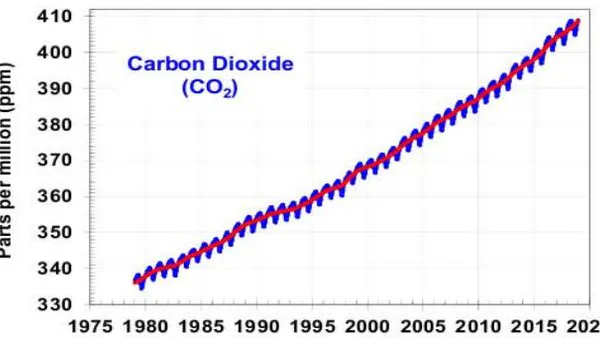
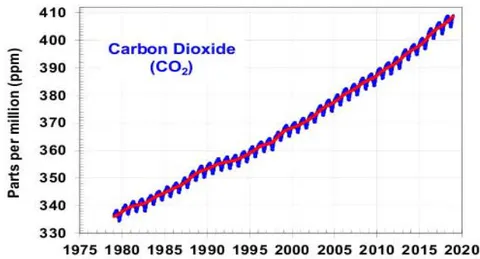
In figure 3 it is shown the recorded increase the carbon dioxide , the methane , the Nitrous oxide and some Chlorofluorocarbons (CFC's), observed in the last 45 years.
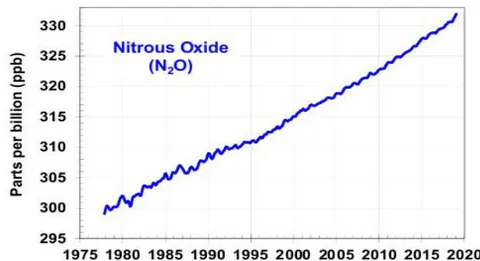
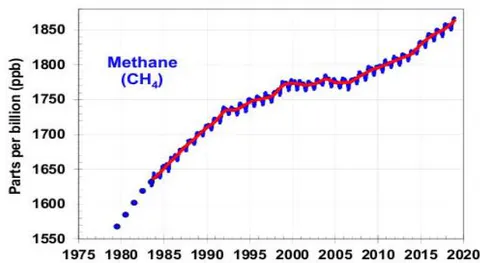
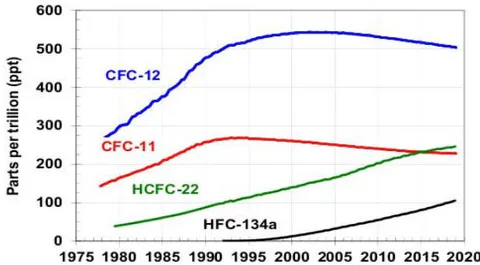
The Figure 4 then shows the flows of carbon dioxide from earth's activities and the atmosphere according to the IPCC, in which it appears that the sources of carbon dioxide emissions are not only the combustion of fossil fuels, but there are other natural sources that emit it.
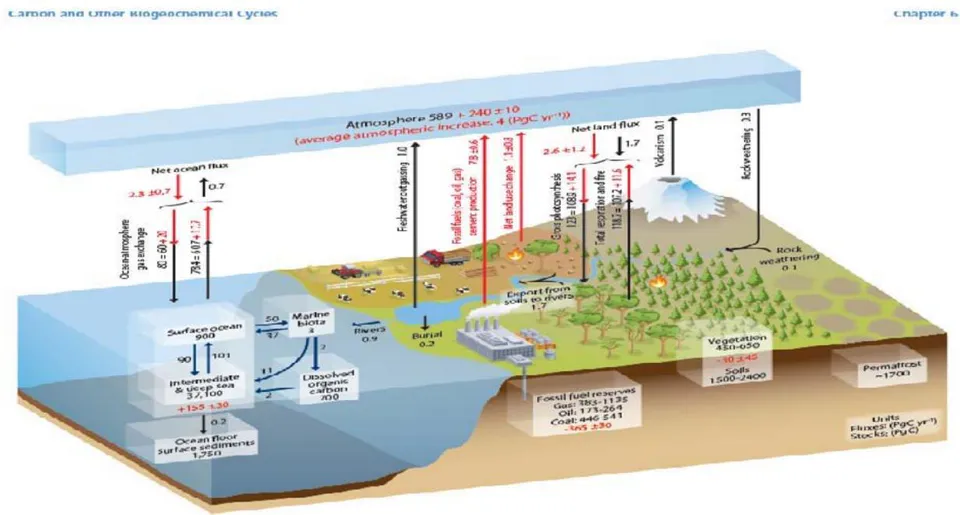
The oceans emit 78,4 units of and receive 80 units, i.e. they receive 1.6 units more than they emit. On land, units of are emitted to the atmosphere while 123,3 points, 5.4 points surplus are taken. This difference, however, may be due to reduced consumption of carbon dioxide and not necessarily to its increased emission. The 5,4 -
points surplus of is of its moving quantities in the atmosphere.
| Table 4: GLOBAL WARMING POTENTIAL (GWP) Source IPCC [4] | ||
| Greenhouse Gases | GWP | |
| Carbon Dioxide | CO2 | 1 |
| Methane | CH4 | 25 |
| Nitrogen Protoxide | NO | 298 |
| HidroFluoroCarbons | HFC | 124 – 14.800 |
| PerFluorCarbons | CnFm | 7.390 – 12.200 |
| Sulfur HexaFluoride | SF6 | 22.800 |
In table 4 provided by the IPCC shows the effects of greenhouse gases with strong action compared to carbon dioxide obtained as 1 unit, the table shows that the reported gases are, tens to thousands of times more effective in the effects of global warming than in carbon dioxide .
In 2020, the United Nations World Meteorological Organization (WMO) states in a report that despite global lockdowns and declining industrial activity, transport and expected emissions, its level of September 2019, which was , increased in September 2020 to , indicating that the change in this gas content is clearly not commensurate with actions to reduce the effects of climate change [10]. It seems that reducing emissions from industry and transport, which is only 7.8 units [4], does not mean that its appeal to the atmosphere will stop because:
- We do not stop the emissions from forest fires which are units
- We do not stop the emissions from carbon water sources that are 1 unit.
- We do not stop the emissions of volcanoes which is 0,1 units
- We do not count the exhaled by humans and animals, ( kg CO2/person per day)
- We do not count the from champagnes, beers, soft drinks, carbonated waters and cigarettes.
If emissions from the combustion of fossil fuels are reduced to zero, it will be established after some time that this reduction from industries and transport does not have the expected effect on its participation in the ambient air because carbon dioxide emissions are not only made by burning fossil fuels. Each person emits about of into the atmosphere a day, but this is not a pollutant, it is our participation in the C carbon cycle on Earth.[3]
The release of methane into ambient air has a similar upward trend to as shown in the diagrams in Figure 3, where the almost parallel increase in the two gases is not explained by the burning of fossil fuels which is said to be due to climate change because the combustion of fossil fuels and any combustion does not emit methane . Figure 5 below shows the emissions of methane into the atmosphere according to the IPCC [4] and it appears that methane has only emissions, there are no consumers. It is known that any decomposition of organic matter results in methane such as materials in landfills, livestock waste, dead biomass in forests, swamps and generally in the countryside. The largest increase in methane in relation to carbon dioxide ( 2.5 times) in the atmosphere, according to Table 2, may be due to the forest biomass abandoned by modern societies, which is not used as it used to be as an energy source.
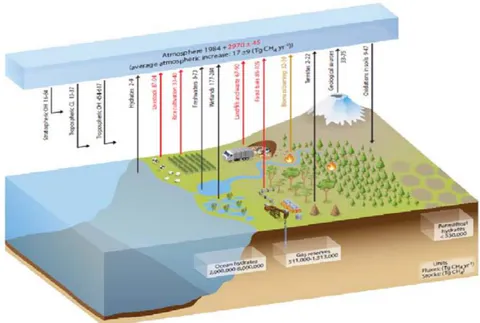
Biomass that was previously intended (before the middle of the 20th century) for burn and which would have emissions is now abandoned in the forest and with its decomposition emits methane into the atmosphere. The energy that would have been produced from this forest biomass again emits carbon dioxide, but today it comes from fossil fuels. This explains the greater increase in methane relative to carbon dioxide and the increase in forest fires since the middle of the 20th century. After the II World War, the energy model changed significantly, the forest was abandoned as an energy source and it was transferred to the oil fields of the Persian Gulf. In the forests now accumulates the discarded dead biomass, good fuel and despite the increase of modern mechanical equipment to combat forest fires, huge areas of forest are now being burned throughout the developed world.
c) The natural function of carbon dioxide
The naming as a "pollutant" of the carbon dioxide that all humans, fauna and flora exhale is probably due to the reading of Svante Arrhenius' doctoral dissertation as it was understood in the 19th century. Carbon dioxide exists in the atmospheric air before humans appear at the forefront of planet Earth's history. It is a gas emitted by natural organisms (flora, fauna and people) producing the energy necessary for their lives. Thermal machines are the people, as well as animals, thermal machines are also the engines of our means of transport. We operate at , the engines at a higher temperature. Carbon dioxide emits to all of us lives as well as the engines of vehicles and machinery to produce work. is eliminated in the air by its producers and consumed by plants for their growth. In ambient air, carbon dioxide exists as an intermediate storehouse. It enables plants with their photosynthesis to develop and the increase of plant production (agricultural crops and forest vegetation) requires increased amounts of . Of course, it does not mean that excessive emissions in the urban environment will increase crop production in the fields, it only means difficult living conditions in cities. The European Union stipulates that in cities the green surfaces should be inhabitant, while in Thessaloniki they barely reach inhabitant [9]. Therefore, it is not the consumption of fossil fuels that is to blame for the increase of carbon dioxide in the city, but the negligence of the municipal authority to take care to increase its parks, which may consume it.
It is a fact that the engines of the means of transport emit significant amounts of carbon dioxide . Their manufacturers offer new technology engines and with more noble fuels such as LPG and natural gas reducing fuel consumption and carbon dioxide emissions. Existing technological solutions that have not been adopted by many companies. Some prefer to create software to mislead the control authorities when checking their vehicles rather than reduce the emissions of their vehicles, especially if this ensures increased sales and profits. Other companies such as Urban Transport Organizations are more likely to request an increase in the price of the ticket for environmental reasons than to use natural gas on their buses.
The balance between emissions and consumption of carbon dioxide in the atmosphere has been broken in recent years. Significant areas of forests that consume quantities of this gas on a global scale are being destroyed (Siberia, Canada, America, Amazon and forests in Europe and Greece) reducing the ability to balance the emission and consumption of carbon dioxide into the atmosphere.
The reduction in the consumption of carbon dioxide by forests combined with the burning of fossil fuels leads to the effect of increasing co2 carbon dioxide in the atmosphere as shown in the diagrams of the figure.
The increase in the world's population, however, requires an increase in the available food, thus an increase in plant production, which means increased consumption of by plants. Therefore, increased amounts of carbon dioxide in the ambient air are required to balance the increased consumption with its increased production and not the reduction of as attempted.
II. INCREASE IN THE ATMOSPHERE TEMPERATURE
They say that the increase in the temperature of the environment is caused by dioxide from the combustion of fossil fuels while as shown in Table 3 its specific gravity is great so that it orient in the high layers of the atmosphere with the greenhouse effect so that it is responsible for the increase of the temperature of the atmosphere and any contribution to this increase is much less than the participation of water vapor as shown in Figure 2. However, there are not the entries from:
- Forest fires. (in Greece annually burned 500,000 to 1,000,000 acres of forest emitting huge amounts of black dust)
- The combustions from self-ignition of landfills with negative effects on air quality.
- The waste heat in the environment from internal combustion engines, Steam Power Stations, domestic heating, air conditioning and other technologies.
a) Technologies produced useable work and temperature of atmospheric air
The involvement of the various technologies available in the increase in air temperature with their heat expelled in the environment is shown in Table 5.
| Useful engineering, thermal or electrical power generation technologies | % conversion to useable power | % thermal waste | Summary |
| Engine Otto | ~ 28% | ~ 72% | 100% |
| Engine Diesel | ~ 40% | ~ 60% | 100% |
| Engine Atkinson-Humphrey | ~ 45% | ~ 55% | 100% |
| Engine Brayton gas turbine | ~ 35% | ~ 65% | 100% |
| Engine Stirling | ~ 35% | ~ 65% | 100% |
| Installation Rankine steam machine | ~ 15% | ~ 85% | 100% |
| Installation Rankine steam turbine | ~ 30% | ~ 70% | 100% |
| Installation Brayton-Rankine gas-steam turbine | ~ 60% | ~ 40% | 100% |
| Photovoltaic system only electric | ~ 18% | ~ 82% | 100% |
| Photovoltaic system electric and thermal | ~ 80% | ~ 20% | 100% |
| Fuel cell | ~ 50% | ~ 50% | 100% |
| Solar thermal system | ~ 70% | ~ 30% | 100% |
| Electric boiler | ~ 100% | ~ 100% | 100% |
Table 5 shows that the technologies used discharge more heat into the environment than the useful work for which they were built. An important contribution to the heating of ambient air is the technology of electric power generation.
The ambient air in Greece is a parallelepiped long, wide and high that contains . air. According to the equation the mass . air with heat capacity will increase its temperature by with heat . . or . . .
Annually, on average in Greece, 50. MWh of electricity are produced, which with an energy conversion rate of Steam Power Plant means that of the primary energy of fuels is discharged into the atmosphere, lignite in our case, or 50. . MWh of primary energy of lignite and in the environment are expelled 142,8. MWh * 0,65 = 92,8 MWh heat capable of increasing our air temperature mass 3,75. kg by 92,8. . per year.
The increase in air temperature results only from the waste heat for the production of electricity by the Steam Power Plant every year. Adding both the fuel consumption for movement and heating as well as the heat from fires, it makes sense to continuously increase the air temperature that we cause with the selected technologies.
Heat into the environment is also expelled by machines that are not in operation, such as black cars (state limousines). Without black cars operating, only parked and exposed to the sun in the summer with an intensity of (countries with significant sunshine) and vehicle dimensions 4,5 m long and 1,6 m wide emit , , , heat Converting of the solar radiation that falls on them into heat, expelling it into the air, increasing its temperature, as is the case with black surfaces. That's why in Greek tradition most of the objects are white and light colored such as the houses with white walls and ceilings especially on the islands, white boats, white traditional costumes, clothes and even the monuments are made of white marble.
Carbon dioxide in the air is been accused, the component with in volume or in weight (see table 2) of air that causes the increase in temperature on Earth. So, after finding the "culprit" of climate change and convincing a large percentage of the population, a method of storing is now being sought to build and install the necessary equipment, producing typical profit. As a profit is currently generated by selling and buying emission allowances.
There is also a simpler methodology for storing carbon dioxide, such as the example of China, which planted trees and greened the 42200 square kilometres of The Maowusu Desert. An arid inhospitable region of the last 1000 years today produces oxygen by binding the carbon dioxide of the atmosphere to the trunk of its trees. In this way, China is fulfilling its obligations to reduce carbon dioxide imposed by its international commitments and by improving the living conditions of its citizens. Since the Chinese managed to green desert so it is possible.
to reforest conventional lands and grow trees in cities
to clean forests from its dead biomass, protecting them from fires
not to abandon forests as an energy source;
to demand responsibility from those responsible for invalidly extinguishing forest fires;
not to regard as a GDP increase the repair of damage from forest fires;
b) The thermo insulation and the temperature of atmosphere
Thermal insulation has been applied for many years to reduce heating energy consumption and residential air conditioning. The method works well in countries with little sunshine. Thermal insulation is strong resistance to the energy flow between the living space and the environment, ensuring thermal comfort in the building thus due exclusively to purchased energy. In the south, however, as in Greece and other countries, the sun god Apollo also provides high sunshine during the winter season. Buildings constructed up to the beginning of the 20th century provide conditions of thermal comfort throughout the year without high-tech heating and air conditioning systems. Thermal insulation protects against thermal energy losses but isolates the building from the ability to accept free solar energy in winter and not have large air conditioning needs in summer. This seems to have been known in antiquity and shaped with different thickness the walls to the south that assumed the role of a heat storehouse derived from solar energy, as was shown in archaeological excavations where walls with different thicknesses were found towards the different orientations. The large mass hinders the thermal flow between the living space and the environment, improving thermal conditions and reducing energy consumption. With the external thermal insulation that is applied lately, the thermal mass of the wall that the sun sees decreases, its temperature rises rapidly and emits the energy that it had been converted from the sun to the environment into a form of heat resulting in a further increase in the temperature of the air all year round. Increasing the temperature of the air in the environment, a result of external thermal insulation, increases the required energy for the operation of air conditioners. Because they expel the heat they receive from inside the building at the highest temperature of the ambient air. An increase that means a general increase in electricity consumption, an increase in the use of primary energy with their associated emissions. Do not be surprised by the increase in temperature in the environment and the climate change that we are causing on our own in order to have secured customers and sales of energy supply companies. We may learn from our ancient ancestors by diversifying the thermal behavior of each surface of the building, utilizing the free energy that the sun offers to all of us free of charge, as well as the modern technology of insulation materials, but adapted to the real needs of the building, integrated into its respective environment.
III. THE RENEWABLE ENERGY SOURCES
Developed countries are turning to new technologies for the production of useful, easy-to-use forms of energy such as electricity from renewable energy sources, independent of fossil fuels. The most widespread of these are the photovoltaic panel parks and the wind turbines with which the work is then engaged.
a) Photovoltaic power plants
The production of electricity with photovoltaic cells that was intended for space applications is been applied to earthly ones since the beginning of the 21st century. Their manufacturers report that the degree of conversion of solar radiation to electricity, with a solar radiation intensity of is 150 to which means a maximum electrical power of up to 180 from the available . The degree of utilization of of solar energy by photovoltaics is a good grade, considering that is the maximum theoretical limit that can be achieved with this technology according to Shockley-Queisser.[14]
The of solar energy is converted into heat due to the dark color of the solar panels, eliminating heat directly into the ambient air, plus about reflected in light form. Installed photovoltaic panels of on the ground produce (maximum ) electricity for the grid and of heat for the ambient air. Thermal energy greater than the waste heat of conventional electricity generation systems with an Steam Power Plant of equivalent power. The photovoltaic panels increase the air temperature on them to a degree of according to by .
This increase is not noticeable in the field of photovoltaic installation because the upward thermal current of air that is created, brings neighboring cold air masses. If all the electricity in our country is produced with photovoltaic parks i.e. the produced electricity every year of 50,106 MWh electrically, on average, it means that from the primary energy of the sun 50. MWh/ . MWh. heat will be expelled in the environment 277, 7. MWh , 8 = 222, 2. MWh vs. 92, 8. MWh of heat expelled by the Steam Power Plant with lignite fuel.
The waste heat of photovoltaic parks can increase the air temperature mass 3, kg by 222, . , per year. Compared to lignite, the increase in air temperature of the atmosphere in the era of environmentally clean technologies will be 222,2/92,8 = 0,2/0,08 = 2,4 times faster. While the participation of lignite and carbon in general decreases (in Greece to ), the participation of renewable energy sources increases (in Greece at ), the measures to combat climate change are not working and the increase in the temperature of the environment continues.[8]
What is dangerously worrying is that the possibilities for intervention are diminishing, because in the era of emissions there is the possibility of neutralising with increased consumption by forests, crops, etc. If we intent to and we increase the areas, protect the forests and crops, there is a possibility. With the increase of the air temperature by photovoltaics there is no possibility of neutralizing the increased air temperature achieved because heat is the lowest form of energy and there are no available technologies for its consumption.
The solar rays that fall on earth are converted inside the soil into heat absorbed by the huge mass of the soil maintaining it until it is slowly expelled when the ambient air requires it, thus regulating the ambient air temperature. It is heated in the summer and delivers this stored energy late in the winter to the air, mitigating the large temperature fluctuations it would have had without the stored solar energy. The photovoltaic surfaces are inserted between the sun and the ground so that the solar energy is directly converted into heat in the ambient air increasing its temperature without being stored in the soil covered by the photovoltaic surfaces to function normally as an energy storage of solar energy. The extreme reactions of nature appearing as intense weather phenomena are none other than the response of nature to the interventions on its natural function that we cause ourselves and which we are obliged to pay dearly.
We are talking about an increase in the temperature in the environment while there is a drop in temperatures, in the winter months, to very low unusual temperatures for the regions. This is because with our activities we orient the solar energy to heat the atmospheric air which small mass increases its temperature. The soil in which solar energy can be stored, which balances the temperature changes of the air, is not heated, and thus, in the end, the sharp fluctuations of the climate are observed.
Photovoltaic are also installed on roofs of buildings in which solar rays are converted into electricity and heat for the environment at the same rates. In the summer these protect the building from solar rays falling on its roof, reducing the thermal load of its air conditioning installation. While in winter the photovoltaics act as additional insulation reducing the effect of winds especially when photovoltaics are an integral part of its roof. The heat produced by rooftop photovoltaics is not considered additional heat for the environment because anyway the incident solar radiation in each building is eliminated in the form of heat in the air, so that the comparative daily thermal balance is neutral.
Photovoltaic producers also offer more environmentally friendly proposals such as complex photovoltaic-thermal panels that produce electricity and thermal energy covering domestic hot water needs, building heating and electricity, utilizing solar energy up to .
With the complex photovoltaic-thermal panels, the large photovoltaic parks are not constructed, which are intended to take advantage only of the favorable legislation for electricity production, converting only of the available solar energy for the electricity grid and for heating the environment. Photovoltaic parks on the ground do not take into account the harmful effects on the environment that they cause with their thermal emission. We pay for the solar energy that falls on the producer's soil and turned it into beneficial, while we ignore the energy from the same sun that falls on our house.
b) Wind turbine power plants
The use of wind energy is not a new technology it has been around for thousands of years, offering the ability to produce energy for grinding wheat in windmills. The current exploitation of wind has nothing to do with the old technology of harnessing the energy of the wind producing beneficial mechanical energy where it is consumed. The wind of the area was exploited in the property itself and not the flow of air masses that pass at high speed from critical points of the Earth's surface.
The winds are the result of a difference in pressure of different areas, with High and Low Barometric (HB-LB) that have a different intake of heat and thus creates the air current that we call wind. The purpose of the wind is not to turn the blades of windmills and wind turbines but to thermally balance areas with different pressures and temperatures. In the old windmills, the wind, after having fulfilled the heat transfer that is its main mission, it would dispose the rest of its energy in the windmill.
Modern wind turbines bind airflows at critical points of its flow, with high speed to deliver maximum energy to the wind turbine. With a theoretical maximum of they detach up to of the wind's energy, so for every of electricity from wind, resistance is created in its path equal to or greater than the generated power. When resistance is inserted in the wind flow (such as a wind turbine park), the difference between the atmospheric pressures of the different areas remains high and the time of weakening of the wind is lengthened. High temperature differences are maintained between the areas in relation to the natural course of the wind attenuation phenomenon. The maintenance of high differences in atmospheric pressures and temperatures cause more intense movement of the air masses and appear as the unexpected, intense weather phenomena.
Wind turbines do not emit pollutants, but contribute directly, to a high degree, to the maintenance of high temperature differences between wind-creating areas. They contribute to the increase of the time of balancing temperatures on the Earth's surface by participating in the intensification of climatic phenomena. That is why, while the participation of renewable energy sources in our energy supply is increasing, at the same time the intense weather phenomena in the unusual residents and their infrastructure that are not adapted for this are increasing. But this is direct climate change and not indirect as in the burning of fossil fuels accused of being responsible for climate change.
The installations of wind turbines on the ridges of the mountains may be legal according to the legal texts issued by the beneficiary, but even this procedure is commonly accepted as a change of use. The conventional use of mountains for thousands of years was the residence of fauna and flora of the area while the current change of use turns the area into an industrial use of electricity generation. A change that is not temporary, it is a permanent burden on nature, something that we do not have the right to do because we were not given that right. It is being seized by the force of the "lawful" act. Nor do we have the right as intelligent societies to endanger the lives of wild birds that, unable to cope with the high speeds of movement of fins, fall on them, resulting in their death
Wind turbine with a diameter of and 1 rotation/sec has velocity at the edge of the . . Such speeds cannot cope with birds, and their collision with the wind turbine fins means their certain death. On the highways there are fences preventing such collisions of our moving civilization with wildlife, but in wind turbines there is no such possibility.
An important factor in turning to renewable energy sources was the expected reduction of energy costs and correspondingly the cost of the final product, but with the wind turbine and photovoltaic parks, exactly the opposite can be seen. This is because while in traditional windmills the cost of energy did not participate in the formation of the price of the product, in modern wind turbines the cost of energy participates in the formation of the price of the product as an energy cost, while its VAT has a negative role in the available liquidity of the company. We also see it in the electricity bills in houses and businesses with the increase in the price of electricity. The only beneficiaries of the implementation of RES are the power companies with wind turbines, photovoltaics and the state that ensures revenues from VAT.
IV. NEW DIRECTION FOR ENERGY USE
For the protection of the environment, new directions are currently being chosen, such as electromobility and hydrogen power, which, as promised by those responsible, will solve problems in the environment. It so happens that these two forms of energy have common characteristics and both do not exist in nature. Electricity is not free in nature, nor is hydrogen free in nature. Electricity and hydrogen are in fact energy carriers, systems for the production, transport, storage and use of an easy-to-use form of energy. An attempt is being made to change a large part of the world economy, because until now we have been buying energy from the one who has the deposits and reserves and now we will be buying from the one who has the technology. This is very dangerous because, as explained, the increase in temperature on earth will happen faster without the possibility of corrective intervention. Since it was produced and sold, electricity has been intended for stable energy consumers due to technology, and only nowadays has it approached mobile energy consumers, while hydrogen seems to be intended for mobile energy consumers.
a) Electro mobility
The electro mobility existed in the past such as in the subway, trams, trolleybuses and electric motor vehicles on golf courses. What is being attempted today is the expanded use of electromobility to the extent that it becomes the only form for cars, mopeds, etc. The necessity came from the unfavorable conditions of the atmospheric air in large cities, where due to overcrowding and long distances, daily transport is by cars that have thermal engines that emits quantities of exhaust gases.
With the experience of electric cars and mopeds on the road today they promise that we will have a clean atmosphere in our cities in the future. Yes, in cities the atmosphere can become clean but where this energy is produced the atmosphere will have increased carbon dioxide emissions. The amounts of energy required will also be greater because energy losses will have to be ensured during its transport.
From a decentralized system of carbon dioxide emissions production we will move to a concentrated emission system. In some areas there will be oversaturation in carbon dioxide emissions and in others a deficiency. Unfortunately, oversaturation will not be where there is a need for . Renewable energy sources cannot consistently meet energy needs since their sources are not stable. The big change in the model that is being prepared is intended to bring many jobs to a specific branch of industry, opening up a huge market and the flow of money and in this case will again have a direction, towards the specific companies that prepared the scenario. The benefit to the environment will be local oases, in city centres, accompanied by local over-concentration of emissions in energy power plants.
However, what is not taken into account are the thermal emissions from the electromechanical equipment for the production and consumption of electricity. Thermal emissions that regardless of whether they are from electrical or mechanical equipment if they are for the production or consumption of electricity will continue to exist. The dangerous thing about thermal emissions is that we will realize their consequences when it is already too late, that is, when the temperature of the environment has risen and in some areas living conditions will become unbearable. Thermal systems are inertial and there is no possibility of intervention in them to deal with the consequences since they expel their heat in the environment.
The problem created by vehicles in large cities came from the traffic and the number of vehicles turned it into an environmental one and today it is being attempted to be solved by changing the energy from chemical to electric. However, the traffic problem in the cities will continue to exist, something that does not exist in the countryside and in small towns or villages. So it is not the problem at its root that is solved, but its symptoms, which means that it will appear again in a different way. So electro-mobility is not the solution, is an aspirin.
b) Hydrogen mobility
Another attempt to exploit modern technologies to tackle climate change is the transition to the hydrogen economy or hydrogen power. Hydrogen has the highest calorific value of all fuels, for example gasoline contains 44 MJ/kg energy, propane 46,4 MJ/kg and hydrogen 140 MJ/kg i.e. 3 times more energy than propane. This property as well as the fact that in its combustion only produced water is what have led us to exploit this energetically also. The disadvantage, however, is the very low density of while the density of gasoline is and in order to be usable it must be stored in bottles with a pressure of more than 200 bar.
The low density causes a serious problem by reducing the efficiency of the internal combustion engines because the fuel occupies a large volume in the cylinder of the engine reducing the capabilities of the production of mechanical work. Figure 6 shows comparative data on the volume of fuel and air in a conventional petrol engine, an atmospheric hydrogen engine and an supercharged engine. Figure 6 shows that an engine with hydrogen will have a reduction in the energy with which the cylinder is filled due to the low density of hydrogen. This requires more work for compression and the only solution that reliably improves the situation is the technology of direct injection of hydrogen into the cylinder. This technologically limits the possibilities that future vehicle engine manufacturers will have by making the product even more expensive.
![Figure 6: Comparison conventional engine and hydrogen engines [15]](https://doc.globaljournals.org/jdgh57_61417/ocr/images/derivatives/f8/f89ab7664b10adcd6297dabeae95f1d84f244d118d643bccab441463280d9849.webp)
With hydrogen mobility, the environment will be freed from carbon dioxide and replaced with in gaseous form i.e. water vapor. However, figures 1 and 2 have shown that the contribution of water vapor to the containment of heat on planet Earth is greater than any effects that carbon dioxide can cause. It seems that the situation in the environment will probably get worse if we move on to hydrogen power while we have made huge investments in our transition to the hydrogen economy. In addition to increasing the air temperature which will be a side effect of the hydrogen-powering process, the percentage of carbon dioxide of necessary for the photosynthesis of plants on Earth will be reduced, thus reducing our food.
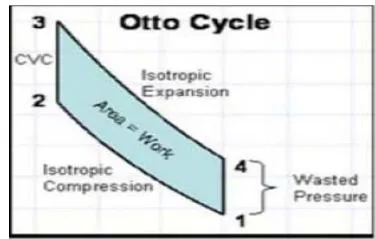
The big problem that is often referred to as climate change is the warming of the environment. However, one of the most important factors for this increase is the effluent heat from the cooling of the thermal machines of mechanical engineering, such as internal combustion engines. The change of fuel with hydrogen however does not change the degree of conversion of the energy of the fuel into a mechanical work, this degree remains the same and quite low if we take into account that hydrogen power is applied to engines of the thermodynamic cycle Otto or . As shown in Table 5, the Otto engine used in cars has one of the lowest degrees of utilization of fuel energy. In fact it is a good heating system of the environment that as a sideline gives us the ability to move.
There are other thermodynamic cycles but for the economy of production of mechanical equipment, the Otto cycle is chosen, without seeing that the cheap equipment cost very dearly by paying more fuel and the consequences caused to the natural environment.
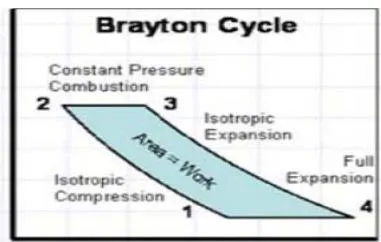
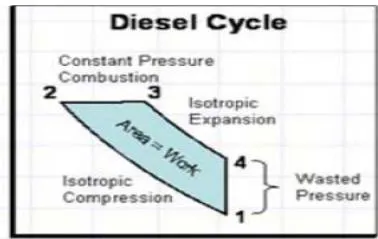
Figure 7 presents the 4 basic thermodynamic cycles and it is easily established that the mechanical work produced by the Atkinson-Humphrey thermodynamic cycle is much larger and yet in practice it has very little application. Initially this was done because of the established level of technology and then because of established legal texts. The generalized use of the Atkinson-Humphrey thermodynamic cycle today with the existing fuels could show an improvement in the current situation from an environmental point of view, but unfortunately solutions are being chosen whose application promises greater profits.
![Figure 7: Comparison thermodynamic cycles Otto, Brayton, Diesel and Atkinson-Humphrey [4]](https://doc.globaljournals.org/jdgh57_61417/ocr/images/derivatives/87/87d9d5db79efd7ec2aae6a2f358f97ff94849cc914381d43af323e8f7215d301.webp)
As it seems, however, the most difficult thing is to establish actions that really benefit the inhabitants of this planet and their environment.
V. TECHNOLOGICAL FAILURES IN HUMAN HISTORY
It is not the first time that humanity has been plagued by the wrong decisions that people make about themselves.
In the Middle Ages in North-Western Europe people died without explanation about the cause of their death. Modern research on the bones of old cemeteries finds that the deaths came from a high lead content. A toxic heavy metal used in the mixture to make food dishes and drinking bowls. It seems that on their own they were taking in small doses every day of the poison they were preparing for themselves. A technology cheaper than ceramics used in the Mediterranean for the same purpose where no deaths from heavy metals were observed. In the second half of the 20th century we added tetra-ethyl-lead to gasoline to increase the power of the engines. Deaths from the inhalation of the heavy toxic metal were not recorded, so that the crime is not seen, but fortunately with the new century its use was banned.
The great sea discoveries lasted a long time because the deaths from scurvy were more than the deaths from shipwrecks and naval battles and made it difficult to make long journeys. The disease was caused by the sailors themselves who ate only meat to give them strength. The lack of vitamins from vegetables and fruits caused the disease that today we have forgotten. James Cook's success in making a three-year journey to discover Australia without losing his sailors is due to the diet of the crew he had chosen, including sour cabbage on the menu.
After the Second World War, humanity had the impression that it is in a new era of energy production with inexhaustible possibilities, the era of nuclear energy. At first it seemed that environmental pollution had been combated, even though it was known that the nuclear fission power system is a system of unstable equilibrium. It was only after the major accidents at Chernobyl in 1986 and Fukushima in 2011, with the consequences of hundreds of direct deaths and pollution of the regions for hundreds of years, that a review began that nuclear fission can solve the problems with environmental pollution and the growing demand for cheap energy, turning societies towards other energy sources.
The great epidemics in human history that sent over a hundred million people to death such as plague and cholera were the result of the unhealthy modes of operation of water and sanitation systems in the middle ages. In other words, it was a technological inadequacy of the time. At the same time in the universities they taught basic theology, law and philosophy and secondarily they were engaged in the natural sciences. Thus, they could not give society scientific executives worthy of solving problems of natural origin. Meanwhile, the level of hygiene in ancient Greece was known, such as that in ancient Olynthos 2500 years ago drinking water came with a clay pipe to the city from the mountain and every house had sanitation.
Sultan Bayezid II, mocked the King of Spain Ferdinand and Queen Isabella, in 1492 for the persecution of the Jews, saying "Call Ferdinand a wise ruler, the one who bankrupted his own country and enriched mine." The Jews expelled from Spain engaged in trade in the Ottoman Empire and enriched themselves and the Sultan's state. But what the sultan does not say is that the irrelevance of the Spanish kings was largely due to his military power, because the Jews were good craftsmen of gunpowder, an art they had learned from the Arabs of Spain. The largest gunpowder operation of the Ottomans was in Thessaloniki, in the Jewish city of the empire and supplied the sultan's army with gunpowder throughout the Balkans. Spain 80 years later, i.e. in 1571, had to cooperate with all the Christian naval forces of the Mediterranean to face the Ottomans in the Battle of Nafpaktos, fortunately successfully.
Germany started a war in 1940 and lost it to its technological inadequacy. Its tanks, Panzer IV, had a 300 HP petrol engine with a 670 Lit fuel tank ensuring a range of up to 200 km and a maximum speed of requiring 3,3 Lit/km, were pitted against the Russian T-34 tanks that had a 500 HP diesel engine with a 560 Lit fuel tank ensuring a range of up to 465 km with a maximum speed of requiring 1,2 Lit/km. The movement of German "high" tanks required 3,3 gasoline/1,2 diesel = 2,75 times more fuel of better quality. The enormous fuel demand of the German army led him to Africa, breaking his forces, something contrary to the theory of the German general Carl Philipp von Clausewitz [16] described in his famous book "About War".
VI. CONCLUSIONS
The conclusions may sound contrary to what has been said about climate change by the media, governments and scientific voices, but the reader can judge their correctness with the data and reasoning mentioned in this paper. From the above detailed description it seems that:
- The increase in temperature in the atmosphere is largely due to the expelled heat from the energy equipment we use.
- The thermal insulation of buildings ensures that the thermal comfort within the building is due only to the purchased energy, excluding the contribution of free solar energy that falls on it. It is imperative that the thermal insulation be adjusted with the orientation of the structural elements and the environment of the building.
- Carbon dioxide is not a waste, it is a natural component of ambient air and its reduction in the atmosphere leads to a decrease in plant production.
- Photovoltaic power plants, while presented as "green ecological" installations, contribute to the increase of the temperature of the ambient air. The use of photovoltaic surfaces that offer electrical and thermal energy supply directly to the final consumer, placed in the building-consumer is a more appropriate use of solar energy technology.
- Wind turbine power plants are not "green" facilities as they are presented but participate in the emergence of severe weather phenomena.
- Technologies are to be used for the benefit of citizens, meeting their needs and not to ensure the operation of businesses.
- The choices of the applied technologies and their use are one of the causes of deregulation of the normal functioning of nature that naturally reacts with the intense weather phenomena that now occurring more often.
- Programmable electro and hydrogen moving may bring the planet to a state of deadlock because they contribute to its warming.
- It is imperative that the study of energy production and management technologies is now done at a higher quality level, not as a repetition of older, established perceptions but with a modern scientific approach adapted to the particularities of each subject, with the primary aim of protecting humankind and the natural environment in which we live. Planet Earth is one and so far seems the only one with living conditions, so it is essential that we
protect it effectively in order that our children live pleasantly on it.
In the theory of stupidity of the German thinker Dietrich Bonhoeffer [17] it is stated that "people when they cannot judge something on their own, due to lack of knowledge, prefer to do what others do". Thus, a misconception becomes the property of the great masses, establishing it as truth, and whoever questions it is positioned as the heretic of society. With this mechanism of creating the truth, important events were recorded in history such as the killing of Hypatia [18] dismembering her in Alexandria in 415 and the waiting of humanity 1000 years for Johannes Kepler [19] to reach the same conclusions that Hypatia worked. Giordano Bruno [20] was burned at the stake in 1600 because he supported the sphericality of the earth, something that Eratosthenes [21] had calculated around 200 BC and today is common knowledge for the students of the schools.
This is a small sample of the results of misconceptions that at the time were not disputed. Humanity today repeats the same mistakes, only now the power of tools, actions and possible mistakes is so great that we may not be able to return to normality anymore. The great philosopher Plato [22] had said that: "the world will become a better place if kings philosophize or philosophers reign."