This article is part of a master’s thesis that aims to present an adaptation to the Ross-Heidecke model for calculating building depreciation. In addition to including the obsolescence coefficient, the adaptation of the conservation coefficient is proposed based on parameterization from the Dutch standard for building inspection. The proposed method is applied in hypothetical cases where levels of conservation, obsolescence, and useful life can be evaluated under extreme situations. The inclusion of the obsolescence coefficient for determining building depreciation is essential, as it assists in developing a more accurate assessment, resulting in a reduction of subjectivity. To verify the applicability of the method, hypothetical situations were established as a way of evaluating the behavior of depreciation in extreme situations, verifying results trend and whether the method applies to different cases. it can be stated that the applicability of the method presents results within the logical criteria already established by Ross-Heidecke, in addition to demonstrating the influence of obsolescence on the calculation of depreciation.
## I. INTRODUCTION
Buildings, like any other material, tend to undergo changes due to natural aging. The building's useful life is directly related to its conservation and obsolescence level, these factors being a direct relationship between durability and performance.
Obsolescence is commonly considered as the beginning of the buildings' end-of-life stage (Thomsen and Van der Flier, 2011). For Garnett (2006) apud Pereyra (2020), obsolescence, or the process of
Specialized literature addresses different types of obsolescence. However, the main classifications can be presented in the figure below:
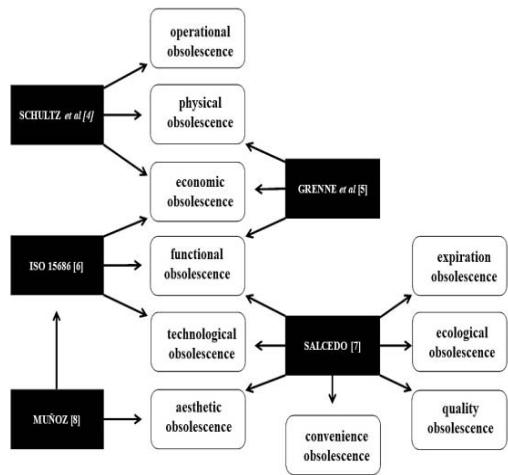
Fig. 1: Types of Obsolescence. (Elaborated by the Authors).
Traditional property valuation methodologies measure depreciation as a determined coefficient, often as a reciprocal ratio to useful life. The criterion related to the state of conservation is approached as an analogy to apparent age, with uncertainty being assigned to the item, being open to the evaluator's relativism and personal subjectivity.
The introduction of the Heidecke method in valuation engineering is seen as an important milestone for depreciation valuation. The analysis, based on the physical condition, becomes an influencing factor for the calculation, establishing a proportion of depreciation versus intervention needs to building recovery.
The combined Ross-Heidecke method, presented by Abunahman (2008) and Nasser Junior (2019), is a combination considering the depreciation related to the age of the building, proposed by Ross, and the depreciation related to the state of conservation, suggested by Heidecke.
Martinatti (2021) indicates adaptations to the methodology based on the ABNT NBR 15575 standard (2013) proposed by Galende (2018) and Ross-Heidecke adapted by Pimenta (2011), resulting in the development of a multi-criteria model for evaluating the
Global Depreciation Factor (k_t). The main objective of the analysis is to measure the degradation coefficient, since determining the state of conservation or even incorporating the function of nonconformities leads to an equation focused only on the degradation of the building, thus avoiding the obsolescence factor. Although discussed by Galende (2018), obsolescence is not measured in his proposal. It is also not considered in the adaptations made by Pimenta (2011) and Martinatti (2021).
The motivation for this research focuses on presenting improvements to the current methods of calculating the buildings' depreciation coefficient, based on the consideration of the obsolescence state in the different building construction systems.
The analyzes of this research were developed at the Built Environment Rehabilitation Laboratory (LABRAC), coordinated by Prof. PhD João da Costa Pantoja, within the Existing Structures research group - Reliability-based Assessment Methodology, where integrations, adaptations and suggestions for probabilistic methodologies are studied, associated with carrying out inspections to promote data that can guide building's decision-making decisions, object of study.
The proposed method is analyzed based on its hypothetical cases application, aiming to verify in
extreme situations, ensuring that the results are presented within the logical criteria already established by Ross-Heidecke.
The purpose of this work is to improve the Ross-Heidecke method, so that the overall depreciation coefficient of a building incorporates relevant characteristics regarding the impact of obsolescence in each of the construction systems.
## II. METHODOLOGY
The data was collected through a sensory inspection, as indicated in ABNT NBR 16747 (2020), where the following information was gathered: nonconformities, pathological manifestations, age and useful life of each building's construction system, construction typology and obsolesitism.
With this information, the model table for calculating the degradation coefficient was generated based on the parameterization in the Dutch Standard proposed by Martinatti (2021) and the calculation of the obsolescence coefficients, according to the methodology to be presented. In figure 2 we have the flowchart indicating, the proposed methodology.
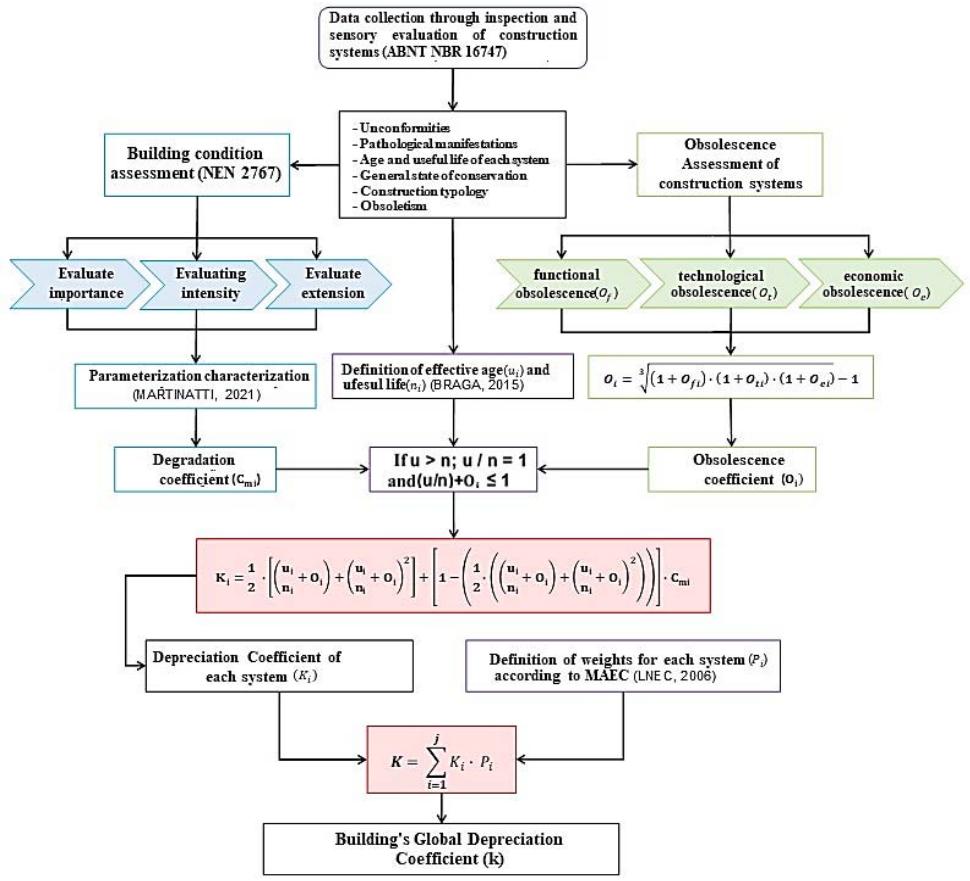
Fig. 2: Above Flowchart of the Proposed Method (Elaborated by Authors).
### a) Actual Age and Lifespan
As already observed in Braga's research (2015), the need to replace the age of the property and the useful life by the age of each constructive element and its respective useful life is necessary, since not all elements of the building have the same expected useful life.
In this way, an analysis of the depreciation coefficient was carried out for each building system, where each one had its own age, useful life, and conservation state.
Table 1 presents useful life values of a building main construction systems in accordance with ABNT NBR 15575 (2013), which were analyzed individually.
Table 1: Estimated construction systems useful life. MAEC apud Braga (2015), adapted by authors.
<table><tr><td>Construction system</td><td>Useful life (years)</td></tr><tr><td>Structure</td><td>120</td></tr><tr><td>Vertical seals</td><td>100</td></tr><tr><td>Roof</td><td>100</td></tr><tr><td>Floors</td><td>60</td></tr><tr><td>Hydrosanitary</td><td>60</td></tr></table>
### b) Obsolescence Coefficients Calculation
ISO 15686-1 (2011) classifies obsolescence as functional, technological, and economic. In this paper, this classification was used to qualify and, subsequently, quantify obsolescence in construction systems. Based on the normal distribution, obsolescence was divided into 5 (five) distinct levels: TOTAL, HIGH, MEDIUM, LOW and NONE. Weight was assigned to each level according to the fraction of covered area in normal distribution, with variation every 0.5 in the standard deviation.
When the construction system is new, the samples standard deviation is 0 (zero), since there is NO obsolescence. Therefore, the area corresponding to the NONE level is the area presented in the normal distribution graph, which in this case is 0 (zero).
Table 2: Obsolescence Classification (Elaborated by Authors).
<table><tr><td rowspan="2">Degree</td><td colspan="3">Obsolescence</td><td rowspan="2">Weight</td></tr><tr><td>Functional</td><td>Technological</td><td>Economic</td></tr><tr><td>Total</td><td>Complete loss of function.
Element has no function for the building.</td><td>Outdated technology.
There are no spare parts.
Immediate replacement.</td><td>Financially unfeasible recovery.
More expensive solution than other alternatives.</td><td>1</td></tr><tr><td>High</td><td>Function of little importance, already in an advanced stage of shutdown.</td><td>Reduced performance.
Replacement close or imminent.</td><td>Not very efficient. The costs of losses and waste are considerable.</td><td>0,955</td></tr><tr><td>Average</td><td>Element still operational, but with compromised function.</td><td>It meets the needs, but there are modern alternatives now.</td><td>It presents good cost-benefit, but there are already losses.</td><td>0,683</td></tr><tr><td>Low</td><td>Functionality little affected.</td><td>Technology in use, with good performance.</td><td>Minimum losses. Use resources productively.</td><td>0,385</td></tr><tr><td>None</td><td>Does not present functional obsolescence</td><td>Does not present technological obsolescence</td><td>Does not present economic obsolescence</td><td>0</td></tr></table>
It is possible to observe that when obsolescence (regardless the type) is classified as degree NONE, the weight assigned is 0 (zero). As obsolescence manifests, the weights assigned increase, reaching the limit state of obsolete, where the value is 1 (one), that is, it has reached $100\%$.
The coefficient for each type of obsolescence was determined by performing the arithmetic mean of the values assigned in the relevant subsystems to the analyzed system. Thus, the functional obsolescence coefficient of system X is the average of the values attributed to the functional obsolescence of its respective subsystems.
The general obsolescence coefficient of the analyzed construction system is given by the following equation:
$$
O _ {i} = \sqrt [ 3 ]{\left(1 + O _ {f i}\right) \cdot \left(1 + O _ {t i}\right) \cdot \left(1 + O _ {e i}\right)} - 1 \qquad (1)
$$
Being:
<table><tr><td>Oi</td><td>obsolescence coefficient of each construction system;</td></tr><tr><td>Ofi</td><td>functional obsolescence coefficient of each construction system;</td></tr><tr><td>Oti</td><td>technological obsolescence coefficient of each construction system;</td></tr><tr><td>Oei</td><td>economic obsolescence coefficient of each construction system.</td></tr></table>
After establishing the age and useful life of each construction element, the obsolescence coefficient is determined, for each system. From there, the value of the ratio between real age and useful life plus the obsolescence coefficient, if applicable, incorporates the impact of functional, technological, and economic obsolescence in the assessment of the building's depreciation.
### c) Degradation Coefficient Calculation
It is proposed to replace the Ross-Heidecke conservation coefficient for the degradation coefficient presented by Martinatti (2021), calculated from the parameterization of the Dutch Standard (2006).
The degradation coefficient of the construction system consists of the arithmetic mean of the subsystems of the values assigned to each condition description of each subsystem analyzed based on the parameterization of the Dutch standard.
### d) Calculation of the Depreciation Coefficient for Each Construction System
After carrying out the necessary changes and incorporations, calculating the obsolescence and degradation coefficients, we have the following equation as a proposed method:
$$
K _ {i} = \frac {1}{2} \cdot \left[ \left(\frac {u _ {i}}{n _ {i}} + O _ {i}\right) + \left(\frac {u _ {i}}{n _ {i}} + O _ {i}\right) ^ {2} \right] + \left[ 1 - \left(\frac {1}{2} \cdot \left(\left(\frac {u _ {i}}{n _ {i}} + O _ {i}\right) + \left(\frac {u _ {i}}{n _ {i}} + O _ {i}\right) ^ {2}\right)\right) \right] \cdot c _ {m i} (2)
$$
Being:
$K_{i}$ depreciation coefficient of each construction system;
$O_{i}$ obsolescence coefficient of each construction system;
$u_{i}$ effective or current age of the construction system, according to Braga (2015);
$n_i$ useful life of the construction system, according to Braga (2015);
$C_{mi}$ degradation coefficient of each construction system calculated
based on the parameterization of the Dutch
Standard NEN 2767 (2006), according to Martinatti (2021).
To satisfy the principles of the Ross-Heidecke equation and meet the observations of Thomsen and Van der Flier (2011) that, when obsolescence occurs, the building accelerates its depreciation process, moving towards the end of its useful life, the coefficient of obsolescence must be added to the relationship between effective age and useful life.
However, for the equation to be balanced, the result of the sum of the coefficient with the relationship between age and useful life must not be greater than 1. In other words, regardless of the value attributed to the depreciation coefficient of the system under analysis, the sum of this with the value of the relationship between effective age and useful life cannot be greater than 1, respecting the following condition:
$$
\left(\frac{u _ {i}}{n _ {i}} + O _ {i}\right) \leq 1; s e \left(\frac{u _ {i}}{n _ {i}} + O _ {i}\right) > 1 \rightarrow \text{assign} 1
$$
### e) Global Depreciation Coefficient Calculation
Based on the depreciation coefficients of each construction element and using the weights established in the MAEC methodology and presented by Braga (2015), a weighted average was performed, resulting in the calculation of the building's overall depreciation coefficient, according to the following equation:
$$
K = \sum_ {i = 1} ^ {j} K _ {i} \cdot P _ {i} \tag {3}
$$
Being:
$K$ overall building depreciation coefficient;
depreciation coefficient of each construction
$\pmb{K}_{i}$ system;
$P_{i}$ weighting of each construction system, adapted from the MAEC method;
$i$ constructive system subject to depreciation;
number of construction systems subject to depreciation.
The weighting coefficients of each construction system are an adaptation of the method presented by MAEC and used by Braga (2015), with the following values:
Table 3: Weighting of construction systems. Maec apud Braga (2015), adapted by the Author.
<table><tr><td>Construction system</td><td>Weighting (%)</td></tr><tr><td>Structure</td><td>30</td></tr><tr><td>Vertical seals</td><td>20</td></tr><tr><td>Roof</td><td>25</td></tr><tr><td>Floors</td><td>10</td></tr><tr><td>Hydrosanitary</td><td>15</td></tr></table>
## III. CASE STUDY
To verify the applicability of the proposed method, hypothetical situations were established as a way of evaluating the behavior of depreciation in extreme situations, verifying results trend and whether the method applies to different cases. Five hypothetical cases were evaluated:
Hypothetical Case 01: System has already reached VUP, there is no obsolescence or degradation.
Hypothetical Case 02: New system, completely obsolete but showing no degradation.
Hypothetical Case 03: New system, completely degraded but without obsolescence, whether functional, technological, or economic.
Hypothetical Case 04: System has already reached VUP, is completely obsolete and completely degraded.
Hypothetical Case 05: New system, with no degradation or obsolete elements.
Table 4: Coefficients to be evaluated in each hypothetical case (Elaborated by Authors).
<table><tr><td>Hypothetical Case</td><td>Age Factor (u/n)</td><td>Obsolescence Coefficient</td><td>Degradation Coefficient</td></tr><tr><td>01</td><td>1</td><td>0</td><td>0</td></tr><tr><td>02</td><td>0</td><td>1</td><td>0</td></tr><tr><td>03</td><td>0</td><td>0</td><td>1</td></tr><tr><td>04</td><td>1</td><td>1</td><td>1</td></tr><tr><td>05</td><td>0</td><td>0</td><td>0</td></tr></table>
As a way of establishing a relationship between the hypothetical cases, it was established that the evaluation of all examples took place in the floor system of a residential building. This definition is random, as any other system could be evaluated. However, as this is an exemplification of the application of the method in hypothetical cases, this study was limited to using a single system, regardless of which one was used, the responses and final observations will be the same, as these are extreme events.
## IV. RESULTS
### a) Method Application in Hypothetical Case 01
Input Data: Residential building where the real age of the flooring system has already reached the VUP (60 years). Despite achieving VUP, the system does not show degradation or materials obsolescence.
<table><tr><td>Hypothetical case 01</td></tr><tr><td>Depreciation coefficient calculation hypothetical case 01:
Kfloors = 1/2 · [(ufloors/nfloors + Ofloors) + (ufloors/nfloors + Ofloors)2] + [1 - (1/2 · ((ufloors/nfloors + Ofloors) + (ufloors/nfloors + Ofloors)2)))]·cmFloors</td></tr><tr><td>Kfloors = 1/2 · [(60/60 + 0) + (60/60 + 0)2] + [1 - (1/2 · ((60/60 + 0) + (60/60 + 0)2))]·0</td></tr><tr><td>Kfloors = 1</td></tr></table>
### b) Method Application in Hypothetical Case 02
Input Data: New residential building, where the flooring system has just been completed and there is no degradation of the material. However, in this case we will assume that the obsolescence coefficient has reached the TOTAL level, the system is completely obsolete, whether in functional, technological, or economic aspects.
<table><tr><td>Hypothetical case 02</td></tr><tr><td>Depreciation coefficient calculation hypothetical case 02:
Kfloors=1/2·[(ufloors/nfloors+Ofloors)+(ufloors/nfloors+Ofloors)2]+[1-(1/2·((ufloors/nfloors+Ofloors)+(ufloors/nfloors+Ofloors)2))](CmFloors</td></tr><tr><td>Kfloors=1/2·[(0/60+1)+(0/60+1)2]+[1-(1/2·((0/60+1)+(0/60+1)2))]·0</td></tr><tr><td>Kfloors=1</td></tr></table>
### c) Method Application In Hypothetical Case 03
Input Data: New residential building, with new flooring system. However, in this case we will assume that the degradation coefficient has reached the TOTAL level, the system is completely degraded; and that no obsolescence was observed in any of the parameters, whether functional, technological, or economic.
<table><tr><td>Hypothetical case 03</td></tr><tr><td>Depreciation coefficient calculation hypothetical case 03:</td></tr><tr><td>Kfloors=1/2·[(ufloors/nfloors+Ofloors)+(ufloors/nfloors+Ofloors)2] + [1-(1/2·((ufloors/nfloors+Ofloors)+(ufloors/nfloors+Ofloors)2))]/CmFloors</td></tr><tr><td>Kfloors=1/2·[(0/60+0)+(0/60+0)2] + [1-(1/2·((0/60+0)+(0/60+0)2))]/1</td></tr><tr><td>Kfloors=1</td></tr></table>
### d) Method Application in Hypothetical Case 04
Input Data: The actual age of the flooring system of the residential building has already reached the VUP (60 years); the degradation and obsolescence coefficient were assessed as maximum; the system is completely degraded and obsolete.
<table><tr><td>Hypothetical case 04</td></tr><tr><td>Depreciation coefficient calculation hypothetical case 04:
Kfloors=1/2·[(ufloors/nfloors+ofloors)+(ufloors/nfloors+ofloors)2] + [1-(1/2·((ufloors/nfloors+ofloors)+(ufloors/nfloors+ofloors)2))](cmFloors</td></tr><tr><td>Kfloors3=1/2·[(60/60+1)+(60/60+1)2] + [1-(1/2·((60/60+1)+(60/60+1)2))]·1</td></tr><tr><td>Kfloors=1/2·[2+4] + [1-(1/2·(2+4))]·1</td></tr><tr><td>If u > n; u / n = 1
and (u/n)+O1≤1</td></tr></table>
### e) Method Application in Hypothetical Case 05
Input Data: For the last hypothetical case, a new flooring system will be evaluated, without the occurrence of degradation or materials obsolescence.
<table><tr><td>Hypothetical case 05</td></tr><tr><td>Depreciation coefficient calculation hypothetical case 05:
Kfloors=1/2·[(ufloors/nfloors+Ofloors)+(ufloors/nfloors+Ofloors)2]+[1-(1/2·((ufloors/nfloors+Ofloors)+(ufloors/nfloors+Ofloors)2))]·cmFloors</td></tr><tr><td>Kfloors=1/2·[(0/60+0)+(0/60+0)2]+[1-(1/2·((0/60+0)+(0/60+0)2))]·0</td></tr><tr><td>Kfloors=0</td></tr></table>
A summary of results obtained from the application of the proposed method in hypothetical cases of extreme situations can be seen in Table 5.
Table 5: Behavior of the Proposed Method in Extreme Hypothetical Situations.
<table><tr><td>Hypothetical case</td><td>Age Factor (u/n)</td><td>Obsolescence Coefficient</td><td>Degradation Coefficient</td><td>Proposed Method Response</td></tr><tr><td>01</td><td>1</td><td>0</td><td>0</td><td>100% depreciated</td></tr><tr><td>02</td><td>0</td><td>1</td><td>0</td><td>100% depreciated</td></tr><tr><td>03</td><td>0</td><td>0</td><td>1</td><td>100% depreciated</td></tr><tr><td>04</td><td>1</td><td>1</td><td>1</td><td>100% depreciated</td></tr><tr><td>05</td><td>0</td><td>0</td><td>0</td><td>There is no depreciation</td></tr></table>
Figure 3 shows a graphical comparison of results obtained in hypothetical cases, making it possible to observe the influence of age factor $(\mathrm{u} / \mathrm{n})$, obsolescence and degradation coefficient for the depreciation assessment.
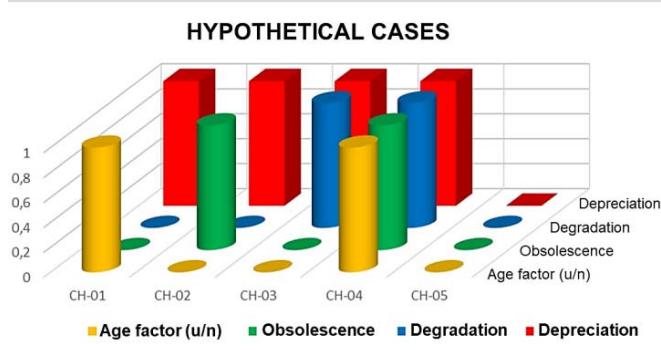
Fig. 3: Behavior of Methodology Application in Extreme Hypothetical Cases (Elaborated by Authors).
## V. CONCLUSION
The usual methods for calculating the depreciation coefficient do not present criteria for determining obsolescence in the construction systems of a building, making the assessment insufficient, as the degradation coefficient cannot completely represent all losses in the building's value.
Bibliographical reviews on obsolescence demonstrated the lack of technical information regarding its definition, classification, and measurement. It can be concluded that the application in hypothetical cases provides a better view of the impact of the coefficients on the proposed methodology for determining depreciation.
Regardless of the system evaluated, if any of the three factors (age, obsolescence, or degradation) reach a maximum evaluation, the equation will present, as a result, a total depreciation, maintaining the criteria already recommended in the Ross-Heidecke method.
Thus, it can be stated that the applicability of the proposed method presents results within the logical criteria already established by Ross-Heidecke, in
addition to demonstrating the influence of obsolescence on the calculation of depreciation.
The presented proposal is its initial stages, it is up to future research to propose tools to calibrate the methodology to represent the reliable depreciation of a building, considering its degradation, obsolescence, and any other reasonable factor important for the evaluation.
Finally, the motivation for this research focuses on the intention of presenting improvements to the current methods of calculating the depreciation coefficient of buildings based on the consideration of the obsolescence state in the different construction systems that make up the building.
### ACKNOWLEDGEMENTS
Let us thank the University of Brasília for being the stage for such academic inspiration, and LabRAC - Laboratory for Rehabilitation of the Built Environment, for the encouragement and opportunity to develop research aimed at the recovery and improvement of buildings. I also thank the National Council for Scientific and Technological Development (CNPq) and the Federal District Research Support Foundation (FAPDF) for encouraging and promoting research.
Generating HTML Viewer...
References
6 Cites in Article
D Garnett (2006). Unknown Title.
Marcelo Lissa,Leandro Silva,Yaeko Yamashita,Joaquim Aragão (2021). O PROGRAMA TERRITORIAL COMO FATOR DE VIABILIDADE DE INFRAESTRUTURAS AEROPORTUÁRIAS: METODOLOGIA PARA IDENTIFICAÇÃO DE OPORTUNIDADES.
R Nasser Júnior (2019). Avaliação de bens. Princípios básicos e aplicações.
E Pereyra (2020). Modelo de Gestión de la Obsolescencia de Edificios: Estudio de la interacción de los factores de obsolescencia mediante un modelo numérico.
Sandra Rosado,Graça Raimundo,José Aguiar,Ana Moreira (2011). Adesão ao Padrão Alimentar Mediterrânico e estado nutricional dos doentes com enfarte agudo do miocárdio.
A Thomsen,K Van Der Flier (2011). Obsolescence and the end of life phase of buildings. Management and Innovation for a Sustainable Built Environment.
No ethics committee approval was required for this article type.
Data Availability
Not applicable for this article.
How to Cite This Article
José Marcelo Martins Medeiros. 2026. \u201cEnhancing Building Depreciation Models Integrating Obsolescence Factors in Modern Built Heritage\u201d. Global Journal of Human-Social Science - H: Interdisciplinary GJHSS-H Volume 24 (GJHSS Volume 24 Issue H4): .
Explore published articles in an immersive Augmented Reality environment. Our platform converts research papers into interactive 3D books, allowing readers to view and interact with content using AR and VR compatible devices.
Your published article is automatically converted into a realistic 3D book. Flip through pages and read research papers in a more engaging and interactive format.
This article is part of a master’s thesis that aims to present an adaptation to the Ross-Heidecke model for calculating building depreciation. In addition to including the obsolescence coefficient, the adaptation of the conservation coefficient is proposed based on parameterization from the Dutch standard for building inspection. The proposed method is applied in hypothetical cases where levels of conservation, obsolescence, and useful life can be evaluated under extreme situations. The inclusion of the obsolescence coefficient for determining building depreciation is essential, as it assists in developing a more accurate assessment, resulting in a reduction of subjectivity. To verify the applicability of the method, hypothetical situations were established as a way of evaluating the behavior of depreciation in extreme situations, verifying results trend and whether the method applies to different cases. it can be stated that the applicability of the method presents results within the logical criteria already established by Ross-Heidecke, in addition to demonstrating the influence of obsolescence on the calculation of depreciation.
Our website is actively being updated, and changes may occur frequently. Please clear your browser cache if needed. For feedback or error reporting, please email [email protected]
Thank you for connecting with us. We will respond to you shortly.