Enhancing Employability for Autistic Graduates: Using TRIZ Theory to Design Virtual Reality Solutions for Fostering Inclusive Communications in Workplace Environments
α
Jonathan Proulx Guimond Professor, Lead XR Disruptor, Department Head
The underemployment of post-secondary graduates with autism (AP-PSD) is a critical concern. This issue often stems from difficulties in workplace integration and communication. This research explores the potential of virtual reality (VR) systems to alleviate these challenges by simulating work environments. The methodology, rooted in the TRIZ Theory, a problem-solving algorithm, refines the use of VR systems for enhanced adaptability and efficiency. The primary objectives include enhancing employers’ understanding of AP-PSD-related issues and identifying significant workplace challenges faced by AP-PSDs. Through literature reviews, surveys, and focus groups, the study investigates the factors impacting AP-PSDs and identifies key components to develop a more effective VR system to support their workplace integration.
## I. INTRODUCTION
Recent studies estimate that $85\%$ of people with autism with a post-secondary degree in the United States are unemployed (Baker-Ericzén et al., 2022), and $86\%$ in Canada (Lawson et al., 2020). This work explores technological and human approaches to adapt the workplace for autistic individuals, promoting their access to employment. By highlighting the advantages and challenges of workplace adaptation, the following aims to address the high unemployment rate among Autistic Persons with a post-secondary diploma (AP-PSD). Autism is characterized by atypical neural development, resulting in pervasive behavioral symptoms (Tevis et al., 2022). Autistic individuals often have specific interests and repetitive behaviors, impacting their ability to interact emotionally in a socially adequate way (Zhan, 2014). These manifestations frequently affect communication and social interactions (Muskett, 2016). A diverse range of autism manifestations (McCormick, 2020) cautions against categorization processes, as these can change for each individual. Manifestations may change according to situations, context, and factors that are often difficult to identify (Faras, 2010). Misinterpretations have arisen from erroneous naming and categorization (Anderson-Chavarria, 2022), and media representations often perpetuate stereotypes.
Many AP-PSD struggle with workplace integration due to insufficient adaptations and employers' lack of understanding regarding their specific needs (Corinneille et al., 2019). Despite common misconceptions about autistic individuals preferring routine, our hypothesis is that AP-PSD also seeks to find a workplace where their skills would be recognized, and if possible, where their specific center of interests could be useful (Wilczynski et al., 2013). The demonstration will underscore the critical necessity of acknowledging individual requirements for AP-PSDs to facilitate their workplace integration. It is important to understand that AP-PSDs may need different considerations and adaptations to feel assimilated in their workplace. However, pinpointing these specific needs is not always straightforward (Wilczynski et al., 2013). One must take into account that employers could lack a complete understanding of their employees identified as APPSDs. This lack of knowledge may stem from various causes such as privacy regulations, undiagnosed autism, or reluctance from the employees themselves to share their condition due to apprehensions about stigmatization or discrimination (Huang et al., 2022; Attwood, 2019). Existing methods of workplace modification, such as 'pattern matching techniques' which involve finding precise solutions for clearly identified problems (Vujica Herzog, 2020), might not be effective for AP-PSD, given the varied expressions of autism (Harmuth et al., 2018; Syvan, 2019). Appropriately customizing workplace inclusion strategies can positively influence both the company's progress and the life quality of all employees (Neihart, 2000; Tompa et al., 2022). A prospective strategy to manage these challenges might involve the application of technology.
It has been found that technology could facilitate workplace adaptation for AP-PSD under certain conditions, such as not having learning difficulties (Kungratovich, 2020). This work explores the potential remote assistance devices to complement integration and support measures, recruitment, in-company training, and maintain AP-PSD in employment. In this context, we are looking at producing a prototype that could include human and technological systems in order to provide alternative support to accommodate both the needs of AP-PSD and the employer (Agamben, 2006; 2014). The hypothesis is based on the idea that simulating the work environment and social interactions can help anticipate challenges for AP-PSD and prepare them to handle these situations effectively. At the same time, employers along with employees must be considered when developing a support system.
The challenge in supporting AP-PSD in the workplace lies in the necessary anticipation and preparation of the AP-PSD, managers, other employees, and the environment. The time dedicated to understanding the system and its processes can be beneficial for AP-PSD, as it enables them to incorporate these elements into their routine once they comprehend the requirements and limitations (Cockayne, 2019). However, the emotional components of communication between managers and AP-PSD can cause confusion and pose as hindrances (Chaidi & Drigas, 2022; McKnight-Lizotte, 2018). Hence, a significant challenge is clarifying the emotional context of these interactions.
Although inclusive or social enterprises have progressed in integrating AP-PSD through diversity policies (Vidal, 2005), additional preparatory stages are required for AP-PSD (Khalifa, 2020; Lindsay et al., 2021). Bonete (2015) highlights the advantages of collective training experiences for AP-PSD and other staff members in comprehending and addressing interpersonal issues in social settings, underlining the need for preemptive understanding of situations to encourage acceptance and integration.
In order to address these considerations to support the population, this project utilizes a co-design approach to create virtual reality simulations of work environments, allowing for adjustments based on system feedback while acknowledging the perspectives and limitations of the proposal (Kenny et al., 2016). The aim of the project was to develop a technological and human solution to promote the integration of AP-PSD into the workforce, primarily for remote use, such as during confinement. To address this problem, this research proposes to design using TRIZ algorithm and VR support system, a prototype that replicates the workplace environment, providing a platform for AP-PSD to anticipate and overcome potential difficulties, master job-specific tasks, and ensure emotional stability. Therefore, it conceptualizes a system that provides a virtual reproduction of the workplace to progressively accommodate employer expectations. The system identifies potential challenges for an individual, anticipates situations, and allows for practice of tasks and procedures required by their job, while ensuring the emotional stability of the user through feedback.
## II. LITERATURE REVIEW
### a) Context
The employee shortage in Canada threatens the economic growth of companies and the country and is unlikely to be a temporary situation (Cocolakis-Wormstall, 2018; Komarnicki, 2012). As a result, employers are adopting unconventional measures to address the workforce shortage, leading to a growing interest in integrating individuals with disabilities into the workforce (Vornholt, 2018). Government policies, such as Quebec's Full Policy and the United States' Americans with Disabilities Act, also encourage the employability of people with disabilities (DeLeire, 2000). Currently, 1 in 40 children is an AP-PSD, and $44\%$ of them have average or above-average intelligence (Deloitte, 2012). However, the employment rate for AP-PSD remains low compared to the general population (Howlin, 2013). Although there has been some improvement with the employment rate for AP-PSD rising to $33\%$ in 2017 (Delman, 2017), the integration of neurodiverse individuals into the workforce remains a challenge due to obstacles and non-standard behaviors (Moriña, 2022). Despite concerted efforts, as highlighted in the introduction, the employment rate for AP-PSD continues to be disappointingly low. Misconceptions and adverse perceptions often lead to the underestimation of the work capabilities of AP-PSD (Van Wieren, 2008). Consequently, numerous individuals with disabilities, including AP-PSD, may become disheartened about joining the workforce following unsuccessful employment experiences, even though there exists a robust desire for employment, as observed in $77\%$ of the population in the United Kingdom (Cope & Remington, 2022).
## III. HIRING PROCESS
### a) Integration Process
Companies face challenges when integrating autistic persons with psycho-social disabilities (AP-PSDs) into the workplace, as the integration process is crucial for developing a sense of inclusion (Molloy, 2022). This sense of inclusion develops through a dynamic identity construction process, allowing individuals to identify with one another (Fournier, 2011). Successful integration creates lasting benchmarks and helps employees understand their tasks. AP-PSDs often need a more explicit form of communication to navigate implicit psychological contracts between employers and employees (Conway, 2005; Scott, 2015). Although AP-PSDs are typically supported by human resources managers (Estes, 2008), their diagnosis may not always be known by the employer, leading them to follow the same integration process as other employees. This highlights the need for specific preparation to ensure successful AP-PSD integration. The standard company integration process often relies on an employee's adaptability and ability to grasp employer expectations implicitly (Zula & Chermack, 2007). However, this approach can be counterproductive for AP-PSDs who experience social anxiety (Bejerot et al., 2014) or struggle with small talk (Walsh, 2007). While inclusion integration processes can be beneficial in developing feelings of integration and leadership (Ferdman, 2013; Offermann & Basford, 2013), they may not be universally applicable for AP-PSDs (Smith, 2011). Adapting these processes and considering environmental and social specificities is crucial for successful AP-PSD integration (Parr et al., 2013). The role of colleagues in the adaptation process is crucial (Longmire & Taylor, 2022), and it's imperative to acknowledge the necessity of managing individuals in diverse ways to achieve harmonious team cohesion (Hagner & Cooney, 2005).
### b) Job Retention Process and Emotional Well-Being
The COVID-19 health crisis provided an opportunity to study the effects of work changes on AP-PSDs, such as job loss, changing hours, and modalities (Galea, 2016; Taylor, 2022). These studies highlighted the importance of emotional stability in the workplace for AP-PSDs to maintain employees (Goldfarb, 2021b).
The pandemic also accelerated the use of online platforms for work and training, sparking discussions about the inclusivity of these platforms for individuals with disabilities, including AP-PSDs (Penarrubia-Lozano, 2021). Researchers are now exploring virtual interfaces and devices to create more effective training environments and integration, not only during confinement but as a new standard in the workplace (Mpofu, 2022). Designing these environments necessitates considering the specific communication modalities for AP-PSDs (Goggin, 2021). AP-PSDs encounter challenges with unplanned social encounters, like informal dialogues or communal dining in a cafeteria, due to their unpredictable nature and certain environmental elements (Grandin, 2009a). Aspects like illumination, noise levels, and closeness can induce stress. Employers can facilitate conditions for AP-PSDs by providing straightforward adjustments, like noise-dampening headphones, gloves, special glasses, or a designated private space for solitude as required. However, safety should always be considered when implementing these measures. Modifying the surroundings to accommodate the needs of an AP-PSD can diminish their sense of exhaustion and enhance their overall quality of life. Raising employer awareness about the inherent qualities of AP-PSDs and the need for a suitable work environment is essential for their successful hiring, integration, job retention and improved overall AP-PSD's quality of life (Leaf, 2022; Nicholas, 2018). Companies like J.P. Morgan Chase have devoted resources to accommodate AP-PSDs and reported increased productivity from these employees. Effective training should address both task execution and social behavior, such as addressing team members, adhering to dress codes, and maintaining hygiene (Bogdashina, 2022; Van Haasteren, 2011; Wolf, 2009). Providing clear instructions and expectations can promote employee comfort and retention (Schall, 2010), and allowing AP-PSDs to self-correct and self-regulate can enhance their sense of competency (Asaro-Saddler, 2016). However, it is the employer's responsibility to implement this type of training to achieve economic objectives, as the school system is currently not equipped to support the transition to employment for AP-PSDs (Ballantyne, 2022; Findley, 2022), nor to understand fully the requirements for AP-PSD emotional health in the workplace environment.
The aforementioned research underscores the distinctive obstacles encountered by AP-PSDs in the professional environment, spanning from recruitment processes, integration phases, to everyday communications. Employers can better support AP-PSDs by adapting recruitment processes, creating inclusive onboarding programs, and offering tailored accommodations. Implementing clear communication, providing structured tasks, and utilizing technology such as VR simulations can significantly improve the experiences and productivity for this population. Promoting a more inclusive workplace environment serves to benefit AP-PSDs while also encouraging diversity and sparking innovation within the organization. It is essential for future studies to persist in uncovering effective strategies and workplace adjustments, aiming to bolster the seamless professional integration and overall well-being of AP-PSDs.
The use of virtual reality (VR) as a training tool for specific situations and tasks is increasingly recognized as a solution to adapt the work environment for AP-PSDs. However, finding a sustainable solution to effectively integrate AP-PSDs into their work environments remains a challenge. Based on our review of the literature, it is evident that the main obstacle for AP-PSDs is their emotional well-being in the workplace, which significantly impacts their successful integration in the short, medium, and long term. While implementing environmental adjustments and providing training to help AP-PSDs navigate these challenges is an initial step, further exploration is needed to address the broader issue. However, using Virtual Reality (VR) solely as a repetition tool may not directly address the fundamental issue of workplace well-being for AP-PSDs. It is crucial to ensure that employers have a comprehensive understanding of their employees' situations in order to appropriately adapt the work environment. However, given the communication challenges faced by AP-PSDs, accurately grasping their emotional well-being remains a significant challenge. In this study, our hypothesis is that VR systems, leveraging advancements in information technologies, can serve as effective communication tools to explicitly convey signs of distress in the workplace for AP-PSDs and help employers better understand their needs. Building upon this premise, our research aims to explore whether VR systems can provide means to enhance the understanding of factors that affect the emotional well-being of AP-PSDs in the workplace.
## IV. METHODOLOGY
The central premise of this study rests on the possibility of employing an information processing system to analyze data associated with emotional health. The system's objective is to present these insights in a manner that is easily understandable and interpretable by a user. Indeed, an enhanced VR system should be able to grab specific situations so that the employer could understand and then provide adequate adaptation. The applied methodology enables the amendment of a system that also incorporates human emotional elements (Yu, et al. 2023). It is worth noting that our methodology combines elements of system analysis with interdisciplinary approaches, allowing us to incorporate both systematic rigor and considerations of human communication dynamics into the development of our prototype. To achieve this, we employed the TRIZ Theory algorithm, also known as Inventive Problem-Solving Theory, which enabled us to refine an existing system and propose innovative solutions to address the identified problem. Our primary objectives were: 1) enhancing employers' understanding of autism-related issues; 2) identifying key challenges faced by individuals with autism in the workplace; 3) examining the contextual factors influencing AP-PSDs in their work environment; 4) exploring technological adaptations to support situation recognition, communication, and understanding; and 5) discussing strategies to improve support for employees with autism. Our methodology encompassed the following steps:
1. Identify the problem in its context (Objective 1)
2. Setting up a list of the requirements, needs (Objective 2),
3. Using functional analysis processes, juxtaposing ideal user's outcome with system description and its contradictions (Objective 2 and 3)
4. Applying the technical and physical contradictions matrix to identify potential solutions (Objective 4)
5. Identify objectives and refining the formulation of the problem (Objective 4)
6. Trim the parts that could not be address (Objective 4)
7. Implement the solution (Objective 4)
Please note that Objective 5, which focuses on discussing the improvement of support for employees with autism, is not directly addressed within the TRIZ Theory algorithm. Instead, it represents additional considerations and perspectives that emerged during the development of our prototype.
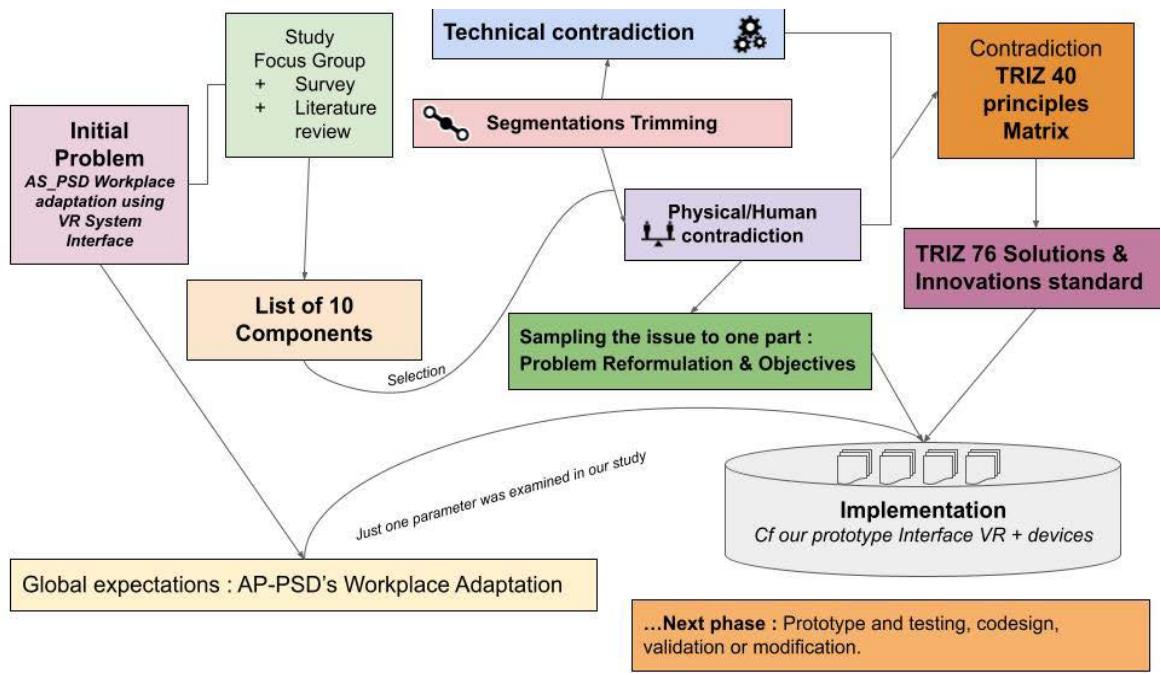 Figure 1: Triz Algorithm application to our study
### 1. Identify the problem in its specific context of the use of the system
A mixed-method approach was employed to examine the context of employment situations for individuals with autism spectrum disorder (AP-PSD) and identify factors that could generate discomfort or facilitate their integration in the workplace, such as: 1- an ergonomic study was specifically led with an inclusive company that is already welcoming employees living with autism that we will not present here in details, as it will be part of an other work; 2- an online survey that involved corporate representatives from the L'Expertise network, students with a disability in the Quebec, Montreal and Sherbrooke areas, was launched regarding the employability situation of post-secondary students living with a disability, 3- testimonials were collected from managers $(n = 4)$ and guides who work or have worked with AP-PSDs, and a Focus Group $(n = 9)$ was conducted to generate insights on the challenges faced by these individuals. The Focus Group was composed of corporate and human resources representatives that were already promoting AP-PSD inclusion at the workplace, as well as representatives of the Quebec Association for Equity and Inclusion in Post-secondary Education (AQEIPS) that promotes inclusion of all students living with disabilities. Objective 4 involved conducting a literature review to explore possible accommodations and modifications that could enhance the work environment for AP-PSDs. The specific methods and results from the survey and focus group are not discussed in this section. However, the findings from these data sources, along with the emergent themes identified in the literature review, informed the subsequent stages of the research process.
The purpose of the literature review was to explore potential accommodations and modifications that could improve the workplace environment for AP-PSDs. However, the original plan to generate a comprehensive list of needs through the Focus Group did not materialize as intended. Initially, the methodology involved creating categories based on different types of causes related to challenging situations faced by individuals with autism (AP-PSD), with input from human resources managers. These categories were then meant to be replicated in a virtual environment, with potential accommodations suggested. However, it became apparent that strict categorization alone was not sufficient to capture all the issues experienced by AP-PSDs, as we will discuss in the subsequent section.
#### 2. Producing a list of the requirements (needs)
This section aims to outline the user's needs and requirements that have emerged from the previous phase, which included the Focus Group discussions and the literature review. These findings will help us define our objectives and guide the design and development of our prototype, following the principles recommended by TRIZ and other system analysis approaches. The initial step will involve identifying the expectations and specific requirements related to the utilization of a VR system for adapting to the workplace environment.
The first requirement is to avoid using rigid categorizations when designing a comprehensive solution for employers. It is crucial to acknowledge that each individual with autism (AP-PSD) may have unique sensitivities and challenges. For example, researchers have observed that some AP-PSDs may be hypersensitive to certain types of light, and potential solutions like glasses or filters have been considered. Additionally, providing a peaceful space for rest during the day has been proposed for individuals with auditory processing disorders. However, it is important to recognize that these circumstances and solutions cannot be universally applied to all AP-PSDs. Moreover, the same specific situation can be experienced differently by an AP-PSD, as it is influenced by individual factors that are difficult to generalize, even within the same context. Therefore, a personalized and individualized approach is necessary to address workplace situations for AP-PSDs.
This realization challenged the initial proposal of addressing predetermined factors, as the behavior, emotions, and decision-making of individuals with autism spectrum disorder (AP-PSDs) cannot be fully predicted (Robic et al., 2015). The dynamic nature of the workplace, which involves interactions with colleagues, clients, and external elements, often leads to unpredictable situations. AP-PSDs encounter difficulties in preparing for such situations in advance due to the inherent unpredictability of social interactions (Gomot & Wicker, 2012). Simply understanding the physical workspace may not sufficiently address the personal experiences that impact AP-PSDs in their daily work. Vanacker (2021) suggests the importance of "predicting the unpredictable," which necessitates comprehensive training to help AP-PSDs feel comfortable across diverse scenarios. Several conditions emerged consistently during focus group discussions as crucial factors for promoting integration and well-being of AP-PSDs in the workplace. These include:
1. Presenting content visually and in writing;
2. Prioritizing context-linked content presentation (photos, videos) and avoiding abstract explanations;
3. Providing a calm environment;
4. Offering assistance to adapt AP-PSD's schedules, noise and light levels, and communicate their issues;
5. Defining task execution limits: time, place, and degree of perfection;
6. Ensuring good understanding of content and involving AP-PSDs in the explanation process;
7. Validating each step of the explanation;
8. Giving equal importance to soft skills instructions;
9. Linking the person's interests with their workload;
10. Continuously considering AP-PSD's well-being, perception, and emotional state during task execution (mental load and work-related stress levels).
This compilation of conditions serves as an initial step and forms the foundation for creating an inclusive and supportive workplace environment for individuals with autism spectrum disorder (AP-PSDs).
#### 3. Juxtaposing ideal user's vision of use of VR system and its contradiction
The categorization method proves valuable in implementing immediate fixes and promoting workplace comfort by addressing specific environmental or procedural issues (Zhi et al., 2021; Attwood, 2019). However, it is essential to recognize that the expectations for our system extend beyond these adaptations alone. Consequently, this work begins by presenting a list of categorized situations that may present challenges for AP-PSDs in the workplace. However, it is crucial to emphasize the importance of adopting an individualized emotional approach rather than relying solely on these categories. The findings from our focus group study highlight the impossibility of adopting a universal approach to environmental adaptation as observed behaviors only capture a fraction of AP-PSDs' experiences. The focus group underscored the need for a tool that can effectively communicate situations, sensations, and emotions that may not be easily verbalized. Both human resources managers and AP-PSDs themselves emphasized the necessity of evaluating the emotional states of AP-PSDs in the workplace to enhance mutual understanding and improve their relationship dynamics. VR systems, in their current form, do not possess these features. Thus, the following section will outline our approach to addressing this gap and meeting the expectations of the focus group. Following the algorithm, we identified a contradiction: the inability of the current VR system to effectively communicate the implicit features necessary for a better understanding of AP-PSDs, despite its potential to enhance work productivity through real-time multisensory display of information.
#### 4. Applying the technical and physical contradictions matrix to identify potential solutions
TRIZ offers various approaches, one of which involves utilizing the 40 principles Matrix (Kumar, 2005) to resolve contradictions that point towards existing solutions. In our specific case, the findings from the Focus Group highlight the primary challenge of effectively communicating internal states, as the interlocutor often struggles to understand the situation. Thus, for the TRIZ Matrix, the input includes identifying the loss of information as the element we aim to improve, while maintaining productivity as the overarching goal of the workplace.
The Matrix presents three principle solutions: 1) Feedback, 2) Dynamics, and 3) The Other Way Round. It is important to note that TRIZ supports creativity by guiding the designer in finding the appropriate processes and tools to implement these principles and reach a solution.
<table><tr><td>40 Principles Matrix</td><td>Parameters</td><td>Solutions</td></tr><tr><td>What should be Improved?</td><td>Loss of Information</td><td rowspan="2">1-The Other Way round: 2-Feedback
3-Dynamics</td></tr><tr><td>What Should be Preserved?</td><td>Productivity</td></tr></table>
Matrix elected 3 principles regarding our contradiction entries summarized here:
1. Principle # 13- The Other Way round: Invert the action(s) used to solve the problem.
2. Principle #23- Feedback: If feedback is already used, change its magnitude or influence (Change a management measure).
3. Principle #15- Dynamics: Design to find an optimal operating condition. Such as, Divide an object into parts capable of movement relative to each other.
The orientations chosen based on these results shall now be discussed. One relevant principle that emerged is the concept of inverting the action. Typically, the responsibility for adapting the workplace environment for AP-PSDs lies with the employer or designer. However, the solution principle suggests that the action should come from the opposite side, with the receiver of the adaptation taking the lead. In this case, it means that the AP-PSD should be the one driving the adaptation process.
Another principle, Principle #13, highlights the importance of information coming from the other way round. In this context, it means that information about the emotional state should come from the AP-PSD themselves. This principle guides the provision of instructions and feedback to the AP-PSD employee through the use of a VR system.
The Feedback principle suggests that obtaining missing information can be achieved through specific measurements tailored to the user's needs. In this case, measuring physiological signals related to well-being, such as levels of relaxation, cognitive load, and indicators of social well-being, appears to be a promising avenue to explore. It is crucial to emphasize the principle of reciprocity, where both parties actively engage in measuring and understanding these physical indicators. This allows for a comprehensive understanding of the emotional context from different perspectives, enhancing the overall effectiveness of the system.
Technologically, this led to the identification of devices for measuring relevant signals, which would be displayed on a dashboard accessible to both the employee and the employer. The interpretation of these signals would be provided, along with a protocol to facilitate effective communication and maintain productivity.
- Considering the results from the Focus Groups, it became evident that identifying the AP-PSD's center of interests could be key in fostering a stronger connection between the individual and the workplace. Ideally, establishing a direct link between the AP-PSD's interests and their work tasks would be the optimal approach, whenever feasible.
5. Identify objectives and refining the formulation of the problem
According to the TRIZ methodology, it is crucial to redefine the problem and objectives at this stage of the process. In our case, we considered whether a VR interface could serve as a means to effectively engage both the employee and the employer representative, facilitating the visual sharing of typically implicit emotional states.
With this in mind, we established three specific objectives for implementation:
1. Designing a VR context that leads AP-PSD to be able to assess what could be provided more comfort at work.
2. Proving a suggested protocol to enhance online collaboration and meaningful exchange
3. Interpreting visually in real time in the VR Interface the emotional state of both interlocutors to improve mutual understanding.
Consequently, this study proposes a real-time virtual reality interface (RTVR) that allows exploration of a workplace, training with feedback on practical tasks or social relationships, and self-assessment of stress and cognitive load using biometric measurements. The tool under review can potentially help both AP-PSDs and human resources managers understand and address challenges as they arise, but further research is needed to prove its utility for users.
The study integrated an individualized approach in the application while acknowledging the limitations in addressing certain communication modalities. Using alternate realities to describe concrete physical universes helps explain situations that may be difficult for AP-PSDs to grasp by providing more explicit and visual information (Cohn, 2019; Shane et al., 2012; Pijnacker et al., 2009). Although this type of alternate reality device may not be suitable for everyone, it is hoped that this study paves the way for future research to ensure a more inclusive workplace for AP-PSDs.
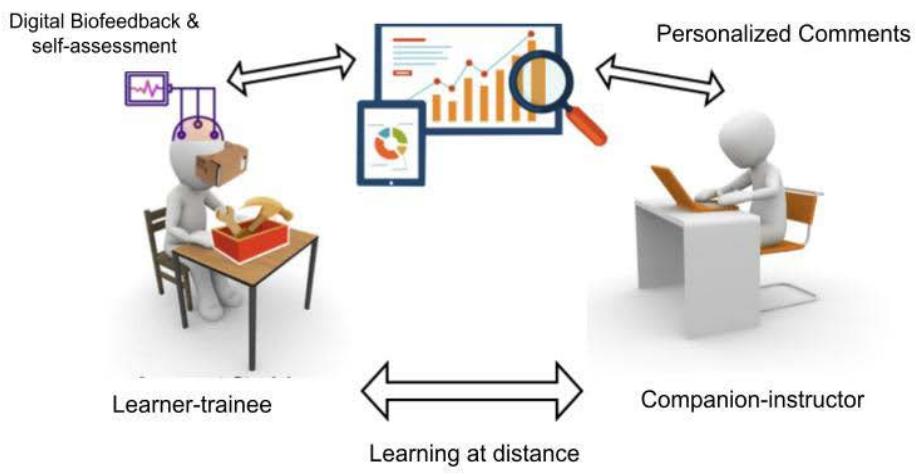
Dashboard including the metric of the performance measurements (cognitive load stress) of the user via biometric measurements Figure 2: Space for companion-student exchanges
6. Trimming the parts that we could not be address, as opportunity for further studies
Applying the TRIZ Algorithm led to the selection of a specific contradiction to focus on, in line with the principles of the methodology. This decision does not diminish the consideration given to other aspects of the Focus Group results, nor does it imply that only one contradiction was identified. Rather, it reflects the intention to target a specific area for improvement within the broader context of AP-PSD workplace adaptation. It is important to acknowledge that the proposed design does not claim to provide a comprehensive solution for all challenges faced by AP-PSDs in the workplace. However, it aims to address a significant aspect of their well-being by addressing the communication of their emotional health through the utilization of existing solutions and methods.
#### 7. Implement the solution: Results
The results of this study reveal that using concrete representations through interactive videos (https://www.criv-online/impulsion-frqsc) or representations of places, people, and explicit descriptions of expectations can facilitate the communication and understanding of work tasks for AP-PSDs. The interview questions in the interface focus on validating the processes that the AP-PSD has already carried out beforehand, with open questions reduced to a minimum in favor of interactive actions.
The results of the study involve providing free access to a virtual building, allowing the person with APPSD to explore at their own pace and become familiar with their daily routine before meeting their attendant. The attendant initially appears as an avatar and later transitions to a videoconference format. Similarly, other employees are not present at the beginning but are gradually introduced as avatar-bots with pre-recorded behaviors based on their tasks.
Virtual spaces offer significant advantages for AP-PSDs, as they provide well-defined frameworks that explicitly describe situations, allow multiple attempts without the risk of judgment, and filter out potentially intrusive elements such as emotions and physical contact. This approach creates a supportive environment for AP-PSDs to familiarize themselves with their workplace and develop a better understanding of their tasks and social interactions.
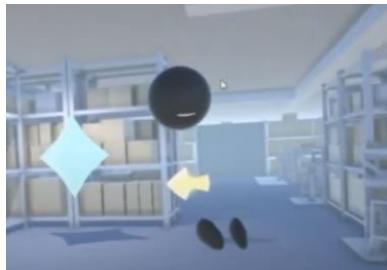
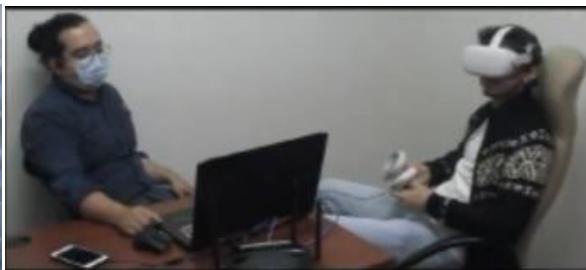
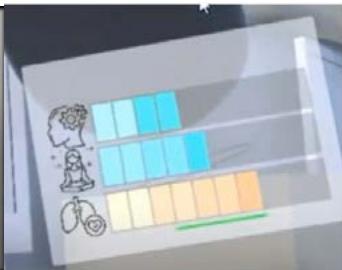 Figure 3: a-VR Interfaces with bots, b-assistance during session and c-Stress level and emotional stability during task performance (Show progress bars that visualize biometric measurements)
Furthermore, the virtual environment allows the person with AP-PSD to observe their own actions and self-correct. Saade (2021) found that interactions during online training for AP-PSDs enhance their inclusion capacity and promote self-evaluation and self-correction of their productivity. Generally, well-supervised online teaching appears promising for AP-PSD training (Taslibeyaz et al., 2022). In recent years, human and technological assistance devices have emerged (Wali & Sanfilippo, 2019), demonstrating that digital environments, under certain conditions, present exciting prospects for AP-PSDs in the workplace (Tomczak, 2021). In the upcoming sections, the paper will provide illustrative examples of some of these conditions. It is crucial to consider that AP-PSDs often experience significant stress when confronted with new situations, particularly when they cannot relate them to previously learned categories. Offering clarity and reducing ambiguity is essential for reducing stress levels, which in turn contributes to the retention of trained individuals within the company. This sense of comfort is also beneficial for other staff members who have expectations regarding appropriate behavior. The paper will discuss the integration of learning and anticipation processes into a dedicated virtual simulation that closely replicates the work environment and interactions. This simulation enables individuals to immerse themselves in a safe space, allowing them to project themselves into future situations and better prepare for them. While the usability and potential effectiveness of this VR interface will be explored in a separate study, the paper will examine the limitations and possibilities of this approach in the subsequent sections. These findings have the potential to provide new insights into the situations experienced by both AP-PSDs and those in their immediate surroundings.
Discussing one's perception of stress in the workplace is often uncommon due to various reasons, and it can be viewed as a sign of weakness or complaint (Correia Leal et al., 2020). Autistic individuals, including AP-PSDs, may be inclined to overcome stress rather than explicitly verbalize their stress levels. However, excessive stress can lead to issues such as increased absenteeism or even resignation. To address this, we incorporated measures within a VR interface to assist autistic employees in becoming more aware of their stress levels, mental load, and the quality of their social interactions (Seok, 2022). These measures can be utilized at the discretion of the individual, allowing them the option to share this information with their manager or keep it private. It is important to note that there are potential challenges associated with using these measures, as an individual may already be experiencing stress before work or have a naturally high level of relaxation. To mitigate these challenges, our methodology involves consistently recording biometric data and comparing the differences observed in stressful situations, thereby establishing a unique stress signature for each individual. If the user grants their manager access to this information, it may assist the manager in adapting their requests and communication methods accordingly (Grandin, 2009b).
AP-PSDs' strong points and weaknesses lie in their "center of interests" (Goldfarb, 2021). When their job aligns with their passions, retention is more likely. However, this is not always possible, and there are challenges in retaining employees without this alignment. Social activities, such as celebrating birthdays, can be distressing for AP-PSDs (Bader & Fuchs, 2022), even though they promote belonging for neurotypical employees (Waller, 2020). It is important to balance social interactions for AP-PSDs, as proper introduction can bring well-being. HR managers should maintain efforts to make AP-PSDs feel comfortable and understand the expectations of social events. Technological tools, like those developed by Vanderbilt University School of Engineering, can help employers, employees, and autistic individuals better understand and adapt their behavior in social environments.
## V. DISCUSSION
In all, planning can significantly improve executive functions and anticipation for AP-PSDs, favoring their integration into the work environment (Wallace et al., 2016). It can also help alleviate stress linked to workplace integration (Wallot, 2021). Although there are limitations to anticipatory activities (Angus, 2015), using alternate reality devices to simulate situations has proven to be a relevant process for AP-PSDs (Wainer & Ingersoll, 2011), provided they receive proper human support (Glaser & Schmidt, 2022). These devices are tools that cannot replace managerial supervision but offer a secure context for practice (Brosnan & Gavin, 2015) and remote monitoring when necessary. The main objective of a virtual environment is to reduce stress from unknown situations, establish mutual trust, promote exchanges, inculcate expected behaviors, and identify AP-PSDs' strengths and interests (Giaconi et al., 2021). However, it is essential to consider certain points to better understand the limits of such a system when creating a virtual work environment for AP-PSDs.
Finally, it is crucial to recognize that AP-PSDs do not react in the same way as neurotypicals (Nicholas et al., 2019). While virtual environments can help simulate situations for AP-PSDs, they are not realistic enough to authentically replicate social situations. It is recommended to have a live human companion connected within the interface (Zhang et al., 2018), as using bots cannot fully replace human presence. The same person should also provide support in real-life situations to ensure consistency and adherence to social codes (Parsons et al., 2005). Gradually introducing learned behaviors from the virtual mode into real situations can help generalize these behaviors (Almurashi et al., 2022). Further exploration of augmented reality's potential in work integration contexts for AP-PSDs could provide valuable insights for future advancements.
### ACKNOWLEDGEMENT
The study was approved by the Research Ethics Committee of the Integrated University Health and Social Services Centre de la Capitale-Nationale (2022-2429-RIS_) and informed consent was obtained from all participants. This study was conducted in accordance with the Declaration of Helsinki.
Acknowledgements to the virtual reality company OVA.AI (Qc, Canada), to the company M2S electronic (Qc, Canada) and to the Fonds de recherche du Quebec - Société et culture (FRQSC, Qc, Canada).
Generating HTML Viewer...
References
87 Cites in Article
R Austin,G Pisano (2017). Neurodiversity as a Competitive Advantage 2. Why you should embrace it in your workforce.
Giorgio Agamben,Martin Rueff (2006). Théorie des dispositifs.
G Agamben (2014). Qu'est-ce qu'un dispositif.
H Almurashi,R Bouaziz,W Alharthi,M Al-Sarem,M Hadwan,S Kammoun (2022). Augmented reality, serious games and picture exchange communication system for people with ASD: Systematic literature review and future directions.
Melissa Anderson-Chavarria (2022). The autism predicament: models of autism and their impact on autistic identity.
D Angus,M De Rosnay,P Lunenburg,M Meerum Terwogt,S Begeer (2015). Limitations in social anticipation are independent of imaginative and Theory of Mind abilities in children with autism but not in typically developing children.
A Attwood (2019). Neurodiverse Relationships: Autistic and Neurotypical Partners Share Their Experiences.
Oren Bader,Thomas Fuchs (2022). Gestalt Perception and the Experience of the Social Space in Autism: A Case Study.
Mary Baker-Ericzén,Roxanne Elshamy,Rebecca Kammes (2022). Current Status of Evidence-Based Practices to Enhance Employment Outcomes for Transition Age Youth and Adults on the Autism Spectrum.
L Balderaz (2020). Social skills interventions for adults with ASD: a review of the literature.
S Balters,T Weinstein,N Mayseless,J Auernhammer,G Hawthorne,M Steinert,. Reiss,A (2023). Design science and neuroscience: A systematic review of the emergent field of Design Neurocognition.
Susanne Bejerot,Jonna Eriksson,Ewa Mörtberg (2014). Social anxiety in adult autism spectrum disorder.
Saray Bonete,María Calero,Antonio Fernández-Parra (2015). Group training in interpersonal problem-solving skills for workplace adaptation of adolescents and adults with Asperger syndrome: A preliminary study.
Kristen Bottema-Beutel,Haerin Park,So Kim (2018). Commentary on Social Skills Training Curricula for Individuals with ASD: Social Interaction, Authenticity, and Stigma.
M Brosnan,J Gavin (2015). Are «Friends» Electric ? Why those with an autism spectrum disorder (ASD) thrive in online cultures but suffer in offline cultures.
S Burke,T Li,A Grudzien,S Garcia (2021). Brief report: Improving employment interview selfefficacy among adults with autism and other developmental disabilities using virtual interactive training agents (ViTA).
I Chaidi,A Drigas (2020). Autism, expression, and understanding of emotions: literature review.
Anne Cockayne (2019). Managing Asperger Syndrome in the Workplace: Considerations for Line Managers.
Neil Cohn (2019). Being explicit about the implicit: inference generating techniques in visual narrative.
R Cope,A Remington (2022). The strengths and abilities of autistic people in the workplace.
Maya Corneille,Anna Lee,Sherrice Allen,Jessica Cannady,Alexia Guess (2019). Barriers to the advancement of women of color faculty in STEM.
Ana Correia Leal,Aristides Ferreira,Helena Carvalho (2020). “Smile and Please Hide Your Sickness”: The Role of Emotions and Sickness Surface Acting in a Present.
Hadeel Faras,Nahed Al Ateeqi,Lee Tidmarsh (2010). Autism spectrum disorders.
Sajjad Farashi,Saeid Bashirian,Ensiyeh Jenabi,Katayoon Razjouyan (2022). Effectiveness of virtual reality and computerized training programs for enhancing emotion recognition in people with autism spectrum disorder: a systematic review and meta-analysis.
Bernardo Ferdman (2013). The Practice of Inclusion in Diverse Organizations.
H Fournier,R Kop,H Sitlia (2011). The value of learning analytics to networked learning in a personal learning environment.
S Galea (2016). Autism in the workplace: a colleague's experience.
Catia Giaconi,Anna Ascenzi,Noemi Del Bianco,Ilaria D'angelo,Simone Capellini (2021). Virtual and Augmented Reality for the Cultural Accessibility of People with Autism Spectrum Disorders: A Pilot Study.
P Gilch,J Sieweke (2021). Recruiting digital talent: The strategic role of recruitment in organisations' digital transformation.
Noah Glaser,Matthew Schmidt (2022). Systematic Literature Review of Virtual Reality Intervention Design Patterns for Individuals with Autism Spectrum Disorders.
Y Goldfarb (2021). Work Motivation Among Adults with ASD.
Marie Gomot,Bruno Wicker (2012). A challenging, unpredictable world for people with Autism Spectrum Disorder.
T Grandin (2009). Visual abilities and sensory differences in a person with autism.
Temple Grandin (1522). How does visual thinking work in the mind of a person with autism? A personal account.
D Hagner,B Cooney (2005). I do that for everybody": Supervising employees with autism.
M Hamdani,S Biagi (2022). Peer Review #2 of "Providing choice of feedback affects perceived choice but does not affect performance (v0.1)".
E Harmuth,E Silletta,A Bailey,T Adams,C Beck,S Barbic (2018). Barriers and facilitators to employment for adults with autism: A scoping review.
Ghaidaa Khalifa,Zonera Sharif,Madiha Sultan,Briano Di Rezze (2020). Workplace accommodations for adults with autism spectrum disorder: a scoping review.
G Kumar (2005). Appendix A: TRIZ Contradiction Matrix.
H Kumazaki,Y Yoshikawa,T Muramatsu,H Haraguchi,H Fujisato,K Sakai,. Mimura,M (2021). Group-Based Online Job Interview Training Program Using Virtual Robot for Individuals With Autism Spectrum Disorders.
C Kungratovich (2020). Pedagogical technologies in dual training model.
L Lawson,A Richdale,A Haschek,R Flower,J Vartuli,S Arnold,J Trollor (2020). Cross-sectional and longitudinal predictors of quality of life in autistic individuals from adolescence to adulthood: The role of mental health and sleep quality.
S Lindsay,V Osten,M Rezai,S Bui (2021). Disclosure and workplace accommodations for people with autism: A systematic review.
Natalie Longmire,Julie Taylor (2022). The Role of Colleagues in Work Experiences of Employees With Autism.
G Mak,L Zhao (2020). A systematic review: the application of virtual reality on the skill-specific performance in people with ASD.
A Maurer (2019). Teaching job interviewing skills to high school students with autism spectrum disorder using video modeling.
C Mccormick,B Kavanaugh,D Sipsock,G Righi,L Oberman,D Luca,M Mcknight-Lizotte (2018). Work-related communication barriers for individuals with autism: A pilot qualitative study.
M Uzun,E Best,C Jerskey,B Quinn,J Jewel,S Wu,P.-C Mclean,R Levine,T Tokadjian,H Perkins,K Clarke,E Dunn,B Gerber,A Morrow,E (2020). Autism Heterogeneity in a Densely Sampled U.S. Population: Results From the First 1,000 Participants in the RI-CART Study.
T Muskett (2016). Examining language and communication in autism spectrum disorder-in context. Re-thinking autism: Diagnosis, identity and equality.
Maureen Neihart (2000). Gifted Children With Asperger's Syndrome.
David Nicholas,Wendy Mitchell,Carolyn Dudley,Margaret Clarke,Rosslynn Zulla (2018). An Ecosystem Approach to Employment and Autism Spectrum Disorder.
L Offermann,T Basford (2013). Inclusive human resource management. Diversity at work: The practice of inclusion.
A Parr,S Hunter,G Ligon (2013). Questioning universal applicability of transformational leadership: Examining employees with autism spectrum disorder.
Sarah Parsons,Peter Mitchell,Anne Leonard (2005). Do adolescents with autistic spectrum disorders adhere to social conventions in virtual environments?.
Judith Pijnacker,Peter Hagoort,Jan Buitelaar,Jan-Pieter Teunisse,Bart Geurts (2009). Pragmatic Inferences in High-Functioning Adults with Autism and Asperger Syndrome.
K Plaisted (2001). Reduced Generalization in Autism: An Alternative to Weak Central Coherence.
Anna Remington,Brett Heasman,Anna Romualdez,Elizabeth Pellicano (2022). Experiences of autistic and non-autistic individuals participating in a corporate internship scheme.
S Robic,S Sonié,P Fonlupt,M-A Henaff,N Touil,G Coricelli,J Mattout,C Schmitz (2015). Decision-Making in a Changing World: A Study in Autism Spectrum Disorders.
S Saade,Y Bean,K Gillespie-Lynch,N Poirier,A Harrison (2021). Can participation in an online ASD training enhance attitudes toward inclusion, teaching self-Efficacy and ASD knowledge among preservice educators in diverse cultural contexts?.
C Seok (2022). Neurofeedback (NFB) Training in Aspergers.
H Shane,E Laubscher,R Schlosser,S Flynn,J Sorce,J Abramson (2012). Applying technology to visually support language and communication in individuals with autism spectrum disorders.
V Sima,I Gheorghe,J Subi Ć,D Nancu (2020). Influences of the Industry 4.0 Revolution on the Human capital development and consumer behavior: A systematic review.
T Smith (2011). Making inclusion work for students with autism spectrum disorders: An evidence-based guide.
M Smith,E Ginger,K Wright,M Wright,J Taylor,L Humm,M Fleming (2014). Virtual reality job interview training in adults with autism spectrum disorder.
L Sun (2021). WITHDRAWN.
Arie Syvan,Shiri Pearlman-Avnion (2019). Principles for Successful Employment Integration of People with HF-ASD.
E Taslibeyaz,H Polat,M Kayalar (2022). Systematic Review of Studies on Online Education for Autism Spectrum Disorder.
Celeste Tevis,Johnny Matson,Megan Callahan (2022). Diagnostic Systems for Autism and Pervasive Developmental Disabilities.
Michał Tomczak (2021). Employees With Autism Spectrum Disorders in the Digitized Work Environment: Perspectives for the Future.
Emile Tompa,Daniel Samosh,Alecia Santuzzi (2022). Guest editorial The benefits of inclusion: disability and work in the 21st century.
C Vanacker (2021). Favoring The Predictable In Unpredictable Contexts.
Isabel Vidal (2005). Social Enterprise and Social Inclusion: Social Enterprises in the Sphere of Work Integration.
N Vujica Herzog,B Buchmeister (2020). Workplace design and ergonomic analysis for workers with disabilities.
Allison Wainer,Brooke Ingersoll (2011). The use of innovative computer technology for teaching social communication to individuals with autism spectrum disorders.
L Wali,F Sanfilippo (2019). A Review of the State-of-the-Art of Assistive Technology for People with ASD in the Workplace and in Everyday Life.
Gregory Wallace,Lauren Kenworthy,Cara Pugliese,Haroon Popal,Emily White,Emily Brodsky,Alex Martin (2016). Real-World Executive Functions in Adults with Autism Spectrum Disorder: Profiles of Impairment and Associations with Adaptive Functioning and Co-morbid Anxiety and Depression.
L Waller (2020). Fostering a sense of belonging in the workplace: Enhancing well-being and a positive and coherent sense of self.
H Wallot (2021). Le soutien à l'intégration, au maintien et à la réintégration en emploi des personnes ayant un trouble du spectre de l'autisme en milieu de travail régulier.
I Walsh (2007). Small Talk Is "Big Talk" in Clinical Discourse: Appreciating the Value of Conversation in SLP Clinical Interactions.
D Ward,M Esposito (2019). Virtual reality in transition program for adults with autism: Self-efficacy, confidence, and interview skills.
Susan Wilczynski,Beth Trammell,Laura Clarke (2013). IMPROVING EMPLOYMENT OUTCOMES AMONG ADOLESCENTS AND ADULTS ON THE AUTISM SPECTRUM.
R Yu,G Schubert,N Gu (2023). Biometric Analysis in Design Cognition Studies: A Systematic Literature Review.
Yang Zhan,Rosa Paolicelli,Francesco Sforazzini,Laetitia Weinhard,Giulia Bolasco,Francesca Pagani,Alexei Vyssotski,Angelo Bifone,Alessandro Gozzi,Davide Ragozzino,Cornelius Gross (2014). Deficient neuron-microglia signaling results in impaired functional brain connectivity and social behavior.
Lian Zhang,Qiang Fu,Amy Swanson,Amy Weitlauf,Zachary Warren,Nilanjan Sarkar (2018). Design and Evaluation of a Collaborative Virtual Environment (CoMove) for Autism Spectrum Disorder Intervention.
W Zhi,L Cheong,T Jing (2021). Meta-Analysis of emotion recognition intervention effects and influencing factors in autism spectrum disorder.
K Zula,T Chermack (2007). Integrative literature review: Human capital planning: A review of literature and implications for human resource development.
No ethics committee approval was required for this article type.
Data Availability
Not applicable for this article.
How to Cite This Article
Jonathan Proulx Guimond. 2026. \u201cEnhancing Employability for Autistic Graduates: Using TRIZ Theory to Design Virtual Reality Solutions for Fostering Inclusive Communications in Workplace Environments\u201d. Global Journal of Human-Social Science - H: Interdisciplinary GJHSS-H Volume 23 (GJHSS Volume 23 Issue H4): .
Explore published articles in an immersive Augmented Reality environment. Our platform converts research papers into interactive 3D books, allowing readers to view and interact with content using AR and VR compatible devices.
Your published article is automatically converted into a realistic 3D book. Flip through pages and read research papers in a more engaging and interactive format.
The underemployment of post-secondary graduates with autism (AP-PSD) is a critical concern. This issue often stems from difficulties in workplace integration and communication. This research explores the potential of virtual reality (VR) systems to alleviate these challenges by simulating work environments. The methodology, rooted in the TRIZ Theory, a problem-solving algorithm, refines the use of VR systems for enhanced adaptability and efficiency. The primary objectives include enhancing employers’ understanding of AP-PSD-related issues and identifying significant workplace challenges faced by AP-PSDs. Through literature reviews, surveys, and focus groups, the study investigates the factors impacting AP-PSDs and identifies key components to develop a more effective VR system to support their workplace integration.
Our website is actively being updated, and changes may occur frequently. Please clear your browser cache if needed. For feedback or error reporting, please email [email protected]
Thank you for connecting with us. We will respond to you shortly.
Lorem ipsum dolor sit amet, consectetur adipiscing elit. Ut elit tellus, luctus nec ullamcorper mattis, pulvinar dapibus leo.
Enhancing Employability for Autistic Graduates: Using TRIZ Theory to Design Virtual Reality Solutions for Fostering Inclusive Communications in Workplace Environments