I. INTRODUCTION
Bangladesh is the second largest supplier of quality garments in the world. The growth of Bangladesh clothing industry has been observed through whole world. But there is still some lacking in supply chain. Due to lack of availability of data and technology, the price of the RMG product is increasing. We know one thing that, product is rarely use where there are produced, and need to be transport the product to where the demanded. Manufacturing, procurement, and transportation are the main areas of the Supply Chain Management which include, what need to be use, what is the production quantities, inventory level, etc. Here transport operation plays an important role to maintain its price.
The purpose of this research is to identify transport operation can be useful in the RMG Sector in Bangladesh. It starts with introducing transportation based on a historical review. Then it reviews the relation between transportation and RMG Sector. Finally this study discusses the development in transport operation in the supply chain of RMG Sector in Bangladesh.
II. LITE REVIEW
Bangladesh, one of the largest growing economies in the world owes of its GDP to readymade garments industry in fiscal year 2022 (Uddin, 2022) [19] and total export earnings from Readymade Garments (RMG) stood at USD 12722.35 million in October-December FY23. This lifeline of economy of Bangladesh is affected by the transportation costs due to inefficiency. These elevated costs have led to a substantial increase in the price of garments (Uddin, 2022) [19].
Carrying costs, which make up a significant portion of logistics expenses, range from to of the total costs. Inconsistent deliveries and congestion due to infrastructural problems have resulted in an additional inventory burden, accounting for approximately to of the total inventory. In terms of global rankings, Bangladesh was positioned at 105th out of 141 countries in the World Economic Forum's Global Competitiveness Index in 2019 and at 100th out of 161 countries in the World Bank's Logistics Performance Index in 2018.
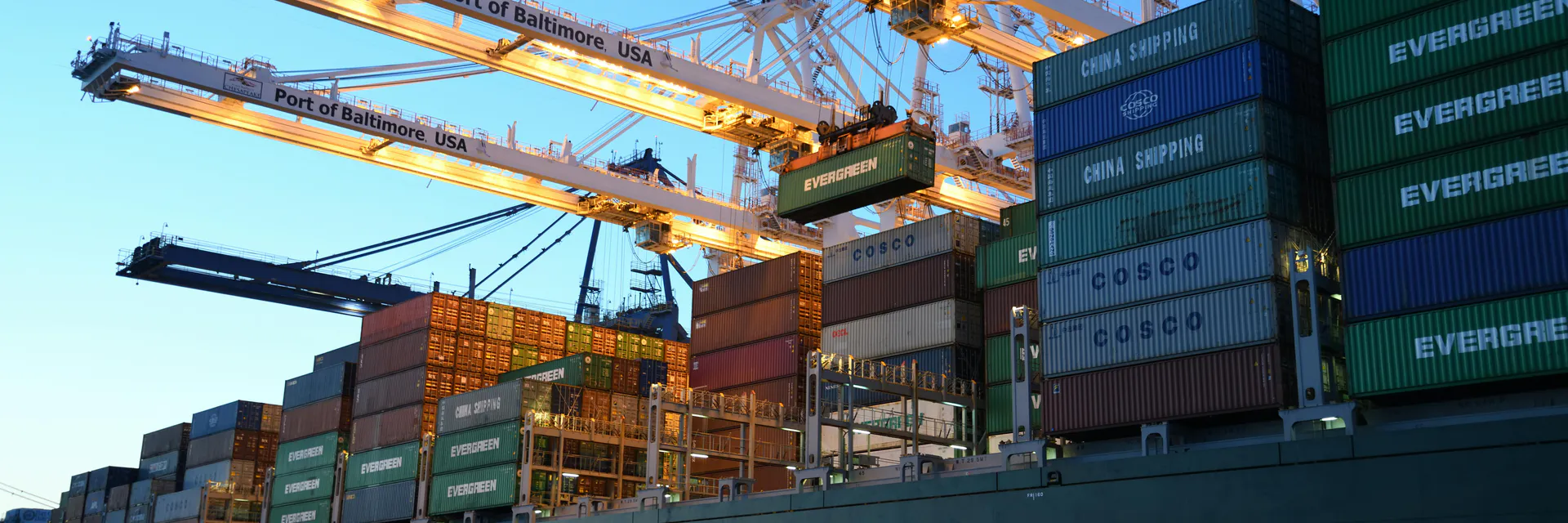
Road Transportation makes up for of the transportation industry. Usually 7 ton trucks are used for transportation and the average cost of carrying per ton per kilometer is $0.095. The Chattogram port that handles 92 percent of Bangladesh's export-import trade and has dwelling time of 9.99 days (Illius & Chowdhury, 2022) [8]. This inefficiencies cost Bangladesh's economy.
III. SCM & INDUSTRY 4.0
The application of automation and industry 4.0 is recently increasing day by day. Gocindan et al (2015) [5] conducted a survey of closed loop supply chains. Wang et al (2016) [20] and Gunasekaran et al. (2017) [6] explored the big data and information technologies in logistics and supply chain management. Yang et al (2019) [23] provided an in depth analysis of big data application on maritime studies while A. Alop (2019) [1] explored the problems of smart shipping. Kaffash et al. (2021) [9] centered on big data applications in intelligent transportation systems (ITS) in the context of supply chain and transportation. Ben-Daya et al. (2019) [2] explored the impacts of the Internet of Things (IoT) on
supply chain management. Sharma et al. (2020) [15] also carried out a systematic review on machine learning applications with the main focus on sustainable agriculture supply chain performance. Winkelhaus and Grosse (2020) [21] gave an excellent discussion on Logistics 4.0 and explained how Logistics 4.0 is supported by various technologies.
IV. OBJECTIVE OF THE RESEARCH
The purpose of this research is to understand the present situation and determine the actual problem, then ensures the problem is solved through the given solution that reduce the transportation cost in order to reduce product price. The main objective is to how efficiently the products can be transported and how this contributes to the RMG Sector in Bangladesh.
The Research objectives are
- To determine current situation and analyze the relationship between transportation logistic in SCM and RMG Sector in Bangladesh.
- Identifying the effective way for transportation system in RMG considering the currentbarriers.
- Use the best way to reduce the product price of RMG.
V. METHODOLOGY
a) Data Sources
Data collected through primary and secondary sources such as taking interviews, journals, books, articles, etc.
i. Primary Data
These data are collected through interview with garments exporters via phone call and faceto face. Here several questions are asked to understand their working process. Questionnaires are developed through FGD.
ii. Secondary Data
Secondary data collected from various journals, articles, newspapers, magazines, books, publications and websites.
b) Cost Analysis
Here the cost analysis is applied to identify the rise of product price of RMG Sector in Bangladesh. This will also help us to see the difference between the product price without including transportation cost and the product price after including transportation cost. Cost can be differ for various number of factors.
C: Refers to the total cost of the product after reaching the product for shipment.
C1: Refers to the raw material cost used in to produce the product.
C2: Refers to the production cost where labor and machinery costs are included.
C3: Refers to the transportation cost of delivering the final product for shipment.
VI. ROAD TRANSPORTATION LOGISTICS
Transportation has a major effect on logistics activities from moving resources to deliver the final product for the shipment. Almost every product need to pass through this sector in order to meet customer requirements. This is the fastest way with possible short time maintenance and requires less investment rather than in water and rail transportation. Also south part of the Bangladesh has few waterways which is more expensive than road maintenance.
Most of the factories use 3PL support for transportation in order to reduce overhead cost. of companies handle transportation themselves, while of companies are 3PL (Shohag, 2018) [18]. of the companies believed that the current road width was sufficient for logistics transportation. Forty percent of respondents agree that 3PL can be used to maintain a proper supplychain for a plant, while agree that the state government should monitor infrastructure development in the transportation logistics industry. Most companies don't know the width of roads for transportation and logistics (Shohag, 2018) [18]. Also, maintaining the vehicles with limited resources is difficult for the garment factory. This identifies the knowledge gap. The cost of trucks for delivering the product from Dhaka to CTG is about Taka 25,000 to Taka 30,000 (Mirdha, 2021) [11].
a) Data Collection and Analysis
Data collected through various sources among them, the data that is collected through direct interview from the garment factory, considered the true.
One such company is Mk Fashion. They export their product to Singapore and Vietnam. According to their Managing Director, MD Mizanur Rahman, their transportation cost from Dhaka, Uttara to Chittagong Port is about Taka 30,000. They use 3PL to transport their product. Their transportation truck can fully loaded with 300 carton box. Each carton box is loaded based on their product category such as for T-shirts, cartons loaded with 200 pieces. For jeans pants, the carton is loaded with 80 pieces and for the hoodie jacket, the carton is loaded with 60 pieces.
Here, we will discuss with 3 product. The cost of producing these products are-
T-Shirt: 120 Taka
Jeans Pant: 320 Taka
Hoodie Jacket: 300 Taka
The company loaded a truck with only one category of the product and 300 carton box can be stored in a truck.
Now, the value of total product in a single truck is-
| Product Category | Number of Cartons | Number of products per carton | Total Products in a truck | Per productprice (Taka) | Total valuein the truck (Taka) |
| T-shirt | 300 | 200 | 60,000 | 120 | 7,200,000 |
| Jeans Pant | 300 | 80 | 24,000 | 320 | 7,600,000 |
| Hoodie Jacket | 300 | 60 | 18,000 | 300 | 5,400,000 |
So, the Mk Fashion deliver 60,000 t-shirt or 24,000 jeans pant or 18,000 hoodie jacket in a single truck from Dhaka, Uttara to CTG port. The total value a truck carry for t-shirt is 7,200,000 Taka, for jeans pant is 7,600,000 Taka, for hoodie jacket is 5,400,000 Taka.
Now, the cost after including the transportation cost when the truck reached at the CTG port.
Here,
C: Refers to the cost included with transportation cost.
: Refers to the production cost which included raw material cost, labor and machinery cost.
C3: Refers to the transportation cost.
Cost of per product price Total cost/number of quantities.
Now,
For T-shirt,
Cost of per T-shirt Taka
For Jeans Pant,
Cost of per Jeans Pant = 7,710,000/24,000 = 321.25
Taka
For Hoodie Jacket,
Cost of per Hoodie Jacket Taka
So, after including the transportation cost to the total value of the product in a single truck, the total cost after the delivering the products, T-shirt is 7,230,000 Taka, for Jeans Pant is 7,710,000 Taka, for Hoodie Jacket is 5,430,000 Taka. Here, the cost per product is 120.5 Taka for t-shirt, 321.25 Taka for jeans pant and 301.7 Taka for hoodie jacket.
VII. RESULT
Here, per product price is increased due to transportation cost.
For T-shirt, the increased amount is, (120.5 - 120) = 0.5 Taka. The Mk Fashion approximately delivers 500,000 quantities of t-shirt per month. Then their transportation cost in a month for t-shirts, (500,000* 0.5) or 250,000 Taka. For a year, the cost is, (250,000*12) or 3,000,000 Taka.
Now for Jeans Pant, they deliver approximately 200,000 quantities in a month. Their transportation cost in a month for jeans pant is, or 250,000 Taka. Here, the Mk Fashion spend or 3,000,000 Taka per year for jeans pant in transportation.
Now for Hoodie Jacket, they deliver approximately 150,000 quantities in a month. So, their transportation cost in a month for hoodie jacket is, or 255,000 Taka. Here they spend or 1,530,000 Taka for 6 months.
The RMG sector based garments actually spend a lot of money in a month or in a year to transport their product from Dhaka to CTG port. Which results in a decrease in their revenue system. Exporters of garments say extra transportation costs have caused additional problems at a time when production costs have increased. However, worldwide brands and merchants do not pay higher price for the extra transportation cost. According to Ahmed Fazlur Rahman, chairman of Kappa Fashion Wear Ltd, due to the Eid holiday and a lack of containers in the port, the fare has been extremely unpredictable (Mirdha, 2021) [11]. Consequently, there was a highly demand for trucks and covered vans. Abdul Hannan, a manager of Edo Mia Transport Agency, blamed the abnormal traffic congestion for the higher transport cost (Mirdha, 2021) [11] and sometimes, the fare declines when the unloading of goods at the port slows in line with a lower import of goods. The president of the Bangladesh Garment Manufacturers and Exporters Association, Faruque Hassan, said the cost of production had gone by up to 30 per cent over the last eight years for various reasons. Now the higher transport costs have added to the woes of the garment exporters. Each part of the national transportation system is affected by congestion and delays, from roadsto seaports and land ports. The cost of regular transporting goods doubles due to traffic congestion alone.
a) Industry 4.0 & Automation: How It Can Help
In today's world logistics operations are using automation technology - artificial intelligence and machine learn. This technology can help solving problems stated in this study by
- Route Optimization: Intelligent algorithms can identify delivery distance, cargo capacity, and traffic congestion and create an optimum route thus leading to minimized distance, avoiding congestion, less use of fuel and time. [12].
- Real-time Tracking and Visibility: Modern internet of things tracking devices can track many variables like distance, congestions and collect data on the current state of the operation.
- Predictive Analytics: Using historical data and predictive analytics, intelligence systems can predict market supply, road condition, delivery time etc. [7].
- Automated Dispatch: Intelligent Delivery Management can automate the dispatching of delivery personnel or vehicles. It takes into account factors like location, availability, and capacity to ensure efficient resource allocation. [10]
- Integration with Other Platforms: By integrating with port and fright system it can collaborate the operation to achieve maximum efficiency.
In heavily congested conditions, optimal drive cycles may reduce energy consumption by . For freight trucks, Tsugawa [16] (2013) has reported a reduction in energy consumption for a 3-truck 9 platoon at , with a gap between trucks ( reduction at gap). Extrapolating his 10 results toward zero gap implies a reduction for the middle truck. This represents a plausible 11 upper bound for the middle vehicles in a long platoon. Lu and Shladover (2013) [17] reported savings of , , and in fuel use for first, second, and third trucks, respectively, in a 3-truck platoon 13 with spacing. Since the large majority of freight kilometers are on the highway, we can use these 14 energy savings estimates directly and estimate an upper range of energy intensity reduction 15 from platooning of heavy trucks. Data-driven search analysis, automated deliveries (e.g. via drones) and reduced administrative burdens could cut costs by , says the 2018 Global Truck Study. [4]
b) Modern Ports
Port of Rotterdam & Port of Antwerp introduced automation technologies to handle the port operations more efficiency. A case study shows that Port of Rotterdam reduced the wait time using an automated app called Pronto [3]. Technologies they used are -
Digital Twin: A real-time replica of the port with every possible variable which helps them with making data-driven decisions.[13]
Drones: Drones are used for surveillance and monitoring, berth management and oil spill or floating waste detection.
NxtPort: A data sharing platform for merchants, cargo agencies, regulatory bodies and port management creating a collaborative effort between stakeholders.
Smart Sensors: For checking water quality and human-less navigation.
Smart Camera: Smart cameras can recognize objects such as ships thanks to artificial intelligence. They also support with incident and berth management.[14]c) Technologies Helps in Land Transportation Logistics Operation[15]1. Artificial Intelligence and Machine Learning: They use historical data and machine intelligence to generate optimized delivery routes and make accurate predictions. They learn and adopt with time and provide accurate analysis.
Internet of Things (IoT): IoT uses smart devices and sensors to provide real-time location, condition and performance to provide visibility and provide data for data-driven decision making.[21]3. Cloud Computing: Cloud computing provides solutions for real-time collaboration, real-time updates and accessibility from various devices, ensuring seamless integration with existing systems.
Geofencing and Location-Based Services: Geofencing technology allows businesses to set virtual boundaries around specific areas or delivery zones. By utilizing location-based services, businesses can automate actions when a delivery vehicle enters or exits a geofenced area.
Dynamic Routing: Dynamic routing algorithms integrate real-time traffic and road conditions to adjust route constraints to create optimum routes and reduce time.
Pareto front: Since route optimization often involves multiple conflicting objectives, such as minimizing delivery time, reducing fuel consumption, and maximizing resource utilization, Pareto front creates multi-objective optimization algorithms considering these competing objectives and provide alternative optimum routes.
Real-Time Traffic Data Integration: Integrating real-time traffic data into route optimization algorithms allows businesses to dynamically adjust routes based on current traffic conditions.
d) The Challenges and Barriers to Adopting Automation in Emerging Economies.
- Coordination Problems: Implementing automated supply chain systems in exporting requires coordinated effort from government, government agencies, freight and cargo agencies and many
- other stakeholder which is hard in an emerging economy.
Lack of Data-Driven Decision-Making: Emerging economies usually lack the needed infrastructure and framework for data driven decision making.
Insufficient Incentives to Employees: Digitalization requires employees to learn new technologies and skills. A good incentive structure helps to avoid the issues of moral hazard whereas fewer incentives to employees lead to an increase in time, corruption, agency problems.
Lack of Training & Domain Expertise: For implementing advanced technologies employees should have to learn additional skills and competencies which take time.
Non-supportive Policy Ecosystem: Government policies in emerging economies are doesnot provide any incentive and require permissions and approval from different governmentagencies.
Lack of Stakeholder's Participation: An automated system integrates different stakeholder to provide efficiency. If a stakeholder is not willing to adapt to new system then it cannot provide optimum.
Low return on investment: Transition into a new system is costly and needs time to return the investment to the business which discourages the businessmen.
VIII. CONCLUSION
Bangladesh's RMG sector stands on a crucial point as the new industrial revolution unveils itself. This study focuses on the increase in the cost of products due to transportation inefficiencies and highlights the need for embracing the 4th industrial revolution in transportation of goods.
The result of this study indicates that transportation costs play a crucial role in increasing the price of RMG products with cost analysis. We conclude that additional cost of transport leads to an increase in the price of t-shirt, jeans pants, hoodies jackets which affects their competitiveness in the global market.
The study suggests that using Industry 4.0 and automation technologies can lower the cost and inefficiencies of transportation. Furthermore ports in Bangladesh should imply newer technology to reduce time and increase efficiency. This research also acknowledges that implementing newer technology is hard in emerging economies like Bangladesh. Also, Bangladesh Government has a responsibility to ensure fair transportation system and they should regulate their monitoring system in highway roads to prevent the unlawful money collection and unwanted congestion on road.
In conclusion, this research emphasizes the need for the RMG sector in Bangladesh to adopt automation to optimize their logistics operations and reduce costs and increase profit. Overcoming the challenges to adopt automation is must to sustain in the post 4th industrial revolution world.
Research Questionnaire
Can we ask some questions about you and your company? Your information will help our study to go further.
Which position do you hold at the company?
What does your company do?
How many products do you export and where do you export?
How many products do you export in a month or a year?
What modes of transportation do you use for your transport operations (From production house to port)?
Which port do you use for exporting and from where your company delivers the final products to the port?
Do you have a preferred transportation provider or do you work with multiple carriers to deliver the product from production house to port?
How many product do you load in a single vehicle that you use for transportation?
How do you handle transportation logistics, such as route planning and scheduling?
What is the overall budget allocated for each transportation vehicles?
Are transportation costs included in the product pricing?
What is the cost of per product? Cost without including the transportation cost and cost after transporting the product to the port. Can you tell us about this for some products?
How do you calculate transportation costs? (per mile/ per product)
Are there any additional costs associated with transportation, such as unlawful money collection on the road?
How do you handle unexpected events in transportation, such as weather delays or traffic congestion?
Do you use any transportation management software or technologies to optimize routes and track your transport vehicles?
Does every RMG company export their products in this way? (For example, transportoperation from Dhaka to Chittagong Port).