
I. DESSERTIFICATION
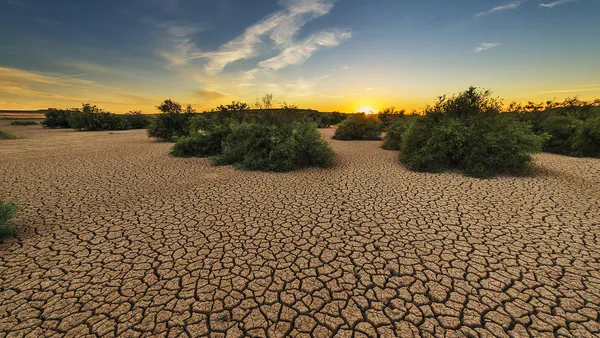
Land degradation Desertification is a type of process by which a fertile land changes itself into a desert by losing its flora and fauna, this can be caused by drought, deforestation, climate change, human activity, or improper agriculture. Land degradation affects almost 2 billion ha of land worldwide, every year, 24 billion tons of fertile soils are lost due to erosion; and 12 million ha of land are degraded each year which is 23 ha per minute. The effects of desertification are far-reaching and can impact both the environment and human society. The loss of fertile land can lead to reduced crop yields which can in turn lead to food shortages and famine. Desertification can also lead to the displacement of populations as people are forced to migrate. Furthermore, desertification can harm biodiversity and increase the risk of natural disasters like dust storms several solutions can help mitigate and reduce the effects of desertification these include sustainable land use practices such as conservation agriculture and agroforestry, reforestation, and afforestation projects can help to restore degraded land and prevent further desertification better water management practices including rainwater harvesting can also help to conserve water and prevent drought finally education and awareness raising campaigns can help to promote sustainable land use practices and reduce the impact of desertification. However, the question arises what initiatives have national and international organizations taken? Firstly, we have to discuss The United Nations Convention to Combat Desertification (UNCCD) drafted in 1994 and adopted in 1996. The United Nations Convention to Combat Desertification in those Countries experiencing serious drought and/or desertification, particularly in Africa is a convention to combat desertification and mitigate the effects of drought through national action programs that incorporate long-term strategies supported by international cooperation and partnership agreements. It is the only legally binding framework set up to address the problem of desertification. The convention is based on the principles of participation, partnership, and decentralization-the backbone of good governance and sustainable development. It has 197 parties, making it near universal in reach. To help publicize the Convention, 2006 was declared "International Year of Deserts and Desertification" but debates have ensued regarding how effective the International Year was in practice. Another ambitious project was started by the African Union known as "The Great Green Wall" The project was adopted by the African Union in 2007, initially conceived as a way to combat desertification in the Sahel Region and hold back expansion of the Sahara Desert, by planting a wall of trees stretching across the Sahel Region from Djibouti to Dakar, Senegal. The original dimensions of the wall were to be and long, but the program expanded to encompass nations in both Northern and Western Africa however, only of the target for this project was achieved due to not enough funding. The Food and Agriculture Organization of the United Nations.
Passed "The Combat Desertification of Law 2009" this law consists of 25 articles divided into five sections aimed at; establishing competent authorities, at the national and local levels, to achieve: elimination or mitigation of desertification; achieving development of material and human capabilities; creating a successful environment to achieve the intended goals; and coordinating between them through a mechanism of supervision and follow up. To reach these objectives established: the National Council to Combat Desertification; General Secretariat;
State Council to Combat Desertification; and National Fund to Combat Desertification. The National Council is the competent authority to supervise the National Program to Combat Desertification and the enforcement of the United Nations Convention to Combat.
Desertification. It is competent for policy planning at the national level. The General Secretariat is created by the National Council and follows up on the law's implementation on a national level. The state councils are established in each state. The National Fund to Combat Desertification, under the National Council supervision, provides support and funding for Projects of the National Action Program and other governmental activities related to the National Action Program.
Another ambitious project was started by the African Union known as "The Great Green Wall" The project was adopted by the African Union in 2007, initially conceived as a way to combat desertification in the Sahel Region and hold back expansion of the Sahara Desert, by planting a wall of trees stretching across the Sahel Region from Djibouti to Dakar, Senegal. The original dimensions of the wall were to be and long, but the program expanded to encompass nations in both Northern and Western Africa however, only of the target for this project was achieved due to not enough funding.
India has undertaken a similar project the Great Green Wall building a 1500 km long wall to stop the Thar Desert from expanding to the east a statistic showed that the desert from 2005 to 2020 took up 14 million hectares of land before the Aravali Mountains naturally stopped this desertification but the deforestation did in the past 50 years and illegal mining as well hence, it has become quite tough for the Aravali's to prevent. To deal with this problem India launched the Aravali Green Wall project on 25th March 2022 where a 1500 km wall will be built with trees spanning from Haryana to Gujarat. India has taken many other initiatives to deal with desertification around of India's land is being affected by land degradation to deal with this many schemes have been launched such as Pradhan Mantri Fasal Bima Yojana (PMFBY), Soil Health Card Scheme, Soil Health Management Scheme, Pradhan Mantri Krishi
Sinchayee Yojana (PKSY), Per Drop More Crop, Afforestation Program, Green India Mission, etc. These schemes have helped reduce land degradation in India. There have also been significant actions taken on an international level by foreign countries for instance Kuwait where the Kuwait Academy of Sciences and Environmental Protection issues in Kuwait. Desertification policies are also present in Israel for example the 1950 Vegetation Protection Law (Black Goat Law) aimed at stopping vegetation destruction caused by overgrazing. Management of human activities was the main tool for controlling desertification, and laws and regulations were used to regulate people's behavior. Because grazing goats have a severe impact on bushes growing close to the ground, the Back Goat Law was implemented to reduce the number of goats, thus reducing grazing pressure on natural bushes and soil erosion. In China, the development of policies and regulations to combat desertification was slow to start. Although the National Desertification Leading Group and the Chinese Academy of Sciences combating desertification team were established earlier, they were in stagnation between 1969 and 1976. The rapid development of environmental protection in Kuwait began with the promulgation of the new Decree No 62 in 1980. It is a comprehensive regulation of environmental protection and overall environmental protection policies It contains 13 legal provisions. In Israel "Every day is a tree planting festival" was the slogan during the development project which lasted 20 years. In 2015 Kuwait began implementing the Green Belt to mitigate the effects of desertification and sandstorms. In 2002, China promulgated the Law of Prevention and Control of Desertification, which marked the start of desertification laws. This is a special law that focuses on desertification control and addresses issues of scope, planning, legislative guarantees, measures, and legal responsibility. The fifth national desertification monitoring program was completed program was completed between 2013 and 2015. Results show remarkable improvement in overall containment, continuous reduction, and enhanced functions since 2009. China is also actively participating in the international dialogue and cooperation on combating desertification.
Table1 Statistical result of desertification in central Asia in 1995
| Country | Desertific ation area 105km2 | Potential extent (%) | Slight (%) | Moderate (%) | Severe (%) | Very severe (%) |
| Kazakhstan | 1.78 | 65.33 | 18.1 | 26.1 | 12.4 | 8.7 |
| Uzbekistan | 3.16 | 70.74 | 5.6 | 7.0 | 27.2 | 30.9 |
| Turkmenistan | 4.44 | 91.04 | 3.8 | 13.8 | 43.4 | 30.1 |
| kirghizstan | 0.51 | 25.75 | 7.4 | 10.3 | 3.9 | 4.1 |
| Tajikistan | 0.47 | 39.49 | 7.2 | 10.9 | 8.5 | 12.9 |
II. GLOBAL WARMING
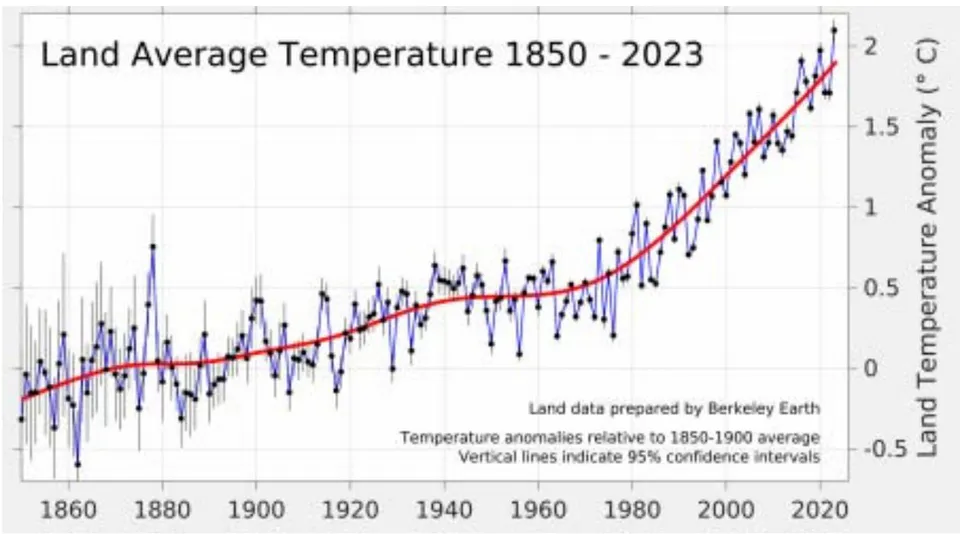
Global warming refers to the phenomenon of gradual temperature rise of atmosphere, soil, water, and vegetative cover on Earth's surface year by year, a major cause of which is the "greenhouse effect" due to emission of such greenhouse gases (GHG) as carbon dioxide, methane, and nitrous oxide. On one hand, GHG absorbs the outward long-wave radiation emitted by Earth; it has no resistance against the inward shortwave radiation from the sun on the other, which causes temperature rises on Earth's surface and the lower atmosphere and results in global warming. Among the GHG carbon dioxide makes over contribution to global warming. According to a report by the World Health Organization (WHO) 3.6 billion people already live in areas highly susceptible to climate change. Between 2030 and 2050, climate change is expected to cause approximately 250,000 additional deaths per year, from undernutrition, malaria, diarrhoea, and heat stress alone. Nasa confirmed that July 2023 was the hottest month on Earth ever recorded. It is quite clear that global warming is a pressing issue hence, many organizations and governments around the world have been trying to reduce the effects of global warming. Firstly, let's start by discussing some initiatives taken on the international level to prevent the exacerbation of global warming there have been many conferences to deal with this issue firstly, there is the Paris Climate Conference which is an international treaty that was adopted in 2015. Where 195 countries agreed to limit the rise in global temperature to 2 Celsius. European Union (EU) will cut carbon dioxide emissions by by 2030, the USA by by 2025, and China agreed that their emissions will peak in 2030. Countries will meet every 5 years to discuss progress. Another initiative taken was the Copenhagen Conference which was done in 2009 where MEDCs and LEDCs agreed to limit greenhouse gas emissions. To assist LEDCs with the reduction, 5%$, compared with 1990 levels. Each MEDC was allocated a target for emission reductions. Some LEDCs such as China were given targets and allowed to increase emissions. Global warming can also lead to wildfires one instance of that happening was the 2019-2020 Australian bushfires which were catastrophic in both
scale and impact- both for people and for nature. Up to 19 million hectares were burnt, with 12.6 million hectares primarily forests and woodlands. Nearly 3 billion animals were impacted by the blazes. It can be said that one of the factors causing Australia to have the worst mammal extinction rate in the world is global warming as that leads to wildfires. In the last three decades alone Australia has lost three native species. Hundreds more were already on the brink of extinction before the bushfires broke out. However, the question arises what is Australia doing to deal with this issue? Well, The Australian Government launched the Environmental Protection and Biodiversity Conservation Act (EPBC) is supposed to protect the homes and habitats of threatened species. However, in the last 20 years since the laws came into force, more than 7.6 million hectares of threatened species of habitat have been destroyed. Another issue global warming has caused in the nation of Australia is land clearing. Australia has lost billions of trees due to land clearing which has affected wildlife terribly. However, Australia has started working on planting 150,000 trees in the right places these trees can reconnect islands of vegetation so they can once again function as large forests, allowing Koalas and other animals to safely move through the landscape. In that context, the environmental value of 150,000 trees can be immense, particularly when combined with other habitat restoration works. That's the aim of Cores, Corridors, and Koalas, a project led by the Great Eastern Ranges (GER) In partnership with the Worldwide Fund for Nature-Australia formed in response to the 2019-2020 bushfires. The United Nations has also taken action on this matter through the United Nations Framework Convention on Climate Change. The convention's main objective was the stabilization of greenhouse gas concentrations in the atmosphere at a level that would prevent dangerous anthropogenic [i.e., human-caused] interference with the climate system. There have also been initiatives taken in Europe such as the European Union Climate Change Programme and the European Climate Initiative. In the United States of America, an agreement was signed between the US states of Washington, Oregon, and California it is known as West Coast Governors' Global Warming Initiative. A similar initiative was taken by the Midwestern states known as the Midwestern Greenhouse Gas Reduction Accord. The Regional Greenhouse Gas Initiative is another such instance signed between the Northeast and Mid-Atlantic states in the USA. The state of California in the USA LAUNCHED Global Warming Solutions Act. Global warming has also affected other animals as well, for instance, Polar Bears. The Arctic is warming about twice as fast as the global average, causing the ice that polar bears depend on to melt away. Loss of sea ice also threatens the polar bear's main prey the seals, which need ice to raise their young children. India has also taken some initiatives to combat
global warming these include the National Solar Mission, National Mission for Enhanced Energy Efficiency, National Mission on Sustainable Habitat,
National Water Mission, National Mission for Sustaining the Himalayan Eco-system, and many more.
III. BIODIVERSITY AND WILDLIFE LOSS
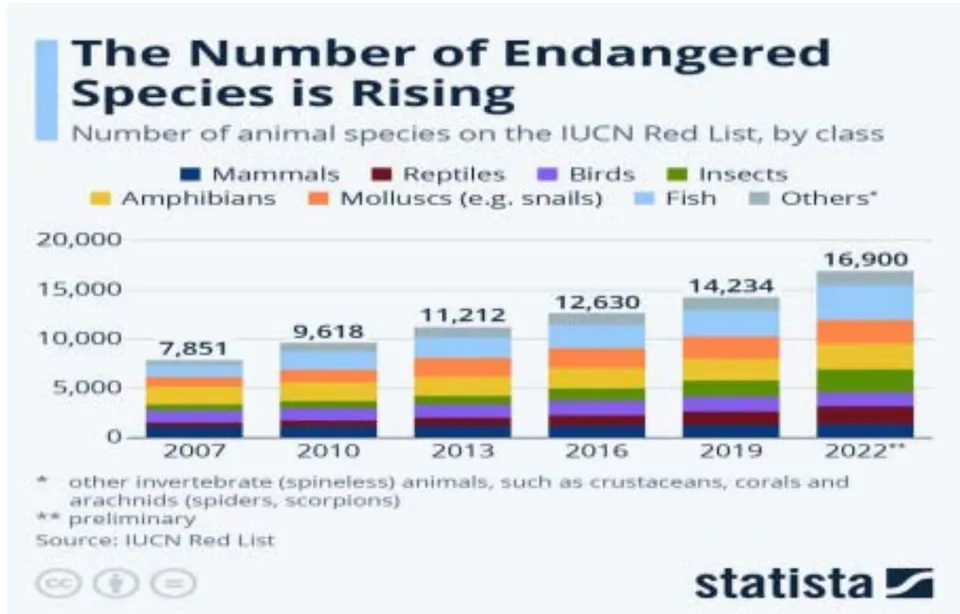
The past 50 years have seen rapid growth in human consumption, population, global trade, and urbanization, resulting in humanity using more of the Earth's resources than it can replenish naturally. A 2020 World Wide Fund (WWF) report found that the population size of mammals, fish, birds, reptiles, and amphibians has experienced a decline of an average of between 1970 and 2016. The report attributes this biodiversity loss to a variety of factors, but mainly land-use change, particularly the conversion of habitats, like forests, grasslands, and mangroves, into agricultural systems. Animals such as pangolins, sharks, and seahorses are significantly affected by the illegal wildlife trade, and pangolins are critically endangered because of it. More broadly, a recent analysis has found sixth mass extinction of wildlife on Earth is accelerating. More than 500 species of land animals are on the brink of extinction and are likely to be lost within 20 years; the same number were lost over the whole of the last century. The scientists say that without the human destruction of nature, this rate of loss would have taken thousands of years.
In Antarctica, climate change-triggered melting of sea ice is taking a heavy toll on emperor penguins and could wipe out the entire population as early as 2100, according to 2023 research. Now let's discuss some initiatives taken on an international level to counter this issue. Firstly, there is the United Nations Convention on Biological Diversity (UNCBD) which is a
UN treaty that is responsible for the conservation of Biological Diversity around the world. The UNCBD is one of the important parts of international environment conventions and protocols. It is a multilateral treaty opened for signature at the Earth Summit in Rio De Janeiro in 1992. It is a key document regarding sustainable development. It comes under the United Nations Environment Programme (UNEP). 196 countries are a party to the CBD India is also a party to the convention India ratified in 1994. To implement the provisions of the Act, the government established the National Biodiversity Authority (NBA) in 2003. The NBA is a statutory body. The goals of the UNCBD include:
- Conservation of biological diversity
- Sustainable use of the components of biodiversity.
- Fair and equitable sharing of benefits arising from genetic resources.
Another such example of protecting biodiversity and wildlife is the Convention on International Trade in Endangered Species of Wild Fauna and Flora (CITES) it is an international agreement between governments with the objective of the preservation of the planet's plants and animals by ensuring that the international trade in their specimens does not threaten their survival. It was adopted in 1963 and entered into force in 1975. India has been a CITES party since 1976. Due to its extreme diversity, India is recognized all over the world for harboring up to of all the species recorded by CITES. Out of all the 34 global biodiversity hotspots in the world, India has 4 of them: Western Ghats,
Sunderland, Himalayas, and Indo-Burma region. As an active CITES member, India prohibits the international trade of endangered wild species. This is done by
regulating the trade by export certificates and import permits.
IV. DEFORESTATION
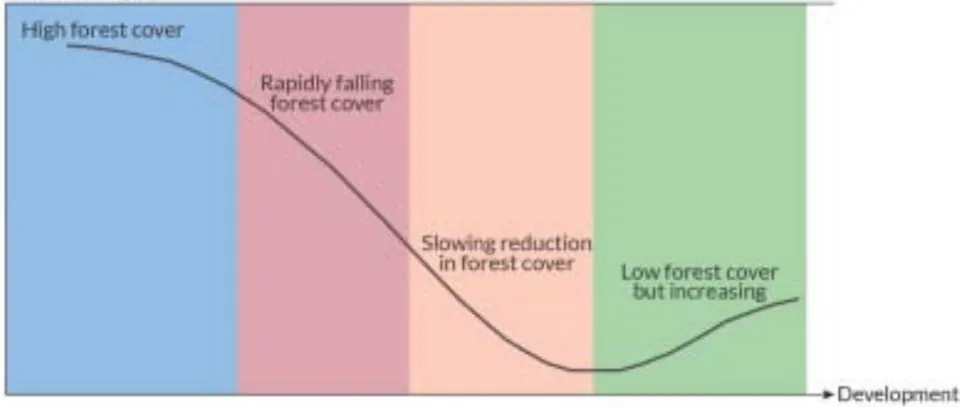
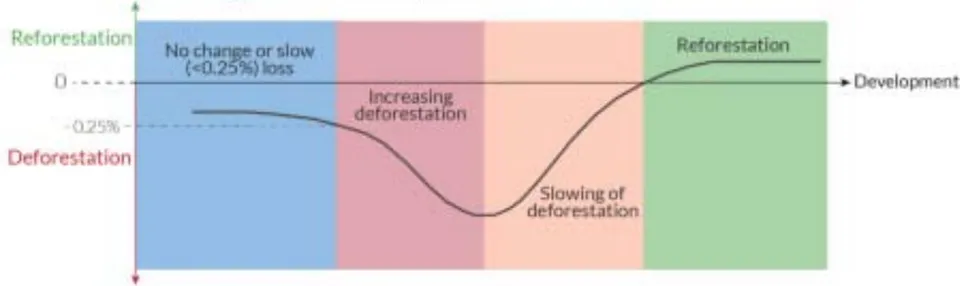
Deforestation is the process of significantly and deliberately removing trees and vegetation from a specific area. This phenomenon occurs due to human activities such as logging for timber, expansion of agriculture, construction of infrastructure, and exploitation of natural resources. Deforestation has negative consequences for the environment and life on Earth, as forests are vital habitats for many species, regulate the climate, and play an important role in capturing carbon dioxide and mitigating climate change. Globally humans deforest around ten million hectares of forest every year. That is an area the size of Portugal every year. Around half of this deforestation is offset by regrowing forests, so overall, we lose around five million hectares each year. Nearly of this deforestation occurs in the tropics. Time and time again, we see examples of countries that have lost massive amounts of forests before reaching a turning point where deforestation not only slows but forests return.
Forest Transition Model: How forests change over time

Stage 1 Pre-transition
High forest cover No or slow loss of forest (less than 0.25%)
Stage 2 Early transition
Deforestation rate increasing
Stage 3 Late transition
Low forest cover but slowing rate of deforestation
Stage 4 Post-transition
Low forest cover but is increasing through reforestation
Annual change in forest cover
Between 2015 and 2019, at least 100 million hectares of healthy and productive land were degraded every year, impacting the lives of 1.3 billion people. Globally, one-fifth of the Earth's land area is degraded, an area nearly the size of India and the Russian Federation combined. It is conspicuous that deforestation is quite a big issue so now let's discuss some initiatives taken to combat this issue both on a national as well as an international level. Firstly, let's start with discussing laws in India against deforestation. The first law is the Indian Forest Act, of 1927 it was framed to manage timber and other forest resources. It provides for state governments to notify any forest land they own as reserved or protected forests. All land rights in such land are subject to the provision of the Act. The Forest (Conservation) Act 1980, was enacted to prevent
large-scale deforestation. It requires the central government's approval for any diversion of forest land for non-forest purposes. India has also committed to creating an additional carbon sink of 2.5-3 billion tonnes of CO2 equivalent through additional forest and tree cover. This means increasing its forest cover from the current to and restoring 26 million hectares of land by 2030. There have also been many schemes such as GIM, CAMPA, and MGNREGA. These schemes have received much funding for instance in the case of GIM so far Rs. 690.39 Crores has been released to the States since 2015. In the case of CAMPA, Rs. 51,768.76 Crores has been released to the States/UTs since 2019. There are also many laws and acts preventing deforestation on an international level as well for instance the FOREST Act by the (WWF) Worldwide
Fund for Nature. The Act is critical to tackling global deforestation, nature loss, international crime, and climate change. The bill helps companies and governments meet their deforestation-free commitments and promote good governance and transparent and accountable global supply chains. The bill stops agricultural products from illegally deforested lands from entering the US. It requires companies to be responsible for their sourcing and show they are taking credible action to remove illegality and abuses from their supply chains. The bill also brings together stakeholders to improve laws, monitoring, assistance, and enforcement in countries experiencing illegal deforestation, fostering collaboration between governments and businesses.
The (SDG) Sustainable Development Goal 15: Life on land also protects and restores terrestrial ecosystems, sustainably manages forests, combat desertification, and halts and reverses land degradation and stops biodiversity loss.
V. FOOD WASTE
A third of the food intended for human consumption - around 1.3 billion tons - is wasted or lost. This is enough to feed 3 billion people. Food waste and loss account for approximately one-quarter of greenhouse gas emissions annually; if it were a country food waste would be the third-largest emitter of greenhouse gases, behind China and the US.
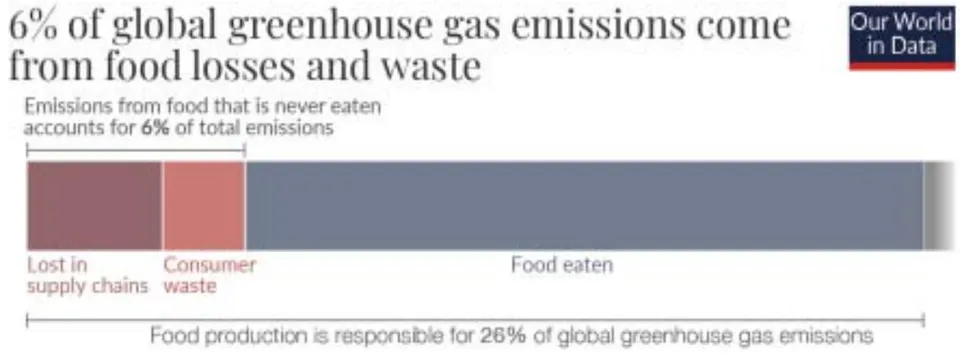
Food waste and loss occur at different stages in developing and developed countries; in developing countries, of food waste occurs at the post harvest and processing levels, while in developed countries, of food waste occurs at the retail and consumer levels. At the retail level, a shocking amount of food is wasted because of aesthetic reasons; in the US, more than of all produce thrown away is done so because it is deemed to be "too ugly" to be sold to consumers- this amounts to about 60 million tons of fruits and vegetables. This leads to food insecurity, another one of the biggest environmental problems. 1.3 metric gigatons of food is wasted every year and at least 795 million people are undernourished worldwide. More than a third of all the food that's produced on our planet never reaches a table. Now, let's discuss some initiatives taken on a national level by the Indian government firstly, there is the "Indian Food Sharing Alliance" (IFSA) which has been formed by the Food Safety and Standards Authority of India (FSSAI) to help solve India's food waste and hunger crisis by working with various partner organizations, Food Recovery Agencies and NGO's. The Indian government has even
I launched several campaigns to create awareness about food waste such as the 'Anna Daata Sukhi Bhava' campaign, which aims to create awareness about the importance of not wasting food. Additionally, the government has established the Indian Food Banking Network, which collects surplus food from hotels, restaurants, and other food establishments and distributes it to the needy. Numerous non-profit organizations in India are also working towards reducing food waste. For example, Feeding India is an NGO that has established a network of volunteers who collect excess food from various sources and distribute it to those in need. Similarly, the Robin Hood Army is another NGO that has established a network of volunteers who collect excess food from various sources and distribute it to the homeless and underprivileged individuals. In recent years there has also been an increase in the number of startups working towards reducing food in India. Companies like Too Good to Go, Zomato, Feeding India, and Khaana Chahiye are some examples of startups that are working towards reducing food waste by providing a platform for restaurants and hotels to sell excess food at discounted rates. Overall, food waste management in India is still a work in progress, but various initiatives and organizations are working towards reducing the amount of food wasted and ensuring that it is used to feed the needy. Now let's discuss some initiatives taken on an international level firstly, the United Nations has started the Sustainable Food Systems Programme under the United Nations Environment Programme (UNEP) the UNEP is implementing this program through three main focus areas:
- National Roundtables on Sustainable Food Systems
- Climate Change, Urbanization and Food Systems
- Sustainable Food System Thinking (interconnected policy making on food and agriculture
This program comes under Sustainable Development Goal 12 which seeks to ensure sustainable consumption and production patterns.

Wasted Food Scale
How to reduce the environmental impacts of wasted food
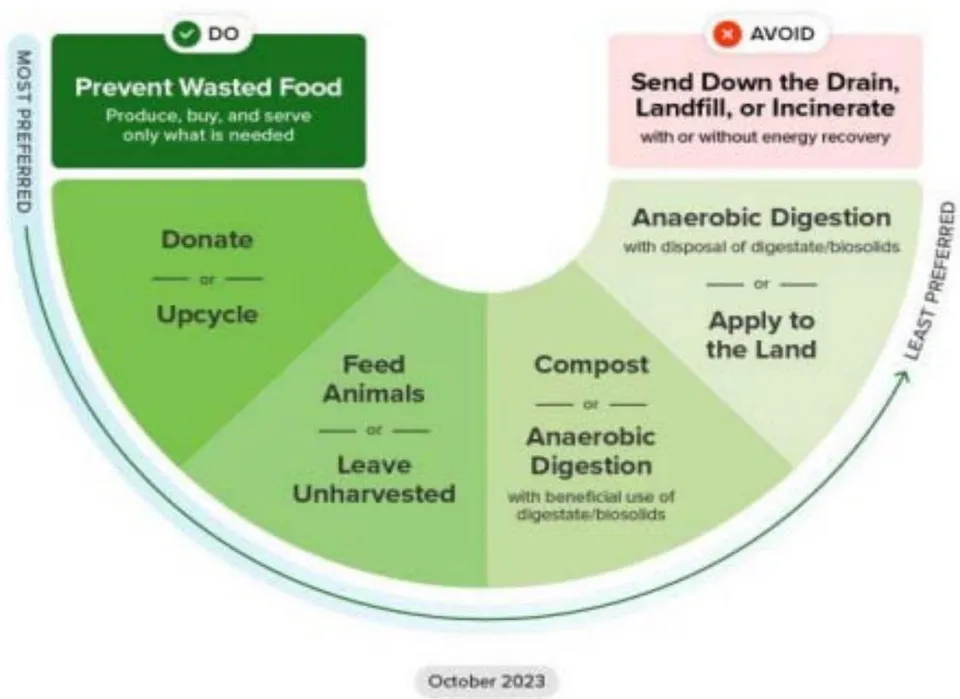
The visual above is from the United States Environmental Protection Agency and can be implemented by the readers in their day-to-day lives to help prevent food wastage. Another initiative is the 'Save Food' initiative backed by the Food and Agricultural Organization of the United Nations because the causes of food loss and waste vary in different parts of the world, the Save Food initiative takes a regional approach, developing strategies adjusted to the specific needs of regions, subregions, and countries. Collaboration with regional partners is essential
The Save Food regions are:
The European Union
North America and Australia
Japan and the Republic of Korea
Eastern Europe and Central Asia
North Africa and the Near East
Sub-Saharan Africa
South and East Asia and the Pacific
Latin America and the Caribbean
There have also been many initiatives taken by Individuals for instance the DC Central Kitchen founded in 1999 by Robert Egger in 2011 the community kitchen recovered 370,131 kilograms (816,000 pounds) of food. From the food, it recovered DC Kitchen provided almost 2 million meals to those in need in the DC area. In addition to recovering food from organizations and restaurants, DC Central also offers local farmers fair prices for their produce, helping to contribute to the local economy. There is also the Food Recovery Network founded by enterprising students at the University of Maryland who decided to take action and launch this initiative to deliver cafeteria leftovers to local food shelters. It has since expanded to 11 chapters on campus across the US Students involved in the Food
Recovery Network visit their campus and dining halls nightly to rescue leftover food and deliver it to local shelters and food pantries. Close to 55,000 kilograms (121,000 pounds) of food have been rescued by the Network since 2011.
The Enormous Scale of Global Food Waste
Total annual household food waste produced in selected countries*

- Total food waste per year (tonnes)
- Estimated food waste per capita (kg)
China 91,646,213 64
68,760,163 50
United States 19,359,951 59
Japan 8,159,891 64
Germany 6,263,775 75
France 5,522,358 85
United Kingdom 5,199,825
Russia 4,868,564 33
Spain 3,613,954 77
Australia 2,563,110 102
- UNEP estimates with high or medium confidence
Source: UNEP Food Waste Index Report 2021