




1. Introduction
This article concerns to Congenital Zika Virus Syndrome which has profoundly affected children and families in Brazil in terms of physical and emotional health, economic and social conditions and quality of life. Quality of life is a central concern, as it reflects conditions sought by all those who have faced these challenges, as well as a provision of comprehensive care to meet all needs of these children.
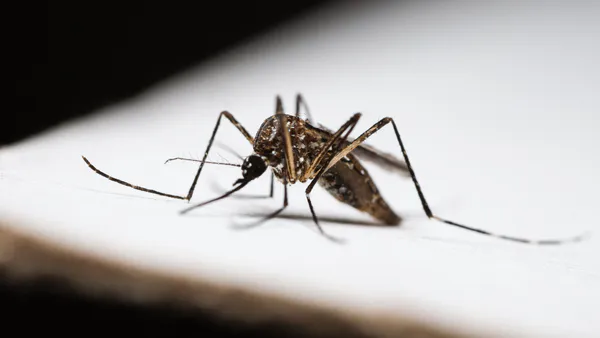
Zika is the first mosquito-borne virus known to cause fetal malformations. Its incidence has disproportionately affected individuals and communities experiencing socioeconomic vulnerability, many of whom have received insufficient public assistance, according to Brunoni (2016). The virus is transmitted through Aedes aegypti mosquito bite. Its name derives from the Zika Forest in Uganda, Africa, where it was identified in 1947. In 2015, the proportion of babies born with microcephaly was reported, and the condition became a global public health concern (Russo et al., 2017).
Brazil was the first country to identify a possible link between Zika virus and microcephaly following an epidemic that affected hundreds of children across the country. Between August and October 2015, the first cases reported in eight Brazilian states indicated that all the mothers had lived in or visited areas affected by the virus during pregnancy, according to Salge et al. (2016), as cited by Santos (2021). Due to this problem and its unprecedented nature, research intensified in pursuing more comprehensive understanding of its underlying causes and other clinical manifestations. The condition later became known as Congenital Zika Virus Syndrome (CZVS).
Microcephaly is characterized by a reduction in head size. The cranial bones may close prematurely, preventing normal brain development and affecting motor and cognitive development, often resulting in intellectual disability. Microcephaly may have genetic causes or result from several factors, including infections during pregnancy that affect the central nervous system formation.
According to the Brazilian Ministry of Health, microcephaly is defined as follows:
“(...) a condition that occurs when a baby’s skull does not reach its normal size, thereby affecting mental development. The condition can be detected within the first hours of life by measuring head circumference. For boys, the measurement is equal to or less than 31.9 cm, and for girls, equal to or less than 31.5 cm. These measurements apply to babies born at 37 or more weeks of gestation, according to the protocol updated in March 2016” (Brasil, 2015)
When discussing about levels of impairment observed in children with Congenital Zika Virus Syndrome (CZVS), it is evident that these vary significantly. It is therefore essential for the professional working with such a child to have an in-depth understanding of each the child and their clinical profile; this makes it more feasible to develop a pedagogical approach that addresses the specific needs identified during the clinical history (anamnesis).
Children with CZVS may present other conditions, such as intellectual deficits, delays in motor and speech functions, facial abnormalities, dwarfism or short stature, hyperactivity, epilepsy, coordination and balance difficulties, and neurological impairments. It is important to emphasize that every student has their own pace of learning, regardless of their individual needs. Inclusion provides opportunities for students to engage with the educational environment and participate in knowledge acquisition process.
The challenge facing education today, whether in promoting inclusion, respecting diversity, or valuing teachers as professionals, calls for transformations within schools and society as a whole. These values underpin our collective commitment and our ongoing efforts, not only to advance inclusion and teaching and learning, but also to ensure the equity to which all students are entitled.
Fernandes, Barbosa, and Orrico (2024) say that children and young people with disabilities education, whether physical, sensory, intellectual, or mental in origin, have undergone several changes in understanding and provision over the past two centuries. These changes range from a time when these students were not considered eligible for admission to educational systems, through the establishment of separate classes, to the current trend of including them in mainstream, inclusive classrooms alongside students without disabilities.
The authors also explain that healthcare models for persons with disabilities have changed over the past two centuries, transforming the understanding of disability from a disease-based perspective toward a social understanding of the phenomenon that takes into account the environment and the support provided.
In 1959, the American Association on Mental Retardation (AAMR), now known as the American Association on Intellectual and Developmental Disabilities (AAIDD), published its Manual on Definition and Classification. This represented an initial attempt to establish a dual-criterion approach, considering both intellectual functioning and “deficiencies in maturation, learning, and social adjustment,” or “adaptive behavior.” The term “adaptive behavior” was first used by Heber in the same manual in 1961, according to Almeida (2004).
Almeida’s point of view (2004) clarifies that it was only in 1992 that the AAMR defined intellectual disability in terms of an individual’s functioning and reformulated the systems of support and assistance required by persons with disabilities. This change marked a shift away from the term “mental retardation” toward an understanding of disability as an interaction between an individual with limitations in intellectual functioning and their environment. This perspective enabled a new understanding of disability and moved away from a diagnostic process based primarily on intelligence test scores. The tenth edition of the manual, published in 2002, retained the essential characteristics established in the 1992 edition, namely:
A functional orientation emphasizing support;
The three diagnostic criteria related to intellectual functioning, adaptive behavior, and age of onset;
A strong commitment to a multidimensional classification system (Luckasson et al., as cited in Almeida, 2002).
AAIDD introduced adaptive capacities concept as significant indicators in the assessment of individuals. Although it did not abandon a psychometric perspective on intelligence, it emphasized that an individual’s abilities are directly related to the support they receive for their development. Thus, the primary basis for diagnostic assessment, which had relied on classifications such as mild, severe, profound, and moderate, gave way to the estimation of the intensity of support required, categorized as intermittent, limited, extensive, or pervasive (Fernandes, 1999).
Fernandes, Barbosa, and Orrico (2024) concern that functioning has become a fundamental concept in developing new ways of understanding disability, persons with disabilities, and their interactions with social environments. The authors further argue that there is an increasing tendency to avoid reducing persons with disabilities to biological limitations, emphasizing instead functional and ecological models that recognize the complexity of interactions between individuals and their environments. This perspective proposes a broader and more holistic understanding of disability, shifting the focus from the impairment itself to the support conditions that enable functional development and full participation in society.
1.1. Equity and Education
The term “equity” refers to a guiding principle aimed at achieving social justice and equal opportunities in healthcare by treating people differently according to their needs in order to reduce disparities. Within Brazil’s Unified Health System (Sistema Único de Saúde, SUS), equity guides the allocation of greater resources and attention to those who need them most. While equality ensures the same treatment for everyone, equity seeks social justice by treating people differently in proportion to their specific needs or vulnerabilities. In inclusive education, equity refers to the fair distribution of resources, support, and opportunities to ensure that all students receive a quality education. This involves overcoming social, cultural, and economic barriers that may limit students’ access to school and their full participation in school life.
In practice, equity in both healthcare and education involves adapting services and practices to each person’s needs while recognizing that different groups experience different realities. Factors such as income, race, gender, and geographical location may affect health outcomes. Promoting equal opportunities and valuing diversity are essential to ensuring quality education for all students, regardless of their individual characteristics.
Prioritizing actions, funding, and services for marginalized populations and those who have historically faced greater barriers to access, in accordance with human rights, is a guiding principle that should inform all educational practices and policies. Specific policies aimed at inequalities reduction providing individualized access, and ensuring continued participation with quality serve as mechanisms for correcting disparities and promoting equitable access to well-being. Examples include adapted materials provision, such as Braille texts and screen readers and architectural accessibility measures that facilitate mobility for all.
Ensuring continued participation in education with quality is a crucial factor in keeping students in school and providing a welcoming environment that respects each student’s pace and way of learning. Pedagogical adaptations modify teaching and assessment methods. The curriculum is made more flexible to accommodate persons with disabilities, pervasive developmental disorders, and giftedness or high abilities. Only through this collective commitment can a fairer, more inclusive, and more respectful society be built, in which every individual has the opportunity to develop their full potential.
Santos (2021), explains that children with CZVS school inclusion is a right and involves governmental responsibility for planning and implementing public education policies aimed at providing specialized educational services to students with disabilities, particularly within mainstream education. The author also talked about Article 4, Title III, “The Right to Education and the Duty to Educate,” on Brazil’s Law No. 9,394/1996 (Lei de Diretrizes e Bases da Educação Nacional, LDB), which establishes the State’s duty to provide public schooling by guaranteeing:
Compulsory and free basic education for children and young people aged 4 to 17, organized as follows: (a) preschool; (b) elementary education; and (c) secondary education;
Free early childhood education for children up to five years of age;
Free specialized educational services for students with disabilities, pervasive developmental disorders, and high abilities or giftedness, across all levels, stages, and modalities of education, preferably within mainstream schools.
Santos (2021) still emphasizes that the Salamanca Statement (1994) may serve as a primary reference for public policies on inclusion in special education. Considered a milestone in the development of inclusive education, the statement promotes Education for All and aims to enable schools to meet the needs of all children, particularly those with special educational needs (Declaração de Salamanca, 1994).
CZVS represents a relatively new reality. For this reason, the World Health Organization’s initial recommendation for children with microcephaly and neurological complications emphasizes promoting their development, stating that “all children, including those with developmental delays and neurological complications, can learn and develop skills. Parents, caregivers, and teachers can support children’s development by involving them in everyday activities and play,” according to Rosati et al. (2017, n.p.), as quoted by Santos (2021).
In 2018 and 2019, four years after the first cases emerged, the largest number of children began entering early childhood education. This development may provide researchers with an important opportunity to investigate behavior, educational difficulties, and teaching methods that can support teachers in the processes of inclusion and teaching and learning, according to the research conducted by Gomes and Câmara (2019).
Ten years after the beginning of the Zika virus epidemic, children affected by congenital Zika syndrome mothers continue to face a demanding daily routine, marked by the wait for essential surgeries and the struggle to secure continuous care, which is not always guaranteed. In 2026, Zika virus no longer receives the same level of media attention, but challenges remain. Monitoring children, supporting their families, and ensuring the continuity of research remain priorities. Most rehabilitation units were designed for young children, featuring toys, colorful chairs, and a playful approach that reinforces the emphasis on early childhood. Consequently, older children with an analogous congenital condition such as severe spasticity, who uses a wheelchair and irritable behavior - which may indicate pain or communication-related frustration - requires a complete redesign of the therapeutic setting. To put it another way, there are broader institutional challenges faced by adolescent rehabilitation services beyond the 2015 cohort.
Furthermore, the transition to adult healthcare is a critical issue. Most adolescents with CZVS continue to receive care from pediatricians and pediatric rehabilitation services. Upon turning 18, many are discharged from these services without an appropriate referral to the adult healthcare network, where neurologists and physiatrists often have limited experience with congenital syndromes. Mothers report their anguish: “She will grow up, but what happens next? Who will take care of her health?”
The psychosocial dimension and the experience of ongoing grief reveal that mothers’ struggles are not merely technical but also emotional. Grief over the imagined child who never walked or spoke is revisited at every stage of development, particularly during adolescence, when differences become more pronounced. Watching same-age peers begin dating, driving, and choosing careers, while their own child remains dependent on diapers and tube feeding, creates complex emotional distress. Many mothers develop anxiety, depression, and chronic caregiver burden, which, paradoxically, may reduce the quality of care.
2. Methodology
The methodology adopted was a longitudinal qualitative approach, in which the needs identified in two children affected by the Zika virus reveal their specific requirements in the areas of education, healthcare, and social assistance. According to Robert Yin’s (2001, p. 21) approach, a case study, as a scientific research tool, is used to understand processes within the social complexity in which they occur, whether in problematic situations, to analyze obstacles, or in successful situations, to evaluate exemplary models. The aim was to become familiar with different theoretical perspectives in order to refine ideas through the development of an Early Stimulation Care Protocol focused on the pedagogical needs of infants with Congenital Zika Virus Syndrome (CZVS), in accordance with the following objectives:
To analyze early stimulation services within the educational sector offered in the Baixada Fluminense region;
To reintroduce pedagogy and education into the healthcare field in order to provide stimulation for infants;
To produce accessible, adapted materials to support the stimulation of these children;
To maximize the potential of each child enrolled in early stimulation programs.
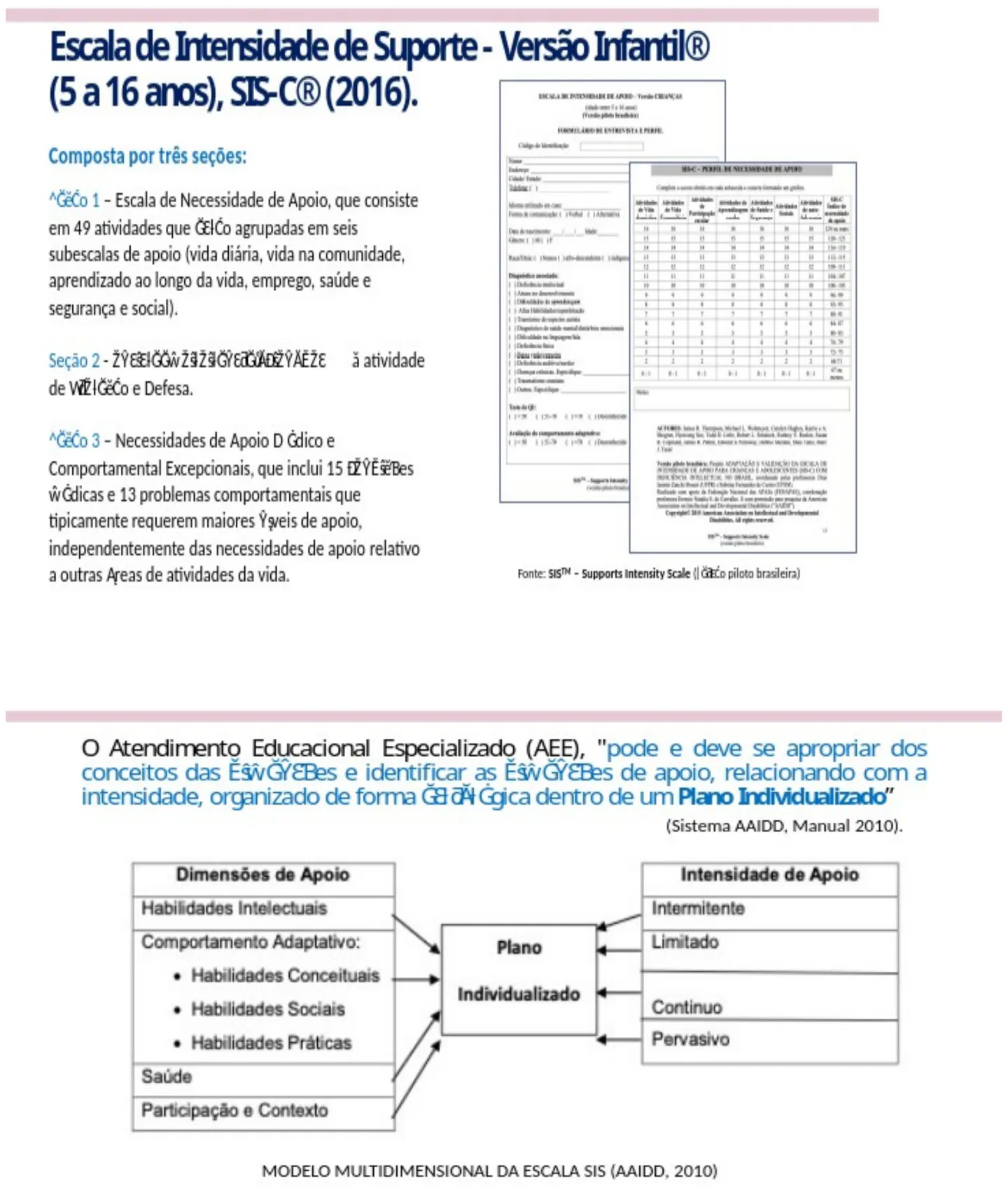
The Supports Intensity Scale (SIS) consists of three sections. The first addresses support needs and comprises 49 life activities grouped into six support subscales, including home living, community living, lifelong learning, employment, health and safety, and social activities (Thompson et al., 2004). This scale is consistent with the paradigm shift in the field of intellectual and developmental disabilities, as it emphasizes the importance of providing individualized supports to promote inclusion, self-determination, and quality of life, rather than focusing exclusively on the individual’s deficits. When applying the SIS-C to this population, it is important to consider the following aspects:
Adaptations: The administration procedure may need to be adapted for children with communication or comprehension difficulties.
Informants: Information is generally obtained from parents, caregivers, and professionals who know the child well.
Focus on supports: The SIS-C focuses on identifying the supports required for children to participate in age-appropriate activities across different settings, including the home, school, and community.
These children are now between 10 and 11 years of age and live with permanent neurological, motor, and cognitive impairments. They face exhausting rehabilitation routines, require ongoing specialized care, and depend on government financial assistance. Zika epidemic taught us that epidemics do not respect bureaucratic boundaries. A coordinated response involving healthcare, education, social assistance, and even urban planning became necessary.
A.C.C.S., female, born on August 20, 2016, presents with physical and hearing disabilities, low vision, and language difficulties. She has been diagnosed with Congenital Zika Virus Syndrome (CZVS) and Dandy–Walker syndrome. She lives with her family and has been enrolled in a mainstream classroom for one year, receiving support from a resource room and an educational aide. K.R.N., male, born on October 4, 2016, presents with intellectual disability and developmental delay. He lives with his family and receives educational support at home and in hospital settings. He has been receiving special education services for one year.
Both children reside in the municipality of Belford Roxo, in Baixada Fluminense region in Rio de Janeiro state, Brazil. They were selected for this study, which included the application of part of the SIS, with the aim of presenting children with CZVS and their needs and profile to state and municipal authorities. This information may contribute to the development of educational policies that ensure access to early childhood education, including enrollment in daycare centers and preschools, the provision of Specialized Educational Services (Atendimento Educacional Especializado, AEE), and access to school support professionals.
The inclusion process involves not only access to school but also continued attendance, learning, and the full development of children with CZVS. To achieve these goals requires continuing education programs for teachers and other professionals, as well as early childhood education institutions restructuring. following research approval by the Research Ethics Committee (CEP), under Opinion No. 8,634,703, this case study could be conducted. On that matter, it is important clarify these chosen children take part of my Doctoring research titled “Early Childhood Policy: Organization and Applicability of the Protocol for Assessment and Monitoring of the Children with Rare Conditions and Developmental Disorders” which is referred to Research Ethics Committee. Generally speaking, CZVS is a rare condition and it is worth noting that I could research it.
The school reflects society and is systematically affected by social changes, given the need to adapt and respond to emerging circumstances. The use of the SIS-C was consistent with a CZVS bioecological and multidimensional understanding, through which the children were assessed holistically and observed in relation to everyday life situations. The application of the SIS-C provided families with an opportunity to participate and offered a new perspective on intellectual disability through a functional understanding of behavior. It also provided information to support the development of functional curricula, incorporating family contributions in accordance with the relevant guidelines. Monteiro and Fernandes (2019) explain that an Educational Support Protocol development intended to guide teachers in their pedagogical practice was necessary because it not only presents teaching procedures to be implemented but also addresses the characteristics of child development during period from birth to two years old.
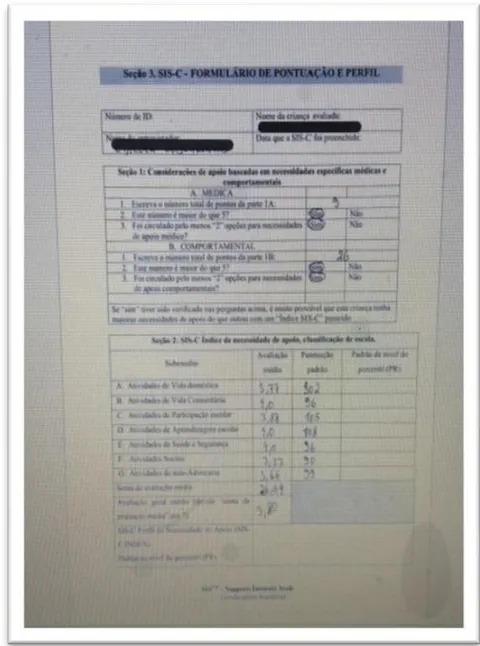
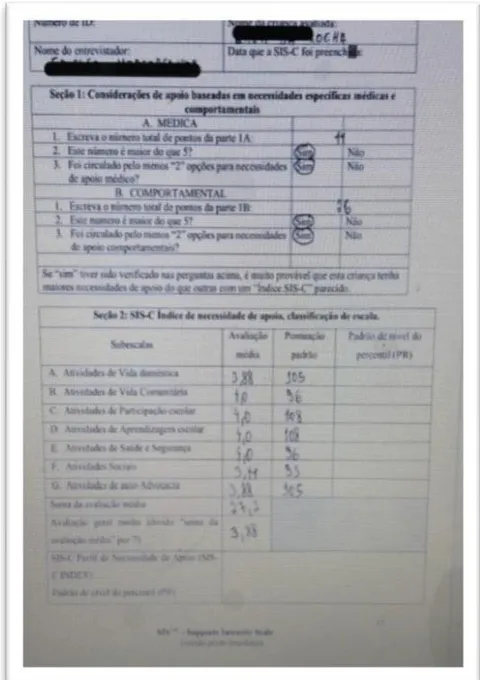
Both children have presented scores between 3,88 and 3,80 which means that they need intensive supports.
However, the operational details of the Supports Intensity Scale for Children (SIS-C) in their own way, they are seemingly oversimplified because is too complexe and long, but a structured summary table explains each step carefully.
As a matter of fact, these children are receiving care that is essential for their development even in face of difficulties. The struggle is ardous due to inadequate public policies.
3. Theoretical Framework
Fernandes (2000), in a study addressing healthcare, education, social action, and community-based initiatives interdisciplinarity in response for comprehensive care needs, points out that individuals with intellectual disabilities understanding is based on a multifactorial and ecological paradigm: the model developed by the American Association on Mental Retardation (AAMR), revised in 1992 and now known as the American Association on Intellectual and Developmental Disabilities (AAIDD). The author states:
“The ecological approach, within a participatory community perspective, is based on the fundamental principle that students with intellectual disabilities are endowed with the same inherent dignity as all human beings. It recognizes that the presence or absence of certain characteristics, disabilities, or inclinations constitutes secondary attributes that should not interfere with the guarantee of their dignity” (Fernandes, 2000, p. 48).
The ecological approach suggests that technological and scientific solutions should be developed and implemented by taking into account the contexts in which people live, learn, and work, while recognizing the barriers and facilitators that influence human functioning. In this way, it becomes possible to replace a negative view of disability and incapacity with a positive perspective in which the tasks and activities performed by individuals with functional or structural bodily impairments constitute an important instrument for promoting social inclusion policies.
Another important paradigm is the International Classification of Functioning, Disability and Health (ICF/WHO, 2001), which comprises five components: body functions, body structures, activities, participation, and environmental factors. Body functions and structures are associated with impairments or diseases, whereas activity and participation relate to limitations in functioning. Thus, the ICF represents a paradigm shift in the understanding and approach to disability and functioning. It is an important instrument for assessing living conditions and promoting social inclusion policies and has been incorporated into the practices of various healthcare sectors and multidisciplinary teams.
Important theorists such as Jean Piaget (1896–1980), whose research explored perception, understanding, and behavior in relation to the world as experienced at different developmental stages, and Henri Wallon (1879–1962), whose conception of childhood describes how children’s thinking develops from one stage to the next, together with affectivity, motor development, and the individual’s relationship with the world and other people, provide theoretical foundations for understanding the roles of schools and family support.
Wallon conducted several studies in the neurology field and proposed an approach to child development that encompasses affectivity, motor development, and intelligence. He also investigated child development, initially examining the interaction between the newborn’s motor capacities and affectivity and subsequently the relationship between the child and the social environment. Piaget, in turn, argues that human beings progress from more primitive, less flexible, and less mobile stages toward hypothetical-deductive reasoning. Throughout this process, they acquire adaptive mechanisms that enable them to cope with environmental disturbances through assimilation, accommodation, and equilibration (Fernandes, 2008).
Urie Bronfenbrenner (1917–2005) is also noteworthy for his writings, which strongly criticized traditional approaches to the study of human development. He questioned the large number of studies conducted on development “outside the context,” within restricted and static environments, without considering the multiple influences of the contexts in which individuals live (Bronfenbrenner, 2006).
His model, initially described as ecological, came to be known as bioecological, emphasizing the biopsychological characteristics of the developing person. It considers four elements: “Person,” “Context,” “Process,” and “Time,” which refer, respectively, to the individual’s characteristics; the broader environment in which the individual is situated and developmental processes occur; daily activities roles and changes in events over time.
These elements constitute “particular forms of interaction between organism and environment, which operate over time and comprise the first mechanisms that produce human development” (Bronfenbrenner; Morris, 2006). As research tools within their specific parameters for educational systems, these strategies and theoretical frameworks can help promote social inclusion and equity policies across different contexts. They can provide appropriate support to ensure children’s continued participation in school as both a guiding principle and a practical commitment, alongside accessibility measures and efforts to eliminate physical, communication-related, and attitudinal barriers.
4. Results
Examining the entire trajectory from the arrival of the Zika virus in Brazil to the government’s first emergency responses makes it possible to analyze how, rather than coordinating healthcare, education, and social assistance to ensure Brazilian population’s full enjoyment of citizenship rights, the response was concentrated primarily in the healthcare sector, particularly on controlling the virus.
In Brazil, the Guidelines for Early Stimulation: Children Aged 0 to 3 Years with Neuropsychomotor Developmental Delays Resulting from Microcephaly were also published in 2016. These guidelines target professionals working in Primary Healthcare, including primary healthcare units, the Family Health Strategy, and Family Health Support Centers (NASF), as well as Specialized Care services, including home care, hospital care, specialized outpatient clinics, newborn follow-up services, and Specialized Rehabilitation Centers (Brasil, 2016, p. 6).
Addressing the inclusion of students with rare genetic conditions in early childhood education requires recognizing the importance of the first years of life. Implementing appropriate educational services for these students is essential because their needs are urgent, given the physical, sensory, and cognitive impairments associated with these conditions. Necessary measures include providing support, developing strategies for working with families, organizing Individualized Educational Plans, producing accessible and adapted materials, and ensuring assistance from multidisciplinary healthcare teams.
4.1. Development of the IEP Instrument: Public Policy Implementation
The Individualized Educational Plan (IEP) is a document that guides the student’s educational pathway by organizing the supports to be provided to students with disabilities. It describes the student’s abilities and needs, establishes deadlines and goals to be achieved, and identifies the professionals responsible for its development and implementation (Tannús-Valadão, 2011).
From an inclusive education perspective, the IEP serves as a record of the individualized adjustments required to help students achieve their established learning expectations. The Brazilian Policy on Special Education from Inclusive Education Perspective (Brasil, 2008) identifies the provision of Specialized Educational Services (AEE) as one of its objectives. These services were regulated by Resolution No. 4 (Brasil, 2009), which establishes that “mainstream schools pedagogical project must formally institutionalize the provision of Specialized Educational Services.”
4.2. Implementation Plan for the Strategy to Strengthen Care for Children with Suspected or Confirmed Congenital Zika Syndrome and STORCH Infections in the State of Rio de Janeiro: Intersectoral Coordination with Education
Several articles were produced by education professionals from municipalities across the state of Rio de Janeiro who participated in the course Early Education: Students with Congenital Zika Virus Syndrome, Other STORCH Infections, and Developmental Alterations, offered by the Inclusive and Special Education Center (NEEI/UERJ – Núcleo de Educação Especial Inclusiva/ Universidade do Estado do Rio de Janeiro/Brazil) in partnership with other institutions.
The course took place between May and December 2019 through face-to-face and distance-learning sessions. Its main objective was to introduce administrators, teachers, and support professionals to the broader public policy framework for interdisciplinary care for young children with developmental alterations caused by Congenital Zika Virus Syndrome, other STORCH infections (syphilis, toxoplasmosis, rubella, cytomegalovirus, and herpes), or other conditions associated with rare disorders. In addition to introduce public policies for educational services organization, sessions addressed developmental protocols and Individualized Educational Plans preparation. They also provided opportunities to monitor children educational inclusion enrolled in early childhood education across the participating school systems.
5. Final Considerations
States and municipalities need to understand needs and profiles of children with Congenital Zika Virus Syndrome (CZVS) needs and profiles in order to develop educational policies and ensure access to early childhood education, from enrollment in daycare centers and preschools to the provision of Specialized Educational Services (AEE) and school support professionals. This is because the inclusion process involves not only access to school, but also continued attendance, learning, and the full development of children with CZVS.
It is also necessary to reflect on the need for a more equitable society, with improvements in teacher training and the development of projects aimed at safeguarding the right to education and ensuring equal conditions, with a view to guaranteeing quality standards in education.


