## I. INTRODUCTION
The existential vacuum and the meaning of life are core themes in the field of Psychology. Both constructs relate to all aspects of the lifeworld, whether psychological aspects linked to mental suffering, associated more with the existential vacuum, or with subjective and intersubjective wellbeing, more closely related to the meaning of life. It is such a fundamental theme that its scope is global, studied all over the world in diverse cultures: Asian - Indian (e.g.
Mohanty et al., 2015) and Iranian (e.g., Abdollahi et al., 2020), and also the Western nations, in countries in South America (e.g., Aquino et al., 2016), North America (e.g. Thill et al., 2020) and Europe (e.g. Votter, 2019), especially during the recent period of the pandemic, faced with the crisis of Covid-19 and the landscape today where the prevailing tone is one of Psychopolitics, the philosophy of digital "dataism" (Han, 2018) and liquid modernity (Bauman, 2004).
Moreover, in the context of the science of the psyche, the topic is also explored through a variety of epistemological approaches ranging from existentialist perspectives (e.g., Vos et al., 2015) to humanist (e.g., Edberg et al., 2023), psychoanalytical (e.g., Mendes, 2018), phenomenological (e.g., Larsson & Bolmsjö, 2017), and positive (e.g., Wong, 2017) perspectives and, via the logotherapy approach (e.g., Roehe, 2006; Nassif et al., 2010; Medeiros et al., 2020), a dimension centered explicitly on the question of meaning.[^2] This bears witness to the global dimension and the importance of the topic in question to the field of mental health, justifying it not only as the focal point of diverse studies but also in its cross-sectional approach in a variety of contemporary studies in psychology.
Previous studies largely focused on the measurement of constructs, using psychometric instruments to analyze the level of existential vacuum and/or meaning of life, as experienced in a diversity of populations (e.g., de Vries et al., 2022; Kiang & Fuligni, 2010; Martínez et al., 2011). In addition, systematic reviews concentrated on the study of the relationship between meaning of life and illnesses like cancer (e.g., Martinez-Calderon et al., 2023; Winger & Mosher, 2016), borderline personality disorder (e.g., Liu, et al., 2023) and social isolation (e.g., Yung et al., 2021); studies evaluating psychometric instruments (e.g., Brandstätter et al., 2012; Li et al., 2021), with a limit on the number of studies with comprehensive reviews, focusing on the extent and nature of the phenomenon and which were epistemological in nature. Included here is the review by Vos et al. (2015) of the efficacy of different types of existential therapy to deal with life issues.
The aim of this research is to find out what was published and how the literature produced in English, Spanish and Portuguese on this theme, in the period between 2000 and 2023, is characterized, with a view to systemizing it and discussing the practical and epistemological implications.[^3] Specifically, the aim is to compile data on which type of approach (qualitative or quantitative) and which type of study (extended, naturalistic) has been employed in published periodicals focusing on existential issues. The purpose is to discover the underlying scientific paradigm that has been predominant in Psychology studies, signaling the way in which the lifeworld has been studied, and whether it incorporated an idiographic or a nomothetic approach. In this way, aiming to map this literature from the last two decades, the present study results from a systematic review and meta-analysis of works in psychology from 2000 to 2023, on the topics of existential vacuum and meaning of life. The manuscript develops through the perspective of contributing to the sphere of clinical psychology in the care of mental health, in order to describe the current state and prevailing paradigm of contemporary psychology with regard to the handling of existential questions, highlighting their contributions and their limitations, evidencing their suitability, pertinence and efficacy to deal with such issues, especially in a contemporary context where people have experienced veritable crises of meaning.
Having completed this brief contextualization, there follows a description of the method adopted in the study that gave rise to this article, designated as Part I.
## II. METHOD
The systematic review evolved out of a bibliographic search by way of the concept of existential vacuum, meaning of life and its correlates as the core topic in articles indexed in five databases, as follows: CAPES Periodicals Portal (260 articles), APA PsycArticles (53 articles), SCOPUS (226 articles), SCIELO (64 articles) and PePSIC (68 articles). The search for articles was carried out between May 29 and July 23, 2023, with the Publication Year field being restricted to the last twenty-three years (2000 to 2023). During this period, the search frequency produced an arithmetic mean of three days of investigation per week, to be precise, three queries at the end of May, twelve during June and twelve in July. Updated searches were performed between August 4 and August 8. It should be mentioned that, prior to the official search, a preliminary search was conducted each day between May 21 and May 28 in order to become familiar with the databases and to obtain a quantitative and qualitative understanding of the emerging issues on the theme.
These databases were selected following the following criteria: a) having international scope, and specificity to area of psychology, such as SCOPUS and $\mathsf{APA}^1$; b) databases with Latin American scope, as they deal with the location of the origins of said study, such as PePSIC $^2$ and SCIELO $^3$, both of which are sources for the virtual health library (BVS $^4$ ), the latter being considered the principal digital library of Latin America (Tumelero, 2019); c) including a Brazilian periodical portal like CAPES $^5$, which brings together the scientific content from a variety of databases.
The CAPES portal is a platform developed in Brazil which conducts a generic sweep of works published both in and outside Brazil, compiling diverse scientific content as well as offering detailed search filters such as languages, peer reviews, subject matter, types of resource (articles, book chapters, entire books, etc.), and is a benchmark for research in Brazil. PePSIC is a virtual library source in the area of health, the result of a partnership between psychology entities in Brazil and other countries in Latin America, offering specific content in the field of psychology. Both SCIELO and SCOPUS are databases with a global, international outreach, and both are references used in Brazil, indexed using Qualis grade 'A1' evaluation criteria. As for the APA, this is an American and Canadian representation of Psychology, recognized by editors in the field of psychology as well as being a research reference in Brazil. Thus, the selected databases complement each other by embracing national, Latin American and international publications covering most of the continents as well as some of them being specifically directed toward the area of Psychology, and is the scientific basis for the present systematic review.
As for the APA database, it should be noted that there are two distinct search fields, one denominated PsycINFO and the other entitled PsycArticles. The former is a more comprehensive database which covers academic literature about psychology, grey literature, including dissertations, books, periodicals, and critiques. As for the second field, this covers only articles in periodicals published by the APA and its affiliated journals concerning the topics of psychology and health in general. The present study was limited to this second database, PsycArticles, as the category of articles was more specific, as the focus of the research was the scientific production in periodicals in psychology, excluding other forms of resource such as books and dissertations. Moreover, this database provides full, publicly available articles reviewed by peers. Thus, there follows an explanation of the method employed, which is systematized via a description of the search strategy, eligibility criteria and selection of studies.
### a) Search Strategy
To search each of the databases mentioned above, the following initial filters were employed for the article search: a) peer reviews, b) qualitative, quantitative and, or mixed methods approaches, c) articles published in English, Spanish or Portuguese.
It should be noted that articles in other languages were also found during the search process, including those published in the languages of Iran (e.g., Hoseimi, & Zadehmohammadi, 2021) and Indonesia (e.g., Prahastini et al., 2021), which contained abstracts in the English language and content in the language of origin. As these languages did not satisfy the inclusion criteria, these articles were excluded. For the descriptors, to identify the articles, the following expressions were used: 'existential emptiness'; 'existential void'; 'existential vacuum'; 'existential loneliness'; 'meaning of life'; 'meaning in life'; 'mental health'; and 'clinical psychology', as well as their correlates in Portuguese, namely 'vazio existencial'; 'sentido de vida'; 'psicologia'; 'saude mental'; and 'psicologia clínica'.
As the study seeks to explore existential issues and their contributions to mental health in the area of psychology, it was sought to use descriptors that mainly focused on meaning of life and existential vacuum, expressions deemed to be the centerpiece of the investigation. Complementarily, other associated expressions were employed, 'existential emptiness' for example, which produced a significant number of results. In addition, as in the preliminary search process, prior to the official search, the expression 'existential loneliness' was identified, it was decided to perform a prior investigation of the concept and, as a result, incorporate it into the study's official search process. In the meantime, an English language article was found entitled "Existential loneliness and end-of-life care: a systematic review" (Ettema et al., 2010), whose proposition was to perform a systematic review of the term 'existential loneliness'. On reading the article, it was noted that the term referred to a feeling of emptiness which takes hold of human beings in the face of death, and may be considered a specific type of existential vacuum experience.
The word AND was employed as the Boolean operator. Quotation marks were used with all the descriptors as it was found that the search without quotation marks resulted in a large number of studies, many of which had no relation to the study theme, as the Portuguese word sentido possesses a broad semantic spectrum in translation. In other words, as it is a polysemic word, the term 'meaning' together with the terminology "of life", when used without quotation marks in the search, resulted in various studies of different kinds, meaning, among other potential semantics, "sensation", "logic", "reason", "purpose", "awareness", "direction", "judgment". Given this breadth of meanings, resulting in a large number of articles unrelated to the theme, it was decided to use quotation marks, which produced results more in harmony with the semantics of purpose of life. In addition, the term revisão sistémática was also included in the search using the Boolean operator "AND", and the corresponding term in English, "systematic review", was used as a descriptor and not as a filter, as articles in this category specify this typology in their titles and, or abstracts. The purpose of adding these terms as descriptors was to identify potential systematic reviews performed on the theme, to obtain an understanding of the type of study conducted, the trends and the content covered. Moreover, it was ascertained if comprehensive systematic reviews of existential questions, such as the one presented in this study, had already been published by any researchers, in order to ensure it was something original, making a contribution to science. On this occasion, through a combination of said descriptors, a total of twenty-two combinations were used, thirteen in English and nine in Portuguese, to make the study more comprehensive. This detailed strategy was applied to the different databases and can be viewed in Table 1.
Table 1: Database search strategy used.
<table><tr><td>Databases</td><td>Language</td><td>Concept</td><td>Descriptors used</td></tr><tr><td rowspan="3">1. CAPES</td><td rowspan="7">Portuguese</td><td rowspan="3">Vazio existencial</td><td>1- "Vazio existencial"</td></tr><tr><td>2- "Vazio existencial" AND "levantamento sistémático"</td></tr><tr><td>3- "Vazio existencial" AND "revisão sistémática"</td></tr><tr><td rowspan="4">2. APA PSYCINFO</td><td rowspan="4">Sentido de vida, Sentido na vida</td><td>4- "Sentido de vida"</td></tr><tr><td>5- "Sentido na vida"</td></tr><tr><td>6- "Sentido de vida" AND "levantamento sistémático"</td></tr><tr><td>7- "Sentido de vida" AND "revisão sistémática"</td></tr><tr><td rowspan="2">3. SCOPUS</td><td rowspan="15">English</td><td rowspan="9">Existential Emptiness, Existential Void, Existential Vacuum, Existential Loneliness</td><td>8- "Sentido na vida" AND "levantamento sistémático"</td></tr><tr><td>9- "Sentido na vida" AND "revisão sistémática"</td></tr><tr><td>4. SCIELO</td><td>10- "Existential emptiness"</td></tr><tr><td rowspan="12">5. PEPSIC</td><td>11- "Existential void"</td></tr><tr><td>12- "Existential vacuum"</td></tr><tr><td>13- "Existential loneliness"</td></tr><tr><td>14- "Existential emptiness" AND "clinical psychology"</td></tr><tr><td>15- "Existential emptiness" AND "systematic review"</td></tr><tr><td>16- "Existential loneliness" AND "systematic review"</td></tr><tr><td rowspan="6">Meaning of life, Meaning in life</td><td>17- "Meaning of life" AND "mental health"</td></tr><tr><td>18- "Meaning in life" AND "mental health"</td></tr><tr><td>19- "Meaning of life" AND "systematic review"</td></tr><tr><td>20- "Meaning in life" AND "systematic review"</td></tr><tr><td>21- "Meaning of life" AND "clinical psychology"</td></tr><tr><td>22- "Meaning in life" AND "clinical psychology"</td></tr></table>
In the search relating to the descriptors "meaning of life" and "meaning in life", due to a large number of findings, and having applied the filters specified above (e.g., in CAPES, there were 213 results for MoL-meaning of life and 1,111 for MiL- meaning in life; while in SCOPUS, the corresponding numbers were 237 and 1,241, respectively), the search was restricted by adding the descriptors "mental health" and "clinical psychology". With these additional descriptors, the combinations refined the search, producing articles focusing more on the clinical area. Moreover, some databases, such as SCOPUS, provided a field entitled "search by title, abstract or keywords", which was used, bearing in mind that if the analyzed descriptors are deemed essential to the study, they have to appear in at least one of these three fields: title, abstract or keyword. Table 1a, below, illustrates the search strategy employed in the method. It includes examples of descriptor combinations and Boolean operators applied to one of the databases used in the study. Subsequently, Table 1b exhibits the list of articles selected.
Table 1a: Descriptor combinations
<table><tr><td>Search date</td><td>Database</td><td>Search number</td><td colspan="2">Descriptors</td><td>Filters</td><td>N-no. located articles</td><td>n-no. selected articles</td><td>z-no. repeated articles</td><td>Excluded</td></tr><tr><td>Jul 9, 2023</td><td rowspan="6">SCOPUS</td><td>Search 13</td><td rowspan="6">MEANING</td><td>"Meaning of life" AND "mental health"</td><td>Portuguese, English, Spanish/ 2000-2023/ peer reviewed/ psychology</td><td>25</td><td>6</td><td>4</td><td>15</td></tr><tr><td>Jul 9, 2023</td><td>Search 14</td><td>"Meaning in life" AND "mental health"</td><td>Portuguese, English, Spanish/ 2000-2023/ peer reviewed/ psychology</td><td>35</td><td>3</td><td>20</td><td>32</td></tr><tr><td>Jul 9, 2023</td><td>Search 15</td><td>"Meaning of life" AND "systematic review"</td><td>Portuguese, English, Spanish/ 2000-2023/ peer reviewed/ psychology</td><td>1</td><td>0</td><td>1</td><td>1</td></tr><tr><td>Jul 9, 2023</td><td>Search 16</td><td>"Meaning in life" AND "systematic review"</td><td>Portuguese, English, Spanish/ 2000-2023/ peer reviewed/ psychology</td><td>7</td><td>3</td><td>1</td><td>3</td></tr><tr><td>Jul 9, 2023</td><td>Search 17</td><td>"Meaning of life" AND "clinical psychology"</td><td>Portuguese, English, Spanish/ 2000-2023/ peer reviewed/ psychology</td><td>2</td><td>0</td><td>1</td><td>2</td></tr><tr><td>Jul 9, 2023</td><td>Search 18</td><td>"Meaning in life" AND "clinical psychology"</td><td>Portuguese, English, Spanish/ 2000-2023/ peer reviewed/ psychology</td><td>4</td><td>2</td><td>1</td><td>1</td></tr></table>
Table 1b: Descriptor combinations and articles selected
<table><tr><td>Database</td><td>Descriptors</td><td>Filters</td><td>N (located)</td><td>n (selected)</td><td>Z (repeated)</td></tr><tr><td>SCOPUS Search 14</td><td>"Meaning in life" AND "mental health"</td><td>Portuguese, English, Spanish/2000-2023/ peer reviewed/psychology</td><td>35</td><td>3</td><td>20</td></tr></table>
Meaning, will to meaning, and Frankl's existential psychiatry
<table><tr><td></td><td>Search date</td><td>Included?</td><td>Selection type</td><td>Article-Title</td><td>Year</td><td>Author</td><td>Abstract</td><td>DOI</td><td>Journal</td></tr><tr><td>1</td><td>Jul 10, 2023</td><td>OK</td><td>Abstract</td><td>Meaning, will to meaning, and Frankl's existential psychiatry</td><td>2022</td><td>Bailey (2022)</td><td>"Recent decades have witnessed a growing interest in the topic of a meaningful life among philosophers, psychologists, and the general public. Yet despite this interest, the thinker who is perhaps most closely associated with meaning and mental health, the Austrian psychiatrist Viktor Frankl, has been largely overlooked by academic researchers. This article offers some redress to this situation by exploring the status of his central idea, the Will to Meaning, by locating it within contemporary philosophical discussions of Meaning in Life, and examining the coherence of the difference elements of Frankl's published works..."</td><td>0.1080/09515089.2022.2156854</td><td>Philo-sophical Psychology</td></tr><tr><td>2</td><td>Jul 10, 2023</td><td>OK</td><td>Abstract</td><td>Relationship between Psycho-pathology and Sources of Meaning in Psycho-thera-apeutically Treated Patients: A Naturalistic Cross-Sectional Analysis</td><td>2022</td><td>Chmielewski et al. (2022)</td><td>"Introduction: The experience of meaning seems to be crucial for psychic well-being. In the literature, there are reports of relationships between personality, illness, and life meanings. The objective of this study was to investigate types of experiences of meaning (meaningfulness, crisis of meaning, existential indifference) and their associations with some psychopathological categories in a clinical population. Methods: In a naturalistic and cross-sectional design, 56 German patients in outpatient psychotherapy... were assessed by the Sources of Meaning and Meaning in Life Questionnaire (SoMe) Questionnaire (meaning of life, hedonism, eudaemonia). Psychopathology (Beck Depression Inventory (BDI)..."</td><td>0.1159/000524688</td><td>Psycho-pathology</td></tr><tr><td>3</td><td>Jul 10, 2023</td><td>OK</td><td>Abstract</td><td>Focusing, the felt sense, and meaning in life</td><td>2022</td><td>Vanhooren et al. (2022)</td><td>"Making sense of our existence is one of the most demanding aspects of being human. Studies have shown that meaning is robustly associated with well-being and mental health. In this study with 358 Dutch-speaking participants during the COVID-19 pandemic, we tested if the practice of contacting one's felt sense (focusing attitude) would predict life satisfaction, psychological distress, and existential anxiety. We also tested whether the effect of this focusing attitude would be partially mediated by the experience of meaning in life. Our hypotheses were confirmed..."</td><td>0.1080/14779757.2022.2028660</td><td>Person-Centered and Experiential Psychotherapies</td></tr></table>
### b) Eligibility criteria
As far as inclusion criteria are concerned, only articles that had existential vacuum or meaning of life as their central theme, and which were published in the abovementioned languages, were considered. In other words, articles were considered that included the theme as the main objective of the study, whether in the title of the work or in the keywords. In addition, the following were employed as filters: a) Portuguese, English, and Spanish language articles to ensure coverage and comprehensiveness; b) articles published in the area of psychology; c) articles reviewed by peers, ensuring greater scientific rigor; d) articles available in full and with a year of publication between 2000 and the beginning of 2023. This timeline establishes the limits of contemporaneity, where the prevailing paradigm involves psychopolitics, digital "dataism" (Han, 2018) and liquidity (Bauman, 2004).
As for the exclusion criteria, articles that only dealt with the topic of existential vacuum or meaning of life in a cross-sectional or tangential way, as well as those that were not available in total, were discarded. Tangential studies were considered to be those that only dealt with the theme as a secondary objective or that only mentioned it in the results. Nor was grey literature considered for the current study.
### c) Selection of Studies and the Process of Meta-Analysis Described in this Article
In the initial phase of the study, described in this article, a reading of the article titles and abstracts was carried out, paying close attention to the aims of each study, seeking to ascertain if they complied with the inclusion criteria proposed for this systematic review. Potentially, when the exclusion criterion was unclear in these sections of the articles, a complete reading was carried out, ensuring more excellent reliability.
In this phase of the quantitative analysis, a descriptive analysis of the data was performed, aimed at describing the emerging trends based on the scenarios and variables studied, as a way to evidence what was found in the data collection, how it is distributed, how it has spread and where it has spread to. Visual resources were used such as a flow diagram, column graphs, grouped column graphs, clustered column graphs, bar charts, grouped bar charts, line graphs and tables, using Microsoft Excel software.
The analysis of the metadata in this initial phase included the following variables: year of publication, periodicals (name of journal), Qualis, thematic area of the journal in which the article was published, journal region, name and country of the most cited authors, language of publication of the articles, approach and nature of the articles, population studied, instruments for collecting and analyzing the data employed, and types of theoretical articles, as shown in Table 2. It should be pointed out that Qualis refers to a Brazilian system of periodical evaluation created by CAPES (Coordination of Superior Level Staff Improvement) which classifies and evaluates the scientific journals of stricto sensu postgraduation programs. This qualification stratifies the journals, ranging from excellent, including high-quality publications of international scope, through to standard journals of lesser importance. This categorization was employed in the present study in order to present the distribution of publications on the theme in accordance with the different qualifications, with a view to ascertaining the quality of scientific production in the area.
Table 2: Categories Searched
<table><tr><td colspan="3">Variables searched</td></tr><tr><td>1</td><td colspan="2">Year of Publication</td></tr><tr><td rowspan="4">2</td><td colspan="2">Periodical (name of journal)</td></tr><tr><td>2.1</td><td>Qualis</td></tr><tr><td>2.2</td><td>Thematic area of journal in which the article was published</td></tr><tr><td>2.3</td><td>Journal region</td></tr><tr><td>3</td><td colspan="2">Name and country of most cited authors</td></tr><tr><td>4</td><td colspan="2">Language of publication of the articles</td></tr><tr><td>5</td><td colspan="2">Approach and nature</td></tr><tr><td>6</td><td colspan="2">Population studied</td></tr><tr><td>7</td><td colspan="2">Data collection instruments</td></tr><tr><td>8</td><td colspan="2">Data analysis instruments</td></tr><tr><td>9</td><td colspan="2">Types of theoretical article</td></tr></table>
The analysis of the metadata in this initial phase included the following variables: year of publication, periodicals (name of journal), Qualis of the thematic area of the journal in which the article was published, journal region, name and country of the most cited authors, language of publication of the articles, approach and nature of the articles, population studied and instruments for collecting and analyzing the data employed.
## III. RESULTS
The electronic search of the databases produced 671 articles (CAPES n=260, APA PsycArticles n=53, SCIELO n=64, SCOPUS n=226, PePSIC n=68). Of these, 143 were eliminated as duplicates, 249 were excluded as they did not satisfy the principal inclusion criteria, since they only discussed the theme of existential vacuum or meaning of life as a secondary objective, or as results, which is not consistent with the main thrust of the study. A further 15 were excluded as they were not available in full (See Figure 1). A total of 264 records were selected by way of a reading of the title and abstract and were subjected to quantitative analysis, corresponding to the first phase of the meta-analysis, as described in this article, for which the following categories were considered: year of publication, periodical, Qualis, thematic area, region, the home country of the journal, names of the authors and their respective countries of origin, approach, and nature, population studied and instruments employed. Figure 1 exhibits the PRISMA (Preferred Reporting Items for Systematic Reviews and Meta-Analyses) flow diagram adapted for the present study.
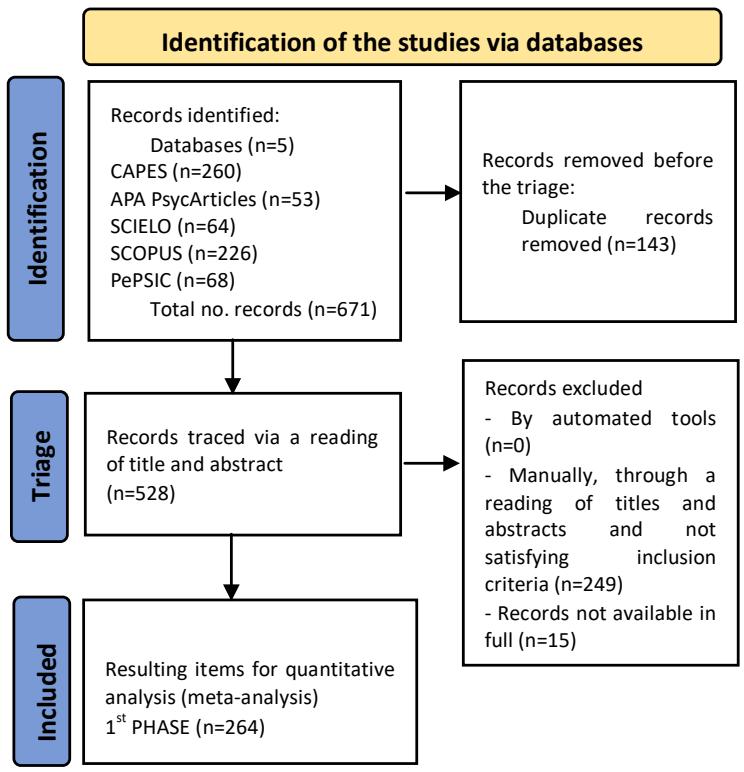 Fig. 1: Flow Diagram - Article Identification and Selection Procedures
NB. Model adapted from the PRISMA flow diagram. (Page et al., 2020).
### a) Year of Publication
Figure 2a exhibits the evolution of the studies on this topic throughout the period under review (2000-2023). Only 2001 failed to register any publication on the topic, the resulting arithmetic mean being 11.08 articles a year. As for the period with the highest number of publications, 2021 saw 30 articles published, followed by 2020, with 25 articles, and 2022 with 24. Figure 2a depicts a clear trend towards an increasing rate of publication over the period of 23 years, particularly during the period of the pandemic, with a leap in output of studies of a quantitative nature, as evidenced by the orange line, in comparison with qualitative studies, which are represented by the blue line.
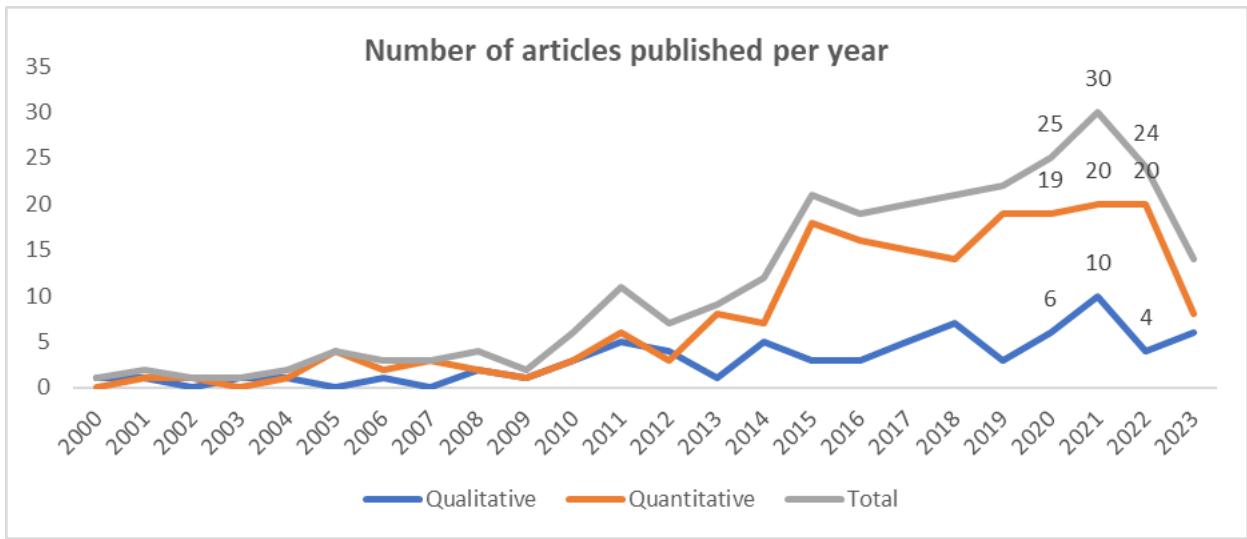 Fig. 2a: Distribution of Publication of Articles by Year, at the Global Level.
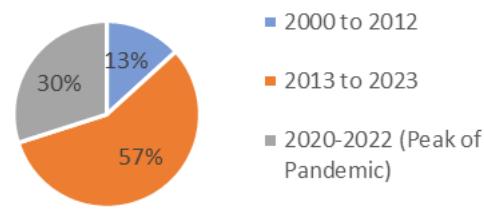
The publications included between 2000 and 2012, the first half of the period under review, account for $13\%$ of the total, while those published between 2013 and 2023 account for $87\%$ of the total (Figure 2b). In other words, the arithmetic mean of the second half of the period reviewed (2013 to 2023) was 2.16 articles a year, the highlight being articles produced during the pandemic (2020 to 2022), with an arithmetic mean of
26.3 articles a year. In other words, concerning the arithmetic mean of the second decade, publications in the period of the pandemic represented an increase of $121.7\%$ in scientific production on the theme in question. Additionally, Figure 2c exhibits the distribution of publications by approach over the first half of the period in question (2000-2012), with $8\%$ of publications being quantitative in nature, versus $5\%$ qualitative, while in the second half (2013-2023) there was a significant increase in both quantitative publications, at $67\%$, and qualitative publications, at $20\%$.
 Panel label: Articles Published.
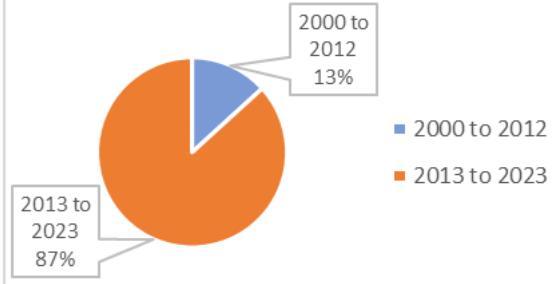 Articles Published Figs.2b and 2c: Percentage of Publication of Articles in each Half of the Period Studied and during the period of pandemic.
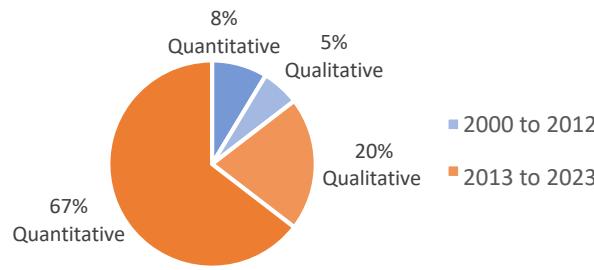 Articles Published Fig. 2d: Percentage of Publication of Articles in each Half of the Period Studied, including quantitative and qualitative approaches.
To compare Brazilian publications with those from other countries, figures 3a and 3b illustrate the evolution of publications throughout the same period. The highest concentration of publications was found in
2021, with 24 results for international publications (Figure 3a), and six articles published in Brazilian journals (Figure 3b).
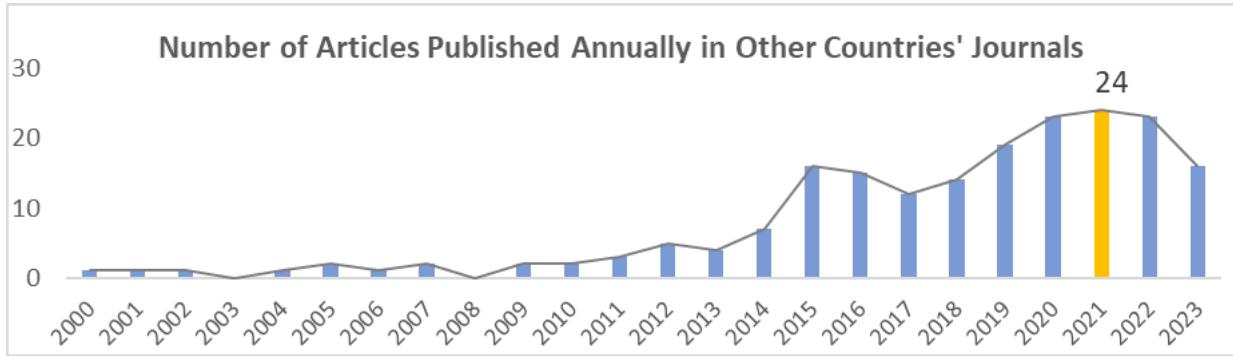 Fig. 3a: Distribution of Annual Publication of Articles in Other Countries' Journals.
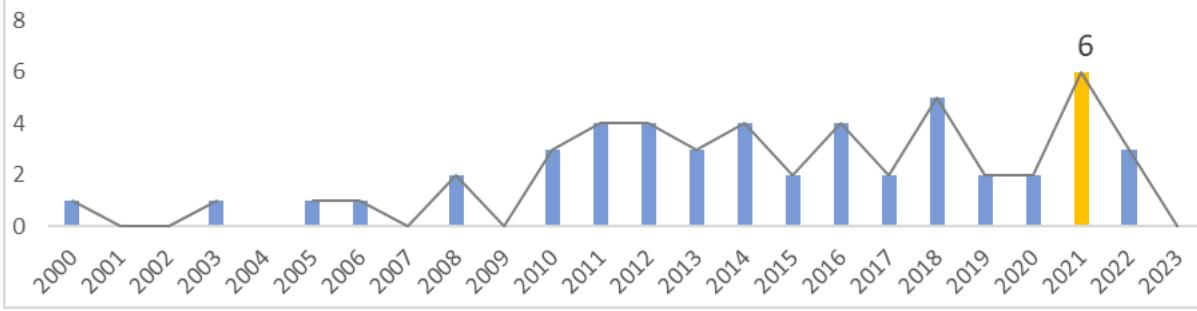 Number of Articles Published Annually in National Journals Fig. 3b: Distribution of Annual Publication of Articles in National Journals.
### b) Periodicals
In the periodicals category, concerning 264 articles selected, 153 types of journal that include publications on the theme were catalogued, of which 117 were international, accounting for $76\%$ of the total, and 36 were national, corresponding to $24\%$ (Figure 4a).
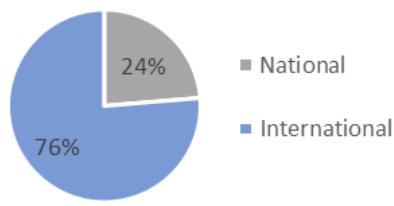 Percentage of publications Fig. 4a: Percentage of Publication of Articles in International and National Periodicals.
The following international journals enjoyed the lion's share of publications: Journal of Religion and Health (16), USA; Frontiers in Psychology (14), Switzerland; Journal of Clinical Psychology (7), USA; Journal of Happiness Studies (5), UK; and Nursing Ethics (4), England (Figure 4b). The following journals gained prominence at the national level: Revista da Abordagem Gestaltica (7), Goiânia; Psychology: Ciência e Profissão (6), Brasília; Temas em Psychology (5), Ribeirão Preto; Paideia (4), Ribeirão Preto; and Psicologia: Reflexão e Crítica (2), Rio Grande do Sul (Figure 4c). In addition, a graph is available comparing the number of publications by international and national periodicals, demonstrating greater publication at the international level (Figure 4d).
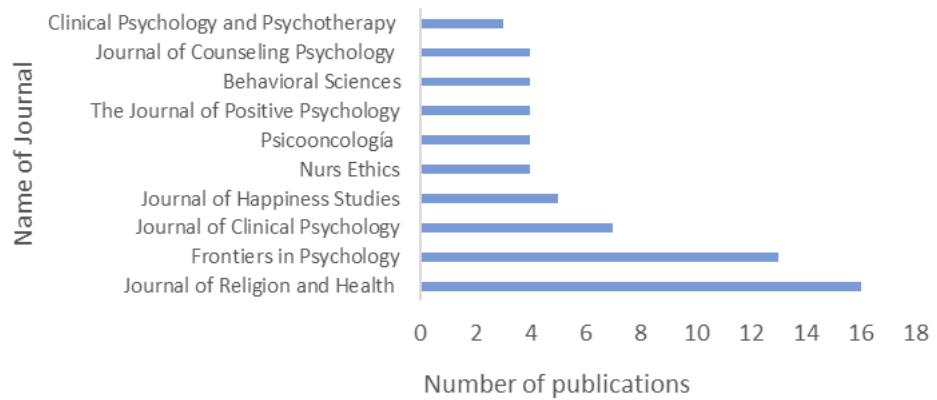 Number of publications by international periodicals Fig. 4b: Distribution of Publication in International Periodicals over 20 years.
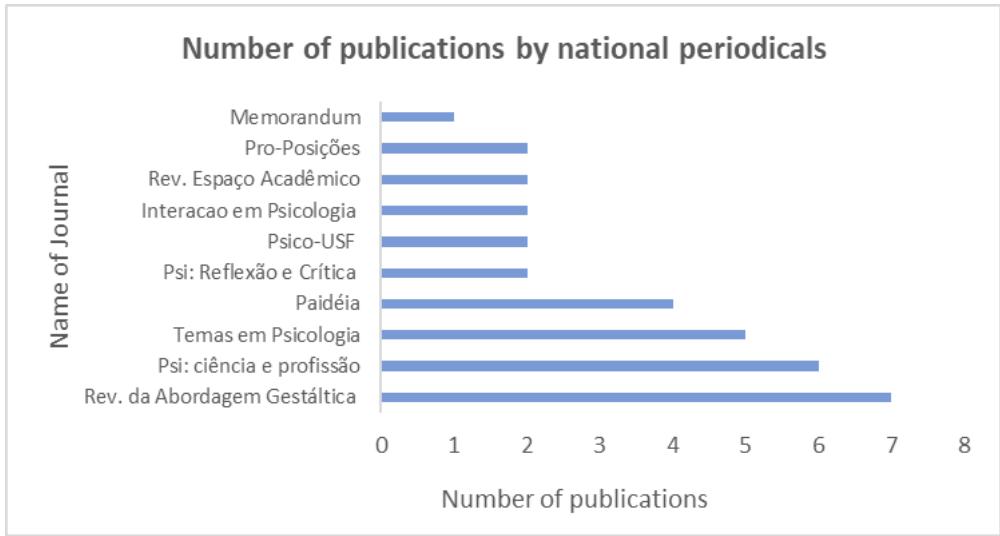 Fig. 4c: Distribution of Publications in National Periodicals over 20 years.
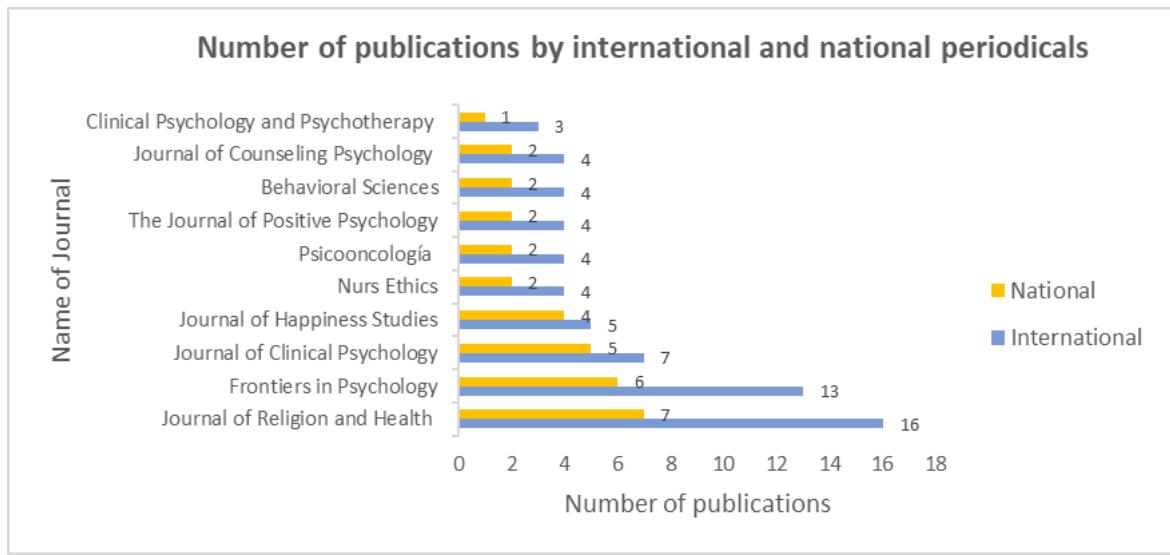 Fig. 4d: Comparison of Distribution of Publication of International and National Articles over 20 years.
Qualis: Of the 153 periodicals analyzed that contained in their publications studies on the theme in question, it was found that in reference to Qualis CAPES[^6], the distribution occurred in the following manner: 30 publications in journals with level A1, 29 x A2, 16 x A3, 8 x A4, 12 x B1, 3 x B2, 5 x B3, 1x C, and 49 did not mention Qualis, being the highest index found in the study, predominantly relating to journals originating overseas (Figure 5). Specifically in terms of publications containing quantitative articles, the distribution was as follows: 26 publications at grade 'A1'; 16 grade 'A2'; 11 grade 'A3'; 3 grade 'A4'; 6 grade 'B1'; 2 grade 'B2'; 3 grade 'B3'; 1 grade 'C' and 40 which did not mention Qualis, as exhibited in Figure 5, in the columns with orange highlight. CAPES Qualis represents the classification of scientific production in respect of the quality of the articles published in periodicals, namely categories A, B and C, in which the first category is indicative of global excellence, the second of national excellence and average relevance, and the third category indicates low relevance.
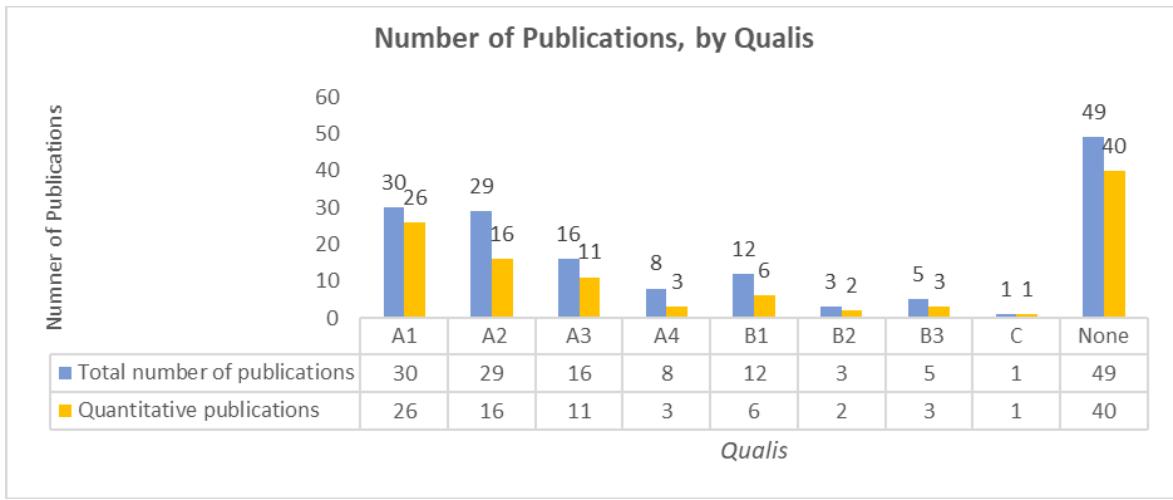 Fig. 5: Distribution of Publication of Journals by Qualis classification
Thematic Area of Journals: Concerning the areas of the journals in which the articles were published, 11 distinct types of thematic areas were found: Psychology (187), Medicine (23), Sciences of Religion (22), Social Sciences (11), Nursing (9), Education (4), Multidisciplinary (3), Philosophy (2), History (1), Criminology (1) and Physical Education (1) (Figure 6a), indicating that there is a strong tendency for these publications to be included in psychology periodicals. Subsequently, there was almost parity in terms of publication between journals in Medicine (23) and Religion (22). The areas of health and social sciences, such as nursing (10) and social sciences (12), also possessed a similar weighting. One thing needs to be clarified here. Although the article may be classified in psychology, it may be published in journals in related areas, insofar as there are multi- and inter-disciplinary repercussions.
As far as quantitative publications are concerned, it can be seen that there is a predominance in the area of Psychology (121), followed by Medicine and the Sciences of Religion, each with 16, and Social Sciences with seven publications. The other areas, including nursing, education, multidisciplinary studies, philosophy, history, criminology and physical education, produced negligible results.
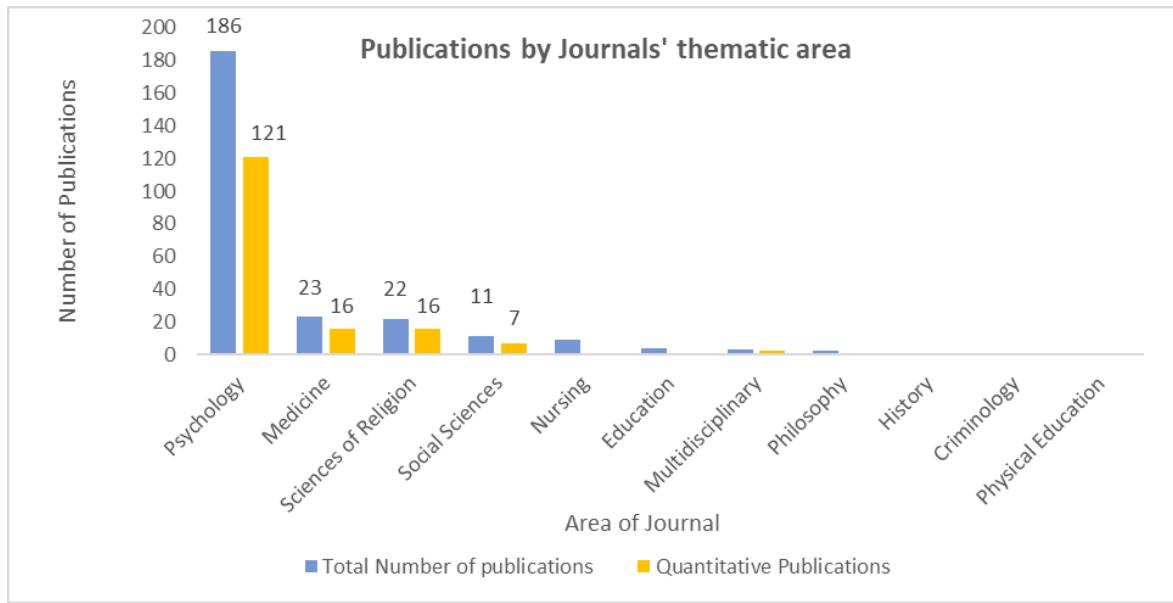 Fig. 6a: Graph of the Distribution of Publications by Journals' Thematic Areas.
The data relating to publications in journals of medicine (23) and sciences of religion (22) regarding the theme of existential vacuum and meaning of life are particularly conspicuous, as they show how much medicine has drawn closer to the topic of spirituality, demonstrating that this theme has gained prominence in publications during the period. Note that the journals of sciences of religion published 11 articles prior to the pandemic (2013 to 2018) and 11 in the pandemic and post-pandemic period (2019 to 2023), highlighting a subtle emphasis on the pandemic period. Meanwhile, in the journals of medicine, there is a patent increase in the
number of publications about the topic of meaning of life, linked to the period of the Covid-19 pandemic, with eight articles in the pre-pandemic period (2004 to 2018) and 14 articles between 2019 and 2023. In both cases, there was an emphasis on publications in 2019 and 2021 (Medicine) and 2019 and 2022 (Sciences of religion) (See Figure 6b).
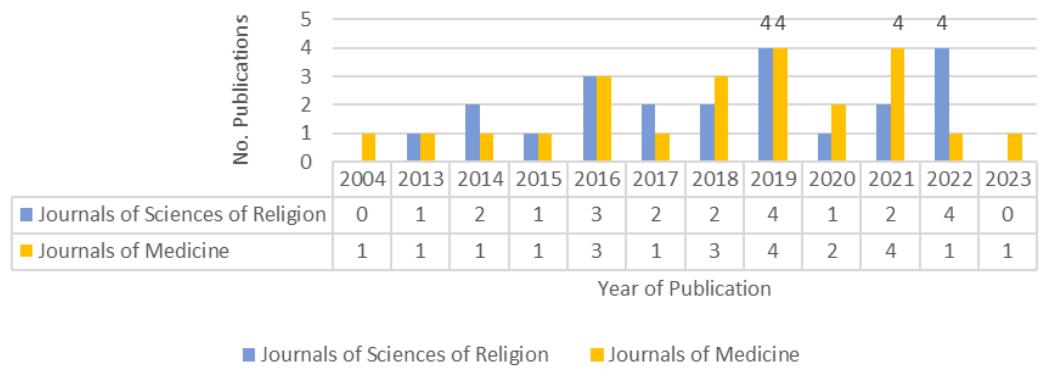 Publications in Journals of Medicine and Sciences of Religion Fig. 6b: Distribution of Publications by the Areas of Medicine and Sciences of Religion.
Journal Region: In terms of the mapping of production by continent (Figure 7a), the European (36%) and North American (35%) centers recorded the highest number of publications. In comparison, South America demonstrated a significant level of production (26%) (Figure 7b). In the category "others" are included Oceania, Asia, Africa and Central America. About to the home country of the journal (Figure 7b), it can be seen that the USA is responsible for the highest number of periodicals, totaling 92 publications (38%). Brazil is in second place with 49 publications (21%), followed by the UK with 40 results (16%), Switzerland with 22 publications (9%), Holland with eight results (3%), and the remaining countries such as Spain, Colombia, New Zealand, with a relative frequency of less than 3%.
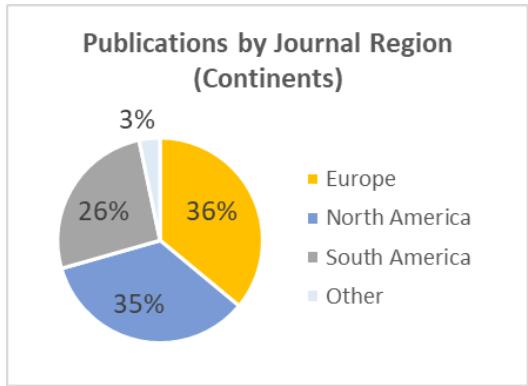 Fig. 7a: Distribution of Publications by Continent
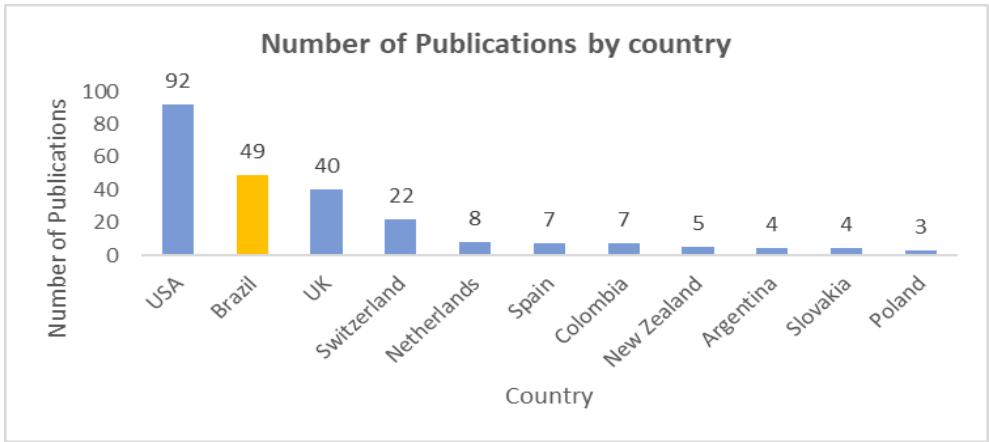 Figure 7b: Distribution of Publications by Journal Region (Countries).
Regarding the number of quantitative publications by region, as shown in Figure 7c, the USA is seen to be the most productive, with 71 results, followed by the UK with 20, Brazil with 17, Switzerland with 16. The remaining regions being significantly less productive: Colombia with five results, Argentina and Slovakia, each with four, and lastly Poland, Spain and New Zealand, each with three publications.
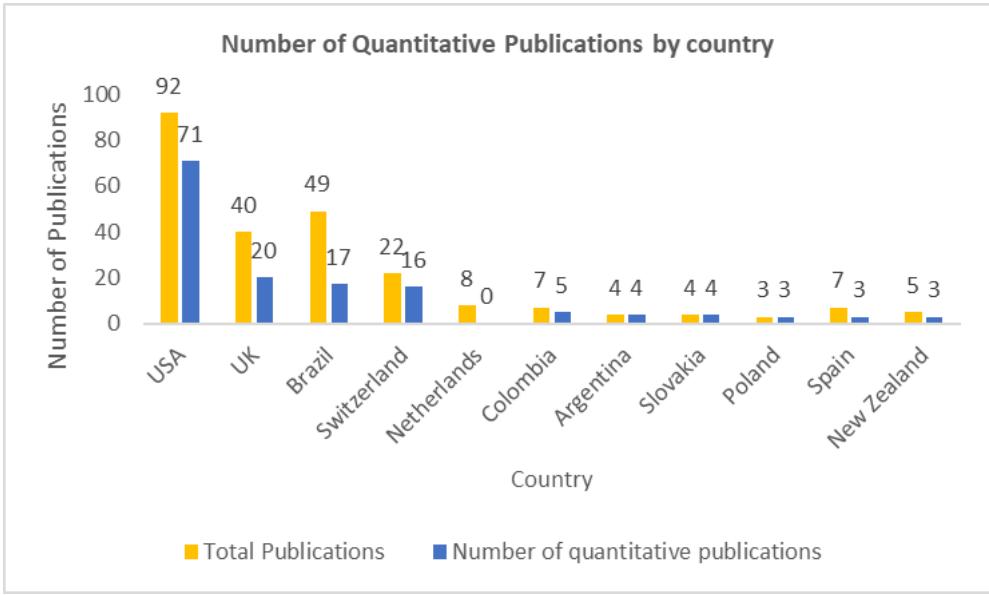 Fig. 7c: Distribution of quantitative publications by region (Countries).
As for the distribution of publications in Brazil (Figure 7d), the Southeast region is the most prominent, particularly the state of São Paulo, with 15 results $(30\%)$. The region with the second largest number of publications is the Central-West $(30\%)$, with similar percentages for the cities of Goiânia (8) and Brasília (7), the capital cities of Goiás and the Federal District, respectively. The Southern region comes in third place $(20\%)$, with nine publications, of which five were from Paraná and four from Rio Grande do Sul. The Northern region has a modest representation with just one publication in the state of Pará $(2\%)$ and no publications were here recorded in the Northeastern region.
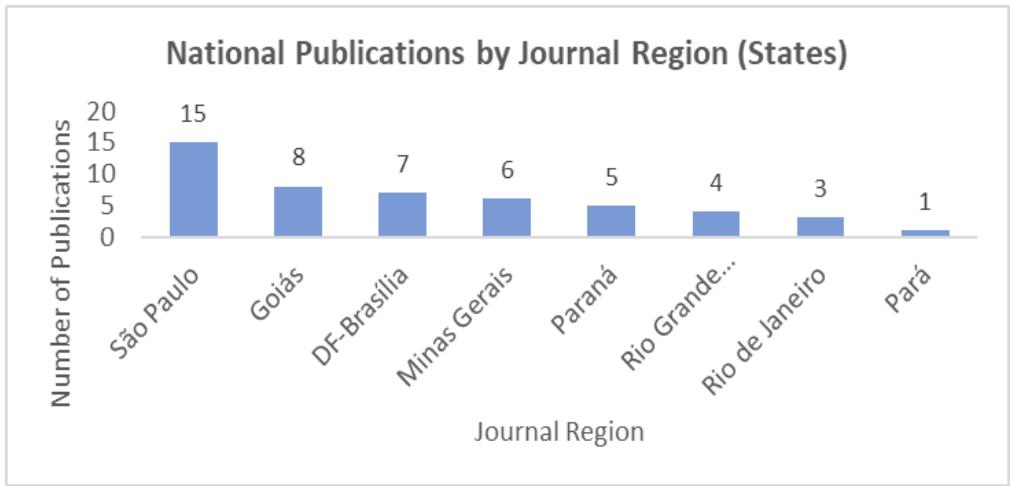 Fig. 7d: Distribution of Publication of Periodicals by Brazilian State.
In respect of the distribution of publications in Brazil, with quantitative and qualitative approaches, as exhibited in Figure 7e, there is a clear predominance of qualitative publications, distributed across the federal states, pride of place going to the state of Goiás, with eight studies, followed by Minas Gerais with six, Paraná with five, the federal district of Brasília with four, Rio de Janeiro with three, and Pará with just one result. As for the publication of articles that are quantitative in nature, production is less significant, the state of São Paulo leading the way with 10 articles, followed by Rio Grande do Sul and Brasília, each with three results.
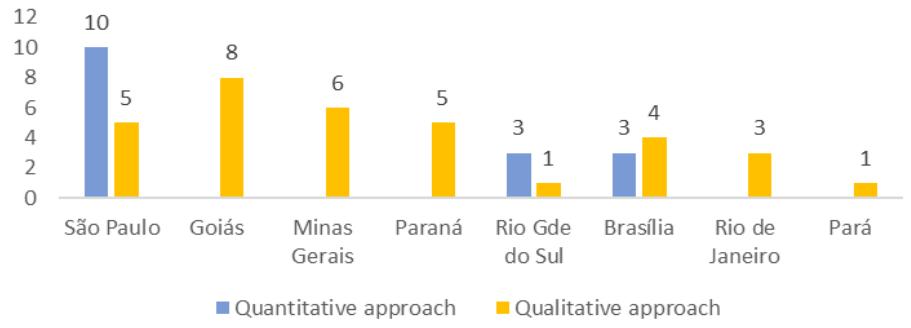 National Quantitative and Qualitative Publications by Journal Region (States) Fig. 7e: Distribution of Quantitative and Qualitative Publication of Periodicals per Brazilian State.
### c) Authors and Country of Origin
With regard to the authors with the highest number of publications in national territory (Figure 8a), the following researchers were found, in descending order: Aquino et al., Federal University of Paraíba, located in João Pessoa, Paraíba, with ten articles. Aquino is a Doctor of Social Psychology and produces studies on the themes of logotherapy and existential analysis of Viktor Frankl (Aquino, 2023). In second place, with 5 articles, comes Damásio et al. from the Federal University of Rio Grande do Sul (UFRGS), situated in Porto Alegre, Rio Grande do Sul. Damásio is a Doctor in Psychology from UFRGS, focusing on Psychometry and Positive Psychology covering the topics of meaning of life, wellness and mental health (Damásio, 2023). Third place goes to De Melo, Rómulo Lustosa Pimenteira, from the Federal University of Paraíba (UFPB), with three articles. De Melo is a Doctor in Social Psychology from UFPB, specializing in psychology of human development (Melo, 2023).
Concerning foreign authors (Figure 8a), the researchers with the most significant number of publications were Råmgård, Margareta et al., researchers in the areas of Nursing, Health Promotion and Health Sciences from the University of Malmö, Sweden, with six articles (Råmgård, 2023). In second place, Michael F. Steger et al., with five articles. Steger, from Colorado State University, USA, is founder and director of the Center for Meaning and Purpose at this university and creator of the psychological measurement instrument called the Meaning in Life Questionnaire (MLQ). His studies center on the Positive Psychology approach (Steger, 2019). Next comes Larsson, Helena et al. Larsson is a researcher in nursing and health sciences at the University of Malmö and the University of Kristianstad, Sweden, with four articles. Her research focuses on existential aspects and existential health, particularly relating to the concept of existential loneliness, with studies based on the person-centered approach (Larsson, 2023). Equally prominent are the Americans Abeyta, Andrew, and Routledge, Clay, from New Jersey State University (Rutgers) and Archbridge Institute in Washington, respectively, each with four published articles. The study by Andrew Abeyta focuses on how people satisfy the need for meaning in life through religion, supernatural beliefs, culture and achievements, based on classic existential perspectives and the theory of motivation (Abeyta, 2022). Clay Routledge, meanwhile, is a specialist in existential psychology, and his research focuses on analyzing the need for meaning and its influence on lived experience (Routledge, 2023). (Figure 8a).
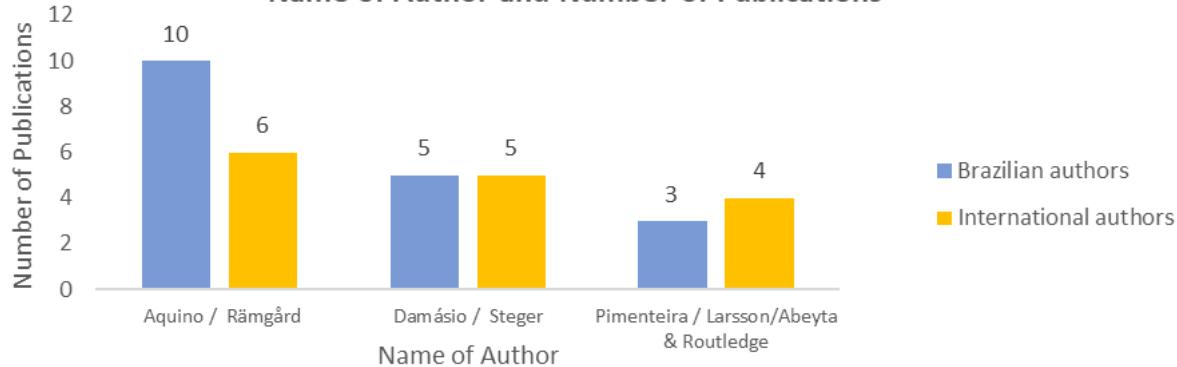 Name of Author and Number of Publications Fig. 8a: Distribution of Publication of Articles by Author and Region.
About the countries of the authors of the publications, it is observed that Brazil is the country with the highest index, with 51 publications. The USA comes next with 50 publications, and in third place appears China, with 24. A subtle trend can be noted in the six results at the foot of the graph for publications with authors from different countries (3 or more) (Figure 8b). Additionally, it was observed that Brazilian authors also published articles in both English (e.g., Cunha et al., 2022), and Spanish (e.g., Medeiros et al., 2020).
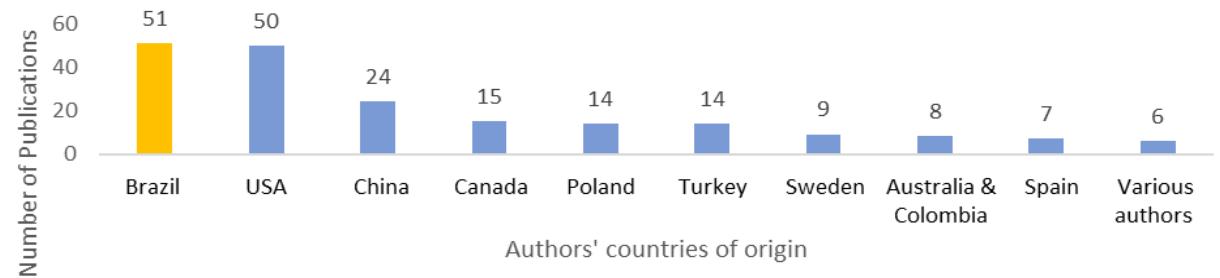 Countries of authors of publications Fig. 8b: Distribution of Countries of Origin of Authors of the Articles.
### d) Languages of Publication of Articles
In respect of the language in which the articles are published (Figure 9), it was noted that the majority were published in English, with $77\%$ of the results (201 articles), followed by publications in Portuguese, with $18\%$ (49 articles) and Spanish, with $5\%$ (14 articles).
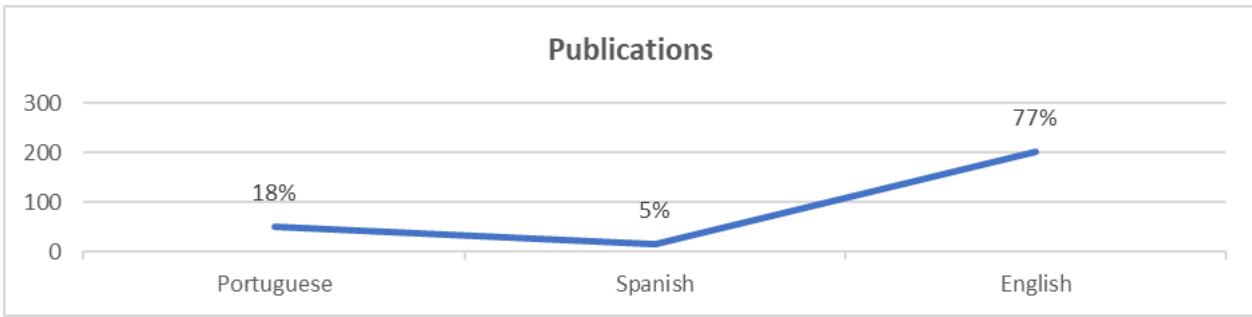 Fig. 9: Distribution of Language of Publication of Articles.
### e) Approach and nature of articles
Considering the approach employed in the works located, there was a predominance of articles whose approach is quantitative, accounting for $72\%$ of the total number of articles included. The studies with a qualitative approach, which are theoretical, account for $17\%$ of the results, qualitative empirical studies $7\%$, mixed empirical $3\%$, and, with the smallest percentage, interventions, with $1\%$ of the total (Figure 10).
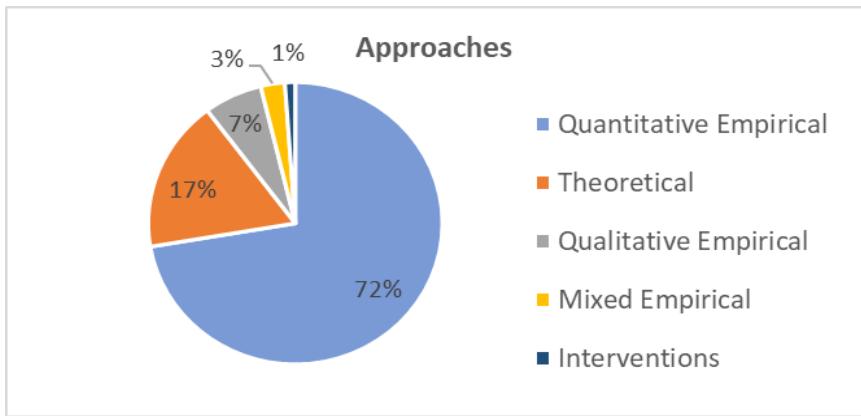 Fig. 10: Percentages of Methodological Approaches.
### f) Population Studied
Considering the populations studied, in the applicable articles, it is observed that the prime target of studies was adults, in general, from diverse nationalities (Brazilian, Chinese, Polish, Australian, African, etc.), representing $36\%$ of the total. In second place, the target audience was university students, with $26\%$, followed by the elderly $(18\%)$, adolescents $(15\%)$, and cancer patients $(8\%)$ (Figure 11).
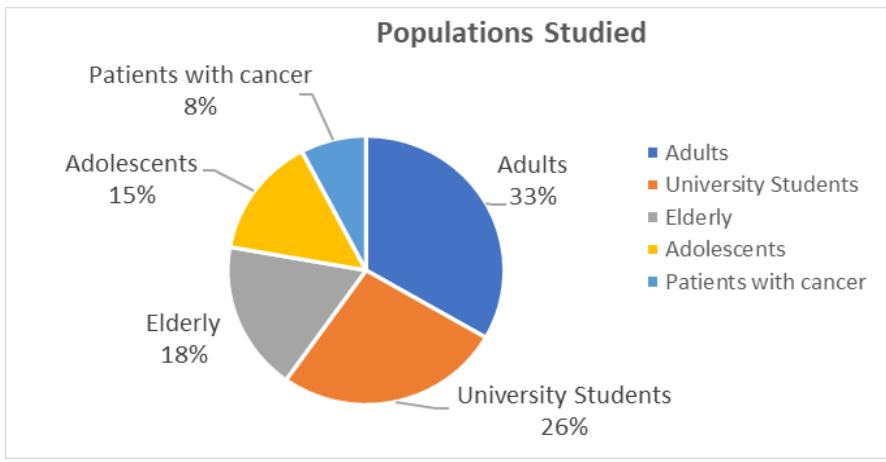 Fig. 11: Percentages of Populations Studied.
### g) Instruments Employed
As can be seen in Figure 12a, in the studies that used a quantitative approach, it was noted that the instrument most used for the data collection was the MLQ (Meaning of Life Questionnaire), of Steger et al. (2006), with $46\%$ of results. In second place was the PIL (Purpose in Life test), of Crumbaugh & Maholick (1969), with $23\%$ of the total. In third place came the SWLS (Satisfaction With Life Scale), of Diener et al. (1985), with
13%. The remaining instruments, with lower impact on the results, were, in decreasing order: PWB (Psychological Wellbeing Scale) of Ryff & Keyes (1995), with 5% of the total; PSS (Perceived Stress Scale) of Cohen et al. (1983), with 4%; PANAS (Positive and Negative Affects Scale), of Giacomoni & Hutz (1997) and the EDSV (dimensional meaning in life scale), of Martínez et al., (2011), both at 3%.
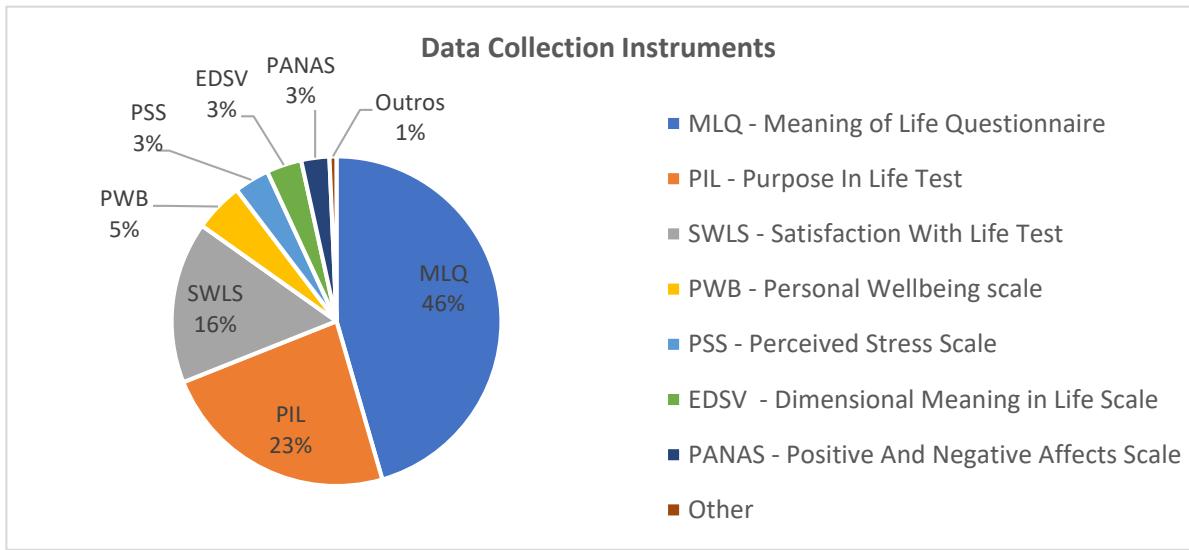 Fig. 12a: Data Collection Instruments in Quantitative Studies.
As far as theoretical studies are concerned (Figure 12b), more than half are literature reviews $(57\%)$ followed by systematic reviews and meta-analysis $(22\%)$ and integrative reviews $(13\%)$.
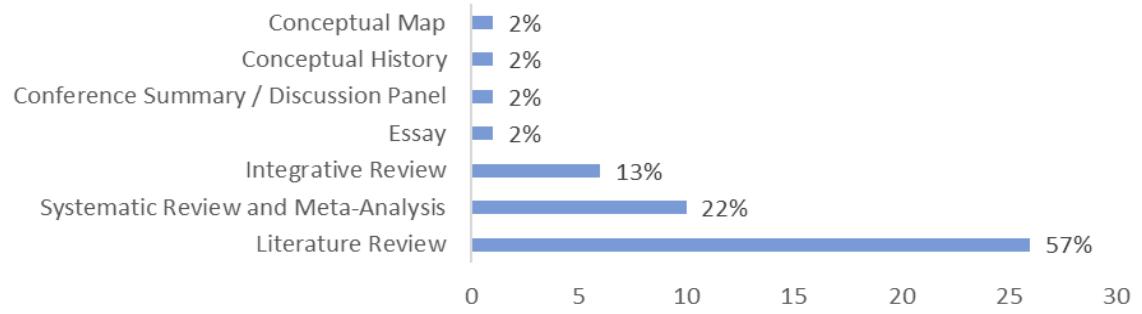 Types of Theoretical Articles Fig 12b: Percentages of Methodology used in Theoretical Articles.
As for the articles resulting from qualitative studies, the method most employed for data collection was the semi-structured interview, as noted in Figure 12c. For the analysis of the data (Figure 12d), content analysis was the method most commonly employed, representing $64\%$ of all articles included. Next comes interpretative phenomenological analysis (IPA) and discourse analysis, each representing $8\%$ of the total.
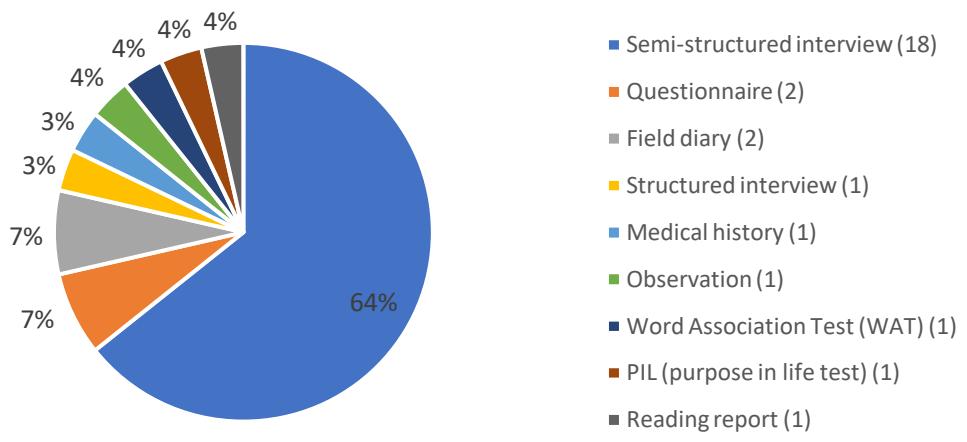 Data Collection Instruments Fig. 12c: Percentages of Data Collection Instruments in Qualitative Studies.
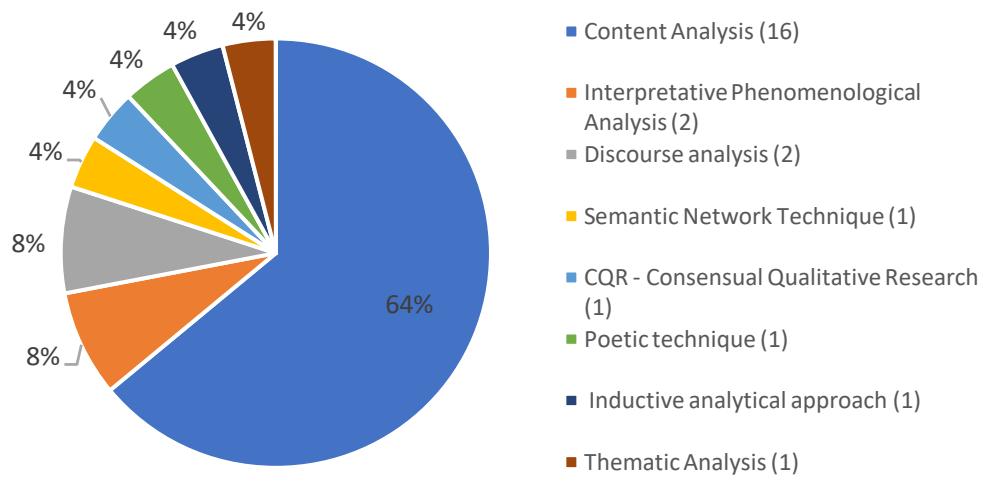 Data Analysis Instruments Fig. 12d: Percentages of Data Analysis Instruments in Qualitative Studies
## IV. DISCUSSION
The present review aimed to map the literature published within the last 23 years in the area of Psychology, regarding the topics of existential vacuum and meaning of life. In this phase, the focus was on the meta-analysis of articles with quantitative and qualitative approaches. Based on an analysis of 264 articles selected in the first phase, the current nature of the topic of existential vacuum and meaning of life was identified, primarily down to a more significant number of articles published in the second decade, between 2013 and 2023 (87%), when compared to the first (13%). This reinforces the relevance of conducting this systematic review to understand how the theme has been approached in Psychology. In addition, maximum production on the theme was recorded in 2021, at the peak of the global pandemic, with six articles published at the national level and 24 internationally, totaling 30 publications. This goes to show how much interest the topic roused during the period of the Covid-19 pandemic, when a series of restrictions were imposed on the way of life, such as social isolation and the use of masks, as well as the high mortality rates, adding up to a search for an explanation and meaning for the emergence of such a deadly and destructive virus.
Given this period in history, characterized by a health crisis that has assumed humanitarian dimensions, a change was noted in the pattern in the modus vivendi. In this new life style, looking to protect themselves from the virus and to stay safe, people locked themselves away inside their homes, barely venturing out, with a drastic reduction in interpersonal contact, in addition to being obliged to incorporate in their daily routines artifacts such as masks and alcohol gel. Accordingly, as a result of this démarche, immutably instigated by the pandemic, new strategies for living together were adopted. Rather than extinguishing the habitual contact in working environments, places of congregation, social gatherings, among others, these strategies permitted them to continue to take place, albeit through the medium of technology. This situation, allied with confinement and associated with a large number of deaths, resulted in a significant increase in psychic suffering at the global level. Thus, faced with isolation, home office, mass human losses, what used to be familiar ceased to be so. There was a rupture in what was known and experienced as normality, evoking profound existential questions surrounding contemporary man. Ultimately, man lost control over what was predictable, the certainty of continuity, the rupture in the expected flow, and man found himself at the brink of the abyss. Not only did the project-of being[^7] cease to be viable but there was also a disruption to the continuity of a future in common, initiating a form of existing very anomalous to that which would be expected, of a life going on as normal. Consequently, man found himself prostrate before his very existence, in the face of his hypostatized existential suffering, which sparked a race in scientific circles, not only to seek biochemical solutions to the virus, but also to explore the dimension of existence, which was so lackluster. In view of this, existential questions gained prominence and relevance. In fact, at times of crisis, when man sees himself faced with the imponderable, existential issues tend to override technical, pragmatic issues, and topics like existential vacuum and meaning of life take on new dimensions, revealing the humanity which had apparently been in hiding in times of dataism, liquidity, consumerism and pragmatism.
The mapping above also showed that Brazil has gained prominence in developing studies on the topic since the works published in national journals account for $24\%$ of all those found. This item of information demonstrates that there are factors that are not just geographical but also cultural, that contribute to Brazil becoming a focal point. With its vast expanse of territory, and being such a populous country, particularly when compared to countries on the continent of Europe, its expanse and its popularity have contributed to the existence of a larger number of researchers, which could promote a significant quantity of scientific output. Moreover, the large number of universities and psychology courses in the country should be mentioned which, just a few years ago, already numbered seven hundred (Oliveira et al, 2017; Piasson & Freitas, 2020). In addition, and mainly in cultural terms, Brazil is a country of great religious diversity in which religiosity and spirituality are marked characteristics of Brazilian culture (Brasil, 2012; WIN/Gallup International, 2015), considered variables associated with existential questions. These factors may be driving the keenness of researchers with regard to this theme.
On the other hand, the standout journals in the publication of articles into the topic are North American, particularly the "Journal of Religion and Health", or European, notably "Frontiers in Psychology", from Switzerland. While these journals have a more generic focus, in terms of theoretical and thematic approaches, in Brazil, one of the most prominent journals takes a humanistic, phenomenological approach as in the case of the Revista da Abordagem Gestaltica (Journal of the Gestalt Approach). However, another with a more generic approach should be mentioned, namely Psychology: Ciência e Profissão (Psychology: Science and Profession) from the city of Brasília. Curiously, however, neither of these are located in the Brazilian state of São Paulo, which produced most articles on the topic. In truth, the higher number of publications in this region may be down to the fact that it is the most populous state in Brazil, boasting a large number of well-respected universities such as the University of São Paulo (USP), University of Campinas (UNICAMP), São Paulo State University (UNESP), among others. Moreover, four of the journals with the largest volume of production (Paideia, Temas em Psychology, Psico-USF, Pro-positões) come from the state of São Paulo. On the other hand, the fact that none of these journals from São Paulo figured in the production of articles in this study, is due to the occurrence of a more diluted publication among journals in the state, while the journal in Goiânia, which is phenomenological in nature, may include more intensive production on the topic.
The mapping also showed that the index of publication on the topic is quite close to that of the continents of Europe, with $36\%$ of publications and North America, with $35\%$. The primacy of publications on the American and European continents is a reflection of what is known as "universal concrete", that is to say, a concept that expresses referential and normative values. In the Western world, in particular, the USA has become a global reference, recognized as a country that invests in scientific research, and Europe is also a continent of reference by dint of its colonization of large areas of the world, and represents the cradle of custom and tradition. Thus, these regions, being paradigmatical and referential, were seen to dominate in terms of publication, possibly influencing different types of approach, whether analytical or continental and phenomenological in nature. Moreover, South America was also responsible for a large number of publications, at $26\%$. Note also the high index of publication in journals from the USA (92 articles) and Brazil (49), demonstrating the extent to which these countries have embraced the theme.
By comparing publications between countries like the USA and Brazil, a difference can be observed in the type of approach most employed in each region: on the American continent, there is a predominance of publications of a quantitative nature, significantly greater than publications of a qualitative nature, in a proportion of 71:21. In Brazil, meanwhile, this ratio is inverted, indicating the greater emphasis placed on qualitative studies, in a proportion of 17:32. Note that, in terms of content, in the USA, there is significant investment in studies that focus on the measurement of existential states, correlating the meaning of life variable with others such as ethnic identity (e.g., Kiang & Fuligni, 2010), positive and negative emotions (e.g., Abeyta et al., 2015), personality and temperament (e.g., Conner et al., 2022), posttraumatic stress (e.g., Aiena et al., 2016), among others. There is also an emphasis on studies using psychometric instruments (e.g., Abeyta & Routledge, 2018; Sørensen at al., 2019), with a good many references to the MLQ (Meaning in life questionnaire) devised by Michael Stager, an authority in positive psychology (e.g., Blackburn & Owens, 2015; Li & Wong, 2020). In Brazil, on the other hand, there is a distribution between qualitative empirical studies about meaning of life experiences in diverse populations (e.g., Molina, 2003; Silva, 2021), and theoretical studies of the literature review type (e.g., Carneiro & Abritta, 2008; Mendes, 2018), with a particular interest in the logotherapy approach of Viktor Frankl (e.g., Silveira et al., 2015). Cultural differences may explain these differences insofar as North American society has always been regarded as more pragmatic than Latin cultures, which has a significant influence on the history of research methodology in the USA, traditionally more focused on nomothetic studies.
Another aspect to be discussed concerns the interdisciplinary nature of the topic which, although touching more specifically on the sphere of Psychology, has attracted the attention of various other disciplines, for example the science of religion and medicine, whose journals have been prominent in terms of publication, closely approximating each other in terms of output throughout the period under review. The topic has also sparked interest in a several different areas, such as the social sciences, education, philosophy, history, physical education, and even criminology. This demonstrates the connection between meaning of life and existential vacuum with other thematic areas, especially the topic of health in general, as well as religion and spirituality and its interaction with Psychology and associated areas. The latter has been achieving increasingly greater importance as it is directly related to the purpose and meaning of life.
On the other hand, determining a similarity of results between publications of journals of medicine and social sciences on the topic of existential vacuum and meaning of life, it is noticeable how Medicine has taken this theme on board and, consequently, questions of spirituality and religiosity, the drivers of meaning. In addition, the peak of publication during the period of the pandemic reveals how this period established the need to search for meaning, faced with the unknown, the uncertainties of the period and the so critical and threatening scenario that was found in the field of health in Brazil and the world.
There has been a predominance of Brazilian authors publishing articles on the topic (51), followed by the Americans (50). This underlines the extent of national production on this theme. However, by employing descriptors in the Portuguese language in the search process, in addition to descriptors in the English language, this created a bias in the result since, of the 264 articles selected, 49 were published in Portuguese. Moreover, although the number of articles published in English is more significant, with 201 results, it should be noted that many authors of diverse nationalities, for example, Turks, Polish, Chinese, Israeli, African and Iranian, to name but a few. Still, an ended up mainly publishing in American journals, thus helping to make this result so significant, in addition to publications by authors of American origin (92 articles) and other authors who use the English language (UK and Australia).
Of the more prolific authors on the topic, at the national level, it was observed that the predominant reference for the theoretical approach was Viktor Frankl's logotherapy and existential analysis, from Aquino et al., followed by Positive Psychology and Psychometry, from Damásio et al. At the international level, the emphasis was on existentialist approaches, as indicated by the study by Rämgård, Larsson, Abeyta & Routledge. Positive Psychology also posted significant results, as was noted in the study conducted by Steger et al. (2006), responsible for the creation of the MLQ (Meaning of Life Questionnaire), as well as being heavily cited in various selected articles.
Significant data emerged from the analysis of the methodological approach as articles that were quantitative empirical in nature dominated (72%) compared to other approaches (qualitative empirical, mixed method, theoretical, and interventions). The Journal of Religion and Health, a Qualis A3 American journal, which published the most articles, exhibited an absolute frequency of 15 articles with a quantitative approach and one with a qualitative/quantitative approach. Similarly, the Swiss Journal Frontiers in Psychology, Qualis A1, presented an absolute frequency of eight articles that were quantitative, three theoretical, and one mixed method. These data demonstrate that journals in the area of Psychology are more highly qualified (Qualis) and more prominent in the publication of quantitative articles on the topic, the highlight being the periodical related to religion and health, the Journal of Religion and Health. This is most likely a reflection of the effort made by the researchers in this area to afford greater visibility and credibility to the topic, since the scientific tendency in the area of health has been to prize and qualify studies that are more quantitative. These data also reflect the effort of psychology researchers who are focusing on this topic to achieve greater acceptability in scientific journals which have given preference to the quantitative criterion, taken as evidence of greater rigor and the potential for the generalization of the results obtained.
Another tendency demonstrated in the study above is the predominance of empirical articles on this theme within psychology, equating to $83\%$ of the results, in contrast with theoretical articles, at $17\%$. While this indicates how much the topic is linked to concrete questions about the lifeworld, in contemporary reality all over the world, a certain lack of a robust academic appeal is evident, in terms of theoretical and epistemological constructions in the field of psychology, which may also be a result of the heavy emphasis on the production of studies that are quantitative empirical.
About the quality of the published articles evaluated here, based on the Qualis classification of journals, the mapping reveals a significant percentage of publications in journals that have not yet been catalogued, on this Brazilian system, at $29\%$ of the total. On the one hand, this may be a reflection of the bias in the appreciation of more quantitative studies, as commented upon in the preceding paragraph, but also, on the other hand, the broad scope of the topic such that many journals that accept it are not yet included in the abovementioned system of evaluation. Moreover, there is a significant number of high-level journals publishing articles on the topic that carry a Qualis A1 (28 articles) or A2 (29 articles) rating, demonstrating the high quality of scientific studies and articles on the topic. However, this piece of data concerning the predominance of publications in Qualis A1 and A2 periodicals, in dialogue with the category of the approach, and predominantly quantitative, as was evidenced in the results of the quantitative publications through Qualis, also raises the following question: what are the indexing criteria for these journals which are reflected in the Qualis system for rating the articles? To what extent have these periodicals invested predominantly in works of a quantitative nature, to receive qualification? In other words, one has to take into consideration the bias that favors articles with quantitative approaches to be scientifically qualified within Psychology and associated areas.
It was also noted that, in terms of the target audience for the studies conducted, the majority of studies generally focus on adults, and young university students in particular, and this is reflected in the publication of both quantitative and qualitative articles. Moreover, a heightened concern with contemporary man's mental health can be observed, frequently mentioned in articles as being conditional upon an age in which there is a predominance of technique, fragility of relationships, technology, virtuality and crisis of values.
Regarding the data collection instruments employed in the articles with the quantitative approach, the mapping permits an identification, albeit indirectly, of the theoretical approaches that predominate in the constructs used in these studies. There was a vast predominance of the MLQ (Meaning of Life Questionnaire), responsible for almost half of all results. This measurement instrument evaluates the meaning of life and includes two subscales: one which assesses the presence and existence of meaning in life, and the other the process of the search for meaning. As previously mentioned, this instrument was devised by Steger et al. (2006), a team of researchers, including Michael Steger, recognized as an authority in the area of Positive Psychology, an area which has been gaining increasing prominence in the field of psychology, and scientific production on the topic is also very significant. In second place the PIL (Purpose in Life test), which aims to measure the level of meaning of life acquired by the individual, having been developed by Crumbaugh and Maholick (1969), both of whom are very influential in the promotion of logotherapy. Indeed Maholick, a psychiatrist, studied under the direction of Viktor Frankl, at the University of Vienna. The third instrument indicated in the results was the Satisfaction with Life Scale (SWLS) devised by Diener et al. (1985), to evaluate individuals' satisfaction levels with their lives. One of its architects, Ed Diener, is a professor at the University of Illinois, USA, and is known as "Dr. Happiness", with references in Positive Psychology. The fourth instrument identified, with the same theoretical reference, the Psychological Wellbeing Scale (PWB) was developed by the psychologists Ryff & Keyes (1995) and measures aspects of wellbeing and happiness. The other instruments which appeared less frequently embody a theoretical approach based on behavioral and physiological theory (PSS - Perceived Stress Scale developed by Cohen, 1983), positive psychology (PANAS - Positive and negative Affects Scale developed by Giacomoni & Hutz, 1997), and logotherapy (EDSV - Dimensional meaning of life scale, Martínez, 2011).
Meanwhile the analysis of theoretical articles shows the predominance of literature surveys, once again reinforcing the more empirical nature of contemporary studies concerning the themes of existential vacuum and meaning of life. The fact that only $2\%$ of articles found were indeed conceptually theoretical is a reflection of the large gap, to be filled in future studies. On the other hand, in studies that are qualitative, the predominance of semi-structured interviews to collect the data $(64\%)$, and the analysis of content, as the procedures employed for analysis $(64\%)$, seems to indicate there is unlimited potential for achieving a possible theoretical maturation involving the themes in question.
In the present review, studies emerged that offered notable contributions for a better understanding of the complex nature of the theme of existential vacuum and meaning of life. Of these, the contributions of Vieira & Dias (2021) stand out, with their article entitled "Meaning of life: understanding this challenging field of study", which was theoretical and conceptual in nature. The study explored the evolution of the concept over time, highlighting its inter-disciplinary aspects and, at the same time, its philosophical base, and its subsequent appropriation by psychology. Thus, it demonstrated its complexity, its character which goes from one-dimensional to multidimensional and, in particular, emphasizing its importance and the challenges for studies in the field of Psychology, as well as for clinical practice. This article exposes the need for a better understanding of the phenomenon, given its complex, multiple nature, reinforcing the relevance of the present review and underlining the importance of natturistic studies in the field of Psychology.
Similarly, the article published by Aquino (2021), entitled "Religion, spirituality and health: from a perspective of logotherapy", a literature review, also offered contributions to the study, bringing with it, in addition to conceptual clarification concerning the meaning of life, from the perspective of the logotherapy approach, the relationship between this and the topics of mental health, falling sick and salvation, with a complete, anthropological vision of the human being. This article brought to the debate the variables of religiosity and spirituality as concepts associated with the meaning of life and existential vacuum and also discussed the emergence of the theme in the area of therapy. This topic, introduced in the study of Aquino, was evident in the present study, which confirmed the rise of such concepts in the scientific context, particularly accentuated by the cultural determinants, as is the case in Brazil, of the tradition of religious syncretism. Moreover, the study by Wong (2017), entitled "Meaning-centered approach to research and therapy, second wave positive psychology, and the future of humanistic psychology", also had an impact on the present study. By addressing the topic of the paradigm of traditional psychology, harking back to the bases of humanistic psychology and the importance thereof, it reveals its impact on the treatment of existential and humanistic questions that pervade psychology, incentivizing and shaping future research. To this end, it overwhelmingly inspired the style of the present systematic review.
These discoveries have important implications for the field of psychology, offering a kind of diagnosis of the global scenario regarding existential issues and scientific studies. The underlying paradigm of contemporary Psychology as heir to the positivist tradition is striking, and is still rooted in the way to make Psychology a science, which also values, qualifies and is inspired by the criteria used in the exact sciences, in order to acquire the status of scientific rigor. This goes back to the birth of Psychology as a science, when Wilhelm Wundt (1916/2013), known as the founding father of psychology, inaugurated his experimental psychology laboratory, importing the methodology from the natural sciences. This tradition still reverberates in Psychology, even if it has been betraying a tenuous movement towards a reformulation of its epistemological bases, also focusing on the psychological dimension of meaning and the existential signification of man in the world.
The present scenario may incentivize and inspire fresh studies in psychology that focus on the study of the nature of the phenomenon as experienced and expressed in the concrete lifeworld. This approach provides a better understanding and appreciation of mental health and existential wellbeing such as, for example, by asking the question what is "suffering from remoteness" or even seeking to understand what a "hysterical attack" is. How should "suffering from remoteness" be interpreted, embraced and treated using strictly psychometric methods? Existential state can be measured with some suitable instrument but, before applying said measure, it is of paramount importance to have an understanding not only of the metaphorical nomenclature but also to discover what it reveals as a symptom of psychic suffering. Therefore, it may be concluded that the adoption of quantitative criteria as a hypostatized way to treat psychic suffering, finds its limits of application, signaling that it is necessary to look for a method that complements psychometry to treat the problem in all its complexity, profundity and fullness. In addition, in the area of clinical psychology, a qualitative approach values the peculiarities of each individual, as every human being, even though he may possess universal characteristics, also has his own peculiarities, culturalism and regionality. A scientific method that focuses on the peculiarities of the lifeworld could be extremely rewarding to psychotherapeutic relations, expanding the possibility of making science that focuses on the peculiarities of human existence and which may result not only in the accommodation of its respective frailties but also in the development of its capabilities.
## V. FINAL CONSIDERATIONS
The panorama presented by the mapping of studies involving the constructs of the meaning of life and existential vacuum provided important information, including: the pandemic scenario was a landmark moment that prompted the growing number of publications on the theme; the studies with quantitative approaches have increasingly been gaining force in the study of these constructs; the emergence of the topic of religiosity and spirituality has been presented as a variable associated with the construct of the meaning of life; the theoretical benchmarks of logotherapy, existentialism, and positive psychology have stood out as approaches employed by authors investigating both topics, as well as the most frequently used data collection instruments.
In order to corroborate the statements made above, some of the data identified in the results section are reprised here, for instance: in the analysis of the distribution of publications between 2000 and 2023, it was found that the peak of production occurred in 2021, precisely during the pandemic, with 10 publications that were qualitative and 20 quantitative in nature, making a total of 30 publications, followed by 2020 with a total of 25 and 2022 with 24. In the thematic area of psychology, 121 quantitative articles were registered out of a total of 186 publications, underlining the emphasis placed on this approach. In addition, in the pizza graph representing the proportions of the approaches, it was observed that, at the global level, $72\%$ of publications comprised articles of a quantitative empirical nature, indicating the dominance of this approach. Moreover, it was also observed that the production of journals of the sciences of religion embracing this topic grew, with 22 publications throughout the period, matching the journals of Medicine, with peak production of four articles in 2019 and 2022, also encompassing the pandemic period. It is also shown that these journals were predominantly quantitative, with 16 results out of a total of 22. Moreover, in terms of the most frequently published authors, the data indicated that Thiago Aquino, Doctor in Social Psychology, employing a logotherapy-based approach, came top with 10 publications while Michael Steger, a psychologist who espouses the positive psychology approach, had six articles published.
The recent Covid-19 pandemic evidenced the importance of existential questions, amplifying the degree of concern in the scientific world over the question of the meaning of life, since the adversities suffered in this period left deep scars on contemporary man's mental health, with records of diverse symptoms such as consumerism, depression, suicide, borderline personality disorders, among others. Accordingly, a significant effort was observed with articles on the theme of a quantitative nature, seeking to measure the extent to which the existential vacuum, the search for and presence of meaning were permeating contemporary society. This evidence unveils a certain ambiguity as it seems contradictory that a topic which hinges on subjectivity and intersubjectivity, with teleology and the production of meaning, arising from the existence of man on earth, should be emphatically more quantified than understood. This fact reveals a contemporary Psychology still primarily concerned with questions that are objective, explanatory, that have a causal relationship and the search for universal laws, wearing the "hard sciences" hat, and displaying the remnants of a grounding in positivist tradition and, consequently, emphatically valuing the dimension of logos, giving preference to the scientist model.
There is significant preoccupation with quantifying the meaning of life and existential vacuum which, on the one hand, has some relevance by introducing a concrete piece of data about the existential state and mental health of contemporary man. On the other hand, however, simply quantifying and measuring, mapping the extent of both phenomena, are not strategies sufficiently capable of addressing mental health. After all, the present philosophy of dataism, as observed by Han (2018), does not fill vacuums. Thus, it is necessary to adopt a different course of action, one which describes intuitive pathways, which revolve around subjectivity, the intention being to understand the meaning of existence, and which do not simply involve objective aspects, with causal relationships and the discovery of laws.
The panorama evidenced in this systematic review signals a gap in Psychology which still needs to be filled, bringing to light epistemologies that also involve the lifeworld, replete with shades and possibilities, characterizing not only the logos, but also providing perspective on the mythos, in an attempt to value the expressiveness, narrative and intuitive pathways. Even though one may note an emphasis on approaches of an existentialist nature and positive psychology in the more prominent authors and the most commonly used data collection instruments, they are still serving as inspiration for psychometric data.
It should be noted that the current of existentialism was a philosophical movement that had profound implications for psychology, fundamentally in the post-war period when man turned his attention to existentialist issues. The philosophical movement explores the problem of existence, focusing on man's way of being in the world, the lived experience, the crisis of meaning, considering man as a being in search of the meaning of life through his freedom, responsibilities and independence to make his own choices. This movement reverberated in the field of psychology, for example the existential humanistic psychology of Rollo May (1953/1994), who criticized the scientific, psychological approach of his era, with its positivist influences, using psycho-pathologization as a model, and he focused on a more profound understanding of the human being and his existential nuances. Thus, it involved a psychology preoccupied with the crisis of meaning, which was so representative of the prevailing malaise of the period: the existential vacuum. As can be seen, existentialism has an intimate relationship with the question of meaning of life and existential vacuum and is fertile ground for the foundation and development of epistemologies of psychology based on continental phenomenology, in other words, that focus on the signification of existence.
The Positive Psychology movement, on the other hand, is a type of perspective that is evident in the current post-pandemic context, bringing a more positive vision concerning human nature. The philosophical basis for this approach goes back to the humanism movement within 1970s psychology, seen as an uprising against the prevailing models of Behaviorism and Psychoanalysis (Ponte & Souza, 2011), considering them mechanistic and determinist, opposed to the human values of freedom and choice. Humanist ideas conceived man as a more complete figure, as a being capable of self-realization and, as a result, they began to move the focus towards how to achieve this state, to how and what might contribute to the attainment of a fuller, happier life, instead of dwelling on suffering and illness (Boehs & Silva, 2020).
In solidarity with these humanist ideas, Positive Psychology emerged on to the contemporary scene, signaling the hegemony in a way to do psychology modeled on pathologization. In this way, it contributed toward an expansion of psychology's field of vision, by contemplating human virtues. The aim of the approach is to reinforce the positive aspects of the human being, in order to secure wellbeing, a better quality of life and happiness, either at the individual, relational or institutional level. Accordingly, starting from the premise that human nature is essentially good (Boehs & Silva, 2020), and that human development and realization of potential is necessary for this nature to reveal itself, man is seen as a being in search of meaning. In this process, this approach has involved understanding the concepts of happiness and wellbeing, either from a hedonistic perspective, associated with pleasure, or a eudaimonistic perspective, associated with psychological wellbeing, strictly related to the dimension of the meaning and the realization of life's goals, showing it to be an approach that entails the existential question of the meaning of life.
There follows a list of the main conclusions to be drawn from this study: a) greater global interest in existential issues over the last 23 years, especially leveraged by contexts of global crisis, such as the Covid-19 pandemic, when the values of the era are thrown into question and undergo shifts, resulting in the primacy of existential issues over practical issues; b) predominance of publications at the international level on the USA – Europe axis, the former being more focused on quantitative and extension studies, with an emphasis on psychometrics; c) emergence of Latin America in the field of study of existential questions, with Brazilian authors being particularly to the fore in this area; d) level of the quality of scientific output - according to the official Qualis parameters, they appear to be associated more with quantitative criteria in their stratification and classification, given the predominance of quantitative articles published in 'A1' journals; e) the number of journals that have still not been catalogued by Qualis is also noteworthy, which is testament to the increased interest in publications on this theme; f) predominance of the thematic area of psychology as a unifier of the studied themes, with an emphasis on articles espousing the quantitative approach; g) emergence of the thematic areas of Medicine and Sciences of Religion, with greater interest in the subject, also with an emphasis on publications detailing quantitative approaches; g) at the regional level, the southeast region of Brazil stands out, the highlight being the scientific output of the state of São Paulo, with publications that are predominantly quantitative; h) at the global level, the standout authors are Thiago Aquino, Doctor in Social Psychology in the Brazilian state of Paraíba, followed by Michael Stager from the USA, an authority in Positive Psychology;
h) Brazil and the USA are the countries of origin of the authors with the largest representation; i) adults are the main target audience in the studies; f) the MLQ (Meaning of Life Questionnaire) devised by Steger et al. (2006) is the principal data collection tool in quantitative studies; g) semi-structured interviews and content analysis are the principal data collection and data analysis instruments in qualitative studies, and h) literature reviews are the procedure most commonly used in theoretical studies.
In fact, the present systematic review reported on the scientific paradigm present in contemporary psychology, based on the logos dimension, in other words, centered on rationalist, objectivist criteria, with an interpretation of the lifeworld that is even mathematizable. This scenario had already been described as demarche by Edmund Husserl (1936/2002) when criticizing the course modern science was taking, with absolutization of the scientific paradigm, disqualification of human values and the impoverishment in the understanding of the human being. The recent pandemic crisis echoed Husserl's declarations by promoting a scientific race to address existential issues, though also with logical, instrumentalist trappings. This leaves a gap which draws attention to the need for a more compatible, scientific discourse centered on the pre-scientific world, valuing the pre-reflective stage of consciousness and, principally, its axiological foundations, or lebenswelt, the bedrock on which the scientific world is built.
Accordingly, this contemporary scenario points to the need for a scientific discourse that evaluates subjectivity, the intuitive-rational pathways and the resumption of the discourse on mythos, understood to be a synthetic, parasympathetic and emotive discourse compatible with pre-scientific language. Moreover, the detected scenario is also directed toward the need for qualitative, naturistic studies for a better understanding of existential phenomena. This does not mean that the extension of the phenomena should be disqualified but rather complements it and affords greater completeness to their dimension, to deal with what is happening, to get to the essence of the phenomenon and, in this way, build an understanding of the phenomenon as presented, and consequently propose creative alternatives for clinical psychology that are effective in the struggle with existential questions, as well as to value epistemologies with phenomenological, existential and humanist foundations.
It should be stressed that this study, even with the methodological rigor adopted, is subject to limitations. Firstly, on account of the study's restrictions, which limited the search to 5 databases. Even though they represent coverage at the national, Latin American and international levels, it still cannot incorporate a range of bibliographic production flourishing on the broader world. Moreover, for a more comprehensive analysis of the contemporary panorama of Psychology, it is necessary to track down qualitative data, which will now be consigned to a second, complementary article. Thus, in a more in-depth analysis, the focus will move to one that is conceptual and thematic, exploring the content of theoretical and qualitative articles in greater detail. So, the reader is invited to accompany the second phase of the present systematic review, focusing on the analysis of articles that are theoretical in nature and qualitative and, or mixed method approaches aiming to include, panoramically and vertically, how Psychology has appropriated a theme that is as matrix-oriented as this study of existential vacuum and meaning of life.
[^6]: With CAPES Qualis, the publication outlets receive classifications in different strata, indicating the quality of the published material, which is structured in descending order as follows: A1, A2, A3, A4, B1, B2, B3, B4, and C; in which the first two classifications denote articles with the highest impact, encompassing international periodicals of excellence; A3 and A4 denote an intermediate impact and international excellence; B1 and B2 denote national excellence; B3 and B4, average relevance, and C, low relevance. _(p.11)_
[^7]: Project-of-being is the core concept presented in the works of philosopher Jean-Paul Sartre and in existentialist psychology. The word 'project' refers to something unfinished, which finds itself in a continuous 'becoming' (Schneider et al., 2021). _(p.19)_
[^1]: APA - American Psychological Association. _(p.2)_
[^2]: PePSIC - Electronic Psychology Journals. _(p.2)_
[^3]: SCIELO - Scientific Electronic Library Online. _(p.2)_
[^4]: BVS - Virtual Health Library - Brazil. _(p.2)_
[^5]: CAPES - Coordination of Superior Level Staff Improvement. _(p.2)_
Generating HTML Viewer...
References
71 Cites in Article
S Abdollahi,M Sadeghi,H Roohafza,M Tavakoli,H Dadras,P Kouchakzadeh (2020). The Effectiveness of Solution-Focused Therapy on Life Orientation, Mental Health, and Meaningfulness of Life in Patients with Cardiovascular Diseases.
A Abeyta (2022). Unknown Title.
Andrew Abeyta (2023). Rutgers.
Andrew Abeyta,Clay Routledge,Jacob Juhl,Michael Robinson (2015). Finding meaning through emotional understanding: emotional clarity predicts meaning in life and adjustment to existential threat.
Andrew Abeyta,Clay Routledge (2018). The need for meaning and religiosity: An individual differences approach to assessing existential needs and the relation with religious commitment, beliefs, and experiences.
Bethany Aiena,Erin Buchanan,C Smith,Stefan Schulenberg (2016). Meaning, Resilience, and Traumatic Stress After the Deepwater Horizon Oil Spill: A Study of Mississippi Coastal Residents Seeking Mental Health Services.
Thiago Aquino,Dany Dará,Shirley Simeão (2016). Depression, ontological time perception and meaning of life.
Thiago Aquino,De (2021). Religião, espiritualidade e saúde: um olhar da logoterapia.
T Aquino (2023). Curriculo Lattes. CNPQ.
Z Bauman (2004). Amor líquido: sobre a fragilidade dos laços humanos.
Richard Bailey (2022). Meaning, will to meaning, and Frankl’s existential psychiatry.
Laura Blackburn,Gina Owens (2015). The Effect of Self Efficacy and Meaning in Life on Posttraumatic Stress Disorder and Depression Severity Among Veterans.
S Boehs,N Silva (2020). Psychology Positiva nas organizações e no trabalho: Conceitos Fundamentais e Sentidos Aplicados.
M Brandstätter,U Baumann,G Borasio,M Fegg (2012). Systematic review of meaning in life assessment instruments.
Tatiana Miranda,Renata Corrêa (2012). Trabalhando com estatística e dados públicos na escola: o caso do vamos contar- ibge.
Cláudia Carneiro,Stella Abritta (2008). Formas de existir: a busca de sentido para a vida.
F Chmielewski,S Hanning,G Juckel,P Mavrogiorgou (2022). Relationship between Psychopathology and Sources of Meaning in Psychotherapeutically Treated Patients: A Naturalistic Cross-Sectional Analysis.
Sheldon Cohen,Tom Kamarck,Robin Mermelstein (1983). A Global Measure of Perceived Stress.
Bradley Conner,Shane Kentopp,Maeve O’donnell,Gemma Wallace,Jessica Morse,Patrice Arkfeld,Michael Steger,Rachel Rebecca (2022). Meaning in Life Moderates Relations between Personality and Temperament and Nonsuicidal Self-Injury in Hospitalized Adolescents.
Natália Cunha,Camila Bonfim,Cassio Santos-Lima,Gustavo Siquara (2022). Emotion Regulation, Subjective Happiness and Meaning of Life of University Students in the Pandemic.
J Crumbaugh,L Maholick (1969). Purpose in Life Test.
B Damásio (2023). Curriculo Lattes.
Ed Diener,Robert Emmons,Randy Larsen,Sharon Griffin (1985). The Satisfaction With Life Scale.
Lianne De Vries,Margot Van De Weijer,Dirk Pelt,Lannie Ligthart,Gonneke Willemsen,Dorret Boomsma,Eco De Geus,Meike Bartels (2022). Gene-by-Crisis Interaction for Optimism and Meaning in Life: The Effects of the COVID-19 Pandemic.
A Edberg,G Trogu,A Manattini,A Renn-Żurek,D Modrzejewska,E Woźnicka,S Popovici,L Pintilie,I Beck,A Virbalienė,A Šiurienė (2023). Existential Loneliness Among Older People from the Perspective of Health Care Professionals: A European Multicenter Study.
Eric Ettema,Louise Derksen,Evert Van Leeuwen (2010). Existential loneliness and end-of-life care: A systematic review.
Claudia Giacomoni,Cláudio Hutz (1997). Escala de afeto positivo e negativo para crianças: estudos de construção e validação.
B Han (2018). Psicopolítica: o neoliberalismo e as novas técnicas de poder.
J Hoseimi,A Zadehmohammadi (2021). The Effect of Music Therapy on Self-Esteem and Meaning of Life in the Elderly.
E Husserl (2002). A crise da humanidade europeia e a filosofia.
Lisa Kiang,Andrew Fuligni (2010). Meaning in Life as a Mediator of Ethnic Identity and Adjustment Among Adolescents from Latin, Asian, and European American Backgrounds.
Helena Larsson,Margareta Rämgård,Ingrid Bolmsjö (2017). Older persons’ existential loneliness, as interpreted by their significant others - an interview study.
Stefan Larsson (2023). Tsangnyön Herukas sånger: En studie och översättning av en tibetansk buddhistisk yogis religiösa poesi.
Jian-Bin Li,Kai Dou,Yue Liang (2021). The Relationship Between Presence of Meaning, Search for Meaning, and Subjective Well-Being: A Three-Level Meta-Analysis Based on the Meaning in Life Questionnaire.
P Li,Y Wong (2020). Beliefs in Free Will Versus Determinism: Search for Meaning Mediates the Life Scheme–Depressive Symptom Link.
Candy Liu,Rachel Menzies,Ross Menzies (2023). A Systematic Review of Existential Concerns in Borderline Personality Disorder.
R May (1953). O homem a procura de si mesmo (trad.
Javier Martinez‐calderon,Cristina García‐muñoz,Alberto Heredia‐rizo,Francisco Cano‐garcía (2023). Meaning and purpose in life, happiness, and life satisfaction in cancer: Systematic review with meta‐analysis.
Martínez Ortiz,Efrén,Trujillo,M Ángela,Juan Díaz Del Castillo,Jaimes Pablo,Jesús Osma (2011). Desarrollo y Estructura de la Escala Dimensional del Sentido de Vida.
Angelica Medeiros,Eliane Pereira,Rose Silva,Renata Rocha (2020). Psicoterapia Centrada en el Sentido: Una revisión acerca de estrategias psicoterapéuticas para el tratamiento del paciente con cáncer.
R Melo (2023). Curriculo Lattes. CNPQ.
Eliana Mendes,Pereira (2018). A falta que consome.
A Mohanty,R Pradhan,L Jena (2015). Curiosity and meaning of life leading towards personal growth: The role of emotional intelligence.
Ana Molina,Ricci (2003). Prostituição juvenil: uma condição existencial em busca de seus sentidos.
Carrie Nassif,Stefan Schulenberg,Robert Hutzell,Julius Rogina (2010). Clinical Supervision and Logotherapy: Discovering Meaning in the Supervisory Relationship.
Irani Oliveira,Ângela Soligo,Suenny Oliveira,Biancha Angelucci (2017). Formação em Psicologia no Brasil: Aspectos Históricos e Desafios Contemporâneos.
Matthew Page,Joanne Mckenzie,Patrick Bossuyt,Isabelle Boutron,Tammy Hoffmann,Cynthia Mulrow,Larissa Shamseer,Jennifer Tetzlaff,Elie Akl,Sue Brennan,Roger Chou,Julie Glanville,Jeremy Grimshaw,Asbjørn Hróbjartsson,Manoj Lalu,Tianjing Li,Elizabeth Loder,Evan Mayo-Wilson,Steve Mcdonald,Luke Mcguinness,Lesley Stewart,James Thomas,Andrea Tricco,Vivian Welch,Penny Whiting,David Moher (2020). The PRISMA 2020 statement: an updated guideline for reporting systematic reviews.
D Piasson,M Freitas,Senso (2020). Religioso na Formação do Psicólogo: análise dos currículos das universidades brasileiras.
Carlos Ponte,Hudsson Sousa (2011). Reflexões críticas acerca da psicologia existencial de Rollo May.
Yunistia Prahastini,Nur Hidayah,Blasius Lasan (2021). Bibliokonseling Meaning of Life Budaya Dayak Kenyah.
M Rämgård (2023). Margareta Rämgård Professor (Associate) at Malmö Universit. researchgate.
M Roehe (2006). Revendo idéias de Viktor Frankl no centenário de seu nascimento.
C Routledge (2023). The clay-eater and the druggist.
Carol Ryff,Corey Keyes (1995). The structure of psychological well-being revisited..
Daniela Schneider,Adria Sousa,Charlene Thurow,Claudia Borges,Gabriela Rodrigues,Juliana Cantele,Milene Strelow,Virginia Levy,Priscila Torres (2021). “Projeto de Ser” como Fundamento Epistemológico para Práticas em Saúde Coletiva.
Ruth Silva,Santos De Sousasilva E,Joé Victor De Oliveira,Ludgleydson Araújo,Fernandes De (2021). O sentido da vida de mães com filhos na UTI neonatal.
Daniel Silveira,Fernanda Gradim (2015). Contribuições de Viktor Frankl ao movimento da saúde coletiva.
T Sørensen,P La Cour,L Danbolt,H Stifoss-Hanssen,L Lien,V Demarinis,H Pedersen,T Schnell (2019). The sources of meaning and meaning in life questionnaire in the Norwegian context: Relations to mental health, quality of life, and self-efficacy.
M Steger,P Frazier,S Oishi,M Kaler (2006). The meaning in life questionnaire: Assessing the presence of and search for meaning in life.
M Steger,F Michael (2019). Steger Laboratory for the Study of Meaning and Quality of Life.
Steve Thill,Claude Houssemand,Anne Pignault (2020). Effects of meaning in life and of work on health in unemployment.
N Tumelero (2019). SciELO: conheça a principal biblioteca digital da América Latina.
G Vieira,A Dias (2021). Sentido de vida: compreendendo este desafiador campo de estudo.
Siebrecht Vanhooren,Annelies Grosemans,Jeroen Breynaert (2022). Focusing, the felt sense, and meaning in life.
Joël Vos,Meghan Craig,Mick Cooper (2015). Existential therapies: A meta-analysis of their effects on psychological outcomes..
Bernadette Vötter (2019). Crisis of Meaning and Subjective Well-Being: The Mediating Role of Resilience and Self-Control among Gifted Adults.
Joseph Winger,Rebecca Adams,Catherine Mosher (2016). Relations of meaning in life and sense of coherence to distress in cancer patients: a meta‐analysis.
P Wong (2017). Meaning-centered approach to research and therapy, second wave positive psychology, and the future of humanistic psychology.
Wilhelm Wundt (1916). Elements of folk psychology: Outlines of a psychological history of the development of mankind..
Jolene Yung,Victor Wong,Grace Ho,Alex Molassiotis (2021). Understanding the experiences of hikikomori through the lens of the CHIME framework: connectedness, hope and optimism, identity, meaning in life, and empowerment; systematic review.
No ethics committee approval was required for this article type.
Data Availability
Not applicable for this article.
How to Cite This Article
Kenia Cristiana de Lima Alencar. 2026. \u201cExploring Existential Questions – A Qualitative Analysis of Psychological Literature (2000-2023)\u201d. Global Journal of Human-Social Science - H: Interdisciplinary GJHSS-H Volume 23 (GJHSS Volume 23 Issue H8): .
Explore published articles in an immersive Augmented Reality environment. Our platform converts research papers into interactive 3D books, allowing readers to view and interact with content using AR and VR compatible devices.
Your published article is automatically converted into a realistic 3D book. Flip through pages and read research papers in a more engaging and interactive format.
Our website is actively being updated, and changes may occur frequently. Please clear your browser cache if needed. For feedback or error reporting, please email [email protected]
Thank you for connecting with us. We will respond to you shortly.