## I. INTRODUCTION
The latest generation of Artificial Intelligence (AI) art generators has attracted a great deal of attention due to their increased creative potential. This has resulted in an acceleration of both the capabilities of AI tools and the concern within the field of art. Amidst these advancements, various issues have arisen, ranging from concerns about the ethical misuse of AI technology and copyright to the so-called "Death of the Artist" (Ansari 2022; Murphy 2022). As a result, traditional arts practitioners have expressed their objections to AI art and have even called for a ban on such tools (Sherry 2022). Despite the practical recommendations of how to leverage AI for creative purposes, which have been widely disseminated in blogs, online forums, and e-magazines like Forbes, Inc., and Wired, the scholarly community has largely focused on the theoretical and aesthetic implications of this emerging technology. For example, Ajani (2022) has noted the existence of two competing definitions of "art" in her study of the role of human authorship in Al-generated content - "Art as an expression of technique, art as a display of sentiment" (p.253). In other words, art may be viewed and appreciated either for its technical characteristics or for its ability to capture the human experience and evoke emotions. This dichotomy is inherent in the historical framing of art, which has persisted since the Renaissance and survived the last redefinition of art in the twentieth century. Art can either be appreciated for the technical prowess of the agent that created it (e.g. an artist, photographer, cinematographer, etc.) or for the innovative way in which it elicits sentimentality (Rosenberg 1983; Mullholand 2022).
Despite ongoing scholarly debates concerning the appropriate role that artificial intelligence (AI) should play in the creative process and the valuation of art within the art world (Zhang & Yang 2021; Wellner 2022), it is evident that AI has already begun to disrupt the workflow of practicing artists and designers (Slotte Dufva 2023). Moreover, artists themselves have recognized the potential of AI art generators to provide fresh, innovative solutions to various formal elements, such as compositional design, subject matter, color palette selection, and others (Compton 2022). However, while these use cases have been identified in professional practice, their integration into higher education, particularly the instruction of studio art, has yet to be fully realized. Therefore, the present study proposes a case study centered on the utilization of Al-generative art tools within the framework of a conventional studio art classroom. By incorporating these tools, the study aims to investigate the feasibility and efficacy of incorporating AI into studio art instruction and provides a practical model for integrating AI into art and design curricula.
The present study involved prompting students to utilize either the Craiyon or DALLE-2 art generator to acquire verbal cues and subsequently merge three disparate objects into a novel form. This prompt could be interpreted in various ways, ranging from straightforwardly typing out the three objects to including adjectives that depict the objects' interactions or interrelations, the latter of which produced more visually compelling results. Illustrative examples elucidate the iterative process and usefulness of these new AI tools in arriving at surprising and unexpected solutions to three-dimensional visual problems. Furthermore, the findings of this study reveal that, if students employ effective prompt engineering and incorporate an element of interactivity between the objects, they are likely to achieve favorable outcomes. Therefore, it is recommended that a module on prompt design and construction be integrated into the outset of each course prior to engaging in hands-on assignments. This study serves as a model for other art and design departments that aspire to incorporate artificial intelligence into their curricula via a practical use case and example assignment.
## II. LITERATURE REVIEW
### a) Framing the Discussion of AI Art
Although previous discussions of AI art have primarily focused on the theoretical and aesthetic dimensions, the practical implementation of this technology in the classroom has yet to be fully addressed. For example, Ahmed (2020) framed AI in terms of a design-based praxis that emerges from the domain of arts and humanities, highlighting the adoption of AI as a design tool, rather than solely for design purposes. Ahmed noted that ephemeral interactive and immersive media installations, as well as their permanent "physicalizations" in media museums, exemplify the making concrete of "immaterial humanistic characteristics" such as emotions, experiences, senses, and memories. By doing so, AI should be reconsidered not merely as a product or traditional image for a design, but rather as a design in and of itself, as the interactions that humans have with AI-generated art embody AI as a design. However, while Ahmed's arguments are compelling, they do not fully address the question of creativity, which has garnered increased attention as of late.
The question of whether Al-generated art should be classified as "art" is often centered around the issue of artistic creativity and autonomy. Historical discussions of "creativity" have produced innumerable descriptions, but for the purposes of this discussion, Csikszentmihályi's (1988) model, which includes an accepted domain of knowledge, an agent who alters a component of the domain to produce something novel, and experts who judge whether the production is acceptable within the field, is particularly relevant. Jennings (2010) has since elaborated on this model and identified three criteria that must be met for an "agent" to possess creative autonomy: autonomous evaluation, autonomous change, and non-randomness.
Specifically, an AI system must be able to independently evaluate the acceptance of its creation, initiate and guide variations on a standard without explicit direction, and its evaluations must not be purely random. Jennings applies these criteria to AI art and argues that for an AI system to progress from an apprentice to a creator in its own right, it must possess creative autonomy, which represents the system's ability to pursue a course independent of its programmer's or operator's intentions (Jennings 2010, p.491). Ajani (2022) contends that, in light of these criteria, the artist/author is not the sole provocateur in the creative process, since creativity does not exist independently. The author notes that "creativity depends on individual capacity, acquisition of information, and judgment by experts" (p.258). In other words, creativity must be externally validated, and the concept of "autonomy" cannot be applied to AI art. Humans with expertise in a given domain (art and/or design) must "judge" whether the product may be considered "creative," and it cannot be inherently so.
Recent discussions on AI art have brought about new criteria for judging this new genre, with some scholars proposing the creation of a new category of art genre for AI art. Cheng (2022), for instance, recently investigated whether AI can be considered creative and sought to define this new art genre. Citing the controversy surrounding the 2018 sale of the AI Portrait of Edmond de Belamy at Christie's, Cheng highlights the ethical questions raised about whether the work was created by a machine or human creativity. The author argues that new approaches are required to assess AI art, which provide strategies beyond historical approaches to artwork.
Cheng calls upon the Schema Theory as a critical empirical framework to better understand the audience's attitude towards art based on their artistic identity. According to Hong and Curran (2019), schema refers to "any active processing data structure that organizes memory and guides perception, performance, and thought" (p.58). Within this framework, Schemata would encompass an understanding of the concepts of art, the perceptions of the audience viewing and judging the work as creative or not, the method of viewing artwork, and more.
Opposing the judging requirements set out by Jennings (2010) and Ajani (2022), Cheng argues that AI art should be evaluated using different criteria that are not bound by the historical framing of artistic work. The author cites the new opportunities provided by AI technologies to explore new creative processes, reframe the psychological process of art in humans as re-embodied through computational abstraction processes, and create new forms of art itself. These reasons highlight the need for reevaluating how AI art is assessed as a form of communication between different individuals, as well as the need to explore new avenues for artistic expression.
## III. METHODS
The mixed-methods study included data from surveys collected from students, instructor feedback and artifacts (AI-generative content and final drawings). The sample was collected from a public community college in Yavapai County, Arizona. Participants included 24 students from AA, AS, AAFA, and continuing education students enrolled in Three-Dimensional Design, an introductory studio art course with instruction to designing in three dimensions. The course learning objectives included a study of design principals with emphasis on three-dimensional aesthetics; planning of sculptural, utilitarian, and environmental objects; and application of design principles. The purpose of the project was to assess pedagogical best practices for the use of AI art generators through student perceptions, performance, and feedback coupled with instructor feedback and observations.
The study involved one assignment in a studio art 3D course at the outset of the Spring 2023 term. After reviewing different AI software and assignment alignment in the 3D design class, researchers found that the form and texture assignment was best aligned with the parameters of the study and research question. The research question looked at whether the AI tool would assist students in combining various objects into a new, novel form. Students were prompted to use AI in generating example combinations of objects for their final projects. Students were then surveyed on their existing expectations regarding AI generative art prior to the assignment and then after completing the assignment in order to glean further insight from the data collected.
This project employed a mixed-methods approach to gather data on the use of AI art generators in traditional studio art courses. The data collection included both qualitative (open-ended comments) and thematic (quantitative) results from an online survey conducted in the Spring of 2023. The survey instrument focused on the different methods for using AI art generators and sought to inform the pedagogical considerations of future use of the emerging technology. After collecting the data, student demographics were gauged, feedback on the experience of using AI for image gathering and inspirational purposes was sought, and student preferences for use cases of integrating Al-generative content in their artmaking processes were evaluated. Students were also asked an open-ended question regarding their experience and what they felt AI was best suited to accomplish pedagogically.
To gather the data, students were contacted either through the University course management system or were emailed with links to online surveys. The survey was available for approximately one week at the outset of the eight-week term and one week at the end, and all data was collected using Qualtrics to ensure privacy and anonymity of responses. The results were sorted based on demographics, such as gender identity, major, age, etc., and data were exported from the survey system. Descriptive statistics were calculated and used for comparisons between groups. Finally, the artifacts produced by the students were evaluated along with the results of the surveys to glean more information on learning outcomes and obtain more extensive feedback on the experiences. The combination of qualitative and quantitative data collection methods allowed for a comprehensive evaluation of the effectiveness of using AI art generators in traditional studio art courses.
## IV. RESULTS
Out of the 24 student respondents, $38.10\%$ of participants were sophomores, $28.57\%$ were first year, $19.05\%$ were seniors, and $14.29\%$ were non-degree seeking. The majority of participants $(66.67\%)$ were between 18-24 years of age. In terms of gender identity, $57.14\%$ identified as female, $14.29\%$ as male, $23.81\%$ as non-binary, and $4.76\%$ preferred not to disclose. Racially, $95.24\%$ identified as White and $4.76\%$ as Other. Additionally, $28.57\%$ of participants identified as first-generation college students.
Regarding their academic status, $95.24\%$ of participants were commuter students and $4.76\%$ were residential. When it came to their class format, $47.62\%$ reported primarily taking classes online, $28.57\%$ face-to-face, and $23.81\%$ hybrid. Most students were taking the class as a general education fine art requirement for the AA degree. These demographics and characteristics provide insight into the specific population of students who participated in the study and how the use of AI art generators in traditional studio art courses may be evaluated.
### a) Pre-Assignment Survey Results
In terms of students' comfort level and use of technology, $71.42\%$ claimed to be somewhat or extremely comfortable with technology in general. This finding is consistent with research on the use of technology among the majority of students between 18-24 years of age (Culp-Roche et al. 2020; Hollandsworth 2022). When asked if they had used an AI generative tool in their artmaking process, $95.24\%$ of participants claimed that they had not, with only $4.76\%$ stating that they had. Participants were also asked about their feelings towards the use of AI in the creation of art in general, with $47.62\%$ being neutral, while $38.10\%$ were somewhat or extremely negative, and only $14.28\%$ were somewhat or extremely positive. These results suggest that while students may be comfortable with technology in general, they may have reservations or negative attitudes towards AI specifically in the context of art creation. This finding highlights the importance of addressing potential concerns and misconceptions about AI art generators in the classroom to foster greater acceptance and integration of the technology in traditional studio art courses.
Students were then asked to rank in order from most to least the ways in which they felt AI art generators would be helpful in their artmaking processes (Figure 1). The following were the results:
1. Assist in creating new ideas (38.10%)
2. Suggest creative solutions (28.57%)
3. Better understand AI in general (23.81%)
4. Provide a scientific approach to artmaking (4.76%)
5. Understanding how to leverage emerging technologies in art (4.76%)
6. Help in organizing existing ideas (0%)
Students were then asked if they would want to use an AI tool in their artmaking process and $52.38\%$ responded as maybe, while the rest were split at $23.81\%$ as both for and against. The last question was a free response essay and asked respondents to expand on how they feel these tools could be helpful or not. Preconceptions about AI were more evident in the pre-assignment survey. For instance, respondents were acutely aware of the news reports decrying the unethical use of AI art and copyright violations: "AI art making is highly unethical as it uses the artworks of artists without their consent of knowledge." Another student echoed the sentiment by stating: "AI "art" uses nothing but the hard work of other artists in their generations. It is art theft, and therefore I do not like it. It should be used to help get ideas, but anyone who just uses AI inputs and calls it "art" is nothing but a thief." Finally, another noted that even learning how to use these tools made them uncomfortable:
Honestly, as a real artist myself, the use of AI in the art process makes me feel very uncomfortable. I do not like what it does or how it does it. This technology steals previously existing artwork from actual artists and takes all their hard work and hours spent and makes something fake and emotionless. It's the 'easy' way to do art but I think it's lazy and unethical. I do not support the use of this technology as it's taking away my and other artists's livelihoods and hard work.
In fact, of the 19 responses entered, only four could be considered optimistic, while the rest were neutral or resoundingly negative, as outlined above. For example, even when open to the use of AI tools in the creative process, students noted only that it would keep them relevant and up-to-date in their field: "I think it will be useful to my education and help me stay relevant in the field of art." When specifically noting how the tools may be useful, reflecting the ranking noted above, most highlighted the ability to form new ideas and "creating better ways to develop artwork." In all, the participants did not indicate a clear use case for the tool, nor enthusiasm for using them.
### b) Post-Assignment Survey Results
The results of the study indicate the importance of covering prompt engineering as part of class instruction when using prompts in both DALL-E 2 and Craiyon. The use of AI art generators in the classroom can provide inspiring and innovative solutions to understanding and manipulating three-dimensional objects and volumetric space. Following the assignment, participants were surveyed on their experiences, and were specifically asked if they liked having the AI generator exercises as part of the artmaking process in the class. Of the respondents, $38.89\%$ answered in the affirmative, while $38.89\%$ were unsure and $22.22\%$ responded negatively. This mixed response suggests that while some students may enjoy working with AI art generators, others may have reservations or negative attitudes towards the technology. Such feedback underscores the importance of understanding student perspectives and addressing concerns and misconceptions about AI art generators in traditional studio art courses to enhance student learning and experiences.
Students were then asked to re-rank the same ways in which Al may be used to improve their artmaking process (Figure 2). The distribution was much more even across the different categories with:
1. Suggest creative solutions (37.50%)
2. Better understanding of AI in general (18.75%)
3. Assist in understanding volumetric space (18.75%)
4. Assist in creating new ideas (12.50%)
5. Provide a scientific approach to artmaking (6.25%)
6. Help in organizing existing ideas (6.25%)
7. Understanding how to leverage emerging technologies in art (0%)
Comparing the results before and after the use of generative AI art tools is informative. The pre-survey results show that the respondents' primary interest was in using AI generative art tools to assist in creating new ideas (38.10%), followed by suggesting creative solutions (28.57%), and better understanding AI in general (23.81%). The other options were less popular, with providing a scientific approach to artmaking (4.76%), understanding how to leverage emerging technologies in art (4.76%), and help in organizing existing ideas (0%). On the other hand, the post-survey results show a shift in the respondents' preferences, with suggesting creative solutions (37.50%) being the most popular choice, followed by assist in understanding volumetric space (18.75%), and better understanding AI in general (18.75%). Interestingly, the option of assisting in creating new ideas dropped to $12.50\%$, while providing a scientific approach to artmaking increased to $6.25\%$. Help in organizing existing ideas and understanding how to leverage emerging technologies in art remained less popular, with $6.25\%$ and $0\%$ respectively.
Overall, we can observe that respondents' preferences shifted from using AI generative art tools to assisting in creating new ideas towards suggesting creative solutions. This could be due to the fact that the respondents may have already generated several new ideas using AI tools and now want to explore ways to further develop and refine those ideas. The increased interest in understanding volumetric space suggests that respondents may have found the AI generative art tools useful in creating three-dimensional artworks. Moreover, the increased interest in providing a scientific approach to artmaking indicates that respondents may have developed an appreciation for the technical aspects of creating art using AI tools. This could also suggest that respondents are interested in developing a more rigorous and structured approach to their artmaking process, which is facilitated by the use of AI tools.
The next set of questions sought to investigate the utility of AI tools for teaching 3D design principles and help students understand three-dimensional qualities of artworks. First, regarding whether the AI tool helped improve user perception of volume $44.44\%$ responded in the negative, while $33.33\%$ positive and $22.22\%$ neutral. Next, participants were asked whether the tool helped them imagine different shapes in volume and dimension and $44.44\%$ stated that it did, while $16.67\%$ did not and $38.89\%$ were unsure.
The next set of questions sought to determine whether the tools assisted in moving from two- to three-dimensional design. As with those who found a positive correlation between tool use and understanding of volume and dimension, $50\%$ stated that it helped them translate a two-dimensional image into a three-dimensional object with $22.22\%$ stating it did not and $27.78\%$ being unsure. A similar breakdown can be seen when respondents were asked whether the tool assisted in understanding the process of moving from 2D to 3D with $38.89\%$ believing that it did, $22.22\%$ that it did not, and $38.89\%$ unsure. The same can be said of student experience when using the tool to create an interesting form with $50\%$ agreeing that it did, and $61.11\%$ claiming that they were able to create a successful prompt to arrive at the imagery they sought. $94.44\%$ found the user-interface to be user-friendly.
The next set of questions sought to determine how self-aware students were regarding the complexity of their prompt engineering and the role of AI as a collaborative agent in the artmaking process. First, students were asked whether the Ai helped them create something more interesting than they could have themselves and, interestingly, $50\%$ claimed that it did not. Next, students were asked if they were able to arrive at the exact visual solution that they wanted with the first prompt and $77.78\%$ stated that they were not. In the negotiation between text and image, students were less able to admit the co-collaborator and creative role the AI played in the artmaking process with only $5.56\%$ stating that they were "having a conversation through the creative process." Despite that, and the negative outlook on AI in general, $38.89\%$ of students stated that AI tools should be allowed to complete and submit final works for a course on artmaking with $33.33\%$ stating it should not be allowed and $27.78\%$ unsure.
The last question was a free response asking for any other insights into their experience and the usefulness of AI art generators for art and design classes. Consistent with the first set of open remarks, most respondents were resoundingly negative about the emerging technology, noting difficulty with working with the tool (despite overwhelmingly agreeing how user-friendly the interface was). For example, one student wrote: "I just do not like AI as an art tool." While another stated "I had a difficult time with using AI because it felt like my results were something I was plagiarizing. I felt like I was trying so hard to follow the guidelines that the end result was not something that fit my style at all." In fact, the ethics and copyright concerns were still the primary focus of the responses even after using the tool. Only two students begrudgingly noted how the tool could be used to generate new ideas and solutions. But even in these instances, the caveats noted undermined the positive evaluation. For instance,
I think like any tool, using an AI generator is a good way to reorganize ideas and build or transform existing ideas, I also think that an AI generator may take paths that an artist may not, and produce interesting or fascinating results. But I believe the biggest concern is believing that artists can be replaced by AI. I dont believe a computer could ever replicate the works of existing art. The tactile existence I dont believe can or should rather be created. Leave that for the artists.
The comments suggest that the majority of students were not satisfied with the use of AI art generators in their art and design classes. Despite the user-friendly interface of the tool, many participants experienced difficulty in working with it, and some felt that the end result did not fit their style. The primary concern for students was the ethical and copyright issues associated with using AI-generated content. Even those who recognized the potential of the tool in generating new ideas and solutions were cautious and suggested that AI could never replace the role of artists in creating art.
### c) Instructor Observations & Artifacts
After taking into account the qualitative feedback provided by the instructor, as well as examining the artifacts submitted by students, the survey results are further corroborated. They suggest that the inspirational and iterative characteristics of artificial intelligence (AI) are indeed observable, despite the students' predominately pessimistic outlook on AI art. In this project, students are tasked with conceptualizing novel forms by combining ordinary household objects. By transforming the banal into something that is unexpected and captivating, the potential for the iterative nature of AI cannot be disregarded. At the project's outset, students are encouraged to reflect upon their logocentric assessment of their interaction with everyday objects. Consequently, the initial stage involves merely listing the nouns of objects that they find engaging, such as staplers, scissors, chairs, rulers, among others. Subsequently, students select three of these objects and contemplate how they might be integrated to generate a new three-dimensional structure. Finally, in the concluding phase, students imbue their final sculptures with diverse textures and continue to modify the original objects' connotation.
To generate and ideate the imagery for the culminating project, students were encouraged to utilize artificial intelligence (AI) tools, and to use descriptive adjectives and verbs to arrive at innovative solutions with the aid of the prompts. The Craiyon and DALLE-2 programs were utilized, which function in a distinct manner by combining written words with visual imagery. During the project, students could input descriptive language into these programs, and receive a tangible output. For instance, using the three nouns "bottle, fire, and wings" and the verb "conjoin" led to the generative AI image, as depicted in Figure 3.1. The ethereal and almost empyrean image elevates the seemingly pedestrian water bottle and imbues it with almost spiritual significance. Although the flame-like halo in the initial image was discarded in the final version (Figure 3.2), the inspiration is unmistakable, with an added element of motion as the wings and bottle now tilt as though being propelled forward. The ability of students to translate their thoughts into tangible illustrations was remarkably thrilling for them. Additionally, participants relished the creative workflow, as one student stated in class that the process "facilitated branching out my ideas and gave me an idea of what they should look like." While some students approached AI with a hint of skepticism, stating that "AI had a hard time grasping the ideas I had or the creativity I wanted behind it all," the innovative solutions are evident in the final projects submitted. For instance, one student generated an image of bread, a zipper, and a puzzle piece, resulting in the inventive solution, as seen in Figure 4.
Despite any initial skepticism, the instructor noted that all students had a remarkable and almost "transcendental experience" engaging in a creative dialogue with AI software applications. One of the most noteworthy outcomes of the study was the importance of prompt engineering. The words and phrases used by students had a profound influence on the degree of novelty and innovation in the imagery created by AI tools. For instance, simply typing in the combination of words "shoe, lightbulb, and sunglasses" was not effective and resulted in the literal placement of the objects, as depicted in Figure 5. Here, the AI has positioned a lightbulb with sunglasses over a pair of brown shoes in a nondescript background, combining an oblique angle with one in profile. Conversely, students who used complete sentences with verbs were much more successful, as exemplified in Figure 6, created with the prompt "house made out of clouds." Therefore, regardless of preexisting bias against AI, the projects reveal the powerful impact that AI tools can have in assisting creative processes, and the importance of prompt engineering to ensure successful outcomes. Through engaging in a creative dialogue with AI software applications, students were able to ideate and generate innovative solutions, which they then modified and refined throughout the various stages of the project. This project not only provided students with a novel tool to assist in their creative endeavors but also highlights the potential for the integration of AI in various creative fields.
## V. CONCLUSION
The integration of AI-generated tools into art and design education holds significant potential to enhance the creative process. However, this integration requires further research and development to optimize the use of these tools. One significant finding from the study is the importance of prompt engineering, with the words and phrases used having a profound impact on the novelty and innovation of the generated imagery. While the use of AI-generated tools did not necessarily result in well-crafted three-dimensional sculptures, it provided new inspirational models for students and improved their creative workflow.
The potential impact of AI-generated tools on traditional art and design curriculum is considerable. The integration of these tools can help students arrive at novel combinations and gain a better understanding of volumetric space. It is important, however, to recognize that while AI can be a valuable tool in generating new ideas and solutions, it should not be viewed as a replacement for artists but rather as a tool to enhance and complement the creative process. Additionally, educators must address ethical and copyright issues related to the use of AI-generated content in art and design classes.
As art and design education shifts towards integrating AI-generated tools, it is crucial to reevaluate the role of artists in the creative process. Future research should focus on modifying art and design curriculum to place less emphasis on technical construction and more emphasis on the conceptual framework of creativity. Furthermore, a class could be created to teach proper use of text prompts for Al-
generated art to better comprehend and anticipate the outcome for different ideation processes. The ability to manipulate the algorithm will be the future purview of artists, as it has been for computer scientists.
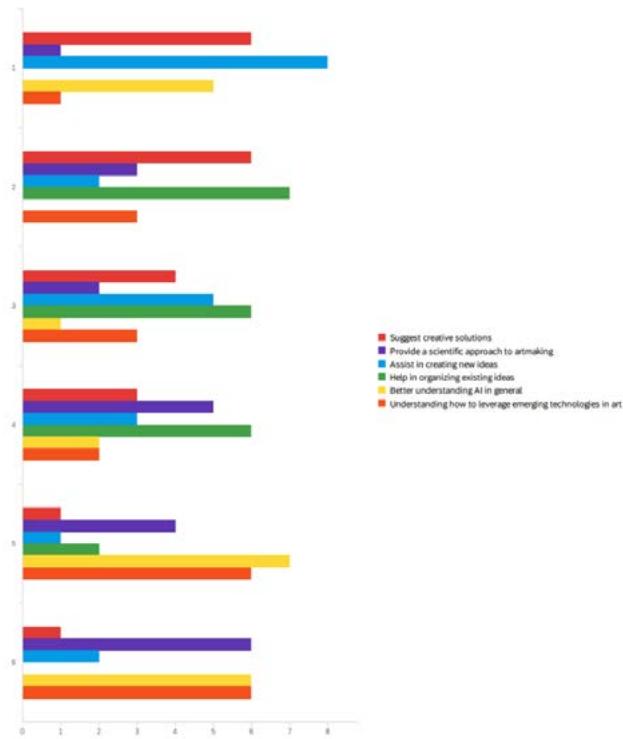
FIGURES Figure 1: Respondent Ranking of Usefulness of AI Art Application in the Artmaking Process Before Use
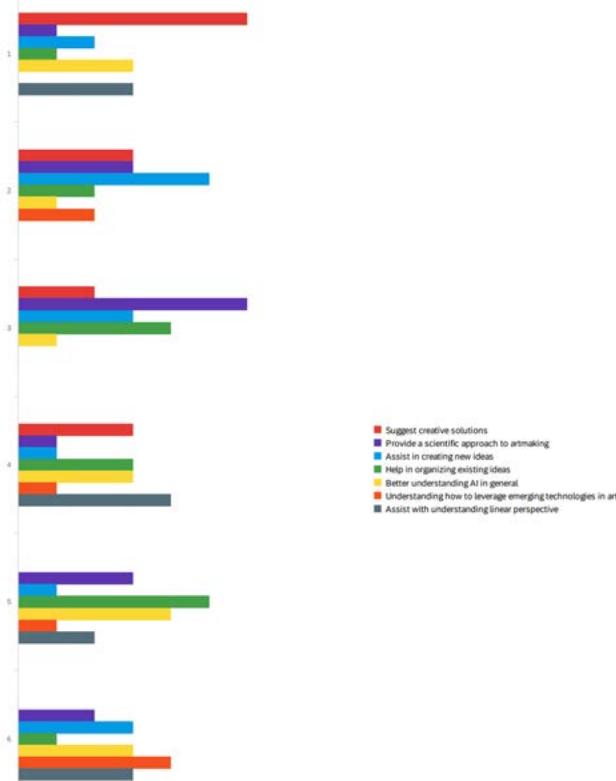
Figure 2: Respondent Ranking of Usefulness of AI Art Application in the Artmaking Process After Use

Figure 3.1: Generative AI Image of a Water Bottle on Fire with Wings
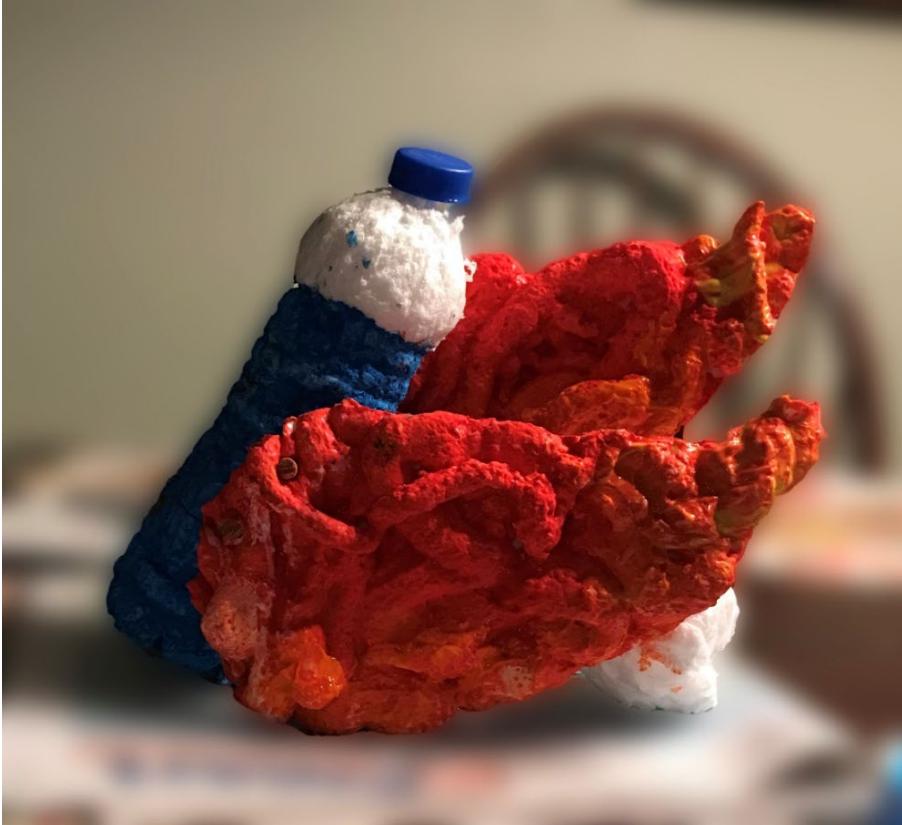
Figure 3.2: Final Sculpture of a Water Bottle on Fire with Wings
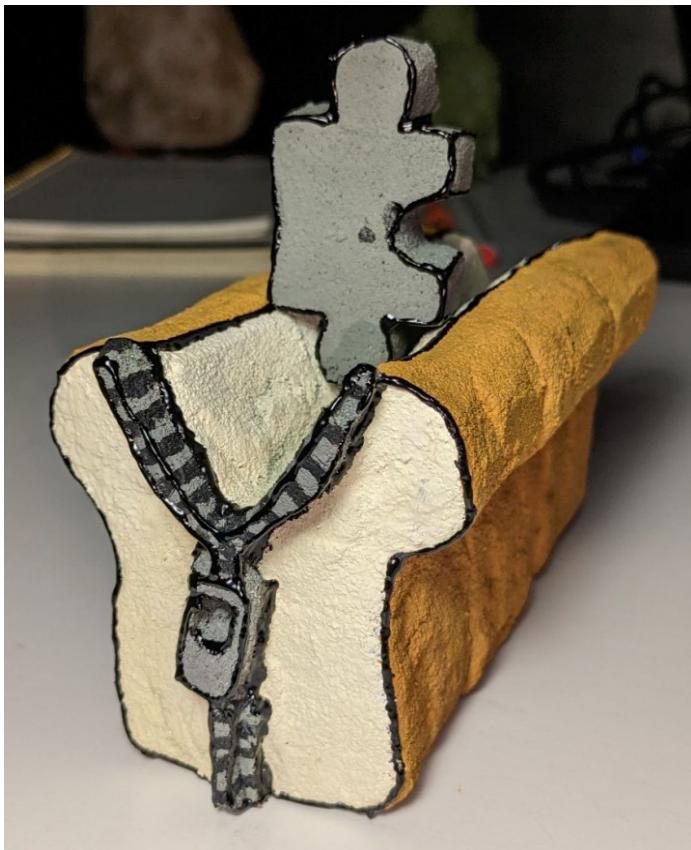
Figure 4: Final Sculpture of Bread, Zipper, Puzzle Piece
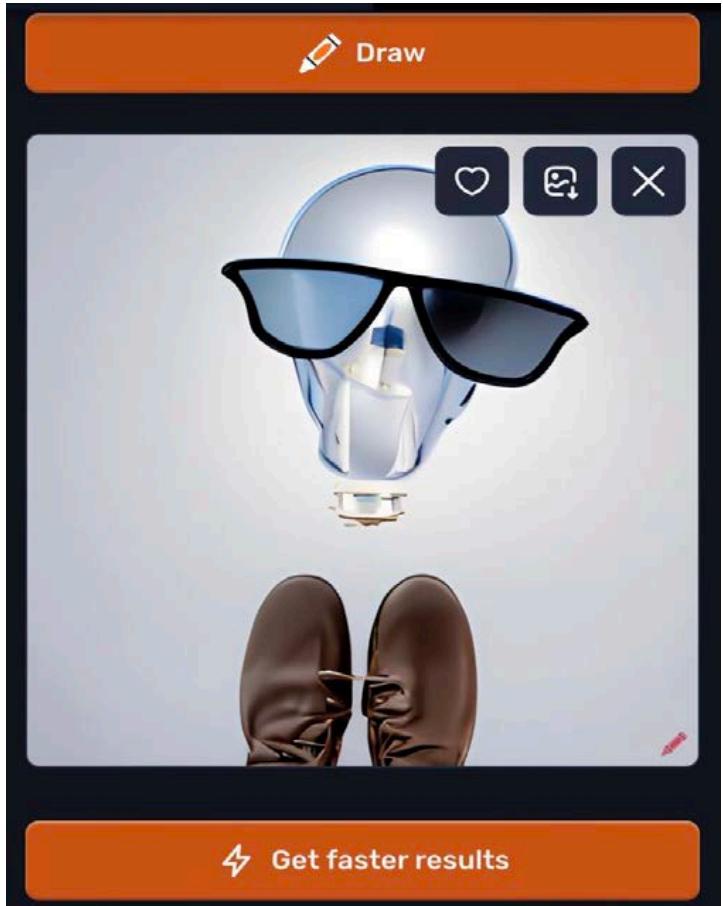
Figure 5: Generative AI Image of Shoes, Lightbulb and Sunglasses

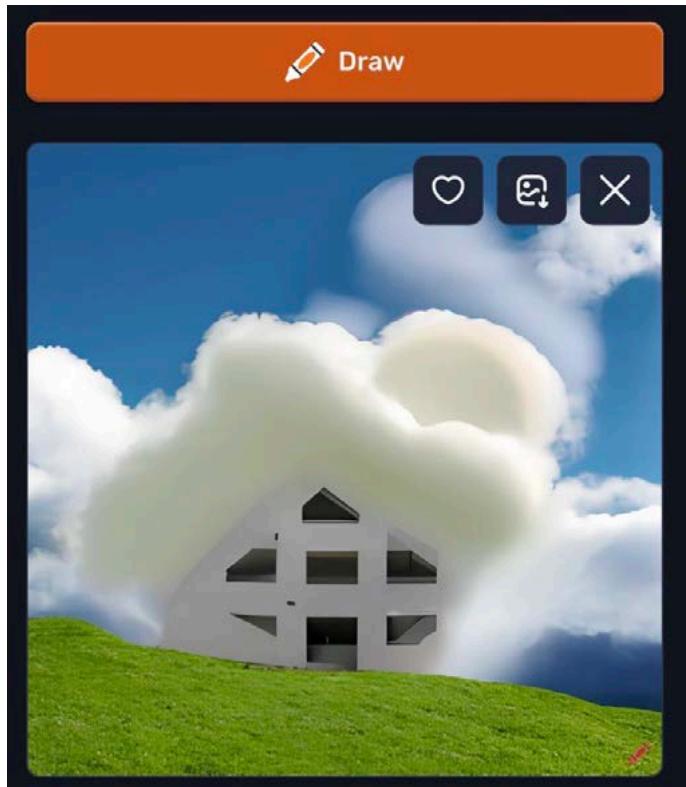 Figure 6: Generative AI Image of a House Made Out of Clouds
Generating HTML Viewer...
References
19 Cites in Article
D Ahmed (2020). Senses, experiences, emotions, memories: artificial intelligence as a design instead of for a design in contemporary Japan.
G Ajani (2022). Human authorship and art created by artificial intelligence-where do we stand?.
T Ansari (2022). How AI Transformed the Art World in 2022.
M Cheng (2022). The creativity of artificial intelligence in art.
N Compton (2022). Generative art: The creatives powering the AI art boom.
M Csikszentmihályi (1988). Society, culture, and person: A systems view of creativity.
Amanda Culp-Roche,Debra Hampton,Angie Hensley,Jessica Wilson,Amanda Thaxton-Wiggins,Jo Otts,Sharon Fruh,Debra Moser (2020). Generational Differences in Faculty and Student Comfort With Technology Use.
J Skelton,C Rodgers,L Ellis,A Lyles (2022). Rubrics and Evaluations.
J Hong,N Curran (2019). Artificial intelligence, artists, and art: Attitudes toward artwork produced by humans vs. artificial intelligence.
K Jennings (2010). Developing creativityartificial barriers in artificial intelligence.
S Kosunen,N Haltia,J Saari,S Jokila,E Halmkrona (2021). Private supplementary tutoring and socio-economic differences in access to higher education.
Neil Mulholland (2022). 2. Definitions of Art and the Art World.
B Murphy (2022). Unknown Title.
H Rosenberg (1983). The de-definition of art.
B Sherry (2022). 3 limits to artificial intelligence's creativity (and how to solve them): Here's what you need to know about harnessing A.I. technology to be more creative.
T Slotte Dufva (2023). Entanglements in AI art.
G Wellner (2022). Digital imagination, fantasy, AI art.
A Wright,V Roscigno,N Quadlin (2021). First-generation students, college majors and gendered pathways.
Caiming Zhang,Yang Lu (2021). Study on artificial intelligence: The state of the art and future prospects.
No ethics committee approval was required for this article type.
Data Availability
Not applicable for this article.
How to Cite This Article
Jonathan Proulx Guimond. 2026. \u201cExploring the Educational Potential of AI Generative Art in 3D Design Fundamentals: A Case Study on Prompt Engineering and Creative Workflows\u201d. Global Journal of Human-Social Science - A: Arts & Humanities GJHSS-A Volume 23 (GJHSS Volume 23 Issue A2): .
Explore published articles in an immersive Augmented Reality environment. Our platform converts research papers into interactive 3D books, allowing readers to view and interact with content using AR and VR compatible devices.
Your published article is automatically converted into a realistic 3D book. Flip through pages and read research papers in a more engaging and interactive format.
Our website is actively being updated, and changes may occur frequently. Please clear your browser cache if needed. For feedback or error reporting, please email [email protected]
Thank you for connecting with us. We will respond to you shortly.