Recent years have seen increased interest in early intervention in and prevention of mental health difficulties during adolescence. In this pilot study, a structured expressive textile art and fashion based (ETAFB) intervention was conducted to evaluate the beneficial effects on personal well-being and social interaction of youth with emotional distress. A one-group pretest-posttest pilot study was conducted among 18 youth with emotional distress. All the participants attended four sessions of ETAFB intervention. All the participants were subjected to a preintervention test and a 4-week postintervention test using the Personal Wellbeing Index -School Children (PWI-SC), 12-item General Health Questionnaire (GHQ-12), and Social Interaction Anxiety Scale (SIAS). The study findings revealed that the ETAFB intervention was associated with significant improvements in some of the measurements. This information provides the groundwork for a further study to investigate the effect of the ETAFB intervention on the relationship between youth well-being and facilitators.
## I. INTRODUCTION
A healthy mental status for youth is particularly important for establishing foundations for health essential to their well-being as adults. Most mental illness diagnosed in adulthood begins in early or midadolescence (Kessler et al., 2005). Particularly, increased stress and subsequent stress appraisal can cause individuals to suffer emotional distress, which may be referred to as emotional issues, emotional symptoms, or emotional challenges if they feel unequipped to address their difficulties (Maslach & Leiter, 2016). The term "emotional distress" refers to various affective, cognitive, and somatic symptoms of depression (Radloff, 1977).
Youth experience various daily stressors during this developmental period, including physical and sexual transformations associated with teenage years, school demands (Owens et al., 2008), problems initiating and maintaining friendships and romantic relationships, career choices, the start of their working lives, and gradual separation from their parents. Various stressful experiences have been associated with emotional distress. That distress may be linked to mental health problems such as depression (Van den et al., 2008).
According to O'Neill et al. (2021), most youth suffering from mental health difficulties are experiencing emotional distress. Youth mental health problems are increasing. According to the World Health Organization, $10\% - 20\%$ of youth worldwide suffer from mental disorders (2023). In Hong Kong, a recent study found high rates of symptoms of depression $(48\%)$, anxiety $(51\%)$, and stressful relationships with parents $(70\%)$ among secondary school students (Baptist Oi Kwan Social Service, 2022). Save the Children Hong Kong conducted another large research project, indicating that $39\%$ of Hong Kong's school-aged children may suffer from mental health disorders. More than half of secondary school students experience some symptoms of depression; $34\%$ report difficulty staying focused, $30\%$ feel anxious, and $26\%$ report difficulty sleeping (Save the Children Hong Kong, 2020).
Emotional distress is among the critical indicators of youth mental health. Researchers have found that adolescents who report healthier emotional well-being are more probable to perform well academically. (Eccles et al., 1997; Kerr et al., 2004). Poor mental health is associated with several adverse outcomes during adolescence, including higher suicide rates (Bould, 2019) and increased risk of mental health concerns later in life (Johnson, 2018). Due to poor emotional well-being, youth are likely to experience an increased risk of delinquency, lower self-esteem, social withdrawal, academic failure, and a reduced likelihood of attending university (Fergusson & Woodward, 2002; Sawyer et al., 2001). While emotional distress can be difficult for youth generally, it can be particularly challenging for youth with developmental disabilities, including autism spectrum disorders (ASDs), cerebral palsy (CP), intellectual disabilities (IDs), attention deficit hyperactivity disorder (ADHD), and learning disabilities (Developmental disabilities, 2021; Hitomi, 2022; Mazzucchelli & Sanders, 2011; Morie, 2019). Due to the wide variety of child and youth mental disorders, it is essential to address the emotional distress concerns of youth, given the high prevalence of mental illness and the ramifications for their adult lives if left untreated.
### a) Efficacy of Art-based Intervention
Expressive arts can foster human growth, development, and healing by integrating imagery, storytelling, dance, music, drama, poetry, writing, movement, dream work, and visual arts (Atkins, 2002). Through using nonverbal approaches to creative expression, art therapy facilitates emotional exploration, mood adjustment, behaviour management, self-awareness, social skills development, anxiety reduction, and self-esteem development (American Art Therapy Association, 2013). Through artistic materials, practitioners strive to facilitate clients' personal growth and change (British Association of Art Therapists, 2022). This involves active artmaking, the creative process, psychological theory, and human experience within a psychotherapeutic relationship enhancing the lives of individuals, families, and communities (American Art Therapy Association, 2017). The practice has gradually gained recognition as a form of spiritual support and complementary therapy (Faller & Schmidt, 2004; Nainis et al., 2006). Youth can experience art-making as a form of empowerment by exercising their choice and creating (Moon, 2012). Among youth with behavioural-emotional issues, art therapy has been found to reduce stress levels (Irvin, 2014), anxiety (Sandmire et al., 2012), and depression symptoms (Bell & Robbins, 2007).
It has been shown that art therapy results in beneficial outcomes for children and youth with emotional distress. Cohen-Yatziv and Regev (2019) presented a study on art therapy for youth and found positive emotional effects in youth with impairments, juvenile offenders, and children in special education and with disabilities. In a secure and controlled environment, the expressive language of art is a means of exploring and communicating youths' emotional worlds. A large urban trauma centre evaluated by Chapman et al. (2001) reported success with art therapy. A total of 85 children aged 7 to 17 who had been admitted to a level I trauma centre with traumatic injuries participated in the Chapman art therapy treatment intervention. Children may be able to discuss and process their traumatic experiences through the intervention, which has effectively reduced acute and emotional distress symptoms. The Art Room, a structured biweekly arts engagement programme offered in school settings for a minimum of 10 weeks, was evaluated by Cortina and Fazel (2015). A significant improvement was found in youth's emotional and behavioural outcomes, with a reduction in clinical-level difficulties by $41\%$ and an improvement in moods and feelings by $87.5\%$ postintervention (Cortina & Fazel, 2015). Kim et al. (2014) investigated the effects of group art therapy and mindfulness-based breathwork on the subjective wellbeing of depressed and anxious youth. Through art activities, the subconscious can be expressed naturally, and painful emotions and thoughts can be revealed without verbal communication. A statistically significant decrease in symptoms of depression and anxiety was reported in the study (Kim et al., 2014).
Various benefits have been associated with art and expressive arts, with emotional benefits among youth (Chapman et al., 2001; Cortina & Fazel, 2015; Cohen-Yatziv & Regev, 2019; Kim et al., 2014; Moon, 2012). Engaging in creative processes can reduce emotional distress and provide a safe environment where youth can explore new possibilities.
### b) Textile and Fashion Activities
Textile crafting and fashion design are distinct art forms. Due to their unique malleability, they can be shaped into various unique styles and three-dimensional prototypes. With a designed creation, participants could express their unique values and potential while connecting with the community and using fashion and textiles as a common medium to express themselves. The literature indicates that textile crafting can be used as a tool for power, self-expression, and identity for individuals, partners, families, and groups.
Crafting empowers the crafts by giving them pride in their skills and accomplishments (Corkhill et al., 2014; Maidment & Macfarlane, 2011) as well as providing continuity and support during life changes (Kenning, 2015). Self-esteem may be improved when the maker and object interact (Fisher, 1995; Burt & Atkinson, 2011; Schofield-Tomschlin & Littrell, 2001). Leisure activities contribute to the positive development and well-being of people of all ages (Collier, 2011; Burt & Atkinson, 2011; Bailey & Fernando, 2012). Positive mental health and problem behaviour are also promoted by leisure activities (Casey et al., 2005). Incorporating crafts as a leisure activity into socialmedia has provided a channel for community-building, mutual support, recognition, idea sharing, and inspiration (Orton-Johnson, 2012). Crafting enables individuals to empower themselves through the fabrication and designing process. Gardner (1990) describes crafting as intuitive learning achieved through evaluating materials and skill acquisition during the crafting process. By handling and assembling raw materials, individuals realize they can control their lives by developing self-determination.
Additionally, previous studies found that intensive involvement in leisure activities contributed positive developmental outcomes and acquiring new skills (Reynolds, 2010; Verbakel, 2012). Burns and Van Der Meer (2020) used a similar approach to Corkhill et al. (2014) and Riley et al. (2013) in their studies on crochet. According to their international online survey, crocheting led to themes of creativity, relaxation, and a feeling of accomplishment. Additionally, participants reported using crochet to manage physical and mental health concerns, including depression, anxiety, eating disorders, drinking, smoking, and chronic pain. Knitting has been reported to improve well-being, self-esteem, and emotional regulation among patients suffering from various mental health challenges, including anorexia nervosa (Clave-Brule et al., 2009) and substance abuse (Duffy, 2007). A study by Iso-Ahola and Mannell (2004) concluded that participating in self-selected leisure activities increases well-being and life satisfaction and reduces psychological distress, depression, and anxiety. Through the process of crafting, individuals can empower themselves. Gardner (1990) describes craft as a method of intuitive learning achieved through evaluating and acquiring skills during crafting. An individual's emotional well-being may be improved by achieving success in a specific activity, according to Tubbs et al. (2017).
People can positively influence and own their lives by handling and assembling raw materials. A textile art and craft goal can assist individuals in achieving personal life and health goals and empower them (Diener, 2000). Furthermore, studies have shown that leisure activities provide opportunities for creative expression and social interaction (Gibson, 1997; Gabriel & Bowling, 2004; Iwasaki, 2006). Schofield- Tomschlin and Littrell (2001) argue that women who make textiles experience enjoyment, self-actualization, and empowerment due to the crafting process's therapeutic effects. Textile arts have been associated with various benefits, such as cognitive, physical, social, and emotional. Craft-based interventions were explicitly established to reduce the mental distress and improve the well-being of participants from all sectors of society (Browne & Rhodes 2011; Desmarais 2016; Setterington & Millar 2018; Shercliff 2014). Clothing can change one's mood, enhance confidence, and express one's perception of one's appearance through appropriate clothing behaviour, providing a therapeutic meaning to overcome depressive mood (Dubler & Gurel, 1984; Kim & Lee, 1999).
This study aims to investigate the benefits of the ETFB intervention as a treatment for youth with emotional distress in community settings. The outcomes included measures of personal well-being using the PWI-SC; an improvement in general health, which will be measured with the GHQ-12; and reduced social interaction anxiety, measured with the SIAS. A structured ETFB intervention framework integrated with the theory of person-centred expressive arts therapy, expressive therapies continuum, and a codesign model was developed to facilitate scientific evidence-based evaluation. It is hypothesized that after the 4-week ETFB intervention, participants will show improved personal well-being and general health outcomes and reduced social interaction anxiety as evidenced by the pre- and posttest scores of the measurements employed.
### c) Significance
The structured ETFAB intervention framework integrated with the theory of person-centred expressive arts therapy, expressive therapies continuum, and a codesign process model on a multimodal media approach is unique and novel in this research context. Young people fail to seek mental help mostly are because of embarrassment and difficulties in recognizing problems, and a desire to address difficulties themselves (Gulliver, 2010; Radez, 2020). The World Health Organization (WHO) has emphasized the significance of youth friendliness in health services globally and undertaken efforts to increase the emphasis on youth of such services (World Health Organization, 2012). It is believed that by making services more youth-friendly, these services will be more frequently used by youth, and be satisfied with the assistance they receive (McIntyre, 2002). The ETFAB intervention ensuring the services are effective, safe, community-based, confidential, and accessible provided mental health care for young people "youth-friendly" and promoting a positive attitude among young people seeking help. Furthermore, high demands on specialist services, limited available provision, and long waiting lists present key barriers to accessing youth mental services (Moore, 2018). Therefore, expressive arts as an easily accessible, low-cost therapeutic activity that promotes self-care and healthy outlets for heightened emotions is essential (Braus & Moton, 2020). The ETFAB intervention is expected to act as an early intervention regarding assertive community treatment to minimize the risk of relapse and hospitalization of youth with mental impairment. Finally, this study is expected to reduce emotional distress among youth in Hong Kong and influence future government policy and resource allocation regarding mental health. Therefore, the study's benefits are fully integrated with the needs of Hong Kong. Limited evidence-based studies on arts engagement have been conducted in Hong Kong. As expected, current approaches to evaluating art-based intervention are limited. Arts inclusion projects must be encouraged, first by the government and then by NGOs (Chan et al., 2018).
## II. DATA AND METHODOLOGY
A one-group pretest-posttest design was adopted for the evaluation of ETAFB interventions in this study. Convenience sampling was adopted to recruit participants in a community centre run by a local NGO -
Heep Hong Society in Hong Kong. Social workers identified 18 youth with emotional distress and recruited them to participate in the intervention. All participants were informed that their responses would remain confidential. It was emphasized that participation was voluntary and that participants could stop attending workshops at any time without repercussions. Participants aged 18 or above signed an informed consent agreement describing the format and potential risks and benefits of participation. Participants aged under 18 submitted a signed parent/guardian consent form at the beginning of the study. The participants were youth with emotional distress. Each participant was grouped with three students to form a codesign team. The principal investigator, one qualified art therapist, one social worker, one research assistant (RA), and 54 student helpers assisted with the pilot study. The participation criteria were: (a) youth from aged 14-19 in Hong Kong; (b) identified by social workers and schoolteachers as having mental distress; (c) able to read and write (to understand all teaching materials and instructions); and, (d) be independently assessable and willing to provide data for research purposes. Excluded were those who had (a) practised or recently learned art therapy in the last 6 months; (b) been diagnosed with a severe mental disorder such as bipolar disorder, schizophrenia, dementia, or depression in an acute phase; (c) identified with self- reported suicidal thoughts or drug abuse in the last 6 months; or (d) a lack of willingness to provide data for research purposes. This study was conducted in June 2021 as a prospective pilot study. All the eligible participants were assigned to the experiment group (EG), which received textile arts and fashion-based activities in a codeign setting. The test completion rate was $100\%$. All the participants completed the PWI-SC, GHQ-12, and SIAS assessments at a preintervention test (T0) and a 4-weeks postintervention test (T1) administered by the RA. The study protocol was approved by the Human Subject Ethics Sub-Committee of the Hong Kong Polytechnic University (Reference number: HSEARS20 210527002). The aim was to explore the feasibility and preliminary effects of the ETFB intervention on youth facing emotional difficulties. Figure 1 indicated the consolidated standards of reporting trials flow diagram for the ETFB pilot study.
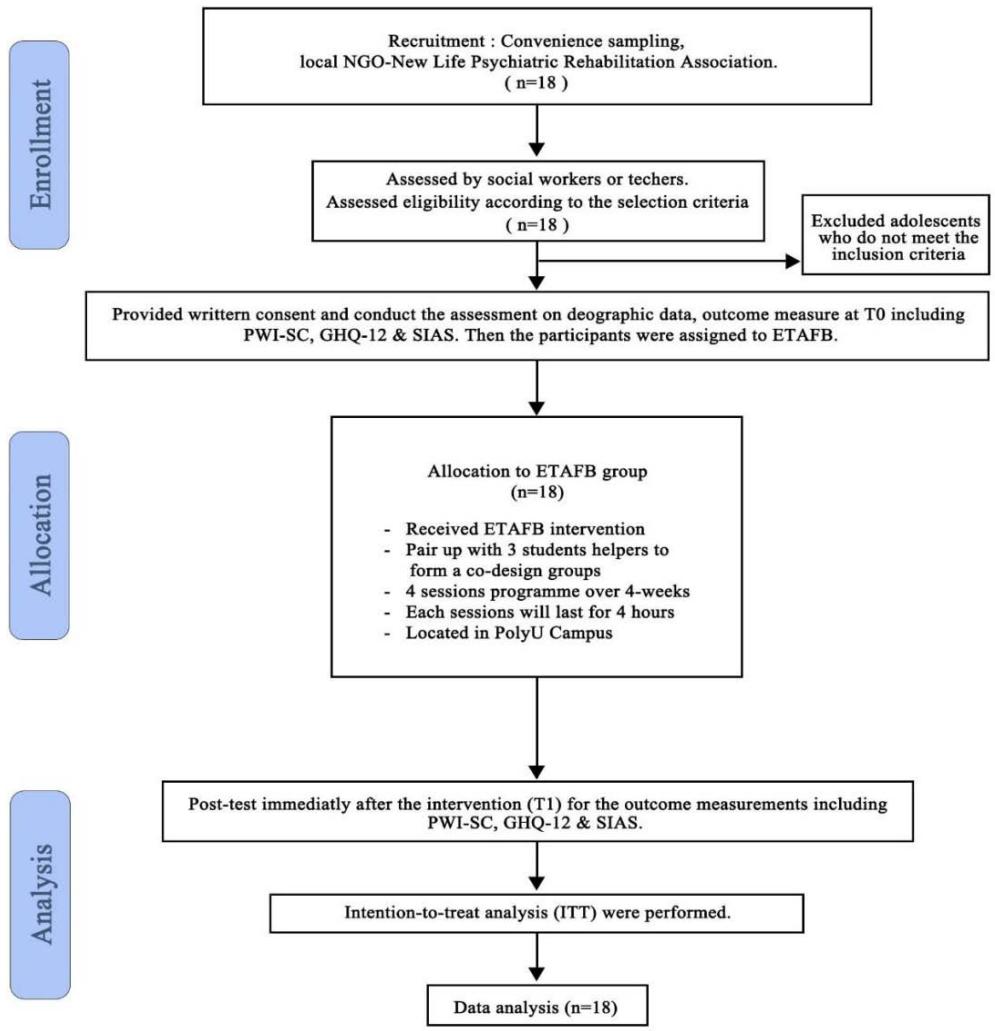 Fig. 1: Consolidated Standards of Reporting Trials (CONSORT) flow diagram - pilot study (PWI-SC = Personal Wellbeing Index - School Children; GHQ-12 = the 12-item General Health Questionnaire; SIAS = Social Interaction Anxiety Scale).
### a) Measurements
Personal Wellbeing Index – School Children (PWI-SC): It is a unidimensional and multi-item instrument developed by Cummins and Lau (2005) for measuring personal well-being in school-aged children and youth. This instrument comprises seven items corresponding to satisfaction with the following life domains: standard of living, health, life achievements, personal relationships, personal safety, community connectedness, and future security, using an 11-point end-defined rating scale ranging from 0 (very sad) to 10 (very happy), with the midpoint at 5 (not happy or sad).
The 12-item General Health Questionnaire (GHQ-12): Using a 4-point Likert-type scale, the 12-item General Health Questionnaire (GHQ-12; Goldberg & Williams, 1988) assesses the severity of a mental problem over the past few weeks. The total score ranges from 0 to 36 based on the score. Positive items are corrected from 0 (always) to 3 (never), and negative items from 3 (always) to 0 (never). The higher the score, the worse the health. The GHQ-12 was designed as a one-dimensional measure of psychological distress. Due to its brevity, it has become a popular tool for detecting psychological distress in nonclinical samples (Hankins, 2008; Tomás et al., 2017). The Chinese version translated by Ye (2009) was used.
Social Interaction Anxiety Scale (SIAS): To measure the experience of social anxiety, participants were asked to complete the Social Interaction Anxiety Scale (SIAS; Mattick & Clarke, 1998) pre- and posttreatment. The SIAS is a self-report survey comprising 20 questions rated on a Likert-type scale from 0 (not at all) to 4 (extremely) regarding how much one experiences fear in social interactions. Total scores range from 0 to 80, with higher scores representing higher levels of social interaction anxiety. Items are self-statements describing one's representative reaction to situations involving social interaction in dyads or groups.
### b) Data Analysis
SPSS version 22.0 will be used to analyze the data. The participants' demographic information will be analyzed using descriptive statistics (i.e., percentages, means, and SDs). A paired sample t-test will be used to examine the association between the pretest and posttest variables. The Cohen's d statistic was used to determine the effect size (Cohen, 1988). According to Cohen's d, small, medium, and large effect sizes are categorized as 0.20, 0.50, and 0.80, respectively. A descriptive summary measure will be used to summarize the sociodemographic data, and percentages will be presented for categorical variables. All data analyses will be conducted as two-tailed with a significance level of p \<.05. To prevent missing data, the outcomes assessors will carefully examine all questionnaires returned by participants. The ETFB intervention will be analyzed using intention-to-treat (ITT) analysis, so any dropout would result in missing values, causing the total score to be miscalculated. Using mean imputation, missing items are replaced with the mean of that variable for all other cases, which does not change the sample mean.
### c) Etafb Intervention
The study will adopt a preintervention and postintervention survey design. This evaluates the effectiveness of the intervention on the participants by adopting measures of personal well-being (PWI-SC), general health (GHQ-12), and social anxiety (SIAS). Four structured sessions will be conducted as part of the ETFB intervention. After participants are allocated to the EG, they will be grouped with three to four students to form a code sign team. The details of the ETFB intervention are provided in Table 1.
Session I: The 4-hour workshop began with a 30-minute self-administered pretest, including the PWI-SC, GHQ-12, SIAS assessments and sociodemographic questions. After collected the completed surveys, a calming exercise (i.e., box breathing exercise applying a simple relaxation technique for recentring and improving concentration through meditation) was performed, led by social workers, engaged all students and participants as a warm-up. Afterwards, the concepts, theories, and practices of expressive textile arts and fashion design were introduced. The purpose of this session was to provide a comprehensive description of fashion design theory. Participants could then apply this knowledge in designing their creative outfits. Students and the art therapists guided participants in developing their ideas and formulating their goals. Goal setting and striving for achievement were crucial for achieving personal fulfilment (Canfield, 1989). This session was designed to stimulate youth interest in textiles and fashion and facilitate relaxation and enjoyment.
Session II: Students and art therapists facilitated a codesign discussion (30 minutes) with the participants to develop a codesign plan within a mutually supportive and secure environment. Patternmaking and sewing techniques were demonstrated afterwards. Instructed by the students and art therapists, the participants would develop practical, organizational, and problem-solving skills. The codesign discussion was conducted to identify and define design problems and requirements based on participants' opinions and expectations (LaBat & Sokolowski, 1999). This resulted in optimal clothing styles and functional design requirements being identified.
Session III: Students and art therapists facilitated a codeign discussion (30 minutes). Participants adjusted the codeign prototypes after a fitting session. Textile arts and fashion design techniques were demonstrated, included printmaking, fabric collage, hand painting, and ading. Materials for textile arts (e.g., fabric swatches and paint, yarns, beads, sewing materials, knitting edles, and crochet hooks) were provided. Participants are instructed on applying crafting techniques to their prototypes. The textile arts and craft activities helped stimulate tactile and sensory functions and enhance the participants' sense of relaxation and calmness. At the end of the session, each group prepared styling erences and discusses their final photoshoot plan.
Session IV: Final designs were completed after fitting. A styling photoshoot was conducted with each group on campus. Participants styled their hair and applied makeup for the photoshoot to demonstrate their creativity and confidence. This interactive photoshoot aimed to allow participants to express insecurities and receive affirmation; consequently, their self-esteem will be enhanced, self-identity further developed, and experiences of personal accomplishment achieved (Hong et al., 2012). Each group then presented their creative work in this session. The PI, RAs, student helpers, social workers, schoolteachers, and art therapists formed the audience base. Participating in the sharing session allowed participants to communicate with others and establish mutual understanding. This experience enabled them to exchange skills and experiences, receive mutual support and validation (Leone, 2020), experience social contact (Riley et al., 2013), establish relationships, and foster a sense of belonging (Burt & Atkinson, 2011). Afterwards, participants kept their codesign prototypes. The participants completed a self-administered posttest, which includes PWI-SC, GHQ-12 and SIAS assessments, at the end of this session.
Table 1: ETFB intervention. (PWI-SC = Personal Wellbeing Index – School Children; GHQ-12 = the 12-item General Health Questionnaire; SIAS = Social Interaction Anxiety Scale.)
<table><tr><td>Session</td><td>Main theme</td><td>Contents</td><td>Led by</td></tr><tr><td>I</td><td>Orientation session</td><td>·Welcome & introduction speech
·Introduction to ETFAB intervention
·Pretest: PwI-SC, GHQ-12, SIAS, and sociodemographic questions
·Exercise: Ice-breaking and trust-building activities
·Codesign discussion
·Size measurement
·Sketch illustration</td><td>PI; student helpers; art therapist</td></tr><tr><td>II</td><td>Design your style</td><td>·Codesign discussion
·Sourcing
·Practical knowledge lecture
·Patternmaking and sewing</td><td>PI; student helpers</td></tr><tr><td>III</td><td>Hands-on textile workshop</td><td>·Codesign discussion
·Fitting session
·Textile art and craft task
·Prepare styling references</td><td>PI; student helpers</td></tr><tr><td>IV</td><td>Photoshooting and sharing session</td><td>·Codesign discussion
·Hair & make-up styling
·Photoshooting
·Sharing sessions
·Posttest: PwI-SC, GHQ-12, SIAS</td><td>PI; student helpers; art therapist</td></tr></table>
Table 2: Objectives of each ETFB session.
<table><tr><td>Session</td><td>Main themes</td><td>Expressive therapies continuum model (Kagin & Lusebrink, 1978)</td><td>Objectives</td></tr><tr><td>I</td><td>Orientation session</td><td>Cognitive/symbolic</td><td>·Establish a mutually supportive and safe group atmosphere (Leone, 2020)
·Explore multidimensional experience
·Imagine positive self-identity (Reynolds, 2000)
·Foster communication between participants (Garlock, 2016)</td></tr><tr><td>II</td><td>Design
your style</td><td>Kinesthetic/sensory
perceptual/affective</td><td rowspan="2">Support the problem-solving process
(Kouprie & Visser, 2009)
Pursue excitement and pleasurable involvement
Improve problem-solving skills (Kouprie & Visser, 2009)
Catalyze relaxation and stress reduction (Utsch, 2007)
Stimulate tactile and sensory functions (Homer, 2015)
Reduce ruminative thinking (Futterman et al., 2016)
Develop positive self-image and self-perception (Kang et al., 2013)
Adopt rational and analytical steps (Rubin, 2005)
Manipulate organization skills</td></tr><tr><td>III</td><td>Hands-on textile workshop</td><td>Kinesthetic/sensory perceptual/affective</td></tr><tr><td>IV</td><td>Photoshooting and sharing session</td><td>Perceptual/affective cognitive/symbolic</td><td>Promote peer support (Kouprie & Visser, 2009)
Enable the externalization and visual communication of inner subjective experiences (Dunphy et al., 2019)
Facilitate personal achievement and fulfilment through creative output
Boost self-confidence
Encourage youth to explore and introduce themselves through the art (Kahn, 1999)
Increase self-awareness by exploring their issues (Kahn, 1999)
Set goals for change (Kahn, 1999)</td></tr></table>
Table 3: Pictures for the ETFB intervention. (PWI-SC = Personal Wellbeing Index – School Children; GHQ-12 = the 12-item General Health Questionnaire and SIAS = Social Interaction Anxiety Scale.)
<table><tr><td>Session</td><td>I</td><td>II</td><td>III</td><td>IV</td></tr><tr><td>Contents</td><td>Welcome & introduction speech
Pretest: PWI-SC, GHQ-12, SIAS & Sociodemographic questions
Exercise: Ice-breaking activities
Codeign discussion
Size measurement
Sketch illustration</td><td>Codesign discussion
Sourcing
Practical knowledge lecture
Pattern making and sewing</td><td>Codesign discussion
Fitting session
Textile art and craft task
Prepare styling references</td><td>Codesign discussion
Hair & make-upstyling
Photoshooting
Sharing sessions
Posttest: PWI-SC, GHQ-12, SIAS</td></tr><tr><td>Group A</td><td colspan="4">DESIGN SKETCHES:
AFTER THE SUN BY THE SUN
BFTER THE SUN BY THE SUN
CFTER THE SUN BY THE SUN
DFTER THE SUN BY THE SUN
PATTERNS MAKING</td></tr><tr><td>Group B</td><td colspan="4"></td></tr></table>
## III. RESULTS AND DISCUSSION
A total of 18 youth aged 16–19 with negative emotional distress participated in this study. The average age of the participants was 17.6 (SD = 1.24). All the participants completed the intervention, with an overall attendance rate of $100\%$. Thus, all participants completed the sociodemographic questionnaires at baseline as well as the pretest and posttest questionnaires. As detailed in Table 4, many of the participants (66.7%, n = 12) were male. Regarding the age distribution, those aged 16, 17, 18, and 19 accounted for 27.8% (n = 5), 16.7% (n = 3), 22.2% (n = 4), and 33.3% (n = 6) of the participants, respectively. Among the participants, 44% had an ASD diagnosis and 16.7% an ADHD diagnosis. All the participants had received education at secondary school level (i.e., high school level; n = 100%). All the participants were single (n = 100%).
Table 4: Sociodemographic information of participants. (ASD = autism spectrum disorder and ADHD = attention deficit hyperactivity disorder.)
<table><tr><td>Parameter</td><td>Number, percentage (N = 18)</td></tr><tr><td>Age, years</td><td></td></tr><tr><td>Under 15</td><td>0 (0%)</td></tr><tr><td>15</td><td>0 (0%)</td></tr><tr><td>16</td><td>5 (27.8%)</td></tr><tr><td>17</td><td>3 (16.7%)</td></tr><tr><td>18</td><td>4 (22.2%)</td></tr><tr><td>19</td><td>6 (33.3%)</td></tr><tr><td>Gender</td><td></td></tr><tr><td>Female</td><td>6 (33.3%)</td></tr><tr><td>Male</td><td>12 (66.7%)</td></tr><tr><td>Education level</td><td></td></tr><tr><td>Primary level or below</td><td>0 (0%)</td></tr><tr><td>Secondary education</td><td>18 (100%)</td></tr><tr><td>Tertiary education or above</td><td>0 (0%)</td></tr><tr><td>Marital status</td><td></td></tr><tr><td>Single</td><td>18 (100%)</td></tr><tr><td>Married</td><td>0 (0%)</td></tr><tr><td>Medical history</td><td></td></tr><tr><td>ASD</td><td>8 (44%)</td></tr><tr><td>ADHD</td><td>3 (16.7%)</td></tr></table>
The data collected from the pretest and posttest were tabulated to investigate the effectiveness of applying the ETAFB intervention as an adjuvant treatment to reduce emotional distress among youth. As indicated in Table 6, paired sample $t$ -tests were conducted to determine the differences between the mean scores of the pretest and posttest of the PWI-SC, GHQ-12, and SIAS for the 18 participants.
The results of the PWI-SC indicated a significant enhancement in the personal well-being of the participants during the ETFB intervention in the achievement in life domain ( $t(17) = -3.37$, $p <.05$ ), with means of 7.72 ( $n = 18$, $\mathrm{SD} = 0.75$ ) and 8.39 ( $n = 18$, $\mathrm{SD} = 0.78$ ) at the pretest ( $T0$ ) and posttest ( $T1$ ) stages, respectively. In the personal relationships domain ( $t(17) = 0.001$, $p <.05$ ), means of 6.5 ( $n = 21$, $\mathrm{SD} = 1.1$ ) and 7.45 ( $n = 21$, $\mathrm{SD} = 0.86$ ) were recorded at the pretest and posttest stages, respectively. In the feeling part of the community domain ( $t(17) = -3.29$, $p <.05$ ), means of 6.95 ( $n = 21$, $\mathrm{SD} = 1.21$ ) and 7.72 ( $n = 21$, $\mathrm{SD} = 0.9$ ) were recorded at the pretest and posttest stages, respectively, and in the future security domains $(t(17) = -3.29$, $p <.05)$, means of 6.44 ( $n = 21$, SD = 1.58) and 7.22 ( $n = 21$, SD = 1.52) were recorded at the pretest and posttest stages, respectively. A $p$ -value of $\leq.05$
was considered statistically significant. As the results indicated, no significant differences were observed in the domain of physical health and environment (Table 5).
Table 5: Results of Paired Samples t-test. (N = 18. SEM = standard error of the mean; df = degrees of freedom.)
<table><tr><td rowspan="2">Participantsn =18</td><td rowspan="2">Mean</td><td rowspan="2">Std. Dev</td><td rowspan="2">S.E. mean</td><td colspan="3">Paired t-test</td></tr><tr><td>T value</td><td>df</td><td>Significance (2-tailed)</td></tr><tr><td>Prevalence of Living</td><td></td><td></td><td></td><td></td><td></td><td>Prevs Post</td></tr><tr><td>Pretest</td><td>6.56</td><td>1.5</td><td>0.35</td><td>-2.91</td><td>17</td><td>0.1</td></tr><tr><td>Posttest</td><td>6.89</td><td>1.57</td><td>0.37</td><td></td><td></td><td></td></tr><tr><td>Personal Health</td><td></td><td></td><td></td><td></td><td></td><td></td></tr><tr><td>Pretest</td><td>6.94</td><td>0.87</td><td>0.21</td><td>-2.56</td><td>17</td><td>0.2</td></tr><tr><td>Posttest</td><td>7.22</td><td>0.94</td><td>0.22</td><td></td><td></td><td></td></tr><tr><td>Achieving in Life</td><td></td><td></td><td></td><td></td><td></td><td></td></tr><tr><td>Pretest</td><td>7.72</td><td>0.75</td><td>0.18</td><td>-3.37</td><td>17</td><td>0.004</td></tr><tr><td>Posttest</td><td>8.39</td><td>0.78</td><td>0.18</td><td></td><td></td><td></td></tr><tr><td>Personal Relationships</td><td></td><td></td><td></td><td></td><td></td><td></td></tr><tr><td>Pretest</td><td>6.5</td><td>1.1</td><td>0.26</td><td>-3.8</td><td>17</td><td>0.001</td></tr><tr><td>Posttest</td><td>7.45</td><td>0.86</td><td>0.2</td><td></td><td></td><td></td></tr><tr><td>Personal Safety</td><td></td><td></td><td></td><td></td><td></td><td></td></tr><tr><td>Pretest</td><td>7.06</td><td>1.11</td><td>0.26</td><td>-1.71</td><td>17</td><td>0.1</td></tr><tr><td>Posttest</td><td>7.28</td><td>1.18</td><td>0.28</td><td></td><td></td><td></td></tr><tr><td>Community-Connectedness</td><td></td><td></td><td></td><td></td><td></td><td></td></tr><tr><td>Pretest</td><td>6.95</td><td>1.21</td><td>0.29</td><td>-3.29</td><td>17</td><td>0.004</td></tr><tr><td>Posttest</td><td>7.72</td><td>0.9</td><td>0.21</td><td></td><td></td><td></td></tr><tr><td>Future Security</td><td></td><td></td><td></td><td></td><td></td><td></td></tr><tr><td>Pretest</td><td>6.44</td><td>1.58</td><td>0.37</td><td>-3.29</td><td>17</td><td>0.004</td></tr><tr><td>Posttest</td><td>7.22</td><td>1.52</td><td>0.36</td><td></td><td></td><td></td></tr><tr><td>The12-item General Health Questionnaire(GHQ-12)</td><td></td><td></td><td></td><td></td><td></td><td></td></tr><tr><td>Pretest</td><td>11.89</td><td>2.45</td><td>0.58</td><td>9.24</td><td>17</td><td><0.001</td></tr><tr><td>Posttest</td><td>7.83</td><td>2.55</td><td>0.6</td><td></td><td></td><td></td></tr><tr><td>Social Interaction Anxiety Scale(SIAS)</td><td></td><td></td><td></td><td></td><td></td><td></td></tr><tr><td>Pretest</td><td>35.28</td><td>3.32</td><td>0.78</td><td>4.17</td><td>17</td><td><0.001</td></tr><tr><td>Posttest</td><td>33.11</td><td>2.44</td><td>0.58</td><td></td><td></td><td></td></tr></table>
Moreover, significant improvements in the participants' general health were observed. The results revealed that the pretest and posttest GHQ-12 scores differed significantly, with means of 11.89 ( $n = 18$, SD = 2.45) at the pretest (T0) and 7.83 ( $n = 18$, SD = 2.55) at the posttest stages (T1, on the completion of the ETFB intervention), where $t(17) = 9.24$, and $p <.001$ at the $5\%$ significance level. Significant improvements in the participants' social interaction anxiety were observed. The results revealed that the pretest and posttest SIAS scores differed significantly, with means of 35.28 ( $n = 18$, SD = 3.32) at the pretest (T0) and 33.11 ( $n = 18$, SD = 2.44) at the posttest stages (T1, on the completion of the ETFB intervention), where $t(18) = 4.17$, and $p <.001$ at the $5\%$ significance level. All null hypotheses were rejected.
An objective of this pilot study was to examine the preliminary effects of the ETAFB protocol. Several significant changes were identified in within-group test score comparisons. Participants' scores for some subscales in the PWI-SC (achieving in life, personal relationships, community-connectedness, and future security), GHQ-12, and SIAS increased after the intervention. The findings supported the hypothesis and indicated that emotional distress improved among youth. This result suggests that engagement with textile art is a continual process involving goal setting, controlling external conditions, and meeting aims (Bailey & Fernando, 2012; Pollanen, 2015). Based on the high completion rate, attendance rate, and significant scores collected from the study, although distressed youth tend to be uninterested in seeking help from adults (Riley, 2001), the retention rate was high, at $100\%$. Based on the results of the pilot study, three areas with corresponding significant improvements were identified: a) impacts on social interaction, b) impacts on general health, and c) achievement in the future direction.
Impacts on social interaction: A significant improvement in participants' scores in the PWI-SC (personal relationships and community connections) and the SIAS was observed after the intervention. Studies have demonstrated that youth with emotional distress are more sensitive to how others perceive them (Schwartz, 2018). The use of art therapy may improve social behaviour, focus span, and relaxation (Pioch, 2010). A study by Menzer (2015) found that participants engaged in various arts activities (such as singing, dancing, play-acting, and crafting) at an early age exhibited positive social and emotional behaviour, including empathy, sharing, and the ability to control emotions. Crafts have been integrated as a means of community-establishing and a source of mutual support, recognition, and sharing of ideas (Orton-Johnson, 2012; von Busch, 2013). Group crafting fosters a sense of belonging and cohesion within the group (Palmer & Kawakami, 2014). Sharing and celebrating one's efforts with others and finding support in a community can be beneficial to one's sense of agency and self-esteem (Mayne, 2016, 2020). By participating in the ETFB intervention, youth could socialize, express themselves, and share their experiences regarding their emotional states in with their group members, improving their psychological well-being.
Impacts on general health: Within-group test score comparisons showed significant improvement in participants' GHQ-12 scores. The GHQ-12 is used to assess symptom levels of anxiety and depression in the general population (Baksheev et al., 2011). A statistically significant decrease in the mean total scores was observed in the EG after the intervention, indicating that the intervention reduced anxiety and depression levels in this group. Leisure activities have been shown to reduce aggression, anxiety, stress, and depression (Clave-Brule et al., 2009; Iso-Ahola & Mannell, 2004). Art therapy can reduce problem behaviours, depression, and anxiety (Cobbett, 2016; Mueller et al., 2010; Rowe et al., 2016; Ispanovic-Radojkovic, 2004). According to Basl et al., art therapy was applied to 21 volunteer youth with positive results. Depression and anxiety levels were significantly reduced, and quality-of-life scores improved (Basl, 2020). Moreover, a study of 42 youth participating in an art therapy programme in school or under a control condition found that the treatment group was more likely to experience reductions in behavioural difficulties and emotional symptoms than the control group (Quinlan et al., 2016). According to these findings, art therapy reduces stress, anxiety, and depression in individuals regardless of their medical diagnoses or socioeconomic status. Thus, in the present study, youth depression and anxiety levels decreased due to the ability to share and solve their problems with others and interact with others in a codesign setting.
Achievement in the future direction: Following the intervention, significant changes were observed in participants' scores for some subscales of the PWI-SC (achieving in life and future security) within groups. Due to the ETFB intervention, the participants were more satisfied with their lives and found a sense of purpose for the future. When youth experience emotional distress, their plans and expectations for the future are altered. Youth experience anxiety and worry when considering their futures. A textile art and craft goal can assist individuals in achieving personal life and health goals and empower them through handling and assembling raw materials (Diener, 2000). Most craft practitioners continue their leisure activities throughout their lives and into old age (Kenning, 2015; Lamont & Ranaweera, 2019; Maidment & Macfarlane, 2011). Furthermore, crafting is an empowering exercise of social agency, providing a sense of continuity and support during life transitions (Kenning, 2015). According to the literature, individuals who can overcome problems have greater satisfaction with their lives (Ince, 2015).
In this pilot study, participants used expressive textile art and fashion-based activities to reduce emotional distress. The findings from the intervention evaluation of the ETFB intervention suggest that this had some empowering effects from which the participants benefitted regarding social interaction, general health, including depression and anxiety, and achievement in the future direction.
## IV. CONCLUSIONS AND LIMITATIONS
### a) Limitations
The study has some limitations worth acknowledging. First, the current study was limited by its small sample and because the participants were recruited from a single NGO centre, decreasing the generalizability of the findings. Analytically, despite the value of recruiting a difficult-to-reach sample, the analysis was limited by its sample size. Future studies could more effectively evaluate the effectiveness of the intervention, for example, by using multivariate statistical tests with larger sample sizes. Second, the analysis lacked a control group (CG). Although this is not uncommon in evaluation studies on interventions (Blanchard et al., 2020), this prevented testing of what would have happened to participants had the programme not been provided. Therefore, the intervention effectiveness cannot be fully verified and warrants further testing. Future studies are encouraged to include a CG and random assignment procedure. Thirdly, measurements to assess and understand the participants' experiences and determine the efficacy of the intervention model were lacking.
A validated scale focusing on self-expression and emotion regulation would be necessary to monitor how the ETAFB intervention was received. A specific scale is necessary for evaluating art therapy in multidisciplinary programmes to identify its contribution within the broader programme. Since the results would be more isolated, they might provide situation-specific information. By interfering in certain aspects, assessing the outcomes, or both, it is feasible to evaluate and improve the quality of art therapy. In-depth interviews should also be conducted to understand the participants' experiences. Participants will be asked to reflect on the experiences of the workshops and arouse emotions during the creation process. The in-depth interview aims to understand the contextual factors that could determine the trial results, insights, and participants' experiences in the intervention (Fetters et al., 2013).
### b) Conclusions
The use of textile art and fashion is unique to expressive art intervention practice. It is not yet sufficiently researched for that reason, despite its potentially enormous implications for art therapy practice. The need for in-depth research on ETAFB intervention is critical for practitioners to introduce the intervention worldwide. Similarly, limited guidelines from professional associations and the importance of more specific technology-oriented ethical codes for practitioners are frequently highlighted. Based on the results from the pilot study, the following suggestions should be applied to other similar studies. First, due to the small sample size and homogeneous sample composition, these findings may need to be more generalizable. Because age and ethnicity were controlled in this study, the results do not apply to youth from different cultural backgrounds or younger and older youth at different developmental stages. The main study needs to expand the ETAFB programme to other age groups, both younger and older. It would be highly beneficial to build a database of findings that could be generalized across populations. Furthermore, youth could be recruited from different organizations and secondary schools in Hong Kong to obtain diverse samples. Youth with developmental disabilities and diverse socioeconomic and ethnic backgrounds should also be included. Second, a CG would be used to establish causality by isolating the effect of an independent variable. Control groups can significantly strengthen a study's findings by providing the researcher with a means of determining whether the treatment under investigation truly impacts the experimental group. Third, the Self-Expression and Emotion Regulation in Art Therapy Scale (SERATS; Haeyen, 2017)) would be added as an outcome measurement in the main study to assess and understand the participants' experiences and determine the efficacy of the intervention model. Finally, in-depth interviews would be conducted to understand the participants' experiences and determine the intervention model's efficacy. The mixed methods case study framework can provide a comprehensive understanding of the effectiveness of the theoretical model. A qualitative approach using in-depth interviews allowed youth to report on how, why, and which specific area within the interventions was helpful in addressing their emotion-related experiences.
The results of this pilot research indicate that the ETFB intervention is a feasible and acceptable care intervention for youth experiencing emotional distress. The intervention equips youth with textile arts and fashion-based abilities to regulate negative emotions, empowering them to confront daily challenges. The preliminary findings revealed that the ETFB is an effective intervention for improving youth well-being, promoting their general health, and eliminating overall social anxiety.
Generating HTML Viewer...
References
112 Cites in Article
(2013). What is art therapy.
(2017). ARTherapy JOURNAL OF THE AMERICAN ART THERAPY ASSOCIATION.
S Atkins (2002). Expressive Arts Therapy: Creative Process in Art and Life.
A Bailey,I Fernando (2012). Routine and project-based leisure, happiness, and meaning in life.
Gennady Baksheev,Jo Robinson,Elizabeth Cosgrave,Kathryn Baker,Alison Yung (2011). Validity of the 12-item General Health Questionnaire (GHQ-12) in detecting depressive and anxiety disorders among high school students.
نجلاء ابراهيم عطيه,محمد أبوزيد أمين زرد (2022). https://jprr.journals.ekb.eg/editor?_action=search&kw=%D8%A8%D8%B9%D8%B6+%D8%A7%D9%84%D9%82%D8%AF%D8%B1%D8%A7%D8%AA+%D8%A7%D9%84%D8%A8%D8%AF%D9%86%D9%8A%D8%A9+%D9%88%D8%A7%D9%84%D9%85%D9%87%D8%A7%D8%B1%D8%A7%D8%AA+%D8%A7%D9%84%D9%87%D8%AC%D9%88%D9%85%D9%8A%D8%A9&fld=0&manu_statuss=0&rev_limit=0&act_sday=22&act_smonth=11&act_syear=2023&act_eday=22&act_emonth=11&act_eyear=2023&rw_count_op=0&rw_count=0&rv_recom=0&go=#:~:text=%D8%AA%D8%A3%D8%AB%D9%8A%D8%B1%20%D8%A5%D8%B3%D8%AA%D8%AE%D8%AF%D8%A7%D9%8.
Elife Başlı (2020). The Effect of Art Therapy Techniques on Depression, Anxiety Levels and Quality of Life in the Adolescent With Type 1 Diabetes Mellitus: Preliminary Study.
Chloe Bell,Steven Robbins (2007). Effect of Art Production on Negative Mood: A Randomized, Controlled Trial.
Jaymie-Lynn Blanchard,Caitlin Johnson,Margaret Mcintyre,Natasha Crowcroft,Andrea Mclellan (2020). A pre and post intervention study measuring the effect of interactive education on adolescent perceptions of vaccines, vaccine safety and disease risk.
Helen Bould,Becky Mars,Paul Moran,Lucy Biddle,David Gunnell (2019). Rising suicide rates among adolescents in England and Wales.
Mallory Braus,Brenda Morton (2020). Art therapy in the time of COVID-19..
Donna Kaiser (2022). What Should Be Published in<i>Art Therapy</i>? What Should Art Therapists Write About?.
A Browne,P Rhodes (2011). Wesleyan Grace and the Ongoing Work of Salvation for Today.
P Burns,Van Der,R Meer (2020). Happy hookers: Findings from an international study exploring the effects of crochet on Wellbeing.
E Burt,J Atkinson (2011). The relationship between Quilting and Wellbeing.
D Casey,M Ripke,A Huston (2005). Organized Activities As Contexts of Development.
J Canfield (1989). Your teen's success cycle: How to build self-esteem, courage and positive behavior.
B Chan,C Pong,S Wong,A Cheung,H So,Q Li (2018). Arts Innovation Research Series II: Celebrating the Inclusion Power of Arts.
L Chapman,D Morabito,C Ladakakos,H Schreier,M Knudson (2001). The effectiveness of art therapy interventions in reducing post-traumatic stress disorder (PTSD) symptoms in pediatric trauma patients.
M Clave-Brule,A Mazloum,R Park,E Harbottle,C Birmingham (2009). Managing anxiety in eating disorders with knitting. Eating and Weight Disorders -Studies on Anorexia.
Steve Cobbett (2016). Reaching the hard to reach: quantitative and qualitative evaluation of school-based arts therapies with young people with social, emotional and behavioural difficulties.
J Cohen (1988). Statistical Power Analysis for the Behavioral Sciences.
Liat Cohen-Yatziv,Dafna Regev (2019). The effectiveness and contribution of art therapy work with children in 2018 -what progress has been made so far? A systematic review.
Ann Collier (2011). The Well-Being of Women Who Create With Textiles: Implications for Art Therapy.
Betsan Corkhill,Jessica Hemmings,Angela Maddock,Jill Riley (2014). Knitting and Well-being.
Melissa Cortina,Mina Fazel (2015). The Art Room: An evaluation of a targeted school-based group intervention for students with emotional and behavioural difficulties.
Gillian Cassar,George Youssef J,Simon Knowles,Richard Moulding,David Austin (2005). The Impact of Diagnostic Status on Quality of Life in Irritable Bowel Syndrome.
S Desmarais (2016). Affective materials: a processual, relational, and material ethnography of amateur group crafts practice in two arts-for-health settings.
Naomi Swiezy (2021). Handbook of pediatric psychology.
Ed Diener (2000). Subjective well-being: The science of happiness and a proposal for a national index..
(2020). Mental health matters: Protect children's well-being in Hong Kong. Save the Children's Resource Centre.
Mary Dubler,Lois Gurel (1984). Depression: Relationships to Clothing and Appearance Self‐Concept.
Kathryn Duffy (2007). Knitting Through Recovery One Stitch at a Time.
Kim Dunphy,Felicity Baker,Ella Dumaresq,Katrina Carroll-Haskins,Jasmin Eickholt,Maya Ercole,Girija Kaimal,Kirsten Meyer,Nisha Sajnani,Opher Shamir,Thomas Wosch (2019). Creative Arts Interventions to Address Depression in Older Adults: A Systematic Review of Outcomes, Processes, and Mechanisms.
Jacquelynne Eccles,Carol Midgley,Allan Wigfield,Christy Buchanan,David Reuman,Constance Flanagan,Douglas Mac Iver (1993). Development during adolescence: The impact of stage–environment fit on young adolescents' experiences in schools and in families (1993)..
Hermann Faller,Michael Schmidt (2004). Prognostic value of depressive coping and depression in survival of lung cancer patients.
Michael Fetters,Leslie Curry,John Creswell (2013). Achieving Integration in Mixed Methods Designs—Principles and Practices.
David Fergusson,Lianne Woodward (2002). Mental Health, Educational, and Social Role Outcomes of Adolescents With Depression.
Bradley Fisher (1995). Successful Aging, Life Satisfaction, and Generativity in Later Life.
Futterman Collier,A Wayment,H Birkett,M (2016). Impact of making textile handcrafts on mood enhancement and inflammatory immune changes.
Zahava Gabriel,Ann Bowling (2004). Quality of life from the perspectives of older people.
H Gardner (1990). Art education and human development.
L Garlock (2016). Stories in the cloth: Art therapy and narrative textiles.
Heather Gibson,) Henderson,Karla Bialeschki,M Deborah,Susan Shaw,Valeria Freysinger (1996). Henderson, Karla; Bialeschki, M. Deborah; Shaw, Susan M.; and Freysinger, Valeria J. (1996). <i>Both gains and gaps: Feminist perspectives on women's leisure</i>.
D Goldberg,P Williams (1988). A user's guide to the General Health Questionnaire.
Amelia Gulliver,Kathleen Griffiths,Helen Christensen (2010). Perceived barriers and facilitators to mental health help-seeking in young people: a systematic review.
Suzanne Haeyen,Susan Van Hooren,William Van Der Veld,Giel Hutschemaekers (2017). Measuring the contribution of art therapy in multidisciplinary treatment of personality disorders: The construction of the Self‐expression and Emotion Regulation in Art Therapy Scale (SERATS).
Matthew Hankins (2008). The reliability of the twelve-item general health questionnaire (GHQ-12) under realistic assumptions.
M Hitomi (2023). Why managing emotions is harder for ADHD and autistic children.
Zuway‐r. Hong,Huann‐shyang Lin,Hsin‐hui Wang,Hsiang‐ting Chen,Tien‐chi Yu (2012). The effects of functional group counseling on inspiring low‐achieving students’ self‐worth and self‐efficacy in Taiwan.
Eliza Homer (2015). Piece Work: Fabric Collage as a Neurodevelopmental Approach to Trauma Treatment.
İnce Ende,Z,Tüfekci Güdücü,F (2015). Evaluation of marital adjustment and life satisfaction in parents with children with disabilities and determination of the affecting factors.
P Irvin (2014). Review for "A systematic review of the effects of character strengths-based intervention on the psychological well-being of patients suffering from chronic illnesses".
S Iso-Ahola,R Mannell (2004). Leisure and health.
V (2004). Youth clubs: Psychosocial intervention to prevent mental health problems in adolescents.
Yoshitaka Iwasaki (2006). Leisure and quality of life in an international and multicultural context: what are major pathways linking leisure to quality of life?.
Dylan Johnson,Gabrielle Dupuis,Justin Piche,Zahra Clayborne,Ian Colman (2018). Adult mental health outcomes of adolescent depression: A systematic review.
Sandra Kagin,Vija Lusebrink (1978). The expressive therapies continuum.
B Kahn (1999). Art therapy with adolescents: Making it work for school counselors.
Ju-Young M. Kang,Kim Johnson,Jieun Kim (2013). Clothing functions and use of clothing to alter mood.
G Kenning (2015). Fiddling with Threads": Craftbased Textile Activities and Positive Well-being.
Sandra Kerr,Vanessa Johnson,Susan Gans,Jodi Krumrine (2004). Predicting Adjustment During the Transition to College: Alexithymia, Perceived Stress, and Psychological Symptoms.
Ronald Kessler,Patricia Berglund,Olga Demler,Robert Jin,Kathleen Merikangas,Ellen Walters (2005). Lifetime Prevalence and Age-of-Onset Distributions of DSM-IV Disorders in the National Comorbidity Survey Replication.
M Kouprie,F Visser (2009). A framework for empathy in design: Stepping into and out of the user's life.
Soonja Kim,Gabsook Kim,Junghee Ki (2014). Effects of group art therapy combined with breath meditation on the subjective well-being of depressed and anxious adolescents.
Won-Woo Kim,Young-Jun Kwon,Se-Hoon Shim,Hee-Yeun Jeong,Wan-Jun Kwon,Hwa-Young Lee (1999). The Association Study between Mood Disorder Questionnaire and Bipolar Spectrum Disorder in Major Depressive Disorder.
Karen Labat,Susan Sokolowski (1999). A Three-Stage Design Process Applied to an Industry-University Textile Product Design Project.
Alexandra Lamont,Nellinne Ranaweera (2019). Knit One, Play One: Comparing the Effects of Amateur Knitting and Amateur Music Participation on Happiness and Wellbeing.
L Leone (2020). Craft in Art Therapy.
J Maidment,S Macfarlane (2011). Crafting communities: Promoting inclusion, empowerment, and learning between older women.
C Maslach,M Leiter (2016). Burnout.
Richard Mattick,J Clarke (1998). Development and validation of measures of social phobia scrutiny fear and social interaction anxiety11Editor’s note: This article was written before the development of some contemporary measures of social phobia, such as the Social Phobia and Anxiety Inventory (Turner et al., 1989). We have invited this article for publication because of the growing interest in the scales described therein. S.T..
Alison Mayne (2020). Make/share: Textile making alone together in private and social media spaces.
Trevor Mazzucchelli,Matthew Sanders (2011). Preventing behavioural and emotional problems in children who have a developmental disability: A public health approach.
Melissa Menzer (2000). The Arts in Early Childhood: Social and Emotional Benefits of Arts Participation.
D Washington National Endowment for the Arts.
Bruce Moon (2012). Art Therapy Teaching as Performance Art.
A Moore,J Gammie (2018). Table 4.2. Median wait, 90th percentile wait and percentage waiting more than 365 days.
Kristen Morie,Scott Jackson,Zu Zhai,Marc Potenza,Barbara Dritschel (2019). Mood Disorders in High-Functioning Autism: The Importance of Alexithymia and Emotional Regulation.
Joanne Mueller,Collin Alie,Beatrice Jonas,Elizabeth Brown,Lorraine Sherr (2010). A quasi‐experimental evaluation of a community‐based art therapy intervention exploring the psychosocial health of children affected by HIV in South Africa.
Nancy Nainis,Judith Paice,Julia Ratner,James Wirth,Jerry Lai,Susan Shott (2006). Relieving Symptoms in Cancer: Innovative Use of Art Therapy.
Alisha O'neill,Emily Stapley,Sarah Stock,Hannah Merrick,Neil Humphrey (2021). Adolescents' Understanding of What Causes Emotional Distress: A Qualitative Exploration in a Non-clinical Sample Using Ideal-Type Analysis.
Kate Orton-Johnson (2012). Knit, purl and upload: new technologies, digital mediations and the experience of leisure.
Timothy Owens,Nathan Shippee,Devon Hensel (2008). Emotional Distress, Drinking, and Academic Achievement Across the Adolescent Life Course.
Doris Palmer,Atsuko Kawakami (2014). Tie Formation and Cohesiveness in a Loosely Organized Group: Knitting Together.
A Pioch (2010). Vaktherapie in een leeromgeving: Projectverslag en onderzoekstraject.
S Pöllänen (2015). Elements of crafts that enhance well-being.
Rosalind Quinlan,Robert Schweitzer,Nigar Khawaja,Jane Griffin (2016). Evaluation of a school-based creative arts therapy program for adolescents from refugee backgrounds.
Jerica Radez,Tessa Reardon,Cathy Creswell,Peter Lawrence,Georgina Evdoka-Burton,Polly Waite (2020). Why do children and adolescents (not) seek and access professional help for their mental health problems? A systematic review of quantitative and qualitative studies.
Lenore Radloff (1977). The CES-D Scale.
Frances Reynolds (2000). Managing depression through needlecraft creative activities: A qualitative study.
Frances Reynolds (2010). ‘Colour and communion’: Exploring the influences of visual art-making as a leisure activity on older women's subjective well-being.
Cassandra Rowe,Rose Watson-Ormond,Lacey English,Hillary Rubesin,Ashley Marshall,Kristin Linton,Andrew Amolegbe,Christine Agnew-Brune,Eugenia Eng (2016). Evaluating Art Therapy to Heal the Effects of Trauma Among Refugee Youth.
Jill Riley,Betsan Corkhill,Clare Morris (2013). The Benefits of Knitting for Personal and Social Wellbeing in Adulthood: Findings from an International Survey.
S Riley (2001). Art therapy with adolescents.
Herbert Rubin,Irene Rubin (2005). Qualitative Interviewing (2nd ed.): The Art of Hearing Data.
David Sandmire,Sarah Gorham,Nancy Rankin,David Grimm (2012). The Influence of Art Making on Anxiety: A Pilot Study.
M Sawyer,F Arney,P Baghurst,J Clark,B Graetz,R Kosky,B Nurcombe,G Patton,M Prior,B Raphael,J Rey,L Whaites,S Zubrick (2001). The mental health of young people in Australia: Key findings from the child and adolescent component of the National Survey of Mental Health and well-being.
S Schofield-Tomschin,M Littrell (2001). Textile Handcraft Guild Participation: A conduit to successful aging.
S Schwartz,M Petrova (2018). Fostering healthy identity development in adolescence.
L Setterington,L Millar (2018). Hidden values and points of tension in shared embroidery practice.
Emma Shercliff (2014). Joining in and dropping out: Hand-stitching in spaces of social interaction.
José Tomás,Melchor Gutiérrez,Patricia Sancho (2017). Factorial Validity of the General Health Questionnaire 12 in an Angolan Sample.
Carol Tubbs,Margaret Drake (2017). Crafts and Creative Media in Therapy.
H Utsch,T Ellenhorn (2007). NEW ENGLAND BOTANICAL CLUB GRADUATE STUDENT RESEARCH AWARD.
B Van Den Bergh,B Van Calster,S Pinna Puissant,S Van Huffel (2008). Self-reported symptoms of depressed mood, trait anxiety and aggressive behavior in post-pubertal adolescents: Associations with diurnal cortisol profiles.
E Verbakel (2012). Leisure Values of Europeans from 46 Countries.
Von Busch,O (2012). Collaborative craft capabilities: The bodyhood of shared skills.
(2023). WHO advocacy strategy for mental health, brain health and substance use.
Shengquan Ye (2009). Factor structure of the General Health Questionnaire (GHQ-12): The role of wording effects.
No ethics committee approval was required for this article type.
Data Availability
Not applicable for this article.
How to Cite This Article
Chi-hin Lam. 2026. \u201cExpressive Textile Arts and Fashion-based Intervention for Youth with Emotional Distress: A Pilot Study\u201d. Global Journal of Human-Social Science - A: Arts & Humanities GJHSS-A Volume 23 (GJHSS Volume 23 Issue A3): .
Explore published articles in an immersive Augmented Reality environment. Our platform converts research papers into interactive 3D books, allowing readers to view and interact with content using AR and VR compatible devices.
Your published article is automatically converted into a realistic 3D book. Flip through pages and read research papers in a more engaging and interactive format.
Recent years have seen increased interest in early intervention in and prevention of mental health difficulties during adolescence. In this pilot study, a structured expressive textile art and fashion based (ETAFB) intervention was conducted to evaluate the beneficial effects on personal well-being and social interaction of youth with emotional distress. A one-group pretest-posttest pilot study was conducted among 18 youth with emotional distress. All the participants attended four sessions of ETAFB intervention. All the participants were subjected to a preintervention test and a 4-week postintervention test using the Personal Wellbeing Index -School Children (PWI-SC), 12-item General Health Questionnaire (GHQ-12), and Social Interaction Anxiety Scale (SIAS). The study findings revealed that the ETAFB intervention was associated with significant improvements in some of the measurements. This information provides the groundwork for a further study to investigate the effect of the ETAFB intervention on the relationship between youth well-being and facilitators.
Our website is actively being updated, and changes may occur frequently. Please clear your browser cache if needed. For feedback or error reporting, please email [email protected]
Thank you for connecting with us. We will respond to you shortly.