I. INTRODUCTION
Physidae is the most world widely dispersed and commonly encountered family of freshwater pulmonates with about 80 species belonging to 23 genera. (Taylor 2003). The shells of the family are sinistral (left-handed or anticlockwise spirally coiled), distinguished by lack of an operculum, showing higher spiral shape and the animal showing a pair of sensory tentacles with eyes at their base.
P. acuta, commonly referred to as acute bladder snail or tadpole snail or sewage snails or pouch snails, is an alien and invasive freshwater pulmonate gastropod (Chilka Saha et al., 2016). It is a North American species introduced into Europe from where it reached Africa (Brown 1980, Charles L. et al., 2016) and South East Asia (Appleton 2003). This North American sewage snail has spread globally as an invasive species throughout the continents of Asia (Ali 1993), Africa (Brackenbury and Appleton, 1993; Appelton and Miranda, 2015), Australia (Zukowski and Walker, 2009), Europe (Semenchenko et al., 2008; Raković et al., 2016) and South America (Núñez 2010).
The first record of the occurrence of P. acuta in India (Pune, Maharashtra) has been reported by Subbha Rao in 1994). Later on this species had also been reported from varied freshwater bodies of other states of India by different scientists viz, Calcutta (Raut et al.,
1995; Soujitaet al., 2016); Delhi (Sury Rao et al., 1997); Assam (Devi et al., 2006); Jammu and Kashmir (Poonam et al., 2013); Andhra Pradesh (M. Karuthapandi 2013); Himachal Pradesh (Tulika Biswas 2015); Uttarakhand (Pemola Devi 2015); West Bengal (ChilkaSaha 2016); Madhya Pradesh (Rita Bhandari 2016) and Haryana (Wats et al., 2017). Due to its invasive nature, it is instrumented as a model organism to study interspecific competitions (Brown 1982), life history evolution (Crowl&Covich 1990) and population genetics (Dhillon & Wethington 1995). This species also act as bio-indicator of water quality as it is tolerant to pollution and brackish waters (Karuthapandiet al., 2013).
P. acuta, the freshwater snail, feeds upon algae, diatoms, detritus, other organic wastes etc. It is an air-breathing and hermaphrodite animal. Shells are egg-shaped with a pointed tip. The color may vary from light-yellow to brown. The shells of this species have a long and widely open aperture and are non-operculated. Externally, shell looks thin and corneous exhibiting some level of transparency. Indian literature reveals that P. acuta has been commonly found to be an inhabitant of ponds, streams, river, rice fields and municipality drains. (Strong et al., 2008; Chilka Saha 2016) In the present study, the existence of P. acuta has been noted from varied types of freshwater bodies. The species is found to exist in lotic and lentic habitats, comparatively cleaner, moderately as well as heavily polluted water bodies, shallow as well as in deep waters. The current work is the first-time report of the occurrence of the family Physidae from the freshwaters in U.T. Chandigarh with P. acuta as its representative.
II. METHODOLOGY
a) Study Area
The study was carried out in the City Beautiful, Chandigarh, U.T., India (76°47'14" E and 30°44'14" N) located in the foothills of the Shivalik range. Chandigarh is famous for its three artificial lakes having three freshwater rivulets also, with one passing through its heart (N-choe) and other two in its vicinity (Sukhna–choe and Patiala Ki Rao). The current study was carried out at eight sites include one site, each from three lakes and five locations in one of the rainwater-fed rivulet (N-choe) passing through the center of the city. (Fig. 1B) The study was carried out for a year (May 2016-2017).
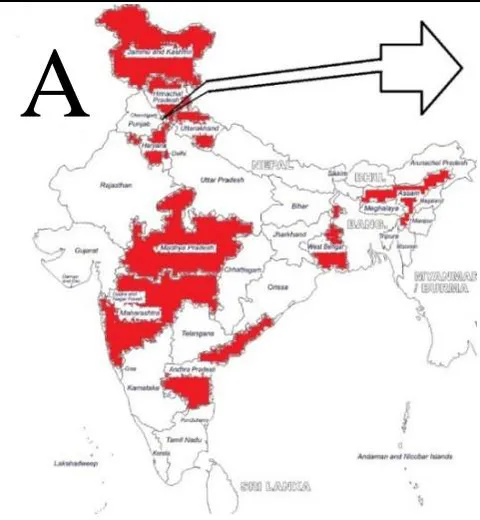
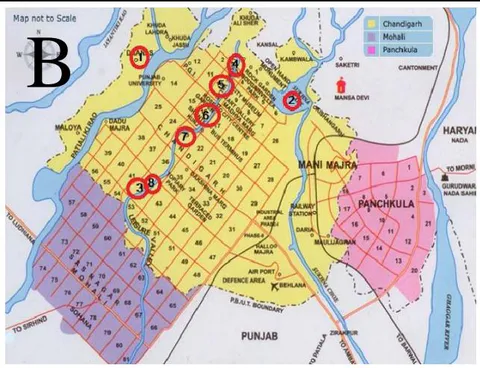
| Figure 1: A- Distribution of Physaacuta in different States in India | B- Sites showing the occurrence of Physaacutain U.T. Chandigarh |
i. Site Location
Following sites had been scanned for the resence of the given family and its representative.
- Dhanas Lake (Dhanas Village, near sector-38, Chandigarh)
2. Sukhna Lake (Sector-1, Chandigarh)
- New Lake (Sector-42, Near DR. Ambedkar Institute of Hotel Management, Chandigarh)
4. N-Choe (Bouganvillia Garden, Sector-4, Chandigarh)
5. N-Choe (Leisure Valley Garden, Sector-10, Chandigarh)
6. N-Choe (Rose Garden, Sector-16, Chandigarh)
7. N-Choe (Children Traffic Park, Sector-23, Chandigarh)
- N-Choe (Behind Govt. Girls College, Sector-42, Chandigarh)
b) Sample Collection
The soil was sampled from littoral and benthic zone of water bodies manually as well as with the help of modified Dandy sampler (Fig. 2 C). Some mollusks from the littoral zone were picked manually. The collected samples were packed in polythene bags and were taken to the laboratory for segregation and identification of molluscan fauna. In the laboratory, soil samples were sieved using Standard Test Sieves (as per IS:460) of different mesh sizes (BSS 75mm, 44mm, 30mm, 10mm, and 4mm) (Fig. 2 A, B). Shells were collected manually from sieves (75mm, 44mm and 30mm) for cleaning and identification. The family identification was done by following the keys given by Ramakrishna and Dey 2007 and the species identification was done according to the anatomical features mentioned by Taylor, 2003. Morphometry of the shells was carried out for different (7) parameters like:
1. Height of shell (H)
2. Width of shell (B)
3. Height of spire (Hs)
4. Height of body whorl (HBw)
5. Height of aperture (Ha)
6. Width of Aperture (Ba)
7. Height of Penultimate (Hp)
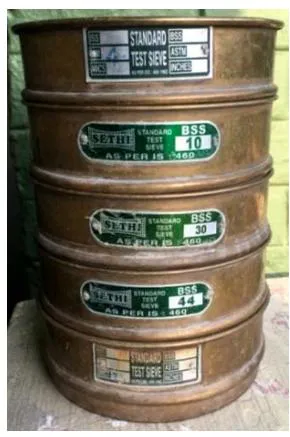
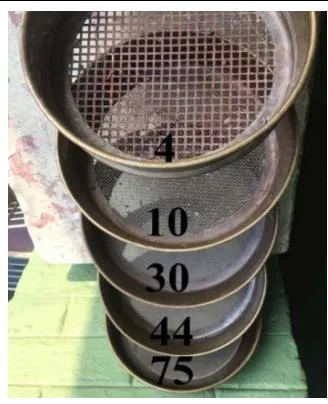
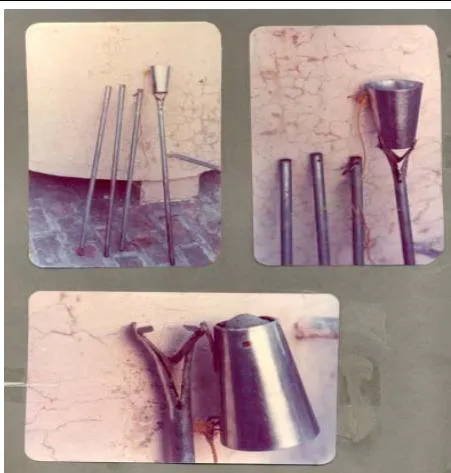
Figure 2: A, B- Standard Test Sieves Set
Shells were examined for their external morphology. The soft parts of the gastropod were taken out by keeping the live animals in warm water. On the protrusion of head and body parts, a few drops of the saturated solution of menthol were poured into the water to narcotize the animal. After that the soft parts of the animal were taken out by inserting a fine needle in its foot. The animal was dissected to take out its penial complex to identify and confirm the species of Physa.
a) Taxonomic Status
Table
III. OBSERVATIONS AND RESULTS
Kingdom: Animalia
Subkingdom: Bilateria
Infrakingdom: Protostomia
Superphylum: Lophozoa
Phylum: Mollusc
P. acuta, the only representative of family Physidae in the current study, had already been reported from 10 states of India (Fig. 1A). The present investigation, attempts to claim the first ever study to show the inhabitation of the family and its representative, P. acuta from different freshwater ecosystems in U.T., Chandigarh.
b) External morphology of the shell (P. acuta)
- Class: Gastropoda
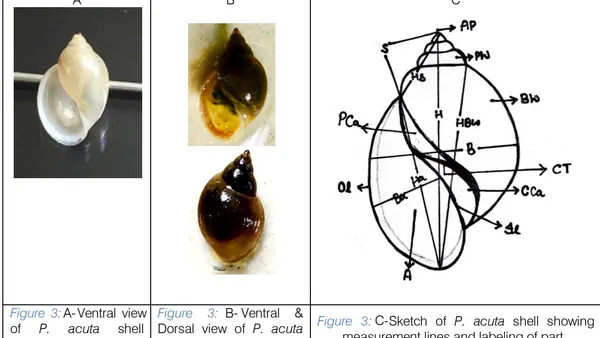
Shell is sinistral, elongate-ovate or egg-shaped, smooth, moderately lustrous and translucent. There are close-set lines of growth, spire short with slightly impressed sutures and whorls are regularly and rapidly decreasing in size with a pointed top. The aperture is large about of the total length of the shell; operculum is absent. The outer lip is thin and slightly deflected out, the umbilicus closed, parietal callus and columellar fold well marked. (Fig. 3)
Sub class: Pulmonata
Super family: Physoidea
Order: Bassomatophora
Family: Physidae
Genus: Physa
Species:acuta
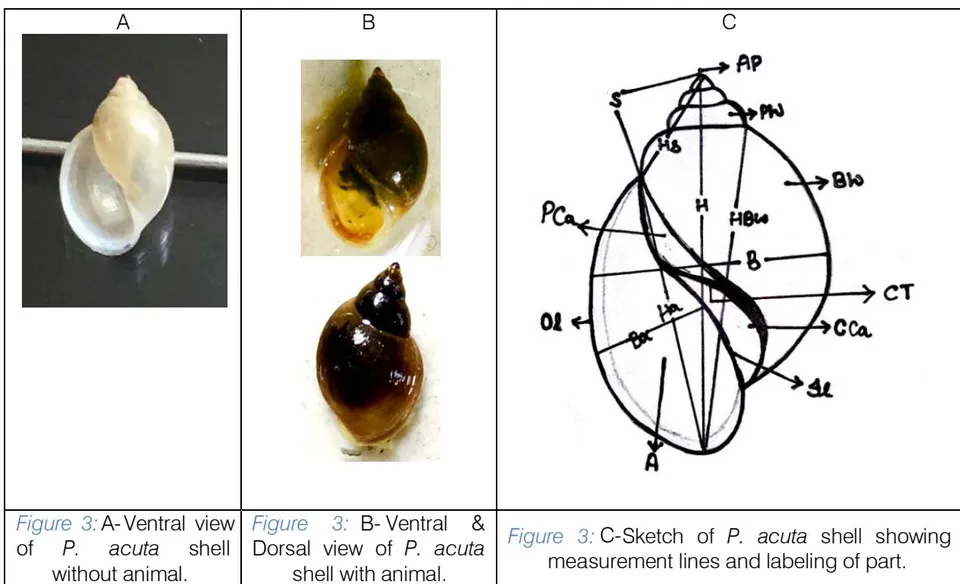
The Number of whorls in different shells of P. acuta, collected during the current study ranged from 4 to 5. The height (H) and width (B) of the shells varied from 4mm to 12mm and 2mm to 6 mm respectively. The shells were almost twice the long than broad. The ratio of H & B was 2:1. The height of aperture (Ha) ranged from 2.5mm to 7.5mm while its width (Ba) ranged from
1-3mm and these two parameters were exhibiting the ratio of 2.5:1, means the aperture is two and half times longer than broad. The height of the body whorl (HBw) was found ranging from 3.07-9.2 mm and that of the spire (Hs) from 1.02-3mm. It shows that in P. acuta the body whorl is three times longer than its spire. The ratio of length of shells and its aperture was 1.6:1.
| S.No. | Height | Value | Width | Measurements | Ratio of parameters | Ratio values |
| 1 | Ht. of shell (H) | 8 mm | Wd. of shell (B) | 4 mm | H:B | 2:1 |
| 2 | Ht. of spire (Hs) | 2 mm | ---- | |||
| 3 | Ht. of aperture (Ha) | 5 mm | Wd. of aperture (Ba) | 2 mm | Ha:Ba | 2.5: 1 |
| 4 | Ht. of body whorl (HBw) | 6mm | ---- | --- | ---- | ---- |
| 5 | Ht. of penultimate whorl (Hp) | 1 mm | ---- | --- | ---- | ---- |
| 6 | ---- | ---- | ---- | --- | HBw: Hs | 3:1 |
| 7 | ---- | ---- | ---- | --- | H: Ha | 1.6:1 |
c) Anatomical Features
| A | B | C (Reference dig.) |
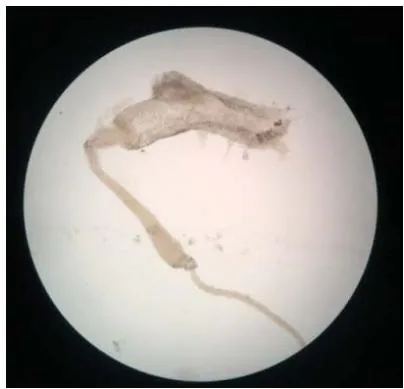 |  |  |
| Figure 4. A: Microscopic of thepenial complex of P. acuta (4X) | Fig. |
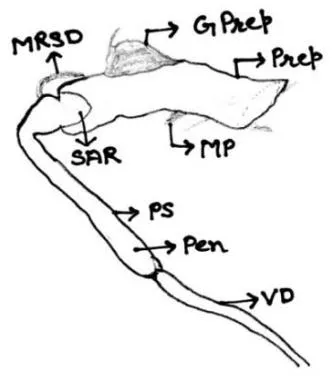
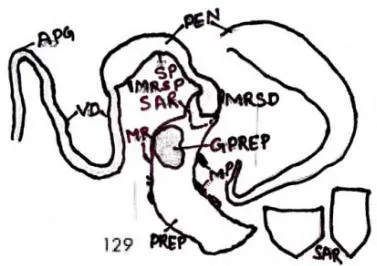
4. B: Diagram of thepenial complex of P. acuta,Fig.
4. C: Diagram of the pinealcomplex of P. acuta given byTaylor D.W. (2003)Abbreviations of labels: G Prep- preputial gland, MP- protractor muscle of preputium, MRSD-distal retractor muscle of pineal sheath, Pen- penis, Prep- preputium, SAR- sarcobelum; PS-penialsheath, VD- vas deferens
The mantle is colorful with yellow-orange spots that extended out as long pointed extensions over columellar callus, were seen during locomotory movement of P. acuta. Tentacles were long, slenderical, slightly pigmented with eyes situated at their base as clear black spots. Foot, anteriorly bilobed when extended, margin had a few pigmented spots. The Pineal sheath is unipartite and not pigmented. The preputium is cylindrical, pigmented and having a large, elongate sarcobelum and preputial gland (Fig. 4).
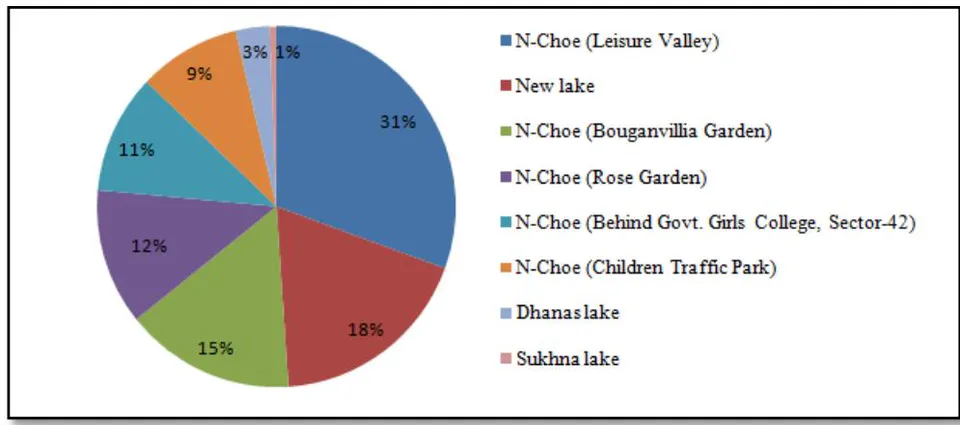
The family has shown its dominance in still waters and slow-moving waters, rich in organic matter while the other sites under study had also shown the presence of P. acuta in them, though in very less percentage (Fig. 5).
IV. DISCUSSION
In the present study, the family Physidae with P. acuta had been found for the first time from the freshwater bodies of U.T. Chandigarh. The abundance of snail was found more in slow running freshwater streams with shallow and warm waters (N-Choe) as also reported by Saha et al., (2016). But in the current study the member of the family had also been collected though in less number, from perennial deep-water bodies too (Sukhna and Dhanas Lake), temporarily fresh deep-water body like New Lake. The shell characteristics were found to be similar to those given by Subbha Rao 1994, Poonam et al., 2013, Rita Bhandari 2016 and many other researchers also. The final confirmation of the species, P. acuta, was done by comparing anatomical features especially pineal complex given by Appleton 1989 and Taylor 2003 by comparing the presence and position of the preputial gland.
ACKNOWLEDGEMENT
The authors are thankful to The Principal D.A.V. College for providing laboratory facilities and CSIR, New Delhi for providing financial assistance through the CSIR-SRF Fellowship.