


To: Author
Article Fingerprint
ReserarchID
9G8UT

Choose where you want to hide AI Takeaway. Your site-wide choice will be remembered in this browser.
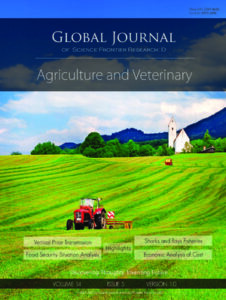
This study was carried out with the objective to assess food security situation of Mukta Kamaiyas (former agriculture bonded-labourers) and to know their strategies to cope the food deficit. Two village development committees (VDCs), namely Kohalpur in Banke and Kalika in Bardiya districts respectively were purposively selected for the study. A random household survey with semi-structured questionnaire was carried out in 120 households thus each VDC having 60 households. The questionnaire consisted of basic household sojourn and food production situation. Simultaneously, focus group discussion (FGD) and Key Informant Interview were also made during the field survey. Only 4% households were food self-sufficient whilst the larger proportions (> 75% households) had less than three months food self-sufficiency. About 36% households were unable to meet the minimum daily calorie requirement (2,144 kcal/person/day) recommended for the terai region of Nepal. The food selfinsufficiency was more severe in Kohalpur due to smaller land size, and due to rather larger family size and more dependent family members than Kalika VDC, but, food security situation was slightly better than Kalika due to the trade based entitlements (wage labour and business opportunities etc). Wage labour is the most prominent source of income for securing household’s food demand in Mukta Kamaiyas. It was further supported by the other strategies like cash loan, food borrowing, cutting of meal, less preferred food eating and so on. So, improving labour productivity through skill development and employment generation and enterprising would help to promote income generation activities and to improve food security situation as well in long term. While in short term off-season vegetable farming, poultry and small livestock husbandry would be the better options for sustaining livelihood in the rural setting of Mukta Kamaiya villages.
S.R. Barsila, B.R. Chaudhary, mkeshav. 2014. "Food Security Situation Analysis of Freed-Bonded Labourers (Mukta Kamaiya) in Nepal". Global Journal of Science Frontier Research - D: Agriculture & Veterinary GJSFR-D Volume 14 (GJSFR Volume 14 Issue D5).
Crossref Journal DOI 10.17406/GJSFR
Print ISSN 0975-5896
e-ISSN 2249-4626
v1.2
Explore published articles in an immersive Augmented Reality environment. Our platform converts research papers into interactive 3D books, allowing readers to view and interact with content using AR and VR compatible devices.
Your published article is automatically converted into a realistic 3D book. Flip through pages and read research papers in a more engaging and interactive format.
Total Score: 147
Country: Nepal
Subject: Global Journal of Science Frontier Research
Authors: B.R. Chaudhary, K.L. Maharjan, S.R. Barsila (PhD/Dr. count: 0)
View Count (all-time): 312
Total Views (Real + Logic): 1614
Total Downloads (simulated): 70
Publish Date: 2014 06, Thu
Monthly Totals (Real + Logic):
We use cookies and similar technologies to improve site performance, understand traffic, and enhance your publishing experience. Cookie Policy
Choose which optional cookies Global Journals can use. Your preference applies across this platform and can be updated any time.
These cookies are required for core website functionality and security.

Lorem ipsum dolor sit amet, consectetur adipiscing elit. Ut elit tellus, luctus nec ullamcorper mattis, pulvinar dapibus leo.


