The article is devoted to the analysis of current trends affecting the global cruise tourism market. The paper examines the key growth factors of the industry, including technological innovations, changes in consumer preferences and the impact of environmental regulations. Special attention is paid to the analysis of the challenges faced by cruise line operators, such as global economic fluctuations, pandemic threats and increased competition. Potential opportunities for sustainable growth are also being discussed, including the development of new routes, infrastructure improvements and the introduction of environmentally friendly technologies. In conclusion, conclusions are drawn about the prospects of the cruise industry in a rapidly changing global landscape and recommendations are offered for stakeholders to adapt to future changes and optimize development strategies.
## I. INTRODUCTION
The world is constantly changing, exerting varying impacts on every industry, and the cruise industry is no exception. There are numerous global trends influencing growth, business operations, and end-customer preferences in this sector.
The cruise industry, as a significant segment of the global tourism market, demonstrates steady growth and substantial contributions to the world economy. The relevance of this topic is driven by the dynamic development of the sector, the influence of global economic and environmental factors, and changing consumer preferences. The research problem lies in the necessity for cruise operators to adapt to new challenges such as increased environmental regulations, pandemic threats, and fluctuations in financial markets. This study analyzes key trends and challenges facing the industry and explores opportunities for sustainable development. The article proposes strategies that can help cruise companies optimize their operational processes and adapt to the changing global context [1].
### a) General Characteristics of Cruising
A cruise, in the context of travel and tourism, typically refers to a vacation or journey on a large passenger ship or cruise liner. Cruise liners are luxurious vessels designed for extended journeys that include visits to various destinations. Passengers on cruise liners travel to different locations, often stopping at multiple ports. Cruises can be aimed at leisure, relaxation, and exploration of new places, offering a variety of amenities and entertainment options on board.
The cruise tourism sector is gaining increasing popularity worldwide. Cruise liners offer a wide range of entertainment possibilities, amenities, and attractions aimed at enhancing passenger experiences. The primary focus is on ensuring passengers enjoy their time on board while visiting fascinating places along the way. According to the Cruise Lines International Association (CLIA), Generation Z is one of the largest consumer groups in the cruise industry. This generation seeks unique and memorable experiences during their travels, contributing to the growth of the cruise industry. Older adults are also increasingly choosing cruises, appreciating the comfort and convenience offered by cruise liners. Cruises provide an easy way to explore multiple destinations without the hassle of constant packing and unpacking, making them particularly appealing.
Before the COVID-19 pandemic restrictions, it was projected that the number of passengers would rise to 32 million in 2020. In 2019, the most popular cruise destination was the Caribbean (42% of all cruises), followed by the Mediterranean (16%), Asia and China (14%), and Northern Europe (6%) (see Fig. 1).
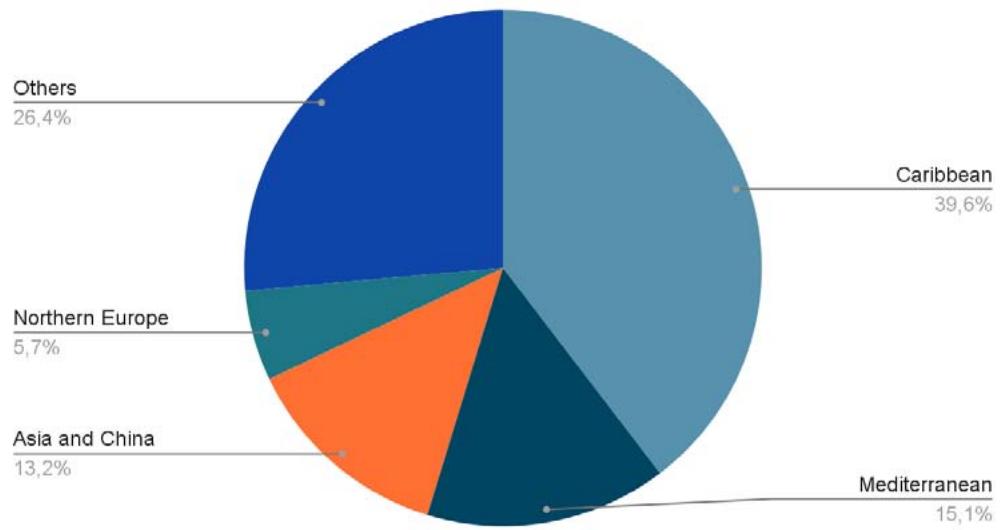 Popular cruise destinations Fig. 1: The Most Popular Destinations for Cruises
Passenger Traffic by Region was Distributed as Follows: 15.41 million passengers from North America, 7.71 million from Europe, and 3.75 million from Asia. The average age of passengers was 46.7 years, but it is expected that this figure will decrease in the coming decades as Generation Z becomes one of the largest demographic groups in the cruise industry (see Fig. 2).
 Passenger traffic by region, in mln. passengers Fig. 2: Passenger Traffic by Region, in Millions of Passengers
The COVID-19 pandemic highlighted the importance of competitive positioning through corporate and operational strategies. The introduction of new protocols to minimize infection risks on board and ensure a high level of service will be a key success factor. Cruise companies must implement measures on two levels: corporate, focused on complying with government and health regulations, and operational, aimed at optimizing onboard operations and ensuring the safety of passengers and crew.
### b) Analysis of the Cruise Market
The global cruise market is divided into ocean and river cruises. Regional segments include North America, Europe, the Asia-Pacific region, Latin America, the Middle East, and Africa. A comprehensive report by EMR provides a detailed market assessment based on Porter's Five Forces model and SWOT analysis [2]. The report analyzes the key players in the global cruise market, their competitive environment, and recent developments such as mergers, acquisitions, investments, and expansion plans. Figure 3 shows the change in the number of passengers from 2019 to 2023, considering the impact of the COVID-19 pandemic. Data in Figure 1 indicates that in 2019 there were about 29.7 million passengers, followed by a sharp decline in 2020 and a gradual recovery from 2021 to 2023.
The ocean cruise segment holds a significant share of the global cruise market. This is due to the wide range of routes that provide travelers with access to numerous destinations. Ocean cruises allow for the use of larger ships, which leads to an increase in the number of available activities and amenities, as well as cost reduction due to the larger number of passengers on a single vessel. Additional advantages of ocean cruises include the ability to visit well-known coastal cities and protection from adverse weather conditions [2].
 Fig. 3: Passenger Market in the Cruise Industry
The 2024 global cruise market report presents important market information through an analysis of segments and sub-segments [3]. This section provides an in-depth analysis of the key factors influencing the growth of the cruise industry. The cruise market is segmented by type, size, and other criteria, helping to understand the key segments of the industry and their prospects. Information is also provided on the most profitable segments and their projected growth rates.
In 2022, ocean cruises held a leading position with a revenue share of more than $78\%$ of the total cruise market. The large number of companies providing ocean cruise services for intercontinental travel contributes to the development of this segment. The river cruise segment is expected to grow at an average rate of $12.03\%$ during the forecast period, driven by the increasing popularity of river travel (see Fig. 4).
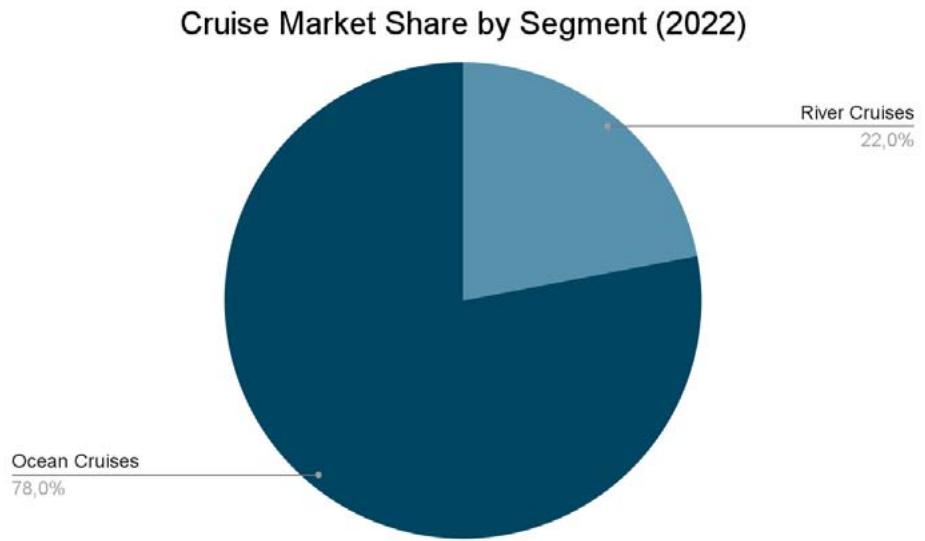 Fig. 4: The Volume of Ocean Cruises in the Total Share of the Industry
North America holds a leading position in the cruise market due to the presence of key players and technological advancements. Increased disposable income, consumer spending, and a well-developed tourism industry also contribute to the region's dominance. The report analyzes the cruise market in five major regions: North America (USA, Canada, Mexico), Europe (UK, France, Germany, and others), Asia-Pacific (China, Japan, and others), South America (Brazil, Argentina, and others), and the Middle East and Africa (Saudi Arabia, Turkey, and others) (see Fig. 5) [3].
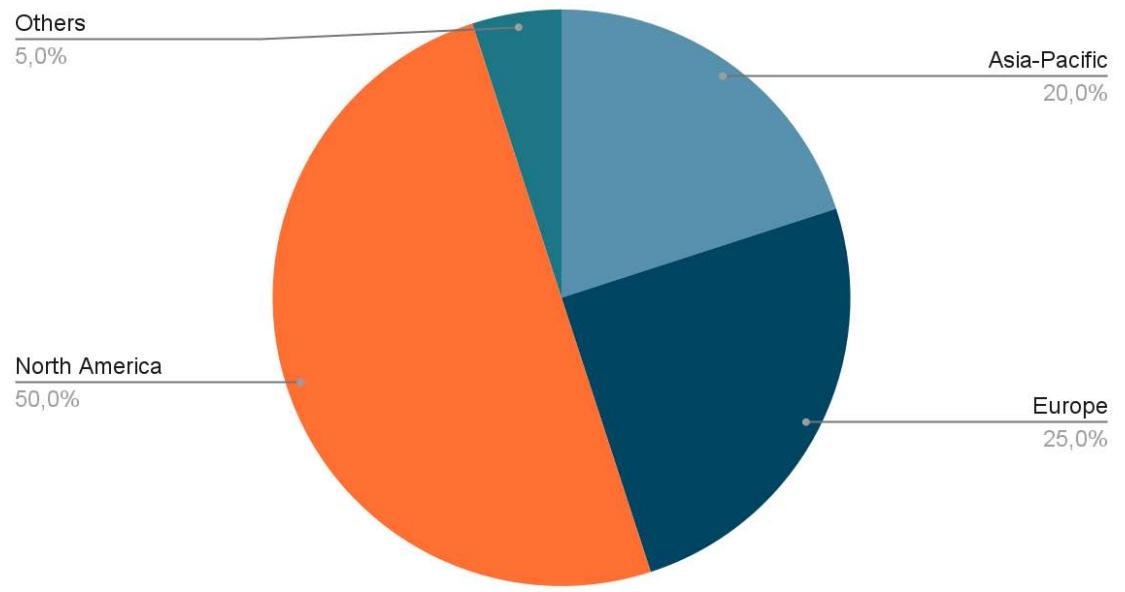 Regional Market Share (2023) Fig. 5: Segmentation of the Cruise Industry
### c) Development Trends
Despite the pandemic, cruise companies continue to expand their fleets and resume suspended projects. In the future, passenger experiences and onboard operations will undergo significant changes. Cruise liners will be marketed as safe spaces free from COVID-19, with a focus on proven safety protocols. In the long term, changes in route planning, ship sizes, and offered services are possible. Highly qualified crew members and efficient onboard operations will remain key elements of successful adaptation to new conditions. Cruise companies aiming to strengthen their positions after the pandemic must systematically analyze changes in passenger behavior caused by the crisis and adapt to new health and safety requirements. Key issues include choosing the right cruise company,
passengers' expectations regarding safety and health standards, and preparing for possible future disease outbreaks. Companies must consider these aspects to retain loyal customers and attract a new generation of travelers [4].
Experts from the Cruise Lines International Association (CLIA) have identified 13 major development trends in the cruise industry for the coming years. Among them is the growing popularity of river cruises. Regarding consumer preferences, the demand for luxury will continue to rise, and services such as concierge and personal butler services, gourmet cruises, and yacht tours will become increasingly popular. Since cruises attract affluent passengers, more brands will want to open their stores on board. Cruise companies are also launching more services and entertainment options aimed at family audiences.
According to CLIA, in 2023, the number of overnight stays in port cities will increase, providing passengers with more opportunities to immerse themselves in local environments. The number and variety of excursions will also grow. The "multicultural" trend will continue to develop, featuring national cuisines, restaurants, shops, shows, and other onboard entertainment and services [4].
Cruise liners will also start using new advanced features and protocols, such as contactless boarding, staggered arrivals, contactless payments, health questionnaires, and occupational safety protocols. These measures aim to enhance passenger safety and convenience. Additionally, most cruise lines have abandoned the buffet system in favor of safer and more hygienic service methods.
Another interesting aspect is the potential for advance bookings. Advance bookings for cruises will become even more accessible in 2024, allowing travelers to reserve tickets in advance, including for 2025 routes or around-the-world cruises. Cruise companies encourage early bookings by offering discounts and special promotions during certain periods. This allows passengers to choose the best cabins and plan their trips well in advance.
In 2024, there is also expected to be a growth in the number of millennials choosing cruise vacations. About $75\%$ of millennials express a desire to cruise again, preferring this type of vacation due to the opportunities to explore the world and maintain a healthy lifestyle on board. Cruise companies offer fitness classes, personal trainers, gyms, and gourmet healthy meals, considering passengers' special dietary requirements. Additionally, in 2024, the cruise industry will face some price increases, but these prices will be comparable to land package deals. For example, Carnival has raised cruise prices due to increased ship capacity. Nevertheless, the market remains competitive, offering a wide range of prices- from $500 to over $25,000.
This trend will also mark the development of cruises on smaller ships, as such cruises offer a unique experience available on river routes and luxurious brand ships like Silversea, Seabourn, and Regent [5].
In recent years, cruise companies have been adding new routes. Destinations such as polar regions are becoming increasingly popular among travelers seeking unusual and thrilling experiences. River cruises and small ships offer a completely different experience compared to large liners. These routes allow travelers to enjoy a cozy atmosphere and explore rivers and cities inaccessible to larger ships [6].
## II. CONCLUSION
In conclusion, the analysis of the cruise industry development has identified several key trends, challenges, and opportunities that shape the future of this sector. Technological innovations and changes in consumer preferences continue to drive market growth despite significant challenges such as economic fluctuations and pandemic threats. Environmental regulations are becoming an increasingly important factor influencing companies' operational strategies. Potential opportunities for sustainable growth include expanding route geography, improving infrastructure, and adopting environmentally friendly technologies. To successfully overcome challenges and maximize opportunities, cruise operators must continue to adapt to changing market conditions and implement innovative solutions. Thus, the future of the cruise industry promises to be dynamic, requiring flexibility and readiness for change from all market participants.
Generating HTML Viewer...
Funding
No external funding was declared for this work.
Conflict of Interest
The authors declare no conflict of interest.
Ethical Approval
No ethics committee approval was required for this article type.
Data Availability
Not applicable for this article.
Nancy Mucher. 2026. \u201cForecasts for the Development of the Cruise Industry: Trends, Challenges, and Opportunities\u201d. Global Journal of Management and Business Research - F: Real estate, Event, Tourism Management & Transporting GJMBR-F Volume 24 (GJMBR Volume 24 Issue F3): .
The article is devoted to the analysis of current trends affecting the global cruise tourism market. The paper examines the key growth factors of the industry, including technological innovations, changes in consumer preferences and the impact of environmental regulations. Special attention is paid to the analysis of the challenges faced by cruise line operators, such as global economic fluctuations, pandemic threats and increased competition. Potential opportunities for sustainable growth are also being discussed, including the development of new routes, infrastructure improvements and the introduction of environmentally friendly technologies. In conclusion, conclusions are drawn about the prospects of the cruise industry in a rapidly changing global landscape and recommendations are offered for stakeholders to adapt to future changes and optimize development strategies.
Our website is actively being updated, and changes may occur frequently. Please clear your browser cache if needed. For feedback or error reporting, please email [email protected]
×
This Page is Under Development
We are currently updating this article page for a better experience.
Thank you for connecting with us. We will respond to you shortly.