The Blue Economy is an emerging concept that encourages better stewardship of the ocean and associated resources. Turning it into a global issue poses several challenges to ocean conservation effectiveness especially at Remote Marine Protected Areas (ReMPA). How to implement and manage the ReMPAs is still new to modern society, and the participation criteria in the decision-making processes is undermost in a legitimate perspective. The proposed framework highlights the importance of emerging studies to untangle Oceans territorialization and use(r)s, in order to establish composition parameters for shared and realistic management. The initial application is exemplified by taking two Brazilian ReMPA. The preliminary results seek to support the priorities of Scientific innovative methodological appropriation in Ocean decisionmaking, as envisioning new baselines of legitimacy for ReMPAS governance. Thus, the two asymmetries found represent baseline challenges towards a framework to be considered as a starting point for ReMPA participative governance guidelines. These asymmetries pose emerging questions about how will these territories be governed since the stakeholder’s composition reflections to be considered in future scholars. The three highlights argue about the questions posted above and point preliminary conclusions.
## I. INTRODUCTION
Turning the Blue Economy into a global reality poses several challenges to ocean conservation effectiveness especially at remote sites and areas beyond national jurisdictions [1]. This emerging concept encourages better stewardship of the ocean and associated resources, in order to conciliate the different kinds of uses and functions of the seas in its eighty percent of global trade volumes in the economic development[2,3]. Anthropocene production flows through the ocean and impacts it at global scale [4,5,6]. The current tangible global uses of the remote ocean are predominantly about flows of goods and fisheries, but many other functions and services are precedents and gradually recognized by the ecosystem-based perspective [7]. The evidence to corroborate the importance of marine habitats to Earth equilibria as well as to human wealth is enough known [8,9,10].
Blue Economy amplifies the legitimation for the existence and enforcement of Remote Marine Protected
Areas (ReMPA) [11,12,13]. How to implement and manage the ReMPAs is still new to modern society, which are now trying to find viable ways to organize this vast ocean territory [14,15,16]. Participation criteria in the decision-making processes of ReMPAs is undermost [17]. In a universal perspective of understanding and participatory action for a 'blue' management as a common process, comes up the question: who are the legitimate stakeholders in the vocational commitments of ReMPA? This essay proposes a conceptual framework to deal with the shared assumption of the Ocean as a space of related and overlapping uses to a primarily of universal interest, which brings its Common matters and relies on broad participation. The proposed framework highlights the importance of emerging studies to untangle Oceans territorialization and use(r)s, in order to establish composition parameters for shared and realistic management. The initial application is exemplified by taking the largest, remotest, and newest Brazilian ReMPA - São Pedro and São Paulo archipelagos and Trindade e Martin Vazarchipelagos.
The preliminary results seek to support the priorities of Scientific innovative methodological appropriation in Ocean decision-making, as envisioning new baselines of legitimacy for ReMPAS governance. Thus, the two asymmetries represent the challenges of the largest ReMPA management: (i) epistemological approach of Ocean territorial status and; (ii) governance attributions within MPA users and functions. These asymmetries pose emerging questions: alongside setting 'protected' territories in the Ocean, how will these territories be governed? A government of whom and for who? The three highlights argue about the questions posted above and point towards a framework to be considered as a starting point for ReMPA participative governance guidelines.
## II. REMOTE MARINE PROTECTED AREAS (REMPAs) AS A TERRITORIAL FUNCTION ON A BLUE ECONOMY PARADIGM
The marine biome covers $71\%$ of the Earth's surface, an area that has three hundred times more habitat for biodiversity than the terrestrial sites [18,19]. Nonetheless, this isn't humankind's natural habitat, and that natural reason underpins the political apparent delay over the marine space. Linking to policy, the vast majority of marine environment is still beyond national jurisdiction [20] and, whilst representing the largest environment on the planet, is the least understood and governed [21,22]. While some mechanisms exist for monitoring and environmental protection in the open ocean, including capacity building and technology transfer, and environmental impact assessments and area-based management tools as ReMPA, governance gaps are evident [23,24]. There is no overarching framework for the allocation of ReMPAs, standardized guidance for marine resource management and best practices to support both biodiversity research and governance in the Blue Economy emergence [25,26,27].
The Blue Economy approach recognizes and places renewed emphasis on the critical need for the international community to effectively address resources management in and beneath international waters or National ReMPA and not only treat the ocean as a new market. This pathway requires long-term collaboration across nation-states and the public-private sectors, on a scale and dimensions that have not been previously achieved, considering the vast marine areas and the unknown resources to be explored. It underpins the thinking behind the Commonwealth, taking the Ocean as part of the economic lives, envisioning equity and public participation in marine decision-making. Such widespread collaboration needs further development and refinement of international law and ocean governance mechanisms, but also theoretical inputs of contemporary comprehension of the complexity of the Ocean space and territory [28,29].
International concerns about access to marine resources and the need to establish MPAs have been addressed since the 1960s, from the discussions resulting in the UN Convention on the Law of the Sea, which set the baseline for promoting the Blue Economy concept worldwide. Later, the Aichii Targets define MPAs as the primary strategy for Ocean's governance, launching the goal of protecting the $10\%$ of ocean surface, under sovereign coastal Nation's treaties or its Exclusive Economic Zone [30]. Making progress on international agendas, the current Ocean Decade throws light on marine conservation alongside the SDGs goals 14 and 16 [31]. All these universally built conceptions compose the current framework for the Blue Economy as a common vocation [32]. Problems of overexploitation of the global commons can be better managed when supported by international multilateral agreements setting global rules, regulations, and standards under which states change their behavior accordingly [33,34,35]. When these policy mechanisms are addressed to a ReMPA, advanced diagnoses are brought up as the multiple uses of the same areas that have reached a conservancy vocation: governance guidelines get that territory.
A territory is an act, a relationship, a movement, and a rhythm over which an amalgamation of controls is exercised [36], just as the diversity of scales of operation over it, whether in its understanding (science) or in its intervention (governance). The territory is a permanent state of cause and condition of the multiple dimensions of analysis on the social dynamics that configure it: political, economic and cultural, autonomous, and interdependent [37]. The tenuous distinction between space and territory has a brief relevance in the theoretical composition that refers to the various phenomena that materialize in the Seascape and marine ecosystems. The territory for the modern society is the practical categorization most considered for governance and political actions, and in turn, for conservation.
The intentionality of several parties is considered for understanding the territory dynamics and uses, whether as premises (genesis of movements, not yet materialized) or in the already consolidated perspectives, playing relations of possession, of appropriation, or belonging. Territories are not inert, but lived [38], practiced and managed [39], as complex entities. There is no territorial starting point that predates the relationship, from which the basic notion of conflicts, impacts, overlaps, and complementarities [40]. Such relationships form society as a whole, in its different and complementary instances; lived, perceived, and understood differently; so that the territory comes to be understood as a social and political fact [41]. Territory uses can frame the object of social analysis that all human being lives in [42]. A territory being used compounds the space and its historical results of different forces (cultural, economic, and political) and scales, that will conform to a permanent state of transformation and power asymmetries.
If we consider the approach of ocean spaces as territories [43,44], it is possible to see a strengthening in the relations between science and governance actions in these spaces. Under the United Nations Convention on the Law of the Sea, the discussions leading to an international legally binding mechanism started to address the advent of potential conflicts between the sovereign rights connected to the continental shelf beyond 200 nm and the protective measures applied in ReMPas[45]. The concept of adaptive co-management arises from the integration between the proposed management of common-use resources with the adaptive management approach [46,47,48,49,50,51]. It pays explicit attention to learning (experiential and experimental) and collaboration (vertical and horizontal) between actors as the real users [52].
The marine ecosystem specificities lead to requirements conditions for management activities, expressed whether in protected or non-protected areas. The MPA history of creation and management is more recent compared to the history of terrestrial protected areas, and this gets more emphasized referring to Remote areas [53]. As one argumentation of this essay, the users of ReMPAs are less legible in the landscape than the coast MPAs, and so less intelligible, however, are more fluid, transitional, or ephemeral. Thus, the distinct biophysical characteristics between terrestrial and aquatic ecosystems resonate with community characteristics and should be considered by governance strategies, as the example of watershed terrestrial experiences have already reached. In places where there is no consolidated communitarian instance, so the contemporary Common comprehension must be brought to light since Global Agenda to the State National Marine Policy and territorial complexity conceptualization.
## III. POWER ASYMMETRIES OF THE OCEAN ON THE CONSOLIDATION CHALLENGE OF BRAZILIAN REMPAS
The ReMPAs compose a strategy of oceans' appropriation as territory, with the prior function to order uses through legal rules set by the government, the provenance of ecosystems services, and envisioning local-spread out to regional and global sustainability as an unmistakable tool [54,55,56] harnessing the importance of the protagonist of coastal communities, especially in developing countries [57]. It is essential to consider that this debate is wide enough to be deepened when it explores the governance relations between international and national agendas, specifically about environmental policies and geopolitics. The debate goes through national state paradoxes, integrating universal agendas of global commitments with state-nation sovereignty agenda, and are embedded by societal needs. Several legal debates are already in place as a result of regional alliances such as the European Union [58,59], but the extensive international law arena is beyond the scope of this analysis. The lack of understanding of the Ocean as territory and its governance beyond national jurisdiction has permeated the plans and discussions around the preparation for the UN Ocean Decade. The two proposals for power asymmetries are presented below with the Brazilian reality as a background in order to raise the emergence of such discussions.
To elucidate the two asymmetries, it is referred to the largest and remotest Brazilian MPAs: São Pedro and São Paulo archipelagos and Trindade e Martin Vaz archipelagos (Figure 1). It is not intended - nor excluded - to present them as absolute standards, but as examples of theoretical and empirical disconnections in preliminary approaches that can illustrate the background of MPAs consolidation challenges: legal status dilemma and emergent management.
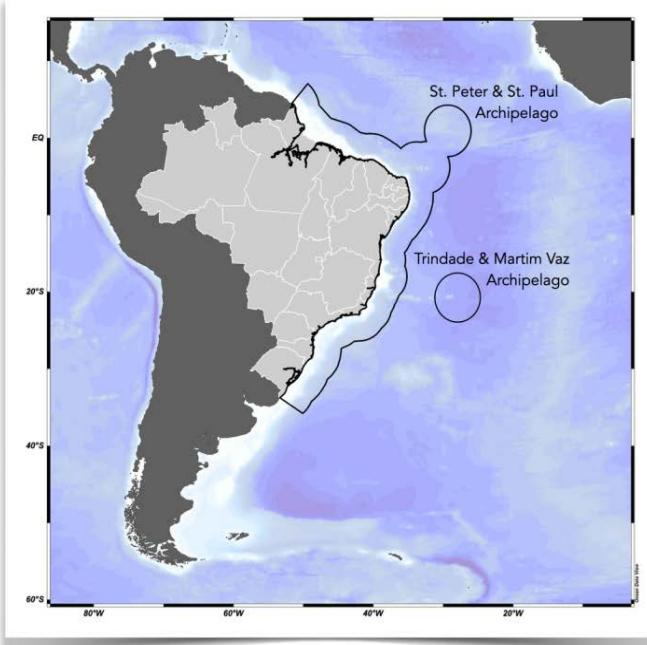 Figure 1: Remote Marine Protected Areas in Brazilian EEZ.
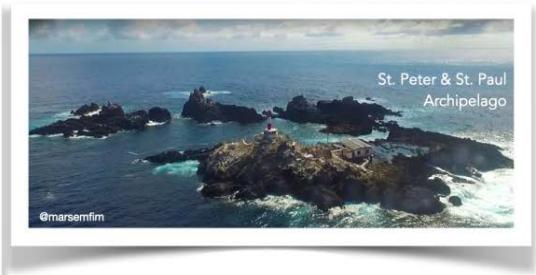
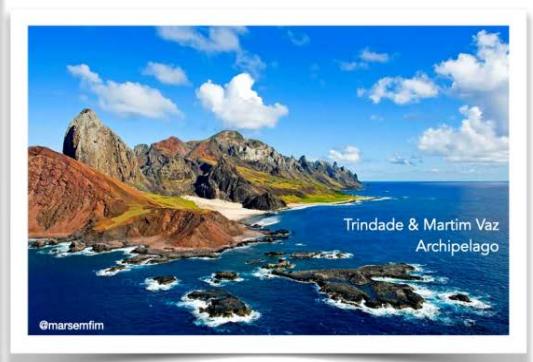 an EEZ. ImageCredit: Mar Sem Fim nation rights over natural resources exploitation and management. The simple existence of these seamounts turned to MPA, expanded the Exclusive Economic Zone (EEZ) of Brazilian oceanic territory. Nonetheless, MPA
Both the ReMPA covers a radius of 200 nautical miles corresponding to 40 million hectares around the archipelagos. Their objectives run around conserving marine ecosystems and biodiversity, as well as placing normative mentions the care for sustainable use, considering ordering fishing, navigation, tourism and other compatible economic activities "with environmental conservation that present themselves as strategic to the region" [60,61]. The ReMPA will be managed in a shared manner between the Navy and Conservancy institute. Although the conflict or overlapping between the two official institutions results from differences of attributions, the uncertainty of uses around those large and remote areas is previous, if considered the territory in its essence of relations, ephemerality, and amalgamation.
The first asymmetry derives from that epistemological seek for coherence in the conceptual abstraction of space. What constitutes a territory perspective of the open Ocean? Considering Brazil and its large and remote Southwest Atlantic MPAs, closely associated with naturalist formation and with no fixed communities, it is plausible to consider the reflection about a kind of 'space out there' which reflects the paradox of 'stabilization of the inherent instabilities' [62]. It is proper of modernity's territorialization by uses, but not by living places [63]. The absence of living places is counterbalanced, on the one hand, with the construction of universal values, codes, and legitimacy, when Aichi's goal requires numerical proportion for Ocean conservation. As this proportion increases, the vast and remoteness of the Ocean become contemplated by official decrees, boosting the original conservationist vocation which, in turn, is automatically aggregated with the critical chronic stage of widespread and increasing oceanic degradation whether by marine debris, chemical combustion, overfishing and big ships traffic outputs. "As a result, such conservation and sustainable use measures are currently implemented within a fragmented framework by regional and sectoral organizations with different management competencies" [64]. Thus, the first asymmetry lies in the global geographic debate between the comprehension of sectoral versus territorial categorization of uses and respective corporative versus universal interests. It is an asymmetry of theoretical narratives and their respective epistemological basis, but in the end, they should not be considered corporate epistemological incompatibilities, but interdisciplinary openings. That is the reason why Science is under the center of the hypothetical axiomatic resolution, even before state-nationalism or universal agendas.
The second asymmetry is about governance. Environmental protected areas in Brazil are commonly slow to mature in terms of their practical instruments: Management Plan, Zoning tools, and Committee's agenda. MPAs tend to get less public attention and/or investment than the ones on land and when there is public awareness, the quality of the debate is commonly questionable. In Brazil, the management plan corresponds to the master document of any protected area. It is totally built on territorial grounds by considering the geographical analysis of the ecosystems and their biodiversity with minimum account for temporal variability and ocean change either by natural causes or human uses. The methodology for applying these instruments focuses on terrestrial biomes. However, experience has shown that huge method gaps when applied in MPAs, requiring adaptations mainly in the way of establishing the zoning and decision-making [65]. In view of the growing demand for ReMPAs, defined in various environmental policy instruments, such as Agenda 21 [66], the Convention of Biodiversity [67], and Brazilian Plan for Protected Areas [68], it is necessary to adapt the methodology of current MPA management instruments to the marine governance approach. So, the second asymmetry may be seen from a standpoint of epistemological-perspective or interdisciplinarity issue: a ReMPA requires more pragmatic executive agendas, due to lower demands for managing uses that are mostly indirect but a higher demand for monitoring of external impacts and 'invisible' uses. Although the asymmetries in MPA consolidation are much bigger when considering the remote maritime territories, the lack of better understanding of the singularities of uses at these places is supposed to be an opportunity for new models of the management plan, where figures the central debate of the present discussion [69].
But what are the real uses - and users - of such areas when fostering consolidation is its goal(s)? Here it is brought the perspective that both direct and indirect territorial uses must be scientifically based, technically diagnosed, and permanently monitored. Reaffirming that this refers to the situational reality of spaces that have been established as marine areas for the environment. Once this is officially defined, it moves towards a management agenda, where the technical term assumes a maritime spatiality for regionalization public policy [70]. Intended to operationalize this discussion, we present an outline of the ReMPA stakeholder composition criteria (Figure 2, next subitem).
The MPA is created, the polygonal oceanic area turns to a new role in territory perspective: an inventory of vocations defines zonation, within ReMPAs normative and polygonal creation. It is supposed to become a non-passive place then, also seen as the sea overcoming from the condition of orphan space, supported then by a specific legal framework [71]. Nonetheless, the obstacles in establishing a Marine Protected Area are priority related to the genesis of this newly created territoriality [72]. The MPA obstacles to governability appear mainly in the initial stage, when the idea is conceived, communicated, and discussed among the actors involved in a territory derived from quantitative and qualitative aspects of government interactions in the zero-step. If MPAs are not technical management instruments, but above all, sociopolitical processes, there is a gap to be filled in the elucidation of who are the real users of that place.
## IV. THE "USER-DECISION MAKER" STAKEHOLDER COMPOSITION
The finding of the two asymmetries elucidates stakeholder composition matter for MPA management. This challenge can be taken as a science gap around interdisciplinary openings and new methodologies for emergent studies. From this perspective, ReMPAs are able to foster marine territorial management: either because of their spatial singularities or due to the state of the art within the incipient Blue Economy and the Commons principles evolved.
In order to illustrate an introductory path for logical comprehension over the process that connects the MPA existence in a remote ocean area with the parties involved as users and conservation functions, a detailed six-step framework for user-oriented analysis is presented in Figure 2.
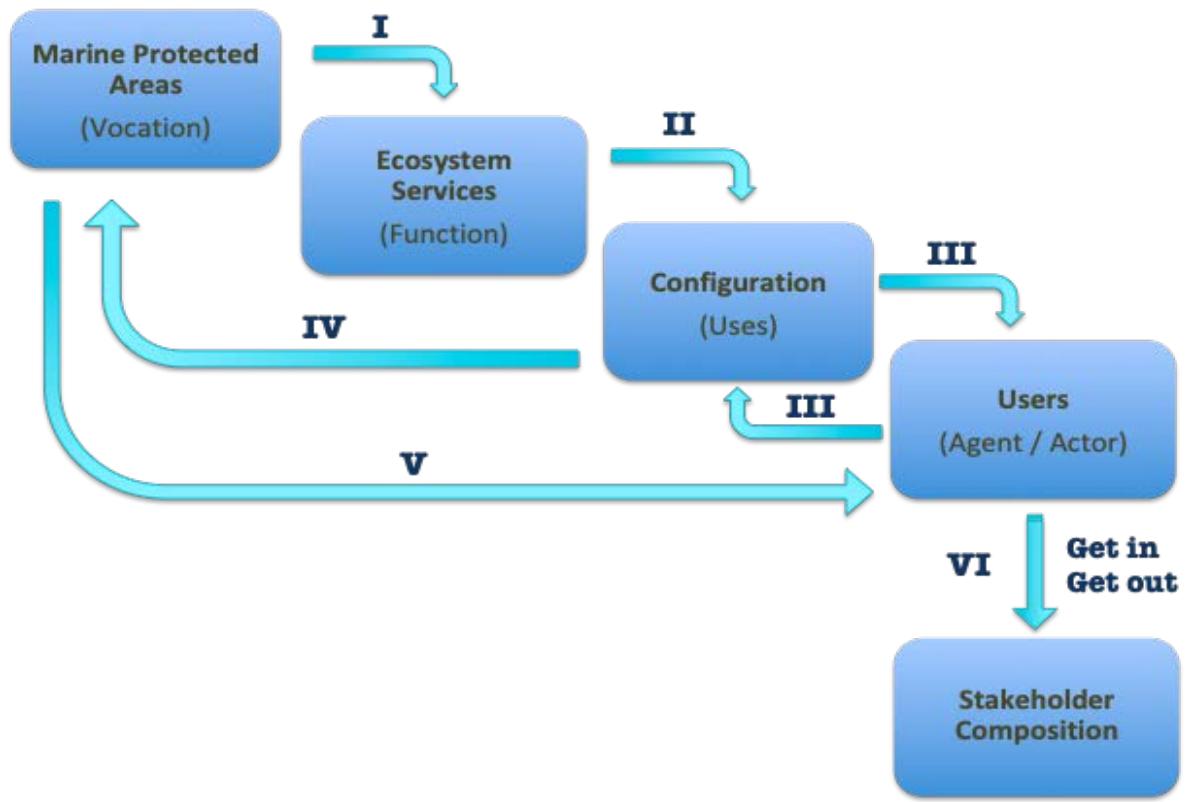 MPA STAKEHOLDER COMPOSITION FRAMEWORK - BLUE ECONOMY PARADIGM Figure 2: Framework of compatibility of ReMPA user decision-maker
Considering the challenges addressed, we visualize a sequential logic chain (Fig. 2) as a methodological baseline for ReMPAs as the Blue Economy advances. This schema connects inventory uses, vocation, and users of the ReMPA with its ecosystem services (Blue Economy demand), classify compatibility with ReMPA assets and compose the users that align with MPA function and blue economy goals for the decision-making process. Once the ReMPA vocation is defined and prioritized, ensuring its implementation, the users and their links with the environment should be mapped. In this process, it is relevant to define criteria for stakeholders' composition into management bodies, which in ReMPA opens a broad range of different sides of modern society. In the end, this logic chain should have answered the following queries: (I) What are the relations between MPA vocation and its Ecosystems Services? (II) Are the Ecosystem Services mapped and user-defined? (IV) Is the ReMPA vocation in accordance with the proposed uses? Uses and the users by real agent promoters - which is possible to be understood in the territorial configuration by indicative data of impacts? Dialogically comparing territorial configuration and the existence of the MPA will provide a further typology. Then, select the users that fit their purposes on MPA functions and that align towards the blue economy paradigm, including the institutional composition by attribution.
## V. CONCLUSION
Achieving Blue Economy's goals requires the active participation and inclusion of the societal groups into the management of marine territories. The overlying view of the ocean by global trade organizations requires an initial scheme of user-oriented analysis for this open territory. Nevertheless, there are answers to be resolved in order to better qualify the decision-making process of planning and, mainly, managing those emblematic territories. Although it is expected from national States to exercise their sovereign rights to conservation actions, the contemporary global economy operation works sectorial and strategically on divergent paths to the universal precepts of Ocean's protection. That is the reason for a more appropriated comprehension of territory in the toughness design of a user protagonist in the decision-making process, but attended by a conceptual model that allows discerning the types of uses in relation to the functions originating from the existence of the protected area. The questions to be answered have to be better elaborated, but testing this preliminary purpose model can be one way to better fit the participative management of ReMPAs in the present days.
Generating HTML Viewer...
References
67 Cites in Article
Andrés Cisneros-Montemayor,Marcia Moreno-Báez,Gabriel Reygondeau,William Cheung,Katherine Crosman,Pedro González-Espinosa,Vicky Lam,Muhammed Oyinlola,Gerald Singh,Wilf Swartz,Chong-Wei Zheng,Yoshitaka Ota (2021). Enabling conditions for an equitable and sustainable blue economy.
Rosa Martínez-Vázquez,Juan Milán-García,Jaime De Pablo Valenciano (2021). Challenges of the Blue Economy: evidence and research trends.
(2018). Maritime transport.
Vanessa Pirotta,Alana Grech,Ian Jonsen,William Laurance,Robert Harcourt (2019). Consequences of global shipping traffic for marine giants.
M Viana,V Rizza,A Tobías,E Carr,J Corbett,M Sofiev,A Karanasiou,G Buonanno,N Fann (2020). Estimated health impacts from maritime transport in the Mediterranean region and benefits from the use of cleaner fuels.
Christine Erbe,Joshua Smith,Jessica Redfern,David Peel (2020). Editorial: Impacts of Shipping on Marine Fauna.
K Gjerde,G Wright (2019). Towards Ecosystembased Management of the Global Ocean: Strengthening Regional Cooperation through a New Agreement for the Conservation and Sustainable Use of Marine Biodiversity in Areas Beyond National Jurisdiction.
S Khatiwala,T Tanhua,S Mikaloff Fletcher,M Gerber,S Doney,H Graven,N Gruber,G Mckinley,A Murata,A Ríos,C Sabine (2013). Global ocean storage of anthropogenic carbon.
David Griggs,Mark Stafford-Smith,Owen Gaffney,Johan Rockström,Marcus Öhman,Priya Shyamsundar,Will Steffen,Gisbert Glaser,Norichika Kanie,Ian Noble (2013). Sustainable development goals for people and planet.
P Landrigan,J Stegeman,L Fleming (2020). Human Health and Ocean Pollution.
Rebecca Gruby,Luke Fairbanks,Leslie Acton,Evan Artis,Lisa Campbell,Noella Gray,Lillian Mitchell,Sarah Zigler,Katie Wilson (2017). Conceptualizing Social Outcomes of Large Marine Protected Areas.
B O'leary,N Ban,M Fernandez,A Friedlander,P García-Borboroglu,Y Golbuu,P Guidetti,J Harris,J Hawkins,T Langlois,D Mccauley,E Pikitch,R Richmond,C Roberts (2018). Addressing Criticisms of Large-Scale Marine Protected Areas.
A Belgrano,C Novaglio,H Svedäng,S Villasante,C Melián,T Blenckner,K Tönnesson (2021). Mapping and Evaluating Marine Protected Areas and Ecosystem Services: A Transdisciplinary Delphi Forecasting Process Framework.
Alex Rogers,Amy Baco,Elva Escobar-Briones,Duncan Currie,Kristina Gjerde,Judith Gobin,Marcel Jaspars,Lisa Levin,Katrin Linse,Muriel Rabone,Eva Ramirez-Llodra,Javier Sellanes,Timothy Shank,Kerry Sink,Paul Snelgrove,Michelle Taylor,Daniel Wagner,Harriet Harden-Davies (2021). Marine Genetic Resources in Areas Beyond National Jurisdiction: Promoting Marine Scientific Research and Enabling Equitable Benefit Sharing.
P Jones,E De,Santo (2016). Viewpoint -Is the race for remote, very large marine protected areas (VLMPAs) taking us down the wrong track?.
Vinicius Giglio,Hudson Pinheiro,Mariana Bender,Roberta Bonaldo,Letícia Costa-Lotufo,Carlos Ferreira,Sergio Floeter,Andrea Freire,João Gasparini,Jean-Christophe Joyeux,João Krajewski,Alberto Lindner,Guilherme Longo,Tito Lotufo,Rafael Loyola,Osmar Luiz,Raphael Macieira,Rafael Magris,Thayná Mello,Juan Quimbayo,Luiz Rocha,Bárbara Segal,João Teixeira,Daniele Vila-Nova,Ciro Vilar,Carla Zilberberg,Ronaldo Francini-Filho (2018). Large and remote marine protected areas in the South Atlantic Ocean are flawed and raise concerns: Comments on Soares and Lucas (2018).
Caroline Fassina,Daniel Telles,Ana Mazzuco (2020). Governance challenges for the newest Brazilian marine protected areas: Preliminary considerations for stakeholder participation.
J Morrissey,J Sumich Introduction to the Biology of Marine Life.
A Soares-Gomes,A Figueiredo Unknown Title.
M Rabone,H Harden-Davies,T Horton,J Collins,K Gjerde,M Baker,P Snelgrove (2019). Deep-Ocean Stewardship Initiative, Accessing and Sharing Benefits from Marine Genetic Resources from Areas Beyond National Jurisdiction: Building on Best Practices in the.
E Ramirez-Llodra,A Brandt,R Danovaro,B De Mol,E Escobar,C German,L Levin,P Martinez Arbizu,L Menot,P Buhl-Mortensen,B Narayanaswamy,C Smith,D Tittensor,P Tyler,A Vanreusel,M Vecchione (2010). Deep, diverse and definitely different: unique attributes of the world's largest ecosystem.
Elisabeth Hege,Laura Brimont,Félicien Pagnon (2018). Sustainable development goals and indicators: can they be tools to make national budgets more sustainable?.
C Fassina,D Telles,A Mazzuco (2020). Governance challenges for the newest Brazilian marine protected areas: Preliminary considerations for stakeholder participation.
Rachel Tiller,Elizabeth De Santo,Elizabeth Mendenhall,Elizabeth Nyman (2019). The once and future treaty: Towards a new regime for biodiversity in areas beyond national jurisdiction.
E De,Santo (2018). Implementation challenges of area-based management tools (ABMTs) for biodiversity beyond national jurisdiction (BBNJ).
J Pearlman,P Buttigieg,P Simpson,C Mas,E Heslop,J Hermes (2017). Accessing existing and emerging best practices for ocean observation a new approach for end-to-end management of best practices.
Frank Muller-Karger,Patricia Miloslavich,Nicholas Bax,Samantha Simmons,Mark Costello,Isabel Sousa Pinto,Gabrielle Canonico,Woody Turner,Michael Gill,Enrique Montes,Benjamin Best,Jay Pearlman,Patrick Halpin,Daniel Dunn,Abigail Benson,Corinne Martin,Lauren Weatherdon,Ward Appeltans,Pieter Provoost,Eduardo Klein,Christopher Kelble,Robert Miller,Francisco Chavez,Katrin Iken,Sanae Chiba,David Obura,Laetitia Navarro,Henrique Pereira,Valerie Allain,Sonia Batten,Lisandro Benedetti-Checchi,J Duffy,Raphael Kudela,Lisa-Maria Rebelo,Yunne Shin,Gary Geller (2018). Advancing Marine Biological Observations and Data Requirements of the Complementary Essential Ocean Variables (EOVs) and Essential Biodiversity Variables (EBVs) Frameworks.
D Massey (2005). For Space.
R Haesbaert (2004). O mito da desterritorializacaõ: do fim dos territoŕios à multiterritorialidade.
Surabhi Ranganathan (2016). Global Commons.
R Keohane (1982). The demand for international regimes.
Surabhi Ranganathan (2016). Global Commons.
B Vollan,E Ostrom (2010). Cooperation and the commons.
R Haesbaert (2004). O mito da desterritorializacaõ: do fim dos territoŕios à multiterritorialidade.
R Correâ (2011). Organizacaõ espacial: dimensoẽs, processos, forma e significado.
A Fremont (1980). A regiaõ, espaco vivido.
E Sonnic (2010). Une activité touristique et de loisir amphibie entre espaces de pratiques et territoires de gestion: la plaisance.
D Massey,M London (2005). Unknown Title.
M Saquet (2007). Abordagens e concepcoẽs de territoŕio.
M Santos (1985). Espaco e Metodo. 5a Edicaõ.
G Francalanci,T Scovazzi (1994). Lines in the Sea.
J Vivero,J Mateos,E Sacchetti (2010). Canada y el gobierno de los oceanos: el espacio maritimo en estado descentralizado.
I Branco (2018). Solving the Potential Conflict: High Seas Marine Protected Areas and the Exercise of Sovereign Rights Over the Continental Shelf Beyond 200 Nautical Miles.
C Holling (1978). Adaptive environmental assessment and management.
C Walters (1986). Adaptative management of renewable resources.
Evelyn Pinkerton (2003). Toward Specificity in Complexity.
P Olsson,C Folke,F Berkes (2004). Adaptive Co-Management for Building Resilience in Social-Ecological Systems.
J Day,M Hockings,G Jones (2003). Measuring effectiveness in Marine Protected Areas -principles and practice.
Dire Tladi (2015). The Proposed Implementing Agreement: Options for Coherence and Consistency in the Establishment of Protected Areas beyond National Jurisdiction.
B O'leary,C Roberts (2018). Ecological connectivity across ocean depths: implications for protected area design.
Y Wang (2019). ON DILEMMAS AND SOLUTIONS FOR THE ISSUES OF HIGH SEAS MARINE PROTECTED AREAS DURING THE BBNJ NEGOTIATION.
Ekaterina Popova,David Vousden,Warwick Sauer,Essam Mohammed,Valerie Allain,Nicola Downey-Breedt,Ruth Fletcher,Kristina Gjerde,Patrick Halpin,Stephen Kelly,David Obura,Gretta Pecl,Michael Roberts,Dionysios Raitsos,Alex Rogers,Melita Samoilys,Ussif Sumaila,Sean Tracey,Andrew Yool (2019). Ecological connectivity between the areas beyond national jurisdiction and coastal waters: Safeguarding interests of coastal communities in developing countries.
Tanja Börzel (2001). Non-compliance in the European Union: pathology or statistical artefact?.
M Cowles,J Caporaso,T Risse (2001). Transforming Europe.
Marquesini Sanches F,Cavalcanti Medeiros V,Dos Cjc (2018). Refractory hypoxemia due to pulmonary microfistulas: Therapeutic response to terlipressin.
Brasil (2018). Federal Decree.
D Massey (2005). For Space.
A Fremont (1976). La régionespacevécu.
I Wysocki,A Vadrot (2020). The Voice of Science on Marine Biodiversity Negotiations: A Systematic Literature Review.
C Fassina,D Telles,A Mazzuco (2020). Governance challenges for the newest Brazilian marine protected areas: Preliminary considerations for stakeholder participation.
Caroline Fassina,Daniel Telles,Ana Mazzuco (2020). Governance challenges for the newest Brazilian marine protected areas: Preliminary considerations for stakeholder participation.
D Telles (2020). Contribuições para a regionalização do mar brasileiro: parâmetros conceituais e abordagens.
D Telles (2020). Contribuições para a regionalização do mar brasileiro: parâmetros conceituais e abordagens.
R Chuenpagdee,J Pascual-Fernández,E Szelianszky,J Alegret,J Fraga,S Jentoft (2003). Marine protected areas: Re-thinking their inception.
No ethics committee approval was required for this article type.
Data Availability
Not applicable for this article.
How to Cite This Article
Daniel Hauer Queiroz Telles. 2026. \u201cFostering Governance at Remote Marine Protected Areas in Times of Blue Economy: Baseline for Stakeholders Composition\u201d. Global Journal of Science Frontier Research - E: Marine Science GJSFR-E Volume 23 (GJSFR Volume 23 Issue E1): .
Explore published articles in an immersive Augmented Reality environment. Our platform converts research papers into interactive 3D books, allowing readers to view and interact with content using AR and VR compatible devices.
Your published article is automatically converted into a realistic 3D book. Flip through pages and read research papers in a more engaging and interactive format.
The Blue Economy is an emerging concept that encourages better stewardship of the ocean and associated resources. Turning it into a global issue poses several challenges to ocean conservation effectiveness especially at Remote Marine Protected Areas (ReMPA). How to implement and manage the ReMPAs is still new to modern society, and the participation criteria in the decision-making processes is undermost in a legitimate perspective. The proposed framework highlights the importance of emerging studies to untangle Oceans territorialization and use(r)s, in order to establish composition parameters for shared and realistic management. The initial application is exemplified by taking two Brazilian ReMPA. The preliminary results seek to support the priorities of Scientific innovative methodological appropriation in Ocean decisionmaking, as envisioning new baselines of legitimacy for ReMPAS governance. Thus, the two asymmetries found represent baseline challenges towards a framework to be considered as a starting point for ReMPA participative governance guidelines. These asymmetries pose emerging questions about how will these territories be governed since the stakeholder’s composition reflections to be considered in future scholars. The three highlights argue about the questions posted above and point preliminary conclusions.
Our website is actively being updated, and changes may occur frequently. Please clear your browser cache if needed. For feedback or error reporting, please email [email protected]
Thank you for connecting with us. We will respond to you shortly.