## I. THE STATE OF ART
More than half a century ago, the work began aimed at creating a reactor for thermonuclear fusion, promising the prospect of energy production unprecedented in scale and simplicity.
Since then, work carried out in several countries has not resulted in the creation of a continuously operating reactor, but has expanded knowledge of the synthesis process and its effect on structural materials. And the main result of obtaining this knowledge today is the awareness of the fact that no materials and no cooling schemes can withstand the super-solar temperatures necessary for fusion for a long enough time.
Over the past years, various compositions and physical states of reagents, various systems for the formation and retention of plasma formed during fusion, and various schemes for realizing the energy generated during fusion have been proposed.
Today it is possible to summarize the data on the layout of the synthesis reactor as a system.
The reactor as a system consists of the following subsystems:
- The control subsystem;
- The device for dosing reagents and supplying them to the volume where synthesis is carried out (all studied reactor schemes provide for discrete supply of reagents and carrying out the synthesis reaction);
- The synthesis initiation subsystem;
- The subsystem for the formation and retention of plasma generated as a result of synthesis;
- The volume in which synthesis is realized;
- The cooling subsystem of this volume;
- The plasma transportation subsystem;
- The subsystem for utilization of energy generated during synthesis. This can be either a transformer that converts the pulsating current obtained when plasma passes through a magnetic field into alternating current, or a steam generator that converts the heat of the plasma into steam energy, which is subsequently used to produce electricity in a steam turbine generator.
For example, the reagents are fed into the synthesis chamber in the form of tablets, and the fusion energy is converted into electricity when the plasma passes through a magnetic field.
## II. THE MAIN PROBLEM AND THE WAY TO SOLVE IT
It is important to note that all reactor layouts proposed today have one thing in common: each reactor has a single synthesis chamber, in which synthesis is carried out with discrete supply of portions of reagents.
It turned out that no materials and no cooling systems can ensure sufficiently long (more than tens of seconds) operation of the synthesis chamber.
To solve this problem, it is proposed to replace the single synthesis chamber (for any set of other reactor subsystems) with several smaller chambers operating in turn. After a single implementation of synthesis in each specific chamber, it is cooled to temperatures that allow the next synthesis to be carried out, and further synthesis is carried out in turn in the remaining chambers, which will ensure the continuity of energy generation by the reactor.
The number of chambers will be determined in such a way that each chamber has time to cool down to acceptable temperature levels while the synthesis is implemented one by one in the remaining chambers.
## III. PROPOSED REACTOR LAYOUT
The layout is shown schematically in Fig. 1.
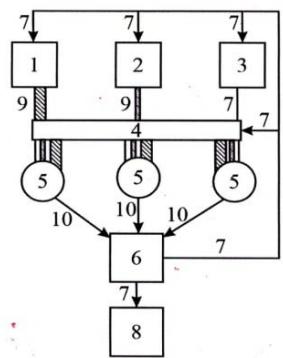 Fig. 1: Scheme of Composition of the Proposed Reactor
Here: 1 - container with reagents, 2 - energy source for starting the reaction, 3 - cooling system, 4 - control unit, 5 - chambers that make up the reactor, 6 - final energy device (steam generator or electrical transformer), 7 - channel energy supply, 8 - energy consumers, 9 - channels for supplying reagents and cooling, 10 - channels for removing energy from the chambers that make up the reactor.
Each reactor chamber can be spherical; it is assumed that the mixture of reagents is pulsed through the input channel under maximum pressure, into a spherical sub-chamber of the minimum required diameter, "ignited" at the moment of maximum pressure, while the plasma will generate an instantaneous pulse of electric current or will enter the steam generator.
In practical implementation, the number of sub-chambers that make up the reactor and the volume of each sub-chamber will be determined by the required generator power and the achievable cooling intensity.
Let me remind you that even today the supply of reagents in reactors of all types occurs discretely, i.e. the same can be applied when feeding reagents into several chambers in turn.
It is clear that each fusion chamber must have its own plasma retention system and a system for its evacuation after the reaction. When using the conversion of plasma energy into a pulsating electric current in each of the chambers that make up the reactor, the final energy output will be an electrical transformer; when using energy conversion through a steam generator, the energy output will be a steam turbine generator.
It should be noted that thermonuclear fusion has no lowest limit on the volume of the reactant. This opens up great prospects for the creation of minimal sized reactors for use, including at ships firstly. The miniaturization of reactors is also facilitated by the fact that, as far as the author knows, thermonuclear fusion is not accompanied by the generation of intense penetrating radiation of any kind, i.e. the dimensions and weight of the biological protection of reactors can be minimal.
In addition, an emergency interruption of a fusion reactor cannot cause its destruction, so a fusion reactor is, in principle, safer than other types of nuclear reactors.
It must be emphasized once again that several alternately operating fusion chambers can be used with any type of reagents, any schemes for initiation and retention of plasma, and any form of utilization of generated energy.
## IV. AN ORGANIZATION NOTE
It can be assumed that at the moment all the teams involved in the problem under consideration have long-term plans for allocations for relevant research. Let me emphasize: only for research, since none of the fusion reactor options being studied today provides the creation of an energy source that is operational for a long time.
Therefore, one can expect great difficulties in implementing the proposed option.
In this regard, it seems advisable to order the implementation not from a university or research center, but from a large production association, providing it with the opportunity to attract specialists from the relevant branches of science.
At the same time, it is obvious that the main difficulties will be in terms of engineering implementation, first of all, in creating the most efficient cooling system and accurately determining the required cooling time for each given power of the designed reactor.
Generating HTML Viewer...
Funding
No external funding was declared for this work.
Conflict of Interest
The authors declare no conflict of interest.
Ethical Approval
No ethics committee approval was required for this article type.
Data Availability
Not applicable for this article.
How to Cite This Article
Victor A. Dubrovsky. 2026. \u201cFusion Reactor, Having Several Chambers For Synthesis, Operating By Turns\u201d. Global Journal of Research in Engineering - F: Electrical & Electronic GJRE-F Volume 23 (GJRE Volume 23 Issue F4): .
Explore published articles in an immersive Augmented Reality environment. Our platform converts research papers into interactive 3D books, allowing readers to view and interact with content using AR and VR compatible devices.
Your published article is automatically converted into a realistic 3D book. Flip through pages and read research papers in a more engaging and interactive format.
Our website is actively being updated, and changes may occur frequently. Please clear your browser cache if needed. For feedback or error reporting, please email [email protected]
Thank you for connecting with us. We will respond to you shortly.