Introduction-Intertestamental Jewish writings often vaguely yet sometimes specifically address the nature and duration of final punishment of the ‘wicked.’ What constituted the ‘wicked’ in the extrabiblical Jewish literature-similarly to the Hebrew Bible-was consistently defined as those who broke God’s moral law intentionally and persistently. For these wrath-appointed persons, their final judgement lay in the commonly recognized and dreaded place (or state) of punishment called Gehenna. This paper will argue that upon examination of intertestamental Jewish writings there is considerable support for the view of Gehenna judgment as a terminable period of suffering leading to complete destruction (annihilation) of the wicked. The approach of this paper will be to analyze intertestamental Jewish writings and the teachings of Jesus in relation to the Gehenna. While the views on death and judgement in the afterlife were as varied in the intertestamental period as they are today, the intertestamental authors’ use language which depicts the final judgment as something which may at times be interpreted as analogous with the traditional-more accurately “Hellenistic”-Christian view of hell, or at times prevents resurrection of the wicked entirely (Maccabees), or majoritively as a punishment which ends in a fiery conflagration spawning an eternal consequence of destruction in its most non-figurative and complete sense.
## I. INTRODUCTION
I ntertestical Jewish writings often vaguely yet sometimes specifically address the nature and duration of final punishment of the 'wicked.' What constituted the 'wicked' in the extrabiblical Jewish literature—similarly to the Hebrew Bible—was consistently defined as those who broke God's moral law intentionally and persistently. For these wrath-appointed persons, their final judgement lay in the commonly recognized and dreaded place (or state) of punishment called Gehenna. This paper will argue that upon examination of intertestamental Jewish writings there is considerable support for the view of Gehenna judgment as a terminable period of suffering leading to complete destruction (annihilation) of the wicked. The approach of this paper will be to analyze intertestamental Jewish writings and the teachings of Jesus in relation to the Gehenna. While the views on death and judgement in the afterlife were as varied in the intertestamental period as they are today, the intertestamental authors' use language which depicts the final judgment as something which may at times be interpreted as analogous with the traditional—more accurately "Hellenistic"—Christian view of hell, or at times prevents resurrection of the wicked entirely (Maccabees), or majoritively as a punishment which ends in a fiery conflagration spawning an eternal consequence of destruction in its most non-figurative and complete sense.
An important intersection of this research is the examination of Jesus' first century teachings regarding Gehenna which appear to support destruction—rather than a later Hellenistic variation—as the end for unrepentant transgressors. Therefore, this paper will also argue that Jesus strongly countered—whether intentionally or unintentionally—softer views of Gehenna which were taught by rabbinical contemporaries of his time. Through understanding the contextual background of the ways in which Jesus employs the term Gehenna in the gospels, the reader can discern his intended meaning more accurately. Through grasping the thrust of the language employed by the intertestamental authors, the intentions of Jesus become discernible apart from later interpolations of Hellenistic concepts upon the great rabbi's warnings.
Additionally, brief attention will be given to surrounding Mesopotamian views of death and the afterlife, to understand the larger context in which Hebraic ideas originated. This is not to argue transmission of thought, but to establish a regional context. This paper aims to make it more plausible to answer the rhetorical question of Job 31:3, "Is not destruction for the wicked?" with a confident "yes." At the onset, it is essential to provide the disclaimer that this paper does not intend to formulate nor argue for a specific theological position, rather strictly to examine and assess the theme of annihilation found within intertestamental literature from a historical framework. However, it is impractical to address every intertestamental author's view about final judgment, since brevity does not allow for that. Nonetheless, a sizeable and harmonizing chorus will be seen to croon the same sober melody of destruction as the ultimate end of the unrepentant. As the War Scroll found in cave four of the Qumran Dead Sea Scrolls states, the end of the wicked is "eternal annihilation."
## II. THE BIBLE ON "HELL": PROGRESSIVE REVELATION?
A common argument for what is referred to as the traditionalist—more accurately Hellenistic—interpretation of hell as endless conscious suffering or an endless conscious separation from God is that scriptural revelation regarding hell is progressive. This argument is made by many scholars in an attempt to explain the arguably striking absence of such a doctrine throughout the books which constitute the Old Testament. John Blanchard makes this traditionalist argument saying, "Biblical revelation is progressive...often giving a fuller picture of a subject in the New Testament than in the Old; and this is certainly true with regard to Hell."2 However, this assertion is problematic in multiple ways when applied to the doctrine of hell. Firstly, this argument must presuppose that the developed revelation of the nature of hell only


springs into its evolution for the very first time within the gospels of the New Testament and has nil progression throughout the thirty-nine books of the Old Testament. This alone is a difficult assertion to make, since even the most major doctrines of the Bible arguably begin to develop throughout the Old Testament and are then further clarified in the New Testament. Examples of this are the doctrine of the resurrection of the dead (debatably) which the Hebrew prophets begin to reveal in Daniel, Isaiah, and Psalms. Likewise, the coming of the Messiah and his divine nature (debatably) are not revelations kept in utter silence throughout the Old Testament, rather Isaiah shocks readers when he exclaims that the Messiah will be called, "Almighty God" and "Everlasting father." However, when it comes to final punishment of the wicked, the Old Testament is quite uniform throughout that the wicked will be "destroyed forever," and "They will vanish; like smoke they will fade away."3 There does not appear to be any concrete typology of what became the majority Christian view of hell as endless conscious suffering anywhere throughout the Old Testament.
The prophet Malachi summarizes the entire Old Testament's consistent language on the end of the wicked saying, "For behold, the day is coming, burning like a furnace, when all the arrogant and every evildoer will be stubble; the day is coming when I will set them ablaze," says the LORD of Hosts. "Not a root or branch will be left to them."4 Such statements within the Hebrew Bible are intended to create a clear depiction of their meaning for the hearer; therefore, as the Occident relies heavily upon dissection of every word and verb tense, Eastern cultures rely upon imagery which intends to make an unmistakable point in the mind of the reader. Bailey applies this logic, saying, "Jesus or the rabbis, in order to concretize their belief in a post death punishment of the wicked, compared the horror and destruction of that state with the nearby city garbage dump."5 Bailey astutely discusses the two views of Gehenna—the literal eschatological judgment site as well as the supposed entrance point of the underworld (akin to Hades)—but more on this later.
Returning to the issue of the supposed progressive revelation of hell, upon approaching the New Testament with clear Old Testament images of destruction in mind, it is odd to assume that Jesus in the gospels—chiefly in Matthew 13:50, yet elsewhere also—has an entirely new conception of judgment in mind; one which is the exact opposite of the obvious language used, and foreign to all of the Old Testament prophets. When Jesus he warns of the "furnace of fire" are we to assume a Hellenistic interpretation built upon the otherworldly fire of Plato's Tartarus found in the closing myth of Phaedo?6 Certainly, it is more fitting to understand the New Testament author's phraseology in light of the consistent imagery of the Old Testament authors to whom Jesus perpetually refers, i.e., Psalm 21:9, Malachi 4:1, Isaiah 31:9, Zechariah 12:6, and Isaiah 48:10. To not rely upon the imagery of the Old testament to interpret Jesus' words on judgement is a peculiar choice, because if the New testament authors intended to introduce a new revelation of the nature of God's judgments, it is logical to assume he would choose new terminology to describe the fate of the unrepentant transgressors. Yet the exact opposite is seen in Jesus' language on the subject, he routinely quotes the Old Testament verbatim when speaking of Gehenna and goes at length to specify the nature of that punishment as a "destruction of both body and soul," as if he were intending to avoid any misunderstanding regarding the nature of his sober warnings.
A primary thrust of this paper's thesis is to deny what some scholars have argued, that by the time Jesus was born, unending conscious torment had become the "Jewish view." These scholars argue that intertestamental literature does assert in some instances that Gehenna is an eternal state of suffering. This paper will attempt to demonstrate that it is in fact difficult to find explicit examples within intertestamental Jewish literature of endless punishing of the wicked. Among some of those arguing that endless punishing became the "Jewish view" are not fully convinced. Kendall S. Harmon in his Case Against Conditionalism honestly explains, "It is important to stress here that I am not saying...the intertestamental literature...is uniform in its support for the traditional view of Hell, which is not true."[^7] He further admits "The class of literature that is the most relevant witness to the state of Jewish belief in Christ's time, shuts us up to a choice between annihilation and penal immortality as the prevalent conception of the future of the impenitent."[^8] Challenging the view of the progressive revelation of hell allows for a clearer alignment of views of final judgment contained within both the Hebrew Bible and the Christian New Testament. Alternatively, by erroneously accepting the view of the progressive revelation of hell, the reader must forgo more accurate—historically tenable—conclusions regarding the meaning of the language regarding final judgment. Therefore, the reader is led to accept the idea of a progression of biblical thought regarding Gehenna that is not clearly demonstrated in the pages of scripture. This results in a less than accurate understanding of one of the most important themes of the Bible."
## III. GEHENNA:BACKGROUND AND INTERPRETATIONS
Prior to discussing the cultural framework for Gehenna fire, it may prove fruitful to briefly examine a neighboring Mesopotamia culture's understanding of the nature of death. Wyatt finds alignment between the Hebraic and the Ugaritic concepts of death as the end of activity and sentient awareness. Likewise, the ancient literature of both Mesopotamian cultures does not possess a concrete hope for any type of immortality; however, the Hebrew Bible contains (arguably) hopeful allusions to a future physical immortality through the resurrection of the dead. Wyatt presents the Ugaritic tale of the hero Aqhat and the goddess Anat as an example of that culture's view of death as finality, and immortality as preposterous. The goddess tells the hero: "Ask for life Aqhat and I shall give it to you, immortality and I shall bestow it on you; I shall make you number your years with Baal." Aqhat replied to this offer of immortality with scorn and amusement, saying, "Do not deceive me O Virgin, for to a hero your deceit is rubbish! Man at his end, what will he receive? The death of all I shall die, and I shall surely die."[9] Aqhat's rebuke of the goddesses' promise of immortality as rubbish allows a glimpse into some of the beliefs regarding death and afterlife within certain ancient Mesopotamian cultures which were peripheral to the ancient Hebrews.
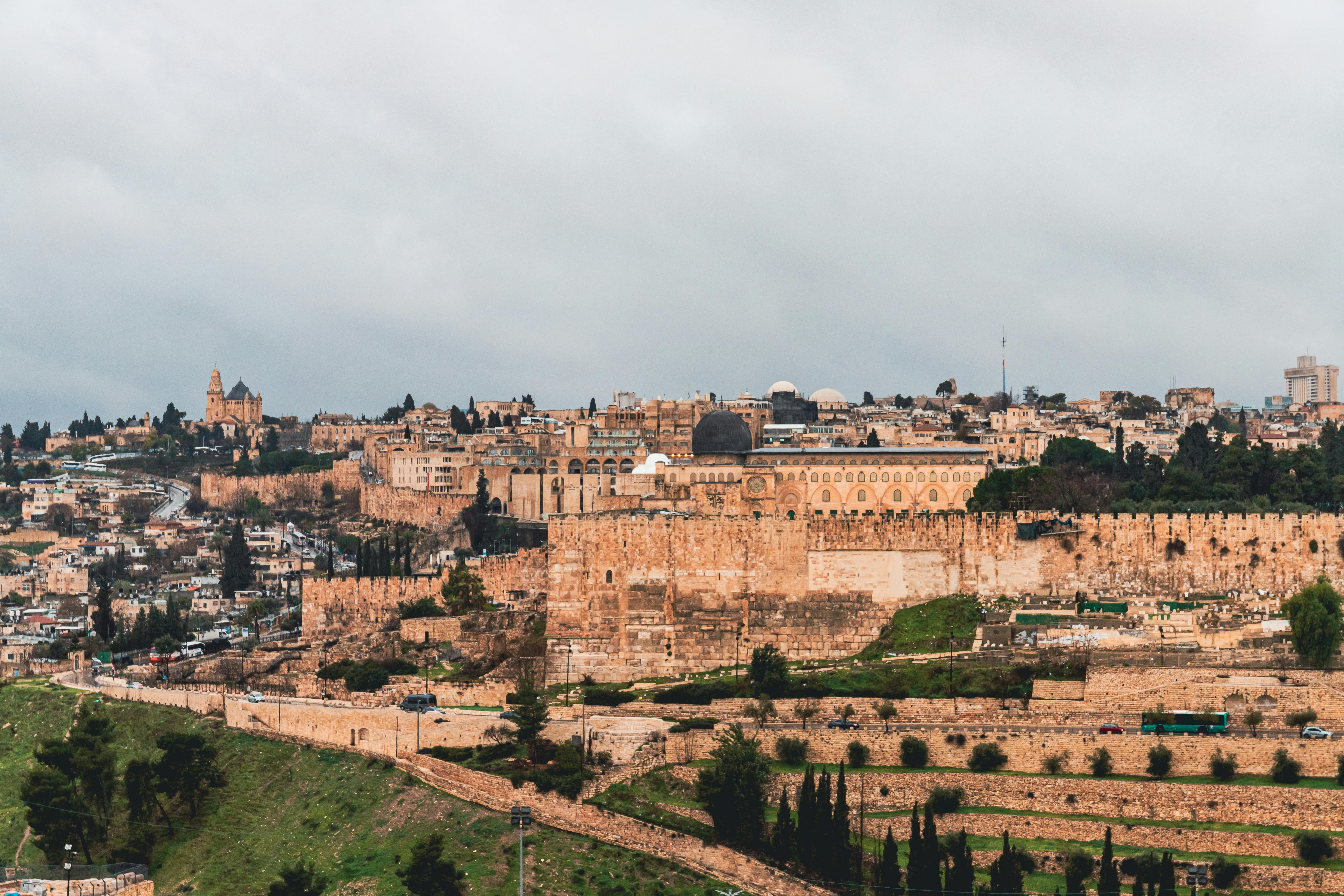
The biblical concept of Gehenna stems from the Valley of Gehinnom (Valley of Hinnom's son) that is referred to in various parts of the Hebrew Bible as the deep and narrow valley where the Israelites offered child sacrifices to the god Molech.[10] Yahweh says of this abominable place, "And they have built the high places of Tophet, which is in the Valley of the Son of Hinnom, to burn their sons and their daughters in the fire, which I did not command, nor did it come into My heart."[^11] This awful place of idolatrous sacrifice is used by Isaiah—though referred to as the "place of burning" and the "Valley of Topheth"—to provide a warning of a destructive physical and seemingly eschatological judgement upon the wicked. Isaiah proclaims God's warning, "And they shall go out and look on the dead bodies of the men who have rebelled against me. For their worm shall not die, their fire shall not be quenched, and they shall be an abhorrence to all flesh."12 The key to recognizing the physical nature of this punishment is found in the reference to the "dead bodies." This passage is to be a reference point for many intertestamental Jewish authors, who overwhelmingly use the same terms of fire and worms to describe the decay and destruction of the wicked. However, in the book of Judith, there is the imagery of fire and worms used in a novel way to imply a type of endless suffering of evil gentile nations. Even this reference in Judith is not certain in its exact meaning. This will be examined later; however, Isaiah's reference to the undying worm and unquenched fire are hyperbolic statements to show that nothing can stop (quench) the fire from accomplishing destruction, and the corpses will not receive a proper burial therefore they will be subject to the worm (corruption). William Farrar remarks on the remarkable creativity of interpretations of this passage in later Christian writings, saying "How can the carcasses feel the gnawing of the worm or the burning of the flame? Are we to torture the text into a doctrine of horror by understanding metaphorically the word, which is obviously literal, and by understanding literally the expressions which are obviously metaphorical?"13
Bailey asserts three different senses of Gehenna in the bible: the first sense is as an ordinary piece of real estate in the environs of Jerusalem, the second sense is of an extraordinary place of punishment for the wicked in the future, again in the immediate environs of Jerusalem, and the third sense is of an otherworldly place of punishment for the wicked future, local, fiery place of punishment outside Jerusalem after death.[^14] These three senses of Gehenna can be seen in intertestamental literature to varying degrees, some without explicit mention to Gehenna by name yet containing the same elements of fiery judgment. 2 Baruch contains perhaps the clearest depiction of the second sense of Gehenna, attesting that God revealed the geographical entrance to hell to Moses. "The mouth of Gehenna, the standing place of vengeance, the place of faith, the region of hope, the picture of the coming punishment, the multitude of the malakim which cannot be counted, the powers of the flame..."[15] 4 Ezra—not an intertestamental work, yet plausibly first-century common era—goes into greater detail about Gehenna: "The pit of torment shall appear, and the furnace of hell shall be disclosed, and opposite it the paradise of delight." Additionally, "Those who dwell on earth shall be tormented, because though they had understanding they committed iniquity..."[^16] Upon reading of the torment awaiting sinners, it is logical to have the same inquiry which "Ezra" has in the book: when will this judgment take place and how long will these torments last? Conveniently, the author has an answer to both questions. The punishment will happen at the end of time when "the earth shall give up those who are asleep in it."[^17] As for the duration of the torments, "Ezra" is relieved to find that they will come to an end through destruction: "I will not grieve over the multitude of those; for it is they who are now like a mist of those and are similar to flame and smoke -they are set on fire and burn hotly and are extinguished."[^18] Ehrman's opinion on 4 Ezra is astute: "It appears, then, that there is no eternal torment. Punishment entails a fire that kills and destroys the wicked."[^19]
Returning to the practical sense of the Valley of Gehinnom, it later became a place where the Israelite's would dump their trash into the unquenched fires that were perpetually burning there for that purpose. The Essenes and other "holy men" believed that the location of the Valley of Gehinnom—just outside the city walls of Jerusalem—was fitting for trash and excrement to be deposited, because they did not want to defile the holy city. There was also a perpetual sulfurous stench arising from the valley, and it continued to be a place for burning trash through the time of Jesus' earthly ministry up until the destruction of Jerusalem in AD 70. Interestingly, before and during Jesus' ministry, the dishonorable and unclean dead were actually cast into the Valley of Gehinnom as a way to avoid giving them any proper burial rights. This punishment alone, being the most feared and detestable in the minds of Jews, who would have shuddered at Isaiah's warning of unburied dead corpses being exposed to shame and dishonor from those looking upon the spectacle.
It has been argued that when Jesus gives his infamous warnings of being cast into Gehenna fire, as well as his warning of the destruction of the temple (Matthew 24:1-2) he might have been warning at God's physical judgement that would come in AD 70. This hypothesis holds a non-eschatological view of Jesus' Gehenna warnings; rather, Jesus was acting in unison with the tendency of the Old Testament prophets by vociferating his message of anon impending judgment upon Israel. Support for this is seen in Josephus' account of the destruction of Jerusalem. He describes a blazing, consuming fire that was devouring the houses of citizens and the temple itself: "And when they went in numbers into the lanes of the city, with their swords drawn, they slew those whom they overtook, without mercy, and set fire to the houses wither the Jews were fled, and burnt every soul in them, and laid waste a great many of the rest;"[^20] The corpses of the dead Israelites were obviously left unburied, which aligns with Isaiah's warning of national judgement. It must be restated that Jesus quotes Isaiah's warnings of national judgment when he speaks of the unquenched fire and worm.
Lastly on this view of Gehenna as a national judgement on the Jews, it should be of significant interest that the only gospel which never mentions Gehenna is John's gospel. This indeed is an argument from silence, yet it is a strong one. John's gospel was very likely written after the destruction of Jerusalem, most likely sometime around 90 AD. The previous postulation is not the argument of this paper; however, it is worth serious consideration as to why the gospel of John completely averts any mention of Gehenna judgment. If Jesus' warnings of the fire of Gehenna were indeed warnings of an impending national judgment similar to Isaiah's, then the absence of Gehenna in John's gospel is entirely logical, since it would be impractical for the author of John's gospel to warn readers of a national judgment which had already taken place. This consideration is especially pertinent for examination and rebuttal if Gehenna judgement in the gospels truly does represent the momentous doctrine of final judgement as many—and indeed this paper—propose.
Gehenna certainly began as a warning of physical and eschatological judgment upon an idolatrous Israel yet transformed into an 'otherworldly' judgment which the prophet Isaiah would not have had in mind at all. Rabbi David Kimhi speaks in favor of Gehenna becoming an analogy for the future eschatological judgment of the wicked; he writes, "Gehenna is a repugnant place in which filth and cadavers are thrown, and in which fires perpetually burn in order to consume the filth and bones; on which account, by analogy, the judgment of the wicked is called Gehenna."[^21] As alluded to previously, a pressing question is whether Jesus spoke of Gehenna as solely a national judgement or whether he endorsed the view of the intertestamental literature which largely regards
Gehenna as an eschatological judgement that could apply to all mankind following the resurrection of the dead? Of the three primary views, the least contextually logical understanding of Gehenna in the NT is that of an underworld/post-mortem place of punishment. This view will become prominent in Christian theology following the strong influence of Platonism, with its emphasis on the immortal and disembodied soul. Biblical archeologist Lloyd Bailey presents keen insights on the development of Gehenna into a underworld realm akin to Hades. He explains: "Underworld deities, on the other hand, could be contacted most efficiently through altars in low places: ravines, crevices, or caves...Altars were sometimes supplied with pipes so that the sacrificial blood could be channeled to the underworld deities who were thought to dwell just beneath them. Therefore, since human sacrifice had been offered in the valley of Hinnom to the underworld deity Molech (2 Kings 23:10), the worshippers likely assumed that there was an entrance to the underworld at this location."22 In summation, Bailey is suggesting that alters to underworld deities found in the valley of Hinnom (Gehenna) were likely understood as the gate to the realms of those deities. It is clear that even following the cessation of cult functions (sacrifices etc.) made in the valley of Hinnom, it was still regarded as the location in which either souls entered the underworld, or where sinners are punished bodily after the resurrection; the emphasis depends on the degree to which the rabbinical tradition was Hellenized.
That the valley of Hinnom continued to be seen as the location of final punishment is obvious within the following text of the Babylonian Talmud: "(Rabbi Jeremiah ben Eleazar further stated:) Gehenna has three gates; one in the wilderness, one in the sea and one in Jerusalem. (According to Rabbi Johanan ben Zakkai's school:) There are two palm trees in the Valley of Ben Hinnom and between them smoke arises.... and this is the gate of Gehenna."23 In a similar vein, Bauckham notes of 1 Enoch, "Enoch also sees the place of punishment for the wicked after the last judgement (located literally in the valley of Hinnom: 26: 3-2)."24 This assertion found within the compilation of various writings which were combined to form 1 Enoch is an excellent argument for an early dating of those texts. When compared to the later Apocalypse of Zephaniah, it is apparent that 1 Enoch maintains a more authentically traditional—indeed biblical—Jewish eschatological view which includes the emphasis of the specific day of judgment and the final Gehenna judgment. These traditional views are juxtaposed with the fully Hellenistic underworld found in Apocalypse of Zephaniah, complete with its own variation of Charon and his soul transporting ferryboat. Bauckham adds, "But the Apocalypse of Zephaniah, the Latin fragment of the Apocalypse of Elijah, the Apocalypse of Peter, a passage in the Palestinian Talmud, and Isaiah's tour of hell all bring us close to the earliest tour... Enoch's cosmic tour (1 Enoch 17-36) in the Enochic Book of Watchers." The Book of the Watchers, according to Bauckham, "has no interest in their (deceased human beings) fate after death prior to the judgement."[^25] Within Bauckham's comparison of the later apocalypses with that of the Book of the Watchers, the difference is not semantic; rather, the disparate anthropological and eschatological views are as gargantuan as the Nephilim themselves.
Arguments for the Gehenna judgment as only referencing a physical and national judgement upon Israel seem somewhat compulsory when examining Jesus' words in the gospels thoroughly. Jesus used the terminology regarding Gehenna and final punishment which the Jews would have understood to speak of a punishment that is not merely national or immediate. Regardless of which view one holds, one distinct intention of this paper is to furnish support for the view that Jesus taught of Gehenna as a place that ultimately ended in complete destruction of the entire person (body and soul).[^26] Whether this destruction took place post-mortem, following the resurrection of the dead, or simply as a result of God's physical judgements upon the earth, the epilogue is the same.
## IV. ANNIHILATION IN THE QUMRAN SCROLLS
Within the nearly fifteen-thousand scrolls and fragments found in the Qumran caves—six miles south of Jericho—there exists invaluable intertestamental literature providing insights into the faith traditions of Judaism. Particularly important to the subject of this paper are the fragments of scrolls which shed light upon the popular Jewish views of the nature of Gehenna, and more generically, judgment of the wicked in general. Found within the War Scroll of the Essene sect of Judaism is a vision of an eschatological battle between the "sons of light" and the "sons of darkness." This battle is vivid in its descriptions, to include the end that awaits the wicked. Although no exact mention of Gehenna is present, the punishment of the "sons of darkness" is referred to in terms fully descriptive of annihilation. "Then there shall be a time of salvation for the People of God, and a time of dominion for all the men of His forces, and eternal annihilation for all the forces of Belial (Satan)." Likewise, "In three lots the Sons of Light shall stand firm so as to strike a blow at wickedness, and in three the army of Belial shall strengthen themselves so as to force the retreat of the forces of Light... In the seventh lot the great hand of God shall overcome Belial and all the angels of his dominion, and all the men of [his forces shall be destroyed forever."27
Although the context of this battle is one which takes place upon the earth at the end of the ages, the result of the annihilation (destruction) of the wicked men and angels who follow Belial is the same as described by Qumran passages which speak of Gehenna more specifically. As an important note, this paper argues that the distinction between earthly destruction, and that of a post-mortem judgment, is a misnomer. This is because Jewish literature—to include Jesus own teachings—uses imagery of final punishment of the wicked in various lights to include post-mortem suffering and destruction (Matthew 10:28) as well as destruction which takes place after the resurrection of the dead, on great day of judgement (Matthew 10:24, 1 Peter 3:7).
Undoubtedly, the language of punishment of the wicked that is found within the Qumran scrolls contains the concept of suffering, and includes terms such as "eternal flame," and "utter darkness."[^28] However, this eternal flame is one which—similar to John the Baptists words in Matthew 3:10—effectively "burns up all the men of guilt completely," and leads to "eternal annihilation."[^29] David Instone-Brewer in his journal article entitled Eternal Punishment in First Century Jewish Thought summarizes the language of fire used in the Qumran, writing, "The Community Rule and War Rule are particularly concerned to emphasize that the fire burns forever in order to prove that the destruction is absolute. This is not a matter of burning away the bad bits in order to reveal the good. This burning reveals no remnant which can be redeemed for heaven. Jesus similarly speaks about Hell as a final destination."[^30]
A good summary of the Essene view of the fate of the wicked is found within their Community Scroll:
May you be damned without mercy in return for your dark deeds, an object of wrath licked by eternal flame, surrounded by utter darkness. May God have no mercy upon you when you cry out, nor forgive so as to atone for your sins. May He lift up His furious countenance upon you for vengeance. May you never find peace through the appeal of any intercessor...Damned be anyone initiated with unrepentant heart, who enters this Covenant, then sets up the stumbling block of his sin, so turning apostate...God's anger and zeal for His commandments shall burn against him for eternal destruction.[^31]
The Essene sect was known for their extremely harsh stance against sin—whether found in Jew or Gentile—as well as their harsh attitude of exclusivity toward any outside of their group, to include even apostates of the Essene sect. The level of anger is evident from the above passage and leads them to acclimatize Numbers 6:24-26 to fit their tempestuous fulmination against outsiders. "May the LORD bless you and keep you; may the Lord cause His face to shine upon you and be gracious to you" is completely reversed in meaning to synthesize with the furious message of the Essenes.
Yet, it is essential to note that even within this writing from the harshest sect in Judaism, the end of the most wicked apostate is "eternal destruction." This eternal destruction matches the plethora of references to the ultimate end of the wicked throughout the Hebrew Bible and New Testament alike. "That though the wicked sprout like grass, and all evildoers flourish, they will be forever destroyed," and "For behold, the day is coming, burning like a furnace, when all the arrogant and every evildoer will be stubble; the day is coming when I will set them ablaze," says the LORD of Hosts. "Not a root or branch will be left to them," and "If He condemned the cities of Sodom and Gomorrah to destruction, reducing them to ashes as an example of what is coming on the ungodly," and "By that same word, the present heavens and earth are reserved for fire, being kept for the day of judgment and destruction of ungodly men."[^32] The overwhelming use of fire throughout the Bible as a means of destruction of the wicked is what informs the Essenes—as well as most intertestamental Jewish works—as they expound upon the final doom of the wicked.
A summary of the views of the punishment in Gehenna found in the Qumran is demonstrated in the following quotations from a variety of the scrolls:33
- "eternal destruction" (1QS 2:15)
- "the disgrace of destruction by the fire of the regions of darkness" (1QS 4:11-14)
- "in calamities of darkness until they are destroyed" (1QS 4:11-14)
- "eternal destruction with none spared" (1QS 5:13)
- "disgraces of destruction without remnant...for all eternity." (4QS 2:86)
- "eternal annihilation" (4Q491 3:4; 4Q496 3:5)
- "everlasting...never-ending...for all eternity, with a shameful extinction...for all their eras., generation by generation...until their utter destruction without remnant or rescue." (1QS 4:12-14)
Of specific importance in these descriptions of destruction is the phrase "without remnant," used in many instances by the Qumran authors. A remnant is something which is left: a part, piece (Leviticus 7:16), or people group (Jeremiah 40:6). When applied to the destruction of the wicked, it can clearly mean that no part of them will remain—including a soul—and also that no one within that group of the unrepentant will remain. Therefore, the Qumran's usage of the term "without remnant" is an apposite way in which to describe the final destruction of the unrepentant.
## V. SCHOLARS DISAGREE ON PUNISHMENT IN THE DEAD SEA SCROLLS
F.F. Bruce writes in his journal article, *Paul on Immortality*, that the Dead Sea Scrolls "speak plainly" of "annihilation for the wicked."34 Matthew Black disagrees, arguing that many of the Qumran's references are speaking of the Old Testament Sheol in a new light which is one more akin to the further development of the concept of hell.35 Brewer agrees with F.F. Bruce and goes farther, saying "The theology of hell and the vocabulary used to discuss it in Jewish literature between the testaments is virtually identical to that found in the gospels. Hell (Gehenna) is a place where evil people are punished by both torment and destruction."36 Here Brewer makes the strongest statement of all, that the whole of intertestamental literature teaches that Gehenna is a place that ultimately ends in destruction. Edward Fudge takes a middle position, writing in his third edition of *The Fire That Consumes*, "At the beginning of the first century AD, Jewish opinion regarding the end of the wicked was not unanimous but markedly diverse, so that one cannot automatically attribute any particular view to Jesus Christ but must ascertain the meaning of his teaching in each instance by sound and specific exegesis."37 Although these opinions hold significant weight on the topic, this paper argues in close alignment with F.F. Bruce that intertestamental literature contains a considerable—though not complete—measure of agreement that the wicked and unrepentant will face suffering and ultimately be annihilated without rescue or remnant.
## VI. TARGUM AND TALMUD: COMPARED AND CONTRASTED WITH THE GOSPELS
Although much of the Talmud was written and compiled after the rise of Christianity, the earliest written opinions of the Talmudists predate Christ. Likewise, regarding the later written parts of the Talmud, it is worthy of mention that such Jewish opinions were originally passed down predominantly through oral teaching which originated earlier than the written record of it. In support of early (intertestamental) opinions of the Talmud are the accounts of the words of Rabbi Yohanan ben Zakkai, who lived during Jesus' lifetime. Yohanant tells his disciples of his fear of Gehenna as representing an "eternal death," or a death from which there is no more resurrection. In an honorific account written by his disciples, we see his views plainly:
And when R. Yohanan b. Zakkai fell ill, his disciples came in to pay a call on him. When he saw them he began to cry. His disciples said to him "Light of Israel! Pillar at the right hand! Mighty hammer! On what account are you crying?" He said to them, "If I were to be brought before a mortal king...if he should imprison me would not imprison me forever, and if he put me to death, whose sentence of death is not for eternity...who I can appease with words and money, even so I should weep. But now that I am brought before the King of kings, the Holy One, whom if he should imprison me, will imprison me forever, and if he should put me to death, whose sentence of death is for eternity...should I not weep?"38
Here, the Rabbi fears the irreversibility of God's judgement. Also, important to note is that he references imprisonment and death as two different things, demonstrating that in his mind, death was not an active existence of suffering such as an imprisonment would be. To Yohanan, the sentence of a "death that is for eternity," appears to be one which extinguishes life completely and is no longer reversible through the hope of the resurrection. He cannot mean some other state of existence by the term death since that would be akin to an imprisonment which he distinguishes entirely from the death sentence. This account of Yohanan Ben Zakkai is extremely valuable for insight into the early Rabbinical opinions on Gehenna since it is argued to be one of the earliest recorded rabbinical opinions on the topic of final judgment.
Brewer states that the reliability of this account of Yohanan's opinion on this subject is firm since at the time which it was eventually preserved in written form (after 70 CE) the idea that Jews who sinned moderately could face eternal death would have been considered bizarre and borderline heretical. $^{39}$ As will be discussed further, many Jews at the time of Yohanan and Jesus would have viewed Gehenna as only for the most wicked Jews or exclusively for the gentiles. Therefore, to see the unpopular opinion preserved as an authentic belief of Yohanan during the time of its writing lends credibility to its authenticity. Additionally, this bolsters the view that Jesus' audience would have been shocked at his warnings of Gehenna fire to those who say to their fellow Jew "you fool!" This seemingly moderate sin is amplified to its true sinfulness in Jesus' teachings. Likewise, Christ's extrapolation on the true nature of lust as adultery and hatred as murder are unexpected to his audience and would have elicited a more serious view of their own sin and its consequences. Additionally, Jesus shocked his Jewish hearers by emphasizing repentance as the key to inheriting "olam-haba" (the coming world), also called zoe anionios (eternal life) in the Greek. Prostitutes, tax collectors, and even compassionate Samaritans who repented were entering the Kingdom of God before the religious Jews or the average Jew who did not repent. $^{40}$
Jesus' verbal warnings about Gehenna were to the Jew, and this is not a trivial point because he is intentionally countering some of the religious thinking within first century Israel. For example, in the Targum of Jonathan, the Targumist writes, "And thou shalt place the court round about, because of the merit of the fathers of the world (biblical patriarchs) which encompasseth the people of the house of Israel round about... And thou shalt set the hanging of the gate of the court on account of the merit of the mothers of the world, which spreadeth at the gate of Gehennam, that none may enter there of the souls of the children of the people of Israel."41 This Jewish ethnocentrism—which can unfortunately be seen throughout much of the Talmudic writings—carried force into the common era. This view of Gehenna as only applicable to the gentiles is opposed to the Hebrew Bible's introduction of the punishment as one which was specifically for the rebels of Israel.42 This concept of Gehenna for the gentiles only is also counter to the entirety of Jesus' warnings to the Jewish leaders and lay persons alike that God will cast them (the chosen people) into the fires of Gehenna.
The teaching of annihilation is found within the writings of the Talmud; the comments of Tosafoth explain, "Israelites and idolaters (gentiles) who have sinned with their bodies will (after the Day of Judgment) descend into Gehenna, where they will be punished for a period of twelve months. At the end of that period their bodies will be annihilated, and their souls consumed by fire, whose cinders a wind will scatter under the soles of the feet of the righteous.[^43] However, this same Talmudist then makes an exception to this fate for "heretics (minim), informers," and interestingly "Epicureans" who will "descend into Gehenna and are punished generation on generation." Furthermore, the Talmud states of them that "Gehenna shall cease, but they shall not cease," and their "substance shall wear out (outlast) Gehenna."[^44] The specific condemnation of the Epicureans is not surprising because their philosophy of God, death, and the afterlife stood diametrically opposed to that of majority Judaism. Epicureans deny any existence after death—including the hope of resurrection—and also deny any active role of God or gods in the universe. Epicurus writes, "Death is nothing to us; for that which is dissolved, is without sensation, and that which lacks sensation is nothing to us."[^45] The Talmudists condemnation of the Epicureans' as outlasting Gehenna is intentionally ironic, since it is the Epicureans who believed that their body and soul will lack any substance or enduring quality after death.
Even so, the Rabbi Maimonides writes alternatively of this very same Talmudist passage regarding the Epicureans, heretics, and informers in his Yad Hachesakah Hil-choth Teshubah (The Law of Repentance). In his commentary, he quotes the above comments of Tosafoth verbatim, yet Maimonides is consistent in his teaching of the doctrine of annihilation, even of the most wicked.[^46] Herman Adler, Chief Rabbi of the British Empire during the mid-19<sup>th</sup> century, lends his opinion on the Talmudist passage in question, saying that "it does not, I think, imply endless punishment" arguing that the Talmudic expression of "generation on generation" implies indefinite not infinite duration. As William Farrar writes in his magnum opus on Gehenna, Mercy and Judgment, "Are not the Jews the best judges as to the meaning of their own language, and the tenets of their own theology?"[^47]
## VII. JESUS' WORDS ON GEHENNA: COUNTERING A SOFTER VIEW
This emphasis from Jesus of "normal," unrepentant Jews facing Gehenna judgment is a direct countering of the Shammaites—a sect within the Hillelite school—who were the disciples of Rabbi Beit Shammai (a contemporary of Christ). Shammaites taught that Jews who were not very righteous nor very wicked constituted a third group who would descend to Gehenna for a brief punishment before entering heaven.[^48] In shocking contrast and sobering seriousness, Jesus tells the Israelites—who had heard of such hopeful conceptions of Gehenna—that being redeemed from there was not to be expected.[^49] Rather, Jesus explicitly states that the end of Gehenna fire is destruction. "Do not be afraid of those who kill the body but cannot kill the soul. Rather, be afraid of the One who can destroy both soul and body in hell (Gehenna)." [^50] In this sense, Jesus' statements on final punishment were both in alignment with the Old Testament prophets and much—yet not all—of the intertestamental literature, yet in a certain sense his warnings were a rebuke to the hope of a Gehenna which people could "rise up" out of. Ehrman references another key passage where Jesus describes the two gates which hearers can choose: "One is narrow and leads to a difficult path. That is the way of life and there are few people who take it. The other gate is broad leading to an easy path. Most people take that route, but it is the road that leads to destruction (Matthew 7:13-14). Jesus does not say it leads to eternal torture. Those who take it will be destroyed, annihilated."[^51]
Apart from the nature of Gehenna as destruction, the gospel authors are keenly interested in dispelling the concept that "normal" Jews could not be cast into Gehenna, when the popular opinion may have leaned toward only the most wicked deserving that judgement. Hence Christ's urgency in warning the mass crowds to cut off the right hand if it causes sin and gouge out the right eye if it causes sin, because it is far better "that one of thy members may perish, and not thy whole body be cast to Gehenna."[^52] In these ways, Jesus' words in the New Testament gospels are presenting a harsher view of Gehenna judgement than what the Rabbis of the first century would have taught the Jews of that day. As mentioned previously, many of the writings of the Talmud taught that people—particularly Jews—were able to be redeemed from Gehenna after a terminable period of punishment.
For further examples, Talmudist opinions from the *Emek Hammelech* explain "The wicked stay in Gehenna until the resurrection, and then the Messiah, passing through it, redeems them."53 Likewise, the *Baba Metzia* states that "All who go down into Gehenna rise up again, with the exception of those who do not rise, such as the adulterer etc."54 Also, latter Talmudist writings such as Rabbi Shimon ben Lakish, continue the argument that no Jew will be destroyed in Gehenna. Rabbi Lakish writes in the *Chagigah*, that "the fire of Gehenna has no power over transgressors of Israel."55
However, as it has already been shown, Jesus connects Gehenna with destruction of the entirety of one's being (body and soul). This destruction is not what traditionalists have come to view it, i.e., an active, conscious, and endless existence of misery. Jesus does not speak of eternal punishing, but rather—in the same sense that Jude speaks of the great city of Sodom's destruction as the vengeance of "eternal fire"—he speaks of a punishment that enacts an eternal result. The irreversibility of the result of the punishment is the cornerstone of the terminology regarding Gehenna in the gospels. This concept of "eternal punishment," "eternal fire," "eternal judgment," and "everlasting destruction" all speak to a singular and decisive act which has irreversible consequences, not the endless action of destroying, or the endless action of judging, both of which are illogical and self-contradictory.
## VIII. SIRACH: THE GLOWING FIRE
There is by far too many Jewish writings between the testaments to address in this brief paper; however, in the spirit of helpful inquiry, a few will be examined. The Book of Sirach is an intertestamental work (175 BCE) which has very little to say regarding the afterlife, but what it does confer is important in understanding the Jewish mind of that time on the topic. In an almost epicurean tone fitting to the Sadducees, this book of ethics does assert rewards for righteous and their posterity, and punishments for the wicked, yet it applies these solely to earthly existence. Nonetheless, the language used to describe the judgment is syncretic of depictions of Gehenna judgment.
The author is acquainted with the ways of Hellenism, yet as a steadfast Jew he is disgusted by them. The term "Hades" is used on one occasion, but this is because the oldest written version of the text is in Greek, and the Greek *Hades* is simply representative of the Hebrew *Sheol*. However, the meaning of these two terms is as different as day and night, therefore the reference to *Hades* can lead the reader to infer a wrong assumption of the text. The language in *Sirach* which describes the end of those who continue in wickedness is analogous with the Old Testament and other intertestamental literature. *Ecclesiasticus* (Book of Sirach) also uses phrases such as "Mold and worms will take possession of them," and "their end is the flame of fire" to describe those led astray by wine and women.[^56] Sirach clarifies the nature of this fire, worms, and mold, explaining that this "glowing fire" is where the wicked will "be devoured" and "find destruction."[^57] The mold and worms—in agreement with the Old Testament—describe a completion of destruction as well as the lack of a proper burial or honor in death; the terms signify disgrace and decay.
One passage of particular importance as evidence for annihilation of evil doers in the text is "Like tow wrapped together is the assembly of the ungodly, and their end is the flame of fire."[^58] This word "tow" is the Greek stippuon which is equivalent to the Hebrew linoret found in Isaiah 1:31 and Judges 16:9. This word represents the combustibility of a bundle of tinder, which would be ferociously consumed by a fire. As the editor of the Cambridge Bible translation of the Book of Sirach, A.F. Kirkpatrick, comments in his footnotes, "As tow gathered together is a gathering of lawless men." as a tow--an apt comparison on account of its flammable nature--next clause and Isaiah 1:31. aflame of fire, Gehenna; verse 248 adds "unto destruction."[^59] Here, Kirkpatrick unmistakably views this passage as a clear statement for destruction in Gehenna.
## IX. JUDITH'S REVOLUTIONARY CONCEPT
Judith was an apocryphal book that was written and circulated during the time of Jesus' life. The book is strongly ethnocentric, and its message is not universal in tone. The only extension of what might be considered a type of grace to the gentile nations is found in the prayer, "Make every nation and tribe of Thine to know that though art God, the God of all power and might."60
However, this making God known to the nations might simply be a means for the gentiles to know "that there is none other that protecteth the race of Israel but Thou."61 It is blatantly apparent that Judith is not as inclusive of gentiles in God's plan as is observed in the Hebrew Bible. The psalmist writes of God in much more universal and inclusive terminology, "All the ends of the earth will remember and turn to the Lord, and all the families of the nations will worship before You. For the kingdom is the Lord's and He rules over the nations."62 Likewise, God speaks through the prophet Isaiah saying, "It is too small a thing that You should be My Servant to raise up the tribes of Jacob and to restore the preserved ones of Israel; I will also make you a light of the nations' so that My salvation may reach to the end of the earth."63
Judith is a type of anomaly when it comes to the language of punishment within intertestamental literature, because the language used is more analogous to a post-first century work such as one of the apocalypticss written during that time. The intense nationalistic fervor against the enemies of Israel leads to uniquely strong language regarding the punishment of the enemies of God. Judith decrees, "Woe to the nations who rise up against my people! The Lord Almighty will take vengeance on them in the day of judgment; he will send fire and worms into their flesh. They will weep in pain forever."64 Robert Yarbrough is correct in saying that Judith is intending to assert the notion of unending suffering of the enemies of Israel in this passage.65 Likewise, Ajith Fernando rightly comments that the apocryphal book of Judith is not in agreement with Isaiah 66:24, rather it is directly attempting to reverse and greatly 'enhance' the meaning of that Old Testament passage.66 Unlike a considerable amount of other intertestamental literature, Judith—perhaps in one of the earliest written examples—asserts an endlessness of suffering to the enemies of Israel.
There are a couple other noteworthy points to address regarding this quotation from Judith. Firstly, it is fascinating, yet not uncommon to see the ways in which latter Jewish as well as Christian writers alter the meaning of the "fire and worms" from Isaiah 66:24. Isaiah writes of the physical corpses of God's enemies saying, "From new moon to new moon, and from
Sabbath to Sabbath, all flesh shall come to worship before me, declares the LORD. And they shall go out and look on the dead bodies of the men who have rebelled against me. For their worm shall not die, their fire shall not be quenched, and they shall be an abhorrence to all flesh." In this passage, the Lord is saying that the fire that destroys them will not be stopped (quenched) from achieving its purpose, while the undying worm is a classic biblical hyperbolic reference to ongoing corruption of the corpses which prevents proper burial rights or dignity to the slain. However, Judith is using a creative and entirely novel interpretation by asserting that the fire and worms from Isaiah will cause God's enemies to "weep in pain forever." This extremely harsh extrapolation of Isaiah's warning fits the intense nationalistic fervor and rage of the book of Judith.
Of equal importance to note regarding this passage in Judith, is that the author applies this punishment to his Jewish disciples in Mark 9:47-48. He tells them, "And if thine eye may cause thee to stumble, cast it out; it is better for thee one-eyed to enter into the reign of God, than having two eyes, to be cast to the gehenna of the fire --where their worm is not dying, and the fire is not being quenched." While Isaiah 66:24 does not distinguish this Gehenna judgment as applying to only Jews or only Gentiles, Jesus takes the prophet Isaiah's words as applying to both Jew and Gentile. In support of this also is the fact that this passage is found within the gospel account that was written for a gentile audience. This asserts that the authors, Peter and Mark, wanted to stress that God's judgement quoted from Isaiah is universally applicable.
## X. CONCLUSION
There is immense value in studying the intertestamental literature's varying views of the nature of Gehenna. This study enables a superior grasp of what the bible teaches concerning the fate of the unrepentant, which holds incalculable value to all members of the Jewish and or Christian communities. Because the language used in the Bible can be understood and interpreted differently based upon one's anthropological and etymological positions and assumptions, there is a necessity to conduct such historical research into what comprised the various Jewish understanding of such language.
Throughout the history of the Christian church there has been varying views of the Bible's language of judgement, ranging from Origin's apokatastasis to Irenaeus' and later Arnobius' annihilationism, to Tertullian and Augustine's eternal conscious suffering. Prolematically, however, these views of Christian theologians inevitably hold less weight than that of the language of the Qumran Jews, Apocryphal authors, and interpretations of the Talmudists on the subject. The sole reason for this is that the Bible—both Old and New Testament—is fundamentally of Hebraic origin, and the language, imagery, hyperbole, and culture references are entirely Hebraic in nature. Therefore, just as it is not logical for a Jew to be considered a better interpreter of the Christian doctrine of the Trinity, it is equally illogical to view latter Christian writers as more ably suited to understand the language regarding the very Jewish Gehenna judgement. This is certainly not to argue that Christians have less right to form theological conclusions regarding God's judgments, rather that they should attempt a keen understanding of the earlier Jewish usage of the language on the subject.
There is great diversity in scholarship about biblical eschatology, and even upon examination of some of the most prominent scholars, it becomes evident that the topic of Hell is not always closely scrutinized. The distinguished professor of New Testament studies, Dr. Craig Blomberg, in his outstanding magnum opus entitled Jesus and the Gospels, demonstrates this point in his interpretation of John 5:24-30. He writes that this passage indicates that "people will be assigned to one of two fates—everlasting, conscious bliss with God or unending, conscious agony separate from him."[^67] Upon reading the actual scripture he references, there is no mention of agony, or "unending separation" anywhere in the verses referenced. Rather Jesus simply states that once the dead are raised, "those who have done good to the resurrection of life, and those who have done evil to the resurrection of judgment."[^68] As to what that eschatological judgement constitutes is not mentioned in this passage. However, Jesus elsewhere calls it aionion kolasis, which can either be translated as eternal punishment or punishment of the age to come. The reason for this plausible second translation is that since an aion is an age, and the adjective (aionion) defines the noun, it must remain consistent with the meaning of the noun it describes. Additionally, a Jewish eschatological understanding of the hope of the age or world to come (olam-haba) colors Jesus' words with the same eschatological hope of a coming age. Therefore, from a Jewish reading of Jesus' words it is more likely that he was referencing life of the age to come and punishment of the age to come; the conception of endlessness is falsely imposed upon this passage.
In additional support of this interpretation, the influential Dutch treatise De jure bella ac pacis (On the Law of War and Peace) interprets kolasis as a corrective punishment. Authored by Hugo Grotius, this treatise was later used as a standard for the development of theories of both private and criminal law. Grotius argues that the word kolasis indicated "that kind of punishment which tends to the improvement of the criminal."69 However, it should be acknowledged that etymology is a dim-sighted guide in the quest to discover the correct meaning of a word within its unique context. Regardless of the multitude of positions offered in the debate over the meaning of aionion kolasis, if the term is accepted as meaning "eternal punishment," than Jesus is likely emphasizing that there is a punishment that has a result which is eternal—albeit, irreversible and enduring—in its outcome. This interpretation mirrors much of the intertestamental literature, as well as a consistent theme within the Hebrew Bible itself.
It is this paper's tentatively confident view that the Bible as a whole—supported by the majority of Jewish intertestamental literature—teaches that this eternal punishment is:
- "everlasting destruction (2 Thessalonians 1:9)
- "lake of fire"... "the second death" (Revelation 21:8)
- "destruction of body and soul in Gehenna" (Matthew 10:28)
- "eternal fire" (Matthew 25:41)
- "unquenchable fire" (Matthew 3:10-12)
As a helpful to note to conclude with, the "eternal fire" listed above—which Jesus warns of in Matthew 25:41—is described by Jude as being the same "eternal fire" which destroyed Sodom and Gomorrah. Notice that Jude gives exact contextual descriptions of the meanings of both "destruction" and "eternal fire" when he writes, "Now I want to remind you, although you once fully knew it, that Jesus, who saved a people out of the land of Egypt, afterward destroyed those who did not believe... just as Sodom and Gomorrah and the surrounding cities, which likewise indulged in sexual immorality and pursued unnatural desire, serve as an example by undergoing a punishment of eternal fire."[^70] This last example is one worthy of concluding with, since understanding the meaning of an important concept within a complicated text requires—most essentially—a contextual and cultural understanding of the terms being used. The study of intertestamental literature can prove a noble assistant to this task.
[^7]: 7Kendall Harmon, "The Case Against Conditionalism: A Response to William Edward Fudge" In Universalism and the Doctrine of Hell (Grand Rapids: Baker, 1992). _(p.2)_
[^8]: Ibid. _(p.2)_
[^11]: Ibid, Jeremiah 7:31. _(p.3)_
[^14]: Bailey, Lloyd, "Enigmatic Bible Passages: Gehenna: The Topography of Hell," 187 _(p.3)_
[^16]: Stone, Michael, Fourth Ezra:a Commentary on the Book of Fourth Ezra (Minneapolis: Fortress Press, 1990) 4 Ezra 7:36; 7:72 _(p.4)_
[^17]: Ibid, 7:32. _(p.4)_
[^18]: Stone, Michael, Fourth Ezra:a Commentary on the Book of Fourth Ezra, 7:61. _(p.4)_
[^19]: Ehrman, Bart, Heaven and Hell: A History of the Afterlife (New York: Simon & Schuster, 2021) 130. _(p.4)_
[^20]: Flavius Josephus, Wars of the Jews (Ottawa: East India Publishing Company, 2022) 405. _(p.4)_
[^21]: Bailey, Lloyd, "Enigmatic Bible Passages: Gehenna: The Topography of Hell," 188. _(p.4)_
[^25]: Bauckham, Richard, "Early Jewish Visions of Hell," 356-359. _(p.5)_
[^26]: ESV Reformation Study Bible, Matthew 10:28. _(p.5)_
[^28]: 28Michael Wise and Martin Abegg, The Dead Sea Scrolls a New Translation, 1QS, 2:8. _(p.6)_
[^29]: Ibid, 4Q174, 4Q496 3:5. _(p.6)_
[^30]: David Instone-Brewer, "Eternal Punishment in First Century Jewish Thought" 20. _(p.6)_
[^31]: Michael Wise and Martin Abegg, The Dead Sea Scrolls a New Translation, 1QS 2:7-15. _(p.6)_
[^32]: $^{32}$ ESV Reformation Study Bible, Psalm 92:7, Malachi 4:1, 2 Peter 3:7, 2 Peter 2:6. _(p.6)_
[^43]: Fredrick William Farrar, Mercy and Judgment, 202. _(p.8)_
[^44]: Ibid. _(p.8)_
[^45]: Bertrand Russel, A History of Western Philosophy (New York: Simon & Schuster, 1967) 239-240. _(p.8)_
[^46]: Maimonides, Mishneh Torah Hilcot Teshuva: The Laws of Repentance (Moznaim Publishing Company, 1990). _(p.8)_
[^47]: Fredrick William Farrar, Mercy and Judgment, 202. _(p.8)_
[^48]: David Instone-Brewer, "Eternal Punishment in First Century Jewish Thought" 18. _(p.9)_
[^49]: ESV Reformation Study Bible, Matthew 10:28, Matthew 25:46. _(p.9)_
[^50]: ESV Reformation Study Bible, Matthew 10:28. _(p.9)_
[^51]: Ehrman, Bart, Heaven and Hell: A History of the Afterlife (New York: Simon & Schuster, 2021) 155. _(p.9)_
[^52]: ESV Reformation Study Bible, Matthew 5:29 _(p.9)_
[^56]: 60Maldwyn Hughes, The Ethics of Jewish Apocryphal Literature (Whitefish: Literary Licensing LLC, 2014) 84. _(p.10)_
[^57]: A.F. Kirkpatrick, Ecclesiasticus: The Wisdom of Jesus Son of Sirach, 36:7-10. _(p.10)_
[^58]: Ibid, 21:9. _(p.10)_
[^59]: Ibid, 142. _(p.10)_
[^67]: $^{67}$ Craig Blomberg, Jesus and the Gospels (Nashville: B & H, 2009) 467. _(p.11)_
[^68]: ESV Reformation Study Bible, John 5:24-30. _(p.11)_
[^70]: ESV Reformation Study Bible, Jude 1:5-7 _(p.12)_
Generating HTML Viewer...
References
31 Cites in Article
Lloyd Bailey (1986). Enigmatic Bible Passages: Gehenna: The Topography of Hell.
Richard Bauckham (1990). Early Jewish Visions of Hell.
Matthew Black (1996). The Dead Sea Scrolls and Christian Doctrine.
John Blanchard (1993). Whatever Happened to Hell.
Craig Blomberg (2009). Jesus and the Gospels.
F Bruce (1971). Paul on Immortality.
(2023). “1896 Map of Laurel Cemetery from Bromley Atlas,” Laurel Cemetery Memorial Project, accessed February 14, 2023, https://laurelcemetery.omeka.net/items/show/19..
R Charles (1896). The Apocalypse of Baruch.
Henry Cotton (1832). Boyd, Henry (d 1832).
Bart Ehrman (2021). Heaven and Hell: A History of the Afterlife.
I Epstein (1936). The Babylonian Talmud.
Sherry Bell (2015). Book Review: <i>The ESV Reformation Study Bible</i> by R. C. Sproul (General Editor).
J Ethridge (2019). The Targum of Jonathan on the Pentateuch With the Fragments of the Jerusalem Targum From the Chaldee.
Fredrick Farrar,William (1881). Colt, Sir Edward (William Dutton), (born 22 Sept. 1936), Attending Physician, Mount Sinai-St Luke’s Roosevelt Hospital, New York, until 2015.
Ajith Fernando (1994). QUESTIONS OF HEAVEN AND HELL ON SUNSET BLVD.
Edward Fudge (2011). The Fire That Consumes.
Kendall Harmon (1992). The Case Against Conditionalism: A Response to William Edward Fudge.
Maldwyn Hughes (2014). The Ethics of Jewish Apocryphal Literature.
David Instone-Brewer (2015). Eternal Punishment in First Century Jewish Thought.
Flavius Josephus (2022). Flavius Josephus, or, Wars of the Jews:with the sequel /.
Judith (2023). United States Conference of Catholic Bishops.
A Kirkpatrick,Ecclesiasticus (1912). The Wisdom of Jesus Son of Sirach.
Maimonides (1990). Mishneh Torah Hilcot Teshuva: The Laws of Repentance.
Mishnah Bava,Metzia (2023). Sefaria. n.
Dovber Pinson (2015). Mystic Tales from the Emek HaMelech.
Plato (1952). Phaedo.
Bertrand Russel (1967). A History of Western Philosophy.
Michael Stone (1990). Fourth Ezra: a Commentary on the Book of Fourth Ezra.
Michael Wise,Martin Abegg (1996). The Dead Sea Scrolls a New Translation.
N Wyatt (2009). The Concept and Purpose of Hell: Its Nature and Development in West Semitic Thought.
Explore published articles in an immersive Augmented Reality environment. Our platform converts research papers into interactive 3D books, allowing readers to view and interact with content using AR and VR compatible devices.
Your published article is automatically converted into a realistic 3D book. Flip through pages and read research papers in a more engaging and interactive format.
Introduction-Intertestamental Jewish writings often vaguely yet sometimes specifically address the nature and duration of final punishment of the ‘wicked.’ What constituted the ‘wicked’ in the extrabiblical Jewish literature-similarly to the Hebrew Bible-was consistently defined as those who broke God’s moral law intentionally and persistently. For these wrath-appointed persons, their final judgement lay in the commonly recognized and dreaded place (or state) of punishment called Gehenna. This paper will argue that upon examination of intertestamental Jewish writings there is considerable support for the view of Gehenna judgment as a terminable period of suffering leading to complete destruction (annihilation) of the wicked. The approach of this paper will be to analyze intertestamental Jewish writings and the teachings of Jesus in relation to the Gehenna. While the views on death and judgement in the afterlife were as varied in the intertestamental period as they are today, the intertestamental authors’ use language which depicts the final judgment as something which may at times be interpreted as analogous with the traditional-more accurately “Hellenistic”-Christian view of hell, or at times prevents resurrection of the wicked entirely (Maccabees), or majoritively as a punishment which ends in a fiery conflagration spawning an eternal consequence of destruction in its most non-figurative and complete sense.
Our website is actively being updated, and changes may occur frequently. Please clear your browser cache if needed. For feedback or error reporting, please email [email protected]
Thank you for connecting with us. We will respond to you shortly.