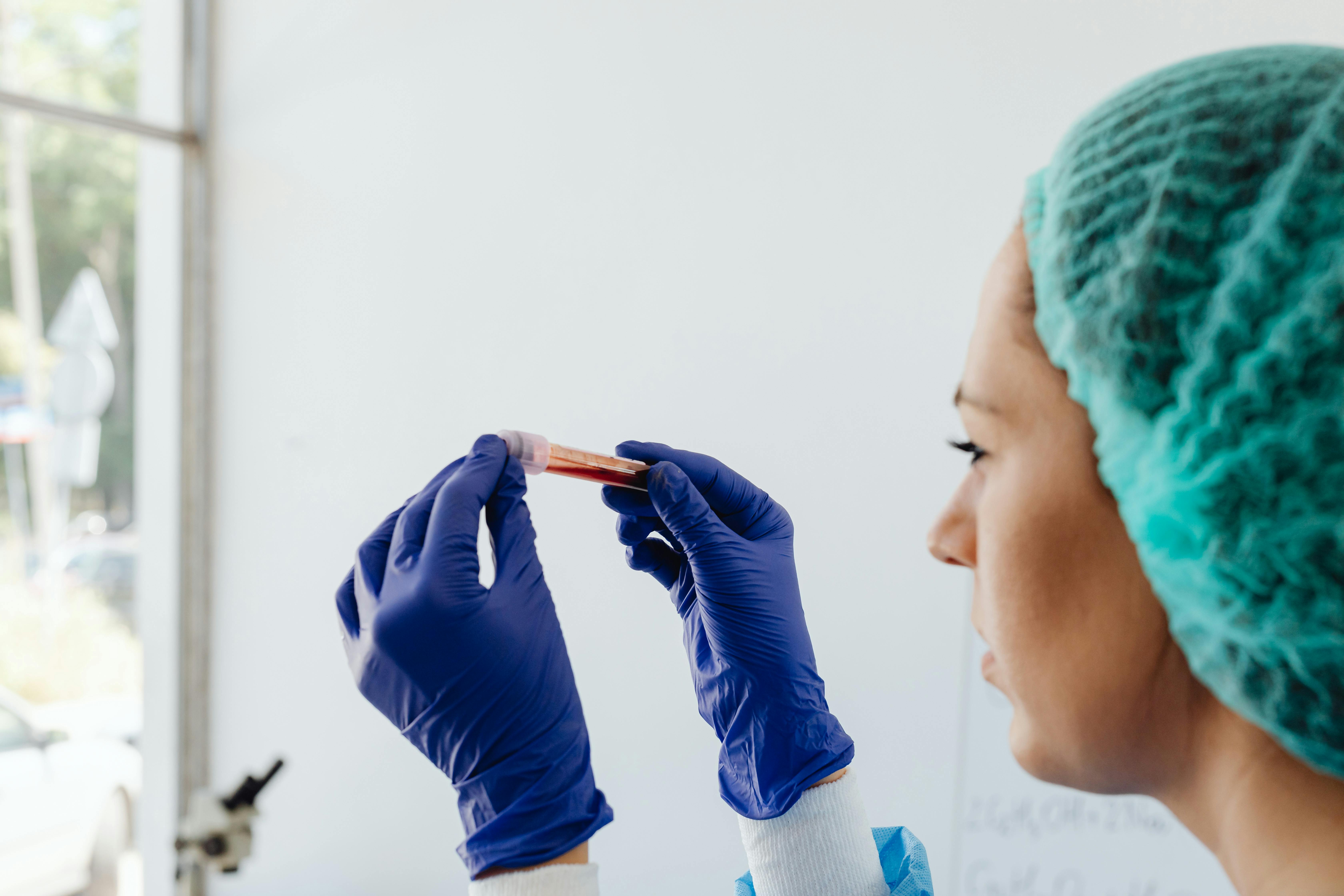
There are two types of olfactory testing methods that can be used for screening in Japan. Both methods test detection and recognition of 12 odors commonly found in Japan. It has also been reported that the detection and recognition abilities of the sense of smell gradually decline with age. It has also been noted that the results of odor tests tend to be poorer in male than in female as they get older, from their 40s onwards. However, odour tests are not often conducted on younger generations. Therefore, this study aimed to compare whether there are gender differences in odour tests in high school students.
Funding
No external funding was declared for this work.
Conflict of Interest
The authors declare no conflict of interest.
Ethical Approval
No ethics committee approval was required for this article type.
Data Availability
Not applicable for this article.
Shoko Kondo. 2026. \u201cGender Differences in Olfactory Recognition: A Comparative Study of Odour Stick Tests in High School Students\u201d. Global Journal of Medical Research - K: Interdisciplinary GJMR-K Volume 24 (GJMR Volume 24 Issue K4): .
## I. BACKGROUND
Odour tests vary from country to country, but in Japan, 12 different types of odours (ink, wood, perfume, menthol, mandarin oranges, curry, household gas, roses, cypress, sweaty socks, condensed milk, fried garlic) that are familiar in
Japanese life are used. Odour tests produce results by examining both detection and recognition. Many researchers have reported that it becomes harder to detect odours because of aging $^{1-12)}$. The sense of smell develops little by little from infancy, Peaking in the teens, and then gradually declines. Female are less likely to experience a decline than male, and the sese of smell gradually weakens in male from their 60s and in female from their 70s, but it is said that olfactory disorders become evident in more than 70 to 80 percent of people over the age of 80. We have also reported that test results from age 40 onwards show that both male and female can detect odours but their recognition declines with age, and that after age 60, male recognition declines more than female $^{11-18)}$. On the other hand, there are few reports of odour test results among younger generations. Despite the established research on aging, there is a scarcity of data on gender differences in olfactory performance in younger populations. Therefore, the purpose of this study was to conduct odour tests on young boy (male) and girl (female) and compare the results to confirm whether there are any gender differences.
## II. MATERIALS AND METHODS
The participants in this study were 47 boys and 67 girls aged between 15 and 17 years who had attended the cultural festival of our university (This study was reviewed and approved by the Ethics Committee of Nagoya Women's University). Informed consent was obtained from all participants following an explanation of the study's purpose and procedures. High school students voluntarily participated in this study. They were taking an olfactory test for the first time. They answered in a subjective pre-test questionnaire that they had no problems with their sense of smell. Participants tested 12 different smells using the smell stick smell test kit and wrote down the results in the answer column. The twelve different types of odors closely related to the lives of Japanese people (ink, wood, perfume, menthol, mandarin oranges, curry, household gas, roses, cypress, sweaty socks, condensed milk, fried garlic). The smell sticks are manufactured by Daiichi Pharmaceutical Industry Co., Ltd., and participants are asked to open a smell-soaked filter paper in front of their nose while looking at the answer options. To compare the results of boys and girls odour tests, the number of
correct and incorrect answers for each of the 12 odours was statistically compared using the chi-square test.
## III. RESULTS
The 114 high school students aged between 15 and 17 years (mean age $\pm$ standard deviation: $15.7\pm 0.9$ ) (See Table1).
Table 1: Age Distribution of High School Students
<table><tr><td></td><td>15s</td><td>16s</td><td>17s</td></tr><tr><td>Boys</td><td>36</td><td>10</td><td>1</td></tr><tr><td>Girls</td><td>26</td><td>11</td><td>30</td></tr></table>
All 114 high school students who participated took two types of odour tests and wrote their results in the answer column (See Table 2)
Table 2: Number of Correct Answers given by High School Girls and Boys <table><tr><td>Number of Correct Answer</td><td>0 Points</td><td>1 Points</td><td>2 Points</td><td>3 Points</td><td>4 Points</td><td>5 Points</td><td>6 Points</td></tr><tr><td>Odour Stick (Girls = 67)</td><td>0</td><td>0</td><td>3</td><td>2</td><td>2</td><td>5</td><td>3</td></tr><tr><td>Odour Stick (Boys = 47)</td><td>0</td><td>0</td><td>1</td><td>0</td><td>4</td><td>1</td><td>2</td></tr><tr><td>Number of Correct Answer</td><td>7 Points</td><td>8 Points</td><td>9 Points</td><td>10 Points</td><td>11 Points</td><td colspan="2">12 Points</td></tr><tr><td>Odour Stick (Girls = 67)</td><td>3</td><td>8</td><td>11</td><td>22</td><td>7</td><td colspan="2">1</td></tr><tr><td>Odour Stick (Boys = 47)</td><td>9</td><td>8</td><td>4</td><td>7</td><td>6</td><td colspan="2">5</td></tr></table>
<table><tr><td>Number of Correct Answer</td><td>0 Points</td><td>1 Points</td><td>2 Points</td><td>3 Points</td><td>4 Points</td><td>5 Points</td><td>6 Points</td></tr><tr><td>Odour Stick (Girls = 67)</td><td>0</td><td>0</td><td>3</td><td>2</td><td>2</td><td>5</td><td>3</td></tr><tr><td>Odour Stick (Boys = 47)</td><td>0</td><td>0</td><td>1</td><td>0</td><td>4</td><td>1</td><td>2</td></tr><tr><td>Number of Correct Answer</td><td>7 Points</td><td>8 Points</td><td>9 Points</td><td>10 Points</td><td>11 Points</td><td colspan="2">12 Points</td></tr><tr><td>Odour Stick (Girls = 67)</td><td>3</td><td>8</td><td>11</td><td>22</td><td>7</td><td colspan="2">1</td></tr><tr><td>Odour Stick (Boys = 47)</td><td>9</td><td>8</td><td>4</td><td>7</td><td>6</td><td colspan="2">5</td></tr></table>
The results of the chi-square test for the number of correct answers and incorrect answers in boys and girls odour tests are shown in Table 3. There was no statistically significant difference between the results of the two odour tests $(P = 0.482)$.
Table 3: Comparison of the Results of Odour Stick Tests (P=0.482)
<table><tr><td>The Maximum score is 12 points</td><td>Less than Six correct answers</td><td>Six more correct answer</td></tr><tr><td>Odour Stick (Girls = 67)</td><td>15</td><td>52</td></tr><tr><td>Odour Stick (Boys = 47)</td><td>8</td><td>39</td></tr></table>
The results of the chi-square test comparing the results of the 12 different types of odour test are shown in Tables 4 to 15.
Table 4: ${x}^{2}$ Test Comparison of the Results of Odour Tests (India Ink) High School Girls and Boys (P=0.331\*)
<table><tr><td>India ink</td><td>Correct answer</td><td>Incorrect answer</td><td>Total</td></tr><tr><td>Odour Stick (Girls = 67)</td><td>32</td><td>35</td><td>67</td></tr><tr><td>Odour Stick (Boys = 47)</td><td>13</td><td>34</td><td>47</td></tr><tr><td>Total</td><td>45</td><td>69</td><td>114</td></tr></table>
Table 5: ${x}^{2}$ Test Comparison of the Results of Odour tests (Timber) High School Girls and Boys (P=0.530)
<table><tr><td>Timber</td><td>Correct answer</td><td>Incorrect answer</td><td>Total</td></tr><tr><td>Odour Stick (female = 67)</td><td>41</td><td>26</td><td>67</td></tr><tr><td>Odour Stick (male = 47)</td><td>26</td><td>21</td><td>47</td></tr><tr><td>Total</td><td>67</td><td>47</td><td>114</td></tr></table>
Table 6: ${x}^{2}$ Test Comparison of the Results of Odour Tests (Perfume) High School Girls and Boys (P=0.250)
<table><tr><td>Perfume</td><td>Correct answer</td><td>Incorrect answer</td><td>Total</td></tr><tr><td>Odour Stick (Girls = 67)</td><td>40</td><td>27</td><td>67</td></tr><tr><td>Odour Stick (Boys = 47)</td><td>33</td><td>14</td><td>47</td></tr><tr><td>Total</td><td>73</td><td>41</td><td>114</td></tr></table>

Table 7: ${\mathrm{x}}^{2}$ Test Comparison of the Results of Odour Tests (Menthol) High School Girls and Boys (P=0.054)
<table><tr><td>Mentho</td><td>Correct answer</td><td>Incorrect answer</td><td>Total</td></tr><tr><td>Odour Stick (Girls = 67)</td><td>47</td><td>20</td><td>67</td></tr><tr><td>Odour Stick (Boys = 47)</td><td>40</td><td>7</td><td>47</td></tr><tr><td>Total</td><td>87</td><td>27</td><td>114</td></tr></table>
Table 8: $x^{2}$ Test Comparison of the Results of Odour Tests (Mandrain Orange) High School Girls and Boys $(P = 0.0001^{**})$
<table><tr><td>Mandarin Orange</td><td>Correct answer</td><td>Incorrect answer</td><td>Total</td></tr><tr><td>Odour Stick (Girls = 67)</td><td>50</td><td>17</td><td>67</td></tr><tr><td>Odour Stick (Boys = 47)</td><td>0</td><td>47</td><td>47</td></tr><tr><td>Total</td><td>50</td><td>64</td><td>114</td></tr></table>
Table 9: ${x}^{2}$ Test Comparison of the Results of Odour Tests (Curry) High School Girls and Boys (P=0.441)
<table><tr><td>Curry</td><td>Correct answer</td><td>Incorrect answer</td><td>Total</td></tr><tr><td>Odour Stick (Girls = 67)</td><td>46</td><td>21</td><td>67</td></tr><tr><td>Odour Stick (Boys = 47)</td><td>29</td><td>18</td><td>47</td></tr><tr><td>Total</td><td>75</td><td>39</td><td>114</td></tr></table>
Table 10: ${x}^{2}$ Test Comparison of the Results of Odour Tests (Household Gas) High School Girls and Boys (P=0.164)
<table><tr><td>Household Gas</td><td>Correct answer</td><td>Incorrect answer</td><td>Total</td></tr><tr><td>Odour Stick (Girls = 67)</td><td>40</td><td>27</td><td>67</td></tr><tr><td>Odour Stick (Boys = 47)</td><td>34</td><td>13</td><td>47</td></tr><tr><td>Total</td><td>74</td><td>40</td><td>114</td></tr></table>
Table 11: ${\mathrm{x}}^{2}$ Test Comparison of the Results of Odour Tests (Rose) High School Girls and Boys (P=0.610)
<table><tr><td>Rose</td><td>Correct answer</td><td>Incorrect answer</td><td>Total</td></tr><tr><td>Odour Stick (Girls = 67)</td><td>44</td><td>23</td><td>67</td></tr><tr><td>Odour Stick (Boys = 47)</td><td>33</td><td>14</td><td>47</td></tr><tr><td>Total</td><td>77</td><td>37</td><td>114</td></tr></table>
Table 12: ${\mathrm{x}}^{2}$ Test Comparison of the Results of Odour Tests (Cypress) High School Girls and Boys (P=0.147)
<table><tr><td>Cypress</td><td>Correct answer</td><td>Incorrect answer</td><td>Total</td></tr><tr><td>Odour Stick (Girls = 67)</td><td>56</td><td>11</td><td>67</td></tr><tr><td>Odour Stick (Boys = 47)</td><td>34</td><td>13</td><td>47</td></tr><tr><td>Total</td><td>90</td><td>24</td><td>114</td></tr></table>
Table 13: $x^{2}$ Test Comparison of the Results of Odour Tests (Stinky Socs/Sweaty) High School Girls and Boys $(P = 0.996)$
<table><tr><td>Stinky Socs/Sweaty</td><td>Correct answer</td><td>Incorrect answer</td><td>Total</td></tr><tr><td>Odour Stick (Girls = 67)</td><td>57</td><td>10</td><td>67</td></tr><tr><td>Odour Stick (Boys = 47)</td><td>40</td><td>7</td><td>47</td></tr><tr><td>Total</td><td>97</td><td>17</td><td>114</td></tr></table>
Table 14: ${x}^{2}$ Test Comparison of the Results of Odour Tests (Condensed Milk) High School Girls and Boys (P=0.446)
<table><tr><td>Condensed Milk</td><td>Correct answer</td><td>Incorrect answer</td><td>Total</td></tr><tr><td>Odour Stick (Girls = 67)</td><td>47</td><td>20</td><td>67</td></tr><tr><td>Odour Stick (Boys = 47)</td><td>36</td><td>11</td><td>47</td></tr><tr><td>Total</td><td>83</td><td>31</td><td>114</td></tr></table>
Table 15: ${\mathrm{x}}^{2}$ Test Comparison of the Results of Odour Tests (Fried Garlic) High School Girls and Boys (P=0.047)
<table><tr><td>Fried Garlic</td><td>Correct answer</td><td>Incorrect answer</td><td>Total</td></tr><tr><td>Odour Stick (Girls = 67)</td><td>56</td><td>11</td><td>67</td></tr><tr><td>Odour Stick (Boys = 47)</td><td>39</td><td>18</td><td>47</td></tr><tr><td>Total</td><td>95</td><td>29</td><td>114</td></tr></table>
Moreover, only the chi-square test results for the 12 different types of odours are shown in Table 16. Of the 12 different odours, there was a statistically significant difference between the results of boys and girls for the odours of India Ink $(P = 0.031^{\star})$, mandarin orange $(P = 0.0001^{**})$ and fried garlic $(P = 0.047^{\star})$. In both cases, the boys answer was shown to have a harder smell to discern that the girls answer.
## IV. DISCUSSION
In previous studies, females performed better on olfactory tests than males $^{1-10}$, with a statistically significant decline in olfactory perception with increasing age $^{1-12,)}$. In recent years, there have been reports of cases showing abnormalities in the sense of taste and smell due to the COVID-19 epidemic $^{13-23}$. In most cases, olfactory test results are obtained from middle-aged and older people, and there few results are reported for younger people. In this study, we conducted olfactory test using odour sticks on high school students who visited a university festival, and obtained the results.
For the 12 different odours, the average number that the boys high school students were able to recognize was 8.38, and for the girls students the average was 8.30. There was no statistically significant difference between the number of correct odour answers between boys and girls high school students. A chi-square test was used to compare the number of correct answers given by boys and girls high school students for each odour. The results showed that there was no statistically significant difference between the odours of wood, perfume, menthol, curry, household gas, roses, cypress, stinky socks/seaty, and condensed milk. However, when comparing the individual smells, the smell of india ink was recognized by only 13 out of 47 boys high school students, but by 32 out of 67 girls high school students. Statistically, the result of the chi-square test was $\mathrm{P} = 0.031^{\star}$, making it clear that there was a significant difference. Similarly, when comparing the smell of mandarin oranges, none of the 47 boys high school students were able to recognized the smell, while
50 of the 67 girls high school students were able to recognize it. Therefore, the results of the chi-square test showed a statistically significant difference between the two groups $(P = 0.0001^{**})$. Furthermore, for the smell of roasted garlic, 33 out of 47 boy high school students could recognize the scent, while 4 out of 67 girls high school students could recognize the scent. Statistically, the chi-square test results showed a significant difference $(P - 0.047^{*})$.
The smell of India ink is something that students remember because they used it during Japanese calligraphy classes in elementary and junior high school. Still it seemed that the smell did not stick in the boys' minds as sassily as it did in the girls. It was a shocking, result that none of the boy high school students could recognize the scent of mandarin oranges, it seems that it is difficult for them to distinguish the smell of fruits. As for the scent of fried garlic, since it is difficult for junior high school students to recognize it, it may be necessary to have them make an effort to remember the smell by being conscious of it while eating. Compared to girls high school students, boys high school students tend to belong to more sports clubs and less to cultural clubs (cooking club, tea ceremony club, flower arrangement club, calligraphy club, etc.). Boys high school students also tend to have fewer opportunities to help with household chores such as cooking compared to girls high school students. Therefore, there is a possibility that they have fewer opportunities to come into contact with the smell of food on a daily basis. In the future, it will be necessary to investigate student life and eating habits through questionnaires and other means, and correlate this with the results of olfactory tests.
## V. CONCLUSION
This study explored olfactory test results among high school students, a population that has not been widely studied in olfactory research. Twelve types of odours familiar to Japanese people were tested for high school students using odour sticks. As a result, there was no statistical difference in the number of correct answers between boys and girls high school students (chi-square test). However, when comparing individual odours, boy high school students had statistically lower recognition rates than girls for the odors of India ink, mandarin oranges, and roasted garlic. There may be a possibility, boys are less familiar with these specific smells due to cultural or lifestyle factors.
### Ethics Statement
The studies involving human participants were reviewed and approved by the Ethics Committee of Nagoya Women's University (approval number 2019-26). The participants provided their written informed consent to participate in this study.
#### Funding
There are two types of olfactory testing methods that can be used for screening in Japan. Both methods test detection and recognition of 12 odors commonly found in Japan. It has also been reported that the detection and recognition abilities of the sense of smell gradually decline with age. It has also been noted that the results of odor tests tend to be poorer in male than in female as they get older, from their 40s onwards. However, odour tests are not often conducted on younger generations. Therefore, this study aimed to compare whether there are gender differences in odour tests in high school students.
Our website is actively being updated, and changes may occur frequently. Please clear your browser cache if needed. For feedback or error reporting, please email [email protected]
×
This Page is Under Development
We are currently updating this article page for a better experience.
Thank you for connecting with us. We will respond to you shortly.