## I. INTRODUCTION
Sustainability is a complex concept that considers the balance between environmental, social and economic aspects of human life. Businesses play a crucial role in promoting environmental sustainability, as their social and environmental impact can be considerable. In this regard, the significance of sustainability to business has grown over the past few years. The relationship between governments, business and society has undergone structural changes as a result of these challenges and the public's expectations regarding the role of business in addressing those challenges have also changed as a result. One example of an external environmental change is the rise in public concern over environmental issues such as climate change, depletion of natural resources, ecology, species extinction and cultural change (Bastardas-Boarda 2005; Thiele 2016; Lessmann and Rauschmayer 2016). These concepts provide a way to improve some of the material aspects of human existence without degrading other environmental elements that are even more fundamental and essential to nature; they serve to safeguard against the very threat to human existence (Bastardas-Boarda 2005; Thiele 2016; Lessmann and Rauschmayer 2016). This does not exclude progress in science, technology, or economic development, and indeed acknowledges the key importance of healthy environments that are conducive to the survival of animal species and nature. Because the scales of values shared by society and shaped by legal codification serve as the root of the issue rather than legal dispositions, it assumes the existence of an environmental, social and ecological morality. As a result, business, societies and companies now approach social, community and environmental activities with greater strategic thinking (Galpin and Whittington 2012). In this perspective, Sustainability is now advocated by a growing number of corporations, citizens, governments and political parties, becoming "one of a few ideals that receive near universal endorsement [...] " increasingly providing "a common language, a lingua franca for the twenty-first century" (Thiele 2016: 11).
In such a setting, sustainability reporting has developed as a useful tool for managers to identify and address these sustainability-related challenges while also boosting business operations at the company. Businesses are in fact interested in sustainability, and Reporting reflects the expanding importance of sustainability in general. The motivations and outcomes in Reporting have changed together with its growing strategic importance (Morhardt 2010); earlier on, most reporters were under social and public pressure and used their reporting to establish the credibility and trustworthiness of their corporations, societies, companies, etc. (Deegan 2002). In addition to outcomes, other reporting motivation factors include strategic advantages such as the market (improving competitive position), political (reducing political pressure and regulation), social (avoiding stakeholder challenges), and accountability (the company is promoting sustainability). KPMG claims that "companies are not only expected to operate in a responsible manner, but they are increasingly asked to demonstrate this publicly" in a report from 1999 (in Coffey and Higgins 2016: 18). Given this, it is evident that the way businesses have learned to understand sustainability has been greatly impacted by sustainability reporting. Businesses can now speak out about sustainability-related issues, demonstrate their social and environmental performance, and the general public is now more aware of how businesses handle these issues.
This is precisely the context in which the use of metaphor comes in. As Lakoff and Johnson (1980: 121) point out, "people understand what they see";[^2] therefore, in order to ease accessibility and an accurate understanding of such important information, companies make extensive use of metaphors in their sustainability reports in order to convey their commitments to sustainability and create a positive image among the public.
## II. THEORETICAL FRAMEWORK AND METHODOLOGY
Up until recently, metaphor was examined solely in the context of rhetoric or stylistics and was considered to be merely a rhetorical device. The analytical tool of Conceptual Metaphor Theory (CMT) (Lakoff and Turner 1980) will be examined in this section in order to explain the complexity of the relationship that lies behind the creation and understanding of the Chevron & Co. Sustainability Reports under scrutiny. Conceptual Metaphor Theory is a branch of Cognitive Linguistics (CL) whose goal is to make abstract notions more understandable by treating them as concrete concepts. Indeed, according to Forceville and Urios-Aparisi (2009: 12), Conceptual Metaphor Theory (CMT) stresses the fact that "human beings can only come to grips with the abstract by metaphorically coupling it with the concrete-perceptible." To put it another way, when a metaphor is used, an abstract idea is perceived as if it were a physical object (Charteris-Black 2004). This is because the conceptual domains of the source and the target are closely related to our everyday experiences and thus shape the way we think and what we believe about the world. The Relational process "A is B" found in the corpus such as 'disease is war' can explain the way metaphor works, where the A element is the source domain and the B element is the target domain. Although there is identification between them in that they both involve something related to living beings, on closer scrutiny they come from notions that pertain to utterly different "cognitive domains" (health and armed conflict) (Ngoc Vu 2015).
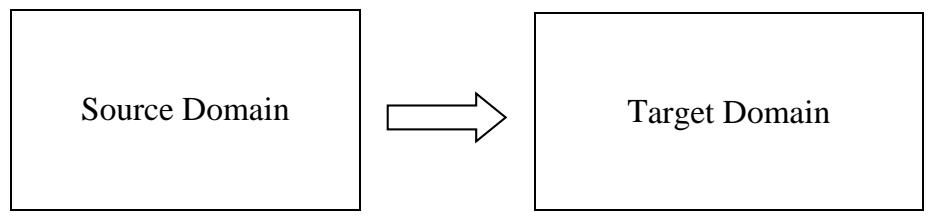
Hence, Conceptual Metaphor Theory (CMT) is based on the interaction between two conceptual areas or units of cognitive association known as "cognitive domains", which are understood to be mental representations of how the world is structured. As a result, metaphoric conceptualization based on analogy is primarily accomplished through mapping, which entails tying together two distinct conceptual structures or domains in which a concrete vehicle or source domain is associated with and uni-directionally projected towards an abstract topic or abstract domain, as illustrated in Table 1 below.
Table 1: Metaphor Cognitive domains
This study discusses the distribution of metaphorical mapping from a quantitative and a qualitative perspective in the Chevron Sustainability Reports published immediately before the COVID-19 pandemic crisis and during the subsequent pandemic. The aim is to understand the contrasting ways in which the two Reports (2019 and 2020) conceptualize the two different periods, and how one of the most challenging years since the end of the second World war affected the choice of metaphors in the 2020 Chevron Sustainability Report.
It has been shown that companies, politics and corporate discourse in general frequently use metaphors as they create images and leverage sensory cognition, perceptions and ideas, exerting a direct impact on the level of thought in terms of "understandings, judgments, concepts and theories" (Solonchak and Pesina 2015: 25). Any representational decision can theoretically be replaced by a new linguistic choice with a different set of consequences since referents do not have an unquestionable inherent meaning. Whether consciously or unconsciously, people adopt a categorization that emphasizes certain aspects of the concept and obscures others when we select a specific source domain to achieve it (Nicaise 2011).
The purpose of this study is to demonstrate how, through metaphor, Sustainability Reports aimed to capitalize on their conceptual aspects both before and during the pandemic. Viewed from a longitudinal perspective, the challenge is to establish how the lexical realizations of social and environmental sustainability, as well as the near-parallel content in financial-economic concepts were distributed during the most acute period of the pandemic compared to the preceding year.
Conceptual metaphors can be divided into three different categories: Oriental metaphor, Ontological metaphor, and Structural metaphor (Lakoff and Johnson 1980).
i) Ontological metaphor provides a foundation for people to describe parts of experience as discrete entities or as unified classes of matter; ii) Structural metaphor refers to the use of familiar concrete and simple descriptive structures to construct another abstract concept (Nicaise 2011); iii) Oriental metaphor organise the entire conceptual system according to another concept related to spatial orientation: up and down, inside and outside, front and back, on and off. The main point of this study is to analyze the distribution of Conceptual Metaphors, namely Structural, Oriental, and Ontological from a longitudinal perspective in the Sustainability Reports of Chevron and Co. before and during the pandemic and see what the implications are. Due to space restrictions, only the most pervasive in each metaphorical category will be considered and discussed both qualitatively and quantitatively.
## III. DATA DESCRIPTION AND SELECTION
The choice of Chevron Corporation as a subject of study was because it is one of the world's largest energy companies in the production of electricity and in the oil refining sector, with a significant impact on global sustainability. Chevron Corporation has a strong commitment to sustainability and reducing greenhouse gas emissions, making it an interesting case study for understanding how large companies address these issues.
In this respect, Sustainability Reports were selected because they deal with the significant issue of social and environmental questions. As a result, they play a noteworthy role in the expression and construction of public opinion. To a large extent, they also reveal the company's ideological stance and its use of persuasion rhetoric to communicate with investors, stakeholders, and local and global communities. They thus wield a certain influence on how public opinion is expressed and formed.
The data collection period spans two years: 2019 and 2020, i.e., the year that was significantly impacted by the COVID-19 pandemic crisis, as well as the year immediately prior to the crisis. More specifically, Sustainability Reports were chosen for two main reasons: first, because they provide the most thorough information to the local as well as the global community on a larger scale; and second, using annual reports makes it possible to conduct a longitudinal linguistic analysis of the changes in the use of metaphors.
## IV. ANALYSIS AND RESULTS
The research questions that guided this study were as follows:
- What metaphors were used in Chevron's Sustainability Reports before and during the COVID-19 pandemic?
- How did the metaphors used by Chevron in Sustainability Reports change during the pandemic?
- What are the implications of using metaphors in corporate sustainability reporting?
### a) Overall distribution of source domains
Before analyzing in depth how particular concepts are expressed metaphorically before and during the pandemic, the global distribution of source domains is displayed (Figures 1 and 2). In more specific terms, Figures 1 and 2 show how the different types of Conceptual metaphors, namely Oriental, Structural and Ontological metaphors are distributed in the Sustainability Report published before and during the COVID-19 pandemic. The most frequent metaphorical mappings are subsequently described in detail.
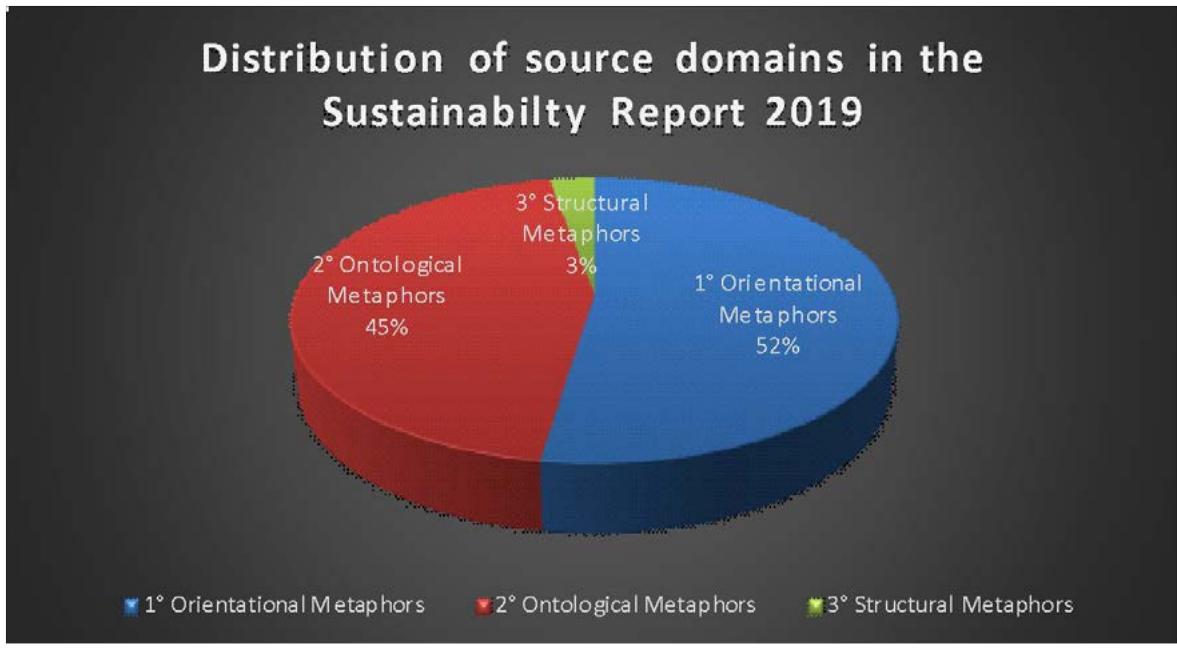
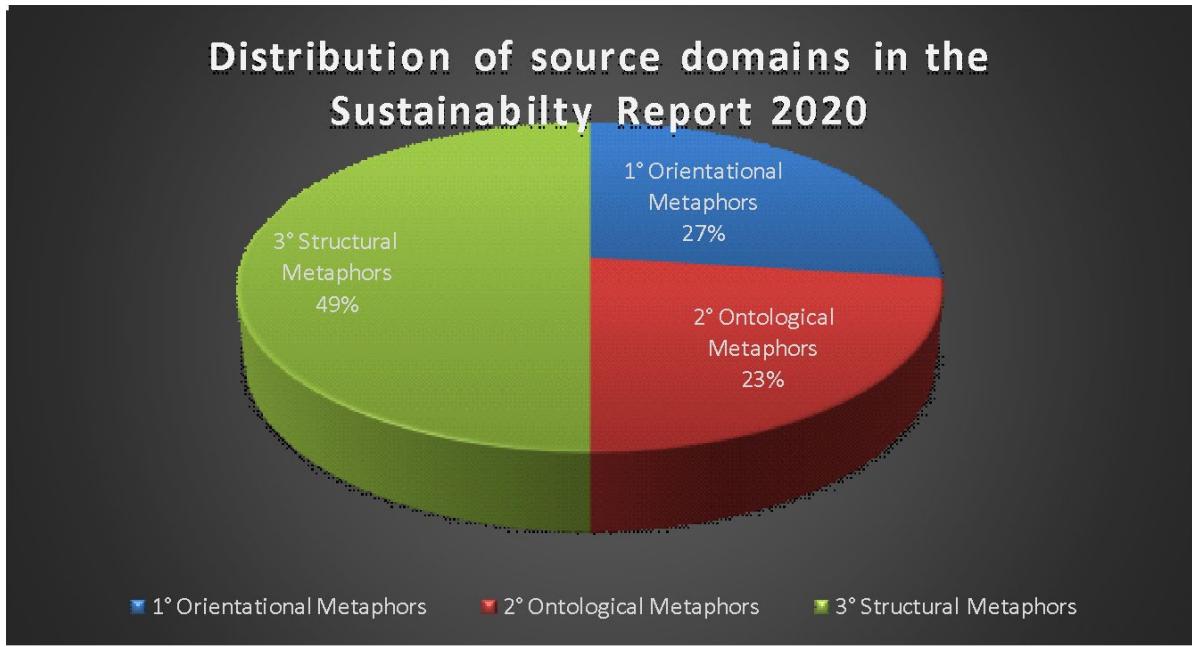 Figure 1: Distribution of source domains in the Sustainability Report 2019 Figure 2: Distribution of source domains in the Sustainability Report 2020
## i. Conceptual Orientational Metaphor
According to the findings shown in Figures 1 and 2, Oriental metaphor was the most common category before the pandemic, accounting for $52\%$ of all metaphors in the corpus but fell to $27\%$ of the corpus during the pandemic. As stated by Lakoff and Johnson (1980), Nicaise (2011) etc. Oriental fundamental metaphors are among the most common (exceeded only by Structural metaphors), because they are spontaneously learned through "sensomotoric experience" (Nicaise 2011: 411) beginning in infancy and subsequently they accompany us throughout the rest of our lives. Otherwise stated, they are derived from our bodily interactions with the environment because virtually any type of dynamic characteristic of our lives – but also the 'life' of a Company, or the expression of any social or economic parameter – may be described in terms of stepping forward or back, rising or falling patterns that are simple to visualise in a figure. Sustainability Reports thus tend to be particularly responsive to Oriental metaphors, as can be seen from the Examples 1-8 below:
1) We support the Paris Agreement as a step forward and encourage practical actions [...](Sustainability Report 2019).
2) Before starting a high-risk task is an important step forward in prioritizing safety and social and environmental sustainability (Sustainability Report 2019).
3) Chevron has taken important steps forward to initially align our performance data table (Sustainability Report 2019).
The most common Conceptual Oriental metaphor used in the Sustainability Report published before the pandemic is "step forward". In Example 1, the metaphor implies that support for the Paris Agreement represents positive progress for Chevron – and for the whole oil-refining and power generation industry – in the fight against climate change as well as social and environmental sustainability. It also suggests that support for the agreement represents a progression toward a more sustainable and better future. In the face of such ever shifting expectations, the Chevron team has been working to find solutions to the most challenging energy problems emphasising its high ethical standards and the Company's desire for operational excellence in its stringent capital discipline and ongoing effort to lead the way in the future of energy, thus establishing a reputation for providing responsible and durable outcomes.
- The Oriental metaphor narrative that Chevron & Co. attempts to construct is based on a figurative long walk along "a path" on which the Company will continue to make "steps forward" in order "to surmount any challenge" against the backdrop of ever-changing expectations. This mindset drives the Company to invest in cutting-edge technologies, pursue novel solutions, and foster the next generation of problem-solvers across all their business, as can be noted in Example 4 below:
4) We know the world faces challenges. But we also know, from experience, the path to surmounting any challenge: pursuit of innovation, commitment to partnership, trust in markets and belief in the power of human energy. (Sustainability Report 2019)
- And this compass seems to be the value and principle guiding Chevron along its traditional "path", namely "the responsible way", which seems to become a tautological identification in "the Chevron way", as can be seen in Example 5 below:
5) It [Chevron] is deeply rooted in who we are and what we value: [...] the responsible way; the Chevron way. (Sustainability Report 2019)
- Although the occurrences of Conceptual Oriental metaphors drop dramatically in the Sustainability Reports published in 2020 during the pandemic, as is possible to see in the cake chart in Figure 2 above, some Examples are nevertheless still present. Again, all of them refer to the values and principles that define Chevron's corporate culture and which are deeply rooted in the Company's ways of thinking and behaving, as in Examples 6 and 7 below:
6) Chevron has taken steps forward to align its performance data table relative to the goals they had set for themselves. (Sustainability Report 2020)
7) We believe that our Sasb index is a positive step forward in further aligning our Edgard reporting (Sustainability Report 2020)
In Examples 6 and 7 above the metaphor (positive) "step forward" refers to a significant and progressive advance in aligning Chevron's reports with the ESG disclosure standards[^1] in terms of sustainable investment solutions and insights.
Another Conceptual Orientational metaphor based on the same analogy that embodies the image schema of Chevron taking 'steps forward' through 'the path' of achieving future objectives can be seen in the Example 8 below:
8) We expect to spend about $2 billion by 2028, on the road to delivering our 2028 performance metrics [...] to meeting [...] great challenges - eliminating poverty, creating prosperity for all and delivering the sustainable environment everyone desires. (Sustainability Report 2020)
Again, the metaphor is established by using the expression "on the road" figuratively to refer to the path or trajectory followed by the Group to achieve a holistic view of the 2028 sustainable development agenda, including not only energy efficiency but also environmental and social aspects.
9) And in every conversation, we are ready to focus on climate- it is the topic at the on top of everyone's list. (Sustainability Report 2020)
10) The topic on top of Chevron's agenda is climate [...] in line with the path of Ecological Transition [...] (Sustainability Report 2020)
The metaphor established by using the Oriental concept "on top" in both Examples (9-10) above refers to the position of importance that the climate topic occupies in people's list of priorities, stressing also how these issues are prioritized in Chevron's list to design a sustainable future and find solutions in line with the "path of Ecological Transition" undertaken at a World level while at the same time, of course, protecting employment, the creation of local values and the continuity of electricity supplies.
## ii. Structural Conceptual Metaphor
As stated above, according to Lakoff and Johnson (1980), Structural Conceptual Metaphor is the most frequently used category. Indeed, according to what is propounded by Lakoff and Johnson (1980), in the corpus under scrutiny related to the Sustainability Report published during the pandemic, this does seem to be the case, since it is the category displaying the highest percentage of occurrences.
This type of conceptual metaphor conceptualizes complex and abstract experiences based on the knowledge of concrete, straightforward experiences. The conceptual metaphor 'disease is war', which is stated through a succession of the following sentences in the corpus, is a common example used to explain this type of metaphor. It goes without saying that compared to their Sustainability Report published before the pandemic, the Report published in the midst of it uses a large number of Structural Conceptual war analogy metaphors (3% in the Sustainability Report 2019; 49% in the Sustainability Report 2020):
### 11) [... Latin American children are among the hardest-hit by COVID-19 (Sustainability Report 2020)
The metaphor is used to describe how children, particularly those of Latino origin, are one of the groups most affected by COVID-19, implying that they are experiencing great suffering and hardship because of the virus.
12) [...] many U.S. communities in which we operate were especially hard-hit by the virus [...] (Sustainability Report 2020)
13) [...] many of the American areas where we work have been severely attacked by the virus [...] (Sustainability Report 2020)
Again, the metaphors in Examples (12-13) are used to describe how the communities in which Chevron operates in the United States have been negatively impacted by the COVID-19 pandemic. The occurrences of "hard-hit" and "attack" suggest that these areas have suffered a serious aggression and violence by the pandemic, implying that they have undergone a serious setback not only in economic terms but above all in terms of health consequences from the spread of the virus.
14) [...] to combat the COVID-19 pandemic illnesses such as pneumonia [...] (Sustainability Report 2020)
15) [...] COVID-19 is the No.1 killer in the United States [...] to combat (Sustainability Report 2020)
The metaphor used in the Examples (14-15) are "combat" and "killer". By identifying pneumonia caused by COVID-19 to a "killer" "to combat" implies that the disease poses a serious threat to human life. The metaphor also suggests that pneumonia represents a major problem that must be actively and aggressively addressed to prevent further damage.
As stated above, quantitative linguistic analysis of the Sustainability Report published during the pandemic confirmed the strong correlation with the use of war metaphors, thus confirming how 2020 was inevitably influenced by the COVID-19 pandemic; the World economy suffered a severe setback, almost grinding to a halt. Indeed, the result was a threefold crisis: health, economic, and social, with the refining industry being one of the hardest hit. Interestingly, in the 2020 Report war metaphors are never employed to
describe material circumstances, i.e., financial or economic, but focus instead on a human approach to resolving problems concerning health, social and human values, through an extensive use of combat analogies.
Not surprisingly, in the Sustainability Report prior to the pandemic there are very few occurrences of Structural metaphors regarding war, and they are not linked to social, health and human values as in the Report published during the pandemic, but are related prevalently, although not exclusively, to economic and financial issues, as in Example 16 below:
16) [...] Our strategy focuses on five elements that differentiate Chevron from its competitors [...] an advanced portfolio [...] a superior capacity to return cash to stakeholders [...] putting people and environment at the centre of what we do [...] (Sustainability Report 2019)
In Example 16 above, the metaphor of war "strategy" alludes to the 'industrial vision' in which Chevron has always considered itself to be of primary importance, holding a highly competitive position on an international scale, and at the same time, participating in the socio-economic evolution of people and of the environment in which it operates.
## iii. Ontological Conceptual Metaphor
According to Lakoff and Johnson (1980), conceptualizing our experience as belonging to the conceptual realm of tangible or material objects enables us to separate away abstract experiences and ideas and perceive them as actual objects or substances. The semanticization of certain aspects of extralinguistic experience by words enables people to recognize and interpret them immediately. Once the experience can be reduced to a particular object or substance, any classification, grouping, or quantification is possible. This allows us to explain the experience rationally. According to Lakoff and Johnson (1980), experience in any type of interactive process with a specific object or substance is the foundation for a wide multiplicity of conceptual metaphors in which activities, events, ideas and feelings, etc. are considered as the essence.
### Mobility
Among the most common Ontological metaphors, Mobility metaphors feature widely in the corpus under investigation. They are also used more frequently in the Sustainability Report published before the pandemic, accounting for $9.4\%$ out of $45\%$ of Ontological metaphors than in the Sustainability Report published in the midst of it $(0.2\%)$. These percentages are supported by regression analysis, which also reveals that energy transition, global markets and energy solutions use Mobility metaphors more frequently than in issues of health and disease referring to the pandemic crisis. Moving forward along this virtual path of economic, social and environmental issues can be achieved through different means of transportation.
Each means of transportation connotes its own advantages and disadvantages as each has its strengths and weaknesses and thus a different distribution in the corpus under scrutiny. As stated above, all these occurrences are present only in the Sustainability Report published before the pandemic, whereas there are no occurrences of this kind of metaphor referring to the COVID-19 pandemic in the Sustainability Report published in 2020; all of them regard social and environmental issues, the economy, energy etc. (cfr. Example 17 below). Most of these metaphors of Mobility are founded on image schemata that result from a physical experience related to Boat (navigation, 4 occurrences) and Train (2 occurrences). The former is associated with directing the way that a ship will travel, or to find a direction across, along, or over an area of water, and often has a connotation that involves difficulties, complications etc. evoking an image of intrinsic complication, for example 'navigate in bad waters' as in the Example (18) below, "to navigate global markets, thrive in diverse economies and cultures, operate in complex regulatory environments" [italics added]; the latter (locomotive), on the other hand, implies moving in a favorable and fast way: 'speeding train/locomotive'; this metaphor identifies speed to a train traveling at speed, implying that it is powerful and unstoppable as shown in the Example (19) below 'locomotive of continuous improvement'.
Generating HTML Viewer...
References
14 Cites in Article
A Bastardas-Boarda (2005). Language ecology in pre-European days.
Jonathan Charteris-Black (2004). Corpus Approaches to Critical Metaphor Analysis.
B Coffey,C Higgins (2015). Improving how sustainability reports drive change: s critical ( ) Global Journal of Human Social Science -Year 2023 G Going beyond the Literal: A Longitudinal Study of Metaphorical Conceptualization in Sustainability Reports discourse analysis.
C Forceville,E Urios-Aparisi (2009). Multimodal Metaphor. Applications of Cognitive Linguistics.
Timothy Galpin,J Lee Whittington (2012). Sustainability leadership: from strategy to results.
Craig Deegan (2002). Introduction.
G Lakoff,M Johnson (1980). Metaphors We Live By.
G Lakoff,M Johnson (1999). Philosophy in the Flesh: the Embodied Mind and its Challenge to Western thought.
O Lessmann,F Felix Rauschmayer (2016). The Capability Approach and Sustainability.
J Morthardt (2010). Corporate social responsibility and sustainability reporting on the Internet.
David Dunér (2015). Conceptual Metaphors of Science Prolegomena to a Cognitive History of Science.
L Nicaise (2011). On Going Beyond the Literal: Translating Metaphorical Conceptualizations in Financial Discourse.
T Solonchak,S Pesina (2015). Cognitive Properties of Images and Metaphors.
No ethics committee approval was required for this article type.
Data Availability
Not applicable for this article.
How to Cite This Article
Antonio Piga. 2026. \u201cGoing Beyond the Literal: a Longitudinal Study of Metaphorical Conceptualization in Sustainability Reports\u201d. Global Journal of Human-Social Science - G: Linguistics & Education GJHSS-G Volume 23 (GJHSS Volume 23 Issue G10): .
Explore published articles in an immersive Augmented Reality environment. Our platform converts research papers into interactive 3D books, allowing readers to view and interact with content using AR and VR compatible devices.
Your published article is automatically converted into a realistic 3D book. Flip through pages and read research papers in a more engaging and interactive format.
Our website is actively being updated, and changes may occur frequently. Please clear your browser cache if needed. For feedback or error reporting, please email [email protected]
Thank you for connecting with us. We will respond to you shortly.