Green Criminology and Conservation Units: The Falsification of Preventive Parameters for the Control of Environmental Crimes in Protected Spaces in the Amazon
Brazil has the world’s largest system of protected areas, and its largest concentration of conservation units is found in the Amazon biome. On the other hand, even with a significant amount of protected spaces, this conservation system is not able to contain or suppress the environmental damage that affects the ecosystems of these areas. Hence the need to seek a methodology capable of providing effectiveness to the protected areas through criminal analyzes that cover damage and destruction, legal norms, and environmental regulation-in other words, the green criminology theory. This paper aimed to falsificate the preventive parameters based on green criminology, pointed out by Flores, Konrad and Flores (2017b), in order to refute, corroborate or expand them, applying them to the Amazon Conservation Units located in Rondônia and under state and local administrative competence. For this investigation, the hypothetical-deductive method was used.
## I. INTRODUCTION
Protected areas represent approximately $15\%$ of the earth's surface and make up the ordering of public environmental policies within both national and international scopes, aiming at the conservation of ecosystems at a global level. Such spaces create a broad protective instrument that safeguards natural resources, in addition to protecting the way of life of traditional populations residing in these territories (IUCN, 2016[^1]; FLORES; KONRAD; FLORES, 2017b[^2]; NICOLLE; LEROY, 2017[^3]).
Even though Brazil has the world's largest system of protected areas—approximately 220 million hectares, studies show that the conservation system for biodiversity and ecosystem services is not able to restrict or eliminate environmental crimes, since we see an increase in destruction and damage to natural resources in Conservation Units – CUs (previously called "protected areas"). Thus, the mere existence of conservation units did not prevent criminal conduct from causing damage to these areas (PINHEIRO, 2015[^4]; FLORES; KONRAD; FLORES, 2017a[^5]; FLORES; KONRAD; FLORES, 2017b[^6]; FLORES, 2017[^7]).
Also, according to Cadastro Nacional de Unidades de Conservação (National Registry of Conservation Units, CNUC), Brazil has 2,376 Conservation Units, representing an area of $2,549,330 \mathrm{~km}^2$. From this total, the largest concentration of CUs is found in the Amazon biome: $28.6\%$ or $1,202,272 \mathrm{~km}^2$. In addition, specifically in the Amazon, the situation is aggravated due to the proximity to economically accessible zones for economic exploitation (e.g., logging and cattle raising), which exposes CUs to the pressure of illegal activities (PINHEIRO, 2015; FLORES; KONRAD; FLORES, 2017a; FLORES; KONRAD; FLORES, 2017b; FLORES, 2017; MMA, 2021).
Considering the problem of environmental degradation in CUs and the inherent complexity of the theme, the issue needs to be analyzed from multidisciplinary contexts, capable of presenting different scientific perspectives to allow us to understand the phenomena related to environmental damage. In this sense, criminology comes up in the environmental sciences to demonstrate that damage to the environment is an important area of criminological investigation.
From this conjuncture emerges a methodology capable of contributing to the realization of objectives for protected areas, and which proposes the conduction of researches that analyze conducts harmful to the environment, based on their coverage areas, damage and destruction, legal norms, and environmental regulation-i.e., green criminology theory, a concept increasingly propagated as a reference in reflections on environmental crime, damage, law, and justice. This criminological typology interprets environmental crime as a phenomenon with complex dimensions, considering the multiplicity of cultural, economic, and socio-environmental factors (SOUTH, 2014a $^{13}$; COSTA, 2014 $^{14}$; FLORES, 2017 $^{15}$; CORTES; FOCHEZATTO; JACINTO, 2018 $^{16}$; LYNCH, 2020 $^{17}$ ).
Based on advances in the understanding of issues involving environmental damage and natural resources, Flores, Konrad and Flores (2017b)[^61] $^{18}$ have developed preventive parameters, based on Green Criminology (LYNCH, 1990 $^{19}$ ), aiming to control the occurrence of environmental infractions in Amazonian conservation units located in the state of Rondônia and under federal jurisdiction. The parameters presented by Flores, Konrad and Flores (2017b) $^{20}$ were Environmental Education, Inspection, and Land Regularization. In addition to these, the results also indicated the need to expand this research to protected areas at the state and local levels, in order to complete the analysis in all existing conservation units in the State of Rondônia, which gave rise to this proposal.
The preventive methodology developed by Flores, Konrad and Flores $(2017\mathsf{b}^{21})$ and applied in the Federal Conservation Units of the State of Rondônia considered the scenario of environmental offenses related to protected areas. This reality became known more emphatically in November 2018, when investigations by the Prosecutor's Office of Rondônia unveiled a landscape of damage to state protected spaces, at which time "Operation Pau Oco" was made public and gained national repercussion (DIÁRIO DA AMAZÔNIA, 2018[^22]; MINISTÉRIO PUBLICO RONDÔNIA, $2019^{23}$ ).
This paper aimed to falsicate the preventive parameters based on green criminology, pointed out by Flores, Konrad and Flores $(2017\mathrm{b}^{24})$, in order to refute, corroborate or expand them, applying them to the Amazon Conservation Units located in Rondônia and under state and local administrative competence. This study integrates a doctoral research study that revolves around the following issue: to what extent are the preventive parameters developed by Flores, Konrad and Flores $(2017\mathrm{b}^{25})$, when applying the theory of green criminology to federal protected areas in the State of Rondônia, contribute to the prevention of environmental damage in other protected spaces in the Amazon region?
To reach an answer, a generic profile of these CUs was outlined, at which time failures were found in their administration and management which resulted in the creation of a new preventive parameter related to the management of conservation units, giving rise to the expansion of preventive parameters.
For this investigation, we adopted the hypothe-tical-DED uctive method. Initially, a theoretical bibliograpt-hical review was conducted to understand the concept of Green Criminology theory. Next, we analyzed the data obtained through documentary research. In the documentary research, we collected data available from cases filed at the State Environmental Development Secretariat of Rondônia (SEDAM) and from the Parameterized Reports issued by the Ministry of the Environment (MMA).
The results of this paper fostered corroboration of the preventive parameters proposed by Flores, Konrad and Flores $(2017\mathrm{b}^{26})$, as falsification pointed to the need of applying such parameters to conservation units under state and local administrative competence, for preservation effectiveness of these protected spaces. Data collected in the study show that preventive measures must be present in the daily management of CUs, as implementation is not enough to consolidate their main objective: the preservation of natural capital.
## II. THEORETICAL REFERENCE
### a) Green Criminology: The Phenomenological Understanding
The green criminology theory (LYNCH, 1990/2006 $^{27}$ ) has expanded the scope of criminology, emphasizing "green crimes" that have traditionally been omitted from traditional criminological literature. Criminology, from an ecological perspective, is based on observations in scientific literature beyond conventional criminology, adopting empirical foundations in the identification of damage—i.e., "green criminologists" explore environmental damage that is explicitly defined as illegal by criminal law, as well as damage that is technically legal, but certainly harmful. Therefore, green criminology is oriented under a multidisciplinary perspective, with no unification in its concept (BARRET; LYNCH; STRETESKY, 2016 $^{28}$; LYNCH; 2020 $^{29}$ ).
Green criminology literature includes theoretical, qualitative, and quantitative studies that explore the causes, consequences, and control of green crimes and damages. Green criminology conducts comprehensive analyzes in the scope of environmental offenses, which range from local problems to global issues (pollution, ecological destruction, illegal hunting, among many others) and complex damages, such as climate change; loss of anthropogenic species; food crimes and the genetic modification of foods; agricultural chemicals and productions; damage to animals; illegal trade and transnational environmental crimes; destruction of ecosystems; global warming; ecological disorganization; excessive production and consumption; issues related to environmental justice; law and social control (LYNCH, 2020[^30]).
Thus, green criminology theory represents a generic expression for criminology concerned with the general neglect of ecological issues within criminal science and proposes the incorporation of environmental perspectives within conventional criminology. Its authors report feeling "disturbed by the fact that, as a discipline, criminology is unable to perceive the wisdom of taking green damage more seriously, associated with the need to reorient itself." (LYNCH; STRETESKY; 2014 p. 2[^31])
Green criminology encompasses the many living victims of these diverse crimes, including all species, not just humans. In the words of Lynch (2020 p. 57[^32]), "green crimes, unlike street crimes, threaten the very stability of the world we live in," since environmental damage poses a major threat to human survival, and green crimes are often ignored by the main justice systems. Consequently, ecologically focused criminology extends beyond the focus on street and interpersonal offenses to encompass the "destructive effects of human activities on local and global ecosystems." (LYNCH; STRETESKY, 2014 p.1[^33])
It analyzes behaviors harmful to nature, theoretically and empirically, pointing out actions with primary impact—a list of crimes that contribute directly to the degradation of natural resources—and with secondary impact—in a degree of mediation, linked to conditions following the environmental damage, such as illegal markets for food, medicine, and drinking water (SOUTH; BRISMAN; MCCLANAHAN, 2014[^34]; SOUTH; WHITE, 2014[^35]).
From an environmental perspective, criminology not only considers the issues of crime as defined by a strict idea of criminal law, but it also examines matters relating to rights, justice, morals, victimization, criminality and the use of administrative resources, and civil and regulatory justice systems. And within the scope of classifications and specifics of damage to nature, it aims to thoroughly understand crime, thus achieving preservation of ecosystems. Thusly, the analysis of green crimes enables the proper application of legislation, providing an integrated and reasoned management of ecological criminological issues and encouraging a preventive view regarding the protection of natural resources (SOUTH, WHITE, 2014[^36]; LYNCH; STRETESKY, 2014[^37]; NURSE, 2017[^38]).
Green criminology also looks at mechanisms to stop and prevent environmental crimes, to reduce harm to animals and to the environment. In cases of environmental damage, traditional models of policing, arrest and punishment run the risk of being inadequate, as irreparable environmental impact or loss of animal life may already have occurred. Likewise, traditional justice systems are also often inadequate to correct the impact from damage to nature. Therefore, the need arises for approaches grounded in restorative justice and mediation, as these are means of providing alternative mechanisms for human and non-human victims who suffer the consequences of environmental crimes. Such alternatives are part of the critical approach of green criminology, with regard to the promotion of preventive inspections—an activity aimed at preventing damage from taking place (HALL, 2017[^39]).
In this way, green criminology presents itself as an alternative criminology, focused on the treatment of environmental damages and injustices, as it requires a new academic form of seeing the world, as well as new global policies (SOUTH, 2010[^40]). Therefore, green criminology positions itself as a discipline which considers criminal issues not only as defined by a strictly legalistic conception of criminal law, but also which ponders issues related to rights, justice, morals, victimization, criminality, and the use of administrative, civil and regulatory justice systems (NURSE, 2017[^41]).
## III. METHOD
Our research is qualitative in nature, being descriptive in terms of its objective and documentary in relation to its methodological procedures, considering that the data come from primary sources. We adopted the
- 3LYNCH, Michael. J. STRETESKY P. B. Exploring green criminology: Toward a green criminological revolution. Ashgate, Farnham, 2014.
- 32 LYNCH, Michael. J. Green Criminology and Environmental Crime: Criminology that matters in the Age of Global Ecological Collapse. Journal of White Collar and Corporate Crime. 2020, 1(1) 50-61. https://doi.org/10.1177/2631309X19876930 Accessed on: 05 May 2021.
- 33 LYNCH, Michael. J. STRETESKY P. B. Exploring green criminology: Toward a green criminological revolution. Ashgate, Farnham, 2014
- 34 SOUTH, N. BRISMAN, Avi; MCCLANAHAN, Bill. Green Criminology. Oxford Bibliographies in Criminology. 2014.
- Available at: < http://www.oxfordbibliographies.com/view/document/ obo-9780195396607/obo-9780195396607-0161.xml>. Accessed on: 20 Apr. 2020.
- [^35] SOUTH N.;WHITE, Rob. The antecedents and emergence of a 'Green' criminology. In: Selected Papers from the Presidential Panels: 2013 ASC Annual Meeting (Atlanta): Expanding the Core: Neglected Crimes, Groups, Causes and Policy Approaches.
2014\. Available at: \<http://repository.essex.ac.uk/11798/1/South%2C%20Nigel-White%2C% 20Rob.pdf>. Accessed on: 20 Apr. 2020.
- [^36] SOUTH N.;WHITE, Rob. The antecedents and emergence of a 'Green' criminology. In: Selected Papers from the Presidential Panels: 2013 ASC Annual Meeting (Atlanta): Expanding the Core: Neglected Crimes, Groups, Causes and Policy Approaches.
2014\. Available at: <http://repository.essex.ac.uk/11798/1/South%2C%20Nigel-White%2C%20Rob.pdf>. Accessed on: 20 Apr. 2020.
- 37 LYNCH, Michael. J. STRETESKY P. B. Exploring green criminology: Toward a green criminological revolution. Ashgate, Farnham, 2014
- <https://www.nature.com/articles/s41599-017-0007-2>. Accessed on: 04 Apr. 2020.
- 39 HALL, Matthew. Exploring the cultural dimensions of environmental victimization. Nature. Article number: 17076, 2017. Available at: < https://doi.org/10.1057/palcomms.2017.76> Accessed on: 30 Mar. 2020.
- 40 SOUTH N. The ecocidal tendencies of Late Modernity: Transnational crime, social exclusions, victims and rights. In: WHITE, Rob. (org.) Global environmental harm: Criminological perspective. Willan, Devon, p. 228-247, 2010.
- <https://www.nature.com/articles/s41599-017-0007-2>. Accessed on: 04 Apr.
2020.
hypothetical-deductive method (Figure 1), which consists of choosing a set of viable hypothetical propositions as a strategy to approach the object under analysis (CHEMIN, 2015 $^{42}$; MEZZAROBA; MONTEIRO, 2017 $^{43}$ ).
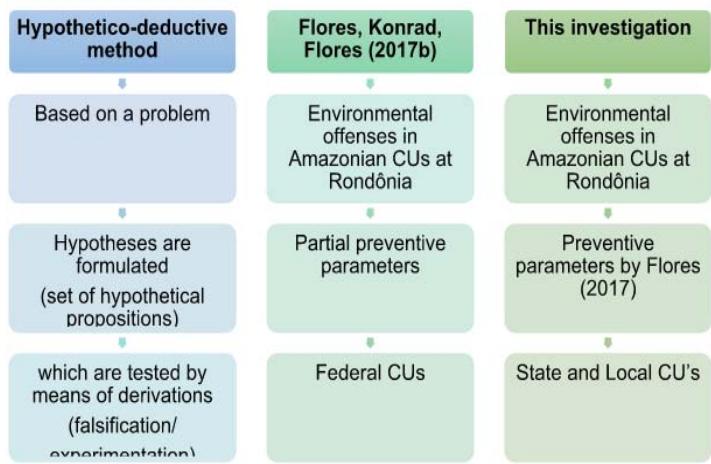 Figure 1: Flowchart with the Application of the Hypothetical-Deductive Method
During the research, these assumptions can be proven, refuted or expanded through experimentation—that is, hypotheses are elaborated (a priori solution conjectures) and, from established principles, we deduct consequences that will be tested through derivations (syllogisms) (CHEMIN, 2015 $^{44}$ ). In this investigation, the preventive parameters (Figure 1) constituted by Flores, Konrad and Flores (2017b $^{45}$ ) were falsicated by applying the hypothetico-deductive method in the state and local Amazonian conservation units in Rondônia, in order to refute, corroborate or expand them, thus enabling the validation or invalidation of green criminology as a preventive instrument for environmental damage in protected areas of Amazonia.
To identify the same patterns established by Flores, Konrad and Flores (2017b $^{46}$ ), we investigated the specificities which make up the generic profile of conservation units and the characterization of environmental offenses practiced in them. Data collection took place in two public administration agencies: a) to survey the profile of state and local conservation units, we used data from the National Registry of Conservation Units (CNUC) of the Ministry of the Environment, available in digital media; b) to characterize the environmental crimes that occurred in the study area, we researched the processes filed with the Rondônia State Secretariat for Environmental Development (SEDAM), upon sending a request to the agency.
The profile of the CUs was built based on information "obtained from the issuance of the 'Parameterized Report of Conservation Unit(s),' selecting options:"
(i) Administrative sphere – state and local; (ii) Federation Unit (UF) – Rondônia; (iii) Municipality; (iv) Report Format – Formatted HTML; (v) General information; (vi) Legal acts; (vii) Characterization – social factors; (viii) Management/infrastructure – communication; (ix) Management – land aspects; (x) Management – human resources; (xi) Management – visitation; and (xii) Management – environmental education (FLORES; KONRAD; FLORES, 2017b p. 283 $^{47}$ ).
To survey environmental crimes, their spatial and temporal distribution, frequency of occurrences and profile of the environmental offender (in terms of personification and gender), a criminal analysis procedure was used as a basis, by means of filings and records of legal documents, using as research technique the consultation of legal documents—i.e., cases filed at SEDAM (CORTES; FOCHEZATTO; JACINTO, 2018 $^{48}$ ).
### a) Characterization of the Study Area
The universe of this study is geographically limited to environmental infractions occurring in state and local Amazonian Conservation Units under the jurisdiction of the State of Rondônia, managed by the following agencies: Rondônia State Secretariat for Environmental Development and Porto Velho Local Secretariat for the Environment, totaling 38 units in the state administrative sphere and 1 unit in the local administrative sphere. The choice for these areas considered the analysis of data revealed in the research by Flores, Konrad and Flores (2017b $^{49}$ ), and, in particular, the scenario of illegal activities in federal Amazonian conservation units located in Rondônia, as presented by those authors.
The reality uncovered by the authors gained greater reach when investigations by the Prosecution Office of Rondônia, released in November 2018, signaled a landscape of damage to these state protected spaces, at which time "Operação Pau Oco" [Hollow Wood Operation] was established—an event of national repercussions (DIÁRIO DA AMAZÔNIA, 2018[^50]; MINISTÉRIO PUBLICO RONDÔNIA, 2019[^51]). Within this context arose our interest in falsificating the preventive parameters established by Flores, Konrad and Flores (2017b[^52]) in Amazonian conservation units of the state and local administrative spheres located in Rondônia, in order to, in addition to corroborating, develop a new parameter and validate Green Criminology theory as an effective tool in preventing environmental damage.
According to data from the Institute of Geography and Statistics (IBGE), Rondônia has 1,562,409 inhabitants, with a territorial unit area of 237,765.233 km2, divided into 52 municipalities, the capital being Porto Velho (IBGE, 2010[^53]). The municipalities which cover the CUs under analysis are: Porto Velho; Machadinho D'Oeste; Vale do Anari, Cujubim; Candeias do Jamari; Guajará-Mirim; Costa Marques; Nova Mamoré; Alta Floresta D'Oeste; Buritis; Alto Alegre do Parecis; Cerejeiras; Corumbiara; and Pimenteiras do Oeste. Furthermore, all conservation units under study are part of the Amazon Biome (MINISTÉRIO DO MEIO AMBIENTE, 2021[^54]).
### b) Data Collection Procedure
The collection of data during document research was conducted with an exploratory survey using data available in cases under the competence of the Rondônia State Secretariat for Environmental Development and information generated in the issuance of parameterized reports from the Ministry of the Environment. For research effectiveness, we filed on December 5, 2018, under number 0028.452893/2018-02, in the Paperless System (SEI) of the State Government of Rondônia, a request for authorization to conduct the aforementioned research in order to characterize the environmental crimes that occurred in state and local conservation units.
All the information collected at this stage allowed us to understand and establish a situational diagnosis of the state and local Amazonian conservation units in Rondônia. These analyzes culminated in the raw material used during the falsification of parameters established by Flores, Konrad and Flores (2017b $^{55}$ ), providing a database with which, from the identified patterns, we conducted the experimentation of preventive parameters, thus enabling their corrobo-ration, refutation and expansion.
## IV. RESULTS AND DISCUSSIONS
### a) Overview of Protected Areas: Situational Reflections of Amazonian Conservation Units in Roraima
In order to draw a situational overview of the Amazonian Conservation Units, located in the Rondônia region, under state and local administrative competence, data was collected from cases filed with the Rondônia State Secretariat for Environmental Development via direct contact with its servants, considering the existing limitations as a result of the Covid-19 Pandemic, with all information being obtained digitally.
Data received correspond to cases initiated from 2014 until mid-January 2020. All information was inserted in Excel spreadsheets, observing the characterization of criminal analysis—that is, the set of criminal data that make up the crimes, identification of the criminals (who committed it), which activity was committed, in which place and at what time (COSTA, 2014 $^{56}$; BERNARDES, 2015 $^{57}$; SENASP, 2017 $^{58}$; CORTES; FOCHEZATTO; JACINTO, 2018 $^{59}$ ).
Aiming to understand the dimension of the analyzed conservation units, we first investigated the total size of protected areas existing in Brazil: 2,546,796.89 km2, considering the overlapping of strict protection areas and sustainable use areas. Of this total, around 28% belongs to the Amazon Biome, comprising an area of 1,179,072.81 km2 of conservation units. This biome has the largest area in relation to the others existing in Brazil (Figure 2).
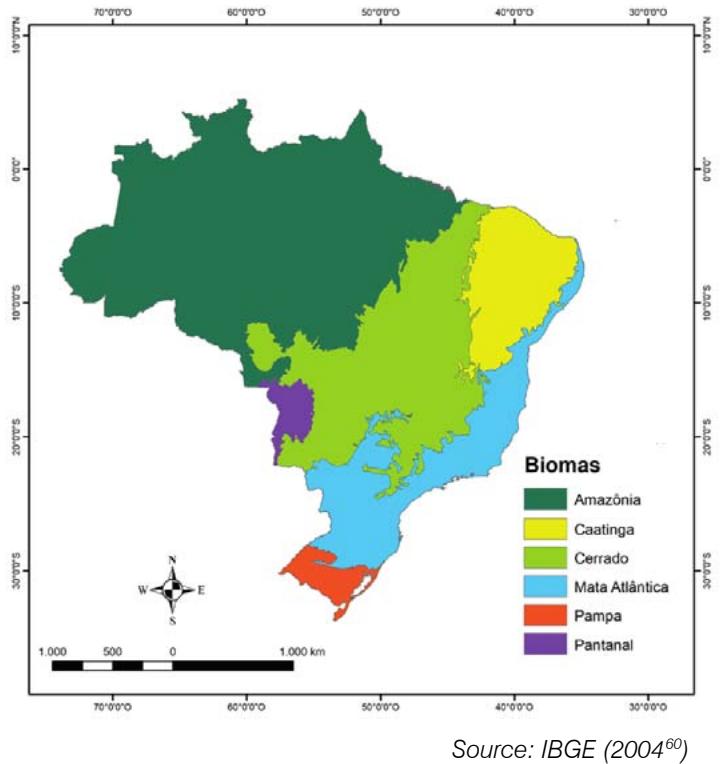 Figure 2: Map of Brazilian Biomes
Specifically in relation to Rondônia, primary data show that, quantitatively, the state has a total of 63 Conservation Units distributed in 52 municipalities, of which 38 units belong to the state administrative sphere and 1 unit belongs to the local administrative sphere, totaling a coverage area of approximately $21,662.93 \mathrm{~km}^2$ of environmental preservation areas, at the state and municipal levels alone (MMA, 2021 $^{61}$ ). This area makes up $66.1\%$ of the total Amazonian CUs in Rondônia, which demonstrates the conservationist role for the State of state and local areas (Figure 3).
ADMINISTRATIVE SPHERE
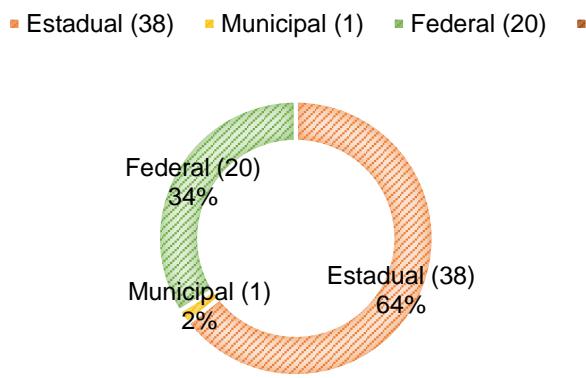 Figure 3: Amazonian conservation units in Rondônia: percentage of areas occupied by administrative level
Source: Adapted from Ministerio do Meio Ambiente (2021)
Next, in the study that preceded this research, it was identified that, of the 39 CUs analyzed, only 5 had a management plan, and these were drafted late, that is, after the legal deadline, which according to the law is 5 years (MMA, 2021[^62]). The study showed that such irregularity provides a scenario that corroborates the concerns raised both by Flores, Konrad and Flores $(2017b^{63})$ and by the operation coordinated by the Prosecution Office of Rondônia $(2019^{64})$.
A management plan is the technical document that proposes to meet the objectives of the conservation unit, therefore establishing its zoning and the rules that will govern the use of the area and the management of natural resources, in order to guide the management of the CU, promote management driven by available or generated knowledge, and orchestrate the implementation of the physical structures necessary for managing the unit. It is authentically an administration plan, which directs the conservation unit towards the effective achievement of the objectives that justified its creation (BRASIL, 2000[^65]; BARROS; LEUZINGER, 2018[^66]). Therefore, conservation units that do not have this requirement are hindered (BRASIL, 2000[^67]).
In this sense, Barros and Leuzinger (2018) state that creating conservation units is not enough to guarantee their effectiveness—it is also necessary to plan and execute their management, so that they are not just units on paper. The identification of this gap was what led to the inclusion of the preventive parameter related to management, the prior analysis of the generic profile of conservation units where the preventive, legal examination of environmental crimes that affect such spaces and the consequent lack of management plans in most CUs denoted that the lack of management is seen as a facilitator for criminal practice.
We reached this finding by reading the information in the parameterized reports, in comparison with what is recommended by the SNUC law, and the consequent crossing of these data with the fundamentals that guide the Green Criminology theory. Thus, our journey began to corroborate and expand the studies by Flores; Konrad and Flores (2017b), envisioning a new preventive parameter (Figure 4).
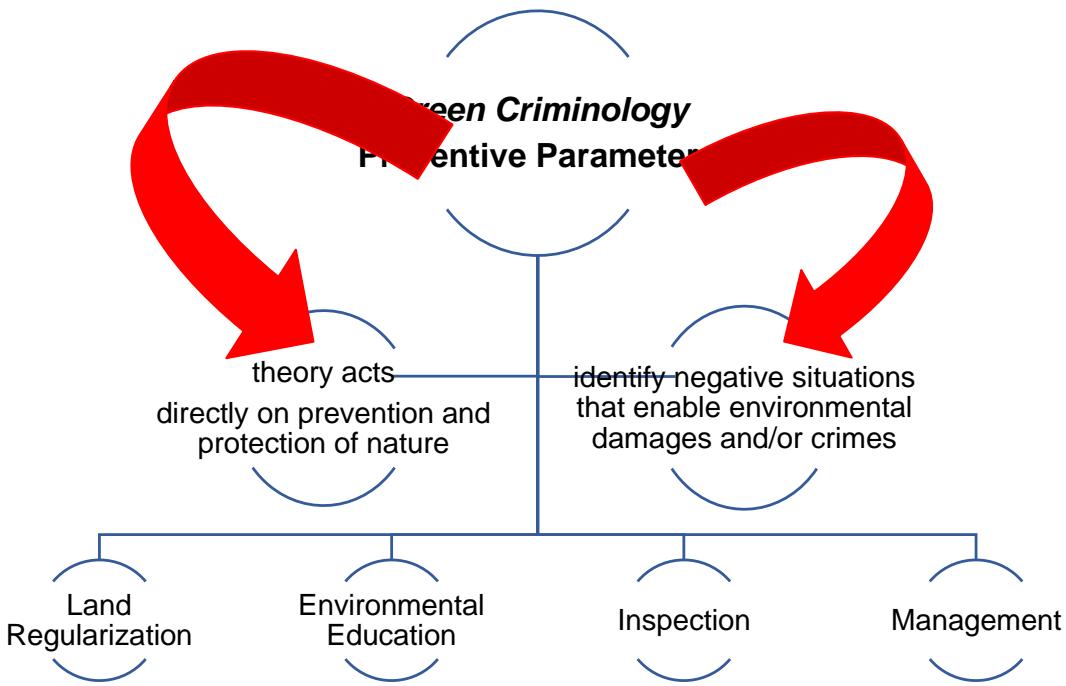 Figure 4: Flowchart of Preventive Parameters Based on Green Criminology
The creation of the management parameter was based on revelations from the parameterized reports originating from the conservation units, that is, the information on the place where the environmental offenses occur, since these data related to the generic profile are part of the characterization of green crimes, thus enabling the identification of effective preventive parameters that contribute to the eradication of new behaviors harmful to the environment, namely: (i) crime data; (ii) criminal data; and (iii) crime location data (analysis conducted to prepare the management parameter). From this set of criminalistic results, it was possible to qualify the work of the State in all its investigative, inspection and patrol aspects, in order to provide information on criminal origin factors, which underlie preventive actions, in the repression and control of criminality (COSTA, 2014 $^{69}$; BERNARDES, 2015 $^{70}$; SENASP, 2017 $^{71}$; CORTES; FOCHEZATTO; JACINTO, 2018 $^{72}$ ).
### b) Experimentation of Preventive Parameters: Falsification
Continuing the research, after including the management parameter, we conducted a criminal analysis of the Amazonian CUs in the sample, based on the collection of document data from the Parameterized Reports (MMA, 2021 $^{73}$ ) and from information obtained in the processes filed with the Rondônia State Secretariat of Environmental Development so, based on these analyses, we could falsicate the preventive parameters in these protected areas. Access to case data took place through direct contact with SEDAM servants, who provided us with the digitalization of information pertaining to infractions. This measure was adopted due to the pandemic caused by Covid-19, an exception which was kindly welcomed by the servant who provided full support for this research.
All data were inserted in Excel spreadsheets, separated by year, starting in 2014 and ending on January 10, 2020. We chose this timeframe because the documents we received corresponded to that period, totaling 10,934 cases. The typology of environmental infractions was classified according to the legal norm, i.e., Decree No. 6,514/2008, which establishes six illicit types: against flora, against fauna, related to pollution, against urban planning and cultural heritage, against environmental administration and committed exclusively in conservation units.
The falsification of the preventive parameters for environmental infractions in conservation units (inspection actions, land tenure regularization and environmental education), proposed by Flores, Konrad and Flores were tested by comparing the generic profile patterns of Amazonian protected areas in the state and local administrative spheres, identified through the same models referred to by the authors: general information, legal acts, biotic factors, social factors, land tenure aspects, human resources, visitation, and environmental education (FLORES; KONRAD; FLORES, 2017b $^{74}$ ). After identifying these factors and characterizing the crimes, falsification commenced.
## i. Preventive Parameter: Inspections
Initiating the experimentation of preventive parameters, the first test we conducted was falsificating inspection actions. For that purpose, we analyzed the characterization of crimes that occurred in conservation units, based on the environmental infraction notices. During the timeframe, 10,934 infraction notices were recorded, which were part of the cases filed with SEDAM, relating to the sample's state and local conservation units. In the case of protected spaces, the number of notices draws our attention.
With regard to the types of crime committed, unfortunately, the case information we received did not fully clarify all of them. Most infractions in the data we analyzed correspond to different forms of damage to the forest or deforestation, and are connected to the following articles from Decree No. 6514/2008:
Article 44. Cutting trees in an area considered to be of permanent preservation or whose species is specially protected, without permission from the competent authority;
Article 50. Destroying or damaging forests or any type of native vegetation or planted native species, object of special preservation, without authorization or license from the competent environmental authority;
Article 51. Destroying, deforestation, damaging or exploiting forest or any type of native vegetation or planted native species, in a legal reserve or forest easement area, in the public or private domain, without prior authorization from the competent environmental agency or in disagreement with the concession (BRASIL, 2008).
In our first reading, we noted that the massive incidence of environmental infraction notices was already indicative of failures in inspection (Figure 5). The presence of the aforementioned infractions also indicates the possibility of lack of land tenure regularization, since the occurrence of deforestation indicates the irregular situation of the flora, an indispensable item for this parameter.
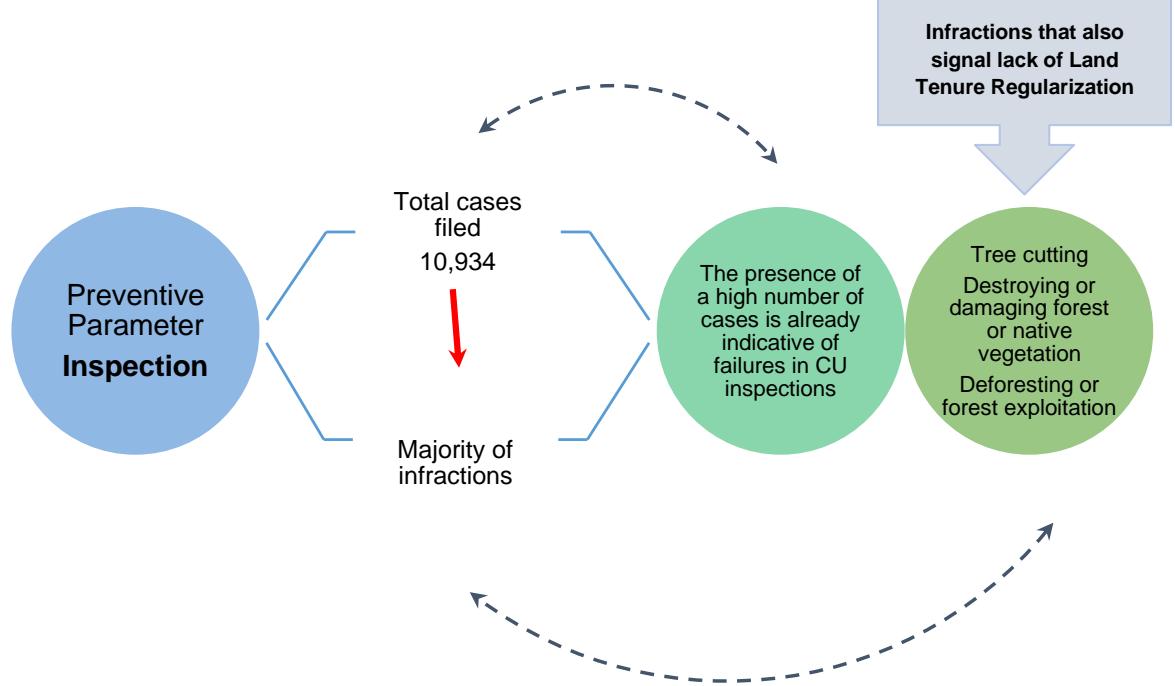 Figure 5: Previous Reading of the Experimentation of the Inspection Parameter
Source: The authors As for the gender of those who committed the crime, males are highly prevalent, with recurrence in some cases. This information reveals a classification called "crime of masculinity," which manifests behaviors and situations that trigger environmental offenses. For this gender, power over nature is linked to tenacious male actions,
expressing intelligence and excitement, combinations that represent cultural aspects of maleness (MESSERSCHMIDT; TOMSEN, 2016[^75]).
Gender issues fit into a sociological conception strengthened by socially constructed concepts. Epistemological discussions involving humankind and nature must start from existing paradigms throughout history, which, incidentally, were strongly deterministic in philosophers René Descartes and Francis Bacon, since both constituted the "dualism existing between 'man-culture' and 'wild-nature,' being that which is wild, opposed to culture." Based on this idea, "man-nature subordination relationships" are still cultivated, which explains the high incidence of environmental crimes committed by men (LAMIM-GUEDES; INOCÊNCIO, 2018[^76]).
According to data collected in the parameterized reports generated by the Ministry of the Environment, this high volume of illegal acts may have a direct link with another relevant fact: the exceptionally low index of human resources allocated in inspection—of the 39 conservation units in the sample, only 9 have effective or commissioned servants. Still, considering the territorial extension of these protected spaces, the deficit becomes more significant, making up a total of 35 employees at the local level and 49 at the state level, of which 13 are commission positions. Let us remember that the area of our sample amounts to around $21,662.93 \mathrm{~km}^2$ (MMA, 2021 $^{77}$ ).
This state of affairs was revealed by Oliveira $(2020^{78})$ when reporting the scenario of the low number of public servants and the lacking investments in conservation units claimed by the National Association of Servants in the Career of Environment Specialist (ASCEMA). This reference precisely highlights the inadequacy of human resources in CUs, which results in the series of questions raised in this research.
As for the matter of communication, it was found that the conservation unit of the local administrative sphere has means of communication such as internet and telephone, and, of the other CUs under state management, only 5 have some way to communicate (internet or telephone). In addition, regarding the inspections themselves, there is a lack of origin data to inform what triggered the cases filed at SEDAM. Certainly, there may be information that shows in more detail the starting point of the infractions (complaints, planned actions or an established inspection plans), that is, the data we accessed do not clarify this relationship. The lack of knowledge of these actions also demonstrates flaws in the inspection process (MMA, 2021[^1]). The result of the falsification is as follows (Figure 6):
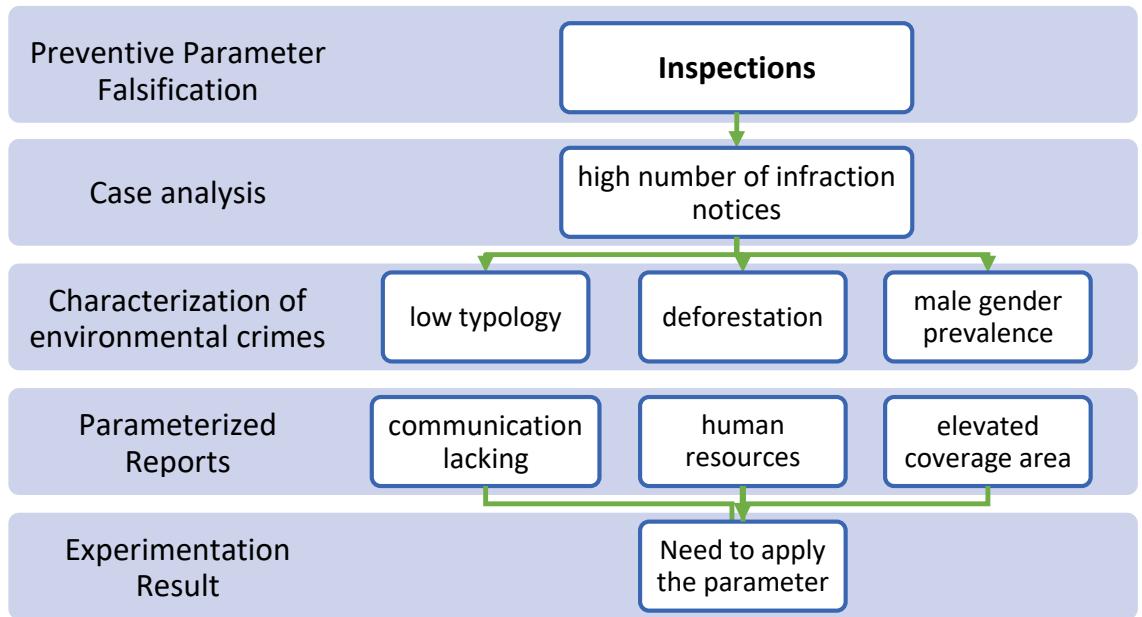 Figure 6: Result of the Falsification of the Inspections Preventive Parameter
- \<http://www.oxfordhandbooks.com/view/10.1093/oxfordhb/9780199935383.001.0001/oxfordhb- 9780199935383-e-129>. Accessed on:16 Apr. 2021.
- 76 LAMIM-GUEDES, V.; INOCÊNCIO, A. F. Mulheres e sustentar ilidade: uma aproximação entre movimento feminista e aedinçao ambiental. Euação Ambiental em Ação. n. 45, 2018. Available at: < https://www revistaea.org/artigo.php?idartofo=1559>. Accessed on: 05 May 2021.
- <http://www.ministeriodomeioambiente.gov.br/areas-protegidas/cadastro-nacional-de-ucs/consulta-gerar-relatorio-de-uc>. Accessed on: 10 Apr. 2021.
- 78 OLIVEIRA, J. C. Lei das Unidades de Conservação da Naturaze completa 20 anos. Meio Ambiente e Energia. Camara dos Deputados, 2020. Available at: < https://www.camara.leg.br/noticias/676930-lei-das-unidades-de-conservacao-da-naturaze-completa-20-anos/>. Accessed on: 05 May 2021.
- <http://www.mma.gov.br/areas-protegidas/unidades-de-conservacao> /categories.html>. Accessed on: 12 May 2021.
Given the above, it is understood that the preventive parameter should be applied in state and local conservation units, as the need for inspections to prevent damage to these protected spaces was proven. It is worth to note that, in 2007, IBAMA and WWF-Brasil jointly conducted a survey to investigate issues related to the management of federal CUs and, on that occasion, they diagnosed that human resources, financial resources, and issues related to research development, evaluation and monitoring were critical to the system of federal conservation units in the country, pointing out systemic problems in those areas. This situation was still present in the protected spaces administered by the state and municipality within our sample, perpetuating itself over these years (IBAMA; WWF-BRASIL, 2007[^80]).
Further, green criminology theory corroborates the applicability of the inspection preventive parameter, as it seeks mechanisms to reduce damage to nature and to disrupt and prevent environmental crimes as well. In this sense, one of the ways to achieve these goals is through the promotion of preventive inspection, an activity aimed at preventing damage before it happens (HALL, 2017[^81]).
## ii. Preventive Parameter: Environmental Education
In the falsification of the environmental education preventive parameter, it was found that there was no representative sample data, because of the total of 39 conservation units, only the protected area under local responsibility had environmental education plans. The lack of positive results at the state administrative level also signals the vulnerability of these protected spaces, reflecting the high rate of environmental violations that have occurred in these areas.
Although the local conservation unit had environmental education plans, it was not possible to identify activities involving research and monitoring (Figure 7), offering environmental education activities linked to formal education at the CU, interpretive/educational activities offered to visitors, or guided trail visitations (MMM, 2021 $^{82}$ ). Despite there being educational initiatives, the preventive parameter is weakened as an instrument to recognize the damage caused to protected areas by illegal conduct.
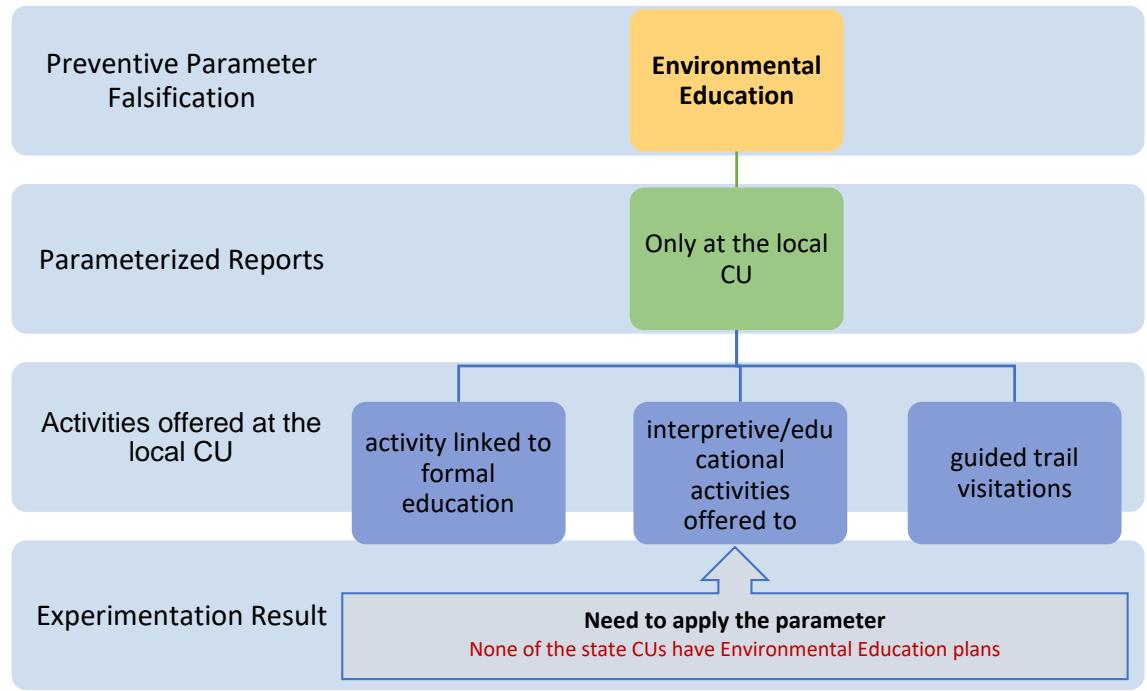 Figure 7: Falsification of the Environmental Education Preventive Parameter
Experimentation with the environmental education preventive parameter suggests a corroboration of the studies by Flores, Konrad and Flores (2017b $^{83}$ ), since results highlight the need for its application in the prevention of illicit activities to natural capital, thus inferring the non-replication of such harmful conducts and, consequently, achieving the conservation of Amazonian protected areas (FLORES; KONRAD; FLORES, 2017a $^{84}$ ).
According to Flores, Konrad and Flores (2017b p. 291 $^{85}$ ), analysis of the generic profile of conservation units "described the panorama of these areas, enabling perception of the reality experienced in such spaces." The inexistence of environmental education plans in 38 conservation units reveals an environment of latent pressures and threats, conducive to the occurrence of environmental violations and, consequently, of damage to nature.
As a result of this panorama, we find for the applicability of the environmental education preventive parameter in Amazonian conservation units in the state administrative sphere, to design activities involving environmental education, and, in the local conservation unit, to improve existing plans.
The intention to apply the environmental education preventive parameter in corroborating the control of environmental infractions in protected areas is consistent with green criminology theory, giving rise to understand environmental offenses (crimes or infractions) in a scope of environmental prevention, since these spaces make up the cornerstone of national and international public policies for the conservation of in situ ecosystems at the global level (FLORES;KONRAD; FLORES, 2017b $^{86}$; NICOLLE; LEROY, 2017 $^{87}$; LYNCH, 2020 $^{88}$ ).
## iii. Preventive Parameter: Land Tenure Regularization
Results from the falsification of the inspections preventive parameter signaled disputes regarding the land tenure situation of the conservation units in the sample. The high number of environmental infraction notices drew a negative picture regarding the situational aspect of the flora, drawing attention to the records of deforestation occurrences and demonstrating the predominance of this conduct.
According to the data analyzed in the parameterized reports (MMA, 2021 $^{89}$ ), the land tenure situation presented in the experimentation with the preventive parameter revealed a low number of regularizations. The module pointed out 1 state conservation unit and the local conservation unit with partial regularization, and 9 state CUs fully regularized (Figure 8).
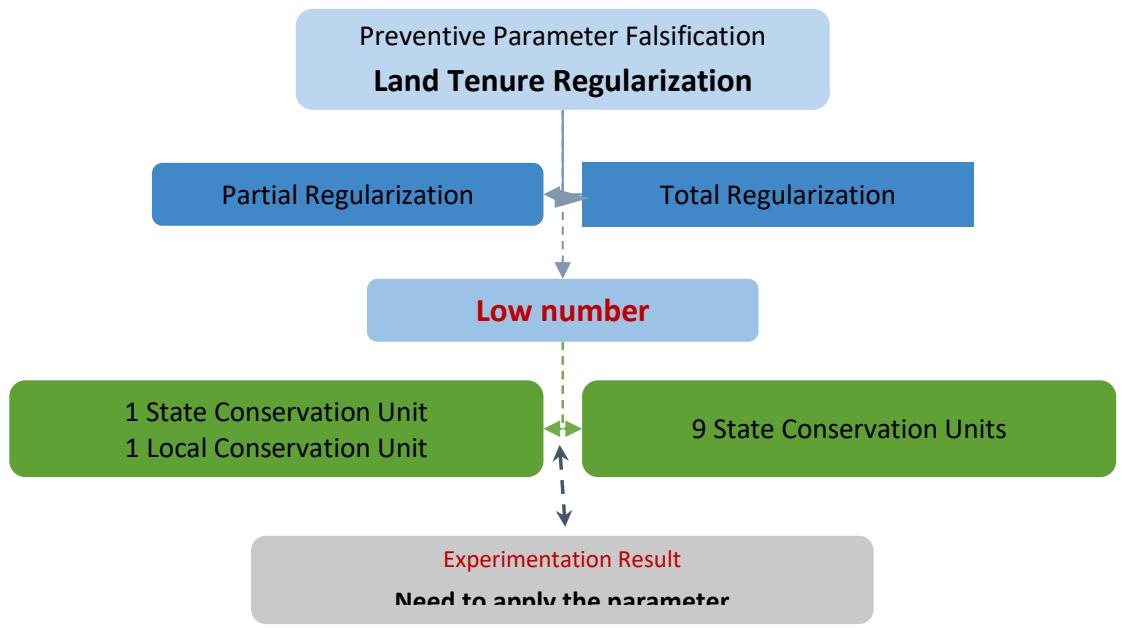 Figure 8: Falsification of the Land Tenure Regularization Preventive Parameter
The study highlighted that the irregularity of land tenure aspects provides an environment of conflict in protected spaces, directly influencing the constraints and pressures on conservation units, consequently generating deforestation zones, which explains the high rate of notices. This reality also occurs in federal conservation units (FLORES; KONRAD; FLORES, 2017b $^{90}$ ), thus generating evidence that reveals problems consistent with the Brazilian historical process, since deforestation in the Amazon reflects the absence of environmental governance, from a perspective that involves a formal institutional structure, organized civil society and the private sector acting at different levels of socio-political organization, in a scope that effectively covers protected areas (SEIXAS et al., 2020a $^{91}$; SEIXAS et al., 2020b $^{92}$ ).
Seixas et al. report "setbacks" that reach conservation units, especially with regard to the "dichotomy between conservation and development, and the reduction of spaces for social participation." The authors reinforce this idea when they mention that the current Brazilian political situation is unfavorable for the governance of CUs, noting that the "country moves backwards" when in views protected areas "as villains of economic growth." They go on to say that "therefore, the difficulties in promoting land tenure regularization, territorial consolidation and effective inspection in numerous CUs are accentuated" (SEIXAS et al., 2020a p. 14[^93]).
Therefore, the result of falsificating the land tenure regularization preventive parameter fits perfectly into a panorama of conflicts and constraints caused by the prominence of deforestation. There is a need to apply the parameter in the studied conservation units, in order to minimize the hostile aspects revealed by harmful conduct. Hence, "environmental regulation through the resolution of the land issue is an inhibitor of conflicts and, consequently, of environmental damage" (FLORES; KONRAD; FLORES, 2017b p. 290[^94]).
Thus, our research revealed that the scenario of protected spaces is consistent with the areas covered by green criminology: "damage and destruction, legal norms, and environmental regulation." This confirms the consolidation of what the theory upholds regarding concerns identified in the experimentation of the parameter, reflecting the negative points that occur in Rondônia's conservation units, since land tenure regularization proved to be relevant in view of the harmful patterns observed in the generic profile of these CUs, considering preventive effectiveness against environmental infractions (FLORES; KONRAD; FLORES, 2017b[^95]).
### c) Preventive Parameters and Green Criminology: A Contribution to the Prevention of Environmental Damage
The falsification of preventive parameters for environmental infractions in state and local conservation units, as well as data on the generic profile of the CUs and the patterns identified in the environmental infraction notices (Figure 9) further cement the scope of green criminology theory (damage and destruction, legal norm, and environmental regulation). Such findings indicate the consolidation of the parameters of inspections, land tenure regularization and environmental education in the prevention of harmful behavior to the natural capital of Amazonian protected areas (FLORES; KONRAD; FLORES, 2017b $^{96}$; MMA, 2021 $^{97}$ ).
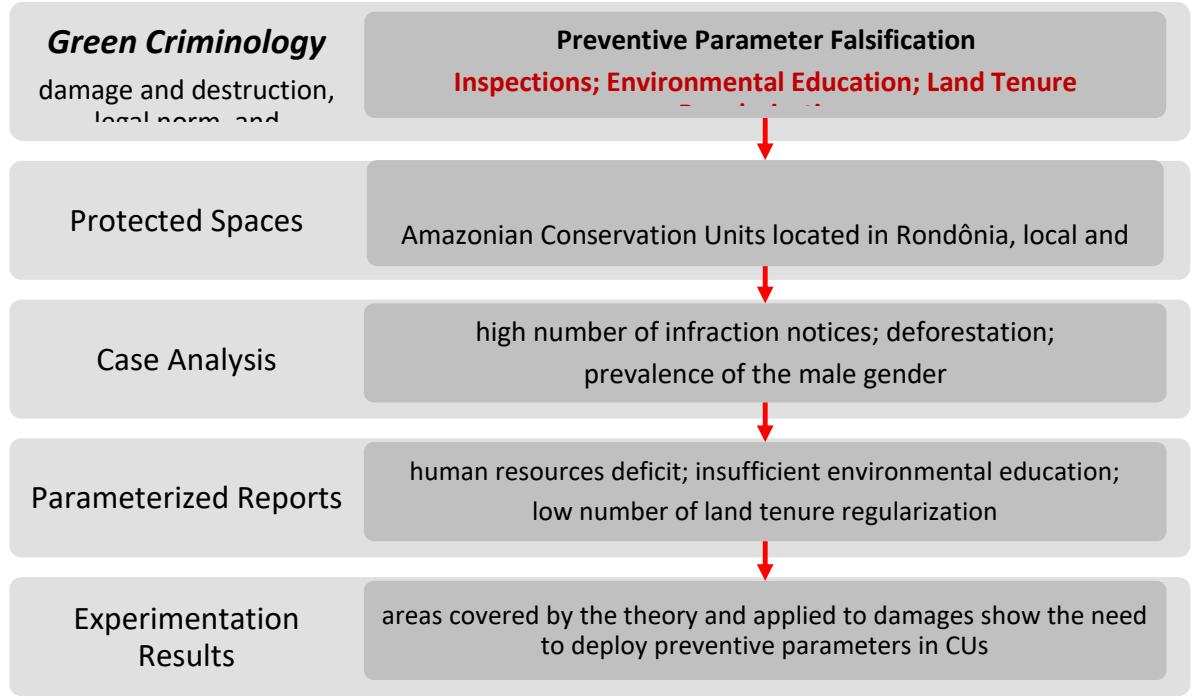 Figure 9: Result of the Falsification of Preventive Parameters
Another latent conclusion concerns the similarity of the profiles of conservation units in the sample of Flores, Konrad and Flores $(2017\mathrm{b}^{98})$ to those studied here, denoting that these do not depend on the administrative sphere being different, since the CUs studied by the authors were at the federal level—what also reaffirms the vulnerability of all analyzed spaces, which should be protected. It should be remembered that it is not enough for the unit to be established on paper; it needs to comply with its legal character, protecting both the territory and the traditional communities that inhabit these CUs, as the high damage rate present in the module reflects the destructive scope of the ecosystems regarding these areas—concerns directly linked to Green Criminology (BRASIL, 2000[^99]; FLORES; KONRAD; FLORES, 2017b[^100]; SEIXAS et al., 2020a[^101]; LYNCH, 2020[^102]).
The strengthening of preventive parameters in Amazonian conservation units under state and local jurisdiction in Rondônia is based on the need for efficiency. Therefore, land tenure regularization and inspection plans must be sought in order to preserve such environmental magnificence, a demand that calls for human resources. It is worth noting that the area of protection in relation to staff available is disproportionate, demonstrating insufficiency of personnel. Thus, land tenure regularization implies environmental justice, as recurrent problems such as environmental racism, influenced by power relations in society, corroborate the inertia in implementing measures to resolve land issues in conservation units, reaching, in the case of sustainable use areas, a specific cultural group, which are the traditional communities (FLORES; KONRAD; FLORES, 2017b p. 290[^103]).
Furthermore, with regard to the environmental education parameter, this proved to be the most critical task, as the study areas had very little personnel available. This result shows how discussions involving environmental education are still controversial, as the study highlighted the lack of scientificity and other activities related to the theme in the protected spaces we analyzed. However, its presentation is relevant to direct perceptions involving environmental crimes, that is, the parameter is essential to understanding the preventive typology of illegal activities, conducting scientific analyzes to understand the situation of protected spaces, so that there is no reproduction of harmful conduct (SOUTH, WHITE, 2014 $^{104}$; LYNCH; STRETESKY, 2014 $^{105}$; NURSE, 2016 $^{106}$; NURSE, 2017 $^{107}$ ).
Furthermore, the results of the sample become more expressive when we confirm the low effectiveness in researches linked to protected areas, as well as few studies related to green criminology theory. This finding contrasts with the reality of developed countries, which even provide grants for research around this theory (SOUTH, 2014 $^{108}$; FLORES; KONRAD; FLORES, 2017a $^{109}$; KONRAD et al., 2020 $^{110}$; LYNCH, 2020 $^{111}$ ).
According to Lynch, there is a need for an abundance of studies that include evaluating the effectiveness of environmental laws and policies and also of environmental law enforcement, "at any level of analysis (local, state, regional, national, global), using traditional pre-post-research methods that criminolo-gists often employ" (LYNCH, 2020 p. $57^{112}$ ). Thus, we conclude that the analysis of environmental offenses, from the perspective of green criminology, enables the proper application of legislation, providing an integrated and grounded management of ecological issues involving green crimes, in fact encouraging the prevention and protection of natural resources (SOUTH, WHITE, $2014^{113}$; LYNCH; STRETESKY, $2014^{114}$; NURSE, $2017^{115}$; HALL, $2017^{116}$ ).
### d) Final Considerations
As a way of closing the cycle around all Amazonian conservation units in the State of Rondônia, testing of preventive parameters highlighted the challenges faced by environmental agencies and entities arising from practical issues, which are mainly related to the shortage of human resources and end up empowering offending conduct, since inspections remain impaired. We also identified the pressures and threats caused by the lack of land tenure regularization, which at times are due to the omission of public authorities in consolidating the territorial ordering of conservation units, what in turn creates obstacles in the protective effectiveness, in addition to promoting conducts inconsistent with such protected spaces in the Amazon.
Finally, we highlight the relevance of environmental education in the sense of analyzing the specificities and typologies that involve crimes against nature, in addition to promoting the scientificity of thematic conservation units and green criminology, essential requirements to understand the situational conditions of protected areas. Therefore, this research serves as a warning to reflect on the concerns that revolve around conservation units, since their implementation is not enough to achieve their main objective: preservation of natural capital.
[^1]: IUCN; UNEP-WCMC. Protected Planet Report 2016. UNEP-WCMC and IUCN: Cambridge UK, and Gland, Switzerland, 2016. _(p.1)_
[^2]: FLORES, Cintia Rosina; KONRAD, Odorico; FLORES, Josmar Almeida. Green Criminology e prevenção à danos ambientais em areas protegidas na Amazônia. Ibero-American Journal of Environmental Sciences, [S.I.], Aracaju, v. 8, n. 4, aug. 2017b. _(p.1)_
[^3]: NICOLLE, S.; LEROY, M. Advocacy coalitions and protected areas creation process: case study in the Amazon. Journal of Environmental Management, v.198, p.99-109, 2017. DOI: http://dx.doi.org/10.1016/j.jenvman.2017.04.035. _(p.1)_
[^4]: PINHEIRO, V. B. Sistema de responsabilitação de crimes ambientais praticados em unidades de conservação no@municipio de Manaus. Dissertation (Mestrado Profissionalizing em Gestao de Areas Proteigidas) - Instituto Nacional de Pesquisas da Amazoaia, Manaus, 2015. _(p.1)_
[^5]: May 2021. - . Accessed on: _(p.13)_
[^6]: FLORES, Cintia Rosina; KONRAD, Odorico; FLORES, Josmar Almeida. Green Criminology e prevenção à danos ambientais em和地区 protegidas na Amazônia. Ibero-American Journal of Environmental Sciences, [S.l.], Aracaju, v. 8, n. 4, aug. 2017b. _(p.1)_
[^7]: Nov. 2019. _(p.6)_
[^22]: Apr. 2021 _(p.7)_
[^30]: Mar. 2020. _(p.12)_
[^50]: DIÁRIO DA AMAZONIA. Operação Pau Oco. Available at: . Accessed on: _(p.6)_
[^52]: FLORES, Cintia Rosina; KONRAD, Odorico; FLORES, Josmar Almeida. Green Criminology e prevenção à danos ambientais em和地区 protegidas na Amazônia. Ibero-American Journal of Environmental Sciences, [S.l.], Aracaju, v. 8, n. 4, aug. 2017b. _(p.6)_
[^53]: INSTITUTO BRASILEIRO DE GEOGRAFIA E ESTATISTICA (IBGE). Produção da EXTRAÇÃO vegetal e silvicultura. v. _(p.6)_
[^62]: MINISTÉRIO DO MEIO AMBIENTE (MMA). Consultas por Unidades de Conservação. Available at: . Accessed on: _(p.8)_
[^65]: BRASIL. Lei n° 9.985, de 18 de julho de 2000. Regulamento o art. 225, § 1°, incisos I, II, III e VII da Constituicao Federal, institui o Sistema Nacional de Unidades de Conservacao da Natureza e da otheras providencias. Available at: . Accessed on: _(p.8)_
[^66]: BARROS, L. S. C.; LEUZINGER, M. D. Planos de Manejo: panorama, desafios e perspectivas. Cadernos do Programa de Pós-graduação Direito/UFRGS, volume 13, n. 2, 2018. _(p.8)_
[^67]: BRASIL. Lei n° 9.985, de 18 de julho de 2000. Regulamento o art. 225, § 1°, incisos I, II, III e VII da Constituição Federal, institui o Sistema Nacional de Unidades de Conservação da Natureza e há另一as providências. Available at: . Accessed on: _(p.8)_
[^80]: Instituto Brasileiro do Meio Ambiente e dos Recursos Naturais Renovaveis - IBAMA; WWF-BRASIL. Efectividade de gestao de unidade de conservacao federais do Brasil. Brasília, 2007 _(p.12)_
[^81]: HALL, Matthew. Exploring the cultural dimensions of environmental victimization. Nature. Article number: 17076, 2017. Available at: Accessed on: _(p.12)_
[^93]: SEIXAS, C.S.; PRADO, D.S.; JOLY, C. A.; MAY, P. H.; NEVES, E. M. S. C.; TEXEIRA, L. R. Governçà ambiental no brasil: rumo aos objetivos do desenvolvimento sustentâvel (ODS)? _(p.14)_
[^94]: FLORES, Cintia Rosina; KONRAD, Odorico; FLORES, Josmar Almeida. Green Criminology e prevenção à danos ambientais em和地区 protegadas na Amazônia. Ibero-American Journal of Environmental Sciences, [S.I.], Aracaju, v. 8, n. 4, aug. 2017b. _(p.14)_
[^95]: FLORES, Cintia Rosina; KONRAD, Odorico; FLORES, Josmar Almeida. Green Criminology e prevenção à danos ambientais em和地区 protegadas na Amazônia. _(p.14)_
[^99]: BRASIL. Lei n° 9.985, de 18 de julho de 2000. Regulamento art. 225, § 1°, incisos I, II, III e VII da Constituicao Federal, institui o Sistema Nacional de Unidades de Conservacao da Natureza e da otheras providencias. Available at: . Accessed on: _(p.15)_
[^100]: FLORES, Cintia Rosina; KONRAD, Odorico; FLORES, Josmar Almeida. Green Criminology e prevenção à danos ambientais em和地区 protegidas na Amazônia. Ibero-American Journal of Environmental Sciences, [S.I.], Aracaju, v. 8, n. 4, aug. 2017b. _(p.15)_
[^101]: SEIXAS, C.S.; PRADO, D.S.; JOLY, C. A.; MAY, P. H.; NEVES, E. M. S. C.; TEXEIRA, L. R. Governiaçá ambiental no brasil: rumo aos objetivos do desenvolvimento sustentavel (ODS)? Cadernos Gestão Pública e Cidadania. São Paulo, v. 25, n. 81, 2020a. _(p.15)_
[^102]: LYNCH, Michael. J. Green Criminology and Environmental Crime: Criminology that matters in the Age of Global Ecological Collapse. Journal of White Collar and Corporate Crime. 2020, 1(1) 50 _(p.15)_
[^103]: FLORES, Cintia Rosina; KONRAD, Odorico; FLORES, Josmar Almeida. Green Criminology e prevenção à danos ambientais em和地区 protegidas na Amazônia. Ibero-American Journal of Environmental Sciences, [S.I.], Aracaju, v. 8, n. 4, aug. 2017b. _(p.15)_
[^31]: FLORES, Cintia Rosina; KONRAD, Odorico; FLORES, Josmar Almeida. Green Criminology e prevenção à danos ambientais em áreas protegidas na Amazônia. Ibero-American Journal of Environmental Sciences, [S.l.], Aracaju, v. 8, n. 4, aug. 2017b.
[^32]: FLORES, Cintia Rosina; KONRAD, Odorico; FLORES, Josmar Almeida. Green Criminology e prevenção à danos ambientais em áreas protegidas na Amazônia. Ibero-American Journal of Environmental Sciences, [S.l.], Aracaju, v. 8, n. 4, aug. 2017b.
[^33]: FLORES, Cintia Rosina; KONRAD, Odorico; FLORES, Josmar Almeida. Green Criminology e prevenção à danos ambientais em áreas protegidas na Amazônia. Ibero-American Journal of Environmental Sciences, [S.l.], Aracaju, v. 8, n. 4, aug. 2017b.
[^34]: FLORES, Cintia Rosina; KONRAD, Odorico; FLORES, Josmar Almeida. Green Criminology e prevenção à danos ambientais em áreas protegidas na Amazônia. Ibero-American Journal of Environmental Sciences, [S.l.], Aracaju, v. 8, n. 4, aug. 2017b.
[^35]: FLORES, Cintia Rosina; KONRAD, Odorico; FLORES, Josmar Almeida. Green Criminology e prevenção à danos ambientais em áreas protegidas na Amazônia. Ibero-American Journal of Environmental Sciences, [S.l.], Aracaju, v. 8, n. 4, aug. 2017b.
[^36]: FLORES, Cintia Rosina; KONRAD, Odorico; FLORES, Josmar Almeida. Green Criminology e prevenção à danos ambientais em áreas protegidas na Amazônia. Ibero-American Journal of Environmental Sciences, [S.l.], Aracaju, v. 8, n. 4, aug. 2017b.
[^37]: FLORES, Cintia Rosina; KONRAD, Odorico; FLORES, Josmar Almeida. Green Criminology e prevenção à danos ambientais em áreas protegidas na Amazônia. Ibero-American Journal of Environmental Sciences, [S.l.], Aracaju, v. 8, n. 4, aug. 2017b.
[^38]: FLORES, Cintia Rosina; KONRAD, Odorico; FLORES, Josmar Almeida. Green Criminology e prevenção à danos ambientais em áreas protegidas na Amazônia. Ibero-American Journal of Environmental Sciences, [S.l.], Aracaju, v. 8, n. 4, aug. 2017b.
[^39]: FLORES, Cintia Rosina; KONRAD, Odorico; FLORES, Josmar Almeida. Green Criminology e prevenção à danos ambientais em áreas protegidas na Amazônia. Ibero-American Journal of Environmental Sciences, [S.l.], Aracaju, v. 8, n. 4, aug. 2017b.
[^51]: FLORES, Cintia Rosina; KONRAD, Odorico; FLORES, Josmar Almeida. Green Criminology e prevenção à danos ambientais em áreas protegidas na Amazônia. Ibero-American Journal of Environmental Sciences, [S.l.], Aracaju, v. 8, n. 4, aug. 2017b.
[^8]: Accessed on:05 Nov.2019. _(p.6)_
[^10]: Apr. 2021. _(p.9)_
[^18]: Nov. 2020. _(p.8)_
[^24]: FLORES, Cintia Rosina; KONRAD, Odorico; FLORES, Josmar Almeida. Green Criminology e prevenção à danos ambientais em和地区 protegidas na Amazônia. Ibero-American Journal of Environmental Sciences, [S.l.], Aracaju, v. 8, n. 4, aug. 2017b. _(p.3)_
[^25]: FLORES, Cintia Rosina; KONRAD, Odorico; FLORES, Josmar Almeida. Green Criminology e prevenção à danos ambientais em和地区 protegadas na Amazônia. Ibero-American Journal of Environmental Sciences, [S.I.], Aracaju, v. 8, n. 4, aug. 2017b. _(p.3)_
[^26]: FLORES, Cintia Rosina; KONRAD, Odorico; FLORES, Josmar Almeida. Green Criminology e prevenção à danos ambientais em和地区 protegidas na Amazônia. Ibero-American Journal of Environmental Sciences, [S.l.], Aracaju, v. 8, n. 4, aug. 2017b. _(p.3)_
[^28]: BARRETT, Kimberly; LYNCH, Michael; STRETESKY, Paul B. Green Criminology and the Reconceptualization of School Violence: Comparing Green School Violence and Traditional Forms of School Violence for School Children. Critical Criminology. v. 24, pp 19-37, March 2016. Available at: . Accessed on: _(p.3)_
[^29]: Rio de Janeiro: IBGE, 2010. _(p.6)_
[^43]: MEZZAROBA, Orides; MONTEIRO, Cláudia S. Manual de metodologia da pesquisa no Direito. _(p.5)_
[^45]: FLORES, Cintia Rosina; KONRAD, Odorico; FLORES, Josmar Almeida. Green Criminology e prevenção à danos ambientais em和地区 protegidas na Amazônia. Ibero-American Journal of Environmental Sciences, [S.l.], Aracaju, v. 8, n. 4, aug. 2017b. _(p.5)_
[^46]: FLORES, Cintia Rosina; KONRAD, Odorico; FLORES, Josmar Almeida. Green Criminology e prevenção à danos ambientais em和地区 protegidas na Amazônia. Ibero-American Journal of Environmental Sciences, [S.l.], Aracaju, v. 8, n. 4, aug. 2017b. _(p.5)_
[^47]: FLORES, Cintia Rosina; KONRAD, Odorico; FLORES, Josmar Almeida. Green Criminology e prevenção à danos ambientais em和地区 protegidas na Amazônia. Ibero-American Journal of Environmental Sciences, [S.l.], Aracaju, v. 8, n. 4, aug. 2017b. _(p.5)_
[^49]: FLORES, Cintia Rosina; KONRAD, Odorico; FLORES, Josmar Almeida. Green Criminology e prevenção à danos ambientais em和地区 protegidas na Amazônia. Ibero-American Journal of Environmental Sciences, [S.I.], Aracaju, v. 8, n. 4, aug. 2017b. _(p.6)_
[^55]: FLORES, Cintia Rosina; KONRAD, Odorico; FLORES, Josmar Almeida. Green Criminology e prevenção à danos ambientais em和地区 protegidas na Amazônia. Ibero-American Journal of Environmental Sciences, [S.I.], Aracaju, v. 8, n. 4, aug. 2017b. _(p.6)_
[^57]: BERNARDES, Paulo Ventura Silva. Análise criminal como instrumento de produção de conhecimiento. Análise Criminal com Enfase em Docência no Ensino Superior Instituto de Pós-Graduação - IPOG. Goiânia, 2015. _(p.7)_
[^58]: SECRETARIA NACIONAL DE SEGURANÇA PUBLICA (SENASP). Análise criminal 1 versão atualizada. Ministério da Justa e Segurarça Pública, Brasília, 2017. _(p.7)_
[^60]: INSTITUTO BRASILEIRO DE GEOGRAFIA E ESTATISTICA (IBGE). Mapa de Biomas e de Vegetação. 2004. Available at: . Accessed on 06 Nov. 2019. _(p.7)_
[^61]: https://doi.org/10.1177/2631309X19876930 Accessed on: _(p.3)_
[^63]: FLORES, Cintia Rosina; KONRAD, Odorico; FLORES, Josmar Almeida. Green Criminology e prevenção à danos ambientais em和地区 protegidas na Amazônia. Ibero-American Journal of Environmental Sciences, [S.l.], Aracaju, v. 8, n. 4, aug. 2017b. _(p.8)_
[^64]: MINISTÉRIO PUBLICO DE RONDÔNIA. Ministério Páulico do Estado, MP de Contas e Policiala Civil explicá alvos da segunda fase da Operação Pau Oco. Available at: .Accessed on: _(p.8)_
[^68]: BARROS, L. S. C.; LEUZINGER, M. D. Planos de Manejo: panorama, desafios e perspectivas. Cadernos do Programa de Pós-graduação Direito/UFRGS, volume 13, n. 2, 2018. _(p.8)_
[^70]: BERNARDES, Paulo Ventura Silva. Análise criminal como instrumento de produção de conhecimiento. Análise Criminal com Ínfase em Docência no Ensino Superior Instituto de Pós-Graduação - IPOG. Goiânia, 2015. _(p.9)_
[^71]: SECRETARIA NACIONAL DE SEGURANÇA PUBLICA (SENASP). Análise criminal 1 versão atualizada. Ministério da Justa e Segurarça Pública, Brasília, 2017.. _(p.9)_
[^74]: FLORES, Cintia Rosina; KONRAD, Odorico; FLORES, Josmar Almeida. Green Criminology e prevenção à danos ambientais em和地区 protegidas na Amazônia. Ibero-American Journal of Environmental Sciences, [S.I.], Aracaju, v. 8, n. 4, aug. 2017b _(p.10)_
[^82]: MINISTÉRIO DO MEIO AMBIENTE (MMA). Consultas por Unidades de Conservação. Available at: . Accessed on: _(p.12)_
[^83]: FLORES, Cintia Rosina; KONRAD, Odorico; FLORES, Josmar Almeida. Green Criminology e prevenção à danos ambientais em和地区 protegidas na Amazônia. Ibero-American Journal of Environmental Sciences, [S.I.], Aracaju, v. 8, n. 4, aug. 2017b. _(p.12)_
[^84]: FLORES, Cintia Rosina; KONRAD, Odorico; FLORES, Josmar Almeida. Green criminology: cenario das produçõescientifica. Ibero-American Journal of Environmental Sciences, [S.l.], Aracaju, v. 8, n. 4, aug. 2017a. _(p.13)_
[^85]: FLORES, Cintia Rosina; KONRAD, Odorico; FLORES, Josmar Almeida. Green Criminology e prevenção à danos ambientais em和地区 protegidas na Amazônia. Ibero-American Journal of Environmental Sciences, [S.I.], Aracaju, v. 8, n. 4, aug. 2017b _(p.13)_
[^86]: FLORES, Cintia Rosina; KONRAD, Odorico; FLORES, Josmar Almeida. Green Criminology e prevenção à danos ambientais em和地区 protegadas na Amazônia. - Ibero-American Journal of Environmental Sciences, [S.I.], Aracaju, v. 8, n. 4, aug. 2017b _(p.13)_
[^88]: LYNCH, Michael. J. Green Criminology and Environmental Crime: Criminology that matters in the Age of Global Ecological Collapse. Journal of White Collar and Corporate Crime. 2020, 1(1) 50 _(p.13)_
[^90]: FLORES, Cintia Rosina; KONRAD, Odorico; FLORES, Josmar Almeida. Green Criminology e prevenção à danos ambientais em和地区 protegidas na Amazônia. Ibero-American Journal of Environmental Sciences, [S.I.], Aracaju, v. 8, n. 4, aug. 2017b _(p.14)_
[^91]: SEIXAS, C.S.; PRADO, D.S.; JOLY, C. A.; MAY, P. H.; NEVES, E. M. S. C.; TEXEIRA, L. R. Goverança ambiental no brasil: rumo aos objetivos do desenvolvimento sustentavel (ODS)? _(p.14)_
[^96]: FLORES, Cintia Rosina; KONRAD, Odorico; FLORES, Josmar Almeida. Green Criminology e prevenção à danos ambientais em和地区 protegadas na Amazônia. _(p.14)_
[^97]: MINISTÉRIO DO MEIO AMBIENTE (MMA). Áreas protegidas. Availableat: . Access ed on: _(p.14)_
[^98]: FLORES, Cintia Rosina; KONRAD, Odorico; FLORES, Josmar Almeida. Green Criminology e prevenção à danos ambientais em和地区 protegidas na Amazônia. Ibero-American Journal of Environmental Sciences, [S.l.], Aracaju, v. 8, n. 4, aug. 2017b _(p.15)_
[^138]: p. Tese (Doutorado em ciências ambientais) Universidade do Vale do Taquari, Rio Grande do Sul. _(p.1)_
Generating HTML Viewer...
References
94 Cites in Article
V Pinheiro (2015). Sistema de responsabilização de crimes ambientais praticados em unidades de conservação no município de Manaus. Dissertação.
Cíntia Flores,Odorico Konrad,Josmar Flores (2017). Green Criminology: cenário das produções científicas.
Cíntia Flores,; Rosina,Konrad,; Odorico,Josmar Flores,Almeida (2017). Green Criminology e prevenção à danos ambientais em áreas protegidas na Amazônia.
Cíntia Flores,Odorico Konrad,Josmar Flores (2017). Green Criminology e prevenção à danos ambientais em áreas protegidas na Amazônia.
Ministério Do Meio Ambiente ( Mma (2021). Dados consolidados: Unidades de Conservação por Bioma.
Nigel South (2014). Green Criminology: Reflections, Connections, Horizons.
Aldo Costa,Silva Da (2014). Análise criminal e a incidência da criminalidade na Regional de Tangará da Serra.
Cíntia Flores,Odorico Konrad,Josmar Flores (2017). Green Criminology e prevenção à danos ambientais em áreas protegidas na Amazônia.
Renan Cortes,Adelar Fochezatto,Paulo Jacinto (2018). Crimes nos Municípios do Rio Grande do Sul: Análise a partir de um Índice Geral de Criminalidade.
Michael Lynch (2020). Green Criminology and Environmental Crime: Criminology That Matters in the Age of Global Ecological Collapse.
Cíntia Flores,; Rosina,Konrad,; Odorico,Josmar Flores,Almeida (2017). Green Criminology e prevenção à danos ambientais em áreas protegidas na Amazônia.
Michael Lynch (1990). The Greening of Criminology: A Perspective on the 1990s.
Cíntia Flores,Odorico Konrad,Josmar Flores (2017). Green Criminology e prevenção à danos ambientais em áreas protegidas na Amazônia.
Cíntia Flores,; Rosina,Konrad,; Odorico,Josmar Flores,Almeida (2017). Green Criminology e prevenção à danos ambientais em áreas protegidas na Amazônia.
Diário Da Amazônia (2019). Operação Pau Oco.
Ministério Público De Rondônia (2019). Ministério Público do Estado, MP de Contas e Polícia Civil explica alvos da segunda fase da Operação Pau Oco.
Aldo Costa,Silva Da (2014). Análise criminal e a incidência da criminalidade na Regional de Tangará da Serra.
Paulo Bernardes,Silva (2015). Produção de orientadores de um programa de pós-graduação da Área de Ensino: análise da atuação simultânea em vários programas.
Janaína Teixeira,Josiane Silva,Andiara Maranhão,Hágatta De Brito,Ugo Dias,Rafael Júnior (2017). DIRETRIZES PEDAGÓGICAS: PROPOSTA APLICADA A UMA ESCOLA CORPORATIVA DO PODER EXECUTIVO FEDERAL BRASILEIRO.
Renan Cortes,Adelar Fochezatto,Paulo Jacinto (2018). Crimes nos Municípios do Rio Grande do Sul: Análise a partir de um Índice Geral de Criminalidade.
Rita Villas Boas,Denise Silva (2004). O curso de desenvolvimento de habilidades em pesquisa do ibge.
Ministério Do Meio Ambiente ( Mma (2021). Cadastro Nacional de Unidades de Conservação: consulta por UC.
Cíntia Flores,Odorico Konrad,Josmar Flores (2017). Green Criminology: cenário das produções científicas.
Cíntia Flores,Odorico Konrad,Josmar Flores (2017). Green Criminology e prevenção à danos ambientais em áreas protegidas na Amazônia.
Cíntia Flores,Odorico Konrad,Josmar Flores (2017). Green Criminology e prevenção à danos ambientais em áreas protegidas na Amazônia.
Sandra Nicolle,Maya Leroy (2017). Advocacy coalitions and protected areas creation process: Case study in the Amazon.
Michael Lynch (2020). Green Criminology and Environmental Crime: Criminology That Matters in the Age of Global Ecological Collapse.
Ministério Do Meio Ambiente ( Mma (2021). Consulta relatórios de UC: gerar relatório parametrizado de unidades de conservação.
Cíntia Flores,Odorico Konrad,Josmar Flores (2017). Green Criminology e prevenção à danos ambientais em áreas protegidas na Amazônia.
Cristiana Seixas,Deborah Prado,Carlos Joly,Peter May,Estela Neves,Leonardo Teixeira (2020). Governança ambiental no Brasil: rumo aos objetivos do desenvolvimento sustentável (ODS)?.
C Seixas,P Vieira,R Medeiros,P Quevedo,T Zerafini,Introdução (2020). Governança, conservação e desenvolvimento em territórios marinhos-costeiro no Brasil.
Cristiana Seixas,Deborah Prado,Carlos Joly,Peter May,Estela Neves,Leonardo Teixeira (2020). Governança ambiental no Brasil: rumo aos objetivos do desenvolvimento sustentável (ODS)?.
Cíntia Flores,Odorico Konrad,Josmar Flores (2017). Green Criminology e prevenção à danos ambientais em áreas protegidas na Amazônia.
Cíntia Flores,; Rosina,Konrad,; Odorico,Josmar Flores,Almeida (2017). Green Criminology e prevenção à danos ambientais em áreas protegidas na Amazônia.
Cíntia Flores,Odorico Konrad,Josmar Flores (2017). Green Criminology e prevenção à danos ambientais em áreas protegidas na Amazônia.
Kimberly Barrett,Michael Lynch,Paul Stretesky (2016). Green Criminology and the Reconceptualization of School Violence: Comparing Green School Violence and Traditional Forms of School Violence for School Children.
N South,Rob White (2014). The antecedents and emergence of a 'Green' criminology.
Michael Lynch,B Stretesky P (2014). Toward a Green Criminological Revolution.
Angus Nurse (2017). Green criminology: shining a critical lens on environmental harm.
Angus Nurse (2017). Green criminology: shining a critical lens on environmental harm.
Nigel South (2014). Green Criminology: Reflections, Connections, Horizons.
Cíntia Flores,Odorico Konrad,Josmar Flores (2017). Green Criminology: cenário das produções científicas.
Ana Konrad,Luciana Turatti,Cíntia Flores,Odorico Konrad (2020). Systematic Review Study: A Comparative Analysis of the State of the Art of Green Criminology.
Michael Lynch (2020). Green Criminology and Environmental Crime: Criminology That Matters in the Age of Global Ecological Collapse.
Michael Lynch (2020). Green Criminology and Environmental Crime: Criminology That Matters in the Age of Global Ecological Collapse.
N South,Rob White (2014). The antecedents and emergence of a 'Green' criminology.
Michael Lynch,B Stretesky P (2014). Toward a Green Criminological Revolution.
Angus Nurse (2017). Green criminology: shining a critical lens on environmental harm.
Matthew Hall (2017). Exploring the cultural dimensions of environmental victimization.
L Barros,M Leuzinger (2018). Planos de Manejo: panorama, desafios e perspectivas.
Paulo Bernardes,Silva (2015). Produção de orientadores de um programa de pós-graduação da Área de Ensino: análise da atuação simultânea em vários programas.
(2000). Unknown Title.
José Rodrigues (2020). Sistema Nacional de Unidades de Conservação (SNUC): uma análise à luz da legislação vigente (Lei Federal 9.985 de 18 de julho de 2000).
Beatris Chemin,Francisca (2015). Manual da Univates para trabalhos acadêmicos: planejamento, elabor-ação e apresentação.
Renan Cortes,Adelar Fochezatto,Paulo Jacinto (2018). Crimes nos Municípios do Rio Grande do Sul: Análise a partir de um Índice Geral de Criminalidade.
Aldo Costa,Silva Da (2014). Análise criminal e a incidência da criminalidade na Regional de Tangará da Serra.
Diário Da Amazônia (2019). Operação Pau Oco.
Cíntia Flores,Rosina (2017). Green Criminology e prevenção à danos ambientais em áreas protegidas na Amazônia.
Cíntia Flores,Odorico Konrad,Josmar Flores (2017). Green Criminology: cenário das produções científicas.
Cíntia Flores,Odorico Konrad,Josmar Flores (2017). Green Criminology e prevenção à danos ambientais em áreas protegidas na Amazônia.
(2017). Supplemental Information 1: Díaz-Castillo (2017b) [In press reference].
Matthew Hall (2017). Exploring the cultural dimensions of environmental victimization.
Vitor Calcenoni (2007). A Avaliação e Gestão de Efeitos Ambientais Cumulativos (AGEC) na Avaliação de Impacto Ambiental de projetos: o caso da Coordenadoria Geral de Petróleo e Gás (CGPEG) do Instituto Brasileiro de Meio Ambiente e dos Recursos Naturais Renováveis (IBAMA).
Rita Villas Boas,Denise Silva (2004). O curso de desenvolvimento de habilidades em pesquisa do ibge.
Franciele Oliveira,Geisilane Hell,José Sá (2010). Produção da extração vegetal e da silvicultura de fibras no Brasil.
Instituto Chico Mendes De Conservação Da Biodiversidade ( Icmbio (2019). Unidades de Con-servação.
(2016). Mangroves of East Africa. UNEP-WCMC Biodiversity Series 13.
A Konrad,L Turatti,C Flores,O Konrad (2020). Systematic Review Study: A Compa-rative Analysis of the State of the Art of Green Criminology.
Lamim-Guedes,V Inocêncio,A (2018). Mulheres e sustentabilidade: uma aproximação entre movi-mento feminista e a educação ambiental.
Michael Lynch (2020). Green Criminology and Environmental Crime: Criminology That Matters in the Age of Global Ecological Collapse.
Frank Pearce (1990). Book Review: Nigel South and Piers Beirne (eds) Green Criminology Aldershot: Ashgate, 2006. 586 pp. £145 (hbk). ISBN 0754625923. Piers Beirne and Nigel South (eds) Issues in Green Criminology: Confronting Harms against Environments, Humanity and Other Animals Uffculmea: Willan, 2007. 317 pp. £23.99 (pbk), £55 (hbk). ISBN—13: 9781843922209.
______,B Stretesky P (2014). Toward a Green Criminological Revolution.
J Messerschmidt,S Tomsen,Mascu-Linities (2016). Crime, and Criminal Justice.
Orides Mezzaroba,Monteiro,S Cláudia (2017). Manual de metodologia da pesquisa no Direito.
Isis Felippe De Freitas (2021). Unidades de conservação no Brasil.
Isis Felippe De Freitas (2021). Unidades de conservação no Brasil.
Isis Felippe De Freitas (2021). Unidades de conservação no Brasil.
Gustavo Baptista (2021). Gestão de áreas protegidas por sensoriamento remoto.
Marcos Sorrentino (2021). Educação ambiental e unidades de conservação.
Paula Gneri (2021). Categorias derivadas de categorias de funtores.
Ministério Público De Rondônia (2019). Ministério Público do Estado, MP de Contas e Polícia Civil explica alvos da segunda fase da Operação Pau Oco.
Sandra Nicolle,Maya Leroy (2017). Advocacy coalitions and protected areas creation process: Case study in the Amazon.
Angus Nurse (2017). Green criminology: shining a critical lens on environmental harm.
Angus Nurse (2017). Green criminology: shining a critical lens on environmental harm.
J Oliveira (2020). Lei das Unidades de Conservação da Natureza completa 20 anos.
V Pinheiro (2015). Sistema de responsabilização de crimes ambientais praticados em unidades de conservação no município de Manaus. Dissertação.
Janaína Teixeira,Josiane Silva,Andiara Maranhão,Hágatta De Brito,Ugo Dias,Rafael Júnior (2017). DIRETRIZES PEDAGÓGICAS: PROPOSTA APLICADA A UMA ESCOLA CORPORATIVA DO PODER EXECUTIVO FEDERAL BRASILEIRO.
Cristiana Seixas,Deborah Prado,Carlos Joly,Peter May,Estela Neves,Leonardo Teixeira (2020). Governança ambiental no Brasil: rumo aos objetivos do desenvolvimento sustentável (ODS)?.
Sirlei Pitteri,Priscila Perazzo (2020). Renovação e Gestão de cidades: experiências Participativas no Centro Histórico de São Paulo.
C Seixas,P Vieira,R Medeiros,P Quevedo,T Zerafini,Introdução (2020). Governança, conservação e desenvolvimento em territórios marinhos-costeiro no Brasil.
Nigel South (2014). Green Criminology: Reflections, Connections, Horizons.
(2010). The ecocidal tendencies of Late Modernity: Transnational crime, social exclusions, victims and rights.
______ White,Rob (2014). The antecedents and emergence of a 'Green' criminology.
______ Brisman,Avi Mcclanahan,Bill (2014). Green Criminology.
No ethics committee approval was required for this article type.
Data Availability
Not applicable for this article.
How to Cite This Article
Luciana Turatti. 2026. \u201cGreen Criminology and Conservation Units: The Falsification of Preventive Parameters for the Control of Environmental Crimes in Protected Spaces in the Amazon\u201d. Global Journal of Human-Social Science - H: Interdisciplinary GJHSS-H Volume 23 (GJHSS Volume 23 Issue H3): .
Explore published articles in an immersive Augmented Reality environment. Our platform converts research papers into interactive 3D books, allowing readers to view and interact with content using AR and VR compatible devices.
Your published article is automatically converted into a realistic 3D book. Flip through pages and read research papers in a more engaging and interactive format.
Brazil has the world’s largest system of protected areas, and its largest concentration of conservation units is found in the Amazon biome. On the other hand, even with a significant amount of protected spaces, this conservation system is not able to contain or suppress the environmental damage that affects the ecosystems of these areas. Hence the need to seek a methodology capable of providing effectiveness to the protected areas through criminal analyzes that cover damage and destruction, legal norms, and environmental regulation-in other words, the green criminology theory. This paper aimed to falsificate the preventive parameters based on green criminology, pointed out by Flores, Konrad and Flores (2017b), in order to refute, corroborate or expand them, applying them to the Amazon Conservation Units located in Rondônia and under state and local administrative competence. For this investigation, the hypothetical-deductive method was used.
Our website is actively being updated, and changes may occur frequently. Please clear your browser cache if needed. For feedback or error reporting, please email [email protected]
Thank you for connecting with us. We will respond to you shortly.
Lorem ipsum dolor sit amet, consectetur adipiscing elit. Ut elit tellus, luctus nec ullamcorper mattis, pulvinar dapibus leo.
Green Criminology and Conservation Units: The Falsification of Preventive Parameters for the Control of Environmental Crimes in Protected Spaces in the Amazon