This article presents the results of a research conducted with higher education teachers who work in the Pedagogy degree course of a private college in the city of São Paulo. The objective was investigating the criteria used in the organization of the students for the development of work in group activities in the classroom. The qualitative research included questionnaires and interviews with higher education professors. The research allowed to point out who the professors are -profile, academic background, time in teaching -if they make use of group work and how they use this methodology as a learning strategy. The result confirmed the hypothesis that group work can offer a concrete opportunity to build knowledge in a cooperative way and with the potential for the student to relate with knowledge in various ways. However, in order to achieve the proposed learning objectives, the student needs an active participation and willingness to cooperate and the teacher must have a systematic monitoring of the groups.
## I. INTRODUÇÃO
etodologias e programas de educação que estimulam a formação de grupos de trabalhos têm sido estratégias usadas por educadores como auxiliares no processo de aprendizagem e no
desenvolvimento dos alunos. Buscar maneiras de envolver os alunos, criar situações que estimulem o desenvolvimento das atividades e dar sentido e propósito ao apresentar os objetivos de aprendizagem devem ser princípios fundamentais de qualquer processo de aprendizagem.
O presente artigo se propôs a discutir os critérios utilizados na organização dos alunos para o desenvolvimento de trabalhos em grupo em sala de aula. Para tal, inicialmente apresentamos alguns princípios educacionais do trabalho em grupo, procurando evidenciar sua importância no processo de ensino e aprendizagem. Na sequência, os dados gerados na pesquisa são descritos e analisados. Por último, tecemos algumas considerações a respeito do que foi desenvolvido na pesquisa.
## II. Trabalho em Grupo: Estratégia de APRENDIZAGEM
Por muito tempo foi consenso que o fato de o professor ter domínio do conteúdo era suficiente para ensinar. No contexto atual, essa visão está superada, ou seja, compreender como a criança/aluno aprende é fundamental no estabelecimento das estratégias de ensino.
Para entender as questões centrais da natureza da aprendizagem é necessário reportar-se às correntes de pensamento que tiveram suas origens na filosofia e se desenvolveram e se estabeleceram como modelos educacionais que vem sendo praticados até hoje. Para Mizukami (1986), as teorias de conhecimento em que se fundamentam as escolas psicológicas e de onde surgem seus posicionamentos, apesar de muitas variações e combinações, podem ser consideradas como: primado do sujeito, primado do objeto e interação sujeito-objeto
No primado do sujeito, denominado como corrente empirista, parte do princípio que o indivíduo é uma "tábula rasa", um ser absolutamente passivo, uma folha em branco. O conhecimento é externo ao aluno e ele só consegue “adquirir" conhecimento pelas aulas transmitidas pelos professores. No primado do sujeito, denominado de corrente inatista, diz que o ser humano já nasce com o saber, é inato ao indivíduo, o conhecimento está em estado latente, cabendo ao
professor, tão somente, retirá-lo do aluno e estimulá-lo para que para que ele se desenvolva. Na interação sujeito-objeto, denominado de interacionismo, diz que a origem do conhecimento está na interação entre o indivíduo e o meio, a participação ativa do aluno é
essencial para agir sobre o objeto e transformá-lo. As concepções de aprendizagem podem, na prática, ser comparadas entre si sob as perspectivas do professor, do aluno e de suas respectivas propostas pedagógicas, conforme tabela a seguir.
Quadro 1: Comparação entre as Concepções de Aprendizagem
<table><tr><td>Concepção</td><td>Empirista</td><td>Inatista</td><td>Interacionista</td><td></td></tr><tr><td>Professor</td><td>Conhecedor do assunto transmite seu conheimento para o aluno.</td><td>Oferecer condições para que o aluno se desenvva dentro das possibilidades que já possui.</td><td>Interagir com o aluno, valorizingo ou conheimento prévio que ele traz.</td><td></td></tr><tr><td>Aluno</td><td>Receptor passivo das informações e cumpridor de tarefas e deveres.</td><td>Centralidade no aluno, o professor tem pouca intervenção. Dependce da predispositiono individual para a aprendizagem.</td><td>O aluno é ativo em seuprocesso de construção de conheimento e interage com o professor e colegas.</td><td></td></tr><tr><td>Proposta Pedagogica</td><td>Planejamento centrado nos conteudos e os recursos externos deve levar às mudanças de comportamento desejadas.</td><td>O ensino é organizado a partir de uma “pseudomonia” do aluno diante de um conheimento e não se enfataz o papel de um mediador.</td><td>Valorização da comprehensão do processo da forma como se está MPH MPH MPH MPH MPH MPH MPH MPH MPH MPH MPH MPH MPH MPH MPH MPH MPH MPH MPH MPH MPH MPH MPH MPH MPH MPH MPH MPH MPH MPH MPH MPH MPH MPH MPH MPH MPH MPH MPH MPH MPH MPH MPH MPH MPH MPH MPH MPH MPH MPH MPH MPH MPH MPH MPH MPH MPH MPH MPH MPH MPH MPH MPH MPH MPH MPH MPH MPH MPH MPH MPH MPH MPH MPH MPH MPH MPH MPH MPH MPH MPH MPH MPH MPH MPH MPH MPH MPH MPH MPH MPH MPH MPH MPH MPH MPH MPH MPH MPH MPH MHz MHz MHz MHz MHz MHz MHz MHz MHz MHz MHz MHz MHz MHz MHz MHz MHz MHz MHz MHz MHz MHz MHz MHz MHz MHz MHz MHz MHz MHz MHz MHz MHz MHz MHz MHz MHz MHz MHz MHz MHz MHz MHz MHz MHz MHz MHz MHz MHz MHz MHz MHz MHz MHz MHz MHz MHz MHz MHz MHz MHz MHz MHz MHz MHz MHz MHz MHz MHz MHz MHz MHz MHz MHz MHz MHz MHz MHz MHz MHz MHz MHz MHz MHz MHz MHz MHz MHz MHz MHz MHz MHz MHz MHz MHz MHz MHz MHz MHz MHzMHzMHzMHzMHzMHzMHzMHzMHzMHzMHzMHzMHzMHzMHzMHzMHzMHzMHzMHzMHzMHzMHzMHzMHzMHzMHzMHzMHzMHzMHzMHzMHzMHzMHzMHzMHzMHzMHzMHzMHzMHzMHzMHzMHzMHzMHzMHzMHzMHzMHzMHzMHzMHzMHzMHzMHzMHzMHzMHzMHzMHzMHzMHzMHzMHzMHzMHzMHzMHzMHzMHzMHzMHzMHzMHzMHzMHzMHzMHzMHzMHzMHzMHzMHzMHzMHzMHzMHzMHzMHzMHzMHzMHzMHzMHzMHzMHzMHzMHzMHz MHz MHz MHz MHz MHz MHz MHz MHz MHz MHz MHz MHz MHz MHz MHz MHz MHz MHz MHz MHz MHz MHz MHz MHz MHz MHz MHz MHz MHz MHz MHz MHz MHz MHz MHz MHz MHz MHz MHz MHz MHz MHz MHz MHz MHz MHz MHz MHz MHz MHz MHz MHz MHz MHz MHz MHz MHz MHz MHz MHz MHz MHz MHz MHz MHz MHz MHz MHz MHz MHz MHz MHz MHz MHz MHz MHz MHz MHz MHz MHz MHz MHz MHz MHz MHz MHz MHz MHz MHz MHz MHz MHz MHz MHz MHz MHz MHz MHz MHz MΦΦΦΦΦΦΦΦΦΦΦΦΦΦΦΦΦΦΦΦΦΦΦΦΦΦΦΦΦΦΦΦΦΦΦΦΦΦΦΦΦΦΦΦΦΦΦΦΦΦΦΦΦΦΦΦΦΦΦΦΦΦΦΦΦΦΦΦΦΦΦΦΦΦΦΦΦΦΦΦΦΦΦΦΦΦΦΦΦΦΦΦΦΦΦΦΦΦΦΦPhiΦΦΦΦΦΦΦΦΦΦΦΦΦΦΦΦΦΦΦΦΦΦΦΦΦΦΦΦΦΦΦΦΦΦΦΦΦΦΦΦΦΦΦΦΦΦΦΦΦΦΦΦΦΦΦΦΦΦΦΦΦΦΦΦΦΦΦΦΦΦΦΦΦΦΦΦΦΦΦΦΦΦΦΦΦΦΦΦΦΦΦΦΦΦΦΦΦΦΦφΦΦΦΦΦΦΦΦΦΦΦΦΦΦΦΦΦΦΦΦΦΦΦΦΦΦΦΦΦΦΦΦΦΦΦΦΦΦΦΦΦΦΦΦΦΦΦΦΦΦΦΦΦΦΦΦΦΦΦΦΦΦΦΦΦΦΦΦΦΦΦΦΦΦΦΦΦΦΦΦΦΦΦΦΦΦΦΦΦΦΦΦΦΦΦΦΦΦΦθΦΦΦΦΦΦΦΦΦΦΦΦΦΦΦΦΦΦΦΦΦΦΦΦΦΦΦΦΦΦΦΦΦΦΦΦΦΦΦΦΦΦΦΦΦΦΦΦΦΦΦΦΦΦΦΦΦΦΦΦΦΦΦΦΦΦΦΦΦΦΦΦΦΦΦΦΦΦΦΦΦΦΦΦΦΦΦΦΦΦΦΦΦΦΦΦΦΦΦΩΦΦΦΦΦΦΦΦΦΦΦΦΦΦΦΦΦΦΦΦΦΦΦΦΦΦΦΦΦΦΦΦΦΦΦΦΦΦΦΦΦΦΦΦΦΦΦΦΦΦΦΦΦΦΦΦΦΦΦΦΦΦΦΦΦΦΦΦΦΦΦΦΦΦΦΦΦΦΦΦΦΦΦΦΦΦΦΦΦΦΦΦΦΦΦΦΦΦΦФΦΦΦΦΦΦΦΦΦΦΦΦΦΦΦΦΦΦΦΦΦΦΦΦΦΦΦΦΦΦΦΦΦΦΦΦΦΦΦΦΦΦΦΦΦΦΦΦΦΦΦΦΦΦΦΦΦΦΦΦΦΦΦΦΦΦΦΦΦΦΦΦΦΦΦΦΦΦΦΦΦΦΦΦΦΦΦΦΦΦΦΦΦΦΦΦΦΦΦ℉ΦΦΦΦΦΦΦΦΦΦΦΦΦΦΦΦΦΦΦΦΦΦΦΦΦΦΦΦΦΦΦΦΦΦΦΦΦΦΦΦΦΦΦΦΦΦΦΦΦΦΦΦΦΦΦΦΦΦΦΦΦΦΦΦΦΦΦΦΦΦΦΦΦΦΦΦΦΦΦΦΦΦΦΦΦΦΦΦΦΦΦΦΦΦΦΦΦΦΦ─Φ─Φ─Φ─Φ─Φ─Φ─Φ─Φ─Φ─Φ─Φ─Φ─Φ─Φ─Φ─Φ─Φ─Φ─Φ─Φ─Φ─Φ─Φ─Φ─Φ─Φ─Φ─Φ─Φ─Φ─Φ─Φ─Φ─Φ─Φ─Φ─Φ─Φ─Φ─Φ─Φ─Φ─Φ─Φ─Φ─Φ─Φ─Φ─Φ─Φ---Φ─Φ─Φ─Φ─Φ─Φ─Φ─Φ─Φ─Φ─Φ─Φ─Φ─Φ─Φ─Φ─Φ─Φ─Φ─Φ─Φ─Φ─Φ─Φ─Φ─Φ─Φ─Φ─Φ─Φ─Φ─Φ─Φ─Φ─Φ─Φ─Φ─Φ─Φ─Φ─Φ─Φ─Φ─Φ─Φ─Φ─Φ─Φ─Φ─Φ───Φ─Φ─Φ─Φ─Φ─Φ─Φ─Φ─Φ─Φ─Φ─Φ─Φ─Φ─Φ─Φ─Φ─Φ─Φ─Φ─Φ─Φ─Φ─Φ─Φ─Φ─Φ─Φ─Φ─Φ─Φ─Φ─Φ─Φ─Φ─Φ─Φ─Φ─Φ─Φ─Φ─Φ─Φ─Φ─Φ─Φ─Φ─Φ─Φ─Ф─Φ─Ф─Φ─Ф─Φ─Ф─Φ─Ф─Φ─Ф─Φ─Ф─Φ─Ф─Φ─Ф─Φ─Ф─Φ─Ф─Φ─Ф─Φ─Ф─Φ─Ф─Φ─Ф─Φ─Ф─Φ─Ф─Φ─Ф─Φ─Ф─Φ─Ф─Φ─Ф─Φ─Ф─Φ─Ф─Φ─Ф─Φ─Ф─Φ─F─F─F─F─F─F─F─F─F─F─F─F─F─F─F─F─F─F─F─F─F─F─F─F─F─F─F─F─F─F─F─F─F─F─F─F─F─F─F─F─F─F─F─F─F─F─F─F─F─F─ F─F─F─F─F─F─F─F─F─F─F─F─F─F─F─F─F─F─F─F─F─F─F─F─F─F─F─F─F─F─F─F─F─F─F─F─F─F─F─F─F─F─F─F─F─F─F─F─F─F─G─G─G─G─G─G─G─G─G─G─G─G─G─G─G─G─G─G─G─G─G─G─G─G─G─G─G─G─G─G─G─G─G─G─G─G─G─G─G─G─G─G─G─G─G─G─G─G─G─G─ G─G─G─G─G─G─G─G─G─G─G─G─G─G─G─G─G─G─G─G─G─G─G─G─G─G─G─G─G─G─G─G─G─G─G─G─G─G─G─G─G─G─G─G─G─G─G─G─G─G─F─F─F─F─F─F─F─F─F─F─F─F─F─F─F─F─F─F─F─F─F─F─F─F─F─F─F─F─F─F─F─F─F─F─F─F─F─F─F─F─F─F─F─F─F─F─F─F─F─E─E─E─E─E─E─E─E─E─E─E─E─E─E─E─E─E─E─E─E─E─E─E─E─E─E─E─E─E─E─E─E─E─E─E─E─E─E─E─E─E─E─E─E─E─E─E─E─E─E─F─F─F─F─F─F─F─F─F─F─F─F─F─F─F─F─F─F─F─F─F─F─F─F─F─F─F─F─F─F─F─F─F─F─F─F─F─F─F─F─F─F─F─F─F─F─F─F─F─P─P─P─P─P─P─P─P─P─P─P─P─P─P─P─P─P─P─P─P─P─P─P─P─P─P─P─P─P─P─P─P─P─P─P─P─P─P─P─P─P─P─P─P─P─P─P─P─P─P─ P─P─P─P─P─P─P─P─P─P─P─P─P─P─P─P─P─P─P─P─P─P─P─P─P─P─P─P─P─P─P─P─P─P─P─P─P─P─P─P─P─P─P─P─P─P─P─P─P─P─F─F─F─F─F─F─F─F─F─F─F─F─F─F─F─F─F─F─F─F─F─F─F─F─F─F─F─F─F─F─F─F─F─F─F─F─F─F─F─F─F─F─F─F─F─F─F─F─F─T─T─T─T─T─T─T─T─T─T─T─T─T─T─T─T─T─T─T─T─T─T─T─T─T─T─T─T─T─T─T─T─T─T─T─T─T─T─T─T─T─T─T─T─T─T─T─T─T─T─ T─T─T─T─T─T─T─T─T─T─T─T─T─T─T─T─T─T─T─T─T─T─T─T─T─T─T─T─T─T─T─T─T─T─T─T─T─T─T─T─T─T─T─T─T─T─T─T─T─T─t─T─T─T─T─T─T─T─T─T─T─T─T─T─T─T─T─T─T─T─T─T─T─T─T─T─T─T─T─T─T─T─T─T─T─T─T─T─T─T─T─T─T─T─T─T─T─T─T─T─TT─T─T─T─T─T─T─T─T─T─T─T─T─T─T─T─T─T─T─T─T─T─T─T─T─T─T─T─T─T─T─T─T─T─T─T─T─T─T─T─T─T─T─T─T─T─T─T─T─T─TG─T─T─T─T─T─T─T─T─T─T─T─T─T─T─T─T─T─T─T─T─T─T─T─T─T─T─T─T─T─T─T─T─T─T─T─T─T─T─T─T─T─T─T─T─T─T─T─T─T─IIT——IIT——IIT——IIT——IIT——IIT——IIT——IIT——IIT——IIT——IIT——IIT——IIT——IIT——IIT——IIT——IIT——IIT——IIT——IIT——IIT——IIT——IIT——IIT——IIT——IIT——IIT——IIT——IIT——IIT——IIT——IIT——IIT——IIT—— IIT——IIT——IIT——IIT——IIT——IIT——IIT——IIT——IIT——IIT——IIT——IIT——IIT——IIT——IIT——IIT——IIT——IIT——IIT——IIT——IIT——IIT——IIT——IIT——IIT——IIT——IIT——IIT——IIT——IIT——IIT——IIT——IIT——I IT——IIT——IIT——IIT——IIT——IIT——IIT——IIT——IIT——IIT——IIT——IIT——IIT——IIT——IIT——IIT——IIT——IIT——IIT——IIT——IIT——IIT——IIT——IIT——IIT——IIT——IIT——IIT——IIT——IIT——IIT——IIT——IIT——IIT ——IIT——IIT——IIT——IIT——IIT——IIT——IIT——IIT——IIT——IIT——IIT——IIT——IIT——IIT——IIT——IIT——IIT——IIT——IIT——IIT——IIT——IIT——IIT——IIT——IIT——IIT——IIT——IIT——IIT——IIT——IIT——IIT——IIT——iIT——iIT——iIT——iIT——iIT——iIT——iIT——iIT——iIT——iIT——iIT——iIT——iIT——iIT——iIT——iIT——iIT——iIT——iIT——iIT——iIT——iIT——iIT——iIT——iIT——iIT——iIT——iIT——iIT——iIT——iIT——iIT——iIT——iIIT——iIT——iIT——iIT——iIT——iIT——iIT——iIT——iIT——iIT——iIT——iIT——iIT——iIT——iIT——iIT——iIT——iIT——iIT——iIT——iIT——iIT——iIT——iIT——iIT——iIT——iIT——iIT——iIT——iIT——iIT——iIT——iIT—— iIT——iIT——iIT——iIT——iIT——iIT——iIT——iIT——iIT——iIT——iIT——iIT——iIT——iIT——iIT——iIT——iIT——iIT——iIT——iIT——iIT——iIT——iIT——iIT——iIT——iIT——iIT——iIT——iIT——iIT——iIT——iIT——iIT——iITA——iITA——iITA——iITA——iITA——iITA——iITA——iITA——iITA——iITA——iITA——iITA——iITA——iITA——iITA——iITA——iITA——iITA——iITA——iITA——iITA——iITA——iITA——iITA——iITA——iITA——iITA——iITA——iITA——iITA——iITA——iITA——iITA——iITA———————</td><td>IIT——IIT——IIT——IIT——IIT——IIT——IIT——IIT——IIT——IIT——IIT——IIT——IIT——IIT——IIT——IIT——IIT——IIT——IIT——IIT——IIT——IIT——IIT——IIT——IIT——IIT——IIT——IIT——IIT——IIT——IIT——IIT——IIT——lIT——lIT——lIT——lIT——lIT——lIT——lIT——lIT——lIT——lIT——lIT——lIT——lIT——lIT——lIT——lIT——lIT——lIT——lIT——lIT——lIT——lIT——lIT——lIT——lIT——lIT——lIT——lIT——lIT——lIT——lIT——lIT——lIT——lIIT——lIIT——lIIT——lIIT——lIIT——lIIT——lIIT——lIIT——lIIT——lIIT——lIIT——lIIT——lIIT——lIIT——lIIT——lIIT——lIIT——lIIT——lIIT——lIIT——lIIT——lIIT——lIIT——lIIT——lIIT——lIT——lIT——lIT——lIT——lIT——lIT——lIT——lIT——lIT——lIT——lIT——lIT——lIT——lIT——lIT——lIT——lIT——lIT——lIT——lIT——lIT——lIT——lIT——lIT——lIT——lIT——lIT——lIT——lIT——lIT——lIT——lIT—— lIT——lIT——lIT——lIT——lIT——lIT——lIT——lIT——lIT——lIT——lIT——lIT——lIT——lIT——lIT——lIT——lIT——lIT——lIT——lIT——lIT——lIT——lIT——lIT——lIT——lIT——lIT——lIT——lIT——lIT——lIT——lIT——lIT——l IT——l IT——l IT——l IT——l IT——l IT——l IT——l IT——l IT——l IT——l IT——l IT——l IT——l IT——l IT——l IT——l IT——l IT——l IT——l IT——l IT——l IT——l IT——l IT——l IT——l IT——l IT——l IT——l IT——l IT——l IT——l IT——l IT——l IT一一l IT——l IT——l IT——l IT——l IT——l IT——l IT——l IT——l IT——l IT——l IT——l IT——l IT——l IT——l IT——l IT——l IT——l IT——l IT——l IT——l IT——l IT——l IT——l IT——l IT——l IT——l IT——l IT——l IT——l IT——l IT——l IT——l IT——— l IT——l IT——l IT——l IT——l IT——l IT——l IT——l IT——l IT——l IT——l IT——l IT——l IT——l IT——l IT——l IT——l IT——l IT——l IT——l IT——l IT——l IT——l IT——l IT——l IT——l IT——l IT——l IT——l IT——l IT——l IT——l IT——l IT——l IIT——l IT——l IT——l IT——l IT——l IT——l IT——l IT——l IT——l IT——l IT——l IT——l IT——l IT——l IT——l IT——l IT——l IT——l IT——l IT——l IT——l IT——l IT——l IT——l IT——l IT——l IT——l IT——l IT——l IT——l IT——l IT——l IT——l I IT——l IT——l IT——l IT——l IT——l IT——l IT——l IT——l IT——l IT——l IT——l IT——l IT——l IT——l IT——l IT——l IT——l IT——l IT——l IT——l IT——l IT——l IT——l IT——l IT——l IT——l IT——l IT——l IT——l IT——l IT——l IT——l IT——l It——l IT——l IT——l IT——l IT——l IT——l IT——l IT——l IT——l IT——l IT——l IT——l IT——l IT——l IT——l IT——l IT——l IT——l IT——l IT——l IT——l IT——l IT——l IT——l IT——l IT——l IT——l IT——l IT——l IT——l IT——l IT——l IT——l IT —— l IT——l IT——l IT——l IT——l IT——l IT——l IT——l IT——l IT——l IT——l IT——l IT——l IT——l IT——l IT——l IT——l IT——l IT——l IT——l IT——l IT——l IT——l IT——l IT——l IT——l IT——l IT——l IT——l IT——l IT——l IT——l IT——l IT ——l IT——l IT——l IT——l IT——l IT——l IT——l IT——l IT——l IT——l IT——l IT——l IT——l IT——l IT——l IT——l IT——l IT——l IT——l IT——l IT——l IT——l IT——l IT——l IT——l IT——l IT——l IT——l IT——l IT——l IT——l IT——l IT——l IT——t IT——t IT——t IT——t IT——t IT——t IT——t IT——t IT——t IT——t IT——t IT——t IT——t IT——t IT——t IT——t IT——t IT——t IT——t IT——t IT——t IT——t IT——t IT——t IT——t IT——t IT——t IT——t IT——t IT——t IT——t IT——t IT——t IT——t IIT ——t IIT ——t IIT ——t IIT ——t IIT ——t IIT ——t IIT ——t IIT ——t IIT ——t IIT ——t IIT ——t IIT ——t IIT ——t IIT ——t IIT ——t IIT ——t IIT ——t IIT ——t IIT ——t IIT ——t IIT —- t IIT ——t IIT ——t IIT ——t IIT ——t IIT ——t IIT ——t IIT ——t IIT ——t IIT ——t IIT ——t IIT ——t IIT ——t IIT ——t IIT ——t IIT ——t IIT ——t IIT ——t IIT ——t IIT ——t IIT —— t IIT ——t IIT ——t IIT ——t IIT ——t IIT ——t IIT ——t IIT ——t IIT ——t IIT ——t IIT ——t IIT ——t IIT ——t IIT ——t IIT ——t IIT ——t IIT ——t IIT ——t IIT ——t IIT ——t IIT —- - - - - - - - - - - - - - - - - - - - - - - - - - - - - - - - - - - - - - - - - - - - - - - - - - - - - - - - - - - - - - - - - - - - - - - - - - - - - - - - - - - - - - - - - - - - - - - - - - - - - -
-- - - - - - - - - - - - - - - - - - - - - - - - - - - - - - - - - - - - - - - - - - - - - - - - - - - - - - - - - - - - - - - - - - - - - - - - - - - - - - - - - - - - - - - - - - - - - - - - - - - -
-- - - - - - - - - - - - - - - - - - - - - - - - - - - - - - - - - - - - - - - - - - - - - - - - - - - - - - - - - - - - - - - - - - - - - - - - - - - - - - - - - - - - - - - - - - - - - - - - - -
- - - - - - - - - - - - - - - - - - - - - - - - - - - - - - - - - - - - - - - - - - - - - - - - - - - - - - - - - - - - - - - - - - - - - - - - - - - - - - - - - - - - - - - - - - - - - - - - - - - -
-- - - - - - - - - - - - - - - - - - - - - - - - - - - - - - - - - - - - - - - - - - - - - - - - - - - - - - - - - - - - - - - - - - - - - - - - - - - - - - - - - - - - - - - - - - - - - - - - - - -
-- - - - - - - - - - - - - - - - - - - - - - - - - - - - - - - - - - - - - - - - - - - - - - - - - - - - - - - - - - - - - - - - - - - - - - - - - - - - - - - - - - - - - - - - - - - - - - - - - - 0
-- - - - - - - - - - - - - - - - - - - - - - - - - - - - - - - - - - - - - - - - - - - - - - - - - - - - - - - - - - - - - - - - - - - - - - - - - - - - - - - - - - - - - - - - - - - - - - - - -
- - - - - - - - - - - - - - - - - - - - - - - - - - - - - - - - - - - - - - - - - - - - - - - - - - - - - - - - - - - - - - - - - - - - - - - - - - - - - - - - - - - - - - - - - - - - - - - - - -
\(\begin{array}{c} \text{M}\text{a}\text{b}\text{a}\text{a}\text{a}\text{a}\text{a}\text{a}\text{a}\text{a}\text{a}\text{a}\text{a}\text{a}\text{a}\text{a}\text{a}\text{a}\text{a}\text{a}\text{a}\text{a}\text{a}\text{a}\text{a}\text{a}\text{a}\text{b}\text{a}\text{a}\text{a}\text{a}\text{a}\text{a}\text{a}\text{a}\text{a}\text{a}\text{a}\text{a}\text{a}\text{a}\text{a}\text{a}\text{a}\text{a}\text{a}\text{a}\text{a}\text{a}\text{b}\text{a}\text{b}\text{a}\text{a}\text{a}\text{a}\text{a}\text{a}\text{a}\text{a}\text{a}\text{a}\text{a}\text{a}\text{a}\text{a}\text{a}\text{a}\text{a}\text{a}\text{a}\text{a}\text{a}\text{a}\text{ a}\text{a}\text{a}\text{a}\text{a}\text{a}\text{a}\text{a}\text{a}\text{a}\text{a}\text{a}\text{a}\text{a}\text{a}\text{a}\text{a}\text{a}\text{a}\text{a}\text{a}\text{a}\text{a}\text{a}\text{a}\text{ a}\text{a}\text{ a}\text{a}\text{ a}\text{a}\text{ a}\text{ a}\text{ a}\text{ a}\text{ a}\text{ a}\text{ a}\text{ a}\text{ a}\text{ a}\text{ a}\text{ a}\text{ a}\text{ a}\text{ a}\text{ a}\text{ a}\text{ a}\text{ a}\text{ a}\text{ a}\text{ a}\text{ a}\text{ a}\text{ a}\text{a}\text{ a}\text{ a}\text{ a}\text{ a}\text{ a}\text{ a}\text{ a}\text{ a}\text{ a}\text{ a}\text{ a}\text{ a}\text{ a}\text{ a}\text{ a}\text{ a}\text{ a}\text{ a}\text{ a}\text{ a}\text{ a}\text{ a}\text{a}\text{ a}\text{a}\text{ a}\text{ a}\text{ a}\text{ a}\text{ a}\text{ a}\text{ a}\text{ a}\text{ a}\text{ a}\text{ a}\text{ a}\text{ a}\text{ a}\text{ a}\text{ a}\text{ a}\text{ a}\text{ a}\text{ a}\text{a}\text{ a}\text{ a}\text{ a}\text{a}\text{ a}\text{ a}\text{ a}\text{ a}\text{ a}\text{ a}\text{ a}\text{ a}\text{ a}\text{ a}\text{ a}\text{ a}\text{ a}\text{ a}\text{ a}\text{ a}\text{ a}\text{ a}\text{ a}\text{ a}\text{a}\text{ a}\text{a}\text{ a}\text{a}\text{ a}\text{ a}\text{ a}\text{ a}\text{ a}\text{ a}\text{ a}\text{ a}\text{ a}\text{ a}\text{ a}\text{ a}\text{ a}\text{ a}\text{ a}\text{ a}\text{ a}\text{ a}\text{a}\text{ a}\text{ a}\text{ a}\text{ a}\text{ a}\text{a}\text{ a}\text{ a}\text{ a}\text{ a}\text{ a}\text{ a}\text{ a}\text{ a}\text{ a}\text{ a}\text{ a}\text{ a}\text{ a}\text{ a}\text{ a}\text{ a}\text{ a}\text{ a}\text{a}\text{ a}\text{ a}\text{ a}\text{a}\text{ a}\text{a}\text{ a}\text{ a}\text{ a}\text{ a}\text{ a}\text{ a}\text{ a}\text{ a}\text{ a}\text{ a}\text{ a}\text{ a}\text{ a}\text{ a}\text{ a}\text{ a}\text{ a}\text{ a}\text{a}\text{ a}\text{a}\text{ a}\text{ a}\text{ a}\text{a}\text{ a}\text{ a}\text{ a}\text{ a}\text{ a}\text{ a}\text{ a}\text{ a}\text{ a}\text{ a}\text{ a}\text{ a}\text{ a}\text{ a}\text{ a}\text{ a}\text{ a}\text{ a}\text{a}\text{ a}\text{a}\text{ a}\text{a}\text{ a}\text{a}\text{ a}\text{ a}\text{ a}\text{ a}\text{ a}\text{ a}\text{ a}\text{ a}\text{ a}\text{ a}\text{ a}\text{ a}\text{ a}\text{ a}\text{ a}\text{ a}\text{ a}\text{a}\text{ a}\text{ a}\text{ a}\text{ a}\text{ a}\text{ a}\text{a}\text{ a}\text{ a}\text{ a}\text{ a}\text{ a}\text{ a}\text{ a}\text{ a}\text{ a}\text{ a}\text{ a}\text{ a}\text{ a}\text{ a}\text{ a}\text{ a}\text{ a}\text{a}\text{ a}\text{ a}\text{ a}\text{ a}\text{a}\text{ a}\text{ a}\text{ a}\text{ a}\text{ a}\text{ a}\text{ a}\text{ a}\text{ a}\text{ a}\text{ a}\text{ a}\text{ a}\text{ a}\text{ a}\text{ a}\text{ a}\text{ a}\text{ a}\text{a}\text{ a}\text{ a}\text{ a}\text{ a}\text{a}\text{ a}\text{a}\text{ a}\text{ a}\text{ a}\text{ a}\text{ a}\text{ a}\text{ a}\text{ a}\text{ a}\text{ a}\text{ a}\text{ a}\text{ a}\text{ a}\text{ a}\text{ a}\text{ a}\text{a}\text{ a}\text{ a}\text{a}\text{ a}\text{ a}\text{ a}\text{ a}\text{ a}\text{ a}\text{ a}\text{ a}\text{ a}\text{ a}\text{ a}\text{ a}\text{ a}\text{ a}\text{ a}\text{ a}\text{ a}\text{ a}\text{ a}\text{ a}\text{ a}\text{a}\text{ a}\text{ a}\text{a}\text{ a}\text{ a}\text{ a}\text{a}\text{ a}\text{ a}\text{ a}\text{ a}\text{ a}\text{ a}\text{ a}\text{ a}\text{ a}\text{ a}\text{ a}\text{ a}\text{ a}\text{ a}\text{ a}\text{ a}\text{ a}\text{a}\text{ a}\text{ a}\text{a}\text{ a}\text{a}\text{ a}\text{ a}\text{ a}\text{ a}\text{ a}\text{ a}\text{ a}\text{ a}\text{ a}\text{ a}\text{ a}\text{ a}\text{ a}\text{ a}\text{ a}\text{ a}\text{ a}\text{ a}\text{ a}\text{a}\text{ a}\text{ a}\text{a}\text{ a}\text{a}\text{ a}\text{a}\text{ a}\text{ a}\text{ a}\text{ a}\text{ a}\text{ a}\text{ a}\text{ a}\text{ a}\text{ a}\text{ a}\text{ a}\text{ a}\text{ a}\text{ a}\text{ a}\text{ a}\text{a}\text{a}\text{ a}\text{ a}\text{ a}\text{ a}\text{ a}\text{ a}\text{ a}\text{ a}\text{ a}\text{ a}\text{ a}\text{ a}\text{ a}\text{ a}\text{ a}\text{ a}\text{ a}\text{ a}\text{ a}\text{ a}\text{ a}\text{ a}\text{ a}\text{a}\text{a}\text{ a}\text{ a}\text{ a}\text{ a}\text{ a}\text{a}\text{ a}\text{ a}\text{ a}\text{ a}\text{ a}\text{ a}\text{ a}\text{ a}\text{ a}\text{ a}\text{ a}\text{ a}\text{ a}\text{ a}\text{ a}\text{ a}\text{ a}\text{a}\text{a}\text{ a}\text{ a}\text{ a}\text{a}\text{ a}\text{ a}\text{ a}\text{ a}\text{ a}\text{ a}\text{ a}\text{ a}\text{ a}\text{ a}\text{ a}\text{ a}\text{ a}\text{ a}\text{ a}\text{ a}\text{ a}\text{ a}\text{ a}\text{a}\text{a}\text{ a}\text{ a}\text{ a}\text{a}\text{ a}\text{a}\text{ a}\text{ a}\text{ a}\text{ a}\text{ a}\text{ a}\text{ a}\text{ a}\text{ a}\text{ a}\text{ a}\text{ a}\text{ a}\text{ a}\text{ a}\text{ a}\text{ a}\text{a}\text{a}\text{ a}\text{a}\text{ a}\text{ a}\text{ a}\text{ a}\text{ a}\text{ a}\text{ a}\text{ a}\text{ a}\text{ a}\text{ a}\text{ a}\text{ a}\text{ a}\text{ a}\text{ a}\text{ a}\text{ a}\text{ a}\text{ a}\text{ a}\text{a}\text{a}\text{ a}\text{a}\text{ a}\text{ a}\text{ a}\text{a}\text{ a}\text{ a}\text{ a}\text{ a}\text{ a}\text{ a}\text{ a}\text{ a}\text{ a}\text{ a}\text{ a}\text{ a}\text{ a}\text{ a}\text{ a}\text{ a}\text{ a}\text{a}\text{a}\text{ a}\text{a}\text{ a}\text{a}\text{ a}\text{ a}\text{ a}\text{ a}\text{ a}\text{ a}\text{ a}\text{ a}\text{ a}\text{ a}\text{ a}\text{ a}\text{ a}\text{ a}\text{ a}\text{ a}\text{ a}\text{ a}\text{ a}\text{a}\text{a}\text{ a}\text{a}\text{ a}\text{a}\text{ a}\text{a}\text{ a}\text{ a}\text{ a}\text{ a}\text{ a}\text{ a}\text{ a}\text{ a}\text{ a}\text{ a}\text{ a}\text{ a}\text{ a}\text{ a}\text{ a}\text{ a}\text{a}\text{ a}\text{ a}\text{ a}\text{ a}\text{ a}\text{ a}\text{ a}\text{a}\text{ a}\text{ a}\text{ a}\text{ a}\text{ a}\text{ a}\text{ a}\text{ a}\text{ a}\text{ a}\text{ a}\text{ a}\text{ a}\text{ a}\text{ a}\text{ a}\text{a}\text{ a}\text{ a}\text{ a}\text{ a}\text{ a}\text{a}\text{ a}\text{a}\text{ a}\text{ a}\text{ a}\text{ a}\text{ a}\text{ a}\text{ a}\text{ a}\text{ a}\text{ a}\text{ a}\text{ a}\text{ a}\text{ a}\text{ a}\text{ a}\text{a}\text{ a}\text{ a}\text{ a}\text{a}\text{ a}\text{ a}\text{ a}\text{a}\text{ a}\text{ a}\text{ a}\text{ a}\text{ a}\text{ a}\text{ a}\text{ a}\text{ a}\text{ a}\text{ a}\text{ a}\text{ a}\text{ a}\text{ a}\text{ a}\text{a}\text{ a}\text{ a}\text{ a}\text{a}\text{ a}\text{a}\text{ a}\text{a}\text{ a}\text{ a}\text{ a}\text{ a}\text{ a}\text{ a}\text{ a}\text{ a}\text{ a}\text{ a}\text{ a}\text{ a}\text{ a}\text{ a}\text{ a}\text{ a}\text{a}\text{ a}\text{a}\text{ a}\text{a}\text{ a}\text{a}\text{ a}\text{a}\text{ a}\text{a}\text{ a}\text{a}\text{ a}\text{a}\text{ a}\text{a}\text{ a}\text{a}\text{ a}\text{a}\text{ a}\text{a}\text{ a}\text{a}\text{a}\text{ a}\text{a}\text{a}\text{ a}\text{a}\text{a}\text{a}\text{a}\text{a}\text{a}\text{a}\text{a}\text{a}\text{a}\text{a}\text{a}\text{a}\text{a}\text{a}\text{a}\text{a}\text{a}\text{a}\text{a}\text{a}\text{ a }\end{array}</td></tr></table>
Segundo Mizukami (1986), todo fenômeno essencial, seja ele biológico, sociológico, psicológico, tem necessariamente uma relação do sujeito com o ambiente, ou seja, é resultado de um posicionamento epistemológico que se assume entre o sujeito e o meio. Das concepções apresentadas, a linha interacionista é a que apresenta maior aderência aos princípios relacionados ao trabalho em grupo.
Zabala (1998), ao referir-se à concepção construtivista, ressalta que aprendizagem é uma construção pessoal e social, por meio da qual o indivíduo atribui significado ao objeto de aprendizagem e implica, necessariamente na sua interação, na sua disponibilidade e nos seus conhecimentos prévios.
aluno precisa ser orientado a ser protagonista do seu aprendizado, sua contribuição é relevante e imprescindível para a construção do conhecimento. Na perspectiva do professor, é importante perceber e entender esse contexto e trabalhar as relações causais entre a interação social e o desenvolvimento cognitivo do aluno e do grupo. Ao professor cabe também o papel de criar situações de aprendizagem para os grupos de trabalho para que sejam auxiliados mutuamente na construção do conhecimento, tanto na troca entre os alunos e entre ele (professor) e os alunos.
Ao analisar as diferentes formas de organização social da classe, Zabala (1998), apresenta suas relações com o processo de aprendizagem, as respectivas características de cada agrupamento, bem como recomendações de conteúdos e atividades. Observa, também, que existem vários tipos de
formação de grupos de alunos e de organização das atividades às quais a escola e o professor podem recorrer.
Os tipos de agrupamentos, assim como as atividades a serem usadas pelo professor aderentes à forma de gestão de escola devem levar em conta se o processo de aprendizagem é mais adequado para atingir os objetivos, levando em consideração que cada tipo de grupo permite certas possibilidades e potencialidades educativas diferentes.
As formas de organização em grupo analisadas por ele apresentam as seguintes configurações:
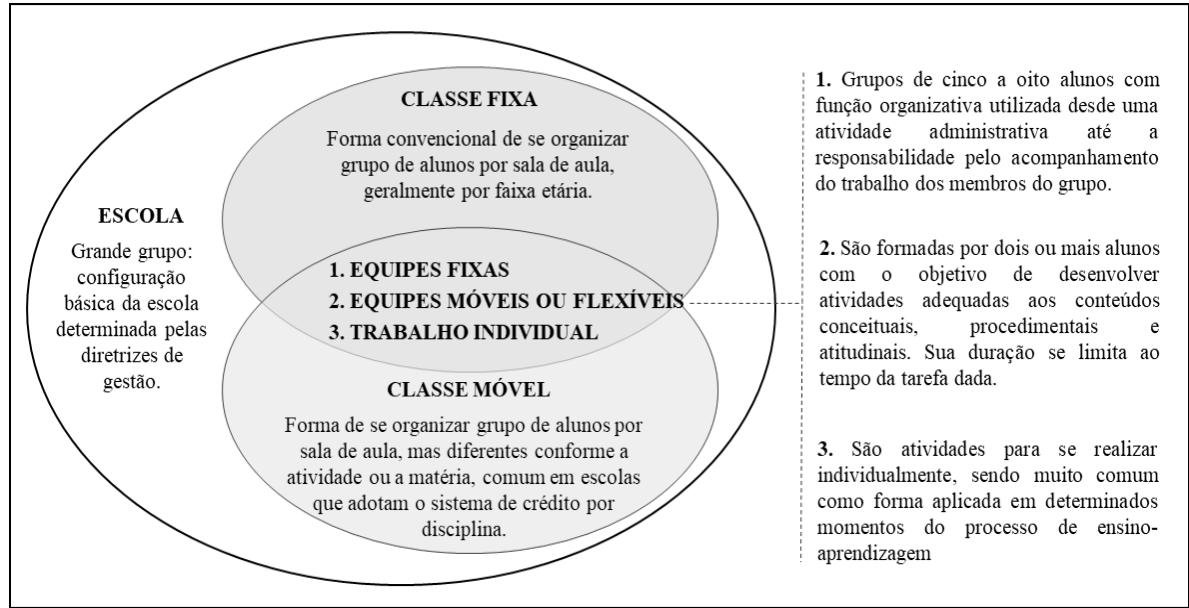
Figura 1: Organização Social da Sala
Fonte: Os autores
Para o desenvolvimento de uma boa prática educativa é necessário conhecimento prévio do que se pretende fazer em sala e uma boa gestão das variáveis que poderiam impactar a atividade e os alunos, permitindo ao professor planejar, executar e avaliar o processo de aprendizagem; "como em todas as experiências que alunos vivem, devemos nos perguntar que aprendizagem promovem” (ZABALA, 1998, p.13).
O trabalho em grupo como estratégia de aprendizagem deveria levar em consideração o tipo de aprendizagem e conteúdo que se espera desenvolver, entendendo que a organização social da classe tem relação direta com a aprendizagem. Segundo Oliveira, "discussões em grupo propiciam a participação de todos os indivíduos no processo de resolução de dúvidas e questionamentos, o que torna a busca pelas respostas um processo de aprendizagem mais interessante” (2017, p. 227).
Cohen e Lotan (2017) afirmam, em seus estudos, que o trabalho em grupo é uma técnica eficaz para alcançar determinados objetivos de aprendizagem, classificadas por elas de aprendizagem intelectual e social. No aprendizado intelectual, o trabalho em grupo se torna bem interessante para o desenvolvimento de conteúdos tais como a resolução criativa de problemas, os estudos de caso, a abordagem de conceitos e princípios. O aprendizado social é mais apropriado para situações que envolvem aspectos comportamentais, pois ajuda a melhorar as relações intra e intergrupais, aumentando a confiança e a cordialidade. Além disso, é também uma estratégia para enfrentar desafios comuns na condução da aula e na forma de manter os alunos envolvidos na tarefa.
Para Zabala (1998), o grupo é um meio de promover a socialização e a cooperação para atender aos diferentes níveis e ritmos de aprendizagem, para resolver problemas de dinâmica grupal e para tornar possível a aprendizagem entre iguais.
Trabalho em grupo não pode ser entendido como um passatempo que se usa para preencher o tempo de aula em sala ou dar o trabalho pelo trabalho para que os alunos se juntem fora da sala de aula. Ele deveria ser utilizado com um propósito e função, como estratégia para a aprendizagem, visando maiores possibilidades de tornar o ensino mais eficiente/eficaz, respectivamente, caso contrário pode gerar desmotivação e falta de engajamento.
Segundo Cohen e Lotan (2017), a falta de envolvimento e comprometimento dos alunos está relacionada, de fato, com a escolha do método de organização da sala que não oferece o apoio necessário para o aprendizado do aluno. Os alunos não recebem as orientações necessárias a respeito do objetivo da atividade e de como ela pode ser realizada com êxito, bem como se os alunos estão tendo desempenho dentro do esperado ou até mesmo maneiras de desempenhar melhor a tarefa. Além disso, as próprias atividades, muitas vezes, não são ministradas de maneira que crie interesse e atenção dos alunos e não há estímulos adequados para que eles continuem a desenvolver um determinado trabalho.
Dessa forma, é importante criar situações desafiadoras que desperte a curiosidade do aluno para que ele participe ativamente do processo de aprendizagem e da interação com o grupo, ampliando seus conhecimentos, bem como suas experiências. Ao
participar dessa troca, possibilitada pelo trabalho em grupo, o aluno organiza seu pensamento a fim de exprimir suas ideias, que devem ser compartilhadas e compreendidas por todos. Há uma dinâmica no grupo em que o aluno ouve, fala, analisa, sintetiza, expõe opiniões, questiona, argumenta, justifica, avalia, desenvolvendo maior senso crítico e catalisando o aprendizado.
Para Perrenoud (2000), trabalhos em grupos têm potencial para proporcionar ao aluno maior autonomia, protagonismo e cooperação, no entanto, o autor alerta que nem sempre é tão simples atingir a aprendizagem pretendida, pois os alunos precisam estar dispostos a trabalharem juntos, a respeitarem as orientações recebidas e desenvolver uma cultura de solidariedade, da tolerância e da reciprocidade.
## III. RESUlTaDO DA PESQUISA: ORGANiZAÇÃO E Análise Dos Dados
O estudo foi realizado com professores universitários que atuam no curso de Licenciatura em Pedagogia de uma faculdade da cidade de São Paulo em uma de suas unidades localizada na Zona Leste, que oferece 240 vagas anuais no período noturno do curso de Licenciatura.
Por meio de amostragem probabilística, a pesquisa foi desenvolvida dentro de um universo de 17 professores que lecionam no referido curso com aulas atribuídas no ano de 2018, com cargos efetivos e celetistas na faculdade. Destes, 11 dispuseram-se a participar da pesquisa, $6 4, 7 \%$ do quadro efetivo.
Na primeira etapa, os professores responderam a um questionário contendo perguntas abertas e fechadas. Na segunda etapa foi realizada uma entrevista de aprofundamento e esclarecimentos de dúvidas com a participação de seis professores, representando $54, 5 \%$ dos 11 que haviam respondido o questionário e $3 5, 3 \%$ do total de 17 professores.
Com relação ao perfil dos participantes, identificamos que a maioria tem idade acima de 50 anos, é graduada e mestre. Além disso, todos têm mais de 10 anos de experiência na docência e atuam na instituição pesquisada há mais de 5 anos. Por último, a maioria realiza uma jornada semanal de até 20 horasaula (h/a).
A análise das respostas dos professores favoreceu a elaboração de cinco categorias de análise sendo: metodologias habitualmente utilizadas pelos professores; trabalho em grupo como estratégia de aprendizagem; critérios para a organização do trabalho em grupo; contribuições do trabalho em grupo para a aprendizagem; o Alcance dos objetivos de aprendizagem com o trabalho em grupo. Vale ressaltar que os professores entrevistados foram identificados pela letra “P" mais a combinação de uma sequência numérica de 1 a 11.
Categoria 1: Metodologias habitualmente utilizadas pelos professores
Ao serem questionados sobre as metodologias de ensino adotadas habitualmente em sala de aula, a maioria afirmou utilizar a aula expositiva combinada com uma ou mais metodologias ativas. No decorrer das conversas, o trabalho em grupo surgiu como uma metodologia utilizada pelos professores, dos 11 professores, quatro mencionaram especificamente o trabalho em grupo como sendo uma das estratégias utilizadas em sala de aula, combinada com outras metodologias. As falas, a seguir, ilustram o que foi afirmado anteriormente:
Sala de aula invertida, discussões em grupos, apresentação de seminários, pesquisa de campo, trabalho em grupo. (P 1)
Aulas expositivas, trabalho em grupo, seminários. (P 6)
Aula expositiva, atividades em grupos, pesquisas prévias. (P 8)
Aulas expositivas com recursos da informática, seminários, trabalhos e temas em grupo para discussão, pesquisa e reforço da aprendizagem. (P 10)
Ainda que o enfoque da pesquisa fosse entender os critérios adotados na sala de aula, os professores disseram que se utilizam do trabalho em grupo de três maneiras: os realizados totalmente dentro de sala de aula; os realizados completamente fora de sala de aula, sendo que as orientações gerais são dadas em sala de aula; e os que são mistos, ou seja, parte do trabalho é realizada dentro de sala de aula e parte é feita fora de sala de aula.
E, além do trabalho em grupo como estratégia de aprendizagem, diversas outras metodologias foram mencionadas, demonstrando variado repertório de práticas pedagógicas em sala de aula. Os professores afirmaram:
Em minhas aulas, existem momentos em que se faz necessário uma aula tradicional, em outros momentos, utilizo algumas metodologias, tais como: rotação por estação, sala de aula invertida, estudo de caso, aprendizagem por pesquisa, resolução de problemas e “gameficação."” (P 2)
[...] Procuro trazer para a sala de aula outros recursos visuais, como vídeos e trechos de filmes ou documentários que possam ilustrar os conteúdos. (P 3)
Tento mesclar abordagens construtivistas e montessorianas, partindo dos interesses dos alunos, valorizando a experimentação, discussão do conteúdo [..], porém reservo um certo tempo para exposição do conteúdo, que seria algo mais presente nas metodologias tradicionais. (P 5)
[...] pauto meu trabalho na pedagogia que se aproxima dos conceitos sociointeracionistas, ou seja, parto do pressuposto que o aluno constrói o conhecimento a partir de sua interação com o meio e com a sociedade em geral, relações intermediadas pelo professor [...] (P 11)
Nesta categoria de análise conclui-se que o trabalho em grupo é uma das estratégias utilizadas pelos professores para tornar o ensino mais dinâmico e promover maior interação entre os alunos, bem como para estruturar conceitos, debates, relacionar a teoria com a prática e desenvolver análise e exposição de conteúdo.
Categoria 2: Trabalho em grupo como estratégia de aprendizagem
Quanto à opinião dos professores sobre o trabalho em grupo como estratégia de aprendizagem, eles entendem como sendo importante para a interação entre os alunos, para o aprendizado e o desenvolvimento cognitivo. Discorrem que a aprendizagem consiste em um processo pelo qual os alunos adquirem conhecimento e desenvolvem relacionamentos, habilidades, atitudes e valores a partir do seu contato com os demais colegas. Para os professores:
O trabalho em grupo pode ser uma ferramenta interessante, principalmente para a socialização dos estudantes. (P 5)
Uso muito esta metodologia em minha prática pedagógica como uma estratégia didática, pois entendo que a interação, o compartilhar de experiências, é muito significativa para o aluno em seu processo de aquisição de conhecimento. (P 8)
No entanto, alguns professores percebem certa dificuldade por parte dos alunos na realização do trabalho em grupo, visto que eles nem sempre compreendem a necessidade de cooperação entre pares para que haja uma ambientação propícia ao aprendizado. Eles disseram:
Acredito que o trabalho em grupo, apesar de muito difícil para as alunas, é fundamental para desenvolver algumas habilidades como liderança, respeito, organização e comprometimento. (P 3)
O trabalho em grupo é complexo, pois os alunos não compreendem a necessidade da colaboração entre os pares para que se desenvolva uma boa situação de aprendizagem [...]. (P 6)
Apenas o P 4 não considerou que o trabalho em grupo seja uma estratégia para a aprendizagem, pois percebe que, no grupo, nem todos participam efetivamente das atividades. Ele disse:
Não considero trabalho em grupo uma estratégia eficiente para uma melhor aprendizagem. Minha experiência mostra que algumas alunas elaboram o trabalho e as demais não participam efetivamente. (P 4)
Assim, é possível concluir que os professores veem no trabalho em grupo uma estratégia de aprendizagem, mas, assim como ocorre com as outras metodologias exige dos professores planejamento.
Cohen e Lotan (2017) afirmam que o processo de planejamento começa com a resposta a uma questão fundamental: "Como os alunos trabalham juntos em sala de aula?". Tendo essa resposta é
possível definir o que fazer e como direcionar a natureza das atividades a serem realizadas para o estabelecimento das habilidades cooperativas. A orientação para o trabalho colaborativo reside num dos primeiros passos para a elaboração de um plano didático.
Categoria 3: Critérios para a organização do trabalho em grupo
Os critérios adotados para a organização do trabalho em grupo em sala de aula são os mais diversos e variam conforme o objetivo proposto. Por exemplo: ora para sociabilização, ora para troca de experiências, ora para a busca e construção de conhecimento.
Apesar de haver uma variedade de critérios na formação dos grupos, nenhum dos professores toma a decisão unilateral de definir a organização dos grupos; no entanto, podem existir exceções e o professor intervir. Um dos entrevistados afirmou:
Depende do grau de conhecimento que tenho de determinada turma. Eu posso tanto intervir para incluir alunos por níveis de domínio do tema, aprendizagem e sociabilidade quanto para permitir o maior contato entre alunos que não interagiriam entre si [..]. (P 5)
Na maioria das situações, os professores deixam que os alunos se organizem. Um dos motivos que os leva a tomar essa decisão está relacionado à resistência que os alunos apresentam na intervenção do docente, devido aos vínculos consolidados nos grupos que, frequentemente, já estão formados na sala. As falas, a seguir, ilustram o que foi afirmado anteriormente:
Deixo as alunas escolherem os membros do grupo. São praticamente os mesmos no decorrer de todo o curso." (P 4)
[..] entretanto devido às turmas que encontro nos últimos semestres, ando deixando os alunos formarem seus próprios grupos e os oriento. (P 5)
Ou os próprios alunos se escolhem como parceiros, ou faço um sorteio com números de 0 a 5, por exemplo, e os números iguais formam o grupo. (P 6)
As alunas criam seus grupos. Há grande resistência do professor montar esse grupo com colegas de sala diferentes de suas escolhas e convívios. ( )
Em relação às orientações para o desenvolvimento do trabalho em grupo, verificou-se que os professores são muito cuidadosos ao explicar os objetivos da atividade, os conteúdos - conceituais, procedimentais e atitudinais - que serão abordados e como deve ser realizada, incluindo orientações do que se espera quando se trabalha em grupo.
Os professores consideram também que as orientações para as atividades em são imprescindíveis para que o aluno compreenda que o trabalho em grupo demanda diálogo, cooperação e pesquisa e não apenas uma simples divisão de tarefas.
Dependendo do objetivo e da formação de grupos, as orientações para que seja realizado com aprofundamento são: objetivos, o que pesquisar, onde e como realizar a pesquisa, a forma de apresentação (escrita e oral) e os critérios de avaliação (inclui autoavaliação). (P 1)
Oriento sobre as fontes que deverão ser consultadas, como dividir o trabalho a fim de que todos trabalhem descobrindo e desenvolvendo novas habilidades e aprendizagens, além de explicar como compartilhar o conhecimento para a confecção da atividade final. (P 5)
A falta de envolvimento e comprometimento dos alunos, segundo Cohen e Lotan (2017), está relacionada com a escolha do método de organização da sala que, por vezes, não oferece o apoio necessário para o aprendizado. Portanto, adotar critérios adequados e orientar os alunos em suas atividades é fundamental para que direcionem seus esforços no desenvolvimento de suas tarefas, visando a aprendizagem.
Categoria 4: Contribuições do trabalho em grupo para aprendizagem
Quando questionados se o trabalho em grupo traz contribuições para a aprendizagem, $64 \%$ dos professores responderam positivamente, $2 7 \%$ disseram que se trata de uma possibilidade e $9 \%$ dizem que não percebem contribuições para a aprendizagem.
Ao considerar a importância do trabalho em grupo como estratégia de aprendizagem, os professores trazem aspectos muito aderentes as ideias de Zabala (1998), mencionando que o trabalho em grupo proporciona a interação entre os alunos por meio da convivência, da cooperação, da troca de ideias e experiências que ajudam a desenvolver os conhecimentos, favorecendo O processo de aprendizagem. Eles afirmaram:
Com o trabalho em grupo ensinamos a ouvir o outro e falar, a fazer análise e síntese, a conviver com as diferentes interpretações etc. (P 1)
Se bem realizado, o trabalho em grupo incentiva a pesquisa, o desenvolvimento de habilidades de trabalho em grupo, liderança, tolerância e maior confiança, elementos que são úteis em qualquer momento da vida. (P 5)
Entendo que a interação entre os participantes do grupo é essencial, mas também as divergências de ideias são positivas para um diálogo e, assim, ampliar o campo do conhecimento, tirando o aluno de uma atitude passiva, fazendo com que suas ideias nas discussões se tornem discutidas pelos demais. (P 8)
Entre os que o consideram como uma possibilidade e, até mesmo, entre aqueles que não percebem contribuições, pode-se inferir que os pontos de atenção estão mais voltados para a forma de aplicar o trabalho em grupo, em lidar com o contexto da sala de aula e das dificuldades em acompanhar o desenvolvimento dos trabalhos pelos alunos, do que a descrença de que a estratégia não produza resultados.
O trabalho em grupo deveria trazer vários benefícios, pois além dos já descritos anteriormente, deveriam propiciar a aprendizagem de forma autônoma e promover ação e reflexão, muito embora, na prática, percebamos que a realidade em sua maioria é outra. (P 10)
Como afirmei, não vejo vantagem para a aprendizagem. Geralmente os trabalhos em grupos que solicito ocorrem fora do horário de aula, e, dessa maneira, não controlo a participação dos membros do grupo. (P 4)
Poderia parecer um paradoxo O posicionamento entre os professores, no entanto, na verdade são ideias que se complementam, pois para aplicar o trabalho em grupo como estratégia de aprendizagem é necessário um planejamento bem estruturado e com objetivos claros para que os alunos adquiram maturidade e compreensão de que o princípio maior é o aprendizado. Outro aspecto analisado nessa categoria, diz respeito se o trabalho em grupo também promove maior autonomia do aluno para a aprendizagem. Na percepção dos professores, $45 \%$ disseram que sim, $3 7 \%$ parcialmente, $9 \%$ disseram não e $9 \%$ não se posicionaram.
As considerações dos professores, neste sentido, apontam que essa estratégia tem potencial para retirar o aluno de sua passividade na aprendizagem e incentivá-lo à autogestão na busca pelo conhecimento. Entretanto não acontece a contento, visto que os alunos precisam se apropriar dessa responsabilidade. Na verdade, quando Zabala (1998) aborda o tema acerca da organização da sala de aula, elucida que o trabalho em grupo não exclui o esforço individual, pois o processo de ensinoaprendizagem pode se apropriar de vários meios para viabilizar e potencializar a consecução de seus objetivos, reforçando que a aprendizagem depende do próprio indivíduo. Os professores, cuja percepção é de que o trabalho em grupo promove uma aprendizagem mais autônoma, esclarecem:
Sim, faz com que os alunos aprendam com a vivência. Faz também com que se envolvam nos temas propostos, se organizem com as etapas e prazos e produzam um produto final. (P 3)
Por princípio teórico sim, pois os alunos são obrigados a dividir as atividades, reunir o conhecimento adquirido, confeccionar o trabalho final, discutir o que foi encontrado, compartilhar experiências e vivências que podem enriquecer a todos, checar as informações em grupo. Tudo isso retira o caráter passivo da aprendizagem e desenvolve formas e abordagens úteis nas pesquisas e trabalhos individuais e interações sociais mais amplas. (P 5)
Sim, quando feito com honestidade, proporciona liberdade e autonomia ao estudante. (P 7)
Os professores com uma percepção parcial de que o trabalho em grupo promove uma aprendizagem mais autônoma dizem o seguinte:
De certa forma. Hoje, temos muitos alunos que querem somente resumos nas aulas, não leem os textos e não
pesquisam nem o significado das palavras, não entendem a orientação. O que quero dizer é que se os alunos não são habituados a pensar autonomamente, eles sentem muita dificuldade. (P 1)
Deveria ter este caráter, o aluno sendo pesquisador, criativo, através do interesse e prazer em aprender, muito embora os conteúdos já sejam predeterminados e o aluno não veja significado nos mesmos. (P 10)
Ativa sim, na medida em que dentro de um grupo menor de integrantes, a possibilidade de o aluno interagir mais contundentemente é maior. Em relação à autonomia, esta característica é mais difícil de desenvolver em grupo, penso que para isso é melhor a proposta de trabalho em duplas. (P 11)
É possível concluir que os professores consideram que a responsabilidade pelo aprendizado seja do próprio aluno e o trabalho em grupo pode contribuir para gerar maior autonomia. Por meio dos trabalhos em grupo, os professores podem melhorar a qualidade da interação entre os membros das equipes, propiciando relações de trocas de experiências e de conhecimentos.
Categoria 5: O alcance dos objetivos de aprendizagem com o trabalho em grupo.
Quanto ao alcance dos objetivos de aprendizagem, $80 \%$ dos professores dizem que frequentemente atingem os resultados propostos da atividade, enquanto $20 \%$ dizem atingi-los parcialmente, como pode ser observado pelos relatos a seguir:
Apenas 70 a $80 \%$ dos objetivos são alcançados. (
Nem sempre, porém reúno o grupo e fazemos autoavaliação e a partir daí retomamos o trabalho. (P 2)
Quanto ao produto final sim, mas sinto falta de um acompanhamento mais próximo do desenvolvimento que, por vezes, não é possível. (P 3)
Geralmente sim, pois avalio mais a participação e a capacidade dos alunos do grupo discutirem o tema do que o produto final em si, e entendo essas práticas como um processo de duração mais ampla que uma única atividade. (P 5)
Sim, normalmente meus objetivos são alcançados, como resultado das propostas dos respectivos trabalhos em grupo. (P 11)
Entre os professores observa-se que os motivos que levam ao cumprimento dos objetivos estão relacionados com o comprometimento individual do aluno e o seu engajamento com o grupo, pois para aqueles que efetivamente se envolvem na elaboração das atividades é possível perceber resultados concretos.
Quanto ao envolvimento do aluno, Cohen e Lotan (2017) recomendam que, de início, as orientações quanto aos papéis e responsabilidades de cada um no grupo precisam ser claras e objetivas, bem como quanto aos objetivos que se pretende alcançar com a atividade proposta.
A pesquisa mostrou que o alcance dos resultados depende também de um acompanhamento sistemático do grupo por parte do professor. Cohen e Lotan (2017), destacam que escolha de uma metodologia depende do que se pretende a alcançar, portanto, se acompanhar o desenvolvimento do grupo é imprescindível, o planejamento da atividade deve contemplar essa etapa como sendo factível de ser realizada, caso contrário não se recomenda fazê-la.
[..] quando você passa uma proposta de trabalho um pouco mais densa, que é preciso que elas se encontrem em outros lugares, você não acompanha o envolvimento desses alunos. [...] Eu entendo que o ideal seria a gente acompanhar todo esse processo. (P 3)
O trabalho em grupo não é ruim, na medida em que ele for feito dentro desses parâmetros de acompanhamento, ele é uma atividade enriquecedora para o aluno. (P 4)
Zabala (1998) também traz de uma visão semelhante e diz que o uso de uma metodologia ou a realização de uma atividade pedagógica deve ser bem planejada e jamais poder ser fruto de improvisações.
O próximo aspecto dessa categoria de análise diz respeito de como os professores realizam a avaliação dos alunos quando utilizam o trabalho em grupo como estratégia de aprendizagem.
Nota-se que há várias formas de avaliação que são utilizadas tais como, pelo desempenho individual do aluno, pelo resultado do trabalho do grupo, a avaliação entre os pares e até mesmo a própria autoavaliação. No entanto, predomina a avaliação do grupo como um todo.
Zabala (1998) diz que, habitualmente, quando se fala de avaliação, a referência prioritária ou mesmo exclusiva está nos resultados obtidos individualmente pelo aluno, no entanto, professores mais inquietos propõem formas de avaliar que considere no processo a combinação de referenciais individuais e coletivos, visando torná-la menos arbitrária e mais justa e útil.
Nesse sentido, pode-se inferir que as variadas formas de avaliação praticadas pelos professores possuem aderência às ideias de Zabala (1998).
Outro aspecto dessa categoria de análise, está associada a percepção dos professores se o resultado do trabalho em grupo culmina num esforço comum de todos. A maioria diz não perceber que a eficácia dos grupos de trabalho seja resultado de um esforço comum e, para alcançar um bom nível de participação e cooperação entre os alunos, é necessário que eles compreendam que a participação ativa, o comprometimento com os objetivos e o envolvimento com o grupo propiciam um resultado de qualidade e um aprendizado significativo.
Na medida em que cada membro tem a clareza da sua parte naquele grupo. Quando fica estabelecido o que cabe a cada um. (P 1)
Na medida em que haja participação, diálogo, troca de informação que possibilite novos aprendizados. (P 4)
Pouco comum a todos quando os trabalhos são feitos por apenas alguns membros do grupo, se todos do grupo contribuem de forma igual, a evolução é nítida. (P 7)
Na medida em que todos efetivamente participem, o que não significa que todos devem expor ou falar ou mesmo apresentar. (P 11)
Pode-se deduzir que o ponto de atenção não está no entendimento de que a cooperação é um elemento estruturante de grupo de trabalho, mas está relacionado à atitude dos alunos em querer cooperar para que o resultado do trabalho em grupo seja, necessariamente, resultado do esforço comum de todos.
Para concluir esta categoria de análise, foi perguntado aos professores que competências e perfis mais aparecem nos grupos com melhores e piores avaliações, considerando a capacidade de trabalhar em grupo. Eles afirmaram:
Com o trabalho em grupo ensinamos a ouvir o outro e falar com e para o outro, a fazer análise e síntese, a conviver com as diferentes interpretações, a respeitar prazos [...] O perfil que aparece é o comprometido e dedicado, o responsável, o assistencialista, o desligado, o desapegado. (P i)
Organização, gestão de tempo, monitoramento e comprometimento. Acredito que os conteúdos atitudinais se sobressaiam aos conteúdos conceituais. (P 3)
Nos grupos com pior avaliação cada um faz o que bem entende, não conseguem articular e compartilhar e, principalmente, não seguem as orientações da proposta do trabalho em grupo, requerem a intervenção do docente para situações que poderiam ser bem resolvidas pelos pares, e, muitas vezes, podem até apresentar um produto
final de boa qualidade, mas de nítida confecção individual. (P 5)
Para os grupos com uma avaliação não tão boa, geralmente ele está formado com participantes que não demonstram interesse pelas atividades acadêmicas. Sendo assim, alunos acabam por se ancorar naqueles que executam as atividades com primor. Os melhores grupos têm alunos que se dispõem a pesquisar, investigar o tema proposto vão em busca de novos conhecimentos, fazem correlações entre os conceitos, têm uma maior eficácia no cumprimento das atividades atingindo mais facilmente e de forma mais positiva os objetivos com aquela atividade. (P 8)
Com melhor avaliação - todos participam e se comprometem com a atividade proposta. Com pior avaliação - quando há falta de envolvimento e comprometimento dos participantes do grupo com a atividade proposta. (P 9)
Melhor avaliação: liderança, capacidade argumentativa, resiliência, empatia, pensamento crítico, capacidade em resolver problemas, empoderamento, iniciativa etc. Piores avaliações: inércia, passividade, reprodução de conteúdo, incapacidade de resolver problemas, dependência instrumental ou pessoal. (P 11)
Ao analisar as respostas, observa-se que os grupos com melhores e piores avaliações apresentam pontos positivos e negativos sobre suas competências e motivações. Os alunos que apresentam individualmente competências mais elevadas e alto grau de motivação demonstram melhores condições e maior potencial de apresentarem bons resultados quando desenvolvem uma atividade em grupo. O diagrama a seguir apresenta uma visão geral e busca sintetizar, em quadrantes, a análise entre os grupos melhores e os mais mal avaliados e a relação entre as competências e motivação dos alunos.
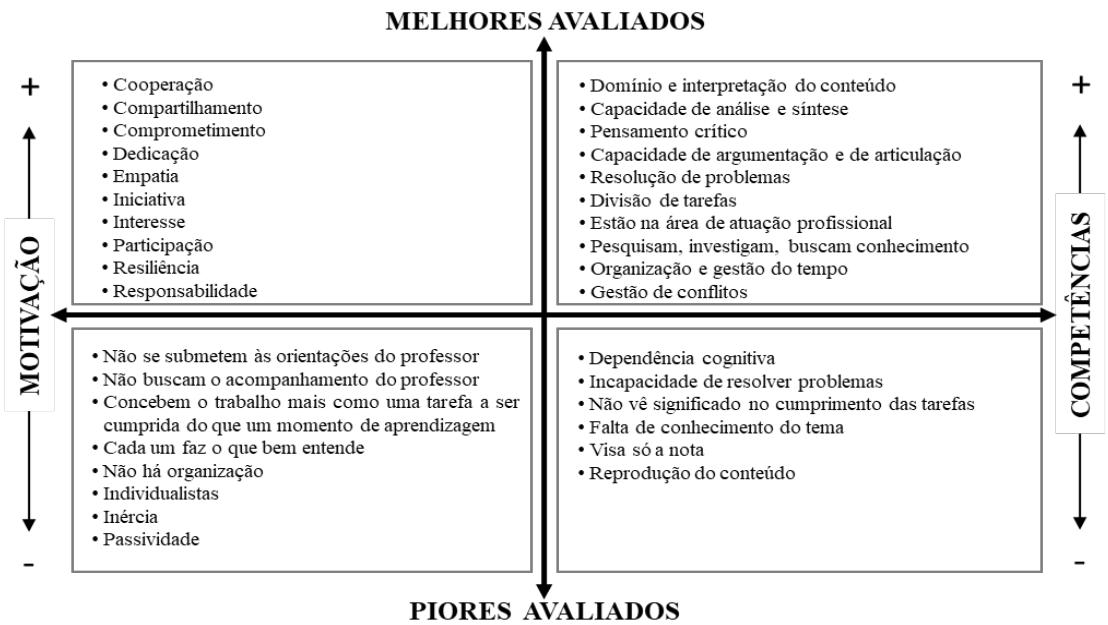
Quadro 2: Grupos de trabalho: avaliação dos melhores e dos piores
Fonte: Os autores.
É possível concluir que os melhores apresentam competências mais elevadas e um grau de motivação no desenvolvimento das atividades em grupos, o inverso também é verdadeiro para os grupos com as piores avaliações.
## IV. CONSIDERAÇÕES FINAIS
A discussão a respeito das estratégias de ensino pressupõe superar a visão de que o “aspecto burocrático, que se revela no dito muito popular entre os educadores de que o professor finge que ensina e o aluno finge que aprende” (RODRIGUES, p. 22, 2021), seja superado. Nesse sentido, investigar as estratégias de ensino definidas pelo professor no contexto da sala de aula faz parte de uma prática reflexiva crítica.
O foco do presente estudo foi investigar os critérios utilizados por professores que atuam no ensino superior quando o trabalho em grupo é estabelecido como estratégia de aprendizagem. Os resultados desta pesquisa mostram que o trabalho em grupo constitui uma prática regular na sala de aula universitária e são estratégias frequentes adotadas pelos professores para estimular a aprendizagem e promover a interação entre os alunos, e que os trabalhos em grupos podem ser realizados com o objetivo de construir e debater conceitos, discutir e relacionar a teoria com a prática e a para exposição de conteúdo.
O estudo apontou que o trabalho em grupo como estratégia de aprendizagem requer um acompanhamento planejado do professor e uma interação fluída entre aluno-aluno e professor-aluno, no qual o professor deve atuar como mediador entre os conhecimentos que o aluno possui e os novos conhecimentos que o aluno vai construindo de forma ativa ao longo deste processo.
O trabalho em grupo se apresenta como uma importante ferramenta de apoio ao processo, pois proporciona situações favoráveis à aprendizagem e o desenvolvimento de competências. Nesse sentido, é essencial que haja cooperação entre os membros dos grupos, no entanto, isso nem sempre acontece, correndo-se o risco de ser realizado sem a devida cooperação, em que cada um faz uma parte de trabalho e depois as juntam sem as devidas conexões, deixando de atingir o propósito do trabalho em grupo.
Constatamos também que o trabalho em grupo, como estratégia didática de ensino, apresenta pontos muito favoráveis para o processo de aprendizagem, mas sinaliza que depende da uma interação séria e autêntica entre os alunos e visão compartilhada, na medida em que eles se relacionam com as diferentes visões de cada membro do grupo. Para isso, o aluno precisa desenvolver a compreensão de que a cooperação traz benefícios para o seu aprendizado e ele precisa querer estar disposto a colaborar com os demais.
No trabalho em grupo há um grande potencial para promover comportamentos mais ativos para o desenvolvimento das atividades do que num trabalho individual. A interação e a colaboração entre os alunos por si só estimulam o engajamento e despertam o interesse dos alunos. Quando o grupo é responsabilizado e reconhecido pelo seu trabalho, há uma força mobilizadora que não permite que se desengajem do objetivo: todos agem de forma colaborativa.
Generating HTML Viewer...
References
6 Cites in Article
Elizabeth Cohen,Rachel Lotan (2017). Planejando o Trabalho em Grupo.
Maria Mizukami (1986). Ensino: as abordagens do processo.
Ê Oliveira (2017). Motivação no Ensino Superior: Estratégias e Desafios.
P Perrenoud (2000). Dez Novas Competências para Ensinar: convite à viagem.
R Rodrigues (2021). A estrutura e o funcionamento do ensino e a formação escolar.
A Zabala (1998). A Prática Educativa: como ensinar.
Explore published articles in an immersive Augmented Reality environment. Our platform converts research papers into interactive 3D books, allowing readers to view and interact with content using AR and VR compatible devices.
Your published article is automatically converted into a realistic 3D book. Flip through pages and read research papers in a more engaging and interactive format.
Subject: Global Journal of Human-Social Science - G: Linguistics & Education
Authors:
Glaucia Ribeiro dos Santos, Maria de Fátima Ramos de Andrade, João Clemente de Souza Neto, Maria da Graça Nicoletti Mizukami and Rosana Maria Pires Barbato Schwartz. (PhD/Dr. count: 0)
This article presents the results of a research conducted with higher education teachers who work in the Pedagogy degree course of a private college in the city of São Paulo. The objective was investigating the criteria used in the organization of the students for the development of work in group activities in the classroom. The qualitative research included questionnaires and interviews with higher education professors. The research allowed to point out who the professors are -profile, academic background, time in teaching -if they make use of group work and how they use this methodology as a learning strategy. The result confirmed the hypothesis that group work can offer a concrete opportunity to build knowledge in a cooperative way and with the potential for the student to relate with knowledge in various ways. However, in order to achieve the proposed learning objectives, the student needs an active participation and willingness to cooperate and the teacher must have a systematic monitoring of the groups.
Our website is actively being updated, and changes may occur frequently. Please clear your browser cache if needed. For feedback or error reporting, please email [email protected]
Thank you for connecting with us. We will respond to you shortly.