
I. INTRODUCCION
Quite recently I wrote[^1] that "A. M. Hocart is a very little known British anthropologist" (Korsbaek, in press), which is true. But if that is so, the British anthropologist Gunnar Landtman, born in Finland, is absolutely unknown, at least in the Spanish speaking world. And that, in spite of the fact that he is of a certain importance, at least in the anthropological universe.
It is known that a revolution took place in British anthropology 1922, with the publication of Malinowski's monograph Argonauts of the Western Pacific and, to a lesser degree, with the publication the same year of Radcliffe-Brown's Ph. D. thesis The Andaman Islanders. This revolution left us a new canon in anthropology and, especially, in ethnography, and it is usually thought that Malinowski is the sole responsible for this new anthropological canon.
But gradually information is escaping from our collective amnesia that Malinowski was not as alone as he and other anthropologists thought. Together with him in his Melanesian expedition at different moments almost a dozen other British anthropologists carried out fieldwork in Melanesia and New Guinea and, what is no less important, Malinowski was in personal contact with all of them and exchanged information with all of them, one by one.
First of all there were three professors from the anthropological world, from Oxford and Cambridge, and from the University of London and the London School of Economics: Alfred Cort Haddon, who was thirty years older than Malinowski, Wiliam Halse Rivers, who was twenty years older, and finally Charles Gabriel Seligman, who was only about ten years older than Malinowski.
Haddon had commandeered the famous Cambridge anthropological expedition to the Torres Strait in 1898, but he is probably better known as the founder of anthropology as a career at the University of Cambridge, and he deserves credit for having introduced photography as an important instrument in fieldwork. Haddon distinguishes himself for a number of interests that almost reached the level of obsessions: headhunters, pibes, primitive art and canoes. Normally Haddon has been considered a mediocre fieldworker, but recently surprisingly decent ethnographic material has come to our attention, and Haddon has recovered his prestige as ethnographer and fieldworker.
Rivers, who also participated in the Cambridge anthropological expedition to the Torres Strait that Haddon organized in 1898, belongs like Haddon to the University of Cambridge. Ha had done fieldwork in India, and in 1914 he published his magnum opus, the History of Meanesian Society, a book everybody knows, but nobody reads it, neither in 1914 nor today, because of its theoretical foundation in diffusionist anthropology.
Charles Gabriel Seligman had also participated in the Torres Strait expedition, later he wrote the only existing solid ethnographic description of the societies of New Guinea (Seligman, 1910), and later still he did fieldwork in India, where he introduced a new style that we can call matrimonial fieldwork, together with his wife Brenda Seligman (Seligman & Seligman, 1911). After his Melanesian and Indian career, Seligman ended his life with thirty years' fieldwork in Africa.
It is noteworthy that none of these three early anthropologists had studied anthropology in their youth, among other reasons because anthropology did not exist as a career in the universities, they were medical doctors and biologists, with an interest in exotic cutures and societies. We can really call these three early anthropologists the founding fathers of modern social anthropology, based on fieldwork.
Apart from the three professors already mentioned, there were also seven students. Of these, A. R. Radcliffe-Brown was the first who went into the field with a university career in anthropology behind him; he carried out his fieldwork from 1906 to 1908 in the Andaman Islands off the Indian coast, but he did not finish his ethnographic description, the Andaman Islanders, until 1922. His fieldwork is rather traditional and and mediocre, and does not contribute much to the ethnographic revolution, his contribution is much more important in the theoretical field, where he introduced an empirical structuralism, that was to become structural-functionalism.
Arthur M. Hocart and Gerald Camden Wheeer both did fieldwork in Melanesia in 1908 in the Percy Sladen expedition that Rivers organized and directed, Hocart specialized in the study of ritual, while Wheeler did a splendid linguistic study. After his initial fieldwork with Rivers in Simba (at that time it was called Eddystone Island), Hocart got lost seven years in the Pacific, where Haddon secured him a position as headmaster in a school of the Anglican Misson on the Fiji Islands, so he acquired a solid knowledge of the
After his death Hocart is having a kind of renaissance, partly due to the publication of some of his texts through the intervention of Lord Raglan and Rodney Needham. Gerald Camden Wheeler has no such luck, and is today almost as unknown as Gunnar Landtman.
Diamond Jenness was born in New Zealand and studied in Oxford but, in spite of the fact that he did his first fieldwork in Melanesia, he became the most important anthropologist in Canada, principally working among inuits. An important element in the methodological revolution in 1922 was that the use of interpreters was abandoned, the anthropologists began to learn the language of their informants and communicate with them directly. Diamond Jeness did his fieldwork in 1911 and 1912 in the d'Entrecasteaux Islands, but he did not participate in this linguistic part of the methodological revolution, he cheated and did his fieldwork together with his brother in law, Andrew Ballantyne, a missionary who had been living in the islands for more than twenty years and knew the local language well.
John Willoughby Layard is probably the most exotic of these ten anthropologists. He travelled to Australia in 1914, together with Rivers to participate in the same British scientific congress as Malinowski and Haddon, only in a different ship, and after the congress he went into the field in Melanesia, also with Rivers. He did his fieldwork of about a year in another small island and declared that never in his life had he been happier than during his fieldwork. Apart from being an anthropologist, Layard also studied psychoanalysis, following the ideas of Carl Gustav Jung, so his fieldwork took the form of a search for archetypes in the culture of his island. One of the reasons that Layard is forgotten today is probably that he never published the complete information of his fieldwork nor his memories, with the attractive title Memories of a Failure.
It is quite evident that the last and most successful of these early anthropologists was Bronislaw Malinowski, who managed to shape the new anthropological canon in the version in which it is usually accepted. We can sum it up as follows: a detailed observation of the daily life of a group of human beings, minimum a year, using the language of these people with a high degree of empathy. Whereas Radcliffe-Brown in the first place studied the political aspects of the daily life, Malinowski is better known as economic anthropologist.
In this context the presence and participation of these ten anthropologists in the development of the new anthropological canon is rarely mentioned, even if their fieldwork was carried out several years before that of Malinowski. And as Gunner Landtmen was on of these ten British anthropologists, it is the purpose of this text to present some features of his anthropology and his contribution to the development of this new canon and, in general, his contributions to the creation of a fieldwork tradition that is valid even today.
To avoid misunderstandings, I would like to close this brief introduction assuring the reader that it is not my intention to minimize the importance of Malinowski as the creator of a new anthropology, I only want to set the record straight. He remains as talented as ever before, just less lonely.
II. GUNNAR LANDTMAN'S LIFE AND ANTHROPOLOGY
Gunnar Landtman was a young Finnish student who came to London to study under the direction of Edward Westermarck in the London School of Economics. Landtman's first publication saw the light in Finland, thanks to Edward Westermarck as well: "A series of publications, Acta Academica Aboensis, was initiated with the first volume carrying Westermarck's text on "the Belief in Spirits in Marocco", as well as four other ethnological texts by his former students Rafael Karsten, Gunnar Landtman y K. Rob. Wikman" (Lagerspetz & Suolinna, 2014: 35).
"Landtman and Karsten had particularly close connections with the emerging British anthropology in the early 1920's. They worked together at the British Library in 1903-04. Their plan was to go together to South America for filed research. However, at the suggestion of A. C. Haddon, Landtman chose instead to study the Kiwai Papuans, staying for two years in 1910-12. He subsequently stayed in Britain in 1912-13, 1925-6 and 1931, working especially with Haddon. Westermarck and Landtman were good Friends. Westermarck told Landtman he was distressed that Karsten rather than Landtman succeeded him to the chair he had left in Helsingfors. He was also godfather to one of Landtman's children" (Lagerspetz & Suolinna, 2014: 48).
During his studies under Westermarck, Gunnar Landtman met Haddon in England, and he wrote in the introduction to Haddon's monograph "many years ago, my old friend Dr. Gunnar Landtman came to see me in Cambridge and, after the initial greetings, he said that he would go, wherever you want me to go" (Haddon, 1927: IX). Landtman went to New Guinea to stay among the Kiwai during 1910 and 1912.
Landtman's fieldwork was early in the process we are studying, and it may be true that "Landtman carried out intensive fieldwork as the first European anthropologist among the Kiwai. He was in Melanesia almost five years before Malinowski and practiced the method of participant observation" (Soukup, 2010: 47) but, as the author does not distinguish Melanesia from New Guinea, it is true that "it is the first monograph dedicated to any of the genuine Papuans in that territory" (Seligman, 1928: 496-97) – and many aspects of his ethnography have been praised, while others have been severely criticized.
George W. Stocking is only a conditional admirer of Landtman's anthropology, even if he admits that it is "the closest approach to Malinowski", he speaks of, "the flatfocedly descriptive and rather clumsily titled Kiwai Papuans of the British New Guinea: A Nature-Born Instance of Rousseau's Ideal Community" (Stocking, 1992: 31).
Malinowski praised the book: "Profesor Landtman has written one of the best descriptive books on one of the most interesting peoples of the world. The Kiwai islanders, that are described in this volume, belong to the Papuan culture, which constitutes the link between the Australian aborigines, the Melanesian culture, and the Indonesian", he especially liked the sociological analysis of kinship, of totemism, of the ways of government and justice (Malinowski, 1929: 109)
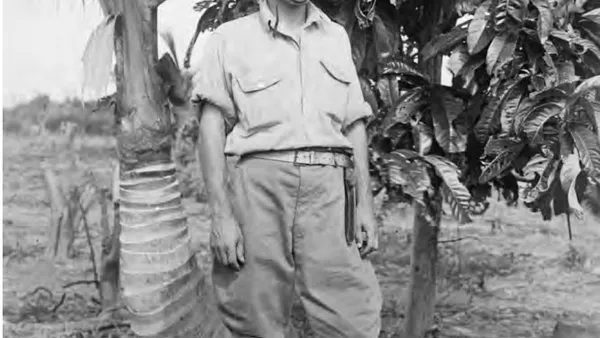
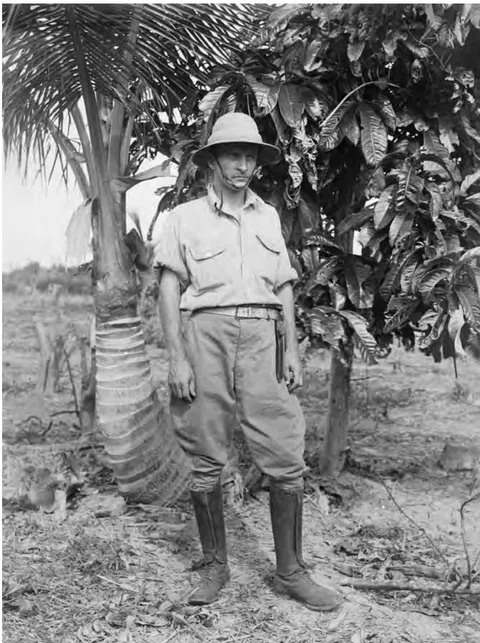
There is an abundance of photos of Landtman himself, that show him as a genuine European colonialist, with his jacket, his khaki trousers and his kepi tropical helmet and boots, and his description that covers a wide specter of topics, of material culture as well as of "spiritual" themes, with a certain emphasis on buildings and the interior of living quarters.
It is interesting to take note of this extremely European gentleman, perfectly dressed for his activities on the edge between armchair and field anthropology, showing a certain interest in men's comunal house and also in several details in sexual customs, leading him to discover a kind of homosexual rites, which has been the point of departure for a recent epidemic of anthropological studies of sexual life in the region. Maybe it is not a coincidence that one of Landtman's articles about the Kiwai has been published by Margaret Mead as part of her studies of sexual behavior in the region.
Landtman's almost exclusive dedication to description, limiting theoretical analysis to an absolute nimum - and still worse, declaring his confidence in evolutionary theory - can be summed up in the soursweet words of a protegee of Haddon, Camila Wedgwood: "Dr. Landtman has confined himself to pure description. He refrains from theorizing as to the meaning of those things which he recounts or as to the cultural affinities of his people and other tribes of New Guinea" (Wedgwood, 1929).
Back in Finland, Landtman was elected to represent the "Swedish Popular Party", and we have to remember that the situation was very similar to that of Poland: neither of the two countries existed yet as independent states. Finland was a Swedish colony, in much the same way as what today is Poland, where Malinowski was born in 1884, in his days was a province of the Austro-Hungarian Empire.
But, as we are coming close to the complicated relation of nationalism with the prehistory of Malinowski's ethnography, it is a curious coincidence that, while Malinowski in a belated fit of nationalism exposed his solidarity with his Pollish fellow countrymen against Hitler's oppression, Landtman joined the party of the Swedish colonialists.
III. THE FINNS IN LONDON
We anthropologists are known for our enthusiasm for gossip, and it is an interesting experiment to work with other "real" scientists, who present their observations in tables and diagrams, with a minimum of gossip, whereas we insist on presenting our observations in the shape of "tales". We love to tell how "Malinowski praised Frazer when he wrote in English, but critizised him severely when he wrote in Polish", and similar stuff. And maybe this propensity to gossip also characterizes practitioners of the historical discipline, for whom gossip is metamorphosed into "cultural history", or even history of mentality.
We may be able to extend our gossip to another two themes: in the first place, about the gang of Finnish scientists and artists who lived in Bloomsbury in London, exactly in the times of Virginia Woolf and, in the second place, about the spiritual leader of this gang of Finnish bohemians: the Finnish sociologist Edward Wedstermarck, who has a certain relevance for the early history of British anthropology.
The central person in this group of Finns was Edward Westermarck, who was already then a well known sociologist who had studied in Finland and after that had settled down in London, and it is safe to assume that Edward Westermarck represented the Finnish influence in British anthropology and sociology.
It may be that the most learned and least Bohemian was the Finnish political scientist Rudolph Holsti, who at one time participated in Malinowsk's seminar in the London School of Economics. At another time he would be State Secretary in Finland's government, 1919-22 y 1936-38, after the Independence from Russia. Rudolph Holsti published The Relation of War to the Origin of the State (Holsti, 1914), which "probably influenced Malinowski's own thinking on the anthropology of war" (Young, 2004: 174), referring to Malinowski's article about the war (Malinowski, 1920). Rudolph Holsti ended his career teaching classes in the University of Stanford, he passed away in Palo Alto in 1945.
The most visible person in this Finnish landscape was Tankred Borenius, who was already then a well known and respected specialist in the history of art, a discipline he later taught in the University of London. Among his other virtues, Tankred Borenius was married to Anna-Mi Runeberg, granddaughter of Finland's national poet Johan Ludvig Runeberg. A part of Runeberg's poems have to do with Finland's dependence: In the war in the beginning of the XIX Century, Finland changed from being a Swedish colony to being Russian colony, and the close friendship between the Borenius and Malinowski may be partly due to the fact that both parts came from countries that were colonized by Russia: the country that later would be Poland, as well as Finland (I have a very personal relation with this problem, as my deceased father participated as a volunteer in the Finnish war against Russia on the eve of the Second World War); both in Finland and in Poland there exists historically a solid hate toward Russia, during all periods: the Russian tsarist empire, the Soviet Union, and recent neoliberalism; I had the opportunity to feel this hate during a visit to Poland in 1991, with Mexican anthropologists, when I exercised my Russian knowledge, trying to buy a train ticket, it did not make me popular at all.
Tankred Borenius owed part of this popularity and success to his friendship with the famous art historian Roger Fry, who in his turn would be the contact to the Bloomsbury group, an artistic commune in the quarter near the British Museum. The Bloomsburies became famous most of all because the renown of the novelist Virginia Wolf, and more recently they have become anthropologically famous due to the publication of a book, in which Adam Kuper describes the kinship relations that were the base of the young capitalism in England, with near incestuous marriages in families like the Darwins, most of them living in Bloomsbury.(Kuper, 2009).
But in Bloomsbury lived not only poets, painters, and art historians, you'd also find anthropologists. One of these was Gerald Camden Wheeler, who is relevant in the present cotext, as he also went to Melanesia in 1908, to do fieldwork together with Rivers and Hocart. Wheeler "hung around the London School of Economics for a number of years, teaching part-time and collaborating with Hobhouse and Morris Ginsburg on a Tylorian comparative study The
Material Culture and Social Institutions of the Simpler Peoples (1915), but he failed to secure a university position after the Great War and dropped from sight. Haddon passed sad judgment on Wheeler many years later when he applied for a civil-list pension: "I regard him as one of those men of ability in their own subject who somehow have not succeeded in life. However, Malinowski valued his friendship during his early years in London and Wheeler helped him to get his first book through the press" (Young, 2004: 174).
Two of these Finnish anthropologists were Gunnar Landtman and Rafael Karsten, who both studied anthropology and sociology with Edward Westermarck, in Finland as well as in London.
To finish the gossip about the friendship between Landtman and Karsten, thd latter's friendship with Westermarck was in danger around 1920; "the conflict sprung up about the publication of a book by Karsten in 1926, about The Civilizations of the South American Indians, where the English editor insisted that Westermarck should write a prologue. The two did not agree on the interpretation of primitive art's function, and Westermarck hesitated before finally writing a diplomatic and conciliatory prologue, to which Karsten responded somewhat acidic. However "apparently the dispute had something to do with the personal chemistry, and the relation was not interrupted completely, as we know that Karsten visited Westermarck's seminar in London in 1929" (Young, 2004:174).
In the middle of this Finnish spiderweb we find Edward Westermarck. According to a biographer of his, "was one of the greatest anthropologists there has ever been. He made fundamental contributions to at least three areas of the discipline: to the study of kinship and marriage; to the ethnography of North Africa; and to the philosophy of anthropology, notably to questions of ethics and moral relativism. He wrote with enviable clarity. His success was immediate and long lasting. His History of Human Marriage, his first and perhaps most popular work, burst alive from the press into the international academic world in 1891, and went through five editions in his lifetime" (Shankland, 2014: 1).
Apart from being a very popular teacher (cherished by Malinowski, among others), Edward Westermarck was the chief of this tribe of academic Finns in London, in a extremely close relation between academics and artists, painters as well as writers, most of them lived in Bloomsbury, near the British Museum.
A bit more matter of factly, we can state that Edward Westermarck was born in what is now Finland's capital city, Helsinki, in 1862, in a middle class family. In 1886 he obtained his Master's degree, and in 1888 he went to London to make use of the British Library's facilities to write his Ph. D. thesis, which he finished in 1890, about The History of Human Marriage (Westermarck, 1891).
From 1890 to 1906 he taught Sociología at Helsinki's University, from 1894 to 1897 he taught Philosophy at that same university, and in 1898 began a new phase in his life: he made his first voyages to Morocco. In 1894 he had settled down in London, and from then until 1907 he taught Sociología in the London School of Economics.
In 1907 he was appointed the first Martin White professor of Sociología in the London School of Economics, appointed for five years, with a salary derived from a fund by the Scottish philanthropist Martin White. The fund was made permanent in 1911, and Westermarck occupied the chair until his retirement.
Edward Westermarck was important in British social sciences in England and in Finland: "Westermarck, who was professor of the University of Helsinki (and, later, of the Académic University of Aabo) as well as of the London School of Economics, was a Pioneer of sociology in Finland. Two of his students, Gunnar Landtman and Rafael Karsten, did fieldwork following the British model, and published their most important texts in England, whereas Hilma Granquist broke with her supervisor (Landtman), when she decided to do fieldwork in Palestine" (Suolinna, 2000: 317). There is even talk about a Westermarck school in Finnish sociology, a school that was closely related to Britis sociology and anthropology. Two very important names in that school were exactly the British-Finnish anthropologists Gunnar Landtman y Rafael Karsten.
It is clearly seen that there existed a close relation between the social sciences in Finland, especially the Westermarck school, and British anthropology, but it is a very complicated relation, as we see it in the Finniish sociologist Hilma Granquist's career. The principal (although not the only) promotor of the anti-evolutionista movement in British anthropology was Bronislaw Malinowski, who was a student of Edward Westermarck and who, together with Charles Seligman, was his most important source of inspiration. However, neither Westermarck nor his students Gunnar Landtman y Rafael Karsten never abandoned their evolutionist position.
I am very careful in writing Finnish "social sciences", as there is no clear distinction between anthropology and sociology, neither in Finland nor in England. Of this we have a quite clear proof in an article of Landtman's about Finnish folklore. The article starts thus: "It is Kallevalle, the Finns' epic poem, that represents the greatest contribution to the Finnish people's science of folklore" (Landtman, 1930: 319). We have to remember that in British social scinces there is not a very clear line that separates folklore and anthropology. At a certain moment there was a rather hazy division of labor hat assigned the study of tradition in England to folklore, whereas tradition in the colonies (the Third World) was a problem belonging to the world of anthropology (and sociology).
This curious tension is revealed very clearly in Hilma Granquist's career, about which it is said that "she fell victim to a scientific school in decline. Her career was totally blocked in Finland. In spite of this she managed to gain international prestige, but she had to work alone, without support and encouragement" (Suolinna, 2000: 317). It is maybe significant in this complicated situation of conflict between evolutionism and the abyss that separates British social anthropology and North American cultural anthropology that Margaret Mead, absolutely removed from British social anthropology, was the one who published some of Gunnar Landtman's texts, as has been mentioned earlier.
However, the gossip about Landtman and Karsten is useful in showing, through the person of Westermarck, how close a relation there was between Finnish sociology, of which we can consider Westermarck a founding father, and British sociology (and social anthropology), remembering that Westermarck was the first Martin White Professor of Sociology in the London School of Economics.
And there is a serious background to all this gossip about Finns in London. If we keep in mind that British social anthropology can be defined as the scientific charter of British colonialism, we can ask the question of why the presence of so many anthropologists in London from the periphery of the metropolis, that is from Poland and Finland.
IV. GUNNAR LANDTMAN'S FIELDWORK
It is a pleasure to read Landtman's description of how he arrived in his fieldsite in New Guinea, it really reads as if it were the introduction to a novel by Joseph Conrad from the South Sea:
"We arrived in Thursday Island late in the night and could not moor in the night, but at six o'clock in the morning we went ashore. On the twelfth of April 1910 I finished my sea voyage, and from this moment on I had to do things the way circumstances permitted. I walked impatiently up and down the deck without any knowledge of how my situation would develop. However, I was convinced that from the moment we touched land, the first hours would clarify the situation in many aspects. I looked at the terrain with a maximum of curiosity, trying to imagine the islands with their high hills and their dry land covered with a dense forest, with stretches of beach in various parts, and the open sea splendid in the orizon, in all a very attractive landscscape. Finally we moored at the long pier and I went ashore, leaving for the momento my belongings on board. Thursday Island had the aspect of a small town with two streets running parallel to the beach – but there was not much else. But the beach was magnificent, with its fine sand. The majority of the small buildings had tin roofs, and on one side there was a line of black closed cisterns (water tanks of galvanized iron) (Landtman, 1913: 29).
Gunnar Landtman did his fieldwork in two years, from 1910 to 1912, but it took a long time before his ethnographic description was published: the year 1929 saw the publication of The Kiwai Papuns of British New Guinea, a heavy text of some 487 pages. It appears as a very long time, but it is really normal, the process of digesting and editing ethnographic observations is long and drawn out: Radcliffe-Brown did his fieldwork in 1905 and 1906, but he did not publish his Ph. D. thesis until 1922, A M. Hocart did his fieldwork a little later, in 1908, and started publishing his ethnographies from the Solomon Islands also in 1922. Layard went into the field in 1914, and published his ethnography in 1942. This slowness not only characterizes the British anthropologists: the French missionary-ethnologist Maurice Leenhardt started his fieldwork in New Caledonia in 1898, but he did not publish his ethnography of the Kanakas Do Kamo until in 1947.
As already mentioned, The Kiwai Papuans of British New Guinea is a rather bulky monograph, and in its 33 chapters all aspects of the social life of the natives of the Kiwai Island are presented, or at least that is the intention. In the ENAH (Mexico's national school of anthropology) we recommend the students to write an ample thesis, that can be "milked" afterward and its parts published as articles once the student has finished his career. And Gunnar Landtman did exactly that, during all of his life he published generously in English, Swedish and Finnish, and many of his publications were parts of his thesis.
The most noteworthy detail is that the last chapter, the XXXIII, was published as a linguistic treatise dedicated to the study of the native's Pidgin English. The use of this language in Landtman's investigation is probably what most calls our attention, so this problema will be discussed later in the article.
Another chapter that has been published later is one discussing "magic in the context of war" (Landtman, 1916). In this article, Landtman distinguishes two different kinds of war, one that we can call "domestic", that has explicit rules and the harm inflicted upon the enemy is limited. The other kind is against neighboring villages, with equally explicit rules: the idea is to capture the enemies' heads, as the Kiwai are headhunters, a practice that was strongly condemned by the colonial government, as well as by the missionaries. These two groups really have the same objectives, as the Christian mission is the moral and political charter of colonialism, the same way anthropology is the methodological weapon of colonialism.
In relation with headhunting, we learn about the rites conncted with this practice, the instruments used - bamboo knives - and the related costums.
All of chapter XI turns around the problem of totemism; due to the importance of this phenomenon in those years, this will be discussed in more detail further on.
Chapters XV, "Birth", XVI "Puberty", XVII "Courtship and marriage", and XVIII "Death and Burial" deal with the stations of human life and are curiously similar to the works of some of the members of the American "Culture and Personality" movement and, as it has been mentioned already, it is no wonder that Margaret Mead after Landtman's death included one of his texts in a publication on hers (Landtman, 1953). A curious detail is that the kinship problem receives very scant attention in this rather exhaustive ethnographic description, which is very strange in view of the fact that Landtman was in permanent contact with W. H. Rivers in the University of Cambridge, who quite recently had formulated a model for the study of kinship systems in modern anthropology, the genealogical method (Rivers, 1910).
Before finishing his ethnography, Landtman had published an article about "Beliefs and Religious Practices of the Kiwai People" in a volume where the editor W. Beaver promised a general presentation of the peoples of New Guinea (Landtman, 1920). Chapters XXV-XXVIII, that discusses religious matters, especially rites and myths, to a certain degree contains the raw material of this article.
Chapter XIII "Traffic and Commerce" deals with the communication with other parts of the world, that is with other islands, and he comes very close to Malinowski's future subject matter, the kula and the ritual exchange between the different islands, but nowhere does he reach the level of sophistication of Malinowski's description, and in general there is very little analysis.
It would be impossible to do fieldwork in Melanesia, and maybe in other parts of the world as well, without studying the game that has been baptized "cat's cradle", which is the game of making string figures. Cat's cradle was one of Haddon's obsessions, to the degree that he and Rivers together created a terminology to standardize the study of the game, and allow comparison between different cultures. The terminology was introduced in a book that Haddon's daughter published about the game (Haddon, & Rivers, 1902).
The first words in an article by Landtman from 1944 about cat's cradle are: "cat's cradle is a game that is very common among the Kiwai, who live in the River Fly delta in British New Guinea. All the men, women and children know this game very well" (Landtman, 1914: 321).
We recognize two characteristics in Landtman's ethnography: in the first place, it is solid and, so far as that is possible, it is exhaustive, in the second place, it is almost without any theory. Both characteristics have been generously commented on in various reviews, they have often been richly praised and occasionally severely criticized.
Landtman's ethnography was well received: "Professor Landtman has written one of the best descriptive books about one of the most interesting peoles of the world", with these words opened Malinowski his review of Landtman's monograph, based on fieldwork in 1910-12, but only published in 1927.
It is interesting to compare Landtman's fieldwork with that of one of his contemporaries, the young anthropologist Diamond Jenness, born in New Zealand, who was later to ecome famous in Canada for his fieldwork among Inuits. However, the work of Diamond's that is worth comparing with Landtman's work is the former's first fieldwork that was carried out in Melanesia in 1911-12, which he did together with his brother in law, a Methodist missionary. Landtman, too, began his research with the support of the missions, and throughout the duration of his work he maintained contact with the missionaries and counted on their help.
As a matter of fact, the whole Melanesian world (as well as Australia and Oceania, and Africa as well, for that matter) was teeming with missionaries: the London Missionary Society, a congregational Protestant mission had initiated their activities in 1872, when the Reverend Samuel MacFarlane and the Reverend A. W. Murray arrived in Mawatta, a Kiwai community in the Binaturi River's desembocadura, accompanied by native helpers from other islands, and had constructed a building for the misión there. The missionaries arrived as the first wave in the process of colonization, a bit later a commercial station was established close by. As the last wave in this process of colonization, in 1891 the first government station was opened, in the desembocadura of the Pahoturi River, formally with the objective of reducing the conflicts between neighbouring tribes.
As the European nations had divided the cake between them, there was also a kind of "social division of work" among the missionary organizations: while "in
1890, the administrator of Britis New Guinea, Sir William Macgregor, had otorgado a la London Missionary Society a vast sphere of influence, from Milne Bay to the Torres Strait, the only exception was the island Yule, to the North of Port Moresby, where the Congregation of the Sacred Heart had established a Catholic mission in 1885. The London Missionary Society maintained their presence in the Torres Strait until their churches were transferred to the Anglican Church in 1914, but in Eastern Papua the London Missionary Society remained active until the 1930's" (ibidem).
In his personal case, "Gunnar Landtman had gone to Papua with a letter of introduction signed by the Reverend Wardlaw Thompson, secretary of foreign relations of the London Missionary Society, addressed to the Reverend Ben Butcher amnd the Reverend Edward Baxter Riley" (Lawrence, 2010: 12).
The strategic link between the colonial powers, especially England, and the missionary organizations was the anthropologist Alfred Cort Haddon. In his position in the University of Cambridge, he was perfectly situated for a privileged communication with the British government, and he had permanent contact with all the missionary organizations, Anglicans and congregationalist as well as Catholic. Many of his conferences were directed toward the missionaries as part of their preparation, and it is important to keep in mind that the universities were still ecclesiastic institutions. At a moment in the 1930's observed Max Gluckman that "of every ten students of anthropology in Oxford, niene were priets or future priests" (Gordon, 2018).
V. GUNNAR LANDTMAN AND THE STUDY OF LANGUAGE
In the creation of a new anthropological and ethnographic canon, the language and the use of language played a very special role: "In the years from 1850 to 1920 very few British anthropologists considered that language required an autonomous study within the confines of their discipline, the only exception being the philologist Max Müller, who was by the way German, even though he worked in England" (Korsbaek, 2003: 161, quoting Henson, 1971: 3), and a very important element in this struggle to create a new canon were the efforts to do away with the interpreter and allow the fieldworkers to make use of the language of the so called "informants". In the beginning of this change from a speculative evolutionist anthropology to a modern anthropology based on fieldwork, the three professors Haddon, Rivers and Seligman, made use of interpreters, Rivers more than anyone else. But one of the main points in this new canon was exactly to allow the researcher to enter in direct contact with the informant in the native language of the latter. Hocart, in his study of myth, as well as Layard, in his search for archetypes, learned the native language and Wheeler, more than anyone else, managed to dominate the language of the people he studied, as did Malinowski.
The only two exceptions were Radcliffe-Brown and Diamond Jenness. Radcliffe-Brown's only comment on the native language in his Andaman islands was that "the natives' language is very difficult to learn" (), and he left it at that. Diamond Jenness cheated: he carried out his research in the islands (Jenness & Ballantyne, 1920) together with his brother in law, a missionary who had already spent years among the natives and knew their language well.
All this was a struggle to escape from the straightjacket of the English, the language of the fieldworker and reach a level of research we can call "emic" (Harris, 1968), and in this struggle Landtman occupies a unique place, carrying out his research in what has become known as "pidgin", a simplified English that is used as lingua franca not only in Melanesia, but in large parts of the non Occidental world: "during my ethnological studies among the Papuans of Kiwai I found that the Pidgin English used among these tribes was of considerable interest, what motivated me to include this language in my research in a more general way" (Landtman, 1918: 62).
As a matter of fact, Landtman carried out a complete linguistic and historical study of the Pidgin, which he liked very much, in spite of the spirit of his time, and the last chapter of his monograph, chapter XXXIII, is dedicated to a study of the "Pidgin English" the natives of Kiwai spoke.
It appears to me that Landtman's linguistic experiment is very interesting, but a detail is let out: as the native's mother tongue is Kiwai, the Pidgin is really their second language, so we are facing another problem: it is a problem of bilingualism, about which we now have an abundant bibliography in socio-linguistics.
Anyway, Malinowski's complaints, that are quoted in the conclusions are ridiculous, if we keep in mind his efforts to dominate English, tutored by his South African mistress, when he studied in Leipzig.
VI. GUNNAR LANDTMAN AND TOTEMISM
Lévi-Strauss stated forcefully (1965) that the idea of totemism represents an illusion, and not a reality; what he does not mention is that we are dealing with an optic illusion created as a cultural necessity, to explain what the Westerners, above all the English, had created an image of "the savage" or "the primitive" as the imagined "other" of the civilized Englishman, which has been elaborated by Adam Kuper (2017) and Henricka Kuklick (...), among others. Another thing that Lévi-Strauss metions is that the British monopoly on this illusion began to explode with two strategic texts by American anthropologists (Goldenweiser, 1910, Boas, 1915).
As a good British anthropologist, Gunnar Landtman dedicates all of his chapter XI (p. 185-195) to an extensive description of totemism among the Kiwai: "lo que sigue es, creo, una lista razonamente completa de los totems de los kiwai" (p. 185), after which he presents a list of all the totems in four different places in the island, plus a list of the totems in the Eastern islands of the Torres Strait.
In his very light theoretical interpretation of totemism, he states that "los totems son en primer lugar de significado social y religioso" (p. 191), and he points out that, whereas all the details of ritual life in the island are kept as a secret, the islanders speak very freely about their totems with anybody.
And in spite of this openness in the discussion of the totems, it is very difficult to obtain precise information about their function: people rarely ask themselves what the character of the obligations related to the totems is. Landtman proposes the curious idea that the islanders have an instinctive attitude to their beliefs. The rules connected with totemism are usually some kind of prohibition, typically it is a prohibition against eating some edible fruit. The punishment for violating this rule is as a rule some disease, it is said that you should not kill your totem, because it is of your own blood. The rules of totemism are fading away, in earlier times they were much stronger. Landtman sees a reason in the utility in the case of dugong and coconut: they are so important articles that it would be impossible to make the prohibition cover them. If a man of the bamboo-clan needs tmake himself a bow, he does not cut a bamboo, he buys it from someone else. All the totems are of the same importance, there is no hierarchy.
It is sometimes thought that the members of a clan share certain characteristics with their totem. The origin of the totem is occasionally related to a culture hero, but the myths and legends make no reference in this respect. The totems are inherited in the male line, and a marrid woman keeps her own totem. She has to abstain from doing harm to the fruit or the animal of her own totem, but she may prepare it as food for her husband. Landtman comments that on the death of the husband, a woman returns to her own family, but the children remain with their father's family. This is probably the closest we come to a discussion of the kinship system.
In the men's house the obligations are divided according to the clans, and the functions in the important feasts are also distributed among the different totem groups. The obligations to revenge a murder are of the whole clan, and the conflicts are almost always between clans, referring evidently to the conflicts we have called "domestic". Witchcraft is almost always directed against other clans, it does not function inside the clan. Visits from other communities are as a rule attended by members of the same clan, and the cooperation between members of the same clan, for example around a canoe, is normally much closer than between members of different clans.
The marks of the totem clan are painted on the body of the clan members on occasion of the great feasts and ceremonies, and if the totem is some plant, leaves of this plant are fixed to the very scant clothing on these occasions. The same way the houses are often decorated with the totem marks, I was told that this is done so that visitors from other villages can know where their "clan brothers" are to be found.
Toward the end of his monograph, Landtman comes a little closer to a political theory, a reflexion of his specialization before he started studying andthropology: it is said that in earlier times the numerous and important clans wanted to have their own "long house", that is men's house.
VII. GUNNAR LANDTMAN AS COLLECTOR
Landtman was an untiring collector of all kinds of items, material as well as spiritual, "apart from his notes and manuscript, which he later published, he registered almost 500 legends and tales, more tan 900 if we count the variantes" (Landtman, 1917). It is said that this is probably the largest collection of Melanesian myths ever published (Wagner 1995: 288). Landtman also acquired a collection of more than 1300 artefacts for Finland's National Museum (Suomen Kansallismuseo) (NMF VK 4902) (Landtman 1933) and he elaborated a collection of copies of almost 700 objects for the Cambridge Museum of Archeology and Ethnology (today the Cambridge Museum of Archaeology and Anthropology) y took some 572 photos, that are also deposited in Finland's National Museum (Landtman VKK 248). He made about 38 phonographic recordings of songs and dasnces in Kiwai and Bine (Landtman VK 4919). "It is evident that these very rare photos and recordings are objects of material culture in their own right" (Lawrence, 2010: X-XI).
There is nothing incompatible in preparing collections for museums and writing ethnography, maybe quite the contrary. But sometimes one gets the impression of seeing Gunnar Landtman as some kind of antiquarian, just some collector. This is perhaps due to the lack of dynamism in Landtman's photographs, as Malinowski's critique goes.
VIII. CONCLUSIONS GUNNAR LANDTMAN'S RELEVANCE TODAY
As already mentioned, it is interesting to compare Gunnar Landtman's anthropology with that of his contemporary Diamond Jenness (Jenness & Balantyne, 1920, Korsbaek, manuscript), as both lean heavily on the infrastructure of the Christian missions, although in very different ways. While the anthropology and ethnography of Diamond Jenness immediately reveals itself as a beginner's work, with very little critical sense, Gunnar Landtman's work is highly original and of a very strong sensibility.
Gunnar Landtman's work is a text of transition in the childhood of British scientific synchronic anthropology - functionalism and structural-functionalism - as it shows quite clearly how far it is possible to advance without explicitly modifying the theoretical framework: whereas Diamond Jenness' ethnography (which he produced under the supervision of his missionary brother in law Andrew Ballantyne) is an advance in our empirical knowledge of social and cultural facts in this part of the world, it hardly contributes anything to our methodological tools of research.
The two texts miss the necessary theoretical foundation in two different ways. In Diamond Jenness' monograph it comes out as an unrestricted ethnocentrism, whereas in Gunnar Landtman's work it comes out as a reflection of an evolutionist theory, which is another manifestation of ethnocentrism, and which was at that moment at the point of being outmoded and did not lend itself to fieldwork.
Until this point we have been following Camilla Wedgwood's critique of Gunnar Landtman's monograph: "Dr. Landtman has confined himself to pure description. He refrains from theorizing as to the meaning of those things which he recounts or as to the cultural affinities of his people and other tribes of New Guinea" (Wedgwood, 1929: 41), a task that his tutor, Dr. Haddon, has completed, in an attempt to save his student's reputation: "this last task has been undertaken by Dr. A. C. Haddon in a highly illustrative introduction, in which he discusses the relation between the Kiwai and other tribes" (ibidem).
We can also follow Malinowski's evaluation of the book: After his initial phrase, "Professor Landtman has written one of the best descriptions of one of the most interesting peoples of the world" (Malinowski, 1929: 109), Malinowski suddenly turns less enthusiastic, and criticizes various points in the book: "his descriptions and definitions lack, to a certain degree, what we could call the dynamic aspect" (Malinowski, 1929: 110).
However, Malinowski's general evaluation of the book is positive: "It would be impossible to do justice to this volume in a short review. It is a mine of information, it is extremely well written, and it offers us a clear, complete and attractive image of one of the most interesting primitive peoples ever described" (Malinowski, 1929: 111).
But one point in particular puts off Malinowski: "in the way of criticism, it is regrettable that Dr. Landtman has remained satisfied with conducting his two years' researches in that jargon. The Pidgin English is a caricature of human speech which gives to the native thinking a singular distorsion. Any person who approaches the Pidgin English from the point of view of correct English, will receive a false impression of native mentality. It is sometimes a necessary evil to work in pidgin, but then it is the investigator's obligation to retranslate the declarations into a correct English".
To mitigate this accusation a bit, Malinowski adds in a hurry that "it must be said in extenuation for this slight blot that Dr. Landtman has, by giving us a chapter on the Pidgin in Kiwai, to a large extent minimized the drawbacks from his use of jargon" (Malinowski, 1929: 111).
Malinowski adds in his characteristic modest way about the investigating scientific that "he alone can appreciate what the native feels under the garbled sentences" (ibidem). These few sentences are interesting in that they say very little about Landtman, but a lot about Malinowski, in a way they foreshadow what was later to be revealed in his famous diary, it is very interesting to see the process of personal arrogance being metamorphosed into what we can call professional arrogance: the poor savages do not really understand what they think, and their possibilities of fathoming it are limited by their "garbled" language.
Gunner Landtman defends the language: "Pidgin English is a genuine language based on principles that, notwithstanding their simplicity, give the language its own fidtinctive character" (Landtman, 1918: 64).
In spite of his critique, Malinowski ends his review with a strong recommendation of the book: "Dr. Landtman has throughout the book approached the subjective side of beliefs and folklore through the observation of collective behavior. In that he has acted as a competent anthropologist – in fact, he has revealed himself as one of the masters of the modern sociological method in fieldwork" (Malinowski, 1929: 112).
In very general terms Gunnar Landtman is an extremely important anthropologist in the early period of British fieldwork oriented, more or less scientific anthropology, and his contributions to the advance of our discipline are many and varied. It may be that he contributed more spectacularly to ethnography than to fieldwork theory, but I think his great contribution was to show how ethnography is done, rather than write voluminous treatises on how it should be done.
A noteworthy contribution is his solitary defense of the Pidgin English as a language in its own right. If this defense had not been completely forgotten, I think the ideas on bilingualism would have advanced. I remember that my first French grammar was called Le bon Usage by Maurice Grevisse, I really disliked it, as I am a great admirer of "le mal usage", as Landtman was an admirer and user of English Pidgin. And I feel very much at ease in Mexican indigenous communities, as they never criticize my Spanish.
Gunnar Landtman's texts are evidently of a particular importance and relevance, as they are of a moment of transition from a speculative evolutionism to a scientific anthropology based on fieldwork and ethnography. Maybe it is also a transition toward a live anthropology that directs its attention toward people's actions observed, in spite of Malinowski's accusation of the lack of dynamism in his ethnography.