Introduction
Healthcare textiles are another name for medical textiles. New materials and creative designs have led to a diversification of the medical textile sector. Implantable medical textile devices have several uses thanks to advancements in polymer technology. Depending on the use, medical textile goods come in knitted, woven, and non-woven structures. The use of synthetic fiber in the production of these goods is growing [1,2].
David Rigby Associates defines medical textiles in a number of ways. "The Medical Textile or Medtech application area" encompasses all technical textiles utilized in items related to health and hygiene. The definition of medical textiles is provided by "Textile Terms & Definitions" as “a general term which describes a textile structure which has been designed and produced for use in any of a variety of medical applications, including implantable applications” [3].
Numerous polymers and industrial techniques are used in the creation of medical textiles. While some of the technologies in use are already established, others are still in their infancy and will require more time to gain recognition, acceptance, and widespread use. Thus, a revised and expanded definition of medical textile products is long overdue. According to this new understanding, a medical textile product is any manufactured good made from textile fibers, processed using textiles, or involving any textile transformation process that results in a product that actively protects the human body from environmental or external hazards, aids in infection control, replaces body parts, maintains or supports human health, makes it easier to administer healthcare services, considers the comfort of patients and professionals, or participates in smart systems that offer telemedicine and health monitoring [4,5].
Classification of Medical Textiles
a) Non-implantable materials: These substances may or may not come into touch with the skin when applied externally to the body [6,7].
b) Implantable materials: These materials used in effecting a repair to the body whether it be wound closure (sutures) or replacement surgery (vascular grafts, artificial ligaments, artificial cartilage, etc.) [6,7].
c) Extracorporeal devices: The kidney, liver, lung, heart pacer, and other important organs are supported by these extracorporeally placed devices. The artificial kidney (dialyzer), artificial liver, and mechanical lung are examples of extracorporeal devices, which are mechanical organs used for blood purification. Fiber and textile technology improves these devices' functionality and performance [6,7].
d) Healthcare/hygiene products: A growing area of medicine and surgery is healthcare and hygiene goods. Although there is a wide variety of items available, they are usually utilized for staff and patient safety, hygiene, and care in the operating room or on the hospital ward [6,7].
Healthcare/Hygiene Products Used in Medical Textiles
Healthcare has made use of textiles. The market for medical textiles is largely made up of extensively used healthcare and hygiene items. Products used frequently for safety and hygiene by hospitals, urgent care centers for adults and children, healthcare facilities, and individuals fall under this category. Although a variety of solutions are available, they are usually utilized in hospital wards or operating rooms for the protection, care, and hygiene of both staff and patients. The items include apparel, wipes, incontinence supplies, bedding, and surgical coverings. These things can either be washed or thrown away after only one use. Simple cleaning wipes to high-quality barrier cloth for use in offices are among the items offered [8,9].
Healthcare/Hygiene Products
| Healthcare/Hygiene | Fiber Type | Fabric Type | Function | Requirements |
| Surgical Gowns | Cotton, Polyester, Polyethylene, Polypropylene | Woven, Nonwoven, Composite materials, Membrane | Barrier for contaminated body fluid from patients. Barrier to prevent the release of pollutant particle from the surgeon | Liquid penetration, Comfort, Sterile, Flexible |
| Surgical Caps | Viscose, Polyester, Polyethylene, Polypropylene | Nonwoven | preventing hair, skin particles, and other contaminants from the scalp and hair from entering the sterile area | Lightweight, Breathable, Sweat absorbing |
| Surgical Mask | Viscose, Polyester, Glass | Nonwoven | prevent the transmission of microorganisms | Comfort, Pliability, Breathability, Softness, Light weight, Non-toxic |
| Polyester, Polypropylene (Cover Stock) | ||||
| Wood fluff, Superabsorbents (Absorbent Layer) | ||||
| Sanitary Napkins | Cotton, Viscose, Lyocell | Nonwoven | Absorbent disposable single use products designed to receive, absorb, and retain body fluids | Absorbency, Antibacterial/ Antimicrobial property |
| Surgical Scrubs | Cotton, Polyester, Lyocell | Woven, Nonwoven | Infection Control, Hygiene and Cleanliness | Softness, Comfort, Antimicrobial |
| Cloths/Wipes | Viscose | Nonwoven | Hygiene and Cleanliness | Antibacterial, Light weight, Softness |
Health care products [6]
Surgical Gowns
Healthcare-associated infections remain a persistent concern in surgical environments, necessitating effective infection control strategies to protect both patients and healthcare personnel. In the operating room, pathogen transmission can arise from multiple sources, including the patient, surgical staff, and the surrounding environment, highlighting the complexity of the transmission pathway. Surgical gowns are therefore used as a critical component of personal protective equipment to reduce exposure to blood, body fluids, and other potentially infectious materials. Rather than acting as a simple physical sieve based on pore size, the protective performance of surgical gown materials is determined by standardized barrier properties such as resistance to liquid penetration, particulate filtration efficiency, and viral penetration under simulated use conditions. Contemporary gown design and evaluation emphasize compliance with established performance standards, which classify gowns according to risk level and intended clinical application. However, despite their widespread use, detailed knowledge of material specifications and performance metrics remains limited among many end users and, in some cases, manufacturers. A clearer understanding of these performance-based criteria is essential for aligning material selection with clinical protection requirements. [10]. Designing surgical gown materials based on a fixed pore-size threshold is neither practical nor scientifically robust, particularly given the wide variation in microorganism size and transmission mechanisms, including fluid-mediated and aerosolized pathways. As a result, modern protective textiles rely less on literal pore dimensions and more on engineered fabric architectures and surface treatments that enhance resistance to liquid and particulate penetration. These approaches may include densely structured woven or nonwoven substrates, multilayer constructions, and functional surface finishes with antimicrobial or fluid-repellent properties. While such treatments can improve barrier performance, they often reduce fabric breathability and thermal comfort, creating a well-recognized trade-off between protection and wearer comfort. This balance is especially critical during prolonged or high-risk surgical procedures, where discomfort can impair concentration and performance. Contemporary gown development therefore emphasizes breathable barrier technologies, such as multilayer laminates, spunbond–meltblown–spunbond (SMS) nonwoven structures, and microporous or monolithic membranes, which allow air and moisture vapor transmission while effectively blocking liquid-borne contaminants, including blood and serum. Achieving adequate viral barrier performance alongside acceptable comfort levels requires material designs that meet recognized performance standards for fluid resistance and viral penetration, rather than relying solely on structural porosity. [10].
Performance features required in surgical gowns
Surgical gowns must therefore meet clearly defined protective performance requirements to ensure effective shielding of the surgical team during clinical procedures. These requirements are specified in established regulatory and consensus standards, which define critical parameters such as liquid barrier performance, resistance to microbial and viral penetration, and suitability for different clinical risk levels. Adherence to these standards provides a standardized framework for evaluating gown materials and for aligning material design with intended surgical applications. [11]. The following is a list of performance requirements for these aprons:
In order to minimize the flow of bacteria, particles, and fluids, gown materials should include protective barriers to prevent blood and other bodily fluids from penetrating.
It should be constructed with features like air permeability, liquid impermeability, and liquid repellency in mind.
It needs to be impervious to abrasions, rips, and punctures.
It must be of a satisfactory caliber (that is, the garment must be free of rips, holes, and other defects).
It must be constructed from materials appropriate for the sterilizing procedure or methods (such as ethylene oxide, steam, and radiation).
It must be fire resistant, which means that in order to provide the safest environment for patients and medical staff, clothing chosen for use must meet accepted flammability standards.
It should be able to keep the user's environment isothermal, which means it should help them maintain the body temperature they want.
It should not generate dust and fly or allow them to pass through.
It should fit tightly but does not restrict movement.
In general, it should be free from toxic ingredients and allergens.
It should be soft and flexible, light, which does not cause discomfort during use.
It must be large enough to allow full closure at the back,
It should be of sufficient arm length to prevent exposure of the sleeve outside of the sterile glove
It should not be prioritized in the cost selection process, but rather have a suitable cost-benefit ratio.
It should also adhere to certain ergonomic standards. It should be practical and comfortable, allow for ample range of motion, and adjust to variations in body temperature and perspiration as needed.
Ankle-length surgical gowns are ideal, and the collar and strap designs should not impede the wearer's range of motion or cause them any discomfort.
High wearing comfort should be guaranteed, and frequent washing and sterilizing procedures shouldn't cause it to lose its protective effectiveness.
They should be made to fit a range of body types and sizes with a restricted size range because hospitals only have a limited amount of inventory.
It should aid in safeguarding the operating room's necessary sterile space.
It should be easy to donning and doffing without contamination,
The clothing must be strong enough to last the duration of its intended use, whether it is single-use or reusable.
The garment's integrity needs to be maintained [12].
One or more "standardized" tests are available to measure each of these traits. Numerous organizations, including the American Textile Colorists and Chemists Association, the National Fire Prevention Association, the Health Industry Manufacturers Association, and the American Society for Testing and Materials (ASTM; e.g., ASTM F-1670, ASTM F-1671), have developed these standardized tests.
In order to assess the design aspects of current goods and to describe the market, structural analysis is done first for the structural needs of surgical gowns. Given that comfort is a crucial product need for surgical gowns, problems with product design that affect comfort are especially concerning. Comfort has a design effect, but it also depends to some extent on the fabric's permeability and flexibility. Reusable gowns are more cost-effective throughout their life cycle in terms of production costs, trash, and carbon footprints, according to research [13].
Common Textile Fibers Used in Surgical Gowns
| Fiber | Type (Woven/Non-Woven) | Key Properties | Typical Use in Gowns |
| Polyester | Woven / Non-Woven | High strength, durable, wrinkleresistant, hydrophobic | Reusable gowns, often blended with cotton |
| Polypropylene | Non-Woven | Lightweight, breathable, fluid resistant, cost-effective | Disposable gowns (commonly in SMS fabric structure) |
| Cotton | Woven | Soft, breathable, biodegradable, less fluid-resistant | Reusable gowns (blended with polyester for performance) |
| Polyethylene | Laminated(Film) | Excellent fluid and microbial barrier, non-breathable | Disposable, high-barrier surgical gowns |
| Rayon (Viscose) | Non-Woven | Soft, absorbent, biodegradable, low durability | Blended in disposable gowns to enhance softness |
Common Textile Fibers Used in Surgical Gowns [14,15,16,17,18]
Environmental impact of surgical gown
Surgical gowns' effects on the environment are becoming more and more important while making healthcare decisions. The textile industry has an impact on the environment at every stage of a product's life cycle, from the extraction of raw materials to disposal, and is a significant contributor to global pollution. Life Cycle Assessment (LCA) is extensively employed to evaluate these impacts by analyzing resource use, emissions, and waste. Reusable surgical gowns, constructed from durable or biodegradable fibers, possess a longer lifespan and generate significantly less waste, energy consumption, and emissions compared to disposable alternatives [13]. However, they require chemicals, water, and energy for frequent sterilization and washing. Disposable gowns, on the other hand, are more convenient, but they also use more raw materials and generate more solid waste and harmful pollutants when disposed of. According to studies, switching to reusable gowns can cut greenhouse gas emissions by 66%, water use by 83%, solid waste by 84%, and energy use by up to 64%. Overall, research consistently demonstrates that reusable surgical gowns exhibit superior environmental performance compared to disposable gowns across most sustainability indicators [13].
Surgical Caps
Surgical caps are medical textile products that have been worn since 1896 and have been standard equipment in operating rooms since 1958. They are worn as a safety precaution to reduce the possibility of surgical site infections caused by microbiological contamination from skin and hair loss. Depending on the purpose, they are classified as reusable or disposable, they should have easy sterilization, comfort, softness, flexibility, air permeability, absorbency, and no pilling. A surgical gown's level of comfort may not matter much for a little procedure, but it is crucial for big procedures that take place over an extended length of time [19,20]. Therefore, to ensure the wearer's comfort, a waterproof breathable coating must be applied to the fabric so that air may flow through it but water-based permeable fluids, such as blood, serum, etc., cannot pass through the surgical gown. But in addition to offering comfort, it's also critical to guarantee a complete viral barrier. Many different yarn materials such as cotton, viscose, polyester, and polypropylene can be used for reusable surgical caps but cotton with its high cellulose content, is a preferred yarn material for surgical caps due to its sustainability, softness, usability, fineness, high tensile strength, dye ability, biodegradability, and biocompatibility. It can also be combined with various materials to meet customer requirements [10].
Materials Used in Surgical Caps
Disposable surgical caps are made from various materials, each chosen for its ability to meet the demanding requirements of medical environments [21].
Polypropylene (PP)
Breathable and Lightweight: Polypropylene is a common nonwoven fabric for disposable surgical caps. It is soft, breathable, and lightweight, making it comfortable to wear for long periods.
Waterproof and Non-Irritant: The material is waterproof, which helps prevent liquid penetration, and it is non-toxic and non-irritating, ensuring safety for both patients and healthcare workers.
Cost-Effective: Polypropylene is affordable, making it a popular choice for disposable surgical caps, with options ranging from 10-120g/cm² in weight for different needs [22].
SMS (Spunbond-Meltblown-Spunbond)
Durability and Strength: SMS fabric is made from three layers: a top and bottom layer of spunbond polypropylene, with a middle layer of meltblown polypropylene. This design gives SMS made disposable surgical caps excellent strength and durability, making it resistant to tears and punctures.
Bacterial Resistance: SMS fabric is highly effective at preventing the growth of bacteria and other microorganisms, making it ideal for infection control.
Breathability: Despite its strength, SMS fabric remains breathable, making it suitable for long procedures without discomfort [23].
PP + SMS Combination Some disposable surgical caps use a combination of PP and SMS fabrics. The top of the cap is made from polypropylene for comfort, while the sides use SMS for greater strength and bacterial resistance. This combination allows manufacturers to create high-quality caps at a lower cost, without sacrificing protection or breathability. Understanding the materials used in disposable surgical caps helps wholesalers and distributors choose the right type for their clients’ needs, ensuring both quality and cost-effectiveness [24].
Types of Surgical Caps
Surgical caps come in various styles, each designed to fulfill specific needs. Here are some common types:
Disposable Caps: made from lightweight, breathable materials, these caps are commonly used in hospitals to ensure hygiene.
Cloth Caps: often chosen for their reusability and comfort, cloth caps are favored by healthcare professionals who want a more personalized touch.
Bouffant Caps: characterized by their fullness, bouffant caps are ideal for professionals with longer hair or those who wear head coverings for religious or cultural reasons [25].
Aside from the types mentioned above, there are other specialized surgical caps that cater to specific requirements in the medical field. For instance, scrub caps are designed with sweatbands to absorb moisture during long surgical procedures, ensuring the comfort of the wearer. These caps often come in vibrant colors and patterns, adding a touch of personality to the operating room environment [26].
Furthermore, surgical caps with adjustable ties or elastic bands are gaining popularity due to their versatility in accommodating various head sizes. This feature not only provides a secure fit but also allows for easy adjustments during extended wear, promoting convenience for healthcare professionals throughout their shifts [27].
Surgical Masks
Surgical masks (SMs) have been used in clinical practice since the early twentieth century and have become a standard component of operating room attire. Early and subsequent studies demonstrated that SMs can reduce the forward dispersion of bacteria emitted from the wearer’s mouth and nose during speech, coughing, or breathing. However, other investigations have reported limited or no measurable reduction in overall airborne bacterial concentrations within the operating room environment when masks are worn. The question of whether surgical masks directly reduce the incidence of surgical site infections (SSIs) has therefore remained a subject of ongoing debate for several decades. The available literature is methodologically diverse and, in some cases, limited by confounding variables, study design constraints, and differences in clinical context, making definitive conclusions difficult. Consequently, the absence of a consistently demonstrated reduction in SSI rates should not be interpreted as evidence of ineffectiveness but rather as a reflection of the multifactorial nature of infection transmission in surgical settings. Despite these uncertainties, the use of surgical masks is mandated under Occupational Safety and Health Administration (OSHA) regulations and universal precaution guidelines as part of personal protective equipment for surgical personnel. These requirements are primarily intended to reduce occupational exposure to blood, body fluids, and respiratory emissions, emphasizing worker safety and risk mitigation rather than serving as sole evidence of clinical outcome efficacy. [28].
Materials Used in Surgical Masks
Natural fibers are commonly used in community fabric masks, primarily to enhance droplet absorption and reduce outward emission of respiratory particles. In this context, the World Health Organization (WHO) recommends the use of absorbent, hydrophilic materials such as cotton for the innermost layer of fabric masks that comes into direct contact with the face. These recommendations are intended for non-medical, community settings and are not directly applicable to commercial medical or surgical masks, which are subject to different performance and regulatory requirements. Medical and surgical masks are predominantly manufactured from engineered nonwoven materials derived from synthetic fibers, particularly polypropylene. These fibers are selected for their consistent quality, controlled fiber diameter, and compatibility with filtration and barrier technologies. Typical surgical mask constructions employ multilayer nonwoven assemblies, often combining spunbond and meltblown polypropylene layers to achieve both structural integrity and filtration efficiency. In these designs, the outer layers are generally composed of hydrophobic synthetic fibers to repel liquid splashes and droplets, while the inner layer is designed to manage moisture and improve wearer comfort. This material configuration aligns with WHO guidance for medical masks and reflects the functional separation of roles among different mask layers.[29].
Structure of Surgical Mask
Premium nonwoven polypropylene (PP) face masks from Care & Serve® (WIROS Gmbh, Germany) with elastic earloops were utilized. The exterior, filter/middle, and inner (facial contact) layers are formed of synthetic PP fibers. The outer layer is composed of hydrophobic non-woven spun-bonded PP, which offers splash resistance and stops droplets from passing through the mask and into the user's lungs. With a mean particle size of 3 µm, the filter's inner layer, which is composed of a densely packed fine fiber layer of meltblown non-woven PP, provides the primary filtration and barrier functions, yielding a 98% bacterial filtering effectiveness. Moreover, this layer is electrostatically charged to keep viruses and other tiny particles out. Ultimately, the inner layer is composed of hydrophilic non-woven spun-bonded PP to prevent the droplets that the user ejects when speaking, inhaling, etc. from penetrating the mask. The mask's mechanical integrity is also provided by the spun-bond inner and outer layers. Figure 1 displays the microstructure of the several layers, emphasizing the variations in pore size and structure [30].
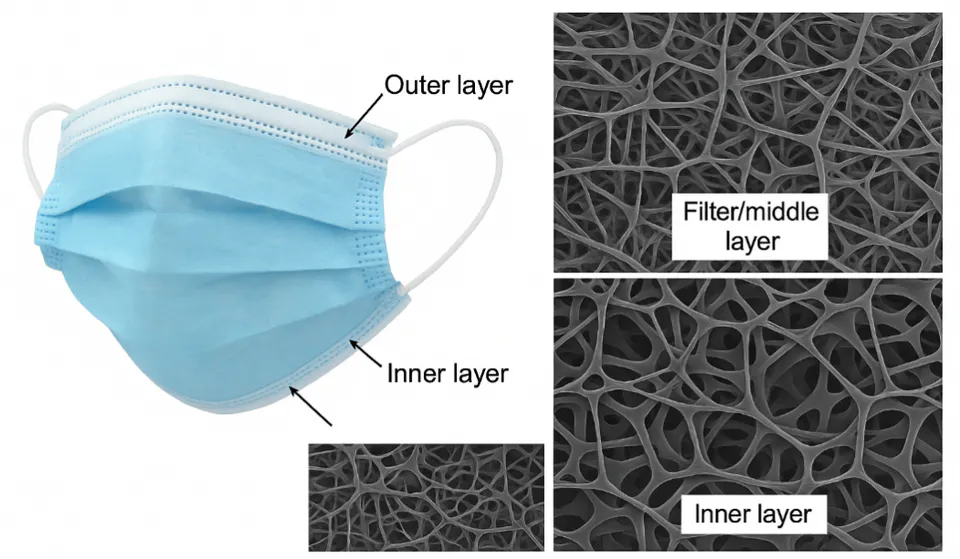
Premium-Iyven-layer non-woven polypropylene PP face mask with elastic earioops from car and Serve [31]
Diaper
Cellulose, polyester, polypropylene (PP), and polyethylene are the primary polymers utilized to produce contemporary diapers. These materials are biologically inert and not accessible, with the exception of cellulose. They are commonly present in fabrics, foods, cosmetics, and other products that come into contact with the skin. Using standards set by the U.S. National Academy of Science (NAS) and the World Health Organization (WHO), the safety of each component in a diaper is carefully evaluated. The ingredient composition is evaluated for potential risks and dose response before the product is evaluated for potential exposure to the ingredient. This quantitative risk assessment establishes the safe range for utilizing the diaper ingredient. Other factors are taken into account to offset the uncertainty associated with extrapolating toxicity data. Following a successful risk assessment, the product and chemicals move on to confirmatory clinical testing. No chemical or ingredient is introduced to humans before its safety has been proven by standard toxicological evaluation. Examples of confirmatory clinical testing include patch testing for skin irritation and sensitization and customer-in-use clinical studies. After being on sale, the product is regularly assessed for quality and consumer feedback to resolve any problems, especially those related to safety, which are investigated and appropriately addressed [32].
Anatomy of a Diaper
The fundamental "anatomy" of an incontinence baby diaper is essentially the same, despite the fact that diapers come in a wide range of styles with various consumer features [32]. Figure 2 depicts the standard components and design features of a modern superabsorbent incontinence diaper. The three primary functional product zones that make up a modern superabsorbent incontinence diaper are explained below.
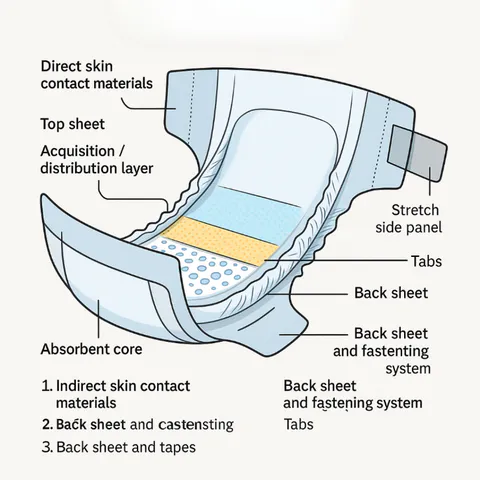
Anatomy of a Diaper [32]
Direct skin contact materials: The layer that comes into direct contact with the baby's skin is the top sheet. It is made out of a soft, nonwoven synthetic sheet made of polypropylene or polyethylene, either separately or in combination, that lets liquids flow through while staying comparatively soft and dry. Urine and other liquids are swiftly transferred to the layers below by this layer, which is its primary purpose. A lotion may also be used on the top sheet to shield the skin from irritation and excessive hydration [33].
Indirect skin contact materials:
Typically, a polyester-based layer and a modified cellulose patch are positioned between the top sheet and the core, which is not in direct touch with the skin, to form the acquisition/distribution layer. Its primary purpose is to make it easier for liquid to travel away from the infant and more evenly distribute it throughout the diaper core for maximum absorbency.
The innermost layer of the diaper is called the absorbent core. Usually, it is composed of a mixture of fluff cellulose pulp (bleached using a method that does not use chlorine) and polyacrylate granules, and it is covered with a nonwoven layer of either cellulose or polypropylene. Urine is swiftly absorbed and transferred to the polyacrylate superabsorber by the cellulose component of the core. Even under pressure, such as when a baby sits on a full diaper, the superabsorber can absorb pee and seal it within its polymeric structure to keep it away from the infant's skin [33].
Back sheet and fastening system
The back sheet, which is the diaper's water-resistant outer layer, is usually composed of a soft-textured, cloth-like polypropylene laminated with a polyethylene film. Its purpose is to stop fluids from seeping into the outer garments from the diaper.
Features mainly intended to provide a proper fit on the diaper are considered additional elements. Stretch side panels, tapes and fastening methods to enhance fit, and leg cuffs to stop leaks are a few examples of such design features [33].
Types of diaper
Cloth diapers, disposable diapers, and biodegradable diapers are the three varieties of diapers on the market. Cotton, the material used to make cloth diapers, offers a gentle cushion to help prevent skin rashes. Super-absorbent polymer (SAP) with high water absorption qualities is typically included in disposable diapers for comfort. Since natural materials and fewer chemicals are used to construct some of its components (such as the biodegradable outer core), biodegradable diapers are more environmentally and skin-friendly. The market for these products has grown in recent years. Disposable diapers were the most popular of these items worldwide in 2013, accounting for over 66% of the market and this market share is anticipated to hold steady in the near future. Biodegradable diapers are expected to develop rapidly as a result of consumers' changing choices and growing environmental consciousness, even if training pants or cloth diapers held the second-largest market share. In the near future, it is anticipated that consumer preferences may shift in favor of using more ecologically friendly diapers as a result of increased understanding of the potential negative effects of the chemicals used to create disposable diapers [34].
Environmental Impact of Diapers
Diapers have faced substantial criticism due to their environmental impact, particularly concerning the solid waste they generate and the space they occupy in landfills. They take an extremely long time to decompose, contributing to long-term environmental issues. One of the major concerns is the massive quantity of disposable diapers that end up in landfills, making them a significant contributor to landfill volume. This exacerbates problems related to limited landfill space and poses both environmental and health hazards. Beyond landfill occupation, other environmental concerns associated with disposable diapers include their slow degradation and the complications it creates [35]. Though earlier environmental legislation on disposable diapers may now be outdated, it provided a comprehensive review of issues such as biodegradability, recycling options, composting, and life-cycle analyses, along with policy approaches at various governmental levels [36]. In response to these concerns, several studies have explored ways to mitigate the environmental impact of disposable diapers. One laboratory study simulated the compaction behavior of used diapers mixed with varying amounts of solid waste. It concluded that when disposable diapers constitute less than 10% of the total waste volume, they do not significantly contribute to landfill space usage. Therefore, excluding them from landfills solely to save space was deemed unnecessary. Another recent study examined the feasibility of composting disposable diapers with source-separated organic fractions of municipal solid waste [36]. The findings showed that this co-composting process presented no technical challenges when implemented on a large scale. Additionally, research into biodegradation explored the use of the fungus Pleurotus ostreatus to break down disposable diapers. This method not only offered a potential solution for reducing solid waste but also resulted in a protein-rich product free from human disease pathogens, suggesting possible secondary uses [37].
Sanitary Napkins
Menstrual hygiene management represents an important and socially relevant application area for medical and hygiene textiles, particularly in relation to user comfort, health, and material sustainability. Menstruation is a normal physiological process involving the periodic shedding of the uterine lining, during which menstrual fluid must be effectively absorbed and retained by hygiene products. Inadequate menstrual hygiene practices and prolonged moisture exposure have been associated with discomfort and an increased risk of irritation or infection, underscoring the importance of appropriate absorbent materials and hygienic product design. Conventional sanitary napkins are typically composed of synthetic polymers, superabsorbent materials, and chemical additives intended to enhance fluid absorption and odor control. While these materials provide high absorbency and leakage protection, concerns have been raised in the literature regarding potential skin irritation and user sensitivity associated with certain chemical constituents, including fragrances and residual processing chemicals. Such effects are not universal and depend on formulation, exposure duration, and individual skin sensitivity; therefore, these concerns should be interpreted cautiously and supported by empirical evidence. In response, increasing research attention has been directed toward the use of bio-based and renewable materials in sanitary napkin design. Natural fibers and biomaterials such as cotton, hemp, banana fiber, water hyacinth, papyrus, and similar plant-based resources have been explored for their biodegradability, breathability, and potential antimicrobial properties. The selection of these materials is typically guided by performance criteria including absorbency, fluid retention, mechanical integrity, skin compatibility, and environmental impact. When appropriately engineered and combined within multilayer structures, such biomaterials offer promising pathways toward more sustainable menstrual hygiene products without compromising essential functional requirements. [38].
Materials for Sanitary Napkins
Superabsorbent polymers (SAPs) are the primary absorbent material used in most commercial sanitary pads due to their exceptional fluid retention capacity. Initially adopted in high-income countries such as the United States and Japan in the 1970s for diapers and sanitary products, SAPs can absorb up to 200 times their own weight in water, providing superior leakage protection. However, SAPs are relatively costly and require advanced manufacturing technologies, which can limit their accessibility in certain contexts. Natural plant fibers, which are cellulose-based, absorb water through hydrogen bonding between hydroxyl groups in the fiber cell walls and moisture. As the fiber swells, it stores water both within the cell wall structure and in the void spaces between fibers. While the water-holding capacity of plant fibers such as cotton is lower than that of SAPs typically around 24–27 times their own weight they contribute additional benefits such as softness, breathability, and biodegradability. Consequently, modern sanitary napkin designs often combine SAP with natural fibers in multilayer constructions to optimize both absorbency and user comfort. A conventional three-layered sanitary pad typically includes a top sheet that transfers fluid, an absorbent core, and a barrier layer that prevents leakage. In hybrid designs, SAP is embedded within natural fibers such as cotton or bamboo to enhance fluid retention, while the top sheet is composed of soft, breathable nonwoven fabrics that ensure skin comfort and rapid fluid acquisition. Biodegradable barrier films, such as low-density polyethylene alternatives, can reduce environmental impact without compromising functionality. Additionally, antimicrobial plant-based treatments, such as extracts of Azadirachta indica (neem) or Curcuma longa (turmeric), can be applied to the top layer to inhibit microbial growth, contributing to improved hygiene and user safety. [39]. The following layers are usually taken into consideration while designing a sanitary napkin:
Top sheet: Water-permeable top sheets are made to remain in contact with the skin. This layer's functional goal is to swiftly move fluids to the layer below. A necessary characteristic for functional efficacy is high wicking ability.
Absorbent core: Fluids that flow through the top sheet are absorbed and stored by this layer. When pressure is applied, the fluid is effectively trapped into the core once it has been absorbed, preventing spills. To promote rapid absorption, the absorbent chemical may or may not be covered in cellulose fluff. The compounds used in the core must have a high fluid retention rate.
Barrier sheet: For total spill avoidance, bottom sheets act as a water-impermeable barrier. This layer comes with adhesives and winged appendages for fixing. Because of localization, there is very little skin contact.
Miscellaneous: Depending on the product class, there may be emollients on the top layer and an extra acquisition layer above the absorbent core. Applying emollients helps shield the skin from inflammation. In order to prevent reflux and distribute fluids uniformly onto the absorbent core, additional acquisition layers are offered [40].
Environmental Impact of Sanitary Napkins
The consumption of raw materials, energy, and water during production, product ingredients, packaging, and waste disposal are all factors in the estimation of the environmental effects of single-use menstruation products. Every year, more than 200,000 metric tons of garbage are produced from period products in the United Kingdom of Great Britain and Northern Ireland alone. Used menstruation products are not considered medical waste despite the organic substance they contain, and recycling them is difficult both financially and technically. Depending on municipal waste management regulations, waste from single-use menstrual products that are collected separately are either sent to a landfill or to be burned. Disposable pads may take 500–800 years to decompose in landfills, where more than 80% of menstruation items wind up in both Europe and the US [41].
Future Perspectives of Sanitary Napkins
Using gelatine solution, the absorption index of many biodegradable materials was examined and contrasted with that of a brand-name sanitary pad. Bamboo wadding was discovered to be the most absorbent natural material when compared to cotton terry cloth, hemp cloth, and linen. Bamboo wadding seems to be the best material for sanitary products because it is highly absorbent, reasonably priced, lightweight, biodegradable, and has no negative effects on the environment or the user. It is almost twice as absorbent as a commercial sanitary pad. Although this experiment is exploratory and needs more research and replication, it offers a promising beginning in this area. If more research is done, girls in low- and middle-income nations may be able to use bamboo plants in their villages to create sanitary pads that are of a higher quality than those in high-income countries. If this technical study of a physical material is further examined from a social science and policy standpoint, it may boost school attendance, raise girls' educational attainment, and be a significant step toward gender equality. With better absorptive and antibacterial qualities than other natural fibers like cotton, bananas, and papyrus, bamboo shows great promise as a sustainable substitute for conventional period hygiene products. In addition to addressing environmental issues, the use of bamboo fiber in biodegradable sanitary napkins promotes the comfort and health of women. In order to improve menstrual hygiene management worldwide, further research is encouraged to investigate novel biodegradable products that capitalize on bamboo's characteristics [42].
Surgical Scrubs
Medical professionals have been wearing what are known as surgical scrub garments (henceforth referred to as "scrubs") in operating rooms since the turn of the century. These days, a large range of this kind of clothing is utilized in medical settings outside of operating rooms. However, what are scrubs? Where did the idea and application come from? Are they required in some medical settings? Furthermore, are they a practical way to stop or manage the spread of infection from the standpoint of infection control? The initial goal of this APIC State of the Art Report, or SOAR, is to review the scientific literature regarding the connection between infection prevention and scrub use [43]. Second, the purpose of this report is to give infection control experts and others a method for deciding whether or not to utilize these clothes in medical institutions. The usage of scrubs outside of a controlled setting, such an operating room, will be covered in this article. There are many different ways to define scrubs. Scrubs have recently taken the place of the more conventional uniform worn by nursing and ancillary department staff. Therefore, in attempting to describe what scrubs are, it may be easier to begin by describing the reason for which the clothing are employed in a specific health care facility [43].
Textile Fibers Used in Surgical Scrubs
So, exactly what are scrubs made of? Like most clothing pieces, scrubs are made of many different fabrics. Each material type has pros and cons, and choosing the right fabric to fit your specific needs is important. The most common scrub fabrics include:
Cotton Scrubs: Due to its natural fibers, cotton is one of the most popular fabrics for scrubs. Lightweight and breathable, it keeps you comfortable during long shifts. Cotton is also hypoallergenic, making it ideal for those with sensitive skin. Cotton scrubs are a great choice for maximum breathability, which helps regulate body temperature. It's a great material to wear in warm environments or high-pressure settings where overheating can be an issue. Plus, cotton offers a soft, smooth feel against the skin, so you can stay comfortable even during your longest workdays [43].
Polyester Scrubs Polyester is a durable synthetic fabric designed to withstand the demands of daily wear. Its ability to maintain shape and resist shrinking makes it a go-to choice for healthcare professionals. Polyester is resistant to wrinkles and stains, making it an excellent option for messy work environments. Its quick-drying properties are especially beneficial for healthcare workers who frequently wash their scrubs [43].
Spandex Scrubs Spandex, also known as elastane, is a stretchy synthetic fiber. While rarely used on its own, spandex is commonly blended with other fabrics to add elasticity. The flexibility spandex provides is a major plus for jobs requiring constant movement. Spandex scrubs allow for a full range of motion without sagging or losing their shape [44].
Rayon Scrubs Rayon is a semi-synthetic fabric made from cellulose fibers. It is often said to mimic the feel of natural materials like silk or cotton, which can be appealing to some people. While rayon is soft and breathable, it’s less durable than other materials [45].
Blended Fabric Scrubs Blended scrubs combine two or more fabrics to create a versatile garment. Popular blends include cotton-polyester and polyester-spandex, which balance comfort, durability, and stretch.
Cotton-Polyester Blends: Offer the softness of cotton with the durability and wrinkle resistance of polyester. These scrubs are low-maintenance and suitable for all-day wear.
Polyester-Spandex Blends: Combine durability with flexibility, providing a snug yet comfortable fit for active professionals. Blended fabrics ensure that your scrubs remain functional and professional while still making your comfort a top priority [46].
Types of Surgical Scrubs
Surgical scrubs are essential attire for healthcare professionals, designed to maintain hygiene and prevent contamination in clinical settings [43]. The primary types include:
Disposable Scrubs Made from lightweight, non-woven synthetic materials like polypropylene, disposable scrubs are intended for single use. They offer a sterile option that reduces the risk of cross-contamination without the need for laundering. These scrubs are particularly useful in highinfection-risk environments [47].
Reusable Scrubs Constructed from durable fabrics such as cotton-polyester blends, reusable scrubs are designed for multiple uses. They require proper laundering and sterilization after each use. While more environmentally friendly, they necessitate rigorous cleaning protocols to maintain hygiene standards [48].
Antimicrobial Scrubs Antimicrobial chemicals are applied to these washes to prevent the growth of bacteria and other germs. In situations when sterility is crucial, the treatment is very helpful in lowering the chance of infection transmission [49].
Surgical Scrubs in the OR
According to the Association of Operating Room Nurses (AORN), scrubs in the operating room (OR) encourage a high standard of sanitation and cleanliness in the practicing environment. Additionally, it advises against hanging or storing scrub clothes in a locker for later use and instead suggests that all scrub clothes be cleaned or disposed of in specially made containers, depending on whether they are single-use or reusable. The use of scrub suits is closely linked to infection prevention because traditional scrubs are typically not made of a barrier type, a liquid resistant material, and may not offer adequate protection. However, if they are used underneath a surgical gown, the gown must guarantee protection rather than the scrub suit. The risk of bacteria being transferred between patients in the operating room through scrub suits is decreased when OR gowns are constructed of material that is resistant to liquid penetration in the front and sleeves [50].
Cloths/Wipes
Wet wipes are now widely used for a number of things, such as toilets, kitchen paper, cosmetic removers, biomedical wipes, and napkins. The vast majority of wet wipes on the market are non-woven, which has limitations with regard to comfort, degradability, and water absorption capacity. Wipes are a cleaning technique that can eliminate organic material and disinfect surfaces by means of the mechanical action of wiping. Likewise, the wipe has the ability to mechanically eradicate the microorganism. However, it is important to consider the possibility of bacteria spreading to other parts of the surface. How well the microorganism is eliminated depends on a number of factors, including the type of microorganism adhesion mechanism, the number of passages, the geometry of the mechanical action, the pressure force applied, and the intrinsic properties of the wiping material, such as surface energy, fabric structure, and fiber types [51].
Textile Fibers Used in Wipes
A range of polymer fibers, such as synthetic petrochemicals (like PET, PP, and PE), natural sources like cellulose (like cotton and wood pulp), or chemically regenerated cellulose (like viscose and lyocell), can be used to make wet wipes. Petroleum-based polymers with chemical additives added to them give synthetic plastic fibers their resistance to deterioration, yet they can leak pollutants and hazardous byproducts into waterways [52]. Because synthetic fibers retain their structure and enhance their tensile strength when wet, the majority of wet wipes now on the market contain at least one type of synthetic fiber, which increases their durability while being used by consumers. Natural cellulosic plant fibers are bio-polymers made from plant feedstocks that are replenishable. Cotton, which makes up over 30% of the 113 million tons of polymer fibers produced in 2021, is the most often used of them for the production of wet wipes. More than half of the raw materials used in wet wipes are cellulosic fibers, which are used to improve the wipes' softness, water absorption, and biodegradability. Although they are similarly made from cellulose biopolymers, regenerated fibers such as viscose, rayon, and lyocell have undergone chemical and physical changes throughout production. However, it is difficult to determine the environmental persistence and impact of regenerated fibers due to their uneven classification as natural or manufactured in environmental pollution studies [53].
Limitation of Healthcare/Hygiene
Products Medical textiles, which include healthcare and hygiene products, are hampered by a number of constraints that include surgical gowns and other garments that lack liquid barrier capabilities; masks that do not meet filter efficiency standards; poor patient mobility in the hospital setting that stems from the inability to don and doff medical garments with ease; and medical disposable absorbents that fail in the main purpose of protecting the skin from moisture [53].
Many people, especially in low-income or rural areas, lack access to essential healthcare and hygiene products due to cost or distribution challenges.
In some regions, healthcare and hygiene products are not subject to stringent quality control, leading to counterfeit or substandard products.
Many products, such as disposable sanitary pads, diapers, or plastic packaging, contribute significantly to environmental pollution.
Cultural taboos and lack of education around hygiene (e.g., menstruation) limit the use and proper disposal of hygiene products.
Overuse or misuse of certain products (like antibiotics or antiseptics) can lead to resistance or adverse reactions [53].
Conclusion
Healthcare and hygiene textiles play a critical role in infection prevention, patient safety, and occupational protection. Products such as surgical gowns, masks, scrubs, diapers, and sanitary pads rely on the coordinated performance of fibers, nonwoven assemblies, and composite structures to balance barrier efficacy, comfort, and durability. While reusable and biodegradable materials offer potential reductions in waste, energy use, and greenhouse gas emissions compared to conventional disposable alternatives, the degree of environmental benefit depends on lifecycle considerations, including laundering, production methods, and end-of-life disposal. Despite these advances, several challenges remain. Limited accessibility and high manufacturing costs can restrict the availability of high-performance textiles, particularly in low-resource settings. Quality control and standardization are critical to ensure consistent barrier performance, as highlighted in the variability observed in gown and mask materials. Cultural practices and user preferences can influence adoption, particularly for personal hygiene products such as sanitary napkins, underscoring the need for user-centered design. Environmental impacts, including microplastic release from synthetic fibers and chemical residues from additives, also require careful management to minimize unintended consequences. Future developments in healthcare textiles are expected to focus on materials that combine high barrier performance with ergonomic design and environmental sustainability. Emerging technologies including antimicrobial coatings, self-sterilizing surfaces, and smart textiles with real-time monitoring capabilities offer promising avenues for improving safety and comfort. Integrating these innovations will require interdisciplinary research, rigorous testing against established performance standards, and consideration of socioeconomic and environmental constraints. By linking material science, regulatory compliance, and sustainable design, next-generation healthcare textiles can provide evidence-based, practical solutions to global healthcare needs.