El objetivo del presente proyecto es ofrecer información, a las y los estudiantes de Escuelas y Facultades de Nivel Superior, que impacte en el bienestar de quienes les rodean. Así como en la salud mental, que les permita manejar un ambiente familiar en conviencia con la heteronormatividad, relacionado con una identidad de género no normativa.
La metodología usada corresponde a una investigación mixta donde, en un primer momento, se interactúa directamente con el fenómeno de estudio y se trabaja con una encuesta de reconocimiento de población. Recabando datos mediante una encuesta de medición tipo Likert.
Se concluye que la bisexualidad es la orientación sexual predominante seguida de la orientación gay y lesbiana, donde su orientación sexual es desconocida por su familia, existiendo al menos un familiar homofóbico. Asimismo, se concluye que los eventos que suceden en la familia tienen un impacto en los estados emocionales, conductuales y actitudinales de las personas que la integran.
## I. InTroDuCCiÓn
presente trabajo describe algunos puntos de importancia, para poder conocer los factores, que desencadenan situaciones que ponen en riesgo la integridad física y emocional de estudiantes, afectados por actos violentos, el abuso y la sensación de aislamiento en la convivencia familiar, con figuras homofóbicas. Con esta investigación se da respuesta a la pregunta: ¿qué pasa con la salud mental de jóvenes con identidad de género, no normativa o no convencional, al convivir con la familia donde alguno de ellos es homofóbico?
Según datos del Plan de Acción integral sobre la salud mental (2003-2013), el suicidio es la cuarta causa de muerte entre los jóvenes entre 15 a 29 años de edad, en la que se autorreconoce como persona con orientación sexual y/o identidad de género no normativa, convirtiéndose en un problema de salud pública. De acuerdo con Schulman (201o), las reacciones de los padres frente a la revelación de la homosexualidad de su hijo o hija dependen de la fuerza del vínculo padres-hijo(a), así como las relaciones entre los hermanos o parientes de cercana convivencia.
Considerando valores, religión, costumbres, y todos aquellos elementos determinantes en la identidad familiar.
Con el fin de evitar decisiones que puedan afectar su integridad personal, física o emocional, el presente proyecto pretende ofrecer información, a las y los estudiantes de Escuelas y Facultades de nivel superior. Que impacte en el bienestar de quienes les rodea, así como en la salud mental, que les permita manejar un ambiente familiar de hetero normatividad, relacionado con una identidad de género no normativa. En el cual podrán identificar si viven en un ambiente familiar homofóbico relacionado con ser homosexual.
Según Grau (2000), el término "homosexualidad" se originó en la renovación de la reforma sexual en Alemania a fines del siglo XIX. Varios sexólogos alemanes se dedicaron a describir y definir la conducta homosexual, estableciendo que es distinta de la heterosexualidad. El sexólogo (Zubiaur Mirantes, 2007) buscaba definirla como una forma distinta y benigna de sexualidad, relacionada con el deseo sexual orientado hacia personas del mismo sexo. En la actualidad, el término "homosexualidad" se basa en tres nociones: psiquiátrica, psicoanalítica y psicológica, reflejando una crisis conceptual.
En su teoría (Freud, 1908), sobre desviaciones respecto al objeto sexual, describe la homosexualidad como una inversión. Señalando distintos tipos de comportamiento en los individuos invertidos. Algunos ven la inversión como natural, otros la consideran una obsesión morbosa. La inversión puede variar en el tiempo y en la intensidad de su manifestación.
Los invertidos muestran una amplia gama de conductas y características, desde absolutos hasta ocasionales. A pesar de las diversas opiniones, se argumenta que no pueden ser considerados degenerados, ya que se encuentran en personas sin graves anormalidades y en individuos con capacidad funcional normal e incluso con alto desarrollo intelectual y cultura ética.
Según (Sánchez, 1988) el proceso de adquisición de la identidad de género comienza con el juicio de autoclasificación como niño o niña, influenciado primero por el entorno social y luego por las diferencias anatómicas. La identidad de género se refiere a la autopercepción como hombre o mujer, alineada con lo culturalmente aceptado para cada género, independientemente del sexo biológico.
Según (Kohlberg, 1968) propone tres etapas en este proceso: 1. La adquisición de la identidad de género ocurre entre los 2 y 7 años, donde se etiqueta correctamente en su propio género.
2. La constancia e irreversibilidad de género implica comprender que el género es estable e inmutable.
3. La capacidad de cuestionar y relativizar los roles de género sociales a medida que madura intelectualmente.
Con base en lo anterior se puede afirmar que la identidad de género es el autorreconocimiento como miembro de un género específico. Los cisgéneros se identifican con el rol asociado a su sexo asignado al nacer, mientras que los transgéneros se identifican con un rol diferente a su sexo biológico, abarcando identidades como mujer, hombre u otros géneros distintos al asignado al nacer.
(Butler, 2002) definió el género como el resultado de un proceso cultural en el cual las personas reciben y a su vez innovan significados culturales. Su reflexión integró la filosofía para abordar interpretaciones sobre género, feminismo e identidad, cuestionando la posibilidad de transformar el género voluntariamente. La nueva concepción de género abarca prácticas, creencias, representaciones y normativas sociales surgidas de la diferenciación anatómica entre hombres y mujeres.
Butler adopta de (Foucault, 2024) la idea de que no existe un sexo biológico independiente del género, pues los cuerpos son construcciones culturales y los conceptos de sexo están siempre influenciados por la cultura y el lenguaje. El sexo, asignado al nacer según los genitales y cromosomas, se registra en el certificado de nacimiento, mientras que el género abarca expectativas sociales sobre el comportamiento y características basadas en roles culturales. La identidad de género refleja cómo se siente y expresa internamente la persona, manifestándose a través de la forma de vestir, la apariencia y el comportamiento.
La sociedad atribuye características femeninas o masculinas según construcciones socioculturales, pero el sexo se considera una condición natural que no puede ser determinada por factores culturales. La American Psychological Association define la orientación sexual como la atracción romántica, emocional y sexual hacia otros, mientras que la identidad de género se enfoca en quién eres, hombre o mujer, no de quién se trate.
La familia, desde una perspectiva sistémica, se define como un sistema organizado e interdependiente, regulado por reglas y dinámicas entre sus miembros y el entorno. En el presente trabajo, se estudia la familia como un grupo con identidad propia, donde se destacan sus características como conjunto, estructura, interacción, entre otros.
Es importante reflexionar sobre el papel del apoyo familiar cuando un hijo revela su homosexualidad y explorar las reacciones parentales ante esta situación. Aunque las etapas de aceptación familiar no son universales, suelen repetirse en muchos casos, desde el shock inicial, la negación, el enojo y la negociación hasta una aceptación parcial, evidenciada en el silencio, la tristeza profunda y la nostalgia, acompañados de sentimientos de culpa. Sin embargo, no todas las familias llegan a una aceptación plena.
El apoyo familiar es crucial para el bienestar emocional de los jóvenes, como señala (Orcasita Pineda, 2010) quien describe que solo el hecho de que la familia apoye es fundamental para el bienestar emocional. La falta de apoyo social está vinculada con un aumento en el pensamiento suicida, ansiedad y depresión. A su vez, la familia experimenta sentimientos de ira, tristeza y una abrumadora culpa.
De acuerdo con (Zaro, 1999) la homofobia se define como la actitud hostil hacia personas con orientaciones sexuales diferentes a la heterosexualidad (relaciones hombre-mujer), afectando a homosexuales masculinos, lesbianas, bisexuales, transexuales, entre otros. Esta conducta hostil se manifiesta a través de discriminación, burlas, violencia verbal o física, pudiendo ser tanto externa, dirigida a otros, como interna, cuando alguien diferente sexualmente siente rechazo y culpa hacia sí mismo.
Y finalmente, la homofobia por orientación sexual, de acuerdo con con (Zaro, 1999) se categoriza según la víctima: gayfobia para homosexuales masculinos, lesbofobia para lesbianas, bifobia para bisexuales y transfobia para transexuales. Además, afecta a heterosexuales al coartarles la expresión de emociones por temor a ser etiquetados como afeminados o marimachos.
La falta de respeto a la autonomía de los hijos puede llevar a la exclusión y agresión, en lugar de fomentar una familia integrada, lo que muestra una política de tolerancia que mantiene a los hijos homosexuales como inferiores en lugar de aprender de la diversidad y apoyarlos frente a los prejuicios.
Con relación a la homofobia familiar (editorial, 2020) abarca el rechazo, desprecio, humillación y discriminación hacia personas homosexuales por parte de sus propias familias, generando sentimientos de pérdida, frustración y culpa en el entorno familiar. Esto provoca una vivencia de desintegración social para la persona homosexual, dañando su bienestar.
Ademas, en concordancia con (Ardila, 2008), las reacciones de los padres ante la revelación de la homosexualidad varían y deben evaluarse según la calidad del vínculo padres-hijo(a) y los sentimientos familiares. Las sanciones pueden ir desde desprecios hasta ataques brutales, llevando a las personas homosexuales a ocultar su identidad en un "armario" que impone reglas contradictorias.
Según (Ardila, 2008) el término bullying engloba diversas formas de maltrato y persecución que sufren niños y adolescentes en contextos escolares, incluyendo acoso, hostigamiento, abuso y más. Esta conducta, que puede causar daño emocional y psicológico grave a la víctima, fomenta la violencia en el agresor y crea un clima de crueldad y aislamiento.
El acoso puede ser llevado a cabo de varias maneras, como la exclusión social, hostigamiento verbal y físico, manipulación, coerción e incluso violencia física y ciberacoso. Es esencial destacar que, como en cualquier situación de acoso moral, la víctima no está psicológicamente preparada para enfrentar tales ataques, siendo vulnerable ante acusaciones o maltratos que no comprende ni puede combatir debido a la ansiedad que genera.
El bullying familiar puede llegar a ser tan perjudicial que puede incapacitar por completo a la víctima. El bullying familiar representa el acoso moral dentro del ámbito familiar, donde un miembro, motivado por envidia o inseguridad, comienza a hostigar a otro, generando maltrato psicológico en ocasiones, físico, de forma prolongada. El propósito es desacreditar, humillar y eventualmente excluir al acosado del núcleo familiar, afectando gravemente su autoestima y llevándolo a ser considerado como la "oveja negra". Esta situación puede extenderse cuando otros parientes, sin percatarse, se unen a los acosadores. La víctima se siente rechazada en un entorno que debería ser seguro, causándole desestabilización emocional, pérdida de autoestima y abandono familiar.
En corcondancia con (Olweus, 2004), acosar implica la persistente persecución, con fervor y determinación, de una persona o animal, sin darle respiro ni descanso. Este comportamiento puede manifestarse en cualquier entorno y afectar a cualquier individuo, independientemente de su estatus social, educativo o económico. Puede ser perpetrado por agresores que ocupen posiciones jerárquicas superiores, iguales o inferiores con respecto a la víctima, a través de actos constantes de violencia o intimidación con el propósito de desestabilizar y generar malestar o insatisfacción en la persona acosada. En el ámbito psicológico, el acoso se considera un trastorno u obsesión que lleva a ciertas personas a realizar acciones como espiar, seguir, llamar, amenazar y cometer actos violentos contra sus víctimas. El acosador puede manifestarse física, psicológica o tecnológicamente, utilizando internet o teléfono para su cometido.
Ademas para que se clasifique una conducta como acoso, de acuerdo con (Olweus, 2004), debe haber un desequilibrio de poder entre las partes involucradas, es decir, entre el acosador y la víctima. Además, estos comportamientos deben repetirse a lo largo del tiempo, causando consecuencias graves en la persona acosada, tanto a nivel físico como psicológico. Por tanto, al evaluar una conducta como acoso, es crucial considerar dos características principales: la repetición, que implica que las acciones del acosador se hayan llevado a cabo más de una vez o puedan repetirse, y el desequilibrio, donde el acosador utiliza su poder (ya sea físico, psicológico, social, etc.) para controlar o ejecutar conductas perjudiciales hacia la víctima.
El acoso familiar, según (Olweus, 2004), representa una forma de violencia que tiene lugar dentro del ámbito del hogar, involucrando a un agresor y una víctima. Este tipo de maltrato puede adoptar diversas formas, incluyendo insultos, amenazas, humillaciones e incluso agresiones físicas. La presencia de agresores que son miembros de la familia genera una sensación de vulnerabilidad e indefensión en la víctima, lo que puede tener graves consecuencias emocionales y psicológicas.
La violencia familiar se manifiesta como una forma de abuso psicológico que afecta a millones de personas en todo el mundo, mostrándose a través de diversos comportamientos como insultos constantes, humillaciones, amenazas, aislamiento social, control excesivo y chantaje emocional, entre otros.
(Olweus, 2004), afirma que a veces, podría parecer que el individuo acosado está interpretando mal las acciones de su familia o que es especialmente sensible a la crítica, prefiriendo responsabilizar a los demás por los problemas en su vida en lugar de tomar medidas. Esto puede parecer así en ocasiones y quizás sea cierto en algunos casos. Sin embargo, el sentir de estar siendo acosado por la familia es una experiencia subjetiva y real para quien la experimenta. No corresponde juzgar sus sentimientos, ya que esta percepción afecta su vida de manera significativa. Algunos efectos de esta situación incluyen la sensación de indefensión, complejos psicológicos variados, distorsión de la autoimagen, internalización de mensajes negativos, inhibición, autolesiones, baja autoestima y depresión
## II. MÉTODO
Los investigadores identifican mediante un guion de entrevista actitudes degradantes, discriminatorias y ofensivas, experimentadas por estudiantes de edades entre 15 a 25 años pertenecientes a escuelas y Facultades de la UAdeC y del TecNM-La Laguna, por parte de los miembros de su familia.
Esto permite a los investigadores participantes establecer variables para estudiar la existencia de un problema social que conduce a la violencia y discriminación intrafamiliar. La recolección de datos cuantitativos se lleva a cabo mediante un muestreo de bola de nieve, teniendo una $N = ~ 340$, se interactúa directamente con el fenómeno de estudio y se trabaja con una encuesta de reconocimiento de población, buscando fortalecer el marco teórico y ubicar con precisión el sentido de las variables a estudiar. Para después continuar el trabajo cuantitativo y recabar los datos mediante una encuesta de medición tipo Likert, esto permite identificar y trabajar las variables de estudio de manera objetiva y clara empleando la valides de criterio constructo y contenido a lo largo del desarrollo del trabajo y así tener una investigación mixta con un alcance y diseño descriptivo.
## III. REsulTaDOS
Dentro de los resultados obtenidos, se infiere que el $92\%$ de la población estudiantil se encuentran concientizados de las consecuencias que se tiene de vivir en un entorno homofóbico, debido a que han recibido información de diferentes fuentes. Donde se dan a conocer casos y evidencias de personas que la sufrieron y lograron pedir ayuda para seguir con su vida.
La Figura 1 muestra lo correspondiente a los tipos de orientación sexual, referido a la diversidad de orientaciones sexuales que existen. Derivado del $18\%$ de la población homosexual, la orientación sexual con más estudiantes es la bisexualidad $( 53\% )$, seguida por los estudiantes gay $( 17\% )$, lesbianas $( 9\% )$, pansexuales $( 10\% )$,demisexuales $( 5\% )$ y asexuales $( 2\% )$. Esto permite comprobar la diversidad de orientaciones dentro de las instituciones de educación superior señaladas anteriormente.
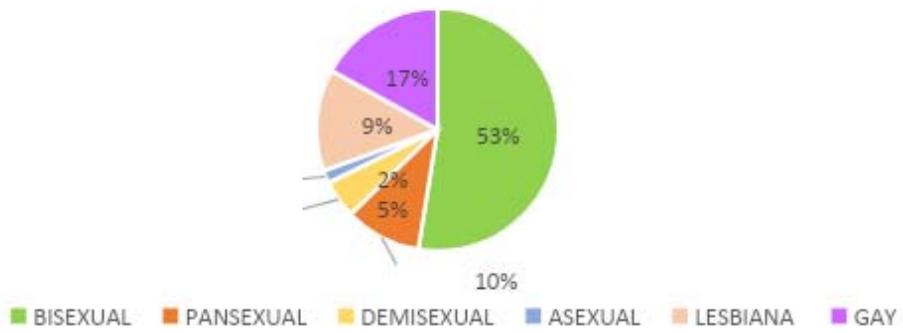
Figura 1: Tipos de Orientación Sexual
La siguiente Figura 2, revela la respuesta a la variable ¿Sabe tu Familia que eres Homosexual?. Siendo que el $60\%$ de las familias de los estudiantes, en su caso, no saben que son homosexuales. Esta cifra se exterioriza como un foco rojo en las Escuelas y Facultades, consideradas en el presente trabajo, de ser un caso de homofobia familiar y no ser detectado a tiempo.
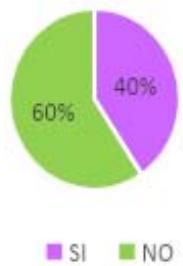
Figura 2: ¿Sabe tu Familia que eres Homosexual?
En concordancia con la tercera Figura 3, las cifras correspondidas reflejan a las familias que "saben si Perteneces a una Comunidad LGBTQ+". Donde la mayoría $(51\% )$ no se encuentra en una comunidad, ya sea por no tener la suficiente información o simplemente no querer pertenecer. En el $27\%$ de los casos las familias sí están esteradas de la pertenencia a una comunidad y el $22\%$ pertenecen, pero su familia no está enterada. De acuerdo con (Cuenca, 2017), el negar la pertenencia a un grupo de LGBT $^ +$ es evitar el enfrentamiento al acoso escolar, así como situaciones percibidas como riesgosas. El cual a menudo experimenta síntomas de estrés postraumático, hiperactivación y revivir experiencias traumáticas. En el caso de aceptación social, tanto en la comunidad homosexual como heterosexual se presentan manifestaciones de estrés postraumático: en entornos escolares, y registrando numerosas vivencias de violencia y discriminación por homofobia.
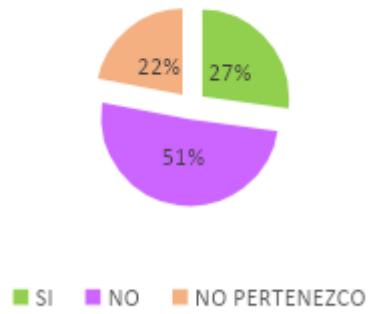
Figura 3: ¿Tu Familia Sabe que Perteneces a una Comunidad LGBTQ+?
La Figura 4, se expone que el $53\%$ de la población estudiada sí es apoyada por su familia. El $47\%$ no recibe apoyo, demostrando que puede existir Acoso y Bullying familiar. En el caso de la problemática que se encuentra dentro de las Escuelas y Facultades, aumentando la posibilidad de numerosas vivencias de violencia y discriminación por homofobia. Tal situación pasa desapercibida y no se le ha dado la suficiente importancia. Lo cual puede causar autoestima baja: la autoestima baja implica una percepción negativa de aspectos propios, como habilidades, características individuales o aspecto físico.
Estudios científicos de (Cuenca, 2017), coinciden en que aquellos que han sufrido homofobia suelen desarrollar esta secuela, tales como mayor ansiedad y depresión. Individuos estigmatizados por su orientación sexual, reales o percibidos, exhiben niveles más altos de ansiedad y depresión, incluso tras haber enfrentado la discriminación en el pasado.
De acuerdo con (Olweus, 2004), a veces, podría parecer que el individuo acosado está interpretando mal las acciones de su familia o que es especialmente sensible a la crítica, prefiriendo responsabilizar a los demás por los problemas en su vida en lugar de tomar medidas. Esto puede parecer así en ocasiones, y quizás sea cierto en algunos casos. Sin embargo, el sentir de estar siendo acosado por la familia es una experiencia subjetiva y real para quien la experimenta.
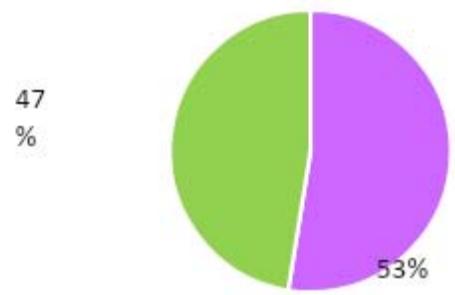
Figura 4: Te Apoya tu Familia
La Figura 5, muestra que estas cifras son realistas donde el $68\%$ de la población tiene un evidencia los resultados en relación con el riesgo de tener un familiar homofóbico. De conformidad con lo anterior, el $68\%$ de los estudiantes de las Escuelas y Facultades sí cuentan con ello y corre el riesgo de situaciones peligrosas tanto física como psicológicamente. Lo cual origina no tener una buena autoestima y salud mental, demostrando que es necesaria la difusión del tema por parte del departamento de tutorías.
Según (Olweus, 2004), el acoso familiar representa una forma de violencia que tiene lugar dentro del ámbito del hogar, involucrando a un agresor y una víctima. Este tipo de maltrato puede adoptar diversas formas, incluyendo insultos, amenazas, humillaciones, e incluso agresiones físicas.
La presencia de agresores que son miembros de la familia, genera una sensación de vulnerabilidad e indefensión en la víctima. Lo que puede tener graves consecuencias emocionales y psicológicas. Algunos efectos de esta situación incluyen la sensación de indefensión, complejos psicológicos variados, distorsión de la autoimagen, internalización de mensajes negativos, inhibición, autolesiones, baja autoestima, y depresión que afecta su vida de manera significativa.
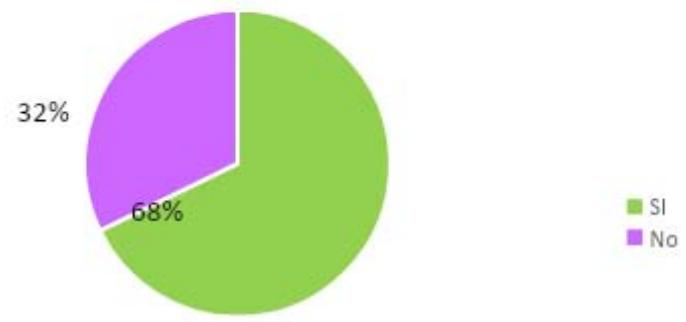
Figura 5: ¿Tienes Algún Familiar Homofóbico?
En la Figura.6, se muestra que al $92\%$ de la comunidad estudiantil le falta información por parte del centro educativo o no dispone de suficiente difusión del tema. Al no comentar el dato se pone en riesgo la integridad del alumno y descuidar el tema poniendo en riesgo la salud mental.
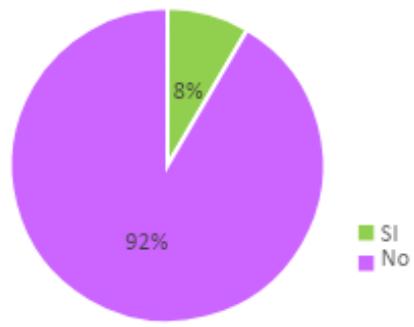
Figura 6: Tener Conocimiento de Acciones Legales en Caso de Sufrir Homofobia

El desconocimiento por parte de los estudiantes de los Derechos por ser Homosexual se expone que el $69\%$ de la población desconoce el mencionado derecho. Aquí se considera poner en práctica las relaciones humanas, ya que todos tenemos derechos y obligaciones por el solo hecho de ser humanos, y enfatizamos que todos merecen respeto para dar y recibir afecto de los demás, independientemente de su identidad de género u orientación sexual.
La Figura 7 referente a Tener conocimiento de las Herramientas Legales para Resguardar la integridad física y Psicológica, el $64\%$ de los estudiantes no tiene información al respecto. Por lo que es necesario disponer de organismos que proporcionen los recursos, así como organizaciones legales que permiten alojar y proteger a aquellos afectados. Uno de ellos es el Instituto Municipal de la Mujer, que es significativo porque, aunque es una organización exclusivamente femenina, logra proteger a todos los casos de homofobia y violencia contra las mujeres, brindando apoyo y refugio sin importar el género.
Según el derecho internacional de los derechos humanos, los Estados deben defender a todas las personas sin distinción. Sin embargo, en algunos lugares, existen leyes que prohíben el uso de ropa asociada a otro género. En ocasiones se utilizan para castigar a las personas transgénero, por expresar su identidad de género.
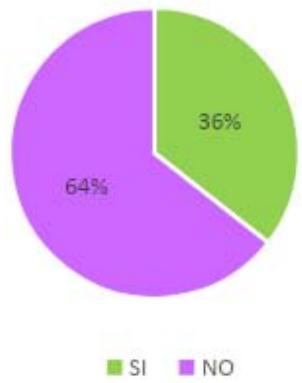
Figura 7: Tener Conocimiento de las Herramientas Legales para Resguardar la Integridad Fisica y Psicologica
La Figura 8 ilustra que el $12\%$ de la población sufre bullying familiar. Aunque este es un porcentaje pequeño, es significativo, porque es posible comenzar a marcar una diferencia en nuestra comunidad escolar y posiblemente incluso salvar vidas. Confirmando la descripción de (Romain, 2024), la militación familiar es un tipo de maltrato psicológico que impacta a millones de individuos a nivel global. Se evidencia a través de diversos comportamientos como amenazas, aislamiento social, control excesivo y chantaje emocional.
La Organización Mundial de la Salud (OMS) define la salud mental como un estado de bienestar psicológico que permite a las personas gestionar el esté, adquirir nuevas habilidades, aprender, rabajr contribuir a la mejora de la salud mental.
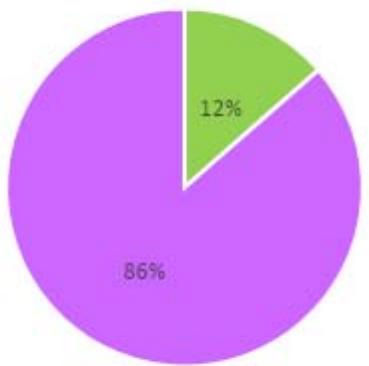
Figura 8: Sufres Bullying por parte de un Familiar
La Figura 9 muestra que el $21\%$, afirma que quizás lo ha experimentado y el $8\%$ sta de acuerdo en haber experimentado acoso en su hogar. Esto sugiere una vez más que es imposible confirmar algo cuando en realidad se trata de una situación peligrosa. De acuerdo con (Romain, 2024), dado que las relaciones sociales son pasajeras, surgen en contextos particulares, sin conexión futura, carentes de afecto genuino y basadas en intereses, y desaparecen cuando se vuelven desfavorables e impresentables en competencia por el beneficio personal.
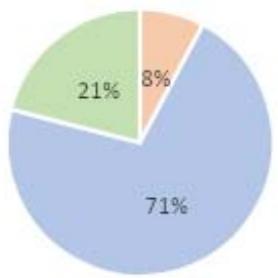
Figura 9: Tienes Conocimiento de que la Persona Homosexual que conoces, Sufre de Blling en su Familia
## IV. DISCUSión
Con base en los hallazgos de este estudio, se concluye que un bajo porcentaje de estudiantes informan a sus familias que son homosexuales. Este resultado concuerda con las manifestaciones del (INEGI, 2023) que revelan que el $16\%$ de la población informa a sus familiares que es gay.
Concordando con La Encuesta Nacional sobre Diversidad Sexual y de Género (ENDISEG) 2021, (ENDISEG, 2021) que establece que 2.3 millones de los que se autoidentifican como LGBTI $^ +$ por su orientación sexual son bisexuales, lo que representa el $51.7\%$ de la población total. Los resultados revelan que los tipos de orientación sexual que lo constituyen en más estudiantes es la bisexualidad, seguida de la orientación homosexual y lesbiana. La identidad de género es del $34,8\%$.
En cuanto a la existencia de familias homofóbicas, los resultados de la encuesta muestran que son el $68\%$. Siendo consistente con la afirmación de Schulman (2010), donde las personas homosexuales enfrentan discriminación dentro de sus familias debido a su comportamiento invertido, sin que algo indebido se halla presentado en su comportamiento. Lo anterior tiene efectos desastrosos en las relaciones familiares, afectando la confianza y las relaciones afectivas y derivando en violencia intrafamiliar.
Además, se infiere que los acontecimientos familiares inciden en los estados emocionales, conductuales y actitudinales de quienes se integran en ella. Según (Schulman 2010), el alcance de las consecuencias de la homofobia dentro del individuo, al aventurarse para establecer diversas situaciones que no desean experimentar, deciden en muchos de los casos mantenerse reprimido bajo cierta transparencia en cuanto al deseo homoerótico y al afán de haberlo practicado con cierta conducta corporal, incluyendo el habla, el lenguaje y la manera de comunicar tanto física como verbal.
La encuesta dio como resultado que la taza de suicidio en personas homosexuales es de $26.1\%$ de quienes solamente han pensado en suicidarse y del $14.2\%$ quien lo ha intentado. Siendo el motivo número uno tener una mala salud emocional, originados por problemas familiares, y $57.2\%$ por diferencias de pareja.
Estos resultados verdaderamente, son impresionantes, ya que más de la mitad de las personas homosexuales se deprimen o tienen una mala salud emocional por culpa de su entorno familiar. Debido a no sentirse amados y aceptados. Lo anterior coincide con (INEGI 2022), con resultados de la tasa de suicidio, en personas homosexuales, de $26.1\%$ que solamente han pensado en suicidarse y del $14.2\%$ quien lo ha intentado y esto es porque el motivo número uno de tener una mala salud emocional son los problemas familiares y de pareja con un $57.2\%$.
En la encuesta de reconocimiento de población el rango de edad son de 15 a 67 años siendo que la mayoría de la población tienen 19 años es un grave problema debido a que el $18\%$ de la población es homosexual y de ese porcentaje el $60\%$ todavía no le dice a su familia y el $68\%$ de esa población tiene 1 familiar homofóbico
## V. CONclusionES
Basándonos en el trabajo realizado y los resultados obtenidos se concluye que si bien el sistema familiar se orienta a metas asignadas socialmente, como protección, educación e integración de los hijos en la comunidad, existe solo el $16\%$ de la población que se acepta como homosexual y se lo da a conocer a su familia.
El $53\%$ de los homosexuales de la comunidad estudiantil no es apoyado por su familia, dejándolos expuestos a situación de vulnerabilidad, al no respetar la autonomía ni las decisiones de sus hijos sobre el hecho de ejercer la sexualidad de manera libre y autónoma. Generando ambientes donde prevalece el ocultar su orientación sexual para evitar sentirse excluidos, rechazados, ignorados y violentados.
Lo anterior conlleva a generar en ellos angustia, depresión, culpa, neurosis, deseos de autolesionarse, anorexia, y bulimia. El $68\%$ de las familias tienen al menos un familiar homofóbico. Se infiere que es necesario tomar en cuenta el ciclo de un individuo, (nace, crece y se desarrolla), en un entorno familiar donde no está exento de sujetos con ideas radicales.
Estas personalidades son denominadas homofóbicos, siendo este una de las causas que motivan a la persona a ocultar su inclinación. Considerando los resultados obtenidos, el $88\%$ de la comunidad estudiantil afectada desea instituciones escolares que resguarden su salud mental. Con base en el objetivo planteado se concluye, que existen necesidades prioritarias, con relación a la salud mental, para los estudiantes.
Siendo conveniente convenir difusión en las distintas instituciones escolares y gubernamentales, para que se disponga de información, para el caso de ser necesario. Mismamente, se concluye en la necesidad de darle mayor importancia al plan de tutorías escolares y enfocarlo más al cuidado de la salud mental.
Donde debería de ser diseñado un programa integral que incluya profesionales capacitados, en dado caso que el problema sea en un mayor grado, como psicólogos o consejeros escolares para brindar sesiones individuales y grupales a los estudiantes. Estas sesiones podrían abordar temas como manejo del estrés, resolución de conflictos, técnicas de relajación y habilidades para afrontar la ansiedad.
En grupos de apoyo, entre pares, los estudiantes, pueden compartir sus experiencias y sentirse respaldados por sus compañeros. En actividades extracurriculares centradas en el bienestar emocional, se recomienda, yoga, meditación, arte, terapia o programas deportivos que promuevan el trabajo en equipo y la gestión emocional.
Entre las derivaciones encontradas, el $92\%$ de esa misma población no tiene conocimiento de instituciones ni acciones legales para defender su integridad física. Se deduce, como segunda propuesta, darle mayor difusión a instituciones gubernamentales y escolares, que proporcionen información detallada sobre los recursos disponibles en la comunidad.
Tales como líneas directas de ayuda, centros de apoyo para víctimas de acoso, refugios para casos de violencia doméstica o instituciones que ofrecen asistencia legal, y también que desarrollen un protocolo claro y accesible para la comunidad escolar. Sobre cómo identificar y responder ante situaciones de riesgo o amenaza.
Esto podría incluir pasos a seguir, contactos de emergencia y procedimientos para reportar incidentes de manera confidencial, y una capacitación del personal escolar para reconocer signos de peligro y actuar de manera efectiva, para garantizar la seguridad de los estudiantes, además de ofrecerles herramientas para proporcionar apoyo inicial en situaciones de crisis.
Generating HTML Viewer...
References
22 Cites in Article
Santiago Santos (2026). Reseñas bibliográficas.
R Ardila (2008). Homosexualidad y Psicología.
J Butler (2002). Unknown Title.
P Cuenca (2017). El acoso sexual, Un aspecto olvidado de la violencia de género.
E Editorial (2020). Bullying. Etecé.
Endiseg (2021). Unknown Title.
M Foucault (2024). Unknown Title.
S Freud (1908). La moral sexual cultural y la nerviosidad moderna.
S Freud,Libro Unknown Title.
S Freud (1908). La moral sexual cultural y la nerviosidad moderna.
Pastora Melgar Manzanilla,Estefanía García (2023). Pobreza y Salud Mental en las Entidades Federativas de México.
L Kohlberg (1968). Early education: A cognitivedevelopmental view. Child development.
D Olweus (2004). Conducta de acoso y amenaza entre escolares.
L Orcasita Pineda (2010). La importancia del apoyo social en el bienestar de los adolecentes.
(2008). Unknown Title.
El Estudio De Los Temas Gay En América Latina Desde (1980). Unknown Title.
T Romain (2024). El acoso es algo muy doloroso.
A Rubén (2008). Homosexualidad y Psicología.
F Sánchez (1988). El concepto de egocentrismo espacial: Un estudio sobre los procesos implicados.
O Salud (2022). Plan de Acción Integral sobre la Salud Mental.
M Zaro (1999). La identidad de género.
I Zubiaur Mirantes (2007). Pioneros de lo Homosexual.
Explore published articles in an immersive Augmented Reality environment. Our platform converts research papers into interactive 3D books, allowing readers to view and interact with content using AR and VR compatible devices.
Your published article is automatically converted into a realistic 3D book. Flip through pages and read research papers in a more engaging and interactive format.
Our website is actively being updated, and changes may occur frequently. Please clear your browser cache if needed. For feedback or error reporting, please email [email protected]
Thank you for connecting with us. We will respond to you shortly.