The study aims to provide a comprehensive literature framework about the subject it addresses. It uses this approach to develop and put forward a based subject curriculum setting for academic research-doing classrooms. The syllabus is the guideline that, bests distinguish the teaching highperforming management at university level. It is a written prospect that underlines information about academic courses, or classes, yet leading to define expectations and responsibilities. It thus becomes a model designed to develop students professional thinking and writing. The study relies on the educational principles stated in the Experiential Learning Theory (ELT) to underline the need for universities to look at the updating of their postgraduate curriculums design and preparation from these educational perspectives: the First is, students’ Google search engines academic research-doing reliance. And the Second is, research academic teaching courses-based Flipped Learning. The study has used a qualitative approach to investigate the subject presented. This criterion included the collection and analysis of academic and scientific materials such as papers, books, and Internet-accredited websites. The result of this study is intended to benefit the academic and scientific community, respectively.
## I. INTRODUCTION
The syllabus is the guideline that, bests distinguish the teaching high-performing management at university level. It is a written prospect that underlines information about academic courses, or classes, yet leading to define expectations and responsibilities. It thus becomes a model designed to develop students professional thinking and writing (Gifford, 2003); (Parks and Harris, 2002).
Accordingly, there is nothing more consequential with that research criterion than academic research-doing based Google search engines, which users-statistic based on this particular search-engine speaks for itself (Nicola, 2025). This, in turn, creates a degree of competences for universities to produce high qualified academic research-doing postgraduate-skilled-alumni. It thus becomes a need for universities to look at the updating of their postgraduate curriculums design and preparation from these educational perspectives: the First is, students' Google search engines academic research-doing reliance. And the Second is, research academic teaching courses-based Flipped Learning.
At the present research study theory undertaking, is understood that the educational principles stated in the Experiential Learning Theory (ELT) (Kolb 2015; Kolb & Kolb 2017); (Sims, 1983) copes with the present research study proposal. Because when advancing foundation knowledge regarding postgraduate teaching courses refers, it means Advanced Research Skilled-Knowledge Foundation according to the four-stage cycle of experience, perception, cognition, and behaviour regardless learners-learning-preferences.
Based academic research-doing works have suggested that, technology indeed mediated experiential learning (Selina and Martin, 2023). It is not a surprise, but a fact that points directly to what should be called: At the Fingers' Click! Mainly when searching information by using Google search engines refers.
### a) Research Concern and Problem-Setting
As switches in modern society relate to academic teaching courses-based technology use and students' technology use-reliance continue to rise, it does the interrelation of these trends. It thus becomes a must for universities to take the necessary management measurement regarding this matter to excel their postgraduate research teaching programmes. Because students' Google search engines academic research-doing reliance and research academic teaching courses-based Flipped Learning leads to real-life experiential learning to developing said trend input and output. Hence, the significance of the study-problem rests on, empirically speaking, looking at the proposedresearch project academic-practicality. This, to decode what appears to be an Educational Technology ongoing phenomenon.
Real-life Edtech evidence suggests that the pace of technological advancement shows no signs of slowing, and we certainly won't be returning to simpler times barring catastrophic turns of events, so that so alarm that going digital could be the only way to keep up with the rapid pace of the modern world (Stephen, 2020). Consequently, using computer as mediator in all kinds of academic teaching courses has turned out to be more than essential tool. Technology in/for education purposes represent not only a today need but, a future one as well. As such, it is becoming a matter of Educational Technology. Such is the truth that the literature highlighted that the advancement of technology has significantly amplified the field of educational technology (Moore, Dickson, & Galyen, 2011).
The literature also addresses this regard towards newest high-tech advancements such as Artificial Intelligence (AI) in academic research-doing, and many other fields with significant advanced-research-doing scientific results (Somasundaram, 2023); (Aayushi, 2023). In other words, moving forward the subject here analysed. Accordingly (Ramteja, Yusuf, David & Ibrahim, 2023) developed an AI-augmented intelligent educational assistance framework based on a powerful language model (i.e., GPT-3) that automatically generates course-specific intelligent assistants regardless of discipline or academic level. They argued that supporting self-paced learning and encourage creative thinking skills, academic institutions must redefine their approach to education by offering flexible educational pathways that recognize continuous learning, yet technology assistance.
Although academicians are showing concerns relate to the use of Artificial Intelligence (AI) in academic research-doing (Webinar, 2023), yet it is not new that, as happened in the past, concerns and scepticism used to rise when we do have to confront changes intended to challenge our self-apprehended, I would say.
That is a real-life teaching and learning tendency that universities cannot ignore, mostly when applying computer as mediator into academic research-doing. As quoted by (Beetham & Sharpe, 2013), "Rethinking pedagogy for a digital age".
The strong link between today students and technology reliance when teaching and learning process refer, have led to the developments of technology-based methods. Old teaching methods, however, have been redesigned to cope with this human society unprecedented development. For instance, the Flipped Learning (FL) method, where traditional classroom practices have been switched to a pedagogical approach in which direct instruction moves from the group learning space to the individual learning space, and the resulting group space is transformed into dynamic, interactive learning. The student studies the theory at home and practice what they have learned in class, constantly interacting with ICT and working collaboratively (Iberdrola Web, 2024). Accordingly, the present research study based-subject proposal approach.
### b) Research Study Theory Backing
The theory framework backing this research study is the Learning Cycle Theory (ELT). This theory was developed by (Kolb 2015; Kolb and Kolb 2017). Kolb's theory has a holistic perspective which includes experience, perception, cognition and behaviour. It is a method where a person's skills and job requirements can be assessed in the same language that its commensurability can be measured (Sims, 1983). Hence, the present study uses this theory academic and scientific experiential learning concept to underline the need for universities to look at the updating of their postgraduate curriculums design and preparation from these educational perspectives: students' Google search engines academic research-doing reliance and research academic teaching courses-based Flipped Learning because the interrelation between these themes leads to real experiential learning for the development of academic research. In other words, learning by doing!
By nature, academic research-doing involves the four-stage cycle of experience, perception, cognition and behaviour. As shown in Figure 1 and respective disclose:
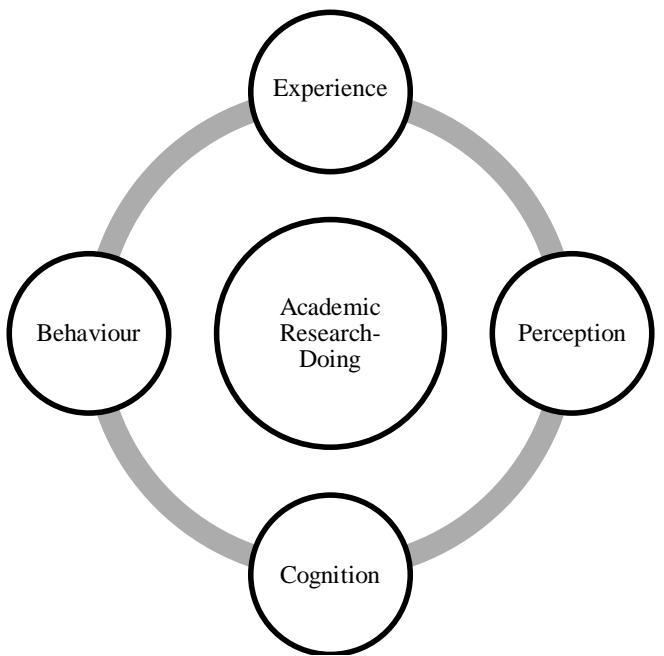
Figure 1: Based ELT Academic Research-Doing Approach
The Based ELT Academic Research-Doing Approach shown in Figure 1indeed leads to learning by doing for these educational reasons: postgraduate research-projects. Whether the research-project is conducted by an individual, which is the case of final-grade according to a given subject based-studies, or a group given assignment, the investigation-self-nature involves students' observation of the physical phenomenon their research-project would be addressing. This requires them to develop a critical knowledge and understanding of their research area. As result, their research-project significant-and-originality-expected-output. Indeed, the Kolb's theory holistic perspective based on experience, perception, cognition and behaviour. Hence, there is nothing more accuracy to contextualize this theory view about experiential learning than academic research-doing. Furthermore, it can be used to compute said degree student's skills and job requirements (Sims, 1983).
### c) Research Study Objective
This research study aims to provide a comprehensive literature framework about the subject it addresses. It uses this approach to develop and put forward a based curriculum setting for academic research-doing classrooms.
### d) Research Questions and Hypotheses
The review of the subject analysed led to question and theorize, respectively:
HQ1: To what degree are postgraduate relying on Google search engines to carry out academic research-doing projects?
HQ2: To what degree are Google search engines reliance to carry out academic research-doing projects effected postgraduate learning?
H1: There is significant reliance on Google search engines by postgraduate to carry out academic research-doing projects.
H2: There is no significant level of learning effect on postgraduate students when relying on Google search engines to carry out academic research-doing projects.
## II. LITERATURE REVIEW
Historically, universities, as educational bodies, have advanced their teaching programs because of incorporating into their curriculums-based society scientific developments. Otherwise said, these trends-subjects-teaching-specializations. In this context, universities have been evolving, and will continue to do so in the future. Of course, technology and its multiple facets cannot be excluded when universities' reliance on technology as subject to be taught and as channel to impart academic courses refer. Such is the truth that Artificial Intelligence (AI), for instance, is not only a today subject being taught at universities worldwide (Harvard Business School Web, 2025); (Tilburg University Web, 2025); (The University of Science and Technology Web, 2025), but also a tool used to boost academic and scientific research-works (Somasundaram, 2023); (Aayushi, 2023). Accordingly, Google search engines and university students' reliance on it can be used for this purpose, too. It thus becomes a necessity for universities to rethink pedagogy for a digital age, as (Beetham & Sharpe, 2013) have pragmatically quoted.
The literature review was intended to provide proper academic and scientific summary of the literature-search. It thus relied on the study keywords: Academic research-doing; Google search engines; Advanced research skilled-knowledge foundation; Academic research curriculum approach. Internet repositories such as Google Search and Google Scholar were searched. This first-hand data-gathering encompassed academic and scientific papers, books, Wikipedia Web, and Internet Accredited Websites.
but about developing research-doing skilled-knowledge-foundation.
Methodologically speaking, Google Search engines provide the most amplified research-gatedatabase worldwide, which At the Finger Click anyone can access it. (ScholarsEdge Web, 2024) quoted that, in the contemporary landscape of digital research, effective search engines play a crucial role as indispensable tools for scholars seeking access to a wide array of scholarly materials at no cost. Leading the cohort of research paper search engines is Google Scholar, a platform that stands out for its unrestricted access, democratizing the availability of academic information. This guide prioritizes free search engines tailored for research papers, with the objective to optimize the efficiency of scholarly investigations. As such, Google Scholar stands out as one of the best websites for research papers, utilizing Google's robust search capabilities tailored to academic literature. It provides complimentary access to a diverse array of scholarly subjects. It frequently includes full-text PDFs, making it a comprehensive resource for articles from academic journals, conference proceedings, theses, and dissertations.
(Arga Web, 2025) stated that, in today's world, online research often begins with a search engine, which is just as relevant for researchers as it is for anyone else seeking information. An effective search engine should provide users with relevant results, have a simple design and user-friendly interface, and offer helpful tools to refine or expand a search. Google has been the most popular search engine for many years. As such, the web provides a list of the search engines one can consider when researching. Among these search engines, Google Scholar, a tool specializes in searching through scholarly articles and publications, although it is related to the most popular generic search engine. Many academic professionals use it regularly due to its advantages, such as comprehensiveness and automation. Unlike a manually curated database, the tool retrieves the most of the information automatically from all over the internet using algorithms. Still, if further assistance is needed for the paper, it is recommended to explore other available services.
Notably, postgraduate rely heavily on said internet repository to carry out their research-projects (Presetyawan, Heriyanto, and Arfa, 2024), yet what they need the most is precisely the research-doing academic assistance. One of the principles that bests characterize the Education system cycle in terms of teaching, is considering when doing so, students- foundation-knowledge to enhance it according their new advanced-subject-based-studies-program. Of course, this applies to postgraduate courses based on research-doing. For instance, using Google Scholar can help them deal with the hardest heading of a research-doing, which is the literature review. Because this, is more than quoting a list of academic and scientific research-doing works, it does work if students have fully devolved research-skilled-knowledge-foundation.
In this context, there is a need to design a research-doing curriculum to target the level of difficulties thought students encounter when doing research, but more importantly, advancing their research skilled-knowledge-foundation. With this in mind, the present study uses (Kolb 2015; Kolb and Kolb 2017) theory of holistic perspectives-based experience, perception, cognition and behaviour, a method where a person's skills and job requirements can be assessed in the same language (computer), which commensurability as such can be measured (Sims, 1983), to accomplish the research objective: providing a comprehensive literature framework about the subject analysed. And use this approach to develop and put forward a based curriculum setting for academic research-doing classrooms.
Academic research conducted by Siti and Amira (2022) analysed the postgraduate students' difficulties in research writing. 39 master's students majoring in English Language Education at one of the universities in Malang were surveyed. The data on the thesis writing difficulties were gathered through a close-ended questionnaire designed based on the theory proposed by Harris (2020), consisting of three aspects: research skills in the introduction, research method, and finding and discussion parts. The data was analysed quantitatively by measuring the mean, mode, and percentage from each scale. The results revealed that many master's students encountered difficulties in most three aspects.
Siti and Amira (2022) study-result copes with the present research intended objective. Notably, the level of difficulties postgraduate encountered has much in common with constructing the research-based theory and making it outclassing through a well-structured research paper, yet academic and scientific writing criteria meters too. This observation and many other suggest that, the crux of the matter is not about postgraduate technology reliance to carry out academic-research-doing, but developing through given based-subject-curriculum research-skilled-knowledge-foundation.
All this, pinpoint the need to count with curriculums designed to develop postgraduate research -doing skilled-knowledge foundation. In other words, taking on these students' prior foundation knowledge to skill it. As such, testing new concepts gives concrete experience, which can be observed and reflected upon, allowing Kolb 2015; Kolb and Kolb 2017) theory of holistic perspectives-based experience, perception, cognition and behaviour cycle to continue (Abdulwahed, Nagy, & Zoltan, 2009), yet said curriculum setting. Intended to define expectations and responsibilities. A model-designed to develop students professional thinking and writing (Gifford, 2003); (Parks and Harris, 2002).
In this context, the literature review is also adding recommendable texts to help postgraduates handling on Research-Doing:
### a) Based Research-Doing Classroom Guideline
Extracted Text: An outline for a research paper (White, 2024).
If you do search on the internet, you will find many different "outlines" for what should/could be in an academic paper, whether research-driven or thought-driven (i.e. your work and thinking – or, to put it another way, your considered opinion). I have long forgotten where the one below comes from, but it is one I use to structure my main academic papers when writing for a specific audience – I have published many papers, articles, monographs, and books over the last thirty years, and I have an active "readership" and I now always write for my readership/audience.
So, here is AN outline – one that works for me:
Introduction: Tell me what you are going to tell me
This needs to be 'to the point' – in general, it is around 200-600 words and can often be used as the 'abstract' (usually limited to 400 words)... it is always written last.
Literature Review: Tell me what everyone else has already said on the topic.
This can be as exhaustive as you like and needs to be thoroughly well-researched, properly cited (parenthetical citation is optimal), and adequately referenced. If you are going to be selective in your choice of references, then explain why you are making that choice.
Current Study: Tell me what the other writers are missing.
It is essential; it identifies the topic of your contribution to the knowledge base. You should be aim to either enlarge the knowledge base (add new knowledge) or re-analyse existing data/re-interpret existing information. It is sometimes used to identify the 'research question' or the 'research hypothesis'. Tell me why this is important to find out.
Methodological Design: Tell me how you will get the data you need.
This does not need to be hugely lengthy (except in a Dissertation or Thesis), but it does need to demonstrate that you have chosen an appropriate methodology for conducting the research. It should also tell me about your 'research sample' if you are collecting primary data. Remember, each and every field of study (discipline) has its own usual selection of research methodologies and if you are using an interdisciplinary approach, then you will use a 'mixed methodology'.
Methodological Analysis: Tell me how you intend to analyse the findings.
This is a brief discussion of what models, theories, and other basic tools you plan to use for the analysis. This is sometimes referred to as the 'theoretical framework'.
Results: Tell me what you have found out, tell me about the data collected.
This section is often incorporated into the Analytical Discussion.
Analytical Discussion: Tell me what the data told you.
This is an in-depth discussion of what you found out, and your interpretation of it. This uses the Methodological Analysis. This is often the largest section in the paper, and you need to go deep in your thinking, and you need to explain why what you have found out is relevant and important. You should also suggest how and why we can apply the findings. You can also tell me about the limitations and issues you have encountered, whether your fault or not.
Conclusion: Tell me what you have told me.
This is a summary of the paper and is usually followed by any recommendations for further research, or application, or policy implications etc.
Bibliography/References: Tell me ALL the reference sources you used (so that I can check them if I want to).
### b) Literature Research-Doing Classroom Guideline
Research - doing Templet - Private (2025). Extracted Text: United International Business Schools (UIBS). European College for Liberal Studies (ECLS).
#### 1. Historical Background
a. Put things in perspective. This is more than just a chronology and does not necessarily have to include every detail since day one.
b. What are the major issues, controversies, etc., that impact your study? Include background on all relevant variables.
#### 2. Theory Relevant to Research Questions/Hypotheses
a. What theoretical models/perspectives inform your research?
b. Compare and contrast competing theories and justify the theoretical foundation of the dissertation.
c. Describe how the theoretical foundation of the dissertation applies to the problem.
#### 3. Current Empirical Literature Relevant to Research Questions/Hypotheses
a. Include in this section:
i. Literature relating to individual variables.
ii. Literature relating to specific combination of variables (specifically examine background and relevant background literature) relevant to the dissertation.
b. This should be more than a listing of studies. What common thread holds them together? Use transitions to tie one section with another effectively.
c. Incorporate discussion of strengths/weaknesses of methodology in previous studies and which you are building on/hoping to avoid/improve upon in your study.
4. Use headings and subheadings liberally to organize this section. Consider making a "concept map" of relevant literature for organizational purposes (do not include in the dissertation text, however). This section should be reflective of deductive reasoning, starting broadly and narrowing the focus as the chapter progresses.
## III. METHODOLOGY
The study has used a qualitative approach to investigate the subject presented. This criterion included the collection and analysis of academic and scientific materials such as papers, books, and Internet-accredited websites. This methodology can be considered based literature research reviewing. As such, backing the present study theory approach. The literature extracted from the research-works are directly associated with the present study based-subject-analysis, and it has been used in the study-framework according to the academic scientific criteria. It is a first-hand data gathering which Internet repositories such as Google Search and Google Scholar helped to obtain and process accordingly. As shown in Table 1 and Figures 2 and 3, Data Collection and Representation:
Table 1: Search Literature Data Gathering
<table><tr><td>FIRST-HAND DATA COLLECTION</td><td>ACADEMIC
SCIENTIFIC
PAPERS</td><td>BOOKS</td><td>INTERNET
ACCREDITED-
WEBSITES</td><td>BIOGRAPHY</td></tr><tr><td></td><td>33</td><td>2</td><td>7</td><td>Academic
Scientific
Citation
Criteria</td></tr></table>

Figure 2
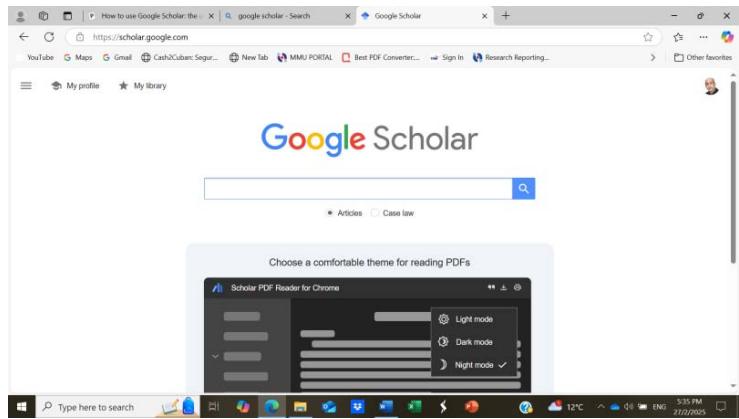
Figure 3
## IV. RESULTS
Considering the research methodology used to conduct the study, it has been possible to provide a comprehensive literature framework regarding the subject analysed. Consequently, using this approach to develop and put forward a based subject curriculum setting for the academic research-doing classroom. As described in Table 2:
At the Fingers Click!
Course Name: Advanced Research Skilled-Knowledge Foundation.
Course Details
Course level: Post-Graduate (level 7000)
Course type:PGCHE Elective.
Course credits: 5
Course duration: 10 weeks as necessary.
Total lecturer contact: 6 hours.
Total additional study hours: 144 hours.
Language of instruction: English.
### Course Overview
This course is designed to enable participants to engage into a Search for Academia Research Development. It covers a range of human society development trends (terms and concepts) to outclass participants research-doing knowledge and skills up to the levels stated in The European Qualifications Framework for Lifelong Learning (EQF).
Participants are required to look at the human society development trends (terms and concepts) of the themes covered to analyse their research-doing approach, and to apply this to the development of higher education-based research courses. Participants will be asked to research, develop, and submit a literature review. And an academic research paper for double-blind reviewing journal, including paper letter acceptance for publication as well as the discussion of this manuscript-findings during the tutorials given hrs. with the intention to fulfil the class audience Q/A session.
Research Course Educational Theory
The Learning Cycle Theory (ELT). This theory was developed by (Kolb 2015; Kolb and Kolb 2017). Kolb's theory has a holistic perspective which includes experience, perception, cognition and behaviour. It is a method where a person's skills and job requirements can be assessed in the same language that its commensurability can be measured (Sims, 1983).
Course Context: Advanced Research Skilled- Knowledge Foundation - A Taxonomic Approach
Advanced research skilled-knowledge foundation- a taxonomy for academia research development consideration- understanding the significance to consider the human society development trends (terms and concepts) as a Higher Education research-gate in the Era of Technology. The pedagogical impact they have on advancing postgraduates' skilled-knowledge foundation. The educational necessity for linking and propelling this way, these learners' research-doing general knowledge. Addressing, but not to be limited, key-concepts such as Politic, Education, Business, Culture, and Economic.
development consideration, is in line with one of principles that bests characterize the Education graded-system in terms of teaching, which is considering when doing so, students-foundation-knowledge to enhance it according their new advanced-subject-based-studies-program. Accordingly, testing new concepts gives concrete experience, which can be observed and reflected upon, allowing Kolb 2015; Kolb and Kolb 2017) theory holistic perspectives-based experience, perception, cognition and behaviour cycle to continue (Abdulwahed, Nagy, & Zoltan, 2009). As such, this curriculum setting. Intended to define expectations and responsibilities. A model-designed to develop students professional thinking and writing (Gifford, 2003); (Parks and Harris, 2002).
## Course Content: To Include But Not Be Limited To The Following
- The usefulness of doing research by taking onto account the society development advanced terms and concepts to enhance research skilled-knowledge foundation. Can we write a paper/article based on any of the society development advanced terms and concepts by using our research-doing skilled-knowledge foundation? Can we use this approach for writing a literature review?
- Geopolitics: Term and Concept. Related research: Nations' alliance and their political impact on global economic. What is new? The BRICS?
- EdTech: Term and Concept. Related research: Computer as mediator in the process of teaching and learning. What is new? Artificial Intelligence (AI) into Academia Research?
- Business Communication: Term and Concept. Related research: the linguistic business approach of buzzwords. What is new? Ecotourism?
- Internet Culture: Term and Concept. Related research: the role of social media in modern society communication. What is new? The YouTube influencers? The TikTok influencers?
- Digital Economic: term and concept. Related research: the global economic tendency toward the implementation of digital currency. What is new? The Bitcoin?
### Methodology
This is a 144hrs. course flipped learning approach, with lecturing-feedback (online supervising). A project-based learning program involving individual research analysis of the themes covered. This includes the early submission of 2000 words literature review based on the themes (terms and concepts) covered in the course. Additionally, the writing of an academic paper based on ONE of the themes terms and concepts-Related Research for journal-publication. The findings of this manuscript are to be presented during the 6hrs. leading to engaging the Q/A audience session. All of this, to fulfil the postgraduate's course-aims successfully: A Search for Academia Research Development.
#### Learning Outcomes
On successful completion of this course, students should be able to:
#### Knowledge
Demonstrate an understanding of, and be able to discuss advanced society development terms and their academic concept regarding academic research-doing.
Display an understanding of how to present philosophical arguments based on advanced society development terms and their academic concept regarding academic research-doing.
Demonstrate the ability to sustain in-depth analysis of advanced society development terms and their academic concept regarding academic research-doing.
Display appropriate advanced research skilled-knowledge foundation in academic research-doing by developing philosophical arguments, and presentation of ideas (both in writing and orally).
#### Assessment
Students will be assessed on the time management of the early submission of 2000 words literature review based on the themes (terms and concepts) covered in the course. And the one 3000-words submitted and accepted for publication academic paper (open-access double-blind reviewing journal), which includes their communication ability to present this manuscript-findings in a tutorial class audience. Leading to the Q/A session. The grade awarded is a binary ass/fail.
Version: 2025
Date: 2025
Biography
1. Elizabeth, D. and Laura, N.(2016)*Introduction to Research: Understanding and Applying Multiple Strategies*. Book • Fifth Edition • 2016 https://www.sciencedirect.com/book/9780323261715/introduction-to-research#book-info 2. https://www.youtube.com/watch?v=AfcVdLqvIM0 3. https://www.butte.edu/departments/cas/tipsheets/research/research_paper.html 4. https://www.scribbr.com/methodology/literature-review/ 5. https://www.grammarly.com/blog/how-to-write-a-research-paper/ 6. What do I include in chapter one of my research project? | Editage Insights 7. https://www.iberdrola.com/talent/flipped-classroom
#### Curriculum Experiential Learning Criteria
Learning is an endlessly recurring cycle not a linear process.
2. Experiencing is necessary for learning.
3. The brain is built for experiential learning.
4. The dialectic poles of the cycle are what motivate learning.
5. Learning styles are different ways of going around the learning cycle.
6. Full cycle learning increases learning flexibility and development.
7. Teaching around the learning cycle.
8. The learning cycle can be a rubric for holistic, authentic assessment (Alice and David, 2018).
## V. ANALYSIS
Incorporating technology into research-doing curriculums design-and-preparation to teach post-graduate is about skilling these students research-doing knowledge-foundation in terms of teaching. Because this approach copes with the education principle of considering when teaching refers, said degree students prior research knowledge to skill it. In other words, applying the meaning of "advanced" in teaching. This educational approach, however, applies not only to postgraduate, but all university degrees courses as well.
(Zain, 2020) quoted that, a variety of students from all levels must require research. Many research studies have been carried out in different fields of study. Based on Bandele (2004) and Kerlinger (1977) research-works, (Zain, 2020) underlined valuable research-doing references: "research can be used as a hyphenated compound word search again means a new interpretation searching for something or repeated search. It is a process of solving problems and issues. It is an effort to push back the frontiers of ignorance to advance research knowledge. A research process needs to be addressed by standard procedures, which will lead to solutions to the problems". As such, the research-doing curriculum approach this study has put forward: Advanced Research Skilled-Knowledge Foundation.
There is nothing more accuracy than a curriculum designed as advanced research skilled-knowledge foundation. Of course, considering when doing so, human society development trends (terms and concepts) as a Higher Education research gate in the Era of Technology. In other words, At the Fingers Click! The pedagogical impact this approach has on advancing postgraduates' skilled-knowledge foundation is indeed a practical academic research-doing idea. Furthermore, said idea is backed by Kolb 2015; Kolb and Kolb (2017) theory of holistic perspectives-based experience, perception, cognition and behaviour. In this context, said curriculum idea has been conceived to test new concepts because it gives concrete experience, which can be observed and reflected upon, allowing Kolb 2015; Kolb and Kolb 2017) theory of holistic perspectives cycle to continue (Abdulwahed, Nagy, & Zoltan, 2009). Furthermore, the curriculum setting is also intended to define expectations and responsibilities. It is a model-designed to develop students professional thinking and writing (Gifford, 2003); (Parks and Harris, 2002).
The level of difficulties postgraduate, and rest degree students encounter when carrying out research-doing projects does not relate to Google search engines reliance but, the lack of said subject skilled-knowledge-foundation development. Academic research conducted by (Rhoda, 2019) revealed that students had difficulties in formulating their research problem, writing their review of related literature, sampling of their respondents, crafting the research instruments, transcribing interviews, video production delays, among others. (Rhoda, 2019) quoted that, students had also problems in coordination, plagiarism processing, and other difficulties such as time constraints, absence of research partner, personal issues, and other conflicts. This research outcome and many other, speak clearly about the source from which said degree of research-doing difficulties comes from. Sara, Jia & Helen (2018) argued that students increasingly depend on Web search for educational purposes. According to their research analysis, said dependency rises concern among education providers. Some evidence indicates that in higher education the disadvantages of Web search and personalised information are not justified by the benefits. In other words, students search engines reliance familiarity.
Sara, Jia & Helen (2018) used the quantitative method to survey, gather, and examine data collection. The result of the study sated that, firstly, most participating students declared that they use Google search engine as their primary or only information-seeking tool. Second, about $60\%$ of the clicked result links during the study sessions were located in pages $2+$ of the search results without personalisation influencing the relevance of the top-ranked search results. In real-life scenarios, pages $2+$ of the search results receive only $\sim 10\%$ of the clicks. Students also expressed more satisfaction with the relevance of nonpersonalised over personalised search results.
Google has become the most popular search engine worldwide and its name has its merit within information search, as such when people are searching for information, they would most often say 'google it' rather than 'look for it' (Presetyawan, Heriyanto, and Arfa, 2024). This academic research concluded that, students' prior knowledge appeared to be the governing factor of how well they can determine which of the compiled information sources are best for their study. Every student has their own best approach and experience to optimize Google. In other words, students showed high degree of familiarity with this computer tools when doing research, yet as (Presetyawan, Heriyanto, and Arfa, 2024) have concluded, they' prior knowledge when doing so appeared to be the governing factor.
A Google search engine is just a computer tool that facilitates research-doing, however, unless postgraduate and rest of degree students are taught to become research-skilled-knowledge, said problematic will persist. Thus, the advanced research skilled-knowledge foundation- a taxonomy for academia research development consideration stated in the present research study given curriculum.
Because a curriculum is the educational prospect that best distinguish the teaching high-performing management at Higher Education, designing it for Digital Era classroom is a must. Pragmatically speaking, one solution for universities to deal with this Edtech academic research-doing ongoing phenomenon is adopting the present research study-based research academic teaching courses-based flipped learning. And Students' Google search engines academic research-doing-reliance. It involves the combined use of computer and educational theory aid, which in practice aims to facilitate learning.
Based on the literature review subject-analysis-outcome, the research hypotheses are herewith reiterated. Indeed, there is significant reliance on Google search engines by postgraduate to carry out academic research-doing projects, which static research works can confirm. On the other hand, there is no significant learning effect on postgraduate students when relying on Google search engines to carry out academic research-doing projects. The difficulties students encounter when doing so, does not come directly from this approach, but from the lack of research-doing knowledge and skills. In other words, producing advanced academic research-doing skilled-knowledge foundation is the crux of matter for universities to consider it.
## VI. CONCLUSION
The reliance of postgraduate on Google search engines to carry out academic research-doing projects is by definition, a today Edtech viable prospect for universities to consider when using computer as mediator in teaching and learning. As such, the design of curriculums for research academic teaching courses-based flipped learning and students' Google search engines academic research-doing-reliance. It leads to real-life experiential learning by doing. It thus copes with Kolb's theory of holistic perspectives: experience, perception, cognition and behaviour. As such, the curriculum was designed to test new concepts. Because this approach gives concrete experience, which can be observed and reflected upon, allowing Kolb 2015; Kolb and Kolb 2017) theory holistic perspectives-cycle to continue (Abdulwahed, Nagy, & Zoltan, 2009).
## VII. RECOMMENDATION
Considering that, postgraduate reliance on Google search engines to carry out academic research-doing projects has become an Edtech viable prospect, is recommendable to conduct quantitative studies to compute the level of difficulties postgraduate encounter when doing research. Because said degree has much in common with the lack of research-doing skilled-knowledge foundation. And not with Google search engines research-doing reliance. In this context, the present research study is putting forward Table 2 criteria for suggested quantitative studies. These studies can use the main variables stated in the present study hypotheses and the subset of variables given in Table 2 as dependent variables. A based Google Search Statistics by Nicola (2024) is also recommendable.
Table 2: Quantitative Research-Doing Approach
<table><tr><td>PAPER STRUCTURE</td><td>PAPER
FORMATTING</td><td>PAPER
ACADEMIC
SCIENTIFIC
WRITING</td><td>SYSTEM OF
MEASUREMENT</td></tr><tr><td>Chapters Organization-
Headings and
Subheadings Approach</td><td>Writing Style
Approach</td><td>Applied
Linguistic
Approach</td><td>Quantitative
Approach</td></tr></table>
## BIOGRAPHY
Generating HTML Viewer...
References
29 Cites in Article
Jay Parkes,Mary Harris (2002). The Purposes of a Syllabus.
B Nicola (2024). Thinking Inside the Box: Comparing Federated Search Results from Google Scholar, Live Search Academic, and Central Search.
Ronald Sims (1983). Kolb's Experiential Learning Theory: A Framework for Assessing Person-Job Interaction<sup/>.
M Selina,S Martin (2023). Teaching university students through technology-mediated experiential learning: Educators' perspectives and roles.
W Stephen (2020). Introduction.
J Moore,C Dickson-Deane,K Galyen (2011). E-Learning, online learning, and distance learning environments: Are they the same?.
R Somasundaram (2023). The Top 7 Artificial Intelligence (AI) Tools in Scientific Research.
Z Aayushi (2023). Artificial Intelligence in Science.
Yusuf Ramteja,David Ibrahin (2023). Unknown Title.
Webinar (2023). Artificial intelligence and academic integrity.
(2013). Rethinking Pedagogy for a Digital Age.
Zachary Daniels (2025). What Is Experiential Learning?.
L Leydi (2024). Critique of Kolb's Experiential Learning Theory: Lack of Emphasis on Reflection and Thinking.
Mike Ryder,Carolyn Downs (2022). Rethinking reflective practice: John Boyd's OODA loop as an alternative to Kolb.
Agnieszka Nowinska,Gisele Msann (2025). AI disruption in chartering in Danish Shipping.
Javad Roshan Sharami,Dimitar Shterionov,Pieter Spronck (2025). Analysis of Vocabulary and Subword Tokenization Settings for Optimal Fine-tuning of MT: A Case Study of In-domain Translation.
Gerardo Ojeda Carpio (2025). Innovación en tutoría académica: asistentes virtuales de inteligencia artificial en proyectos de grado de ciencias empresariales.
Ted Gournelos,Joshua Hammonds,Maridath Wilson (2017). Doing Academic Research.
L Mitchell (2021). Why I Don't Allow My Students to Use Google.
K Król,Dariusz Zdonek (2024). Website optimisation for search engines concept of website profiling.
Arga Website (2025). Using Search Engines -Academic Research Guide Association.
Heriyanto Yanuar,Arfa (2024). Information experience of undergraduate students when optimizing google search for their study.
K Siti,W Amira (2022). Challenges in Writing Academic Research: An Exploration of Master's Students' Experiences.
A White (2024). An Outline for a Research Paper.
A Zain (2202). Challenges faced by students during conducting research: A review.
G Rhoda (2019). Difficulties in Research Writing Among Communication Students in a Private University.
S Sara,T Jia,A Helen (2018). Use of Web search engines and personalisation in information searching for educational purposes.
K Alice,K David (2018). Eight important things to know about The Experiential Learning Cycle.
Joel Rivera (2025). Higher Education Teaching Philosophy: An Academia Research Syllabus Approach.
Explore published articles in an immersive Augmented Reality environment. Our platform converts research papers into interactive 3D books, allowing readers to view and interact with content using AR and VR compatible devices.
Your published article is automatically converted into a realistic 3D book. Flip through pages and read research papers in a more engaging and interactive format.
The study aims to provide a comprehensive literature framework about the subject it addresses. It uses this approach to develop and put forward a based subject curriculum setting for academic research-doing classrooms. The syllabus is the guideline that, bests distinguish the teaching highperforming management at university level. It is a written prospect that underlines information about academic courses, or classes, yet leading to define expectations and responsibilities. It thus becomes a model designed to develop students professional thinking and writing. The study relies on the educational principles stated in the Experiential Learning Theory (ELT) to underline the need for universities to look at the updating of their postgraduate curriculums design and preparation from these educational perspectives: the First is, students’ Google search engines academic research-doing reliance. And the Second is, research academic teaching courses-based Flipped Learning. The study has used a qualitative approach to investigate the subject presented. This criterion included the collection and analysis of academic and scientific materials such as papers, books, and Internet-accredited websites. The result of this study is intended to benefit the academic and scientific community, respectively.
Our website is actively being updated, and changes may occur frequently. Please clear your browser cache if needed. For feedback or error reporting, please email [email protected]
Thank you for connecting with us. We will respond to you shortly.