This article analyzes the relationship between the quality of democracy and homicide rates in Latin America. Our hypothesis is that governments with authoritarian tendencies in Latin America do not necessarily have higher homicide rates than those without these tendencies. Our research focuses analyzing the “quality” of democracy in four countries: Brazil and Colombia, categorized as “weak democracies”, and Peru and Bolivia, considered “hybrid regimes.” Secondary data obtained from the Economist Intelligence Unit, Our World in Data and the World Bank Group websites were used for this analysis. Findings indicate that weakening of institutions is an important contributor to homicide rates in weak democracies (Brazil and Colombia). However, this factor has less of an impact on homicide rates in hybrid regime countries (Peru and Bolivia), where the fragility of democracy coexists with lower homicide rates.
## I. INTRODUCTION
This article seeks to analyze the relationship between homicide rates and different government regimes to determine if democracies with "weaker" institutions tend to have higher homicide rates. Research focused on data from four countries: Brazil and Colombia - both classified as "weak democracies" by the Economist Intelligence Unit (EIU, 2022) - and Peru and Bolivia - classified by the same institute as "hybrid regimes." All countries suffer from the deterioration of democratic institutions, albeit to different degrees with a differential impact on homicide rates.
The term "weak democracies" refers to political regimes whose institutions formally exist but have flaws that compromise the consolidation of democracy. Flaws stem from factors, such as corruption, clientelism, inefficient governance and a loss of trust in public institutions (Boulding, 2010, Kapstein and Converse, 2008; Levitsky and Murillo, 2013; Waldmann, 2006). Also, present is political interference from powerful elites and a lack of state autonomy (Levitsky and Murillo, 2013; Levitsky and Way, 2012). Although data sources make a distinction between "weak democracies" and "hybrid regimes," we decided not to focus our analysis on this distinction due to its tenuous nature; thus, for the purposes of this theoretical reflection, all the countries mentioned are considered "weak democracies."
Analyses were based on secondary data extracted from the annual reports and historical series available on the websites of the Economist Intelligence Unit, Our World in Data and the World Bank Group, organizations with a long tradition of expertise in organizing data on social phenomena and global issues. The Economist Intelligence Unit (EIU) is a research and consulting firm that provides economic and political analyses for organizations around the world; Our World in Data (OWID) is a non-profit organization that makes data on important global issues available to the public[^2]; the World Bank Group (WBG) is an international financial institution that provides loans and assistance to developing countries. These institutions are interested in issues related to democracy, crime and homicide rates, as these factors affect economic development, poverty and contribute negatively to economic development.
By analyzing the fragility of democracy in Brazil, Colombia, Peru and Bolivia, this article has the potential to contribute new insights to the social and political sciences. To date, little research has been conducted on the fragility of democracy and/or weakening of democratic institutions and their effects on violence, especially homicide rates. This discussion is particularly relevant today because some democratic countries, including those with consolidated democracies, are facing new challenges as authoritarian rulers come to power. At its core, our analysis focuses on the relationship between weakened democracies and homicide rates; we seek to verify if homicide rates in countries with authoritarian tendencies differ from those without these tendencies.
## II. LITERATURE REVIEW
Democratic fragility and the rise of authoritarian regimes are phenomena that marked Latin American history throughout the 20th century. These processes extended into the first decades of the 21st century, affecting various ideological orientations. According to Burchardt (2017), changes in ideological orientation do not substantially transform political practices in Latin America, as elites and various interest groups often alternate their terms in power. Thus, we observe only slight variations in the nuances of political practices in relation to previous authoritarian regimes. According to this author, even progressive governments, which once challenged conservative elites, end up adopting similar practices and, when in power, also engage in the task of undermining democratic institutions.
Waldmann (2006) points out that dictators in Latin America, regardless of their ideological affinities, have historically sought to weaken legal foundations and informal social norms; these changes help them impose their agendas more freely. Even with the wave of redemocratization in the 1980s, many Latin American countries were unable to establish solid democratic orders (Ibarra, 2011; Martins, 2015). Job (1992) and Santos (2014) argue that governments often fail to provide essential services for their people, thus creating a context conducive to instability and vulnerable to authoritarian take over.
In search of some degree of governability, state institutions become bargaining chips and are manipulated by those who wish to extract advantages from those in power. According to Ellis (2017), widespread corruption, a lack of transparency, and the absence of accountability generate widespread distrust (Jiménez, 2012; Lavalle and Vera, 2011; Willis, 2017). This, in turn, undermines government legitimacy and fuels political polarization (Murillo, 2019; Power and Jamison, 2005). In this context, opponents are persecuted obsessively and systematically; attempts are also made to limit independence and interfere with the division of powers (Vitullo, 2001).
According to Briceno-León (2012), institutional weakness and corruption lead people to resort not to justice, but to violence. The absence or inefficiency of justice encourages ordinary people, and even public officials, to take the law into their own hands. In this context, widespread transgression of the law is the most common response; at the same time, the state becomes complicit in illegalities due to its inability to carry out its function (Cruz, 2011; Weber, 2021).
According to Osorio (2013), security institutions are in a particularly delicate position because they are directly subordinate to the executive branch of government, making them susceptible to political and budgetary interference. This accentuates inefficiency, which leads to an increase in crime rates, in general, and homicide rates in particular. Opportunistic politicians take advantage of this context, using state weakness as a campaign platform. They propose themselves as saviors by mobilizing popular dissatisfaction, promising to solve problems with simplistic solutions. These solutions usually involve making democratic and legal parameters more flexible; sometimes these parameters are even eliminated, which, among other consequences, aims to legitimize an increase in police brutality. In this context, responsible public agents are not punished and may even be offered impunity (Blumstein, 2007, Lafree and Tseloni, 2006; Malone, 2013).
As the state loses its capacity to respond to the public, and state institutions fail to provide essential public services, faith in the democratic system and its legitimacy weakens (Magalon and Kricheli, 2010). In Latin America, ineffective law enforcement, widespread corruption and slow responses to crucial issues, such as the increase in violence and the strengthening of criminal organizations, create a highly unstable atmosphere conducive to the emergence of punitive non-state control (Elkins, Ginsburg and Melton, 2009; González Zempoalteca, 2023). To avoid assuming their institutional failure for good, Latin American states do take action, but in an extremely selective way. As a result, law enforcement is often poorly founded and precariously executed. The police are the closest and most visible state institutions to ordinary citizens and are the first to experience the effects of public distrust; thus, they are seen in the region as a thermometer for the quality of democracy.
In the region, police institutions are historically conservative and have had difficulty adopting democratic values; they act with "selectivity," which harms the poorest segments of the population. Attempts to investigate excess use of power against selective groups fails in the face of a corporatism, operating with a "self-preservation" instinct. In addition, these public agents deal with the lack of objective delimitation of their role as police in a democratic society (Reiss Jr., 1992; Yüksel, 2015).
Yet, the increase in violence and homicides in Latin American countries returning to democracy after decades of authoritarian regimes is a complex and multifaceted phenomenon. These issues cannot be entirely explained by the quality of democratic institutions. In some countries in the region, democratization did not signify profound reforms in the institutions. This, thus, allowed criminal organizations to grow stronger and occupy spaces of power where the state had limited presence (Berg and Carranza, 2018; Cruz, 2019; Pérez, 2013).
Gallo (2014), discussing the legacy of dictatorships in Latin America, argues that the transition to democracy in many countries in the region was marked by "amnesty" agreements that guaranteed impunity for perpetrators of human rights abuses during authoritarian regimes. This weakened the state's ability to maintain control and order. As a more recent component of this equation, we must consider the COVID-19 pandemic, whose impact has further exacerbated social tensions in the region, which may have contributed to the escalation of violence in general (Gomes and Carvalho, 2021).
In this sense, the increase in homicides following the return to democratic normality in Latin America can be attributed to a combination of factors, of which the quality of democracy is just one component.
## III. RESEARCH METHODOLOGY
This study takes a descriptive approach, using secondary data published by the EIU. In 2023, the EIU, the research and analysis division of The Economist Group, published a historical series on the democracy index of 167 countries, from which microstates were excluded because their populations were too small. The historical series constructed by the EIU is based on five categories: electoral process and pluralism, civil liberties, government functioning, political participation and political culture, with scores ranging from "0" for weak democracies to "10" for strong democracies.
We also used data from the historical series made available by the World Bank Group, which regularly systematizes data extracted from the Homicide Statistics of the United Nations Office on Drugs and Crime (UNODC). This data, in turn, is collected both nationally and internationally from the criminal justice and public health systems, as well as from other regional and international agencies, such as the Organization of American States, the United Nations Children's Fund (UNICEF) and the World Health Organization (WHO).
We also analyzed data from the Our World in Data, which uses government documents and reports from civil society organizations regarding the quality of democracies to construct democratic stability scores. The scores established by the OWID are the following: for countries with low stability (scores from 1 to 2.49), stability with flaws (scores from 2.5 to 4.49), regular political participation (scores from 4.5 to 6.49) and solid stability (scores from 6.5 to 8.49) and countries with excellent stability (scores from 8.5 to 10).
These institutes acquire data from the countries' governments. Some governments keep their data more up-to-date than others; thus, the tables and figures presented in this article show slight differences in their time frames. Brazil and Peru, for example, only have data up to 2020, and Colombia and Bolivia up to 2021. To further delimit the analyses of Brazil, Colombia, Peru and Bolivia regarding the general state and condition of their democracies, we focused on the "Government Functionality" category in the historical series from 2013 to 2021.
The four study countries were chosen because they all share borders with the Amazon region. They also have difficulties solidifying their democratic institutions and experience high crime rates due harboring routes for international criminal organizations. Given the geographical scope of the region under analysis, collecting primary data would be expensive, complex and time-consuming. Data collection would be further complicated by fragility of the institutions in these countries and the risks involved in penetrating territories full of illicit activities. Given this scenario, the choice of secondary data from international sources seemed the most viable option – one which is also capable of providing a comprehensive view of the problems affecting the functionality of democratic institutions in these Latin American nations.
## IV. RESULTS
Latin America experienced a sharp decline in democracy rankings between 2006 and 2022; towards the end of this period, more precisely between 2020 and 2021, this decline was more pronounced, possibly due to the impacts of the COVID-19 pandemic. In 2022, the region's score improved slightly due to the suspension of pandemic-related restrictions, but this was not enough to completely reverse the general downward trend that has been observed since 2006.
Figure 1 shows the dynamics of this trend for the twenty-four[^1] main countries, taking their populations as a reference.
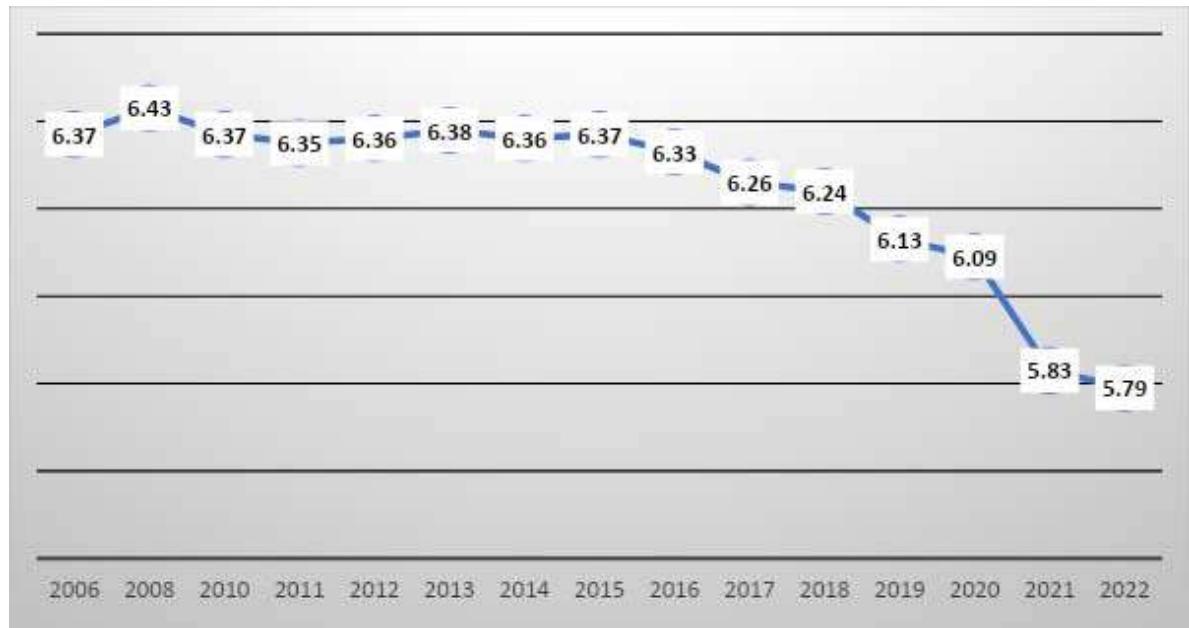 Figure 1: Quality of democracy in Latin America for the period of 2006-2022; values range from 1 to 10, where 10 is the best result and 0 is the worst result.
Source: EIU (2022).
Data provided by the EIU (2022) shows that Latin America is facing a democratic recession, with its average falling from a peak of 6.43 in 2006 to 5.79 in 2022, which represents a 0.64-point drop in the quality of democracy. Over the fourteen years shown on Figure 1, the downward trend continued despite some moments of slight positive reversal, such as from 2006 to 2008 and from 2012 to 2015; however, when we consider the period from 2006 to 2022 as whole, we see a general downward trend.
Most Latin American countries saw a decline in their 2022 indices as compared to 2021; yet, nine countries saw growth and two remained stable. Although there are robust democracies in the region, such as in Uruguay, Costa Rica and Chile, whose performance values raise the average, the general trend remains unchanged since these countries have small populations, representing only $4\%$ of the regional population. It is important to note that $45\%$ of the region's inhabitants live under "hybrid" or "authoritarian" regimes, while $62\%$ of citizens live in countries that have experienced a drop in the quality of democracy.
Data displayed on Table 1 shows the quality indices, with reference to the "government functionality" aspect and the political regime adopted. Figure 2 shows "democratic stability" indices for the four studied countries, considering the effectiveness levels of democratic institutions and the degree to which they are accepted by citizens.
Table 1: Classification of countries according to political regime and government functionality between 2017 and 2021.
<table><tr><td>COUNTRY</td><td>General
score</td><td>Position in
ranking</td><td>Variation
recent</td><td>Government
functionality</td><td>Political
regime</td></tr><tr><td>Brazil</td><td>6.78</td><td>51</td><td>-4</td><td>5.00</td><td>Weak
democracy</td></tr><tr><td>Colombia</td><td>6.73</td><td>53</td><td>6</td><td>6.67</td><td>Weak
democracy</td></tr><tr><td>Peru</td><td>5.92</td><td>75</td><td>-4</td><td>5.71</td><td>Hybrid political
regime</td></tr><tr><td>Bolivia</td><td>4.51</td><td>100</td><td>-2</td><td>4.29</td><td>Hybrid political
regime</td></tr></table>
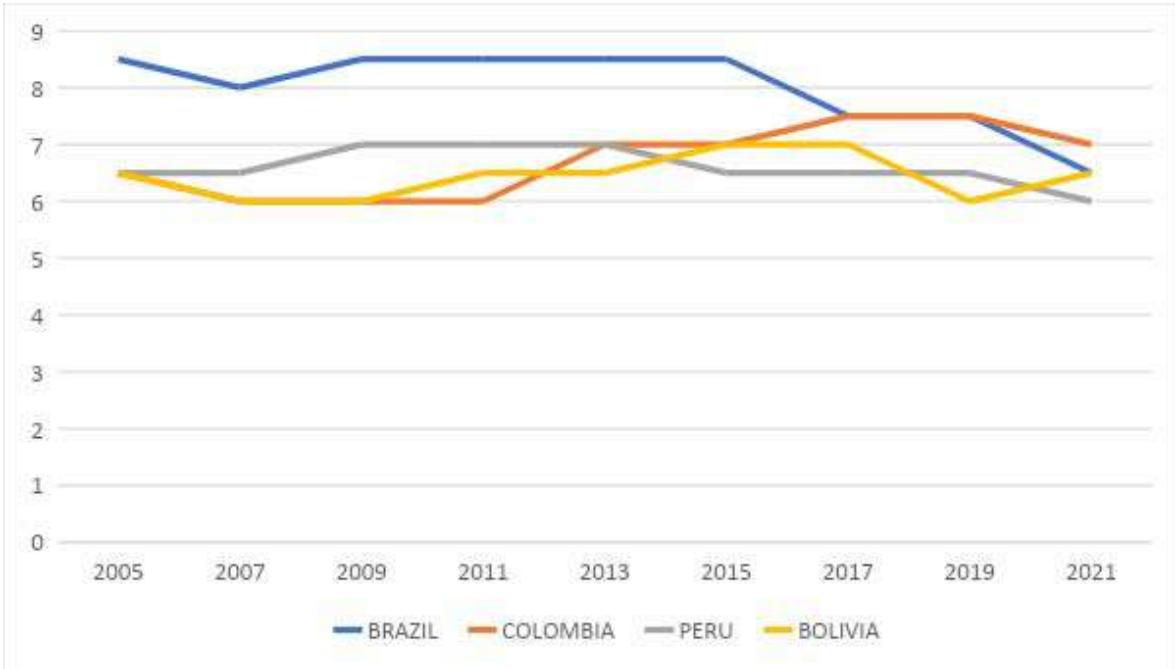 Figure 2: Stability of Democratic Institutions Index: Shows the effectiveness and efficiency of democratic institutions and the degree to which they are accepted by relevant social actors.
Source: Our World in Data. Stability of Democratic Institutions (2023) $^{2}$
In the last four years, Brazil, Colombia, Peru and Bolivia have experienced social and political instability, which explains the trends observed on Table 1 and in Figure 2. In 2022, presidential elections in Brazil were extremely polarized due to the dispute between the incumbent president, the far-right politician, Jair Bolsonaro, who governed from 2019 to 2022 and Luiz Inacio Lula da Silva, a leftist-oriented former president who governed from 2003 to 2010 (Zilli and Couto, 2017).
Throughout his term in office, Bolsonaro cultivated distrust of the electronic ballot box system among his supporters and threatened not to recognize election results after his defeat; he even plotted a coup d'etat to annul the results and remain in power. The coup attempt did not succeed, and Lula was inaugurated as the president; yet Bolsonaro's supporters invaded the capital, the National Congress and the Supreme Court buildings. These actions were aimed at mobilizing their supporters and the Armed Forces to join the coup attempt, but democratic institutions resisted. However, the calls for a coup d'etat resonated with some sectors of the Armed Forces. Even though this group is a minority and not strong enough to achieve the coup's objectives, their actions brought the light the weaknesses of the Brazilian democracy.
Colombia has also faced instability, especially during the 2020-2021 period. Instability is related to challenges of the COVID-19 pandemic and a series of long-standing social and political problems, which have combined to fuel an anti-system sentiment and the rejection of traditional party candidates. Against this backdrop, Gustavo Petro came to power in Colombia. The president-elect was a left-wing leader who began his political career as a trade union leader. However, when he took office, he adopted a pragmatic stance and formed a governing coalition with center-leaning parties. This guaranteed him a majority in Congress and facilitated the establishment of progressive reforms. Although social and political tensions were not completely eliminated, this strategy increased governability and reduced pressure on democratic institutions.
Peru's democracy was severely tested in 2021, when Congress voted and approved the removal of the president—the third impeachment attempt in his mere 15 months in office. Anticipating this outcome, President Pedro Castillo announced that he would close Congress and call early legislative elections just before his removal was to be voted upon. He planned to govern by decree, restructure the judiciary branch and impose a national curfew. These actions, representing a coup attempt, quickly failed and the Peruvian Congress removed him from office shortly after the announcement. He was then arrested and sentenced to 18 months in prison. Although the coup attempt did not materialize, Peru's democratic institutions were severely shaken during the fifteen months that Castillo was in power.
Bolivia, for its part, has made efforts to restructure the state to be more inclusive of minorities, mobilizing both indigenous and peasant organizations. This inclusion has increased popular representation; yet, by challenging the current political order and negatively affecting the interests of the elites, it has also generated conflicts and have left some sectors unsatisfied. Cocagrowers, for example, who have historically presented themselves as representatives of the peasantry, oppose the central government; their dissatisfaction is related to state repression of coca leaf production and threats to traditional access to and use of water, which was in the process of being privatized. Despite regular elections and a democratic constitution, Bolivia continues to be marked by limitations and inequalities. Bolivia has not yet to overcome its historical exclusion of less privileged social segments, nor has it been able to control the power of the elites. Problems, such as state violence against popular demonstrations and a lack of access to essential services, such as health, education and water, continue to be factors that restrict and compromise the consolidation of the Bolivian democracy.
The conditions described above, and data shown on Figure 3 show an eclectic situation regarding homicide rates in the four study countries in 2013 and 2021. Amid long-standing social and political fragilities and in the context of the COVID-19 pandemic, Brazil and Colombia maintained high homicide rates, while Peru and Bolivia have significantly lower homicide rates during this period.
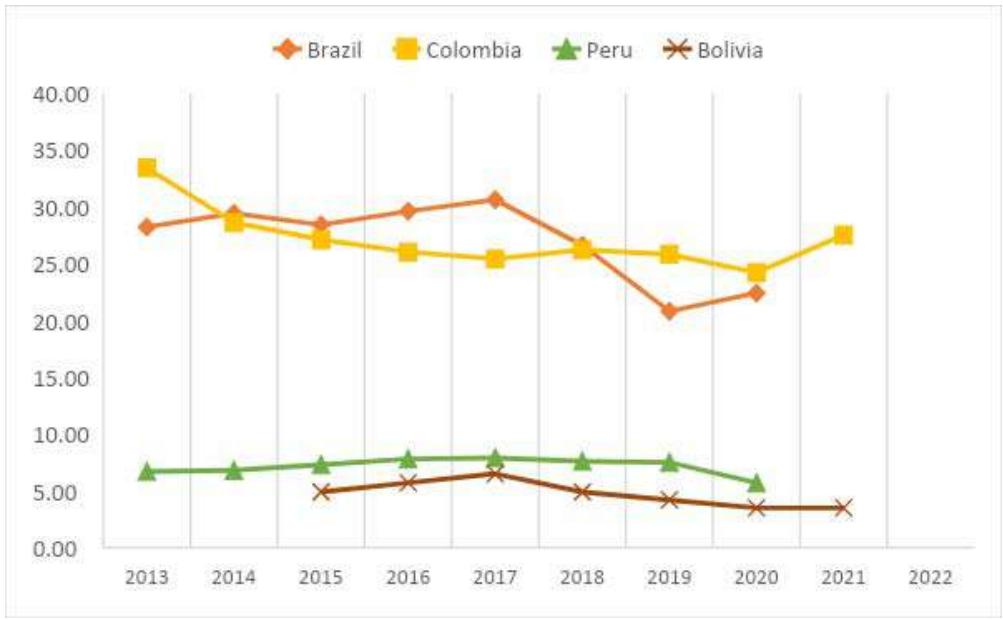 Figure 3: Intentional homicides (per 100,000 people): Brazil, Colombia, Peru, Bolivia, from 2013 to 2021.
Source: World Bank Group (2023).
Brazil and Colombia are considered "weak democracies," yet are still are better placed in the democracy ranking than Peru and Bolivia, which are considered "hybrid regimes." However, there is a huge disparity between the rates of the former and the latter two. Brazil, for example, s has numerous factors that influence homicide rates - ranging from poverty and social inequality - traditionally identified as drivers of criminal activity - to a culture of impunity, which produces a deep-rooted mistrust in the police and justice systems.
Between 2014 and 2016, Brazil faced an economic crisis and a substantial increase in crime. At the same time, political events linked to corruption scandals, such as those described in Operation Car Wash (Operação Lava Jato) provoked instability and led to demonstrations across the country. Reforms to the Social Security system were made in an effort to curb public spending; yet another important reform, the federal tax reform, was not put into action despite sustained efforts (Barreira, 2019; Silva, 2021; Spaniol, 2019; Zanetic, 2017).
Previous studies on the incidence of crime, in general, and homicide in particular, point to the link between broader socio-economic and political factors and increased murder rates. Thus, we can infer that corruption allegations and the administrative irregularities that culminated in the impeachment of President Dilma in her second term could explain the homicide rates of this period – insofar as they represented a weakening of state institutions. From 2017 to 2018, poverty was reduced nationally, yet social inequalities and political instability in the face of widespread dissatisfaction with the Michel Temer government (he was the former vice-president who replaced Dilma Rousseff). Corruption scandals practically paralyzed the government until the beginning of 2018, when the new president took office. As a result, the quality of democracy continued to deteriorate.
From 2018 to 2022, under the government of Jair Bolsonaro, the country was plunged into a social, economic and political crisis that lasted the entire four years of his government. Factors contributing to this crisis included: mismanagement of the COVID-19 public health crisis, collision with the illegal exploitation of natural resources, state sponsored hate speech, the systematic production and dissemination of fake news and the indiscriminate release of arms and ammunition purchases. Paradoxically, Figure 3 shows that in 2019 and 2021, the homicide rate decreased: from 29.6 in 2016 to 20.8 in 2020. Despite remaining high, rates had fallen from 29.6 in 2016 - the year of Dilma Rousseff's impeachment - to 26.6 - recorded in 2018, the end of the Michel Temer government. These data show that as the quality of the Brazilian democracy declined, homicide rates also paradoxically decreased.
In Colombia we see the opposite occurring. Here the country experienced a slow but steady decline in homicide rates between 2015 and 2021, from 33.4 in 2013 to 27.5 in 2021. The decade beginning in 2010 was characterized by rapidly growing social and economic inequalities, occurring in tandem with stagnating economic growth. The latter resulted in greater income concentration and accentuated government delegitimization. While implementing fiscal austerity measures to deal the economic crisis, President Juan Manuel Santos' government began negotiations with the Revolutionary Armed Forces of Colombia (FARC), which culminated in a peace agreement in 2016. This, directly or indirectly, consolidated the downward trend in homicide rates, as shown in Figure 3; here we observe a decrease from 33.4 per 100,000 people in 2013 to 26.0 in 2016, reaching 24.2 in 2020, with only a slight increase to 27.5 in 2021 (Norza Céspedes et al., 2020; Ríos and González, 2021; Ríos-sierra and Bula-Galiano; Morales, 2019).
The decline in homicide rates in Colombia seems to confirm the link between the strengthening of democracy and the decrease in homicide rates, unlike what happened in Brazil. Here, the state increased measures to improve public safety, invested in the justice system and created the National Security Guarantee Commission (CNGS) - whose function is to coordinate security activities between various government agencies. Finally, investigative units within the Attorney General's Office, aimed at tackling organized crime and corruption, were created. Added to these actions was the aforementioned agreement with the FARC and the demobilization of its fighters, which has reduced the number of armed conflicts. These measured have helped, but rates still remain quite high, showing there is more work to be done.
Peru, in contrast to Brazil and Colombia, has historically had low homicide rates, even though its democracy is ranked far below them. An analysis of
Peruvian data from 2013 to 2020 shows a stable downward trend in homicide rates compared to Brazil and Colombia.
Peru has a tendency to mix formal democratic institutions with rulers who have authoritarian tendencies and high levels of corruption. It has been home to controversial elections with fraud accusations and acts of intimidation, all of which negatively affect public confidence in Peru's democratic institutions. The country invested in negotiations for a peace agreement with the Shining Path group. The group gained power in 1980; yet, its activities progressively lost intensity due to the arrest of its leader Abimael Guzmán in 1992. Although the conflict ended with a negotiated peace agreement, the accord failed to resolve the structural problems that motivated the conflict to begin with (Niño, 2020; Ríos, 2019).
Peru continues to be one of the largest cocaine producers in the world and drug-related crimes generally occur in remote areas, unlike Brazil and Colombia, where the most lethal effects of this illicit activity are felt in urban spaces. Thus, it is possible that a considerable proportion of homicides go unrecorded, which means that official rates are likely underestimated. Peru has just as many social and political problems as Brazil and Colombia; furthermore, its institutions are considered to be weaker than those of Brazil and Colombia, and yet Bolivia's homicide rates remain very low. These facts challenge the idea that weak democracies are correlated with high homicide rates. In the global democracy ranking, Peru occupies position 75, while its neighbors Brazil and Colombia occupy positions 51 and 53, respectively. The relationship between the functionality of the government - one of the factors that make up the institutional weakness index in Table 1 - and the homicide rates described in Figure 3 shows the extent of this apparent paradox more clearly.
Similarly, despite facing a difficult economic situation, being one of Latin America's main cocaine producers, and ranking well below Brazil, Colombia and Peru (as shown in Table 1 and Figure 3), Bolivia has even lower homicide rates than Peru. The reasons for these low rates may be related to informal, traditional ways of resolving conflicts that are still employed in isolated regions; here, punishment systems similar to vigilantism are often used. In addition, disputes between groups linked to the drug trade have little expression in the urban space due to the absence of a large consumer market (Rubin de Celis, Sanjinés Tudela and Aliaga Lordemann, 2012). However, even if we assume that many murders are not reported in official record, Bolivia has extremely low homicide rates, especially for a country with such a weak democracy – weaker than that of Brazil, Colombia and Peru.
Between 2015 and 2017, there was a slight increase in homicide rates due to a wave of violence linked to an increase in drug trafficking in urban centers, further exacerbated by an increase in poverty and social inequality. This period was marked by political instability due to then-president Evo Morales' attempt at a fourth re-election. Between 2017 and 2021, as shown in Figure 3, there was again a downward trend in homicide rates, which can be attributed both to political changes and the impeachment of Morales and to improvements in the economy. However, these factors do not have sufficient explanatory power to account for why Bolivia has the lowest homicide rates despite being the worst-ranked country in the democracy indices among the four analyzed.
## V. DISCUSSION
Although the literature on the quality of democracy predominantly focuses on the fragility of institutions as a relevant factor in homicide rates, the data from Brazil, Colombia, Peru and Bolivia indicate that the weight of this factor needs to be further considered.
It is difficult to pinpoint the precise causes of homicide and its rate of occurrence – in part due to the way that each society constructs its perception of the role of state institutions. Equally complex is the task of capturing the subtleties present in how different societies attribute guilt to those responsible for homicides and how these events become part of the public record.
Although we might agree that the quality of democracy is related to the robustness of its institutions, and that these can play a relevant role in homicide rates, we must be careful not to make statements which can be easily challenged by data, as is the case with the countries analyzed. Without these precautions, one could make the mistake of presenting a partial and therefore inadequate picture of the homicide problem in different countries. We would, in this case, be purposely ignoring the differences imposed by facts; here, the data presented do not confirm a possible link between weak democracies or weakened institutions and homicide rates.
Therein lies what we referred to at the beginning of this article as the paradox of homicide rates in Latin America. This approach, that centered on the idea of institutional weakness, fails to accurately capture the multi-causality of homicide rates, which are characterized by a degree of subjectivity that only qualitative research can more accurately explain; without this, data show merely generic and distorted panoramas.
Data gained from international agencies, such as those used in this work, represent an essentially quantitative approach; this method proved to have a weak and generic explanatory power. In fact, as the data from the countries analyzed clearly show, the quality of democracy alone does not define trends in homicide rates. This quality appears as just one of the constitutive factors among many others involved in the dynamics of homicides.
We must question how the homicide phenomenon is usually portrayed; an inaccurate representation can lead to the formulation of public policies that are disconnected from the reality of the factors that contribute to homicide rates. For this reason, such policies become inefficient and irrelevant. We must challenge ourselves to consider why countries like Peru and Bolivia, which rank behind Brazil and Colombia in the ranking of democracies, have significantly lower homicide rates than the latter.
## VI. CONCLUSION
This study sought to examine the complex relationship between the quality of democracy and homicide rates in four Latin American countries: Brazil, Colombia, Peru and Bolivia. Throughout the analysis, significant variations were observed in the overall scores with downward trends for some countries; this represents a challenge, as weaker democracies were shown to have lower homicide rates.
Although studies aimed at elucidating factors responsible for homicide rates often state that several variables contribute to this phenomenon, the fragility of democracy is still the main factor attributed to high rates. Yet, these studies fail to account for the contradiction that exists between these theoretical premises and data that show that homicide rates are lower in countries with weaker democracies.
This apparent contradiction suggests that the relationship between democracy and homicides is intricate and multifaceted. In addition to the strength of institutions and the quality of democracy, factors such as security policies, policing strategies, crime prevention programs and anti-drug trafficking policies play a significant role in determining rates. Socio-economic status, income inequality, access to education, employment and health services also influence the homicide rates. In addition, historical contexts of social conflicts, political polarization and the influence of transnational criminal organizations, such as drug cartels and organized crime groups, cannot be ignored. The ability of these groups to operate in a country and the effectiveness of government measures to combat them certainly have an important bearing on homicide rates.
However, a comprehensive understanding of the disparity in rates between countries requires a multidisciplinary approach that takes into account, not only the quality of democracy and the strength of institutions, but also a series of other interconnected variables of a subjective nature. Analyzing these factors in isolation is not enough to explain the complex dynamics of violence and homicide in Latin America. On the other hand, understanding the role homicide plays in each society, as well as the various conceptions of justice, including those that are carried out in the absence of state institutions, may have greater weight in this matter.
The results of this study show the need for comprehensive public policies that address not only political and institutional issues, but also issues related to the peculiarities of cultural dynamics. Only through a holistic and collaborative approach, involving various sectors of society and with a wider range of methodological possibilities, will it be possible to effectively tackle the challenges related to understanding homicide rates in the region.
[^1]: Latin America is usually considered to be made up of 20 countries, but this number increases when some dependent territories or nations are included or excluded; and even non-Latin colonized countries, the so-called Anglo-Americans. For this reason, Figure 1, constructed with data provided by the EIU (2022), brings together data from 24 countries. _(p.3)_
[^2]: The data available on the Our World in Data website was organized and initially published by the Bertelsmann Foundation (Bertelsmann Transformation Index 202 Available at https://bti-project.org/en/downloads) _(p.5)_
Generating HTML Viewer...
References
48 Cites in Article
C Barreira (2019). Desafíos de la seguridad pública en Brasil.
Louis-Alexandre Berg,Marlon Carranza (2018). Organized criminal violence and territorial control.
A Blumstein (2007). The roots of punitiveness in a democracy.
C Boulding (2010). NGOs and political participation in weak democracies: Subnational evidence on protest and voter turnout from Bolivia.
Roberto Briceño-León (2012). La Comprensión de los Homicidios en América Latina: ¿Pobreza o Institucionalidad?.
H-J Burchardt (2017). La crisis actual de América Latina: Causas y soluciones.
J Cruz (2011). Criminal violence and democratization in Central America: The survival of the violent state.
J Cruz (2019). The politics of negotiating with gangs: The case of El Salvador.
(2022). Index.
Z Elkins,T Ginsburg,J Melton (2009). The endurance of national constitutions.
R Ellis (2017). The collapse of Venezuela and its impact on the region.
C Gallo (2014). Alain Rouquié -A la sombra de las dictaduras: La democracia en América Latina.
M Gomes,A Carvalho (2021). Pandemia de COVID-19 e violência doméstica na conjuntura sociopolítica brasileira.
J González Zempoalteca (2023). ¿Linchamiento o vigilantismo? Una reflexión conceptual en torno a la violencia punitiva en México.
David Ibarra (2011). O neoliberalismo na America Latina.
Magda Jiménez (2012). La importancia del accountability social para la consolidación de la democracia en América Latina.
B Job (1992). The insecurity dilemma: National security of Third World states.
E Kapstein,N Converse (2008). Why democracies fail.
G Lafree,A Tseloni (2006). Democracy and crime: A multilevel analysis of homicide trends in forty-four countries, 1950-2000.
Adrian Lavalle,Ernesto Vera (2011). A trama da crítica democrática: da participação à representação e à accountability.
Steven Levitsky,Lucan Way (2012). Beyond Patronage: Violent Struggle, Ruling Party Cohesion, and Authoritarian Durability.
S Levitsky,M Murillo (2013). Lessons from Latin America: Building institutions on weak foundations.
B Magaloni,R Kricheli (2010). Political order and one-party rule.
Mary Malone (2013). Does Crime Undermine Public Support for Democracy? Findings from the Case of Mexico.
C Martins (2015). Globalização, dependência e neoliberalismo na América Latina.
M Murillo (2019). Democracia, intereses y estatus en América Latina.
César Niño (2020). Post-senderismo, meta-seguridad y meta-violencia peruana en el caso VRAEM.
E Norza Céspedes (2020). Trayectorias de la violencia homicida y desempeño estatal en Colombia.
J Osorio (2013). Democratization and drug violence in Mexico.
Bert Rockman (2021). Institutions, Democratic Stability, and Performance.
O Pérez (2013). Gang violence and insecurity in contemporary Central America.
Timothy Power,Giselle Jamison (2005). Desconfiança política na América Latina.
Reiss,J Albert (1992). Police organization in the twentieth century.
Jerónimo Ríos (2019). Narratives about Political Violence and Reconciliation in Peru.
Jerónimo Ríos,Julio González (2021). Colombia y el Acuerdo de Paz con las FARC-EP: entre la paz territorial que no llega y la violencia que no cesa.
J Ríos-Sierra (2019). Departamentos de fronteira e violência periférica na Colômbia.
Rubin De Celis,R (2012). Delincuencia en Bolivia desde una perspectiva espacial.
B Santos (2014). La refundación del estado en América Latina.
S Silva (2021). Autoritarismo e crise da democracia no Brasil: Entre o passado e o presente.
Marlene Spaniol,Martim Moraes Jr,Carlos Guimarães Rodrigues (2019). Como tem sido planejada a Segurança Pública no Brasil?.
G Vitullo (2001). Transitologia, consolidologia e democracia na América Latina: Uma revisão crítica.
Peter Waldmann (2006). El Estado anómico.
M Weber (2021). Política como vocação e ofício.
G Willis (2017). Before the body count: Homicide statistics and everyday security in Latin America.
World development indicators.
Yusuf Yüksel (2015). Communication and Police Organizations: The Case of Compstat.
André Zanetic (2017). AÇÃO INSTITUCIONAL, CONFIANÇA NA POLÍCIA E LEGITIMIDADE EM SÃO PAULO.
L Zilli,V Couto (2017). Servir e proteger: Determinantes da avaliação pública sobre a qualidade do trabalho das Polícias Militares no Brasil.
No ethics committee approval was required for this article type.
Data Availability
Not applicable for this article.
How to Cite This Article
Jaime Luiz Cunha De Souza. 2026. \u201cHomicide Rates in Fragile Democracies : Reflections on the Paradoxes of Latin America\u201d. Global Journal of Human-Social Science - F: Political Science GJHSS-F Volume 23 (GJHSS Volume 23 Issue F6): .
Explore published articles in an immersive Augmented Reality environment. Our platform converts research papers into interactive 3D books, allowing readers to view and interact with content using AR and VR compatible devices.
Your published article is automatically converted into a realistic 3D book. Flip through pages and read research papers in a more engaging and interactive format.
This article analyzes the relationship between the quality of democracy and homicide rates in Latin America. Our hypothesis is that governments with authoritarian tendencies in Latin America do not necessarily have higher homicide rates than those without these tendencies. Our research focuses analyzing the “quality” of democracy in four countries: Brazil and Colombia, categorized as “weak democracies”, and Peru and Bolivia, considered “hybrid regimes.” Secondary data obtained from the Economist Intelligence Unit, Our World in Data and the World Bank Group websites were used for this analysis. Findings indicate that weakening of institutions is an important contributor to homicide rates in weak democracies (Brazil and Colombia). However, this factor has less of an impact on homicide rates in hybrid regime countries (Peru and Bolivia), where the fragility of democracy coexists with lower homicide rates.
Our website is actively being updated, and changes may occur frequently. Please clear your browser cache if needed. For feedback or error reporting, please email [email protected]
Thank you for connecting with us. We will respond to you shortly.