
1. Introduction
The tourism industry has grown rapidly over the last few decades, indicating its increasing global economic significance (IBEF, 2017; UNWTO, 2014). According to these trends, the quantity of tourist attractions and locations has expanded to meet the constantly rising demand for travel around the world. Additionally, the growing use of (new) technology, such as social media and sharing economy-based apps like Airbnb, has completely changed the industry. According to Vargo and Lusch’s (2016) service-dominant logic, these technologies enable travelers to increasingly co-create and influence their own travel experiences (Chen, Drennan, Andrews, &Hollebeek, 2018). Tourism operators are therefore realizing the value of creating unique place identities in an increasingly competitive market to increase visitor numbers by strengthening their clients.
Customers’ (in this case, tourists’) interactive brand experience is known as customer engagement (CE) (Brodie, Hollebeek, Juric, &Ilic, 2011). CE is quickly becoming popular in the travel literature (Dewnarain, Ramkissoon, &Mavondo, 2018; Kim, Chiang, &Tang, 2017). CE specifically addresses the cognitive, emotional, and/or behavioral investments made by the consumer during their interactions with focal tourism brands, whereas other, related concepts provide some insight into specific consumer behavior. As a result, CE typically improves the visitor’s entire brand experience, which boosts business success (Taheri et al., 2014). Although earlier. In order to understand visitor CE, research has mostly used observational research or experiments (Falk &Storksdieck, 2005). These studies have focused primarily on how long visitors spend in a tourist destination rather than how much cognitive, emotional, and behavioral brand-related activity they engage in during these interactions, which has failed to adequately capture the growing brand-related participation of modern customers (Kumar, Rajan, Gupta, &DallaPozza, 2018). In this study, the descriptive analysis has been adopted to evaluate the impact of location offerings (Dar et al., 2025) on customer engagement practices on repurchase intention, with a deep sense of customer perception towards these practices.
Place realness is indicative of the extent to which a visitor feels a satisfactory experience at a tourist place (Loureiro&Sarmento, 2018; Pine & Gilmore, 2008), which is evident in the fact. Place affection is a connection built over time by a tourist with a specific region or area, and is familiar among tourism-based activities (Ram et al., 2016). The decision pertaining to hotel location is crucial and one-time, so it is imperative for any hotel to decide and pick a certain location with effective brainstorming and research for a new hotel project (Yang, Wong, & Wang, 2012). When making comparisons between the hotel industry, which is considered more inclined towards the service domain, and the manufacturing industry, it depends mainly on the selected location to attract tourists/customers and promote success amidst intense competition. Many studies have shown that hotel location can significantly influence a tourist’s decision and choice of a hotel (Chu & Choi, 2000; Lewis & Chambers, 1989; Tsaur&Tzeng, 1996). Moreover, Yang, Luo, and Law (2014) pointed out that a good hotel location is closely related to a higher occupancy rate, revenue per available room, and profitability. Sim, Mak, and Jones (2006) also found that customers staying in an ideal hotel were more satisfied than those staying in a suboptimal location.
As per the various exploratory studies conducted, the important factors responsible for choosing an effective location, the primeary factors includes ease of parking and transportation (Li, Fang, Huang, & Goh, 2015; Tsaur&Tzeng, 1996), ease of access to tourist destinations (Yang et al., 2012), the state of the Art civic infrastructure and commercial atmosphere with hotel distinctiveness in facilities (Yang et al., 2014), and agglomeration effects (Freedman &Kosová, 2014; Marco-Lajara et al Úbeda-García, &García-Lillo, 2017; Yang et al., 2012), customer engagement location offering (Dar et al., 2025), and hotels eco-friendly practices (Dar et al., 2022). However, the impact of sand perception on hotel customers towards these practices has not been explored or calculated.
Given the importance of customer engagement practices identified as location offerings (Dar SA et al. 2025), the current study aims to calculate the impact of these practices on repurchase decision-making of hotels, along with customer perception of these practices by using linear regression. The ranking of customer engagement practices as per customer perception, so that hoteliers and industry players can focus on and establish such environments in and around the hotel. The study has been conducted in grade A hotels of Kashmir, as no such thorough study has been conducted in the sector so far with the selected dimension.
2. Literature review
Several studies attempting to investigate the factors that are pushing the customers and persuading them while choosing a hotel based on its location have been reported. Various methods and tools have been engaged by scholars during different studies in order to categorize the various requirements of customers, well thought-out, effective variants in tourism (mostly leisure and business), and paying attention to the pool of destinations. Additionally, the scholars focus more precisely on the wants of tourists, overvalued visitor profiles by involving distinctive features in it, for example, the ethnicity and educational qualification, the sense of belongingness (by focusing on their frequency of patronizing a hotel) (Baruca&Civre, 2012; Chatzigeorgiou, 2017). “The above-mentioned characteristics can be considered as being very significant both for the final decision made by the tourist as well as for the satisfaction that they will feel after their stay. Engel et al. (1990) mentioned that the satisfaction of the customer comes when their pre-purchase expectations meet their post-purchase evaluation.”\
Arbel and Abraham (1977): The suggestions enumerated from the findings of the study conclude that the rates offered by medium-class hotels located in urban periphery can be somewhat the same as those charged by city center hotels with a substantial market potential. There is a low rate of sensitivity to distance. So, a small rate deduction by a comparatively distant location hotel makes selection possible. Thus, a tourist prefers to lodge in a hotel more often that is in the vicinity of tourist attractions and commercial avenues.\
Shoval et al. (2011): have contributed tremendously towards tourism research. It has been implied that consumption patterns at a destination are deeply influenced by hotel location; in practicality, it has implications for both destination marketing and product development. The tourism market has been recognized as a spatial selective, which is greatly impacted and driven by the location of the hotel. The results also suggested that tourism precincts can have a deep influence on guests from certain hotels and are mostly extraneous to guests staying in other hotels, depending on ease of access and distance.\
Yang et al. (2012): have also focused on the important factors responsible for the hotel location choice by an ordered logit model, including both hotel and location attributes, which were investigated in this study. The outcome stressed that star rating, years after opening, service diversification, ownership, agglomeration effect, public service infrastructure, road accessibility, subway accessibility, and accessibility to tourism sites are important determinants while choosing a location for the hotel.\
Latinopoulos (2020): The hotel Location is a paramount factor for hoteliers and urban planners in the urban space alike. The operational method has been applied to analyze the tourist demand in connection to hotel location, in the urban area of Thessaloniki, Greece. The combination of spatial analysis and guests’ satisfaction with hotel location has been derived. It has been found that hotels located in urban spaces have a drastic impact on the satisfaction level of tourists due to easy accessibility to service avenues around.\
Leon et al. (2021): the research has revealed that customer satisfaction and average room rate are directly impacted by hotel location, with its easy access to major tourist spots around and specifically in the context of urban territories, with its urban and coastal landscapes. The different behaviours of urban territories, which include both pricing of the hotel and customer satisfaction, with respect to hotel location, have been proven by the study. The results also indicated that urban landscapes have comparatively higher customer satisfaction and room rates than coastal landscapes. However, there are significant differences in terms of customer satisfaction as reported by coastal hotels, with no major distinction in room charges depending on their location.
2.1. Statement of the Problem
The issue of customer engagement becomes a frontier problem of marketing and marketers. The emotional attachment that a customer experiences during repeated and ongoing interactions is referred to as Customer participation by connecting with the customer in a way that drives purchase decisions and loyalty (Gupta, 2012). Customer engagement is the need of the hour while conversing with customers, partners, and employees. The sound health of a company depends on the extent to which it creates meaningful and long-term interactions with its customers. Without engaging customers, it is difficult to build a successful company or organization. It has become necessary for marketing professionals to understand the dynamics and importance of customer engagement strategies and practices. There is a research gap between studies already conducted on customer engagement and the area selected for study by the researcher. Few studies have been conducted in India and outside on customer engagement in banking, the telecom sector, the tourism industry, etc. But as of now, very less scholarly studies have been reported especially for the hospitality sector of Jammu & Kashmir, India. Moreover, empirical research into the concept of customer engagement practices related to hotel location has been limited in India. Therefore, the present study has significant relevance for a systematic investigation. Hence a study is required to fill the research gap and analyze customer engagement practices, assess the impact of these customer engagement practices on customer repurchase intention of hotels, as well as suggest customer engagement strategies that can be employed by marketing professionals to hospitality service providers to enhance the level of customer engagement.
2.2. Objectives of the Study
In the light of above research questions, the objectives of the present study are:
To study the perception of customers regarding customer engagement practices adopted by hotels operating in Jammu and Kashmir.
To analyze the impact of customer engagement practices with regards to hotel location on the repurchase intention of services in Jammu and Kashmir.
2.3. Hypotheses
H1: Hotel location does have a significant impact on the repurchase intention of services in Jammu and Kashmir.
3. Research Methodology
The research objectives and procedures which comprise the overall research design, sampling technique, data assembling and analysis methods as well as statistical methods employed for data interpretation have been adopted through the detailed research methodology approach.
3.1. Research Design
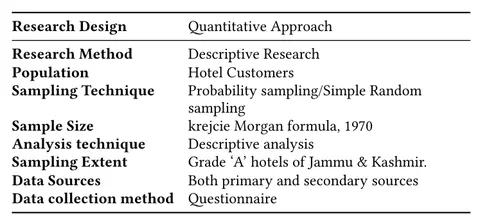
The present study adopted a quantitative, descriptive research design to examine the influence of hotel location–based customer engagement practices on customers’ repurchase intention in ‘A’ category hotels of Kashmir, India. A descriptive approach, as shown in Fig. 1, was considered appropriate as the study aimed to capture customers’ perceptions and assess the strength and direction of relationships among predefined variables rather than manipulating them.
The problem was formulated and conceptualized based on a review of the literature available on the subject and the problems encountered in the industry. The objectives and research questions pertaining to the current study had a wide scope, with an exploratory and descriptive nature of the research. The epistemology of Dualism in the field of management research has been extended as per the philosophical perspective of research. Mingers and Gill (1997) strongly stressed the need for multi-methodology, and the same has been advised by Bazeley (2003, 2007). Mingers (1997: 9) urges pluralism or multi-methodology that explains most, if not all, intervention situations would be dealt with more effectively with a blend of methods from different paradigms.
3.2. Population and Sampling
Current study was comprised with the target population of customers staying in category ‘A’ hotels operating in Kashmir, India. A probability sampling technique, specifically simple random sampling, was employed to ensure representativeness and minimize selection bias. The sample size was determined using the Krejcie and Morgan (1970) formula, resulting in a final sample of 375 respondents, which is considered adequate for statistical generalization.
3.3. Data Source and Data Collection
The study adopted Both primary and secondary source of data. Primary data were collected through a structured, close-ended questionnaire administered to hotel customers. Secondary data employed in the study were obtained from academic journals, books, government publications, and industry reports related to tourism, hospitality, customer engagement, and hotel location studies.
3.4. Instrument Development and Measurement
The questionnaire was designed based on an extensive review of relevant literature. Responses were measured using a five-point Likert scale ranging from 1 = Strongly Disagree to 5 = Strongly Agree. The instrument consisted of two main sections:
Demographic profile (gender, age, education, visiting frequency)
Study constructs, including hotel location–based customer engagement practices and repurchase intention
3.5. Pilot Study and Reliability
A pilot study was conducted with 40 hotel customers and 10 hospitality professionals to assess clarity and reliability of the instrument. The reliability analysis yielded a Cronbach’s alpha value of 0.76, exceeding the recommended threshold of 0.70, thereby confirming internal consistency. The Kaiser–Meyer–Olkin (KMO) measure and Bartlett’s Test of Sphericity further confirmed the suitability of data for statistical analysis.
3.6. Data Analysis Techniques
Data were analyzed using SPSS (Version 23). Descriptive statistics (frequency, percentage, mean, and standard deviation) were used to profile respondents and examine perceptions. Simple linear regression analysis was employed to test the hypothesis and assess the impact of hotel location on repurchase intention.\
Data Source: The survey has been conducted by developing a close-ended questionnaire for the collection of primary data, and the responses have been sought from hotel customers staying in grade-A hotels of Jammu and Kashmir. Secondary data has been collected from articles, books, journals, reports, etc. The probability sampling method with a simple random sampling technique has been implemented for data collection from hotel customers/guests. The sample size has been calculated as per Krejcie & Morgan (1970). The sample unit included all A-grade hotels operating in Jammu and Kashmir. As per the Krejcie & Morgan (1970) formula, the calculated sample size for the current study is 375.\
Data Collection: The primary and secondary data have been collected, in connection to the objectives and scope of the study. Primary data was collected through a semi-structured questionnaire administered to sample respondents, which were hotel customers. The publications of the Ministry of Tourism, and existing literature available on the subject particularly in the form of articles, and journals have been used for collection of secondary data.
4. Results
4.1. Demographic Profile of Respondents
The demographic analysis shown in Table 1, revealed that 58.66% of respondents were male and 41.33% female. The majority belonged to the 31–40 years age group (36.26%), followed by 21–30 years (34.13%). In terms of education, 38.93% were undergraduates, while 28.53% held postgraduate degrees. Regarding visiting frequency, 39.73% were repeat visitors (second visit), indicating a substantial proportion of returning customers.
4.2. Perception of Hotel Location–Based Engagement Practices
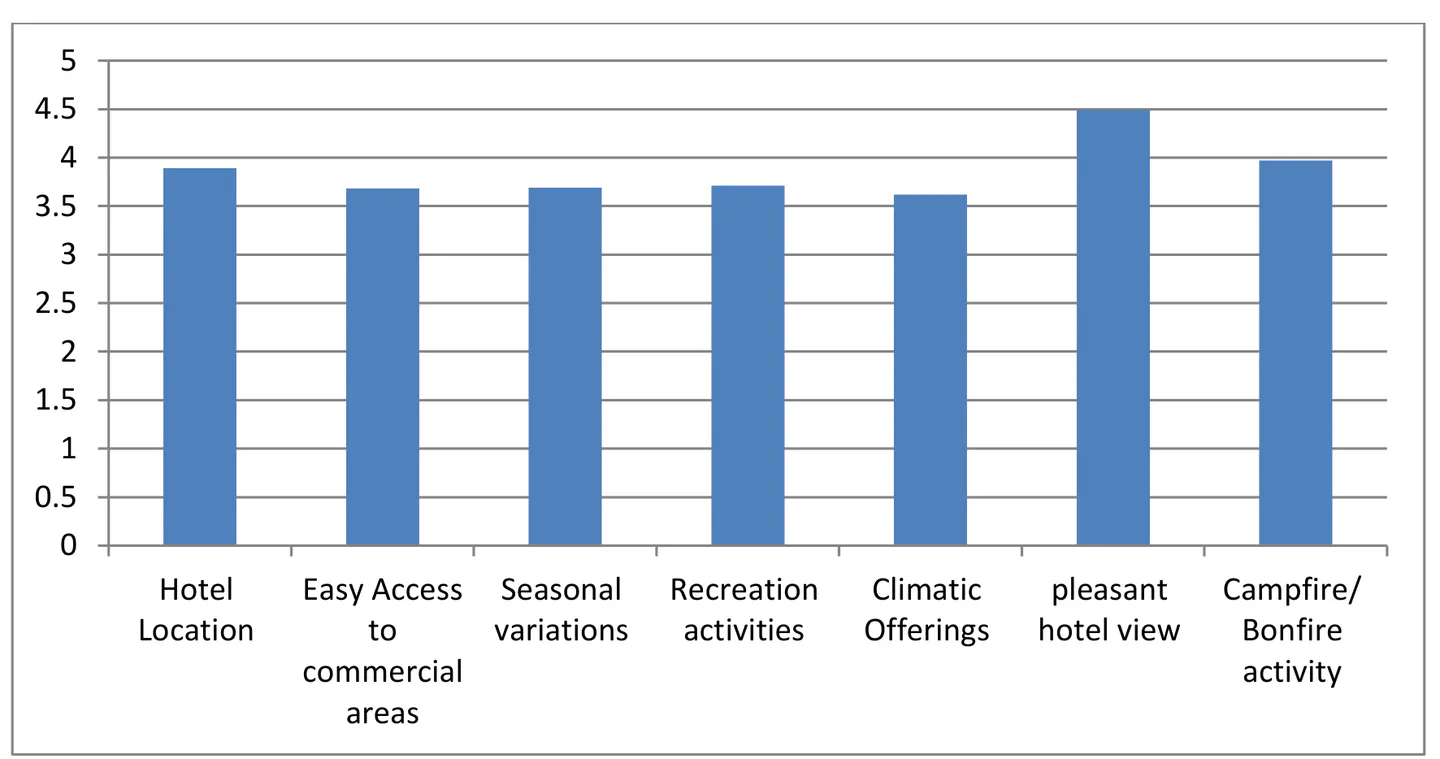
The descriptive analysis demonstrated that customers generally held favorable perceptions of hotel location–based engagement practices. Among the practices, pleasant hotel view recorded the highest mean score (M = 4.49), followed by campfire/bonfire activities (M = 3.97) and centralized hotel location (M = 3.89). These findings indicate that both natural and experiential attributes of hotel location play a critical role in engaging customers.
| Demographic Variable | Frequency | Percentage | |
|---|---|---|---|
| Gender profile | |||
| 1. | Male | 220 | 58.66 |
| 2. | Female | 155 | 41.33 |
| Total | 375 | 100 | |
| Age group in Years | |||
| 1. | 21–30 | 128 | 34.13 |
| 2. | 31–40 | 136 | 36.26 |
| 3. | 41–50 | 56 | 14.93 |
| 4. | 51 and above | 55 | 14.66 |
| Total | 375 | 100 | |
| Educational Qualification | |||
| 1. | Intermediate | 88 | 23.46 |
| 2. | Under-graduate | 146 | 38.93 |
| 3. | Post graduate | 107 | 28.53 |
| 4. | Others | 34 | 9.06 |
| Total | 375 | 100 | |
| Visiting Frequency | |||
| 1. | 1st timer | 124 | 33.06 |
| 2. | Two times | 149 | 39.73 |
| 3. | More than two times | 102 | 27.20 |
| Total | 375 | 100 | |
4.3. Data Analysis and Interpretation
Hypothesis Testing
H1: Hotel location has a significant impact on customers’ repurchase intention.
Regression analysis represented in Table 2, revealed a moderate and positive relationship between hotel location and repurchase intention (). The model explained 23.5% of the variance in repurchase intention (). The regression coefficient was statistically significant (, , ), thereby supporting the hypothesis. These results confirm that hotel location significantly influences customers’ intention to revisit. It helps to build a close relationship in between the customer and the hotel. It really brings a sense of belongingness in customers with respect to the hotel.
| Model | R | R-Square | Adjusted R2 | Std. Error of the Estimate |
|---|---|---|---|---|
| 1 | 0.485* | 0.235 | 0.231 | 0.40735 |
* Predictors: (Constant)
| Variable | Beta | t-value | Sig. |
|---|---|---|---|
| Hotel location | 0.485 | 7.595 | .002 |

| S.No | Hypothesis | Results |
|---|---|---|
| 1. | Hotel location | Supported |
The hotel location stipulate that there is significant impact of hotel location on repurchase intention of services, () as revealed in Table 3. Therefore, the null hypothesis has been accepted with five percent level of significance.
4.4. Perception of Customers
To study the perception of customers regarding customer engagement practices adopted by hotels operating in Jammu and Kashmir:
4.4.1. Analysis of Hotel Location
Fig. 3 shows the result of the data collected from the customers of category A hotels of Jammu and Kashmir, with regards to the customer engagement practices pertaining to Hotel Location. It was found that all identified customer engagement practices exist in hotels, and the respondents strongly agreed.
| Customer engagement practices | Mean | S.D |
|---|---|---|
| Hotel Location plays a paramount role in engaging guests. | 3.89 | 1.26 |
| Easy Access to commercial areas like Malls, markets, offices from hotel makes you feel relaxed. | 3.68 | 1.18 |
| Seasonal variations like rain, snow and moderate summer temperature engages customer. | 3.69 | 1.30 |
| Recreational activities like, (gaming and sporting) available in and around the hotel attracts you. | 3.71 | 1.18 |
| Climatic Offerings like the plucking of fruits in summer, watching fall of Chinar leaves in autumn, flower bloom during spring season etc, connect customers better. | 3.62 | 1.28 |
| A pleasant hotel view involves the guest with the hotel. | 4.49 | 0.947 |
| Campfire/ Bonfire activity gives a feeling of enthusiasm towards the hotel. | 3.97 | 0.967 |
| Mean of means | 3.864 |
The mean value represented in Table 5, for different practices pleads that the pleasant view from the hotel with value of 4.49 shows that customers agree strongly by this practice. The enthusiastic activities like campfire and bonfire with mean value of 3.97 also shows that respondents agree. The other customer engagement practices with mean value ranging from 3.89 for hotel location, followed by 3.71, 3.69, 3.68 for recreation activities like gaming and sporting available in and around the hotel, seasonal variations like rain, snow and moderate summer temperature with respect to hotel location and easy access to commercial areas like markets, malls, government offices from hotel respectively shows much accord from hotel customers. The customer engagement practice like climatic offerings including plucking of fruits in summer, watching fall of chinar leaves in autumn etc with mean value of 3.62, although less as compared to other customer engagement practices, but slightly agreed by the respondents.
4.4.2. Ranking Given to Customer Engagement Practices
Table 6 shows the overall importance given to various customer engagement practices followed by different Grade A hotels of Jammu and Kashmir.\
Ranking given to Customers Engagement practices
| S.No | Customer engagement practices | Overall mean | Overall Ranking |
|---|---|---|---|
| 1. | A pleasant hotel view involves the guest with the hotel. | 4.49 | 1 |
| 2. | Campfire/ Bonfire activity gives a feeling of enthusiasm towards the hotel. | 3.976 | 2 |
| 3. | Centralized Hotel Location plays a paramount role in engaging guests. | 3.898 | 3 |
| 4. | Recreational activities like, (gaming and sporting) available in and around the hotel attracts you. | 3.71 | 4 |
| 5. | Seasonal variations like rain, snow and moderate summer temperature engages customer. | 3.69 | 5 |
| 6. | Easy Access to commercial areas like Malls, markets, offices from hotel makes you feel relaxed. | 3.68 | 6 |
| 7. | Climatic Offerings like the plucking of fruits in summer, watching fall of Chinar leaves in autumn, flower bloom during spring season etc, connect customers better. | 3.62 | 7 |
The ranking to different customer engagement practices has been assigned on the basis of overall mean, which is calculated by using the SPSS on the data collected from customers patronizing different grade A hotels of Jammu and Kashmir. As per overall mean, the pleasant hotel view has been found, the most important and preferred practice as per perception of customers. Campfire/ Bonfire activity offered by the hotel falls at the 2nd rank followed by centralized hotel Location which plays a paramount role in engaging guests is considered as the next important practice by the customers and allocated the 3rd rank followed by Recreational activities like, (gaming and sporting) available in and around the hotel attracts you., which holds 4th rank with respect to mean score.Seasonal variations like rain, snow and moderate summer temperature engages customer, is considered as an important practice by the customers therefore allocated as the fifth rank. Similarly the ranking based on over all mean goes down from sixth with very less difference in mean score till it reaches the 7th rank, specifically considered the least important practice i.e. Climatic Offerings like the plucking of fruits in summer, watching fall of Chinar leaves in autumn, flower bloom during spring season etc, connect customers better.
4.4.3. Perception of customers towards customer engagement practices
The seven identified hotel location-oriented practices had been given out different mean values with a pleasant hotel view having a higher mean value of 4.49 showing customers strongly agree. Campfire/ Bonfire activity offered by the hotel had a mean value of 3.97 which again shows that respondents agree. All the other seven customer engagement practices had also a mean value of less than, but very close to four which indicates the overall agreed behavior from the respondent perspective concerning such customer engagement practices. The climatic offerings like the plucking of fruits in summer, watching the fall of chinar leaves in autumn, and flower bloom during the spring season have the lowest mean value of 3.62 among all nine hotel location-based customer engagement practices but being close to poor shows respondents agree but on a lower scale.
4.4.4. Impact of Customer Engagement practices on Customer Repurchase intention.
The result with regards to the impact of customer engagement practices on customer Re-purchase intention of hotels is shown in table 5.1.3 and table 5.1.4 respectively. Customer engagement practices with regards to hotel location are taken as an independent variable,and customer re-purchase intention is taken as the dependent variable. R-value ranges from -1 to +1. A value of r>0 indicates that there is a positive linear relationship between a dependent variable and the independent variable as one variable increases, the other variable also increases and the value of r=1 indicates a perfect positive linear relationship. The value of r<0 indicates a negative linear relationship between dependent and independent variables in r=-1 indicating a perfect negative linear relationship. R=0 indicates, there is no linear relationship between x and y. Now as per the calculated values derived from the results for R from the study. It has been derived that the variables like hotel location with R=.485 show a moderate positive relationship, which indicates that all the customer engagement practices do have a positive impact on the re-purchase intention of hotels.
R-squared is a square of the correlation coefficient and explains the variation in the dependent variable that is explained by the independent variable. The value of r-squared=0.235 percent is a variation in re-purchase intention explained by hotel location practices\
Individual Impact of Study Constructs on RPI
| Model | R | R-Square | Adjusted R2 | Std. Error of the Estimate |
|---|---|---|---|---|
| Hotel location | 0.485* | 0.235 | 0.231 | 0.40735 |
5. Discussion
This study aimed to identify the customer engagement practices used by hotels in UT of Jammu and Kashmir (India). Customer Engagement practices takes hotel location offerings/practices into consideration, because it has been found in data collection as well in literature that the external environment contributes a lot towards the engagement of customers in hotels as reported by (Bernard et al 2020), further supported by the findings of the study in terms of prime location, which includes accessibility to the airport, bus stand, railway station, markets, local gardens, and attractions like Scenic beauty, best air quality around, view photography etc. Hence engaging the customer and helping in the repurchase intention of services and re-patronage intent. The climatic offerings contributed immensely to the involvement of customers and have been identified as an important destination attribute for tourism destinations (Hu & Ritchie, 1992) for example in the case of beach destinations, the climate is either the main tourism resource (Kozak et al., 2008) and the data analysis like seasonal attraction has indicated the same like snow sculpture creations, watching tulips bloom in the spring and Chinar leaves fall in autumn, which is associated with the climate offerings and also contributes to the customer engagement in the hotel.
Further the results of the study suggested that hotel customers perceive that all the identified customer engagement practices lead to engagement in hotels. The mean value of various customer engagement practices starts from 3.52 (Sound/Music in public areas like lobby, restaurants, lounge, etc), which moderately agrees from the customer’s perspective, and a mean value of 4.49 (A pleasant hotel view), which indicates strong agreement. The above results specify that almost all the identified customer engagement practices lead to effective customer engagement. The hotel location again has shown significance with p=.002, r=.220. Which indicates the high impact of hotel location practices on repurchase intention and a positive correlation between hotel location (independent variable) and repurchase intention (dependent variable). The findings of thestudy thus reinforce the growing body of literature emphasizing the strategic importance of hotel location as a customer engagement driver. Consistent with prior studies (e.g., Shoval et al., 2011; Latinopoulos, 2020), the results demonstrate that accessibility, scenic beauty, and proximity to attractions significantly enhance customer engagement and repurchase intention.
The strong influence of pleasant hotel views and experiential activities such as campfires highlights the role of emotional and experiential engagement in hospitality settings. These findings align with customer engagement theory, which posits that sensory and emotional stimuli strengthen customer–brand relationships and foster loyalty. Moreover, the moderate explanatory power of hotel location () suggests that while location is critical, repurchase intention is also shaped by complementary factors such as service quality and personalization, which merit further investigation.
5.1. Suggestions
After analyzing the responses received from the customers and hotel managers/Executives of grade ‘A’ hotels of Jammu and Kashmir. Some suggestions for the betterment of customer experiences and services provided by grade ‘A’ hotels of Jammu and Kashmir are as under:
It was observed that although most of the hotels are located at prime tourism locations in Jammu and Kashmir, which acts as a best practice in engaging customers and had also been agreed upon by respondents. Now it is suggested that while planning a hotel project, the view from hotel rooms and hotel especially must be kept in mind and the further course of action in terms of construction and installation should be planned accordingly so as to provide best view from the hotel.
As all of us know that location is significantly important for any business to grow and succeed and same had been proved from the results that hotel location is perceived to be the one of the important components choosed and patronized by customers. So, in this connection for hotels especially the new upcoming hotel projects, they must be planned at prime locations, either near to natural attractions, close to public facilities and access points like bus stand, railway station and airport or in vicinity of commercial areas and markets.
Climatic offerings like the plucking of fruits in summer, watching fall of chinar leaves in autumn, flower bloom during spring season are engagement practices limited to a particular place but acts as a main source of attraction for the customers. These practices have a very limited season and lasts for a very short period of the year. It is suggested to indulge the customers fully by providing information about such happenings, events and activities through social media options, so that they can plan their trips accordingly.
Seasonal variations like rain, snow and moderate summer temperature are the practices having a potential to attract customers immensely for that particular period. It has been reported from the mean value that the respondents shows strong agreement, but there is need for more efforts and preparations so that new activities can be offered to the customer. Jammu & Kashmir is gifted enormously with such natural offerings. Hence, hotels should make best use of these particular offerings in engaging customers for long.
5.2. Recommendations
In addition to above customer engagement practices based on the finding of the study and after analyzing existing customer engagement practices adopted by hotels to engage customers in a better way. So keeping in view their respective benefits, these practices can be implemented by hotel sector in India.
Good Customer Service: Hoteliers should focus more on rendering good customer service. It is already well recognized that good customer service is essential for companies to prosper. As indicated by the Institute of Customer Service, sixty three percent of customers purchase from same company again and again after receiving good service from an individual or the staff. As consistently providing the high-quality services to the customer is the key to customer engagement because customer service interaction plays a crucial role in creating dynamic relationships with a customer which is an imperative ingredient for engagement to occur.
Makeover of Customers into Brand Advocates: The attraction and engagement of new customers, while increasing engagement levels among existing ones by transforming loyal customers into brand advocates. For this, hotel companies should appreciate the customers by offering opportunities and incentives - for example, put into practice ‘refer a friend’ scheme.
Engage Customers with the sources of entertainment available in and around hotel: Notifying customers about new products and offers, by offering updated information about the availability of such sources with timing and cost, so that it becomes easily accessible.
Scale Customer Engagement Budget: The marketing cost for any product and service or for that matter for any activity in general, there is always a cost that incurs and when it comes to customer engagement strategies a considerable time and training to personnel is needed so “Business is not limited as it used to be once. There are new methodologies, tools, vehicles, and content sort at every corner. Many organizations are confused, in light of the fact that they can’t figure out how they can afford all of costs within their limited budget Therefore, it’s beneficial to scale customer engagement budget” (Awareness Inc., 2011). If a company invest large portion of budget on content creation and distribution, customer engagement will suffer.
Appoint Customer Engagement personnel’s: The companies across industries are creating versions of this role. Hotel companies should hire professional customer engagement personnel’s having prior exposure in designing and implementing innovative customer engagement practices. The role of customer engagement officer is to provide on-brand, topical and provocative customer engagement strategies needed to engage customers effectively.
6. Conclusion
In nutshell, this study has sufficiently proved and investigated the role of customer engagement practices on customer repurchase intention of services. The results help to enhance customer engagement awareness by improving the current understanding of customer loyalty and satisfaction, which suggests that repurchase, is developed through enhancement of the customer engagement experience. The objectives have been achieved by quantitative analysis, where in total of 375 customers of various demographic profiles have been approached for data collection, in order to check their perception with reference to identified hotel-location related customer engagement practices (Dar et al., 2025). The impact of these customer engagement practices had been analyzed by using linear regression. As far as perception of the customers toward customer’s engagement practices is concerned, it is found that customers more or less agreed for the numerous explored customer engagement practices discussed in the study. The findings confirm that hotel location related customer engagement practices offered by any hotel has significant impact on the repurchase intention of hotels. It indicated that hotels desirous for repeat business must focus more on these practices and engage and experience impact on repurchase intention.
This study concludes that hotel location–based customer engagement practices significantly influence customers’ repurchase intention in Grade A hotels of Jammu and Kashmir. The results confirm that customers are more likely to revisit hotels that offer scenic views, accessibility, and location-driven experiential activities. The study contributes to hospitality literature by empirically validating hotel location as a strategic engagement tool in an emerging tourism destination.
From a managerial perspective, the findings underscore that competitive advantage in hospitality cannot rely solely on pricing or service quality; rather, integrated engagement strategies leveraging location-specific attributes are essential for fostering long-term customer relationships.
6.1. Managerial and Theoretical Implications
6.1.1. Managerial Implications
Hotel developers and managers should prioritize location planning and view optimization during the design and construction stages.
Hotels should actively curate and promote location-based experiences (e.g., seasonal attractions, scenic activities) through digital and social media platforms.
Destination managers should collaborate with hotels to enhance accessibility and surrounding infrastructure, thereby strengthening overall destination appeal.
6.1.2. Theoretical Implications
The study extends customer engagement theory by empirically demonstrating the role of physical and environmental attributes in shaping engagement and behavioral intentions.
It contributes to the limited hospitality literature in the context of emerging markets, particularly in geographically unique destinations like Jammu and Kashmir.
The findings provide a foundation for future studies to integrate hotel location with other engagement dimensions such as emotional intelligence, service personalization, and trust.
6.2. Limitations of the Study
The most evident fact of life is that every process has some limitations. So same is the case with the current study without being the exception. There was a heavy responsibility and strictness dealt with while conducting the different steps and processes of study. But as the study was conducted by a single person and hence, time management was a big challenge, the financial outcry was felt at every step and the sample size for the study was very complex. The study was based on the perception of respondents as well as the individual exploration by the scholar. Though the researcher has put every effort to gather correct responses for different questions from each respondent, still the researcher has no control over the manipulation made by the respondent while filling in the responses. Thus the various limitations of the current study have been enlisted below:
Since there is a huge scope of study in this particular field, the collected data provided huge information; therefore some interesting results have been revealed. But, according to the objectives of the current study, the researcher limited the result of the present study. However, the researcher tried to include all the necessary information for justifying the result of the study.
The present study was based on the experiences and observations of the respondents. In opinion surveys, there would always be possibilities of individual biases in opinions, and results look unreliable. These biases could not be eliminated.
The study was undertaken for only Grade A hotels in Jammu and Kashmir. Thus, there is scope for similar caliber of study for other Grades of Hotels in Jammu and Kashmir.