
I. INTRODUCTION
Water resources and the hydrological cycle are an essential part of healthy ecosystems and life itself. Water is a natural supply but, in many scenarios, it is rather scarce since only the approximately can be drinkable according to the American Geosciences Institute (AGI, 2022). On it depends both origin and continuation of life on Earth. Nowadays water conservation is one of the principal goals of science and activism and therefore, the ecological implications of water treatment, distribution, and consumption. Water and derived resources conservation directly implies making positive contributions to the hydrological cycle, yet there is a constant negative damage to its quality due to anthropogenic impact (León, et al., 2018). Strategies for the protection and sustainable management water resources should be prioritize and given the importance they imply. These strategies must contemplate the natural elements of a hydrological system such as groundwater, rivers, lakes, springs, rainfall, creeks, etc. (Nalbantis et al., 2011).
Although it is stipulated as a human right and one of the sustainable development goals (goal 6), water distribution is unequal across the world. Governments and global institutions such as the United
Nations invest large amounts of money in the development of plans to improve the current situation and enhance water and sanitation supply. The emergence of new technologies has helped in numerous problems derived from the use and consumption of water and hydrological resources. Now there are ecological approaches to minimize wastewater, new sustainable filtration systems and therefore, better environmental management and control of such fragile reserve. Within this framework, several models have been developed to support and monitor environmental management and policy development. (Jerves-Cobo, et al., 2019).
The human factor also must be considered since anthropogenic activities can highly alter ecosystems and their hydrological cycle, especially in a country that highly depends on livestock and agronomy. Agriculture is one of the largest sectors of the productive matrix of Ecuador, representing up to of the total working class in the country, according to a 2019 survey by World Bank. In many areas of developing countries, the population is supplied with water from rivers, streams, lakes, etc. (Arnal-Arnal, et al., 2002).
In aims to tackle and contribute to the global Sustainable Development Goals, the National Institute of Statistics and Censuses of Ecuador (INEC), has been improving and consolidating its monitoring system since 2016, specifically on SDG 6.1 and 6.2 (Water and sanitation) and the SDG indicators were adapted to Ecuadorian framework (Moreno, et al., 2020). From the several surveys and studies done under this institution and others in the field, it is evident that safe water distribution is the main issue in the water sector. Yet, another highly significant concern is the water and hydrological resources management. In this research we consider the Tabacay River micro-basin that provides of drinking water to the city of Azogues and its surroundings, in the southeast of Ecuador.
The leading causes that affect the ecological status of the Tabacay River micro-basin system are mostly administrative problems and territorial management of areas allowed for livestock and agriculture (Olivares-Navarro, 2017). Also, the lack of education and training on topics such as ecology and water use and consumption, which are a crucial factor in the sustainability of both cities and communities. The framework of this research is to provide a general insight on the status of the micro-basin and the data collected on the meteorological stations. We aimed to validate an integrated ecological perspective on the Tabacay river micro-basin monitoring and management.
II. WATER MANAGEMENT IN ECUADOR
Ecuador is in the northwestern region of South America. The total population is around 17.8 million people, according to the 2021 census. According to the reported statistics around is urban and rural (INEC, 2022). The country has four main regions: the Andean highlands, the Amazon, the coastal region, and Galapagos islands. Although there are some geographical and administrative differences between these regions all of them are under the same law code and National Constitution and a legal territorial organization.
In terms of hydrological resources, they share the Organic Water Resources Law on Water Uses and Exploitation (2014), most of the activities regarding use and consumption of water and related resources are regulated by the National Secretary of Water (SENAGUA). The Agency for the Water Regulation and Control (ARCA) oversees the water and sanitation services. (Moreno, et al., 2020). In Ecuador, water and sanitation services are considered a public right. These services are mostly in charge of local governments and the management of them is under local public enterprises. Yet, that happens for the urban areas. In the rural communities, which represent a third of the country, water distribution and administration depend upon community organizations called water joints.
Therefore, the quality-of-service provision does not run homogenously for every city, rather it is diverse. In those terms, the situation demands constant supervision and regulation for the State to guarantee that the Ecuadorian population can access to such basic services with the quality they imply and the international standards for water consumption. Every water provider enterprise must follow certain technical norms with specifications on physical-chemical and microbiological parameters that ensure the distribution of potable water.
In rural Ecuador, of the population still has no access to improved sanitation facilities (INEC, 2022). The restricted financial budget available in developing countries, there is an increasing demand for environmentally and economically sustainable water and sanitation systems. Urban water and wastewater treatment offers many other public health advantages since they fulfill certain quality criteria opening the door to resource recovery as well as water recycling for selected agricultural and industrial uses (Alvarado, et al., 2017).
III. CASE OF STUDY: THE TABACAY RIVER MICRO-BASIN
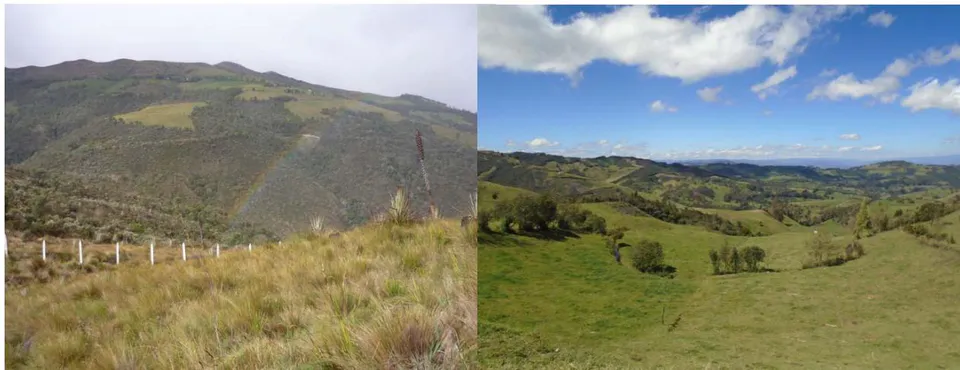
The Cañar province is in the southeast of Ecuador. The relief is mountainous, and the most significant elevations are at 4,518 and 3,838 meters above sea level. The climate is very specific to the Andes Mountain range, and the climatic floors are mostly humid mesothermal and semi-thermal paramos.
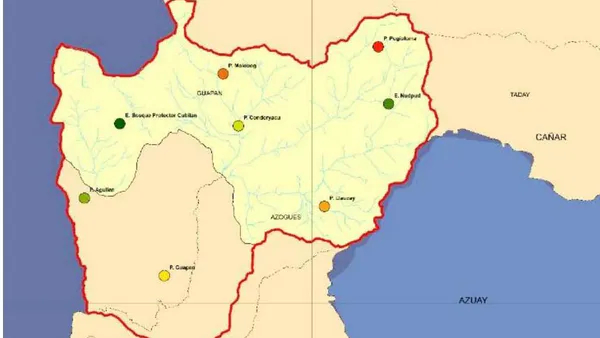
There are seven counties: Azogues, Biblián, Cañar, Deleg, Tambo, Suscal and La Troncal. The political, financial, and administrative headquarters of this province is in the city of Azogues, as the provincial capital. From there, the most relevant decisions are handled, however, each county has its own local administration.
For the Tabacay micro-basin the main tributaries are the Llaucay, Nudpud, Condoryacu, Rosario, Mapayacu and Rubis streams. The micro-basin has an area of 6650 hectares (66.5 km2) and administratively belongs to the Azogues county and is divided into 2 parishes: Guapán and Bayas.
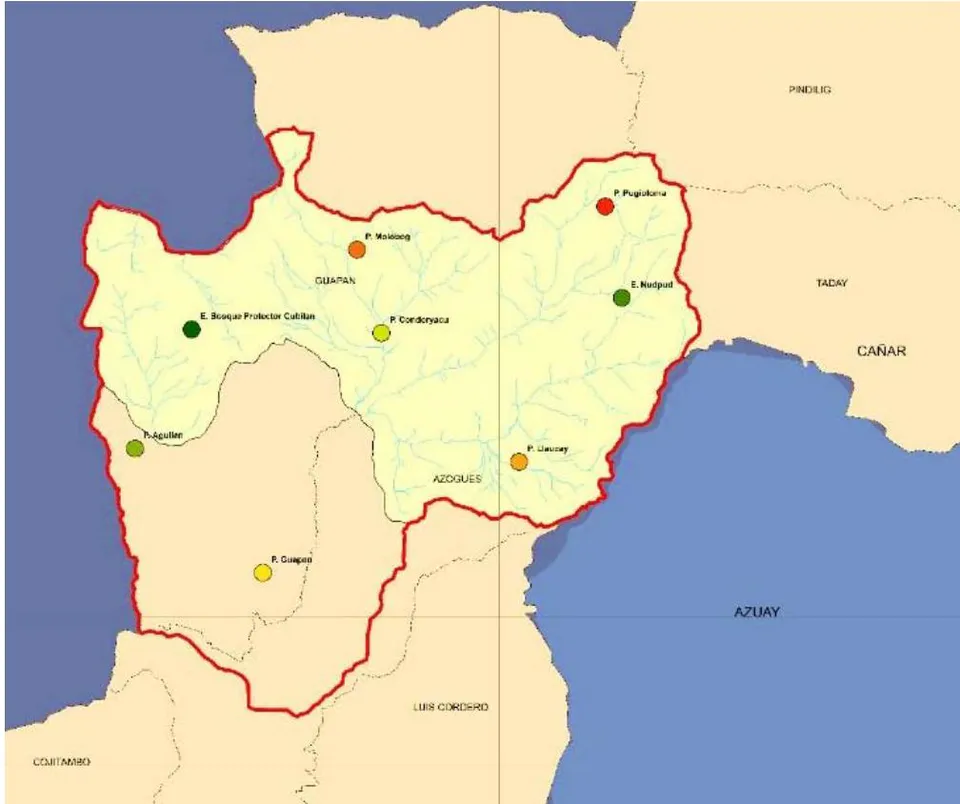
The Tabacay River micro-basin is part of the Santiago River basin, whose surface is , which provides drinking water to the rural and urban areas of the city of Azogues (Gutierres, 2017).
Over the recent years the hydrological monitoring and the use of water resources from this micro-basin has improved. However, there are many problems whose repercussions is of great impact on environmental, social, and economic management within this geographical area.
In the Tabacay river micro-basin, many problems were detected that have been mentioned for their damaging impact on environmental and hydrological management within this geographic space. These problems are agriculture in the paramo and expansion of agricultural in unsuitable areas, water pollution and deficient quantity and quality of potable water, erosion provoked by the previous mentioned motives, sediment production, soil degradation caused by poor road infrastructure, irrigation without planning and defective initiatives for the conservation and recovery of native vegetation. Another key concern is the lack of mitigation of environmental impacts: construction of roads, exploitation of mines, Problem due to the use of water. Lastly, there is an obvious deficitton environmental education and technical assistance (Olivares-Navarro, 2017).
The water and sanitation management municipal company of Azogues, Ecuador, also known as EMAPAL-EP has been working on improving the water and hydrological resources control and management of the Tabacay river micro-basin. The company has several meteorological and pluviometry stations that are indispensable tools that measure and monitor the various parameters that allow to track the micro-basin situation and how it changes through the years. These weather stations use specific sensors for each parameter that collects information on atmospheric behavior covering strategic areas and study the water catchment creeks of the corresponding geographical space.
IV. WATER CATCHMENT CREEKS, RAIN GAUGES AND METEOROLOGICAL STATIONS
Meteorological and pluviometry stations are located through the micro-basin based on several criteria that allows to collect representative data that can provide worth statistics. These criteria consider having such tools near water catchment creeks since it is of interest knowing how much it rains in the area that provides water to a city. Also, the rain gauges are in easy access and geographically strategic locations.
There are 7 rain gauges in the Tabacay microbasin, in this brief study we considered the most relevant stations: Nudpud, Guapán, Agüilán, Molobog and Pugioloma. The most efficient monitoring system is by the Nudpud station; thus, the most illustrative data is provided by the mentioned station.
V. NUDPUD WEATHER STATION
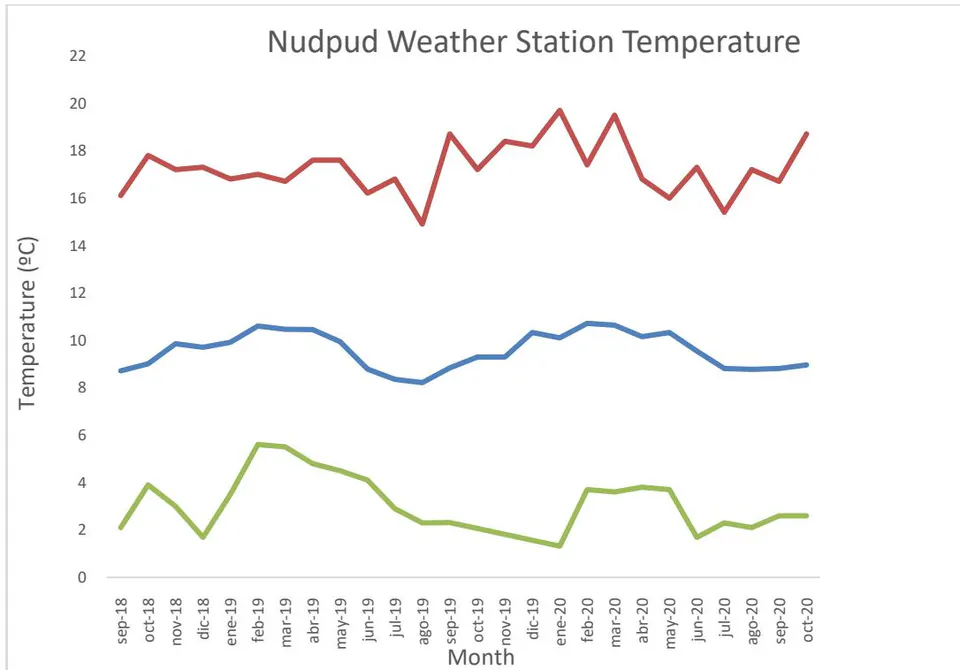
The area where the station is located is at an altitude of 3230masl, so it is observed that temperatures have a variable behavior over time.
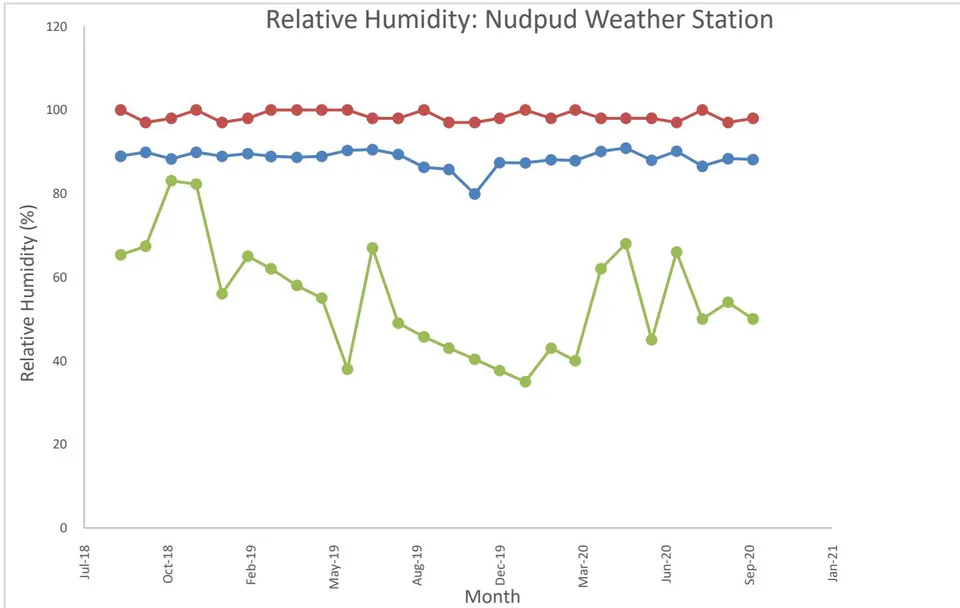
Relative humidity indicates the amount of water in the environment and a condition for whether there is precipitation or fog. Relative humidity remains within normal ranges in the area.
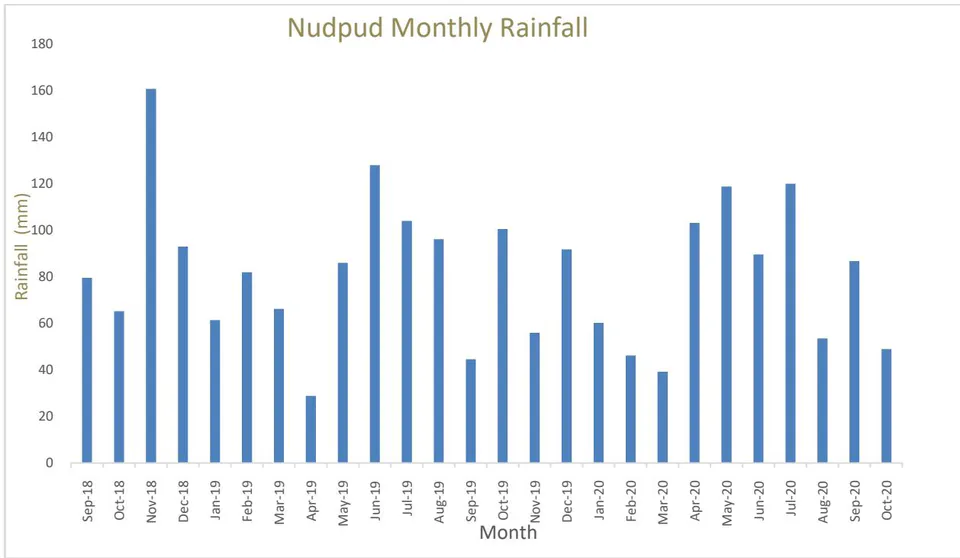
The month with the highest rainfall recorded in the Nudpud area is November 2018, while the other months the precipitation has been moderate to high.
A comparison between the monthly precipitation of some of the areas belonging to the Tabacay micro-basin was performed:
Comparison of data recorded by years
| Date | Temperature (°C) | Relative Humidity (%) | Rainfall (mm) | ||||
| Med | Max | Min | High | Low | |||
| nov-18 | 8.72 | 16.1 | 2.1 | 9.3 | 8.21 | 88.91 | 79.6 |
| nov-19 | 8.84 | 18.7 | 2.3 | 9.31 | 8.49 | 86.25 | 44.6 |
| nov-20 | 8.81 | 16.7 | 2.6 | 9.22 | 8.41 | 88.32 | 86.8 |
When analyzing the average, maximum and minimum temperatures, it is observed that the years of comparison have a similar behavior with temperature ranges according to the altitude of the area, as well as the relative humidity are in ranges of .
VI. AGUILAN RAIN GAUGE
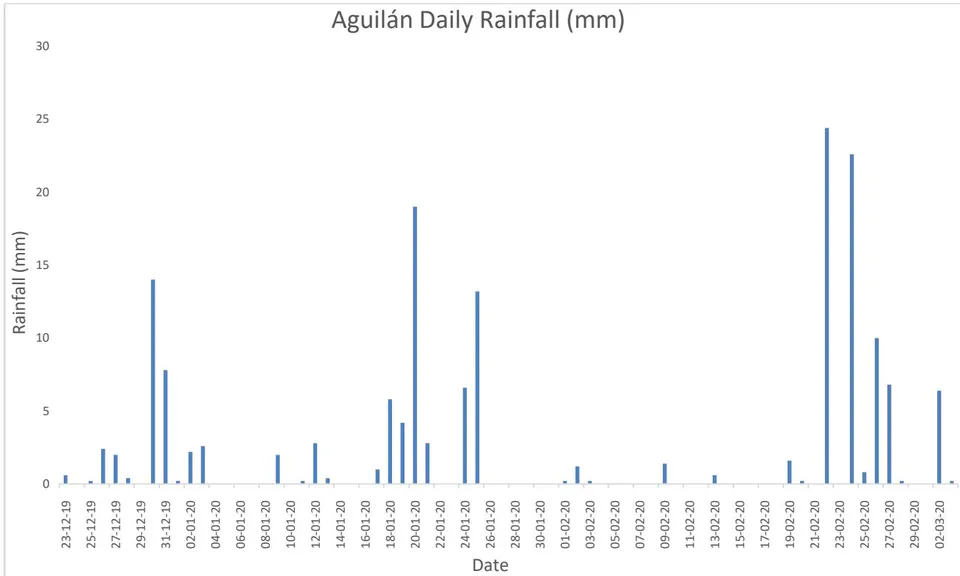
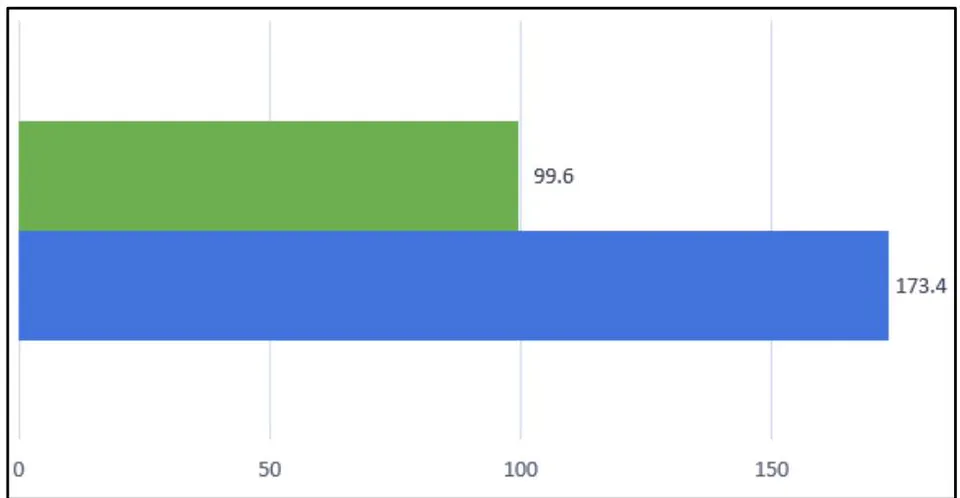
The months of greatest rainfall recorded in the Aguilán area is in the month of February of the year 2020, while in the other months there is moderate to high rainfall in the area.
VII. GUAPÁN RAIN GAUGE
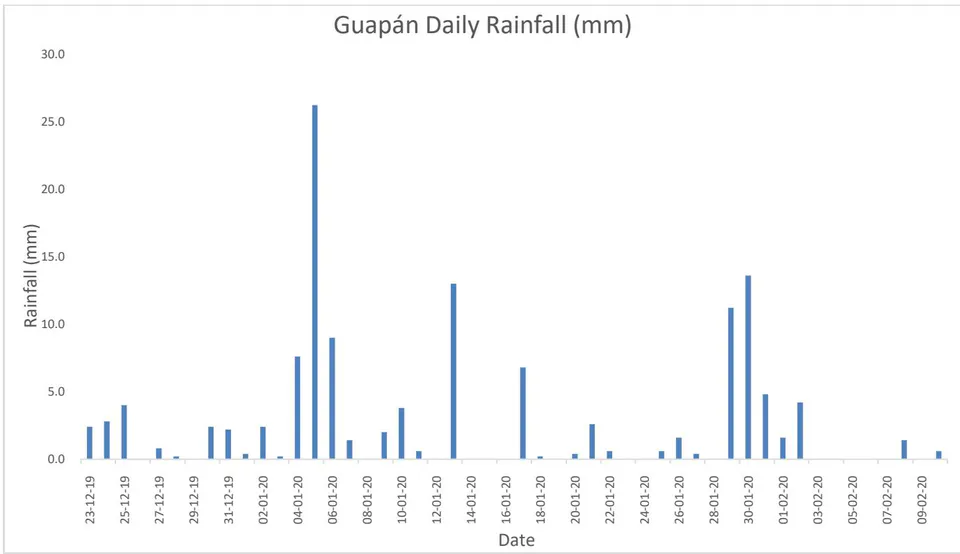
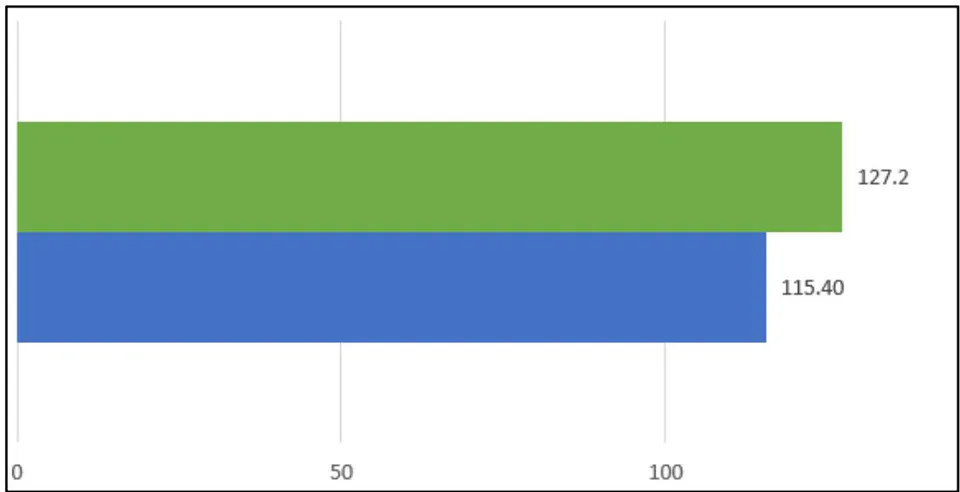
The months of greatest rainfall recorded in the Guapán area is in the month of January of the year 2020, while in the other months there is moderate to high rainfall in the area.
VIII. MOLOBOG RAIN GAUGE
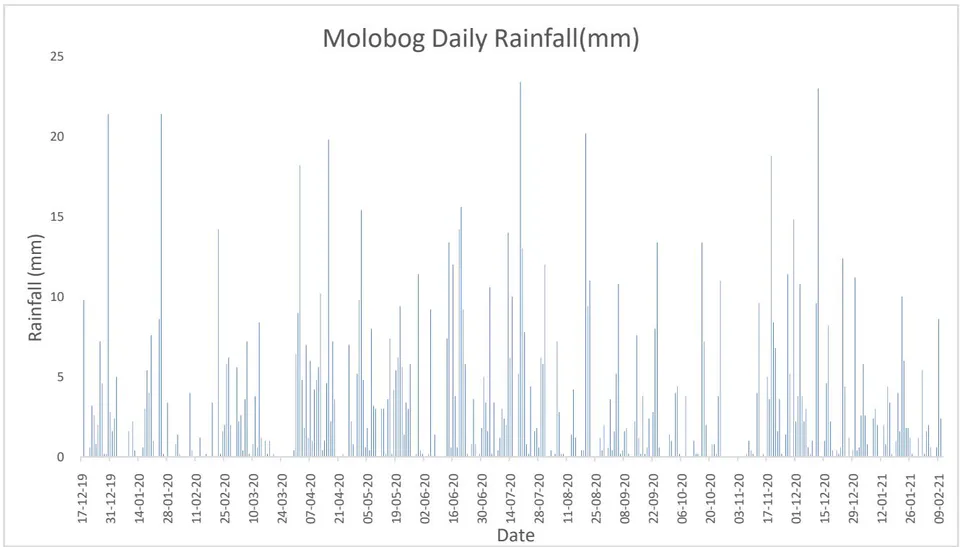
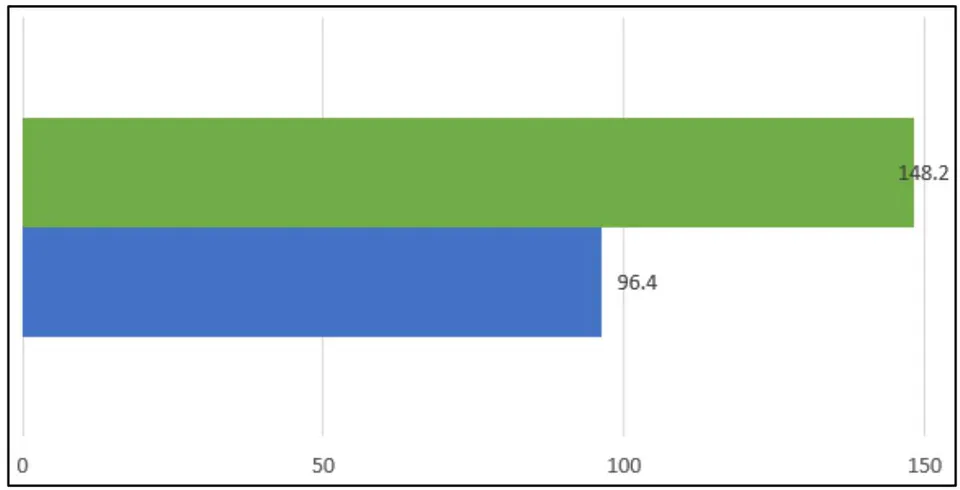
The months of greatest rainfall recorded in the Molobog area are in the months of January, July, and December of the year 2020, while in the other months there is moderate to high rainfall in the area.
It is determined that there is a different behavior, the rainfall of 2021 is greater than that of 2020.
IX. PUGIOLOMA RAIN GAUGE
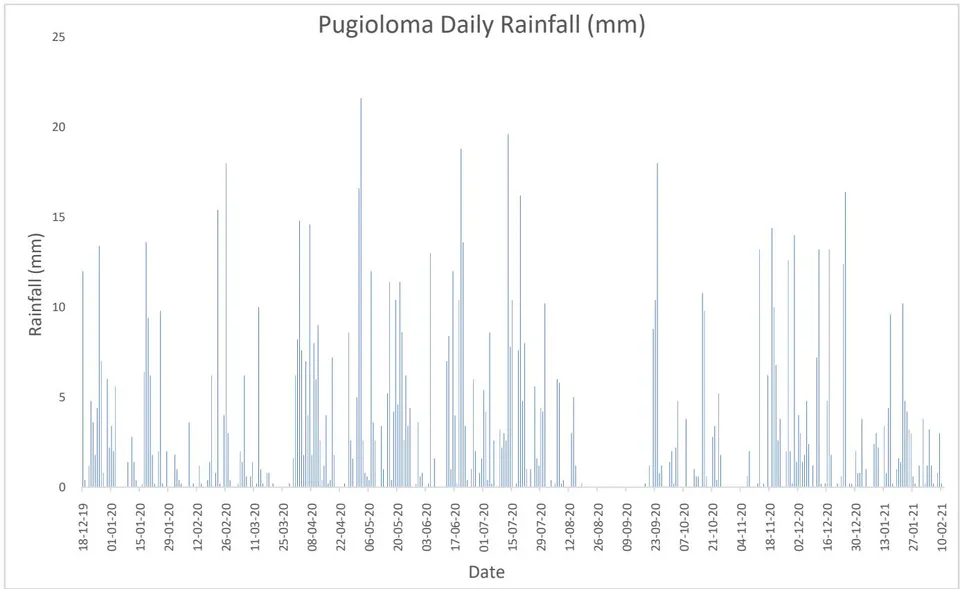
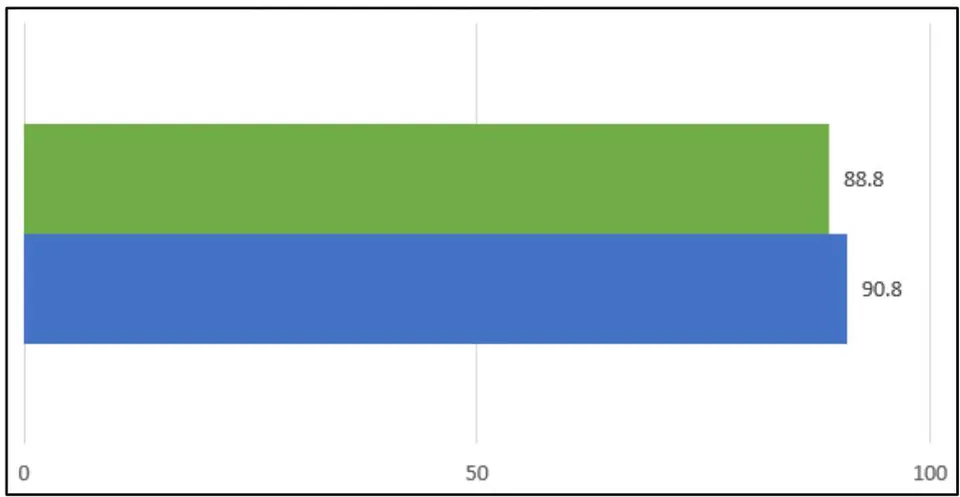
The months of greatest rainfall recorded in the Pugioloma area are in the months of April, June, July, and December of the year 2020, while in the other months there is moderate to high rainfall in the area.
X. CONCLUSION
Access to potable water and sanitation services remains as one of the biggest challenges in the water sector in Ecuador. The distribution is dynamic across the country and the management of the hydrological resources highly depends on the local governments. In the province of Canar, the Tabacay river micro-basin constitutes the water supply for the city of Azogues and its tributaries. The principal findings of this brief study are, first, that the status of the micro-basin remains in Grosso modo, constant through the last years in terms of rainfall. The precipitation data collected show that there are very similar volumes of rain catchment in the different months of the last three years. The Nudpud station, which represents of the main stations within the micro-basin, provided with information about the temperature in the area for the last three years, that evidences a rather low to not considerable variation in weather. The other rain gauges considered show that
there is a steady flow of rain between the periods measured.
Second, the water sector has without a doubt a door open to improve its performance and that relies on national agencies and government since they have the budget to support municipal companies in the implementation of quality monitoring and water potabilization services. Also, to support the strengthening of hydrological resources control, regulation, and policies. Third, the anthropogenic factor is unavoidable since the agricultural sector is one the major productive industries in Ecuador. Yet there is the need to create spaces to educate and promote the awareness in environmental and sustainable management of basins, micro-basins and water derived services in general. In this context, there is a considerable potential of improving the conservation of resources.
ACKNOWLEDGMENTS
This study would not have been possible without the continuous support from the School of Chemistry and Engineering at Universidad Yachay Tech. EMAPAL-EP water and sanitation company in Azogues, Ecuador is deeply acknowledged for providing the data and the help to conduct this research. Also, to Universidad Católica de Cuenca.
Conflicts of Interest: The authors declare no conflict of interest.
Corresponding Orcid numbers:
Maria E. Calle Luzuriaga: 0000-0003-0827-7664
Maria A. Luzuriaga: 0000-0002-5122-9177
Karina M. Gonzalez: 0000-0001-9377-3894
Jose I. Yamasquí: 0000-0002-7372-8831