## I. INTRODUCTION
The emergence of the novel coronavirus (COVID-19) in December 2019, which originated in Wuhan, China, quickly evolved into a worldwide pandemic, officially recognized by the World Health Organization (WHO) on March 11, 2020. Unlike epidemics, pandemics extend beyond regional boundaries, impacting multiple countries and continents, leading to a significant loss of lives and widespread transmission. COVID-19 transitioned from an epidemic in China to a pandemic that swiftly permeated across the globe in months (Morens et al., 2009; Hickok, 2020; Zeeshan et al., 2020). The COVID-19 pandemic unleashed unprecedented challenges, mainly underscoring the fragility of healthcare systems and economies worldwide. Developing nations bore the brunt of these challenges, facing intensified disruptions across various sectors, including socio-economics, finance, healthcare, leadership, and international collaboration (Elkington & Hughes, 2017; Van Prooijen & Van Lange, 2014; Rodela et al., 2020). The imposition of lockdown measures accentuated the pandemic's adverse effects, particularly on people's livelihoods, amplifying existing inequalities across different societal strata (Jaspal et al., 2020; Son et al., 2020). Further, in the countries like Nepal, the ramifications about the pandemic were especially profound, exposing and widening the fissures within the socio-economic fabric of society (Rowley et al., 2021; Triandafyllidou, 2022). Similarly, vulnerable and marginalized populations experienced disproportionate hardships, illuminating these impacts nuanced and stratified nature. The lockdown measures served as a catalyst, bringing the disparities across different segments of Nepali society to the forefront and necessitating a thorough examination of the livelihood patterns during this period.
This study delves into the intricate dynamics of the stratified livelihood patterns in Nepali society during the 2020 lockdown period. By scrutinizing the socioeconomic repercussions of the COVID-19 pandemic and the containment measures implemented, this research aims to elucidate how this global health crisis has magnified pre-existing disparities among various strata in Nepal. Thus, unravelling these complexities is pivotal for devising effective policies and strategies that mitigate the pandemic's long-lasting impacts and foster a more equitable and resilient society in Nepal. This article aims to understand and examine the various ways in which people in Nepal have adjusted their livelihoods during the COVID-19 lockdown. By exploring these experiences, it seeks to offer valuable insights that can guide policy-making and better prepare for future challenges.
While numerous studies have delved into the socio-economic repercussions of the COVID-19 pandemic worldwide (Attah et al., 2013; Eneyo et al., 2021; Mishra et al., 2020; Awofeso & Irabor, 2020; Obi et al., 2020; Andam et al., 2020), there remains a noticeable gap in understanding the intricate effects on livelihoods within specific contexts like Nepal.
Addressing this gap, this research aims to thoroughly examine how the COVID-19 lockdown has impacted livelihood patterns across different segments of Nepali society. Through a qualitative research approach combining primary and secondary data collection methods, the study intends to shed light on the diverse and nuanced experiences of the Nepali population amidst this unprecedented global crisis.
Similarly, drawing on observations, case studies, and content analysis techniques, the investigation aims to uncover the spectrum of adaptations and repercussions—ranging from familial solace and celebration to severe hardships and inequitable access to resources and medical care. This inquiry is grounded in the theoretical frameworks of Marx and Weber, providing a lens through which to interpret and understand the observed socio-economic disparities and inequalities (Ritzer, 2000). This research aims not only to bridge an important knowledge gap but also to enhance our understanding of the intricate effects of pandemic interventions on livelihoods. The knowledge gained will be crucial for shaping future policies and strategies to foster a more equitable and resilient societal response, not only in Nepal but also potentially in similar contexts worldwide.
## II. LITERATURE REVIEW
An integrated approach is essential for addressing the interconnectedness of human, animal, and environmental health, emphasizing that no single sector can effectively manage health issues emerging at this intersection alone. The COVID-19 pandemic highlights the necessity of this integration, bringing together a diverse array of professionals including medical doctors, nurses, virologists, laboratory experts, and environmental scientists. Esteemed organizations such as the World Health Organization (WHO), the United Nations Food and Agriculture Organization (FAO), and the World Organization for Animal Health (OIE) have led collaborative efforts against the virus. Their combined endeavors have played a vital role in identifying the outbreak's origins, containing its spread, and devising strategies to prevent future pandemics and mitigate their impacts (WHO, 2019; 2022). This concept of augmented collaboration in health crisis management is not novel. Researchers such as Coyne and Jennings and Ionescu et al. have historically highlighted the urgency for increased trauma Centre readiness, addressing the escalating number of mass-casualty incidents worldwide (Ionescu et al., 2021). Similarly, the Australian Medical Association (AMA) has advocated for the inception of a disease control Centre in Australia, cognizant of the absence of a singular national authority dedicated to scientific investigation and effective leadership in managing contagious diseases (AMA, 2017; Buheji et al., 2020). Thus, such an establishment would be critical in addressing prevailing and emerging threats nationally, fostering collaboration with states and territories and augmenting global health efforts.
Moreover, The COVID-19 pandemic has underscored the importance of national and state identity, particularly within the United States. The federalist framework has facilitated the decentralization of information sharing and policy-making to state and local governments. The disparity in responses across states has inevitably influenced citizens' trust in authorities, with state identity emerging as a pivotal determinant of individuals' perceptions of and reactions to government measures (Bayram & Shields, 2021; Pears & Sydnor, 2022). Consequently, the pandemic has illuminated the complex interplay between identity, governance, and public trust and how these elements collectively shape societal responses to health crises.
Furthermore, the environmental origins of the coronavirus bring to the forefront the intricate relationship between human activities and the emergence of infectious diseases. The encroachment of humans into natural habitats, propelled by urbanization, deforestation, and unsustainable agricultural practices, has not only escalated the pace of climate change but also catalyzed the transmission of zoonotic diseases. Most emerging infections are postulated to have zoonotic origins, highlighting the pressing need to integrate environmental and ecological considerations in strategies for pandemic prevention (Anderson, 2020; Coyne & Jennings, 2020; Walzer, 2020). The additional layer of climate-induced displacements, particularly prevalent in the Global South, further complicates this intricate interaction between environmental mobility and disease transmission (Selby & Kagawa, 2020; Carmody et al., 2020).
The socio-economic impacts of the COVID-19 pandemic have been extensive and profound. The crisis has starkly magnified disparities, impacting vulnerable populations disproportionately and intensifying inequalities across and within countries. While government interventions in developed nations have assuaged some economic fallout, in developing countries like Nepal, the challenges have been compounded by pre-existing vulnerabilities and constrained resources (Murray, 2020; Beach et al., 2022). Thus, the pandemic has laid bare the interconnectedness of global economic activities and underscored the imperative for equitable access to resources as a cornerstone for addressing systemic biological disasters.
In light of the unprecedented scale and impact of COVID-19, the field of epidemiology has been thrust into the limelight. However, addressing the multifaceted challenges engendered by the pandemic necessitates a more holistic approach, integrating economic, social, environmental, and health perspectives. This is vital for the cultivation of resilience and preparedness for future pandemics. The experiences of countries such as Nepal, where stratified livelihoods have significantly shaped the responses to the crisis, provide a wellspring of knowledge, underscore the diversity of challenges encountered and accentuate the need for tailored solutions. Therefore, The COVID-19 pandemic has emphasized the crucial importance of interdisciplinary and international cooperation in managing health crises at the intersection of human, animal, and environmental factors. It has underscored the influence of identity in shaping public trust, revealed the environmental underpinnings of infectious diseases, and amplified the socio-economic disparities that global crises can exacerbate. Drawing insights from the diverse experiences of various countries and integrating multiple perspectives is paramount. This convergence of knowledge and experience is crucial for developing comprehensive, equitable, and effective strategies poised to combat current and prospective pandemics.
## III. OBJECTIVE AND METHOD
This research is focused to analyze the stratified livelihoods in lockdown period of COVID 19 of Nepal.
### a) Methodological Frame Work
Nepal, with its diverse and vibrant tapestry of varied landscapes, ethnic groups, languages, and cultures, is a significant backdrop for this study. This landlocked South Asian country, characterized by a predominantly agrarian economy and stark socio-economic disparities, provides a unique context for exploring stratified livelihood patterns, particularly during disruptive events like the COVID-19 pandemic. The combination of the Nepali government's strict lockdown measures, the inherent vulnerabilities of its population, and the unique cultural context make Nepal a particularly intriguing area for study. Against this backdrop, the research meticulously dissects the complexities of livelihood stratification during the pandemic, shedding light on the interplay between demographic diversity, socioeconomic inequalities, and external disruptions within Nepal's specific geographical and cultural milieu.
#### Ontology

Livelihood of Nepali people have been stratified in various dimensions in the lockdown perio
#### Knowledge knowing process
 Figure 1: Methodological Frame Work
Data are collected through the case study method on the basis different category of the livelihood of Nepali people.
The collected data are analyzed through the content analysis method under the qualitative
Considering this distinct and diverse context, the study utilizes a comprehensive research approach to comprehend the intricate effects of the pandemic on various segments of society in Nepal. The study adopts a qualitative research approach to investigate these stratified impacts, aligning with the methodologies outlined by notable scholars (Ijomah et al., 2007; Neuman, 2007; Cooper & Green, 2016). The research employs observation and case study methods to capture the intricacies of lived experiences and gather rich, qualitative data during this unprecedented period. For this research, data are collected meticulously from both primary and secondary sources. Primary data is centered on particular demographics, such as wage earners and frontline workers. On the other hand, secondary data, obtained through thorough content analysis (Adhikari et al., 2024), provides context to the findings and enhances the study by comparing observed patterns with existing theories and prior research.
Given the extensive qualitative data collected, the subsequent critical phase entails the meticulous selection of cases to guarantee the diversity and inclusivity of the study sample. To ensure a broad spectrum of the population is represented, case selection is carried out via purposive sampling. This approach is crucial for revealing the multifaceted effects of the pandemic on various societal groups in Nepal.
Therefore, by integrating these varied methodologies and data resources, the study aims to thoroughly investigate the intricate dynamics of livelihood disparities in Nepal during the COVID-19 lockdown, thus offering significant insights for future policy and intervention planning.
## IV. THEORETICAL DISCOURSE
Having outlined the methodological approach, it is crucial to explore the theoretical frameworks guiding the analysis and interpretation of the collected data. This study's theoretical framework revolves around social structure and its inherent stratification, with Marxist and Weberian theories serving as the primary analytical lenses. In addressing social inequality, these theories offer distinct perspectives on social stratification (Davis, 2017, Ritzer, 2000 and Turner& turner1978).
### a) Theoretical Frame Work
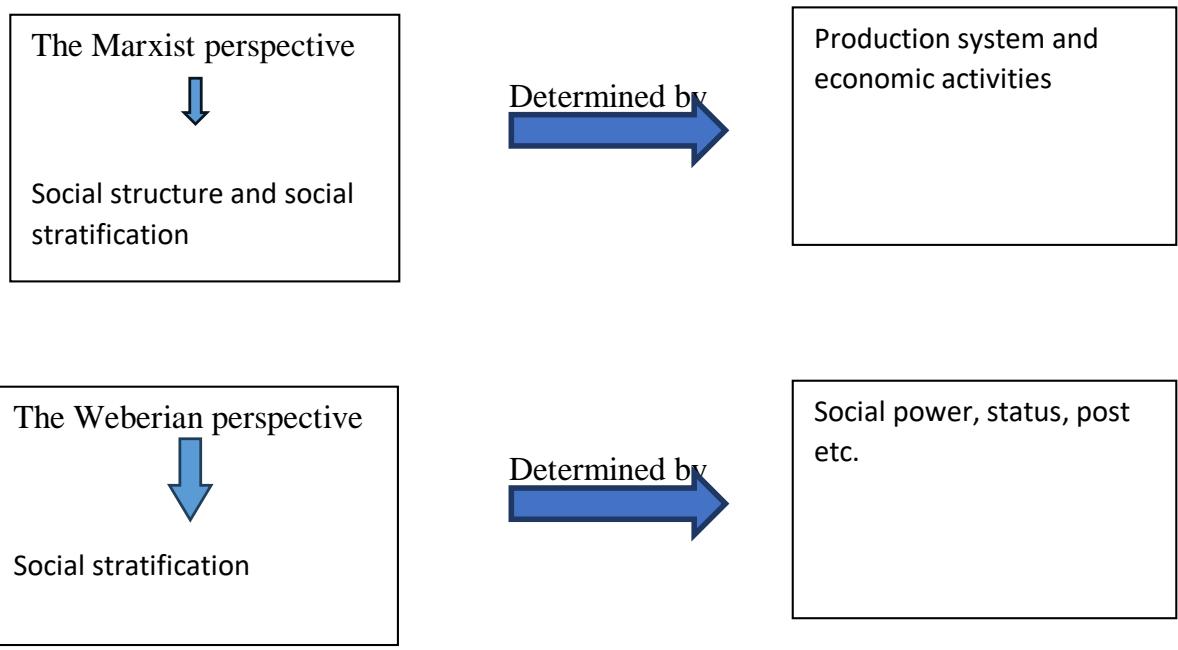 Figure 2: Theoretical Frame Work
The Marxist perspective, developed by Karl Marx and Friedrich Engels, emphasizes the primacy of economic factors in shaping social structure, laying the groundwork for societal disparities (Marx and Engels, 1848). The consciousness of human beings is always determined by his social existence and it is produced by the production system of social structure (Adhikari, 2020). Conversely, Max Weber's theory presents a more nuanced view, incorporating additional dimensions such as status and power as significant contributors to social inequality (Coser, 1996 and Tumin, 1953). In the context of this study in Nepal, both Marxist and Weberian theories play crucial roles. The Marxist perspective enables a critical examination of the economic foundations influencing the experiences of different segments of the Nepali population during the lockdown, unveiling patterns of resilience and vulnerability.
Simultaneously, the Weberian perspective introduces considerations of status and power, allowing for a nuanced exploration of how these elements and economic factors have influenced individuals' livelihoods during the pandemic. In the same vein, by synthesizing insights from both theoretical frameworks, this study unravels the intricate tapestry of stratified livelihood patterns in Nepal, shedding light on the diverse experiences and challenges different population segments face. This multifaceted approach aims to contribute valuable insights to the discourse on social inequality and inform policy and intervention strategies, fostering a more equitable and resilient societal structure in Nepal in the face of future disruptions.
## V. DATA ANALYSIS AND INTERPRETATION
### a) Impact of COVID-19 Lockdown and Stratified Livelihoods in Nepal
During the global health crisis, nations implemented diverse strategies, predominantly relying on lockdowns. Following suit, the Nepali government adopted this approach, considering it the most efficient means to contain COVID-19 spread, assuming that all citizens could withstand the lockdown regardless of available resources. However, this assumption was tested as the lockdown uncovered and exacerbated existing inequalities among various social classes in
Nepal, with privileged individuals accessing resources more readily than others.
### b) Celebration and Despair
The study unravels that in times of festivity, the preparation of various delicacies marks the celebration with loved ones. For the higher and upper-middle classes, the lockdown period transformed into a semblance of a festival, a time of culinary exploration and familial bonding. This is well illustrated by Case-5, a businessman, who found solace in spending time with family and indulging in daily feasts. However, this celebratory atmosphere starkly contrasts with the experiences of the lower class. Faced with depleted rations and financial constraints, many struggled to meet basic needs, as exemplified by Case-7, a daily wager, who expressed a heart-wrenching tale of despair, contemplating extreme measures in the face of adversity.
### c) Time Management Dilemma
The study further reveals that the initial phases of the lockdown brought respite from daily hassles, providing an unexpected vacation for many. However, as the lockdown extended beyond two months, boredom set in. Middle-class individuals, initially engaged in household activities and family bonding, found difficulty passing time, often resorting to social media and television. For instance, Case-3, a student, narrated the transition from initial enjoyment to a struggle with monotony, while Case-4, a cloth retailer, expressed a yearning for the end of lockdown due to growing lethargy. However, for daily wagers like Case-7, the struggle with time arose from the burden of family responsibilities and a scarcity of resources.
### d) Conflicting Circumstances
From our investigation, it was revealed that despite the government's assurance that individuals could venture out for necessities, conflicting scenarios emerged. The study further illustrates those numerous instances of police high-handedness, including punitive measures against those seeking medical necessities, painted a confusing picture. This raised a fundamental dilemma: Should individuals risk punitive actions for fulfilling essential needs, or should they comply with lockdown measures at the expense of their health and sustenance?
Furthermore, our enquire reveals that to comprehensively address these disparities and challenges, there is a need for targeted interventions and clear communication from the authorities. Efforts should be made to ensure that essential services and support reach the most vulnerable sections of society, and enforcement measures are applied judiciously. Additionally, a multi-sectoral approach involving community engagement can help in addressing the diverse needs and challenges faced by different social classes during such unprecedented times.
### e) Stressful Life
Stressful life events can trigger a crisis state, where individuals temporarily endure intense distress and feel overwhelmed or unable to cope effectively, seeking ways to alleviate discomfort or mitigate hazardous circumstances (Douglas et al., 2017) During periods of crisis, people from the working class are the ones who usually bear the brunt among them are the daily wageers, farmers. They must fend for themselves, with little or no help from the government (Gautam, 2020). Case 1 (Construction worker) said that he was working on the construction site and with the lockdown, their work has stopped. His family depended on his daily wage but now there is no source of income. Case 13 (student) said that he has been living in Kathmandu for study purposes. At the beginning of the lockdown, there was uncertainty regarding when the lockdown will end so with the hope that college will resume soon he couldn't go back to his hometown but now the lockdown time has been keeping on being extended, he doesn't work and depends upon his family's source of income but with lockdown, his family is not able to send him money and his landlord has been pressuring to give the rent. Now with no money left, it's even difficult to feed him. Case 4 (farmer) said that his family's income source was farming. With the lockdown whole ready-to-sell vegetables had rotten in the field. Farmers too have felt the impacts of the lockdown. With no proper place for marketing, vegetables worth crores are rotting. Agricultural products being only the source of income for the farmers, this lockdown has led to the decline of income sources for the farmers. All the money invested in agriculture with the hope of gaining profit has just been in vain which has increased more stress in the lives of farmers.
### f) Long Walk and Footpath Life
Thousands of Nepali people were working in urban areas of Nepal and the neighboring country of India. They have been trying to return only to born place. But there were no vehicles for transportation and the border was closed. Those people who have been compelled to walk barefoot to reach their home and those who couldn't walk way back home had no other option than to sleep on the footpath. Case 14 (daily wager) said it has been 40 years since he came to Kathmandu and started carrying heavy loads but it has never been this much difficult to survive before. He said he didn't have anything to eat the day before but today he was provided with beaten rice. With lockdown, there is no way he can work so he along with other daily wagers has no other option than to sleep on the footpath.
### g) Awaiting Relief Package Livelihood
The lockdown has endangered numerous lives, particularly those of vulnerable individuals who rely on daily earnings for sustenance, living hand-to-mouth. The implementation of relief packages for the impoverished indicated governmental support. However, reports emerged of financially secure individuals accessing these packages, while many genuinely needy individuals still awaited assistance. It is disheartening to discover that some people exploit opportunities for personal gain at the expense of others. For instance, Case 2 (an elderly widow) recounted being denied relief despite meeting the requirements, while younger individuals from seemingly affluent backgrounds were granted assistance.
### h) Crisis and Crimes on the Rise
A crisis is characterized by pronounced emotional upset, compromised social functioning, and concurrent feelings of confusion, anxiety, depression, and anger (Halpern, 1973). Amidst the lockdown, our study unveils that various entities have sought to exploit the situation for profit. The distribution of spoiled rice, black-marketing of essential goods, a rise in wildlife poaching, and an escalation in gender-based violence exemplify the heightened rate of criminal activities. Notably, Case 5 (daily wager) from our investigation underscores the increased prevalence of domestic violence during the lockdown.
### i) Pressure in Work
Again, the study showcases the immense pressure on front-line workers, such as doctors, nurses, and police, who are working relentlessly in infected areas. Images of exhausted police officers sleeping on the ground signify their strenuous schedules. Additionally, with the advent of remote work, our study uncovers that many individuals are facing pressure to remain online and productive, despite challenges such as internet connectivity and health concerns. Cases 8 and 9 (company staff) in our study exemplify the mental strain and financial pressures experienced by employees due to the work-from-home trend.
### j) Life as Usual
The study further exposes the pandemic's profound impact on daily lives, with individuals grappling with disruptions, stigmatization, and persistent infection fears. Illustratively, Case 11 (home quarantined person) sheds light on the stigma and isolation confronting those suspected of being infected, spotlighting the ostracization and confinement experienced by such individuals and their families. Likewise, narratives from Case 10 (student) and Case 13 (housewife) underline the pervasive anxiety and heightened precautionary measures adopted amidst escalating cases. These cases illuminate the widespread fear of infection, stringent hygiene practices, and resultant alterations in daily routines, highlighting the prevailing uncertainty about a return to normalcy. Therefore, as each day unfolds with increasing cases and expanding stigma towards infected individuals and healthcare workers, the study raises a pivotal question: When will life return to some semblance of normalcy? Post-lockdown, will individuals be able to resume work, engage in crowds, and send children to school, all without a residual fear of infection?
## VI. DISCUSSION OF FINDINGS
The findings derived from various case studies offer an intricate depiction of the multifaceted repercussions of the pandemic and associated lockdown measures on different segments of the Nepali population. The ramifications have been extensive, affecting daily wagers, students, farmers, frontline workers, and home-quarantined individuals, touching upon economic uncertainty, health concerns, societal behaviour, and disruptions to routine. One pivotal revelation is the acute stress and economic hardship endured by the working class, particularly those reliant on daily income. The halt in construction, deterioration of agricultural produce, and depletion of income sources depict an acute distress that highlights not only the immediate challenges of sustenance but also sheds light on long-term livelihood and financial stability implications. The intricate depiction of the multifaceted repercussions of the pandemic, as shown in the findings, corroborates the observations made by (Coser, 1996; Gautam, 2020; Ijomah et al., 2007; Neuman, 2007; Cooper & Green, 2016), who highlighted the profound impacts on economic stability and societal behaviour. The acute distress experienced by the working class aligns with the studies conducted by Eneyo et al. (2022) and Selby & Kagawa (2020), wherein the implications of a halted economy and its long-term effects on livelihood were significantly discussed.
A particularly poignant account emerges from the thousands of Nepali workers, including daily wagers, stranded due to closed borders and a lack of transportation. The stark imagery of individuals walking barefoot and sleeping on footpaths encapsulates the desperation and helplessness experienced by many. The study also unearths the challenges associated with the distribution of relief packages, revealing disparities and potential injustices in aid allocation. The narrative of an elderly widow, contrasted with financially stable individuals receiving aid, exemplifies the systemic gaps in relief measures implementation, prompting critical reflection on accountability and the ethical dimensions of resource distribution in crisis times.
Furthermore, the study exposes the darker aspects of human behaviors during crises, revealing an uptick in criminal activities and exploitation. The increase in gender-based violence, black-marketing, wildlife poaching, and the distribution of substandard essentials underscore the opportunistic tendencies exhibited by some societal sectors, including those wielding power. This finding accentuates the need for targeted interventions and support for vulnerable populations. Healthcare workers, police personnel, and other essential service providers are depicted bearing immense pressure, exemplifying the physical and mental toll of their relentless duty. Additionally, the shift to remote work presents a unique set of challenges, with company staff grappling with reduced salaries, connectivity issues, and maintaining productivity, contributing to overall mental pressure.
The findings also highlight the stigma and fear surrounding the virus, resulting in the ostracism of suspected individuals and their families, as well as heightened anxiety and precautionary measures adopted by the general public. These findings underscore the societal impact of the pandemic, prompting questions about its long-term psychological and social effects on community dynamics and interpersonal relationships. Interestingly, these findings are consistent with existing literature, emphasizing the multifaceted impacts of a pandemic. The economic hardships, stress, societal changes, disparities in aid distribution, and increased criminal activities mirror the findings of scholars such as Moseley (1998), Chaudhary & Mishra (2023). Gautam (2020), Halpern (1973), and Callahan (1998), further contributing to our understanding of human behavior and systemic challenges during crises.
Nevertheless, certain aspects diverge from specific existing studies, providing nuanced viewpoints that may challenge prevailing narratives concerning societal responses and the welfare of essential workers during crises as depicted in other scholarly literature. The insights gleaned from this study enrich our comprehension of the human experience in times of crisis, prompting contemplation on broader societal, ethical, and policy considerations. The convergence and divergences with existing research provide a valuable groundwork for informed dialogues, policy development, and future research initiatives as we navigate the path to recovery and the restoration of normalcy.
## VII. CONCLUSION
This study firmly concludes that the COVID-19 lockdown has profoundly disrupted the livelihoods of the Nepali population, placing them into various levels of hardship and privilege. Significantly, while some have perceived the period akin to a festive occasion, others have suffered from severe deprivation, enduring long journeys on foot, hunger, and feelings of helplessness. This stratification does not solely align with the theoretical frameworks proposed by Karl Marx and Max Weber, suggesting that factors such as ruling class, economy, and status are not the exclusive determinants of social stratification. The pandemic and its associated measures have introduced an additional layer, further diversifying the stratification of livelihoods, especially within the context of Nepal during the lockdown.
It is evident that the lockdown has worsened social inequalities between the affluent and less privileged classes, failing to address social divides but rather exacerbating them. The growing disparities highlight the underlying social injustice inherent in lockdown measures, underscoring the urgent necessity for alternative approaches that can narrow the gap between those with resources and those without, especially in anticipation of future pandemics. The continued reliance on lockdowns in response to potential pandemics is likely to perpetuate similar patterns of social stratification and inequality.
Furthermore, the research has revealed the crucial importance of environmental conservation in preventing global pandemics, as the emergence of the coronavirus is linked to environmental alterations. Human activities like rapid urbanization, mining, deforestation, and agriculture encroach upon natural habitats, leading to habitat loss and bringing various species into closer contact with human populations. This proximity, combined with human encroachment into wild areas, serves as a pathway for transmitting infectious diseases from wildlife to humans, resulting in zoonotic diseases with pandemic potential.
In the Global South, the correlation between environmental degradation and the occurrence of pandemics is especially notable, exacerbated by the displacement of millions annually due to climate-induced natural disasters. The emergence of COVID-19 has highlighted the environmental origins of such viruses and emphasized the urgent need for ecosystem and environmental preservation as a proactive measure to prevent similar global crises. While addressing the immediate economic impacts of the pandemic is crucial, it is equally imperative to concurrently focus on developing strategies to monitor, predict, and prevent future pandemics by comprehensively understanding global movements of people and goods.
The comparison and divergence of our findings with existing literature have played a crucial role in providing a nuanced understanding of the pandemic's complexities. This has not only enhanced our comprehension but also highlighted areas where our study offers fresh insights or challenges prevailing perspectives, thus setting the stage for future research and discourse. Consequently, based on these findings, it is recommended that governments, communities, and international organizations prioritize environmental conservation and embrace sustainable practices to reduce the risk of future pandemics. Recognizing the interconnectedness of environmental health and human well-being should serve as the foundation for policymaking and implementation. Moreover, efforts should be intensified to address social inequalities and ensure fair distribution of resources, particularly during crises, to prevent the perpetuation of disparities. Alternative approaches to lockdowns should be explored and assessed, taking into account their diverse impacts on different segments of the population. Furthermore, a global collaborative approach, emphasizing shared responsibility and cooperation, is essential for tackling the multifaceted challenges posed by pandemics and for building a resilient, fairer world.
## VIII. IMPLICATION
This research will be supportive to develop lockdown policies for various levels of government to effectively manage future pandemic situations in diverse sociocultural structures based on livelihood. It will serve as a valuable resource for agencies responsible for implementing pandemic-related policies and providing assistance to the community's vulnerable individuals.
Generating HTML Viewer...
References
50 Cites in Article
Shukra Adhikari (2020). Vedic Aryan Society and Pattern of Production System.
Shukra Adhikari,Bhawani Adhikari,Ganga Acharya,Samyog Dahal,Bijaya Adhikari,Tilak Sharma (2024). Glimpse of Ancient Social History through the Social Structure of The Mahabharata Period.
Kwaw Andam,Hyacinth Edeh,Victor Oboh,Karl Pauw,James Thurlow (2020). Estimating the economic costs of COVID-19 in Nigeria.
I Anderson (2020). It is time for nature: World Environment Day.
F Attah,A Agba,F Nkpoyen (2013). Carnival fiesta and socio-economic development of Calabar Metropolis, Nigeria.
(2017). Australian National Centre for Disease Control (CDC): AMA Position Statement.
O Awofeso,P Irabor (2020). Assessment of government response to socioeconomic impact of COVID-19 pandemic in Nigeria.
A Bayram,Todd Shields (2021). Who Trusts the WHO? Heuristics and Americans’ Trust in the World Health Organization During the COVID‐19 Pandemic.
Brian Beach,Karen Clay,Martin Saavedra (2022). The 1918 Influenza Pandemic and Its Lessons for COVID-19.
M Buheji,K Da Costa Cunha,G Beka,B Mavric,Y De Souza,S Da Costa Silva,M Hanafi,T Yein (2020). The extent of covid-19 pandemic socio-economic impact on global poverty. a global integrative multidisciplinary review.
J Callahan (1998). Crisis theory and crisis intervention in emergencies.
P Carmody,G Mccann,C Colleran,C O'halloran (2020). COVID-19 in the Global South.
A Chaudhary (2023). Impact Assessment of COVID-19 on Remittance Inflow; A Systematic Review in Case of Nepal.
A Cooper,C Green (2016). Embracing the complexities of 'big data'in archaeology: the case of the English Landscape and Identities Project.
L Coser (1996). Masters of Sociological Thought.
J Coyne,P Jennings (2020). After Covid-19: Australia and the World Rebuild.
Kingsley Davis,Wilbert Moore (2017). Some Principles of Stratification.
Bárbara Scandroglio,Jorge López Martínez (2011). The Sage Handbook of Qualitative Research, de Norman K. Denzin y Yvonna S. Lincoln, Eds..
Karen Douglas,Robbie Sutton,Aleksandra Cichocka (2017). The Psychology of Conspiracy Theories.
Lisa Elkington,David Hughes (2017). Australian Institute of Sport and Australian Medical Association position statement on concussion in sport.
Violet Eneyo,Demitrus Oba,Christopher Ochiche,Denis Essien,Agnes Antai (2021). Economic Impacts of Curfew Imposition on the Nightclub Industry in Calabar Metropolis, Nigeria.
D Gautam (2020). Stratified Livelihoods in Nepal a Sociological Analysis Global Journal of Human-Social Science ( H ) XXIV Issue IV Version I Year 2024 %20Crisis%20in%20Nepal_Coping%20Crackdown %20.
Howard Halpern (1973). Crisis theory: A definitional study.
K Hickok (2020). What is a pandemic? Reference article: Definition and examples of a pandemic.
W Ijomah,C Mcmahon,G Hammond,S Newman (2007). Development of robust design-for-remanufacturing guidelines to further the aims of sustainable development.
Crina Ionescu,Mihaela Iordache,Emilia Țițan (2021). The impact of digitization on economy in the context of the Coronavirus pandemic.
Rusi Jaspal,Moubadda Assi,Ismael Maatouk (2020). Potential impact of the COVID-19 pandemic on mental health outcomes in societies with economic and political instability: case of Lebanon.
K Marx,F Engels (1848). Manifesto of the communist party.
Nt Mishra,Sabya Das,Shalini Yadav,Wasim Khan,Mohd Afzal,Abdullah Alarifi,El-Refaie Kenawy,Mohammed Ansari,Md Hasnain,Amit Nayak (2020). RETRACTED: Global impacts of pre- and post-COVID-19 pandemic: Focus on socio-economic consequences.
D Morens,G Folkers,A Fauci (2009). What is a pandemic?.
P Moseley (1998). Stress reduction for family members of emergency room patients.
Eleanor Murray (2020). Epidemiology’s Time of Need: COVID-19 Calls for Epidemic-Related Economics.
L Neuman (2007). Social research methods.
Success Obi,Tijani Yunusa,Annе Еzеoguеri-Oyеwolе,Sheneni Sekpe,Ejura Egwemi,Amina Isiaka (2020). The Socio-Economic Impact of Covid-19 on The Economic Activities of Selected States in Nigeria.
Emily Pears,Emily Sydnor (2022). COVID-19 and the Culture of American Federalism.
G Ritzer (2017). Developing insights into contemporary con (pro) sumer culture based on classical ideas in social theory.
George Ritzer (2000). The Rise of Micro-Sociological Theory.
Tahmina Rodela,Samia Tasnim,Hoimonty Mazumder,Farah Faizah,Abida Sultana,Md Hossain (2020). Economic Impacts of Coronavirus Disease (COVID-19) in Developing Countries.
Jane Rowley,Naomi Richards,Emma Carduff,Merryn Gott (2021). The impact of poverty and deprivation at the end of life: a critical review.
D Selby,F Kagawa (2020). Climate change and coronavirus: A confluence of crises as learning moment.
Changwon Son,Sudeep Hegde,Alec Smith,Xiaomei Wang,Farzan Sasangohar (2020). Effects of COVID-19 on College Students’ Mental Health in the United States: Interview Survey Study.
Anna Triandafyllidou (2022). Spaces of Solidarity and Spaces of Exception: Migration and Membership During Pandemic Times.
M Tumin (1953). Some principles of stratification: A critical analysis.
J Turner,P Turner (1978). The structure of sociological theory.
J Van Prooijen,P Van Lange (2014). Power, politics, and paranoia: Why people are suspicious of their leaders.
C Walzer (2020). The COVID-19 pandemic has introduced us to a new word: zoonosis.
(2019). Taking a multisectoral one health approach: a tripartite guide to addressing zoonotic diseases in countries.
(2022). Operational tool to estimate the burden of other respiratory viruses.
M Zeeshan,A Sultana,S Anzak (2020). COVID-19 pandemic: implications of public health emergency on migration and repatriation in Pakistan.
Shukra Adhikari,Bhawani Adhikari,Ganga Acharya,A Mishra (2024). Impact of COVID-19 Lockdown: Stratified Livelihoods in Nepal a Sociological Analysis.
Explore published articles in an immersive Augmented Reality environment. Our platform converts research papers into interactive 3D books, allowing readers to view and interact with content using AR and VR compatible devices.
Your published article is automatically converted into a realistic 3D book. Flip through pages and read research papers in a more engaging and interactive format.
Our website is actively being updated, and changes may occur frequently. Please clear your browser cache if needed. For feedback or error reporting, please email [email protected]
Thank you for connecting with us. We will respond to you shortly.