This article discusses the impact of implementing a business simulator on the development of skills among students at the Open University ISCED in Mozambique, with the aim of fostering high-quality university education. The study aimed to evaluate the impact of the business simulator’s implementation on the development of students’ competencies, skills developed in the System of Business Practices and Entrepreneurship (SPEE) provided by the Institute of Technologies and Services and Innovation (ITIS), a partner of UnISCED. The study involved 124 students from the Human Resource Management and Business Management courses. Primary data were collected through online questionnaires (Google Forms), interviews conducted online via Google Meet, and the direct observation method through in loco monitoring during online sessions. The results indicate a positive perception among students regarding the simulator’s effectiveness in enhancing their practical and theoretical skills, despite technical difficulties encountered. The implications for higher education in Mozambique are discussed, along with the study’s limitations and suggestions for future research.
## I. INTRODUÇÃO
presente artigo, surge no contexto do Ensino Superior em Moçambique que tem experimentado um crescimento significativo nas últimas décadas, refletindo um esforço contínuo para melhorar a qualidade e a acessibilidade da educação superior. De acordo com o Instituto Nacional de Estatística (INE) de Moçambique, o número de instituições de ensino superior no país aumentou de 21 em 2005 para mais de 50 em 2020, abrangendo tanto universidades públicas quanto privadas (INE, 2021). Este crescimento tem sido acompanhado por um aumento no número de estudantes matriculados, que passou de aproximadamente 36.000 em 2005 para mais de 180.000 em 2020 (Banco Mundial, 2020).
UnISCED é uma instituição de ensino superior de classe A, de natureza privada, criada pelo Decreto nr.27/2021, de 06 de maio pelo Conselho de Ministros, com a sua sede na cidade da Beira, Província de Sofala e conta com mais de 9 anos na destacada experiência na educação virtual, promove um sólido programa de educação que permite os estudantes a frequentarem 2 programas (Licenciaturas e Mestrados) desenvolvidas na modalidade à distância em 24 áreas de conhecimentos.
No entanto, esse aumento no acesso ao ensino superior também trouxe desafios, especialmente no que diz respeito à qualidade da educação e à empregabilidade dos graduados. Estudos indicam que há uma disparidade significativa entre o conhecimento teórico adquirido pelos estudantes e as habilidades práticas exigidas pelo mercado de trabalho (Simango, 2019). Este descompasso é um fator crítico que contribui para as altas taxas de desemprego entre os graduados moçambicanos, que alcançavam cerca de $25\%$ em 2020 (INE, 2021).
Nesse contexto, a introdução de tecnologias educacionais inovadoras, como os simuladores empresariais, pode desempenhar um papel crucial na melhoria da qualidade do ensino e na preparação dos estudantes para o mercado de trabalho. Simuladores empresariais são plataformas interativas que permitem aos estudantes experimentar cenários empresariais realistas, tomar decisões gerenciais e observar as consequências de suas ações em um ambiente seguro e controlado (Faria et al., 2009). Esta metodologia de ensino é baseada nos princípios da aprendizagem experiencial, que enfatizam a importância da experiência prática no processo de aprendizagem (Kolb, 1984).
Portanto, a UnISCED utiliza nas suas actividades de ensino, as mais avançadas metodologias e tecnologias de ensino a distância orientadas para a educação sem fronteiras geográficas nem barreiras físicas e para fomentar uma formação universitária com qualidade, estabelece alianças com instituições e empresas, onde com o Instituto de Tecnologia, Serviços e Inovação introduziu um Sistema de Práticas Empresariais e Empreendedorismo - SPEE (simulação de cenários reais). Esta iniciativa visa desenvolver competências e habilidades práticas dos estudantes nos diversos cursos ministrados, preparando-os melhor para os desafios do mercado de trabalho. Este estudo avalia o impacto dessa implementação, investigando a eficácia do simulador empresarial no desenvolvimento de competências práticas e teóricas dos estudantes.
Quanto à metodologia, o estudo envolveu 124 estudantes dos cursos de Licenciaturas em Gestão de Recursos Humanos e de Gestão de Empresas que participaram do módulo de empreendedorismo utilizando o simulador. Os dados foram coletados por meio da aplicação de questionários por inquérito online através do Google forms, as entrevistas foram realizadas online, por meio de google meet e a técnica de observação indirecta foi realizada, através das avaliações dos ficheiros submetidos nas respectivas etapas/fases e do acompanhamento nas sessões online para esclarecimento das dúvidas relativas às actividades no simulador, abordando aspectos como o gênero, faixa etária, curso frequentado, ano de estudo, frequência e duração de uso do simulador, e a percepção dos estudantes sobre a facilidade de uso e a eficácia do simulador na compreensão dos conceitos teóricos e no desenvolvimento de habilidades práticas.
Os resultados deste estudo são fundamentais para entender como ferramentas inovadoras podem melhorar a qualidade do ensino superior em Moçambique. A análise dos dados coletados fornece insights valiosos sobre a aceitação e o impacto do simulador empresarial entre os estudantes, destacando suas percepções sobre as competências adquiridas e as dificuldades enfrentadas durante o uso da ferramenta.
Além disso, este estudo contribui para a literatura sobre métodos pedagógicos no ensino superior, oferecendo evidências empíricas sobre os benefícios e desafios da utilização de simuladores empresariais. As implicações dos resultados para a teoria e prática no ensino superior são exploradas, juntamente com as limitações do estudo e sugestões para futuras pesquisas.
Assim, este estudo não apenas avalia a eficácia de uma ferramenta específica, mas também serve como um ponto de referência para outras instituições de ensino que buscam incorporar tecnologias similares em seus currículos. Com base nos achados, espera-se fornecer recomendações práticas que possam melhorar a aplicação de simuladores empresariais e, consequentemente, elevar a qualidade da educação oferecida aos estudantes.
O uso de simuladores empresariais no ensino superior busca proporcionar aos estudantes uma experiência prática que complementa o conhecimento teórico adquirido em sala de aula. Este estudo analisa o impacto dessa ferramenta no desenvolvimento de competências dos estudantes da Universidade Aberta ISCED em Moçambique, abordando questões relacionadas ao gênero, faixa etária, curso, ano de frequência, frequência e duração de uso do simulador, bem como as percepções dos estudantes sobre a eficácia do simulador.
## II. REFERENCial TEÓrico
A utilização de simuladores empresariais no ensino superior é uma prática pedagógica que tem ganhado destaque nas últimas décadas. Simuladores empresariais são ferramentas interativas que replicam cenários empresariais reais, permitindo aos estudantes tomar decisões gerenciais em um ambiente controlado (Faria et al., 2009). Esta metodologia de ensino é baseada nos princípios da aprendizagem experiencial, que enfatizam a importância da experiência prática no processo de aprendizagem (Kolb, 1984).
Segundo Faria e Wellington (2004), os simuladores empresariais proporcionam um ambiente seguro onde os estudantes podem experimentar diferentes estratégias e observar os resultados de suas decisões sem correr riscos reais. Eles são particularmente eficazes no desenvolvimento de habilidades práticas, como tomada de decisão, resolução de problemas e planejamento estratégico (Anderson & Lawton, 2009).
A eficácia dos simuladores empresariais no ensino superior tem sido amplamente estudada. Em uma revisão da literatura, Pasin e Giroux (2011) concluíram que esses simuladores melhoram significativamente a retenção de conhecimento e a aplicação prática de conceitos teóricos. Além disso, um estudo de Mitchell (2004) demonstrou que estudantes que utilizam simuladores empresariais têm um desempenho melhor em avaliações de habilidades práticas do que aqueles que participam apenas de aulas teóricas.
A integração de simuladores empresariais no currículo também pode aumentar o engajamento dos estudantes. De acordo com Alon et al. (2012), a interatividade e a natureza competitiva dos simuladores mantêm os estudantes motivados e envolvidos no processo de aprendizagem. Isso é corroborado por estudos que mostram uma correlação positiva entre o uso de simuladores empresariais e a satisfação dos estudantes com o curso (Gosen & Washbush, 2004).
## III. PrOcEDIMENtOS METODOlÓgicos
Neste artigo, estudo é exploratório e com uma abordagem mista (qualitative e quantitativa). A observação indirecta foi possível obter dados sobre o ponto de situação sobre as competências adquiridas, conhecimento sobre funcionalidades do simulador, consolidação entre a teoria e a prática dos estudantes. As entrevistas foram realizadas para colher informações sobre as experiências no uso do simulador empresarial. Para este trabalho, foi usado os seguintes documentos: livros, artigos de revistas indexadas publicadas sobre o objecto em causa. O procedimento bibliográfico tomou como base o arrolamento das teorias variadas conceituadas na matéria de simuladores empresariais, competências práticas, qualidade de ensino. Os questionários foram aplicados nos estudantes sobre o impacto do simulador empresarial no desenvolvimento das competências digitais e práticas para os desafios no mercado de trabalho.
Para este artigo foi escolhida a amostra probabilística simples, trabalhando com 124 estudantes dos 3 anos, cursos de licenciatura em Gestão de Recursos Humanos e Gestão de Empresas.
A colecta de dados primários foi nos dias 20 a 24 de maio de 2024. Seguido de processamento e tabulação.
## IV. RESUlTADoS E DISCUSsÃo
Dos 124 participantes, $66,4\%$ são do sexo feminino e $33,6\%$ do sexo masculino. A faixa etária dos participantes distribui-se da seguinte forma: $40\%$ entre 33-40 anos, $27\%$ acima de 40 anos, $25 {, } 2\%$ entre 28-32 anos e $7\%$ entre 23-27 anos. Em relação ao curso frequentado, $60\%$ estão a frequentar o curso de Gestão de Recursos Humanos e $40\%$ em Gestão de Empresas. Quanto ao ano de frequência, $48,2\%$ estavam no $4 ^ { \circ }$ Ano $\Theta 51,8\%$ no $3 ^ { \circ }$ Ano.
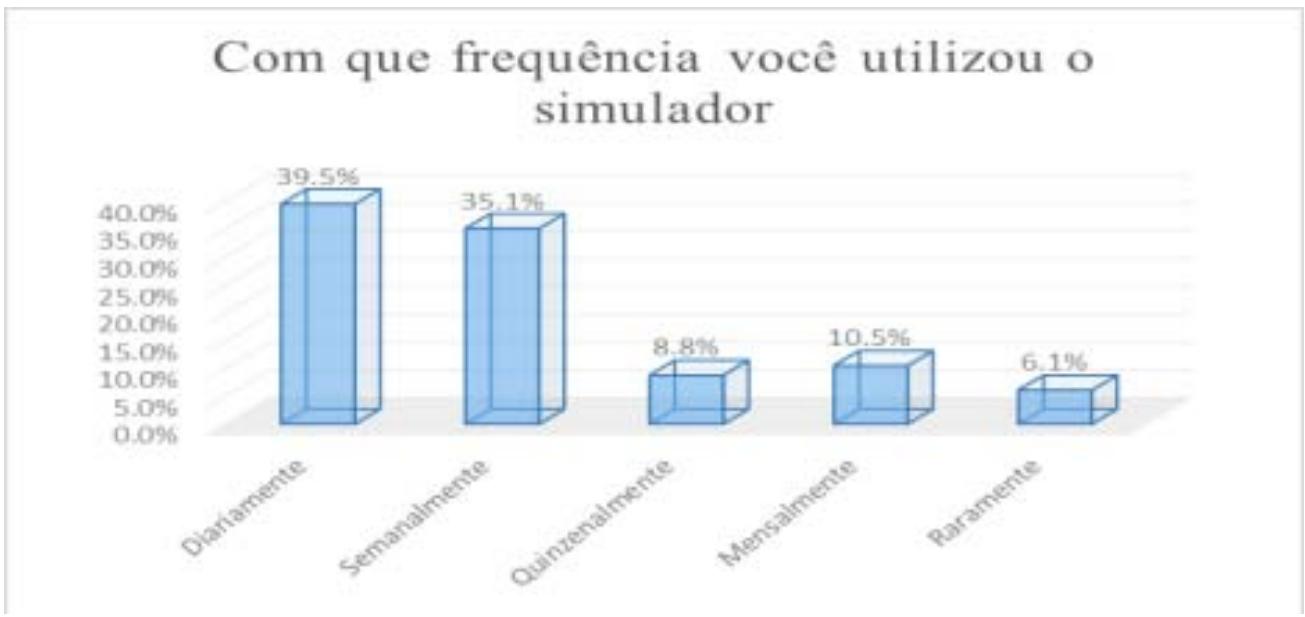
Fonte, autores (2024)
A utilização do simulador variou, com $39,5\%$ utilizando-o diariamente, $35,1\%$ semanalmente, $8,8\%$ quinzenalmente, $10\%$ mensalmente e $6,1\%$ raramente.
Em termos de duração, $68,1\%$ usaram o simulador por 1-3 meses, $14,7\%$ por menos de um mês, $9 {, } 5\%$ por 4-6 meses e $7\%$ por mais de 6 meses.
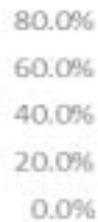
O simulador empresarial ajudou a entender melhor os conceitos teóricos ensinados em aula
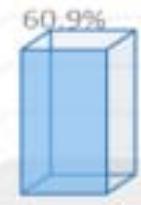 Panel label: Ajudou bastante.
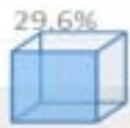 Panel label: Um pouco.
 Panel label: Nem tanto.

Nao sei dizer
Fonte, autores (2024)
Gráfico de conciliação de conceitos teóricos e práticos ensinados
Sobre a eficácia do simulador, $60\%$ afirmaram que ajudou bastante a entender os conceitos teóricos, $29,6\%$ que ajudou um pouco, $6,1\%$ que nem tanto e $3,5\%$ que não sabem dizer. No que tange à melhoria das habilidades práticas, $60\%$ responderam afirmativamente, $31,3\%$ disseram que melhorou algumas habilidades, enquanto $4,3\%$ afirmaram que não teve impacto significativo ou não tinham certeza.
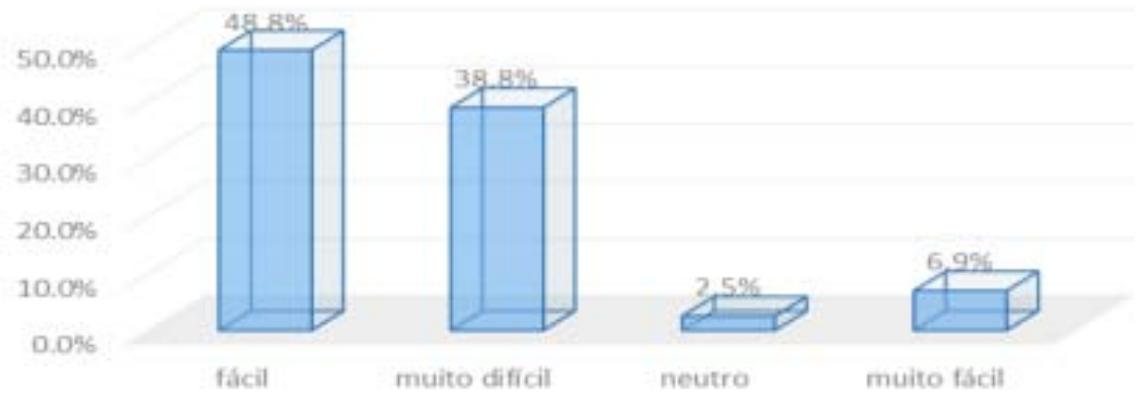
Quão fácil foi usar o simulador empresarial
Fonte, autores (2024)
Gráfico de Facilidade do uso do simulador
Quanto à facilidade de uso, $44,8\%$ consideraram fácil, $38,8\%$ difícil, $6 {, } 9\%$ muito difícil, $2,5\%$ neutro e $6 {, } 9\%$ muito fácil. A recomendação do simulador para outras universidades foi alta, com $90,5\%$ dos estudantes recomendando seu uso.
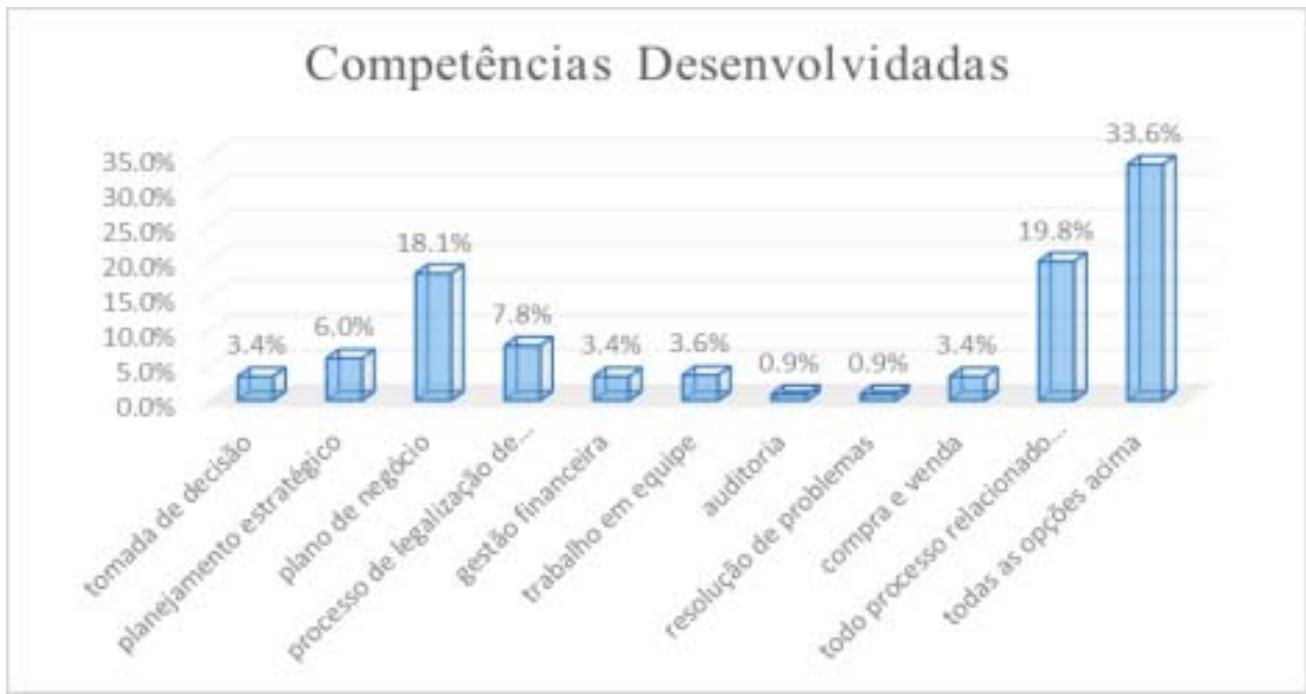
Fonte, autores (2024)
Gráfico de Competências Desenvolvidas
Em termos de competências desenvolvidas, $3,4\%$ responderam tomada de decisão, $6\%$ planejamento estratégico, $18,1\%$ plano de negócio, $7\%$ processo de legalização de empresas, $3,4\%$ gestão financeira, $3,6\%$ trabalho em equipe, $0 {, } 9\%$ auditoria, $0 {, } 9\%$ resolução de problemas, $3,4\%$ compra e venda, $19,8\%$ todo processo relacionado ao Recursos Humanos de uma empresa, e $33,6\%$ todas as opções acima. Relativamente à preparação para enfrentar desafios reais no mercado de trabalho, $31\%$ concordam plenamente, $60\%$ concordam, $6\%$ neutro e $2,6\%$ discordam.
As principais dificuldades apontadas foram a falta de familiaridade com a ferramenta $( 51,3\% )$, a complexidade dos cenários simulados $( 23,5\% )$ e 8,7% afirmaram que não encontraram nenhuma dificuldade.
### a) Entrevista
A entrevista foi realizada com 2 estudantes através da plataforma virtual Google meet sobre as suas experiências no uso do simulador empresarial, estes responderam nos seguintes termos.
- E1. "Para mim não foi fácil acessar ao simulador primeiramente tive muitas dificuldades foi pedindo explicação aos colegas que já haviam conseguido acessar o simulador e tutores acabei conseguindo é uma boa experiência e bem enquadrada o simulado facilita uma boa organização e uma boa gestão empresarial".
- E2. "Não foi fácil usar o simulador empresarial, mas deu para obter alguma informação como fazer uma boa gestão financeira do stock".
Pode-se notar nas respostas dos entrevistados que a priori houve dificuldade na imersão ao uso do simulador empresarial, mas depois conseguiram superar as dificuldades através da interação com os colegas e tutores através das sessões de esclarecimento de dúvidas organizadas semanalmente pelos tutores das disicplinas.
### b) Discussão
Os resultados indicam uma percepção positiva geral sobre o impacto do simulador empresarial no desenvolvimento de competências práticas e teóricas. A predominância de estudantes do sexo feminino $( 66,4\% )$ sugere uma maior adesão deste grupo à iniciativa. A faixa etária predominante (33-40 anos) pode refletir uma maior disposição ou necessidade de aprimoramento profissional nessa fase da vida.
A distribuição dos estudantes entre os cursos de Gestão de Recursos Humanos $( 60\% )$ e Gestão de Empresas $(40\% )$ destaca a relevância do simulador para ambos os cursos. A divisão quase igual entre estudantes do $3 ^ { \mathrm { o } } \in 4 ^ { \mathrm { o } }$ ano indica que o simulador foi utilizado por estudantes em diferentes estágios do curso, o que pode enriquecer a experiência de aprendizagem ao longo do programa.
A utilização frequente do simulador (diária e semanal) e a duração de uso (1-3 meses) mostram um engajamento significativo, crucial para o desenvolvimento de competências práticas. A percepção positiva sobre a ajuda do simulador na compreensão dos conceitos teóricos $( 60,9\%$ ajudou bastante) e na melhoria das habilidades práticas $60\%$ sim) corrobora a eficácia da ferramenta.
A facilidade de uso recebeu avaliações mistas, com $44,8\%$ considerando fácil e $38,8\%$ difícil, destacando a necessidade de melhorias na interface ou no suporte técnico. A recomendação elevada $( 90,5\% )$ para outras universidades indica uma aceitação geral da ferramenta.
## V. CONSIDERAÇÕeS FINAIS
A implementação do simulador empresarial na Universidade Aberta ISCED mostrou-se eficaz no desenvolvimento de competências práticas e teóricas dos estudantes. Apesar das dificuldades técnicas relatadas, a maioria dos estudantes percebeu uma melhoria significativa nas suas habilidades e recomendaria a ferramenta para outras instituições. Estes resultados destacam o potencial dos simuladores empresariais como uma ferramenta pedagógica valiosa no ensino superior em Moçambique.
Os resultados deste estudo sugerem que o uso de simuladores empresariais pode ser uma prática efetiva para o desenvolvimento de competências práticas e teóricas no ensino superior em Moçambique. A integração de ferramentas práticas como simuladores no currículo pode aumentar a preparação dos estudantes para enfrentar desafios reais no mercado de trabalho, potencialmente reduzindo a lacuna entre teoria e prática.
A grande limitação deste estudo é o foco em uma única instituição e a predominância de dois cursos, o que pode não representar a totalidade do ensino superior em Moçambique. Estudos futuros devem considerar uma amostra mais ampla e diversificada, incluindo diferentes instituições e cursos, para validar e expandir os achados. Além disso, a investigação de métodos para melhorar a facilidade de uso do simulador pode ser benéfica.
- 1.Alon, I., Cannon, N., & Mabey, C. (2012). Business simulations and cognitive learning: Developments, desires, and future directions. Simulation & Gaming, 43 (1), 103-112.
2. Anderson, P. H., & Lawton, L. (2009). Business simulations and cognitive learning developments, desires, and future directions. Simulation & Gaming, 40 (2), 193-216.
3. Banco Mundial. (2020). Mozambique - Education Statistics. Retrieved from World Bank.
4. Faria, A. J., Hutchinson, D., Wellington, W. J., & Gold, S. (2009). Developments in Business Gaming: A Review of the Past 40 Years. Simulation & Gaming, 40 (4), 464-487.
5. Instituto Nacional de Estatística (INE). (2021). Estatísticas do Ensino Superior. Retrieved from INE Mozambique.
- Kolb, D. A. (1984). Experiential Learning: Experience as the Source of Learning and Development. Englewood Cliffs, NJ: Prentice-Hall.
7. Simango, S. (2019). Challenges in Higher Education in Mozambique: A Case Study. International Journal of Education Development in Africa, 5 (1), 43-55.
Generating HTML Viewer...
References
7 Cites in Article
I Alon,N Cannon,C Mabey (2012). Business simulations and cognitive learning: Developments, desires, and future directions.
P Anderson,L Lawton (2009). Business simulations and cognitive learning developments, desires, and future directions.
(2020). Informe Anual 2020 del Banco Mundial.
A Faria,David Hutchinson,William Wellington,Steven Gold (2009). Developments in Business Gaming.
(2021). XII SEMANA DE ENFERMAGEM DO INSTITUTO DE ENSINO SUPERIOR DO SUL DO MARANHÃO - IESMA/UNISULMA.
D Kolb (1984). Experiential Learning: Experience as the Source of Learning and Development.
S Simango (2019). Challenges in Higher Education in Mozambique: A Case Study.
No ethics committee approval was required for this article type.
Data Availability
Not applicable for this article.
How to Cite This Article
Adalberto Paulino Falso Armindo. 2026. \u201cImpact of the Implementation of the Business Simulator on the Skills Development of UnISCED Students\u201d. Global Journal of Management and Business Research - A: Administration & Management GJMBR A Volume 25 (GJMBR Volume 25 Issue A3): .
Explore published articles in an immersive Augmented Reality environment. Our platform converts research papers into interactive 3D books, allowing readers to view and interact with content using AR and VR compatible devices.
Your published article is automatically converted into a realistic 3D book. Flip through pages and read research papers in a more engaging and interactive format.
This article discusses the impact of implementing a business simulator on the development of skills among students at the Open University ISCED in Mozambique, with the aim of fostering high-quality university education. The study aimed to evaluate the impact of the business simulator’s implementation on the development of students’ competencies, skills developed in the System of Business Practices and Entrepreneurship (SPEE) provided by the Institute of Technologies and Services and Innovation (ITIS), a partner of UnISCED. The study involved 124 students from the Human Resource Management and Business Management courses. Primary data were collected through online questionnaires (Google Forms), interviews conducted online via Google Meet, and the direct observation method through in loco monitoring during online sessions. The results indicate a positive perception among students regarding the simulator’s effectiveness in enhancing their practical and theoretical skills, despite technical difficulties encountered. The implications for higher education in Mozambique are discussed, along with the study’s limitations and suggestions for future research.
Our website is actively being updated, and changes may occur frequently. Please clear your browser cache if needed. For feedback or error reporting, please email [email protected]
Thank you for connecting with us. We will respond to you shortly.