This article investigates the impacts of the EducaSim platform on teaching routines, analyzing its influence on school management, usability, and technological acceptance. The research employed a qualitative approach, based on questionnaires applied to teachers from Polo 1 of the João Pessoa Municipal Education Network, Paraíba, Brazil. The results showed that EducaSim promoted advances in the organization and centralization of school data, optimizing administrative and pedagogical tasks. However, challenges such as technical failures, insufficient support, lack of continuous training, and increased teacher workload were highlighted as limitations to the platform’s effectiveness. Despite these issues, the tool is widely perceived as innovative and essential for modernizing school management. The article concludes that overcoming these challenges requires investments in technological infrastructure, agile technical support, and continuous user training. With such improvements, EducaSim could establish itself as a reference model in educational management, promoting greater efficiency, digital equity, and quality in Brazilian public education.
Funding
No external funding was declared for this work.
Conflict of Interest
The authors declare no conflict of interest.
Ethical Approval
No ethics committee approval was required for this article type.
Data Availability
Not applicable for this article.
Erycka Thereza Cavalcante Chaves Oliveira. 2026. \u201cImpacts of the EducaSim School Management Platform on Teacher Routines in João Pessoa, Paraíba, Brazil\u201d. Global Journal of Human-Social Science - G: Linguistics & Education GJHSS-G Volume 25 (GJHSS Volume 25 Issue G1): .
## I. INTRODUCTION
The rapid technological evolution has significantly transformed school management processes, integrating digital platforms as central tools for organizing and administering pedagogical activities, and has profoundly changed how educational institutions manage their operations. According to Teixeira (2023, p. 42), in the 1970s in Brazil, "a discussion began on strategies to integrate Digital Information and Communication Technologies (DICT) into schools." Thus, the first signs of computing in education began to emerge. However, it was only in the 1980s that these technologies were effectively incorporated into the educational context, becoming fundamental to modernizing school management (Figure 1).
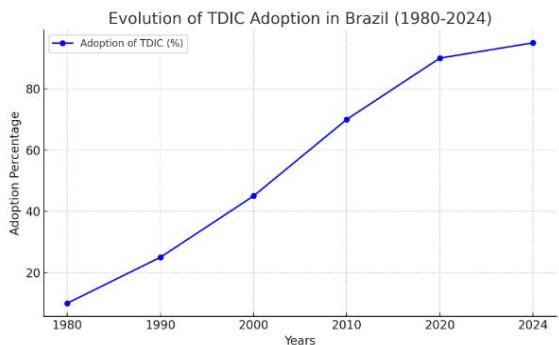
Figure 1: Evolution.
DICT in the educational environment reflects the technological advancements of recent decades. School management has become more dynamic. Sales and Kenski (2021) discuss aspects involving technologies and innovation, primarily in the educational field, creating quality environments to enhance various forms of learning, whether among teachers or between teachers and students. This progress has been driven by emerging virtual environments, henceforth referred to as digital educational platforms.
The term "platform" corresponds to the integration of various systems, protocols, networks, etc., combining different sociotechnical networks connected by technologies, people, economic mechanisms, and sociocultural structures (Poell, Nieborg, & Dijck, 2020). This union of layers that form our society is interconnected through means and resources that assist in daily tasks, improving communication and information flows, which rapidly circulate to build or alienate knowledge.
Amidst this change, our research was based on the EducaSim digital school management platform—a management system implemented by the Department of Information and Communication Technology (DTIC) of the Municipal Education Network in João Pessoa, the capital of Paraíba, northeastern Brazil. According to Lima Junior (2019, p. 2), introducing a digital platform as a school management system "becomes an asset [...] for advancing productivity in the bureaucratic activities of school administrations." It is understood that school management encompasses both pedagogical and administrative purposes.
It is evident that the digitalization of management in the school environment brings significant benefits to organizing teachers' work but also presents new challenges, such as workload increase, technical difficulties, and the need to adapt to the new digital format.
This article investigates the impacts of the EducaSim platform on teachers' routines, analyzing the sociotechnical networks formed by the interaction between teachers, managers, and technology, the platform's usability and technological acceptance by the study participants, and their perceptions of the tool and the challenges faced.
Methodologically, we employed a qualitative approach with descriptive and exploratory purposes, as well as bibliographic and field procedures (Gil, 2019; Marconi & Lakatos, 2003). A semi-structured questionnaire was used as a data collection instrument, distributed to teachers via Google Forms and analyzed using the Likert Scale (1932).
## II. THEORETICAL-METHODOLOGICAL PATHS
The qualitative approach employed in the research, according to Creswell and Creswell (2021), is a proposal that requires careful reflection on the role the researcher plays in the study. A clear definition of the qualitative approach can be found in Minayo (2010):
Qualitative research focuses on a level of reality that cannot be quantified. It works with the universe of meanings, motives, aspirations, beliefs, values, and attitudes, corresponding to a deeper space of relationships, processes, and phenomena that cannot be reduced to the operationalization of variables.
When employing exploratory, descriptive, and explanatory methods, Gil (2019) outlines the following directions: a) Exploratory studies aim to develop, clarify, and modify concepts and ideas to formulate more precise problems or hypotheses for future studies.
b) Descriptive research aims to describe the characteristics of a given population or phenomenon or establish relationships between variables.
c) Explanatory studies seek to make sense of, guide, and deepen the understanding of a particular phenomenon and aim to identify factors that determine or contribute to its occurrence.
Regarding methodological procedures, bibliographic and field research were adopted. Lakatos (2021) explains that bibliographic research provides the researcher with insights into a topic, considering what has already been explored. Minayo (2007) defines the study site as the geographical area where the research is conducted, i.e., the location where the researcher collects data. The study site was the Municipal Education Department of João Pessoa, involving teachers from lower secondary education in Polo 1. The João Pessoa Municipal Education Network comprises 101 elementary and full-time schools, divided into nine clusters. Polo 1 consists of 13 schools.
As a data collection instrument, a semistructured questionnaire was made available to teachers via Google Forms from August to November 2024. The organization of the responses utilized the Likert Scale, categorizing them according to their similarities to better compose the discussion. This method of constructing a qualitative dialogue, based on the establishment of categorization, involved building relationships between basic units, combining and classifying them to understand how these unitary elements could be grouped into more complex sets (Moraes, 2021).
According to Antonialli, Antonialli, and Antonialli (2016), the Likert Scale is a widely used rating scale where respondents are asked to indicate their level of agreement/disagreement with a given statement. A numerical weight is assigned, where 1 corresponds to "very dissatisfied/disagree" and 5 to "very satisfied/agree." The intermediate value (3) corresponds to "neither dissatisfied nor satisfied" or "neither agree nor disagree" (Table 1).
Table 1: EducaSim Platform Survey
<table><tr><td>#</td><td>Question</td></tr><tr><td>1</td><td>On a scale of 1 to 5, where 1 is not important and 5 is very important, how satisfied are you with performing online activities?</td></tr><tr><td>2</td><td>How do you prefer to perform teaching routine activities? (1: physical journal, 5: digital platform).</td></tr><tr><td>3</td><td>Is the EducaSim platform easy to use?</td></tr><tr><td>4</td><td>Does using the EducaSim platform optimize your teaching work time?</td></tr><tr><td>5</td><td>Can you find and access the features you need on EducaSim (website or app)?</td></tr><tr><td>6</td><td>Are the navigation features (menus, icons, links, and buttons) clear and easy to locate?</td></tr><tr><td>7</td><td>Is your interaction with the EducaSim platform intuitive?</td></tr><tr><td>8</td><td>Do you feel secure using EducaSim for managing educational and administrative information?</td></tr><tr><td>9</td><td>Are there step-by-step instructions or guides on using the platform?</td></tr><tr><td>10</td><td>Was the training provided adequate for using EducaSim?</td></tr><tr><td>11</td><td>Are there external factors affecting your teaching routine when using EducaSim? (e.g., salary issues, time investment, rework).</td></tr><tr><td>12</td><td>Do you check updates, notifications, announcements, and deadlines posted on EducaSim?</td></tr><tr><td>13</td><td>Have you encountered errors or failures while checking grades, attendance, or records on EducaSim?</td></tr><tr><td>14</td><td>If yes, who helped solve your problem?</td></tr><tr><td>15</td><td>Is there user support for reporting errors on EducaSim?</td></tr><tr><td>16</td><td>On a scale of 1 to 5, how difficult is it for you to use the EducaSim platform?</td></tr><tr><td>17</td><td>Can you send feedback (messages) to the platform or app?</td></tr><tr><td>18</td><td>What do you think about the navigation and usability of the app? (1: Poor, 5: Excellent).</td></tr><tr><td>19</td><td>How would you describe your experience with EducaSim?</td></tr><tr><td>20</td><td>Please share your opinions and suggestions for improving EducaSim.</td></tr></table>
The inclusion criteria were: teachers working in Polo 1, using the EducaSim platform, and having at least one year of experience with the platform. The research was submitted to the Research Ethics Committee for Human Subjects of the Medical Sciences Center at the Federal University of Paraíba and was approved under Opinion Number: 6.970.617, on July 29, 2024.
## III. DIGITAL PLATFORMS
Carlos d'Andrea's studies (2020) historically trace the term "Platform" through other authors and, after deconstructing relational concepts introduced in 2010, treat the platform as the medium through which the interests of various fields are intertwined, such as commercial interests, computational choices, political stances, and economic and sociocultural mechanisms.
The concepts of platforms in digital environments are presented considering their plurality of applications across different societal domains. Authors Poell, Nieborg, and Dijck (2020, p. 4) explain:
We define platforms as (re)programmable digital infrastructures that facilitate and shape personalized interactions between end-users and complementors, organized through systematic data collection, algorithmic processing, monetization, and data circulation.
The primary goal of platforms is to generate value in relationships between people and provide greater ease of use, whether for personal or professional purposes. Their use is increasingly intense, aiming to assist in management activities, processing, and delivering results.
Before the internet, interactions and transactions were predominantly local, constrained by geography and the availability of physical resources. From telegrams to instant messaging, movies in theaters or DVDs to streaming platforms, physical games to virtual realities, taxis to Uber, and neighborhood interactions to dating websites and apps—digital platforms have revolutionized the way people conduct their lives.
The way contemporary society interacts with technology and participates in democratic actions prompts a reflection on the internet and the role cyberspace plays. Dijck (2022) compares the process of platformization to a "tree" resembling a dynamic system with multifaceted transformations in globalized societies.
This process parallels industrialization but now occurs in the presence of algorithms.
According to Silva and Couto (2022), digital platforms are network systems and protocols that aggregate various actors, both human and non-human. They are understood as a living force actively participating in events, as they are intrinsically linked to changes in social interactions, as shown in Figure 2.
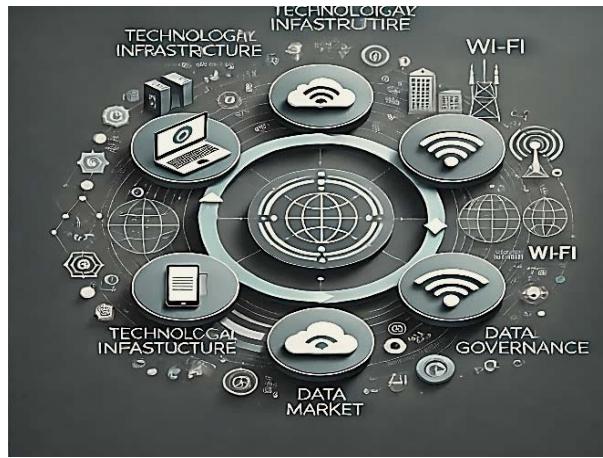
Figure 2: Platforms Connected by Various Devices and Networks.
Source:Author'sOwnWork,2024.
We must not lose sight of the dimensions that sustain digital platforms: technological infrastructure, data markets, and governance (Poell, Nieborg, & Dijck, 2020), as illustrated in Figure 1. Let us consider: within a digital platform, we find various infrastructures. For example, on UOL, we observe ads, public and private sections, diverse information, cookies, user logins, tabs for products, horoscopes, calendars, local weather, social media links, and much more. In this sense, digital infrastructures are an aggregation of technologies available on the network that configure platforms.
Regarding the data market, or "datafying" our daily and basic activities, digital platforms embed themselves into our routines, generating data that enable companies to better understand their customers and, consequently, make decisions on aspects like product creation and strategy. The data market, known as datafication, involves the deployment of devices and defining the routes through which data flows. It aligns with the translation of the world into data, as expressed by Abreu and Nicolau (2017, p. 137): "Data has always been the fuel of advertising markets and the language of consumption." We are being surveilled. According to Lott and Cianconi (2018), platforms leverage this to identify and recognize countless behavioral criteria. Foucault (1987) discussed surveillance even before the advent of digital platforms.
Platform governance refers to the policies, norms, guidelines, and protocols activated by controlling companies to deliver and moderate network content. From a market perspective, large corporations have transformed business practices worldwide. As Abreu and Nicolau (2017) predicted, this shapes the reality in which we live, molding our social, political, and economic lives, both within and beyond digital environments.
Within digital platforms, data security is a critical component. Governance involves organizing systems through policies and practices behind each action, regulated by terms of use. These terms help algorithms decide which content to engage with specific profiles based on the data we provide.
Various sectors have embraced the digital medium. However, even before this global surge, emerging virtual environments were gaining ground in education, with the inclusion of other digital platforms to facilitate information exchange and collaborative teaching, such as Google Drive, Google Classroom, Padlet, Canva, WhatsApp, YouTube, among others.
Thus, the process of reinventing oneself amidst adversity, which teachers routinely face in their classrooms, reflects the intertwined networks we currently live in, connecting networks and the actors involved.
In education, it is essential to develop micronetworks for teaching, learning, and continuous training, recognizing the need for educators to stay updated and skilled to fulfill their roles in the current context of education—a complex society immersed in virtual environments.
In light of this, 21st-century public policies, according to Heinsfeld and Pischetola (2019, p. 3), are based on the perception that technological tools relate to both how humans use tools and how they apply knowledge to control and adapt to their environment. Public policies governing the current educational scenario are not isolated discourses; instead, they result from an active social dynamic intertwined with tools.
## IV. SOCIOTECHNICAL NETWORKS, USABILITY, AND TECHNOLOGICAL ACCEPTANCE
The term "sociotechnical" is derived from the words "social" and "technical," indicating the combination of human and technological factors in a specific environment. Sociotechnical networks do not focus solely on technology or people but on the dynamic interaction between both, considering how people shape technology and how technology affects human behavior and social relationships. From this perspective, the formation of the social emerges from the complexity of the actors involved in each scenario or network.
In the studies of Medeiros and Ventura (2018), the authors correlate the structures of sociotechnical networks, based on Castell (1999) and Latour (2012), who describe the term as something beyond human beings, where social modifications emerge alongside technologies and subsequently return to them as one of the possibilities for transformation, always open to new components.
Latour's studies (2012) support the perception of evolution, allowing contemporary society to question and interpret the intertwined social and material aspects within organizations and individual behaviors. When applied to an organization, each actor has a potential role, and from the sociomaterial perspective—integrating human and non-human agents—this perspective examines their roles in organizational practices.
Regarding usability, Jakob Nielsen's heuristic (1994) can be mentioned as a metric, something easy and practical to handle, a tool that is simple to use. This definition, applied by Nielsen and Loranger (2007), underpins Nielsen's 10 Heuristics, which are not rigid rules but guidelines that help designers and developers create more intuitive, accessible, and user-friendly products (Figure 3).
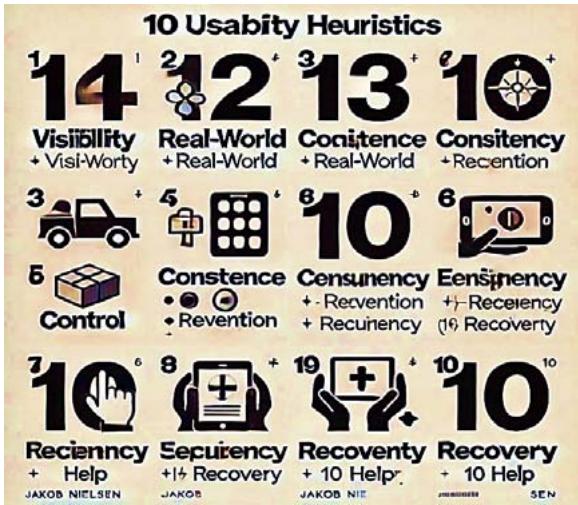
Source:Author'sOwnWork,2024. Figure 3: Nielsen's 10 Heuristics.
When we refer to a "flexible framework," in this case within the context of Nielsen's heuristics, we are discussing a set of interface design principles that are adaptable and can be applied across a wide variety of design scenarios, regardless of the system, platform, or technology used. It provides general guidelines that promote structures for good usability.
With technological advancements over recent decades, the Technology Acceptance Model (TAM) proposed by Davis (1989) highlights how users accept or reject a particular technology. That is, any technology will only be effective when users adopt it as a concrete measure of its efficiency.
Based on TAM, it is suggested that perceived usefulness and perceived ease of use are key determinants for the acceptance of a technology (Figure 4).
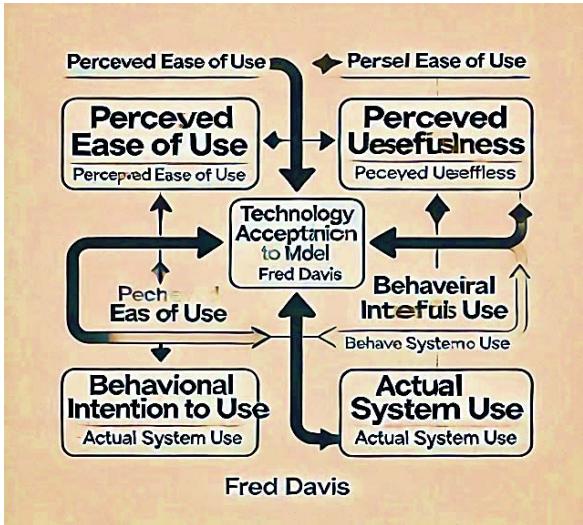
Source:Author'sOwnWork,2024. Figure 4: Davis's Technology Acceptance Model.
Perceived Usefulness: The user's belief that a specific technology enhances their performance or facilitates the achievement of their goals.
Perceived Ease of Use: The degree to which the technology is perceived as easy to learn and use.
Attitude Toward Use: The user's positive or negative opinion or feeling about using the technology.
Intention to Use: The user's predisposition to use the technology in the future.
Actual Use: The real adoption of the technology in daily activities, which is influenced by the previous stages.
These stages are interconnected, forming a cycle of acceptance. Furthermore, the model can be complemented by external factors such as technical support, training, and individual characteristics.
## V. EDUCASIM: EDUCATIONAL MANAGEMENT PLATFORM
The EducaSim platform is the management system implemented by the DTIC (Department of Information and Communication Technology) of the Municipal Education Network. It stores all daily school information (PMJP, 2022). The platform offers a range of features to facilitate school management and promote the improvement of educational quality, with its main purpose being the digitalization of all educational and administrative dimensions of over 100 public schools in João Pessoa.
From 2012 to 2022, the technological movement in João Pessoa's education system was carried out through targeted actions by managers and secretaries who sought to promote the use of technologies in educational activities. In the process of digitalizing João Pessoa's schools, the initial step was the digital recording of attendance registers, first through spreadsheets and reports sent to the Department of Education, and later via online school management systems.
Implemented in 2022 by PONTO ID, a company specializing in the development and commercialization of technological solutions with educational software, the EducaSim platform came into effect in the PMJP (João Pessoa City Hall) after a bidding process, with the company being selected. Alongside DTIC, PONTO ID provided remote training for the teachers in the network to mediate the use of the platform, which proved to manage a significant portion of administrative services and interactive pedagogical activities inside and outside the classroom. These include attendance recording, grading, lesson planning, human resources, enrollments, and other modules.
Thus, we will explore the interface of the EducaSim platform, both for the website and mobile applications, available for Android and iOS (Figures 5 and 6).
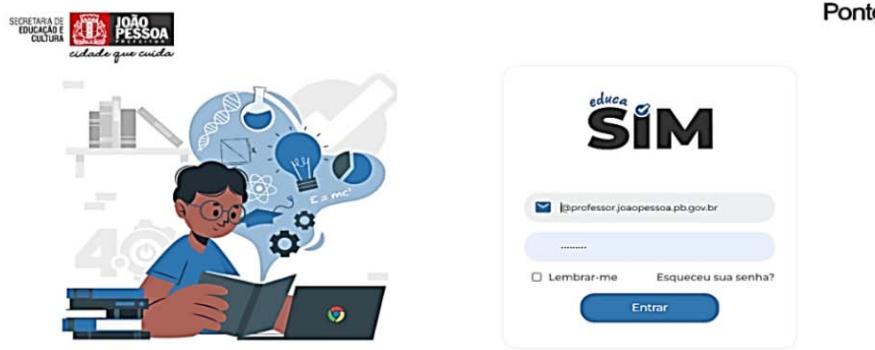
Source: Public Portal - EducaSim PMJP, 2023. Figure 5: Website Access Screen for the EducaSim Platform.
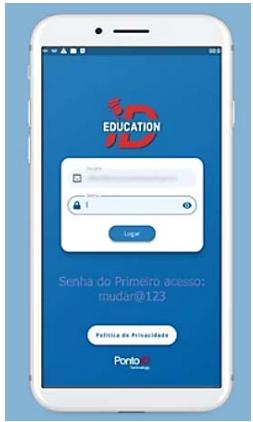
Source: Public Portal - EducaSim PMJP, 2023. Figure 6: Access Profile for the Education Ponto ID App, Available for Android and iOS.
Access to the platform, whether through the website or the app, is done via individual login credentials, using an institutional email provided by DTIC for each staff member, including teachers, school supervisors, administrative or pedagogical managers, and/or technical administrative staff. Upon logging into the platform, users perform activities according to the modules enabled for their specific roles and responsibilities.
In the EducaSim platform, part of the system is integrated to simplify usability for users and categorize them by type (e.g., teacher, student, parent/guardian, manager, etc.), granting each user access permissions according to their role within the platform.
According to PONTO ID (2023), the system currently includes 22 modules, offering various pedagogical, school management, and administrative features. Some of the modules available to teachers include: Digital School Facial Attendance; School Unit Secretariat Management; Online Enrollment; Pedagogical Management; Library; Online Help Desk; and Electronic Time Management, among others.
## VI. RESULTS AND DISCUSSION
The results indicated that the EducaSim platform plays a fundamental role in creating sociotechnical networks in school management. The interaction between teachers, managers, and the DTIC proved to be essential for the operationalization of the platform's functionalities (Figure 7).
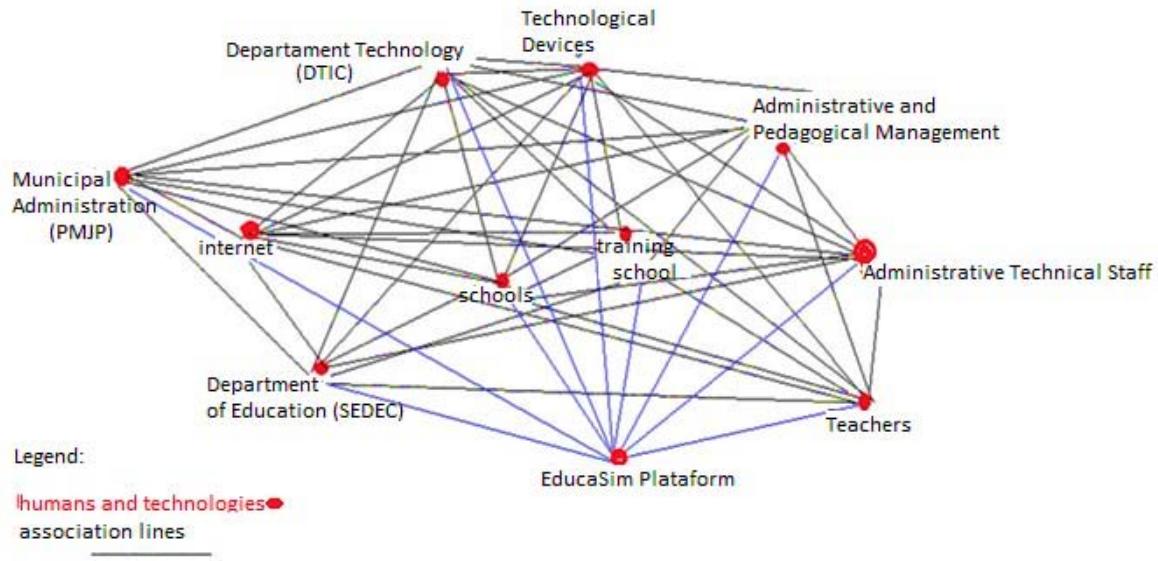
Figure 7: Sociotechnical Networks in School Management.
The analysis revealed that the EducaSim platform plays a central role in forming sociotechnical networks in school management. Teachers and managers highlighted the ease of access to administrative and pedagogical information, although challenges related to technological adaptation and technical support were identified.
- Human Interactions: Teachers reported greater efficiency in accessing school information and records.
- Technological Integration: The platform consolidated data and administrative processes into a single system, promoting transparency and agility.
- Identified Challenges: Technical difficulties, such as system failures and the lack of immediate support, emphasized the need for improvements in technical support.
The interconnection between actors (both human and non-human) is fundamentally important in constructing social knowledge, shaping the ways in which individuals develop their perceptions and share them within the collective.
Regarding usability, the following discussions are highlighted in Graph 1:
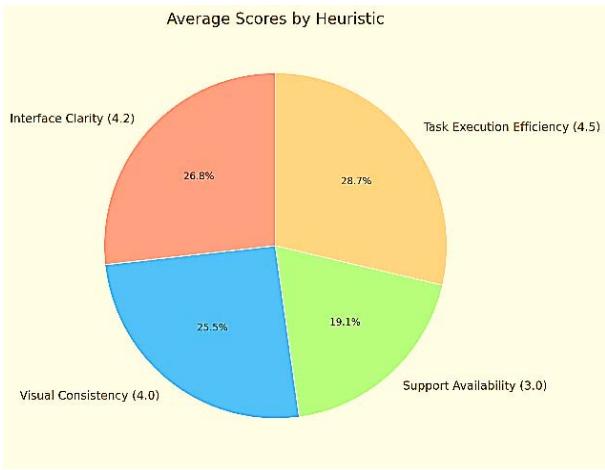
Graph 1: Average Scores by Heuristic.
Source: Research Data, 2024.
a) Strengths of the Platform
1. Clarity of Interface (4.2): A high score suggests that the interface is generally clear and easy to navigate. Users likely found the design intuitive, with minimal confusion when interacting with the system. Minor improvements could further enhance the user experience, but interface clarity is already a strong point.
2. Visual Consistency (4.0): A solid score indicates that visual elements (colors, fonts, layouts) were consistent and coherent. However, there is room for refinement. Ensuring even greater uniformity in visual design could elevate user satisfaction and reinforce the platform's branding.
3. Support Availability (3.0): The lowest score suggests that users found support availability or accessibility insufficient. They may have faced delays or difficulties in finding help when needed. Improving support mechanisms, such as offering faster responses or more accessible resources, should be a priority.
4. Efficiency in Task Execution (4.5): The highest score demonstrates that the system is very effective for completing simple tasks. Users likely appreciated the speed and ease of execution. While this area is a strong point, extending this efficiency to more complex or advanced tasks would be valuable.
b) Technological Acceptance and Usage Patterns
- Ease of Use: About $31.1\%$ of respondents agreed that the platform is easy to use, while $23\%$ were neutral. This indicates that the majority are convinced of the platform's usability, though some expressed doubts about whether there might be easier alternatives.
- Frequency of Use: A significant $71.1\%$ of participants reported using the platform multiple times a day due to teaching demands such as student attendance, content delivery, and activity management for formative and summative grades.
- Work Time Optimization: While $27.4\%$ of respondents reported good time optimization, $20.7\%$ were neutral, and $23\%$ disagreed, feeling that the platform offered little time optimization. External factors like salary issues and the presence of redundant tasks were noted by $25.9\%$ of respondents, with $26.7\%$ remaining neutral.
### c) Perceptions of EducaSim
EducaSim is widely regarded as an innovative tool for school management, offering functionalities that optimize pedagogical and administrative activities. The most frequently cited positive aspects include:
- Improved Data Organization: Teachers and managers highlighted that the system centralizes information such as attendance, grades, and enrollments, reducing dependency on physical documents and facilitating data access.
- Operational Efficiency: Many teachers noted that the platform saves time on repetitive tasks like grade calculations and report generation, particularly in frequently used modules.
- Partial Ease of Use: While some users mentioned an initial learning curve, the interface was praised for its simplicity and clarity in handling daily tasks.
- Accessibility: The platform is accessible on both mobile devices and computers, allowing flexibility for school-related activities beyond the physical school environment.
### d) Challenges Identified
Despite its positive aspects, the implementation and use of EducaSim present challenges that may limit its effectiveness:
1. Lack of Continuous Training: Many teachers reported receiving insufficient initial training and no regular capacity-building sessions to deepen their understanding or explore advanced functionalities.
2. Frequent Technical Issues: System failures, such as slow performance, disconnections, or temporary data loss, were highlighted as factors increasing user frustration.
3. Dependence on Technological Infrastructure: In some schools, the lack of stable internet or adequate devices hinders full platform usage, particularly in more peripheral regions.
4. Adaptation Curve: Teachers with lower technological familiarity faced initial difficulties in understanding the interface and navigating modules, increasing their initial resistance to using the platform.
5. Work Overload: The inclusion of new administrative tasks via the platform was perceived as an increased workload for some teachers, especially those struggling to balance pedagogical and administrative responsibilities.
The research highlights many other intriguing insights, but this article presents a focused analysis of the broader study. EducaSim proves to be an innovative and effective tool for school management, albeit with clear areas for improvement. Addressing the identified challenges, particularly in training, technical support, and infrastructure, will be crucial for maximizing the platform's potential and further enhancing its role in transforming school management practices.
## VII. FINAL CONSIDERATIONS
EducaSim emerges as a technological solution with great potential to transform educational management by promoting the centralization and efficiency of school data and process management. Its implementation represents a significant advance in modernizing administrative and pedagogical practices, enabling managers and teachers to access necessary information more quickly and accurately for decision-making.
Among its positive aspects are the improvement in organizing school data, the optimization of administrative tasks, and the tool's accessibility, which facilitates usage both inside and outside the school environment. These benefits, combined with its intuitive interface, reinforce EducaSim's role as an innovative agent in the educational context. However, the challenges faced by users cannot be overlooked. Teacher workload, the lack of agile and efficient technical support, recurring technical failures, and the absence of continuous training highlight limitations that must be addressed. Moreover, the platform's success heavily depends on the technological infrastructure available in schools, exposing structural inequalities that still prevail in some regions.
To fully realize EducaSim's potential, strategic actions must be implemented to overcome these limitations. These include:
1. Continuous and Inclusive Training: Regular training tailored to the varying needs of users, ensuring all teachers, regardless of their technological proficiency, are equipped to use the tool effectively.
2. Platform Enhancements: Investments in technical improvements, such as greater system stability and more robust functionalities, could significantly reduce reported operational difficulties.
3. Uniform Technological Infrastructure: Ensuring connectivity and access to adequate devices in all schools is essential for democratizing the platform's usage.
4. Agile Technical Support Team: Establishing support channels ready to assist users promptly, preventing technical issues from impacting daily work.
Additionally, expanding EducaSim's functionality to include customized solutions, such as analytical reports to support strategic decision-making and integration with other educational platforms, would strengthen its utility. Such enhancements could position the platform as a national reference model in educational management.
Future Research Directions for EducaSim: 1. Advanced Usability Conduct studies to explore how different users (teachers, administrators, parents, and students) interact with the platform, identifying improvements for advanced functionalities;
2. Emerging Technologies Investigate integration with Artificial Intelligence, Machine Learning, and Virtual Reality to enhance learning analytics, administrative management, and teaching methods;
3. Teacher Adaptation Analyze over time how teachers adapt to the platform, considering their needs, satisfaction, and demands for technical support and training;
4. Sociotechnical Networks Examine how EducaSim influences relationships between human actors (teachers, students, managers) and non-human elements (technologies, policies), contributing to integrated networks;
5. User-Centered Design Organize workshops with users to identify improvements that enhance the platform's effectiveness and user satisfaction.
These research directions aim to refine EducaSim, ensuring its relevance and impact in the educational context. EducaSim has the potential to be more than just an operational tool: it can become a catalyst for transformation in the educational system, fostering greater efficiency, digital inclusion, and, most importantly, the strengthening of educational quality. Achieving this requires the alignment of efforts among managers, teachers, and technology professionals in a collective commitment to innovation and equity in the school environment. With proper planning and a focus on practical solutions, EducaSim can establish itself as a milestone in the history of Brazilian public education.
This article investigates the impacts of the EducaSim platform on teaching routines, analyzing its influence on school management, usability, and technological acceptance. The research employed a qualitative approach, based on questionnaires applied to teachers from Polo 1 of the João Pessoa Municipal Education Network, Paraíba, Brazil. The results showed that EducaSim promoted advances in the organization and centralization of school data, optimizing administrative and pedagogical tasks. However, challenges such as technical failures, insufficient support, lack of continuous training, and increased teacher workload were highlighted as limitations to the platform’s effectiveness. Despite these issues, the tool is widely perceived as innovative and essential for modernizing school management. The article concludes that overcoming these challenges requires investments in technological infrastructure, agile technical support, and continuous user training. With such improvements, EducaSim could establish itself as a reference model in educational management, promoting greater efficiency, digital equity, and quality in Brazilian public education.
Our website is actively being updated, and changes may occur frequently. Please clear your browser cache if needed. For feedback or error reporting, please email [email protected]
×
This Page is Under Development
We are currently updating this article page for a better experience.
Thank you for connecting with us. We will respond to you shortly.