## I. FREE NURSES FROM IDEOLOGICALLY DRIVEN HARSH WORKING CONDITIONS
This article reviews evidence on two key components of nursing night shifts (and other professional night shifts): exposure to ambient light and staff breaks.
Today, some hospitals impose working conditions on nurses that reflect similar struggles. For instance, certain mental health facilities in Ontario enforce a "Zero Restraint Policy," presenting it as a progressive approach but, in reality, pushing staff into physical altercations with patients. [1] Another troubling example is the insistence on 24/7 bright lighting in nursing stations under the appearance of an "open-for-business" concept. This approach treats nursing stations like 24-hour fast-food outlets, aimed at waking up and attracting uninteresting "customers". The constant bright lighting disrupts the nurses' and patients' natural body clocks.
Furthermore, the lack of appropriate spaces for naps during breaks represents unnecessary cruelty. In most mental health departments across Ontario, nurses' break areas are inadequately equipped for genuine rest.
Nurses working 12-hour shifts often cannot access suitable spaces for short, restorative naps, leaving them physically and mentally drained. These conditions compromise their ability to provide safe, effective care.
Such rules lack a basis in evidence or science. Instead, they seem ideologically motivated, often to achieve goals unrelated to patient care. Some managers may enforce these practices to project an image of "strong leadership," relying on unnecessary cruelty to boost their reputation. These are a clear example of ideology-driven regulations replacing evidence-based practices.
## II. CIRCADIAN RHYTHM, MELATONIN, CORTISOL, AND BODY TEMPERATURE
The circadian rhythm is the body's natural clock, aligning alertness and sleepiness with the 24-hour light-dark cycle. Two hormones, melatonin and cortisol, play central roles in this process.
Melatonin increases in response to darkness, starting around 9-10 p.m., peaking at 3-4 a.m., and declining between 7-9 a.m. It remains undetectable during daylight hours. [2] Body temperature follows a similar pattern, peaking in the evening and dropping to its lowest point between 2-4 a.m., then gradually rising before waking. This evening temperature drop helps prepare the body for sleep. [3] Nurses often feel cold during this time and may need extra layers to stay warm.
Cortisol, produced by the adrenal glands, follows an opposite pattern. It rises before waking and falls in the late evening, remaining low throughout the night. Cortisol plays a key role in regulating immunity, pain, concentration, stress response, blood pressure, blood sugar, mood, bone health, and memory. [4]
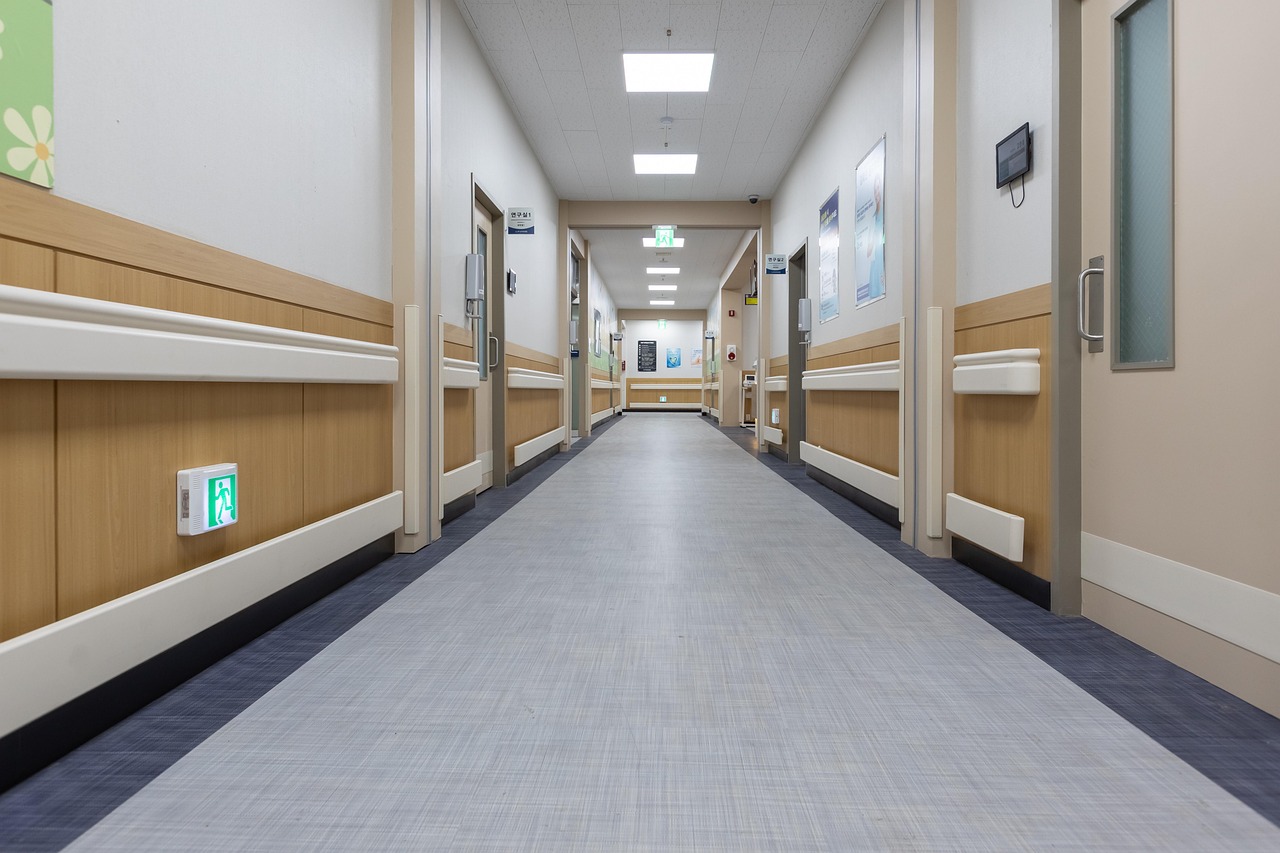
Human biology has led many hospitals to design environments that support patients' circadian rhythms, such as dimming lights in hallways and nursing stations at night. However, some hospitals disregard these practices, maintaining full lighting in areas like hallways and nursing stations, which disrupts the natural rhythms of staff and patients.
## III. LIGHTING DURING NIGHT SHIFTS - HEALTH AND PERFORMANCE
Most mental health departments allow some separation between the darkness of patient rooms and the brighter hallways. However, bright lights in nursing stations disrupt melatonin production and circadian rhythms for both staff and patients. Frequent staff movement, such as hourly checks or, worse, the outdated practice of 15-30-minute patient checks still used in some places [5], exacerbates this issue by introducing light and noise into patient rooms, further compromising recovery.
Studies reveal that light decreases norepinephrine and acetylcholine while increasing cortisol, serotonin, GABA, and dopamine. While light is a powerful tool, using it unnaturally outside therapeutic goals can have severe consequences.
Research shows that nurses' sleepiness levels peak around 5:00 a.m. [6]. To address this, some suggest using bright light during night shifts. This approach suppresses melatonin production and increases cortisol levels. However, it may negatively impact the well-being of both patients and staff.
Proponents argue that keeping nurses alert with bright lights is more important than preserving circadian rhythms. This is despite the long-term risks associated with Shift Work Sleep Disorder (SWSD). SWSD is further aggravated by rotating schedules, such as Ontario's common "two-day, two-night, five-days-off" model. It can result in poor concentration, headaches, fatigue, errors, substance use disorders, irritability, and mood disturbances. [7]
A 2018 ICU study revealed that while bright light improved alertness, it also caused an increase in nursing errors. [8] On the other hand, a 2022 study in a 430-bed hospital in Japan examined sleepiness and multiple performance parameters. Unlike the ICU study, it found that darkness did not impair nurses' work performance. Instead, maintaining dark work environments protected staff health, reduced turnover, and ensured patient safety. The study showed that bright lights (300 lux or more) suppress melatonin within 1-2 hours, while even 120 lux has similar effects with prolonged exposure. [9] The study's hospital continues to implement dark environments, and some other facilities are beginning to adopt this approach.
To the writer's knowledge, lighting at or below 120 lux-specifically designed to preserve patient recovery and staff health- has not yet been implemented in Ontario hospitals. Instead, despite clear evidence, many facilities still use excessive lighting.
In science, as in science, nothing is black and white. A small yet interesting study from Taiwan, using a control group, found that nurses exposed to bright light (7,000 to 10,000 lux) for more than 30 minutes during the early part of their night shift experienced reduced sleepiness. This is not surprising.
What is noteworthy, however, is that the study demonstrated that nurses who used sunglasses and avoided sunlight during the day could prevent symptoms associated with SWsD. Although the study focused on slightly different symptoms- such as the Insomnia Severity Index and Hospital Anxiety and Depression Scale- there is overlap, making the findings worth considering. [10]
Thus, it might be possible to trick nurses' circadian rhythms and avoid negative health consequences even during rotating shifts. Yet, achieving this regimen would require strict daytime adaptations, such as wearing sunglasses and creating dark environments, which are challenging to implement. Furthermore, this approach does not protect patients' circadian rhythms from disruption. Therefore, this solution seems highly impractical.
## IV. BREAKS
What strategies can be implemented, beyond dimmed ambient lighting, to help nurses maintain low levels of sleepiness, reduce the risk of mistakes, and enhance their ability to provide safe and high-quality patient care effectively?
The Joint Commission, a nonprofit organization that accredits healthcare organizations in the United States, offers clear guidance: "The only way to counteract the severe consequences of sleepiness is to sleep" (pg. 2). It emphasizes napping as a practical and integral part of a comprehensive fatigue management plan. [11] Similarly, Accreditation Canada, which accredits healthcare organizations in Canada, has an equivalent role in promoting best practices for healthcare environments.
A significant study in Rio de Janeiro, Brazil, surveyed 1,940 nurses from 18 public hospitals between 2010 and 2011. The research evaluated the adverse outcomes of 12-hour night shifts, such as sleepiness, reduced performance, and increased risk of injuries or occupational accidents. The study analyzed the impact of napping during shifts on nurses' ability to recover and maintain job performance, as well as the effects on their overall health and quality of life. Work naps were defined as sleep periods equal to or less than $50\%$ of a person's regular sleep duration.
The research discovered that female nurses, who formed the majority of the participants, often lacked sufficient recovery time during the day due to family and household responsibilities. While nurses were allowed to sleep during breaks, about half reported not sleeping at all, while the other half slept between 2.1 and 3 hours. Interestingly, those who napped for 2.1 to 3 hours demonstrated significantly better recovery rates than those who slept for less than 2.1 hours, and even slightly better those who slept for more than 3 hours. This "golden window" of 2.1 to 3 hours proved crucial for balancing personal recovery and maintaining job performance.
To facilitate breaks, nurses in Rio de Janeiro often divided into two groups, covering each other from midnight to 3:00 a.m. and 3:00 a.m. to 6:00 a.m. Although this practice was based on a "tacit agreement" with management rather than formal regulations, the study found that many hospitals lacked appropriate facilities to support restorative naps.
The Main Conclusion of this Study is Clear: If hospitals aim to achieve high-quality nursing care, they must regulate 2.1- to 3-hour napping breaks and establish proper facilities for these naps. [12]
Another finding of this research is its ability to humanize nurses, moving beyond seeing them as a "workforce" and recognizing them as individuals. For instance, one can imagine Rosalie, a mother of two young children aged 5 and 7, with nine years of nursing experience. During an exhausting 12-hour night shift, Rosalie is tasked with facilitating several patient transfers in and out of her acute care department while managing multiple calls from the shift manager regarding delays. The constant bright light in her nursing station elevates her cortisol levels, further impairing her already restless and fatigued thinking. At 5:00 a.m., she misreads a doctor's order and administers the wrong medication to a patient. On her way home, she runs a red light but narrowly avoids an accident. Exhausted and shaken, she arrives home but still must get her children ready for school, meet an air conditioning technician, and squeeze in an hour or two of sleep before starting the cycle again for her next night shift. How would Rosalie function on her next shift at 5:00 a.m.? Would you want to be her patient at that time?
The United States Centers for Disease Control and Prevention (CDC) explicitly recommends "a night-shift nap of 2 to 3 hours" for nurses to maintain alertness during 12- to 16-hour night shifts and to function effectively during subsequent day shifts. [13]
A 2013 Canadian study explored obstacles to regulating nursing sleep breaks. The study surveyed 47 acute care nurse managers across Canada, many of whom had personal experience with night shifts. Most managers recognized the adverse effects of sleep deprivation on staff and patients, including fatigue-related incidents. While the majority supported regulated sleep breaks, they anticipated resistance from upper management. Some concerns included staff coverage during breaks, potential inattention to patients, inadequate emergency response, and difficulty waking up after breaks. [14]
Remarkably, earlier research conducted by the same group of investigators found little evidence to support these concerns. Frontline nurses were observed to take breaks responsibly, ensuring that experienced staff remained on duty and that team leaders assessed patient needs before allowing anyone to rest. In practice, breaks were often impossible, and all emergencies were appropriately managed. [15]
## V. SITUATION IN ONTARIO
There is no research in Ontario comparable to the Brazilian study described above. Based on the writer's 21 years of full-time nursing experience across six different Ontario hospitals, as well as familiarity with others, Ontario nurses share a similar arrangement to those in Rio de Janeiro. They also work mostly 12-hour shifts with 1.5 hours of official breaks but, similarly to Rio, have 2.5 to 3.5 hours of "tacit agreement" nap breaks, depending on the hospital. These breaks are often taken in various locations- such as storage rooms, offices, or change rooms - typically insufficiently equipped for napping.
Typically, the charge nurse on the shift organizes these breaks based on an informal sense of fairness and adjusts them according to patient conditions. Staff are often called back from breaks, when necessary, usually for emergencies such as codes, high-acuity situations, or significant patient movement.
Occasionally, a "manager from hell", as nurses describe them, appears in hospitals. These managers tend to micromanage, often monitoring breaks closely and enforcing the official 1.5-hour limit, disrupting the established tacit agreement. In response, some staff leave for other jobs, while others remain, suffering quietly. They are often aware that such managers rarely last long in their roles.
Micromanagement significantly decreases motivation, increases non-care-related tasks, drastically reduces the time available for patient care, and often triggers a cascade of issues, including lateral violence among nurses.
Ultimately, these conditions can lead to medical errors, adverse patient events, fatalities, and damage to the hospital's reputation in the public eye. In the end, such developments typically result in the dismissal of the manager and sometimes the director. Experienced nurses familiar with this cycle often choose to wait it out, hoping that the next manager, appointed after an unfortunate event, will be more reasonable and allow them to exercise their professional judgment in the best interests of their patients while providing support for their work.
The examples of lighting and breaks discussed in this article are just two of many unscientific practices in our hospitals that create inefficiencies, put staff at risk, and compromise patient recovery. The best way to prevent this is to ensure that every policy is directly connected to tangible patient and staff outcomes. This approach will ensure that only science-based policies prevail.
## VI. CALL FOR ACTION
### a) Recommendation to Accreditation Canada
To ensure the best patient care and experience, Accreditation Canada should include the following Required Organizational Practices (ROPs) as criteria for granting hospital accreditation:
#### 1. Circadian Rhythm-Adaptable Patient and Staff Areas
Patient and staff areas should be designed to align with circadian rhythms. Lighting should be dimmed to below 120 lux, ensuring safety through environmental modifications such as specialized floor lighting. Every effort should be made to reduce light exposure overnight: all unnecessary screens must be turned off, and staff should use backlit keyboards where possible. If staff require stronger lighting for patient care or to manage their drowsiness, proper separation should be established between intense light areas and other spaces in the department. Overnight lighting should be treated as a hazard.
New ROP: Minimization of light hazards during night time.
#### 2. Extended and Supported Breaks for Nurses
Hospitals must increase nurses' breaks from the current official 1.5 hours to 2.5 or 3 hours, making the existing "tacit agreement" an official policy. These extended breaks should be paid for and supported by providing quiet, dark, and comfortable spaces for napping.
New ROP: A hospital ensures the provision of at least 2.5 hours of nursing breaks in an appropriate environment for napping.
### b) Recommendation to Hospital Councils under the Excellent Care for All Act
The evidence-based principles of the Excellent Care for All Act require the minimization of light exposure for both staff and patients, as well as a minimum of 2.5 hours of nursing breaks in appropriate environments. It would be a violation of corporate responsibility to implement ideologically driven policies harmful to patients and staff while ignoring clear evidence supporting health and well-being. Achieving these changes requires little to no additional resources.
#### 1. Maintaining Existing Practices
If a hospital cannot formalize a new collective agreement granting nurses 2.5-hour night breaks, it can still maintain the existing tacit agreement through informal communication. Hospitals should also identify and avoid hiring or retaining "managers from hell" who micromanage staff, disrupting these informal but practical arrangements. Simple reviews and improvements to potential napping spaces can also lead to significant benefits.
#### 2. Implementing Cost-Effective Solutions
Hospitals can adopt simple, inexpensive solutions to minimize overnight lighting, such as table lamps and dimmers.
## V. CONCLUSION
Hospitals should prioritize the real people they treat and employ, addressing their genuine biological needs. Let science- not ideology- guide hospital policies and practices.
Final Statement: The only truly effective way to remain a productive staff member around 5:00 am while protecting both staff and patient circadian rhythms is to keep lighting as dim as possible and either have just completed a powerful nap break or be in the middle of one.
Generating HTML Viewer...
References
15 Cites in Article
B Bard (2023). The impact of mechanical vs. physical restraints: A call for awareness.
J Arendt (1998). Melatonin and the pineal gland: influence on mammalian seasonal and circadian physiology.
Saba Naz,S Shafiq,M Albreiki,M (2024). Interaction between melatonin, sleepiness-alertness, and body temperature.
Madhumita Premkumar,Tarulata Sable,Dinesh Dhanwal,Richa Dewan (2012). Circadian Levels of Serum Melatonin and Cortisol in relation to Changes in Mood, Sleep, and Neurocognitive Performance, Spanning a Year of Residence in Antarctica.
B Bard,E Macmullin,J Williamson (2021). Morrison-Valfre's Foundations of Mental Health Care in Canada.
Ali Kaplan,Cevriye Ozdemir,Emre Bulbul (2024). Nurses’ level of sleepiness during night shift.
Cleveland Clinic (2025). Sleepiness: Excessive, Shift Work Sleep Disorder (SWSD).
John Griepentrog,Hanna Labiner,Scott Gunn,Matthew Rosengart (2018). Bright environmental light improves the sleepiness of nightshift ICU nurses.
Hokuto Hoshi,Hajime Iwasa,Aya Goto,Seiji Yasumura (2022). Effects of working environments with minimum night lighting on night-shift nurses’ fatigue and sleep, and patient safety.
Li-Bi Huang,Mei-Chu Tsai,Ching-Yen Chen,Shih-Chieh Hsu (2013). The Effectiveness of Light/Dark Exposure to Treat Insomnia in Female Nurses Undertaking Shift Work during the Evening/Night Shift.
(2011). The Joint Commission sentinel event alert: Health care worker fatigue and patient safety.
T Palermo,L Rotenberg,R Zeitoune,A Silva-Costa,E Souto,R Griep (2015). Napping during the night shift and recovery after work among hospital nurses.
(2020). NIOSH training for nurses on shift work and long work hours..
M Edwards,D Mcmillan,W Fallis (2013). Napping during breaks on night shifts: Critical care nurse managers' perceptions.
Wendy Fallis,Diana Mcmillan,Marie Edwards (2011). Napping During Night Shift: Practices, Preferences, and Perceptions of Critical Care and Emergency Department Nurses.
No ethics committee approval was required for this article type.
Data Availability
Not applicable for this article.
How to Cite This Article
Boris Bard. 2026. \u201cImproving Nursing Night Shifts: The Importance of Low Light and Proper Breaks\u201d. Global Journal of Management and Business Research - A: Administration & Management GJMBR A Volume 25 (GJMBR Volume 25 Issue A1): .
Explore published articles in an immersive Augmented Reality environment. Our platform converts research papers into interactive 3D books, allowing readers to view and interact with content using AR and VR compatible devices.
Your published article is automatically converted into a realistic 3D book. Flip through pages and read research papers in a more engaging and interactive format.
Our website is actively being updated, and changes may occur frequently. Please clear your browser cache if needed. For feedback or error reporting, please email [email protected]
Thank you for connecting with us. We will respond to you shortly.