This article aimed to analyze the reality and changes in child labor in Brazil during the period of the pandemic caused by the COVID-19 and how the state dealt with this fact led to an increase in inequality and social difficulties in the country resulting in the current situation. As well as understanding what are the possible ways to reduce this practice, increasing the rights of these children and adolescents and improving their experience. According to UNICEF (United Nations Children’s Fund), globally, 8.9 million children and adolescents are at risk of being pushed into child labor by the end of 2022, thus, the ways to fight the virus used by the government may have failed with this class. As the Brazilian Federal Constitution of 1988 places it as the duty of the state, society and the family, to ensure health, education, and freedom, in addition, to protect them from any form of exploitation, cruelty, neglect, and oppression, therefore, this type of work should be decreasing rather than increasing.
## I. INTRODUCTION
To facilitate the understanding of the topic "Increased child labor in Brazil in the pandemic" that will be debated during the research, it is necessary to understand what child labor and the coronavirus pandemic are. According to the International Labor Organization (ILO), the term "child labor" is defined as "work that deprives children of their childhood, their potential, and their dignity, and which is harmful to their physical and mental development" (ILO, 1990). Thus, there are several movements for the protection of these people, both from organizations and the government itself, such as articles in the Brazilian Federal Constitution of 1988, which seek to define and apply the protection of children and adolescents, aiming to deprive them of this practice and protect their rights and integrity, taking article 227 as an example (ILO, n.d apud BRASIL, 1990):
Art. 227: It is the duty of the family, society, and the State to ensure children and adolescents, with absolute priority, the right to life, health, food, education, leisure, professionalization, culture, dignity, to respect, freedom, and family and community coexistence, in addition to keeping them safe from all forms of negligence, discrimination, exploitation, violence, cruelty, and oppression.
However, even with laws that prohibit this practice, in 2016 about 1.8 million children and adolescents aged five to 17 years were living the reality of child labor in Brazil. (Governo do Brasil, 2021), making it possible to say that this action is still widely used in the country.
In December 2019, according to a report posted by PebMed (the biggest update portal in medicine in Brazil) written by Barreto (2020), the first case of COVID-19 was identified in China and two months later the first infected person in Brazil was recognized. In March 2020, the World Health Organization (WHO) defined the disease and the outbreak as a pandemic, as the cases were already present in several countries around the world.
This fact led to a global economic crisis and "several people lost their income or experienced a strong reduction in income" (Person, 2021). Thus, several families began to need financial assistance, which influenced the practice of child labor in Brazil, which will be explored during the work.
For the development of the article, a qualitative methodology will be applied, as it is defined as a form of descriptive research, which is developed through the collection of information from reliable sources, to explain facts, in addition to using numerical data to facilitate the visualization of some study arguments. Since, the research has as purpose to show how the pandemic influenced in the politic and economic system of Brazil and the way that this reality reached the most needed families and children all over the country, the chosen method is the best option to explain all that in a easier and understandable way.
Thus, bibliographic research will be prepared, applying primary sources, such as laws, having the Brazilian Constitution of 1988 as an example, as well as secondary sources, such as reports and articles on the subject, which will portray the facts, exemplify the current reality and explain the measures applied by the government during this period, one of them being the article "UNICEF warns of an increase in the incidence of child labor during the pandemic in São Paulo", published by the institution itself.
Therefore, the choice of this study is justified, aiming at how the COVID-19 pandemic had a worldwide influence, mainly in the Brazilian reality as a whole, but with a focus on child labor, as well as exemplifying which were the auxiliary measures taken by the federal government, seeking to understand how the current reality of the Latin country in the fight against the virus was formulated and applied.
According to the website of the government of Brazil (2021), the country has one of the best laws against child labor in the world, with strict rules that define the possible forms of legal employment, as well as those that determine the concept of child labor. Over the years the state has shown a clear improvement in the number of cases, that is, the number of children and adolescents who are subjected to this type of work is decreasing. As mentioned earlier in the article, in 2016, 2.1 million young people experienced this reality, in 2019, this number dropped to 1.8 million. But that same year, the entire organization of the country was modified with a new obstacle, the COVID-19 (Brazil, 2021).
The Lowy Institute group in Sydney conducted a survey that analyzed the way that more than 100 countries dealt with the coronavirus pandemic, ranking Brazil as the worst in its fight, due to its nationalist ruler, who did not support the basic protection measures proposals by the WHO, such as the use of masks, confinement, and closures, thus causing more than 218,000 deaths (NCS, 2021).
Morales (2021) quotes in her report a speech by Fore, the executive director of United Nations Children's Fund (UNICEF), who explains that the second global lockdown directly influenced the lives of several families, because, with economic disruptions and reduced national budgets, these people are forced to take drastic measures to maintain their basic survival rights, such as food. Thus, these actions can have a direct influence on the lives of children and adolescents, modifying the number of young people who are engaged in child labor.
Thus, the research will discuss how the pandemic period changed the organization of Brazil in all its aspects, focusing on the economic issue, as the measures taken by the government to combat the virus caused the current reality experienced by all Brazilians, in this way, several families found themselves in difficult situations and needed to find ways to stay alive, even if these actions were not ideal, producing a big difference in the number of children and adolescents present in the practice of child labor and unhealthy situations.
After the presentation of this content and the topic under discussion throughout the article, the themes presented will explain the definition of child labor in Brazil and the world, which is the COVID-19 pandemic, how child labor is occurring during this period, what are the possible ways of solving the problem under discussion, and finally, the final considerations of the work will be made. Thus, the main questions in debate in the research are: Did child labor increase during the COVID-19 pandemic period? What actions led to this result? Is there any way to help these young people?
The general objective of this article is to analyze the consequences of the pandemic caused by the COVID-19 pandemic in the area of child labor in Brazil and how the government is dealing with this reality. Focusing on delimiting what is child labor and the coronavirus pandemic, defining whether there was an increase in cases of exploitation of these young people in this period, and analyzing what measures were applied by the government to combat this modality in these years.
## II. CHILD WORK: WHAT IS IT?
According to ILO, not all work can be classified as child labor, it is characterized as the type of work that deprives children of their childhood and refers to jobs that follow the characteristics described below. Child labor is any form of work performed by adolescent and children below the minimum age allowed, according with the legislation of each country (Criança Livre, n.d). ILO (n.d) explain that for a job to be classified as child labor they must have the following characteristics:
It is mental, physical, social, or morally dangerous and harmful to children; It interferes with their schooling; Deprives children of the opportunity to attend school; Forces children to leave school prematurely or Requires that school attendance be combined with work excessively long and heavy.
The organization also describes that under ILO Conventions No. 139 and No. 182, which define some aspects of this way of exploitation, namely:
- Child labor is considered to be work performed by children and adolescents below the minimum age for admission to employment/work established in the country;
- Hazardous work is considered the Worst Form of Child Labor and should not be performed by children and adolescents under 18 years of age. Dangerous work is defined as activities that, by their nature, or the conditions in which they are carried out, endanger the child's physical, mental, or moral well-being. These activities must be established by each country;
- Slavery, human trafficking, forced labor, and the use of children and adolescents in armed conflicts, sexual exploitation, and drug trafficking are also considered the Worst Forms of Child Labor.
Equally worrisome are the types of work performed by children and teenagers that are often accepted by society, such as street vendors, car keepers and tour guides, making childhood work invisible, which increases their cycle of acceptance (Criança Libre, n.d). Therefore there is no fully accepted definition of child labour, so the article will relies on a specific set of definitions used by the Brazilian government, which guides thinking assessment of child labor in the country.
In Brazil, specifically, child labor consists of survival or economic activities, whether paid or not, which are performed by children or adolescents under 16 years old, with an exception if you are an apprentice, from the age of 14 (Governo do Brasil, 2021). In the country, any form of child labor is prohibited until the age of 14, however, between 14 and 16 years of age, work as an apprentice is legally accepted; between 16 and 18 years of age, there is partial permission for teenagers to work - however, any night work, unhealthy, considered dangerous and painful for children and teenagers is prohibited by law (Childhood, 2019). According to the IBGE of 2015, about 2.5 million children and adolescents are in a situation of child labor in Brazil (Bezerra, n.d).
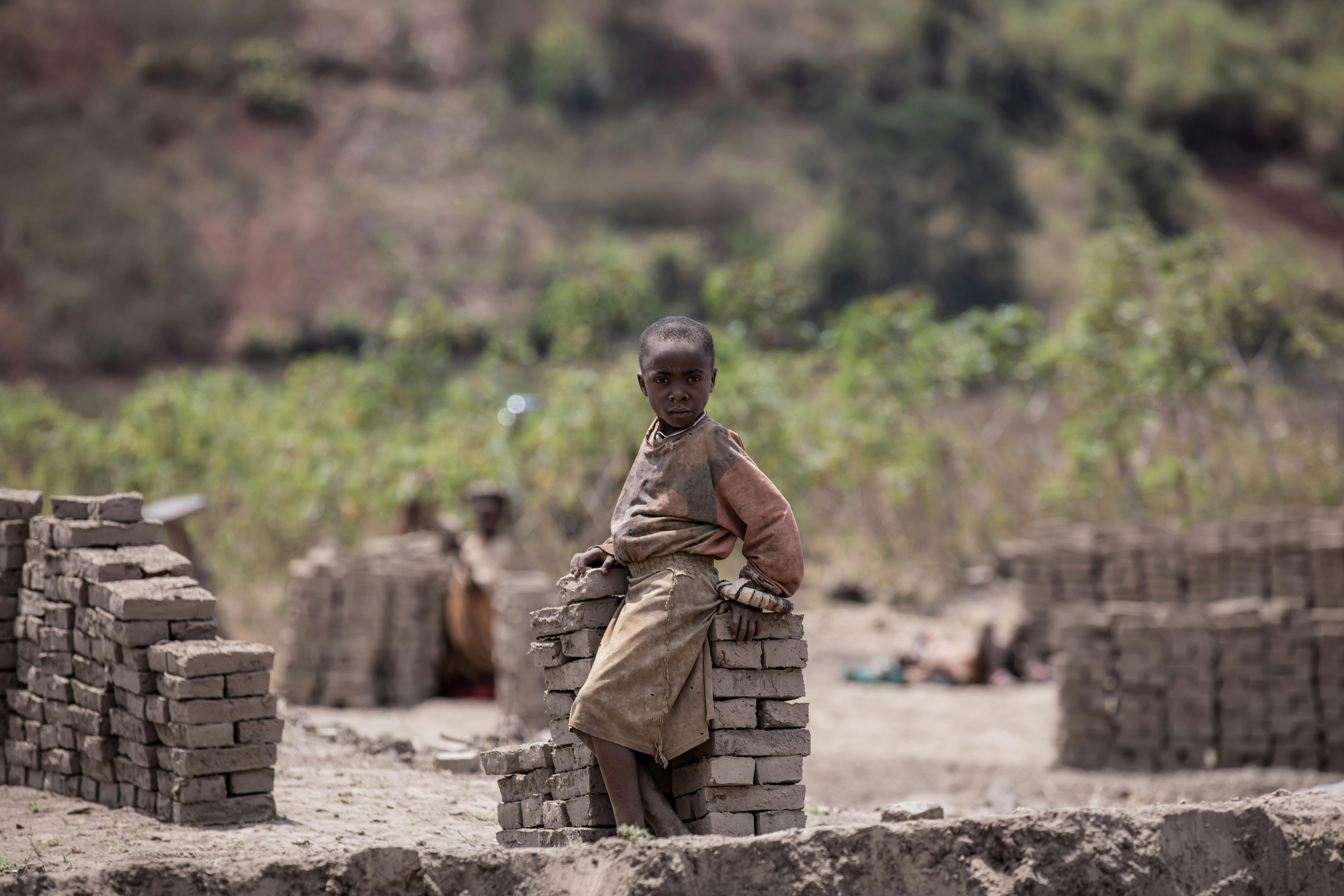
Child labor in Brazil has existed since colonial Brazil when slavery was predominant, and children were seen as targets of exploitation. With the beginning of urbanization and industrialization, the activity continued, many children became workers in factories in different fields. In addition to the country's history and culture, another factor that influences the existence of this illegal activity is poverty and lack of quality education, so the lower the family's income and educational level, the greater the chance of the child being subjected to work children (Childhood, 2019). According to UNICEF (2019), child labor has consequences for the physical and mental development of children and adolescents.
Work can limit the opportunity to be present at school and learn, that is, it ends up compromising the future of children and adolescents, reproducing situations of poverty. Furthermore, those who work against what is determined by law end up being subjected to different forms of exploitation and violence. Child labor is a serious violation of human rights, fundamental rights, and principles at work. Child labor is recurrently a cause and effect of poverty and the absence of opportunities to develop skills; it can impact the level of development of nations and frequently leads to forced labor in adulthood (OIT, 2021).
Brazil is considered a reference in the international community in terms of efforts to prevent and eliminate child labor. Since the mid-1990s, Brazil has officially acknowledged the existence of the issue and affirmed its willingness to solve it (OIT, n.d).
Through a graphic represented in the article on Toda Matéria website, it is possible to notice that the incidence of child labor in Brazil is higher in the states of São Paulo and Minas Gerais. Another piece of information acquired by the same graph is that the southern and southeastern regions of Brazil are the leaders in terms of child exploitation, even though they are the richest states in the country.
Despite this information, a South American country has many child protection policies to eradicate this practice, it was the "pioneer in the preparation of the list called TIP (Forbidden Child Labor), which contains the worst forms of child labor", among them are forestry, fishing, agriculture, the tobacco industry, domestic child labor, among others (Bezerra, n.d).
Other policies applied in Brazil to protect children and adolescents, according to Saldanha, are:
- Child and Adolescent Statute: defines the fundamental rights of children and adolescents and has municipal, state, and federal competence;
- Consolidation of Labor Laws - CLT: establishes activities that are prohibited for minors;
- Organic Law of Social Assistance - LOAS: determines a social protection system for the neediest groups of the population.
In addition to those mentioned above, the author also defines several other programs and social actions in various areas, such as: in education (School Health Program); at work (Job and Income Generation Program); in health (Family Health Program), among others.
Therefore, it is possible to understand that the country still has several cases of child labor even with several public policies to eradicate it, presenting a failure when applying for these laws and programs.
## III. THE PANDEMIC
A pandemic can be characterized, using the WHO definition, cited in a G1 report (2020), as an epidemic that has spread across two or more continents, becoming a worldwide transmission, maintained from person to person. But not every disease that affects several countries at the same time can be considered a pandemic. Endemic disease that are in various parts of the world and are stable cannot be considered epidemics. Per example, the seasonal flu, which affects the northers hemisphere every winter; what defines a pandemic is, primarily, the analysis of intensity of the rate of contamination in the prolonging of the disease through the WHO (Politize, 2021).
In December 2019, the first case of SARS-CoV2, socially known as coronavirus, was reported in China and since then cases have started to spread around the world. Two months later, the disease arrived in Brazil, and in a matter of days it made its first victim, and thus, the beginning of the disease outbreak in the country happened (Pebmed, 2020).
As a way of trying to count and combat the spread of the virus, some protection measures were applied, including wearing a mask when you are in a public place, as it makes the risk of contagion drop by $95\%$; avoid agglomerations and public spaces, as social distance reduces contamination; do the test and isolate yourself when you notice any symptoms of the disease - fever, loss of smell or taste, cough or sore throat - so treatment can be started momentarily and increasing the patient's chances of getting well; get vaccinated when you have the chance so that the person will protect and immunize themselves (Schiavon, 2021).
According to the bulletin 'Direito e pandemia: Ordem jurídica e sistema judiciário', the measures were not sufficient to avoid serious violations. A higher dissemination of the virus occurred, promoted by the bad and controversial choices of the Brazilian Government under the leadership of the presidency of the Republic. Through withholding resources destined to COVID-19, the Government hinders assistance to patients in the public network of states and municipalities. Additionally, the war against governors and mayors who try to implement measures to prevent and fight the virus, like the obligatory use of masks, is constant(Elpais, 2021). Therefore, the president of Brazil fought against the choices of the governors and mayors who were trying to follow the OMS recommendations.
In addition to the high number of deaths caused by the disease, totaling more than 577,000 (G1, 2021), the pandemic also drastically shook the country's economy, causing 3 million unemployed. This increase in the number of people who lost their jobs was due to the need and difficulty of entrepreneurs to adapt to the measures adopted to contain the virus, thus, many families lost their income and needed to look for other ways to support themselves financially (EARTH, 2021). Therefore, it is possible to state that the coronavirus pandemic directly affected all people, having a clear impact on the low-income group, and thus causing a change in the number of children and young people in child labor, which will be discussed below.
## IV. CHILD LABOR DURING THE PANDEMIC
After the confirmation of the first case of COVID-19 in Brazil in February 2020, the country started to adopt some measures suggested by the WHO to reduce the spread of the virus, such as the use of masks, hand hygiene, avoid touching the nose and mouth, seek care when presenting the first symptoms, social distancing, among others (Oliveira, 2020).
To combat the reality of hunger and poverty generated by the pandemic, as well as contain the health crisis by maintaining social distance, reducing inequality, and injecting resources into the economy, the Brazilian government developed another protective measure, called emergency aid, in 2020 (Beghin, 2021).
However, according to Jornal da USP (2020), the amount of the aid, R$ 600.00, is not enough to help the neediest and needy families, thus, this most vulnerable group would still have to leave home to work
and get more income, increasing the spread of the disease and not fulfilling its function.
According to Souza (2020), after recording almost 20,000 deaths of Brazilians caused by the coronavirus, eleven states in the country increased their restrictions on the issue of social isolation and applied the lockdown, which can be defined as a total closure, that is, it is a more rigid social withdrawal.
As explained above, child labor according to ILO Conventions No. 138 and 182 can be defined as any work that deprives children of their potential and dignity, as well as their childhood, hindering their development. Other characteristics of the same are the jobs that endanger the child's moral well-being as well as the physical and mental, being considered as the worst forms of child labor human trafficking, sexual exploitation, drug trafficking, slavery, and the use of these young people in armed conflicts (ILO, n.d).
Since young people were away from schools and socially distanced due to the pandemic, the danger of increasing this form of work was accentuated, as in many cases, these children and adolescents could stay at home taking care of the environment and their younger siblings while their parents are looking for a job or even exchanging cheap labor in exchange for capital to help with the family income, as reported in some complaints, according to Ribeiro (2020). The same author explained that this form of abuse can be considered as housework, which normally comprises $94.1\%$ of girls, $73.5\%$ of whom are black, which can cause physical, psychological, and intellectual consequences. Due to the accumulation of workloads, these young women usually drop out of school due to fatigue, in addition to the risk of sexual and physical abuse that these children experience daily, as their employers may believe that these young women are there to serve them in all ways and in these cases, they use the salary and employment of the girl in question as a form of blackmail to get what they want (Ribeiro, 2020).
Another reason for this group of people to drop out of studies during this pandemic period is the lack of access to the materials needed to monitor distance learning applied to distance learning. According to Idoeta (2020), "in all these places, there are several reports of students without equipment or internet connection, families in an increasingly fragile economic situation". The same author explains that dropping out of school can cause future problems for these people who are without support, as without schooling, it will be more difficult for them to get a qualified job in the future.
This reality of change in child labor is global, according to UNICEF (2021), for the first time in two decades, there has been an increase in this modality, reaching a total of 160 million children and adolescents, presenting the risk of more young people entering this number until 2022 because of the pandemic if they do
not have access to "critical social protection coverage" (UNICEF, 2020). The organization explains that due to the closing of schools and economic crises, these people may be in worse working situations and with an increased workload. However, in another UNICEF report (2020), the organization expressed concern about the increase in child labor in Brazil, specifically in São Paulo, during the pandemic. According to the text, "the incidence of child labor was 17.5 per 1,000 before the pandemic, and rose to 21.2 per 1,000 after the pandemic, an increase of $21\%$." (UNICEF, 2020).
Therefore, with this information, it is possible to affirm that the increase in child labor in Brazil in the last two years is directly linked to the pandemic and to the way the Brazilian government dealt with it, given that due to the little support and assistance provided to the families in need, these people had to adapt on their own to survive and have their basic rights, such as food. Therefore, this social group put itself at risk during this period, going out to work and not complying with social distancing as they did not have the option of staying at home, including children and adolescents, who were put to work to help family income or even self-support. These young people often also had to give up their studies, as they did not have the time or means to study online, the well-known ead (e-learning), which can directly affect their future and make it difficult when they are looking for a qualified job, containing your chances of improving your income and getting out of poverty.
## V. CONCLUSION
After analyzing the consequences of the pandemic caused by the COVID-19 in the area of child labor in Brazil and how the government is dealing with this reality, it was possible to understand that work among children and adolescents has always existed, but in the last two years, it has increased relatively due to the pandemic and the policies adopted to eradicate it.
According to data presented by UNICEF, child labor exists and is undergoing changes in the number of cases worldwide, however, there is a greater concern with the Brazilian reality, since its occurrences are growing considerably and affecting other parts of the life of these young people, as many are suffering physical and psychological exploitation and abandoning their studies.
As seen throughout the article, it is possible to note that child labor is not a current problem but something that has been ingrained in our society for years. Thus, the article answered the questions initially proposed, as child labor increased during the period of the COVID-19 pandemic, due to the actions applied by the government and the weak public policies that should help and protect families/people in greatest need and to combat child labor during the pandemic, there needs to be a long-term vision and a more urgent solution for the moment.
The pandemic in Brazil has created an even greater gulf between the economic and social classes in the country, not only as a consequence of the virus itself but also of decision-making coming from the federal government. Thus, to combat child labor during the pandemic in Brazil, greater investment in aid offered to needy families is needed, and a broader fight against COVID-19 so that the country's economy does not suffer so powerfully.
Aiming at a long-term solution, greater commitment by the country's powers to combat child labor is needed, reinforcing existing laws such as the young apprentice, punishing those who insist on hiring minors, and greater investment in the education of Brazilians of all social classes. Education must be seen as the best and possibly the greatest way to combat child labor, as it encourages children and adolescents to follow a new path.
In the fight to combat child labor it is important that society recognizes the impacts and consequences of such labor, whether physical or psychological, on the lives of working children and teenagers, thus, deconstructing the false idea that early wok is an important path to social development.
Thus, the study sought to demonstrate its relevance through the increase in cases of child labor during the pandemic period, using Brazil as an example of how its occurrences are increasingly present in society and how the country is dealing so much with this way of exploitation as with the pandemic and its public policies, representing the government deficit with this social class, because the people who are currently experiencing the most difficulties are the ones who most need to put themselves at risk, not being able to fulfill the social distance because not having state support and thus placing children and adolescents in precarious employment situations, which can have a great long-term influence on the lives of these young people.
Finally, within the study area, the theme can be understood as a way to analyze the failures present in the application of Brazilian laws and government actions in recent years, since child labor is prohibited in the country and the kids and teenagers should be protected from this reality.
Generating HTML Viewer...
References
25 Cites in Article
Afp (2021). Brasil é o país que pior lidou com a pandemia de Covid-19, diz estudo. NSC Total.
N Beghin (2021). Por que o Auxílio Emergencial é tão importante? INESC.
J Bezerra (null). O trabalho infantil afeta o desempenho escolar no Brasil?.
Childhood O que é Trabalho Infantil?.
Childhood (2024). Pequenas mãos que produzem: a dualidade do trabalho infantil presente no desenvolvimento escolar.
Elpais (2021). Pesquisa revela que Bolsonaro executou uma "estratégia institucional de propagação do coronavírus.
A Ferreira (2021). Boletim Direito e Pandemia: ordem jurídica e sistema judiciário não foram suficientes para evitar graves violações.
Robson Medeiros,Cristiane Silveira,Aluísio Moreira Júnior (2021). Combate ao trabalho infantil no Brasil: órgãos, instâncias e ações.
G1 (2021). Brasil registra menor média móvel de mortes por Covid do ano: 696 vítimas por dia. G1.
G1 (2020). O que é uma pandemia. G1.
P Idoeta (2020). Pandemia deve intensificar abandono de escola entre alunos mais pobres.
Luiza Caires (2020). Jornal da USP e Ciência USP.
J Morales (2021). Como a pandemia agravou o trabalho infantil no Brasil e no mundo. Guia do Estudante.
Leonardo Mello,Isac Oleques (2025). O Combate ao Trabalho Infantil no Âmbito da OIT e suas Implicações no Brasil.
Leonardo Mello,Isac Oleques (2025). O Combate ao Trabalho Infantil no Âmbito da OIT e suas Implicações no Brasil.
Leonardo Mello,Isac Oleques (2021). O Combate ao Trabalho Infantil no Âmbito da OIT e suas Implicações no Brasil.
P Oliveira (0202). Saúde ambiental e fortalecendo a resiliência a pandemias.
B Ribeiro (2020). Unknown Title.
J Saldanha Trabalho Infantil e Políticas Públicas na Erradicação.
F Schiavon (2021). As 10 práticas essenciais para combater a pandemia de Covid-19.
M Souza (2020). Coronavírus: 11 estados brasileiros registram lockdown em pelo menos uma cidade.
Terra (2021). Crise econômica na pandemia deixa 3 milhões de desempregados.
Joao Paulo Cardozo R Ferreira (2019). CTI: CONTRA TRABALHO INFANTIL.
(2021). Trabalho infantil aumenta pela primeira vez em duas décadas e atinge um total de 160 milhões de crianças e adolescentes no mundo.
Enemari Wrublevski,Roberto Bueno (2020). O AUMENTO DA VIOLÊNCIA INFANTIL DURANTE A PANDEMIA DE COVID-19: UM ALERTA À SOCIEDADE.
No ethics committee approval was required for this article type.
Data Availability
Not applicable for this article.
How to Cite This Article
Vitória Almeida Ramos. 2026. \u201cIncreased Child Labor in Brazil in the Pandemic: Reasons Behind the Increase\u201d. Global Journal of Human-Social Science - H: Interdisciplinary GJHSS-H Volume 23 (GJHSS Volume 23 Issue H1): .
Explore published articles in an immersive Augmented Reality environment. Our platform converts research papers into interactive 3D books, allowing readers to view and interact with content using AR and VR compatible devices.
Your published article is automatically converted into a realistic 3D book. Flip through pages and read research papers in a more engaging and interactive format.
This article aimed to analyze the reality and changes in child labor in Brazil during the period of the pandemic caused by the COVID-19 and how the state dealt with this fact led to an increase in inequality and social difficulties in the country resulting in the current situation. As well as understanding what are the possible ways to reduce this practice, increasing the rights of these children and adolescents and improving their experience. According to UNICEF (United Nations Children’s Fund), globally, 8.9 million children and adolescents are at risk of being pushed into child labor by the end of 2022, thus, the ways to fight the virus used by the government may have failed with this class. As the Brazilian Federal Constitution of 1988 places it as the duty of the state, society and the family, to ensure health, education, and freedom, in addition, to protect them from any form of exploitation, cruelty, neglect, and oppression, therefore, this type of work should be decreasing rather than increasing.
Our website is actively being updated, and changes may occur frequently. Please clear your browser cache if needed. For feedback or error reporting, please email [email protected]
Thank you for connecting with us. We will respond to you shortly.