
I. INTRODUCTION
The massive closure of educational institutes and the quarantine policy have encouraged the use of online learning as an alternative to face-to-face learning so as to ensure the continuity of teaching and learning in post-pandemic era. However, the closures of schools have impacted more than billions of students and youth globally. It is estimated by UNESCO that globally, around of students have experienced some form of hardship. With the outbreak and continuity of the COVID-19, colleges and universities are likely to become the focus of social and media attention. The typical assessment method of online course cannot be appropriately implemented. By analyzing the online testing environment and misconduct behaviors, taking Shanghai University of International Business and Economics as an example, a human centered based online assessment model can be constructed to minimize academic misconduct.
The crisis management of international students is also considered a big challenge to global education exchange under the uncertainty of the epidemic. Only by dealing with it properly, taking active pre-control measures and establishing a perfect risk prevention and control system can we ensure the healthy and sustainable development of overseas education in China and avoid negative impact.
II. PROBLEMS
a) Problems in Online Courses
Studies have shown that students have been affected in a variety of ways by the immediate shift from offline to online education. Online learning can oftentimes lead to isolation among students, and procrastination is more prevalent. It is easy for them to lose focus and interest by facing computer screens all day long.
Another challenge is the inefficiency of learning and unavailability of electricity. The operation level and network conditions of teachers are quite different and unstable. Sometimes the network is too poor for the teacher, resulting in the jam and disconnection and it's hard for the students to focus on such classes. They basically can't hear anything. Therefore, live broadcasting can be an issue for some teachers. Students may worry about their loss of GPA if they are late for classes due to the poor connection. The hardware conditions of facilities are not so well-guaranteed for high-quality distance education. High-speed networks are still out of reach for some underdeveloped countries. More than half of the students in my class have experienced network breakdown.
Also, based on my own observation and past experience, I found that some teachers would often mute themselves, forget to turn off the camera after the class or mute the students accidentally. Me and my classmates have met this kind of situation for several times. Students tend to get nervous and afraid of losing marks when being asked to answer questions only to found themselves muted. Thus, both teachers and students can suffer from connection and technological problems from time to time in an online learning environment.
b) Online Plagiarism
Meanwhile, the shift of the teaching mode has significantly affected the academic assessment and evaluation processes. Most of the students in my class consider online examinations more difficult as compared to traditional examinations. Deadlines for finals are usually brought forward. Plagiarism are more commonly seen. Since the epidemic is still unstable and most schools are currently occupied with online teaching, the following problems remain to be solved. What measures can be taken to deal with the cheating problems in the future? Will it be feasible to operate a fair online assessment system if schools decide to take some measures? How can students' academic integrity be ensured in online environments?
c) Crisis Management of International Students
What's more, the Covid-19 pandemic leads to a deteriorated social psychological environment for Chinese international students. The total amount of international students has experienced a huge drop ever since the pandemic occurred, frequent post-pandemic emergencies of these international undergraduates in China continue to be a problem, involving many aspects such as international education, enrollment, teaching, living, mental problems and so on. Social isolation, cyber violence, school shun down and other factors have huge detrimental impacts on their mental health. Differences in religious beliefs and lifestyles of international students in different countries have worsen the situation. These have not only seriously affected the normal study and life of international students, but also posed a severe challenge to the previous crisis management mode of colleges and universities.
III. REASONS
a) Reasons for Ineffective Online Education
Based on the available literature and my own observation, the reasons for such issues are as follows. In an online environment, face-to-face contact with instructors was considered difficult and this has greatly limited the effectiveness of learning. Without paper textbooks, students rely on the online documents issued by teachers more often which are not so convenient to preserve and damaging to eye-sights. The efficiency of online class is also very terrible. It is common for students to run other applications in the background while they have the broadcast software on. The teachers have even bigger problems.
The first thing is the operation level and network conditions of teachers. The students have suffered a lot due to the ineffective teaching tools. The software 'DingDing' for live online courses dropped from five stars to one star and received thousands of bad comments overnight. While students have shown their dissatisfaction, teachers also experienced great disappointment. Most teachers have never tried to live broadcast before. One of my teachers once touched the ending button by mistake and ended the class immediately, senior teachers are obviously more unfamiliar with the operation. Some teachers also have problems with their computers and networks. They will lose connection or meet with technological problems many times in a class.
Research shows that learners tend to gain a higher level of online courses satisfaction if they have a good command of educational technologies and tools. However, no one can escape from accidents and technological support becomes a must. Limitations in the usability, privacy, speed, security and responsiveness is influential to their learning environment and experience online. The ongoing pandemic in Shanghai this year has further revealed the importance of systemic support and scientific instruction during such hard times. Equity and support devices were the main institutional issues to be addressed. A clearer instruction and implementation of Information and Communications Technology policies should be set up in advance during online studying. Meanwhile, the inconsistency and unclarity in course design and layout increased students' confusion. Difficulty in collaboration and communication with classmates and instructors have also badly affected their satisfaction level and academic performance.
To conclude, the low quality of instruction, ineffective modes of communication as well as the weak network connections and poor internet access all hinder students' enthusiasm and performance in online education.
b) Reasons for Online Cheating
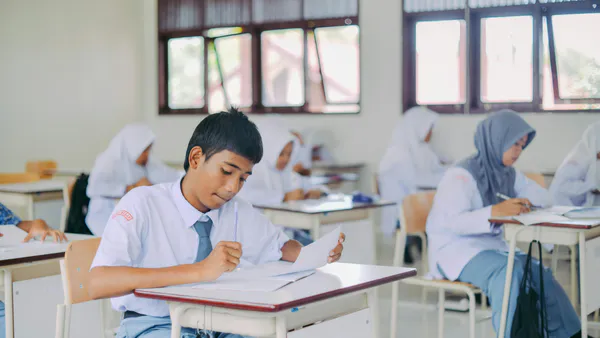
In addition, lockdowns caused by the COVID-19 pandemic have made monitoring a tricky task. Since online exams do not require face-to-face proctoring, students may use their learning notes, textbooks, internet searches, and any other possible help they may need. Additionally, they can collaborate and communicate using teleconferences. Some students were caught cheating in final exams online by setting up a We Chat group and shared answers during the test. Although they were severely punished later and made their promises, we can't avoid this kind of situation. Learners are more likely to cheat online compared with those in traditional offline exams, and learners tend to make economic efficiency assessment subconsciously before choosing whether to cheat or not and will choose to do so if the return outweighs the cost.
c) Reasons for the Increasing Difficulty of International Student Management During the Epidemic
For the international students, they are defined as individuals who leave their home country and travel to another for the purpose of study as temporary citizens. Their number has increased substantially these years. Previous studies found that international students tend to experience more mental health problems than local students under such a circumstance, anxiety and homesickness are commonly seen. Without effective counseling and caring system, further psychological problems such as autism and depression may occur and these can further develop into a lack of social identity or the loss of effective recognition of their own value. This is often caused by strict self-isolation requirements, daily information reporting and limited freedom under the epidemic prevention and control. What's more, there exist differences in the way of thinking, daily habits and moral values of different international students in China, adding difficulty to the school management during and after the crisis. For example, students from different countries share different views on mask wearing based on their own religion. For some Korean believers, they simply take the disease as a test and masks somehow expand the distance between people. The importance of religion far outweighs the threat of the epidemic.
IV. SOLUTIONS
a) Suggestions for Online Courses
Universities and educational institutions should examine ways to solve the problem of face-to-face engagement between students and teachers in the wake of subsequent waves of the COVID-19 pandemic.
In an online course, instructors' actions are closely related to students' satisfaction. It is estimated that the satisfaction level of students was directly affected by the course content, efficiency of communication, instructor's presentation style and the use of effective learning tools. Thus, teachers are suggested to design the course based on students' advice and take professional training in advance. A wide range of communication modes through different online platforms such as Zoom, Google Hangouts, Zhumu etc. can be used. These tools could be synchronous or asynchronous.
For the live courses, in order to improve students' learning participation, synchronous tools can be adopted for them to comment, raise questions, express opinions and better interact with others. In the online interpretation class, our teacher often uses grouping tools to divide the students into different groups so as to implement the debating and discussion function. Students are grouped randomly and this ensures the equal opportunity to meet one another for every one of us. The teacher can enter any one of the rooms at any time so we will have to focus on the topic instead of chatting during class time. In this way, we will feel more engaged with the class and can better communicate with group members. For the recorded courses, a flexible time slot is provided, especially for those foreign students, they are allowed to watch these repeatedly over time.
Timely and constructive feedback on curricular activities is deemed conducive. Deadlines should be set strictly to push the students to finish their homework.
Students and teachers in my class use the app Class in which involves several practical functions such as creating the community of class management, assigning homework, collecting feedback and offering study rooms where everyone can turn the camera on and review lessons together just as in an online library.
Instructors and operators' accessibility and promptness of their responses could further build up students' positive view towards the value of online courses. Professional customer service teams can be established to deal with users' problems and collect their feedback so as to realize the instant communication between users and the platform. Staff need to be online during class time in order to provide timely service for the students. For example, a student named Lucy once met a technological problem during a group discussion and dropped off in an instant. She contacted the support staff immediately and found her computer system incompatible with the latest version of the app. The support staff then sent her a link of the earlier version so she was able to continue her discussion. This minimizes the loss of time.
Also, some automatic platform functions of teaching management such as the distribution of materials for preview and review, the submission of homework and the correction of tests online can all be further developed. Collection of real-time classroom data is easier online. The data analysis of student and teacher behavior, test paper results, course feedback can all be collected through online apps and transmitted to the computer server. Teachers can get a better understanding through the visualization of statistical analysis including the length and frequency of students' attendance, the number of students participated, the satisfaction rate of parents and so on. Taking the test paper analysis as an example, teachers can have a clearer view on students' mastery of knowledge and make corresponding changes to their teaching plan. In a well-designed course with rich content, appropriate structure and a detailed communication program, online courses could be as effective as offline ones.
b) Fair and Safe Methods of Online Assessment
Earlier, it was mentioned that traditional methods of assessing students' success don't apply to online settings. In this case, a safe, reliable, valid, and fair method of evaluating needs to be implemented by instructors and institutions. However, the pandemic's multifaceted implications could make this a challenging endeavor. In order to better solve this problem, four following aspects will be discussed.
Firstly, instead of piling up all the tasks to midterm and final, a periodic assessment method can be set up, this kind of even distribution into different teaching stages helps relieve students' pressure and eases the burden of teachers. Also, instructors can variate assessment methods into individual or group assignments, group discussions, juries or presentations. Group activities cultivate students' high-level thinking, teamwork awareness, innovative consciousness and application ability. Diversified evaluation methods can raise students' interest and enthusiasm in learning while staged tests can consolidate the studied knowledge and improve their self-confidence and memory.
For the page and test design, only one question can be displayed on the same page within limited time, the student had to save then submit their answer before moving to the next question, no moving back and forward was allowed. Screen switching is banned neither. This prevents them from modifying the answer after making reference to textbooks or online pages. The question bank also needs to be updated in time. Instead of conceptual questions, open-ended questions with multiple choices, argumentative or interpretive questions can be used more often in the test. The questions should be arranged in random sequence to reduce the chance of plagiarism. Furthermore, instructors and operators need to strengthen the monitoring of the examination environment through online invigilation software servers. The widely used servers RLB, Proctorio, Collaborate Ultra, etc. are often embedded in the learning management system (LMS), such as Moodle, Canvas, Blackboard, Saka, etc. Learners can install and authorize access to the exam on any computer. At present, the most commonly used learning management systems in China are Moodle and MOOC. Different online examination systems can be selected according to the actual situation and conditions of each company. More importantly, the monitoring of online examination environment should be further strengthened. In the mid-term exam, we are required to turn on the computer camera and make sure the invigilator screen covers our faces, our hands and the whole desk. In the final exam, at least two devices are demanded. One for answering the test, another for recording and monitoring.
Finally, the establishment of an efficient crisis management model must be proposed to provide a new perspective for the campus crisis managers, so as to obtain the best effect that can quickly prevent and effectively dissolve the crisis. The crisis management process can be divided into four stages: prevention, preparation, response and recovery. Each stage is closely interrelated and complementary.
c) Four Stages of Crisis Management for International Students
In the pre-crisis prevention stage, schools can carry out the public crisis education about the harm caused by the epidemic based on typical cases to set a warning for international students. Second is to make full use of the public media platform in order to enhance the awareness and ability of self-protection as well as infectious disease prevention and control. For example, wash hands daily and keep the dormitory ventilated. Wear masks and keep a social distance of at least 1 meter. Thirdly, the communication between schools, government departments and social organizations should be emphasized. Experts in relevant fields can be invited to carry out lectures.
In the preparation stage, colleges and universities should establish a leading group for public crisis management, focusing on the communication, coordination and cooperation among various departments within the university thus forming a joint force for crisis management. Meanwhile, schools should build a comprehensive and specific public crisis management system through joint meetings, supported by the government and the society to guarantee the accuracy and timeliness of transportation of materials and supplies. Timely information disclosure is of great importance. Schools need to actively disclose and update news to teachers and students, establish a unified press spokesman system and ensure the objectivity and completeness of news release. Wechat, microblog and other network platforms can be used to update the dynamic of crisis and closely monitor the public opinion. Rumors must be dealt with in time to guarantee the campus stability and security.
During the final recovery period, colleges and universities shall play the guidance role that is to help international students to learn how to dispel negative emotions, overcome psychological issues during the epidemic and cultivate positive and healthy mindsets. More attention should be paid to their psychological problems. Counseling rooms, psychological tests and various activities can be set up to relieve their stress. Taking a real case as an example, there are international students from Thailand, Korea, India and other countries in SUIBE's chorus. Besides weekly singing practice, leisure activities such as making dumplings at Spring Festival, enjoying Korean barbecue after class are organized regularly. These cross-cultural activities integrate the students together and help overseas students better understand the similarities and differences between Chinese and their cultures. In this way, they can better adapt to the local college life. Also, international students are faced with a series of problems concerned with increased academic tasks and a severe employment crisis after the pandemic. In this regard, relevant departments should play their role in the material guarantee and career planning. Appropriate guidance and personalized services can be provided for their future to improve management efficiency and reduce employment pressure on international students.
V. CONCLUSION
Even though educational institutes have adopted emergency remote teaching in the past to cope with crises and disasters, this is the first time that the educational sector has been unnerved facing the widespread pandemic and the first time for Shanghai's three-month lockdown. Problems remain in the postpandemic era. It is still not easy for some students as well as teachers to adapt to new models of learning and teaching. Nevertheless, faculty members teaching online have made necessary progress through practicing and failing in course and tools modifications to deal with these challenges, providing relief and content to the students to ensure the continuity of education. By analyzing the possible cheating problems and offering corresponding solutions, we can minimize academic misconduct by the human centered based online assessment and improve the mark's equity and validity. The management of international students is facing challenges in helping them maintain healthy mental states and integrate their school life based on the cultural differences and the crisis management model. Thus, colleges should pay attention to the mental health and living experience of international students from various backgrounds. Based on the principles of justice, equality, and harmonious coexistence to seek common ground while reserving differences, the crisis management model with four stages allows colleges and universities to better cope with the current issues and lay a solid foundation during the post-pandemic era. Only when the realistic issues of vital interests are solved, can we form the spirit of unity and build a solid fortress for epidemic prevention and control in colleges and universities.