I. INTRODUCTION
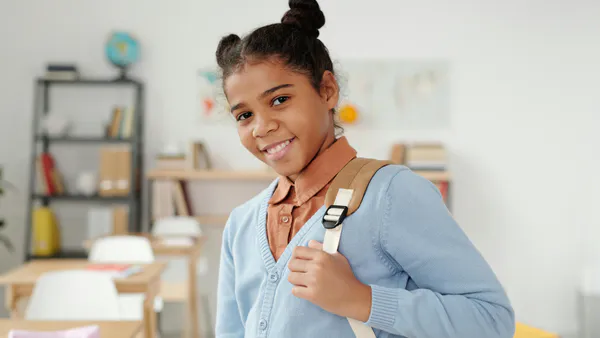
Every school-going child, irrespective of their social standing and/or how sedentary a lifestyle they lead, has the physical activity of schoolbag carriage in common. In India, absence of lockers and a very demanding school curriculum, not only makes the schoolbags very heavy, but also its carriage mandatory. It is of utmost importance to explore all facets and effects of this physical activity, given that all subsequent activities within the school curriculum begins after at least a single bout of schoolbag carriage required to reach the classrooms from home.
The World Health Organization (WHO) defines physical activity as energy expended in any form by the skeletal muscles. Physical activity not only improves one's overall well-being, but also enhances thinking, learning and judgment skills[1]. Given that these skills are a focal point of school education, this further bolsters the importance of schoolbag carriage. This particular physical activity should therefore be explored not only in terms of skeletal muscle response but also in terms of cognition and motor ability.
The impact of physical activity in its varying intensities have been well documented . Schoolbag carriage can be a moderate or high intensity physical activity based on the amount of load being carried . Intense physical activity is generally characterized with fatigue and schoolbag carriage related fatigue has been previously reported . Overall fatigue can be reflected in eye muscles and be quantified using Critical Flicker Fusion Frequency (CFFF) . CFFF is vital for children given that a major portion of school curriculum entails viewing the blackboard or projector screen. Fatigue resultant from schoolbag carriage to reach the school may also interfere with concentration of a child subsequently affecting scholastic performance.
Apart from overall fatigue being reflected in the eye muscles, increased heartbeat, increased thirst and saliva viscosity are also characteristic of physical activity. Increase in sensation of thirst is observed as the intensity of physical activity increases . Increased thirst is delineated to increase saliva viscosity . Reportedly, thirst and physical activity together cause changes in neurological alacrity . Cognitive and motor performance is seen to be impacted due to fatigue and thirst . Scrutinizing the physical activity of schoolbag carriage is hence incomplete without exploring its effect on thirst, salivary viscosity and cognition.
The effect of physical activity on all the aforementioned factors-fatigue reflected in CFFF, thirst, cognitive and motor performances are inter-related, codependent and modulate each other. Given the importance of fatigue on the ability to focus on academic curriculum and the importance of cognition in children, investigating the influence of the physical activity of schoolbag carriage and its intensity on these parameters can be insightful and is topical.
II. METHODOLOGY
Numerous papers were reviewed relevant to the topic in hand and arranged into subheads that are included in the scope of this particular review. Some data were not available or were not apparent and unclear, such studies were excluded.
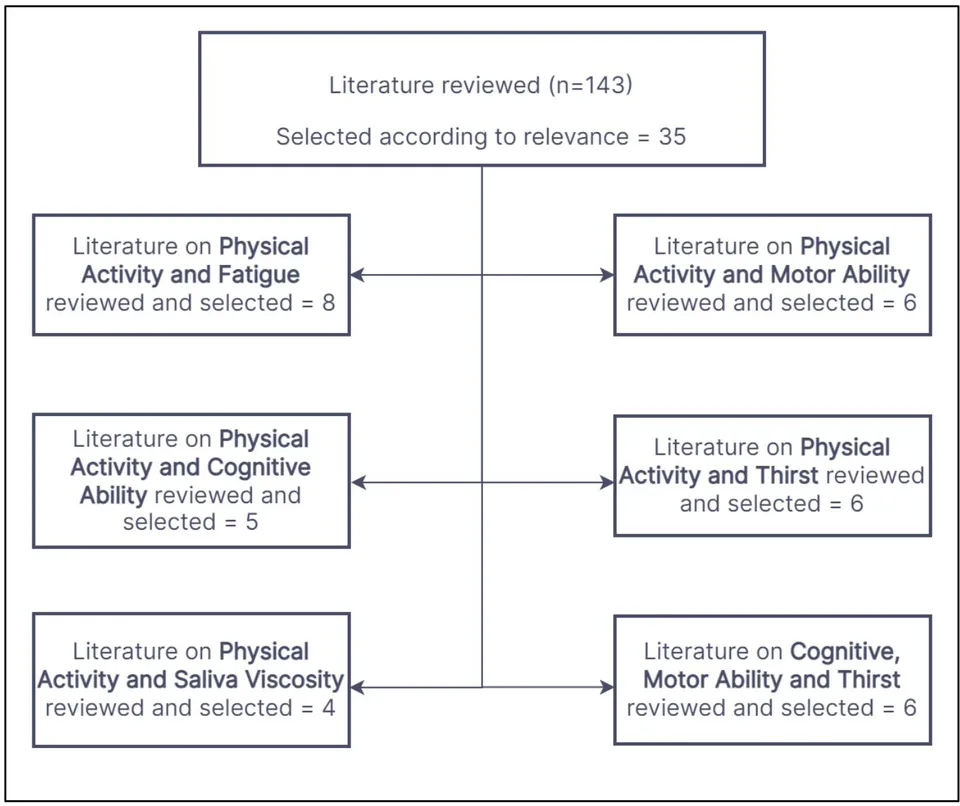
1. Physical Activity Intensity and Fatigue
Physical activity is beneficial to a certain extent but excess causes fatigue, which is detrimental. Fatigue can be considered as a marker for physical activity . A study conducted by Torbjörnet al in 2002 on 58115 participants show that there is an increase in degree of fatigue as the workload increased . Another 2005 study by Jarrod D Presland et al., validated the finding of the previous study observing considerable central fatigue after prolonged physical activity . A relatively recent study in 2017 by Smith et al., reported strong positive correlation between workload and fatigue in railway workers . When it comes to the workload of schoolbag carriage, a study reported carrying load of bodyweight to be moderate intensity while carrying load of bodyweight to be a high intensity physical activity . So, with increase in bag weight, the resultant fatigue might increase. Heavy backpack carriage among children is reportedly common which is seen in most of the literature associated with physiological effects of school bag carriage.
a. Fatigue in load bearing muscles
Heavy backpacks entails the use of load bearing muscles activated during any kind of physical work associated with the upper and lower torso- Rectus Abdominis and Lumbar Erector. Rectus Abdominisor abs, works with other abdominal muscles to control the pelvic tilt and plays a significant role in core stability. The erector spinae (lumbar, thoracic, and cervical regions) facilitates head and back extensions by bilateral contraction, controls the thoracic flexion and provides core strength. A multitude of reports about back pain associated with heavy backpack carriage in children further bolsters the importance of this muscle.
A study by Mosaad and colleagues explored the effect of load carriage on the trapezius muscle of 30 school going children (mean age -13.66 years). Muscle activity was observed in 3 separate instances, one when the children had no load to carry, in the other two the kids were asked to carry an ordinary backpack and an ergonomically designed double sided pack. It was observed that the muscle activation was significantly less when the kids were carrying the ergonomically
Designed backpack than the regular backpack . Another study was conducted by Motmans et al., on 19 participants on different modes of bag carriage, as a backpack, front pack, shoulder bag and double pack. Electromyogram (EEG) readings of rectus abdominis and spinae erector were observed during each mode of carriage twice, once with no load and with load of body weight of the individual. The results showed a significant decrease in load carriage as a backpack but increased when it was carried as a shoulder bag and front pack. Rectus abdominis showed increased activation during backpack mode of carriage. There was a significant asymmetry in back and abdominal muscles during shoulder carriage. The study also suggested that asymmetrical load carriage might cause a decrease in trunk stability which might lead to back pain .
b. Fatigue in ocular muscles
Overall fatigue can also be seen in the ocular muscles[22]. Critical Flicker Fusion Frequency (CFFF) is used to measure the ocular fatigue which representative of overall fatigue[7]. Eye conditions can affect scholastic performance by not only reducing concentration but also by interfering with the ability to read, learn and play[23]. A recent study conducted among school children in Karnataka, India implied higher CFFF thresholds to improve cognition and boost academic performance[24]. Reports regarding schoolbag carriage and its effect on CFFF weren't observed after extensive literature search highlighting the lacunae with respect to exploring this particular physical activity.
The practice of carrying heavy backpacks is common, indicating high intensity physical activity manifesting fatigue which may be reflected in ocular muscles. Vision in children is an important aspect within the school curriculum and CFFF alterations due to schoolbag carriage must be explored. Apart from fatigue, perspiration and thirst are also characteristic of physical activity[25].
2. Physical Activity and Thirst
The relationship between physical activity and hydration is extremely important in our day to day activities as hydration status dictates the overall equilibrium of our body[26]. In 1994, Meyer et al., pointed out that the mild hypo-hydration occurring among children who exercised in the heat had a greater degree of induced thirst and most children drank more fluid than they lost during the exercise session[27]. Mears et al., in 2016 reported the development of thirst sensation after exercise and its persistence until voluntary water intake among young adults[28]. Young adults in hypo-hydrated state were also reported to have consumed more than of total fluid loss that manifested in them during the exercise period[29]. The effect of physical activity on subjective urge to drink water has been heavily documented[30] but thirst alterations and hydration status in schoolchildren due to the physical activity of schoolbag carriage remains unexplored.
Given that thirst induces physiological changes[31] and decreased dehydration bolsters cognition directly affecting academic performance in children[32], this becomes a very important area to delve into. Thirst is primarily accompanied with the change in the saliva concentration. Saliva Viscosity is can be used to measure the physiological thirst[33].
3. Physical Activity and Saliva Viscosity
Dawes et al., studied on the effect of physical activity on saliva viscosity. The results revealed increased viscosity and protein content in the saliva immediately post-physical activity . A similar study was conducted by G.Ljungberget al., on the participants of the Stockholm Marathon in 1990, suggested increased concentration and total protein content in the saliva after running the marathon (Ljungberg et al., 1997). A relatively recent study in 2015 suggested a temporary increase in saliva viscosity right after moderate intensity physical activity . This finding was bolstered by a study in the following year by Ligtenberg et al., validating increased saliva viscosity during and after exercise among the participants . This aspect of physical activity remains unexplored for schoolbag carriage as indicated by a thorough literature search.
Schoolbag carriage being a physical activity, causes alterations in parasympathetic and sympathetic activity, termed as the Central Command . Physical activity stimulates the sympathetic nervous system, which controls salivary protein secretion by the alpha and the beta adrenergic neurons via the Superior Cervical Ganglion . Whereas, parasympathetic activity is seen to decrease with the increase in heart rate . On cessation of physical activity, the heart rate goes back to normal and the parasympathetic system is reactivated . As the water flux or the salivary water content is dependent on the parasympathetic nervous system, changes in the salivary flow rate due to schoolbag carriage might be observed and remains to be documented. The consequent change in salivary density, protein concentration change due to the stimulation of the sympathetic and parasympathetic system due to schoolbag carriage also remains to be documented.
The dehydrated state and workload alters the cognitive and motor performance . Saliva viscosity can also influence cognitive and motor performance .
4. Physical Activity and Neurological Performance
The main aspects of neurological performance considered in case of children related to the topic are cognitive and motor ability. While cognitive functions mainly deal with logical reasoning, motor ability deals with physical abilities. Physical activity also influences both cognitive and motor functions.
a. Physical Activity and Cognitive Performance
The association between physical activity and cognitive ability has been documented in several studies around the world. A study by Hillman et al., in 2008 demonstrated that both human showed a positive effect of aerobic fitness training on multiple aspects of cognition and brain function . In the following year, Charles et al., explored the association between physical activity and cognitive performance in children. The overall finding of the paper suggested that even a single moderately intense aerobic exercise session was enough to impact the cognitive performance in children . Similar results were observed in the prior studies done by Jonatan R. Ruiz et al., 2010 and 2011 respectively among adolescents. In the study done in 2010 the results suggested, participants who were engaged in any sort of physical activity had significantly better cognitive performance as opposed to those that were not . The study in 2011 done by David Martínez-Gómez et al., in Spanish population also showed similar results, the adolescent girls who actively commuted to school were seen to have a positive effect in cognitive performance . Another comparable study by Erikson et al., in the year 2015, summarized the beneficial effects of physical activity on brain and cognition in growing children. This study conducted in Illinois, portrayed greater duration of physical exercise and higher physical fitness to be associated with better cognitive health and brain functions . Cognitive and motor performances are interlinked.
b. Influence of Physical Activity and Exercise Intensity on Motor Performance
Motor response is the voluntary and involuntary movement of the muscles of the body in response to external and internal stimuli. Motor performance is the efficiency of execution of such movements. In a study conducted by Rikli et al., in 1986 stated that there was a significant difference in reaction time, flexibility and grip strength in people who played golf than older inactive women . Another similar study in Denmark in 2012 showed that here was a strong positive correlation between motor performance and physical activity in boys . Conversely it was also seen that motor difficulties increased as time spent doing any kind of physical activity decreased . Motor ability and cognitive performance can be measured using ruler drop test and letter cancellation. These two techniques are seen to be used to measure the neurological influence of physical activity .
Extensive literature search revealed a study improving reaction time when carrying low weighing backpacks. Studies were not found when schoolbag carriage was evaluated in the light of cognitive ability. There is a severe dearth of literature on the schoolbag carriage and neurological performance front and must be explored. Moreover, the neurological performance, namely, motor activity and cognitive ability is seen to be linked to the sensation of thirst .
5. Neurological Performance and Thirst
Motor and Cognitive ability plays an important role in the learning process of the school children . These two parameters are affected by a plethora of factors, one of them being thirst. Parsons and others conducted a study in 2000 on adults, concluding thirst to have regulatory effects on cognitive operations involving the prefrontal cortex . In 2009, Caroline and colleagues indicated that consuming water benefits cognitive performance in children . Another study done in the same year by D'anci et al., also stated that mild dehydration had a negative influence on mood and cognitive performance in young adults . Similar to prior studies, Edmond et al., suggested water consumption to be positively correlated to both subjective thirst and cognitive/motor performance in mature and young adults . A recent study done in 2020 by Goodman et al., on male participants suggested exacerbation of mental fatigue due to thirst . In a 2018 study by Karthika et al., it was observed that males experiencing increased amounts of stress tend to have increased reaction time which shows the stress delays the processing of neural information . Thus, thirst and exercise together has significant impact in scholastic performance involving cognitive and motor response.
III. CONCLUSION
Physical activity of schoolbag carriage affects several physiological functions, factors and responses.
Some facets explored in relation to physical activity remain uninvestigated for schoolbag carriage. Some of the factors have been highlighted here-
- Ocular Fatigue
- Thirst
- Saliva Viscosity
- Cognitive Performance
- Motor Performance
The overall fatigue induced by heavy schoolbag carriage may be reflected in ocular muscles. Since vision is very important in following the school curriculum, it is imperative to evaluate the ocular eye fatigue. Physical activity induces higher water utilization, thereby causing dehydration which in turn results in thirst which manifests as increased salivary viscosity. Thirst and physical activity can also modulate certain neurological functions like alacrity, cognitive and motor functions. School students are most vulnerable to this unstructured exposure to excess physical activity. Any physiological damage during developmental or formative years might lead to long term health issues. This field of work should be further explored considering all the parameters at once to get a more accurate representation of the real world scenario and prevent school children from any probable health hazards that might be caused due to unregulated heavy schoolbag carriage.
ACKNOWLEDGEMENTS
All resources required for completion of the review was provided by Department of Science & Technology and Biotechnology, Government of West
Bengal(WBDST) under grant 114(Sanc.)/ST/P/S&T/9G-3/2018. Acknowledgement is also due to DBT-BUILDER Funding to Department of Life Sciences, Presidency University.
The literature included in the review are tabulated for an easy referral-
Physical Activity and Fatigue
| Authors | Year | Location of Study | Key Features | Parameters/Tests Performed |
| (Dinges, David F.; Mallis, Melissa M.; Maislin, 1998) | 1998 | Washington DC, USA | Fatigue is also reflected in ocular muscles. | EEG, EOG Psychomotor Vigilance Task (PVT)56,57A Probed Recall Memory (PRM) test58A Digit Symbol Substitution Task (DSST) (speed and accuracy). Performance Evaluation and Effort Rating Scales (PEERS). Stanford Sleepiness Scale (SSS)59. Visual Analog Scales (VAS). Activation-Deactivation Checklist (AD-ACL)60. Karolinska Sleepiness Scale (KSS)61. Profile of Mood States (POMS) Compensatory Tracking Task (CTT) (Makeig & Jung, 1996). |
| (Aaronson et al., 1999) | 1999 | - | Fatigue cannot be accurately measured using only one parameter; many other seemingly absent parameters also play a significant role in inducing fatigue. | Visual Analog Scale for Fatigue (VASF)62. Multidimensional Assessment of Fatigue (MAF)63. Profile of Mood States (POMS). Symptom Distress Scale (SDS)64. |
| (Akerstedt et al., 2002) | 2002 | Sweden | Work stress, shift work, and physical workload interfere with sleep and are related to fatigue. | Verbal Questionnaire Based. |
| (Presland et al., 2005) | 2005 | New Zealand | ||
| (Rosenthal et al., 2008) | 2008 | Buffalo, New York | One fifth of family medicine patients present with fatigue, and one third of adolescents report having fatigue at least four days per week. | Questionnaire for Sleepiness and Fatigue. |
| (Lafère et al., 2010) | 2010 | - | Visual Analog Scale (VAS) and CFFF | |
| (Smith & Smith, 2017) | 2017 | Cardiff, USA | Workload increased fatigue. | Questionnaire |
| (Goodman & Marino, 2021) | 2021 | - | Parameters of mental fatigue are exacerbated by thirst, and offer novel insight into the relationship between hydration and cognition. | Urine Specific Gravity (USG) from digital refreecometry (PAL-10S ATAGO Japan) Cycle Ergometer Questionnaire Continuous Near-Infrared Spec (fNIRS) Visual Analog Scale (VAS) Stroop Task Inverse Efficiency Score (IES) |
Physical Activity and Motor Ability
| Authors | Year | Location of Study | Key Features | Parameters/Tests Performed |
| (Rikli& Busch, 1986) | 1986 | Fullerton, California | There were highly significant differences between the golfers and the older inactive women on choice reaction time, sit and reach flexibility, shoulder flexibility, and grip strength. Significant differences beyond the.05 level were found for these same groups on simple reaction time and balance. | Lafayette Company Choice Reaction Time Apparatus Lafayette Hand Dynamometer |
| (Edmonds &Burford, 2009) | 2009 | London | Thirst Questionnaire Story Memory Task Letter Cancellation, Spot the Differences Visuomotor Tasks Water Drinking | |
| (Morrison et al., 2012) | 2012 | Denmark | Physical activity was significantly correlated with motor performance in boys, but not girls | Actigraph Koordinations Test Für Kinder |
| (Roebers et al., 2014) | 2014 | - | As the brain develops it allows children to monitor tasks and master them. Healthy body activity has a positive correlation with good development which would allow them to adapt to ongoing information processing by updating information, resisting interference, and flexibly switching between task demands. | Manual Dexterity Scale from the Movement Assessment Battery for Children 2 (M-ABC-2) 65 Fruit-Stroop Task 66,67 Backwards Color Recall Task 67 Academic and Intelligence Questionnaires |
| (Aprile et al., 2016) | 2016 | Taiwan | Motor difficulty was significantly correlated with less time spent doing physical activity. | Manual Dexterity Scale from the Movement Assessment Battery for Children 2 (MABC-2) |

| Physical Activity Questionnaire | ||||
| (Angellatorre-Roman et al., 2018) | 2018 | Chile | Ruler Drop Test performance differed between 4- and 5-year-old boys and girls, with girls exhibiting a poorer performance than boys. There were no significant gender differences between the genders for 3-year-olds. | Ruler Drop Test |
Physical Activity and Cognitive Ability
| Authors | Year | Location of Study | Key Features | Parameters/Tests Performed |
| (Charles H. Hillman et al., 2008) | 2008 | - | The human and non-human animal research discussed above suggests that physical activity, and aerobic fitness training in particular, can have a positive effect on multiple aspects of brain function and cognition. | - |
| (C. H. Hillman et al., 2009) | 2009 | Illinois | Overall, the findings revealed that a single, acute bout of moderately-intense aerobic exercise facilitated children's cognitive performance. | Demographics Questionnaire Physical Activity Readiness Questionnaire 68, and Socioeconomic Status (SES) Tanner Staging System, Kaufman Brief Intelligence Test (K-BIT) 69 Edinburgh Handedness Inventory 70 Modified Flanker Task 71-73 EEG,EOG Wide Range Achievement Test 3rd edition (WRAT3) Computerized Indirect Calorimetry System (ParvoMedics True Max 2400) Balke Protocol (American College of Sports Medicine, 2006 |
| (Ruiz et al., 2010) | 2010 | Spain | Adolescents engaged in physical sports activities during leisure time had significantly better cognitive performance that those who were not. | SRA-Test of Educational Ability |
| (Martínez-Gómez et al., 2011) | 2011 | Spain | The main findings of this study suggest that actively commuting to school is positively associated with cognitive performance in adolescent girls, independent of potential confounders including extracurricular physical activity. | Transport Questionnaire Spanish version of the SRA Test of Educational Ability |
| (Erickson et al., 2015) | 2015 | Illinois | Greater PA and higher fitness levels are associated with better brain and cognitive health for children and older adults. | - |
Physical Activity and Thirst
| Authors | Year | Location of Study | Key Features | Parameters/Tests Performed |
| (Meyer et al., 1994) | 1994 | Barrington, Illinois | In conclusion, mild hypohydration in children who exercise in the heat induced an increase in thirst and in the degree of desirability of drinks. During voluntary rehydration, most children drank considerably to overshoot their initial body weight with all drinks. | Thirst and Drink preferences were assessed (analog and category scales). |
| (Maresh et al., 2004) | 2004 | Storrs, Connecticut | Primary finding of this study was that the extended period of hypohydration before low-intensity exercise magnified the drive to drink. | Urine Specific Gravity (USG) Blood Sample Motor-Driven Treadmill Thirst Scale |
| (Kenefick&Cheuvront, 2012) | 2012 | - | Exposure to exercise and environmental stress causes intercompartmental fluid shifts, loss of body water and extended delay in fluid replacement by drinking (involuntary dehydration), especially when sweating occurs. Sodium-osmotic and volume-depletion stimuli induce thirst and drinking during and after exercise. | - |
| (Mears et al., 2016) | 2016 | Loughborough | The main finding was that sensations of thirst remained until satiated by voluntary water intake. | Electrically Braked Cycle Ergometer (Lode Corival; Lode BV, Groningen, Netherlands) Mean Weighted Skin (by Ramanathan) Blood Samples |
| (Brueck et al., 2018) | 2018 | Fairfield, Connecticut | Exercise intensity is directly proportional to the amount of sweating. | Polydimethylsiloxane (PDMS) Silicone Elastomer Kit (DowCorning) |
| (Maresh et al., 2019) | 2019 | Connecticut, USA | It was observed that within the first 10 min of recovery, participants consumed approximately | Sweat Rate Measurement Nude Body Mass (NBM) (Defender 5000, OHAUS, Parsippany, NJ, |
| 55% of total fluid losses incurred during exercise. | USA) Motorized Treadmill Thirst [nine-point (1–9) Likert scale] Blood Sample |
Physical Activity and Saliva Viscosity
| Authors | Year | Location of Study | Key Features | Parameters/Tests Performed |
| (Dawes, 1981) | 1981 | - | A striking finding of the present study was the very high protein concentration in the saliva collected from most of the subjects immediately after exercise. The elevated protein concentration after exercise may account for the subjective feeling of increased salivary viscosity which is typically experienced. | Saliva Samples |
| (Ljungberg et al., 1997) | 1997 | Stockholm | The increase in concentration of total protein after the race may be one explanation for the subjective feeling of increased salivary viscosity recorded as the index for dry mouth. | Blood and Saliva Samples Water Intake |
| (A. J. M. Ligtenberg et al., 2015) | 2015 | Amsterdam | During exercise the viscosity of saliva increases. | Saliva Sample |
| (A. Ligtenberg et al., 2016) | 2016 | Canada | In conclusion, this study shows that there is a temporary increase in the viscosity of saliva immediately after moderate exercise, which is probably caused by an increase of the MUC5B secretion rate. | Cycle-Ergometer with Handgrip Heart Rate Monitor (Life Fitness upright lifecycle 95C, T-Fitness, Amsterdam, The Netherlands) Saliva Samples Viscometer (Vilastic 3, Vilastic Scientific Inc., Austin, TX, USA), |
Motor/Cognitive Ability and Thirst
| Authors | Year | Location of Study | Key Features | Parameters/Tests Performed |
| (Parsons et al., 2000) | 2000 | Texas | Cognitive operations may involve the prefrontal cortex acting on ideas and concepts encoded in the parietal and temporal cortices, under regulatory influences from the limbic system, cerebellum, and | Rapid Intravenous Infusion Of Hypertonic 0.51 M NaCl PET scan |
| the basal ganglia. In this context, cerebellar involvement in thirst may be related to the intention to drink, inextricably interwoven in the subjective state of thirst, together with a conscious state oriented toward satiation of a desire. | ||||
| (Bar-David et al., 2005) | 2005 | Israel | In young students, and, for the first time, demonstrated a direct correlation between their hydration state and their achievements in five cognitive tests aimed to evaluate concentration ability, visual attention, immediate memory span, semantic flexibility, and automatic application of arithmetic operations. | Urine osmolality Cognitive Tests - Hidden Figures, Auditory Number Span, Making Groups, Verbal Analogies, Number Addition. |
| (Edmonds &Burbord, 2009) | 2009 | London | Consuming water benefits cognitive performance in children. | Thirst Questionnaire Story Memory Task Letter Cancellation Spot The Differences Visuomotor Tasks Water Drinking |
| (D'anci et al., 2009) | 2009 | Somerville, Massachusetts | Taken together, the available empirical evidence for the role of mild dehydration suggests a negative influence of dehydration on mood and cognitive performance. | Cognitive Tests Assessing Vigilance (Continuous Performance Task) 11 Attention, Short-term Memory (Digit Span Forward task) Simple and Choice Reaction Time Map Planning (Kit of Factor-Referenced Cognitive Tests 74 Visual Perception (Mental Rotation task 75 Mathematical Addition Thirst Sensation Scale 76 Profile of Mood States 77 |
| (Edmonds et al., 2013) | 2013 | East London | It was seen that there is a positive effects of water consumption on both ratings of subjective thirst and performance on a | Thirst Scale Digit Span Forward And Backward Letter Cancellation |
| visual attention task (letter cancellation). | Reaction Time Task Cambridge Neuropsychological Test Automated Battery (CANTAB) Mood - Visual Analog Mood Scales (VAMS) | |||
| (Goodman & Marino, 2021) | 2021 | - | Objective parameters of mental fatigue are exacerbated by thirst, and offer novel insight into the relationship between hydration and cognition. | Urine Specific Gravity (USG) from digital refreecometry (PAL-10S ATAGO Japan) Cycle ergometer Questionnaire Continuous Near-Infrared Spec (fNIRS) Visual Analog Scale (VAS) Stroop task Inverse Efficiency Score (IES) |