## I. INTRODUCTION
2. Machine Learning[^1]: The usage and creation of computer systems that can learn and adapt without being given explicit instructions by analyzing data patterns and drawing s using algorithms and statistical models.
3. Deep Learning[^2]: A kind of artificial neural network-based machine learning in which data is processed through successive layers to extract increasingly complex properties.
4. Modern Definition of Artificial Intelligence[^3]: An intelligent agent is a system that observes its surroundings and acts to maximize its chances of success. Artificial intelligence (AI) is "the study and creation of intelligent agents."
The foundations of Artificial Intelligence are:
* Philosophy: Is it possible to reach reliable results using formal rules? How does a physical brain give rise to the mental mind? From where does knowledge originate? How can information become action?
* Mathematics: What are the formal guidelines for arriving at reliable s? What is calculable? How do we make decisions based on ambiguous data?
* Economics: How should we choose to maximize reward? How should we proceed when others might not agree? How should we proceed when the reward could be years away?
* Neuroscience: How do minds interpret data?
* Psychology: How do people and other creatures think and behave?
* Computer Engineering: How can an effective computer be created?
* Cybernetics and Control Theory: How may artifacts function under their control?
* Linguistics: How do mind and language interact?
## II. PERCEPTIONS OF INTELLECTUALS AND INSTITUTIONS
1. "AI needs to be created to help people. AI needs to be open, optimize efficiency without undermining human dignity, be designed for intelligent privacy, have algorithmic accountability so humans can repair unintended harm, defend against bias, and be transparent. Human empathy and education are also crucial. Human ingenuity will always be needed, and a person must ultimately bear responsibility for the results of a computer-generated diagnostic or judgment." ~ Satya Nadella, CEO Microsoft.
2. "Artificial intelligence needs to be regulated. It is too important not to.[^4] The only question is how to approach it." ~ Sundar Pichai, CEO Google
3. "Artificial intelligence is the future not only of Russia but of all of mankind," ~Vladimir Vladimirovich Putin, President of Russia
4. "Artificial Intelligence is a tribute to human intellectual power," ~ Narendra Modi, Prime Minister, India
5. "We need international and national policies and regulatory frameworks to ensure these emerging technologies benefit humanity. We need a human-centered AI. AI must be for the greater interest of the people, not the other way around."~ UNESCO.
6. "Who ought to Stop Unethical A. I.? At artificial-intelligence conferences, experimenters are more and more hysterical by what they see." ~ Matthew Hutson, Eminent Author, New York, USA.
7. "AI bias is the underpinning prejudice in data that produces AI algorithms, which can eventually affect demarcation and other social consequences." ~ Terence Shin, Data Scientist, KOHO Data and Marketing Advisor.
8. "AI creates bottomless severance." ~www.weforum.org.
9. "The development of full artificial intelligence could spell the end of the human race. It would take off on its own, and re-design itself at an ever-increasing rate. Humans, who are limited by slow biological evolution, could not compete, and would be superseded."
10. ~ Stephen Hawking, English theoretical physicist, cosmologist, and author, Director of research at the Centre for Theoretical Cosmology, University of Cambridge.
11. "The pace of progress in artificial intelligence (I am not referring to narrow AI) is incredibly fast. Unless you have direct exposure to groups like Deepmind, you have no idea how fast- it is growing at a pace close to exponential. The risk of something seriously dangerous happening is in the five-year time frame. 10 years at most.[^11]" ~ Elon Musk, CEO Tesla Motors.
12. "We must address, individually and collectively, moral and ethical issues raised by cutting-edge research in artificial intelligence and biotechnology, which will enable significant life extension, designer babies, and memory extraction." ~ Klaus Schwab, Chairperson of World Economic Forum.
13. "Artificial intelligence is growing up fast, as are robots whose facial expressions can elicit empathy and make your mirror neurons quiver." ~ Diane Ackerman, American poet, essayist, and naturalist.
## III. REVIEW OF LITERATURE
### a) History of Artificial Intelligence[^5]
Maturation of Artificial Intelligence (1943-1952).
- The year 1943: Warren McCulloch and Walter Pits produced the first work today known as AI in 1943. They put forth a model of synthetic neurons.
- Year 1949: Donald Hebb presented a rule for updating the strength of the connections between neurons, and Hebbian learning is the modern name for his rule.
- The year 1950: English mathematician Alan Turing invented machine learning in that year. In his book "Computing Machines and Intelligence," Alan Turing outlined a test. A Turing test can be used to determine whether a machine can behave intelligently on par with a human.
The birth of Artificial Intelligence (1952-1956).
- Year 1955: Herbert A. Simon and Allen Newell developed "Logic Theorist," the first artificial intelligence program. In addition to finding new and better proofs for some theorems, this program has proven 38 of 52 mathematical theorems.
- 1956: During the Dartmouth Conference, American computer scientist John McCarthy coined "artificial intelligence." AI was originally recognized as a legitimate academic discipline.
High-level programming languages like FORTRAN, LISP, and COBOL were created during that period. And at that time, interest in AI was at an all-time high.
The Golden Years-Early enthusiasm (1956-1974).
- Year 1966: The researchers strongly emphasized creating algorithms that can resolve mathematical issues. In 1966, Joseph Weizenbaum invented the first chatbot, ELIZA.
- 1972: The first intelligent humanoid robot was built in Japan, WABOT-1.
The first Al winter (1974-1980).
The first AI winter period ran from the years 1974 through 1980. The term "AI winter" describes a period when computer scientists struggled with a severe lack of government funding for AI research.
Public interest in artificial intelligence fell during Al winters. A boom of Al (1980-1987).
- In 1980, AI returned with "Expert System" after its winter hiatus. Expert systems that can make decisions like a human expert have been programmed.
- The American Association of Artificial Intelligence had its inaugural national conference at Stanford University in the year 1980.
The second Al winter (1987-1993).
The second Al Winter period spanned the years 1987 to 1993.
Again, due to excessive costs and ineffective results, investors and the government ceased sponsoring AI research. An extremely cost-effective expert system was XCON.
The emergence of intelligent agents (1993-2011).
- Year 1997: The first computer to defeat a global chess champion was IBM Deep Blue, which accomplished this feat in 1997 by defeating Gary Kasparov.
- Year 2002: Al debuted in the house as a vacuum cleaner called Roomba.
- The Year 2006: Up to 2006, AI was introduced to the business world. Additionally, businesses like Facebook, Twitter, and Netflix began utilizing AI.
- Deep learning, big data, and artificial general intelligence (2011-present):
- Year 2011: In 2011, IBM's Watson, a computer program that had to answer challenging questions and riddles, won the quiz show Jeopardy. Watson had demonstrated its ability to comprehend natural language and quickly find answers to challenging problems.
- The Year 2012: Google introduced the "Google Now" function for Android apps, which can predict information for the user.
- Year 2014: The chatbot "Eugene Goostman" achieved first place in the famed "Turing test" competition in 2014.
- Year 2018: The IBM "Project Debater" excelled in a debate with two master debaters on difficult subjects. In a demonstration, Google's artificial intelligence program "Duplex" took on-call appointments for a hairdresser. At the same time, the person on the other end of the line was unaware that she was speaking with a machine.
- Year 2019: With the introduction of fresh methods like unsupervised learning and reinforcement learning in 2019, deep learning made more advancements. In 2019, big data, which entails the analysis of enormous datasets, remained an
essential part of AI. In 2019, researchers continued to work towards creating artificial general intelligence (AGI), or AI that can carry out any intellectual endeavor that a human can.
- Year 2020: With the creation of new models and methods, deep learning—which entails training artificial neural networks with lots of data—has continued to advance. The rise of self-supervised learning, a method that enables neural networks to learn from data without explicit labels or supervision, was one significant discovery in 2020. In 2020, big data will still be a crucial part of AI, and the growing availability of data will fuel the field's innovation. The development of federated learning, a method that enables several parties to cooperatively train machine learning models without sharing their data, was one theme in 2020. In 2020, researchers' long-term objective was still artificial general intelligence (AGI), but progress was slowly being made.
- Year 2021: With the creation of new models and methods, deep learning continued to advance. The growing application of transformer models, such as GPT-3, for various natural language processing applications was one noteworthy breakthrough in 2021. Big data continued to be a crucial part of AI in 2021, with the field's innovation being driven by the expanding availability of data. The application of machine learning in industries like banking and healthcare, where analyzing massive datasets can improve decision-making and patient outcomes, was one theme in 2021. In 2021, researchers' long-term objective remained the development of artificial general intelligence (AGI).
- Year 2022: With the development of new models and methods, such as the improvement of self-supervised learning and the utilization of attention mechanisms, deep learning is anticipated to continue to evolve. In 2022, big data is anticipated to continue to be a vital part of AI, with the field's ongoing innovation being fueled by the expanding availability of data. In 2022, researchers' long-term objective is still anticipated to be the development of artificial general intelligence (AGI). Even if obtaining AGI remains a formidable obstacle, it is anticipated that current research in fields like cognitive architectures, reinforcement learning, and explainable AI will advance the discipline. Also, there will probably continue to be an emphasis on making sure that the advancement of AI technology is responsible and advantageous for society, focusing on concerns like prejudice and fairness.
- Year 2023: Deep learning, big data, and artificial general intelligence are projected to continue to be significant areas of research and development in AI in 2023, based on current trends and prior developments.
The Amount of AI development nowadays is astounding. Deep learning, big data, and data science are currently in vogue like never before. Nowadays, businesses like Google, Facebook, IBM, and Amazon use AI to develop incredible technology[^6]. Artificial intelligence has a bright future and will be highly intelligent.
Privacy and surveillance, bias or discrimination, and the potential philosophical problem of using human judgment are among the legal and ethical problems[^7] that artificial intelligence has brought about in society. As a result of its use, worries about more recent digital technologies becoming a new source of inaccuracy and data breaches have increased.
Artificial intelligence is in its early stages but is already widespread in applications[^8] such as policing, stock trading, social networking, and medical diagnosis. The impact of AI is unevenly distributed across economic activity and social and political life. The full effects of AI are difficult to predict, and both optimistic and pessimistic predictions tend to contain exaggerations. Roy Amara's insight suggests that people overestimate the immediate effects and underestimate the long-term effects of new technologies like AI. However, it is widely acknowledged that AI will have significant effects on society. The approach we take to AI will shape our future, as stated by the European Commission. The mastery of AI is seen to global dominance, as stated by the president of Russia. AI is described as "a combination of technologies that enable computers to see, learn, reason, and aid in decision-making to solve issues in ways that are comparable to what people do," in a book published by Microsoft in 2018. (Yet AI differs from human reasoning in important ways.) Artificial intelligence is defined as "systems that demonstrate intelligent behavior by assessing their surroundings and executing actions with some degree of autonomy to achieve certain goals," according to the European Commission's Communication on AI.
AI can resolve issues people cannot independently, particularly issues requiring enormous volumes of data and several possible solutions. AI could adjust for bias and human error. AI is not magic, though. Every AI algorithm incorporates human judgments and trade-offs. Algorithms do not have any value. AI may add new kinds of bias or errors or duplicate human error or bias.
### b) Interconnected Disciplines within the Broader Field of AI
#### 1. Machine Learning[^9]
A data analysis technique called machine learning automates the creation of analytical models. It is a subfield of artificial intelligence founded on the notion that machines can learn from data, spot patterns, and make judgments with little assistance from humans.
#### 2. Evolution of Machine Learning
Modern machine learning is distinguished from its predecessors by advancements in computing technologies. The concept of computers learning from data without explicit programming led to the emergence of artificial intelligence research. The iterative nature of machine learning, where models adjust and learn from previous calculations, is crucial for trustworthy and reproducible outcomes. While machine learning techniques have existed for some time, recent breakthroughs in processing vast amounts of data have propelled its progress. Well-known applications include self-driving cars, exemplifying the core of computer learning, and online recommendations from platforms like Netflix and Amazon, which utilize machine learning to understand user preferences. Machine learning also plays a role in analyzing customer feedback on platforms like Twitter and involves a combination of language rule creation and machine learning. Additionally, fraud investigation stands out as a significant real-world application of machine learning.
#### 3. Machine Learning and Artificial Intelligence[^10]:
Machine learning is a particular branch of artificial intelligence that teaches a machine how to learn, whereas artificial intelligence is the general science that aims to emulate human abilities.
statistical learning. Machine learning benefits from mathematical optimization research and incorporates unsupervised learning for exploratory data analysis. Some machine learning systems utilize neural networks to simulate biological brain functioning. Predictive analytics is another term used for machine learning in solving business challenges. Learning algorithms assume that past successful methods will likely continue to be successful. Machine learning programs can perform tasks without explicit programming, learning from available data. This approach is particularly useful for increasingly complex tasks where manually designing algorithms becomes challenging. Machine learning employs techniques such as recognizing multiple valid responses and refining algorithms through practice data. The two main goals of modern machine learning are constructing data-supported models for classification and using these models to predict future events, such as identifying malignant moles or advising stock traders.
### c) Machine Learning as Subfield of AI
Machine learning is an area of study that developed from the search for artificial intelligence. Some academics were intrigued by the idea of having machines learn from data in the early stages of artificial intelligence as a field of study. They tried using various symbolic techniques, including what was then referred to as "neural networks"- mostly perceptron and other models that were later discovered to be reimagining of the generalized linear statistics models. The use of probabilistic reasoning was widespread, particularly in automated diagnosis.
A gap has emerged between AI and machine learning due to a shift towards a logical, knowledge-based approach in AI. Probabilistic systems faced challenges in data gathering and representation, leading to a decline in the popularity of statistics and the rise of expert systems in AI. Symbolic/knowledge-based learning and pattern recognition, more statistical in nature, moved beyond the realm of AI. Neural network development was abandoned by both AI and computers until researchers from other fields reintroduced it in the 1980s, known as connectionism. In the 1990s, machine learning experienced a resurgence as a distinct field, focusing on practical problem-solving using techniques from applied mathematics, statistics, and symbolic logic. Understanding the distinction between AI and machine learning is important. AI involves agents interacting with the world to learn and take actions, while machine learning learns and predicts based on passive observations. Some consider machine learning as a subset of AI, while others see it as a distinct but intelligent subset.
#### 1. Supervised Learning
In supervised learning $^{11}$, a mathematical model is created based on training data consisting of inputs and expected outputs. Each training example contains a supervisory signal in the form of desired output. Supervised learning algorithms learn a function through iterative optimization to accurately predict outputs for new inputs. Regression is used for numerical output, classification for limited set outputs, and Active Learning is another category. Similarity learning, connected to regression and classification, focuses on learning from examples using a similarity function. Applications of similarity learning include speaker verification, visual identification tracking, recommendation systems, rating, and face and identity verification. These techniques enhance machine learning's ability to make accurate predictions or outputs over time by learning from data.
#### 2. Unsupervised Learning
Unsupervised learning $^{12}$ is a type of machine learning where the training algorithm does not receive labeled data but instead searches for patterns and structures in the input data. It is used for feature learning or finding hidden patterns in data. Unsupervised learning algorithms analyze input-only data to identify similarities or groupings, such as clustering. These algorithms do not rely on feedback and instead act based on commonalities found in the data. Unsupervised learning is applied in various fields, including density estimation and data summarization. Cluster analysis is a technique in unsupervised learning that divides a dataset into subsets or clusters based on predetermined criteria. Different clustering approaches make assumptions about data structure and use similarity metrics to evaluate clusters. Internal compactness and separation are measures used to assess the quality of clustering, along with estimated density and graph connectedness. Unsupervised learning plays a vital role in understanding and describing data features without relying on labeled information.
#### 3. Semi-Supervised Learning
Between supervised Learning (fully labeled training data) and unsupervised Learning (no labeled training data), there is semi-supervised Learning[^13]. Many machine learning researchers have discovered that unlabeled data can significantly improve learning accuracy, even though some training examples lack training labels when used with a small amount of labeled data. Although the training labels in poorly supervised Learning are frequently less expensive to obtain, this results in larger functional training sets.
#### 4. Reinforcement Learning
Reinforcement learning is a subset of machine learning that focuses on how software agents interact with dynamic environments to maximize cumulative rewards. It involves feedback and incentives to guide the agent's behavior. Markov decision processes (MDPs) are commonly used to represent the environment in reinforcement learning. Dynamic programming is employed in many reinforcement learning systems, and these algorithms can be applied when exact models of the environment are impractical. Reinforcement learning finds applications in various fields, including autonomous vehicles and training agents to play games against human opponents.
#### 5. Neuromorphic/Physical Neural Networks:
An artificial neural network that mimics the function of a neural synapse using an electrically changeable material is known as a physical neural network, also known as a neuromorphic computer. The term "physical" neural network[^14] emphasizes using hardware rather than software-based methods to simulate neurons. The phrase refers to other artificial neural networks that simulate neural synapses using a memristor or another material with electrically changeable resistance.
#### 6. Deep Learning
Deep learning[^15] is a subset of machine learning that utilizes neural networks with multiple layers to mimic human brain functions and learn from vast amounts of data. It is a key component of data science and enables quicker and simpler analysis of large datasets. Deep learning is employed in various applications, such as driverless cars recognizing objects and distinguishing between them. The term "deep" refers to the additional layers added to the neural network for learning purposes. The weights in the model are updated through optimization functions during the learning process. Deep learning falls under the broader field of artificial intelligence (AI) and facilitates the development of AI-driven applications. Deep Learning Applications.
1. Virtual Assistants
2. Chatbots
3. Healthcare
4. Entertainment
5. News Aggregation and Fake News Detection
6. Composing Music
7. Image Coloring
8. Robotics
9. Image Captioning
10. Advertising
11. Self-Driving Cars
12. Natural Language Processing
13. Visual Recognition
14. Fraud Detection
15. Personalization
16. Detecting Developmental Delay in Children
17. Colorization of Black and White images
18. Adding Sounds to Silent Movies
19. Automatic Machine Translation
20. Automatic Handwriting Generation
21. Automatic Game Playing
22. Language Translations
23. Pixel Restoration
24. Demographic and Election Predictions
25. Deep Dreaming
Artificial intelligence (AI) enables machines to mimic human activity, while machine learning (ML) incorporates AI to facilitate continuous learning and improvement. Deep learning (DL) is a subset of ML that involves training models using sophisticated algorithms and deep neural networks. Convolutional neural networks (CNNs) are a specific type of deep learning architecture used for tasks like image recognition. DL focuses on transforming and extracting features to establish relationships between stimuli and neural responses in the brain. It addresses the opaqueness or "black box" issue, making it challenging to understand how judgments are reached. DL requires large amounts of data for effective training and often relies on powerful hardware for complex calculations. It excels in tasks such as audio, text, and image classification but may not be suitable for general-purpose algorithms. DL is utilized in various fields including computer vision, speech recognition, natural language processing, and medical image analysis.
Artificial neural networks (ANNs) $^{16}$ are inspired by biological systems but differ in their static and symbolic nature compared to the dynamic and analog nature of biological brains. Deep learning refers to the usage of multiple layers in neural networks to gradually extract higher-level features from raw data. These deep learning layers can depart significantly from biologically informed models. Convolutional neural networks (CNNs) $^{17}$ are commonly used in deep learning, especially for image processing tasks. Each layer in deep learning learns to transform the input data into increasingly abstract representations. Deep learning algorithms avoid manual feature engineering by automatically learning concise intermediate representations. They can handle unsupervised learning tasks, which is advantageous due to the prevalence of unlabeled data. However, deep learning techniques have faced challenges in matching the performance of other models in certain domains, such as speech recognition, due to issues like gradient fading and limited training data.
### d) Artificial Neural Networks
Artificial neural networks (ANNs) or connectionist systems are computing systems inspired by biological neural networks. They learn tasks through examples rather than explicit programming. ANNs, built with artificial neurons, process signals through connections (synapses) and can adjust the weights of these connections during learning. Neurons are typically organized in layers, and signals can pass through multiple layers before reaching the output layer. Originally aimed at emulating human brain functions, the focus shifted towards specific tasks, leading to techniques like back propagation.
ANNs have been successfully applied in computer vision, speech recognition, machine translation, social network filtering, games, and medical diagnosis. While ANNs have far fewer neurons than the human brain, with millions of connections and thousands to millions of units, they can outperform humans in certain tasks such as playing "Go" or recognizing faces. Their ability to process vast amounts of data and learn from examples makes them powerful tools in various applications.
### e) Deep Neural Networks
A deep neural network (DNN) $^{18}$ is an artificial neural network with more than two layers between the input and output layers. Neurons, synapses, weights, biases, and functions are common building blocks shared by all types of neural networks. DNNs can be trained and perform tasks like the human brain. They are capable of recognizing patterns, such as identifying dog breeds from images, by analyzing the probabilities associated with different outcomes. The term "deep" refers to the multiple layers involved in mathematical operations within the network.
DNNs excel in modeling complex non-linear relationships, using layers to compile characteristics from lower layers and represent objects as compositions of primitives. They are particularly efficient in approximating sparse multivariate polynomials. Various DNN architectures exist, each with its own strengths and performance in specific fields, but comparisons require standardized datasets for fair evaluation.
DNNs are often feedforward networks, where information flows from the input layer to the output layer. Weights between virtual neurons are initially assigned random numerical values and adjusted through algorithms to improve pattern recognition. Recurrent neural networks (RNNs) are employed in applications like language modeling, allowing bidirectional data flow, while convolutional deep neural networks (CNNs) are used in computer vision tasks. CNNs have also found application in acoustic modeling for automated speech recognition (ASR), among others. Some of the applications are:
1. Automatic speech recognition
2. Image Recognition
3. Visual art Processing
4. Natural Language Processing
5. Drug discovery and Toxicology
6. Customer relationship management
7. Recommendation systems
8. Bioinformatics
9. Medical image analysis
10. Mobile advertising
11. Image Restoration
12. Financial fraud detection
13. Relation to human cognitive and brain development
14. Commercial activity
### f) Natural Language Processing
A branch of linguistics, computer science, and artificial intelligence called "natural language processing" (NLP) $^{19}$ studies how computers and human language interact, with a focus on how to program computers to handle and analyze massive volumes of natural language data. The goal is to create a machine that can "understand" the contents of documents, including the subtle subtleties of language used in different contexts. Once the information and insights are accurately extracted from the documents, the technology can classify and arrange them. Speech recognition, natural language interpretation, and natural language synthesis are complex tasks in natural language processing.
### g) Common NLP Tasks
The most frequently investigated tasks in natural language processing are listed below. Some of these jobs have direct applications in the real world, while others are more frequently utilized as subtasks to help solve more significant challenges. Even though the tasks involved in natural language processing are interconnected, it is nevertheless possible to categorize them for ease of use.
1. Text and Speech Processing
2. Morphological Analysis: Lemmatization, Stemming
3. Syntactic Analysis: Parsing
4. Lexical Semantics: Vocabulary extraction, Disambiguation of words- WSD, Linking of entities
5. Relational Semantics
### h) Computer Vision
Computer vision $(\mathsf{CV})^{20}$ is a multidisciplinary scientific field that aims to enable computers to understand and automate operations performed by the human visual system. It involves capturing, processing, analyzing, and comprehending digital images to extract meaningful information and make judgments. CV tasks encompass various methods, including image understanding, scene reconstruction, object identification, event detection, video tracking, and more.
The field focuses on developing theoretical foundations and computational models to achieve autonomous visual understanding. By leveraging principles from geometry, physics, statistics, and learning theory, computer vision aims to decouple symbolic information from image data.
Computer vision finds applications in diverse domains, such as industrial machine vision systems for quality control, research in artificial intelligence, and the development of computers or robots capable of understanding their environment. It overlaps with machine vision, which combines automated image analysis with other technologies for industrial inspection and robot guidance.
While traditional computer vision approaches involve pre-programmed tasks, there is an increasing trend toward learning-based methods in the field. This allows systems to adapt and improve their performance through experience and training. A few examples of computer vision applications.
1. Learning 3D shapes Controlling operations
2. Medicine
3. Machine vision.
4. Military
5. Automated Vehicles
6. Tactile feedback
7. Motion Analysis
8. Scene reconstruction
9. Image Restoration
10. System methods
11. Image understanding systems
## IV. HOW DOES AI WORK?
A vast volume of labeled training data is typically ingested by AI systems, which then examine the data for correlations and patterns before employing these patterns to forecast future states. For the software to learn automatically from patterns or features in the data, artificial intelligence combines massive amounts of data with quick, iterative processing and sophisticated algorithms. Large data sets are combined with clever, iterative processing algorithms to create AI systems $^{21}$ that can learn from patterns and features in the data they analyze. An AI system assesses and evaluates its own performance after each round of data processing, adding to its knowledge base. ML-based financial fraud detection, picture recognition for face unlocks in mobile devices, and voice assistants are a few examples of AI software already being used daily.
In most cases, all that is needed is AI software, which can be downloaded from an online retailer. AI refers to a machine's capacity to exhibit traits shared by humans, such as creativity, Learning, planning, and reasoning. AI allows technical systems to comprehend their surroundings, deal with what they see, solve issues, and take action to reach a particular objective.
### a) Solving Problems by Searching
Intelligent agents[^22] aim to maximize their performance metric, which can be accomplished more quickly if the agent can embrace a goal and work towards achieving it. Imagine that an agent wishes to see Europe while on vacation. The agent's effectiveness is measured by various variables, including how quickly they travel, how many places they visit, how adventurous they are, how well they are accommodated, how much variety they sample, etc.
### b) Logical Agents
An intelligent agent needs information about the outside environment to make wise decisions. Agents know the form of knowledge representation language sentences kept in knowledge bases. A representation language is described by its semantics, which describes the truth of each statement in each conceivable model, and by its syntax, which specifies the structure of sentences. The theory behind logical AI is that an agent may express its knowledge of the world, its objectives, and the current situation using logical phrases and can then decide what to do by assuming that a specific course of action will effectively achieve its objectives.
### c) Inference in First-Order Logic
Declarative and expressive knowledge representation languages for ideal knowledge bases should be compositional, context-independent, and unambiguous. First-order logic $^{23}$, in contrast to propositional logic $^{24}$, makes an ontological commitment to the existence of objects and relations, enhancing its expressive power. First-order logic models consist of objects, their connections, and applicable functions. Atomic sentences are formed by applying predicates to objects, while connectives and quantifiers are used for complex and quantified sentences.
Building first-order logic knowledge bases requires careful domain analysis, vocabulary selection, and encoding of axioms to support intended inferences. The inference problem in first-order proofs involves the instantiation phase, which can be expedited using unification to find suitable variable substitutions. Generalized Modus Ponens is an inference rule that employs unification and is an effective method for first-order logic.
Modus Ponens is a fundamental rule of inference stating that if $\mathsf{P}$ and $\mathsf{P} \to \mathsf{Q}$ are confirmed, we can infer $\mathsf{Q}$. Forward chaining is used in production systems and deductive databases, executing in polynomial time and being complete for Datalog programs. Backward chaining is employed in logic programming languages like Prolog, utilizing compiler technology for faster inference, but it can encounter infinite loops that can be resolved by memoization.
### d) Knowledge Representation
A general-purpose ontology is necessary for large-scale knowledge representation $^{25}$ to organize and connect the several sample domains of information. A general-purpose ontology should, in theory, be able to handle any domain and cover a wide range of knowledge. An ontology in AI is a term for a common language among researchers, and it offers definitions of fundamental ideas and their connections that are machine-interpretable. With the aid of ontology-based AI, a system can infer things that resemble human conduct by using the contents and connections between them.
### e) Planning
Planning systems employ first-order or propositional representations of states and actions to address problems effectively. The STRIPS $^{26}$ language describes actions based on preconditions and effects, while initial and goal states are represented as conjunctions of positive literals. ADL (Action Description Language) $^{27}$ is an extension of STRIPS that allows for disjunctions, negation, and quantifiers, enabling robot-specific planning and scheduling. State-space search can be conducted in forward (progression) or backward (regression) directions. Heuristics can be generated by assuming subgoal independence and using various relaxations of the planning problem. Partial-Order-Planning $(POP)^{28}$ algorithms maintain a partial ordering of actions and explore the space of plans without committing to a fully ordered sequence of actions, making them suitable for divide-and-conquer strategies.
### f) Probabilistic Reasoning over Time
Bayesian Networks $^{29}$ are probabilistic graphical models that represent variables and their conditional dependencies using a directed acyclic graph. Each node has a conditional distribution given its parents, allowing for precise depiction of conditional independence relationships. Hybrid Bayesian Networks combine discrete and continuous variables and use various canonical distributions. Exact inference in singly connected networks can be performed in linear time, but it is generally challenging in most cases. Relational Probability Models offer a rich representation language for structured statistical models, combining probability theory with ideas from first-order logic. Representational constraints ensure a precise probability distribution that can be represented by an equivalent Bayesian network. Truth-functional systems have been used in alternative reasoning systems but may have limitations for reasoning under uncertainty.
### g) Decision Process
Markov Decision Processes (MDPs) $^{30}$ are stochastic models for sequential choice problems in ambiguous situations. They have a transition model that specifies probabilistic outcomes of actions and a reward function for each state. The next state only depends on the current state, independent of the past. The utility of a state sequence is the total of rewards received, possibly discounted over time. An MDP's solution is a policy that determines the agent's choice for each possible state. The value iteration algorithm iteratively resolves equations to compute state utilities, while policy iteration involves calculating utilities and refining the policy.
### h) Making Complex Decisions
Partially Observable Markov Decision Processes (POMDPs) $^{31}$ combine Markov Decision Processes with hidden Markov models to model system dynamics and unobservable states. Decision theoretic agents can be developed for POMDP environments using dynamic decision networks. Game theory is a mathematical branch used to model strategic interactions between rational agents in predefined contexts. Nash equilibrium strategy, where no player has an incentive to change their approach, is often used to resolve games. Mechanisms can be employed to define rules for agents to maximize global utility while considering individual rationality. These mechanisms may not require every agent to take other agents' decisions into account.
### i) Learning with Complete Data
Learning can involve supervised learning and inductive learning, which focus on learning functions from examples. Supervised learning relies on feedback from a teacher or environment to improve performance. Classification and regression are types of learning for discrete valued functions. Inductive learning aims to find a reliable theory that supports the given examples. Occam's razor suggests favoring simpler models with fewer assumptions to avoid overfitting.
### j) Learning with Hidden Variables: The Expectation-Maximized Algorithm
The cortex is constantly learning and inferring elements that produce sensory information. New learning algorithms and techniques have been presented in recent years that enable neural network models to learn these properties from real-world photos, text, audio signals, etc. The Expectation-Maximization (EM) algorithm, which is used to calculate the local maximum likelihood estimates (MLE) or maximum a posteriori estimates (MAP) for unobservable variables in statistical models, is described as the combination of many unsupervised machine learning algorithms.
### k) Statistical Learning Method
Data comprehension technologies encompass statistical learning, which can be categorized into supervised and unsupervised learning. Supervised learning involves predicting or estimating an output based on inputs, while inferential statistics and descriptive statistics are commonly used in data analysis. Machine learning utilizes statistical methods, linear algebra, and calculus for improvement. Statistical learning plays a crucial role in various fields, such as research, business, and industry. An example application is predicting the likelihood of a patient experiencing another heart attack after being hospitalized for one.
### i) Reinforcement Lear
Reinforcement learning $^{32}$ is a machine learning method that uses rewards and penalties to train agents. It involves perceiving and understanding the environment, taking actions, and learning from mistakes. Positive reinforcement learning includes two forms: 1) Markov Decision Process and 2) Q-learning. Unlike supervised learning, which relies on example data, reinforcement learning involves interaction with the environment. It finds applications in trajectory optimization, motion planning, dynamic pathing, controller optimization, and scenario-based learning policies for autonomous driving. For example, it can be used to learn automated parking strategies. Reinforcement learning is a powerful tool for decision-making and optimization, and it is widely utilized in machine learning applications today.
## V. COMMUNICATION
Artificial intelligence and communication go hand in hand. Al's defining test case and experimental data come from communication, especially interpersonal conversational interaction.
Level 1: We will initially receive meeting bots that resemble the command-and-control bots we presently use; we will not have to press any buttons; instead, we may say to a bot, "Join the meeting," and it will set everything up for us. These meeting bots will require active activation and will have limited language and knowledge of context. Streamlining the mechanical processes, we all detest, like dialing complex conference numbers, will make meetings more comfortable.
Level 2: Understanding of Natural Language: Beyond simple voice recognition, bots that comprehend the context and know the status of a meeting they are in will begin to appear. It will be possible for us to command, "Remind Sam to send this presentation to the team." Ondemand Level 2 meeting bots can understand simple linguistic connections, monitor meeting activity (e.g., who is present, what file is being exhibited), and manage more complex aspects of professional interactions.
Level 3: Semantic Comprehension and Domain Knowledge: A meeting bot at this level can tell us, "I have analyzed your meeting, and here is a summary of the key points." A meeting bot at this level will listen to meetings and be able to tell what subjects are being addressed. It will provide its analysis following a discussion, which can aid our memory of important spoken issues. These bots will collect word clouds from meeting recordings and perform sentiment analysis to create summaries of what happened. They can include company- and domain-specific knowledge bases, such as jargon dictionaries and FAQs, in their analysis for greater accuracy. A Level 3 bot will provide more than just operational ease; it will assist participants in achieving their goals by cognitively processing some of the meeting content. Although there are now some reliable post-meeting support tools that summarize subjects and sentiment, it will still be five years before we can construct Level 3 bots that are trustworthy enough to begin releasing goods. Speech-to-text conversion (which machines can now do) is a much simpler task than analyzing human intent from human speech, and it is also outside the capabilities of current natural-language technology. However, this is the way we are going.
Level 4: Bots will be permitted to enter a conference in real-time at this level because they can discern human intent with sufficient accuracy: Here is the most recent research from Gartner on market estimates for the next three years in case we curious. AI may be able to comprehend nonverbal interpersonal interactions at this level as well. In a meeting, if we turn to someone and ask, "So we will follow up?" The bot will comprehend who and what we are speaking with and whether the other person has given their consent to be followed up with. After a meeting, it will be able to assist participants in keeping their commitments. Teams that use Level 4 meeting bots will succeed because they will keep participants on task following a meeting. A Level 4 meeting AI is fully extended when it can perceive and comprehend the complete spectrum of human communication, the majority of which is non-verbal. Nevertheless, it will be a fascinating challenge for engineers to figure out how AI would use human speech that can vary from what humans say.
### a) Probabilistic Language Processing
Assuming a probabilistic model of the language, probabilistic language processing employs that model to infer things like how sentences should be broken down or how to understand unclear words. Applying statistical analysis codes to data analysis is known as probabilistic models in machine learning. It was one of the earliest approaches to artificial intelligence, and even now, it has still used quite a bit. The Naive Bayes algorithm[^33] is one of the group's most well-known algorithms. In addition to creating data distributions in latent space representations, ML models are probabilistic in assigning probabilities to predictions in a supervised learning setting. These models can be entirely random, partially deterministic, or both.
### b) Image Formation and Designing
The study of image formation covers the radiometric and geometric processes by which 2D images of 3D objects are created. Analog-to-digital conversion and sampling are also a part of the image generation process for digital images. Image processing is modifying an image to make it larger and produce information. There are two ways to process images:
- Photographs, prints, and other tangible copies of images are processed using analog image processing.
- Digital image processing, which uses intricate algorithms to manipulate digital images.
Businesses are scrambling to show off how AI is used in their products and services as interest in AI has surged. Often, they refer to AI as merely one element of AI, like machine learning, and AI needs specialized hardware and software to create and refine machine learning algorithms. No one computer language is exclusively associated with AI, but a few stand out, including Python, R, and Java.
Large amounts of labeled training data are typically consumed by AI systems, which then analyze the data for correlations and patterns before using these patterns to predict future states. A chatbot given samples of text chats may learn to have realistic conversations with people by looking at millions of instances. On the other hand, an image recognition program may be taught to identify and describe objects in pictures.
AI programming focuses on three cognitive processes[^34]: Learning, reasoning, and self-correction.
1. Learning Processes: This part of AI programming focuses on acquiring data and creating rules for turning the data into information that can be used. The guidelines, sometimes called algorithms, instruct computer equipment on carrying out a specific activity step-by-step.
2. Reasoning Processes: The best way to accomplish a goal is what this field of AI programming is all about.
3. Self-Correction Procedures: This aspect of AI programming aims to continuously improve algorithms and make sure they deliver the most accurate results.
## VI. CATEGORIZATION OF ARTIFICIAL INTELLIGENCE
The degree to which an AI system can replicate human abilities is used to define AI because AI research aspires to make computers mimic human-like functioning. Considering how a machine performs and compares to humans in terms of variety, AI can be divided into several categories. In such a system, an AI is considered more evolved if it can carry out more human-like tasks with equivalent levels of skill. On the other hand, with limited functionality and performance, AI is thought to be more straightforward and less sophisticated.
AI is frequently divided into two categories based on this criterion. One classification is based on how human-like AI and AI-enabled robots are and their capacity to "think" and possibly "feel" like people. Reactive machines, limited memory machines, theory of mind, and self-aware AI are the four kinds of AI or AI-based systems according to this classification scheme.
Reactive machines are task-specific and lack memory. Deep Blue, the IBM chess program that defeated Garry Kasparov in the 1990s, is one such. Deep Blue can identify chess pieces and make predictions, but because it lacks memory, it cannot use the past to shape the present.
1. Limited memory: Because these AI systems have memories, they might draw on the past to inform their decisions in the future. Some of the autonomous vehicles' decision-making processes are developed in this manner.
2. Theory of mind: The term "theory of mind" is used in psychology, and this can be used in AI, showing it has the social intelligence to understand emotions. This kind of AI can predict human behavior and deduce human intentions, which is a necessary skill for AI systems to join human teams as vital members.
3. Self-awareness: These AI systems possess a sense of self, which gives them awareness. Self-aware machines are conscious of their current state, and there is no this kind of artificial intelligence.
The alternative categorization scheme that is more commonly used in technical jargon is the classification of technology into Artificial Narrow Intelligence (ANI), Artificial General Intelligence (AGI), and Artificial Superintelligence (ASI).
complete the tasks for which they were created. These systems fit the reactive and limited memory AI categories described above. Even the most sophisticated AI that trains itself using deep Learning and machine learning is included in ANI.
### a) Distinction between Artificial Intelligence and Machine Learning
Artificial intelligence (AI) has many subsets and applications, including machine learning, which enables a system to learn from experience without being fully programmed. Machine learning uses data to learn and produce accurate results. Making computer software that that reads data and uses it to learn from itself is known as machine learning.
The artificial neural network and the recurrent neural network are two examples of the recurrent neural network, a subset of machine learning. It uses algorithms and its strategy to deal with complex problems. Like machine learning, the algorithms are built. Algorithms come in many more stages, in any case. Artificial neural networks (ANNs) are the networks created by the algorithm. Since all neural networks in the brain are connected according to deep Learning, it essentially copies the human brain.
Stats and Facts about Artificial Intelligence that Are Interesting and Surprising[^35] By 2027, it is expected that the market for AI, one of the technologies with the most outstanding growth rates, will be worth $270 billion. By 2030, it has anticipated to reach $15.7 trillion. 77% of people use artificial intelligence (AI) capabilities of machines in some capacity, although only 33% are aware of them.
The use of AI increased significantly during the COVID-19 pandemic. By 2021, $37\%$ of jobs will use AI technology, up from $10\%$ in 2015. The use of AI surged by $37\%$ in the financial sector, $27\%$ in retail, and $20\%$ in IT. Building and implementing an AI algorithm is essential to their strategic goals, according to $83\%$ of businesses.
### b) AI Adoption in Various Industries
Security (25%), business analytics (33%), and sales and marketing (16%) are currently the top three industries using AI. However, 40% of companies claim that enhancing customer experience is the primary justification for adopting new technology. In 54% of organizations using AI, productivity has increased. However, according to 80% of business executives, productivity might be increased. Companies utilizing AI technology reported lower operational costs in 44% of cases. AI may reduce call times in customer service businesses by 70%, saving 40% to 60% in costs.
Using AI in sales could increase leads by more than $50\%$. $28\%$ of companies utilize AI for marketing. However, compared to other technologies, artificial intelligence (AI) is seen as being more important by $84\%$ of marketers. The market for agricultural robotics will be valued at $20.6 billion by 2025. Uncrewed aerial vehicles, drones, or UAVs, will cost $6.2 billion. By 2024, $6 billion is expected to be spent on AI in education. $80\%$ of retail companies anticipate implementing AI in some capacity by 2027.
1. Wearables and Artificial Intelligence
2. AI in Autonomous Vehicles
3. AI in Robotics
4. AI in Voice Search
5. AI for Cybersecurity
6. AI in Healthcare
Artificial intelligence (AI) applications have been employed in business and academics to solve specific issues. Artificial intelligence is a general-purpose technology with many uses, like electricity or computers. It has been applied to areas such as e-commerce, credit scoring, picture recognition, and language translation.
### c) Future of Artificial Intelligence
Unquestionably, artificial intelligence (AI) is a ground-breaking area of computer science that is poised to dominate several new technologies, including big data, robotics, and the Internet of Things. In the upcoming years, it will continue to be a technical innovator. AI has gone from being science fiction to reality in a matter of years. In the real world, as much as in science fiction films, intelligent machines assist humans. We live in a world of artificial intelligence, which was only a story for a while.
Whether we know it or not, artificial intelligence technology is being used daily and has already been
ingained into our culture. Everyone now uses AI in their daily lives, from chatbots to Alexa and Siri. Rapid advancement and evolution are taking place in this field of technology. However, it was more complex than it seemed to us. Many years of arduous labor and contributions from numerous people were required to get AI to this point. Being such a cutting-edge technology, AI also deals with many debates concerning its future and effects on people. It could be risky, but it is also a fantastic opportunity. AI will be used to improve cyber operations on the offensive and defensive sides. In addition, new cyber attack techniques will be developed to exploit specific AI technology weaknesses.
### d) Present-Day Artificial Intelligence
Let us first understand what artificial intelligence is and where it is in its development before delving deeper into the topic in the future. The ability of machines or computer-controlled robots to carry out tasks connected to intelligence is what we call artificial intelligence (AI). AI is, therefore, the study of computers to create intelligent devices that can imitate human behavior.
- Three categories of AI can be distinguished based on their capabilities, including.
- Narrow AI: It has the intelligence to carry out specific tasks. AI is now in the narrow AI stage.
- General AI: Artificial General Intelligence, or AGI, refers to robots that exhibit intelligence comparable to humans.
- Super AI is a term used to describe self-aware AI with more extraordinary cognitive capacities than humans. At this point, machines can perform every cognitively capable human task.
The type of AI that exists now, referred to as Narrow AI or Weak AI, can only carry out specific jobs. Take autonomous vehicles, speech recognition, etc., as examples.
### e) Myths about Advanced Artificial Intelligence
1. Superintelligence by the Year 2100 is not Possible: The truth is that we cannot now determine whether superintelligence exists. Nothing is confirmed; therefore, it could happen in a few decades, a few centuries, or it could never happen. In several surveys, the question of how long they believe it will take for human-scale AI to become a reality with at least a $50\%$ likelihood has been posed to AI experts. All these studies conclude: We do not know because the top specialists have differing views. For instance, the (average) response to this question in a survey of AI experts at the 2015 Puerto Rico AI conference was by 2045. However, several experts gave estimates of hundreds or even more years.
2. It will Replace all Human Jobs: It is undeniably true that the emergence of AI and automation has the potential to disrupt the job market substantially. In
many cases, it is already doing so. It would be vastly oversimplified to think of this as a simple transfer of labor from humans to machines. People worry about losing their jobs as AI continues to advance because it has revolutionized industries across all sectors. Nevertheless, AI has increased the number of jobs and possibilities available to individuals across all industries, and every machine needs a person to run it. Although AI has replaced certain occupations, it still creates more jobs for people.
### f) Future Impacts of Artificial Intelligence on Different Sectors
AI is frequently used in healthcare to classify, assess electrocardiograms or CT scans, or identify high-risk patients for population health. AI is assisting with the expensive dosage problem. According to one study, AI may help save $16 billion. A study published in 2016 claimed that an AI-derived formula determined the proper dosage of immunosuppressants to administer to transplant recipients.
Hanover, a Microsoft AI initiative, assists physicians in selecting cancer treatments from among more than 800 drugs and vaccinations. It aims to memorize all pertinent publications to anticipate which (combinations of) medications will be most beneficial for each patient. Among the targets is myeloid leukemia. An AI that could detect skin cancer as accurately as medical professionals was the subject of another investigation. Another initiative asks each patient questions based on information gathered from doctor/patient contacts to keep track of many high-risk patients. In one transfer learning study, an AI made therapy recommendations and diagnoses of eye disorders comparable to those of an ophthalmologist.
An autonomous robot was used to perform surgery in another investigation. The crew watched as the robot stitched a pig's gut back together under the supervision of a surgeon while doing soft-tissue surgery. Artificial neural networks, such as concept processing technology in EMR software, are employed as clinical decision support systems for medical diagnosis.
Other healthcare tasks thought suitable for an AI that is in development include:
- Security incidents will be tracked using AI techniques.
- Locating the source of cyberattacks using NLP.
- RPA bots are used to automate processes and tasks that follow rules.
Being a terrific technology, it can also be utilized by attackers as a threat. They can use Al unethically by employing automated attacks that may be impossible to prevent.
3. Transportation: Although researchers are working in this area, the transportation industry has yet to produce a completely autonomous car. In the cockpit, artificial intelligence (AI) and machine learning are used to lessen the workload, manage pilot stress and fatigue, and boost on-time performance. The use of AI in transportation has several obstacles, particularly in locations where there is public transit. Over-reliance on automatic and autonomous technologies is quite dangerous.
4. E-commerce: Soon, artificial intelligence will be crucial to the e-commerce industry. It will favorably affect every facet of the e-commerce industry, from user experience to product marketing and delivery. Future developments in e-commerce include the usage of chatbots, automated warehousing and inventory systems, and shopper customization.
5. Employment: Thanks to the application of artificial intelligence, finding work is now straightforward for job seekers and companies. Artificial intelligence (AI) is already being employed in the job market, where tight regulations and algorithms automatically reject a CV from an applicant if it does not meet the requirements of the organization. In the future, most AI-enabled applications will likely control the hiring process, from marking written interviews to conducting phone interviews. Various AI programs, like Rezi, Jobseeker, etc., are assisting job searchers in creating outstanding resumes and locating the finest positions that match their skills.
6. Recommendation Systems: The "rating" or "preference" that a user would assign to anything is predicted by a recommendation system. For example, recommendation algorithms are used to create playlists for video and music services, suggest products for online shops, and propose content for social networking platforms and open web content.
7. Web Feeds and Posts: Web feeds also utilize machine learning, for example, to choose which posts appear in social network feeds. Machine learning is used in many different sorts of social media analysis, and there is a study into its application for (semi) automated labeling, augmentation, and correction of online disinformation and associated filter bubbles.
8. Targeted Advertising and Increasing Internet Engagement: Web adverts are targeted using AI to reach people most likely to click or interact with them. Choosing exciting material for the viewer is also utilized to lengthen the time spent on a website. It can extrapolate or forecast customer behavior based on their digital traces. Online gaming organizations use AI to enhance client targeting. Personality analysis, in addition to more conventional social demographics or behavioral targeting, AI models often include psychological targeting. AI has been applied to tailor offers and shopping possibilities.
9. Virtual Assistants: AI is used by intelligent personal assistants to comprehend many natural language requests in addition to simple instructions. The popular Als Siri from Apple, Alexa from Amazon, and ChatGPT from OpenAI are more recent examples.
10. Language Translation: Artificial intelligence has been used to translate text and spoken language automatically. Additionally, efforts are being made in research and development to decipher and carry out animal communication. No system can fully automate high-quality machine translation of the unlimited text to the ideal, yet several fully automated methods can generate acceptable results. If the domain is constrained and regulated, machine translation quality is significantly increased. As a result, it is possible to employ machine translation to expedite and streamline
translations and generate subpar but valuable low-cost or ad-hoc translations.
11. Facial Recognition and Image Labeling: Systems for facial recognition that use AI have a $99\%$ accuracy rate. Examples include FacelD from Apple and Face Unlock from Android, both of which are used to protect mobile devices. Google has employed image labeling to find objects in pictures and enable image-based searches. It has also been shown that image labeling may provide speech to describe images to blind persons.
12. Games: Since the 1950s, games have effectively used Al's capabilities. Als have achieved superhuman achievements in various games in the twenty-first century, including chess (Deep Blue) and Jeopardy! (Watson), go (AlphaGo), poker (Pluribus and Cepheus), e-sports (StarCraft), and general game playing (AlphaZero and MuZero). Most chess programs no longer use hand-coded algorithms; they now use Al. Poker is an imperfect-information game, unlike go or chess; hence a program that plays poker needs to be able to reason under uncertainty. Without knowing the rules, most game players rely on feedback from the game system.
13. Economic and Social Challenges: An ITU effort called AI for Good helps organizations use AI to address some of the most significant economic and social problems in the world. To Forstandance, the University of Southern California established the Centre for Artificial Intelligence in Society. To combat issues like homelessness Researchers at Stanford utilize AI to identify high-poverty areas by analyzing satellite pictures.
14. Agriculture: Al in agriculture has aided farmers in locating regions that require irrigation, fertilization, application of pesticides, or a higher yield. Al is used by agronomists in their research and development. Al has been used to control agricultural robots, monitor soil moisture, anticipate when crops like tomatoes will ripen, and do predictive analytics. Classify pig emotions in livestock, detect illnesses and pests, automate greenhouses, and conserve water.
15. Cyber security: NeCyber security firms are adopting neural networks, machine learning, and natural language processing to enhance their systems.
Among the uses of AI in cyber security are:
- Network security: By Machine learning enhances intrusion detection systems extending the search beyond previously detected threats; Endpoint security: By being familiar with typical malware behaviors, attacks like ransomware can be prevented.
- Application security: can assist in defending against threats such as distributed denial-of-service, SQL injection, cross-site scripting, and server-side request forging.
User behavior that raises suspicion: Machine learning can spot fraud or compromised applications as they happen.
According to Google's fraud czar Shuman Ghosemajumder, AI will eventually fully automate most cyber security tasks.
16. Education: AI tutors enable one-on-one instruction for students. They can help students who receive human or robotic tutors feel less anxious and stressed. AI can lead to a dysfunctional environment with retaliatory repercussions, such as using technology to make it difficult for kids to focus. In another example, AI could assist teachers in making early predictions about their students in a virtual learning environment (VLE) like Moodle. Learning activities must be conducted online, especially during the COVID-19 pandemic, to prevent the virus from spreading through in-person contact.
17. Finance: Financial institutions have used artificial neural network algorithms for a long time to identify charges or claims that are unusual and flag them for further human inquiry. When Security Pacific National Bank established a fraud prevention taskforce in 1987 to combat debit card fraud, Al's application in banking was officially underway. Kasisto and Moneystream use Al.
Banks use AI to streamline operations, handle books, invest in stocks, and manage real estate. Even when there is no business, AI can respond to changes. By watching for unusual changes or anomalies in behavioral patterns, AI fights fraud and financial crimes.
- Major economic theories have been altered using AI in decision-making and online trading applications. For instance, AI-based platforms for buying and selling estimate unique demand and supply curves, enabling special pricing. Markets have become more efficient due to the reduction of information asymmetry brought about by AI machines.
18. Trading and Investment: Algorithmic trading is the process of making millions of trades a day without the help of a human by using AI systems to make trading choices at speeds orders of magnitude faster than any human can. Such high-frequency trading is a rapidly expanding industry. Nowadays, many banks, funds, and proprietary trading companies handle their whole portfolios using AI. Large institutional investors frequently utilize automated trading systems, but smaller businesses can also deploy AI trading systems.
Large financial firms use AI to support their investment procedures. Aladdin, BlackRock's AI engine, is utilized by businesses and clients to assist in making investment decisions. Among its features is the use of natural language processing for text analysis, including that found in news articles, broker reports, and social media feeds. Then it determines how people feel about the companies mentioned and gives them a score. SQREEM (Sequential Quantum Reduction and Extraction Model) is a data mining d by banks like UBS and Deutsche Use Bank to create consumer profiles and match them with wealth management products.
19. Audit: AI makes continuous auditing possible. Potential benefits include reducing audit risk, increasing assurance, and reducing audit duration.
20. Anti-Money Laundering: For anti-money laundering (AML), artificial intelligence (AI) software like Laundro Graph, which employs modern suboptimal datasets, could be deployed. It is possible to "develop the AML pipeline into a robust, scalable solution with a reduced false positive rate and high adaptability" using AI. A study on deep learning for AML identified "key challenges for researchers" as "access to recent real transaction data and scarcity of labeled training data, and data being highly imbalanced" and recommends that future research focus on "explainability, graph deep learning using natural language processing (NLP), unsupervised and reinforcement learning to handle lack of labeled data; and joint research programs between the research community and industry to benefit both parties."
21. Government: AI facial recognition systems are utilized, particularly in China, for widespread monitoring. 2019 saw the deployment of AI-managed traffic signals in Bengaluru, India. The signal timing in this system is adjusted based on the amount of time required to clear traffic using cameras to monitor traffic density.
22. Military: Many nations are using AI for military purposes. The primary applications improve integration, interoperability, communications, sensors, command, control, etc. Research focuses on semi-autonomous and autonomous vehicles, logistics, cyber operations, information operations, and intelligence gathering and analysis. AI technologies can coordinate sensors and effectors, identify threats, designate enemy positions, mark targets, acquire targets, and coordinate and deconflict distributed joint fires between networked combat vehicles involving manned and unmanned teams. In Syria and Iraq, AI was used in military operations.
- Robotics expenditures for the military increased from US $5.1 billion in 2010 to US$ 7.5 billion in 2015. The employment of unnerved military drones is widespread, and many scientists avoid military applications.
23. Workplace Health and Safety: AI-enabled chatbots eliminate the need for people to handle routine call center duties. To avoid overworking, machine learning in sentiment analysis can detect weariness. Like how they help avert natural catastrophes, decision support systems can improve the effectiveness of disaster response. Predictive analytics may be applied to material handling manual employees to lower the risk of musculoskeletal injury. Wearable sensor data can help with risk analysis, research, and occupational health surveillance.
AI can automatically code workers' compensation claims. Virtual reality systems with AI capabilities can improve danger recognition training. Accident near-misses, which are crucial in lowering accident rates but frequently go unreported, can be detected by AI more effectively.
In a 46-day process, a medication that inhibits the enzymes of the DDR1 gene has been designed, synthesized, and tested using databases. One explanation for the high-quality datasets that made it possible for these results is the role of DDR1 in fibrosis and cancer.
Machine learning has a variety of uses in deciphering human biology, such as assisting the mang of gene expression patterns to functional activation patterns or locating functional DNA motifs. In genetic research, it is frequently employed.
Machine learning is also used in materials science, disease biology, nanotechnology (including bio nanotechnology and nanostructured materials), and synthetic biology.
26. Digital Ghosts: Robotictist Hans Moravec suggested that a future supercomputer could revive long-dead minds using the knowledge that still existed in his book 1988 Mind Children. Examples of this kind of data include recollections, film clips, social media interactions, personality traits that have been modeled, personal favorites, lists of tasks and notes, medical records, and genetic data.
The dead will be able to be digitally recreated when Ray Kurzweil's theory of singularity is realized, according to the American inventor and futurist. This is one method for implementing the idea of digital immortality, also known as the resurrection of the dead as "digital ghosts" or "digital avatars." Virtual personas could "assist in knowledge capture, retention, distribution, access, and use" in knowledge management. Post-mortem privacy is a concern, as is the possible use of individualized digital twins and related systems by big data companies and marketers.
Machine learning has been applied in the search for extraterrestrial intelligence (SETI) to find artificially created electromagnetic waves in data sources, including real-time observations and other techno signatures, such as via anomaly detection. Machine learning is used in ufology by the SkyCAM-5 projects, led by Prof. HakanKayal, and the Galileo Project, led by Prof. Avi Loeb, to identify and categorize unusual types of UFOs. 'Oumuamua-like interstellar objects and naturally occurring artificial satellites are potential extraterrestrial technology indicators that the Galileo Project hopes to find using AI.
28. Astrochemistry: Additionally, it can be used to create datasets of the spectral signatures of molecules involved in the atmospheric production or consumption of specific chemicals, such as the phosphine that may have been detected on Venus. This could prevent missed assignments and, if accuracy is improved, be used in the future detection and identification of molecules on other planets.
29. Archaeology, history, and imaging of sites: Ancient manuscripts can be attributed and restored with the aid of machine learning. For example, texts can benefit from indexing to make searching and categorizing fragments better and more accessible Geneticgenetic history can be uncovered by using artificial intelligence to analyze genomes. For example, interbreeding between ancient and modern humans has led researchers to deduce that a population that is not Neanderthal or Denisovan once existed. Additionally, "non-invasive and non-destructive access to internal structures of archaeological remains" can be accomplished with its help.
30. Physics: An emerging field of physics research is devoted to using classical machine-learning techniques in investigating quantum systems. Quantum state tomography, which learns a quantum state from
measurement, is a simple illustration. Hamiltonians, quantum phase transitions, and the automatic creation of new quantum experiments are further exa- Classicalclassical machine learning is advantageous in areas like quantum information theory, the development of quantum technologies, and the design of computational materials because it is efficient at processing sizable amounts of experimental or calculates order to characterize an unknown quantum sFor instance, item. It can be utilized, in this instance, as a tool to directly solve the Schrodinger equation using a variational approach or to interpolate already determined interatomic potentials.
Based on an undisclosed methodology inspired by research on visual cognition in infants, a deep learning system was reported to learn intuitive physics from visual data (virtual 3D settings). Other researchers have created a machine learning algorithm that can identify sets of fundamental variables of different physical systems and forecast the dynamics of those systems based on video recordings of those systems in action. Such techniques might one day be utilized to automate the identification of physical laws in intricate systems.
Automated online assistants, or avatars, on websites, are powered by AI. Costs for operations and training might be decreased. For their mobile application, Pypestream automates customer service to streamline customer interactions.
Google has a tool that analyses language and turns spoken words into text. The platform can recognize irate users and respond appropriately by analyzing their verbal cues. Amazon uses a chatbot for customer assistance that can verify the progress of an order, cancel it, issue a refund, and put the consumer in touch with a live agent.
32. Hospitality: AI is utilized in the hotel sector to automate tedious processes, identify patterns, engage with visitors, and anticipate their requirements. A chatbot, applications, virtual voice assistants, and service robots are some ways artificial intelligence is used in hotels.
33. Image Restoration: Artificial intelligence (AI) applications analyze user-generated material, TV shows, movies, and commercials. Computer vision is frequently used to find solutions. Examples of such cases include the analysis of photographs employing techniques for face or object recognition or the analysis of videos for scene, object, or face recognition. Media search, the development of descriptive keywords for content, content policy monitoring (such as determining the appropriateness of content for a specific TV viewing time), speech-to-text for archival or other purposes, and
the identification of logos, products, or famous faces for ad placement can all be made easier with AI-based media analysis.
34. Video games: AI is frequently employed in video games to create behavior in non-player characters (NPCs), and AI is also utilized for pathfinding. Some researchers see NPC AI in video games as a "solved problem" for most production jobs. Games using less usual AI include Left 4 Dead's (2008) AI director and Supreme Commander 2's (2010) neuroevolutionary platoon training. In Alien Isolation (2014), AI is employed to direct the Alien's subsequent activities. For the Xbox 360 and Xbox One, Kinect offers a 3D body-motion interface using algorithms developed through AI research.
35. Art: Visual art has been created using AI. In order to be able to code the act of painting, Harold Cohen created the first AI art program, dubbed AARON, in 1968. It began by producing basic black-and-white sketches before moving on to painting with unique paints and brushes that were selected by the program without Cohen's involvement.
36. Energy System: Power electronics converters are used in high-voltage direct current transmission, electric cars, energy storage, and renewable energy. These converters are prone to failure, which can cause service interruptions, expensive maintenance, or catastrophic results in applications that depend on them. AI can direct the design process for dependable power electronics converters by determining the precise design parameters that guarantee the requisite lifetime. Machine learning can estimate and schedule energy usage, for example, to help manage the intermittent nature of renewable energy sources.
37. Telecommunications: Heuristic search is a standard tool telecom companies use to manage their workforces. Heuristic search, for instance, was implemented by BT Group in an application that schedules 20,000 engineers. Additionally, voice-controlled devices and speech recognition (SR)-related video transcription is done using machine learning.
38. Manufacturing Sensors: Artificial intelligence has been combined with digital spectrometry by IdeaCuria Inc. to enable applications such as at-home water quality monitoring.
39. Toys and Games: The Internet, the first widely available robot, Furby, Tamagotchis, and Giga Pets, were controlled by early AI in the 1990s. Aibo was a home robot that resembled a robotic dog and had autonomy and intelligence built in. A variety of AI-enabled toys were developed by Mattel that can "understand" conversations, respond intelligently, and learn.
40. Oil and Gas: The oil and gas industry has utilized artificial intelligence techniques to automate tasks, anticipate equipment problems, and boost production.
41. Transport Automotive: AI in transportation is anticipated to offer reliable, safe, and efficient transportation with minimal adverse effects on the environment and local populations. The complex transport networks, including numerous separate parts and parties with potentially competing goals, are a significant development problem.
Al-based fuzzy logic controllers run gearboxes. Autonomous parking and adaptive cruise control are two examples of driver assistance features based on Al. Additionally, autonomous rail transportation and electric minibusses are prototypes of autonomous automotive public vehicles.
There are other autonomous delivery vehicle prototypes, some of which contain delivery robots. Due to the intricacy of transportation, it is frequently impractical to train an AI in a real-world driving context, and On-road training can be safer when done in a simulator.
AI supports self-driving cars. Among the businesses utilizing AI are Tesla, Waymo, and General Motors. AI-based systems oversee choreographing actions, including braking, lane switching, collision avoidance, navigation, and mapping.
Testing for autonomous trucks is now underway. After the UK government passes legislation, 2018 will see the start of testing for autonomous truck platoons. Uncrewed trucks follow each other closely in a queue. The Freightliner Inspiration is being tested by the German company Daimler.
For autonomous vehicles to navigate between destinations, precise maps are a need. Some autonomous vehicles (which lack steering wheels and pedals) do not allow human drivers.
42. Traffic Management: Wait times, energy use, and emissions have all been reduced by up to $25\%$ thanks to the application of AI in traffic management. Using predictive algorithms and cameras with radar and ultrasonic acoustic location sensors, artificially intelligent traffic lights can be created to improve traffic flow.
43. Military: The Air Operations Division (AOD) of the Royal Australian Air Force (RAAF) employs AI in its expert systems. Als serve as stand-in operators for humans in training and battle simulators, mission management tools, tactical decision support systems, and post-processing simulator data into symbolic summaries.
AI is used in aircraft simulators to train pilots. It is possible to replicate flight conditions that let pilots make mistakes without endangering themselves or expensive aircraft. Simulated air combat is another option. Like how AI is used to drive ground vehicles, it can also be used to fly airplanes. Drones with autonomy can fly alone or in groups.
Drones can receive vocal instructions from traffic controllers thanks to speech recognition.
- AIDA, or artificial intelligence-supported aircraft design, is a tool used by designers to assist in the development of conceptual designs for airplanes. Thanks to this program, the designers may concentrate more on the design itself and less on the design process. The software enables the user to lessen their attention to the software tools. The AIDA computes its data using rule-based systems. This diagram shows how the AIDA modules are set up. Despite being straightforward, the program is working well.
44. NASA: The software was developed in 2003 as part of a Dryden Flight Research Centre study to allow a damaged aircraft to fly on until a safe landing is possible. The software used the remaining undamaged components to compensate for the broken ones.
- The 2016 Intelligent Autopilot System integrated behavioral cloning with apprenticeship learning, allowing the Autopilot to monitor both the high-level strategy and low-level actions needed to control the airplane.
45. Environmental Monitoring: Machine learning is used in passive acoustics, remote sensing, AI-driven satellite data analysis, autonomous ocean monitoring ships, and other environmental monitoring applications.
- In order to reduce plastic pollution, especially ocean pollution, "Global Plastic Watch" is an Al-based satellite surveillance platform that analyses and tracks plastic waste sites. It identifies who and where improperly disposes of plastic garbage and dumps it into the ocean.
46. Early-Warning Systems: Machine learning can identify early warning signals of natural disasters and environmental problems, such as pandemics, landslides, heavy rain, long-term water supply vulnerability, tipping points of ecosystem collapse, cyanobacterial bloom epidemics, and droughts.
47. Computer Science: GitHub Copilot is a piece of artificial intelligence that GitHub and OpenAI created that can autocomplete code in various programming languages.
48. Neural Network Design: Other Als can be made using AI. For instance, Google's AutoML project, which develops novel neural network topologies, produced NASNet, a system tailored for ImageNet and POCO F1, around November 2017. NASNet surpassed all previously published performances on ImageNet.
g) Applications based on Artificial Intelligence:
- Chatbots are used for consumer interactions on corporate websites and social media platforms, such as answering frequently requested inquiries. Chatbots give round-the-clock assistance and replace humans, helping businesses reduce costs.
The model is regularly improved and added with new features based on a sizable dataset. However, it occasionally produces illogical or erroneous but plausible answers. It may also be susceptible to the wording of user input and leading questions. ChatGPT involves ethical questions about content generation and potential abuse while requiring a robust computational infrastructure for optimal performance.
Based on a deep learning architecture, AlphaFold uses cutting-edge methods, including attention mechanisms and distance geometry. Its opensource codebase enables scientists and programmers to expand upon its capabilities. However, its use is restricted to making predictions about protein folding and requires significant computing power and resources. Access to and control over breakthroughs in biotechnology are likewise ethically problematic.
By assisting with navigation and collision avoidance and lowering driver tiredness and stress on lengthy travels, the technology is intended to increase safety. In order to continuously enhance its performance, it learns from the data gathered. Autopilot, however, still needs the driver's attention and participation and is not entirely autonomous. Drivers may feel uneasy as a result, which encourages abuse and accidents. Its functionality is constrained in various driving situations and environments, and there are legal and moral issues regarding accountability and safety.
processing capabilities. It is adaptable to a variety of industries and applications and has a high capacity for processing and analyzing massive datasets. Watson has been used in various industries, including healthcare, banking, and customer service.
The system effectively concludes unstructured data since it is built to comprehend and respond to complex questions in natural language. However, Watson's implementation and upkeep can be expensive and challenging. For best outcomes, it needs domain-specified help and fine-tuning, but it needs to be clarified, able to clarifications that are unclear or ambiguous. Concerns over data privacy and probable job loss are also ethical issues.
# h) The Impact of Artificial Intelligence on Work
In a lecture at Northwestern University, Al specialist Kai-Fu Lee highlighted the potential impact of AI on job displacement, particularly for the bottom $90\%$ of the population. He emphasized that routine and quantifiable tasks are more likely to be replaced by AI, such as sorting items, customer service calls, and manual labor. Companies like Amazon are already utilizing AI-powered robots in their warehouses, leading to concerns about job reduction goals. Lee stressed that AI lacks creativity and compassion, serving as a tool to amplify human creativity. He suggested that individuals in repetitive roles should acquire new skills to remain competitive and that investing in education and retraining is crucial for AI's success. However, the transition to new jobs may not be as seamless as some anticipate. Experts like Klara Nahrstedt emphasize the need for widespread education in programming and coding to adapt to the future demands. While there is optimism that people will eventually find new opportunities, the immediate effects of job displacement can be significant. Nonetheless, there is a growing recognition among programmers to identify AI problems within their domains.
### i) Possibilities of AGI
Simulating the complexity of the human brain remains a significant challenge in the pursuit of AGI. John Laird, a computer science professor, emphasizes the need for a cognitive architecture that goes beyond simple neuron models and incorporates elements like procedural, semantic, and episodic memory. Laird's lab conducts experiments teaching robots games and puzzles using natural language instructions to improve their planning abilities. Progress in this field has been slow, as each advancement reveals the difficulty of the task. Concerns have been raised about the collection of personal data for AI purposes, with Apple CEO Tim Cook emphasizing the importance of respecting human values and privacy in AI development. Research suggests that responsible implementation of AI can benefit society, but there is a risk of negative impacts on human rights and privacy with commercial and state use of AI technology.
Prominent AI experts express different views on the concept of the singularity, where super-intelligent machines could pose existential threats to humanity. Stephen Hawking warned about the potential of AI surpassing human intelligence, while Elon Musk considers AGI as the greatest threat and has expressed concerns about unintended consequences. However, some experts like Gyongyosi and Diego Klabjan hold more skeptical or optimistic perspectives. The Future of Humanity Institute conducted a survey with machine learning specialists predicting various advancements, such as computers writing essays by 2026 and AI surpassing human performance in retail by 2031. However, skepticism remains about achieving true AGI with the current state of technology, as human brains are far more complex than current AI systems. Mechanization of all human employment is predicted by 2137, according to the survey, although the implications for humanity itself remain uncertain.
### j) Artificial Intelligence in Different Parts of the world
1. USA: The USA is a global leader in AI research and development. Prominent universities and technology companies drive innovation in AI. Major companies like Google, Microsoft, IBM, Amazon, and Facebook invest heavily in AI technologies. The government has initiatives to support AI research and development. Efforts are being made to establish a regulatory framework for responsible AI use. There is a shortage of skilled AI professionals in the USA. Educational programs and initiatives are addressing the need for AI workforce development. AI is applied across various sectors, including healthcare, transportation, and finance. Ethical considerations, such as bias and transparency, are important in AI development. Discussions around AI's impact on society and ethics are ongoing. AI is transforming industries and shaping the future of technology in the USA.
2. UK: The UK is actively involved in AI research and development. Leading universities and research institutions contribute to cutting-edge AI advancements. The government has implemented strategies to support AI growth, including the AI Sector Deal and the AI Council. AI is being applied across various sectors in the UK, with a focus on ethical development. The country aims to become a global leader in AI for economic growth and societal benefit.
3. Australia: Australia is actively advancing in the field of AI, with government support and investment. Leading universities and research organizations are conducting innovative AI research. AI is being applied across various sectors in Australia, including healthcare, agriculture, finance, and defense. The country is focused on developing AI infrastructure and fostering collaboration with industry partners. Australia aims to
leverage AI to drive economic growth, enhance public services, and tackle societal issues.
### k) Ethical and Privacy Issues due to Artificial Intelligence
The potential effects of AI on people, society, and fundamental rights give rise to ethical and privacy concerns. The potential for bias and discrimination in AI systems is a big worry. The resulting AI models can reinforce biases and produce unfair or discriminating results if the training data used to construct AI algorithms is biased or reflects preexisting societal prejudices. This raise concerns in several areas, including hiring procedures, criminal justice systems, and service accessibility.
Ethics in AI must include responsibility and transparency. Deep neural networks are one example of an advanced AI model that operates as a "black box," making it difficult to comprehend how it makes decisions. Concerns regarding potential biases, mistakes, or unethical decision-making are brought up by this lack of openness. To solve this problem and give people the capacity to comprehend and query AI outputs, efforts are being made to develop interpretable AI approaches and explainable AI methodologies.
The privacy issue is very important in the context of AI. In order to be trained and perform better, AI systems frequently need access to enormous volumes of personal data. This data's collection, storage, and processing raise concerns about data security, consent, and the possibility of abuse. A careful balance must be struck between protecting individual private rights and using data for AI development. To do this, strict privacy laws, data anonymization methods, and informed permission mechanisms are needed.
A wider range of ethical issues are connected to AI. Concerns regarding mass surveillance and privacy invasion are raised by the emergence of AI-powered surveillance technology. Deepfake technology raises moral questions regarding false information and its capacity to sway public opinion because it can produce incredibly realistic fake media. The outsourcing of the ability to make fatal decisions to machines to autonomous weapons powered by AI raises ethical concerns.
### i) Security and Transparency Issues due to Artificial Intelligence
AI technology brings both security and transparency challenges that need to be addressed. Here are some key issues related to security and transparency in AI:
1. Security Vulnerabilities: AI systems can be susceptible to attacks, such as adversarial attacks, where malicious actors manipulate inputs to deceive or mislead AI algorithms. These attacks can have serious consequences, especially in critical domains like finance, healthcare, and autonomous vehicles.
2. Privacy Concerns: AI systems often rely on collecting and analyzing large amounts of data, raising concerns about the privacy of individuals. It is crucial to handle and protect sensitive data appropriately to ensure privacy rights are respected.
3. Bias and Fairness: AI systems trained on biased data can perpetuate and amplify existing biases, leading to unfair outcomes and discrimination. Ensuring fairness and mitigating bias in AI algorithms is a significant challenge that requires careful attention.
4. Explainability and accountability: Many AI algorithms, particularly those based on deep learning, are often regarded as black boxes, making it challenging to understand their decision-making
process. It is crucial to develop methods for explaining AI decisions and making algorithms more transparent to ensure accountability and build trust.
5. Cybersecurity Risks: The increasing use of AI in critical infrastructure and autonomous systems introduces new cybersecurity risks. AI-powered systems may become targets for cyber-attacks, leading to potential disruptions and threats to safety and security.
m) Socio-Economic Issues due to Artificial Intelligence
Numerous socio-economic difficulties are raised by the broad usage of AI technology and must be taken into consideration. Here are a few major issues:
1. Employment Displacement: As machines begin to perform some functions that have historically been done by people, it is possible that AI automation will disrupt entire industries and result in employment loss. This may lead to unemployment and economic inequality, especially for those with routine or low-skill jobs.
2. Skills Gap: The quick development of AI technology necessitates a workforce with the abilities to comprehend, create, and oversee AI systems. The demand for AI-related talents, however, outpaces the supply, and this skills gap is widening. This emphasizes the necessity for programs that help people upskill and reskill in order to ensure that they are prepared for the occupations of the future.
3. Economic Inequality: AI can make already existent economic inequities worse. Access to AI technology and data may provide organizations a competitive edge, which could result in a concentration of power and money. Addressing these disparities is essential to ensuring that the advantages of AI are distributed more fairly.
4. Algorithmic Bias and Discrimination: AI systems may unintentionally reinforce prejudices found in the training data, producing discriminating results. These include hiring, lending, and the criminal justice system. Fairness assurance and algorithmic discrimination prevention are a serious problem that necessitates rigorous AI system design and evaluation.
5. Ethics: The ethical ramifications of AI create significant socioeconomic issues. It is crucial to give critical thought to and act on issues like privacy, consent, accountability, and transparency. To direct the development and application of AI technology in a responsible and socially beneficial manner, ethical frameworks and guidelines are required.
### j) Unemployment Issues due to Artificial Intelligence
The development of AI technology has sparked worries about potential job loss and unemployment. Here are some important causes of the problems with AI-related unemployment.
1. Automation of Routine Tasks: Al-powered automation can take the place of human workers in the more accurate and efficient performance of repetitive and routine tasks. Data entry, customer service, transportation, and other industries are all impacted by this automation, which could result in job losses there.
2. Industry Disruption: By replacing human labor with AI systems and robots, technological advances in AI have the potential to upend whole sectors. Self-driving cars, for instance, may have an influence on the delivery and transportation industries, while AI-powered chatbots may eliminate the need for customer support agents.
3. Skill Requirements and Job Transformation: AI technology integration in the workplace frequently necessitates the development of new skills and competences. Jobs requiring repetition and manual labor may become less popular, while those requiring knowledge of AI programming, data analysis, and machine learning may become more popular. If a worker does not possess the requisite abilities for the new job market, this change in skill requirements may result in their unemployment.
4. Structural Unemployment: AI-driven automation may result in structural unemployment, as workers struggle to move from lagging to growing industries. Displaced people may need some time to develop the skills required for new employment possibilities, which could lead to underemployment or unemployment.
o) Cyber Security Issues due to Artificial Intelligence While artificial intelligence (AI) has many advantages, it also poses certain cybersecurity risks. The following are some significant AI-related cyber security concerns:
1. Adversarial Attacks: When hostile individuals deliberately alter input data to fool or confuse an AI system, AI models are susceptible. Data categorization errors brought on by these assaults may jeopardize the integrity and dependability of AI-powered systems.
2. Breach of Data Privacy: The functioning and training of AI rely heavily on data. Unauthorized access, disclosure, or misuse of sensitive information can be caused by insufficient data protection mechanisms, which can result in privacy violations and identity theft.
3. AI-Powered Cyberattacks: Cybercriminals can use AI technology to carry out sophisticated and automated cyberattacks. AI-enabled malware and botnets are more difficult to protect against since they can alter their behavior, avoid detection, and exploit weaknesses more effectively.
4. Bias and Discrimination: Discriminatory outcomes might result from biases in the training data that AI
algorithms can inherit. This might have serious ramifications for hiring, lending, and law enforcement, reinforcing prejudices in society and raising ethical questions.
5. Lack of Transparency and Explainability: A subset of AI called deep learning algorithms frequently operates as a "black box," making it challenging to comprehend the decision-making process. Concerns regarding accountability and the capacity to identify and correct potential biases or weaknesses are brought up by this lack of openness.
p) Accountability Issues due to Artificial Intelligence
Concerns about accountability are very important when using artificial intelligence (AI). The following are some significant AI-related accountability concerns:
1. Lack of Clear Accountability: Assigning unambiguous accountability for the decisions and actions taken by AI systems can be difficult because to the involvement of numerous stakeholders, including developers, data scientists, and organizations using AI systems. This raises questions about who should be responsible for any undesirable outcomes or mistakes.
2. Unintentional Biases and Discrimination: AI systems have the potential to reinforce biases found in training data, producing discriminating results. It becomes difficult to hold people or organizations responsible for biased decisions produced by AI systems because doing so requires identifying and fixing the biases present in the data and algorithms.
3. Transparency and Explainability: Deep learning models frequently function as "black boxes," making it challenging to comprehend the decision-making process. Accountability can be hampered by a lack of transparency and explicity since it becomes difficult to track and defend the logic underlying AI-driven actions.
4. Legal and Regulatory Issues: The specific issues that AI technologies provide may not be sufficiently addressed by current legal systems. In situations where AI systems are engaged, determining legal liability, and defining precise guidelines for accountability can be challenging and call for legislative reforms.
5. Ethics: AI systems have the potential to have significant effects on people and society. Clear accountability frameworks and adherence to ethical principles are necessary for ensuring ethical usage of AI and addressing ethical issues like privacy violations, data exploitation, or biased decision-making.
## VII. SURVEY
Using standard research methodology, an Empirical study, a survey is conducted. The survey is conducted by direct interaction, mobile calling, E-Mailing, and various social media platforms, and the survey is conducted demographically where 850 Male and 650 Female respondents participated, together with 1500. This survey comprises India, the USA, Canada, the UK, Australia, New Zealand, Singapore, Malaysia, UAE, and Kuwait. The questionnaire with the respondents' responses is recorded, and the reports are formed as pie diagrams. The survey reports are as follows:
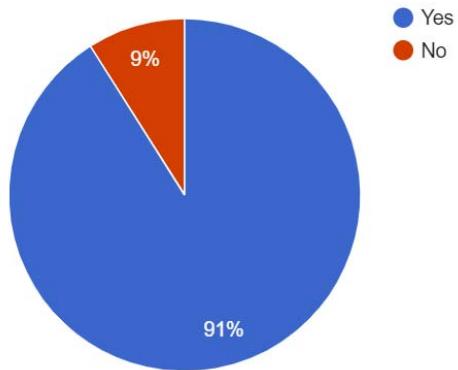
91% of the respondents said they have basic knowledge of AI, and the rest, 9%, said they do not know about AI.
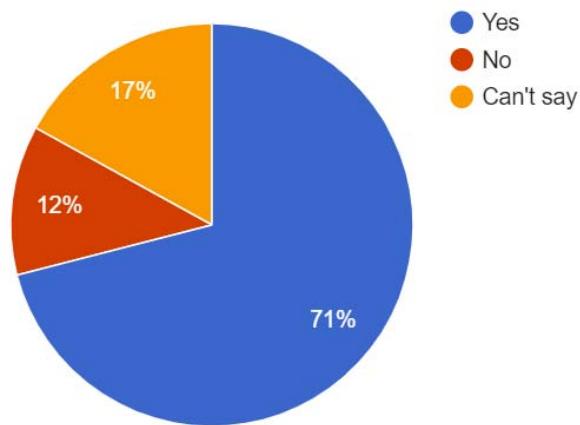
71% of respondents have answered that they are aging with Human Rights are affected by Artificial Intelligence, 12% have answered that Human Rights may not be affected by Artificial Intelligence, whereas 17% have answered they cannot say.
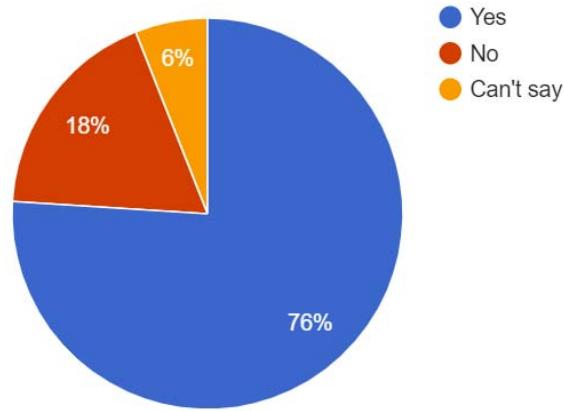
76% of respondents have answered that AI has the potential to significantly transform the way we live and work, 18% have answered that AI does not have the potential to significantly transform the way we live and work, whereas 6% have answered they cannot say.
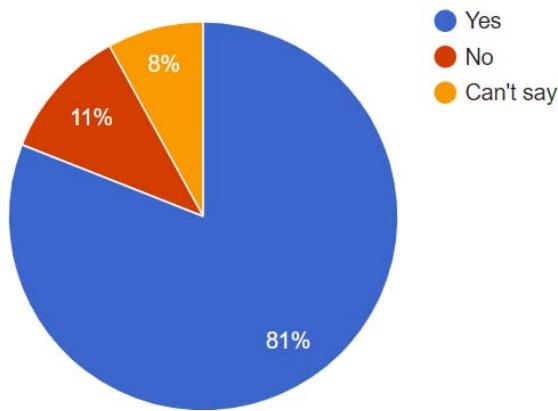
81% of respondents have answered that there should be regulations or guidelines to govern the development and use of AI, 11% have answered that there is no need of regulations or guidelines to govern the development and use of AI, whereas 8% have answered they cannot say.
5. What do you Suggest to Prevent such Damage?
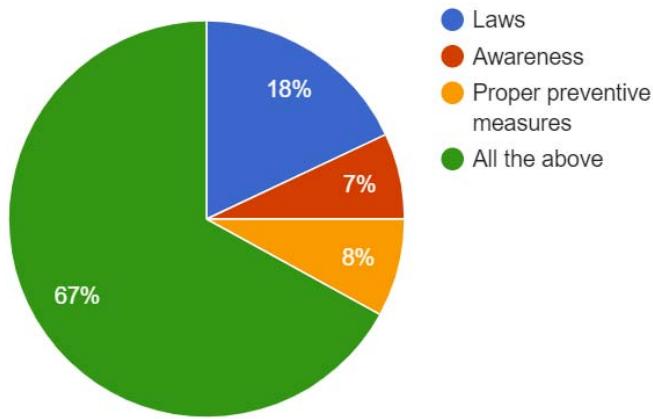
67% of the respondents stated that the Governments must make proper laws, 7% stated that proper awareness is suggestible, 8% stated that Tech Companies who adopt AI should take proper preventive steps, and 66% of respondents stated It is the responsibility of all.
## VIII. RECOMMENDATIONS
A comprehensive approach encompassing cooperation between governments, business, academia, and civil society is required to lessen these socioeconomic obstacles. Investments in education and training programs can assist people in adapting to the shifting nature of employment, while policies and regulations should be devised to ensure a fair and inclusive transition to an Al-driven society. Furthermore, promoting moral behavior and open discussion around AI can help the technology be used ethically and sustainably.
Addressing the issues requires a combination of technical solutions, ethical frameworks, and regulatory measures. Researchers, policymakers, and industry professionals are actively working towards developing standards and best practices to ensure the security, transparency, and responsible use of AI technology.
Governments, organizations, and researchers are attempting to create ethical frameworks and guidelines for responsible AI development and deployment to address these ethical and privacy problems. Aiming to ensure that AI is created and used in a manner that respects individual rights, promotes fairness, and is in line with societal values are initiatives including the creation of AI ethical committees, regulatory frameworks, and industry standards.
AI-related unemployment challenges necessitate proactive initiatives, including:
The shift to AI-driven sectors can be facilitated by investing in educational and vocational training programs.
2. Job Creation and Entrepreneurship: Encouraging entrepreneurship and innovation can lead to the development of new jobs and aid the expansion of sectors related to artificial intelligence. Supporting small businesses and encouraging new ventures can help the economy thrive and create jobs.
3. Social Safety Nets and Income Support: Implementing social safety nets and income support programs can act as a safety net for employees who have lost their jobs as a result of AI. This includes monetary support for retraining programs, job placement services, and unemployment benefits.
4. Collaboration and Policy Development: To create laws and regulations that address the socioeconomic effects of AI, governments, corporations, and academia should work together. This involves considering policies like work transition assistance, labor market restrictions, and ethical standards for the application of AI.
Societies can better handle the potential issues of AI-related unemployment by taking a comprehensive approach that incorporates technical development, skill development, and supportive legislation. This will also help to build a more inclusive and sustainable workforce for the future.
Proactive steps are needed to address these cybersecurity issues.
1. Robust Data Protection: Strong data encryption, access controls, and secure storage techniques can all be used to safeguard sensitive data from being accessed or disclosed by unauthorized parties.
2. Adversarial Defense Mechanisms: Using methods like robust training, anomaly detection, and model verification, it is possible to create AI models that are resistant to adversarial attacks and hence improve system security.
3. Ethical AI Development: Promoting the creation and implementation of ethical norms and guidelines for AI can help reduce biases and guarantee that the technology is used fairly and responsibly.
4. Enhanced Cybersecurity Measures: Advanced threat detection systems, intrusion prevention systems, and reaction mechanisms can assist organizations protect against cyberattacks powered by AI. Enhanced cybersecurity measures.
5. Explainable AI: Investigating and developing methods for interpretable and explicable AI might increase openness and make it easier to spot potential flaws or biases.
6. Collaboration: Promoting knowledge, best practices, and threat information sharing amongst business,
academic, and government organizations can improve cybersecurity overall resilience in the context of AI.
We can maximize the benefits of AI while reducing the dangers involved and preserving the security and integrity of AI-powered systems and data by tackling the cybersecurity concerns and taking preventative action.
The resolution of accountability challenges in AI necessitates coordinated efforts and aggressive actions:
1. Standards and Guidelines for Ethics: Creating and implementing ethical frameworks and principles for AI can serve as a foundation for accountability. This incorporates values like openness, equity, responsibility, and accountability in the creation and application of AI.
2. Regulatory Frameworks: In creating legal frameworks that specify the obligations and liabilities of stakeholders involved in AI systems, governments and regulatory organizations can play a critical role. These frameworks ought to take bias reduction, data security, and transparency into account.
3. Algorithmic Auditing: Routine auditing and evaluation of AI systems can assist in discovering biases, mistakes, and unintended effects. Independent audits can guarantee accountability and adherence to moral and legal requirements.
4. Explainable AI: By advancing research and development of explainable AI models, stakeholders will be able to better understand and assess how AI systems make decisions.
5. Education and Awareness: Promoting a culture of accountability requires raising knowledge and understanding of AI among policymakers, organizations, and the general public. This includes educating people on the restrictions, dangers, and ethical issues related to AI.
We can encourage responsible AI development and deployment by addressing accountability problems, ensuring that AI technologies are used in a way that is consistent with moral and societal norms while reducing the possibility of harm.
## IX. CONCLUSION
In conclusion, the tour through the thorough overview of the Artificial Intelligence (AI) frontier reveals its development, underlying ideas, and game-changing applications. The investigation highlights the importance of moral considerations and responsible deployment while also pointing to a future of cooperation, innovation, and possible solutions. This overview highlights the significance of adjusting to AI's changing environment with knowledge and purpose, participating in its developing story to harness its power for advancement and human improvement.
The assessment of Al's difficulties in various fields, emphasizes the necessity for industry-specific solutions. Significant themes include the human-technology balance, bias mitigation, ethical considerations, privacy issues, and privacy concerns. This analysis emphasizes the significance of responsible Al deployment and stresses that the full promise of technology can only be realized by carefully considering its implications. Stakeholders may use Al's revolutionary power for innovation and efficiency while preserving moral norms and societal well-being by tackling these issues as a group. In order to negotiate its difficulties and maximize its advantages, the process of integrating Al across industries is continuous.
[^1]: Development of New Skills and Retraining for Jobs that Complement AI Technology: Giving workers the chance to do both can help reduce unemployment. _(p.25)_
[^2]: Do you think that emerging Artificial Intelligence is a threat Human Rights? _(p.24)_
[^3]: Do you believe that AI has the potential to significantly transform the way we live and work? _(p.24)_
[^5]: Africa: Al in Africa is gaining momentum with increased investment and interest. It is being utilized to tackle societal and economic issues in sectors such as agriculture, healthcare, and education. Startups and research institutions are driving innovation, focusing on solutions tailored to local challenges. However, obstacles such as limited infrastructure, data access, and skill gaps remain. Collaboration and knowledge sharing are playing a crucial role in advancing AI development in Africa. _(p.21)_
[^6]: Asia: AI in Asia is thriving with significant advancements and investment. Countries like China, Japan, and South Korea lead in AI research and development. Various sectors, such as healthcare, finance, and manufacturing, are embracing AI technologies. Governments are actively supporting AI infrastructure and talent development. The region's market diversity and abundant data sources contribute to its thriving AI ecosystem. AI in India is experiencing rapid growth and innovation. The country has a strong focus on AI research and development, with prominent institutions and startups driving advancements. The government has launched initiatives to promote AI adoption, such as the National AI Strategy and Al-focused centers of excellence. Key sectors like healthcare, agriculture, and education are leveraging AI for transformative solutions. India's large population and vast data availability offer immense opportunities for AI applications and development. _(p.21)_
[^7]: Nick Bostrom, "Super intelligence: Paths, Dangers, Strategies", 2014 _(p.4)_
[^8]: Kevin Warwick, "Artificial Intelligence: The Basics", 2011 _(p.4)_
[^9]: Giuseppe Bonaccorso, "Machine Learning Algorithms", 2nd Edition, Packt, 2018 _(p.4)_
[^10]: Parag Mahajan, "Artificial Intelligence in Healthcare: AI, Machine Learning, and Deep and Intelligent Medicine Simplified for Everyone", 2019 _(p.4)_
[^13]: Tom Mitchel "Machine Learning", Tata McGraW Hill, 2017. _(p.5)_
[^14]: Ganguly Kuntal, "Learning generative adversarial networks: next-generation deep learning simplified", Packt Publishing, 2017. _(p.6)_
[^15]: Josh Patterson, Adam Gibson "Deep Learning: A Practitioner's Approach", O'Reilly Media, 2017. _(p.6)_
[^22]: Stuart Russell, Peter Norvig, "Artificial Intelligence: A Modern Approach", 3rd Ed., Prentice Hall, 2010. _(p.8)_
[^33]: Giuseppe Bonaccorso, "Machine Learning Algorithms", 2nd Edition, Packt, 2018 _(p.11)_
[^34]: Adelyn Zhou, Mariya Yao, and Marlene Jia, "Applied Artificial Intelligence: A Handbook for Business Leaders", 2018 _(p.11)_
[^35]: Osondu Oguike, "A First Course in Artificial Intelligence", 2021 _(p.12)_
[^4]: Should there be Regulations or Guidelines in Place to Govern the Development and use of AI? _(p.25)_
[^11]: Abhishek Vijavargia "Machine Learning using Python", BPB Publications, 1st Edition, 2018 _(p.5)_
[^12]: Yuxi Liu, "Python Machine Learning by Example", 2nd Edition, PACT, 2017 _(p.5)_
[^16]: Umberto Michelucci "Applied Deep Learning. A Case-based Approach to Understanding Deep Neural Networks" Apress, 2018. _(p.6)_
[^17]: $^{17}$ LiMin Fu, "Neural Networks in Computer Intelligence", McGraw-Hill edition, 1994. _(p.6)_
[^18]: Umberto Michelucci "Applied Deep Learning. A Case-based Approach to Understanding Deep Neural Networks" Apress, 2018. _(p.7)_
[^19]: Sowmya Vajjala, Bodhisattwa Majumder, Anuj Gupta & Harshit Surana "Practical Natural Language Processing: A Comprehensive Guide to Building Real world NLP Systems", O' Reilly Media, Inc., 1st Edition, 2020. _(p.7)_
[^20]: V Kishore Ayyadevara and Yeshwanth Reddy, "Modern Computer Vision with PyTorch: Explore Deep Learning Concepts and Implement Over 50 Real-world Image Applications", 2020 _(p.8)_
[^21]: Elaine Rich and Kevin Knight, "Artificial Intelligence", Tata McGraw Hill, 3rd Edition, 2018. _(p.8)_
[^23]: Osondu Oguike, "A First Course in Artificial Intelligence", 2021 _(p.8)_
[^24]: Biochemistry: It was used to provide the likely structures of all proteins in the human body and all proteins known to science (more than 200 million). AlphaFold two can determine the 3D structure of a (folded) protein in hours as opposed to the months required by older automated approaches. _(p.17)_
[^25]: Chemistry and Biology: Drug design has made use of machine learning. Additionally, it has been used to investigate huge chemical/reaction spaces and predict molecular attributes. The origins of life on Earth, drug syntheses, and developing pathways for recycling 200 industrial waste chemicals into effective drugs and agrochemicals (chemical synthesis design) have all been investigated using computer-planned syntheses via computational reaction networks. This platform combines "computational synthesis with AI algorithms to predict molecular properties." The subject of the investigation has been which forms of computer-aided chemistry would benefit from machine learning. "Drug discovery and development, drug repurposing, improving pharmaceutical productivity, and clinical trials" are possible uses. Proteins with predetermined functional locations have been designed using it. _(p.17)_
[^26]: $^{26}$ https://www.ailforanyone.org/glossary/stanford-research-institute-problem-solver#: ~:text=STRIPS%20is%20a%20formalism%20used, in%20AI%20applications%20since%20then. _(p.9)_
[^27]: Astronomy, space activities, and ufology: Artificial intelligence is used in astronomy to analyze the ever-growing amounts of available data and applications, primarily for "classification, regression, clustering, forecasting, generation, discovery, and the development of new scientific insights," such as finding exoplanets, predicting solar activity, and differentiating between signals and instrumental effects in gravitational wave astronomy. It could also be utilized for space operations like exploration, which includes data processing from space missions, real-time scientific decision-making for spacecraft, avoiding space junk, and more autonomous operations. _(p.17)_
[^28]: https://www.cs.utexas.edu/users/mooney/cs343/slides/pop.pdf _(p.9)_
[^29]: Trivedi M.C., "A Classical Approach to Artificial Intelligence", Khanna Publishing House, Delhi, 2018. _(p.9)_
[^30]: Tom Taulli, "Artificial Intelligence Basics: A Non-Technical Introduction", 2019 _(p.9)_
[^31]: Online and Telephone Customer Service: An automated online assistant working as a website's customer support representative _(p.18)_
[^32]: Andrew Barto and Richard S. Sutton, "Reinforcement Learning: An Introduction", 2018 _(p.10)_
Generating HTML Viewer...
References
37 Cites in Article
James Stone (2019). Artificial Intelligence Engines: A Tutorial Introduction to the Mathematics of Deep Learning.
Peter Norvig,Stuart Russell (1995). Artificial Intelligence: A Modern Approach.
Nick Bostrom (2014). Superintelligence: Paths, Dangers, Strategies.
Ethem Alpaydın (2016). Machine Learning: The New AI.
Paul Daugherty,Jim Euchner (2018). Human + Machine: Collaboration in the Age of AI.
Tom Taulli (2019). Artificial Intelligence Basics.
Kevin Warwick (2011). Artificial Intelligence: The Basics.
John Mueller,Luca Massaron (2018). MATLAB für Dummies von Jim Sizemore und John Paul Mueller.
Parag Mahajan (2019). Artificial Intelligence in Healthcare: AI, Machine Learning, and Deep and Intelligent Medicine Simplified for Everyone.
Christopher Bishop (2016). Pattern Recognition and Machine Learning.
Osondu Oguike (2021). A First Course in Artificial Intelligence.
Andrew Barto,Richard Sutton (2018). Reinforcement Learning: An Introduction.
Stuart Russell,Peter Norvig (2010). Artificial Intelligence: A Modern Approach.
Sowmya Vajjala,Bodhisattwa Majumder,Anuj Gupta,Harshit Surana (2020). Practical Natural Language Processing: A Comprehensive Guide to Building Real world NLP Systems.
James Allen (1995). Natural Language Understanding.
Tanveer Siddiqui,U Tiwary (2008). Language Networks.
Stuart Russell (2019). Human Compatible.
Melanie Mitchell (2020). Artificial Intelligence: A Guide for Thinking Humans.
Adelyn Zhou,Mariya Yao,Marlene Jia (2018). To Avoid Wasting Money on Artificial Intelligence, Business Leaders Need More AI Acumen.
Pedro Domingos (2015). The master algorithm: how the quest for the ultimate learning machine will remake our world.
Tom Mitchell (1997). Machine Learning.
Limin Fu (1994). Neural Networks in Computer Intelligence.
Umberto Michelucci (2018). Applied Deep Learning.
Giancarlo Zaccone,Md,Ahmed Rezaulkarim,Menshawy (2017). Deep Learning with TensorFlow: Explore neural networks with Python.
Denis Rothman (2021). Transformers for Natural Language Processing: Build innovative deep neural network architectures for NLP with Python, PyTorch, TensorFlow, BERT, RoBERTa, and more.
I Goodfellow,Y Bengio,A Courville (2016). Deep Learning.
Josh Patterson,Adam Gibson (2017). Deep Learning: A Practitioner's Approach.
Ayyadevara Kishore,Yeshwanth Reddy (2020). Modern Computer Vision with PyTorch: Explore Deep Learning Concepts and Implement Over 50 Real-world Image Applications.
Explore published articles in an immersive Augmented Reality environment. Our platform converts research papers into interactive 3D books, allowing readers to view and interact with content using AR and VR compatible devices.
Your published article is automatically converted into a realistic 3D book. Flip through pages and read research papers in a more engaging and interactive format.
Our website is actively being updated, and changes may occur frequently. Please clear your browser cache if needed. For feedback or error reporting, please email [email protected]
Thank you for connecting with us. We will respond to you shortly.