
I. INTRODUCTION
The issue of women's perspective in the law is recent, being an expression of the demands of women's rights in history and this has permeated justice. Likewise, the normative vision of gender has been moving from the supranational level to the internal legal system of El Salvador.
This academic contribution is part of the research for the author's doctoral thesis on the administration of justice with a gender perspective in crimes of violence against women. Special reference to the Law of El Salvador, at the American University in Nicaragua and the University of Salamanca in Spain.
The motivation to study this topic lies in highlighting the importance of understanding that applying justice with a gender perspective in cases of crimes of violence against women and femicide violence, constitutes a tool that contributes to progress towards effective equality, mainly in the evaluation of the evidence and that it is one of the main difficulties towards the fundamental right to effective judicial protection and to achieve the deconstruction of the stereotypes that discriminate against women due to their gender mainly in the field of Law.
This is a socio-legal investigation, with an interdisciplinary approach that links the science of law with gender studies, to contribute to scientific knowledge regarding innovations in criminal and procedural law.
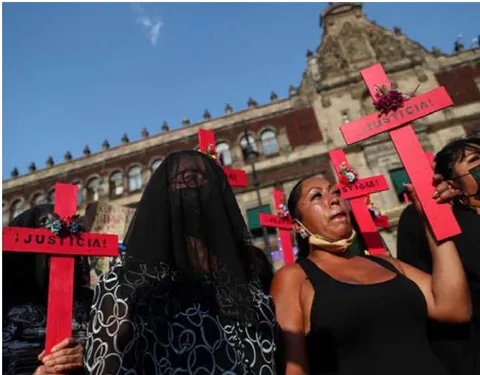
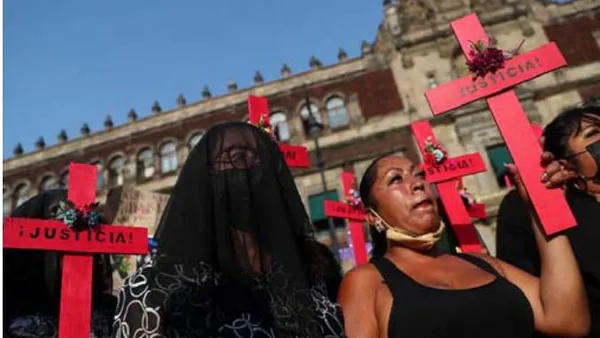
Thus, this research addresses the legal problem of femicide violence in the context of the legal regime of El Salvador, mainly in the field of criminal and procedural law, suffered by women and their families, due to the lack of a legal figure or an action protocol. In cases of femicides, it establishes a methodology for analyzing the legal phenomenon that incorporates the gender perspective as an interpretative criterion.
The objective of this study is to contribute to the research and transfer of knowledge on gender equality from intersectionality, aiming to protect the fundamental rights of women with the application of justice from a gender perspective and from an intersectional approach, which forms one of the fundamental pillars of the rule of law in any democratic society.
The scientific contradiction detected is that, in the legal context of El Salvador, despite having a corpus luris protecting women's rights, legal practices permeated with discriminatory stereotypes towards women based on gender, whether institutionalized or persist by law or in practice.
Caused by the absence of an analysis methodology based on fundamental rights, equality, non-discrimination, life and personal integrity, and effective judicial protection, all recognized in political constitutions and international human rights instruments, which allows equitable justice to be applied.
Throughout this research, the hypothesis of searching from the application of the science of Law, the use of "gender" as a category of analysis, and "the gender perspective" as a legal methodology binding on the principle of equality and non-discrimination is supported. having the criminal process as the main constitutional guarantee, for addressing the sociocultural problems that women experience and the obstacles they face to the real exercise of their rights. Pretending that Law and justice serve as hope for Salvadoran women victims of gender violence.
This contribution deals with academic research in the field of legal science from an interdisciplinary approach linking gender studies with procedural law. It originates from the reflections raised in two articles by the doctoral student: "Access to family justice for women victims of gender violence. A look from Salvadoran law", published in the Scientific Journal of Social Studies (RCES) (Quintana Marxelly, 2022). "Access to family justice for women victims of gender violence. A view from Salvadoran law", published in the European and Ibero-American Journal of Thought and Analysis of Law, Political Science and Criminology of the University of Salamanca A/S, Ars Iuris Salmaticensis (Quintana Marxelly, 2023).
And "Application of law with a gender perspective towards equal justice. A challenge to eradicate violence against women in the legal regime of El Salvador", published in the European and Ibero-American Journal of Thought and Analysis of Law,
Political Science and Criminology of the University of Salamanca A/S, Ars Iuris Salmanticensis (Quintana Marxelly, 2024). These investigations are produced within the framework of the author's doctoral training.
To support positions in this study, the Methodology of the science of law by Larenz K. (2001) is used to address the problem. The socio-legal research methods of Villabella A. (2020) and the Comparative Law method of Dr. Lucio Pegoraro (2016), as well as the observation method and the documentary research technique to analyze the reality in which the author works: El Salvador, but also takes up experiences from other legal contexts in Mexico, Cuba, Chile, Argentina, Colombia, Guatemala, and Nicaragua among others, on how to administer justice with a gender perspective. It is suggested that these experiences be taken up again, to guarantee the protection of the rights of Salvadoran women in the process of an equal administration of justice.
The aforementioned legal contexts have delved into a new jurisprudential trend on how to administer justice with a gender perspective, called by some "gender-sensitive methodologies" to standardize through action protocols the jurisprudential criteria for judging with a gender perspective. Proposed as a practical instrument to realize the gender perspective towards effective equality.
Certainly, although the country has laws, jurisprudence, and doctrine with significant advances in matters of gender equality, until now the victim is the one largely forgotten in the criminal process. And the problem of violence against women and femicides in El Salvador has not stopped.
Within this order of ideas, the report of the Inter-American Commission on Human Rights (2019) observes that multiple structural factors perpetuate discrimination against women: gender stereotypes and these increase their risk situation. Among these factors, the Commission has mentioned machismo and the prevalence of sexist stereotypes, as well as historical discrimination connected to the social fabric, coupled with social tolerance against violence against women, in all its dimensions, physical, psychological, sexual, economic, among others (OEA, CIDH, 2019, paragraph 94).
Evidenced by the aforementioned, the prevalence of gender stereotypes, and the influence of discriminatory sociocultural patterns present in the imagination of judicial operators, is one of the main obstacles that women victims of violence face in accessing justice. Which in most cases translates into inaction on the part of police, prosecutors, and judges when reporting these violent events.
The relevant review is what was pointed out by the Inter-American Commission on Human Rights (2021) in its report on the Situation of human rights in El Salvador, observing that:
The Commission received information on the prevalence of misogynistic, sexist, and discriminatory socio-cultural patterns that permeate Salvadoran society as a whole and impact the rights of women and lesbian, gay, bisexual, trans, and gender diverse and intersex (LGBTI) people to live free of violence and discrimination (OEA, CIDH, 2021, paragraph 176).
This analysis indicates that these socio-cultural and misogynistic patterns have resulted in the normalization and tolerance of violence against women and against LGBTI people, as well as in a facilitating context for its occurrence, and a situation of generalized impunity for these Crimes (OEA, CIDH, 2021, paragraph 177).
The Salvadoran legal context must apply minimum standards through a protocol of judicial action to guarantee women the right to a life free of violence and discrimination, contained in various international instruments, including their right to access to a simple and effective judicial remedy, and thus have the proper guarantees that protect them when they report acts of violence. To overcome stereotypes that cause discrimination and inequality between women, men, and LGBTI+ people.
Therefore, the question that this research attempts to answer is: How to incorporate the gender perspective in sentences to guarantee the effective protection of women's fundamental rights in light of the constitutional and supranational standards of human rights towards Equal justice without discriminatory stereotypes?
To answer this question, the idea that this author defends with this study is to present lege ferenda proposals to strengthen legal frameworks by incorporating gender intersectionality in jurisdictional decisions to guarantee the fundamental rights of women, in the process of the materialization of the right to equality in jurisdictional decisions.
The result is that using the gender perspective as a method of analysis in the administration of justice in El Salvador from a focus on the right to effective judicial protection, according to numerous authors, allows us to visualize the asymmetric relationships, prejudices, and stereotypical patterns due to gender in specific cases, which are key elements, in the investigation, classification of the crime, evaluation of the evidence and the judicial ruling.
Gender is a useful category for the analysis of the legal phenomenon, as maintained by multiple authors, who have made significant contributions from gender theory, including Ojempe de Gouges (1791), Simone de Beauvoir (1949), Marcela Lagarde (1996), Marta Lamas (1996), Alda Facio A. (1992), Abboud Castillo, N. (2016), Kemelmajer de Carlucci (2019), González Ferrer & Pérez G. (2021) and Del Pozo Pérez (2023), among others.
So far what has been said, it is evident in this study that, given the existing gender gaps in the current norms, jurisprudence, and doctrine of the Salvadoran legal context, it is necessary to have an action protocol that contains the theoretical-practical criteria and that contributes to the elimination of discrimination due to gender stereotypes and in a particular way, to serve as a guide of action for those who interpret and apply the law and thus guarantee the full realization of the principle of equality and non-discrimination with observance of other fundamental principles such as those of justice, independence and impartiality. What it is about is stopping this problem (Quintana Marxelly, 2024, p. 91).
As the Belém do Para Convention points out, violence against women not only constitutes a violation of human rights but is also an offense to human dignity and a manifestation of the historically unequal power relations between women and men, which transcends all sectors of society regardless of their class, race or ethnic group, income level, culture, educational level, age or religion and negatively affects its foundations (UN, 1979, Preamble).
In response to what has been stated, it is demonstrated that the influence of these sexist stereotypes can also negatively affect the investigation of specific cases, mainly, the evaluation of the evidence and finally the development of sentences.
Meanwhile, this study shows that the use of gender stereotypes in legal arguments, in addition to violating the fundamental rights of individuals, violates the principle of judicial impartiality.
In conclusion, in this section the issue of equity and gender equality between women and men is an extremely complex issue rooted in structural inequalities that one gender has suffered and suffers from specifically: women.
What has been argued up to this point is that it is through the history of family relationships that they have been legally regulated from a patriarchal perspective, under the conception that women must assume traditional roles of caregivers, submissive, dependent, reproductive, and homemakers. These conditions related to gender relations have contributed to discrimination and violence against women.
II. IMPORTANCE OF GENDER AS A CATEGORY OF ANALYSIS OF THE LEGAL PHENOMONIN CASES OF CRIMES OF VIOLENCE AGAINST WOMEN
Gender is a useful category for the analysis of the legal phenomenon, of relatively new construction and is generally understood or ignored, since gender is a complex category since it has constitutive elements of social relations and significant power relations.
Considering that it is essential for legal operators to start from a solid conceptual base that allows them to effectively develop better elements to comply with their constitutional and conventional obligations.
To achieve the previous goal, the development that has occurred around the concept of gender and gender perspective from International Human Rights Law, the doctrine from gender theory, and in domestic law is analyzed.
Thus, with the elements obtained in the development of this topic in the three indicated sources, it is intended to propose a concept that delimits the scope and content of gender in the field of law.
It should be noted that gender is a necessary category of analysis to consider in the application of generic and conventional norms of women's fundamental rights to guarantee effective judicial protection.
Therefore, one of the necessary definitions to administer justice in cases of crimes of violence against women and femicide violence is to define the concept of gender.
Taking into account that the word and gender studies are relatively recent in normative history.
Del Pozo Pérez (2023), in her studies, has raised the need to incorporate gender as a hermeneutical methodology of the legal phenomenon, to judge with a gender perspective in judicial decisions in cases of violence against women. Who has identified the training deficit of the people called to intervene in the investigation of these criminal acts. Stating that:
If we use the gender perspective in the analysis of the case, both in taking the victim's statement and in the rest of the proceedings, we will contribute to the most effective protection of survivors of gender violence and to their obtaining effective judicial protection. of the system (Del Pozo Pérez, 2023, p. 16).
Thus, this study shows the need to avoid jurisdictional decisions permeated with discriminatory stereotypes, which cause asymmetries in the application of legal norms, hindering access to justice, to guarantee effective judicial protection of women's rights in equality with men.
Indeed, failure to act with due diligence in cases of crimes of violence against women constitutes a form of discrimination, a denial of their right to equal protection of the law, and a breach of the State's duty to guarantee access to Justice.
III. IMPORTANCE OF THE GENDER PERSPECTIVE AS A BINDING METHODOLOGY FOR EQUAL JUSTICE
Using the gender perspective as a methodology for analyzing the legal phenomenon binding on inclusive justice results in access to justice for those who, due to their biological, physical, sexual, gender, or contextual conditions, see their fundamental rights violated. Equally important is to avoid the use by those who judge misogynistic and indecorous language in jurisdictional decisions.
Since it shows stereotypes, and discriminatory prejudices towards women based on their gender, as well as practices that re-victimize women victims of gender violence.
The result is that the use of inclusive language is not only a way to dismantle inequalities and power asymmetries but also an obligation for those who administer justice in Mexico, particularly when judging with a gender perspective. (Supreme Court of Justice of the Nation of Mexico, 2022, p.236)
Since language is one of the key factors that determine cultural and social attitudes, using gender-inclusive language is an extremely important way to promote gender equality and combat gender bias. (United Nations, 2019).
The application of justice with a gender perspective is a translation and application method that uses gender theory to correctly apply the principle of equality between the parties; as well as the constitutional and supranational legal standards of reinforced protection for populations in situations of discrimination to be applied and interpreted in all procedural and substantive norms.
Which is why numerous authors, with whom the undersigned agree, have established that gender is a useful category for historical analysis. Being gender is a cultural construction and not a trait that derives naturally from the sex with which one is born (Lamas, 2013, p. 111). Hence it is stated that gender is established as the primary form of significant power relations (Scott, W. 2013).
Thus, the gender perspective manages to vindicate the rights of victims and prevents their revictimization, guaranteeing the legal protection of women's rights on a basis of equality with men, before the competent national courts.
This is what Figueruelo Burrieza, A. (2012) maintains, a postulate that I share, stating that the gender perspective is the key to applying it in the administration of justice, arguing that understanding the Law with a gender perspective requires understanding that only equality will be achieved. when legal norms are developed taking into account the sum of the genders (material equality) and not when the same rights for women and men are recognized in the regulatory framework (formal equality).
Only in this way will we achieve a new concept of women and men, with their functions in society and the family, as well as in their reciprocal relationships, indicating that:
The gender perspective and transversality must be understood as a means to promote women's rights and as an instrument to clearly and precisely mobilize all political actions towards the achievement of real and effective equality (Figueruelo B., 2012, pp. 59-76).
Based on the above, what is intended with the use of the gender-sensitive methodology is to provide judges with tools to confront the effects on the protected legal rights of women, such as human dignity, life, integrity, and protection of the rights of women in vulnerable situations.
Thus, the legal protection of women's rights on a basis of equality before national courts are enshrined in CEDAW, in article 2 literal c, where the State's commitment is defined in these terms:
The legal protection of the rights of women on a basis of equality with those of men and guarantee, through the competent national courts and other public institutions, the effective protection of women against all acts of discrimination. (CEDAW, 1981, art. 2, literal c) In these situations, the State must, as established by CEDAW, stop doing or preventing anything that has the purpose or result of impairing or nullifying the exercise for women, of the human right to access to justice.
There is a supranational commitment of the state of El Salvador to recognize that violence against women is a violation of human rights and is a form of discrimination. This means that States are held responsible if they do not respond appropriately to this type of violence.
Violence against women is a socio-cultural problem that violates human rights and endangers the development of society. It constitutes the most complete expression of the degradation and attack on human dignity, an inherent and inalienable human right of the human person.
The fact that different manifestations of violence against women and femicides continue to be recorded every day shows that they are a consequence of a crisis of values that affects the family, a crisis that normally has its causes in what the woman suffers, the fruit of unequal justice based on gender.
This is evident in this study, the relevance of keeping the gender perspective in mind in the legal field, since it is an important route to be able to conceive and implement Human Rights in their real dimension. It turns out that only through law and justice used as instruments of social change can women will be able to achieve equity and gender equality.
IV. CONCLUSION
Gender is a useful category for the analysis of the legal phenomenon, of relatively new construction and is generally understood or ignored, since gender is a complex category, since it has constitutive elements of social relations and significant power relations.
Meanwhile, the integration of the gender perspective, intersectionality, and inclusive and nonsexist language in jurisdictional activity in the administration of Salvadoran justice in cases of crimes of violence against women is a normalized and binding obligation for all bodies. judicial, and that it is a matter that is difficult to apply, due to:
First, because of its new concepts. Second, due to the need to apply a contextualized and pro-person approach from a human rights perspective. Third, because it conflicts with traditional legal dogmatics and the need for the judicial power to break paradigms, in this regard I am referring to the legal culture immersed in a patriarchal system. Fourth, due to the difficulty in identifying the discriminatory stereotypes present in norms, jurisprudence, and doctrine.
Fifth, due to the lack of training in the administration of justice in gender matters, which extends to all levels that operate justice: prosecutor's office, police, forensic experts, litigants, etc.
In short, gender is a social construction that is generated, maintained, and reproduced fundamentally in the symbolic spheres of language and culture. Therefore, gender is a way of understanding those historically discriminated against, women, not as an isolated element of society, but as an integral part, both of the family and of society as a whole.
In summary, when talking about administering justice from a gender perspective, reference is made to a necessary interpretation tool to focus on the concepts of discrimination and violence against women, showing us that they are a structural and systematic phenomenon and not something anecdotal among socially isolated subjects.
Facilitating the people who administer justice, to apply the Law through the lenses of gender, to allow them to review the norms, sentences, in short, the Law in general, and make gender stereotypes visible in the work of investigation, prosecution, and sanction in the process's judicial cases of violence against women. The differences between women and men occur not only due to their biological determination but also due to the cultural differences assigned to human beings.