An assessment of landuse and landcover (LULC) patterns and changes at catchment level is crucial to planning and management of dam reservoirs. LULC changes over a 30-year period for 9 reservoir catchments in northern Ghana were assessed using a mixed-method approach involving GIS/remote sensing technique and key informant interviews. Four major LULC namely; cropland, water bodies, built-up land and open savannah woodlands were identified and classified from 1986, 1996, 2006 and 2016 LandSat TM images of the reservoir catchments. Substantial changes in LULC were observed in the reservoir catchments from 1986 to 2016, mainly through the conversion of large areas of closed and open savannah woodlands to cropland and built-up areas. Across all the catchments, cropland and built-up land increased significantly whilst water bodies, open savannah woodland and closed savannah woodland experienced a declined over the past 30-years.
## I. INTRODUCTION
Landuse and landcover (LULC) changes in reservoir catchments around the globe have significant environmental implications and consequences, which may include distresses in hydrological cycles, loss of biodiversity, increase in soil erosion, sediment loads and reservoir sedimentation (Lambin and Geist, 2006). Changes in LULC in a reservoir catchment can be categorized by the complex interaction of structural and behavioral factors associated with technological capacity, demand and social relations that affect both environmental capacity and the demand, along with the nature of the environment of interest (Verburg et al., 2004). Changes in LULC are primarily associated with anthropogenic activities such as deforestation, bush burning, urbanization, construction of dams and agriculture (Yigzaw and Hossain, 2016). Anthropogenic activities have been identified as the main cause of landuse/landcover changes and sedimentation in the Shiyang Reservoir in China with $43\%$ of woodland areas converted into agricultural land (Zhou, 2002). Mzuza et al. (2017) reported that the Nkula Dam in the Middle Shire River Catchment in Malawi had been threatened with massive sedimentation and this was attributed to increased human population and agricultural activities in the reservoir catchment. In Ghana, a similar study conducted by Boakye et al. (2008) to assess the impact of landuse changes in the Barekese catchment on its associated reservoir revealed a loss in reservoir storage capacity of $45\%$ due to sedimentation over a period of six years. The causes for the rapid rate of sedimentation of the reservoir were attributed to deforestation, population growth and lack of proper education of the communities in catchment management.
Increased demands on available resources mainly due to expanding population globally have led to the clearing of marginal lands for agricultural production and for settlement purposes. This has resulted in increased erosion, more rapid rates of sediment loading in reservoirs and reduced socio-economic benefits which they were constructed for (Mavima et al., 2011). In northern Ghana, the estimated mean annual soil loss in reservoir catchments ranged from 3.71 - 8.17 t/ha/yr and this could potentially contribute to sedimentation of their associated reservoirs (Adongo et al., 2019a). Spatial and temporal data on landuse and landcover changes is required to arrive at informed decisions in integrated water management (Mavima et al., 2011). LULC Change detection involves applying multitemporal remote sensing information to analyze the historical effects of an occurrence quantitatively and thus helps in determining the changes associated with land cover and landuse properties with reference to the multi-temporal datasets (Ahmad, 2012; Seif and Mokarram, 2012).
In recent years, a variety of LULC change detection techniques and algorithms have been developed that make use of remotely sensed images. The most commonly used techniques include; Unsupervised classification, Supervised classification, Principal Component Analysis, Hybrid classification, Fuzzy classification, image overlay, classification comparisons of land cover statistics, change vector analysis, image rationing and the differencing of Normalized Difference Vegetation Index (NDVI) (Duadze, 2004). With proper understanding of the spatial and temporal variations occurring in a reservoir catchment over time and the interaction of the hydrological components of a reservoir catchment with each other, better water conservation strategies can be formulated (Ashraf, 2013). The question regarding information on landuse and landcover changes over time, and their driving forces in the reservoir catchments in northern Ghana are not known. Such knowledge is critical to the development of policies and action plans necessary for controlling sediment accumulation in reservoirs. Therefore, this study was carried out using GIS and Remote Sensing applications to analyze the extent of changes in nine (9) reservoir catchments over a period of 30 years in northern Ghana.
## II. MATERIALS AND METHODS
### a) Study Area
The study was carried out in nine (9) reservoir catchments in northern Ghana as presented in Table 1 which also contains their principal characteristics and with Fig. 1 being the maps of the study sites.
Table 1: Study Reservoirs and Their Principal Characteristics
<table><tr><td colspan="2">Region</td><td colspan="3">Northern</td><td colspan="3">Upper East</td><td colspan="3">Upper West</td></tr><tr><td colspan="2">Reservoir</td><td>Bontanga</td><td>Golinga</td><td>Libga</td><td>Gambib go</td><td>Tono</td><td>Vea</td><td>Daffiama</td><td>Karni</td><td>Sankana</td></tr><tr><td colspan="2">District/Municipality</td><td>Kumbungu</td><td>Tolon</td><td>Savelugu</td><td>Bolgatan ga</td><td>Kassena - Nankana</td><td>Bongo</td><td>Daffiama-Bussie-Issa</td><td>LambuSSie-Karni</td><td>Nadowli-Kaleo</td></tr><tr><td colspan="2">Location Coordinates</td><td>9° 57'N1° 02'W</td><td>9° 22'N0° 57'W</td><td>9°59'N0° 85'W</td><td>10° 45'N0° 50'W</td><td>10° 52'N1° 08'W</td><td>10°52'N0° 51'W</td><td>10° 27'N02° 34'W</td><td>10°40'N02° 38'W</td><td>10° 11'N02° 36'W</td></tr><tr><td colspan="2">Catchment Area (km2)</td><td>165</td><td>53</td><td>31</td><td>1.70</td><td>650</td><td>136</td><td>21</td><td>35</td><td>141</td></tr><tr><td rowspan="3">Rainfall System</td><td>Type</td><td colspan="3">Uni-modal</td><td colspan="3">Uni-modal</td><td colspan="3">Uni-modal</td></tr><tr><td>Annual Mean(mm)</td><td colspan="3">1,000 – 1,300</td><td colspan="3">700 – 1,010</td><td colspan="3">800 – 1,100</td></tr><tr><td>Duration(months)</td><td colspan="3">5 – 6</td><td colspan="3">5 – 6</td><td colspan="3">5 – 6</td></tr><tr><td rowspan="3">Temperat ure (°C)</td><td>Day</td><td colspan="3">33 – 39</td><td colspan="3">20 – 22</td><td colspan="3">29.0</td></tr><tr><td>Night</td><td colspan="3">35 – 45</td><td colspan="3">23 – 28</td><td colspan="3">32.2</td></tr><tr><td>Mean</td><td colspan="3">33 – 45</td><td colspan="3">36 – 55</td><td colspan="3">35 - 50</td></tr><tr><td rowspan="2">Relative Humidity(%)</td><td>Dry Season</td><td colspan="3">50</td><td colspan="3">10</td><td colspan="3">20</td></tr><tr><td>Wet Season</td><td colspan="3">80</td><td colspan="3">65</td><td colspan="3">70</td></tr><tr><td colspan="2">Agro-ecological Zone</td><td colspan="3">Guinea Savannah</td><td colspan="3">Guinea/Sudan Savannah</td><td colspan="3">Guinea Savannah</td></tr><tr><td colspan="2">Geology</td><td colspan="3">Precambrian basement rocks and Paleozoic rocks from the voltaian sedimentary basin</td><td colspan="3">Metamorphic and igneous rocks with gneisss, granodiorite and sandstone</td><td colspan="3">Precambrian, granite and metamorphic rocks</td></tr><tr><td colspan="2">Soil Classes</td><td colspan="3">Acrisols, plinthosols, planosols, luvisols, gleysols and fluvisols</td><td colspan="3">Plinthosols, luvisols, vertisols, leptosols, lixisols, and fluvisols</td><td colspan="3">Lixisols, fluvisols, leptosols, vertisols, acrisols and plinthosols</td></tr></table>
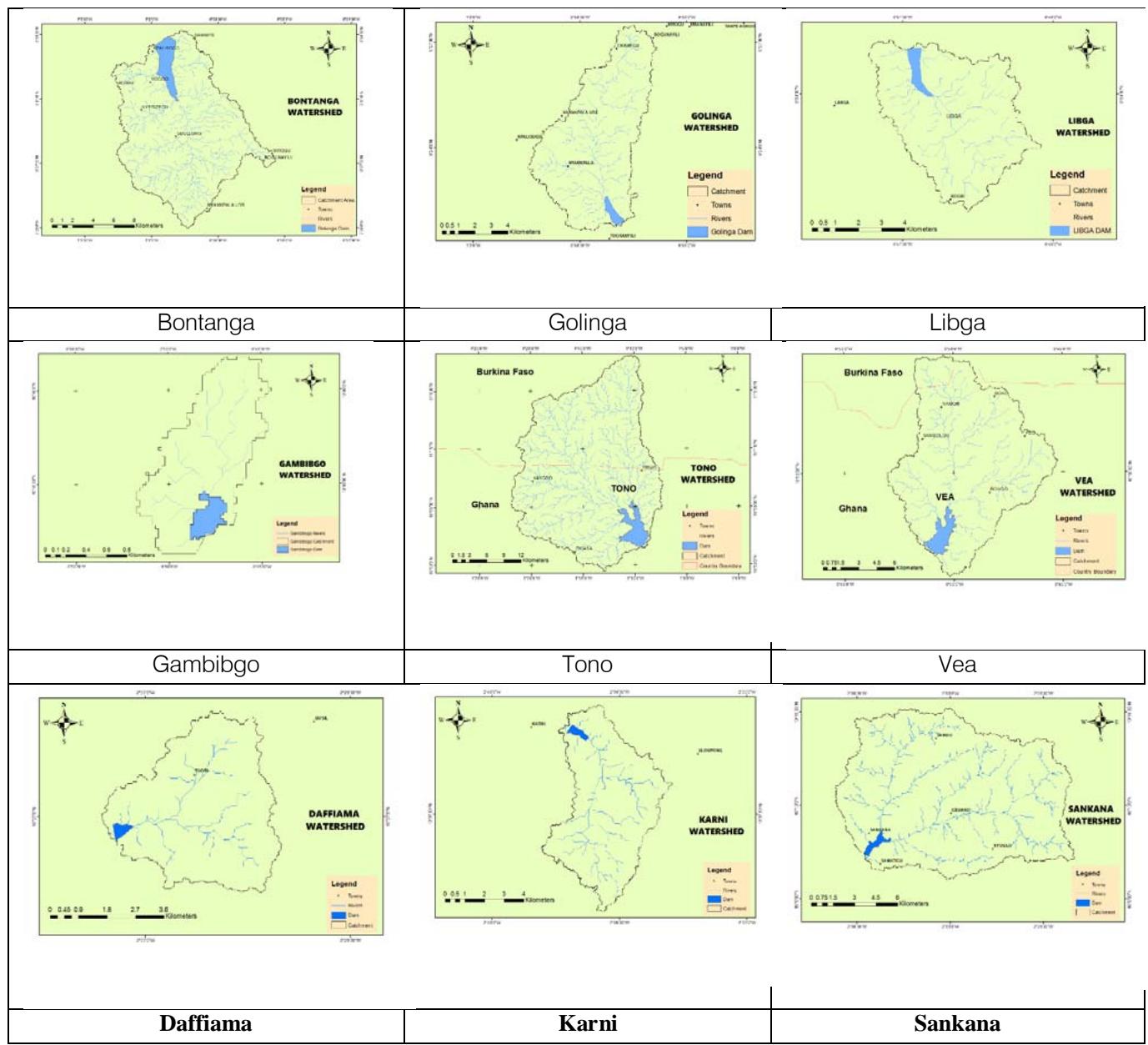 Fig. 1: Maps of the Study Reservoir Catchments
### b) Methodology
The study used multi-temporal and multi-sensor Landsat satellite imageries to establish the landuse and landcover (LULC) changes in the study reservoir catchments for the years of 1986, 1996, 2006 and 2016. A summary of the flow chart of the methodology of LULC change detection analysis of the reservoir catchments is presented in Fig. 2.
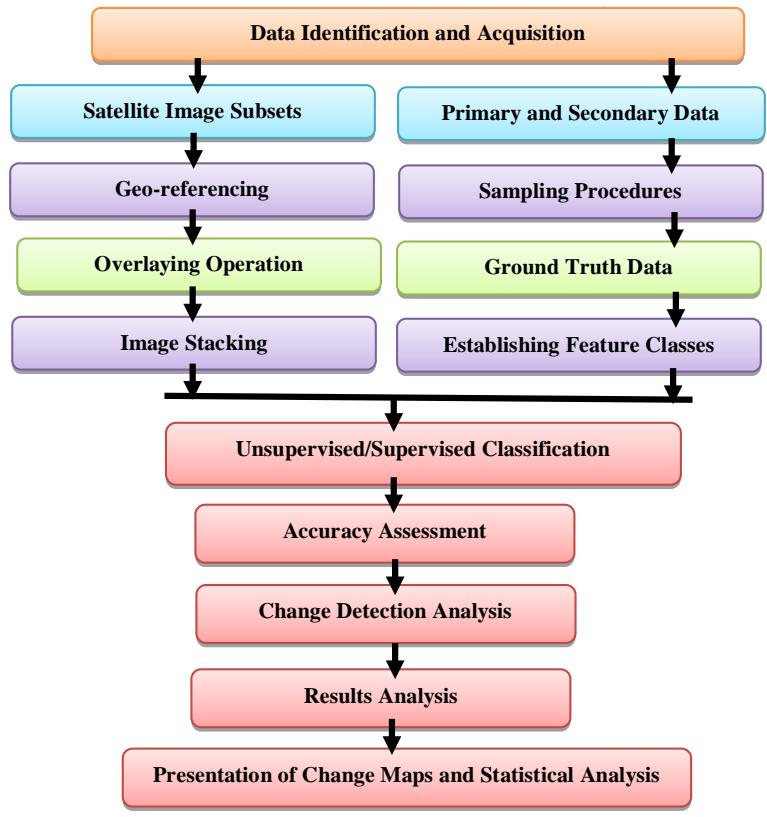 Adapted from Luca (2013) Fig. 2: Methodology flow chart for LULC Change Analysis
The satellite images were derived from an open source Satellite Imagery Database from the United States Geological Survey (USGS) website. Detailed characteristics of the Landsat images of the various catchments is presented in Table 2.
Table 2: Characteristics of Landsat Images of the Reservoir Catchments
<table><tr><td>Catchment</td><td>Sensors</td><td>Date of Acquisition</td><td>Spatial Resolution (m)</td><td>Spectral Bands</td><td>Path/Row</td><td>Source</td></tr><tr><td rowspan="4">Gambibgo, Tono</td><td>Landsat TM</td><td>05/10/1986</td><td>30 x 30</td><td>4,3,2</td><td>195/52</td><td></td></tr><tr><td>Landsat TM</td><td>05/10/1996</td><td>30 x 30</td><td>4,3,2</td><td>195/52</td><td>USGS</td></tr><tr><td>Landsat TM</td><td>05/10/2006</td><td>30 x 30</td><td>4,3,2</td><td>195/52</td><td>GloVis</td></tr><tr><td>Landsat 8 OLI</td><td>05/10/2016</td><td>30 x 30</td><td>5,4,3</td><td>195/52</td><td></td></tr><tr><td rowspan="4">Vea</td><td>Landsat TM</td><td>05/10/1986</td><td>30 x 30</td><td>4,3,2</td><td>194/52</td><td></td></tr><tr><td>Landsat TM</td><td>05/10/1996</td><td>30 x 30</td><td>4,3,2</td><td>194/53</td><td>USGS</td></tr><tr><td>Landsat TM</td><td>05/10/2006</td><td>30 x 30</td><td>4,3,2</td><td>194/53</td><td>GloVis</td></tr><tr><td>Landsat 8 OLI</td><td>05/10/2016</td><td>30 x 30</td><td>5,4,3</td><td>194/52</td><td></td></tr><tr><td rowspan="4">Bontanga, Golinga, Libga</td><td>Landsat TM</td><td>05/10/1986</td><td>30 x 30</td><td>4,3,2</td><td>194/53</td><td></td></tr><tr><td>Landsat TM</td><td>05/10/1996</td><td>30 x 30</td><td>4,3,2</td><td>194/53</td><td>USGS</td></tr><tr><td>Landsat TM</td><td>05/10/2006</td><td>30 x 30</td><td>4,3,2</td><td>194/53</td><td>GloVis</td></tr><tr><td>Landsat 8 OLI</td><td>07/10/ 2016</td><td>30 x 30</td><td>5,4,3</td><td>195/53</td><td></td></tr><tr><td rowspan="4">Daffiama, Karni, Sankana</td><td>Landsat TM</td><td>05/10/1986</td><td>30 x 30</td><td>4,3,2</td><td>195/53</td><td></td></tr><tr><td>Landsat TM</td><td>05/10/1996</td><td>30 x 30</td><td>4,3,2</td><td>195/53</td><td>USGS</td></tr><tr><td>Landsat TM</td><td>05/10/2006</td><td>30 x 30</td><td>4,3,2</td><td>195/53</td><td>GloVis</td></tr><tr><td>Landsat 8 OLI</td><td>05/10/ 2016</td><td>30 x 30</td><td>5,4,3</td><td>195/53</td><td></td></tr></table>
Two software; ERDAS Imagine version 10.4 and ArcGIS version 10.4 were used to process the satellite images for layer stacking, mosaicking, geo-referencing,subseting and training of the images according to the
Area of Interest (AOI). In ERDAS Imagine, image band combinations were manipulated from the default natural colour band combination in the image drape viewer to effectively identify different land use types in the study area, and the findings were later verified by ground truthing (gathered information/image material related to real features on the ground) to generate an appropriate training sample dataset for supervised classification. To improve the visual interpretability of the satellite data for a particular application, image enhancement was performed on all the acquired scenes. A classification
scheme was then developed of which the following five (5) landuse and landcover classes were distinguished; cropland, water body, built-up land/bare land/rocky ground, closed savannah woodland and open savannah woodland. Description of the various LULC classification schemes used in this study is presented in Table 3.
Table 3: Description of Delineated Landuse and Landcover Classes of the Catchments
<table><tr><td>Serial Number</td><td>Landuse/Landcover Class</td><td>Description</td></tr><tr><td>1</td><td>Cropland</td><td>Lands used for the cultivation of crops, i.e., crop fields.</td></tr><tr><td>2</td><td>Waterbodies</td><td>Waterbodies in the catchment area that empty into the reservoirs. These include; streams, lakes, ponds and rivers.</td></tr><tr><td>3</td><td>Built-up land/rocky ground/bare land</td><td>Areas with intense infrastructural developments and exposed surfaces due to human activities or natural factors. These include; residential areas, industrial areas, commercial areas, recreational grounds, farmsteads, schools, lorry parks, roads and rocks. Bare land is land covered with sand or gravel. It has limited ability to support life and therefore uncultivated.</td></tr><tr><td>4</td><td>Closed savannah woodland</td><td>Thick forest lands, groves, thick plantations.</td></tr><tr><td>5</td><td>Open savannah woodland</td><td>Shrublands, grasslands and fallow lands.</td></tr></table>
Enhancement techniques were used together with classification techniques to extract features for the study reservoir catchments, locating areas and objects on the ground and deriving useful information from the images. Furthermore, use of enhancement techniques to visually interpret the images helped optimise the complementary capabilities of the processing. Classification was done for 1986, 1996, 2006 and 2016 images to identify the various LULC types and changes occurring over the years. Accuracy assessment of the classified imagery was performed to establish the level of accuracy of the classification. A non-parametric Cohen's Kappa test was performed to measure the extent of classification accuracy. Cohen's Kappa tries to measure the agreement between predefined producer-ratings and user assigned-ratings (Butt et al., 2015). It is computed using Equation 1 developed by Viera and Garrett (2005):
$$
K = \frac {P (A) - P (E)}{1 - P (E)}. \tag {1}
$$
Where: P (A) - Number of times the k raters agree and P (E) - Number of times the k raters are expected to agree only by chance. The P(A) and P(E) were generated in ArcGIS using the ground coordinates of the ground truth samples.
The classification comparison of LULC statistics method was used for the change detection analysis. This method was adapted because the study sought to determine quantitative changes in the areas of the various LULC categories. Using the post-classification procedure, the area statistics for each of the LULC classes was derived from the classifications of the images for each date (1986, 1996, 2006 and 2016) separately, using functions in the ERDAS-Imagine-Software 10.4. The areas covered by each LULC type for the various time intervals were compared. The percentage landuse and landcover change (% LULCC) at the catchments was computed using the formula developed by Lambin(2001) and presented in Equation 2.
$$
\% L U L C C = \frac{\text{ObservedAreaChange}}{\text{TotalAreaofCatchment}} \times 100 \tag{2}
$$
ArcGIS 10.4 was used for map composition as it increases the level of accuracy of the LULC change determined from the image.
### c) Key-Informant Interviews
Key-informant interviews were conducted with key stakeholders such as local traditional leaders in the communities of the catchments and the management of the irrigation dams from January to March, 2018. The key-informant interviews were conducted so as to augment the data that was obtained from Landsat images and field measurements. A total of 81 respondents (9 from each catchment) were interviewed. To ensure the acquisition of comprehensive information, the respondents were people of age 45 to 60 years, who are longtime residents (i.e $>25$ years) of the selected communities. They were selected based on their experience and knowledge on landuse and landcover changes in the catchments.
## III. RESULTS AND DISCUSSION
### a) Areal Extent of Landuse and Landcover Classes in the Reservoir Catchments
Four (4) major landuse/landcover (LULC) categories namely; cropland, waterbodies, built-up land and open savannah woodland were identified and classified in the reservoir catchments, except Tono catchment where closed savannah woodland was identified as the fifth $(5^{\text{th}})$ major LULC class (Figure 3 and Table 4). The LULC maps of the catchments clearly showed that there were variations in the LULC types in the last 30 years (1986-2016).
In 1986, except the Tono catchment, open savannah woodland was the predominant LULC class, occupying an area of $45.99\%$ at Bontanga to $80.72\%$ at Golinga. At Tono catchment, the predominant LULC was closed savannah woodland with a coverage area of 233.89 ha $(35.98\%)$, followed by open savannah woodland with area occupancy of $30.56\%$. Except Tono catchment, the second most predominant class was cropland with coverage area of $15.57\%$ at Golinga to $45.57\%$ at Bontanga, followed by built-up area with a coverage of $1.7\%$ at Bontanga to $8.24\%$ at Gambibgo. Across all the catchments, water body occupied the least area with values ranging from $0.44\%$ at Sankana to $6.75\%$ at Vea (Table 4).
The 1996 Landsat images of the catchments showed a reduction of LULC change compared with 1986 for the different LULC classes, except cropland and built-up areas. Open savannah woodland occupied a significant portion of the catchments with an area coverage of $32.94\%$ at Gambibgo to $66.55\%$ at Golinga, followed by cropland which was randomly distributed within the catchments with an area of $27.74\%$ at Tono to
52.78% at Bontanga. Built-up area occupied a minor area of 2.39% at Bontanga to 15.29% at Gambibgo. Water bodies occupied the least area of 0.40% at Sankana to 5.85% at Vea (Table 4).
From the 2006 image classification it was noted that both water bodies and open savannah woodland were reduced from their coverage in 1996 (Table 4). Water bodies were reduced by $0.05\%$ at Sankana to $2.35\%$ at Gambibgo whilst open savannah woodland reduced by $5.75\%$ at Vea to $18.94\%$ at Golinga. Closed savannah woodland also reduced by $8.37\%$ at Tono. On the other hand, cropland coverage increased by $3.11\%$ at Tono to $18.72\%$ at Golinga, and built-up areas coverage also increased by $0.36\%$ at Golinga to $9.41\%$ at Gambibgo catchment.
The 2016 Landsat map showed substantial changes relative to the previous 20-year period with croplands occupying the greatest area of the catchments with values ranging from $37.82\%$ at Tono to $74.45\%$ at Golinga, followed by open savannah woodland with $17.68\%$ at Golinga to $33.63\%$ at Tono catchment. However, at the Libga and Gambibgo catchments, built-up areas were noted to be the second largest LULC class occupying $22.87\%$ and $37.06\%$ of their areas respectively. Patches of closed savannah woodland with a total area coverage of $13.84\%$ were found in the northern zone of the Tono catchment. Except Libga and Gambibgo catchments, built-up areas occupied an area of $4.99\%$ at Bontanga to $18.62\%$ at Daffiama catchment. The remaining parts of the catchments were composed of water bodies with the least area of $0.27\%$ at Sankana to $4.49\%$ at Bontanga (Table 4).
 Panel label: Bontanga Catchment.
 Panel label: Golinga Catchment.
 Panel label: Libga Catchment.

 Gambibgo Catchment Tono Catchment
 Panel label: Vea Catchment.
 Panel label: Daffiama Catchment.
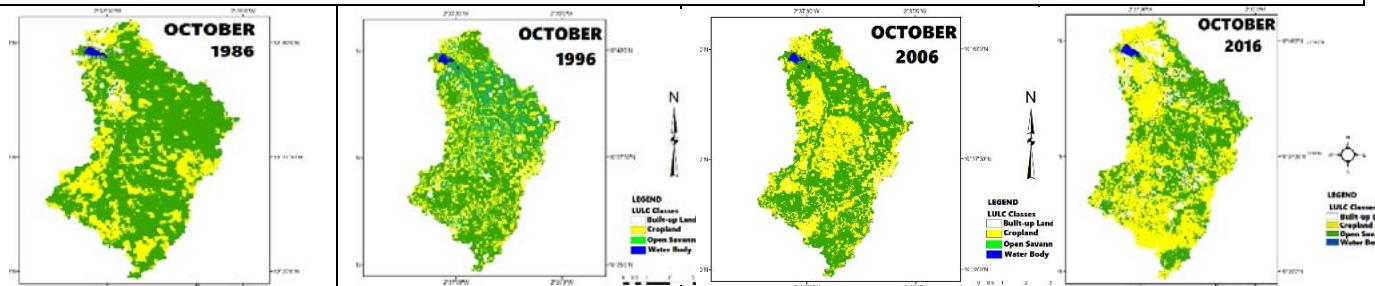 Panel label: Karni Catchment.
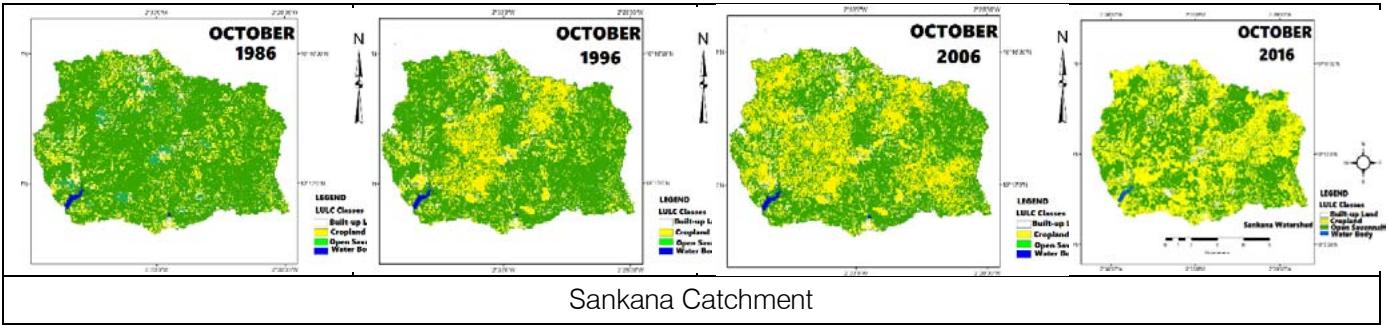 Fig. 3: Landuse/Landcover Landsat Images of Study Reservoir Catchments for 1986, 1996, 2006 and 2016
Table 4: Areal Extent of Different Landuse/Landcover Classes in the Study Reservoir Catchments from the Year 1986 to 2016
<table><tr><td colspan="9">Bontanga Catchment</td></tr><tr><td rowspan="2">Landuse/ Landcover Class</td><td colspan="2">1986</td><td colspan="2">1996</td><td colspan="2">2006</td><td colspan="2">2016</td></tr><tr><td>km2</td><td>%</td><td>km2</td><td>%</td><td>km2</td><td>%</td><td>km2</td><td>%</td></tr><tr><td>Cropland</td><td>75.19</td><td>45.57</td><td>87.09</td><td>52.78</td><td>97.67</td><td>59.19</td><td>111</td><td>67.27</td></tr><tr><td>Built-up land</td><td>2.80</td><td>1.70</td><td>3.94</td><td>2.39</td><td>5.86</td><td>3.55</td><td>8.23</td><td>4.99</td></tr><tr><td>Water body</td><td>11.13</td><td>6.75</td><td>9.67</td><td>5.86</td><td>8.76</td><td>5.31</td><td>7.41</td><td>4.49</td></tr><tr><td>Open SW</td><td>75.88</td><td>45.99</td><td>64.30</td><td>38.97</td><td>52.71</td><td>31.95</td><td>38.36</td><td>23.25</td></tr><tr><td>Closed SW</td><td>0.0</td><td>0.0</td><td>0.0</td><td>0.0</td><td>0.0</td><td>0.0</td><td>0.0</td><td>0.0</td></tr><tr><td>Total</td><td>165</td><td>100</td><td>165</td><td>100</td><td>165</td><td>100</td><td>165</td><td>100</td></tr><tr><td colspan="9">Golinga Catchment</td></tr><tr><td rowspan="2">Landuse/ Landcover</td><td colspan="2">1986</td><td colspan="2">1996</td><td colspan="2">2006</td><td colspan="2">2016</td></tr><tr><td>km2</td><td>%</td><td>km2</td><td>%</td><td>km2</td><td>%</td><td>km2</td><td>%</td></tr><tr><td>Cropland</td><td>8.25</td><td>15.57</td><td>15.45</td><td>29.15</td><td>25.37</td><td>47.87</td><td>39.46</td><td>74.45</td></tr><tr><td>Built-up land</td><td>1.12</td><td>2.11</td><td>1.77</td><td>3.34</td><td>1.96</td><td>3.70</td><td>3.77</td><td>7.11</td></tr><tr><td>Water body</td><td>0.59</td><td>1.11</td><td>0.51</td><td>0.96</td><td>0.44</td><td>0.83</td><td>0.40</td><td>0.75</td></tr><tr><td>Open SW</td><td>42.78</td><td>80.72</td><td>35.27</td><td>66.55</td><td>25.23</td><td>47.60</td><td>9.37</td><td>17.68</td></tr><tr><td>Closed SW</td><td>0.26</td><td>0.49</td><td>0.0</td><td>0.0</td><td>0.0</td><td>0.0</td><td>0.0</td><td>0.0</td></tr><tr><td>Total</td><td>53</td><td>100</td><td>53</td><td>100</td><td>53</td><td>100</td><td>53</td><td>100</td></tr><tr><td colspan="9">Libga Catchment</td></tr><tr><td rowspan="2">Landuse/ Landcover</td><td colspan="2">1986</td><td colspan="2">1996</td><td colspan="2">2006</td><td colspan="2">2016</td></tr><tr><td>km2</td><td>%</td><td>km2</td><td>%</td><td>km2</td><td>%</td><td>km2</td><td>%</td></tr><tr><td>Cropland</td><td>10.37</td><td>33.45</td><td>14.53</td><td>46.87</td><td>16.15</td><td>52.10</td><td>16.95</td><td>54.68</td></tr><tr><td>Built-up land</td><td>1.96</td><td>6.32</td><td>3.08</td><td>9.94</td><td>4.92</td><td>15.87</td><td>7.04</td><td>22.71</td></tr><tr><td>Water body</td><td>0.52</td><td>1.68</td><td>0.35</td><td>1.13</td><td>0.28</td><td>0.90</td><td>0.23</td><td>0.74</td></tr><tr><td>Open SW</td><td>18.15</td><td>58.55</td><td>13.04</td><td>42.06</td><td>9.65</td><td>31.13</td><td>6.78</td><td>21.87</td></tr><tr><td>Closed SW</td><td>0.0</td><td>0.0</td><td>0.0</td><td>0.0</td><td>0.0</td><td>0.0</td><td>0.0</td><td>0.0</td></tr><tr><td>Total</td><td>31</td><td>100</td><td>31</td><td>100</td><td>31</td><td>100</td><td>31</td><td>100</td></tr><tr><td colspan="9">Gambibgo Catchment</td></tr><tr><td rowspan="2">Landuse/ Landcover</td><td colspan="2">1986</td><td colspan="2">1996</td><td colspan="2">2006</td><td colspan="2">2016</td></tr><tr><td>km2</td><td>%</td><td>km2</td><td>%</td><td>km2</td><td>%</td><td>km2</td><td>%</td></tr><tr><td>Cropland</td><td>0.35</td><td>20.59</td><td>0.66</td><td>38.82</td><td>0.8</td><td>47.06</td><td>0.70</td><td>41.18</td></tr><tr><td>Built-up land</td><td>0.14</td><td>8.24</td><td>0.26</td><td>15.29</td><td>0.42</td><td>24.71</td><td>0.63</td><td>37.06</td></tr><tr><td>Water body</td><td>0.37</td><td>21.76</td><td>0.22</td><td>2.94</td><td>0.18</td><td>1.59</td><td>0.11</td><td>0.47</td></tr><tr><td>Open SW</td><td>0.84</td><td>49.41</td><td>0.56</td><td>32.94</td><td>0.30</td><td>17.65</td><td>0.26</td><td>15.29</td></tr><tr><td>Closed SW</td><td>0.0</td><td>0.0</td><td>0.0</td><td>0.0</td><td>0.0</td><td>0.0</td><td>0.0</td><td>0.0</td></tr><tr><td>Total</td><td>1.7</td><td>100</td><td>1.7</td><td>100</td><td>1.7</td><td>100</td><td>1.7</td><td>100</td></tr><tr><td colspan="9">Tono Catchment</td></tr><tr><td rowspan="2">Landuse/ Landcover</td><td colspan="2">1986</td><td colspan="2">1996</td><td colspan="2">2006</td><td colspan="2">2016</td></tr><tr><td>km2</td><td>%</td><td>km2</td><td>%</td><td>km2</td><td>%</td><td>km2</td><td>%</td></tr><tr><td>Cropland</td><td>156.17</td><td>24.03</td><td>180.32</td><td>27.74</td><td>200.55</td><td>30.85</td><td>245.86</td><td>37.82</td></tr><tr><td>Built-up land</td><td>41.54</td><td>6.39</td><td>50.75</td><td>7.81</td><td>65.86</td><td>10.13</td><td>79.43</td><td>12.22</td></tr><tr><td>Water body</td><td>19.78</td><td>3.04</td><td>18.82</td><td>2.90</td><td>17.81</td><td>2.74</td><td>16.19</td><td>2.49</td></tr><tr><td>Open SW</td><td>198.62</td><td>30.56</td><td>234.94</td><td>36.14</td><td>255.02</td><td>39.23</td><td>218.60</td><td>33.63</td></tr><tr><td>Closed SW</td><td>233.89</td><td>35.98</td><td>165.17</td><td>25.41</td><td>110.76</td><td>17.05</td><td>89.92</td><td>13.84</td></tr><tr><td>Total</td><td>650</td><td>100</td><td>650</td><td>100</td><td>650</td><td>100</td><td>650</td><td>100</td></tr><tr><td colspan="9">Vea Catchment</td></tr><tr><td rowspan="2">Landuse/ Landcover</td><td colspan="2">1986</td><td colspan="2">1996</td><td colspan="2">2006</td><td colspan="2">2016</td></tr><tr><td>km2</td><td>%</td><td>km2</td><td>%</td><td>km2</td><td>%</td><td>km2</td><td>%</td></tr><tr><td>Cropland</td><td>53.46</td><td>39.31</td><td>59.33</td><td>43.63</td><td>65.74</td><td>48.34</td><td>74.86</td><td>55.04</td></tr><tr><td>Built-up land</td><td>4.17</td><td>3.07</td><td>5.71</td><td>4.20</td><td>7.92</td><td>5.82</td><td>10.38</td><td>7.63</td></tr><tr><td>Water body</td><td>8.71</td><td>6.40</td><td>7.95</td><td>5.85</td><td>7.15</td><td>5.26</td><td>5.59</td><td>4.11</td></tr><tr><td>Open SW</td><td>69.66</td><td>51.22</td><td>63.01</td><td>46.33</td><td>55.19</td><td>40.58</td><td>45.17</td><td>33.21</td></tr><tr><td>Closed SW</td><td>0.0</td><td>0.0</td><td>0.0</td><td>0.0</td><td>0.0</td><td>0.0</td><td>0.0</td><td>0.0</td></tr><tr><td>Total</td><td>136</td><td>100</td><td>136</td><td>100</td><td>136</td><td>100</td><td>136</td><td>100</td></tr><tr><td colspan="9">Daffiama Catchment</td></tr><tr><td rowspan="2">Landuse/ Landcover</td><td colspan="2">1986</td><td colspan="2">1996</td><td colspan="2">2006</td><td colspan="2">2016</td></tr><tr><td>km2</td><td>%</td><td>km2</td><td>%</td><td>km2</td><td>%</td><td>km2</td><td>%</td></tr><tr><td>Cropland</td><td>4.08</td><td>19.43</td><td>6.95</td><td>33.10</td><td>8.51</td><td>39.10</td><td>10.58</td><td>50.38</td></tr><tr><td>Built-up land</td><td>0.68</td><td>3.24</td><td>1.16</td><td>5.52</td><td>2.74</td><td>13.05</td><td>3.91</td><td>18.62</td></tr><tr><td>Water body</td><td>0.43</td><td>2.05</td><td>0.35</td><td>1.67</td><td>0.26</td><td>1.24</td><td>0.11</td><td>0.52</td></tr><tr><td>Open SW</td><td>15.81</td><td>75.29</td><td>12.54</td><td>59.71</td><td>9.79</td><td>46.62</td><td>6.40</td><td>30.48</td></tr><tr><td>Closed SW</td><td>0.0</td><td>0.0</td><td>0.0</td><td>0.0</td><td>0.0</td><td>0.0</td><td>0.0</td><td>0.0</td></tr><tr><td>Total</td><td>21</td><td>100</td><td>21</td><td>100</td><td>21</td><td>100</td><td>21</td><td>100</td></tr><tr><td colspan="9">Karni Catchment</td></tr><tr><td rowspan="2">Landuse/ Landcover</td><td colspan="2">1986</td><td colspan="2">1996</td><td colspan="2">2006</td><td colspan="2">2016</td></tr><tr><td>km2</td><td>%</td><td>km2</td><td>%</td><td></td><td>km2</td><td>%</td><td>km2</td></tr><tr><td>Cropland</td><td>10.99</td><td>31.40</td><td>14.26</td><td>40.74</td><td>17.84</td><td>50.97</td><td>23.25</td><td>66.43</td></tr><tr><td>Built-up land</td><td>1.46</td><td>4.17</td><td>1.75</td><td>5.0</td><td>2.22</td><td>6.34</td><td>3.01</td><td>8.60</td></tr><tr><td>Water body</td><td>0.46</td><td>1.31</td><td>0.42</td><td>1.20</td><td>0.33</td><td>0.94</td><td>0.20</td><td>0.57</td></tr><tr><td>Open SW</td><td>22.09</td><td>63.11</td><td>18.57</td><td>53.06</td><td>14.61</td><td>41.74</td><td>8.54</td><td>24.40</td></tr><tr><td>Closed SW</td><td>0.0</td><td>0.0</td><td>0.0</td><td>0.0</td><td>0.0</td><td>0.0</td><td>0.0</td><td>0.0</td></tr><tr><td>Total</td><td>35</td><td>100</td><td>35</td><td>100</td><td>35</td><td>100</td><td>35</td><td>100</td></tr><tr><td colspan="9">Sankana Catchment</td></tr><tr><td rowspan="2">Landuse/ Landcover</td><td colspan="2">1986</td><td colspan="2">1996</td><td colspan="2">2006</td><td colspan="2">2016</td></tr><tr><td>km2</td><td>%</td><td>km2</td><td>%</td><td></td><td>km2</td><td>%</td><td>km2</td></tr><tr><td>Cropland</td><td>41.18</td><td>29.21</td><td>57.63</td><td>40.87</td><td>76.64</td><td>54.35</td><td>96.52</td><td>68.45</td></tr><tr><td>Built-up land</td><td>4.34</td><td>3.08</td><td>5.11</td><td>3.62</td><td>6.43</td><td>4.56</td><td>8.80</td><td>6.24</td></tr><tr><td>Water body</td><td>0.62</td><td>0.44</td><td>0.56</td><td>0.40</td><td>0.49</td><td>0.35</td><td>0.38</td><td>0.27</td></tr><tr><td>Open SW</td><td>94.86</td><td>67.28</td><td>77.70</td><td>55.11</td><td>57.44</td><td>40.74</td><td>35.30</td><td>25.04</td></tr><tr><td>Closed SW</td><td>0.0</td><td>0.0</td><td>0.0</td><td>0.0</td><td>0.0</td><td>0.0</td><td>0.0</td><td>0.0</td></tr><tr><td>Total</td><td>141</td><td>100</td><td>141</td><td>100</td><td>141</td><td>100</td><td>141</td><td>100</td></tr></table>
### b) Landuse and Landcover Classification Accuracy Assessment for 2016
According to Owojori and Xie (2005), it is crucial to perform accuracy assessment for LULC classification if the classification data are to be used for change detection analysis. Accuracy assessment establishes the level of accuracy of the classification. Coppin and Bauer (1996) reported that a classification accuracy of 0 - 69% indicates low accuracy whereas 70 - 100% indicates high accuracy, and a kappa coefficient $< 0.5$ and $> 0.5$ indicates low and high accuracies respectively. As presented in Table 5, an accuracy assessment elaborated for the 2016 image classification revealed an overall classification accuracy of 80% and overall Kappa coefficient (statistic) of 0.75. The highest user accuracy of all the LULC classes was obtained for water bodies of 92.5% whilst cropland recorded the lowest user accuracy of 72.2%. Also, for producer accuracies, water bodies and cropland recorded the highest and lowest values of $100\%$ and $64.4\%$ respectively. Based on the assertion of Coppin and Bauer (1996), the classification accuracy for the study was high. In a similar study in Ghana, Antwi-Agyei et al. (2019) obtained high overall classification accuracy of $77.56\%$ and overall Kappa statistic of 0.77 in Owabi reservoir catchment.
Table 5: Classification Accuracy Assessment for the Year 2016
<table><tr><td>LULC Class</td><td>Reference Totals</td><td>Classified Totals</td><td>Correct Number</td><td>Producer's Accuracy (%)</td><td>User's Accuracy (%)</td><td>Kappa Coefficient</td></tr><tr><td>Cropland</td><td>45</td><td>40</td><td>29</td><td>64.4</td><td>72.2</td><td>0.68</td></tr><tr><td>Built-up land</td><td>34</td><td>40</td><td>30</td><td>88.2</td><td>75.0</td><td>0.71</td></tr><tr><td>Water body</td><td>37</td><td>40</td><td>37</td><td>100.0</td><td>92.5</td><td>0.87</td></tr><tr><td>Open SW</td><td>43</td><td>40</td><td>35</td><td>81.4</td><td>87.5</td><td>0.82</td></tr><tr><td>Closed SW</td><td>41</td><td>40</td><td>29</td><td>70.7</td><td>72.5</td><td>0.68</td></tr><tr><td>Total</td><td>200</td><td>200</td><td>160</td><td>-</td><td>-</td><td>-</td></tr><tr><td colspan="7">Overall classification accuracy = 80.0% and overall kappa coefficient (statistic) = 0.75</td></tr></table>
### c) Landuse and Landcover Changes Detection Analysis with the Reservoir Catchments from 1986 to 2016
Substantial changes in LULC categories were observed to have taken place in the reservoir catchments from 1986 to 2016, mainly through the conversion of large areas of closed and open savannah woodlands to cropland and built-up areas. Across all the catchments, cropland and built-up land saw a consistent and significant increased whilst water bodies, open savannah woodland and closed savannah woodland experienced a declined over the past 30-years (Table 6). Between 1986 and 1996, cropland increased by $3.58\%$ at Karni to $18.24\%$ at Gambibgo. Also, built-up land increased by $0.47\%$ at Karni to $7.06\%$ at Gambibgo. Water bodies decreased by $0.04\%$ at Sankana to $8.82\%$ at Gambibgo whilst open savannah woodland declined by $5.75\%$ at Vea to $16.48\%$ at Libga. At Tono catchment, however, open savannah woodland increased by $5.59\%$ and closed savannah woodland saw a decrease of $10.57\%$ to other LULC classes.
The study also found that between 1996 and 2006, cropland increased by $3.11\%$ at Tono catchment to $18.72\%$ at Golinga catchment, whilst built-up land increased by $0.36\%$ at Golinga to $9.41\%$ at Gambibgo catchment. However, water bodies recorded a marginal declined by $0.05\%$ at Sankana catchment to $2.35\%$ at Gambibgo catchment. Open savannah woodland experienced a declined by $5.75\%$ at Vea catchment to $18.94\%$ at Golinga catchment as presented in Table 6.
Between 2006 and 2016, cropland significantly increased by $2.58\%$ at Libga catchment to $26.59\%$ at Golinga catchment, whilst at Gambibgo catchment, it decreased by $5.88\%$ probably to settlement built-up areas. Also, built-up land increased by $1.44\%$ at Sankana catchment to $12.35\%$ at Gambibgo catchment. However, water bodies decreased marginally by $0.08\%$ at Golinga and Sankana catchments to very high of $4.12\%$ at Gambibgo catchment. Open savannah woodland also saw a decline of $2.21\%$ at Tono catchment to $29.92\%$ at Golinga catchment (Table 6). It was also noted that the closed savannah woodland at Tono catchment decreased by $5.60\%$ to probably other LULC categories such as cropland and built-up land.
Table 6: Landuse and Landcover Changes of the Study Reservoir Catchments
<table><tr><td>Catchment</td><td colspan="6">Bontanga</td><td colspan="6">Golinga</td></tr><tr><td rowspan="2">Landuse/ Landcover Change</td><td colspan="2">1986-1996</td><td colspan="2">1996-2006</td><td colspan="2">2006-2016</td><td colspan="2">1986-1996</td><td colspan="2">1996-2006</td><td colspan="2">2006-2016</td></tr><tr><td>km2</td><td>%</td><td>km2</td><td>%</td><td>km2</td><td>%</td><td>km2</td><td>%</td><td>km2</td><td>%</td><td>km2</td><td>%</td></tr><tr><td>Cropland</td><td>11.21</td><td>6.79</td><td>10.58</td><td>6.41</td><td>13.33</td><td>8.08</td><td>7.20</td><td>13.58</td><td>9.92</td><td>18.72</td><td>14.09</td><td>26.59</td></tr><tr><td>Built-up land</td><td>1.14</td><td>0.69</td><td>1.92</td><td>1.16</td><td>2.37</td><td>1.68</td><td>0.65</td><td>1.23</td><td>0.19</td><td>0.36</td><td>1.81</td><td>3.42</td></tr><tr><td>Water body</td><td>-1.46</td><td>-0.88</td><td>-0.91</td><td>-0.55</td><td>-1.35</td><td>-0.82</td><td>-0.08</td><td>-0.15</td><td>-0.07</td><td>-0.13</td><td>-0.04</td><td>-0.08</td></tr><tr><td>Open SW</td><td>-10.89</td><td>-6.60</td><td>-11.59</td><td>-7.02</td><td>-14.35</td><td>-8.70</td><td>-7.51</td><td>-14.17</td><td>-10.04</td><td>-18.94</td><td>-15.86</td><td>-29.92</td></tr><tr><td>Closed SW</td><td>0.0</td><td>0.0</td><td>0.0</td><td>0.0</td><td>0.0</td><td>0.0</td><td>-0.26</td><td>-0.49</td><td>0.0</td><td>0.0</td><td>0.0</td><td>0.0</td></tr><tr><td>Catchment</td><td colspan="6">Libga</td><td colspan="6">Gambibgo</td></tr><tr><td>Cropland</td><td>4.16</td><td>13.42</td><td>1.62</td><td>5.23</td><td>0.8</td><td>2.58</td><td>0.31</td><td>18.24</td><td>0.14</td><td>8.24</td><td>-0.1</td><td>-5.88</td></tr><tr><td>Built-up land</td><td>1.12</td><td>3.61</td><td>1.84</td><td>5.94</td><td>2.12</td><td>6.84</td><td>0.12</td><td>7.06</td><td>0.16</td><td>9.41</td><td>0.21</td><td>12.35</td></tr><tr><td>Water body</td><td>-0.17</td><td>-0.55</td><td>-0.07</td><td>-0.23</td><td>-0.05</td><td>-0.16</td><td>-0.15</td><td>-8.82</td><td>-0.04</td><td>-2.35</td><td>-0.07</td><td>-4.12</td></tr><tr><td>Open SW</td><td>-5.11</td><td>-16.48</td><td>-3.39</td><td>-10.94</td><td>-2.87</td><td>-9.26</td><td>-0.28</td><td>-16.41</td><td>-0.26</td><td>-15.29</td><td>-0.04</td><td>-3.35</td></tr><tr><td>Closed SW</td><td>0.0</td><td>0.0</td><td>0.0</td><td>0.0</td><td>0.0</td><td>0.0</td><td>0.0</td><td>0.0</td><td>0.0</td><td>0.0</td><td>0.0</td><td>0.0</td></tr><tr><td>Catchment</td><td colspan="6">Tono</td><td colspan="6">Vea</td></tr><tr><td>Cropland</td><td>24.15</td><td>3.72</td><td>20.23</td><td>3.11</td><td>45.31</td><td>6.97</td><td>5.87</td><td>4.32</td><td>6.41</td><td>4.71</td><td>9.12</td><td>6.71</td></tr><tr><td>Built-up land</td><td>9.21</td><td>1.42</td><td>15.11</td><td>2.32</td><td>13.57</td><td>2.09</td><td>1.54</td><td>1.13</td><td>2.21</td><td>1.63</td><td>2.46</td><td>1.81</td></tr><tr><td>Water body</td><td>-0.96</td><td>-0.15</td><td>-1.01</td><td>-0.16</td><td>-1.62</td><td>-0.25</td><td>-0.76</td><td>-0.56</td><td>-0.80</td><td>-0.59</td><td>-1.56</td><td>-1.15</td></tr><tr><td>Open SW</td><td>36.32</td><td>5.59</td><td>20.08</td><td>3.09</td><td>-36.42</td><td>-2.21</td><td>-6.65</td><td>-4.89</td><td>-7.82</td><td>-5.75</td><td>-10.02</td><td>-7.37</td></tr><tr><td>Closed SW</td><td>-68.72</td><td>-10.57</td><td>-54.41</td><td>-8.37</td><td>-20.84</td><td>-5.60</td><td>0.0</td><td>0.0</td><td>0.0</td><td>0.0</td><td>0.0</td><td>0.0</td></tr><tr><td>Catchment</td><td colspan="6">Daffiama</td><td colspan="6">Kami</td></tr><tr><td>Cropland</td><td>2.87</td><td>13.67</td><td>1.56</td><td>7.43</td><td>2.07</td><td>9.86</td><td>3.27</td><td>9.34</td><td>3.58</td><td>10.23</td><td>5.41</td><td>15.46</td></tr><tr><td>Built-up land</td><td>0.48</td><td>2.29</td><td>1.58</td><td>7.52</td><td>.01.17</td><td>5.57</td><td>0.29</td><td>0.83</td><td>0.47</td><td>1.34</td><td>0.79</td><td>2.26</td></tr><tr><td>Water body</td><td>-0.08</td><td>-0.38</td><td>-0.09</td><td>-0.43</td><td>-0.15</td><td>-0.71</td><td>-0.04</td><td>-0.11</td><td>-0.09</td><td>-0.26</td><td>-0.13</td><td>-0.37</td></tr><tr><td>Open SW</td><td>-3.27</td><td>-15.57</td><td>-2.75</td><td>-13.10</td><td>-3.39</td><td>-16.14</td><td>-3.52</td><td>-10.06</td><td>-3.96</td><td>-11.31</td><td>-6.07</td><td>-17.34</td></tr><tr><td>Closed SW</td><td>0.0</td><td>0.0</td><td>0.0</td><td>0.0</td><td>0.0</td><td>0.0</td><td>0.0</td><td>0.0</td><td>0.0</td><td>0.0</td><td>0.0</td><td>0.0</td></tr></table>
<table><tr><td>Catchment</td><td colspan="6">Sankana</td></tr><tr><td>Cropland</td><td>16.45</td><td>11.67</td><td>19.01</td><td>13.48</td><td>19.88</td><td>14.10</td></tr><tr><td>Built-up land</td><td>0.77</td><td>0.55</td><td>1.32</td><td>0.94</td><td>2.37</td><td>1.44</td></tr><tr><td>Water body</td><td>-0.06</td><td>-0.04</td><td>-0.07</td><td>-0.05</td><td>-0.11</td><td>-0.08</td></tr><tr><td>Open SW</td><td>-17.16</td><td>-12.17</td><td>-20.26</td><td>-14.37</td><td>-22.14</td><td>-15.70</td></tr><tr><td>Closed SW</td><td>0.0</td><td>0.0</td><td>0.0</td><td>0.0</td><td>0.0</td><td>0.0</td></tr></table>
$$
SW = Savannah woodland;
$$
- indicates increase; and
* indicates decrease
### d) Causes of the Landuse and Landcover Changes in Reservoir Catchments
The driving forces for LULC changes in the study reservoir catchments resulted from direct and indirect causes. The direct causes constituted human activities that originated from intended landuse and directly affect LULC. The results from key informant interviews in communities located in the catchments during the study indicated that there is a significant evidence of LULC change resulting from farmland expansion (37%); clearing trees for fuelwood and charcoal for domestic consumption and for sale (24%); clearing of forest for human settlement development (20%); wildfires (15%) and illegal harvesting of forests for timber production (4%) (Fig. 4). The most significant indirect drivers behind the LULC changes noticed on the catchments were related to human population increase (demographic factors) (43%); economic, technological and cultural factors among the land ownership (27%); climate variability in the catchment (19%) and institutional factors (11%) (Fig. 5).
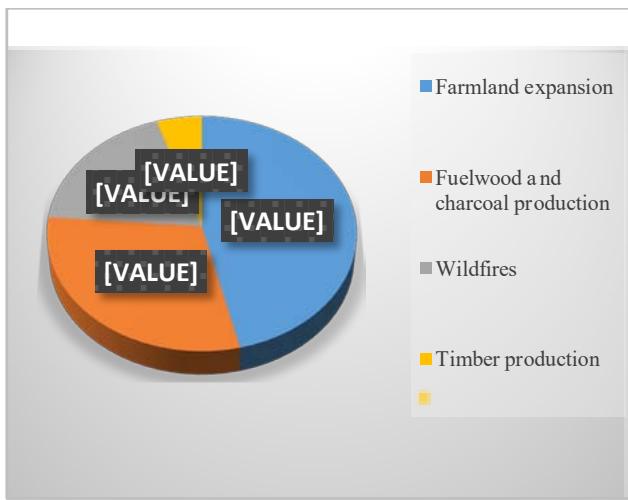 Fig. 4: Direct Causes of LULC Changes in Reservoir Catchments
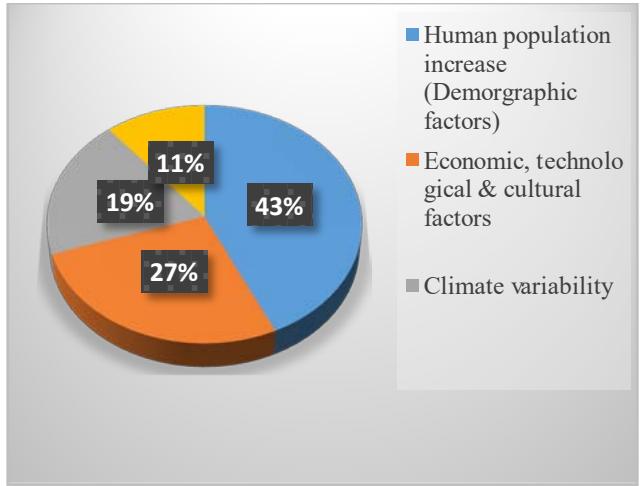 Fig. 5: Indirect Causes of LULC Changes in the Reservoir Catchments
The increased in human population in the catchments over the years has accelerated the demand for agricultural land and settlement development which had led to deforestation and thus reduced the forest cover. The results of the study showed a massive reduction in forested areas in the Tono catchment which was noted to correspond to the results of other studies suggesting that forest areas in Ghana have undergone massive reduction (Adade and Oppelt, 2019). Census data showed that between 1986 and 2016, human population in the five (5) regions of northern Ghana increased with an average growth rate of $2.1\%$ per annum (GSS, 2014), implying an expansion of agricultural land and built-up areas to meet demand. According to Attua and Fisher (2011) and Antwi et al. (2014), human population growth is widely recognized as a main driver of environmental and LULC change, especially in developing countries. The changes observed in the study reservoir catchments are consistent with those observed in many studies conducted at national and regional levels in Ghana such as Antwi et al. (2014), Kleeman et al. (2017) Asubonteng et al. (2018), Shoyama et al. (2018), Adade and Oppelt (2019) and Antwi-Agyei et al. (2019). For example, using a mixed-method approach, Kleeman et al. (2017) identified population growth as a major driver of LULC changes in Ghana's Upper East Region. Various anthropogenic activities, including agriculture, have led to encroachment of human settlements on forest lands, with devastating consequences for biodiversity (Antwi et al., 2014). In Namibia and Kenya, studies have identified agricultural expansion, human population growth increase and illegal logging as the key drivers of landuse and landcover changes in catchments, with serious debilitating effects on their associated reservoirs and peoples' livelihood activities (Ogechi and Waithaka, 2017). Overall, a large population entails a higher demand for fuelwood and conversion of more agricultural land to human settlements to meet the growing feeding needs (Kassa et al., 2017). With the projected steady increase of the global human population at a rate of $1.1\%$ per annum (UN-DESA, 2017), the fragile reservoir catchments of northern Ghana will without doubt continue to suffer from anthropogenic pressures.
### e) Potential Consequences of the Landuse and Landcover Changes in the Study Catchments
The trend of landuse and landcover changes detected in the study has shown general conversion of the closed and open savannah woodland to cropland and built-up and open areas. These conversions have potential consequences on the catchments' characteristics and hydrology. According to Weiss and Milich (1997), landcover is a function of rainfall regime, soil conditions and geomorphology. This indicates that the conversion of the closed and open savannah woodlands to croplands, grasslands and settlements would definitely lead to changes in the soil conditions and the geomorphology of the catchments.
Similarly, Costa et al. (2003) reported that the conversion of forest to grassland disrupts the hydrological cycle of the catchment by altering the balance between rainfall and evaporation and, consequently, the runoff response of the area. With less litter due to wildfires and clear/burn practices in the catchments, the capacity of surface detention is decreased, and a greater proportion of the rainfall runs off as overland flow. The shift from sub-surface flow to overland storm flows accompanying deforestation, expansion of croplands and built-up areas may produce dramatic changes in the catchment peak flows as well and make the land more vulnerable to erosion leading to sedimentation of the reservoirs. Adongo et al. (2019b) reported that the estimated mean annual soil loss in the reservoir catchments ranged from 3.71 to 8.17 t/ha/yr. Lack of enforcement of environmental by-laws by the local rural district council regarding deforestation has led to uncontrolled cutting down of trees within the catchment and much of the woodland has now become grassland area.
Also, Boakye et al. (2008) noted that practices relating to farming and urbanization such as construction and soil compaction during logging can reduce the infiltration capacity of the soil and in turn the flow of water through the soil profile in Barekese catchment in Ghana. Moreover, the increase in farming activities in the catchments coupled with increasing runoff could also increase erosion and sedimentation of the reservoirs thus, transporting more sediment into the river leading to the gradual sedimentation of the reservoirs. Therefore, these LULC changes detected could be the cause of the sedimentation in the reservoirs at a rate of 0.26 to $0.91\%/\mathrm{yr}$, as reported by Adongo et al. (2019b). A similar study conducted in Ghana noted a similar trend whereby sedimentation of reservoirs was mainly attributed to deforestation and lack of proper education of the communities in catchment management (Boakye et al., 2008).
## IV. CONCLUSIONS
The study identified and classified cropland, water bodies, built-up land, open savannah woodland and closed savannah woodland as the five major landuse and landcover categories in the various sites. Over the 30 year period, substantial areas of closed and open savannah woodlands were noted to have been converted into croplands and built-up areas with water bodies declining mainly due to anthropogenic activities. Closed savannah woodland was only identified in the Tono reservoir catchment although its area decreased overtime.
Farmland expansion, domestic and commercial fuelwood and charcoal production, construction activities, wildfires/bushfires, and illegal harvesting of forests for timber production were observed as casual factors for these changes. These factors were influenced by human population increase, economic, climate variability in the catchment, etc. These changes observed in the various catchments have an effect on catchment hydrological characteristics thus affecting water flows and increasing the level of vulnerability to erosion and its attendant effect on reservoir sedimentation. Strategies such as afforestation, ban on illegal harvesting of forest products, etc and involving local communities for effective and sustainable management of the catchments to reduce the effect of landuse and landcover change on catchment characteristics are recommended.
Generating HTML Viewer...
References
32 Cites in Article
Bright Addae,Natascha Oppelt (2019). Land-Use/Land-Cover Change Analysis and Urban Growth Modelling in the Greater Accra Metropolitan Area (GAMA), Ghana.
T Adongo,W Agyare,F Abagale,N Kyei-Baffour (2019). Spatial soil loss estimation using an integrated GIS-based revised universal soil loss equation (RUSLE) in selected watersheds in northern Ghana.
Thomas Adongo,Nicholas Kyei-Baffour,Felix Abagale,Wilson Agyare (2019). Assessment of reservoir sedimentation of irrigation dams in northern Ghana.
Farooq Ahmad (2012). Detection of change in vegetation cover using multi-spectral and multi-temporal information for district Sargodha, Pakistan.
Effah Antwi,John Boakye-Danquah,Stephen Asabere,Gerald Yiran,Seyram Loh,Kwabena Awere,Felix Abagale,Kwabena Asubonteng,Emmanuel Attua,Alex Owusu (2014). Land Use and Landscape Structural Changes in the Ecoregions of Ghana.
P Antwi-Agyei,F Kpenekuu,J Hogarh,K Obiri-Danso,R Abaidoo,E Jeppesen,M Andersen (2019). Land use and land cover changes in the owabi reservoir catchment, Ghana: Implications for livelihoods and management.
A Ashraf (2013). Changing Hydrology of the Himalayan Catchment.
Kwabena Asubonteng,Karin Pfeffer,Mirjam Ros-Tonen,Jan Verbesselt,Isa Baud (2018). Effects of Tree-crop Farming on Land-cover Transitions in a Mosaic Landscape in the Eastern Region of Ghana.
Emmanuel Attua,Joshua Fisher (2011). Historical and Future Land-Cover Change in a Municipality of Ghana.
E Boakye,S Odai,K Adjei,F Annor (2008). Landsat images for assessment of the impact of landuse and landcover changes on the Barekese catchment in Ghana.
A Butt,R Shabbir,S Sheikh Saeed Ahmad,N Aziz (2015). Land Use Change Mapping and Analysis using Remote Sensing and GIS: A Case study of Simly Catchment, Islamabad, Pakistan.
Pol Coppin,Marvin Bauer (1996). Digital change detection in forest ecosystems with remote sensing imagery.
Marcos Costa,Aurélie Botta,Jeffrey Cardille (2003). Effects of large-scale changes in land cover on the discharge of the Tocantins River, Southeastern Amazonia.
S Duadze (2004). Landuse and Landcover Study of the Savannah Ecosystem in the Upper West Region (Ghana) using Remote Sensing.
Gss (2014). Population, latest availbale census and estimates (2011-2012).
H Kassa,S Dondeyne,J Poesen,A Frankl,J Nyssen (2017). Transition from forest-based to cereal-based agricultural systems: A review of the drivers of land use change and degradation in Southwest Ethiopia.
Janina Kleemann,Gülendam Baysal,Henry Bulley,Christine Fürst (2017). Assessing driving forces of land use and land cover change by a mixed-method approach in north-eastern Ghana, West Africa.
Eric Lambin,B Turner,Helmut Geist,Samuel Agbola,Arild Angelsen,John Bruce,Oliver Coomes,Rodolfo Dirzo,Günther Fischer,Carl Folke,P George,Katherine Homewood,Jacques Imbernon,Rik Leemans,Xiubin Li,Emilio Moran,Michael Mortimore,P Ramakrishnan,John Richards,Helle Skånes,Will Steffen,Glenn Stone,Uno Svedin,Tom Veldkamp,Coleen Vogel,Jianchu Xu (2001). The causes of land-use and land-cover change: moving beyond the myths.
E Lambin,H Geist (2006). Land-Use and Land-Cover Change.
M Luca (2013). Change Detection in Landuse/landcover using Remote Sensing and GIS Techniques: A Case Study of Mahananda Catchment.
G Mavima,G Soropa,H Makurira,W Dzvairo (2011). Sedimentation Impacts on Reservoir as a Result of Land Use on a Selected Catchment in Zimbabwe.
Maureen Mzuza,Zhang Weiguo,Lostina Chapola,Mavuto Tembo,Fanuel Kapute (2017). Determining sources of sediments at Nkula Dam in the Middle Shire River, Malawi, using mineral magnetic approach.
B Ogechi,E Waithaka (2017). Landuse landcover changes and implications for food production: A case study of Keumbu Region Kisii County, Kenya.
A Owojori,H Xie (2005). Landsat Image-based LULC Changes of San Antonio, Texas using Advanced Atmospheric Correction and Objectoriented Image Analysis Approaches.
A Seif,M Mokarram (2012). Change Detection of Gil Playa in the Northeast of Fars Province.
Kikuko Shoyama,Ademola Braimoh,Ram Avtar,Osamu Saito (2018). Land Transition and Intensity Analysis of Cropland Expansion in Northern Ghana.
Jacques Ledent (2017). UNITED NATIONS. 2001 et 2003. World Urbanization Prospects. The 1999 Revision, et The 2001 Revision. New York, United Nations, Department of Economic and Social Affairs, Population Division, ST/ESA/SER.A./194 et ST/ ESA/SER.A./216 ..
Peter Verburg,Jan Van Eck,Ton De Nijs,Martin Dijst,Paul Schot (2004). Determinants of Land-Use Change Patterns in the Netherlands.
A Viera,J Garrett (2005). Table 4: Categories of Cohen’s Kappa interpretation (Viera & Garrett, 2005)..
E Weiss,L Milich (1997). Errors in a standard method for generating interannual NDVI coefficient of variation (CoV) images.
Wondmagegn Yigzaw,Faisal Hossain (2016). Land Use and Land Cover Impact on Probable Maximum Flood and Sedimentation for Artificial Reservoirs: Case Study in the Western United States.
L Zhou (2002). Impact of Land-use Changes on soil erosion in Upper reaches of Shiyang River in Arid Northwest China.
No ethics committee approval was required for this article type.
Data Availability
Not applicable for this article.
How to Cite This Article
Thomas Apusiga Adongo. 2026. \u201cLanduse and Landcover Changes in Reservoir Catchments of Irrigation Dams in Northern Ghana\u201d. Global Journal of Research in Engineering - J: General Engineering GJRE-J Volume 23 (GJRE Volume 23 Issue J4): .
Explore published articles in an immersive Augmented Reality environment. Our platform converts research papers into interactive 3D books, allowing readers to view and interact with content using AR and VR compatible devices.
Your published article is automatically converted into a realistic 3D book. Flip through pages and read research papers in a more engaging and interactive format.
An assessment of landuse and landcover (LULC) patterns and changes at catchment level is crucial to planning and management of dam reservoirs. LULC changes over a 30-year period for 9 reservoir catchments in northern Ghana were assessed using a mixed-method approach involving GIS/remote sensing technique and key informant interviews. Four major LULC namely; cropland, water bodies, built-up land and open savannah woodlands were identified and classified from 1986, 1996, 2006 and 2016 LandSat TM images of the reservoir catchments. Substantial changes in LULC were observed in the reservoir catchments from 1986 to 2016, mainly through the conversion of large areas of closed and open savannah woodlands to cropland and built-up areas. Across all the catchments, cropland and built-up land increased significantly whilst water bodies, open savannah woodland and closed savannah woodland experienced a declined over the past 30-years.
Our website is actively being updated, and changes may occur frequently. Please clear your browser cache if needed. For feedback or error reporting, please email [email protected]
Thank you for connecting with us. We will respond to you shortly.