The concept of small-scale industry is derived from cottage industries that reflect the cultural phenomenon of Bangladesh, comprising the contribution to Gross Domestic Product (GDP) proportion. The objective of the paper is to understand the challenges this sector is facing in the post COVID-19 pandemic phase to revive the sector. The gross impact on this sector for pandemic and post pandemic eras have been evaluated using secondary literature and firsthand data accumulated from several interviews. Therefore, the study of consistent national and international legislations handed over an apparent interpretation which indicates where the escape clauses are, what needs to be amended and incorporated with the purpose of revival. The findings and recommendations that are outlined here give a proper direction of undertakings by the authorities. Therefore, the given indication might allow us to dignify the glory of this sectorevolving our social-economic and cultural life.
## I. INTRODUCTION
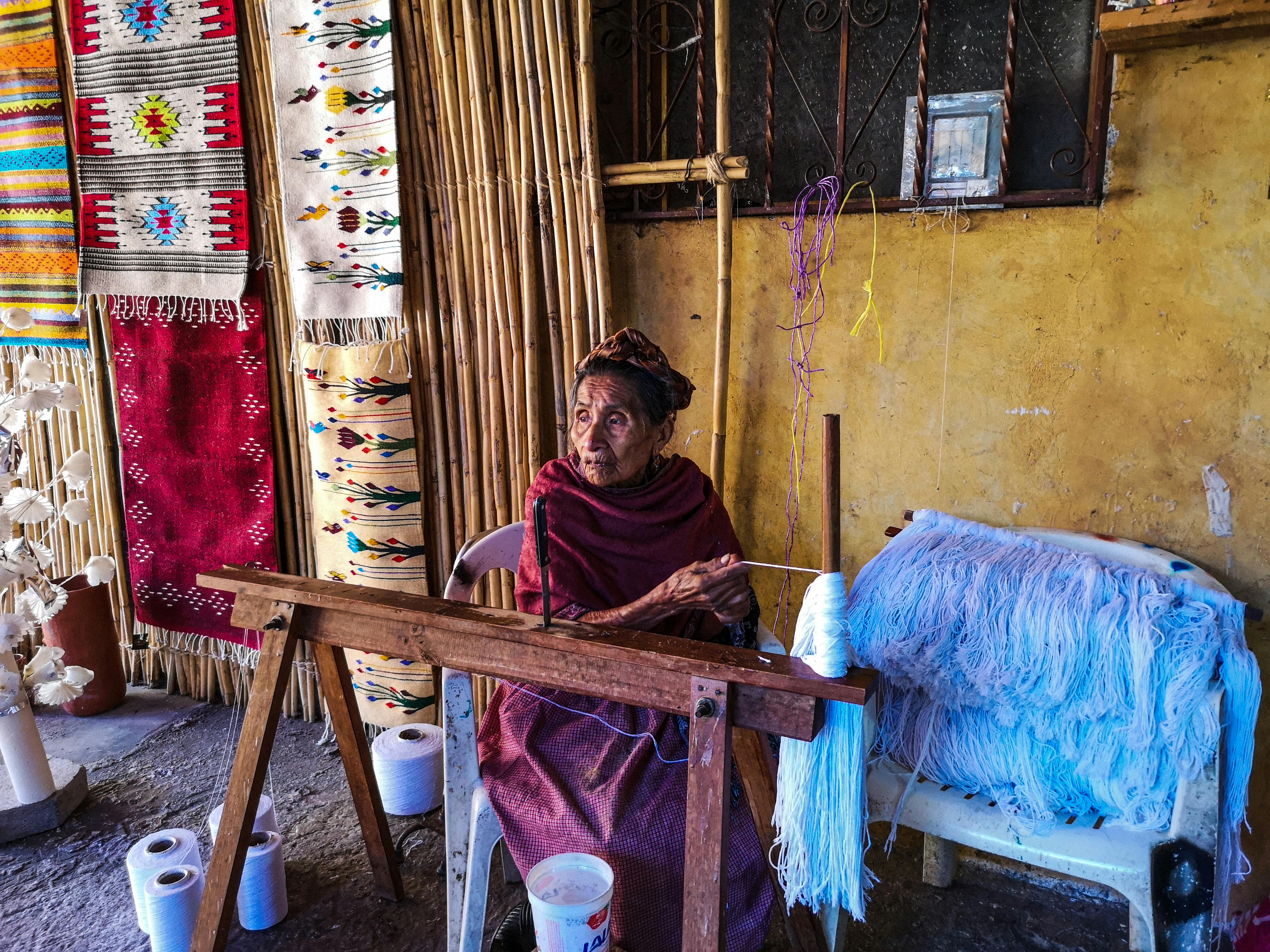
In Bangladesh, the cottage industries carry the value of our culture, our long-term tradition. The protection and promotion of this sector not only bears the traditional aspect, also it allows a respectable number of employment opportunities. Even our constitution also encouraged the peasants and workers within rural development. The COVID-19 pandemic has interrupted all our undertakings and policies including the governmental, administrative, education and business which are unsatisfactorily affected. Some of the business is trying to resume their work, and the revival of this sector faces some challenges. This sector of Micro, Small and Medium Enterprises (MSMEs) have massively collided with the COVID-19 crisis; surveys indicated that more than two-thirds of MSMEs would be folding their relevant businesses within four-months due to the loss of their line of work. This particular conferred to economy and business for a large sector in consequence be entitled acting towards with dignity and respect within the support in their justifiable urge to pursue and expand their business. As according to the Sustainable Development Goals in 2015, the MSMEs encompass therein and are worthy of constant subsistence from every stage (Berkel and Zaman 2020). Thus, their revival in the post COVID-19 era has been challenging yet to a part of major significance. This paper has studied those relevant legal social economics vulnerabilities of this sector, recommending some reforms and eradication of the challenges to revive this sector, to promote our tradition in the cause of global pandemic and afterwards. In India, they are already able to re-evaluate their revival of some of the cottage industrial products before this pandemic era could come and diminish this sector. Their Punjab's phulkari embroidery, woven drawstrings have been a featured form which was eventually disappearing, and they started ground working in 2019. (Shukla, 2019). So, here in Bangladesh what are the challenges, the sufferings and what the policy makers have initiated for them was needed to maintain properly the cottage industries are the most impactful sector in terms of trade and commerce that involves several rural employment factors having worldwide demands of these products.
The COVID-19 circumstances made the lives miserable, so as the effect upon the businesses. It needs proper attention and monitoring to eradicate the challenges and revive the sector. As Bangladeshi, it is the obligation to uphold the dignity of this sector that recognizes these products in the international market by contributing to our economy. From a rural practice that let them come to cover urban markets with sophisticated products, includes a good number of employment opportunities deriving towards the country's economic development urges to work over this sector more. (Tasneem & Biswas, 2014).
## II. STATEMENT OF THE PROBLEM
This is a complex problem that requires some measures to simplify that the cottage industries in Bangladesh are sustaining a certain circumstance with their employment pattern in this pandemic situation needs undertakings for its revival in the subsequent condition. Identifying their challenges of rejuvenation with existing legal ruling-regulation, institutional support refers to what protection this sector has, what it does not and what is an urge to initiate in the post pandemic circumstances. Evolving from the 18th century and now turning to be the biggest industry in Bangladesh, they are in their way towards contributing to SDG goals, it possesses more than $18\%$ of employment opportunity, the women are more benefitted through greater spare; thus, its revival is a necessity. (Hossain & Mohammed, 2019).
## III. RATIONALE OF THE PROBLEM
These issues with cottage industries conferred to economy and business for a large sector in consequence are entitled acting towards with dignity and respect within the support in their justifiable urge to pursue and expand their business. The pandemic slowed their regular flow of work, or somewhere this has been paused for a prolonged period. This pandemic is causing terrible loss in this sector, to prevent them and allow them to be brought around will not only promote this sector, along with protecting the rights of the people with a view to economic significance. Thus, working on the challenges they are facing with a concept of reviving the sector is the utmost work and a need of the present time. The reviving is not an uncomplicated piece of work, it is obstructed by some major challenges. Therefore, eradicating the challenges with legal and policy reservations shall avail to elevate these businesses again.
## IV. QUESTIONS OF THE STUDY
- What are the challenges that the cottage industries have faced in the post COVID-19 pandemic in Bangladesh?
- To what extent the revival of this sector is feasible through legal and institutional assistance?
## V. OBJECTIVES OF THE STUDY
- To identify the challenges that cottage industries have faced in the post COVID-19 pandemic in Bangladesh
- To analyse the extent of revival through legal and institutional assistance of this sector.
## VI. BRIEF LITERATURE REVIEW
The introductory initiative of such industries was confined to garment making, sewing in England and the United States. In our sub continent, the Moroccan traveller IBN Batuta with his understanding of our 'muslin' clothing which is one of the best products in the zone of cottage industries established as the leading part. In the Mughal period, this industry was not backed by the government, later the East India Company used these products for exporting. They also took steps whenever they were moving from the subcontinent suppressing these businesses. After the partition in
1947, Bangladesh underwent a loss in this sector as many people were deported being involved into this business. In East Pakistan, they initiated a step to improve this sector in 1957 through The East Pakistan Small and Cottage Industries Corporation (EPSIC), after the liberation war that was damaged severely. Then, Bangladesh Government stepped towards revitalising this sector, consequently the EPSIC was recreated by Bangladesh Small and Cottage Industrial Corporation (BSCIC) by means of ensuring the financial and infrastructural assistance to this sector. According to numeral surveys by the last few years it produced employment probabilities for 40 thousand people engaging in this sector. It started evolving in 18th century and now turned out the biggest industry in Bangladesh, they are way towards contributing to Sustainable Development Goals (SDG) (Hossain & Mohammed, 2019).
Referring to the intellectual value of this sector, these intellectual property rights and cottage industrial products have an undeviating connection. With the implementation of intellectual property law these sectors will obtain a stronger protection. The intellectual property rights issue is another tool here permitting this sector a large scale of protection from any sort of infringements. In Bangladesh last year after the Small and Medium Enterprise (SME) foundation fair, it was urged to make the registration process easier, less costly and digitalized for cottage industrial products sheltering it from piracy. (The Daily Star, 2019)
The COVID-19 situation injured the small businesses, including in the CMSMEs, that is eventually scaling down and the social distancing-stay home motion caused them to be temporarily closed. Thus, these businesses of Bangladesh are already facing vulnerabilities. Some recommendations such as reconstructing the sector with some survival strategies and then equipping them to recover, the policy-based support-fiscal support-financial support mechanisms and support for the women entrepreneurs can work towards development. The Interest free loans to the small and medium women enterprises, the higher allocation of stimulus funds can be initiated. (Mahmud, 2020).
The COVID-19 impacted the small-scaled industries through disruption of business through holding the export activities, declining the foreign direct investment, reduction of earning and over all the slowdown of this sector. It affected the labour market too. (UN Bangladesh, 2020). As far the state obligation the report from the Financial Express where 200 billion soft loan to the micro, small and cottage industries were provided by the Government in May, 2020 due to their substantial loss in the current pandemic. The interest rate and the distribution was quite in favour of this sector that is all round 70 percent out of 100. The Federation of Bangladesh Chambers of Commerce and Industry
(FBCCI) has called for moderation of the terms and conditions for disbursing loans so that every sector, especially the, micro and small businesses therefore. Focus has also been given to the Trade Associations and Central Bank schemes so that they may comfortably reach out to them. This report mentioned nearly four million small businesses where the cottage industries include and the Credit Guarantee Scheme is given importance for this zone. The SME foundation also depends upon this as there is a possibility that this sector can be left out due to this pandemic where the central and other banks can put a contribution (Ahmed, 2020).
Some monetary steps have been taken as well, Bangladesh Small and Cottage Industries (BSCIC) said Tk 131.14 crore has been distributed under the government stimulus package announced during the coronavirus pandemic, the money was distributed among 602 cottage, micro, small and medium enterprises (UNB News, 2020). The Ministry of Industries has sought Tk 1,100 crore as seed money for the small entrepreneurs who remain outside the banking system and cannot avail funds from the stimulus package. Their 500 crores will be for small and medium enterprises and BSCIC will execute the rest 600 crore for the cottage industries. (UNB News, 2020) Exploring the project of Needs Assessment Working Group their analysis for the small and medium industries that the government has laid out tk 20,000 crore as working capital along with the banks furnishing the loans with minimal interest rate. The refinancing schemes with some waivers on government rents, utility bills, VAT, SD etc. market support access, international funding are as in the place of recommendation. (NAWG, 2020).
National Association of Small and Cottage Industries of Bangladesh (NASCIB) organized a workshop to boost up the relevant sectors, where the output came as the cottage industrial sector as facing interruptions in their business, many of them could not pay the rents; production losses, product marketing issues, production cost increasing, not receiving funds in a proper way these are the factors that were raised there (Financial Express, 2021). A survey made by Dhaka Chamber of Commerce and Industry (DCCI) indicates 59 per cent of the CMSMEs are having issues to get the banking fund, 18 percent are unbanked, trade licensing is another issue. Entrepreneurship should be promoted, activism of Microfinance institutions should be more active, agent banking system should be added to overcome this post pandemic spot (Anik & Akhand, 2021). The proposal of the governmental that the ICT-based capacity building for women entrepreneurs covering the digital, virtual, and mobile-based business training, coaching, and mentoring pertinent to economic recovery, digital marketing and communication channels, with digital financial literacy can be a great addition for this sector. But the policies should not be rigorous; otherwise the objective of revival shall lag behind (Mahmud 2020).
The relevant literature is focused on the funding allocated for this sector, through Governmental initiative or any other foreign funding. There are multiple genres of businesses, and this pandemic caused funding requirements for all of them, there the cottage industries are coming by the equivalent support or not with mentioning the intellectual value of this sector as well. The policies mentioned in articles whether all of them or either one of them has been implemented, and no specification of how the outcome was thereof.
## VII. METHODOLOGY
This research required the analysis and some numerical data, but mostly the analysis of challenges, legal and institutional frameworks where it specified doctrinal research, where the author has incorporated both qualitative and quantitative data. In case of categorising the doctrinal research, it falls under fundamental research as it has analysed some social and economic facets.
1. Rationale Behind this Method- The title of this paper ascertains about the analysis of challenges that obstruct the revival of the cottage industries in COVID-19 pandemic. At this point primary data of legal policies are needed; also, the secondary data of the analysis of literatures and some of the survey-focused group discussion-interviews with the workers are essential part of this paper
2. Data Source and Data Type- The sources mentioned here, overall come from legislation and policy analysis, different literatures, articles, newspaper reports with some of the interviews of the sector workers. The secondary data of literatures, policies has covered the portion and primary data of legal and other documents shall collaborate to get the theme of legal analysis within the bounds of thesis title. The village women, men or persons involved with this industrial sector had been questioned to make a survey. Along with, if possible, an interview with the relevant sector's official would have supported more.
3. Data Analysis- Both the data were analysed in a way that, the secondary data where the other authors' attitude-their analyses have indicated the gap in those literatures with some of the pertinent directions. The primary data of legislation and policies and the information from the interviews where the material provisions, chapters has been analysed to find the escape clauses and necessary alterations and modifications ascribed to corona pandemic.
In time of taking the primary data from the workers involved in this sector, the safety measures were followed, and the strict precautions of COVID-19 were maintained.
## VIII. SCOPE AND LIMITATIONS OF THE PAPER
The Medium and Small Enterprises (MSE) are well-received in our country where the opportunity of self-employment is emphasised in fuller sense. The handicrafts, Jute-Bamboo products, local goods, the jamdani-muslin-silk work are all our traditional cottage industrial products. A suitable number of people are entailed in this sector. The scope has covered the various areas of cottage industries in Bangladesh, their prior traditional business pattern, their adaptation due to COVID-19 pandemic along with the challenges they fight for reviving their sector which are already suffering or ending. The analysis of legal instruments concerning this sector and the necessary policies adopted by the Government or administrative body to explore how their rights are protected-instructed- compensated within rules and what should be included to revive this sector in the post pandemic era. This is all around a study on the way towards eradicating the challenges that the sector is facing, signifying the revival from the perspective of Bangladesh.
The inclusion part of this paper refers to the challenges that this sector is facing till the pandemic occurs; the legal analysis of relevant laws significantly domestic legislation; the pertinent theories under legal and economic aspect. The paper is excluded from the state governance theories, also some other concepts that might go with cottage industrial revolution but do not comply with the perception of revival.
Limitations are thereof that the lack of interviews with the workers as due to this pandemic the physical communication has disoriented. The extent of the cottage industrial sector does not confine to a rooted territory, covering each aspect was difficult. This paper has incorporated the information-analysis within mid of November 2021.
## IX. CONCEPTUAL AND ANALYTICAL FRAMEWORK
"Cottage industry' means an industry which is accompanied by the help of the members of a family either as a whole time or part time occupation and the sum investment do not exceed as much as in an industrial investment" (The Bangladesh Small and Cottage Industries Corporation Act, 1957) Cottage industry having a limited scaling of manufacture operations that is executed from a person's home, focusing on the mass production of labour-intensive goods with a consequential downside when competing with factory-industry based manufacturers. (Kenton, 2020).
### a) Jurisprudential View
The pure theory of law by Hans Kelsen, right here it is mentioned that the law must be free from all classification of politics and other variables. The term 'Volksgeist' refers to a unique way that connects the biological heritage of the people, where the portion of this paper is associated at first hand. Custom, biological activities, environment are all the parts under 'Volksgeist' that employ the theme within historical school. The philosophical school of law, in this direction Salmond defines it as the merger of both moral and legal jurisprudence, any action should be bound by both legal and moral aspects even in case of economic sanctions balancing our cottage industrial sector. The doctrine of 'laissez faire' indicates the industrial and technological progress or revolution to visualize the relationship between law and the society promoting social welfare. (Mahajan, 1987).
### b) Economic Recovery Model Theories
The father of economics Adam Smith, with his theory on economic development, specifying that the state must not implicit any restrictions and the division of labour and extension of market is desired, the theory refers to a certain positioning stationing the economic enlargement of all sectors is attributed there the cottage industrial development can enhance such development. The Keynesian Model, in the time of great depression (1929-1933) there put emphasis on its economic policy having modern developments in society and explaining achieving all-encompassing employment and economic reconstruction. In the current circumstances, our cottage industrial sector needs an economic recovery for one year of disruption in trade and business where this can be a helping hand.
The Neo-liberal Model considered the two concepts of 'laissez faire' and the Kenynesian model: though the invisible hands are needed, state intervention is required. Under The Sustainable Development Theory, after the Millennium Development Goals, the Sustainable Development goals approached within an aspect of development of certain stages, there the reduction of poverty and further actions are described, not beyond the ambitious sustainable development goals. Theories on SME Impact where the theory on change on business management and the finance theory of change work around the overall business-economic development.
The theory-based approach of every pertinent sector of knowledge embracing the issues of reviving the cottage industries in the post COVID-19 circumspect, suggesting keyways to be analysed and building the framework for this sector to amend the surroundings, bringing back the commercial benefit thereof.
### c) Analytical Framework
The relevant theories were analysed in such a way that the historical school of law there Savigny indicated about the culture of the people, Volkgeist said about the heritage of the people connecting the cottage industries as that reflects the culture and heritage. Here the cottage industrial sector is absolutely a wedge to refer the culture with the legal system The Philosophical School of law, there Salmond and Kant opined as to social development that gives the essence of reviving the cottage industries as a part of social development. The laissez faire concept has a very immediate communication with cottage industries as it promotes the social welfare by bringing back to the culture and heritage with the economic establishments. The Economic Recovery Model theories can be helpful to analyse "Laissez faire" Model to market mechanism, the Kensiyan model applicable as in times of disaster, the government needs to take expansionary fiscal policy that can guide the revival factor directly. The sustainable development theory works towards economic prosperity and SME impact leads to the training and financial assistance which leads to a role in strengthening the cottage industrial factor in revival.
The information collectively the first-hand data and the secondary literature have been accumulative to specify the relevancies concerning cottage industrial factors due to COVID-19 situation.
The formation of international legislations, policies, and regulation in what manner they incorporate the factors behind the revival of the cottage industrial sector that put them into the position where it was. The adoption of international policies into the domestic regime accompanying the challenges the sector faced.
## X. CHALLENGES FOCUSING ON THE PRESENT CONTEXT
There are numbers of businesses that fall within the cottage industrial sector, the ancient sector furnishing the employment probability for man and woman also contributing to the Sustainable Development Goals (SDGs). Creating a strong labour force, an equal way of wage earning for living through these village rooted industries. The post COVID-19 stage, and the challenges can be more unfavourable for them. Their revival can be a considerable question to acknowledge in the post pandemic spot, as the number of challenges is increasing compared to prior COVID-19 stage. During the pandemic, when the shops were closed, that time the small factories and local places locating these products were produced, they faced a loss. Hereafter they caused obstructions to pursue the profession. Due to resulting from a consequential economic crisis around the world, the urgency of such products lessened and as the export enterprises were closed for a prolonged period, the demand in other countries have declined thus the reopening phase was not that favourable for this sector. The challenges at present they are facing:
- Lack of Production- These products are made as the initiatives of orders, but having an extensive absence, the numbers of orders have reduced significantly.
- Vulnerabilities of the Workers- large government plants and manufacturing units do not comply with this field, rather they rely on foreign products with excuses lacking in quality (The Financial Express, 2020) the absence made them more vulnerable.
- Not accustomed to Digitalization- With the primary data taken the workers are not aware of online business modules; even so few of them are associated with the new form of business. The sum is less in this respect.
- Effects on Export Zone- These products have a value in international trade. The pandemic causes a barrier in the way of exporting cottage industrial products. This may put the economy vulnerable due to not contributing to the export zone.
- Not aware of Legal Protection- The legal provisions saved for this sector are not well implemented and the workers are not as well.
- Recent Initiatives- There is the recent Government initiative to boost this sector by packages having Tk 2, 700 crores to uplift the cottage industry and SMEs, with the intention of providing social reliability projects for the elderly persons and widows in poverty-stricken areas. (Karim & Bin, 2021).
## XI. A SCOPE FOR REVIVAL WITHIN LEGAL AND INSTITUTIONAL ARENA
The paper has indicated towards the challenges, leaving with a scope of reviving the sector. The analysis of legal protection along with the institutional assistance are to overcome the given challenges. This will precisely lead towards the factor of reviving the sector.
### a) A Legal Analysis
The way of their sufferings in post COVID-19 spot have by and by deducted their economic development and social security, the monitoring on their revival need to be conveyed. After the discussion on the theories in different branches of knowledge and analysis of the current challenges of Bangladesh, the requirement of legal procedure is necessary. By means of legal arrangements, the revival can be feasible for their social and economic stability.
### b) Analysis on Domestic Legislations
The Constitution of People's Republic of Bangladesh within the ambit of supreme law of the country mentioned about the development of rural territory and cottage industrial sector, article 16 refers as follows-
"The State shall adopt effective measures to bring about a radical transformation in the rural areas through the promotion of an agricultural revolution, the provision of rural electrification, the development of cottage and other industries, and the improvement of education, communications and public health, in those areas, so as progressively to remove the disparity in the standards of living between the urban and the rural areas" (Constitution of People Republic of Bangladesh).
The Bangladesh: Small and Cottage Industries Corporation Act, 1957- This is considered to be the mother act concerning the cottage industrial issues; here provisions responded to the cottage industrial sector mentioned about the provisions where agreement with other financial institutions can be maintainable as to give loans to the cottage industrial sector includes Bangladesh Bank, Bangladesh Shilpa Bank, Bangladesh Shilpa Rin Sangstha, Bangladesh Krishi Bank, Rajshahi Krishi Unnayan Bank along with the about the funds, loans and schemes. (Bangladesh Small and Cottage Industries Corporation Act.)
Industrial Policy, 2005: It has mentioned of the cottage industrial sector, where the foundation of SME and the other cottage industries in contemplation of manifesting a proper balance in the field of trade, describes about the women entrepreneurship concerning the policy, here the women's participation in cottage industrial work is likely to be seen more and in consequence the support and cooperation is highly essential. Institutions named such as BSCIC, Bangladesh Industrial and Technical Assistance Centre (BITAC), Bangladesh Institute of Management (BIM), National Productivity organisation (NPO), and Small and Cottage Industries Training Institute (SCITI) shall be in assistance in this regard. It incorporated the foreign investment with the export linkage of SME products, technological and institutional assistance, and training facilities. (Industrial Policy, 2005).
Bangladesh Handloom Board Act, 2013: It has stated about a board with providing information about the weavers, their numbers, providing raw materials, funding, loans with limited interest, assistance as to exporting, training procedure, assisting the co-operative weaver society, over all making this sector more popular in terms of their work. (Bangladesh Handloom Board Act, 2013).
Bangladesh Academy of Rural Development Act, 2017: The academy looks forward to research, development, advisory opinions, national international seminars, and many additional functions. The funds thereby provided here to enhance rural development come from Government's internal funding, funds from international NGOs, governments, profits from investments, funds from scheduled banks. (Bangladesh Academy of Rural Development Act, 2017).
Bangladesh Rural Development Board Act, 2018: This Act aims at improving the rural condition through employment opportunities, production, formation of cooperative society in districts, upazilla, village centric, educational, and vocational training, funding and loans coming from infrastructural earnings, profits, money from investment, funds from national-international organisations.
SME Policy 2019: Here the strategic goals describes as number 2 that to access the finance for the SME sector, goal 3 for capacity building- sustainability, goal 4 of start-up/new business, goal 7 to train up the SME entrepreneurs, goal 8 to evolve women entrepreneurship goal 9 to create an effective linkage to large industry with SME products for its demand, goal 10 establishing environment friendly SME industries where the cottage industrial can play a vital position, goal 11 SME related research activities and SME development. Alongside necessary assistance, infrastructures, favourable environment and elevation of loans, credit risk reduction and credit transaction through Bangladesh Bank with further commercial banks and SMEF and research work in this sector. (SME Policy 2019).
### c) International Law Perspective
The cottage industries are somehow associated with socio-economic and cultural expansion, there the certain rights laid aside for this sector under international mechanisms should be more observed. The explanation of the international instrument can assuredly ascribe to a way to maintain the international standard.
Universal Declaration of Human Rights, 1948- Everyone has that social security and the resources towards amplifying their social, cultural, and economic rights for development where the given subject on cottage industries has such relevancy, cultural life of the people, that to enjoy and carry forward their tradition. There the cottage industries are a medium. (Universal Declaration of Human Rights, 1948).
International Covenant on Economic, Social and Cultural Rights, 1966- Promoting the social economic welfare, the concept of cottage industrial factor can be included there, social welfare and social insurance assurance. These provisions may work enveloping the pertinence of cottage industrial sector. (International Covenant on Economic, Social and Cultural Rights, 1966).
Convention on the Elimination of All Forms of Discrimination against Women, 1979- It has mentioned about political, economic social and cultural development for enjoyment of their human rights prospect, employment opportunities of women for economic development.
(Convention on the Elimination of All Forms of Discrimination against Women, 1979).
International Labour Organization (ILO)- It has that impact on each working era to ensure the environment and other aspects compiling all sectors of industries, sectors, works and their relevant rights perspective. In the Social Policy (Basic Aims and Standards) Convention, 1962 there the establishment of suitable industries in rural areas with adequate workforce is mentioned with the non-discrimination clause.
Therefore, it is required to constitute a policy for the post pandemic revival of the cottage industries to enhance our national economy and revitalize our cultures by means of this sector.
### d) Institutional Assistances
This sector depends on the limited ranges of finance taken by family savings or relatives, later when their business shapes, they use to take loans from banks and Governmental financial institutions thus it requires assistance more from the institutions for the ongoing post pandemic phase.
Last year in between March to May several assistants were provided, 200 billion soft loans were disposed of by the Government. BSCIC provided 131.14 crore money to this sector. Monetary assistance given by the Ministry of Industries, there 600 crores have been allocated for the cottage industries (UNB News, 2020). In 2021 started with a new allocation of 2700 crore money for this sector, the total sum is tk124,053 crore that have been specified, the Social Development Foundation, Palli Daridra Bimochon Foundation, and Bangladesh Palli Development will be providing more 300 crores in this regard. (Karim & Bin, 2021) Necessary schemes, recommendations are given priority boosting and promoting this sector. BSCIC loans, Bangabandhu Youth Loans and the loans from Karmasangthan Bank all have accumulated towards the revival of this sector in Comilla (Rahman, 2021) Some additional steps are required to build up the sector with the intention of revival to ensure their socio-economic rights and expansion.
## XII. WAYS TOWARDS REVIVAL
The term 'Revival' refers to the prospect of being brought back to a position where it was placed well. The term can indicate the extent to the state of placing it in the primary stand, or even better. The legal mechanisms are the ways by which any undertakings can be implemented, as it has such binding obligations. The state intervention, legal adequacy, backlogs are the pertinent factors that can lead towards the revival of this sector. The legal means can be a way out of studying and recommending why the revival is needed and how far it can be feasible.
All the existing legislations in Bangladesh stated about the cottage industrial factors however there is question about the adequacy in case of forming the concept of 'revival.' These Acts are adequate for their own purpose, but consequences like COVID-19 pandemic the inclusion of certain clauses to boost up the sector that is under vulnerable situations needs to be addressed to.
Bangladesh has been a member of several human rights instruments that have been mentioned in earlier, though the mentioning of 'revival' is missing yet the survival of these rights is considered, by which the interpretation of revival can come across. The International Labour Organization (ILO) in Bangladesh is backing the small enterprises and their development activities. Being an international organisation, it has several enrollments towards the working sector that can eventually lead us to the concept of revival within a binding effect. The International funding for Bangladesh in the time of pandemic has some utility, International Monetary Fund (IMF) stands for IMF resources, in the form of loans under the Rapid Credit Facility (RCF) and Rapid Financing Instrument (RFI), to assist the government of Bangladesh in case of its economic disruption. (IMF News, 2020).
About the assistance from BSCIC of allotting financial help to the sector since 2020 and this year another new funding has reached 2700 crore. Another crucial factor is that the BSCIC is going to establish a SME bank for boosting this sector that can create a comfort in case of high interests. (Hossain, 2021).
Other countries like the Canadian Government have allocated 237 million for rural businesses and SMEs in pandemic along with partially forgivable loans up to CAD 40000. In India, their Reserve Bank of India placed Long Term Repo Operations (LTRO) for assisting this sector by giving loans (Swain, 2020).
Therefore, including an emergency funding provision for pandemic issues should be incorporated. In the Ebola outbreak in 2014 in West Africa, the International Growth Centre (IGC) played a vital role in funding the affected area, recommending national and international policies to prevent such a situation in near future. The Economic of Ebola Initiative assisted to recover the slow downing economy of West Africa. (IGC, 2015). We are not conversant in whether the same policies might work in Bangladesh to revive the sector, but we do have the possibilities to allow such inclusion for betterment.
## XIII. FINDINGS OF THE STUDY
The study revolves around the challenges, vulnerabilities of this sector that is caused by the COVID-19 pandemic in Bangladesh. At present the post pandemic phase requires certain changes and modifications to revive our cottage industrial sector in Bangladesh. The relevant legal analysis of domestic and international regimes with institutional assistance tends towards a hope of reviving the sector. The existing challenges that have been discussed earlier can be eradicated if the steps towards revival are followed accordingly. The analysis of the secondary and primary data gives us the specific information that:
Challenges in the aftermath of COVID-19 pandemic phase- The closure of shops, some of the businesses under the cottage industries are suffering as the hand-stitched products from Jessore, Rajshahi, Jamalpur; the Bamboo and Jute made Products due to the closure of establishments for about a long time, the productivity has reduced. Above all some of the businesses sustained well as the handloom industries in Sirajganj are continuing their business; also, Jamdani and Muslin have not reduced its vast recognition worldwide. These products are made and traded a little way better.
The other challenges were the involvement in the other sectors, due to not having the proper way of earning the workers have shifted to some other professions. Their participation in the export zone has been lessened. Though some initiatives are taken, that cannot cover this large sector. The number of productivity has decreased, and the vulnerabilities of the workers are beyond expectation. The institutional assistance was not adequate to cover them all, also due to not experiencing such a pandemic phase the other facilities are not enrolled that way. They are not that way aware of the legal assistance.
Feasibility of Revival through legal and institutional aspect- It cannot be accurately said that to what extent the revival can be feasible. The domestic laws have provisions for funding, agreement and there was no such mention of emergency funding for pandemic states. On the other hand, the international mechanisms have emphasised the periphery of economic, social, and cultural rights where the cottage industries have continuous linkage. The international instruments should have that binding effect on the state parties to fulfil these rights. There is a suitable number of institutional assistance from BSCIC and banks but the number of schemes and funds by the Government should have been reached proportionately to this sector as the number is large.
## XIV. RECOMMENDATIONS
The relevant literatures, first-hand data have in general accumulated towards a scenario where the revival calls for to take place with following some of the recommendations that has evolved thereby-
- The challenges they are facing there, a process of digitization should be adopted in every sphere of their businesses. Digitalization in the cottage industrial sector, their market promotion toolkits, green economic development, and sustainable business policy are prerequisites here.
- The existing legal regime should incorporate a provision for funding the cottage industrial sector in
case of emergency site or pandemic period to carry out their undertakings horizontally. The national or international regime can generate a binding atmosphere to work towards their revival, which can be regarded as a persuaded extent in the post pandemic era. The institutional assistance is significant, but those should reach proportionately to the affected areas.
Revival in pandemic, or revival in COVID-19 has the same phasing, there measures should be prepared earlier so that the cottage industries does not need anything to revive them, rather to expand their sector.
## XV. CONCLUSION
The cottage industries contribute to the economy dividing their products to promote our customary knowledge and artistic esteem. Due to COVID-19 crisis this sector has been disrupted badly; lack of production, lack of sale, lack of proper funding these are the major challenges they faced, where measures should be executed for the post pandemic for their revival. This sector is the worst sufferer as they belong to the community of small scaling industry. The findings of the study accord an understandable interpretation that how far the challenges with the cottage industrial sector are justified in Bangladesh, their vulnerabilities, assistance, and the availability of legal assurances in the post pandemic along with a scope of reviving this sector within the framework of legal and institutional aspect. The recommendations are given to denote the orthodox legal-institutional remedy for revival of this sector evolving their social, cultural, and economic development in the post COVID-19 pandemic. The output provides a complete direction that this sector needs actions for its revival, not only for its own sake but also restoring the glory of this sector that put an effort to bear our tradition for about a prolonged period.
Note of Acknowledgement: The substantial part of this paper is derived from the Author's academic Master's (LLM) Thesis work concerning 'Revival of the Cottage Industries in Bangladesh in the post COVID-19 Pandemic: A Legal Analysis'. As a part of the policy of the institution, it was saved in Bangladesh University of Professionals (BUP)'s repository, thus may show in the plagiarism checker at around $68\%$ out of $70\%$ due to that issue. An application corresponding to this fact has been forwarded to your mail address. But, this paper has not been submitted or published elsewhere.
### Books:
1. Ullah, R. (2012) In the Shadow of Death: The Tantees of Bangladesh. Empowerment through Law of the Common People (ELCOP) and Palal Prokashoni.
2. Mahajan, V. (1987) Jurisprudence & amp; Legal Theory. Eastern Book Company, Lucknow.
Journal, Articles and Website
1. Ahmed, W 'Reaching out to micro and cottage industries; The Financial Express (9 June, 2020) viewed on 3 October 2020 https://thefinancial express.com.bd/view/reaching-out-to-micro-and-cottage-industries-1591717420>
2. Berkel V & Zaman Z, Reviving MSMEs from Covid-19 impact'
3. Dhaka Tribune (26 June, 2020. viewed on 11 November 2023 <https://www.dhakatribune.com/
- opinion/op-ed/2020/06/26/op-ed-reviving-msmes-from-covid-19-impact>>
4. 'BSCIC distributes Tk 131cr from stimulus package'2020 UNB NEWS, 26 August, viewed 4 April 2020 https://unb.com.bd/category/business/bsic-distributes-tk-131cr-from-stimulus-package/56530
5. COVID-19: Bangladesh Multi-Sectoral Anticipatory Impact and Needs Analysis' 2020 Needs Assessment Working Group (NAWG) viewed 1 December 2020 https://reliefweb.int/sites/reliefweb.int/files/resources/COVID_NAWG%20Anticipatory%20Impacts%20and%20Needs%20Analysis
6. Cottage industries seek govt support to overcome challenges'2021, The Financial Express, 24 November, viewed 4 February 2022 https://thefinancialexpress.com.bd/trade/cottage-industries-seek-govt-support-to-overcome-challenges-1637725609
7. 'Developing industrial backward linkage' 2020, The Financial Express, 11 November, viewed 14 February, 2021 https://www.thefinancialexpress.com.bd/editorial/developing-industrialbackward-linkage-1604939 116
8. Chowdhury, A & Tiwari, A 2021 'Facilitating cottage, micro, small and medium enterprises in the pandemic' The Financial Express, 25 September, viewed 3 February 2022 https://www.thefinancial express.com.bd/viewss/viewsfacilitating-cottage-micro-small-and-medium-enterprises-in-the-pandemic-1632581645
9. 'Helping Bangladesh Recover from COVID-19' 2020, IMF News, 12 June, viewed 28 February 2021 https://www.imf.org/en/News/Articles/2020/06/11/na-06122020-helping-bangladesh-recover-from-covid-19
10. Hossain, M & Mohammed, S 2019 'Analysis of Cottage Industry in Bangladesh: A case study on Khadi Research Gate, v-3 p-118-125 viewed 25 March 2021 <https://www.researchgate.net/publication/340461556_Analysis_of_Cottage_Industry_in_Bangladesh_A(case_study_on_Khadi
11. Hossain, I 2021 'Specialized bank for smaller enterprises planned' The Financial Express, 13 February, viewed 1 March 2021 https://thefinancial express.com.bd/trade/specialised-bank-for-smaller-enterprises-planned-1613185845
12. 'Immediate Socio-economic Response Plan' 2020, UN Bangladesh, 31 August, viewed 21 February 2021 <https://unsdg.un.org/sites/default/files/202009/BGD_Socioeconomic-Response-Plan_2020.pdf>
13. Karim, R & Bin, W 2021 'Cottage Industry, SMEs: Tk 2, 700 cr fresh stimulus unveiled' The Daily Star, 18 January, viewed 14 April 2021 https://www.the dailystar.net/frontpage/news/cottage-industry-smestk-2700cr-fresh-stimulus-unveiled-2029481
14. Kenton, W 2020 'Cottage Industry' Investopedia, 23 September, viewed 2 February 2021 https://www.investopedia.com/terms/c/cottage-industry.asp
15. Mahajan, V 1987, Jurisprudence & Legal Theory, Eastern Book Company, Lucknow.
16. Mahmud, R 2020 'Ensuring Revival for the Many Cottages, Micro, Small, and Medium Enterprises in Bangladesh' Center for International Private Enterprise, 7 August, viewed 1 October 2020 <-https://www.cipe.org/resources/ensuring-revival-forthe-many-cottage-micro-small-and-medium-enterprises-in-bangladesh/>
17. Rahman, T 2021 'BSCIC Cumilla rebounds after pandemic shock' The Business Standard, 16 February, viewed 4 February 2022 https://www.tbsnews.net/economy/industry/bscic-cumilla-rebounds-after-pandemic-shock-202390
18. Shukla, V 2019 'Reviving the Azar band: How a group of women are rallying to save Punjab's forgotten craft of woven drawstrings' First post, 9 July, viewed 9 November 2020 https://www.firstpost.com/living/reviving-the-azarband-how-agroup-of-women-are-rallying-to-save-punjabs-forgotten-craft-of-woven-drawstrings-6899701.html
19. 'Simplify IP registration' 2019 The Daily Star, 22 March viewed 1 December, 2020< https://www.the dailystar.net/business/news/simplify-ip-registration-1718536
20. Swain, S 2020 ' Measures that can boost MSMEs during Covid19 lockdown' The Economics Times, 2 April, viewed 12 May, 2021< https://economic times.indiatimes.com/small-biz/sme-sector/ measures-that-can-boostmsmes-during-covid-19-lockdown/articleshow/74945278.cms>
21. The economic impacts of Ebola, 2015, International Growth Centre (IGC), viewed 21 February 2021 <https://www.theigc.org/impact/economic-impactsebola/>
22. 'Tk 1100 cr seed money sought for small entrepreneurs' 2020, UNB News, 06 May, viewed 4 June 2020 <https://unb.com.bd/m/category/Bangladesh/tk-1100-cr-seed-money-sought-for-small-entrepreneurs/51184>
23. Tasneem S and Biswas R, 2014 'Role of Cottage Industry in the Economic Development of Bangladesh: An Empirical Study' IOSR Journals, viewed 15 February 2023.
24. <https://www.academia.edu/8877868/Role_of_Cott age_Industry_in_the_Economic_Development_of_B angladesh_An_Empirical_Study
Generating HTML Viewer...
Funding
No external funding was declared for this work.
Conflict of Interest
The authors declare no conflict of interest.
Ethical Approval
No ethics committee approval was required for this article type.
Data Availability
Not applicable for this article.
Sadia Binte Rahman. 2026. \u201cLegal Analysis on the Challenges of Cottage Industries in Bangladesh: Ways towards Revival aftermath the COVID-19 Pandemic\u201d. Global Journal of Computer Science and Technology - G: Interdisciplinary GJMBR-G Volume 24 (GJMBR Volume 24 Issue G1): .
The concept of small-scale industry is derived from cottage industries that reflect the cultural phenomenon of Bangladesh, comprising the contribution to Gross Domestic Product (GDP) proportion. The objective of the paper is to understand the challenges this sector is facing in the post COVID-19 pandemic phase to revive the sector. The gross impact on this sector for pandemic and post pandemic eras have been evaluated using secondary literature and firsthand data accumulated from several interviews. Therefore, the study of consistent national and international legislations handed over an apparent interpretation which indicates where the escape clauses are, what needs to be amended and incorporated with the purpose of revival. The findings and recommendations that are outlined here give a proper direction of undertakings by the authorities. Therefore, the given indication might allow us to dignify the glory of this sectorevolving our social-economic and cultural life.
Our website is actively being updated, and changes may occur frequently. Please clear your browser cache if needed. For feedback or error reporting, please email [email protected]
×
This Page is Under Development
We are currently updating this article page for a better experience.
Thank you for connecting with us. We will respond to you shortly.





 Sadia Binte Rahman





























































