I. INTRODUCTION
a) Back ground of the study
Fishes are highly important in the development of Nigeria both economically and health wise; as source of protein and dietary lipid with low cholesterol level in the diets of many populace. Knowledge of some quantitative aspects such as length-weight of fish is an important tool in the study of fish biology. The condition factor in fish serves as an indicator of physiological state of the fish in relation to its welfare (Le Cren, 1951). It also provided information when comparing two populations living in certain density, climate and other environmental conditions (Weatherly and Gills, 1987). In sub-saharan Africa, fish accounts for 10% of the animals' protein consumed, and 98% of this is finfish (Belgado and McKenna, 1997). The average per capita consumption of fish in Africa in 2007 was about 8.5kg per year having increased from an average of 7kg per annum from 1969-1974 (Ahmed, 1997). Almost 40% of fish consumed in Africa is freshwater fish as compared to the global average of 25%. In West Africa, finfish is largely consumed, while per capita, consumption growth is unlike in the Asia Continent (Bonga, 1999). When fishes are kept in lentic water, their feeding capacity tends to be negatively affected, more especially in polluted water. Dams and/or reservoirs have downstream effects on riverine environments and subsequently blocked nutrient-flow along the strata of the ecosystem. Thus, affecting the fish's production in the downstream of the reservoirs and river channels. Haruna (2003) reported that some aquatic plants that are hazardous to navigation and fishing show explosive population growth in new impoundments e.g. Phragmites, Typhaspp and Cyprus spp in Lake Jakarta. Growth of fish is subjected to natural environmental changes particularly climate. However, some problems are course by human activities including fishing where more fishes are taken than are replaced by birth and subsequent new fish recruitment and growth. Like any other morphometric characters, the length-weight relationship (LWR) can be used as character for the differentiation of taxonomic units and the relationship changes with the various development events in life such as metamorphosis, growth and onset of maturity (Thomas et al., 2003). Length-weight relationship parameters are useful in fisheries science in many ways; to estimate weight of an individual fish from its length, to calculate condition induces, to compare life history and morphology of population belonging to different regions (Saniet al., 2010) and to study on to genetic allometric changes (Teixeira de Mellon et al., 2006).
II. MATERIALS AND METHOD
a) Study area
Kano state is a state located in Northern - Western Nigeria, created on May 27, 1967 from part of northern region, Kano state borders Katsina state to the north - west, Jigawa state to the north - east, Bauchi state to the south - east, and Kaduna state to the south - west, The capital of Kano state is Kano. Subsistence and consumption agriculture is mostly in the outlying districts of the state. Some of the food crops cultivated are millet, sorghum, maize and rice for local consumption while groundnuts and cotton are produced for export and industrial purposes.
Wudil local Government area in Kano state is 44km away from Kano city Maiduguri road, also the channel that links Kano Gombe, Yola, Jigawa, and Bauchi states. Most of the people in Wudil are fish and sand Packers, due to the presence of Wudil River, it's headquarter is in Wudil town on the A237 highway. It has an area of 362km2 and a population of 185, 189 at the 2006 census. Its coordinates lies between 11°49'N 8°51E coordinates: 11°49'N 8°51'E'. The postal code of the area is 713. River Kogin Wudil is a stream and is located in Jigawa state, Nigeria. The estimate terrain elevation above sea level is 394 meters. Its latitude lies between 12°3'55.15" while longitude lies between 8°59'41.42'.
III. METHOD OF DATA COLLECTION
Hundred (100) Oreochromis niloticus were sample randomly at Wudil River, Kano state from the catch of fishermen at landing sites. They were easily identified by the dark bands or stripes found on their tail. Identification of fish species was also done using field guide by Olaosebikan and Raji (1998) and FAO (1992) samples were chilled in iced blocks at the point of collection before being transported in a plastic jerry can to the laboratory.
IV. LABORATORY ANALYSIS
The samples were mopped on filter paper to remove excess water from their body surface. The total length was measured in centimeter. The total was measured as the distance from the tip of the snout to the caudal peduncle, the body weight of each specimen was taken using a top loading mettle balance (LP502.A) to the nearest 0.0 g after drying excess water with filter paper.
V. Lenght - Weight Relation
The length - weight relationship was determined using conventional formula described by Le cren (1951) and used by Kefas and Abubakar (2010).
Where
W= The weight of fish in grams
L = The total length of fish in cm.
a = Exponent describing the rate of change of weight with length (=The intercept of the regression line on the Y axis) b = The slope of the regression line (also referred to as the Allometric coefficient)
The equation and the data were transformed to before determination was made. The equation was therefore be transformed into.
Where W. = weight of fish in grams.
L = length of fish in cm a = constant.
b = an exponent.
VI. CONDITION FACTOR
The condition factor (k) was determined for individual fish using the conventional formula describe by Worthington and Richard (1931) as adopted by Ja'afaru and Tashara (2009). The ratio of the length to the weight of the fish was determined as.
VII. SEX DETERMINATION
Each specimen was dissected ventrally with the aid of a small scissors inserted through the vent. Also a semicircular cut was made laterally on the side of specimen for better observation. The gonads which are two parallel tubules located on the dorsal wall of the abdominal cavity were then examined with the naked eye in the case of sexually mature forms and dissecting microscope was employed for examination of the sexually maturing forms. Males have gonads with smooth exterior, while the females have gonads with a rough exterior (Olurin and aderibigbe., 2006).
VIII. DATA ANALYSIS
All data collected were subjected to statistical analysis. ANOVA, Regression and Correlations were used to determine the relationship and association between data and parameters. Bar chart were also used to express data.
IX. RESULT AND DISCUSSION
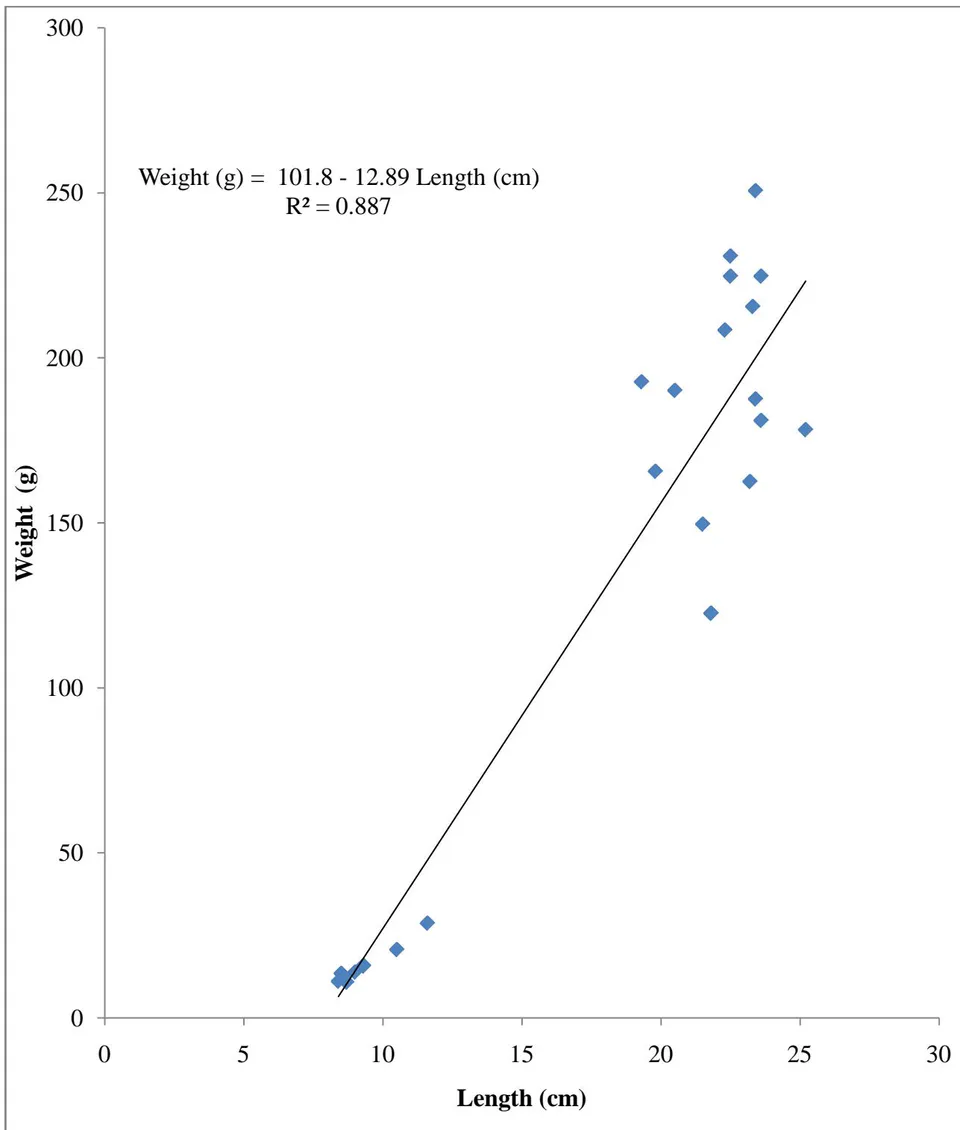
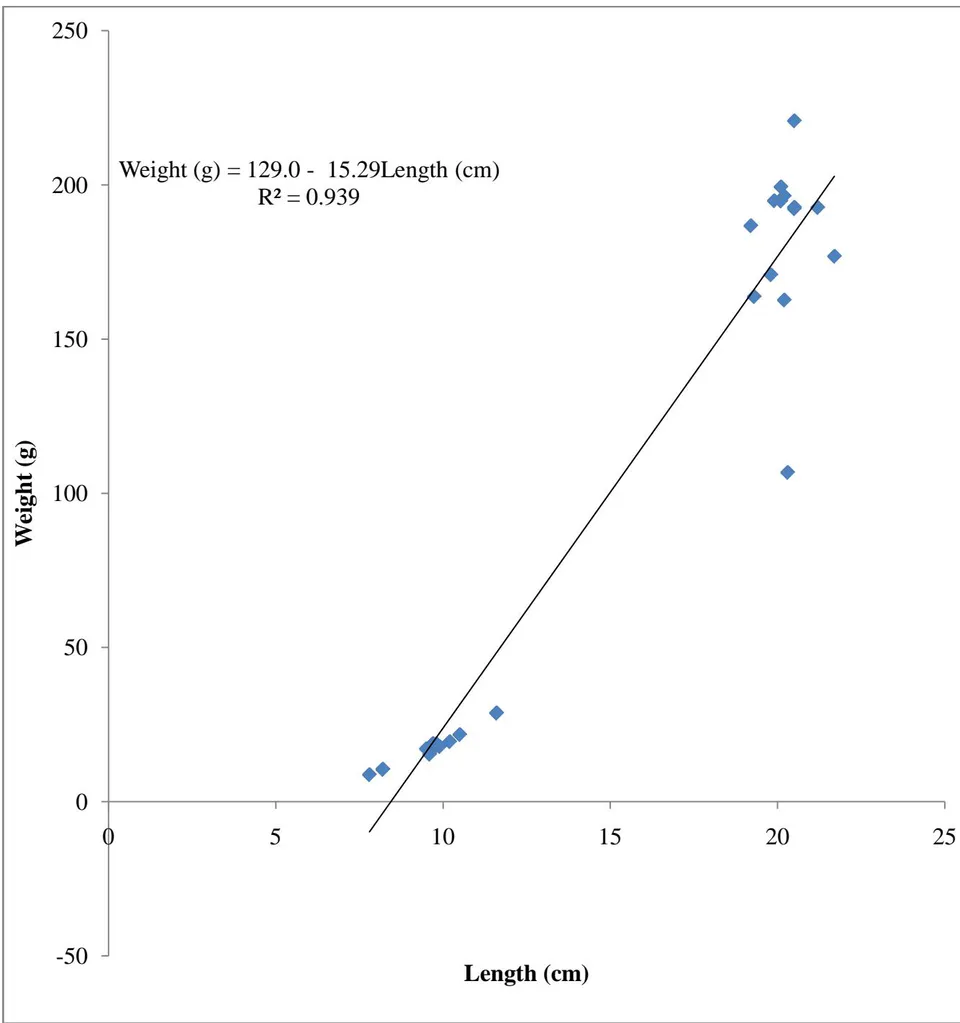
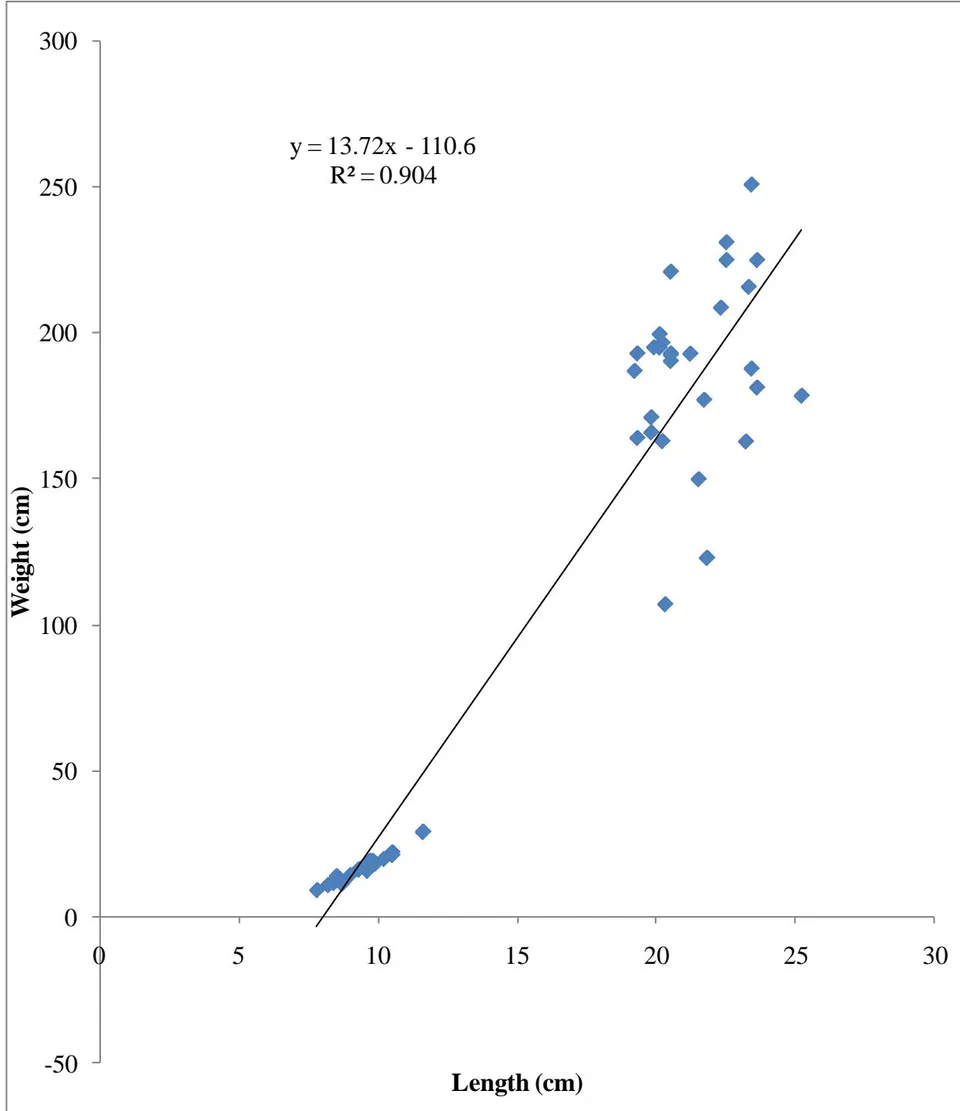
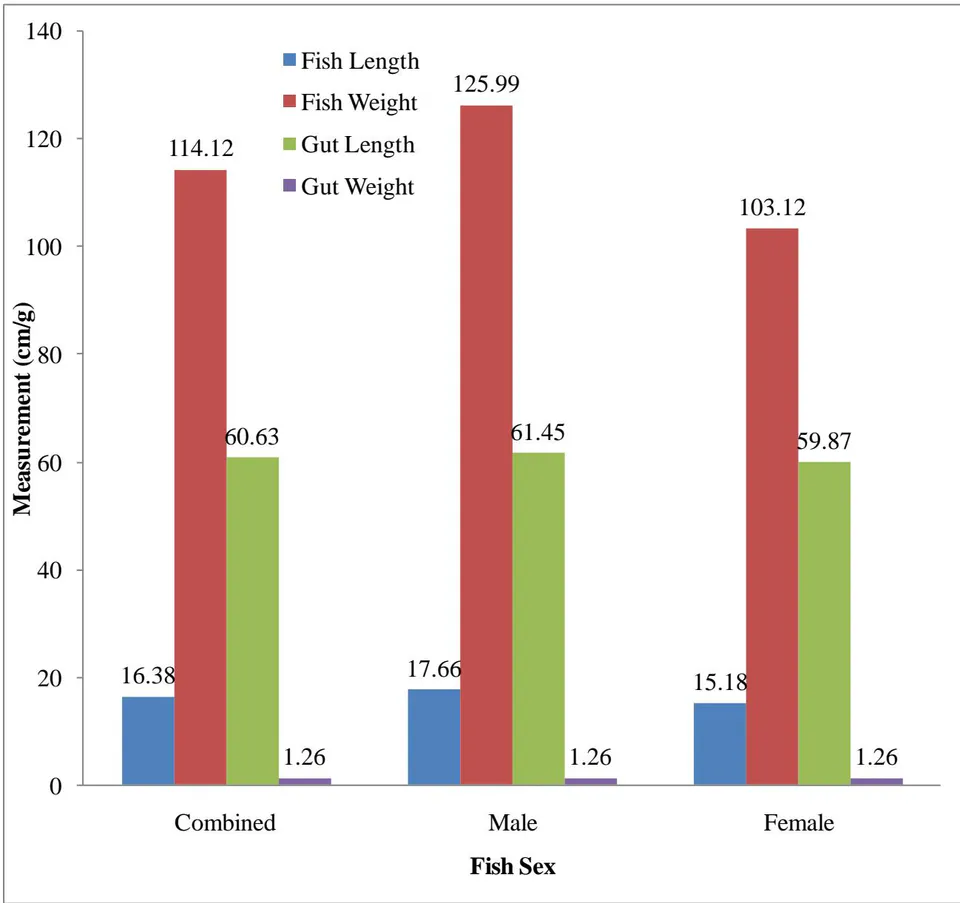
The result of length - weight regression analysis of O. niloticus is showing in figure i, ii, iii. The value for males 12.87, female 15.29 and combine sexes 13.72 all indicated allometric growth. The length - weight relationship of male figure (i), females figure (ii) and combine figure (iii) showed linear relationship with the significance coefficient of 0.887, 0.939 and 0.904 respectively at 0.05 per cent between length and weight. The condition factor (k) for all fish samples was determined from the average length and weight of all the fish as shown in table 1 males 2.2875, females 2.9480 and combine sexes 2.5967 which is an indication of the fish been healthy since they are all above 1.0.
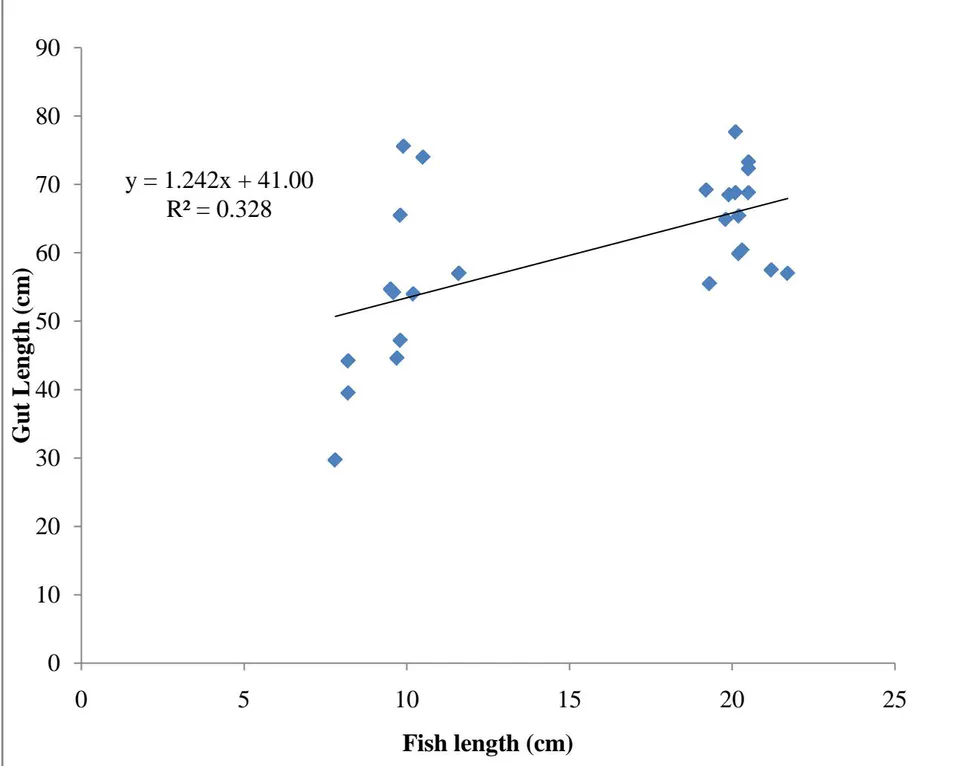
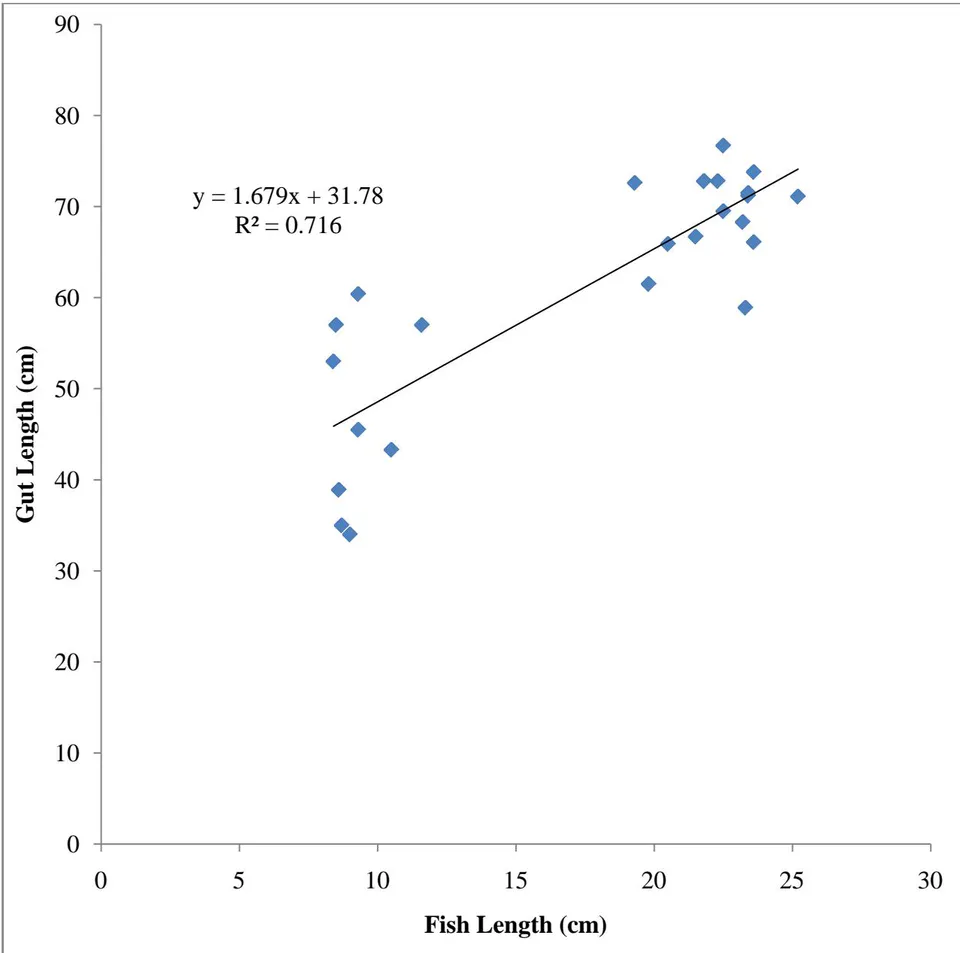
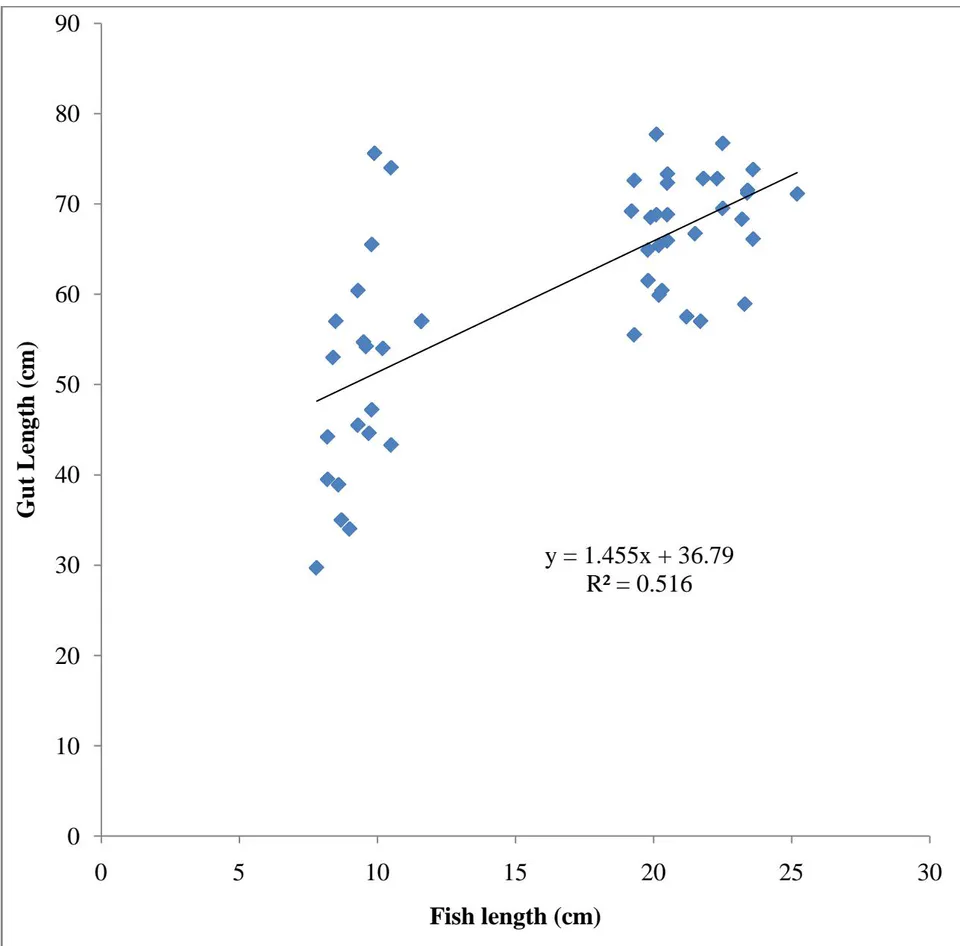
The length weight relationship equations were determined for each sex and combined using exponential equation (Figure I, II. and III). For Male fish, Weight=101.8-12.89length; ; Female fish, Weight = 129.0 - 15.29length, while Combine Sexes of fish, Weight=110.6-13.72length; . The agreement between the empirical weight and computed weight from regression can be termed as ideal growth for positive allometry since all the b value were higher than 3. The relationship between the gut length and fish length for Female is GTL= 41.006+ 1.242FSL, ; Male is GTL=31.786+1.679FSL, and Combine is GTL=36.796+1.4555FSL, . The weight of the gut showed no variation because the fish eats the same composition of diet in the wild. This is in agreement with the report of Karachle and Stergiou (2010).
| Parameters | Oreochromisniloticus | ||
| Male | Female | Combine | |
| Mean Fish Standard length (cm) | |||
| Mean Fish Total weight (g) | |||
| Mean Condition factor (k) | |||
| Mean Gut length (cm) | |||
| Mean Gut weight (g) | |||
X. SUMMARY, CONCLUSION AND RECOMMENDATION
a) Summary
The present study was conducted to determine the length - weight relationship and feeding habit of O. niloticus in Wudil River, Kano. Olurin and Aderibigbe (2006) calculated the length and weight and condition factor of pond reared Juvenile O. niloticus, with a view to determining whether the fishes are in good condition. Edah Bernard et al., 2010) computed the wet weight - dry weight relationship of O. niloticus (Tilapia) insignificant relationship were found in all cases at 0.05 per cent with correlation coefficients for males, females and pooled sexes at 0.9241, 0.9632 and 0.9586 respectively and result of this study were not far from this high values as indicated on figure 1, 2, and 3. A number of factors (e.g. sex, seasons, environmental conditions, stress, and availability of food) also affect the condition of fish. Stewart (1988) observed stress as a result of the reduction in the breeding and nursery ground of O. niloticus in Lake Turkena, Kenya, as contributing to dramatically lower condition factors.
XI. CONCLUSION
Length - weight regression analysis showing that the value of male, female and both sex exhibited allometric growth. There was significantly high correlation at 5% between the length and weight of both sexes. The condition factor indicated that the fish where stable conditions during the time of conducting the research and the gut length to fish length showed low correlation in female ( ) and high in Male,
Recommendations
It is recommended that the condition factor of Oreochromis niloticus in the river is good for their wellbeing.
Fisheries management should be enhanced for higher productivity of Oreochromis niloticus.