
Introduction
Public Private Partnership (PPP) is a development buzzword now a day, which can be explained as an agreement-based Partnership that unites the public and private sectors to carry out a project or deliver services that is by tradition handled by the public sector. At its very core PPP agreement implicates the transferring and sharing of risks and returns among the public and the private partners in a performance linked remuneration arrangement. With regards to the approach for PPPs study, in particular once it is predominantly the disciplines of Economics and Management Science, it can be defined as a micro-level partnership. On the other hand, PPP has emerged as a concept of management, thoughts related to the New Public Management (NPM) and also as an effective tool for development management. “Public Private Partnership (PPP) as a subject has appealed much attention by many of the scholars and in a wider academic arena, as a multidisciplinary topic it comprises disciplines Economics, Management Science and Public Administration etc.” (Spielman, Hartwich, and Grebmer https://www.tandfonline.com/doi/full/10.1080/14719037.2017.1313445). It has been incepted in developed countries, and later gained popularity by policy transfer among developing countries. In Bangladesh PPP concept was firstly introduced in Power Sector back in October 1996, as a Private Sector Power Generation Dogma. Since then - PPP concept is going through evolution and fine-tuning regarding policy making, establishing of government institution and tailoring for diverse sectors etc. PPP, as we understand it, is basically a kind of privatization method that may be applied to third-world nations' development strategies in order to enhance and add value to the partnership.
One of the crucial needs for the fulfillment of the Development Vision of Bangladesh was an escalation in infrastructure investments from roughly 2% to 6% of its GDP. It would enable Bangladesh to advance towards the status of a middle-income country (Perspective Plan of Bangladesh 2010-2021). At present time Bangladesh is topping in the list of graduating LDCs with a good and consistent economic growth. It is scheduled to be graduated on 24 November 2026 (United Nations, 2021). It is currently experiencing nearly 6.37% Average GDP growth being among the fast-emerging economies in the world. Bangladesh secured 24th position in the World Economic Forum's Inclusive Development Index ranking (published in 2018), and by 2030, she is expecting to be the 24th largest economy in the world. Now, with these economic positions - Bangladesh need to devise an ‘Expedited LDC graduation strategy’ - coherent with the thought of rebuilding strength and grow from the recent unstable political situations. That strategy needs to be compatible with the spirit & vision of the national development agenda including: Sustainable Development Goals (SDGs) by 2030, 8th Five Year Plan (2021-25) and the Perspective Plan (2021-41). It will integrate all the expected development objectives of the country: goals of 2025/26, 2030 and 2041 and beyond. Public-Private Partnerships (PPPs) have therefore been identified and given priority by the government of Bangladesh as one of the primary measures to satisfy this investment priority and fill out the infrastructure gap. To inspire private investors in funding the megaprojects, notable adjustments have been made to the PPP framework, regulations and financing schemes by this time.
Bangladesh is already in the final round of its race for development to touch the finishing line of LDC graduation. She is ready to challenge the downsides of this shift proficiently, and benefit out of these openings to ensure the smooth LDC graduation towards development as planned. This strategic move requires huge internal capacity building with regards to the institutional set-up & governance for implementing the development projects to attain the targets. Bangladesh needs to design & implement a good number of mega Projects to reach its development goals - with regards to minimize the infrastructure and service delivery gaps. So, she needs a proven Fast Track growth instrument for the nation, in search of that PPP Model can be considered as a way of realizing the planned projects. It is widely believed that - if tailored well in light of the demand situation PPP model could bring sure success in Public Infrastructure, Transportation, Electrification, Health Sector, ICT/Hi-Tech sector and Industrialization Projects of Bangladesh.
The mega-projects planned by Bangladesh are occasionally suffered by fund crisis and efficiency issues. And it is hard to have a good match with the technical / business partners. PPP Model can be a way out to those problems (World Bank, 2015). In order to support the development of sector-specific public-infrastructure and services essential for the citizens of the country, the government of Bangladesh formulated the appropriate policies and set strategies for PPPs back in August 2010. Now the PPP program became an important factor of the Vision 2041 of the Government - a set of goals to ensure a rapid as well as inclusive growth route, to satisfy the needs for better public services in a financially sustainable way.
This is principally a research initiative to assess suitability & effectiveness of PPP models for faster development of the country. Bangladesh need to increase its investment to keep up the development tends, which is a huge potential for PPP Projects. The average growth in last ten year were 6.37% (Figure: 01), which need to be maintained for pursuing the development vision of 2041. In order to realize the development vision set for 2041- it need to maintain the 6.37% average growth of last ten years (shown in Figure: 01).
| Sector | 2021 | 2041 | Remarks: |
|---|---|---|---|
| GDP | $409 B | $2,580 B | Maintain 9% GDP growth until 2031. |
| Investment-to-GDP | 30.76% | 46.9% | Increase investment/GDP ratio to 16.14% |
| FDI | $2.4 B | $153 B | Need to Increase by: 6275% |
| Infra Investment | $100 B | $1,150 B | Need to Increase by: 1050% |
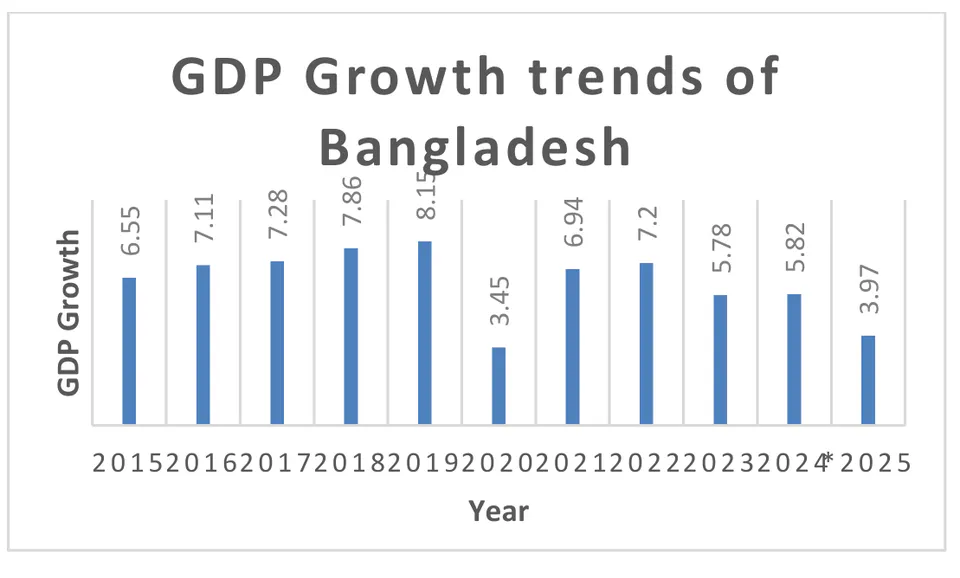
Source: Bangladesh Bureau of Statistics
PPP is an emerging and widely accepted tool for a country’s development especially regarding sustainable development of a developing country like Bangladesh. Bangladesh is trying on PPP Projects for last few years. For example: Mayor Hanif Flyover, Construction of Dhaka Chittagong National Highway, PPP based Economic Zone – Mongla etc. Since the actual number of successful cases is relatively low, there are still legitimate concerns about effectiveness of PPP approach (Archives of PPP Authority, 2022). In recent times, almost all national level projects enlisted by Public Private Partnership Authority (PPPA) of Bangladesh are being implemented in a standard PPP fashion. It is therefore, vital to figure out the issues & challenges of success in the cases of implementing PPP based Projects to be marked as a fast-track growth instrument for Bangladesh. This study basically aims to check the efficiency of PPP projects, find its befitting implementation model and to recommend some strategic directions to overcome all the challenges came across while pursuing for a smooth development & growth for Bangladesh.
There are a number of models used in PPP projects for implementing projects of various sectors all over the world. Many studies can be referred on factor analysis of the successful projects. There is a lot of learning from those papers including the practiced models, the regulations used in the projects, reasons concluded for success or failure. To check effectiveness based on the identified success factors is very significant for program based strategic planning. Discussed models of PPP in different literatures are not suitable for all the countries and the selection of models depends on various factors. The models those are successful in the advanced countries may not be effective in the underdeveloped or the developing countries. The factors contributing in the success may also vary from country to countries based on their perspectives. Since both the public and private entities are involved in PPP based ventures - the key factors for success of previously implemented projects are very important hints to hook the right findings. Besides finding the success factors, studying the models used in the projects are also required to be reviewed for devising innovation based effective models befitting for the upcoming PPP based projects.
It will not be that easy task to find a one-fit-for-all model for PPP Practice. Here, analyzing the critical factors for success will help us in identifying the causes of success and specially the failure for all the partners. As the under developed part of the world is developing gradually over time, governments are taking interest towards PPP project increasingly because of its risk sharing and funding options from the private party’s end. The underdeveloped countries are being interested for these kinds of projects because of their lower income status. Bangladesh - as one of the developing countries just recently trying to explore these vast openings with PPP sector with huge challenges. Being establishment of the legal framework in favor of PPP in 2010, numbers of PPP projects are increasing significantly. Some projects have been awarded and there are a good number of prospective projects which are in pipe lines or in implementation stages. Among those, some projects stay in the book of failure and some can be marked as successful projects. For this reason, the analysis of the projects and finding out the Critical Factors and optioning the compatible model for Bangladeshi PPP scenario is crucial. Findings of the appropriate model will help the authority to make good decisions while selecting the models for PPP projects in the future endeavors. And on the other hand, Critical Success Factors will help both the public and private partners to correct and right tune the approach by understanding the weakness & lacking in their initiatives. Studying the major issues & challenges with PPP model is also important to understand the deep sense of PPP based development.
A lot of models are being practicing in the PPP projects all over the world nowadays. Governments and private parties are trying to implement various models to achieve the utmost success out of the projects. But there are very few studies done on the models are being used commonly and which models should be used in the future projects based upon the success case analysis. This study has been intended to assess the Effectiveness of PPP business model to get a deeper understanding about the applicability of PPP project Approach in the context of Bangladesh. Core objective of the study is to check & explore the major issues & challenges related to PPP Business model and its effectiveness as a fast-track growth driver in the national development of Bangladesh with appropriate models for sector specific PPP projects in the arena. The audience may comprehend this study's major contribution to Bangladesh's growth through the PPP strategy.
Literature review
This literature review part mainly discusses and summarizes the most recent academic literature on Public-Private Partnership and its empirical impact on national development with regards to economic growth, jobs creation, income distribution and poverty situation and overall efficiency gains in developing countries. The argument regarding the effectiveness of PPP as a growth tool to attain desired development objectives was recharged by the development discourses on the post-2015 development agenda. The sustainable development goals were set to stimulate PPP and civil society partnerships to share knowledge, expertise & resources in the development projects. It was widely believed that, the PPP investments need to boost up considerably to serve the development agenda effectively. And lately PPP is considered as an effective instrument on infrastructure development projects in developing countries. Anyway, in the contemporary literature the idea of infrastructure was defined with a wide-ranging description from substructure to mega-structures.
Many a recent study have focused on the issues of growth & development through PPP, One of the United Nations Department of Social Affairs (UN DESA) working papers titled “PPPs and the 2030 Agenda for Sustainable Development: Fit for Purpose?”, has made efforts to focus on these issues to widely discuss the current and forthcoming prospect of PPPs in support of achieving the ‘Agenda 2030 for Sustainable Development’, particularly in the areas of infrastructure ventures. An UN DESA study stresses that, a developing country needs to have adequate institutional capacity to design, implement, and evaluate PPP projects to use them as a tool for development financing with special regards to key economic infrastructure projects. This paper revealed the fact that - since private finance is providing just a minor part of the comprehensive investment for infrastructure needs in the developing countries, PPPs became unsuccessful to deliver desired value for money in many a case - in spite of the recent growth in the private sector’s contribution in infrastructure Projects. A good number of the recent research results suggested that, PPPs is generally suitable for economic infrastructure for example: transport and electricity, due to having a consistent and measurable demand along with service quality impacting the operational cost positively.
M. Mofokeng, et al. (2023), examined the impact of PPP sectoral investments on economic growth in 35 developing nations between 1997 and 2018 using the neoclassical growth framework. They discovered that both energy and aggregate PPP investment positively contributed to economic growth, highlighting the multiplier effect of energy in promoting economic growth in developing nations.
Yurdakul, H et al. (2020), presented that GDP and PPP have a limited correlation, which may be related to other macroeconomic factors that influence GDP growth as a proxy for overall economic development. According to this study, PPP model has got ever more popular in recent years as an effective instrument for public infrastructure financing, PPP brings a bunch of benefits for developing countries, for example: reducing financial load of costly infrastructure investments, ensuring good quality of public services with increased operational efficiency by transferring knowhow from the private sector etc. They claim that since effective implementations depend on a few other conditions, these benefits are not guaranteed for every PPP project. They have reviewed the different features of PPPs exhaustively and scrutinize the factors plays vital roles in favor of the success of PPP projects with regards to growth of GDP.
GDP is regarded as a key macroeconomic indicator that provides unique insights about the economic growth of a country (Calderon, Moral-Benito, & Serven, 2011; Canning & Bennathan, 2000). PPP practices are positively correlated with GDP growth because macroeconomic theory indicates that a rise in PPP investment leads to a notable increase in GDP. (Pimentel, Aubyn, & Ribeiro, 2017). According to the literatures, PPP allows nations to finish projects sooner than they otherwise be then this may boost GDP growth. There are very few literatures discussed PPP’s effects on macroeconomic indicators, Pimentel et al. (2017) estimated how PPP effects the GDP, and the findings indicate that PPP increases GDP. This study examines the aggregate effects of PPP investment on GDP, in order to analyze PPP investment from a macroeconomic viewpoint with special regards to GDP.
PPP has been recommended by the United Nations as an instrument for achieving Sustainable Development Goals (UN Report, 2021). Nannan Wang & Minxun Ma (2020) discussed on a perceived gap, and attempted to make up those gaps to better apprehend the connection between PPP and sustainable development by appraising sustainability-oriented PPP studies. The concept and phases of sustainability-oriented PPP are analyzed in their study. They have demonstrated the association of increasing popularity of sustainability-oriented PPP studies with the strategies of the important global players in PPP, along with suggestions for Research gaps and upcoming research trends.
Research Gaps discovered by the Literature review study
This study has identified a substantial gap by reviewing the theoretical & empirical literature on the problem areas of the current research about effectiveness of PPP. Despite a lot on research on PPP, no particular effort has been seen to make the PPP approach more effective to achieve higher or faster growth for attaining the desired national development. It is found that, some PPP Success Factors and Fail Factors are important but somehow overlooked in the regular literature discussion - which should be studied and reported properly. There are some key issues & challenged of PPP approach in the context of the developing countries - which need to be well addressed in the practices of now-a-day.
The advantages & effectiveness of PPP projects are discussed there but the questions of the PPP business model’s effectiveness for implementing development Projects in Bangladesh remained unanswered, so an investigation of major issues & challenges with regards to PPP practices need to be in place to get a deep understanding of the appropriateness of PPP Approach in the context of Bangladesh with regards to its expected development pace. So that, a befitting PPP based model for developing country like Bangladesh can be developed.
By now considerable knowledge has been gathered on effectiveness of PPP projects, but it is yet to integrate in a comprehensive matrix of empirical justifications. So, this literature review study identifies a remaining gap in the investigation of PPP approach’s effective for the fast-track growth instrument of the country. As Bangladesh want to be graduated from under developed countries by 2026, & would like to cross another development milestone by 2030 towards agenda 2041 – it needs a timely way out to gain efficiency & effectiveness with regards to PPP model-based development Projects. Since there is no strategic direction in the contemporary literatures - Bangladesh need to device research backed PPP strategies. In the existing literature there is very few research and analysis found about the impact of corruption in PPP on the expected development. So based on the above discussion it can be conclude that there is a gap identified in PPP related literature & research, which is giving a clear indication to lead the study to explore the strategic route of effective PPP practices in favor of the faster growth of Bangladesh.
3.1 Research Methodology and Procedure:
For reviewing the Literature in this study over 100 papers published between the year 2010 and 2023 were being analyzed to examine the PPP business approach for development mega projects in Bangladesh. Data from previous studies on PPP models and critical success factors were summarized, and based on these a conceptual model was outlined.
Mostly it was a-Qualitative-Research based on secondary data from selected sources. Relevant data was gathered from various existing sources of published statistics and various facets of project implementation deliverables based on different research reports and government publications. Relevant international and national issues and cases regarding PPP in development projects also being studied; specifically required data on PPP was mostly collected from PPPA (Public Private Partnership Authority) from their periodic reports. Almost 17 project completion reports (PCR) along with annual Reports on the project & pertinent project document were reviewed as the basic source of data. The contents gathered & observation captured were analysed based on software aided “Content Analysis” approach. The qualitative method was chosen to gain a deeper understanding of the effectiveness of PPP projects, as it allowed for more openness and examination of findings.
In-depth interviews were conducted to validate the content analysis findings. A good number of industry experts and key informants provided opinions on the data collected from literature review and content analysis. Data was tracked through report analysis, case understanding, and personal observations. The content study was validated and finalized based on these interviews, obtaining valuable insights from practicing professionals.
Summary of the Key findings
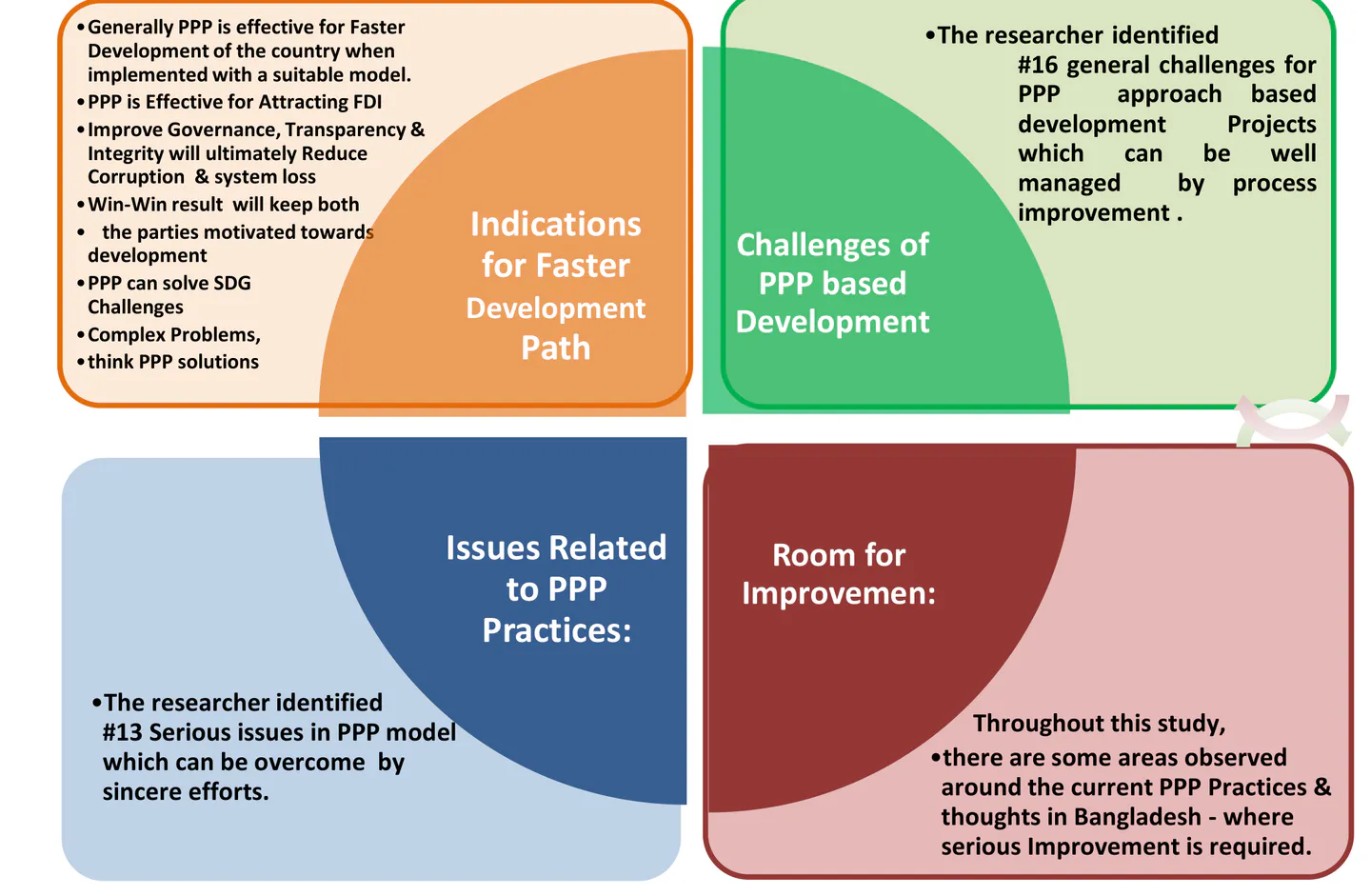
This study identified sixteen general challenges for PPP approach-based development Projects which can be well-handled by major process improvement. The researcher identified thirteen serious issues in PPP model which can be overcome by sincere efforts. Throughout this study, there are some areas observed around the current PPP Practices & thoughts in Bangladesh - where drives for serious improvement is a must. It can be concluded that PPP is effective for faster growth & development of the country - when implemented with a suitable model. The study demonstrates that PPP is effective for attracting FDI – which will also ensure national growth. According to the study finding - improved Governance procedures including Transparency & Integrity will ultimately reduce Corruption & System losses in PPP ventures. And in PPP ventures Win-Win result will keep both the parties motivated towards development of the country. It also suggests that PPP can solve SDG Challenges. In accordance with the findings, it can be said that, in complex problems PPP can help with useful solutions.
Findings about Effectiveness of ppp model for a faster development path
PPP Business Model is effective for Faster Development with regards to implementing & managing development Projects in Bangladesh, once there is a suitable PPP model in place - which can be innovation based and tailored made / hybrid as requires.
PPP can effectively play a good role for attracting FDI in the economy - that can also support faster development.
PPP model is effective to improve overall integrity - which will encourage Good Governance Practices by ensuring Transparency and will ultimately mitigate corruption & system loss in the country to supplement the rapid development.
PPP will ensure a Win-Win result for both the parties engaged (Public & Private in terms of ROI, Profit, and Public Benefits) that will keep them motivated towards faster development.
PPP can be a tool to solve SDG (Sustainable Development Goals) Challenges which will help to ensure a balanced development of the country.
For the Complex Problems with regards to Development, PPP can be recommended as a practicable and management-oriented solution for the country.
As a business model PPP can claim its effectiveness - which is substantiated by the data & evidence in support of the fast-track National development. However, there is always space for further improvement with the PPP models in practice.
Issues identified related to ppp practices are discussed here in order of seriousness
The management of Public-Private Partnerships (PPP) projects often faces several issues, including wrong project selection, faulty feasibility studies, overvalued costing, incorrect model selection, inappropriate risk allocation, aggressive bidding, unwanted legal disputes, complexity of project funding, inadequacy of financial regulation, lack of capacity-based maturity, changes in project scope, inappropriate quality standards, lack of cooperation among partners, active political connections, and lack of confidence from investors and contractors. These issues can lead to cost overruns, schedule disappointments, and project failure. Additionally, the complexity of project funding and the inadequacy of financial regulation can also contribute to fatal project failure. The lack of capacity-based maturity, minor changes in project scope, and inappropriate quality standards can as well lead to project frustration. Furthermore, lack of cooperation among partners, political connections, and lack of confidence from investors and contractors can negatively impact the project outcomes. Public-Private Partnership (PPP) market sounding procedure may encounter a number of challenges, such as the possibility of information asymmetry, the necessity of refraining from premature disclosure, and the difficulty of managing expectations. When it is country-specific, it could be more difficult to precisely assess market appetite and attract appropriate private sector participation.
Challenges in ppp driven development
The researcher outlined several challenges faced by Bangladesh in implementing Public-Private Partnership (PPP)-based development projects. These include Monitoring and Managing the Driving Forces and Critical Success Factors for faster development, measuring Project rates compared to market-based rates, keeping performance track records, tracking frequent changes in scopes and deliverables, institutionalizing the standard PPP management practices, building positive learning curves, managing knowledge transfer, handling policy challenges, building confidence to motivate local and international investment communities, reducing dependency on foreign funds, overcoming capacity limitations, breaking the monopoly of services providers, managing financial and economic risk, building long-term relationships among PPP partners, imposing penal options on poor project performance, addressing legal enforcement issues, ensuring alignment of performance, value addition, and effectiveness, and engaging with the customer community. As per the findings, success of PPP projects is also hampered by the local support provider’s capacity deficit with regards to inability to do Feasibility Studies, Transaction Advisory Services, Insurance Services and other required support services. These challenges highlight the need for Bangladesh to address these difficulties and work towards a more sustainable and effective PPP approach for development. By addressing these challenges, Bangladesh will continue to grow and develop its PPP sector, ultimately contributing to the country's development.
4.4 Rooms for Improvement in regular PPP Practices
Throughout this study, there are some areas observed around the current understanding of PPP Practices & thoughts in Bangladesh – which demands serious improvement. Basically, these thoughts have been derived from the issues & challenges highlighted earlier. Key propositions include: Improving project selection criteria, advancing error correction processes, avoiding delays, and addressing legal and dispute issues. Building PPP-related capacity with special regards to the local support providers (pertaining to Feasibility Studies, Transaction Advisory services, Insurance Services etc) in the country is also a potential area for enhancement, along with facilitating joint ventures between local firms and international companies.
Prioritizing Quality Management and resolving financing issues are important to address first. Cooperation among partners should be enhanced, and political influence should be reduced. Confidence should be built among partners, and project performance should be managed effectively. Implementing innovation and incorporating creativity in PPP design, co-creating experience-based knowledge, and developing knowledge transfer strategies for the PPP sector are also suggested for improvements. Investment community motivation should be maintained, and efforts should be made to ensure fund sufficiency and reduce foreign fund dependency. National capacity building for PPP management should be encouraged; fair competition should be created among partners. Trust should be built for long-term relationships, and poor performance and system-loss must be discouraged. Development Management can benefit from synergy created by national alignment of all PPP project performance components.
Other important Takeaway based on the observations and the study experience
4.5.1 A Vicious Cycle is found in PPP Sector
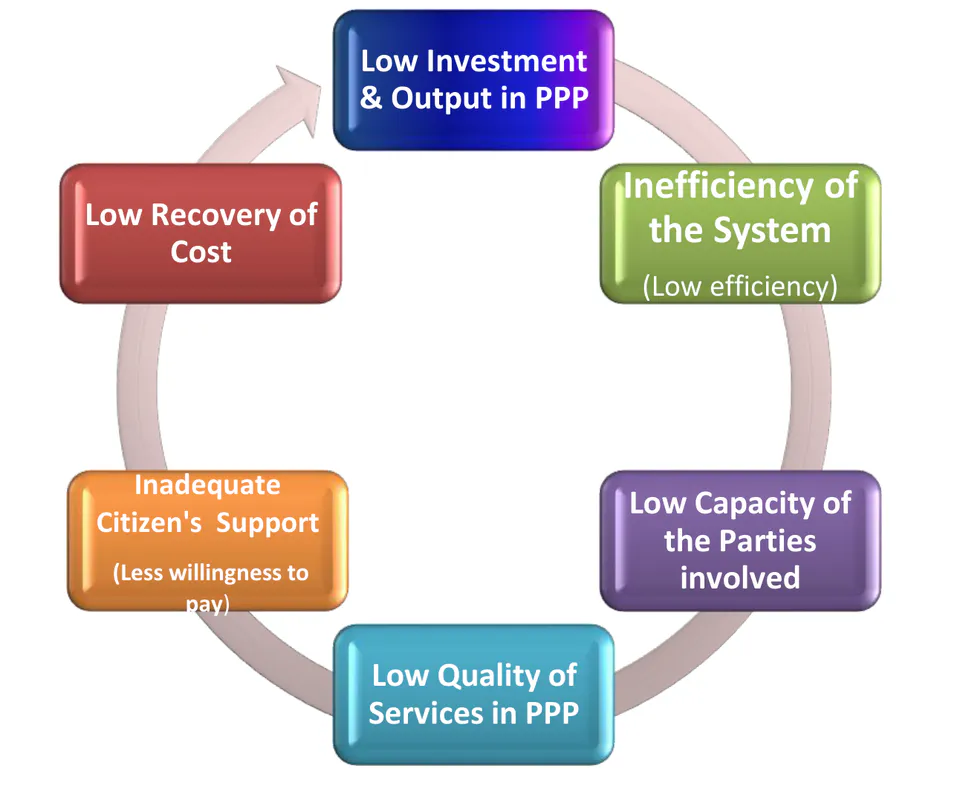
Analyzing the interconnected findings of this study both from the content analysis & the expert opinion - there is a crisis situation observed in the PPP ecology which can be explained by the vicious cycle principle - which is actually a low-level equilibrium trap for the PPP practices in Bangladesh. The investment in PPP is low - due to having inefficiency of the system, which causes low quality of services from PPP outcome, and so the citizen’s support is less for PPP projects. Then again it starts with underinvestment in PPP concerns and the whole equilibrium remains at a lower level than requires and could not get out of the loop easily. Individual experts from different back ground also mentioned the issues in their own views.
Other Significant Findings include a few common Misconceptions about ‘PPP Projects for fast-track development of the country’. At the inception it was thought that, PPP is an instrument for achieving faster development of the country but the fact-finding efforts evident that appropriate use of PPP method is important to achieve positive result regarding the economic growth of a country like Bangladesh. Respondents discussed misconceptions about PPP projects in general people - which include topics like: development objectives, implementation expense, field of application, responsibilities, seriousness of the government counterpart, influence of the private partners, and focus for people, among other things. Experts argue that rectifying these misconceptions is crucial to improve the acceptance of the PPP model in development practices. This highlights the need for careful consideration of PPP practices in Bangladesh.
Recommendations & Conclusion
Policy Recommendations
- A befitting PPP approach for mutual benefits of Public & Private partners should be identify, develop and implemented in the national level PPP strategy where win-win-win is the equation. Strong breakthroughs followed by serious interventions are required at the concerned levels of the said ‘Vicious Cycle of the low-level equilibrium with PPP system’ discussed earlier. To escape the trap - it should be started at some point; the entire eco-system must be reorganized with serious capacity building efforts for the PPP players to improve on the Quality-of-Service Delivery & Citizen’s Support towards increasing PPP investment & its final outcomes to contribute the national growth. This may convert the Vicious Cycle into a Virtuous Cycle by enhancing investing in Human Capital Development and Public Infrastructure projects, which will boost the overall productivity and favorably impact the national growth.
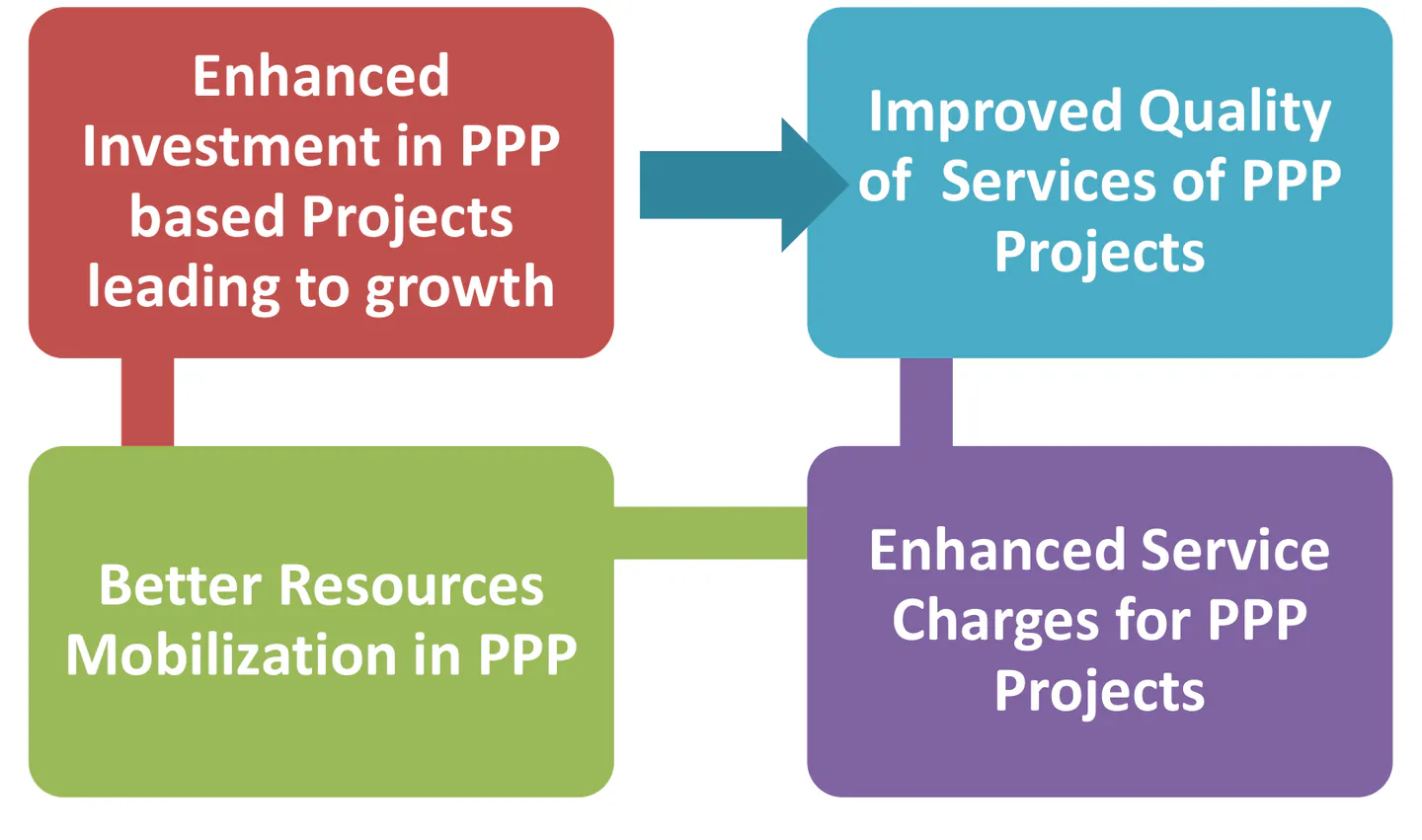
Considering the end result of PPP – ‘Public Benefit VS Private Profit’ is always a point of controversy, whereas it requires and recommends an equilibrium condition. Authority needs to define the core motivation of the project - whether it is initiated by public demand or driven by private interest. Regulator should reduce the negative elements to a tolerable level (zero tolerance level) of the Zero Tolerance Approach. And need to ensure a check and balance between the greed (hunger for dishonest gains) of the Private Sector and the corruption (immoral practices) of the Public Sector; otherwise - if it goes wrong, it could breed a wild ‘evil twins’ those impede & ruin the desired development path, which may spark another critical problem for development of the country. Since, wrong partner selection or weakly designed partnership may lead a PPP project to failure, there should be a safe exit plan in the extreme case of a ‘bad bedfellow’ consequence due to undue advantages taken by the Private Partner. There should be mechanism to deal & discipline the corruption - to ensure the project's continuation; or else the impact of corruption will abandon a project in the worst-case scenario and that will ultimately limit the development of the country.
Project identification and screening for PPP should be done prudently in order to find the right Project and partners for PPP approach. Government should establish an effective control mechanism over PPP engagements, as sometimes private parties with immoral intension are sitting away idle and killing time to do the needful on the stipulated time - while simultaneously they are taking benefits of public resources. Government as a regulator should be cautious enough to checkout - if private sector is creating situation to ask for too much of favor on their behalf. PPP approach is not completely safe for development & growth of the country, if not handled carefully national assets might fall in a risk of expropriation.
To effectively continue, grow and contribute for development in the years ahead - a robust PPP ecosystem should be established ensuring a durable political support and greater institutional competence along with reinforced financial assurance backed by strong policy supports & national leadership. Also need to utilize PPP approach as a tool for Private Sector driven development recipe.
Need to patronize PPP strongly & consistently at national level, which can afford an enhanced opportunity for a wider scope to make real differences in mechanism of public services delivery with special regards to management approach, technology usage and policy supports to bypass complex & time-consuming bureaucratic process.
Policy coordination, right tuning & alignment should be taken care with regards to SDG & development targets of the country - especially the policy those are in practice for PPP based Infrastructure development Projects should be integrated into one central PPP related Policy to support the national development. Governments can use the SDGs as a framework to assess the PPP proposals. And the private sector should be motivated through sector specific incentives to find PPP based solutions to address the sustainable development challenges of the country in a cost-effective approach.
Should recommend & devise a befitting Model based on Innovation in the PPP sector, which can be a hybrid / invented model. Development of the partner’s capability to plan, manage and taking part in PPP process is a key success factor to be considered here, which is very much pertinent for practicing PPP based innovations. To make PPP approach more effective there should be innovation added on top of the regular business model in practice with PPP sector. Review based innovation in business model will make PPP Project more effective in terms of intended economic development of the country. Furthermore, business process reengineering & development can support the innovation process in the business models of PPP Projects. There should be efforts to devise a befitting model based on research & innovation.
Sector specific and applicable models should be recommended for effecting PPP projects in Bangladesh in order to enhance effectiveness of PPP Projects with regards to ensuring faster growth of the country; finally, it will bring PPP maturity for the country. To encourage diverse and multiple private sector engagement in overall PPP projects - the Design, Build, Finance, Operate and Transfer (DBFOT) / Design, Build, Finance and Operate (DBFO)/ Design, Build, Finance, Operate, Maintenance and Transfer (DBFOMT) concession-based model can be recommended generally, which are almost close in nature and somewhat more friendly models for private sector over the conventional BOOT & BOO models. Especially in the cases of the Economic Infrastructure Sector - which Projects promise accelerated growth in the economy and in the project areas where the government lacks sufficient expertise - may transfer those projects to private sector through DBFOT model. These modes led by Private sector can bring good result for Bangladesh in terms of timely project delivery & cost control. Instruments should be in place to govern process dynamics and maximize efficiency gains through PPP projects.
Should institutionalize perfect provisions & standard procedures for PPP projects. It is necessary to set perfect goals, policy and regulations; and they must be regularly monitored and evaluated utilizing the most recognized, transparent, and competitive methods. At every level of a project's implementation, especially in the procurement process, transparency must be guaranteed. Shortcomings of PPP such as: concentrating mostly on high end technologies and high profit-making accomplishments, mistrust among partners, lack of transparency and noncompliance to the agreements among partners should be overcome by ensuring best suit working procedure and policy guidance.
All the regulatory institutions in the country should be harmonized in terms of process simplification to improve shared performance in all the well-coordinated development projects assumed at a time. Establishing One Stop Service (OSS) system can be a good idea for facilitating an easy access to all licensing, regulatory and service support agencies through a single window.
To encourage private sector financing in PPP sector there should be policy provisions to create space for priority lending in the banking practice of the country. Provisioning it through bank borrowing, the rate of interest needs to be kept lower for PPP sector and Monetary policy must also be aligned with PPP investment schemes. Banks should be sensitized by policy intervention to create special options for PPP financing - otherwise off shore financing spree will be encouraged and idle savings will rise in Bangladesh, which may be detrimental to expected growth. At times VGF as a bidding parameter turned into a government subsidy end of the day. Usually, Banks are not interested in funding private partners, so government can access the soft loan or dedicated line of credit scheme to cover the Viability Gap Fund (VGF) to hold an additional stake proportionately in the PPP project. Based on needs, this line of credit can be used for Viability Gap Financing in any PPP project. Moreover, Competitive fiscal and non-fiscal benefit framework for PPP projects should be developed to inspire private sectors. An alternative Project financing model for PPPs can be developed based on Islamic business principle (ie. halal business concept-based interest eliminated methods). Also need to ensure balanced and need-based funding schemes for various sector specific PPP projects by the regulator to improve Project funding support system for long-term financing by guarantees (through institutional arrangements).
Prior to deciding an implementation model, all Fast Track National Projects should be categorized and registered for a fitness assessment via the PPP framework. To cut down on complexity, the government could create the first concept and then look for a private partner to negotiate on investment options after conducting a feasibility study.
Programs should be undertaken to build awareness among investors about the advantages & motivations behind PPP practices in order to foster a strong sense of confidence that will support PPP projects. To address the "lack of business" culture in the public sector - besides the insufficient work experience in commercial projects, additional effort must be made at the highest level.
Methods for ‘Knowledge Transfer’ from Government sponsored research organizations have to be improved in order to encourage the public sector to participate in PPPs for new industries and innovative project areas. It is necessary to facilitate channels of procedural as well as technological cooperation for the PPP participants.
A project comes to an end, but in most cases Government obligation still continues - citizens will keep asking the government for good quality of services. As a result, the public sector needs to maintain sufficient capacity to fulfill its obligations. Therefore, ‘Transfer of Knowledge’ concerns under PPP should get appropriate attention at the national level.
Among the PPP partners there should be enduring relationships established based on trust. It is necessary to determine the extent of PPP project implementation through Government to Government (G2G) initiatives with friendly nations. In the G2G model, the partner will source financing from outside the country at a cheaper interest rate, which will strengthen the project's sustainability; nevertheless, new technology and foreign direct investment will also be inflowing the country, these factors will contribute to expedite the country’s growth.
Better support for the public sector is required in terms of up-skilling for negotiation and intellectual property rights (IPR) functions, which are common for roles involving both the public and private sectors having perceived a risk of market interference. If the margin between the roles of the public and private sectors is not made clear, the public sector will continue to subsidize the private interest. Furthermore, as the private sector is expected to be more skilled and to acquire some data advantage along with project’s control after a given amount of maturity, there needs to be a strong reporting obligation in place to ensure a balanced control of the management. If not, it will negatively impact the project's outcome.
Reasonable risk allocation should be devised in PPP-based projects to maximize return on private investment while balancing the benefits to both sides. The government or regulator should align the management's priorities with the core objectives of development in order to maximize the value for public money / assets, and private investment.
Bangladesh should establish a National PPP Knowledge Center. This center should be housed in the PPP-related top authority and serve as the key agency for creating, tracking & dissemination of knowledge regarding PPP Project Management techniques. It should also have international affiliation backed by a central PPP Information Management System.
Should establish a PPP "Think Tank" at the national level in order to advance and collaborate with other international organizations about knowledge creation on PPP issues and upcoming challenges. In order to provide valuable insights to set PPP management trends, it is necessary to develop a National Research Cooperation for PPP concerns including academia and industry.
To address disagreements that may emerge between the PPP parties, a widely recognized conflict and dispute resolution procedure should be developed. Additionally, there is a need to offer channels for conflict-of-interest reduction proactively and to strengthen local capacity at global standards to manage PPP-related arbitration processes effectively. PPP practice requires a protected environment; otherwise, PPP will be detrimental to the nation's growth.
Bidding and tendering PPP processes should be made more transparent, business-friendly, and paperless (digitized). To attract FDI into PPP sector, foreign investor’s participation should be made easy.
In order to efficiently manage the nation's PPP-based megaprojects and create strategies for long-term PPP Contract management (at both public and private ends), a competent management cadre (pool) should be established nationally. Regular training for public sector professionals is necessary to improve their abilities in managing bureaucratic challenges.
In order to assure positive results from the PPP instruments the regulator should focus on the quality of the Project at the national level in terms of good return & sustainability. PPP-Based Development Projects of high economic returns ought to be prioritized in order to accelerate economic growth of the country by creating additional free trade zones, economic zones, technology parks (Hi-Tech parks) and other similar facilities. Appropriate PPP models need to be conceived & exercised for developing economic infrastructure, particularly the establishment of Economic Zones around the country. Economic zones may lead to higher economic growth, and provide its tenants the ability to fulfill local demand as well as export, in addition to allowing import substitution for the country. Therefore - EZs should be considered as an effective instrument for PPP related integration with the global economy.
The PPP Regulatory Framework published by PPPPA should be analyzed & updated on a regular basis, and the process flow for planning, evaluating and approving of critical PPP projects should be made-easy & clearly explained. The Regulatory Principles should provide avenues for adopting International best Practices and ensuring consistency and coherence in the guidelines for projects undertaken in different sectors.
Bangladesh needs to develop a capability maturity model for PPP projects. Should ensure appropriate public institutions involvement and legislative arrangements towards attainment a level of maturity. Enhancing national capacity building programs is also necessary in terms of PPP Project handling, problem solving & maturity gains.
General Recommendation based on observation & practical project experience
For workable answers to the problems found, this study has recommended the following findings-based interventions as cross-cutting elements in the nation's PPP practice:
Endorsing research and development initiatives to find and bridge the gaps towards further development in PPP practice with regard to finance, knowledge creation and transfer, quality enhancements, policy interventions, management competencies, maturation and promotional initiatives.
Good Coordination among the service sector institutions involved in PPP projects are highly recommended, with regards to the services like: Technical Feasibility Study, Fiscal Feasibility, Environmental Feasibility, Social Compliance Management, Due Diligence, Risk Management & backup, Insurance Coverage Services and Project Management & Financing services. This sort of dexterity will ease the complex project development and implementation process and also reduce operating costs in PPP sector.
In order to promote PPP and recognize PPP-induced sustainable growth, every organization related to Research and Development should establish a PPP Cell. This would contribute in accelerating national development. In compliance with the PPPA (http://www.pppo.gov.bd/, each project sponsor shall have a fully functional in-house PPP cell to manage PPP Project Management issues. PPP cells will capture lesson learned out of the project closer reports & created knowledge to disseminate with the National PPP knowledge Centre.
Standard PPP Project frameworks should incorporate components for Safety – Protection, Performance Guarantee (PG) and Quality Control mechanism. Examples of such mechanisms include: Liquidated Damage (LD) / Liquidated and Ascertained Damages" (LADs) etc. - which should be taken into account seriously when preparing PPP agreements. Besides reducing negative consequence, the project design should include positive support interventions (syndicated or sideline aid) in the event of project hanged situation due to failure of private parties.
Research-based domestic innovations should be developed in order to bring process improvements to PPP models and help making decisions considering the pros and disadvantages of balancing the nation's economic benefit against profit. It is important to examine and record the practical consequences of the implications of the research findings and recommendation for the general people, academics, researchers, development practitioners, and the national decision makers. Facilitating scopes of public research and development regarding various PPP issues is necessary.
The regulator must exercise extra prudence in monitoring and enforcing a high degree of control to prevent private partners to accept risk beyond their capacity. For instance, risks associated with current assets or currency exchange rate fluctuations will be reflected in service prices, which will affect its business competitiveness. In addition, the private sector requires to be cautioned to maintain caution if it is to bear unlimited risk.
It is extremely difficult to anticipate every scenario that might arise during the project development phase of PPP projects because of their long-term nature and associated complexity. It may become necessary to renegotiate the contract in order to account for unforeseen events and emergency situations that were not anticipated in the original agreements. Thus, buffer space needs to be included in PPP agreements. Given the substantial extensive contingent liability that might delegate on the shoulders of the government, so due diligence is always recommended for PPP concerns.
To make a PPP project commercially practicable, Government provisions should be there in the form of capital grant on top of the proper risk sharing. To support & appreciate the PPP projects from the government end there should be revenue grants, along with tax breaks or minimum income warranty coverage for a certain period; otherwise, the additional cost involved in PPPs need to be borne by the end customers – which may cause public disappointments
Need to put people first while designing skill-building programs. Wider Training Programs, knowledge management, knowledge transfer sessions and experience sharing sessions regarding Project Management success cases studies on PPP Project is required for up-skill / re-skill the project associates. Additionally, maintaining the PPP workforce and knowledge pool's proficiency within the sector or the country depends critically on the retention of trained and skilled individuals.
In order to establish a PPP enabling ecosystem, the government counterparts (regulator) must create a national level dashboard and an efficient diagnostic tool to identify gaps in its institutional, legal and regulatory framework, as well as issues in particular sectors or problems with its access to finance. Government / the regulator on behalf of the Government should create PPP enable environment by ensuring compatibility of the legal & regulatory Frame works. Required adjustment of legislation should be taken care by adaption of appropriate Policy on PPP.
Need to solve the problems & issues in current PPP performance measurement methods by developing a Process-based evaluation approach (for an example: KPI) to establish a measurement scale that takes into account the Project’s input, business processes, strategies and outcomes.
Conclusion
It is crucial to emphasize that PPP arrangements may take a variety of configurations and are still a developing concept that has to be tailored to the unique features & needs of each sector, project, and stake holders. In fact, debate over the terminologies and definitions of PPP types itself reflects - how PPP approach has transformed over time, as well as how the regulatory framework that defines PPP has reformed in many countries, including Bangladesh. To ensure the maximum of PPP benefits, it is necessary to understand the relative advantages and disadvantages of each project type, along with the goals and objectives of each stakeholder. The role of the public sector, which might shift from a supplier/service provider to a supervisor of service contracts as it finds higher return in the PPP collaborations. So, PPPs must be meticulously evaluated in the project's context along with calculating public benefit & the relative gains to be attained in the approaches being practiced for PPP.
Public-private partnership model is currently gaining popularity to support growth of the developing countries in terms of its infrastructural development, SDG achievements & overall economic growth. Effective implementations of PPP projects are actually bound by various factors and associated with some issues & challenges, which needs proper attention for smooth development management of the country. To glorify PPP landscape of Bangladesh a good number of success cases in implementing PPP projects should be written, published, disseminated & showcased as a 'win-win-win story’ of an emerging economy like Bangladesh. It should be emphasized on developing smooth partnerships between both the sectors as well as G2G initiatives based P3 models. Effective PPP initiatives may also provide support for post- recession economic recovery in current crisis induced global economic downturn. A positive PPP eco system should be created to support Bangladesh in achieving a faster economic growth along with its smoother transition to middle income status by the expected time (by 2030) & even later up to Year 2040. Therefore, rapid development of infrastructure is essential for the country growth.
Bangladesh is growing spontaneously; PPP approach can expedite its usual development by catalyzing with private parties’ contribution in the growth route. Along with current development trends as projected US$ 928.48 billion of supplementary funding is required to inject in the economy till 2030 for Bangladesh to meet the Sustainable Development Goals (SDGs) [Bangladesh Planning Commission, June 2020], this huge amount cannot be funded & managed merely by the government budget, and now it highly requires private sector participation to bridge the investment gap. “PPPs are acknowledged by the governments particularly with heavy debt burdens, as magical solutions for the shortcomings of traditional infrastructure provision (Hammami et al., 2006)”. Therefore, if properly planned and implemented, PPPs will significantly boost the national development and expansion across all other socio-economic sectors; which will ensure rapid growth to benefit both the private and public sector actors.
The concept of PPP and its application is still to be refined & tailored for a developing country like Bangladesh. It needs to be established as a ‘WIN-WIN-WIN’ approach for the development of Bangladesh, which will ensure advantages for all the parties concerned (Public & Private in terms of ROI, Profit, and Public Benefits and wellbeing of surrounding environment) that will keep them motivated towards deserving development. PPPs in a sense help to develop the capital markets and also offer an instrument to channel private savings & capitals into the much-required infrastructure projects that cannot simply be covered by public allocations. Private parties can also contribute in know-how, creativity, and handling efficiencies that typically reduce service delivery costs while improving the quality. To ensure overall effectiveness to contribute the desired development of Bangladesh - the PPP approach should be tailored and built on the expertise of each partner; knitted with integrity & motivation of the partners and best practice-based adoption efforts - where issues and challenges are handled carefully to reduce the risk of miscarriage in order to find a sophisticated means of balanced national growth.