
I. INTRODUCTION
a) Link between Informal Settlement Growth and Urban Sprawl
Urbanisation has become one of the most defining global phenomena of the 21st century, particularly in developing countries, where rapid demographic changes and economic pressures are reshaping cities' spatial and socio-economic landscapes. This accelerated growth is frequently accompanied by the proliferation of informal settlements, which present profound challenges for urban governance, sustainability, and resilience [1]. These challenges extend beyond housing shortages, encompassing environmental degradation, escalating pressure on infrastructure, and the disruption of fragile ecological systems.
As [2] cautions, uncontrolled urbanisation directly threatens critical ecosystems such as river courses, floodplains, and wetland resources essential for ecological balance, biodiversity, and urban sustainability. The encroachment of settlements into these water-protected areas not only leads to irreversible resource depletion but also heightens vulnerability to flooding, pollution, contamination and biodiversity loss. Similarly, [3] highlights that urban expansion in the Global South often overwhelms infrastructure networks, especially water, health services, transport services and energy systems, thereby amplifying socio-economic risks.
In South Africa, the situation is particularly acute. Informal settlements such as Makause in Germiston, Ekurhuleni, have expanded into proximity with bulk water supply systems, undermining their integrity and functionality [4]. This encroachment leads to vandalism, theft, contamination risks, and escalating operational costs, thereby compromising water security and public health [5]. The persistence of these pressures is exacerbated by weak governance: municipal authorities often fail to enforce zoning bylaws and building codes, while illegal spatial developments remain unchecked [4]. A lack of synergy between municipal governments and local communities fosters mistrust, undermines service delivery, and entrenched cycles of unplanned urban growth [6]; [7].
At a global level, these challenges intersect with policy imperatives articulated through the Sustainable Development Goals (SDGs). Goal 11 promotes inclusive, safe, resilient, and sustainable cities, while Goal 6 calls for universal access to clean water and sanitation. Achieving these objectives requires robust governance frameworks that balance urban growth with environmental protection, while also addressing the socio-economic needs of marginalised populations [8].
The management of bulk water infrastructure emerges as a cornerstone in this agenda, as it is critical for sustaining urban populations and enabling economic growth. Encroachment into water servitudes represents a systemic risk, with implications for disaster vulnerability, infrastructure degradation, and social stability [8]; [5]; [4]. Traditional methods of infrastructure management—such as manual inspections, scheduled maintenance, and basic leak detection systems—have proven inadequate in the face of rapid informal settlement expansion. These methods are largely reactive, addressing issues only after damage has occurred [9];[4].
Recent advancements in machine learning (ML) and artificial neural networks (ANNs) offer transformative possibilities for shifting from reactive to proactive management. ANNs, with their capacity to learn from vast datasets and detect complex nonlinear patterns, can be applied to predict infrastructure failures, detect encroachment risks, and optimise water distribution [10]; [11] For example, Artificial Neural Network models have been used to forecast pipeline failures [12] and optimise pump operations [13], demonstrating potential for both resilience and efficiency gains. However, the existing literature is heavily skewed towards technical aspects, with limited attention to the socio-political and human dimensions of infrastructure encroachment.
This gap is significant. The effectiveness of Artificial Neural Network-based models depends not only on technical accuracy but also on contextual integration: community participation, bylaw enforcement, and collaboration between water utilities, municipalities, and local stakeholders [4]. In informal settlements like Makause, where infrastructure is poorly documented and community vulnerabilities are high, predictive models must incorporate human-centred variables such as awareness, education, participation, and governance capacity [4].
Therefore, this study positions artificial neural networks not merely as technical tools but as components of an integrated governance and resilience framework. By combining predictive modelling with participatory data collection and community engagement, Artificial Neural Networks applications can bridge the gap between science and policy. They provide decision-makers with evidence-based insights, while simultaneously empowering communities to participate in safeguarding critical infrastructure.
This integrated perspective contributes to advancing the theoretical understanding of urban resilience by connecting stakeholder theory, systems thinking, and Artificial Intelligence applications. For policymakers, it provides a pathway for evidence-based, technology-enhanced governance that addresses the twin challenges of urban sprawl and critical infrastructure protection. Without such an integrated framework, uncontrolled informal settlement growth will continue to undermine urban sustainability and hinder the achievement of national and global development goals.
b) Problem Statement
The City of Ekurhuleni faces significant challenges in safeguarding critical water infrastructure against the encroachment of informal settlements, particularly in areas such as Makause. This encroachment damages pipelines, increases water contamination risks, hinders maintenance, and elevates repair costs. Furthermore, it jeopardises public health and safety while impeding municipal authorities' ability to ensure reliable water service delivery.
The 2022 South African Institute of Civil Engineering Report Card explicitly highlights the "critical" state of water infrastructure in many South African metros, citing encroachment by informal settlements, lack of planning enforcement, and vandalism as recurring issues [14]. The Rand Water 2021 Annual Report supports this, stating that encroachment in Ekurhuleni, including areas like Makause, has made it "operationally unsafe" for teams to access or maintain pipelines, often requiring police escorts or temporary shutdowns to avoid conflict or sabotage. These risks are further exacerbated by the dolomitic conditions of the land on which the settlement is built, which make excavation and maintenance of underground utilities costly and hazardous [15]; [16].
In the case of Makause informal settlement in the City of Ekurhuleni, the problem of informal encroachment on critical water infrastructure cannot be separated from the broader systemic problems of fragmented local government, unclear land rights and limited political enforcement [17]. Although various actors, including the municipality, Rand Water, provincial government departments and community leaders, are involved in managing urban growth, their roles are often ill-defined and poorly coordinated. Municipal development tools such as the Ekurhuleni Spatial Development Framework (SDF) and Integrated Development Plan (IDP) are intended to guide infrastructure investment and spatial change but are often undermined by limited enforcement, budgetary constraints and competing political agendas [18]; [19]; [20]. These weaknesses have contributed to unregulated settlement expansion in areas such as Makause, where urban land is informally occupied due to housing backlogs and economic vulnerability. Lack of enforcement of land use laws and zoning guidelines has led to informal housing encroaching on water servitudes and infrastructure corridors, particularly water mains and stormwater systems [21].
Furthermore, this governance vacuum is exacerbated by a lack of clarity in land tenure policies and the inconsistent application of frameworks such as the Spatial Planning and Land Use Management Act (SPLUMA) of 2013. While the SPLUMA aims to integrate spatial planning into all areas of government and promote inclusive development, its implementation in informal contexts remains fragmented and underresourced [22]; [23] Resistance from local communities further complicates state interventions, as resettlement or eviction efforts are often perceived as marginalising or politically motivated. In Duncan Village in the Eastern Cape, there has been a lack of transparency and community participation in such measures in the past, which has undermined trust and triggered protests [24]. The lack of participatory governance structures limits the ability of informal residents to co-create solutions, despite their intimate knowledge of local risks and infrastructure vulnerabilities. Without addressing these deep-rooted governance and political challenges, efforts to protect critical water infrastructure from encroachment are unlikely to be sustainable. Despite the vital role of water infrastructure, the lack of a comprehensive management framework exacerbates these challenges and leaves infrastructure vulnerable to degradation, vandalism and theft.
The major problem for this study is to develop an effective framework to manage informal settlement encroachment and ensure the sustainability of critical water infrastructure.
i. Study Objectives
Utilise technological tools, including machine learning and artificial neural networks (ANN), to improve the monitoring and management of critical water infrastructure.
Facilitate collaborative engagement among municipal authorities, Rand Water, and local communities to address challenges related to informal settlement encroachment.
ii. Research Questions
How can machine learning algorithms and artificial neural network (ANN) models be developed, trained and deployed to accurately detect and predict spatial patterns of encroachment risk to water infrastructure in vulnerable urban areas?
What formal and informal coordination frameworks currently govern inter-agency collaboration between Rand Water, the City of Ekurhuleni and local communities in addressing the challenges posed by urban sprawl in informal settlements, and how can these be strengthened to promote participatory infrastructure management?
c) Justification: Integrating Artificial Intelligence and Governance Frameworks to Protect Infrastructure
In recent years, significant progress has been made in the application of machine learning (ML) and artificial neural networks (ANN) to water infrastructure management. These technologies enable the analysis of large data sets generated by sensors, satellites, and other monitoring tools, and allow the prediction of failures, the optimisation of water distribution, and the improvement of maintenance strategies. Artificial neural networks, as a branch of machine learning, are particularly powerful in recognising non-linear patterns and gaining predictive insights, which makes them particularly suitable for the complexity of water systems [22].
II. THEORETICAL AND CONCEPTUAL FRAMEWORK
Stakeholder theory and Systems theory and their relevance to informal settlements: towards inclusive and sustainable corporate governance.
The conceptual framework is underpinned by stakeholder and systems theory, which complement each other. The choice of stakeholder theory and systems theory in this study is deliberate and strategic, as the impacts of informal settlements on water supply are complex, multi-layered and interdependent.
a) Introduction
Debates on corporate governance have long fluctuated between shareholder-centred theories and more integrative approaches that account for the multiple interest groups affected by corporate decisions. Stakeholder theory, first formulated in ref [25], posits that organisations must consider all stakeholders if they are to achieve sustainable performance [26]. Since its inception, the theory has gained momentum, particularly as organisations face increasing social, environmental, and ethical challenges [27].
The contemporary global landscape—characterised by informal urban growth, environmental degradation, and widening inequality—requires governance models that extend beyond profit maximisation. Informal settlements, such as Makause in Germiston, South Africa, highlight the intersection of poverty, politics, and environmental vulnerability [4]. These dynamics demand theoretical frameworks that guide both business and policy decisions toward sustainability and societal well-being. Stakeholder theory, with its comprehensive moral compass, offers a promising pathway.
b) Literature Review: Stakeholder Theory
i. Evolution from Shareholder to Stakeholder Focus
Traditional shareholder-oriented theories focused on maximising returns for investors. However, these approaches often neglected broader social, economic, political, and environmental consequences, leading to exploitation, resource depletion, and community disempowerment. For example, ref [28] critiques shareholder primacy as a driver of systemic irresponsibility. In South Africa, mining towns such as Carletonville epitomise this failure, where corporate profiteering left legacies of occupational health crises and environmental degradation [29].
Stakeholder theory marked a shift by emphasising the interests of workers, communities, governments, and the environment, alongside shareholders [30]; [31]. It is considered a progressive and sustainable framework, rooted in inclusiveness and moral responsibility [31].
ii. Contemporary Debates and Critiques
Despite its promise, stakeholder theory remains contested. Some critics argue that business leaders often fail to engage communities empathetically, adopting technical or policy-driven approaches that overlook lived realities beyond primacy [32]. Ref [33] further criticises stakeholder theory for diluting managerial focus, undermining the "single-valued objective" of profit maximisation.
Defenders counter that stakeholder theory's strength lies precisely in addressing neglected socioeconomic and environmental concerns [34];[35];[36]. Ref [37] suggests that its contentious nature reflects its engagement with deeply rooted value conflicts, making consensus unlikely. Nevertheless, the theory's emotional resonance has driven its prominence. Ref [38] observed that stakeholder theory taps into deep commitments to family, community, and shared purpose, giving it legitimacy even among detractors.
c) Relevance to Informal Settlements
Informal settlements represent complex sociopolitical landscapes where marginalisation, governance gaps, and environmental stress converge. Applying stakeholder theory here is crucial for both business and policy, since corporate survival often depends on constructive engagement with local leaders, communities, and ecological realities [39];[31]. Furthermore, integrating stakeholder perspectives aligns with global sustainability agendas that advocate inclusive growth, poverty alleviation, and environmental stewardship [36]. Yet, the literature remains sparse in directly connecting stakeholder theory with informal settlement dynamics. This review, therefore, highlights a critical gap, emphasising the potential of stakeholder theory to inform studies of settlement encroachment, particularly in Makause.
III. SYSTEMS THEORY LITERATURE REVIEW
a) Evolution from Reductionism to Systems Thinking
Reductionist models historically emphasised narrow performance metrics or isolated variables. While useful for linear phenomena, they fail in contexts characterised by complexity, feedback loops, and emergent properties. Bertalanffy's General Systems Theory (GST) challenged reductionism by demonstrating that systems possess emergent qualities not reducible to their components [40]; [41]; [42]; [43].
Later scholars extended GST to socio-ecological and socio-technical systems, arguing that infrastructures such as water supply cannot be understood without analysing interdependencies across technical, political, social, and environmental dimensions [44];[45].
b) Organisation and Systemic Interdependence
Systems theory highlights "organisation" as a core unit of analysis, signifying discernible order across entities such as governments, health services, and infrastructure networks [40]; [44]. Organisation emerges when actors interact through structured patterns of relations, shaping resilience or fragility [46]; [47].
For water infrastructure threatened by informal settlement encroachment, organisational wholeness—the alignment of social, technical, and institutional structures—is vital for sustaining long-term reliability.
c) Systems Thinking and Stakeholder Theory
Systems theory provides a transdisciplinary framework for analysing complex socio-technical systems [47]. Stakeholder theory complements this by highlighting the interests of diverse actors — including communities, governments, and utilities — in shaping outcomes ([25]. Together, these frameworks encourage holistic governance that recognises feedback loops, leverage points, and unintended consequences [38].
Recent research demonstrates how systems thinking and system dynamics enhance risk and stakeholder management in infrastructure. Ref [48] shows that systems-based approaches not only map interdependencies among actors but also model risk exposure, resilience, and engagement strategies. Their findings underscore the utility of system dynamics in contexts like encroachment, where risks (e.g., settlement proximity, environmental hazards, political instability) interact with stakeholder responses in nonlinear ways [48].
d) Application to Encroachment and Peri-Urban Contexts
Encroachment into water infrastructure highlights the inadequacy of reductionist approaches. Risks must be assessed within broader peri-urban dynamics, where urbanisation, rural livelihoods, and informal housing converge [48];[49]. Ref [49] calls for a "peri-urban turn" in planning, using systems thinking to reconceptualise urban-rural futures in the Global South.
This perspective underscores that peri-urban areas are not transitional spaces but critical socioecological systems with distinct governance logics and vulnerabilities. Applied to Ekurhuleni and Makause, encroachment reflects not only infrastructure challenges but also uneven urbanisation, weak land-use regulation, and marginalised community needs.
When integrated with stakeholder theory [25] and infrastructure risk analysis [49], the peri-urban systems perspective deepens our understanding of how infrastructure, communities, and governance interact. It reinforces the importance of multi-actor engagement and systemic feedback analysis for building sustainable urban futures.
e) The Proposed Conceptual and Theoretical Frameworks
The development of the management framework for the protection of water supply infrastructure in informal settlements is based on two complementary theoretical perspectives: stakeholder theory and systems theory. Stakeholder theory [25];[27] emphasises the need to consider the interests, influence and participation of all key stakeholders such as water utilities (e.g., Rand Water), municipalities (e.g., the City of Ekurhuleni), community members and regulators in disaster risk planning and service maintenance. Systems theory [40], on the other hand, views the water infrastructure system as a series of interdependent components that must function cohesively to ensure resilience and adaptability.
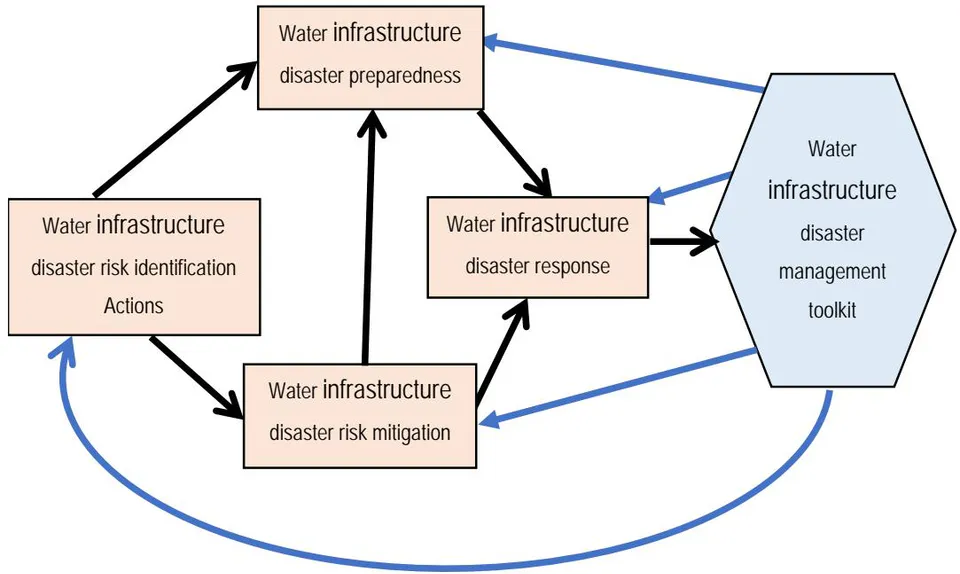
These theoretical constructs form the basis for the four-stage management framework (Figure 3.1), which begins with the identification of disaster risk and is underpinned by an analysis of system-level vulnerabilities and stakeholder input. The second stage, disaster risk reduction, involves coordinated stakeholder action and systemic planning to reduce exposure and vulnerability. The third stage, disaster preparedness, depends on system-wide communication channels and feedback loops between stakeholders to ensure preparedness and resilience. The fourth stage, disaster response, requires integrated and adaptive system behaviour to respond quickly and collaboratively to disruptions.
The resulting management framework consolidates the insights and feedback represented by the feedback arrows in Figure 3.1. By embedding both abstract theoretical insights and practical mechanisms into each phase, the framework ensures that efforts to protect infrastructure are both holistic and contextualised.
f) Conceptual Framework: Integration of Stakeholder Theory and Systems Theory, informal settlement encroachment
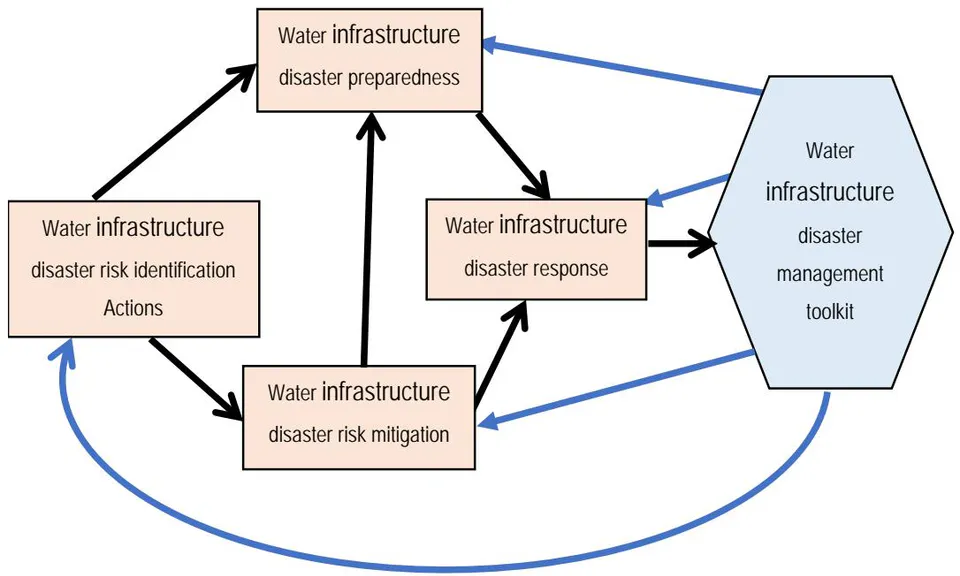
The framework in Figure 3.1 depicts a four-stage framework development process consisting of (i) Water infrastructure disaster risk identification; (ii) Water infrastructure disaster risk mitigation; (iii) Water infrastructure disaster preparedness; and (iv) Water infrastructure disaster response activities, which result in a management framework at the fifth stage. The responses (blue arrows) from the framework operation can act as inputs into the process again to improve the management framework.
i. Justification for using Stakeholder Theory and Systems Theory
The selection of Stakeholder Theory and Systems Theory in this study is deliberate and strategic, grounded in the complex, multi-actor, and interdependent nature of informal settlement encroachment on water servitudes.
1. Stakeholder Theory: Understanding Diverse Interests and Power Dynamics
Stakeholder Theory was chosen because it offers a robust framework for identifying, analysing, and engaging all actors who are either affected by or have an influence on the protection and use of water infrastructure. These include:
- Residents and informal settlers of Makause,
- Municipal authorities and planners at the City of Ekurhuleni,
- Infrastructure managers from Rand Water Utility,
- Non-Government Organisations, community-based organisations, and
- Political decision-makers.
This theory acknowledges that infrastructure encroachment is not merely a technical issue but a governance and stakeholder coordination challenge. By applying Stakeholder Theory, the study explores the interests, influence, responsibilities, and expectations of these actors. It also assists in mapping conflicts, trade-offs, and potential areas for collaboration, which are essential for sustainable and inclusive solutions. Stakeholder theory of Freeman (1984) proposes that a business should consider the interests of others beyond owners. Ref [25] claimed that for a business to progress to the long term, it requires that those whose interests are affected by the activities of the business should be considered because the same could influence the survival of the business. He described these interested parties as stakeholders.
Applying the stakeholder theory to the conceptual framework signifies that water utilities would do well to consider all interested parties in their business activities. The stakeholders can be grouped into primary or secondary, with the primary stakeholders being considered as those whose influence on a business cannot be overlooked [27]; [50].
2. Systems Theory: Addressing Interdependence and Feedback Loops
Systems Theory was employed to complement Stakeholder Theory by highlighting the interconnectedness of economic, social, and environmental subsystems within urban infrastructure management. Encroachment on water servitudes is not an isolated issue; it is the result of feedback loops between:
- Housing shortages and informal settlement growth (social system),
- Poor land-use planning and enforcement (governance system),
- Infrastructure strain and maintenance challenges (technical system),
- Environmental degradation (ecological system).
Systems Theory underscores that disruption in one component (e.g., illegal settlement on servitudes) can have cascading effects on others, leading to water contamination, service disruptions, public health risks, and weakened institutional trust. It helps model these cause-and-effect relationships and supports the design of a more resilient and adaptive management framework.
For water utilities, dwellers of informal settlements that encroach on water infrastructure, the water utility, government, municipality, etc., become the key stakeholders whose participation in the formulation of the water infrastructure disaster management plan cannot be disregarded. The relevance of the system theory is as follows. The general system theory, first developed by [40] relates to the interrelated and interdependent fragments of a man-made system of activities. It states that the components of a whole can be best understood in the context of relationships with each other and with other systems, unlike in isolation. It asserts that all the parts need to be synchronised while working, for the entire system to have synergy [43]; [51]; [52].
Thus, insinuating that when one part fails, the system is brought into entropy, meaning the system collapses. From Figure 3.1, it is hypothesised that (i) Water infrastructure disaster risk identification; (ii) Water infrastructure disaster risk mitigation; (iii) Water infrastructure disaster preparedness; and (iv) water infrastructure disaster response activities must work in harmony for the management system (framework) to effectively function. Therefore, keen and constant attention must be given to each stage for the disaster management framework to be effective. Similarly, the full participation of all the primary stakeholders is essential for the framework to work effectively.
Stakeholder and systems theory complement each other by taking into account the complexity of interactions within and outside of organisational systems. Systems theory emphasises the holistic interdependencies, while stakeholder theory provides insights into the interests and influences of the actors involved. This overlap enables a comprehensive approach to the management of organisations like Rand Water and the City of Ekurhuleni, especially in contexts that require a balance between social, environmental and economic concerns with reference to the water infrastructure servitudes [53].
These theories are essential in managing public-sector projects, such as water infrastructure and urban planning, where various stakeholders (e.g., government agencies, local communities, private entities) interact within a broader system that includes social, economic, emancipation and environmental factors. The resilience of critical infrastructure, for instance, relies on identifying and balancing the needs of all stakeholders within a complex system to maintain sustainability and adaptability.
A combined approach of Stakeholder Theory and Systems Theory has been proposed to address the interconnectedness of global issues like climate change, migration, and urban sprawl, which involve numerous stakeholders within interlinked systems. Adaptive management, a practical framework emerging from Systems Theory, involves stakeholders in iterative planning processes to respond to changing environmental conditions [54].
Both stakeholder theory and systems theory have enriched the understanding and strategies for managing complex systems and addressing the interests of different stakeholder groups, such as Rand Water, the City of Ekurhuleni and the local communities of the Makause informal settlement in Germiston. The two theories must or can focus on integrating technological advances, such as machine learning, into these theoretical frameworks to create predictive models that can assist in decision-making and system adaptation. The emphasis on real-time stakeholder feedback and adaptive strategies based on systems theory could improve the ability of organisations like Rand Water and the City of Ekurhuleni municipality to respond to external shocks while taking stakeholder interests into account.
IV. CRITICAL WATER INFRASTRUCTURE OVERVIEW, URBAN SPRAWL AND INFORMAL SETTLEMENT
Critical water infrastructure refers to the essential systems and assets required for the supply, treatment, and distribution of water. This infrastructure includes facilities like water treatment plants, reservoirs, pumping stations, and pipelines that are essential for public health, economic stability, and environmental management [55]. Furthermore, in urban areas, water infrastructure guarantees reliable, safe water supplies and effective waste management, supporting both human and ecosystem health. The significance of this infrastructure is especially notable in developing countries, where population growth and rapid urbanisation increase the demand for water services, often stretching existing systems beyond capacity [56].
a) Urbanisation and Informal Settlement Growth
As cities grow, so does the need for expanded water infrastructure, yet unplanned urban growth, especially in informal settlements, frequently outpaces this expansion. Informal settlements emerge on city peripheries, encroaching on designated water catchment and distribution areas. These settlements are typically underserved by formal infrastructure and are established without adherence to urban planning regulations, placing immense pressure on existing water infrastructure [6].
Sub-Saharan Africa, South Asia, and Latin America experience some of the world's most rapid rates of informal settlement growth. Ref [6] reports that over one billion people live in informal settlements worldwide, with this number expected to rise due to ongoing urbanisation and rural-to-urban migration.
In sub-Saharan Africa, for instance, nearly of the urban population resides in informal settlements, which tend to be located in environmentally vulnerable areas prone to flooding, such as riverbanks and wetland zones [57].
b) Encroachment and Vulnerability of Water Infrastructure
The encroachment of informal settlements onto water infrastructure areas presents significant challenges, including the potential for contamination, increased maintenance costs, and vulnerability to physical damage. Encroachment often leads to unauthorised connections, illegal tapping of water lines, and pollution from inadequate sanitation facilities, which further burden water resources [58].
The impacts of encroachment on critical water infrastructure can be broken down as (i) physical damage and maintenance challenges, (ii) water contamination and public health risks, and (iii) legal and governance issues.
For physical damage and maintenance challenges, informal settlements built near or on top of water pipelines and reservoirs expose these assets to potential physical damage. Construction activities in these areas, often unregulated, can damage underground pipes, leading to leaks, contamination, and service interruptions. Repairs are made difficult by the settlement's density and lack of planned road access [59].
Regarding water contamination and public health risks, poor sanitation practices and limited waste management in informal settlements can result in contaminants entering water supply systems. This poses significant health risks, including outbreaks of waterborne diseases such as cholera, typhoid, and hepatitis [59]. For instance, in cities like Cape Town, unplanned housing near riverbanks has led to direct contamination of water sources due to inadequate sanitation [60].
Concerning legal and governance issues, encroachment complicates water governance, as informal settlements often lack formal recognition, hindering service delivery and legal protection for infrastructure. In many cases, municipalities face challenges balancing the need to protect infrastructure with the human right to water access, particularly where informal residents rely on unregulated or illegal water sources [60].
c) Encroachment of Water Infrastructure in Parts of Africa
i. South Africa
In the City of Ekurhuleni, eThekwini Municipality, Cape Town and Johannesburg, informal settlements near dams and pipelines expose water infrastructure to risks of pollution and damage. In Durban, for instance, informal settlements along river catchments contribute to contamination that affects the city's water supply. Despite efforts to improve access to safe drinking water in these communities, the encroachment issue persists due to insufficient affordable housing options [61].
ii. Africa
Nairobi, Kenya, illustrates the complex challenges posed by informal settlements and their impact on urban infrastructure. In areas such as the Munyaka informal settlement in Eldoret, rapid expansion has led to encroachment over city water pipelines, resulting in frequent damage and unauthorized water connections. Munyaka, home to over 250,000 residents, suffers from chronic water scarcity as damaged pipes and illegal tapping disrupt the supply. Additionally, its proximity to the Nairobi River heightens the risk of contamination from domestic and industrial waste, exacerbating the settlement's water and health crises [62].
In Lagos, Nigeria, where over half the population resides in informal settlements, infrastructure encroachment has led to persistent problems of contamination and water shortages. The Lagos State Water Corporation faces significant difficulties in maintaining infrastructure integrity and ensuring water quality, as unauthorised usage and physical degradation are widespread in these expanding settlements. These challenges underscore the broader issues of urban management in a rapidly growing city [63].
Similarly, Accra, Ghana, struggles with the effects of informal settlements on its water infrastructure. Settlements along riverbanks and near reservoirs, such as the city's largest water source, the Weija Dam, pose serious threats to water security. Encroachment not only endangers the integrity of the reservoir but also increases risks during flooding events, creating substantial vulnerabilities for the city's water supply and surrounding communities [64].
iii. Water Infrastructure Vulnerability In Informal Settlements
Informal settlements are disproportionately affected by environmental hazards such as floods, droughts, and landslides. Encroachment on critical water infrastructure in these vulnerable areas exacerbates risks, as infrastructure systems are less resilient to natural disasters when built near or through informal areas. During flood events, for example, sewage systems in informal settlements often overflow, contaminating water sources and creating public health crises. This is particularly prevalent in sub-Saharan Africa, where cities experience frequent flooding due to inadequate drainage and high rainfall variability [64].
V. CRITICAL INFRASTRUCTURE PROTECTION IN SOUTH AFRICA
South Africa's approach to critical infrastructure protection is formalised under the Critical Infrastructure Protection Act (2019), which outlines policies to safeguard essential systems, including water infrastructure. This legislation aims to address threats from both external hazards, like natural disasters, and internal threats, including unauthorised access and sabotage [65]. However, the enforcement and implementation challenges often impede the effectiveness of these policies, particularly in areas with high levels of informal settlement encroachment [66].
a) Critical Infrastructure Protection (CIP) in South Africa
Critical infrastructure protection (CIP) refers to safeguarding essential systems, assets, and services that are crucial to a nation's economic and social wellbeing. In South Africa, infrastructure protection is a national priority, particularly for water, energy, transportation, and health services. These sectors are identified as "critical" because disruptions could lead to severe consequences, impacting public safety, economic stability, and national security [65]. South Africa's focus on CIP has been sharpened by various stressors, including urban sprawl, climate variability, and socio-political challenges that threaten infrastructure resilience and public access to essential services.
i. The South Africa National Key Points Act (1980)
The National Key Points Act (NKPA) of 1980 served as an initial legislative effort to protect South Africa's critical infrastructure. This Act aimed to identify and secure strategic sites deemed vital to national security, such as energy facilities and government buildings. Although NKPA marked the beginning of CIP in South Africa, it was criticised for being outdated, overly security-focused, and lacking in transparency [67]. As a result, South Africa shifted towards a more comprehensive, updated approach with the introduction of the Critical Infrastructure Protection Act. In 2019, the Critical Infrastructure Protection Act (CIPA) was enacted to modernise CIP in South Africa. The CIPA redefined critical infrastructure beyond a purely security-based approach to incorporate essential services, such as water supply and transportation networks, into the CIP framework [65]. This Act mandates a multi-stakeholder approach, involving government departments, private sector operators, and local communities in infrastructure protection, thus fostering collaboration and shared accountability.
CIPA also established the Critical Infrastructure Council, responsible for oversight and coordination, as well as the implementation of risk management practices and response plans for critical infrastructure incidents [65]
ii. The National Infrastructure Plan 2050
South Africa's National Infrastructure Plan 2050 provides a long-term vision for infrastructure development and protection, identifying key sectors for investment and strategic priorities, such as resilience, maintenance, and sustainable growth [68]. This plan highlights the need to protect infrastructure systems against both natural and human-induced threats, particularly emphasising water infrastructure resilience, considering South Africa's water scarcity challenges and urbanisation pressures. It also aligns with the country's National Development Plan (NDP), which envisions resilient infrastructure as a foundation for economic growth.
The National Water and Sanitation Master Plan (NW&SMP) integrates water resource management with critical infrastructure protection, focusing on securing water infrastructure amid threats such as drought, pollution, and encroachment by informal settlements [69]. The plan includes provisions for upgrading water treatment plants, reinforcing pipelines, and investing in smart technology for monitoring water networks. Furthermore, the NW&SMP outlines the role of local governments in managing and protecting water infrastructure, including maintenance, community engagement, and emergency response planning.
b) Challenges and Gaps in South Africa's CIP Frameworks
While South Africa has taken significant steps to establish robust frameworks for CIP, several challenges remain, particularly around the protection of water infrastructure. These challenges are influenced by resource constraints, socio-political dynamics, and evolving risks due to climate change.
Resource and Capacity Constraints: Many municipalities lack the technical and financial capacity to effectively implement CIP measures, particularly for water infrastructure maintenance and protection [14]. Budget constraints and skill shortages hinder infrastructure upgrades, leaving systems vulnerable to both natural and human-induced threats.
Encroachment by Informal Settlements: South Africa's rapid urbanisation and limited affordable housing options have led to the expansion of informal settlements, which often encroach on water infrastructure zones, increasing risks of contamination, damage, and unauthorised access. CIP frameworks must therefore address urban planning and land use issues alongside infrastructure protection measures [59].
Climate Resilience and Environmental Hazards: South Africa is particularly vulnerable to climate-related risks, including droughts and flooding, which impact water infrastructure resilience. The need for adaptive infrastructure planning that integrates climate resilience is increasingly recognised, but full implementation remains a challenge due to the cost and scale of necessary modifications [70].
c) Critical Water Infrastructure Protection and Resilience Strategies
The protection of critical water infrastructure has gained priority in South Africa, as water scarcity and pollution risks intensify. Several resilience strategies have been developed within the CIP framework to address these threats. They include the following.
Buffer Zones and Environmental Controls: Establishing buffer zones around critical water assets, such as dams and reservoirs, can mitigate encroachment risks from informal settlements. However, enforcing these zones has proven challenging, especially in densely populated urban areas [71]. Environmental regulations aim to protect water catchment areas from encroachment and contamination, although compliance is limited in certain high-risk zones.
Community Involvement and Awareness Programs: Engaging local communities in water infrastructure protection can reduce unauthorised access and encourage responsible water use. Awareness programs, particularly in peri-urban areas, educate communities on the importance of infrastructure protection and the health impacts of water contamination [72].
Smart Technology for Monitoring and Risk Assessment: Implementing real-time monitoring technologies, such as remote sensing and Geographic Information Systems (GIS), allows for efficient tracking of infrastructure conditions, early detection of potential threats, and risk assessment [73]. These technologies are increasingly integrated into South Africa's CIP framework, particularly for water infrastructure in vulnerable areas.
Emergency Response and Risk Management: South Africa's emergency response framework for water infrastructure includes coordination with disaster management agencies to ensure rapid response to incidents affecting water systems, such as floods or pipeline breaks. This approach is particularly relevant in flood-prone informal settlement areas, where infrastructure vulnerability and disaster risk intersect [74].
d) Critical Infrastructure Protection Alignment
South Africa's CIP frameworks align with international standards, including the International Organisation for Standardisation (ISO) standards on infrastructure resilience and the United Nations' Sendai Framework for Disaster Risk Reduction, which emphasises proactive resilience-building for essential services. By aligning with global standards, South Africa can strengthen cross-border partnerships, improve its infrastructure resilience strategies, and leverage international best practices [75].
VI. ARTIFICIAL INTELLIGENCE IN INFRASTRUCTURE MANAGEMENT:
ADDRESSING INFORMAL SETTLEMENT ENCROACHMENT
a) Overview
The encroachment into critical infrastructure corridors such as water pipelines and utilities poses a growing threat to the continuity of supply in South Africa and beyond. The case of the Makause informal settlement (Ward 91, Germiston, Ekurhuleni) is an example of how informal urban expansion is jeopardising critical water infrastructure. Recent research in this area emphasises the following:
- With reference to ref [4], ANOVA and ReliefF algorithms were used in combination with artificial neural networks (ANNs) to assess the perception of encroachment risk by Makause informal residents.
- In the study, they proposed the development of predictive models that emphasise the value of artificial intelligence-based management frameworks for addressing infrastructure vulnerabilities, such as the encroachment of informal settlements into areas where pipeline servitudes are located.
- Globally, informal settlement pressures are also evident.
- In India, advanced geo-artificial intelligence methods combining geographic information systems, deep learning, and satellite imagery are now being used to map slum growth, predict development patterns, and inform urban planning [76].
- A meta-analysis of slum mapping from 2014 to 2024 highlights the effectiveness of deep learning and remote sensing in detecting informal settlements in different contexts [77].
- In sub-Saharan Africa, efforts are underway to use satellite imagery and deep learning to create high-resolution maps of informal settlements that provide data-driven insights for planning [76].
These international examples illustrate the opportunities and challenges of combining artificial intelligence and geographical information systems for urban planning in fast-growing, resource-poor areas.
b) Input Parameters
i. Assessment
Evaluates structural interventions along water pipelines, using both real-time sensor data and historical spatial data. This is consistent with the methodology of [4], who used ANOVA and ReliefF to isolate significant predictors of encroachment of water servitudes.
ii. Preparedness
Both financial and human resources, labour, communication strategies (e.g., community radio, use of an encroachment App by residents to report and update encroachment data, local councils), and technical resources are considered. During modelling, this enables the artificial neural network to simulate the municipalities' ability to respond in various intervention scenarios.
iii. Mitigation
Includes community education initiatives, ordinance enforcement, and infrastructure maintenance. Artificial neural networks evaluate the long-term effectiveness of these measures and help policymakers prioritise sustainable strategies.
iv. Response
Includes emergency response mechanisms such as the rapid repair of burst pipes or the containment of contamination. An artificial neural network model helps identify systemic weaknesses in response protocols to create improvement plans.
v. Output Parameters
The Model Yields a Lumped target output centred on:
Awareness: Enhancing risk comprehension among communities and officials.
Education: Directing campaigns based on predicted encroachment hotspots.
Partnership: Fostering cooperation between Rand Water, municipal authorities, and residents.
Engagement: Promoting ongoing dialogue through local leadership and Non-Governmental Organisations.
By aligning Artificial Intelligence-generated insights with these socially embedded dimensions, the model supports evidence-driven policy formation.
c) Key Features of the Artificial Neural Network Framework
- Dynamic Learning: Continuously integrates new spatial and socio-economic data to refine predictions.
- Multi-Stakeholder Orientation: Incorporates community, municipal, and utility perspectives into modelling.
- Actionable Outputs: Produces priority maps and "what-if" scenarios for resource allocation.
- Scalability: Extendable from local case studies like Makause to regional and national implementation.
d) Machine Learning Techniques & Geographic Information System Integration
i. Artificial Intelligence Techniques
- Artificial Neural Networks: Effectively model nonlinear, multifactor relationships in encroachment risk analysis.
- ANOVA & ReliefF: Identify statistically significant variables and rank their predictive importance [4].
- Support Vector Machines (SVMs), Fuzzy Inference Systems (FIS), Neuro-Fuzzy Systems: Offer classification and decision-making support under uncertainty. These methods are increasingly applied in water infrastructure contexts [78]. ii. Geographic Information Systems and Remote Sensing
- In India, Artificial Intelligence and Geographic Information Systems support micro-level mapping and predictive modelling in slum landscapes [79].
- A global meta-analysis (2014–2024) confirms the rise of deep learning applied to remote sensing for slum detection [77].
- In Sub-Saharan Africa, deep learning combined with satellite data supports detailed mapping of informal settlements in urban environments [76].
e) Opportunities & Limitations
i. Opportunities
- Enhances early detection of encroachment hotspots.
- Facilitates cost-effective monitoring via remote sensing.
- Aligns with Sustainable Development Goals (SDGs 6 and 11). ii. Limitations
- Data scarcity and inconsistent spatial data in many municipalities.
- Capacity gaps in technical skills for implementing Artificial Intelligence frameworks.
- Risk of community mistrust if interventions lack local legitimacy.
VII. STUDY APPROACH: ARTIFICIAL NEURAL NETWORK APPLICATION IN MAKAUSE
This study built an Artificial Neural Network framework integrating inputs—assessment, preparedness, mitigation, response, and infrastructure vulnerability with outputs awareness, education, partnership, and engagement. The framework:
- Identified encroachment risk hotspots in Makause.
- Simulated infrastructure vulnerability scenarios.
- Informed municipal intervention strategies by modelling potential outcomes under varying conditions.
VIII. POLICY AND ACADEMIC IMPLICATIONS
For policymakers, the framework promotes:
- Proactive and resource-efficient infrastructure governance.
- Community-inclusive planning.
- Data-informed prioritisation of interventions.
For academics, it advances:
- The limited literature on Artificial Intelligence in informal settlement-infrastructure interactions.
- Comparative opportunities across global contexts.
IX. RESEARCH GAP
In recent years, the complexity and dynamics of the growth of informal settlements have exceeded the ability of traditional planning and infrastructure monitoring systems to respond effectively. In the City of Ekurhuleni, uncontrolled encroachment into critical water infrastructure servitudes poses a significant operational risk to the main supply systems managed by Rand Water and the municipality [25]; [80]. Existing literature and policy largely rely on spatial planning tools and reactive control mechanisms. However, these approaches are often hampered by poor data resolution, delayed reporting and fragmented institutional coordination [81], [82]. Therefore, there is an urgent need to explore innovative, data-driven solutions that can improve the prediction, monitoring and management of infrastructure risks in real time.
In this study, artificial intelligence (AI)—specifically machine learning (ML) and artificial neural networks (ANN)—is presented as a novel analytical approach to assess and predict encroachment risks. The integration of AI tools offers transformative potential by enabling early identification of high-risk areas using satellite imagery, GIS datasets and historical encroachment patterns [83]; [84]. Despite their increasing use in environmental modelling, disaster resilience and infrastructure diagnostics worldwide, AI-based tools are underutilised in the South African context of informal settlements [85]. This gap emphasises both the scientific contribution and the policy relevance of this study. By embedding AI methods into urban infrastructure planning, the research aims to bridge the gap between technological innovation and inclusive service delivery and create a proactive framework for the protection of water infrastructure in vulnerable urban spaces.
There is a critical knowledge gap on how to effectively manage the encroachment of informal settlements into critical water infrastructure. While numerous studies have examined the technical aspects of infrastructure protection, they often neglect the sociospatial realities and complexities of informal settlements, such as inadequate documentation of infrastructure servitude encroachment, fluid settlement patterns and limited community engagement. In particular, there is a lack of frameworks that integrate human and community factors into predictive technologies such as machine learning and artificial neural networks (ANNs). This discrepancy undermines the applicability and accuracy of predictive models in informal contexts.
This study addresses this deficiency by proposing a novel, human-centred framework that combines community-based participation with advanced predictive analytics. It advocates for the inclusion of social, economic, and cultural dimensions in modelling encroachment risks, and promotes participatory machine learning as a means to enhance both data quality and local trust. By allowing residents to contribute contextual knowledge and engage in the monitoring process, the study not only improves the accuracy of modelling but also supports sustainable, inclusive infrastructure management.
Table 9.1 below presents some of the literature that has been reviewed alongside findings and gaps. Unpublished data utilised the selected input parameters (assessment, preparedness, mitigation and response) and output parameter via Artificial Neural Network to develop a management framework for safeguarding critical water infrastructure against informal settlement encroachment in the city of Ekurhuleni.
Table 9.1: Reviewed Literature Alongside Findings and Gaps
| Author | [86] | [87] | [88] | [89] | [4] |
| Research Gaps Addressed | Considers the relationship between servitude space encroachments, water infrastructure vulnerability, and supply efficiency. | Addresses the influence of encroachment on water infrastructure vulnerability. | Focuses on integrating community engagement to reduce encroachment issues while optimising water infrastructure management. | Introduces AI for the dynamic management of encroachment risks and infrastructure vulnerability, as well as accounting for servitude challenges. | Proposes a management framework of management for the safeguarding of critical water infrastructure against informal settlement encroachment. |
| Output parameters | Infrastructure vulnerability score, optimised water supply route, and potential encroachment areas. | Potential failure zones, water supply optimisation under encroachment constraints. | Improved decision-making for water supply under external pressures like encroachment. | Real-time identification of encroachment areas and optimal mitigation strategies. | Encroachment risk prediction, dynamic learning, multi-stakeholder approach and actionable insights. |
| Input Parameters | Population density, servitude space encroachments, water demand, infrastructure vulnerability, and climate factors. | Climate conditions, local geography, encroachment data, and historical leak/failure data. | Maintenance schedules, encroachment severity, water consumption data, and population data. | Machine learning-supported data collection on servitude space encroachments and water infrastructure. | Awareness and education of residents/ Engagement of both the residents and the professionals, as well as collaboration. |
| Proposed Model | Machine Learning and Neural Network-based Bulk Water Supply Management and Encroachment Model. | Machine Learning and Neural Network-based Bulk Water Supply Management and Encroachment Model. | Machine Learning and Neural Network-based Bulk Water Supply Management and Encroachment Model. | Machine Learning and Neural Network-based Bulk Water Supply Management and Encroachment Model. | ReliefF test in the weight ranking of predictors. ANN model for the training of the input and output datasets. |
| Limitations/Research Gaps | Did not consider encroachment issues or vulnerability of the infrastructure to external pressures. | Lack of focus on human encroachment and infrastructure management challenges. | Neglected the impact of informal settlements and encroachment on bulk water infrastructure. | Did not include AI-driven solutions or water supply optimisation. | Exploiting input and output data sets from professionals and residents through AI model to develop a framework |
| Key findings | GIS could improve infrastructure management by pinpointing the problem areas. | Hydraulic modelling could optimise water delivery and pressure distribution. | DSS could aid in strategic decision-making for water supply systems. | Identified high-risk areas due to encroachment but lacked dynamic modelling. | High prediction accuracy derived with ANN models. Credible and robust framework development |
| Output Factors | Water distribution efficiency, leakage rates, and service delivery quality. | Pressure distribution, flow rate optimisation, and water delivery efficiency. | Water infiltration rate, runoff potential, risk of erosion | Encroachment risk score, and infrastructure failure probability. | Encroachment risk score |
| Input Factors | Land use, population growth, water demand, infrastructure age, and pipe diameter. | Pipe diameter, flow rate, pump capacity, and elevation changes. | Drainage density, slope of the pipe route, soil condition, and land use/land cover. | Proximity of settlements to pipelines, maintenance history, and infrastructure age. | Assessment, preparedness, mitigation, and Response |
| Model | GIS-based bulk water supply management model. | Hydraulic modelling for bulk water supply networks. | Decision Support System (DSS) for bulk water supply. | Encroachment and vulnerability assessment of bulk water systems. | ANN as framework of determination of bulk water supply infrastructure against encroachment |
X. CONCLUSION AND RECOMMENDATIONS
Research Objective 1: Utilise technological tools, including machine learning and artificial neural network (ANN), to improve the monitoring and management of critical water infrastructure. The research demonstrated the applicability of Artificial Neural Networks (ANNs) in creating predictive models to identify high-risk areas. This technological solution enhances proactive intervention capabilities, enabling municipalities to address vulnerabilities effectively and in a timely manner.
Research Objective 2: Facilitate collaborative engagement among municipal authorities, Rand Water and local communities to address challenges related to informal settlement encroachment. The findings highlighted the importance of collaboration, showing that engaging communities and stakeholders fosters shared responsibility and cooperation. Such partnerships improve the implementation of strategies and policies for protecting water infrastructure while addressing community needs.
Managerial Implications
The study emphasises the importance of collaboration and stakeholder engagement, agreeing with [85] who advocate for community-based adaptation, shared governance and collective action in solving infrastructure problems. By fostering partnerships between residents, local authorities and service providers, the study promotes a participatory model that contributes to the long-term resilience of infrastructure.
The study validates the use of cost-effective protective measures, such as zoning regulations, servitude enforcement, and regular monitoring of infrastructure, as advocated by [90]. These measures allow communities to intervene in a timely and cost-effective manner to prevent informal encroachment without having to resort to evictions or litigation.
Practical Implications for Managers
The integration of community education into municipal planning processes is essential. Infrastructure managers should allocate resources to ongoing public awareness programmes to ensure that communities understand the purpose and importance of buffer zones, servitudes, floodlines and service infrastructure.
The successful application of Artificial Neural Networks in this study emphasises the potential for smart infrastructure planning tools. Infrastructure operators should consider the use of Artificial Intelligence-based modelling to support spatial planning, risk prediction and early detection of degradation patterns. These tools can help prioritise resources and develop preventive maintenance strategies, leading to long-term cost savings and improved service delivery.
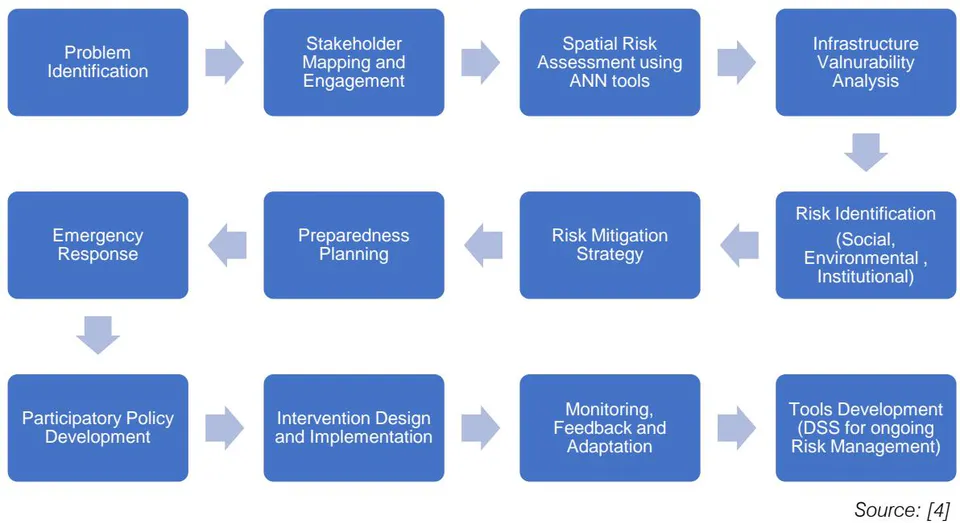
This framework is based on the fusion of systems theory and stakeholder theory and enables a holistic and integrative response to the complex challenges of urban infrastructure. Systems theory emphasises the interdependence of urban components and highlights the importance of coordinated responses between actors and institutions [40]; [51]. Stakeholder theory calls for the involvement of different actors, including informal residents, engineers, municipalities and national governments, in the development of joint solutions [25]. Figure 10.1 shows a management framework supported by a step-by-step flowchart to protect critical water infrastructure from the encroachment of informal settlements, in line with the original conceptual framework, as shown in Figure 10.2.
The inclusion of Artificial Intelligence and Artificial Neural Network tools in the framework enables proactive risk mapping and scenario prediction. Machine learning-based methods have proven effective in recognising patterns in land use conflicts and settlement growth trends [84]. The novelty lies in the use of human-centred Artificial Intelligence to integrate technical data with community insights [85].
Encroachment is also an institutional problem. The framework harmonises local knowledge, municipal planning and national housing policy. Institutional fragmentation is a major obstacle to the delivery of urban services in developing countries [91].
This expanded framework goes beyond traditional planning by explicitly including risk identification, risk mitigation, preparedness and response. Ultimately, it leads to a decision-support tool that institutionalises resilience planning in informal settlements. The framework, which is based on systems and stakeholder theory and uses Artificial Intelligence and participatory methods, is both innovative and applicable in the rapidly urbanising contexts of the Global South.