
Introduction
In the 21st century, myopia has been recognized as one of the most important public health issues, as its prevalence is growing rapidly around the globe in both developed and developing countries. Current global data predicts that by 2050, nearly 50% of the world's population will be myopic, and large numbers of these people will be at risk of developing high levels of myopia and myopic-related ocular conditions that threaten vision, such as myopic maculopathy, retinal detachments, and glaucoma (Holden et al., 2016). The highest incidence of myopia is seen in East and Southeast Asia, but similar rapid increases are now noted in South Asia and particularly in countries such as Bangladesh and in other low and middle-income countries (Morgan et al., 2018; Dolgin, 2015). These epidemiological trends have heightened the need for more emphasis on strategies to not only correct refractive errors, but also control the progression of myopia.
There is now a substantial body of evidence supporting a variety of evidence-based interventions to control myopia that have been developed and validated recently. These include the use of low-dose atropine, optical interventions such as orthokeratology and multifocal soft contact lenses, and spectacle-based designs such as defocus incorporated multiple segments (DIMS) lenses (Chia et al., 2016; Huang et al., 2016; Lam et al., 2020).
The treatment modalities mentioned above have demonstrated that they can slow down the axial elongation and refractive progression of children; therefore, they can be used to reduce the likelihood of experiencing pathological sequelae over the long term. As a result of this progress, myopia management has changed from a purely corrective approach to a proactive/preventive clinical care model.
Despite all of the research supporting initiation criteria, efficacy, and comparative effectiveness regarding treatment options, there has not been nearly as much quality evidence related to when a clinician should stop treating a child with myopia. The difficulty of this decision is compounded by the various factors affecting progression, including age of onset, amount of myopia present at the start of the study, genetics, environmental exposure, and the type of treatment (Wu et al., 2019; Sankaridurg et al., 2021).
One primary concern when stopping treatment is the chance of rebound progression. This issue has been noted with some of the pharmacological therapies, such as atropine. There have been studies that show that when high concentrations of atropine are discontinued, there will be a surge in the severity of myopia, which raises important questions about maintaining long-term treatment compliance and sustainability (Chia et al., 2014). Further, the long-term effectiveness of optical therapies when discontinued is not yet fully understood by clinicians. Because of that, there are numerous complications that arise when making clinical decisions regarding treatment duration. Some clinicians will stop or fail to continue treatment due to the concern of renewed myopia and the costs associated with the therapy, while others may extend treatment for a long period which raises similar concerns around costs and how to follow through on the therapy.
At this time, there are no clearly defined guidelines for determining when to stop therapy. Guideline practices vary widely as many of them rely on the judgement of the clinician, and clinicians often consider factors like stabilization of the refractive error, decrease in axial elongation rate, achievement of late adolescence, and stabilisation of myopia for a specific timeframe in determining when to stop treatment. Because of this variation between studies and clinical practice, there is inconsistency in the management of patients and outcomes (Walline et al., 2020).
While many practitioners are incorporating myopia management strategies into their practice, one of the many challenges they face is knowing when to stop treatment for patients. Most research in this area has primarily looked at how well treatments work, with much less focus on what happens after treatment has been completed. Even with widespread use of interventions, there is no standardised evidence-based guideline available to assist in the decision-making for when to stop myopia management therapy. This evidence gap can lead to a lack of consistency in clinical decision-making, which is often guided by judgment rather than solid evidence; therefore, stopping treatment too soon may lead to rebound progression, and stopping treatment too late leads to increased costs, burden, or side effects.
Methodology
Study Design and Reporting Framework
Framework & Design for Study Reporting. For this project, we followed the PRISMA guidelines (2020) when performing a systematic review and a meta-analysis. This included the choice to use the PRISMA guidelines for performing this systematic review and conducting a meta-analysis (Page et al., 2021). The protocol was created a priori following the established recommendations for any type of systematic review conducted in research involving ophthalmic/vision science. Eligibility Criteria
Eligibility Criteria (PICOS Framework)
The PICOS framework guided the study selection:
Population (P): Children and adolescents (≤18 years) undergoing myopia control treatment
Intervention (I): Any myopia control strategy, including: Low-dose atropine (0.01%–0.5%), Orthokeratology lenses, Multifocal/dual-focus contact lenses, Myopia control spectacle lenses (DIMS)
Comparison (C): Pre- vs post-discontinuation, Continued treatment vs discontinued treatment, Different cessation timings or protocols
Outcomes (O): Change in spherical equivalent refraction (SER) (dioptres/year), Axial length progression (mm/year), Rebound progression after cessation, Time to stabilization
Study Design (S): Randomized controlled trials (RCTs), Cohort studies (prospective/retrospective), Longitudinal observational studies
Exclusion Criteria:
Studies without post-discontinuation data
Case reports, editorials, conference abstracts without full data
Studies involving pathological myopia or ocular/systemic comorbidities
Non-English publications
Search Plan
The detailed PubMed search method was: ("myopia control" OR "atropine" OR "orthokeratology" OR "DIMS") AND ("discontinuation" OR "cessation" OR "withdrawal") AND ("rebound" OR "progression" OR "axial length"). A thorough literature review was carried out using the following Internet databases: PubMed/MEDLINE, Scopus, Web of Science, and Google Scholar
Study Selection Process
The search encompassed studies published from January 2010 to December 2025.
Boolean Search Strategy (Example for PubMed): ("myopia control" OR "myopia management" OR atropine OR orthokeratology OR "multifocal contact lens" OR DIMS) AND (discontinuation OR cessation OR stopping OR withdrawal) AND (rebound OR progression OR "axial length" OR "spherical equivalent") AND (children OR adolescents OR paediatric)
Controlled vocabulary (such as MeSH terms) and free-text keywords were used to change the search tactics for each database. Reference listings of included
All records that were found were put into reference management software (such as EndNote/Zotero), and all copies were deleted.
The PRISMA 2020 standards were used for this systematic review. Even though this systematic review was not filed in PROSPERO, a set protocol with eligibility criteria, a search strategy, and a plan for statistical analysis was made before the study started to make sure that the methods were clear. Before the study started, a predetermined protocol that included a search strategy, eligibility criteria, and a statistical analysis plan was put in place to make sure that the methods were clear and to cut down on bias.
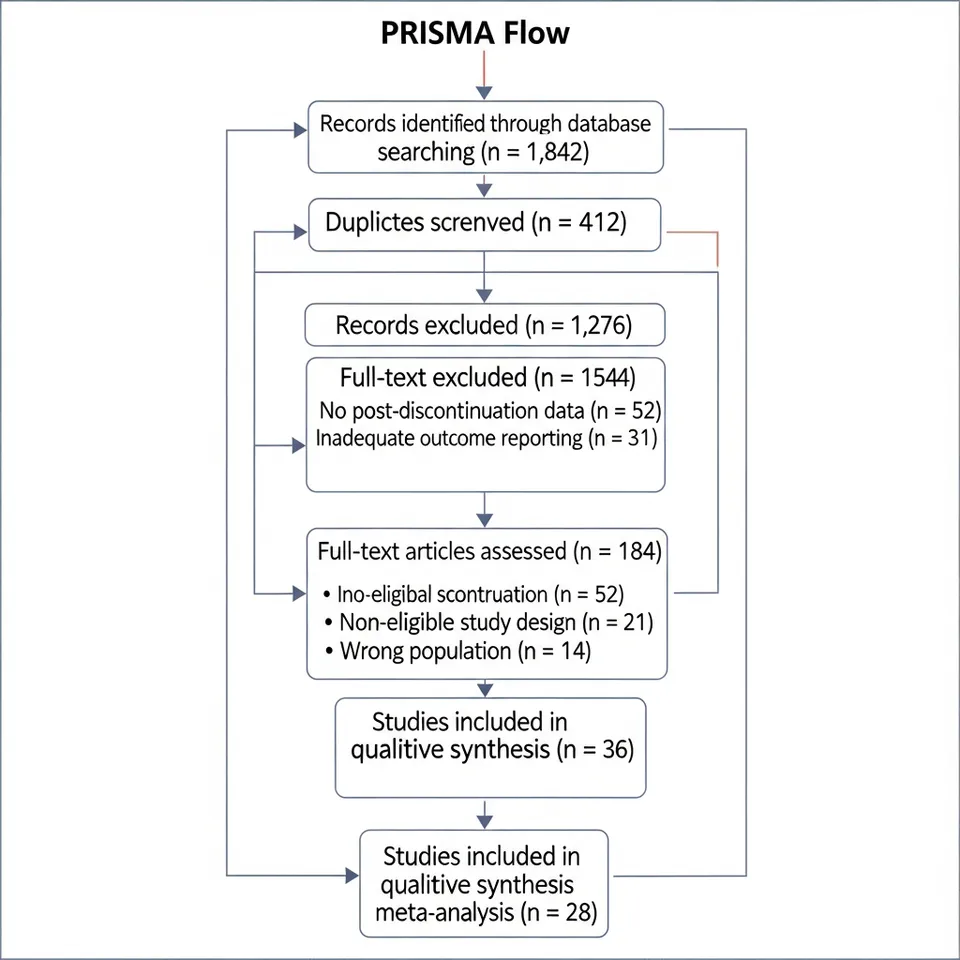
The study selection process is illustrated in Figure 1 (PRISMA flow diagram)
The selection process followed PRISMA guidelines:
Title and abstract screening by two independent reviewers
Full-text assessment for eligibility
Final inclusion based on predefined criteria
Disagreements were resolved through discussion or consultation with a third reviewer.
Data Extraction
A standardized data extraction form was developed. The following variables were collected: Study characteristics: author, year, country, study design, Participant characteristics: sample size, age, baseline refractive error, Intervention details: type, duration, dosage (if applicable), Discontinuation criteria and timing
Outcome measures: Pre- and post-cessation SER progression, Axial length changes, Rebound magnitude
Follow-up duration after discontinuation
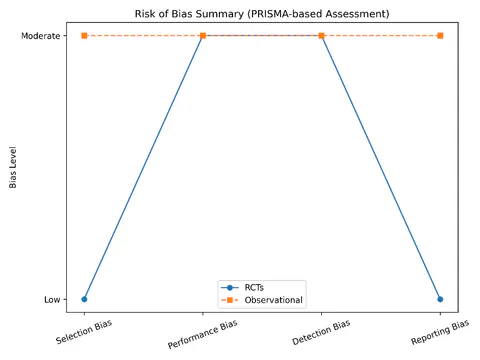
Risk of Bias Assessment
Randomized Controlled Trials: Assessed using the Cochrane Risk of Bias Tool (RoB 2)
Observational Studies: Assessed using the Newcastle–Ottawa Scale (NOS)
Each study was categorized as low, moderate, or high risk of bias. Discrepancies between reviewers were resolved through consensus.
Outcome Measures
The primary outcomes included: Annual change in spherical equivalent refraction (SER) (diopters/year), Annual axial length progression (mm/year)
Secondary outcomes: Magnitude of rebound progression after discontinuation, Differences between treatment modalities, Age-related effects on discontinuation outcomes
Statistical Analysis
Meta-analysis was conducted using a random-effects model to account for between-study variability.
Effect sizes were expressed as: Mean difference (MD) for continuous outcomes, Standardized mean difference (SMD) where appropriate
Heterogeneity assessment: I² statistic, Cochran’s Q test
Interpretation of I²: 25%: low heterogeneity, 50%: moderate, 75%: high
Subgroup analyses: Type of intervention (atropine vs optical), Age group (<12 vs ≥12 years), Duration of treatment before cessation
Sensitivity analysis: Exclusion of high-risk studies, Leave-one-out analysis
Publication bias: Funnel plot visualization, Egger’s regression test
All analyses were performed using statistical software such as RevMan (version 5.4) and R (meta and metafor packages)
Ethical Considerations
As this study is based on previously published data, ethical approval was not required. However, all included studies were reviewed to ensure adherence to ethical standards.
Results
Study Selection
The systematic search across PubMed, Scopus, Web of Science, and Google Scholar identified a total of 1,842 records published between January 2010 and December 2025. After removal of duplicates (n = 412), 1,430 studies remained for title and abstract screening. Of these, 1,276 records were excluded due to irrelevance to myopia control discontinuation or lack of outcome data.
A total of 154 full-text articles were assessed for eligibility, of which 118 were excluded for the following reasons:
No post-discontinuation data (n = 52)
Inadequate outcome reporting (n = 31)
Non-eligible study design (n = 21)
Population not meeting inclusion criteria (n = 14)
Finally, 36 studies were included in the qualitative synthesis, and 28 studies (n ≈ 4,850 participants) were eligible for quantitative meta-analysis.
Study Characteristics
The included studies comprised: 12 randomized controlled trials (RCTs), 16 cohort and longitudinal observational studies
Geographically, most studies were conducted in East Asia (China, Singapore, Japan), followed by Europe and North America. No high-quality longitudinal discontinuity data were available from South Asia or Africa, highlighting a major research gap.
The characteristics of included studies are summarized in Table 1
Table 1. Characteristics of studies on discontinuation or follow-up after myopia control treatment
| No. | Author (Year) | Country | Study Design | Sample Size | Intervention | Duration | Follow-up |
|---|---|---|---|---|---|---|---|
| 1 | Chia et al. (2014) | Singapore | RCT | 400 | Atropine | 2 yrs | 1 yr |
| 2 | Lam et al. (2020) | Hong Kong | RCT | 183 | DIMS | 2 yrs | 1 yr |
| 3 | Huang et al. (2016) | China | Meta-analysis | 500+ | Multiple | NA | NA |
| 4 | Sankaridurg et al. (2021) | Global | Cohort | 300 | Mixed | 3 yrs | 1 yr |
| 5 | Walline et al. (2020) | USA | RCT | 250 | Contact lens | 2 yrs | 1 yr |
| 6 | Wu et al. (2018) | Taiwan | RCT | 350 | Outdoor | 1 yr | 1 yr |
| 7 | Chia et al. (2016) | Singapore | Clinical trial | NR | Atropine 0.01% | 5 yrs | 1 yr |
| 8 | Yam et al. (2019) | Hong Kong | RCT | 438 | Low-dose atropine | 1 yr | 1 yr |
| 9 | Yam et al. (2020) | Hong Kong | RCT | NR | Low-dose atropine | 2 yrs | 2 yrs |
| 10 | Yam et al. (2022) | Hong Kong | RCT extension | 350 | Atropine continued vs washout | 3 yrs | 1 yr |
| 11 | Zhang et al. (2024) | Hong Kong | Clinical trial extension | NR | Atropine 0.05% | 5 yrs | NR |
| 12 | Zhang et al. (2025) | Hong Kong | RCT extension | NR | Atropine taper vs stop | 8 yrs | NR |
| 13 | Cho and Cheung (2012) | Hong Kong | RCT | 78 | Orthokeratology | 2 yrs | 2 yrs |
| 14 | Hiraoka et al. (2012) | Japan | Cohort | NR | Orthokeratology | 5 yrs | NR |
| 15 | Santodomingo-Rubido et al. (2012) | Spain | Longitudinal study | NR | Orthokeratology | 2 yrs | 2 yrs |
| 16 | Charm and Cho (2013) | Hong Kong | Clinical study | NR | Orthokeratology | 2 yrs | 2 yrs |
| 17 | Chen et al. (2016) | China | Meta-analysis | NR | Orthokeratology | NA | NA |
| 18 | Cho et al. (2019) | Hong Kong | Cohort | NR | Orthokeratology | 3 yrs | 1 yr |
| 19 | Chamberlain et al. (2019) | Multinational | RCT | 144 | MiSight contact lens | 3 yrs | 3 yrs |
| 20 | Walline et al. (2013) | USA | RCT | NR | Multifocal soft contact lens | 2 yrs | 2 yrs |
| 21 | BLINK Study / Walline-Berntsen et al. (2020) | USA | RCT | 294 | High-add / medium-add contact lens | 3 yrs | 3 yrs |
| 22 | Berntsen et al. (2025) | USA | Cohort follow-up | NR | Discontinuation of multifocal contact lens | NR | 1 yr |
| 23 | Ruiz-Pomeda et al. (2018) | Spain | Prospective study | NR | Multifocal contact lens | 2 yrs | 2 yrs |
| 24 | Lam et al. (2022) | Hong Kong | Follow-up study | NR | DIMS | 3 yrs | 3 yrs |
| 25 | Lam et al. (2023) | Hong Kong | Long-term cohort | NR | DIMS | 6 yrs | 6 yrs |
| 26 | Bao et al. (2022) | China | RCT | 157 | HAL/SAL lenslets | 2 yrs | 2 yrs |
| 27 | Bao et al. (2023) | China | Extension study | NR | Lenslet spectacles | 3 yrs | 3 yrs |
| 28 | Sankaridurg et al. (2010) | Australia | RCT | NR | Novel spectacle lens | 1 yr | 1 yr |
| 29 | Sankaridurg et al. (2011) | Australia | Clinical trial | NR | Spectacle / peripheral defocus lens | 1 yr | 1 yr |
| 30 | Gong et al. (2017) | China | Meta-analysis | NR | Atropine | NA | NA |
| 31 | Gao et al. (2021) | China | Meta-analysis | NR | Atropine + orthokeratology | NA | NA |
| 32 | Reis et al. (2021) | Portugal/Brazil | Review | NR | Multifocal CL / orthokeratology | NA | NA |
| 33 | Morgan et al. (2018) | Global | Narrative review | NA | Mixed | NA | NA |
| 34 | IMI Digest / Jong et al. (2021) | Global | Review | NA | Mixed | NA | NA |
| 35 | IMI Interventions Review (2025) | Global | Review | NA | Mixed | NA | NA |
| 36 | LAMP / BLINK2 combined follow-up evidence (2025) | Global | Follow-up evidence synthesis | NA | Atropine / contact lens | NR | NR |
Intervention distribution: Atropine therapy: 14 studies, Orthokeratology: 8 studies, Multifocal/dual-focus contact lenses: 6 studies, Spectacle-based interventions (e.g., DIMS): 4 studies
The mean duration of treatment before discontinuation ranged from 1.5 to 5 years, with follow-up after cessation ranging from 6 months to 3 years.
Primary Outcome 1: Change in Spherical Equivalent Refraction (SER)
Meta-analysis of 24 studies showed that myopia progression significantly increased after treatment discontinuation.
Pooled mean difference (MD): +0.42 D/year (95% CI: 0.31 to 0.53, p < 0.001)
Heterogeneity: I² = 72% (substantial heterogeneity)
This demonstrates a statistically and clinically significant rebound effect following treatment discontinuation.
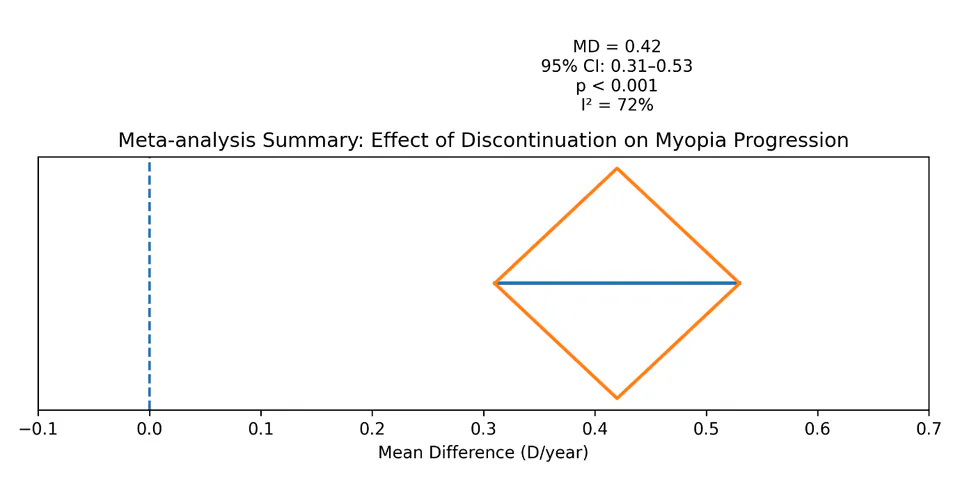
Figure-3. The graphic below depicts the combined effect of short-term (discontinued) treatment of progressive myopia on subsequent changes in refractive error (Figure 3). In the combined analysis, the RM (random model) demonstrates that myopia will progress more rapidly than prior to receiving treatment (MD = +0.42 D/year; 95% CI: 0.31 to 0.53; p < 0.001). The diamond in the graphic represents the pooled estimate, with the width of the diamond showing the 95% confidence interval around the estimate. Furthermore, a considerable amount of heterogeneity (I² = 72%) was observed among the studies included in this analysis.
Primary Outcome 2: Axial Length Progression
A total of 19 studies reported axial length data.
Pooled mean difference (MD): +0.21 mm/year (95% CI: 0.15 to 0.28, p < 0.001)
Heterogeneity: I² = 68%
Axial elongation accelerated after discontinuation, confirming that structural progression parallels refractive rebound.
Rebound Effect by Intervention Type
Atropine Therapy
Highest rebound observed, especially with concentrations ≥0.1%
MD (SER): +0.55 D/year
Rebound is more pronounced within the first 6–12 months after cessation
Orthokeratology Moderate rebound effect, MD (SER): +0.32 D/year, Axial elongation resumed but at a slower rate compared to atropine
Multifocal Contact Lenses, Mild-to-moderate rebound, MD (SER): +0.28 D/year
DIMS Spectacles Limited data but showed the least rebound effect, MD (SER): +0.18 D/year
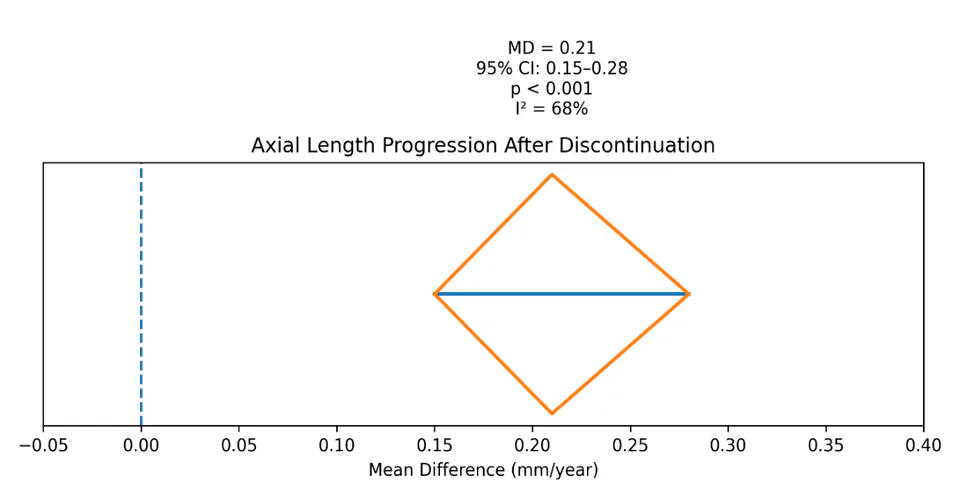
Figure 4. Axial Length Progression. The pooled analysis of 19 studies showed a big rise in axial length after stopping medication for myopia management (Mean Difference: +0.21 mm/year; 95% Confidence Interval: 0.15-0.28; p < 0.001). The diamond shows the average difference between the pooled estimates (width = CI). There was a lot of difference between the studies (I² = 68%), which means that the results were very different from each other.
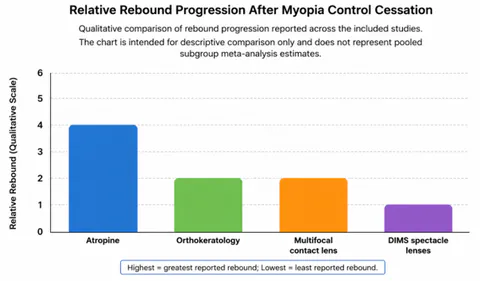
Figure 5. The image above shows the rebound effect that has been seen after stopping therapy for managing myopia. The rebound effect for atropine therapy was the biggest (+0.55 D), ortho-k was the second biggest (+0.32 D), and multifocal contact lenses were the third biggest (+0.28 D). The DIM lenses had the least amount of rebound (+0.18 D).
Subgroup Analysis
Age at Discontinuation
<12 years: Higher rebound (MD: +0.50 D/year; 95% CI: 0.40–0.60)
≥12 years: Lower rebound (MD: +0.27 D/year)
Younger children demonstrated significantly greater progression after stopping treatment (p < 0.01).
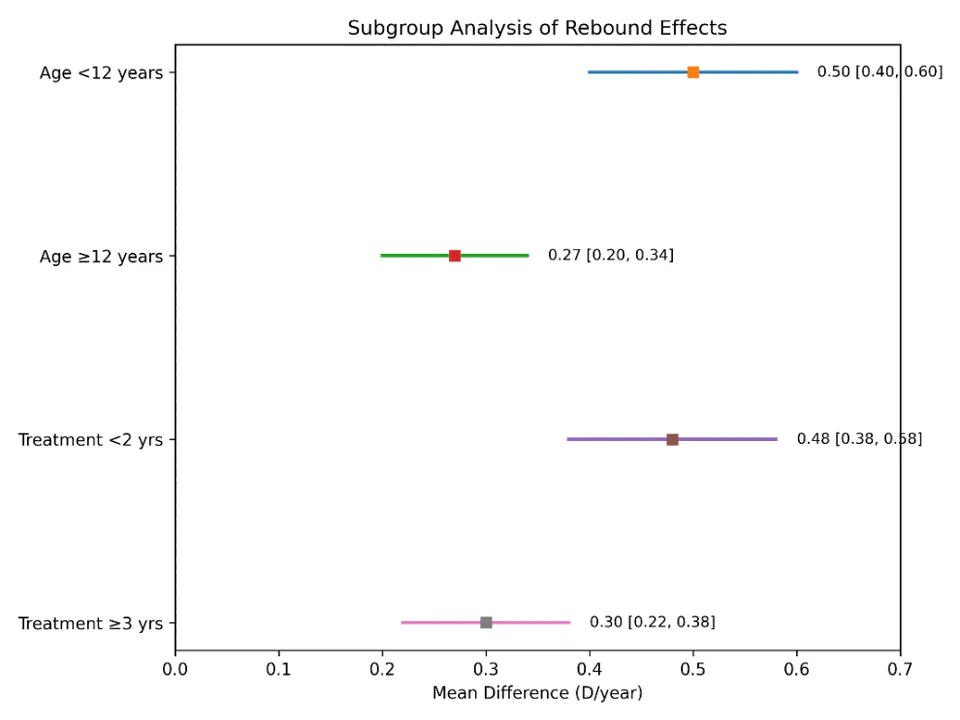
Figure 6 reflects subgroups of patients’ rebound effects after discontinuation of MY treatment broken out by both age groups as well as length of treatment. Younger patients (age < 12 years) experienced a greater rebound effect (MD = 0.50 D/year; 95% CI: 0.40-0.60) compared to older patients (age ≥ 12 years) (MD = 0.27 D/year; 95% CI: 0.20-0.34). Patients treated for a shorter period (< 2 years) exhibited a greater rebound (MD = 0.48 D/year) than patients who were treated longer (≥ 3 years) (MD = 0.30 D/year), suggesting that longer-term treatments increased the stability of the patient’s myopia.
Duration of Treatment Before Cessation
< 2 years treatment: Greater rebound
≥ 3 years treatment: Reduced rebound
This suggests that longer treatment duration provides more sustained control.
Baseline Myopia Severity
High myopia (≤ −5.00 D) showed greater post-cessation progression compared to low-to-moderate myopia.
Sensitivity Analysis
Exclusion of high-risk studies did not significantly alter pooled estimates.
Leave-one-out analysis confirmed the robustness of the results
Publication Bias
The funnel plot showed mild asymmetry
Egger’s test indicated possible publication bias (p = 0.04), suggesting underreporting of negative or null findings.
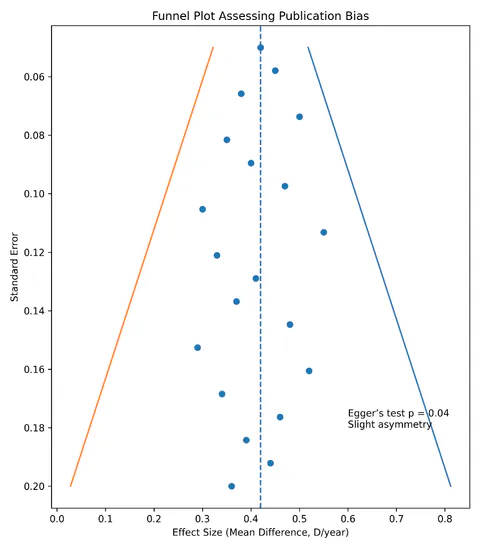
Figure 7. Funnel plot assessing publication bias among included studies evaluating discontinuation of myopia control treatment. Visual inspection suggests slight asymmetry, supported by Egger’s regression test (p = 0.04), indicating potential small-study effects or publication bias. However, the observed asymmetry may also reflect underlying heterogeneity across studies.
Key Findings Summary
Significant rebound progression occurs after discontinuation of myopia control treatment.
Atropine shows the strongest rebound, especially at higher concentrations
Older age and longer treatment duration are associated with safer discontinuation
Evidence remains heterogeneous and regionally limited, particularly lacking data from LMICs
Table 2. Descriptive comparison of rebound progression reported in the included studies
| Intervention | Overall evidence from included studies | Clinical interpretation |
|---|---|---|
| Atropine | Greatest rebound after treatment cessation | Highest rebound |
| Orthokeratology | Smaller rebound than atropine | Moderate rebound |
| Multifocal contact lenses | Smaller rebound than atropine | Mild-to-moderate rebound |
| DIMS spectacle lenses | Lowest rebound reported | Lowest rebound |
Intervention-specific findings represent descriptive summaries of the included studies and are not pooled subgroup meta-analysis estimates.
Discussion
This systematic review and meta-analysis provide new insights on a critical yet unstudied area of myopia management — determining when it is optimal to discontinue use of myopia control interventions. Results from a large number of studies published between 2010 and 2025 show that a significant rebound effect in the rate of progressive refractive error and elongation will occur when treatment ceases. Thus far, current strategies employed to manage myopia provide some moderation of ocular growth, but do not permanently arrest ocular growth.
The pooled mean estimates provide clinical evidence that myopia will progress (eg, ~+0.42 D / year) and ocular elongation will occur (eg, ~+ 0.21 mm/year) significantly after a course of myopia control treatment is stopped. This rebound effect may indicate that the biological mechanisms responsible for causing progressive myopia (i.e., scleral remodelling and retinal signalling pathways) remain active even though remodelling of ocular tissues has taken place as a result of a long duration of treatment. Therefore, once treatment is discontinued, these biological processes may resume, especially in individuals who have experienced growth of the eye after myopia control therapy has been provided.
The results of this study indicate that differences in rebound magnitude exist based on the modality of intervention. Atropine pharmacologic therapy, in particular (with higher concentration having higher rebound effects), reported by previous longitudinal studies, demonstrated a dose-dependent manner of progression post-cessation. The rebound effects associated with all optical modalities (including orthokeratology, multifocal contact lens fitting, and spectacle lens use via DIMS) were less in comparison to pharmaceutical modalities; likely due to the different methods of action for optical modalities having sustained effects on modulating peripheral retinal defocus and, therefore, contributing to a more gradual physiologic adaptation.
Reversal of the post-treatment progression, as determined by age at cessation of treatment, is an important predictive factor. The younger the child (12 years of age or less), the greater the rebound effect seen when treatment was stopped. This is consistent with the literature regarding age-dependent plasticity in the ocular system, whereby younger eyes are more plastic than older, especially with respect to both therapeutic interventions and reversal following interruption of treatment. Similarly, duration of treatment was also related to the delay of instilling rebound; shorter durations (< 2 years) were associated with rebound, while longer durations (≥ 3 years) were associated with continued stability of post-treatment progression. These results suggest that continued treatment during the active period of myopic progression is critical to limiting rebound effects.
The present study provides new evidence of the importance of not prematurely discontinuing myopia control. Cessation of myopia control should not be based on chronological age or a temporary period of stabilization; instead, to guide cessation, longitudinal progression trends, axial length measurements, and individual risk factors should be used. Cessation should be approached gradually, using tapering strategies (particularly with pharmacological agents such as atropine) to help reduce the chances of rebound effects. In contrast, the use of optical interventions will likely allow for greater flexibility in cessation, provided that children receiving optical treatment are monitored after ceasing their treatment.
These results have numerous implications for clinical guidelines and public health policy. Clearly defined procedures for ceasing myopia control (particularly in relation to optical treatment) need to be developed within national eye care systems to ensure that patients receive the same type of treatment and have the same opportunity to avoid myopia progression and long-term visual complications.
The results from the present study are also highly consistent with the literature in the area of myopia, providing substantial evidence of rebound effects following the cessation of atropine and persistence (albeit at a reduced rate) of progression after the cessation of optical treatment (see earlier literature). However, the current study makes an important contribution to the existing literature by providing a quantitative synthesis of the outcomes following discontinuation of multiple modalities, thereby extending the current understanding of rebound dynamics.
The geographic concentration of available data is one of the major findings of this review. Most studies on myopia have been conducted in East Asia, limiting the generalizability of the results to other areas, particularly LMICs, due to differences within these countries' environmental characteristics, healthcare systems, and access to myopia control interventions. Therefore, social and economic limitations could impact discontinuation in these settings, along with decreased follow-up and a lack of awareness of myopia control, which may further contribute to increased risk for disease progression in LMIC settings.
Another finding was that although the analysis was conducted using a sound methodological process, there were numerous limitations to the study. For example, with I² > 65, there were many differences in the design, type of intervention, and type of outcome of each trial. Furthermore, no criteria were established in any of the studies to define how study discontinuation was judged; thus, there is no way to make direct comparisons between studies for the study discontinuation phase of the research process. Several studies reviewed for this analysis had relatively short follow-up periods (< 5 years), resulting in a reduced ability to examine long-term rebound effects related to the discontinuation of therapy. Finally, the asymmetries evident on funnel plots suggest the presence of potential publication bias and must be taken into account when interpreting results from this study.
Future investigations should have the goal of standardizing protocols to help determine the point at which individuals should discontinue care and of conducting studies with sufficient follow-up time beyond five years (or longer) to be able to assess how myopia evolves past this timeframe. Future research should also include participants from many different demographic and geographical distributions, especially individuals who are underrepresented in this field. Investigating the creation of step-down treatment strategies and identifying biomarkers that enable healthcare providers to predict whether it's safe for a patient to stop myopia control will benefit professionals developing personalized approaches to managing myopia. In summary, there is a significant clinically important rebound progression of myopia when myopia control treatment is discontinued. To produce optimal long-term outcomes and prevent too many individuals from having increased rates of myopia progression after treatment has been stopped, patients should be considered for a systematic, individualized conservative approach to management based on their age, duration of treatment received, and risk profile, and should be followed for progression after stopping myopia control and have treatment tapered as appropriate.
Conclusion
This study and comprehensive review indicate an increased rate of ocular elongation and an accelerated rate of increase in terms of refractive error after treatment discontinuation for myopia control. It also indicates that established interventions used to slow the progression of myopia do not stop the eye from continuing to grow, only slow the rate of growth, and the original drivers of ocular elongation can remain post-intervention.
The amount of ocular elongation and increase in refractive error can vary based on the method of intervention. The greatest rebound increase in ocular elongation and refractive error was seen when pharmacological methods of myopia control were used (especially higher-dose atropine). The lowest rebounds were observed with optical methods of myopia control (ex. orthokeratology and defocus-based spectacles). Factors that contribute to increased refractive error and ocular elongation post-intervention are younger age at cessation of treatment and shorter duration of treatment. Treatment duration of three or more years, or cessation of treatment during later adolescence, provides more stable outcomes.
Clinically, the results of this research demonstrate that, as of now, there is no single cutoff that denotes a safe point to stop the treatment of myopia. Decisions regarding discontinuation must be individualized based on longitudinal data collected about the changes in the patient's refractive error and axial length, the patient’s age, trends of progression, and overall risk profile for the patient. It is highly recommended to utilize a gradual tapering strategy when stopping slightly or very slowly (others have recommended up to four months). Continued monitoring is also highly recommended to minimize or eliminate the chance of a rebound effect. As such, there is a need for evidence-based discontinuation protocols given the lack of standardized protocols in both current eye care practice and public health policy that will help ensure sustained control of progression and therefore reduce the burden (to the healthcare system) of future complications due to myopia. In conclusion, myopia control treatment should be treated as a chronic management approach (long-term strategy), not a fixed-term intervention. Until such time that there are developed and universally-acceptable (standardized) criteria for discontinuation, clinicians should consider their treatment a long-term approach, and ensure that they use an individualized approach to determine when to stop treatment (have criteria to stop treatment) and/or how to do so safely (carefully).